Chicago Statement on Biblical Inerrancy
Inerrancy With No Autographic Text?
The Chicago Statement on Biblical Inerrancy, perhaps the most well-known and oft-cited affirmation of biblical inerrancy, declares that inerrancy as a doctrine applies explicitly to the autographic text of Scripture- “Article X. WE AFFIRM that inspiration, strictly speaking, applies only to the autographic text of Scripture, which in the providence of God can be ascertained from available manuscripts with great accuracy.” The reality is that inerrancy as defined by the majority of inerrantists, including the Chicago statement, simply cannot stand up to the reality of how the Bible was formed. What makes this point most starkly, in my opinion, is that conservatives who affirm inerrancy are now finding themselves in the unenviable position of learning and having to acknowledge that for some of the Bible, the very concept of an autographic text is an impossibility.
One example of this is Benjamin P. Laird. Laird is associate professor of biblical studies at the John W. Rawlings School of Divinity of Liberty University. Liberty University’s statement of faith includes a clause about the Bible which states, in part, “We affirm that the Bible, both Old and New Testaments, though written by men, was supernaturally inspired by God so that all its words are the written true revelation of God; it is therefore inerrant in the originals and authoritative in all matters.” Once again, at question is the “original” text of Scripture. But what if there is no original? I want to be clear, I’m not asking the question, which is oft-discussed in inerrantist writings, of what happens if we don’t have the original. Textual preservation has made that almost impossible for any ancient text, and inerrantists have long argued that this is no problem because while inerrancy only applies to the original or autographic text, the Holy Spirit has worked to preserve the text faithfully to the extent that we can be assured that we know enough to have proper faith and practice.[1] No, the claim I’m discussing isn’t whether we have the original text, but whether we can definitively point to any (imagined) autographic text as the original or the autograph at all.
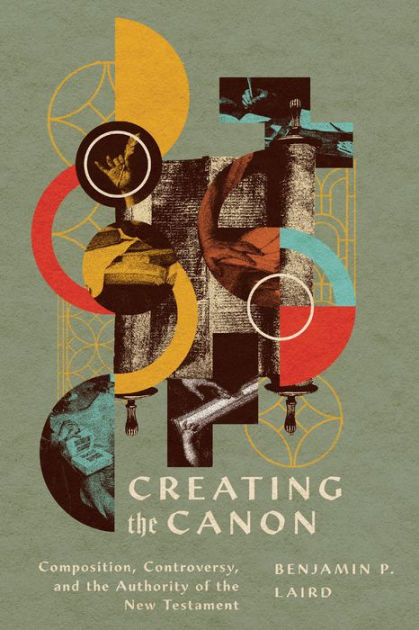
Laird’s discussion of autographs in his book, Creating the Canon, is informative. The book focuses on the formation of the canon of the New Testament. Laird notes that the longtime assumption of [some] scholars was that the original text was the inerrant one. However, he goes on to look at how letters and other works were produced in antiquity, including a number of difficult questions this raises: “When we refer to an original autograph, are we referring to the initial draft of a work, a later revision or expansion, the edition that first began to circulate, or to the state of the writing at some later stage in the compositional process?” (48). Additionally, after noting that “it would seem most appropriate to identify the original autograph of a work not as the initial draft but as the final state of the writing that the author had reviewed and approved for public circulation” (49), he notes that letter writing in the ancient world often included the writer using a scribe and having that scribe produce “one or more duplicate copies” for themselves, including copies that may have differed depending upon the audience to whom they were sent (49, 54ff).
A concrete example is the ending of Romans, which Laird notes has some problematic textual history (56-57). After noting the difficulty of determining just how long the “original” letter to the Romans was, Laird notes various scholarly responses, including the possibility that there were two different “original” editions of Romans, one with a longer doxology that would have been intended for local audiences and one which omitted it, which were eventually combined (60-61). This leads to the remarkable conclusion that “it is a strong possibility that at least three copies of the text of Romans were produced at the end of the compositional process: one for the Romans, one for those in Corinth, and one for Paul and/or his associates” (61-62). In the conclusion of this fascinating section, Laird states, “Rather than assume that the compositional process of the canonical writings culminated with the production of a single ‘original autograph,’ it is therefore best to think of something that might be described as an original edition” (64).
I admire Laird’s dedication to highlighting the problematic nature of the concept of “autograph” when it comes to the biblical text, but have to wonder what kind of cognitive dissonance that might create for someone who teaches at a place where the statement of faith explicitly refers to inerrancy in the “originals.” Sure, Laird could punt the issue to whatever he means by “original edition” as opposed to “original autograph,” but at that point, what does inerrancy even mean?
I affirmed and defended inerrancy for many years. I finally let go of it for a number of reasons which are largely beyond the scope of this post. But I understand inerrancy, and understand how to defend it. I have even done so on this very blog. What I know included things like we defended the doctrine as applying to the autographic text. But if, as Laird and many, many others are pointing out, it’s true that there is no autographic text for at least some of the Bible, how can a defense of inerrancy even make sense? It’s like a constantly retreating battle for inerrantists: declare the Bible inerrant; but which Bible?; declare it only applies to the autographs; but we don’t have the autographs; so say that the autographic text is preserved at least to the extent that it doesn’t impact essentials of the faith; but autographs don’t exist to begin with. What’s supposed to follow that? For Laird the answer seems to be “say the original edition is inerrant.” But what is an original edition? And Laird’s questions, which are quite helpful, would absolutely apply to any such discussion- is it the drafts made along the way to the “final product,” and which final product- the one(s) Paul kept for himself or the one(s) to the local church or the one(s) to the church(es) at large?
The massive import of these questions for any doctrine of inerrancy must be made explicit. The Chicago Statement makes its stand upon the autographic text. If there is no autograph to which we can point, that statement falls. Almost every definition of inerrancy in modern times does the same. They are written as if we could travel back and time and point to a text, fresh off the pen of a scribe or writer, and say “this text is inerrant.” The reality is that not only do we not have such a manuscript today, but it is becoming increasingly clear that such a scenario needs to be rewritten, with a number of different texts directed towards different audiences, with different inclusions and exclusions in the text. Would the time traveler have pointed to a text of Romans with a doxology or without it? Would they point to a work in progress or a final draft? Would certain stories that seem to have been edited into the text be part of the inerrant text or not? The time traveler scenario is now complicated beyond imagining. We don’t have a single text of Romans we could point to definitively and say “there it is.” This is admitted even by those who wish to affirm inerrancy. And so again, what does it even mean to affirm that doctrine?
It’s worth at this point stopping the discussion to ask a simple question: is inerrancy worth it? Is there something about inerrancy that makes it an unassailable doctrine that all Christians must affirm such that we must continue to circle the wagons in ever smaller circles in order to try to be able to point at something that is inerrant in Scripture? Or–hear me out–or is it possible that evangelicals have made the wrong thing inerrant? Instead of making a text inerrant and essentially equivalent to God, what if we allowed that place to stay with Christ, the God-Man Himself, and the person whom the Bible attests as the divine Word of God? This has been, historically, the position of the church[2], and is a position which requires far less retreating whenever a new discovery is made that seems to call into question some potential error in the Bible or some problem with how modern statements on how the Bible must work are read. Rather than trying to constantly revise and salvage a doctrine that appears to need a revisiting every few years, Christians should focus instead upon God, whose steadfast love never changes.
Notes
[1] See, for example, the Chicago Statement, again Article X- “WE DENY that any essential element of the Christian faith is affected by the absence of the autographs. We further deny that this absence renders the assertion of Biblical inerrancy invalid or irrelevant.”
[2] A history of the doctrine of inerrancy is very revealing and shows it to be a largely American invention in the late 19th to early 20th centuries. The statements on this doctrine were not found in ecumenical councils, nor creeds, nor really anywhere until the 20th century. Efforts to read the doctrine back onto history are just that- reading into history rather than reading history. For example, there is not discussion of the “autographic text” in early Christian writings on the canon. They didn’t even have a concept of why that would be important. The doctrine is totally dependent upon post-Enlightenment and modernist categories. Ironically, it is parasitic upon textual criticism, developing essentially in opposition to that which those who affirm the doctrine wished to deny. When textual criticism pointed out difficulties in the text as it stood, inerrantists punted the doctrine to the autographs. This is just one example of how inerrancy is entirely dependent on categories foreign to historical Christian doctrine or to the Bible itself.
As a Lutheran, an additional note- I mention here the Lutheran church explicitly because even in the earliest times for Lutherans, some Lutherans–including Luther–had questions about the canonicity of some accepted books of the Bible, along with some other issues that were raised. Lutherans have held almost from the beginning that, as Luther said, the Bible is the cradle of Christ; the Bible is not God. Some Lutheran denominations today hold explicitly to inerrancy (eg the LCMS and WELS), but this does not seem continuous with global Lutheranism or Lutheran doctrine specifically.
All Links to Amazon are Affiliates links
Links
Be sure to check out the page for this site on Facebook and Twitter for discussion of posts, links to other pages of interest, random talk about theology/philosophy/apologetics/movies and more!
SDG.
——
The preceding post is the property of J.W. Wartick (apart from quotations, which are the property of their respective owners, and works of art as credited; images are often freely available to the public and J.W. Wartick makes no claims of owning rights to the images unless he makes that explicit) and should not be reproduced in part or in whole without the expressed consent of the author. All content on this site is the property of J.W. Wartick and is made available for individual and personal usage. If you cite from these documents, whether for personal or professional purposes, please give appropriate citation with both the name of the author (J.W. Wartick) and a link to the original URL. If you’d like to repost a post, you may do so, provided you show less than half of the original post on your own site and link to the original post for the rest. You must also appropriately cite the post as noted above. This blog is protected by Creative Commons licensing. By viewing any part of this site, you are agreeing to this usage policy.
Peter Enns on Definitions and Inerrancy
 Not long ago, I finished reading Five Views on Biblical Inerrancy, a book in the Zondervan Counterpoints series which focused on the plausibility and meaning of inerrancy. Peter Enns was by far the most critical of the doctrine of inerrancy, and his essay largely put forward the position that we should not merely modify but simply get rid of the notion of biblical inerrancy. Here, I want to focus upon Enns’ methodology throughout the work.
We’ll look at Enns’ contributions to Five Views… a bit backwards, by focusing first upon his responses to the other authors. What I found was that time and time again, Enns demanded definitions for individual words from the authors he was responding to. Sometimes, these demands were warranted, but overall it seemed Enns would just call on the others to define their terms and say he didn’t know what they meant otherwise. Moreover, even where he did not demand definitions, he often put scare quotes around seemingly random words in his responses. This latter point is more a complaint about writing style than substance, but it was extremely distracting! On p. 61, for example, Enns put quotes around three words–“many,” “history,” and “accurate”–the latter two for seemingly no reason whatsoever.
However, what I want to focus on is Enns emphasis on the importance of definitions. Here are just some examples of Enns’ method in application:
“…’true,’ ‘error,’ ‘erroneously,’ and ‘falsehood’ are all left floating. I am not sure what Bird means by them–at least at this point” (Enns’ response to Bird, p. 182).
“For one thing, we have the perennial problem of what ‘affirm’ actually means, and Vanhoozer’s subsequent thoughts did not clear this up for me. Further, ‘eventually’ raises flags…” (Enns’ response to Vanhoozer, p. 245).
Now, as I noted, surely some of this is fair. It is true that it is important to wonder at the meaning of “truth,” as we know from the oft-quoted words of Pontius Pilate “What is truth?” (John 18:38). Thus, I am not saying that Enns has no point when he called for definitions throughout his critical engagement with his co-authors. Surely, definitions are extremely important. And it is because of the importance of definitions that I wonder why on earth Enns failed to even allow for different definitions of inerrancy in his own contribution to the book.
Think about this for a second: despite spending significant [what is meant by significant?] portions of his responses calling upon definitions from his co-authors, Enns himself titled his contribution: “Inerrancy, However Defined, Does Not Describe What the Bible Does.”
Yes, that’s right, the man who called for definitions of individual words like truth, falsehood, error, affirm, and more himself eschews the hassle of defining inerrancy, the central topic of not just his chapter but the subject of the book! I’m astonished by this. How can someone who has demonstrated such concern for details himself just lump all inerrantists together and say that “well, however they define it, it doesn’t work”? Well, what does Enns mean by “inerrancy”? Enns does interact with the Chicago Statement on Biblical Inerrancy (hereafter CSBI) and apparently takes this for his norm regarding the meaning of inerrancy, but without any explicit definition of inerrancy, readers are left wondering whether Enns really is so concerned with definitions after all.
Enns, of course, brings up a number of interesting points and several challenges to inerrancy with which those who hold to the doctrine must interact. However, without any distinction between inerrantists, Enns is left doing that which he accuses others of: making statements which are hard to understand because he hasn’t defined terms. One obvious difficulty with Enns’ approach comes to the forefront when he assumes that inerrancy is necessarily committed to a literalistic hermeneutic: “The implication [of the CSBI on historical matters] is self-evident: inerrancy means, first of all, that literalism is the default hermeneutic of the CSBI… Taken at face value, this means that any comparison of Genesis with other ancient Near Eastern origins stories… is ruled out of bounds” (88). Enns qualified the last statement by noting that only those comparisons outside of CSBI conclusions are ruled out.
But of course the CSBI itself does allow for the comparison of genre, cultural contexts, and more in regards to interpretation of the text. Moreover, the CSBI allows for not just young earth creationism, but for other approaches to the text as well.
Thus, it seems to me that Enns’ lack of concern for possible nuance to definitions of inerrancy–his rejection of defining terms despite his insistence that others must do so–leads to great difficulties with his own critique. I have not here engaged in the core of Enns’ argument. As I said, many of his points are thoughtful and engaging. However, I think that his method seems a bit disingenuous: he demands that others define terms, but when it comes to the central topic of the entire book, refuses to acknowledge that any distinctions within the doctrine of inerrancy can combat his conclusion that the Bible is not inerrant.
Links
Be sure to check out the page for this site on Facebook and Twitter for discussion of posts, links to other pages of interest, random talk about theology/philosophy/apologetics/movies and more!
“Theological Colonialism”? On theological issues which are ‘only popular in America’– Here, I evaluate the claims made by Michael Bird in his essay in Five Views on Biblical Inerrancy. More particularly, I consider the notion that doctrines which are allegedly only popular in one place of the world are somehow restricted in importance.
Source
Peter Enns, Responses and “Inerrancy, However Defined, Does not Describe What the Bible Does” in Five Views on Biblical Inerrancy (Grand Rapids, MI: Zondervan, 2013).
SDG.
——
The preceding post is the property of J.W. Wartick (apart from quotations, which are the property of their respective owners, and works of art as credited; images are often freely available to the public and J.W. Wartick makes no claims of owning rights to the images unless he makes that explicit) and should not be reproduced in part or in whole without the expressed consent of the author. All content on this site is the property of J.W. Wartick and is made available for individual and personal usage. If you cite from these documents, whether for personal or professional purposes, please give appropriate citation with both the name of the author (J.W. Wartick) and a link to the original URL. If you’d like to repost a post, you may do so, provided you show less than half of the original post on your own site and link to the original post for the rest. You must also appropriately cite the post as noted above. This blog is protected by Creative Commons licensing. By viewing any part of this site, you are agreeing to this usage policy.

 J.W. Wartick - Reconstructing Faith