christian
Bonhoeffer and Universalism?
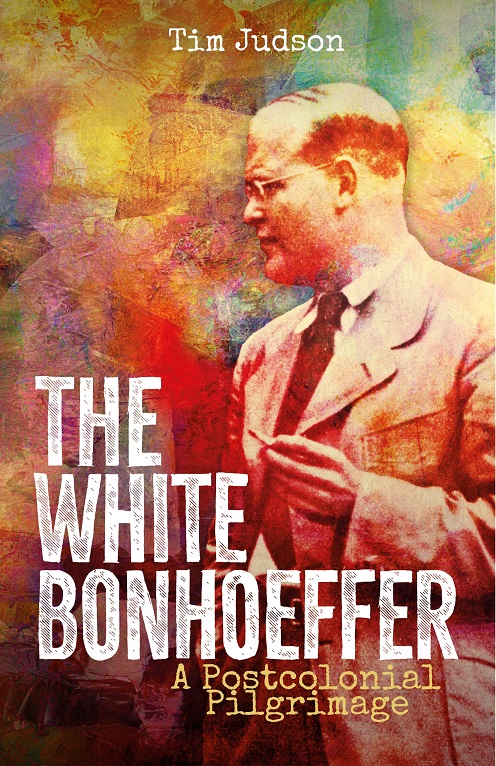
Dietrich Bonhoeffer’s theology is hotly debated to this day, from his views on pacifism to his stance on various ethical issues that face us now. One area that I haven’t seen discussed as much in Bonhoeffer scholarship is his view of universalism. Tim Judson’s recent work, The White Bonhoeffer: A Postcolonial Pilgrimage addresses Bonhoeffer’s stance on this doctrine in a short section. Judson’s insights are illuminating, showing that this is a topic fruitful for further discussion.
Judson notes, first, that the topic is grounded in Bonhoeffer’s theology of the cross and its universality. Second, Bonhoeffer’s thinking seems to be tied up in the ultimate stance of creation rather than individual salvation. Indeed he saw the hyper-focus on individual salvation as entirely the wrong starting point. Individual salvation isn’t the starting point, but rather something caught up in God’s working both through sacrament and the Cross. Third, this focus on the eschaton–the final end of creation–lead Bonhoeffer to brief defenses of the view of apokatastasis: the notion that all creation will have ultimate restoration. He defends this in Sanctorum Communio, for example, noting that “The strongest reason for accepting the idea of apocatastasis [alternate spelling of the Greek word] would seem to me that all Christians must be aware of having brought sin into the world, and thus aware of being bound together with the whole of humanity in sin, aware of having the sins of humanity on their conscience…” (DBWE 1, 286-287, cited in The White Bonhoeffer, 56). The universality of the sinfulness of humanity is, paradoxically, linked therefore to the hope for all humanity’s salvation in Christ. Bonhoeffer concedes this can only be a hope, not a certainty (ibid), but it seems his stance is in favor of the concept.
There are many things of interest in this brief analysis of Bonhoeffer’s universalism. The first is that there seems to be a connection between Lutheran soteriology and universalism, though that is not what Luther himself held. Lutherans explicitly hold to the cross as universally applicable. On the cross, God reconciled the whole world to Godself. If that’s true, then sin as the barrier between humans and God has been removed. As such, what can there be a reason for not having such reconciliation? A second point of interest is that Bonhoeffer sees soteriology as much more corporate- than individual-focused. This is something that is often difficult for theologians who come from backgrounds focused on individual salvation to understand, but it is a stance that I think is correct. The focus on individual soteriology has displaced the focus in Scripture which is on God’s work in Christ, not on an individual. None of this is to say that the individual is unimportant or not discussed in Scripture, but rather that the focus is mistaken when it is on the individual rather than the whole. Finally, Bonhoeffer’s view that we can have hope for final reconciliation, despite his own questions and affirmation of reprobation, lends itself to a very Lutheran stance of merely affirming what one finds in Scripture without trying to always reconcile potential paradoxes. (I have argued that a Lutheran non-rational stance can be taken for universalism in a post here.)
The White Bonhoeffer is a thought-provoking work overall. I am thankful to Judson for shedding light on so many intriguing topics. The book is recommended.
Links
Dietrich Bonhoeffer– read all my posts related to Bonhoeffer and his theology.
SDG.
——
The preceding post is the property of J.W. Wartick (apart from quotations, which are the property of their respective owners, and works of art as credited; images are often freely available to the public and J.W. Wartick makes no claims of owning rights to the images unless he makes that explicit) and should not be reproduced in part or in whole without the expressed consent of the author. All content on this site is the property of J.W. Wartick and is made available for individual and personal usage. If you cite from these documents, whether for personal or professional purposes, please give appropriate citation with both the name of the author (J.W. Wartick) and a link to the original URL. If you’d like to repost a post, you may do so, provided you show less than half of the original post on your own site and link to the original post for the rest. You must also appropriately cite the post as noted above. This blog is protected by Creative Commons licensing. By viewing any part of this site, you are agreeing to this usage policy.
Was Bonhoeffer “Lutheran or Lutherish” – a look at Michael Mawson’s essay
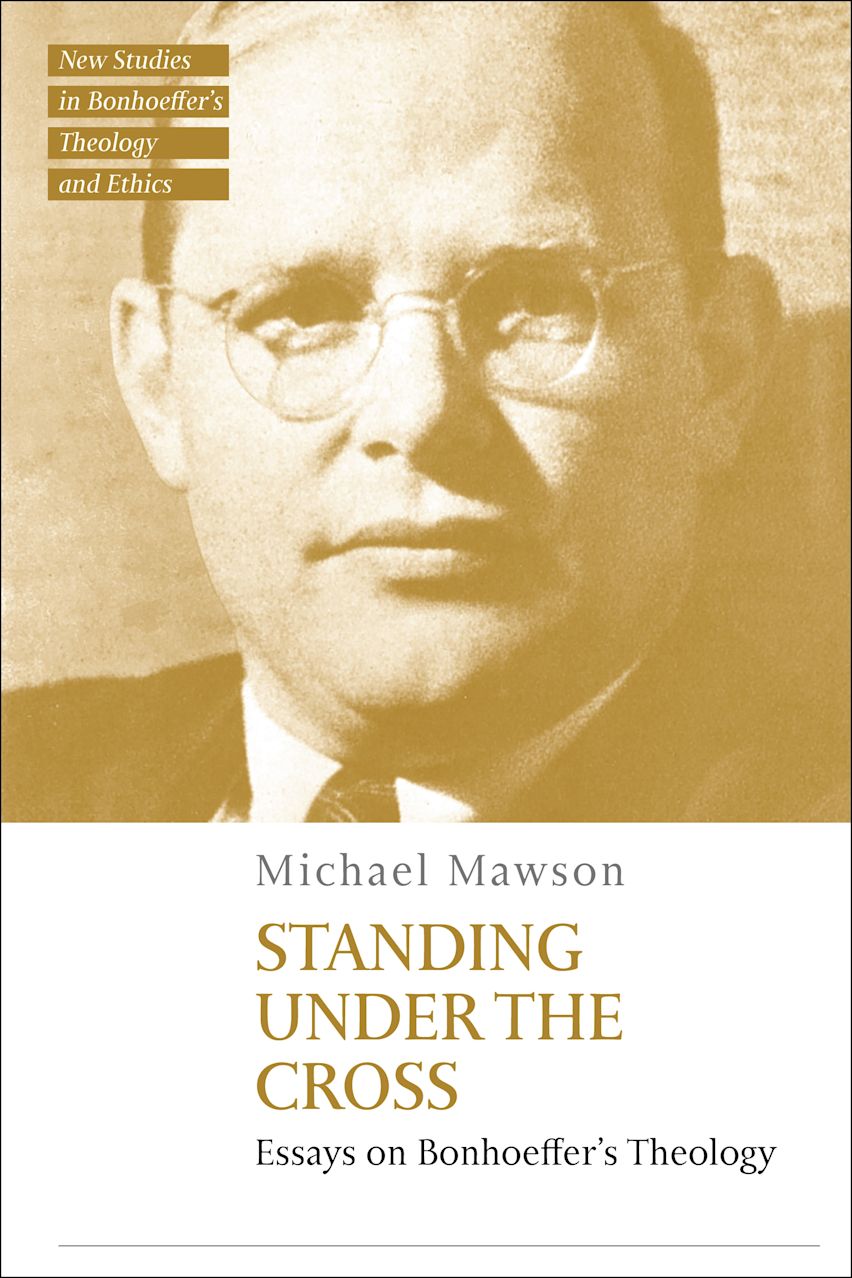
Michael Mawson’s Standing Under the Cross features several essays about Dietrich Bonhoeffer’s theology. It’s been a fascinating read. I was struck, however, by one essay that reads like an outlier. “Lutheran or Lutherish: Engaging Michael DeJonge on Bonhoeffer’s Reception of Luther” seeks to engage with Michael DeJonge’s Bonhoeffer’s Reception of Luther (reviewed by me here) and argue, at least in part, that there needs to be more complexity regarding Bonhoeffer’s relationship with Lutheranism than DeJonge presents. I found this essay an outlier–and perplexing–because Mawson himself cites Luther in conjunction with Bonhoeffer more than 20 times outside of this essay, which certainly lends itself to the interpretation of seeing Bonhoeffer as consciously Lutheran.
At the outset, I must note it is possible there is some subtlety to Mawson’s argument I’m missing. Following DeJonge, Mawson engages with Alasdair MacIntyre’s definitions of tradition, and draws from that a different conclusion–that Bonhoeffer should be approached to see “whether there are other, less determinate and more fluid ways of attending to this presence, of framing Bonhoeffer’s complex reception of Luther” (70). Interpreting this conclusion is difficult. Is Mawson saying that we need to view Bonhoeffer more along “Lutherish” lines than “Lutheran” ones–the latter being DeJonge’s claim? Or is he merely saying we ought to allow for broader influence on Bonhoeffer than Lutheranism?
If the latter, the point doesn’t actually seem to be outside of DeJonge’s purview either. While DeJonge certainly argues that Bonhoeffer is “consciously” Lutheran, that doesn’t preclude other influences. One can be Lutheran and still be influenced by and interacting with other authors of your own time. Mawson notes Hegel and Nietzsche as others with whom Bonhoeffer interacts (68). But again, this is hardly precluded by saying Bonhoeffer was Lutheran.
Mawson also makes some slight points about how Bonhoeffer refers to himself as Evangelical first, rather than Lutheran (67)–but the German Lutheran church referred to itself as Evangelical, anyway. Additionally, Mawson criticizes DeJonge for framing the debate as between Lutheran and Reformed positions. DeJonge’s complaint about scholars not paying enough attention to Bonhoeffer as Lutheran leading to misinterpretations of Bonhoeffer is counted by Mawson’s question: “does… the very existence of such diverse readings (and misreadings) itself complicate attempts to organize and stabilize Bonhoeffer theology as straightforwardly inside of ‘the Lutheran tradition’?” (69). I would argue that such diverse readings and misreadings does not do that at all. The fact that death of God theologians glommed onto Bonhoeffer’s works to extract “religionless Christianity” as meaning the same as “God is dead” hardly means we have to take as seriously the idea that Bonhoeffer might have believed God is dead as we do his stance on the theologia crucis (theology of the cross) which he consistently taught through his life. Diversity of opinion or interpretation does not entail diversity of the thing itself.
I already noted some confusion as well about Mawson’s own writings related to Bonhoeffer and Luther. Right before this essay, Mawson offered up two essays on Bonhoeffer’s view of Scripture and Bonhoeffer on discipleship, respectively, which heavily cite Luther in context of Bonhoeffer’s own view. Indeed, in the latter essay Mawson himself concludes by linking the theologia crucis with Bonhoeffer and Lutheranism specifically, not even bothering to distinguish between the Lutheran view and Bonhoeffer’s (see 58). Apart from all of this, though, looking at Bonhoeffer’s own works it becomes incredibly difficult to take seriously the notion that Bonhoeffer was anything but Lutheran. That doesn’t preclude him having other influences, advancing ideas that critiqued some parts of Lutheranism, or anything of the sort. But it does mean that reading Bonhoeffer correctly means reading him as a Lutheran pastor, which he was.
Just a few examples can serve to demonstrate Bonhoeffer’s deep commitment to Lutheranism. Bonhoeffer actively sought to catechize students within Lutheran traditions, including writing a catechism for students which closely followed Luther’s own catechism. Bonhoeffer’s discussion of the extra Calvinisticum includes a critique of Lutheran attempts to ground the counter to Calvinistic/Reformed doctrine in the concept of ubiquity precisely because Bonhoeffer argues that attempting to answer the Calvinist critique abandons the Lutheran answer which can simply be that Christ promised His presence and to leave it at that. Bonhoeffer defends infant baptism in more than one place in his works (for example in DBWE 14:829-830). He grounds the church on word and sacrament–the very way that Luther speaks of the church (again DBWE 14:829). He cites Luther more than any other theologian or scholar, and does so many, many times simply to settle the answer to a question such as saying [I paraphrase here] “Luther wrote [x]” and letting that settle the matter. He rarely critiques anything of Luther, rather citing Luther almost always in supporting a point or merely to cite something only to elucidate it afterwards. Mawson himself notes Bonhoeffer’s incredibly close interpretations of the theologia crucis–the very concept Luther wielded to differentiate himself from other theologians. Again, this isn’t a broader Christian concept but one that was explicitly and repeatedly taught and used by Martin Luther himself and one that Bonhoeffer cites again and again throughout his work such that it became the grounding for his notion that “only the suffering God can help.” Bonhoeffer doesn’t cite the Lutheran confessions as often as Luther, but when he does it is always done positively. For example, Bonhoeffer, after quoting the Formula of Concord, wrote: “The ‘expediency’ of any given church regulation is thus to be gauged solely by its accordance with the confessions. Only such accordance with the confessions is expedient for the church-community” (DBWE 14:704). How can one possibly read this passage, in which Bonhoeffer explicitly states that the way to judge a church regulation must be only in accordance to the Lutheran confessions–and he must mean Lutheran specifically because he just cited the Formula of Concord!
Examples could be multiplied ad nauseum, and DeJonge has done good work doing so, along with a handful of other authors who have put in the legwork to show that reading Bonhoeffer correctly means reading him as a Lutheran. I add my voice to this chorus, and as much as I enjoy Mawson’s work, I have to strongly question this specific essay. It is impossible to rightly interpret Bonhoeffer apart from realizing that he is Lutheran. And doing so does damage to his theology. None of this is to say other influences are impossible; it simply means that Bonhoeffer himself followed the Lutheran Confessions and Luther, even while engaging with them in a constructive way.
Standing Under the Cross continues to be a thought-provoking work that has led me to much reflection on Bonhoeffer’s theology–and my own. I recommend it.
Links
Dietrich Bonhoeffer– read all my posts related to Bonhoeffer and his theology.
SDG.
——
The preceding post is the property of J.W. Wartick (apart from quotations, which are the property of their respective owners, and works of art as credited; images are often freely available to the public and J.W. Wartick makes no claims of owning rights to the images unless he makes that explicit) and should not be reproduced in part or in whole without the expressed consent of the author. All content on this site is the property of J.W. Wartick and is made available for individual and personal usage. If you cite from these documents, whether for personal or professional purposes, please give appropriate citation with both the name of the author (J.W. Wartick) and a link to the original URL. If you’d like to repost a post, you may do so, provided you show less than half of the original post on your own site and link to the original post for the rest. You must also appropriately cite the post as noted above. This blog is protected by Creative Commons licensing. By viewing any part of this site, you are agreeing to this usage policy.
Book Review: “Markus Barth: His Life & Legacy” by Mark R. Lindsay
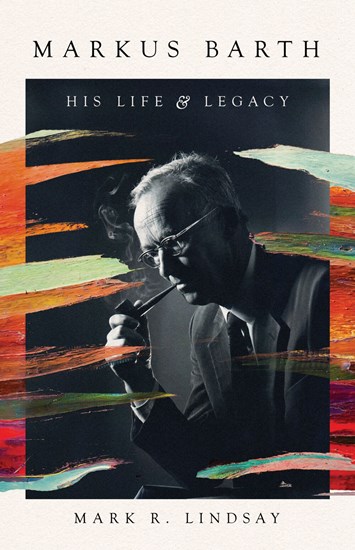
Markus Barth, son of the well-known theologian Karl Barth, was also a theologian. He is less-discussed and his legacy less well-established, but Mark R. Lindsay seeks to offer some corrective to that in Markus Barth: His Life & Legacy.
Lindsay offers this study in a work that is biographically and chronologically organized, but splits the focus with a look at Markus Barth’s theology and thought. What’s especially interesting is how Barth got caught up in controversies in Baptist and Reformed theology at his time, many of which touched upon events in the “real world” (read: life outside academic theology). For example, he criticized adoption of new Sunday School curricula as accommodation to coddling of children. While he didn’t use that very phrase, he was taken as being hyper-critical of children’s education in church, rather than the actual point he was making about integrating children into the life of the (adult) church as well. At other times, his views got him in hot water about various topics related to the Cold War (such as a divided Germany).
Barth also united his ethical-theological thought with the real world. His book, Acquittal by Resurrection argued that Christian ethical perspectives must be grounded in the Resurrection life of the church. This was doubly controversial due to his reliance upon the actual historicity of the Resurrection and the way he saw societal justice as being caught up in the theological narrative of the Bible (see 166-167).
One topic that occupied Barth at multiple points in his life was the Eucharist, which he taught in an anti-Sacramental way. He wrote on it as early as 1945, but returned to the topic in 1980. Then, he argued that because the Eucharist was a remembrance, it couldn’t be a Sacrament meant to be repeated. Despite his claim to go back to Scripture here, it is intriguing that Christ himself commanded his followers to “do this”–suggesting repetitive, Sacramental nature.[1]
Markus Barth: His Life & Legacy offers a solid look at the theology of Markus Barth. It’s unlikely the younger Barth will step out of the shadow of his father any time soon, but Lindsay offers some reasons to think that his theology should be explored as well. Whatever the topic, Lindsay offers a number of intriguing insights from Barth’s theology alongside contemporary events. It is a fascinating read that deserves careful study.
[1] I say this, of course, as a Lutheran with all the biases that entails. But I am admittedly baffled by Barth’s arguments here.
All Links to Amazon are Affiliates
Links
Be sure to check out the page for this site on Facebook!
Book Reviews– There are plenty more book reviews to read! Read like crazy! (Scroll down for more, and click at bottom for even more!)
SDG.
——
The preceding post is the property of J.W. Wartick (apart from quotations, which are the property of their respective owners, and works of art as credited; images are often freely available to the public and J.W. Wartick makes no claims of owning rights to the images unless he makes that explicit) and should not be reproduced in part or in whole without the expressed consent of the author. All content on this site is the property of J.W. Wartick and is made available for individual and personal usage. If you cite from these documents, whether for personal or professional purposes, please give appropriate citation with both the name of the author (J.W. Wartick) and a link to the original URL. If you’d like to repost a post, you may do so, provided you show less than half of the original post on your own site and link to the original post for the rest. You must also appropriately cite the post as noted above. This blog is protected by Creative Commons licensing. By viewing any part of this site, you are agreeing to this usage policy.
Book Review: “Walking Through Deconstruction: How to Be a Companion in a Crisis of Faith” by Ian Harper
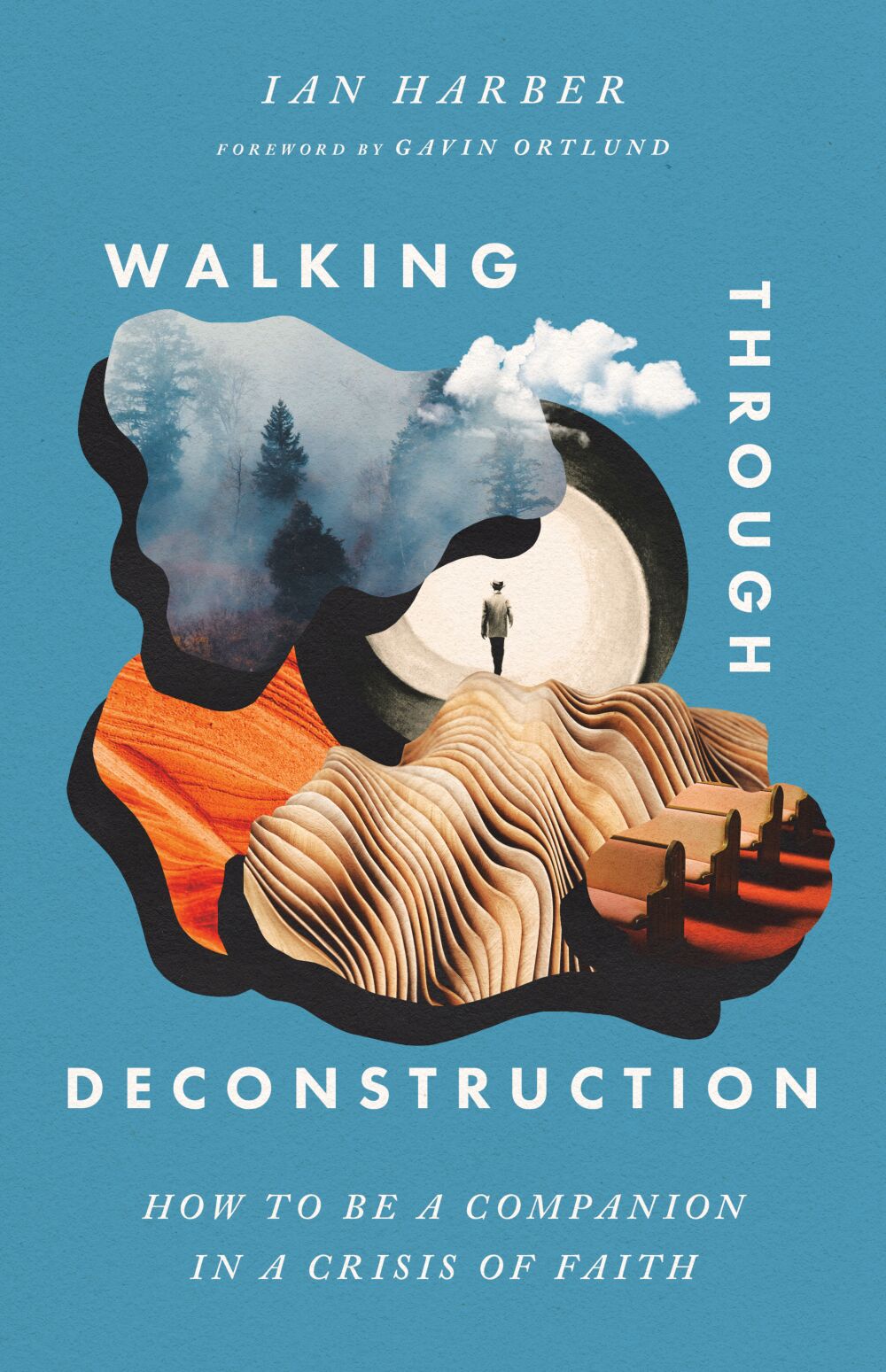
Walking Through Deconstrution: How to Be a Companion in a Crisis of Faith by Ian Harper is a book not so much for people who are deconstructing but for Christians who know someone who is deconstructing and are struggling to know how to be a friend along the way. I read it as a Christian who has deconstructed (and, in case you have seen the tagline of this site, reconstructed) his faith. I think I can give at least some perspective to the contents from an insider and interested party.
I have to admit I had some healthy skepticism going into this book. The author has written for The Gospel Coalition, an evangelical reformed ministry that leans conservative [1]. There’s a Foreword from Gavin Ortlund, who is largely seen as an apologist who engages with and against… other Christians. I won’t apologize for that skepticism, but I am happy to report it was mostly misplaced.
Harper clearly acknowledges the many reasons why people deconstruct, while also making note of the trite, oft-wrong reasons that people offer to explain why other people deconstruct. Too often, Christians say things that suggest people only question Christianity because they want to lead a sinful lifestyle, or they downplay the real problems within Christianity by saying that the sins of individual people don’t make the central message untrue. You won’t find that in this book. Instead, Harper carefully notes that labels such as “good” or “bad” deconstruction–implying that a journey of faith can be categorized as such–are unhelpful. Additionally, he notes the many, many reasons people deconstruct and does so with an eye towards understanding rather than judging.
None of this is to say that Harper doesn’t still approach the problem from within a Reformed evangelical background. He clearly states that he believes human hearts are inherently sinful, and that deconstruction can be one thing that stems from that–despite having often good or at least understandable motivations (78-79). Another problem he cites is the need for individualism in our society (80ff). He notes that therapy “can” be a good thing, but that total reliance on therapeutic speech and activity can misplace true healing (83ff). This latter point is one that demonstrates Harper is attempting to walk along a very fine line. He doesn’t seem to want to say therapy is bad–and indeed says the opposite at times–but he also seems to want to say that we over-rely upon therapy and self-help and sees that therapy can become a replacement for religion (the latter point he makes explicit on p84). Intriguingly, he also notes that reliance on therapy alone can highlight class divisions as seeing a therapist is often a position of privilege (85). The over-reliance on devices that make promises about how we can now live is another factor Harper sees as contributing to deconstruction (88-89). In all of this, though, Harper seems to be seeking to make a point, which he ultimately brings home at the end of the chapter–that we humans have needs that we will meet in whatever way is available to us, and he sees the church as one way to meet some of those needs that should not be ignored (91).
The second part of the book focuses on Harper’s look at what it might mean to reconstruct faith and to assist in doing so as one of those “companion(s) in a crisis of faith” noted in the subtitle. Mileage on this section will vary wildly depending upon what readers themselves are looking to do and what their background beliefs are. Harper is again coming from a Reformed background, so his advice makes the most sense within that context. Even here, however, he makes several points that could carry beyond that specific set of beliefs. For example, he frames questioning of beliefs of Christianity as “what it feels like” vs. “what it is.” The former, he notes, people often see people’s questioning of faith as dipping into heresy when they are deconstructing and a goal of reconstructing towards orthodoxy. However, reality as he sees it is more aligned with deconstruction moving through beliefs that are unimportant to those that are important, urgent, or core, and then building back up from there (138-140). People move too quickly, sometimes, to judge others for heresy when it might be something else like ignorance or an attempt to reframe and discover core truths (ibid, cf also 141).
Walking Through Deconstruction isn’t perfect. No book is. But for a book for Christians to give other Christians about deconstruction, it is a solid choice. Unlike many books in this field that try to immediately say deconstructing Christians are trying to lead sinful lives or don’t want to conform to rules, Harper acknowledges the many reasons that people deconstruct and offers a way forward that isn’t entirely focused on trying to reconvert someone. Saying “you can do worse” is, at this point, honestly a good endorsement. There aren’t enough books that follow this path–trying to navigate both the realities of reasons why people deconstruct and still offer a way forward for staying faithful and being a faithful friend in that space. If nothing else, it is a very interesting and sometimes challenging read. Recommended reading.
Notes
[1] It’s worth noting that The Gospel Coalition has, at least, gone on record to push back against some far-right leaning Christians who have claimed, for example, that empathy is sinful. See, for example, the article “The Godliness of Empathy.” I would still take issues with some of the points made here, but this is a far cry from those claiming that empathy is somehow the path to sinful acceptance of anything.
All Links to Amazon are Affiliates
Links
Be sure to check out the page for this site on Facebook!
Book Reviews– There are plenty more book reviews to read! Read like crazy! (Scroll down for more, and click at bottom for even more!)
SDG.
——
The preceding post is the property of J.W. Wartick (apart from quotations, which are the property of their respective owners, and works of art as credited; images are often freely available to the public and J.W. Wartick makes no claims of owning rights to the images unless he makes that explicit) and should not be reproduced in part or in whole without the expressed consent of the author. All content on this site is the property of J.W. Wartick and is made available for individual and personal usage. If you cite from these documents, whether for personal or professional purposes, please give appropriate citation with both the name of the author (J.W. Wartick) and a link to the original URL. If you’d like to repost a post, you may do so, provided you show less than half of the original post on your own site and link to the original post for the rest. You must also appropriately cite the post as noted above. This blog is protected by Creative Commons licensing. By viewing any part of this site, you are agreeing to this usage policy.
“The Problem with Fundamentalism” according to James Barr

James Barr (1924-2006) is incredible to read as someone coming from a fundamentalist background. I’m reading his book The Scope and Authority of the Bible (1980) right now and it is so good. In one of the essays, “The Problem of Fundamentalism Today,” he writes:
“The problem of fundamentalism is that, far from being a biblical religion, an interpretation of scripture in its own terms, it has evaded the natural and literal sense of the Bible in order to imprison it within a particular tradition of human interpretation. The fact that this tradition… assigns an extremely high place to the nature and authority of the Bible in no way alters the situation described, namely that it functions as a human tradition which obscures and imprisons the meaning of scripture” (79).
Barr is an extremely gracious critic, as readers of this book will see–he bends over backwards to note fundamentalists still have good things to say about the Bible, for example–but his point is so incredibly valuable.
Conservative Christianity, while claiming to be solely biblical, has ‘imprisoned” the meaning of the Bible within its own logical and theological strictures. Fundamentalist Christianity is no more or less influenced by its cultural strictures than other forms, but takes enormous strides to avoid admitting that its attempt to read the Bible is conditioned by those lenses through which they read it. So they can claim their religion is “biblical” while the more liberal Christian might admit fully they’re reading the Bible through a lens and yet be more faithful to the text.
In the same essay, Barr notes that fundamentalism leads to difficulties with scholarship, too:
“The partisan light in which fundamentalists regard conservative scholarship itself corrupts the path which that scholarship may take. Partisan scholarship is of no use as scholarship: the only worthwhile criterion for scholarship is that it should be good scholarship, not that it should be conservative scholarship or any other kind of scholarship. And many conservative scholars realize this very well. Among their non-conservative peers they do not produce the arguments that fundamentalist opinion considers essential and they do not behave in the way that the fundamentalist society requires of its members.
“Fundamentalist apologists, exasperated, often ask me the question: but how can the conservative scholar win? Is not the balance loaded against [them]? The answer is: yes, he can win, but he can win only if he approaches the Bible… as a scholar of the biblical text” (74).
Time and time again, I have seen this play out. Some evangelical critique of their own apologists has gone down this line, noting that the engagement with non-evangelicals often takes a different tone and approach to the Bible than when it is an intra-conservative debate. And why? Because fundamentalist, evangelical interpretation itself is so culturally embedded that they cannot convince others on its own terms. This is yet another proof of Barr’s point above, that fundamentalism cannot make claim to being the sole biblical truth or even biblical at all when it is itself a culturally conditioned position to hold and interpret within.
The Scope and Authority of the Bible is proving as thought-provoking as any book I’ve read of late. This, despite it being more than 40 years old. I recommend Barr’s works quite highly.
SDG.
“Bonhoeffer and the Biosciences: An Initial Exploration” edited by Wüstenberg et al.

One of the wonderful things about burgeoning interest in Dietrich Bonhoeffer’s ethics, life, and theology is the way insights from him are being applied to an increasing number of fields and topics. Bonhoeffer and the Biosciences: An Initial Exploration edited by Wüstenberg, Heuser, and Hornung seeks to explore aspects of Bonhoeffer’s thought and life seeking insight from him in the realm of biosciences. What are the biosciences explored here? Topics like posthumanism, in vitro fertilization, abortion, ability and disability, and more are touched upon through the book.
The subtitle of “an initial exploration” is quite apt. The essays included here rarely provide what even feels like a rudimentary conclusion related to Bonhoeffer and biosciences. Instead, the essays are more akin to prompts for further exploration. And what prompts they are! Nearly every chapter brought numerous intriguing insights to bear and great scope for future research.
One example is in the discussion of genetic enhancement–what would this do to distributions of power and equality; what would enhancements mean about our desires; and how do we even make moral judgments about these (questions adapted from p.86)? Then there’s a chapter which ultimately calls for seeing caregivers and medical providers as being part of the “freedom for” the sake of the other (106-107). How could this help get applied to the Lutheran doctrine of vocation, which Bonhoeffer surely agreed with. “Caring for human life at its most vulnerable is… a practice that bears a unique promise: the promise to reconnect us with the truth and depths of our creaturely existence…” (106). Such insights are fascinating, and found throughout the book.
Bonhoeffer and the Biosciences: An Initial Exploration is a fantastic read, though it is one that leaves readers wanting more. Students of Bonhoeffer would do well to use it as a springboard for more discussion and exploration.
Links
Dietrich Bonhoeffer– read all my posts related to Bonhoeffer and his theology.
Be sure to check out the page for this site on Facebook and Twitter for discussion of posts, links to other pages of interest, random talk about theology/philosophy/apologetics/movies and more!
SDG.
——
The preceding post is the property of J.W. Wartick (apart from quotations, which are the property of their respective owners, and works of art as credited; images are often freely available to the public and J.W. Wartick makes no claims of owning rights to the images unless he makes that explicit) and should not be reproduced in part or in whole without the expressed consent of the author. All content on this site is the property of J.W. Wartick and is made available for individual and personal usage. If you cite from these documents, whether for personal or professional purposes, please give appropriate citation with both the name of the author (J.W. Wartick) and a link to the original URL. If you’d like to repost a post, you may do so, provided you show less than half of the original post on your own site and link to the original post for the rest. You must also appropriately cite the post as noted above. This blog is protected by Creative Commons licensing. By viewing any part of this site, you are agreeing to this usage policy.
Bonhoeffer’s Catechesis: Foundations for his Lutheranism and Religionlessness
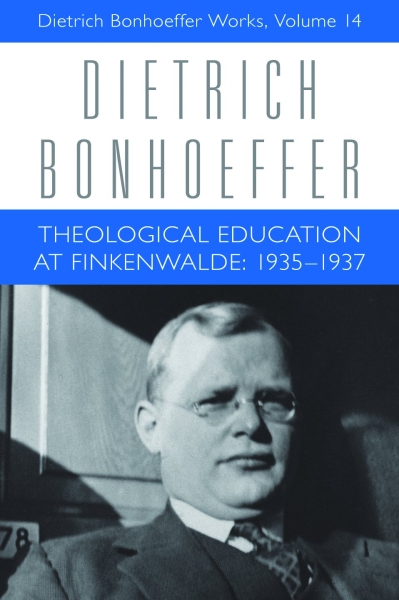
Dietrich Bonhoeffer was deeply involved in educating youths. He saw the need for it and was apparently quite skilled, building a reputation in Barcelona for caring for a rambunctious group of students. When teaching at the illegal seminary at Finkenwalde, one of the many subjects he touched upon was catechesis–basic Christian education. Bonhoeffer’s teaching on catechesis revealed that his thoughts on religionless Christianity were already quite embedded at this middle stage of his theology, and that his staunch Lutheranism held throughout his life.
When starting his lectures on catechesis, he began with some commentary on Christian instruction. However, this commentary was fronted with the notion that Christian instruction is embedded in proclamation. Conceptually, this is because those involved in catechesis have been baptized, and, due to their baptism, they are already Christian. Thus, Bonhoeffer declares that, related to the education of young people: “the struggle, the victory belongs to the church because God has long since brought the children into the church through baptism. Whereas the state must first make itself master [Herr], the church proclaims the one who is Lord [Herr].” Bonhoeffer goes on to clarify, “Christian education begins where all other education ceases: What is essential has already happened. You have already been taken care of. You are the baptized church-community claimed by God” (DBWE 14:538).
Because of the status of those learning from the church as the already baptized, Bonhoeffer argues, the church can proclaim from the start the reality that they are already in the church community. Baptism has made this happen, by the power of the Spirit. It would be hard to imagine a more Lutheran understanding of the starting point of Christian instruction than this. For Bonhoeffer, baptism was not an abstraction or a symbol: it was a very real status change of the person being baptized as becoming part of the church-community.
The same lecture series shows Bonhoeffer’s thoughts on religionless Christianity were not merely a late development while in prison. While commenting on “What makes Christian education and instruction possible…” Bonhoeffer notes that it is “baptism and justification” (DBWE 14:539). This obviously hearkens back to the discussion above; baptism as a reality-changing sacrament. But he goes on: “People may well argue about whether religion can be taught. Religion is that which comes from the inside; Christ is that which comes from the outside, can be taught, and must be taught. Christianity is doctrine related to a certain form of existence (speech and life!)” (ibid, 539-540).
Bonhoeffer here links religion with that that comes from within–something he not-infrequently links to idol-building. Religion in his own time is what allowed the German Christian movement to join and overwhelmingly support the Reich Church of the Nazis. By contrast, Christ comes from the outside, through baptism, and can and must be taught. Our religious ways are attitudes we shape and create, but Christ, the God-reality, comes from outside of us and must be proclaimed. And, ironically, this leads to true foundations of doctrine that entail a “certain form of existence” which Bonhoeffer clearly links to the reality of everyday life but also to resistance and calls to repentance for the church itself.
In this way, we can see the foundations, at the least, are here in Bonhoeffer’s thought for religionless Christianity. The fact that there is a contrast between religion and Christ is quite evident. The link between Christ, word, and sacrament is fully there. So while some may claim Bonoheffer’s religionless Christianity is anti-ritual, this cannot be further from the truth. Here, Bonhoeffer very clearly links religionlessness to sacrament and true faith. For Bonhoeffer, what signifies religion is not traditions or sacrament, but rather that which comes from within us and causes us to create our idols.
Links
Dietrich Bonhoeffer– read all my posts related to Bonhoeffer and his theology.
Be sure to check out the page for this site on Facebook and Twitter for discussion of posts, links to other pages of interest, random talk about theology/philosophy/apologetics/movies and more!
SDG.
——
The preceding post is the property of J.W. Wartick (apart from quotations, which are the property of their respective owners, and works of art as credited; images are often freely available to the public and J.W. Wartick makes no claims of owning rights to the images unless he makes that explicit) and should not be reproduced in part or in whole without the expressed consent of the author. All content on this site is the property of J.W. Wartick and is made available for individual and personal usage. If you cite from these documents, whether for personal or professional purposes, please give appropriate citation with both the name of the author (J.W. Wartick) and a link to the original URL. If you’d like to repost a post, you may do so, provided you show less than half of the original post on your own site and link to the original post for the rest. You must also appropriately cite the post as noted above. This blog is protected by Creative Commons licensing. By viewing any part of this site, you are agreeing to this usage policy.
Now Reading: “Twisted Cross: The German Christian Movement inthe Third Reich” by Doris L. Bergen
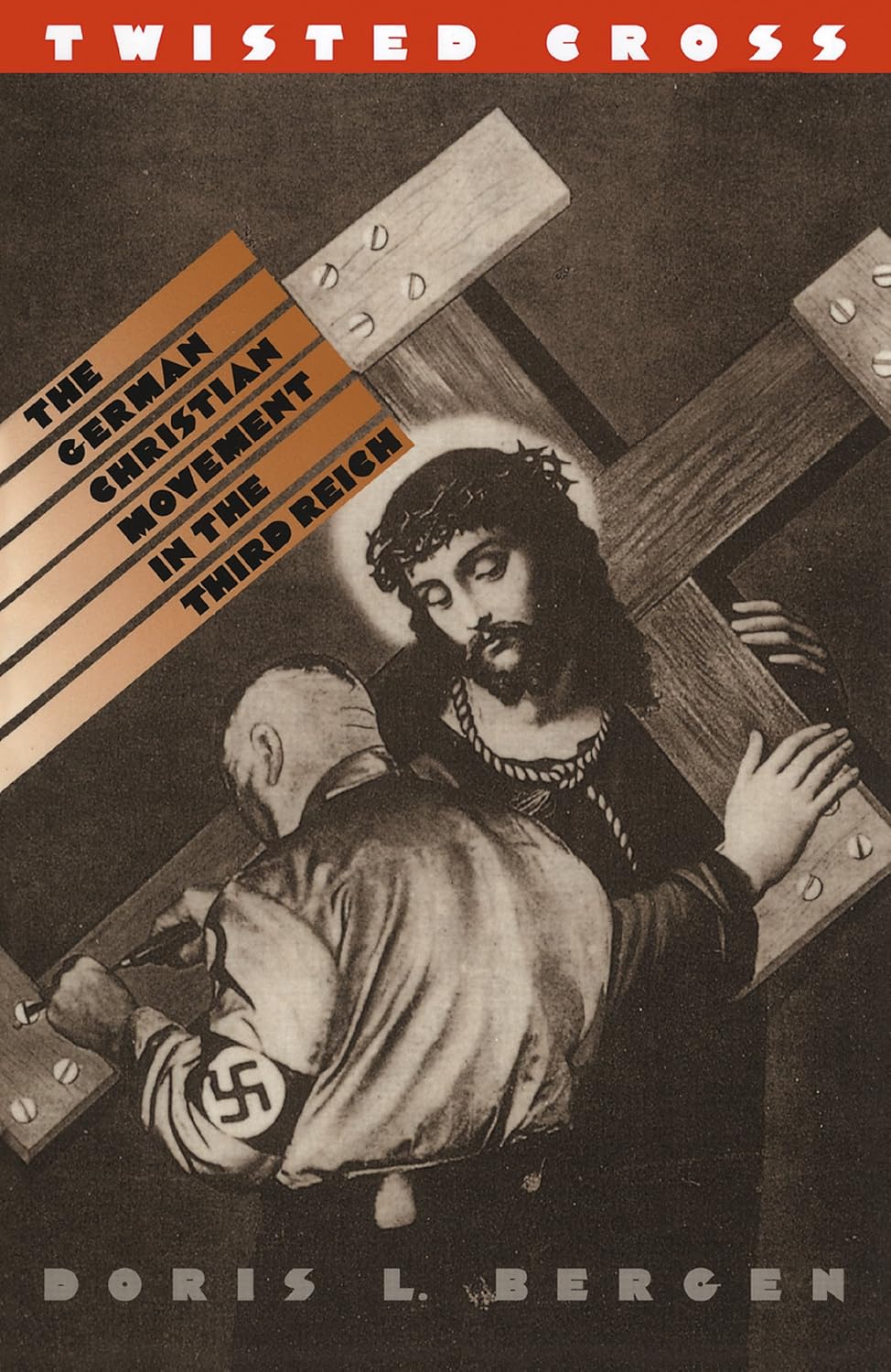
“To me, the German Christian movement embodies a moral and spiritual dilemma I associate with my own religious questions: What is the value of religion, and in particular of Christianity, if it provides no defense against brutality and even can become a willing participant in genocide.”
Doris L. Bergen, Twisted Cross, Prologue
The German churches capitulated to Nazism. This is an historical fact. While there were notable exceptions–Dietrich Bonhoeffer is of special interest to me–the fact remains that a majority of Christians in Germany not only gave in but also willingly supported the Reich Church. In our own times in the United States, increasing calls for nationalism–not just patriotism–being united with Christianity provide eerie and alarming echoes of the same arguments used by the Reich-supporting German Christian movement.
Part of my studies with Dietrich Bonhoeffer include reading works about the times and places related to his work, and Twisted Cross: The German Christian Movement in the Third Reich by Doris L. Bergen is a work I am re-reading as part of that.
The cover image is an illustration by a German communist in 1933 who was opposing the unity of Nazism and Christianity. He, John Heartfield, wrote a few captions, including “The Cross Was Not Yet Heavy Enough.”
There’s a great quote from Bonhoeffer to lead it off: “Those who claim to be building up the church are, without a doubt, already at work on its destruction; unintentionally and unknowingly, they will construct a temple to idols.”
These questions resonate so much with me. Why has the church today seemingly chased after idols of power and prestige in the political environment? What does that say about the power (or powerlessness?) of Christianity and religion? I look forward to re-reading this book and seeking more answers.
SDG.
Book Review: “The Pursuit of Safety: A Theology of Danger, Risk, and Security” by Jeremy Lundgren

The Pursuit of Safety: A Theology of Danger, Risk, and Security by Jeremy Lundgren invites readers to delve deeply into concepts that seem quite simple on the surface–safety, protection, risk, security–and realize there is much more to these topics than might first seem obvious.
First, Lundgren dives into the concept of safety. What does it mean to have safety? What signs point us to feeling safe? Then, he goes through ways to analyze risk. Humanity has viewed risk differently at different points in history. Things that used to be risky are much “safer” now, but new risks have been introduced to deal with them. For example, travel across a continent is much safer than it used to be in any number of ways, but making such travel safe has introduced not just the risk of automobile accidents, but also has impacted the climate in negative ways. Humans don’t often realize the risks they are introducing while pursuing safety. These sections were insightful in many ways and certainly led to quite a bit of thought-provoking reflection later.
Next, Lundgren looks at ways humans have sought to avoid harm. Risk mitigation with the goal of zero accidents, for example, is pursuit of a goal that is both impossible and perhaps causes harms outside of safety that might not be worth the goal itself. The way we idolize technology looms large here, along with the many, many ways technology has actually made humanity open to new risks. Finally, Lundgren reflects on Christian discipleship and what it can mean to live as a Christian in a fallen, unsafe world. This last section includes the concepts of seeking to share news about Christ and what risks discipleship might lead to in the world.
One thing I thought was especially well done in the book was Lundgren’s bringing home of the realization that seeking safety does not always yield safety, and that mitigating risks can often lead to additional risks. Lundgren briefly cites Bonhoeffer in his discussion of discipleship and safety, but I wish he had gone further. Bonhoeffer has some fascinating words reflecting on peace and safety. He wrote that “peace must be dared” and refused to link peace with lack of bodily harm. I think this would have played well into Lundgren’s overall thesis.
The Pursuit of Safety rewards careful reading and reflection. Lundgren has written a formidable look at the concepts of safety and risk in Christian life, and it’s one that I think deserves serious study.
All Links to Amazon are Affiliates
Links
Be sure to check out the page for this site on Facebook!
Book Reviews– There are plenty more book reviews to read! Read like crazy! (Scroll down for more, and click at bottom for even more!)
SDG.
——
The preceding post is the property of J.W. Wartick (apart from quotations, which are the property of their respective owners, and works of art as credited; images are often freely available to the public and J.W. Wartick makes no claims of owning rights to the images unless he makes that explicit) and should not be reproduced in part or in whole without the expressed consent of the author. All content on this site is the property of J.W. Wartick and is made available for individual and personal usage. If you cite from these documents, whether for personal or professional purposes, please give appropriate citation with both the name of the author (J.W. Wartick) and a link to the original URL. If you’d like to repost a post, you may do so, provided you show less than half of the original post on your own site and link to the original post for the rest. You must also appropriately cite the post as noted above. This blog is protected by Creative Commons licensing. By viewing any part of this site, you are agreeing to this usage policy.
Harmonization of Scripture, Inerrancy, and History- Can inerrantists harmonize like historians?
John Warwick Montgomery has been hugely influential on my own faith life, including in my development of theology while disagreeing with some of what he says. When he passed last year, I wrote a brief in memoriam. Since then, I’ve been rereading works by him and about him. One such work is Tough-Minded Christianity, a collection of essays in honor of Montgomery that was published in 2009 [1].
One essay in the collection takes on James Barr’s work, Fundamentalism. Barr was an extremely well-respected Old Testament Scholar who launched many a fusillade against fundamentalism and, in particular, against fundamentalist readings of Scripture. In particular, Barr wrote about how inerrancy would not work as a way of reading the Bible, and he especially attacked such a reading as impossible given the Bible we already have. Irving Hexham’s essay, “Trashing Evangelical Christians: The Legacy of James’ Barr’s Fundamentalism” clearly takes issue with Barr’s approach. Hexham frequently writes about Barr’s work in derogatory terms, such as calling it a “propaganda tract,” among other things. But Barr was a deep enough scholar to prompt Hexham to try to refute some of his arguments, and in doing so, I think he actually shows where Barr is right and evangelical defenders of inerrancy are wrong.
Hexham seeks to defend fundamentalist attempts to harmonize apparent contradictions in the Biblical text. One such example that he cites is the attempt to harmonize the cleansing of the Temple in John 2 with the same account in Luke 19, Mark 11, and Matthew 21). Barr writes about how some have argued that the best way to harmonize these passages is to assert that Jesus cleansed the temple twice, once at the beginning of his ministry and again near the end of his ministry. Barr writes that this harmonization is “simple but ludicrous.”
Hexham, by contrast, takes extreme issue with the use of the term “ludicrous,” and argues instead that it’s not unreasonable to make such an attempt at harmonization because, after all, we don’t have complete historical records. Hexham skirts around Barr’s incisive critique of the same evangelicals also attempting to harmonize two ascension accounts by arguing one is literal and the other is telescoping by asserting that Barr is just wrong to think fundamentalists can’t use both literal and non-literal techniques to read the Bible. At issue, however, is not whether one can defend inerrancy of Scripture by mixing ways of reading it; the issue is instead whether such readings are plausible or even necessary to begin with.
A more powerful critique from Hexham is the note that historians do this kind of harmonization all the time. And this is an extremely vital point. Hexham writes, “Harmonization, far from being an unhistorical attempt to explain discrepancies, is precisely what most traditional historians do every time they discover conflicting accounts in the archival record.” He goes on to cite others who note that historians often have “no external evidence as to whether the event recorded happened once, twice, or even three times…” and that in almost any historical writing, a selection effect is occurring which means the authors are intentionally highlighting aspects of the narrative at hand.
It is true indeed that no author can comprehensively write every detail of anyone’s life, nor do the Gospels claim to be doing so for Jesus. I think it’s also largely true that historians are quite comfortable harmonizing different stories to make them make sense. Indeed, it would quickly become impossible to write or engage with history if, every time there was a discrepancy between accounts, one simply said the account was unreal or did not happen. But there’s a huge gap between conceding that point and conceding that therefore the historical documents can be considered inerrant. Indeed, the opposite seems to be true.
When historians are harmonizing differing texts about an event, they aren’t doing so with the assumption that either text is completely without error. This is a far cry from what evangelical/fundamentalist readers of Scripture have to do in order to harmonize texts. Once one holds a doctrine like inerrancy, in which the entire Bible is supposed to be completely free from error, the process of harmonization takes on entirely new difficulties. One cannot, as historians do, harmonize two passages by simply stating one is mistaken. If one document says an event occurred at 14:00 and the other says it occurred at 04:00, the historian can do many things, such as find another source that might confirm one and deny the other. But the inerrantist cannot do that. They must come up with a harmonization that not only brings two passages together, but also makes them both somehow emerge from the harmonizing completely unscathed. And that is where things start to become absurd. Because for the inerrantist, the only way to harmonize the two times for the same event above is to multiply the event. After all, the times cannot be wrong; admitting one of the times is wrong is to admit an error into the text. Therefore, the event itself must have occurred at both times. And that is what Barr is getting at with his critique of fundamentalists readings as being ludicrous.
Certainly one may punt to the broad possibility that we don’t have the Bible telling us that a cleansing of the temple only occurred one time, but every indication seems to be that such an event was unique and powerful, not something that Jesus decided to do, say, every Tuesday or so. The ascension is even more absurd to multiply, which is what leads the inerrantist to suddenly abandon their attempt to read the historical narrative as historical reportage and instead read it as a telescoping timeline. That’s the only way to salvage the text–by turning it into something that is intentionally not reporting things in the exact timeline in which they occurred.
Hexham’s attempt to salvage inerrantist harmonization methods, then, fails. While it is still remotely possible that some events happened twice, allowing there to be a direct, historical reporting happening in both instances of an event; such a broad possibility is not all that matters. Not every harmonization can be achieved by simply multiplying instances of the event occurring. And no historian is attempting to harmonize other historic texts by assuming they are entirely without error. The parallel Hexham attempts to draw upon is undermined by his own prior commitments. Inerrantists aren’t mashing two texts together by using other sources to determine their accuracy or looking at the plausible explanations. No, they are absolutely committed to the assumption that any two (or more) Scriptural passages they are trying to harmonize are entirely without error, and therefore any harmonization must preserve that central assumption. There’s a vast chasm between those two methodologies, and one that makes the inerrantist reading seem, at times, ludicrous.
Notes
[1]It’s remarkable looking at the book now, with its foreword by Paige Patterson, who has since been implicated in covering up sexual abuse (see here), an essay by Ravi Zacharias (multiple allegations of sexual abuse here), and thinking about how highly touted this book was at the time. In apologetics circles, I remember seeing a lot of discussion, though I’ve rarely seen it mentioned since about 2014. This might be, in part, due to JWM not being as well-loved in those circles as some other apologists. In any case, this collection purports to carry on JWM’s “tough minded” approach to Christianity, one built upon strength of evidence and an apologetic approach of the same.
All Links to Amazon are Affiliates
Links
Be sure to check out the page for this site on Facebook!
Book Reviews– There are plenty more book reviews to read! Read like crazy! (Scroll down for more, and click at bottom for even more!)
SDG.
——
The preceding post is the property of J.W. Wartick (apart from quotations, which are the property of their respective owners, and works of art as credited; images are often freely available to the public and J.W. Wartick makes no claims of owning rights to the images unless he makes that explicit) and should not be reproduced in part or in whole without the expressed consent of the author. All content on this site is the property of J.W. Wartick and is made available for individual and personal usage. If you cite from these documents, whether for personal or professional purposes, please give appropriate citation with both the name of the author (J.W. Wartick) and a link to the original URL. If you’d like to repost a post, you may do so, provided you show less than half of the original post on your own site and link to the original post for the rest. You must also appropriately cite the post as noted above. This blog is protected by Creative Commons licensing. By viewing any part of this site, you are agreeing to this usage policy.

 J.W. Wartick - Reconstructing Faith