Christian Doctrine
The Consolation of Counterfactuals: The Molinism of Boethius
Whence comes this powerful understanding
That all things sees and all discerns?
…This is a cause more powerful
More forceful and effectual
Than that which passively awaits… (Boethius, The Consolation of Philosophy, Book V, section IV)
Molinism is holds that God has counterfactual knowledge of every situation. What this boils down to is that God knows conditional statements for every possible situation, such that God knows statements like “If J.W. has free time, then he will read.”
One prominent challenge to molinism is the notion that such counterfactuals about future choices cannot exist or that God simply couldn’t know them. I was startled as I read Boethius’ (480-525 AD) work, The Consolation of Philosophy, to see that he had anticipated this objection and provided the outline of an answer to it about 1500 years ago.
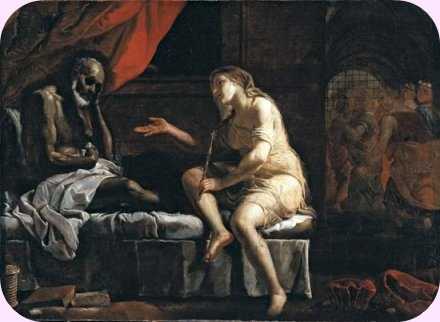
Boethius wrote the work as a dialog between himself and Philosophy, a woman who represented, well, philosophy. The last book focuses upon God’s foreknowledge and human freedom.
Writing as philosophy, Boethius states
All those things which happen without happening of necessity are, before they happen, future events about to happen, but not about to happen of necessity… But this, you will say, is the very point in question–whether there can be any foreknowledge of things whose occurrence is not inevitable. (Book V, section IV)
Again, it was amazing to see that Boethius had anticipated an objection to molinism–a system of theological thought which hadn’t been conceived fully yet (and wouldn’t be for about 1100 years!)–and provided an answer. The objection was seen above: many modern philosophers and theologians contend that God could not know that which is not necessitated to happen.
Yet Boethius answers the problem in a unique way:
The cause of this mistake [believing that God couldn’t know things that will not happen by necessity] is that people think that the totality of their knowledge depends on the nature and capacity to be known of the objects of knowledge. But this is all wrong. Everything that is known is comprehended not according to its own nature, but according to the ability to know of those who do the knowing. (Book V, section IV)
Before developing this argument, it is important to note that it rests squarely within Boethius’ later reflection upon the eternity of God–a being who has “the complete, simultaneous, and perfect possession of everlasting life” (Book V, section VI). Because Boethius holds that God is eternal in this sense–timeless–he can reasonably hold that God’s capacity to know is not limited by temporal constrictions.
Thus, we get back to the nature of his response to the counterfactual objection to molinism. Boethius, holding that God is eternal and therefore not limited by time, grounds the knowledge of counterfactuals not in their own inherent ability to be known or not known, but rather in the ability of the knower to know them.
It is worth emphasizing how radical and powerful this response is to the modern argument against molinism. If God is indeed timeless in the sense Boethius presses, then God would have access to the entirety of time as far as knowledge and action are concerned. Thus, by grounding knowledge not in the objects of knowledge themselves but in the capacity of the knower, Boethius grounded counterfactual knowledge.
Objection
Now, modern opponents of molinism would take this in stride and argue either against the contention that God is timeless or against the contention that knowledge is based in the capacity of the knower rather than the known. Exploring either of these objections is beyond the scope of this post, but it is worth noting that Boethius’ rebuttal to the problem of counterfactual knowledge works if both of his contentions are true. The question is, of course, whether they are.
A Final Objection and Response
Another way to attack Boethius’ defense of God’s knowledge of counterfactuals is to argue that even if it is the case that God is eternal and that His knowledge is grounded in the knower rather than the known, then it still would only mean that God knows what will happen, not what would happen if something were to happen. In other words, one could hold that Boethius’ answer doesn’t actually apply to counterfactual knowledge.
It seems possible, however, to modify Boethius’ defense to counter this argument as well. One could note that because God is eternal, any event that would happen, God would know about it. In other words, if x were z instead, then God’s knowledge would simply be z instead of x. This response turns the counterfactual into a counterfactual about God’s knowledge rather than about freedom. The response offered turns the question from whether God could know that “If x, then y” about John Smith into a question of “If z instead of x, then God knows z.”
Conclusion
It seems clear to me that there is much to develop yet in the objections and responses offered above. The last critique offered and my response certainly opens a number of areas of inquiry. However, for now it seems clear that Boethius has offered a unique way to look at the problem of counterfactual knowledge. Whether his perspective is correct remains a matter for further inquiry.
Boethius offered a unique and stirring defense of molinism over a thousand years before it was fully articulated by Luis de Molina. It is worth looking into his answer, even if it fails, simply for the foresight it provided. But Boethius’ work is known as an astounding discussion of divine eternity as well, among other things. Thus, I encourage readers to look into his short work, The Consolation of Philosophy. Who knows, you may even find the consolation of counterfactuals therein.
Edition Used: For this post I used the Penguin Classics edition of The Consolation of Philosophy (New York: Penguin, 1999).
SDG.
——
The preceding post is the property of J.W. Wartick (apart from citations, which are the property of their respective owners) and should not be reproduced in part or in whole without the expressed consent of the author. All content on this site is the property of J.W. Wartick and is made available for individual and personal usage. If you cite from these documents, whether for personal or professional purposes, please give appropriate citation with both the name of the author (J.W. Wartick) and a link to the original URL. If you’d like to repost a post, you may do so, provided you show less than half of the original post on your own site and link to the original post for the rest. You must also appropriately cite the post as noted above. This blog is protected by Creative Commons licensing. By viewing any part of this site, you are agreeing to this usage policy.
Inerrancy, Scripture, and the “Easy Way Out”
 Inerrancy, defined as simply as possible, is the Christian doctrine that the Bible is divinely inspired and without error.
But it is important to move beyond this simple definition, because people often come away with misconceptions about the doctrine. The Chicago Statement on Biblical Inerrancy explicates what evangelicals mean when they speak of inerrancy. I highly recommend that anyone interested in Inerrancy read this statement. It clears up a number of misconceptions.
A rejection of inerrancy is frequently due to a misunderstanding of what the doctrine means. Here are some common misreadings of the doctrine:
1) Inerrancy does not mean that there will be no discrepancies between Gospel accounts. These discrepancies, based upon an interpretation given by one who affirms inerrancy, are not seen as errors but as the different authors expressing their biographical accounts in different ways. Unlike modern conceptions that a quoted phrases must be exact, historians in the first century felt at their liberty to rearrange temporal events to better illustrate a common theme. The Gospels can be seen to utilize several methods of ancient biographies as they emphasize certain aspects of Christ’s life.
2) Inerrancy does not mean that there are no cultural or personal aspects to Scripture. An example of this can be seen in the geocentrism in the Bible. That there is geocentrism in the Bible does not undermine inerrancy. Inerrancy is the belief that what the Bible teaches is without error. The Bible does not teach geocentrism, but features it as part of the background beliefs of the cultural context of the authors. The authors have imported their culture into expressing God’s word, but that does not undermine the teachings.
3) Inerrancy does not mean God dictated the Bible word-for-word. This point ties into 2: God used human authors and gave them the leeway to write within their cultural background.
Those who reject inerrancy have taken an easy way out. Rather than investigating the issue of historical grammatical interpretation of Scripture or looking into what inerrancy means, they find what is perceived as an “error” in Scripture and reject the doctrine. The misconceptions outlined above are just a few of the errors made by people who do not investigate the issue seriously enough. Rather than coming upon a difficulty in the text and rejecting inerrancy, I urge readers to explore the difficulty, see what people have to say about it. I’ve found on more than one occasion that something I thought could be an error was explained by a cultural tradition or misreading of the text.
Finally, I’d like to address something that might come up to those reading through this. Often atheists object to the doctrine of inerrancy. I’ve run into this in my own personal discussions with those outside of the faith. They say things like “Do you really think a book written by a bunch of humans is without error?”
Well, if the Christian God exists, then the Bible is not just a book written by a bunch of humans. If God exists, there is no reason to think that God would be incapable of guiding His people to write a book to reveal Himself in a way that allows them to use their historical and cultural contexts without transmitting error in teaching. It would take a very powerful argument to convince me that an omnipotent deity would be unable to do this.
Image credit: http://commons.wikimedia.org/wiki/File:Bibbia_con_rosa.jpg
SDG.
——
The preceding post is the property of J.W. Wartick (apart from citations, which are the property of their respective owners) and should not be reproduced in part or in whole without the expressed consent of the author. All content on this site is the property of J.W. Wartick and is made available for individual and personal usage. If you cite from these documents, whether for personal or professional purposes, please give appropriate citation with both the name of the author (J.W. Wartick) and a link to the original URL. This blog is protected by Creative Commons licensing. By viewing any part of this site, you are agreeing to this usage policy.
Against Open Theism: Scrooge and God’s knowledge of the Future
 I was listening to William Lane Craig’s Defenders podcast (Doctrine of God: Part 13) and he brought up an interesting analogy about omniscience. He discussed Scrooge in Dickens’ “Christmas Carol.” The last spirit to appear to Scrooge is the ghost of Christmas to come. He takes Scrooge around and shows him all sorts of disturbing imagery that will happen. Scrooge asks the ghost whether these are things that must happen, or whether he can stop them. The spirit remains silent.
Craig pointed out the spirit would have to remain silent to have any sort of effect. For suppose the spirit knows what will happen: that Scrooge will repent and so these awful things won’t happen. But then if he tells Scrooge what he knows, Scrooge will feel little remorse about not acting to prevent them. Yet if the spirit told Scrooge these things would happen, then Scrooge has no reason to modify his behavior, for he cannot prevent the events from happening.
Craig suggests, then, that we should look at omniscience and instances of God “changing his mind” in the same fashion. This has some interesting applications in the case of Open Theism, because it undermines one of the core exegetical arguments for the position: cases of God “repenting” or “changing his mind.”
God, on classical theism, knows what will happen in every circumstance. He comprehensively knows the future (contra Open Theism). If this is so, then God would have to withhold some of his knowledge in order to bring things about, despite his knowledge that it would occur. Like the Ghost of Christmas Yet to Come, God would know the answer to Scrooge’s question, but would not answer him, so that he could bring it about that Scrooge would repent.
Consider Jonah. Open Theists often point to the story of Nineveh as an example of God not comprehensively knowing the future. Because God sends Jonah with the message that Nineveh will be destroyed, but then, when Nineveh repents, he shows mercy, many people say that God did not know the Ninevites would have such a reaction. Yet why should this be the case? Isn’t it plausible that God did know they would repent and that God sent the message that they would be destroyed because that is the only way Nineveh would be led to repentance? This is, in fact, hinted at later in the book, when Jonah says to God, “Isn’t this what I said, LORD, when I was still at home? That is what I tried to forestall by fleeing to Tarshish. I knew that you are a gracious and compassionate God, slow to anger and abounding in love, a God who relents from sending calamity” (4:2).
But if God had told the Ninevites “I will not destroy you” because he knew that he would not, would not the impetus of Jonah’s message lose its strength. With the threat of destruction, the Ninevites repented. Without, would they have done so? Imagine Jonah’s message going through the streets “Forty more days and Nineveh will not be destroyed!” I think it obvious that this would probably not have the same effect that the initial message was.
So it seems quite plausible that God, like the Ghost of Christmas Yet to Come (in our analogous case), may refrain from telling all he knows at many points throughout Scripture. For if he told people everything he knew, he would know that they would not repent, turn aside from their evil ways, or bring about the actions he desired. The instances wherein God ‘changes his mind’ or ‘repents’ are instances of this: rather than revealing his knowledge, God withholds it, in order to bring about the ends that he desires to (and knows will) happen. We, like Scrooge, would not respond to calls for repentance if we felt it didn’t make a difference in the end.
Final note: the above account implicitly assumes molinism to be the case. So much the better for it, I say!
SDG.
This is part of a series I’ve written against the doctrine of Open Theism. If you’d like to read more, check out the original post for discussion and links.
——
The preceding post is the property of J.W. Wartick (apart from citations, which are the property of their respective owners) and should not be reproduced in part or in whole without the expressed consent of the author. All content on this site is the property of J.W. Wartick and is made available for individual and personal usage. If you cite from these documents, whether for personal or professional purposes, please give appropriate citation with both the name of the author (J.W. Wartick) and a link to the original URL. This blog is protected by Creative Commons licensing. By viewing any part of this site, you are agreeing to this usage policy.
Original Sin and the Metaphysics of the Soul
Original Sin Defined
The writers of the Augsburg Confession (found in the Book of Concord) defined Original Sin as the belief that “…since the fall of Adam all human beings who are propagated according to nature are born with sin, that is, without fear of God… [we] teach that this disease or original fault is truly sin, which even now damns and brings eternal death to those who are not born again through baptism and the Holy Spirit” (BOC, 39).
One Objection
Ezekiel 18:20a states, “The soul who sins is the one who will die. The son will not share the guilt of the father, nor will the father share the guilt of the son.”
The word used for “soul” in this passage is the Hebrew word, nephesh. This passage leads to the objection that original sin cannot be true as I have outlined it, because it involves the son inheriting the guilt of the father.
The Question of the Soul: A Metaphysic of Original Sin
Three views of the soul are prevalent in Christianity. All of them presuppose metaphysical dualism. They are:
1) Our soul is constructed just as our physical body: Our soul is a half-and-half combination of the souls of our mother and father.
2) God specially creates each soul for each person when he/she is conceived/born/etc. Alternatively, God has already created every soul for everyone who will ever live, and puts them in a body when one is needed. The main problem with this view is that it would seem that if original sin is true (in the sense I have outlined it above), then God creates sinful souls for us.
3) Our soul is from Adam. There are no new souls for mankind, rather, we all share, in some sense, Adam’s soul.
I tend to favor 1) (now, anyway). But I favor a version of 1) which is not so much a half-and-half combination of souls, but a union of the totality of the souls we inherit. I originally wrote this post for my new site, but an insightful commentator lead me to heavily edit my views here. Just as we become one in the union of sex, so do our souls become one when we conceive a child.
What this means, then, is that the soul we inherit from our ancestors includes the inheritance of the guilt of sin. I must note the distinction here between sins which require action and those that do not. I have been pondering this idea for some time–is it possible to have sins for which we are guilty that we don’t commit? The answer I lean toward is “No”, but that doesn’t preclude original sin. The reason is that through the soul, we have literally participated in the original sin of Adam. When we are told that we have the “Old Adam” in us, this should be taken in a more literal sense than it often is.
We are told by Paul that there is a natural and spiritual body (1 Corinthians 15:44). These are both the inheritance of our ancestors. In a literal sense, then, there is the “old self” (Romans 6:6) and the Old Adam (1 Corinthians 15:45) which, from birth, enslave us to sin (Romans 6:6). Metaphysically I think this means that our soul has literally participated in, and is therefore held accountable for, the original sin. Original sin is a substantive entity–it corrupts our very nature. This is no mere inclination to sin, but a bondage to sin and a separation from God. It only makes sense to me on a metaphysical level to argue that this sin is inherited through our soul, which, like our body, maintains the union with Adam himself.
So how does this answer the objection from Ezekiel 18:20? Initially, one may argue it seems to purge the passage of all meaning. This is not the case, however. What Ezekiel is referring to is the sin of commission. That is, it refers to a sin which requires an action. Ezekiel is telling us that the actions of the father do not condemn the actions of the son. This does not, however, preclude the original sin in the metaphysical sense in which I have outlined it, because we have each participated in the action which causes original sin.
One final note is required, however. This is again a modification of my original thoughts due to enlightening discussion with my good friend’s comments. We must remember that this stain of sin, this original sin, has passed away for those who have faith in Christ. For, though the passages I quoted above discuss the nature of our original guilt, they immediately turn to salvation which is through Christ. Our New Adam replaces the Old (1 Corinthians 14:42-57), and our enslavement to sin is no more (Romans 6:6-14). Our original guilt, received through our sharing in the action of Adam, and our shared spirit with him, is no more.
Source:
The Book of Concord. Augsburg Fortress. 2000.
——
The preceding post is the property of J.W. Wartick (apart from citations, which are the property of their respective owners) and should not be reproduced in part or in whole without the expressed consent of the author.
Rising Above the Dogma: A Call to Christian Fellowship
Dogmatics. Too often this word is seen as a “dirty” word. We don’t want to deal with stuffy theology books or learning about doctrine. It is my sincere belief that Christianity has unfortunately traveled two paths when dealing with Christian doctrines:
1) Christians simply don’t care about doctrine. They abandon systematic theology, and in turn abandon the soul of Christianity.
2) Christians emphasize soundness of doctrine with such zeal that they alienate and make enemies of fellow Christians. In doing so, they abandon Christ’s teaching.
I just finished reading the book Christ Among the Dragons by James Emery White, and I must say it should be required reading of all Christians. Among the wonderful points made by White throughout this work, I found the most important to be his discussion of our interactions with fellow Christians. Too often, I found myself literally in tears, either because I stood convicted by the words he wrote or because fellow Christians had wronged me in the ways he outlined. He writes concerning debates over doctrinal issues:
“Truth be told, we should have enough theological humility to admit that we may all be wrong. The greater issue is refusing to make our theological viewpoint the test of orthodoxy, the agenda for which we exist and the basis of our community… And our rhetoric isn’t helping. ” (126).
White later quotes two other theologians, John Stott and the Lutheran theologian Peter Meiderlin. Stott wrote:
“Perhaps our criterion for deciding which is which [that is, which doctrines are essential and which are matters of liberty]… should be as follows. Whenever equally biblical Christians, who are equally anxious to understand the teaching of Scripture and to submit to its authority, reach different conclusions, we should deduce that evidently Scripture is not crystal clear in this matter, and therefore we can afford to give one another liberty” (127-128).
Meiderlin said, “In essentials, unity; in non-essentials, liberty; in all things, charity.”
These powerful calls to Christian unity too often fall on deaf ears from those who adhere to either of the views I described above. Those who believe doctrines are unimportant criticize those who attempt to stress the essentials. Those who emphasize doctrinal purity too often attack fellow Christians for matters which should be of liberty.
I hope and pray for a day in which we can move past such disturbances in the body of Christ. No longer will Christians feel “second class” because they are of a different denomination. No longer will Christians abandon the Creeds of the Catholic Church (meaning the whole Church at large, not just the Roman Catholics). No longer will Christians accuse their fellows of rejecting Scripture for having different views on matters of “liberty.” No longer will Christians abandon the message of Christ in favor of ethical teaching.
We Christians are a Body. We must stick together. Divided we fall, united we stand.
I’d like to add that when we deal with our fellow man, and particularly our fellow Christian, the most important thing we should remember is that our message is Christ, and our witness is our deed. I close with another quote from White in Christ Among the Dragons:
“When we condescendingly say that our position is simply the ‘gospel,’ as if it’s not really a debate worth having, then we are being arrogant. When we make our view the litmus test of orthodoxy, or even community, we are being neither gracious nor loving. When we say that our view alone upholds God’s sovereignty or that our perspective is the only one that cares about lost people, we are not being truthful. When we exhibit a haughty smirkiness, or we so state our position that we divide churches, student ministry groups or denominations, then we are sinning.” (126-127)
Source:
White, James Emery. Christ Among the Dragons. InterVarsity Press. 2010.
Christian Doctrines and Analytic Philosophy
I’ve been pondering the possibility for analytic philosophy to explore Christian Doctrine. Clearly, the prospects aren’t terribly dim, for some (such as Alvin Plantinga and, to a greater extent, Richard Swinburne) have done this exact thing. I think it is important to utilize philosophy and theology in a mutually beneficial relationship, and I personally find the results when this happens to be singularly beautiful.
Why undertake this project? First, because I’ve seen a number of objections to core Christian theology which have been disturbing to me. This includes challenges to the doctrine of the Trinity, redemption/atonement, baptism, etc. Second, because I think it is necessary–or at least expedient–to outline doctrines in forms that can be analyzed. Objections to Christianity often come in the form of “X doctrine of Christianity is unintelligible, so it’s false.” If it can be demonstrated that X is intelligible, then such objections fail.
Is such a defense Scriptural? I believe so. Paul often utilized philosophy in his witnessing (see Acts 17:28 for an example). He argued from Scripture, but also utilized philosophical insights to witness to the Greeks. Not only that, but Jesus instructs us to love God with all of our mind (Mark 12:30).
How might such a defense look? It will look AWESOME. Okay, seriously, it will look something like this:
Sin (hereafter s) is broadly defined as any act which distances one from God. Now, on Christianity, s is that for which we must be atoned, for all have committed at least one act that can be classified as s. However, all who commit such acts are to be held accountable. But before God, who can stand (Psalm 130:3)? Therefore it must be an act of God to cleanse us from all unrighteousness.
I put that together just now for the sake of an example, but I’ll be going into more depth as I explore various Christian doctrines in light of analytic philosophy and Scripture.
I’m excited for this project, though I must admit it will likely take quite a bit of time to put anything together for it, as one must not only utilize analytic philosophy, but also doctrine and exegesis for this kind of project.
——
The preceding post is the property of J.W. Wartick (apart from citations, which are the property of their respective owners) and should not be reproduced in part or in whole without the expressed consent of the author.

 J.W. Wartick - Reconstructing Faith
