Christian theology
Book Review: “A Matter of Days” by Hugh Ross, Second Expanded Edition
Hugh Ross is one of the most influential Old Earth Creationists alive. The founder of Reasons to Believe, he has had a profound influence on putting forth Old Earth Creationism from a concordist–that is, the notion that the Bible and science will agree where they overlap [often including the notion that the Bible explicitly speaks on scientific issues]–perspective. A Matter of Days
The book provides a huge amount of material for those wanting to interact with topics of creationism. Ross begins by surveying the contentious way the issue is often argued and noting that we as Christians ought to strive for more tolerant attitudes towards each other. Alongside this, he notes various statements by evangelicals allowing for some openness on the topic.
The book covers a massive range of arguments for and against young earth creationism, but the real meat of the text is dealing with various scientific arguments on either side. These are surveyed in a kind of question and answer or objection and rejoinder format in which Ross clearly explains a huge amount of scientific data for an ancient universe and deals with the major objections to such a position from the young earth creationist perspective.
Ross also confronts textual issues in a number of places, including much discussion on the concept of “day” and its meaning in Genesis 1. This, he covers from different perspectives including historic theology, exegesis, and science. He also puts forward a canonical view of how to see Creation in the Bible rather than limiting it simply to Genesis 1-2. There are a number of other texts that he argues also teach on creation.
Although he is an “Old Earth” believer, Ross is also clearly a creationist and puts forward several brief arguments about the faultiness of evolution. This is not a focus of the work, but through such arguments he establishes a clearer picture of his own position related to origins of both life and speciation.
One issue that might be raised with the book is whether the seemingly strict concordism Ross advocates is necessary. For example, rather than arguing that entropy and decay are spoken about in the Bible (100-102), could one not simply note that the human biblical author almost certainly had no concept of entropy and therefore was not addressing it? That is to say, a concept of divine condescension might be easier to hold to than one of future scientific knowledge revealed in the Bible.
The new edition is expanded and has noticeably featured references to some recent works as well as more arguments. It is a rather large re-write with much new information. Readers considering purchase should get this edition.
The Good
+Major point-by-point explorations of evidence for and against an old earth
+Strong defense of the Old Earth Creationist/Concordist position
+Many technical issues explained in understandable ways
+Charitable tone
+Excellent index
+Expanded arguments and new information for the new edition
+Really cool cover
The Bad
-Some questions about concordism remain
-Perhaps too brief on some objections
Conclusion
A Matter of Days
Disclaimer: I was provided with a review copy by the publisher. I was not required to write any sort of review whatsoever thereby.
Links
Be sure to check out the page for this site on Facebook and Twitter for discussion of posts, links to other pages of interest, random talk about theology/philosophy/apologetics/movies and more!
Origins Debate– Read a whole bunch more on different views within Christianity of the “origins debate.” Here I have posts on young and old earth creationism, intelligent design, theistic evolutionism, and more!
Source
Hugh Ross, A Matter of Days
SDG.
——
The preceding post is the property of J.W. Wartick (apart from quotations, which are the property of their respective owners, and works of art as credited; images are often freely available to the public and J.W. Wartick makes no claims of owning rights to the images unless he makes that explicit) and should not be reproduced in part or in whole without the expressed consent of the author. All content on this site is the property of J.W. Wartick and is made available for individual and personal usage. If you cite from these documents, whether for personal or professional purposes, please give appropriate citation with both the name of the author (J.W. Wartick) and a link to the original URL. If you’d like to repost a post, you may do so, provided you show less than half of the original post on your own site and link to the original post for the rest. You must also appropriately cite the post as noted above. This blog is protected by Creative Commons licensing. By viewing any part of this site, you are agreeing to this usage policy.
Sunday Quote!- Spiritual Warfare and Mapping the Land?
 Every Sunday, I will share a quote from something I’ve been reading. The hope is for you, dear reader, to share your thoughts on the quote and related issues and perhaps pick up some reading material along the way!
Spiritual Warfare and Mapping the Land?
I recently read through Understanding Spiritual Warfare: Four Views
Spiritual mapping is the practice of identifying the spiritual conditions at work in a given community, city, or nation. By gathering objective information (including key historical facts… locations of bloodshed, idolatrous practices, [etc…]) and combining it with spiritual impressions (prophecy, revelation, words of knowledge, dreams, and visions), believers can prayerfully combine all of this information and draw a map that identifies the open doors between the spiritual world and the material world (182-183, cited below).
Now I admit that I come from a background in which spiritual warfare was little (if at all) discussed, but this does seem a little bit more than we can glean from the biblical image of spiritual warfare. Where, for example, are we instructed to try to use dreams and revelation in order to find “open doors” of the spiritual world? Where are we instructed that there might be doors for the spiritual world into our own that are identifiable? I think some aspects of this notion might be helpful for witnessing and the like–after all, knowing the landscape in this fashion would be helpful for identifying areas of conflict in a community and offering Christlike compassion in those areas–but I hesitate to think that the way they can be applied is in this fashion.
What are your thoughts on this? What do you think of spiritual warfare?
Again, I highly recommend this book with its very wide range of diverse views presented on the topic in order to get an introduction.
Links
Be sure to check out the page for this site on Facebook and Twitter for discussion of posts, links to other pages of interest, random talk about theology/philosophy/apologetics/movies and more!
Microview: Understanding Spiritual Warfare: Four Views– I briefly review this highly interesting book on different views of spiritual warfare.
Sunday Quote– If you want to read more Sunday Quotes and join the discussion, check them out! (Scroll down for more)
Source
C. Peter Wagner and Rebecca Greenwood, “The Strategic-Level Deliverance Model” in James Beilby and Paul Rhodes Eddy, eds., Understanding Spiritual Warfare: Four Views
SDG.
Sunday Quote!- Charismata and Authority of Scripture
 Every Sunday, I will share a quote from something I’ve been reading. The hope is for you, dear reader, to share your thoughts on the quote and related issues and perhaps pick up some reading material along the way!
Charismata and the Authority of Scripture
I have been reading through Jon Mark Ruthven’s On the Cessation of the Charismata
the implicit attack on the sufficiency of scriptural authority made by those claiming miracles and extraordinary gifts of the Holy Spirit… Such claims [of spiritual gifts]… represented a direct challenge to Protestant religious authority in that it was specifically based upon a closed canon of Scripture. (32, cited below)
Now I have not finished the book, so I’m not sure whether Ruthven would affirm this point. Indeed, he calls this a “polemical” argument against spiritual gifts, so I suspect he’s going to argue that the “continuationist” position–that which affirms spiritual gifts moving into the modern era–does not need to deny the closedness of the canon or affirm a denial of the sufficiency of Scripture. I’m looking forward to seeing how his argument proceeds, and whether he will indeed argue against this or affirm the openness of the canon.
What do you think? Do charismata–spiritual gifts–entail this position? If so, how problematic is it? What is your position? I’d love to read your thoughts in the comments.
Links
Be sure to check out the page for this site on Facebook and Twitter for discussion of posts, links to other pages of interest, random talk about theology/philosophy/apologetics/movies and more!
“Are Miraculous Gifts for Today?”- A look at four views in Christian Theology– I provide a look at four positions on miraculous/spiritual gifts in contemporary theology.
Sunday Quote– If you want to read more Sunday Quotes and join the discussion, check them out! (Scroll down for more)
Source
Jon Mark Ruthven, On the Cessation of the Charismata
SDG.
Sunday Quote!- An Eclectic Dialogue Between Christianity and Science
 Every Sunday, I will share a quote from something I’ve been reading. The hope is for you, dear reader, to share your thoughts on the quote and related issues and perhaps pick up some reading material along the way!
An Eclectic Dialogue Between Christianity and Science
I recently finished reading Adam, the Fall, and Original Sin, a series of essays from a variety of authors on these highly important subjects. There are a number of excellent articles in this work, and I highly recommend it. One great quote from the book was about Christianity and science and the way to integrate them:
[W]hy should we choose sides [between science and Christianity]? Theology should be eclectic in how it engages with science. Christians should engage scientific theories on a case-by-case basis. Different theories will invite different attitudes and responses (sometimes dialogue, sometimes conflict, sometimes independence, and so on)… This is partly because Scripture does not usually answer our scientific questions and partly because scientific claims are by nature revisable. (243-244, cited below)
I found this an enormously helpful quote and approach because I think too often Christians and non-Christians act as though “science” is this homogeneous whole, and that “Christianity” is itself a single entire unit. But realistically, this is not at all the case. Different theories and different theological points have their own 
What are your thoughts? Is this a helpful way to view the religious and scientific dialogue?
Links
Be sure to check out the page for this site on Facebook and Twitter for discussion of posts, links to other pages of interest, random talk about theology/philosophy/apologetics/movies and more!
Sunday Quote– If you want to read more Sunday Quotes and join the discussion, check them out! (Scroll down for more)
Source
Adam, the Fall, and Original Sin
SDG.
Sunday Quote!- My Position is the Gospel; Yours is Not!
 Every Sunday, I will share a quote from something I’ve been reading. The hope is for you, dear reader, to share your thoughts on the quote and related issues and perhaps pick up some reading material along the way!
My Position is the Gospel; Yours is Not!
I recently re-read James Emery White’s fantastic Christ Among the Dragons. It is a book that encourages Christian conviction with charity. That is, it encourages Christians to stand firm in their beliefs, while doing so in ways that do not lead to name-calling, bitterness, and resentment. One highly interesting part was when White discussed how some Christians tend to reduce the Gospel to their own position:
when we condescendingly say that our position is simply the ‘gospel,’ as if it’s not really a debate worth having, then we are being arrogant. When we make our view the litmus test of orthodoxy, or even community, we are being neither gracious nor loving. When we say that our view alone upholds God’s sovereignty or that our perspective is the only one that cares about lost people, we are not being truthful. When we exhibit a haughty smirkiness, or we so state our position that we divide churches, student ministry groups, or denominations, then we are sinning. (126-127)
White suggests various criterion for when we might say that one position is, in fact, not the Gospel, but this means moving past our narrow definitions of what we want others to believe about things that are not essentials of the Christian faith. Yes, these things remain important, but they do not allow us to exclude from the church of Christ those who disagree with us.
Christ Among the Dragons is a fantastic book, and well worth the read. White’s insights on this and other issues are spot-on.
Links
Be sure to check out the page for this site on Facebook and Twitter for discussion of posts, links to other pages of interest, random talk about theology/philosophy/apologetics/movies and more!
Sunday Quote– If you want to read more Sunday Quotes and join the discussion, check them out! (Scroll down for more)
Source
James Emery White, Christ Among the Dragons (Downers Grove, IL: InterVarsity, 2010).
SDG.
Book Review: “Roman Catholic Theology and Practice: An Evangelical Assessment” by Gregg R. Allison
 Gregg Allison’s work, Roman Catholic Theology and Practice: An Evangelical Assessment
Evangelicalism in Dialogue
One issue that some may see rising from Allison’s approach is the notion of “evangelical thought” or perspective. Allison himself notes how difficult it would be to pin down one specific approach. He does, however, do a good job of approaching the various aspects of Roman Catholic theology in a way that allows for different evangelical voices to get a say. For example, in his discussion of the Lord’s Supper/Eucharist/etc., he critiques Roman Catholic teaching from a number of different evangelical positions. That said, Allison is Reformed and focuses much of the space for critique on offering a specifically Reformed criticism. This means that at some points those outside of the Reformed tradition may feel they have differing criticisms to offer that are not fully covered.
One can hardly fault Allison for this approach, however, because the space needed simply to cover the Catechism and offer a critique is large.
Roman Catholicism Outlined and Critiqued
The value of the book for many will be found in the fact that it does present Roman Catholic teaching as found in their official Catechism. Allison does a great job simply presenting what the Catechism teaches in each section before he offers a critique.
Allison’s critique often focuses on either the Church-Christ identification or the nature-grace interdependence in Roman Catholic theology. It is the latter which is the most prominent critique offered. Roman Catholicism sees human nature and grace working together whereas evangelicalism sees human nature as corrupted through the fall and not working together with grace. Allison does an excellent job showing numerous difficulties with the Roman Catholic view on this topic and then showing how many doctrines of Roman Catholicism are dependent upon this faulty premise.
Allison’s critique of specific doctrines is also helpful. His criticisms of papal and magisterial infallibility are on-point, concise, and decisive. His outline and critique of Mariology, justification, etc. are each valuable and insightful. Again, however, readers may be left hoping there was more space to dedicate to each individual topic.
Some other issues
One issue that happens a few times is that Allison seems to inadequately ground his critique. This is particularly the case in a number of places in which the criticism amounts to “evangelicalism dismisses x.” Such a “dismissal” happens frequently through the book on minor topics, but it leaves the reader wondering on what grounds such ideas are dismissed. Often, the only grounds provided is something like not having sufficient biblical warrant or because of its reliance on one of the above mentioned overarching themes (Church/Christ or nature/grace).
Another issue is that Allison sometimes offers critiques that do not seem very convincing or are products of his theological presuppositions. For example, his discussion of baptism and his denial that Jesus is speaking of baptism in John 3:5ff seems confused, to say the least. Indeed, he confirms that the discussion of “water and the spirit” are being used in such a way as to refer to the same thing. However, no real alternative to baptism is given of this water- and spirit-filled notion. It is simply asserted that it cannot be baptism because that would mean an anachronistic notion (baptism) was in the text. But of course John the Baptist was around before Jesus, and he baptized with water… and the spirit. Now, I am Lutheran, so my perspective on baptism certainly differs from that of Allison’s, but his treatment of this passage seemed exegetically impossible.
Conclusion
Gregg Allison’s interaction with Roman Catholicism is enormously helpful in that it walks readers through the beliefs of Roman Catholics from their own Catechism. The strength of the work is its broadness, which is also its weakness as individual topics are sometimes skimmed over too briefly. That said, Roman Catholic Theology and Practice: An Evangelical Assessment
Disclaimer: I received a review copy of the book through Crossway. I was not obligated by the publisher to give any specific type of feedback whatsoever.
Source
Gregg Allison, Roman Catholic Theology and Practice: An Evangelical Assessment
Links
Be sure to check out the page for this site on Facebook and Twitter for discussion of posts, links to other pages of interest, random talk about theology/philosophy/apologetics/movies and more.
SDG.
——
The preceding post is the property of J.W. Wartick (apart from quotations, which are the property of their respective owners, and works of art as credited; images are often freely available to the public and J.W. Wartick makes no claims of owning rights to the images unless he makes that explicit) and should not be reproduced in part or in whole without the expressed consent of the author. All content on this site is the property of J.W. Wartick and is made available for individual and personal usage. If you cite from these documents, whether for personal or professional purposes, please give appropriate citation with both the name of the author (J.W. Wartick) and a link to the original URL. If you’d like to repost a post, you may do so, provided you show less than half of the original post on your own site and link to the original post for the rest. You must also appropriately cite the post as noted above. This blog is protected by Creative Commons licensing. By viewing any part of this site, you are agreeing to this usage policy.
Book Review: “Overcoming Sin and Temptation” by John Owen
 Be killing sin, or it will be killing you. – John Owen
John Owen was a Puritan minister who lived in the 1600s. In Overcoming Sin and Temptation
If I had to sum up this volume with one word, I would say: “Convicting.” John Owen throughout does a fantastic job calling believers to the awareness of their own sin and the various ways in which we deny our sin and try to pretend it isn’t there. There were many times I found myself nodding along, realizing that Owen had laid bare yet another way I had been trying to ignore sin in my own life. It is a powerful work of law.
Owen points out how we often rely upon grace in the face of temptation–surely we will be forgiven this sin!–rather than putting the temptation to death; he notes how we often try to ignore sin through various means like the weariness of our body (we’re too tired to avoid this sin); he exhaustively draws out the many ways we deceive ourselves through our sin and persist in sin. It’s almost tiring because we realize how often our sins have been covered up in our minds through rationalizing it away.
But Owen does not end with the conviction of our hearts for our sin. Instead, as the title of this book suggests, he puts forward ways in which we may overcome sin and temptation. Primarily, they involve watchfulness and prayer. We are called by Owen to an active assault on sin rather than passive resistance. We must always be looking out for the ways sin penetrates our lives and close those gaps. Some concrete things Owen suggests are focusing upon Christ’s work and how our sin adds to Christ’s suffering; thinking upon the grace and love of God and how we wound the great God who made us when we sin; considering God’s sovereignty and asking, with Joseph in Genesis, “How can I sin against my God?” These are only a few of the ways Owen suggests we put sin to death in our lives.
This edition of the works is made especially helpful by extensive notes explaining hard-to-understand words. Various explanatory words are sometimes added into the text (always bracketed so readers know they have been added) to continue Owen’s train of thought. Each work has a brief but information-packed introduction, and there are lengthy and detailed outlines of the works at the end of the book.
I do wish the editors had also decided to make the language throughout the text gender-inclusive. It is jarring to have to continually process: “Oh yeah, he’s using ‘men’ to reference ‘people.” It may seem like a small thing, but if this is so clearly what Owen means when he says “he” or “man” or “men,” etc., then why not just say it through the editorial process? This is a minor strike against an otherwise excellent work.
I recommend that every Christian obtain a volume of Overcoming Sin and Temptation
Disclaimer: I received a review copy of the book through Crossway. I was not obligated by the publisher to give any specific type of feedback whatsoever.
Source
John Owen, Overcoming Sin and Temptation
Links
Be sure to check out the page for this site on Facebook and Twitter for discussion of posts, links to other pages of interest, random talk about theology/philosophy/apologetics/movies and more.
SDG.
——
The preceding post is the property of J.W. Wartick (apart from quotations, which are the property of their respective owners, and works of art as credited; images are often freely available to the public and J.W. Wartick makes no claims of owning rights to the images unless he makes that explicit) and should not be reproduced in part or in whole without the expressed consent of the author. All content on this site is the property of J.W. Wartick and is made available for individual and personal usage. If you cite from these documents, whether for personal or professional purposes, please give appropriate citation with both the name of the author (J.W. Wartick) and a link to the original URL. If you’d like to repost a post, you may do so, provided you show less than half of the original post on your own site and link to the original post for the rest. You must also appropriately cite the post as noted above. This blog is protected by Creative Commons licensing. By viewing any part of this site, you are agreeing to this usage policy.
A God Who Risks… too much?- A Difficult Dilemma for Open Theists
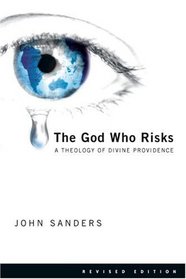 Open theism is, briefly, the notion that God does not comprehensively know the future [edit: strictly speaking, the view is that there is no settled “future” to know to begin with, so it is not a lack of knowledge but rather the absence of such a thing as a future that will occur; see next sentence and thanks for a clarifying comment below]. The future, it is held, is in some sense “open” because it is undetermined, even for God. Most frequently, this claim is put forth in terms of denial of knowledge of free creaturely action. Representative is the claim of John Sanders:
God cannot know as definite what we will do unless he destroys the very freedom he granted us… The future is not completely fixed, but open, to what both God and humans decide to do, so there are numerous possible futures (not just one). God knows as possibilities and probabilities those events which might happen in the future. (Sanders, 206, cited below)
Thus, it is fairly central to the open theistic perspective that God does not (and indeed cannot) know the future exhaustively, and the parts God does not know exhaustively are such because free will is involved. For the open theist, then, the proposition: ‘God does not know the future free actions of creatures with certainty’ is true. Gregory Boyd, another prominent open theist, puts it this way: “open theists hold that if God is omniscient… and if the future is in fact partly comprised of ontological possibilities, then God must know the future as partly comprised of such possibilities” (Boyd, 195, cited below).
Because of this, we may fairly state the open theistic perspective as holding the following proposition to be true: “God does not know [future] counterfactuals of creaturely freedom [CCF].”
The Dilemma
I propose that open theism, because of its commitment to denial that God knows the future free actions of agents, raises an enormously difficult dilemma for those who hold to the position:
Either God possibly created knowing that it was possible no one would be saved or at least one counterfactual is true.
The dilemma draws its strength from propositions open theists, by their own writings, accept. Open theists, as demonstrated above, deny that God knows CCF. Thus, the following statement is unknown to God according to open theism:
If I (God) create the universe, at least one free creature will be saved.
Open theists must deny this statement as being known by God in order to maintain their stance that God cannot know the future free actions of creatures. But denying this counterfactual is theologically very problematic, because it means that the God who risks (to use John Sanders’ terminology) effectually risked so much that God decided to create a universe populated by moral agents without so much knowing that even one of these agents would be saved. Sure, one of the possibilities was probably that all such moral beings would be saved, but another possibility is that all moral beings would be damned. On open theism, God just didn’t know.
Now it could be that God was 99.999999999(repeating)% sure that at least one agent would be saved, but according to open theism, God could not know. I would suggest that any theological system which seriously puts forth the notion that God would create without knowing that at least one being would be saved is a theological system that cannot maintain the moral benevolence of deity.
The second part of the dilemma is also a serious problem for the open theist. Suppose the open theist embraces this part and counters “Very well, then God knew that at least one being would be saved.” But of course this would have been a CCF when God chose to create. Thus, the open theist would be forced to accept that at least one of these future counterfactuals is true. But if one is true, what possible grounds could there be for denying that others are true as well? It seems the open theist would either have to accept that CCF can be known without restraint (and therefore overthrow the philosophical framework of open theism) or simply engage in special pleading for those CCFs that must be maintained in order to not impugn the moral character of God.
Counter Arguments
Character Settled?
Greg Boyd has argued that free agents may have settled characters such that free will may not be a consideration (for the sake of space I’ve greatly summarized here; see Boyd 193-194 for one example). Perhaps at least one creature could have a settled will such that they are saved and thus God could know their salvific status without threatening to know CCFs. My response to this would be to note the highly controversial nature of this argument on a number of levels: 1) it suggests that humans are capable of, by their own free will, coming to such a point that they change their will into a form that will, with certainly, act according to God’s will, which is objectionable on a number of Scriptural grounds; 2) it holds to a view of human nature that both affirms and denies compatibilism; 3) the possibility of a “settled will” is difficult to establish or define; etc.
CCFs not Denied
Perhaps the open theist could respond by arguing that open theism need not deny that God knows CCFs. I do not think this would be possible while still maintaining open theism because it would mean God knows comprehensively the future including my future free actions.
God’s Character not Impugned?
Perhaps the most fruitful counter for the open theist would be to deny that God’s moral character is impugned by creating without knowing that at least one person would be saved. Perhaps such an activity is merely morally neutral, or God’s other reasons for creating could overcome the difficulty.
I think this is, as I said, the best avenue for open theists to pursue, but on reflection I think that the real possibility that God would create in such a way as to not know that the moral agents God brought into being would be saved–that they all might be damned despite that not being God’s intent–is extremely problematic.
Conclusion
I believe that the dilemma offered above is, frankly, lethal to open theism. I have read several works by leading proponents of open theism and think that many arguments against the same are off the mark because they often do not hit on the points open theists actually hold. Here, however, I have presented an argument derived from the core of open theistic thought. Thus, I believe that open theism is untenable. It either impugns God’s character or is self-referentially incoherent.
Links
Be sure to check out the page for this site on Facebook and Twitter for discussion of posts, links to other pages of interest, random talk about theology/philosophy/apologetics/movies and more!
The Consolation of Counterfactuals: The Molinism of Boethius– Boethius was an early Christian thinker who thought of a very insightful way to discuss counterfactuals of freedom.
Is God Just Lucky?: Possible Worlds and God’s Providence, a Defense of Molinism– I examine the set of possible worlds from a molinistic perspective.
The New Defenders of Molinism: Reconciling God’s Foreknowledge and Our Free Will– I present a general case for molinism, analyzing various positions and concluding that God does know what we will do without predetermining it.
Sources
John Sanders, The God Who Risks (Downers Grove, IL: InterVarsity, 2007).
Gregory Boyd “God Limits His Control” in Four Views on Divine Providence edited Gundry and Jowers (Grand Rapids, MI: Zondervan, 2011).
SDG.
——
The preceding post is the property of J.W. Wartick (apart from quotations, which are the property of their respective owners, and works of art as credited; images are often freely available to the public and J.W. Wartick makes no claims of owning rights to the images unless he makes that explicit) and should not be reproduced in part or in whole without the expressed consent of the author. All content on this site is the property of J.W. Wartick and is made available for individual and personal usage. If you cite from these documents, whether for personal or professional purposes, please give appropriate citation with both the name of the author (J.W. Wartick) and a link to the original URL. If you’d like to repost a post, you may do so, provided you show less than half of the original post on your own site and link to the original post for the rest. You must also appropriately cite the post as noted above. This blog is protected by Creative Commons licensing. By viewing any part of this site, you are agreeing to this usage policy.
Microview: “The Intellectual Origins of the European Reformation” by Alister McGrath
 It’s Reformation Month and I unfortunately haven’t been able to write as much as I’ve been able to in the past years on the Reformation, but I’d like to focus here on one of the several books on the topic I read this month. Check out the links for more of my writing on the Reformation.
Alister McGrath’s The Intellectual Origins of the European Reformation
Among the insights provided by McGrath, his analysis of humanism and its relationship with Reformation thought was particularly helpful. He showed that the Reformation did not rely as much upon humanism as is often alleged, while also describing the various ways in which humanist and Reformation thought interacted.
Overall, the book is a much-needed work on the background to the Reformation. Anyone who is interested in studying the development of thought in this period or in Reformation theology should read this excellent book.
Links
I discuss the origins of the European Reformations and how many of its debates carry on into our own day. The debates that took place during the Reformation continue on into today’s theological discussions.
The Church Universal: Reformation Review– What makes a church part of the Church Universal? What makes a church part of the true church? I write on these topics (and more!) and their origins in the Reformation.
Who Interprets Scripture? Sola Scriptura, the Reformation, and the modern era: Reformation Review– I investigate the notion of “sola scriptura” and its different applications in interpreting Scripture. I particularly emphasize the problem of doctrinal unity and the various ways church bodies have dealt with these difficulties from the Reformation into today.
The Continuing Influence of the Reformation: Our lives, our thoughts, our theology- Reformation review– I examine how the issues which came up during the Reformation continue to influence almost every aspect of our lives today. Theology matters.
Women in the Reformation: Hope, Silence, and Circumstance– I explore the role of women throughout the Reformation period from different angles.
Source
Alister E. McGrath b, The Intellectual Origins of the European Reformation
SDG.
——
The preceding post is the property of J.W. Wartick (apart from quotations, which are the property of their respective owners, and works of art as credited; images are often freely available to the public and J.W. Wartick makes no claims of owning rights to the images unless he makes that explicit) and should not be reproduced in part or in whole without the expressed consent of the author. All content on this site is the property of J.W. Wartick and is made available for individual and personal usage. If you cite from these documents, whether for personal or professional purposes, please give appropriate citation with both the name of the author (J.W. Wartick) and a link to the original URL. If you’d like to repost a post, you may do so, provided you show less than half of the original post on your own site and link to the original post for the rest. You must also appropriately cite the post as noted above. This blog is protected by Creative Commons licensing. By viewing any part of this site, you are agreeing to this usage policy.
Microview: “Ancient Near Eastern Thought and the Old Testament” by John Walton
 John Walton’s Ancient Near Eastern Thought and the Old Testament
The book is chock full of quotations from various documents from the ANE set alongside each other with comparative insight from Walton. It is organized in such a way that ANE thought is analyzed in regards to religion, cosmos, and people, with subdivisions of each. Throughout the text there are sidebars comparing what is being studied to the Old Testament, thus revealing many insights into the meaning of key OT texts. Walton’s approach is even-handed and fair.
I’d honestly say this might be the most interesting scholarly book I’ve read. I cannot recommend it highly enough.
Links
Be sure to check out the page for this site on Facebook and Twitter for discussion of posts, links to other pages of interest, random talk about theology/philosophy/apologetics/movies and more!
Source
John Walton, Ancient Near Eastern Thought and the Old Testament
SDG.
——
The preceding post is the property of J.W. Wartick (apart from quotations, which are the property of their respective owners, and works of art as credited; images are often freely available to the public and J.W. Wartick makes no claims of owning rights to the images unless he makes that explicit) and should not be reproduced in part or in whole without the expressed consent of the author. All content on this site is the property of J.W. Wartick and is made available for individual and personal usage. If you cite from these documents, whether for personal or professional purposes, please give appropriate citation with both the name of the author (J.W. Wartick) and a link to the original URL. If you’d like to repost a post, you may do so, provided you show less than half of the original post on your own site and link to the original post for the rest. You must also appropriately cite the post as noted above. This blog is protected by Creative Commons licensing. By viewing any part of this site, you are agreeing to this usage policy.

 J.W. Wartick - Reconstructing Faith