Christian theology
Sunday Quote!- What does “head” mean?
 Every Sunday, I will share a quote from something I’ve been reading. The hope is for you, dear reader, to share your thoughts on the quote and related issues and perhaps pick up some reading material along the way!
What does “head” mean?
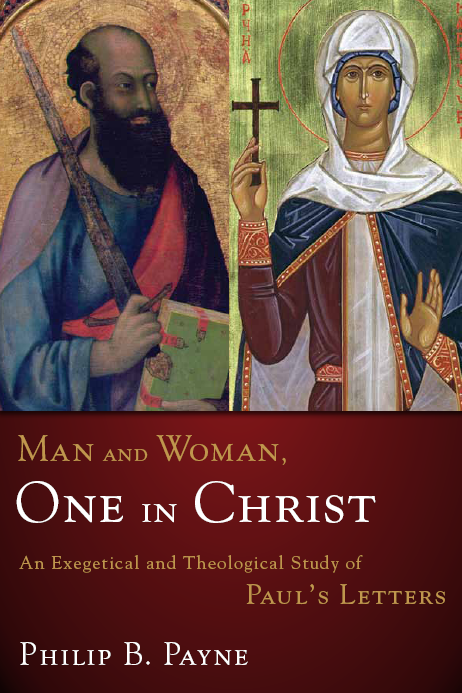
I’ve been rereading Philip Payne’s monumental study of Paul’s letters in relation to the roles of men and women in the church and home, Man and Woman, One in Christ. There is so much in this book to discuss I feel as though every single page deserves its own post. For now, I wanted to highlight his discussion of the meaning of “head” in the much-discussed 1 Corinthians 11:2-16. Payne writes:
The majority view in recent scholarship has shifted to understand “head”… in this passage to mean “source” rather than “authority”… One reason for the popularity of [interpreting it as “authority”] is that in English, German, and Hebrew… the most common metaphorical meaning of “head” is “leader”… Interpreters who in their native tongue associate metaphorical uses of “head” with “leader” naturally make this association when reading this passage. (117-118, cited below)
In the book, Payne goes on to demonstrate why it is that the majority view has turned to viewing “head” as “source.” He provides 15 reasons to think this is the case. A few highlights include contemporary 1st-3rd century usage of the term, lexical support for “source” and lack thereof for “authority,” other usage within the Pauline epistles, difficulties raised by reading it as “authority,” and support for the meaning as “source” from a number of contemporary authors and Church Fathers. In the passage above, I think it’s interesting to see that one’s native language often imports meaning into the text. I’m sure this happens in many places, and I’ve caught myself on some.
If you have any interest at all in the debate over women’s roles in the church and home and do not have this book, you must amend the situation immediately. It doesn’t matter if you are egalitarian or complementarin; you must deal with the arguments raised by Payne, who interacts with top scholars from both sides of the debate (including Piper, Grudem, Wright, and more).
What are your thoughts? How do you read this difficult passage? Does your native tongue perhaps change your perception of the meaning of some parts of the Bible?
Links
Be sure to check out the page for this site on Facebook and Twitter for discussion of posts, links to other pages of interest, random talk about theology/philosophy/apologetics/movies and more!
Sunday Quote– If you want to read more Sunday Quotes and join the discussion, check them out! (Scroll down for more)
Check out my posts on egalitarianism (scroll down for more).
Source
Philip B. Payne, Man and Woman, One in Christ
SDG.
Sunday Quote!- Does Science Limit Exegesis?
 Every Sunday, I will share a quote from something I’ve been reading. The hope is for you, dear reader, to share your thoughts on the quote and related issues and perhaps pick up some reading material along the way!
Does Science Limit Exegesis?
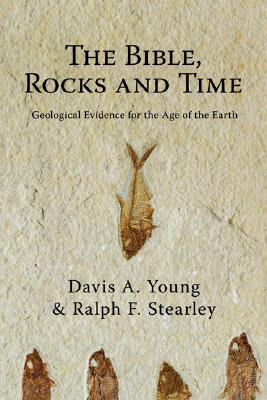
I’ve been rereading The Bible, Rocks and Time: Geological Evidence for the Age of the Earth
[T]he claims advanced in favor of a young Earth or Flood geology remain unacceptable to the scientific community. Thus their claims should also be unacceptable within the church, which… ought to be committed to truth and reality–for the simple reason that the young-Earth creationist claims lack scientific credibility. (161)
Now I think this is a pretty obviously controversial claim for a few reasons. First, the immediate question is how broad Davis and Stearley are intending this to be. After all, one might say that God creating the universe is “unacceptable” depending how one defines the scientific community. Of course, they do qualify the statement by noting that what they mean is that the evidence young earth creationists put forward can often, in principle, be tested for; and when tested, it fails muster. In this sense, I think that one might say the statement is acceptable.
Second, one may object to this noting that science often changes consensus, so what is “unacceptable” today becomes in vogue tomorrow. A problem with this claim is that it flies in the face of the real, overwhelming evidence for an ancient Earth. I’ve examined this and many other arguments YECs put forth in my post on YEC arguments.
Third, one might wonder exactly how Davis and Stearley think science and exegesis are supposed to interact. Though this is a far cry from the purpose of their book, statements like these beg the question of whether science really does limit exegesis.
What are your thoughts?
Links
Be sure to check out the page for this site on Facebook and Twitter for discussion of posts, links to other pages of interest, random talk about theology/philosophy/apologetics/movies and more!
Answering Common Young Earth Creationist Arguments– I evaluate a number of arguments for young earth creationism. There are a large number of biblical, philosophical, and scientific arguments briefly answered here.
What options are there in the origins debate? – A Taxonomy of Christian Origins Positions– I clarify the breadth of options available for Christians who want to interact on various levels with models of origins. I think this post is extremely important because it gives readers a chance to see the various positions explained briefly.
Source
Davis A. Young and Ralph F. Stearley, The Bible, Rocks and Time: Geological Evidence for the Age of the Earth
“Husband of One Wife” – What does this mean?
 A common argument for limiting the pastoral ministry to men only is to cite a number of texts where the requirements for elders/overseers/etc. are given. Among these, one which allegedly shows that women are not to hold positions of authority in the church is the statement that the holder of such a position is to be the “husband of one wife” (1 Timothy 3:2; 12; Titus 1:6).
On the face of it, this seems to be a pretty telling argument. After all, if someone is the husband of one wife, then that would certainly seem to exclude women! So what’s the problem?
Is your pastor married?
You see, if someone wants to take the statement in its most literal sense, it isn’t merely, abstractly stating that the overseer/bishop/deacon/elder is supposed to be a man; it is actually saying he is supposed to be a husband.* So if one wants to take the Bible in its most “literal” reading, then one must argue that not only may women not be pastors; neither may any unmarried (or remarried, or divorced, or widowed, etc.) men. Period.
So what’s the problem with this? The problem is that once we get to this level, it should be pretty easy to see how absurd the argument is. What the phrase is intended to convey is monogamy. That is, church leaders are to be monogamous. The teaching is pretty clear when understood in this light. If one is to be a leader in the church, it should be easily observable that they are monogamous and celibate apart from marriage. There are to be no exceptions.
If someone wants to dispute this and press that the real point is that one must be a man, then they must equally argue that no church leader should be unmarried. Considering Paul himself extolled the values of remaining unmarried (and was himself unmarried), such a reading of Paul is problematic, at best.
All of this is to set aside the other difficulties with using passages like this to restrict women from the ministry. One example is the excessive addition of male pronouns into the English translations which are not present in the Greek (see Philip Payne, Man and Woman: One in Christ, 445 [I have reviewed this book here]). Another problem is that they seem to be teaching against polygamy as opposed to any type of gender restrictions (ibid). Finally, the lists of requirements are stated in such a way as to make it actually open for women to hold such offices (Payne, 448-452).
Even if one disagrees on the last paragraph, it should be clear that one cannot use these passages to restrict women from the ministry. They simply do not have the data in them to allow for such a restriction.
*(Yes, I am aware that it may be translated “man of one woman,” but that just makes it extremely clear that the meaning is supposed to be referring to husband and wife. After all, what other reason could there be to be “of one woman”?)
Links
Be sure to check out the page for this site on Facebook and Twitter for discussion of posts, links to other pages of interest, random talk about theology/philosophy/apologetics/movies and more!
Check out my posts on egalitarianism (scroll down for more).
Paul Adams has a series of posts on Philip Payne’s work discussed herein. Check out his series, starting with the first post.
SDG.
——
The preceding post is the property of J.W. Wartick (apart from quotations, which are the property of their respective owners, and works of art as credited; images are often freely available to the public and J.W. Wartick makes no claims of owning rights to the images unless he makes that explicit) and should not be reproduced in part or in whole without the expressed consent of the author. All content on this site is the property of J.W. Wartick and is made available for individual and personal usage. If you cite from these documents, whether for personal or professional purposes, please give appropriate citation with both the name of the author (J.W. Wartick) and a link to the original URL. If you’d like to repost a post, you may do so, provided you show less than half of the original post on your own site and link to the original post for the rest. You must also appropriately cite the post as noted above. This blog is protected by Creative Commons licensing. By viewing any part of this site, you are agreeing to this usage policy.
Sunday Quote: Do we need to agree with past thinkers?
 Every Sunday, I will share a quote from something I’ve been reading. The hope is for you, dear reader, to share your thoughts on the quote and related issues and perhaps pick up some reading material along the way!
Do we need to agree with past thinkers?
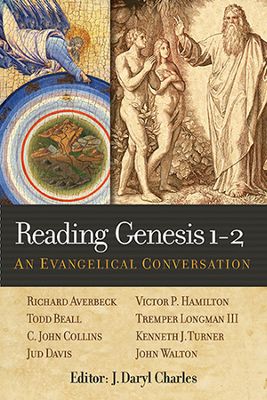
I recently read through Reading Genesis 1-2: An Evangelical Conversation, which has given me a lot to reflect upon. One quote that struck me was from Jud Davis:
A beloved teacher once said, “If you cannot find at least one ancient, one medieval, and one modern commentator who shares your view, it probably means you are wrong.” Over the years, I have thought long and hard about this statement, and I believe it is exactly right because if you could not find such examples, you would be forced to say, “Everyone before missed it until me.” (215)
I thought this was an interesting quote because it says much about how one approaches theological issues. First, there is some concern regarding this passage for me because it seems that some truths are indeed missed by everyone until someone discovers (or rediscovers) them. Second, there is a real concern for whether one innovates in doctrine and thus becomes a heretic. That is, innovation in theology is often divergence from established truths. These established truths are often established exactly because they follow from the text. Thus, an innovation which says, for example, that Jesus is not God is rightly denounced as heretical.
Based upon these conflicting concerns, I think it is permissible to say there is some tension within the practice of historical theology and exegesis. We must be careful to avoid the pitfalls of either ignoring the voices of the past or being too cautious to reconsider the evidence for certain positions. Going to either extreme would be dangerous. The most prominent danger, in my opinion, is the danger of using a passage like this to squelch debate or exploration. Ultimately, the text is the arbiter of truth, not established interpretations. If someone comes up with a “new” look at a text, it is important to consider it on its own terms rather than reject it because it is new. The weight of unanimity in the past should be seen to increase the standard of proof for those who disagree, but it should not be used to silence those who seek truth.
What are your thoughts on the balance between historical scholarship and new interpretations?
Links
Be sure to check out the page for this site on Facebook and Twitter for discussion of posts, links to other pages of interest, random talk about theology/philosophy/apologetics/movies and more!
Source
Jud Davis, “Unresolved Major Questions: Evangelicals and Genesis1-2” in Reading Genesis 1-2: An Evangelical Conversation
Is Molina’s God Fallible? A response to James N. Anderson
 Recently, I responded to James White’s comments on molinism. Shortly thereafter, White had another podcast in which he made several comments on molinism. He also commented favorably on an article by James N. Anderson, which argues that God is fallible. I left a comment over on Anderson’s blog because I frankly think that he misrepresented Molina’s view. Here, I’ll reproduce the comment I left there with a bit more commentary after the block quote to demonstrate that Anderson’s argument, like White’s, really is a misrepresentation.
My comment (edited to make it a bit shorter):
You wrote, “In other words, there are possible worlds in which God actualizes C so that S will choose A, but S doesn’t choose A. There are possible worlds in which God’s eternal decree doesn’t come to pass, because libertarian-free agents do otherwise than he had planned.”
Molina, on the other hand, explicitly held that if we were to choose otherwise, God would have known otherwise. That is, on Molina’s view (and on the view of William Lane Craig), if we were to choose ~A instead of A, then God would have known ~A instead. Molina, in “On Divine Foreknowledge” makes this extremely clear.
Of course, you could argue that the means by which Molina argues that this is possible is itself mistaken, but the argument is complicated and I’m not going to reproduce it here. My main point is the very core of the argument you’ve given simply misrepresents the position of molinists. Molina (and Craig) held that if a creature were to choose otherwise, then God would know it. Period.
Anderson responded to my comment by noting his argument was related to the decree. Now, I’m not at all sure how this saves Anderson’s article from this error, which I think is fatal: his argument just fails to account for molinism on molinism’s terms. That is, his argument is an attempt at a reductio. Thus, he has to grant the system which he is trying to show is self-referentially incoherent its own terms. He failed to do so. Here is Anderson’s argument in a nutshell:
[T]he Molinist is committed to the claim that although God knows that S would choose A in C, and he actualizes C because he plans for S to choose A, it is nonetheless possible for S not to choose A in C. (Craig clearly affirm[ed] this point a couple of times in his exchange with Helm.) In other words, there are possible worlds in which God actualizes C so that S will choose A, but S doesn’t choose A. There are possible worlds in which God’s eternal decree doesn’t come to pass, because libertarian-free agents do otherwise than he had planned.
Thus, Anderson concludes, on the molinist view, God is possibly fallible. But, as I pointed out in my comment above, Anderson’s argument basically just ignores Molina’s own views about God’s knowledge. I take it from his response to me that he thinks that God’s eternal decree somehow trumps considerations about foreknowledge, and I would think that on a Calvinist system that may be correct, depending upon how one hashes at the details (i.e. on some Calvinists’ expositions of foreknowledge, I have read it is grounded on God’s own action; that is, God foreknows x will happen because God wills x). But of course we’re not here interested on a Calvinist view of foreknowledge or the decree; Anderson is allegedly addressing Molinists.
By now it should be fairly clear where Anderson’s mistake lies: he imports his Calvinistic understanding of foreknowledge and the decree into molinism. But he claims to be critiquing Molina’s views internally; that is, his argument is supposed to show that molinism is self-referentially incoherent because it entails a fallible God. But it doesn’t! It only does so once Anderson has forced the concept of the eternal decree (that is, the specifically Calvinist view of this) as the filter through which molinism must be drawn. But of course that hardly shows that molinism is wrong, any more than filtering Calvinism through an Arminian filter demonstrates Calvinism is incoherent. One must evaluate each view on its own merits; not by presupposing positions which make them false!
There are a few other major difficulties with Anderson’s argument, such as a continued confusion with free knowledge and middle knowledge. See the “technical discussion” below as well as the comments for more.
So to return to Molina and his modern defenders, we find that they affirm in apparent unanimity that if one were to choose to do ~x instead of x, then God would have known ~x to be the case and x to be false. Thus, there simply is no question of a subject bringing about the falsity of God’s knowledge. Moreover, Anderson’s argument also confuses middle knowledge with free knowledge. Once God has actualized a world, it simply is the case that if, in that world, God knows that S will choose A, then S will choose A. Middle knowledge is the moment which considers counterfactuals; free knowledge is the creation of the world and the actualization of those counterfactuals. Thus, Anderson’s argument fails because 1) it fails to actually take Molina’s views into account; 2) it fails to interpret Molina’s views in such a way as to show the view is self-referentially incoherent; and 3) it fails to distinguish between middle and free knowledge.
Technical Discussion in the Comments
Be sure to check out the comments for some great interaction in which Anderson came along and commented as well. It’s a great discussion.
For example, this comment I wrote draws out some of the difficulties with Anderson’s argument further:
Your [I am here addressing Anderson directly] argument is that molinism entails a fallible God. Thus, your argument is that molinism–on molinism’s terms–entails a fallible God. Now, you wrote, “It doesn’t do to say, ‘If S were to choose otherwise then God would have decreed otherwise,’ because that’s dodging the issue.”
First, you misstate the actual premise, which is not that God would have decreed otherwise but that God would have foreknown otherwise; again, this leads me to think you’re not taking molinism on molinism’s terms. Instead, it seems you continue to conflate foreknowledge and the decree. Now, perhaps you simply mistyped that and you meant to say foreknown instead of decreed… in that case:
Second, your argument, again, is to try to show internal incoherence of molinism. In order to do so, you have to grant the premises of molinism. After all, if one wants to show an internal incoherence in a position, simply denying that parts of that position are true will not yield internal incoherence; rather, one must show how the pieces that such a position actually holds do not cohere with each other. Thus, because molinists from Molina to Craig to Thomas Flint (and I think this point is unanimous, though there may always be a “maverick” somewhere, I’m sure) hold that “If S were to do otherwise, God would have known otherwise,” you can’t just deny that premise and say “HA, now see, it is internally incoherent once I’ve denied this premise!” Rather, you would have to show that that premise is itself false.
Now, Molina doesn’t just assert that God would have known otherwise. He does spend several pages developing exactly how it could be the case that If S were to do otherwise, God would have known it–all without appealing to backwards causation. Craig also defends this account in his lengthier work on the topic. Fredosso develops this defense over the course of p 57-63 and 65-68 of his translation of Molina’s “On Divine Foreknowledge.” In the same work, Molina defends his position may be found on p. 119-120; as well as several other places where a whole view of his account provides a lengthier defense.
Thus, it seems to me your argument fails to demonstrate internal incoherence. Molinism on molinism’s terms does not make God fallible.
Third, as far as why I argued you confused middle and free knowledge; the reason is because Molina himself held that because God is eternal and exists in the eternal now rather than as an omnitemporal or temporal being (contra Craig, who defends his position somewhat differently), it is incorrect to hold that once a world has been actualized, then the creatures world may bring it about that that world is not brought about. Again, this goes back to Molina’s view of foreknowledge and free will. But free knowledge is not middle knowledge and is absolute certainty about the “actualized” world. It is unchangeable. Thus, on this third point, your argument fails not only to demonstrate internal coherence but also to interact with Molina’s actual view. The reason is because your argument relies upon the notion that in the here and now a creature could bring it about that ~x if God knows that X will happen. But both Craig and Molina (and every other major defender of Molinism of whom I’m aware, though possibly not Zagzebski as I haven’t read her view) hold that if God knows x will happen, then, necessarily, x will happen. Thus, the freedom of creatures is found in middle knowledge, and that is how it is preserved. God’s actualizing a world brings it about that in that world, the counterfactuals God brought into being will happen. Again, Molina reconciles this as above (and alongside his view that God is Eternal in the technical sense rather than temporal).
Thus, although interesting, I once more conclude that your argument fails to either address molinism or show that it is internally incoherent.
Links
Be sure to check out the page for this site on Facebook and Twitter for discussion of posts, links to other pages of interest, random talk about theology/philosophy/apologetics/movies and more!
James White and Molinism- Confusion about middle knowledge– I argue that James White has made a couple key errors related to molinism. On his most recent comments regarding molinism (his 2/11 podcast), he repeats a key error by saying that in the “exact same circumstances” he chooses differently. In this post, I demonstrate the error of his statement, along with some other mistakes in his critique.
SDG.
——
The preceding post is the property of J.W. Wartick (apart from quotations, which are the property of their respective owners, and works of art as credited; images are often freely available to the public and J.W. Wartick makes no claims of owning rights to the images unless he makes that explicit) and should not be reproduced in part or in whole without the expressed consent of the author. All content on this site is the property of J.W. Wartick and is made available for individual and personal usage. If you cite from these documents, whether for personal or professional purposes, please give appropriate citation with both the name of the author (J.W. Wartick) and a link to the original URL. If you’d like to repost a post, you may do so, provided you show less than half of the original post on your own site and link to the original post for the rest. You must also appropriately cite the post as noted above. This blog is protected by Creative Commons licensing. By viewing any part of this site, you are agreeing to this usage policy.
James White on Molinism- Confusion about middle knowledge
Recently, James White (a theologian and apologist) did a review of the debate on the Unbelievable? radio show between Paul Helm and William Lane Craig [accessible here; audio will begin immediately]. I thought that White did a decent job critiquing the synergistic tendencies in Craig’s exposition, but I also felt he failed to grasp the thrust of Molinism. I say this with great respect for White, whom I consider very thoughtful in the areas in which he engages. However, it is because of this respect that I write this with the hope that he–or at least others who wish to engage in this area–may be better equipped to engage with Molinism.* Although there are a number of places I could engage with White’s commentary, I want to focus on three particular areas, along with a fourth, methodological, issue.
Molinism and Free Will
The most problematic area in James White’s exposition came when he argued that free will is essentially vacuous on Molinism. His argument was essentially that the Molinist assertion that God knows what we will do in any given circumstance (the doctrine of middle knowledge) entails: “In this circumstance, this person will always do this” (emphasis White’s). Thus, he argued that Molinism is incapable of preserving human free will, which is ironically what Molinism was intended to preserve.
White based his argument on an example [actually a few examples, but this was most prominent]. While biking, he often came to a certain fork in the road. On one day, he may choose to turn one way, on another, he may choose to turn the other. Here’s the issue: White then said “The exact same conditions…” were in play in the scenario he described. The difficulty should be immediately obvious: White is very clearly mistaken that these are the “exact same conditions.” One day is not “exactly the same” as another day. Period. Thus, White’s objection fails. It fails for another reason, which we’ll explore in the next section, but for now it is enough to point out that White bases this objection on the notion that humans are able to choose differently in similar circumstances. That is, although he used the terminology of “the exact same conditions,” his example is merely that of similar conditions. His objection therefore fails.
Confusion about Middle Knowledge
It pains me to point this out for someone who I value as much as White, but I must object that it appeared as though White was disturbingly unfamiliar with what middle knowledge actually is. He continually objected to middle knowledge, as shown above, by arguing that people should be able to choose differently on Molinism but may not. Now, I don’t know how much White has read in this area, but surely if he’s going to engage with Molinists like Craig, he should–as someone whom I recognize as taking great care to read and engage with primary sources–read and understand Molina [let me be clear: I’m not saying he never has–I do not know what White has or has not read and would not claim to know]. Molina himself answers White’s objections in this regard very explicitly at a number of points in his On Divine Foreknowledge.
First, White is mistaken when he portrays Molinists as holding that middle knowledge determines choice. He has it backwards. It is the choices which “would be made” which determine middle knowledge. If one would have chosen differently, middle knowledge would have had different content. This is absolutely central to Molina’s view, and I’ll just quote him once to prove it. In his exposition of how various church fathers allegedly taught things similar to his own view, Molina wrote, “…when free choice by its innate freedom indifferently chooses this or its opposite, then God will bring it about that from eternity He foreknew nothing else, they [the church fathers he is favorably citing] are obviously teaching not that things will come to be because God foreknows that they will, but rather just the opposite” (180, emphasis mine).
Now whether Molina accurately exegeted these church fathers, and regardless of the objection which clearly will follow such a statement (“How is this possible?”–something Molina himself answers in detail in On Divine Foreknowledge), the clear and plain teaching of Molina is exactly opposite of what White seemingly attributed to him: namely, the notion that God’s middle knowledge determines free choices. Rather, it–even according to Molina–is exactly the opposite. Thus, White’s critique in this regard is simply wrong.
Confusion about Middle Knowledge II
A final difficulty with White’s critique was that he, at at least one identifiable point, confused middle knowledge with free knowledge. White was criticizing Craig by saying “if you’re truly free” you should be able to choose a different thing from what middle knowledge states (such as buying a different car than the Mercedes you wanted).
White’s critique was off base for two primary reasons. First, as shown above, he failed to recognize the absolute core of Molina’s doctrine of middle knowledge: that middle knowledge is not dependent upon foreknowledge. Second, White’s critique fails to recognize that middle knowledge interacts with free knowledge (God’s comprehensive knowledge of all things which will occur in creation). The reason for this is because White argues that one, if one has freedom, cannot “violate the middle knowledge… that was supposedly true.”
Here White seemingly confused the free knowledge of God with middle knowledge. It is true that the free knowledge of God cannot have been otherwise, for it is a result of the decree of creation. However, what White failed to recognize is that free knowledge is posterior to middle knowledge and so the fact remains that on Molina’s system (as demonstrated above), one can, in effect, change middle knowledge which would thus bring about a different state of affairs.
Again, the question is not here how this may be the case. Instead, what I am arguing is that White failed to correctly explain Molina’s position and so his critique actually failed to be centered upon the view against which he was arguing.
Methodological Issue: Philosophy?
I was surprised to see White comment so frequently on how this or that “may fly in philosophy classrooms” but apparently would not fly in the “real world” [this latter is not a quote, but he contrasted philosophy classrooms with the world outside of them]. He repeated this claim–or something similar–a number of times. I’ll keep this brief: White’s own engagement with Molinism was almost entirely philosophical. He continued to bring up the grounding objection (a philosophical objection if there ever was one), and he also pressed the attack by saying that Molinism cannot adequately account for the free will it is supposed to preserve (again, a purely philosophical argument). I was surprised to see this from White because I do really think he is quite a careful thinker, but the bottom line is that in denigrating philosophy while using a number of philosophical objections to Molinism he appeared rather inconsistent. Philosophy is a tool of the theologian, and White himself uses it in a number of ways. I would urge him to drop this kind of tongue-in-cheek dismissal of philosophical reasoning, even within theology. It seems to me he himself finds philosophical objections to theological systems to be of worth.
Conclusion
I commend White for taking on a difficult issue, and I readily admit he has more knowledge on any number of areas than I can begin to claim. I highly recommend much of his work, and even where he and I disagree, I have found him to be thoughtful and challenging. That said, I maintain White is mistaken in a few aspects of his interpretation of molinism. In particular, he doesn’t seem to acknowledge the broader philosophical framework behind the view. He also failed to allow for Molina’s own very explicit distinctions and definitions, and thus his critique actually declared Molina’s view to be the exact opposite of that which Molina actually held. I hope my own critique will be seen not as an attack, but rather as a call for clarification for White and others who hope to interact with Molinism.
*Full disclosure: I am a Lutheran with Molinist leanings, though I reject the synergism Molina himself held to. I view Molinism as a philosophical framework as opposed to a complete system.
Links
Be sure to check out the page for this site on Facebook and Twitter for discussion of posts, links to other pages of interest, random talk about theology/philosophy/apologetics/movies and more!
Sources
Luis de Molina On Divine Foreknowledge, edited by Alfred Freddoso (New York: Cornell, 1988).
James White, “The Dividing Line,” January 16, 2014. Accessible here. The primary interaction starts a ways into the show.
SDG.
——
The preceding post is the property of J.W. Wartick (apart from quotations, which are the property of their respective owners, and works of art as credited; images are often freely available to the public and J.W. Wartick makes no claims of owning rights to the images unless he makes that explicit) and should not be reproduced in part or in whole without the expressed consent of the author. All content on this site is the property of J.W. Wartick and is made available for individual and personal usage. If you cite from these documents, whether for personal or professional purposes, please give appropriate citation with both the name of the author (J.W. Wartick) and a link to the original URL. If you’d like to repost a post, you may do so, provided you show less than half of the original post on your own site and link to the original post for the rest. You must also appropriately cite the post as noted above. This blog is protected by Creative Commons licensing. By viewing any part of this site, you are agreeing to this usage policy.
Really Recommended Posts 1/25/14- YA Entertainment, Inerrancy, “Lone Survivor,” Feminism, and Jehovah’s Witnesses
 Another week, another list of the internet’s finest brought to you, dear reader. These are some extremely diverse topics, and I’m excited to read your own reactions to the posts. I’ve lined up cultural apologetics, inerrancy, feminism, the “Lone Survivor” flick, and Jehovah’s Witnesses.
Trending Young Adult Entertainment in 2013– Anthony Weber wrote an excellent summary tracing the trends we may see in YA entertainment from 2013. I highly recommend engaging with this post as well as keeping on top of things with YA entertainment, because it shows where our culture is shifting.
What Kind of Evidence Could Nullify Inerrancy?– What does it mean to make the claim that the Bible is inerrant? Does it commit one to an a priori rejection of evidence? It seems to me that this post brings up some of the tension with inerrancy and hermeneutics. I, of course, affirm inerrancy, but I think it is important to distinguish between inerrant text and interpretation. This post brings up some interesting points for discussion with inerrancy.
Lone Survivor and Insufferable Anti-American Self-Righteousness– The film “Lone Survivor” has caused quite a bit of critical discussion. Here, a soldier reflects on the reaction to the film. I share this post with the caveat that I have not seen the film and so I’m sharing it because I thought it was an interesting viewpoint.
Sarah Bessey’s Jesus Feminist– What does it mean to be a feminist for Jesus? Does it actually mean anything? Are the terms contradictory? Check out this look into the book Jesus Feminist.
What Do Jehovah’s Witnesses Believe?– The title seems self-explanatory, but there is more to this post than a simple exposition of Jehovah’s Witness beliefs. Instead, it engages with the beliefs of Jehovah’s witnesses and provides some ways to engage with others.
“Theological Colonialism”? On theological issues which are ‘only popular in America’
 I recently picked up the latest in the Zondervan “Counterpoints” series: “Five Views on Biblical Inerrancy.” One of the essays, by Michael F. Bird, is entitled “Inerrancy is Not Necessary for Evangelicalism Outside the USA.” I flipped through it and I thought the author certainly had some good things to say. But, I admit that I find the apparent thrust of Bird’s argument is quite mistaken.
The notion that certain theological issues are essentially uninteresting to folks on the other side of either ocean is one I have read (and heard in person) on more than one occasion related to various Christian doctrines. Bird’s own presentation, regarding inerrancy, argues that the CSBI (Chicago Statement on Biblical Inerrancy, a document he is critiquing) demonstrates “An Unfortunate Trend toward Theological Colonialism” (the capitalization is due to this being a section heading). This trend might be discerned thus: “there are thousands of churches around the world that are both evangelical and orthodox and get on with their ministry without ever having heard of the CSBI and without ever using the word inerrancy in their statement of faith” (153-154, cited below).
Very well. Suppose we grant Bird this fact. I’m sure it actually is a fact. But so what? What possible relevance does this have for the truth and claims of inerrancy? Bird’s own conclusion is that, basically, we should not expect evangelicals across the world to saddle themselves with a view that is essentially unfamiliar to them. I think this may be a fair point, but it raises a couple concerns: first, the actual truth value of whatever doctrine is in question; second, concern for continuing to grow in knowledge and faith.
Suppose that you believe a doctrine is of great importance to how one might view other doctrines. Now, someone comes along and informs you that there are people in some area of the world who don’t know about that doctrine or that that area of the world is generally unconcerned with it. Should this somehow lead you to think that the doctrine is unimportant because people outside of your own cultural milieu do not view it as such? Certainly not! It may cause you to reflect upon its alleged importance and perhaps even come to a new view, but the notion that a specific doctrine is largely unimportant to certain groups of people does nothing, in itself, to downplay the actual importance of that doctrine. Nor does it impact the truth value of that doctrine in any way.
Now, at risk of being accused of “theological colonialism,” I am going to also suggest that the apparent disinterest in an important doctrine is less reason to think the doctrine is unimportant than it is reason to perhaps try to inform others of the doctrine’s actual importance. Returning to the example above, suppose the disinterest caused you to reflect upon the doctrine and you concluded that yes, it is actually deeply important. Would you not be concerned that others do not share your conviction, such that perhaps you may feel obligated to inform others about the centrality of said doctrine?
I’m not trying to suggest anyone without concern for inerrancy is ignorant or foolish. But I do think there is something to be said for the notion that a doctrine like inerrancy (or eschatology, or a view of creation, etc., etc.) is something worth exploring and learning about. We are called to expand our knowledge, not be content to sit in the knowledge of the faith we already have. I have become aware of entire realms of theological debates which I didn’t even know existed by reading authors–both international and, yes, American. I have found topics I was disinterested in to be deep, engaging, and edifying. I was subsisting on milk, but I have pursued solid food, and continue to do so [Hebrews 5:12ff]. I hope to continue to be enlightened by international theologians. But I would also hope that international theologians would not dismiss a doctrine because it comes from America.
Finally, is not the very notion that ‘if a doctrine is only of concern to American Evangelicals, then it should be moderated or reigned in’ itself a form of theological colonialism?
Links
Be sure to check out the page for this site on Facebook and Twitter for discussion of posts, links to other pages of interest, random talk about theology/philosophy/apologetics/movies and more!
Source
Michael Bird, “Inerrancy is Not Necessary for Evangelicalism Outside the USA” in Five Views on Biblical Inerrancy (Grand Rapids, MI: Zondervan, 2013), 145-173.
SDG.
——
The preceding post is the property of J.W. Wartick (apart from quotations, which are the property of their respective owners, and works of art as credited; images are often freely available to the public and J.W. Wartick makes no claims of owning rights to the images unless he makes that explicit) and should not be reproduced in part or in whole without the expressed consent of the author. All content on this site is the property of J.W. Wartick and is made available for individual and personal usage. If you cite from these documents, whether for personal or professional purposes, please give appropriate citation with both the name of the author (J.W. Wartick) and a link to the original URL. If you’d like to repost a post, you may do so, provided you show less than half of the original post on your own site and link to the original post for the rest. You must also appropriately cite the post as noted above. This blog is protected by Creative Commons licensing. By viewing any part of this site, you are agreeing to this usage policy.
The Bible Is Not One Book
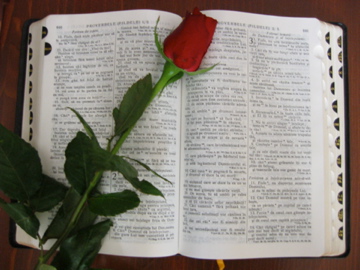 I was doing some research recently for a lengthy (book length!) project I am working on and was searching Amazon for some books on Bible prophecy. I came upon a work by John Walvoord called Every Prophecy of the Bible

I was perplexed by his (a male, judging by the picture) objection to confirming the Bible as true through prophecy. He wrote, “The book basically runs off a list of biblical prophecies that have supposedly been fulfilled. Amazingly pretty much all the evidence for these so called fulfilled prophecies comes from the same book making the prophecies in the first place ie the bible.” He then proceeded to ridicule Christians who do believe this as holding to an “infantile” belief.
The Objection
Unfortunately, this is not the first time I have seen an objection like this. Put simply, the objection is that the Bible can’t confirm itself, because that would be a circular argument. In other words, one can’t use material from one part of the Bible to confirm other parts of the Bible because then one is arguing for the truth of the Bible from the Bible.
The Problem
Most people should immediately see what the problem is. Although the Bible as we have it today is a single “book” in the sense that its contents share the same binding, it is really a collection of independent works written across over a thousand years by various authors in different parts of the world. In other words, the Bible is not “one book,” at least in the sense that one needs to maintain for this objection. Thus, if there is a prophecy found in one book which we know to be earlier than a book which is later that records its fulfillment, then there seems to be at least some evidence, prima facie, for the truth of the prophecy. (Of course this would be contingent upon the historical accuracy of the books, etc., etc. but the simple fact of an alleged prophecy’s existing before its fulfillment is an interesting facet to consider.)
A friend, Anthony Weber, made an analogy: think of the Bible as a library of books. Would it not be silly to think you couldn’t pull one book of the shelf and say that it confirmed another book? Suppose each book was about history, and one made a mere mention of a topic, while another featured a more detailed description. Would we not be surprised if someone came along and objected, saying “Well, they’re in the same library, so we can’t trust them!”
Inerrancy?
Christians need to realize that this has implications for doctrine as well. For example, those who maintain inerrancy–and I strongly believe that consistent Christians should do so (see my arguments to this end and defense of the doctrine here)–may be concerned that viewing the Bible in this fashion comes in danger of breaking it up piecemeal and pitting each segment against the others. But this is not what follows at all. Instead, it is simply an acknowledgment that the Bible is a collection of works in different genres written at different times in different places which, when put together, form a coherent whole.
Concluding call for intellectual honesty
In light of what I have explored, I want to first issue a call to the atheists out there: I know that you (atheists) do not all hold to objections like this and would find someone else using this objection a bit alarming. I call you to challenge your fellow atheists to a more honest interaction with positions of faith. If you want to criticize someone else’s position, fine. But do it without completely misrepresenting them. Call out your fellow atheists when they try to put forth this kind of drivel as a serious objection to Christianity. I try to call out fellow Christians when they do the same with other views.
To my fellow Christians: be aware that objections like these are not the backbone of atheism. Frankly, I think people like “gavin” are just grasping at anything to maintain unbelief and ridicule others they choose to look down on as “infantile.” Let’s engage with people who make these objections, but if they persist, dismiss the objection as the ridiculous notion it is. Finally, if you catch yourself treating the Bible like one book without any distinction in genre, time, place, etc., stop yourself. It is important to note the Bible is united in message, but God used different people as they were “carried along by the Holy Spirit.” It wasn’t delivered all by divine dictation.
Links
Be sure to check out the page for this site on Facebook and Twitter for discussion of posts, links to other pages of interest, random talk about theology/philosophy/apologetics/movies and more!
SDG.
——
The preceding post is the property of J.W. Wartick (apart from quotations, which are the property of their respective owners, and works of art as credited; images are often freely available to the public and J.W. Wartick makes no claims of owning rights to the images unless he makes that explicit) and should not be reproduced in part or in whole without the expressed consent of the author. All content on this site is the property of J.W. Wartick and is made available for individual and personal usage. If you cite from these documents, whether for personal or professional purposes, please give appropriate citation with both the name of the author (J.W. Wartick) and a link to the original URL. If you’d like to repost a post, you may do so, provided you show less than half of the original post on your own site and link to the original post for the rest. You must also appropriately cite the post as noted above. This blog is protected by Creative Commons licensing. By viewing any part of this site, you are agreeing to this usage policy.
Molinism and Aseity- A knock-down argument against middle knowledge?
 One of the most recent “Straight Thinking” podcasts–a podcast put on by Reasons to Believe–featured Travis Campbell discussing Middle Knowledge (which is an aspect of the philosophical theological position known as molinism). Middle Knowledge is, essentially, God’s knowledge of counterfactuals–that is, the knowledge of things like “If someone talks about molinism, J.W. Wartick will be interested.” That is a counterfactual because it states something which may be contrary to fact–that is, it depends on some condition to be fulfilled in order to be true (in the example above, it is the occasion of someone to talk about molinism).
On the second part of the interview, Campbell discussed some objections to molinism which he felt made the position intractable. One of the first objections he presented was an objection from “aseity” that is, God’s self-existence. According to the doctrine of divine aseity, God does not rely upon anything else for God’s existence. Now, molinism classically holds that God surveys the realm of possible worlds prior to the creative act and so sees all possibilities related to free creaturely choices. Then, God creates the world God desires. Campbell argued that this undermines God’s aseity because it makes God dependent upon creatures for omniscience–one of God’s essential attributes.
The argument, if sound, has great force. After all, if molinism means one must deny an essential attribute of God, there is a pretty serious difficulty with the doctrine. But does it? Campbell cited William Lane Craig, a leading proponent of molinism, as admitting that molinism entails that God’s knowledge, at least, is in some sense dependent upon creaturely choices. From what I have read of WLC,* I have found it seems he frequently makes it appear as though molinism presents God as able to choose among any parts of possible worlds to construct whatever possible world God wants. Not correct… but possibly also not Craig’s actual view;* perhaps Craig is only making it seem thus when he discusses molinism in summary. What I’m getting at is that I’m not convinced Craig is as consistent a molinist as, well, Molina (or in modern times, Thomas P. Flint).
Now for the claim itself, I do not think it follows that God is actually dependent upon creaturely choices. And, if it follows from molinism that God is dependent in that way, then it must also be true of any view which holds to foreknowledge whatsoever. In fact, this is where I have a pretty serious bone to pick with any view which denies comprehensive foreknowledge. Unless I am much mistaken–which is quite possible–the realm of possible worlds is a set of necessary truths. That is, each possible world is a complete set of all true propositions for the entire history of that world.*** But if that is the case, then molinism is no different on God’s creative activity than any other view of creation, for God is simply selecting one from a set of possible worlds.
There is debate over how such a set of possible worlds might be populated–does the set of possible worlds come from God, or is it simply a set of necessary truths?** Whatever one’s answer for this, it remains clear to me that molinism is not defective in this area: the molinist simply holds that God selects a possible world from the set of possible worlds. The fact that the molinist emphasizes that these possible worlds include free choices is essentially a moot point so far as aseity is concerned. If there is such a set of possible worlds, then any view of God’s foreknowledge and creation has to acknowledge that God’s creative act is the bringing forth of one such possible world. If there is no such set, then it seems our universe is necessary, which would itself be problematic for the doctrine of creation.
So it seems to me that Campbell failed to make a compelling argument against molinism from aseity. In order for his argument to be successful, he would have to show that molinism’s view of possible worlds is somehow radically different from any other position and then also demonstrate that molinism’s view also necessarily makes God dependent upon creaturely freedom. But of course that would also involve him having to show that the set of possible worlds, on molinism, is itself independent of God. And it seems to me that although perhaps not all molinists hold that God does generate the set of possible worlds, it is entirely possible for a molinist to consistently hold that this is the case: the set of possible worlds is dependent upon God. And, if that is true, Campbell’s argument fails. I conclude that Campbell’s argument fails because it is both incomplete and unsound.
*I have his Divine Foreknowledge and Human Freedom but I am working through Molina’s work before I transition into it.
**Interestingly, Craig is working in this area for his next major academic work, according to his own discussion of related topics on his podcasts.
***One may hold that a possible world is merely the starting conditions of a world, but I do not see how that distinction could be made coherently. That is, I’m not convinced that a set of possible worlds would not include the entire history of the possible world. Moreover, any who would argue that God has comprehensive knowledge of the future would have to grant that God’s creative act would entail the history of the entire [possible] world.
Links
Be sure to check out the page for this site on Facebook and Twitter for discussion of posts, links to other pages of interest, random talk about theology/philosophy/apologetics/movies and more!
SDG.
——
The preceding post is the property of J.W. Wartick (apart from quotations, which are the property of their respective owners, and works of art as credited; images are often freely available to the public and J.W. Wartick makes no claims of owning rights to the images unless he makes that explicit) and should not be reproduced in part or in whole without the expressed consent of the author. All content on this site is the property of J.W. Wartick and is made available for individual and personal usage. If you cite from these documents, whether for personal or professional purposes, please give appropriate citation with both the name of the author (J.W. Wartick) and a link to the original URL. If you’d like to repost a post, you may do so, provided you show less than half of the original post on your own site and link to the original post for the rest. You must also appropriately cite the post as noted above. This blog is protected by Creative Commons licensing. By viewing any part of this site, you are agreeing to this usage policy.

 J.W. Wartick - Reconstructing Faith