Christian theology
Review of “Love Wins” by Rob Bell: Chapter 2
 I have been going through Love Wins
There are many other looks at Love Wins available online, both critical and positive. What do I hope to offer here? I will analyze Rob Bell’s arguments in three primary ways: in light of historical theology, in light of methodology, and in light of analytic theology. I believe this will offer a thorough look at several of Bell’s claims. I hope to offer as even-handed an analysis as possible.
Rob Bell’s argument will be examined for historical accuracy and philosophical rigor. Furthermore, I will examine how Rob Bell makes his argument, because method is often one of the primary ways that people err in their theology. I begin with an analysis of the Preface and Chapter 1. I am hoping to release one post a week as I analyze this text. I will post each section with an outline of the arguments followed by my analysis.
For other posts in the series, view the links below.
Chapter 2
Outline
Rob Bell begins with imagery of heaven, followed by a series of questions about the nature of heaven. He notes the cultural picture of heaven: “harps and clouds and streets of gold, everybody dressed in white robes” (24). Heaven leads us to ask questions like “What will we do all day? …What will it be like? Will there be dogs there?” (24-25). Bell uses these questions as a bridge into another question: “who will be there and who won’t be there” (25). He discusses a young woman who contemplates heaven and realizes her family won’t be there, based on a pastor’s answers to this question:
When she asks the pastor afterward if its true that, because they aren’t Christians none of her family will be there, she’s told that she’ll be having so much fun worshipping [sic] God that it won’t matter to her. Which is quite troubling and confusing, because the people she loves most in the world do matter to her. (25)
This leads Bell to ask the question:
Are there other ways to think about heaven, other than as that perfect floating shiny city hanging suspended there in the air above that ominous red and black realm with all that smoke and steam and hissing fire?
I say yes, there are. (26)
Bell then turns to an analysis of Jesus’ interaction with the rich man in Matthew 19:16-30. He notes that Jesus’ answer to the rich man’s question about “eternal life” restates his question as “Enter life” (28ff). He argues that “Heaven, for Jesus, was deeply connected with… ‘this age’ and ‘the age to come'” (30).
The Greek word aion is analyzed, and Bell concludes that it has multipple meanings such as “age” with a beginning and end, or “forever” (but not in the way we understand forever, he adds). He then surveys a number of passages in the Bible which discuss about the new creation/age, concluding by pointing out “Life in the age to come. If this sounds like heaven on earth, that’s because it is. Literally” (33).
Bell insists upon focusing on life now as opposed to in the future. “Jesus takes the man’s question [in Matthew 19:16] about his life then [in eternal life] and makes it about the kind of life he’s living now. Jesus drags the future into the present…” (41). This raises the question for Bell: “What does Jesus mean when he uses that word ‘heaven’?” (42).
Bell answers the question by noting a number of meanings for the word “heaven” in Jesus’ day. He concludes that heaven is “The day when God’s will would be done on earth as it is now in heaven. The day when earth and heaven will be the same place…. Life in the age to come” (43). This entails that “Taking heaven seriously… means suffering seriously, now. Not because we’ve bought into the myth that we can create a utopia… but because we have great confidence that God has not abandoned human history and is actively at work within it, taking it somewhere” (45). He notes that our beliefs about the future shape our actions now (46).
The analysis of heaven continues, as Bell notes that “the confusion [about heaven]… comes from the idea that in the blink of an eye we will automatically become totally different people who ‘know’ everything. But our heart, our character, our desires, our longings–those things take time” (51). He returns to aion and argues that “heaven is not forever in the way that we think of forever, as a uniform measurement of time…” instead, translators use the word “‘eternal.’ By this they don’t mean the literal passing of time; they mean transcending time, belonging to another realm altogether” (58).
Based on his understanding of heaven as heaven on earth, Bell suggests that “Eternal life doesn’t start when we die; it starts now. It’s not about a life that begins at death; it’s about experiencing the kind of life now that can endure and survive even death” (59).
Analysis
Bell’s critique of cultural notions of heaven should be well-received. The way that pop-culture has portrayed heaven is extremely inaccurate and perhaps even dangerously wrong. Harps and wings and the like are pop imagery, not necessarily Biblical imagery. We must look to the Bible to determine what it is that heaven will be like. It seems that Bell is correct to note that heaven will be a New Creation and that the notion of heaven and earth coming together is a theme in the Bible.
Furthermore, he seems spot on when he notes that there are confused notions of heaven which constitute humans suddenly, miraculously, entirely changing into all-knowing spirit creatures. I have yet to find anywhere in the Bible that it says anything at all about humans suddenly knowing everything in heaven, yet it is a claim that persists in everyday conversation.
Bell does once more commit a minor methodological error when he simply notes that there are other views on heaven as though the simple existence of other views about heaven somehow validates these other views. The context in which he says this was in his argument against the pop view of heaven, and so it seems he is correct in favoring a view of heaven that is closer to the Biblical account, but it remains an issue that Bell argues in this fashion. The mere existence of differing views on a topic does nothing to validate any or all of said views.
Furthermore, it seems that some of Bell’s conclusion go beyond the Biblical text. For example, his suggestion that eternal life is “about experiencing the kind of life now that can endure and survive even death” (59). It seems that at this stage Bell drifts dangerously close to a kind of works-righteousness. After all, who exactly is it that needs to live this kind of life? You, dear reader. According to Bell, it is each person’s task to live a kind of life which is capable of surviving death.
In fact, Bell illustrates this through his example from Matthew 19. He notes that the rich man does not live eternal life now because “The man can’t do it, and so he walks away” (41). It is hard to think about a view of eternal life more contrary to what Jesus did and what is taught in the Bible about salvation. Eternal life does not come because we are capable of living a life that somehow transcends our current reality. That is impossible for us to do.
It is truly unfortunate that Bell’s interpretation of the text he makes key for his point (Matthew 19) illustrates another methodological error. Namely, ignoring context. The entire section on the need for living eternal life now is based upon Bell’s reading of Jesus as reinterpreting the rich man’s question as asking about “enter[ing] life” (27ff). He takes two words from the middle of a phrase Jesus says and then bases what seems like his entire discussion of the doctrine of heaven around it. Yes, he cites many prophetic passages about the new creation, but instead of taking these to provide a broader commentary on the notion of eternal life, he reads them all through the filter of those two words: “enter life.” He therefore commits a serious methodological blunder, and it seems that it is this blunder which leads him to a doctrine of heaven which becomes tied into what it is that we do to get to heaven.
Conclusion
Overall, it seems that Bell has done a great job of providing some critiques of the “pop culture” view of heaven which is decidedly unbiblical. He even gets many things right about heaven, including the notion that it will be a new creation and that it will be tied to the creation we experience now.
In light of these positives, it is sad to say that Bell’s discussion of the nature of salvation seemingly turns upon an idiosyncratic reading of two words ripped from their context and used to reinterpret every other passage he references. It is even worse to note that Bell’s doctrine of heaven wavers right on the edge of works righteousness, if it does not step over into that camp altogether. The fact is that Bell discusses eternal life as something which we have to do. It is something which we can do if we just live a life that is capable of transcendence.
It is hard to imagine a doctrinal stance more removed from the notion of salvation by grace through faith. Sola gratia.
Next week, we will look at Chapter 3: Hell.
Links
Review of “Love Wins” by Rob Bell: Preface and Chapter 1– I discuss the preface and chapter 1 of Love Wins.
Review of “Love Wins” by Rob Bell: Chapter 3– I look at Chapter 3: Hell.
Review of “Love Wins” by Rob Bell: Chapter 4– I look at Chapter 4: Does God Get what God Wants?
Review of “Love Wins” by Rob Bell: Chapter 5– I analyze chapter 5.
Love Wins Critique– I found this to be a very informative series critiquing the book. For all the posts in the series, check out this post.
Should we condemn Rob Bell?– a pretty excellent response to Bell’s book and whether we should condemn different doctrines. Also check out his video on “Is Love Wins Biblical?“
Source
Rob Bell, Love Wins
SDG.
——
The preceding post is the property of J.W. Wartick (apart from citations, which are the property of their respective owners, and works of art as credited) and should not be reproduced in part or in whole without the expressed consent of the author. All content on this site is the property of J.W. Wartick and is made available for individual and personal usage. If you cite from these documents, whether for personal or professional purposes, please give appropriate citation with both the name of the author (J.W. Wartick) and a link to the original URL. If you’d like to repost a post, you may do so, provided you show less than half of the original post on your own site and link to the original post for the rest. You must also appropriately cite the post as noted above. This blog is protected by Creative Commons licensing. By viewing any part of this site, you are agreeing to this usage policy.
Young Earth Creationism and Presuppositionalism: An Analysis
 Young Earth Creationism stands or falls based upon the specific use of presuppositionalism as an epistemological groundwork. Here, I will challenge the very core of the young earth paradigm: I will charge that it is an invalid presuppositionalist approach to viewing science and theology.
Young Earth Creationism (YEC will be used hereafter for “young earth creationism,” “young earth creationist” and other forms of those words as needed), is, of course, the position that the Genesis account of the creation of the universe took place over the course of seven literal 24-hour days about 6-12,000 years ago. I have extensively explored various aspects of young earth creationism and other positions, and my posts can be found under the “Origins Debate” page.
Presuppositionalism is a type of apologetics (defense of the faith) which relies upon presupposing the truth of the Christian worldview in order to defend it. I have analyzed presuppositional apologetics a number of times. For an introduction into this position, check out “The Presuppositional Apologetic of Cornelius Van Til.”
Epistemology is the study of how we come to know things. Essentially, it asks questions like “How do we know that we know?”
Before proceeding, it is worth noting that many debates between YECs and people who believe in an ‘old earth’ perspective turn on the YEC use of presuppositionalism. A common theme for mocking YECs is to say they just refuse to hear evidence or shout over evidence, yet it seems that this is an unfair portrayal. As we evaluate the young earth position, it will become clear that the YEC perspective operates from within a presuppositional framework that explains much of the way YECs reason. It will also become clear, however, that the YEC use of this framework is invalid.
Thus, it is my contention that YEC is directly dependent upon a presuppositional approach to how we know things. For support of this contention, I note the fact that many YECs see this connection themselves. For example, Answers in Genesis has a number of posts on the topic, including a post outlining the meaning of and need for presuppositional apologetics. Or again, Nathaniel Jeanson of ICR presented a presuppositional case for YEC (analyzed by the Geochristian). However, this is not the only evidence. YECs tend to argue exclusively within a presuppositional framework.
Consider this argument:
The Bible clearly states that the earth was made in seven days. There is no room to interpret the text in any way other than as a literal week of creation.
Such an argument is extremely typical within the YEC community. However, it is also clearly a presuppositionalist approach to the question of the age of the earth. YECs will argue that science must be interpreted in such away as to line up with the creation account. A common theme is that “The data is the same, it is the interpretations of that data that differ,” another notion is that people are rejecting the “plain and obvious meaning of the text” when they offer an old earth interpretation. Such a position is often united with the notion that only by using “man’s fallible ideas” can one come up with a date of millions or billions of years.
The thought process goes in this order: we presuppose the truth of the Bible => the Bible teaches that the earth is 6-12,000 years old => all scientific evidence for the age of the earth must line up with the truth of the Bible. The Bible is the infallible word of God, and so it cannot be in error. Because, according to the YEC paradigm, the only possible interpretation for the Biblical account of creation is the young earth perspective, it therefore becomes clear that all science and truth must line up with YEC.
We are thus left with two possible ways to challenge YEC. Evidence simply is not the problem. Any evidence, if the YEC use of presuppositionalism is valid, simply must line up with YEC. Thus, to challenge YEC, one must confront directly its presuppositions. First, one can challenge the position by attacking the premise that the YEC paradigm is the only possible interpretation of the Genesis creation account. Second, one can challenge the position by directly attacking the presuppositional epistemological groundwork that the arguments are built upon. Rather than focus upon the first challenge, we will here explore whether or not the YECs have validly made use of the presuppositional approach.
 Assuming a Young Earth
It is important to note that the way the YEC argument works is to begin by simply assuming the truth of young earth creationism. I know this may sound radical, but it plays out time and again when discussing the various positions on the age of the earth. The young earth paradigm brokers no alternatives; only the young earth perspective is even possibly correct. How is it that YECs are so confident in their approach?
Simply put, the confidence is gained from the very way that they defend the young earth. YEC is not defended based upon evidence. It is not as though scientists are examining the earth and coming to the conclusion that the earth was formed only some thousands of years ago. Indeed, several prominent YECs assert that the very notion of finding the age of the earth from investigation of the geologic past is impossible or hampered by sin and fallible ideas. For just one example, Whitcomb and Morris, in their highly influential work, The Genesis Flood
[I]f He [God] did this [created a universe full-grown], there would be no way by which any of His creatures could deduce the age or manner of Creation by study of the laws of maintenance of His Creation. (238, emphasis theirs, cited below)
Such a notion persists throughout much YEC literature. In principle, the only way to conclude a young earth is to abandon supposed “uniformintarianism” (hold that the processes in place today continue at the same rate they did in the past–see an evaluation of one YEC’s use of this notion here) and view all of the history of the earth through the lens of God’s word. Now, whether or not it is valid to assume that the Genesis text is a scientific account, the argument here should be fairly clear. Namely, the young earth position is assumed. It is not something demonstrated by science, but rather a given before any scientific investigation takes place. Similarly, the position is assumed to be true before any exegesis has occurred. All scientific evidence and any exegetical hints at a different position are subsumed into the YEC position because it is assumed from the outset as correct. Because YEC is correct, all evidence must line up with it.
Some may object by arguing that frequently YECs offer evidence for their position. They may cite various catastrophic theories or flood geology as alternative explanations of Earth’s geologic past. However, even the authors of books like these (such as Whitcomb and Morris, or Walter Brown in his In the Beginning) admit that the key is to presuppose Scripture, which is of course, on their view, to presuppose a young earth.
The Validity of the Young Earth Assumption
It is clear that YEC turns upon presupposing its truth. YEC is assumed to be true, and all alternative views are simply wrong by default. Unfortunately, this is an abuse of presuppositional apologetics.
It is important to contrast the specifically YEC use of presuppositionalism with the wider use of presuppositional apologetics. Presuppositional apologetics in general is the method of engaging entire worldviews by granting their core assumptions and lining them up against reality in a competition of best explanation. The YEC use of presuppostionalism is to defend a single contention–a young earth–against all comers. There are very significant disanalogies here. What the YEC has done is use presuppositionalism not to enter into the square of debate over whole worldviews, but rather to insulate their interpretation against any possible counter-evidence.
There is a distinct difference between the use of presuppositional apologetics, and the use of YEC in presuppositionalism. The latter tends to simply reject outright any challenge as either against the “clear word of God” or as “assuming uniformitarianism.” By placing their own view beyond the realm of rational inquiry, they have undermined their own potential to know that it is true.
 The Faulty Grounds of the YEC Presuppositionalist
The foregoing evaluation leads us to the greatest difficulty facing the YEC approach: a faulty epistemology. Unfortunately, the way that the defense of YEC has been shown to work introduces a paradigm of knowledge which is impossible to sustain. Essentially, the YEC must assume what they think they know. Such an assumption seems to be viciously circular. The YEC must reason thus: “The Bible teaches a young earth=> The Bible is True=> the earth is young.” When presented with counter evidence, rather than engaging with the evidence, the YEC generally falls back to this same argument and reinterprets the evidence. That is where the whole system breaks down: the YEC has not made the right use of presuppositionalism, which allows for entire worldviews to be falsified. Instead, the YEC has misused presuppostionalism to put a young earth interpretation beyond falsification.
The objection will be made that everyone has core beliefs that must be assumed without evidence. Although such an assertion is itself hotly debated, I think it is possible to sidestep such a difficult discussion. Instead, one can note that even if one grants that core beliefs are necessarily assumed, the burden of proof is squarely placed upon the YEC to show how holding to a young earth is necessary for knowledge. Why is this the case? The simplest explanation is that if one assumes the epistemology needed for presuppositionalism is correct, then one has essentially a framework that involves the assumption of core beliefs that are necessary to allow for any knowledge. Thus, for example, the existence of God might be argued as necessary for knowledge (a la Alvin Plantinga, Cornelius Van Til, Greg Bahnsen, and the like) because without God to make us rational, there is no basis for thinking that our beliefs have any actual relationship to reality. Whether or not this is the case, it seems that a young earth is not one of these core beliefs.
Thus, we have finally come to the ultimate failing of the presuppositional defense of YEC: it abuses its epistemological framework to the point of breaking. The YEC has utilized an epistemological approach that allows for core beliefs to be assumed, but has done so in such a way that essentially any belief could be assumed with equal validity. An old earth creationist or theistic evoloutionist could equally argue that their position is based upon a core belief that must be assumed, in which case YEC is undermined. In turn, they could assume their reading of Scripture and make all others wrong by default.
Presuppositionalism must walk a fine line to determine which presuppositions are genuinely those which must be assumed for knowledge. When challenged, the presuppositionalist must make arguments to show that the presuppositions are indeed necessary for knowledge. Unless and until a YEC makes a case that by abandoning the notion of a young earth, one necessarily undermines all knowledge–a case which I must admit seems impossible–the YEC use of presuppositionalism is undermined. Rather than making a valid use of that apologetic approach, YECs have undermined its very principles, and have thus eliminated their own possibility of knowledge. They have relativized all truth by introducing as “first principles” things which are not necessary for knowledge.
A Final Defense
The YEC may object, saying that they have indeed established that YEC is necessary for knowledge. After all, if one denies YEC, which is the clear teaching of Scripture, one has denied God’s word, which is the basis for the entire presuppositional approach.
Setting aside a critique of presuppositionalism as the notion that one must assume the entirety of Scripture to have any knowledge, I would respond by simply noting that this argument does nothing to rebut my charge. I have argued that believing the notion that the earth is merely thousands of years old is not necessary for knowledge. The burden of proof rests squarely on the YEC to show how it is. By merely asserting that denying YEC undermines all of Scripture, one has begged the question. They have engaged in a presuppositional defense of something for which it has been charged that such an approach is epistemologically impossible. In order to defend it, one cannot simply assume that the other side is wrong, one must show how they are wrong.
Objective Knowledge
We have seen that YEC misuses presuppositionalism. A final point worth noting is that the YEC approach to apologetics actually undermines the possibility of objective knowledge. For, as we have noted, the YEC simply assumes their interpretation of the text without argument and then evaluates all science and theology through that lens. However, the YEC offers no reason for rejecting the notion that others could do exactly the same thing with their interpreatations of the text. The YEC has essentially made all truth relative. Anyone can simply assume their position is correct without argument, and then reinterpret all counter-evidence based on that approach. It therefore becomes clear that the YEC use of presuppositionalism must be rejected.
Unfortunately for YECs, the young earth position itself stands upon the bedrock of its faulty use of presuppositionalism. It remains to be seen whether it can adapt itself for a solid evidential base.
A Way Forward in the Age of the Earth Dialogue
It has become clear that YEC is based upon a faulty use of presuppositionalism and that its use of the presuppositional approach undermines the very possibility of objective knowledge.
How, then, can one proceed? It seems that the best way to proceed is to simply throw off the bindings of the misuse of presuppositionalism (taking note that presuppositionalism in general is not necessarily invalid if used properly–see discussion here) and engage in an honest debate over the evidence for either position. Rather than throwing out rote accusations at the other side (“You’re denying Scripture”; “That’s just because you’re assuming ‘uniformitarianism'”; etc, etc), let us engage in dialogue on the evidence at hand. Let’s look at the text in its cultural and linguistic context. Let’s examine the geological evidence of the earth and see where the evidence leads us. Let us not cut off the discussion before it has even begun by simply assuming we’re right and the others are wrong. We are called to always have a reason (1 Peter 3:15). By abandoning the necessity of reasoning when it comes to an issue such as young earth creationism, YECs have undermined the very possibility of a consistent apologetic.
Links
I examine a number of common young earth creationist arguments. Also check out my extensive writings on the origins debate.
Naturalis Historia is a phenomenal site which largely focuses upon investigating claims about a young earth. Some great starting places would be the series on the amount of salt in the oceans (Part 1 here) or some of the thoughts on baraminology.
Geocreationism is another site that examines evidence for the age of the earth with a theological approach. I highly recommend it.
Finally, the GeoChristian offers a number of critiques of the young earth theological and scientific perspectives.
Sources
John Whitcomb and Henry Morris, The Genesis Flood 50th Anniversary Edition
The last image is from NASA. The other images were personal photographs and protected by the copyright on this site.
SDG.
——
The preceding post is the property of J.W. Wartick (apart from citations, which are the property of their respective owners, and works of art as credited) and should not be reproduced in part or in whole without the expressed consent of the author. All content on this site is the property of J.W. Wartick and is made available for individual and personal usage. If you cite from these documents, whether for personal or professional purposes, please give appropriate citation with both the name of the author (J.W. Wartick) and a link to the original URL. If you’d like to repost a post, you may do so, provided you show less than half of the original post on your own site and link to the original post for the rest. You must also appropriately cite the post as noted above. This blog is protected by Creative Commons licensing. By viewing any part of this site, you are agreeing to this usage policy.
Really Recommended Posts 2/1/13
 Thinking About ‘Future Things,’ Part 1– One area I will admit I have very little knowledge about in relation to Christian theology is eschatology. This series by Reasons to Believe provides an introductions to many aspects of eschatology and provides a fairly balanced view. I enjoyed it greatly and came away feeling much better informed. I recommend checking out the whole series.
Wukong’s Dilemma– An interesting look at Buddhist philosophy and the dilemma of a works-based religious system. I found this a very fascinating post.
Lance Armstrong, Thor and Ideal Heroism– A comparison of ‘real life heroes’ to the idealized heroes we construct. I found this post very insightful. I highly recommend it.
Christianity and High Beauty (With Pictures!)– A simply excellent post on the relation of the Christian worldview to beauty. There is much to be said about the importance of aesthetics in reality. This post hints at many of these themes.
Tim Keller, Women, and Ignoring your own rules– I found this post really excellent. It evaluates some of the Gospel Coalition’s stance on women in light of the rules that one of its adherents, Tim Keller, holds regarding discussion with other people. The problem is that they make many claims about egalitarians which simply are not true.
Critiquing Mormon Theology: An Innovative Approach– A presuppositional apologist examines various doctrines of Mormonism and offers a critique. It’s an interesting look into how the presuppositional approach can be integrated into a broad apologetic.
The Cross and the Stars– This is a fascinating look at some Roman Catholic science fiction authors. Readers of this site know I love science fiction and write about it frequently under popular books.
The Church Universal: Reformation Review
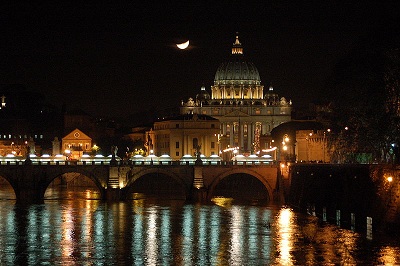 Perhaps the most crucial debate of the Reformation Era was over the nature of the universal church. During the Reformation, the church had split into numerous separate bodies. But were each of these bodies truly “the church”? Was salvation only found through membership in the Catholic Church? Finally, how did one determine what church bodies were part of “the church” if there were some new criterion for establishing what counted as “the church”? Having found their origins prior to the Reformation and a spectrum of answers during the Reformation, these questions continue to be debated into our own time.
The Church Universal
The key to understanding the emerging doctrine of the church within the Reformation is to note a distinction in meanings for “apostolic continuity.” On the one hand, one could note a literal apostolic continuity in which the authority of the Apostles themselves was passed from one person to another. On the other hand, some argued that the authority of the church was found in continuity with apostolic doctrine, not with a literal continuity of passed-on authority (McGrath, Reformation Thought: An Introduction
The Protestants began to view church authority as a consequence of right doctrine. This view allowed them to divorce themselves from the Roman Catholic church (and thus potentially lose the literal passing down of authority from one to another from the apostles) while still maintaining that their own churches remained part of the church universal.
Yet this was not the only question facing those trying to distinguish which churches were “true” as opposed to “false” churches. Surely there ought to be some signs of a “true church” to distinguish it from those that had fallen away. Martin Bucer and Martin Luther offered ways forward on this: the marks of the church. Luther insisted that what made a true church was “right administration of the sacraments and true preaching of the Gospel” while Bucer held that there was a third mark: discipline (Diarmaid MacCulloch The Reformation
The Background to the Reformation Debate
Alister McGrath notes how important it is to note the origins of the reformation debate regarding the church here. Specifically, the debate can be traced back to the Donatist controversy in the earlier church (third century). Essentially, this controversy centered around the very nature of the true church. The Christian church had been persecuted, and many had renounced their faith in order to avoid persecution. The question was asked: should these persons be allowed back into the true church? Could they still administer the sacraments and interact with the true body of Christ?
The Donatists said that those who had lapsed had become apostate and could not be allowed back into the church. However this belief was eventually considered to be incorrect and detrimental to the unity of the Church. Augustine argued against the Donatists and pointed out how the church is a “mixed body” of sinners and saints (McGrath, 144ff).
The concept of a sinner-saint was utilized by Martin Luther and other Reformers to note that the church was a body in which the Holy Spirit was actively working sanctification. That is, God was working to make the Church holy, but that did not mean that each individual in the church was absolutely devoid of sin.
How did all of this fit into the Reformation discussions on the true church? Simply put, the Donatists were radically schismatic. They sought to divorce themselves from “sinners” within the church. The Donatists were condemned for their schismatism, and so the Reformers had to deal with the fact that they themselves had either been forcibly removed from or split from the Roman Catholic Church. Thus, the importance of apostolic authority through theological unity became central in understanding the continuity of the Church.
The Modern Debates
The notion that right doctrine delineates the true church as opposed to literal apostolic continuity has a number of interesting outcomes which are very relevant for today’s church bodies.
First, it introduces a great difficulty for many church bodies in determining with whom one can fellowship. If the authority of the church universal is based upon true teachings rather than a passing down of authority from one person to another, then where is the line for how much teaching must be correct in order to remain as the true church?
Different church bodies offer different answers. Some church bodies err on the side of openness and humility and allow many into their fold who hold radically differing views. People in these organizations may hold to different views on things like the ordination of women, the age of the earth, and the like. Other church bodies err on the side of unity in doctrine and restrict membership to those that affirm sound doctrine as taught by their own body. For these church groups, a certain creed or body of work is referenced as the authoritative teaching of the church. If one differs from these teachings, then one is not part of their church body. (For more on the notion of using creeds or bodies of teachings as authoritative interpretations, see my post on “Who Interprets Scripture? Sola Scriptura, the Reformation, and the modern era.”)
To be frank, some Christians fail to recognize the diversity of these answers and simply assume that anyone who has a differing organizational structure is “liberal” or “conservative”–using the words in a derogatory manner. Such an attitude does not contribute to discussions on church organization. By failing to recognize the commendable attitude of humility in the churches that emphasize the unity of faith as opposed to the unity of individual doctrines, some unfairly label other church bodies as unbiblical or apostate. Similarly, by failing to recognize the commendable need for unity of belief in church bodies that emphasize right belief, some unfairly label these church bodies as schismatic or unchristian.
It also seems to me that both of these groups should learn from each other. Too many church groups vary too far one way or the other on these issues. Church bodies that emphasize humility in doctrine can often undermine their own church’s teachings. Similarly, church bodies that emphasize unity in doctrine can undermine their capacity for outreach and cooperation with other church bodies.
The Roman Catholic Church, following Vatican II, officially viewed non-Catholic churches as separated brethren–other bodies of true believers who were practicing independently. Such an affirmation ultimately undermines part of the debate that has raged since the Reformation: are Protestants saved, according to Roman Catholic teaching? This debate was hot during the Reformation and beyond, as the Roman Catholic church continued to deny salvation outside of the Catholic Church. Now, however, it is acknowledged that salvation can be found within Protestant circles as well.
Finally, the options Luther and Bucer offered to describe the “marks of the church” continue to be extremely important. Bucer’s emphasis on independent church discipline has–insofar as I can tell–largely fallen by the wayside, though it remains a point of interest in Anabaptist and other traditions. Although I would be hesitant to make a structured church discipline one of the marks of the true church, it would appear to be greatly important to have a system for disciplining those within the church who do not adhere to basic moral and/or doctrinal norms. However, this must be consistent with the notion that all believers are sinners being formed into saints through the process of sanctification. The modern church in the West perhaps does not have enough emphasis on the importance of church discipline, but caution should be taken so that a reform in this area does not lead the church back to a Donatist-like position.
Conclusion
So what makes a church a true church? The Reformers do still speak to us on this issue. Continuity with apostolic teaching is that which designates a true church. It is not easy to know where to draw the line between unity and humility, but over-emphasizing either leads to great difficulties for a church body. Of utmost importance, however, is the acknowledgement that though not all church bodies agree on every topic (there’s an understatement!), these church bodies are part of the saving body of Christ and therefore part of the salvific work of the Holy Spirit. Remembering this simple fact might help to spur on a bit of humility and unity among the Church Universal.
Links
Please check out my other posts on the Reformation:
I discuss the origins of the European Reformations and how many of its debates carry on into our own day.
The notion of “sola scriptura” is of central importance to understanding the Reformation, but it is also hotly debated to day and can be traced to many theological controversies of our time. Who interprets Scripture?
Sources
Alister E. McGrath a, Reformation Thought: An Introduction
Diarmaid MacCulloch The Reformation
Image: credit to Beatrice- http://commons.wikimedia.org/wiki/File:San_Pietro_e_Ponte_SAngelo_(notte).jpg
Thanks
Alister McGrath’s Reformation Thought: An Introduction was a gift from an anonymous donor. I was blown away when I saw it show up at my door and I have to say Thank you so much for being such a blessing! Whoever you are, you made my day. Well, more than just one day actually. This series of posts is a direct result of your donation. Thank you!
SDG.
——
The preceding post is the property of J.W. Wartick (apart from citations, which are the property of their respective owners, and works of art as credited) and should not be reproduced in part or in whole without the expressed consent of the author. All content on this site is the property of J.W. Wartick and is made available for individual and personal usage. If you cite from these documents, whether for personal or professional purposes, please give appropriate citation with both the name of the author (J.W. Wartick) and a link to the original URL. If you’d like to repost a post, you may do so, provided you show less than half of the original post on your own site and link to the original post for the rest. You must also appropriately cite the post as noted above. This blog is protected by Creative Commons licensing. By viewing any part of this site, you are agreeing to this usage policy.
Reformation Review: A look at the origins of the European Reformations
 The Reformation [I am going to use the term “Reformation” to refer to the European Reformations and the Roman Catholic counter-Reformation] is a period of extreme importance for those who seek to understand Christian theology. Many of the debates that are happening now can trace their roots to this period of history.
One of the most important aspects to understanding the Reformation–and, by extension, much of the development of theology after the Reformation–involves looking into the origins of the movements. How is it that the Reformation started? What brought about the notion that it was necessary to reform the Church?
In his Reformation Thought: An Introduction
Social Factors in the Reformation
The organization of cities was one factor that led to the success of the reformation. McGrath notes that individual cities during this period had come to regard itself as a kind of individual state. However, due to the failures of many of these cities to provide for their citizens and their growth over time, there were calls for a broader and representative government (McGrath, 16, cited below).
Cities had become centers of power and experienced “remarkable growth” due to the various agrarian crises and plagues that had taken place in earlier years (Carter Lindberg, The European Reformations
Furthermore, the control of the city council over the general practices and laws of the cities often led to a “symbiotic relationship” between a reformer and the city council. “The reformer, by presenting a coherent vision of the Christian gospel and its implications for the religious, social, and political structures and practices of a city, was able to prevent a potentially revolutionary situation from degenerating into chaos” (McGrath, 19).
Some reformers were very tied to the social aspects of the reformation. For these reformers, “the Reformation involved the identification of ‘citizen’ with ‘Christian’… Thus Zwingli laid great emphasis upon the need to reform and redeem a community, whereas Luther tended to concentrate upon the need to reform and redeem the individual” (McGrath, 20).
Doctrinal and Moral Concerns and the Reformation
One of the primary concerns of the reformers was that the Church could “best be reformed and renewed by returning to the beliefs and practices of the early church” (McGrath, 20). The reformers observed many problems with the Church of their time and felt that it was important to return to the “golden age” of Christianity, which they interpreted largely as the patristic period.
There had been a growth in popular religion which was largely disconnected from that of the Church. “Folk religion” focused upon the “needs of rural communities–such as haymaking and harvesting” (McGrath, 24). A lack of confidence in the pope and the clerical system contributed to the need for reform. Furthermore, the laity was becoming more educated, which led to a problem for the Church. Due to the Roman Catholic church’s system at the time in which positions of authority would be given often to the highest bidder, there were many in the Church who never visited their parishes or had little interest in or understanding of that which they were supposed to preach. The educated laity became increasingly aware of the many errors even parish preachers would make in their renditions of the Latin in the Mass (some of these priests had merely memorized the service without understanding it themselves!) (24ff).
Furthermore, throughout the Scholastic era, the Church had tolerated a kind of doctrinal pluralism. The Church recognized the need for allowing the academics to debate various issues, but this led to a serious question: “[W]hich of these schools of thought [theological schools of thought like Thomism or Scotists] was right?” (McGrath, 28). Yet the Church had suffered from a kind of schizophrenia about centralized authority. Was the authority in the Church found in Councils or in the Pope (Lindberg, 44ff)? Questions like these led to the need for reform. The reformers focused on who had the right to decide doctrine and the need for God’s word in the vernacular of the populace.
Two Primary Movers
There were two primary focuses for the individual reformers: the moral sphere and the doctrinal sphere. While it is necessary to avoid drawing a false either-or dichotomy between these, it is equally important to note that the various reformers focused largely one way or the other. Broadly speaking, several reformers in the Wittenburg/Swiss tradition focused upon the need to reform the very teachings and doctrines of the church, while those in the humanist (not to be confused with modern notions of humanism as atheism, but rather as a system of thought and practice) tradition focused upon the need to reform the moral practice of the church.
Again, neither of these should be seen as exclusive of the other. Moral reform often involved doctrinal reform and vice versa. What must be emphasized, however, is that the reformers differed at points on whether it was more important to have right belief or right practice. Surely both thought both were necessary, but the question was how to integrate these into the Church and furthermore which should come first as important. Such differing emphases can be observed, for example, in the doctrine of Scripture. The humanistic reformers tended to see the Bible as a guide for morals, while the Wittenberg and Swiss reformers tended to see it as a “record of God’s gracious promises of salvation to those who believed” (see discussion in McGrath, 55-57).
More to Come!
Thus, the stage was set for reform of the church. Societal and doctrinal pressures were in place that would lead to the need for reflection on the spheres of belief and practice. The debates that raged through the reformation continue to rage today.
Throughout October and into the next few months (and perhaps beyond, depending on the feedback/readership I get here), I will be exploring various aspects of the Reformation. I will look at some important thinkers of the Reformation period and will also focus on some modern theology which can trace its roots back to the reformation. Why October [and beyond]? Well, Reformation Day is October 31st! Be ready to learn with me, and please ask questions and leave some comments!
Alister McGrath’s book was a gift from an anonymous donor. I was blown away when I saw it show up at my door and I have to say Thank you so much for being such a blessing! Whoever you are, you made my day. Well, more than just one day actually. This series of posts is a direct result of your donation. Thank you!
Links
The Church Universal: Reformation Review– What makes a church part of the Church Universal? What makes a church part of the true church? I write on these topics (and more!) and their origins in the Reformation.
Who Interprets Scripture? Sola Scriptura, the Reformation, and the modern era: Reformation Review– I investigate the notion of “sola scriptura” and its different applications in interpreting Scripture. I particularly emphasize the problem of doctrinal unity and the various ways church bodies have dealt with these difficulties from the Reformation into today.
Sources
Alister McGrath, Reformation Thought: An Introduction
Carter Lindberg, The European Reformations
SDG.
——
The preceding post is the property of J.W. Wartick (apart from citations, which are the property of their respective owners, and works of art as credited) and should not be reproduced in part or in whole without the expressed consent of the author. All content on this site is the property of J.W. Wartick and is made available for individual and personal usage. If you cite from these documents, whether for personal or professional purposes, please give appropriate citation with both the name of the author (J.W. Wartick) and a link to the original URL. If you’d like to repost a post, you may do so, provided you show less than half of the original post on your own site and link to the original post for the rest. You must also appropriately cite the post as noted above. This blog is protected by Creative Commons licensing. By viewing any part of this site, you are agreeing to this usage policy.
Alien Life: Theological reflections on life on other planets
 I have two general beliefs/feelings when it comes to life on other planets which are in conflict. Part of me is extremely skeptical. The probability of their being life on other planets given the extremely precise conditions needed to sustain life is exceedingly, vanishingly, absurdly low. Sure, there are unimaginably numerous planets in our universe, any number of which may be earthlike, but I just do not see why we should think that life is inevitable or even likely. On the other hand another part of me thinks that God could just as easily have brought life forth in various places throughout the universe, utilizing it much like an artist uses a tapestry. Our universe could be teeming with life, just waiting to be discovered.
Reading a couple books recently, along with the recent exploration of Mars, have turned me to reflect on the implications of life on other planets for Christian theology. One book, Vast Universe [link at bottom of post], was on Christian theology of life on other planets. Here, I shall be setting aside my extreme skepticism about life “out there.” Instead, I shall consider the following statement: “If there is other life in the universe, what does that mean for Christian theology?”
Science and Christianity
The topic is so oft-discussed that I will not dedicate too much time to it. What would the discovery of life ‘out there’ do for science and Christianity?
I think that Christian theology already has the resources built in it to adapt itself to life on other planets. Although some would be disturbed by such a possibility or reality, I do not see how such a discovery would be damaging to Christianity as a whole. The real problem would lie with those willing to abuse the text of the Bible in order to try to make it say there is no possibility of life outside of Earth or that our planet is the focal point of all creation. Theologies which take such a path those would indeed suffer greatly.
Humanity’s Place in the Universe
The discovery of life on other planets would almost certainly remove the notion that humanity is some kind of privileged being in this universe. It was not all created by God for us. What would that mean for Christian theology?
Again, I do not think this would be very damaging. Although the notion that humanity has a special place in the universe has a traceable line throughout the history of Christian theology, it is hardly a necessary component. In fact, life on other planets would be a great illustration of another thread of Christian theology: the notion of God as a cosmic artist who delights in creation. On this view, God takes such pleasure in the creation of and interaction with various living species that He caused them to arise across the universe. Furthermore, our discovery of these other living creatures could be a reflection of His providence, having set up the world in such a way that we could discover other life and marvel at His creation.
Salvation
What about salvation on other planets? Did Jesus go to other planets in His incarnate form and save them as a human? Was there more than one crucifixion? Thomas O’Meara, in the book I mentioned above, reflects upon questions just like these. He argues that “All three persons can become incarnate because incarnation is one aspect of boundless divine power… The divine motive for fashioning a universe of galaxies is God’s goodness; the same motive brings incarnation” (47, cited below). He establishes the notion of more than one incarnation as a live option throughout Christian history (63ff).
It therefore seems as though other life in the universe would not destroy God’s salvation plan. The Bible tells us about God’s salvation history for humanity. We know God is good, and we therefore know that God would providentially interact with other beings at their own levels and needs.
Finally, one thoughtful reader pointed out to me one area I had forgotten to add in here. There is the possibility that if there are aliens, then they have not fallen. Perhaps they have lived in communion with God instead of in rebellion against God. The possibility is very real, and must be considered in this kind of speculative theology. Such aliens would possibly be corrupted by meeting humanity; but they may also have much to teach us. As O’Meara notes, they may be some kind of “Star Mentors” with spiritual insights we may miss in our fallen state.
 The Sentient Alien and other faiths
What kind of challenge would a sentient alien present to Christianity? What of their faith, their religion?
As far as other sentient species’ religions, I think that Christianity could interact with them in the same way that Christian theology has considered other human faiths. Seek truth where truth exists, and critique where it is untrue. (For my fuller vision of world religions, check out my post on A Vision for Christian Apologetics to World Religions.)
Some could even argue that a Christian interaction with other sentient races should be open to their own incarnations and truth in their religion as revealed by God. What of an alien Bible? Again, it seems that a good God, as we know God is, would interact with all life in a way that reflects His omnibenevolent nature. God’s providence would extend to life across the whole universe.
Alleged Disproofs
Would life on other planets somehow discredit Christianity? What of panspermia? How should we treat the discovery of life in the universe, were it to happen?
The Bible does not seem to make any kind of statement about life outside of our planet. However, it does make it clear that there is a spiritual realm of angels and demons. Thus, there is at least life outside of our easily accessible realm. No verse in the Bible states that there is no life elsewhere in the universe. It seems that the possibility is certainly open.
Furthermore, I don’t see any reason to think that life on other planets would somehow justify belief in panspermia or some other pseudo-scientific explanation of the spread and origins of life. We would have to deal with the same questions about life on other planets that we must deal with on our own.
Created life and the universe
Overall, I think that as a purely rational standpoint there is reason for immense skepticism about life on other planets. Although many express optimism and point to the sheer volume of planets in our universe as somehow necessitating life elsewhere, I am not convinced that sheer numbers somehow increase the likelihood of life on other planets. To put it plainly, it is my opinion that the only rational way to hope for life elsewhere in our universe is to conjoin that hope with belief in a God who loves creating and interacting with created life.
A final disclaimer
I realize that many of the points I wrote about in this post are likely to be extremely contentious. What I want to say is that this has been an exercise in speculative theology. I have been writing about something which is a mere possibility and offering possible answers to a number of questions from a perspective which takes this possibility seriously. I am quite possibly wrong on any of these. What I have tried to do here is offer a number of things for Christians to think about when they consider life on other planets. For a great post on the possibility of life on other planets, check out this guest post by Greg Reeves on that very topic.
Source
Thomas O’Meara, Vast Universe
SDG.
——
The preceding post is the property of J.W. Wartick (apart from citations, which are the property of their respective owners, and works of art as credited) and should not be reproduced in part or in whole without the expressed consent of the author. All content on this site is the property of J.W. Wartick and is made available for individual and personal usage. If you cite from these documents, whether for personal or professional purposes, please give appropriate citation with both the name of the author (J.W. Wartick) and a link to the original URL. If you’d like to repost a post, you may do so, provided you show less than half of the original post on your own site and link to the original post for the rest. You must also appropriately cite the post as noted above. This blog is protected by Creative Commons licensing. By viewing any part of this site, you are agreeing to this usage policy.
Shells and the Biomass of Earth: A serious problem for young earth creationists
Imagine an earth covered with 15 creatures per square foot. And no, these creatures are not merely bacteria; rather, they are animals which can produce shells. The sheer amount of biomass would be so great that none of the creatures could survive. Their food would all be gone and their habitat insustainable. Over at Naturalis Historia, the Natural Historian has written a compelling article about how just the fossilized shells in one portion of the Midwest lead to extreme problems for the Young Earth position.
The author of that post did a brief survey of fossils over a 300×500 mile section of the Midwest from West Virginia to Eastern Missouri and from southern Kentucky to the middle of Indiana and Ohio. Utilizing samples and several calculations which were based off of these samples, he decided to try to calculate how thick a layer would be of fossils if just this area (totally covered in fossils) were spread out over the surface of the entire planet. He was able to conclude that “15 shells per square foot are estimated…” over the surface of the earth just from this sampling. Readers should note that in his article he utilized the lower end on his estimates in order to avoid tilting the scale in favor of an old earth position.
What is the point of this discussion? Who cares? Well this fact actually presents young earth creationism (YEC) with a few major difficulties:
…even 15 shells trying to live within the space of a square foot at the same time would have trouble. One also has to consider several other things:
1) Not all the surface of the earth was ocean before the flood, if we say that 50% of the surface was land then that would mean there were 30 shells per square foot in the ocean.
2) In addition, most organisms that produced these shells likely could only live in shallow water along coasts not in the deep ocean so unless the whole ocean were very shallow (and I think some claim that it was, although that presents some other very perplexing problems) then that would also dramatically reduce the space in which these shells could have grown and died.
3) The shells are not sorted at all by size, as very small (<1cm) to large (>4cm) shells are always found mixed with one another.
Each of these is presents a different difficulty with YEC. For, as the author noted, the shells he surveyed is only one small sample of untold amounts of these deposits across the surface of the earth (see below for my own samples and some analysis). Now if YEC is correct, then all of these creatures would have had to live over the course of around 10,000 years (or fewer). Think about that for a moment. I know from personal experience that the area covered with these shells is about twice as large as estimated in the numbers already referenced above, and so we are then talking about 30 creatures per square foot over the surface of the earth. But then consider that these types of formations can be found across America and across the earth. I have no way to estimate the numbers, but ultimately we’re talking about a simply astounding amount of life living on the surface of the earth in that short of a time span. It would be physically impossible for the sheer weight of living creatures to survive at the same time. If the Earth were only about 10,000 years old, then we would have been knee deep or even buried in shell-producing creatures over the course of our lives.
Not only that, but these creatures would have been competing for resources like food and air (think about how much oxygen these creatures would have sucked up all at once!). And again, it’s not like the entire surface of the earth would have been habitable–these creatures live only in shallow waters. It doesn’t seem unreasonable to think that if all these creatures lived over the course of 10,000 years then the oceans would have overflowed with them.

The image I have linked to the right shows a pair of stones discovered in limestone in Kansas. There were literally dozens of feet of fossils just like these as far as the eye could see in the Castle Rock formation in Kansas. One could just walk up and pick a rock up off the ground and it would be like the picture to the right. There are places one can’t walk without stepping on large numbers of fossils. The picture that is at the beginning of this post is a picture I took while in this formation. It is not just the author of the article above who has observed the seemingly unending supply of fossils throughout the Midwest. I myself have observed limestone formations with fossils like these across Kansas for hours and hours of interstate. Not only that, but I grew up in northwest Indiana and observed massive limestone formations there as well. Here in Minnesota, one can also observe limestone along cutouts of the highway and elsewhere. One can go to areas along the Mississippi here in Minnesota and pick up fossilized shells along the riverbed.
So imagine that the estimates listed above by the Natural Historian are correct on the low end. Now imagine that all of Kansas is covered with these shells–I can attest to it. Imagine further that more portions of the Midwest are covered with other types of limestone which also would have added to the biomass of earth. Again, the numbers are staggering.
How in the world did all of this biomass get here within a few (10?) thousand years? That is the question which young earth positions must deal with. Note that the argument and evidence in this post do not rely upon any dating system, any background knowledge, or other scientific dating systems YECs tend to denigrate. Note that the argument only shows what is observable and asks a question: how did it get here? YECs would have to come up with some way to plausibly explain how all these creatures could have had their lives condensed into about 10,000 years.
God is not a liar (Numbers 23:19). The natural world attests to Him (Psalm 19). These conjoined Biblical points tell us that when we go outside and observe that the life we can observe in the past could not have all lived within 10,000 years, then it did not. Those who claim otherwise seemingly must either introduce a third option (some plausible explanation for these creatures’ lives–and note that it must be more plausible than the argument that they lived and died at the same rate they do now and that the world is simply old enough to have had that much life and death over the course of time) or they fall victim to a dilemma involving the cited verses: either the natural world does not attest to the Truth or God is actively deceiving us. The bottom line is that this is just one more hole in the Young Earth position. YEC is, simply put, false.
Appendix 1: A response to one objection
There have already been a few responses to this post on places other than this site. One response argued that the samples which I and/or Natural Historian took were not representative of the fossil record. Here is my brief response:
Take a trip through the Midwest sometime and look at the cuts through the highways. Every single time you pass through one in Kansas it is absolutely filled with limestone and fossil-rich rock. The same happens through most of Missouri, Illinois, Indiana, etc. I could literally walk up to a wall of shells and pull out a huge sampling of them.
Now suppose this isn’t representative. Suppose that it just so happened, at random, that the roads were set up in such a way that they only hit the most fossil-rich deposits out there. What does that mean?
Not very much. We can observe these same deposits all over the world. The sheer amount of these deposits means that we could very easily produce the number of fossils Natural Historian estimates over just the Midwest.
Again, to clarify, I’m saying let’s assume that Natural Historian overestimated several thousand(milliion?)-fold and so the number of fossils he estimates for the midwest can only be gathered if we collect them from all over the earth, and only from those highway cuts or other points of exposure where such deposits have observed (again, making the extreme assumption that only those places which have happened to get hit by highways or erosion are those with these deposits). But in that case, we can still gather enough fossils to say the entire surface of the earth could be covered by about 15 fossils per square foot.
But wait–these fossils don’t occur in deep oceans or on land. They only occur in shallow oceans. Suddenly we’re up to about 30 per square foot if we assume they occurred in water anywhere (including riverbeds, deep oceans, and the like). But eliminate the places these types of fossils do not occur and the number of fossils increases even more.
Suddenly we find that the exact problem I raised above remains a problem–even if we only take those fossils which are exposed now (and again note that this is a huge underestimate and requires extreme blind faith that there are no other fossils under the ground anywhere, not to mention the fact that there may be even more fossils that are exposed which could drive that number up exponentially). There has been simply too much life on earth to maintain a young earth position.
SDG.
——
The preceding post is the property of J.W. Wartick (apart from citations, which are the property of their respective owners) and should not be reproduced in part or in whole without the expressed consent of the author. All content on this site is the property of J.W. Wartick and is made available for individual and personal usage. If you cite from these documents, whether for personal or professional purposes, please give appropriate citation with both the name of the author (J.W. Wartick) and a link to the original URL. If you’d like to repost a post, you may do so, provided you show less than half of the original post on your own site and link to the original post for the rest. You must also appropriately cite the post as noted above. This blog is protected by Creative Commons licensing. By viewing any part of this site, you are agreeing to this usage policy.
“A New Vision for Natural Theology” A Book Review of “The Open Secret” by Alister McGrath
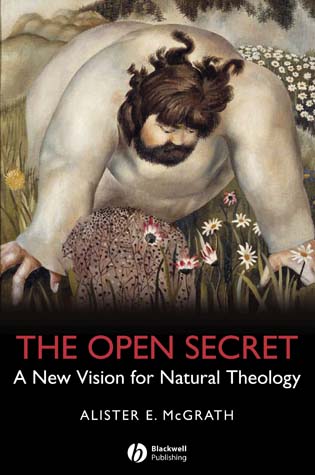 Alister McGrath is a well-known name in Christian philosophy, science, and apologetics. His book, The Open Secret
Natural theology, according to McGrath, is not just a way to argue for the existence of God. Rather, “The enterprise of natural theology… is one of discernment, of seeing nature in a certain way…” (3). He argues that natural theology in fact should not be viewed as a system to prove the existence of God. Rather, it “addresses fundamental questions about divine disclosure and human cognition and perception. In what way can human beings, reflecting on nature by means of natural processes, discern the transcendent?” (5, emphasis his). Natural theology can be seen as an entire worldview, put forth to view the world in a certain way (17).
McGrath, after outlining his vision thus, turns to the human experience of the transcendent. He focuses on three thinkers- Iris Murdoch, Roy Bhaskar, and John Dewey (41ff). He then turns to various ways humans have accessed the transcendent (59ff) and includes an evaluation of the psychology of perception (80ff).
He once more emphasizes the need to see natural theology as a type of “seeing” (115) and turns to Jesus to demonstrate the approach McGrath favors. Jesus’ parables are a model for natural theology, argues McGrath. They are “open… the interpretation is generally left indefinite and imprecise… the imagery of the parables is readily grasped [but] their meaning is often veiled…” (120-121). Similarly, nature itself is easy to grasp, but it has hidden meanings which can only be perceived by viewing the world in a certain way (126ff).
The Enlightenment approaches to natural theology have been largely unsuccessful historically and are in need of modification (140ff).
A Christian approach to natural theology should focus on “seeing” God in the natural. God has chosen to “self-disclose in history and nature” (178) and natural theology can reveal God in nature (178ff). Christian natural theology is “eschatological… The fading beauty and goodness of the world are to be interpreted in the light of the hope of their restoration and renewal” (206).
Natural theology must also break out of its boundaries. It is not just the realm of philosophical reflection, but also opens many points of contacts with the world. It is “about perceiving nature in a certain way” (221). Beauty, goodness, and truth are all aspects of reality which can be drawn out through a Christian Natural Theology (222ff). Again,
“natural theology… cannot be regarded as ‘proving’ God’s existence. Rather, it insists that the existence of a God such as that proposed by the Christian tradition makes sense of what may be observed of the world. Such an approach holds that there is an accumulation of considerations which, though not constituting logical proof (how could experience prove anything in such a way?), is at the very least consistent with the existence of a creator God (233).
The goal is not proof but a demonstration of consistency, which will “reinforce the plausibility” of Christianity (234).
Beauty and goodness draw out the reality of the Christian vision of the world. Beauty must not be neglected in natural theology (262ff). Beauty “can… call us, seeking a response” (283). Goodness underlies the resonance with natural law and the moral truths that can be seen as built in to “the fabric of the universe” (293ff).
McGrath concludes by urging readers to see natural theology as a key to open the “mysteries” and “hidden meaning” of nature’s “open secret” (314-315). Natural theology is primarily a vision–a way of viewing the world. The goal of the natural theologian, therefore, is to show how the reality of the world resonates best with a Christian worldview.
There is little to find at fault in McGrath’s powerful work. The Open Secret has enormous depth and breadth. Few areas of development are left unexplored. As one who has great interest in natural theology and who frequently discusses it, this reader must agree with McGrath that the arguments of natural theology often don’t work as proofs so much as pointers. Few are willing to embrace Christianity due only to an argument from natural theology, but the arguments themselves can be used to show how Christianity touches and explains many aspects of reality. McGrath’s vision is really an expanded “cumulative case”; one which focuses not just on many arguments, but brings the beauty of the world and its inherent goodness (while acknowledging ugliness and evils) into the folds of natural theology.
Alister McGrath’s The Open Secret provides a vision for the development and integration of natural theology into the arts, the sciences; indeed, into every aspect of life. It is a vision that will resonate with readers and drive them to see Christianity as an integrated whole. The book is, without a doubt, a must read.
Source
Alister McGrath, The Open Secret
SDG.
——
The preceding post is the property of J.W. Wartick (apart from citations, which are the property of their respective owners) and should not be reproduced in part or in whole without the expressed consent of the author. All content on this site is the property of J.W. Wartick and is made available for individual and personal usage. If you cite from these documents, whether for personal or professional purposes, please give appropriate citation with both the name of the author (J.W. Wartick) and a link to the original URL. This blog is protected by Creative Commons licensing. By viewing any part of this site, you are agreeing to this usage policy.
Book Review: “Salvation and Sovereignty: The Molinist Approach” by Kenneth Keathley
 Molinism is a topic hotly debated in theological circles. There have been several books on the topic published just in the past few years, which, for a topic of analytic theology, is extraordinary. Kenneth Keathley’s work, Salvation and Sovereignty: A Molinist Approach
Keathley’s central position is that the Calvinistic “TULIP” (Total depravity; Uncondtiional election; Limited atonement; Irresistible grace; Perseverance of the saints) is the incorrect approach to salvation. Instead, he endorses the “ROSES” approach (Radical depravity; Overcoming grace; Sovereign election; Eternal life; Singular redemption).
The contrast is laid out in detail through the book, but to sum up, Keathley provides a comparison in the introduction. Radical depravity allows for free will while still emphasizing the fallen nature of people. Overcoming grace emphasizes “God’s beckoning that overcomes our wicked obstinacy” (3-4); sovereign election is the affirmation that God desires salvation of all; eternal life is to note that believers “enjoy a transformed life that is preserved and we are given a faith which will remain” (4); finally, singular redemption emphasizes that Christ’s atonement is not limited to the elect (4).
Keathley seeks to wed these concepts of salvation and sovereignty with the analytic theological concept of molinism. Molinism, Keathley argues, is a “middle way between Calvinism and Arminianism” (7). Molinists can affirm that God controls all things, that “man does not contribute to his salvation,” that the believer is eternally secure in Christ; further, they can affirm that “God is not the author of sin” that “God desires the salvation of all,” and that “At crucial times, humans have the ability to choose” (7).
Keathley then turns to a defense of molinism. Here, he touches briefly on some of the philosophical aspects of the molinist account. There are three “moments” of God’s knowledge: natural knowledge, middle knowledge, and free knowledge. These are not to be understood as temporal moments but rather moments of logical priority. The first moment, natural konwledge, is God’s knowledge of all possibilities. God’s middle knowledge is the knowledge of everything that “would” happen in given circumstances. Between this “moment” and the next, God chooses a world to actualize. Finally, God’s free knowledge is that knowledge of everything that will happen, given the created world (17). Keathley distinguishes these moments as “could” (natural knowledge), “would” (middle knowledge), and “will” (free knowledge) (17-18).
Next, the Biblical account is expounded. Before going into depth with individual verses, Keathley argues that the Bible teaches that God exhaustively knows all things (including the future), that God is holy and righteous and does not cause sin, and that humans do have freedom–contingent choices are placed before people (20). Keathley then turns to exegetical studies of various aspects of God’s knowledge and human freedom. First, he argues that God has exhaustive knowledge of all things (including the future), meticulous providential control, freedom, and righteousness (20ff). He then turns to a defense of the notion of human freedom in the Bible through a study of “contingent choices” put before people. He draws on both Old and New Testament examples to make his case. [In the interest of length I’ll not go through these arguments, but I would like to note that he utilizes over 30 separate verses in the first two pages of the Biblical evidence sections alone.]
The second chapter covers a side topic: Does God desire salvation for all people? Here, Keathley outlines 4 major positions regarding this. First, there is universalism–all are saved; second, there is double predestination–God chooses who will be saved and who will be reprobate; third, God has two wills–a revealed will in which God desires salvation and a decretive will in which, for unknown reasons, He passes over some; fourth, God has a consequent and antecedent will–“God antecedently desires that all be saved, but He consequently wills that faith is a condition to salvation” (42-43). Keathley argues that the fourth option is the most defensible (43ff).
Next, Keathley turns his work towards a specific defense of the “ROSES” position discussed above. This defense encompasses the rest of the book.
Radical depravity is a rejection of determinism along with an affirmation that humans are in bondage to sin and fallen (63). Keathley endoreses “soft libertarianism,” which affirms that people’s characters can determine the range of choices, but also that they are the “origin and source of their choices” and that they are genuinely free to reject or choose specific actions (70ff).
Overcoming grace holds that while grace is monergistic–God is the only worker in salvation, it is resistible. “God’s grace is truly offered and available. The difference between the saved and the lost is the continued rebellion of the unbeliever” (105). This is an “ambulatory” model, which basically means that God is drawing all people to Him at all times, such that the only way to not be saved is to resist belief in Him.
Keathley holds “sovereign election” in which “God ordains the salvation of the elect but only permits the damnation of the reprobate” (142). Keathley follows this chapter with “Eternal Life” in which he argues that believers can feel certainty about their salvation. Finally, “Singular Redemption” is the notion that “redemption is provided for all, but applied only to those who believe” (194). This reflects the “penal substitutionary atonement” view (ibid). Thus, God provides salvation to all who believe, and applies it to those who do.
Salvation and Sovereignty is not unique simply because of its emphasis on the theological utility of molinism. The book is also written at a level that general readership will find accessible. Considering the extreme nuances and significant philosophical groundwork which must go into an explication of molinism, Keathley does a simply phenomenal job making the concept accessible to readers who are not philosophically trained.
However, it should be noted that because of this simplification, several of the philosophical issues related to molinism drop off. Not only that, but it seems that Keathley is operating under very slightly different views of what molinism entails. For example he states that molinism is a kind of “compatibilism” (5). This is false for most molinists, because most molinists defend libertarian freedom in conjunction with God’s foreknowledge. Thus, it is not compatibilism but libertarianism. Finally, many philosophical objections to molinism are left untouched. Due to the focus of the book, however, these seem minor flaws for the overall work.
Keathley’s work is exciting in many ways. It brings the molinist discussion to a more general readership. It provides a significant challenge to theological determinism. Finally, and perhaps most interestingly, it provides an account which shows the theological fruitfulness of the concept of middle knowledge. Readers interested in any of these topics should immediately get the book and read it. For those who have engaged with molinism on a philosophically developed level, it provides an interesting account of how to apply those studies to a theological framework. For those who know little or nothing about molinism, it provides an excellent introduction. While readers may not agree with all of Keathley’s theological positions, his work will challenge and inform anyone who reads it. It comes highly recommended.
Source:
Kenneth Keathley, Salvation and Sovereignty: A Molinist Approach
SDG.
——
The preceding post is the property of J.W. Wartick (apart from citations, which are the property of their respective owners) and should not be reproduced in part or in whole without the expressed consent of the author. All content on this site is the property of J.W. Wartick and is made available for individual and personal usage. If you cite from these documents, whether for personal or professional purposes, please give appropriate citation with both the name of the author (J.W. Wartick) and a link to the original URL. If you’d like to repost a post, you may do so, provided you show less than half of the original post on your own site and link to the original post for the rest. You must also appropriately cite the post as noted above. This blog is protected by Creative Commons licensing. By viewing any part of this site, you are agreeing to this usage policy.
Mormonism and God: A Philosophical Challenge to Mormonism
 Central to discussions about God is the very concept of God itself. What does one mean when they refer to “God”? Suppose one is debating about the existence of God and in the course of that debate, one finds out that the other, when using the term “God” is thinking of a contingent, powerful but limited, and embodied deity; yet the other person has been trying to argue for the God of classical theism–infinite in power, wisdom, love, etc., omnibenevolent, omniscient, and omnipotent, transcendent, and the like. Clearly, there is a difference over who “God” is. Now talk about God can be meaningful between these two because they can choose to use “God” as a title, similar to that of “King” (this is suggested by Paul Moser in The Evidence for God, 22ff).
That said, for this post I will not assume that “God” refers exclusively to the God of classical theism. Rather, I’m going to turn to the Mormon concept of God and examine its coherence. If Mormonism’s concept of God is incoherent, then Mormonism faces a serious philosophical challenge. (As has been argued elsewhere, coherence is a central test of a religion’s truth claims.)
It is important to note that there is no single “Mormon concept of God.” As with Christianity, there is an array of beliefs about specific attributes of God. Thus, for this post, I’ll focus on just two concepts of deity within Mormonism.
 Monarchotheism (Also Known as Henotheism)
Explication
Stephen Parrish and Carl Mosser take Mormon teaching to expound the concept of God known as Monarchotheism, “the theory that there is more than one God, but one God is clearly preeminent among the gods; in effect, he is the monarch or ruler of all the gods” (Parrish and Mosser, 195, cited below). This concept of God is embodied (see Teachings of the Prophet Joseph Smith cited in P+M, 201). Furthermore, this God is contingent, the organizer of a world that was originally chaos, and one of many gods (Ibid, 201). Furthermore, Joseph Smith himself taught that this “God himself was once as we are now, and is an exalted man…” (TPJS 345, cited in P+M, 202).
Critique
There are many difficulties with this Mormon concept of God. Perhaps most crucial is the inclusion of contingency in the concept of God. If God is contingent, then it does indeed beg the question “Who Made God?” Consider this against classical theism, which holds that God exists necessarily. Classical theists can respond to this question by simply saying, “No one made God, because God, as necessarily existent, never came into being.” Yet Mormons who hold God is contingent must answer this question.
That’s not the only difficulty with God as contingent either, for holding that God is contingent removes several of the reasons to believe that such a deity exists. Consider one of the classical arguments for the existence of God: that contingent things have all come into being, so there must be something which has always existed in order to terminate the infinite regress. Of course, if this deity which terminates the regress is, itself, contingent, then one must continue the regress to the next step. Thus, this Mormon concept of God provides no grounding for the universe itself.
Further, this Mormon concept of deity has no way to ground objective morals. While Mormons tend to hold that God is all good/omnibenevolent, they have no way to ground this goodness in God Himself. Rather, because God is contingent, there must exist some measure by which God is judged, and so one is left with all the difficulties of grounding morality without God. If, instead, morality is still to be based upon God, then it could only really be some form of extreme occamism/voluntarism–whereby things are moral just because God says so. The difficulties with such a view are extreme.
Of course, once more classical theism can explicate objective morality by grounding them in the nature of God. Because God is necessarily the greatest possible being, God is necessarily the source of all goodness, and therefore the grounds of morality are found in God.
 Finally, there is the question of the problem of evil. Classical theism has a number of answers to this problem, but none of them are effective upon a monarchotheistic view of God. First, because there can be no grounding for objective morality on Mormonism, there remains the difficulty of explaining how actions could truly be evil to begin with (Parrish and Mosser, 215, see similar difficulties with naturalism here). Second, because evil is part of the universe and God himself is part of the eternal universe, evil can be seen as a natural part of the order of the cosmos (ibid, 215). Third, and most poignantly, because God is contingent and part of the universe, it seems that there is great difficulty with the notion that God would one day overcome evil. Because evil is part of the universe, and has therefore existed eternally rather than as a corruption of the goodness of nature, it seems that there is no way to finally overcome evil. Thus, the problem of evil is exacerbated exponentially on Mormonism (ibid, 216).
So, to sum up, monarchotheism appears to be one plausible interpretation of the Mormon concept of God. This concept is expounded by Joseph Smith in his Teachings and is also found in various theological works of Mormons (cf. McMurrin, Theological Foundations; Ostler, “Mormon Concept of God”; Paulsen, “Comparative Coherency”–these are noted in P+M, 457). However, this concept has been shown to be riddled with difficulties. It cannot explain many of the central features of our world, such as the existence of objective morality. Furthermore, it undermines reasons to believe in the existence of a God. Finally, this Mormon concept of God fails to even explain the existence of the universe itself. Thus, it seems to me this concept of deity is incoherence.
 Polytheism
So much for Monarchotheism. But what about other Mormon concepts of God? There is one other concept which is attested in Brigham Young’s writings along with other Mormon writers. This view can fairly be referred to as polytheism.
Explication
Once more we find that the eternal existence of the universe is central to this view of Mormonism. Matter is eternal. God the Father organized the universe, but at least some laws of nature are outside of god’s control (see the discussion in Francis Beckwith and Stephen Parrish, See the Gods Fall, 99ff, cited fully below).
Furthermore, the notion that there are innumerable contingent “primal intelligences” is central to this Mormon concept of god (P+M, 201; Beckwith and Parrish, 101). That there is more than one god is attested in the Pearl of Great Price, particularly Abraham 4-5. This Mormon concept has the gods positioned to move “primal intelligences along the path to godhood” (Beckwith and Parrish, 114). Among these gods are other gods which were once humans, including God the Father. Brigham Young wrote, “our Father in Heaven was begotten on a previous heavenly world by His Father, and again, He was begotten by a still more ancient Father, and so on…” (Brigham Young, The Seer, 132, quoted in Beckwith and Parrish, 106).
The rest of this concept is similar to the Monarchotheistic view, although rather than God the Father being a “monarch” over the others, he is more like one of many. As already stated, he is just one of a string of “Fathers.”
Critique
The logic of the Mormon polytheistic concept of God entails that there is an infinite number of gods. To see this, it must be noted that each god him/herself was helped on the path to godhood by another god. There is, therefore, an infinite regress of gods, each aided on his/her path to godhood by a previous god. There is no termination in this series. Now because this entails an actually infinite collection of gods, the Mormon polytheistic concept of deity must deal with all the paradoxes which come with actually existing infinities (for some problems with the actual infinite search “infinite” and check out the problems Craig points out in his Q+A’s section).
Now, polytheistic Mormonism would also seem to have to deal with all the difficulties of Monarchotheism, for this concept also carries with it the contingency of deity and eternity of the world.
Finally, it seems polytheistic Mormonism has a difficulty at its heart–namely the infinite regress of deity. While on Monarchotheism, the infinite regress was merely hinted at (and still extremely problematic), polytheistic Mormonism has infinite regress at its heart and soul. Each god relies upon a former god, which itself relies upon a former god, forever. Certainly, this is an incoherence at the core of this concept of deity, for it provides no explanation for the existence of the gods, nor does it explain the existence of the universe. Polytheistic Mormonism, it seems, fares even worse than its Monarchotheistic counterpart.
Addendum: The “Standard Works” and Classical Theism
It is worth noting that those who wish to adhere to a strict “Standard Works only” approach to Mormonism may object to the critiques I’ve given above. The reason being that in the Standard Works, it seems like a view much closer to classical theism is expounded. For example, God is referred to as “Lord God Omnipotent” (Mosiah 3:5 [and “Lord Omnipotent” in 3:17-18]; Mosiah 5:2). Further, God’s infinite goodness and mercy are affirmed (Mosiah 28:4, Moroni 8:3, 2 Nephi 1:10).
It is indeed the case that were one to only operate from this explication, one might come to believe in a God very similar to classical theism. There are three responses I would offer: first, I’d be very happy to welcome any others who do affirm mere classical theism. In that case, I’d like to discuss the finer points of differences between Christianity and Mormonism.
However, I think it is the case that many who object by showing a Standard Works reading of Mormonism do not themselves hold to a “Standard Works only” belief. Any who holds that, for example, humans can be exalted to godhood must accept the implication that God the Father would therefore be contingent, and would then most likely fall into one of the categories listed above. Second, I already noted how in Abraham 4 and 5 it seems quite apparent there are many “Gods” (any who disagree, feel free to simply read the Pearl of Great Price, Abraham 4… literally any verse between 5-31; it explicitly states “the ‘Gods'”). Because classical theism holds that there is only one who can occupy the title “God,” this places even the Standard Works alone reading outside the realm of orthodoxy regarding classical theism.
Finally, I’ve already quoted Brigham Young and Joseph Smith in other writings outside the “Standard Works” both affirming that God the Father is an exalted man and that God the Father was preceded by another Father. If Mormonism is to be conceived in a form akin to classical theism, Mormons must reject these writings, and with it discredit their prophets.
Conclusions
Central to the Mormon faith is God, just as God is central to any theistic religion. Yet, as has been seen, two of the major explications of the Mormon concept of deity fall victim to insurmountable philosophical problems. The third, closer to classical theism, must contend with the fact that other Mormon writings (and indeed, even the Pearl of Great Price) are contrary to their position. The fact that Momonism’s concept of God is incoherent strikes a major blow to the truth claims of the Mormon faith. Without coherence in that which is central to the religion: God, the entire theological system falls apart.
Links/Sources
Check out other posts in my series on Mormonism:
The Book of Mormon: Introduction and Importance– This post is pretty self descriptive.
Genetic Evidence and the Book of Mormon: Did any Native Americans come from the Middle East?– Argues that the Native Americans are not Middle Eastern in ancestry. Because the Book of Mormon claims they are, the Book of Mormon is false.
Sources
Stephen Parrish with Carl Mosser, “A Tale of Two Theisms” in The New Mormon Challenge: Responding to the Latest Defenses of a Fast-Growing Movement ed. Beckwith et. al, 193-218 (Grand Rapids, MI: Zondervan, 2002).
Francis Beckwith and Stephen Parrish, See the Gods Fall: Four Rivals to Christianity (Joplin, MO: College Press, 1997).
[I have edited this post to put back in several references to Mormon scriptures that I initially omitted for length. Further, I modified it to make more clear the difference between “finite” in mathematical terms and “contingent” in philosophical meaning.]
SDG.
——
The preceding post is the property of J.W. Wartick (apart from citations, which are the property of their respective owners) and should not be reproduced in part or in whole without the expressed consent of the author. All content on this site is the property of J.W. Wartick and is made available for individual and personal usage. If you cite from these documents, whether for personal or professional purposes, please give appropriate citation with both the name of the author (J.W. Wartick) and a link to the original URL. If you’d like to repost a post, you may do so, provided you show less than half of the original post on your own site and link to the original post for the rest. You must also appropriately cite the post as noted above. This blog is protected by Creative Commons licensing. By viewing any part of this site, you are agreeing to this usage policy.

 J.W. Wartick - Reconstructing Faith
.jpg)