christian
Book Review: “Judges and Ruth: God in Chaos” by Barry Webb

Barry Webb’s commentary, Judges and Ruth: God in Chaos is part of the “preaching the word” series and presents the books in a pastoral, conversational fashion.
Webb continually brings up details of the text that are overlooked, bringing to light wonderful insights where people may tend to skip over. Minor judges (like Shamgar) are at times given as much detailed discussion as those we might consider more important. There is a clear method to this, as Webb seems uninterested in sharing those things readers learned and re-learned since Sunday School. This is a book that feels fresh and exciting–and I’ve read one of Webb’s other commentaries on Judges!
These insights are not limited to the minor judges, however. The sections on Gideon, Ehud, and Samson (one of my favorite Bible personages) are particularly excellent. Each will make readers look with more depth even at stories they think they knew. For example, regarding Eglon, the king Ehud kills, Webb points out that readers of the story should reflect on the interplay between Ehud’s bringing a harvest tribute and the corpulence of Eglon. The fatness of Eglon is, ironically, in part due to his gleaning food from Israel! It is just this kind of deep look at the text that can be found throughout the book, time and again, regarding the judges and Ruth.
The tone of the book is quite pastoral. There are no sections of Hebrew painstakingly pored over word-by-word. Admittedly, I love that kind of commentary. That’s not the kind of commentary this is. Instead, it is presented in a kind of conversational style that takes you directly to the story. A good word to describe the style is “immersive”: reading the commentary makes one feel as though they are inside the Bible story themselves, experiencing it, and seeing the world anew as the contemporaries might have. It is a pretty thrilling experience.
The section on Deborah as a “maverick” is unfortunate, because it undercuts the importance of the woman Deborah (though calling her a “maverick” seems on-point). Webb has written elsewhere (his commentary in the New International Commentary on the Old Testament Series on Judges) about how “there is no hint in the narrative or elsewhere in Scripture that her [Deborah’s] exercise of such a role [as leader/judge/prophetess] was contrary to God’s purposes, or a breach of his declared will in the way that the irregular worship practices of the period were” (Webb, The Book of Judges, (Eerdman’s, 2012) 188). Here, however, Webb qualifies this endorsement, carefully pointing to a pattern of male leadership throughout the Old Testament and arguing that Deborah is exceptional in her role here as prophetess/Judge. Yet in the same chapter, he also notes how the Old Testament is a patriarchal culture, which makes Deborah’s function as judge/prophetess even more exceptional! The exceptional nature, however, is not that it is improper–as Webb himself admits–but rather that her acting in this function, a prophetess called by God, challenges the very patriarchy that Webb has noted (and, at times, challenged himself) as the background for Old Testament practices. That is, Deborah functions as an attack on that paradigm, not a confirmation of it.
Though Webb notes that Deborah was praised in her function, he nowhere points out how this very act of praising Deborah for her role as leader and prophetess of Israel entails a theological truth of the gifting of God for women in such positions. I was disappointed to see this subtle shift in Webb’s affirmations about Deborah from his other commentary. This makes the section on Deborah less insightful than it could have been, however, particularly given her importance in the book of Judges.
Judges and Ruth: God in Chaos is a beautiful, pastoral book full of insights that will have you scrambling to grab your Bible and make notes. Although it isn’t perfect, it is a worthwhile read that will open the pages of the books covered in new ways. It is recommended.
The Good
+Full of intriguing details
+Immersive, engaging writing style
+Continually takes readers back to the text
+Plenty of background information
The Bad
-Inserts complementarian language into discussion of Deborah
Disclaimer: I received a copy of the book for review from the publisher. I was not required to provide any specific kind of feedback whatsoever.
Source
Barry Webb, Judges and Ruth: God in Chaos (Wheaton, IL: Crossway, 2015).
Links
Be sure to check out the page for this site on Facebook and Twitter for discussion of posts, links to other pages of interest, random talk about theology/philosophy/apologetics/movies and more!
Book Reviews– There are plenty more book reviews to read! Read like crazy! (Scroll down for more, and click at bottom for even more!)
Eclectic Theist– Check out my other blog for my writings on science fiction, history, fantasy movies, and more!
SDG.
——
The preceding post is the property of J.W. Wartick (apart from quotations, which are the property of their respective owners, and works of art as credited; images are often freely available to the public and J.W. Wartick makes no claims of owning rights to the images unless he makes that explicit) and should not be reproduced in part or in whole without the expressed consent of the author. All content on this site is the property of J.W. Wartick and is made available for individual and personal usage. If you cite from these documents, whether for personal or professional purposes, please give appropriate citation with both the name of the author (J.W. Wartick) and a link to the original URL. If you’d like to repost a post, you may do so, provided you show less than half of the original post on your own site and link to the original post for the rest. You must also appropriately cite the post as noted above. This blog is protected by Creative Commons licensing. By viewing any part of this site, you are agreeing to this usage policy.
“The Expanse” Episodes 1-5- A Christian Perspective
 I’ve been enjoying watching SyFy’s TV series, “The Expanse,” quite a bit. Part of that is because I’m a huge science fiction fan, but another part of it is because there is plenty of worldview discussion to go around. I’ll be posting a series on worldview in episodes from the expanse biweekly as they come out. There will be SPOILERS for the episodes discussed here. Please don’t post spoilers for later episodes on this post.
Fear and Safety
A theme that resonates all too readily with the current state of our society is that of fear of the “other.” People on Earth are afraid of anyone not from Earth, people of the outer planets/belters are afraid of people of Mars and Earth. Fear is a driving motivation for many of the characters so far. Chrisjen Avasarala is a clear example of this so far. She submits a captured suspected OPA terrorist to torture in order to try to get information from him that should protect others. The apparent callousness with which she does this act seems to be unquestioned by those around her.
It is all too easy to dehumanize those who are not like us. It is made easier when we fear “them.” Safety is the proverbial carrot that is held out to justify wrongful acts against the perceived evil “other.” We are assured that if such measures are not taken, our lives may be forfeit. Yet what price is too high to pay for safety?
Christians should be working against injustice wherever it occurs. Injustice includes cruel punishments and torture of others. Although we need not be completely without defense, there is no place for an ethic of the ends justifying the means in Christianity.
Home and Place
Episode 5 had an interesting conversation between an OPA man and Detective Miller. In it, the OPA man was pointing out how people on earth have a home, a place to call their own, but elsewhere, people do not. Throughout the series so far, there has been a sense of displacement among the characters. No one does seem entirely comfortable where they are. This notion of place is one that should not be too easily passed over.
Place is something that everyone needs–somewhere to call their own. In the Bible, this is evident in the narratives of Israel and the Promised Land, but it continues into our time with the promise of the New Creation. The hope for a home is something that is ultimately forward-looking, because we will never be truly home until we have been united with Christ. The longing evident in characters in “The Expanse” points us towards our own longings.
Conclusion
I’d love to know what you think of the series thus far and what worldview level issues you have seen therein. Leave a comment and be sure to follow the blog as I will be writing more as the series progresses.
Links
Be sure to check out the page for this site on Facebook and Twitter for discussion of posts, links to other pages of interest, random talk about theology/philosophy/apologetics/movies and more!
Eclectic Theist– Check out my other blog for my writings on science fiction, history, fantasy movies, and more!
SDG.
——
The preceding post is the property of J.W. Wartick (apart from quotations, which are the property of their respective owners, and works of art as credited; images are often freely available to the public and J.W. Wartick makes no claims of owning rights to the images unless he makes that explicit) and should not be reproduced in part or in whole without the expressed consent of the author. All content on this site is the property of J.W. Wartick and is made available for individual and personal usage. If you cite from these documents, whether for personal or professional purposes, please give appropriate citation with both the name of the author (J.W. Wartick) and a link to the original URL. If you’d like to repost a post, you may do so, provided you show less than half of the original post on your own site and link to the original post for the rest. You must also appropriately cite the post as noted above. This blog is protected by Creative Commons licensing. By viewing any part of this site, you are agreeing to this usage policy.
Book Review: “American Exceptionalism and Civil Religion” by John Wilsey
John D. Wilsey’s American Exceptionalism and Civil Religion sheds light on the ways that Americans through history have conceived of the United States as a blessed nation.
The book is organized around various historical periods, from the origins of exceptionalism in the earliest colonial periods to modern times. One aspect of American exceptionalism is “the idea that Americans are a people specially chosen by God and given a destiny to fulfill by him…” (16, cited below). Throughout the book, Wilsey shows how this idea has developed and how it has negatively impacted not only our theology but also the way the country developed politically and ethically.
Wilsey traces the sad history of slavery and expansion into North America, highlighting how the ideology of American Exceptionalism played into the whole endeavor. Because that which was deemed “American” was theologically tied to a concept of chosen nation and a skewed view of manifest destiny, people from the lowliest white farmer to the President of the United States were able to justify heinous acts upon fellow human beings. Furthermore, due to the concept of chosen nation that theologians lifted from the pages of the Bible and applied to the United States, many of these atrocities were dismissed as aspects of a new eschatological narrative pointing towards the concept of America’s growth and civil religion.
This notion is made particularly acute in the chapter entitled “The Innocent Nation” which shows how various American leaders portrayed the United States as innocent and without moral faults. Though this narrative was often challenged, it has been maintained over time and modified to keep up a notion of America as the moral light for all nations. The occasional mixing in of imagery is a powerful way Wilsey depicts narratives like this, such as the image of John Gust’s American Progress (featured on p. 78). Readers are exposed to a number of firsthand accounts and quotes from those involved in the process of theologizing and putting forth ideas about the United States.
Balance is an admirable feature of this book, which cautions against going to extremes in either direction related to the notion of the United States as a chosen nation. Moreover, even when critical of certain figures throughout history, Wilsey notes how many helped to bring about some good as well. For example, a few Presidents have perpetuated notions of America as an “Innocent Nation” while still working for justice and international peace–thus showing that exceptionalism can lead to a belief that those with the blessings ought to use them to help others.
What is all too often lacking in books like this is presentation of a way forward. That is, too often books like this focus solely on showing the problems with systematic corruption or evil, but then leave readers at a loss for how to combat it or try to move beyond it. Wilsey, however, laces commentary on “open exceptionalism” throughout the book as a way for Christians to remain appreciative of the blessings of their country without turning to an unbiblical view of deifying their nation. This open exceptionalism allows for Americans to see the United States as blessed with certain freedoms and prosperity, while still moderating notions that might lead to seeing America as above criticism or without fault. Thus, he provides a way to reevaluate our own views and move towards a position where we can remain patriotic while not falling into the traps of an exceptionalism that redefines Christianity.
American Exceptionalism and Civil Religion is an incisive critique of the notion of American Exceptionalism and Civil Religion. Moreover, it provides a way forward for those wanting to help bring about change.
The Good
+Excellent analysis of American exceptionalism
+Balanced view
+Presents a positive way forward
+Utilizes several threads of evidence
The Bad
-Requires readers to draw out definitions on some points
Disclaimer: I was provided with a review copy of the book by the publisher. I was not required to provide any specific kind of feedback whatsoever.
Source
John D. Wilsey, American Exceptionalism and Civil Religion (Downers Grove, IL: InterVarsity, 2015).
Links
Be sure to check out the page for this site on Facebook and Twitter for discussion of posts, links to other pages of interest, random talk about theology/philosophy/apologetics/movies and more!
Book Reviews– There are plenty more book reviews to read! Read like crazy! (Scroll down for more, and click at bottom for even more!)
Eclectic Theist– Check out my other blog for my writings on science fiction, history, fantasy movies, and more!
SDG.
——
The preceding post is the property of J.W. Wartick (apart from quotations, which are the property of their respective owners, and works of art as credited; images are often freely available to the public and J.W. Wartick makes no claims of owning rights to the images unless he makes that explicit) and should not be reproduced in part or in whole without the expressed consent of the author. All content on this site is the property of J.W. Wartick and is made available for individual and personal usage. If you cite from these documents, whether for personal or professional purposes, please give appropriate citation with both the name of the author (J.W. Wartick) and a link to the original URL. If you’d like to repost a post, you may do so, provided you show less than half of the original post on your own site and link to the original post for the rest. You must also appropriately cite the post as noted above. This blog is protected by Creative Commons licensing. By viewing any part of this site, you are agreeing to this usage policy.
“Faithful Elephants”- How a children’s story taught me war is terrible
 I vividly remember the day I first had read to me Faithful Elephants: A True Story of Animals, People, and War by Yukio Tsuchiya. [There are SPOILERS for this short children’s book in this post.] I was around 5 years old. My family was looking at a garage sale and I saw the book, which looked interesting to me. We brought it home and my mom read it to me. I remember we were both crying by the end. I was inconsolable for a while. “Why did the elephants have to die?” I remember asking.
The story of Faithful Elephants is a story about three elephants at a zoo in Japan during World War II. It was the late part of the war and Japan was being bombed. The army was worried the zoo would be hit and animals would escape and harm people. Thus, they poisoned the tigers, bears, and other dangerous animals. The elephants were considered in this category because they might stomp down houses and the like. But the elephants were too smart to poison through food; they just set the poisoned food aside and ate the good food. They couldn’t find a syringe strong enough to penetrate the elephants’ skin to inject the poison, so the elephants were to be starved.
They continued to starve, but the zookeepers had to keep passing by, knowing their beloved elephants needed them. Eventually, one elephant handler gave in and gave the elephants food, but the war kept going on and although no one found out, they couldn’t get food to the elephants again. The elephants died one day, their trunks sticking out of their cage because they were doing the trick that would always get them treats and food. The elephant handler and others hugged and cried over the bodies and the handler shook his fists at the sky while bombs fell, crying out against war.
There remains a monument for the elephants at the zoo to this day, and the story is read over the radio annually. I’ll admit it, I’m positive I couldn’t read this book aloud without crying, and I can’t get through it on my own without crying either. It’s an extremely sad story.
But my memory of the day involves more than just wondering why the elephants couldn’t have been spared. I also remember it as the first time I genuinely thought war is terrible. You see, before, war had always been something kind of cool. War was the realm of John Wayne movies: glory, some humor, and the good guys always win. But the Japanese in World War II were supposed to be the “bad guys”; suddenly I felt empathy for them. I realized that war had horrific side effects which were often unpredictable. It involved the innocent; not just animals but also people. I remember crying the whole day, pretty much without end. I just kept thinking: if that happened to elephants, what about the children? It’s not that I assumed the children starved to death, but I had realized that if something as bad as starving elephants had to happen, there were also probably way worse things. War wasn’t always a John Wayne flick.
The book taught me that war is terrible. I think that it is a lesson worth learning. It is easy to get caught up in the on screen glory of the good triumphing over bad. It is not easy to confront the actual horrors of war. From a Christian perspective, it seems quite clear we should work against these horrors wherever they might be found. We should work to keep peace; we should help those in need; where war is found, we should work towards a peaceful resolution. I’m not saying Christians must be pacifists. What I am saying is that we need to defend the defenseless and work towards peace.
The book is recommended for grades 3-8. I think that is probably a good age category, but parents should be aware it will be an extremely emotional work. I’d recommend reading it before sharing with children.
Recently, I found the book again while going through the attic at my parents’ house. Reading it still made me cry.
Appendix: An Alternate Reality?
There is some dispute over the historicity of the story. A little searching turned up this critical investigation into the story. Interestingly, it appears to be true that the elephants were starved, but the author of this historical report argues that the elephants could have been shot or poisoned and the starvation was cruel. He thus sees the story of the starving of the elephants (and a few other animals) as “Until it is understood that the story of Ueno Zoo’s slaughtered animals illuminates less the nature of war, but rather some human beings’ moral failure, this will remain an instance of not coming to terms with the past.” However, Tsuchiya provided a reason for starvation to be the preferred method: the possibility that the war would end and the animals could be saved. It seems to me this is not implausible.
Links
Be sure to check out the page for this site on Facebook and Twitter for discussion of posts, links to other pages of interest, random talk about theology/philosophy/apologetics/movies and more!
Source
Yukio Tsuchiya, Faithful Elephants: A True Story of Animals, People, and War illustrated by Ted Lewin, translated by Tomoko Tsuchiya Dykes (Trumpet, no date).
SDG.
——
The preceding post is the property of J.W. Wartick (apart from quotations, which are the property of their respective owners, and works of art as credited; images are often freely available to the public and J.W. Wartick makes no claims of owning rights to the images unless he makes that explicit) and should not be reproduced in part or in whole without the expressed consent of the author. All content on this site is the property of J.W. Wartick and is made available for individual and personal usage. If you cite from these documents, whether for personal or professional purposes, please give appropriate citation with both the name of the author (J.W. Wartick) and a link to the original URL. If you’d like to repost a post, you may do so, provided you show less than half of the original post on your own site and link to the original post for the rest. You must also appropriately cite the post as noted above. This blog is protected by Creative Commons licensing. By viewing any part of this site, you are agreeing to this usage policy.
Sunday Quote!- Sex is for Procreation?
Every Sunday, I will share a quote from something I’ve been reading. The hope is for you, dear reader, to share your thoughts on the quote and related issues and perhaps pick up some reading material along the way!
Sex is for Procreation?
A common assertion by many Christians is that the purpose of sex is for procreation. Although the value of this position in defending various other positions is not to be ignored, what is of concern is that this does not seem to encompass the totality of the biblical witness on the purposes for sex. Sexuality is a complex issue which the Bible addresses from multiple angles.
Richard M. Davidson’s seminal work, Flame of Yahweh, provides a comprehensive look at sexuality in the Old Testament. Against the notion that the purpose of sex is for procreation, he argues:
Amid the cacophony of pagan fertility rite percussion, beating out the message that sex is solely for procreation, in the Song [of Songs] the procreative function of sexuality is conspicuous by its absence. The Song does not deny this ninth facet of a sexual theology, but as in Gen[esis] 1, where procreation is added as a separate blessing (Gen[esis] 1:28), sexuality in the Song is freed from the common misunderstanding that its sole (or even primary) intent must be for the propagation of children. (605-606, cited below)
He provides much more argumentation than this, of course, but the conclusion above is telling. Perhaps we have missed something when it comes to the biblical teaching on sexuality. By focusing exclusively on procreation, we have not fully embraced the Bible’s comprehensive scope. The Song of Songs is an oft-ignored book which clearly shows the goodness of human sexuality, and that this goodness is not limited to the purpose of procreation.
That is a message worth putting forward, as couples struggle with miscarriage, infertility, and the like. Sexuality remains a good thing, even if it does not produce children, for God created human sexuality and called it good. The message of the Bible, and of Song of Songs in particular, teaches that human sexuality is wholesome and holistic, it is not reducible to one purpose or intent. See Davidson’s work, Flame of Yahweh, for further explanation and exegesis.
What do you think? How might the reductionist approach of sexuality = procreation often taught by Christians impact the perceptions about human sexuality? What can we do to better present the biblical view of human sexuality?
Links
Be sure to check out the page for this site on Facebook and Twitter for discussion of posts, links to other pages of interest, random talk about theology/philosophy/apologetics/movies and more!
Sunday Quote– If you want to read more Sunday Quotes and join the discussion, check them out! (Scroll down for more)
Source
Richard M. Davidson, Flame of Yahweh (Peabody, MA: Hendrickson Publishers, 2007).
SDG.
Book Review: “Joy in the Journey” by Steve and Sharol Hayner
 Joy in the Journey is a collection of reflections from a couple (and occasionally friends and family) going through the struggle with a terminal illness. Steve Hayner was president of InterVarsity, as well as holding a number of other teaching and pastoral conditions. He died of cancer in early 2015.
The book is composed almost entirely of blog-like entries into CaringBridge, a web site that allows people to share their journeys through illness. Thus, readers experience the journey with the Hayners as they find out Steve’s diagnosis, realize the disease is terminal, and continue to live their lives.
A surprising number of applicable insights are found throughout the posts. One example was Steve’s reflection on “wasting time” and using time wisely in the face of death. He not only outlined some ideas for how to consider time usage, but also stressed the importance of doing things you enjoy, and how relaxation should not just be considered time-wasting. Alongside insights like these is an infectious sense of hope.
Steve, Sharol, and friends all display a vision of looking ahead to the joyful life with Christ, and the hope that is brought through reflection on the Word of God. Interspersed throughout the book are poems and hymns, allusions to and quotes from the Bible, and more. These tidbits are not just insights into the hope found in Jesus, but also provide ways to reflect upon grief and joy in life.
It would have been nice to include some sort of index or way to find specific discussions within the text. More discussion of some of the comments made throughout the book might have also made it more useful. As it stands, however, it remains a beautiful book that has several insights and reasons for hope all over.
Joy in the Journey is a hard read, but one that provides several helpful insights into living–and, sadly but necessarily, dying–well.
The Good
+A glimpse into a godly journey towards the end of life
+Gripping emotionally
+Several insights packed into the journal-like entries
The Bad
-No additional commentary for how to apply the insights and stories
Disclaimer: I received a review copy of this book from the publisher. I was not asked to provide any specific sort of feedback whatsoever.
Source
Steve and Sharol Hayner, Joy in the Journey (Downers Grove, IL: InterVarsity, 2015).
Links
Be sure to check out the page for this site on Facebook and Twitter for discussion of posts, links to other pages of interest, random talk about theology/philosophy/apologetics/movies and more!
Book Reviews– There are plenty more book reviews to read! Read like crazy! (Scroll down for more, and click at bottom for even more!)
SDG.
——
The preceding post is the property of J.W. Wartick (apart from citations, which are the property of their respective owners, and works of art as credited) and should not be reproduced in part or in whole without the expressed consent of the author. All content on this site is the property of J.W. Wartick and is made available for individual and personal usage. If you cite from these documents, whether for personal or professional purposes, please give appropriate citation with both the name of the author (J.W. Wartick) and a link to the original URL. If you’d like to repost a post, you may do so, provided you show less than half of the original post on your own site and link to the original post for the rest. You must also appropriately cite the post as noted above. This blog is protected by Creative Commons licensing. By viewing any part of this site, you are agreeing to this usage policy.
“Childhood’s End” – Utopia, God, and Science
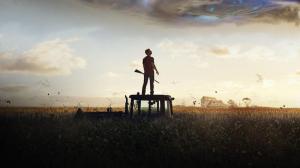
SyFy, the channel once known as SciFi (it should still be!) recently aired a TV miniseries adaptation of Arthur C. Clarke’s book, Childhood’s End. Here, I will examine the miniseries from a Christian worldview perspective. There will be SPOILERS in what follows.
Utopia? A transhuman “hope”
In the first part, dimensions of religion are found in the wings. Why didn’t God fix everything if these aliens can come along and fix everything for us? Where was God during all those wars and atrocities? Yet as the story progresses, it is clear that not is all as it seems. Where is Karellen, the alien who seems so godlike in his powers, when people are scared, sad, and afraid? Why do the children start to change, and what does it all mean? Why is Karellen so unwilling to let humans know about him?
Karellen and the Overlords are working for the Overmind to “change the world…” They follow its bidding and do what it says in order to reshape reality in the image that the Overmind desires. The Overmind claims to be “the collective consciousness of this universe” and, more simply, “all.” The Overmind takes the children of humanity to transform them into part of the collective consciousness of itself. So where is God? In the world of “Childhood’s End,” the Overmind plays the part of God, but a pantheistic type of being which is itself clearly not all powerful. Indeed, to call the Overmind pantheistic is itself a bit of an overstatement, as it can only bring certain people to itself and do so in certain ways.
The message of Childhood’s End is one of transhumanism- it is the end of humanity and humankind’s evolution towards some higher state of existence. It seems at points that this is supposed to be presented as something that is a great good, though perhaps with some sorrow. Yet What does this mean for humans? Ultimately, this transhuman hope–really the only hope that a pervasively atheistic worldview could offer–is the death of humanity. Earth is destroyed, in the end. Humanity is gone. All that is left of us is a beautiful piece of music, that whoever passes by will be able to hear.
The utopia that seems to be described as the Overlords come is a fiction. Thankfully, it is not the real world. The hope that we have can be found in Christ and the resurrection.
God and Science
The second part of the miniseries starts with the song “Imagine” in the background as the utopic state of Earth is described. One of the lines that comes through in the song is the line “and no religion too!” Yet the voiceover is by the young scientist, who is bemoaning the death of the sciences–they are no longer needed. Initially, it seems the implication is that if we just get rid of all the silliness of religion and stop trying to pursue useless knowledge in science, we would find ourselves in a utopia.
Another scene juxtaposes a character effectively praying to Karellan, the alien, while another goes into a church. Churches have largely been abandoned, for what use is religion in a world in which there is no injustice? It is intriguing to see the connections made between religion and science made throughout here. It seems that both science and religion are cast aside as people find suffering no longer exists. There are a number of ways this suggestion could be taken.
First, it could be taken as an assertion that science and faith are seeking answers to the same questions, though with different approaches. Faith is asking “why is there suffering?” and looking to God for answers; science is attempting to fix various problems such as disease through a direct approach. Yet this brief sketch oversimplifies things. After all, people expect prayers to be effective, and often think of scientific discoveries as being answers to those prayers.
Second, it could be taken as a broader commentary on the futility of either religion or science. If we could just solve all our problems, why try to figure out how they work? Again, this answer is too simplistic.
Instead, it seems a third option is more likely: the value of faith and the value of scientific exploration in and of themselves as ways to provide answers for what we observe in the universe. These answers may often overlap–and they do–but that doesn’t make them useless or invalid.
Faith
“Faith is on its last legs, only we don’t see it, because they give us ice cream,” says a man who is keeping a church clean.
“There is no such thing as evil,” a character snaps to a religious individual.
“I’m not sure God every helped anyone… only the Overlords answered.” Sandwiched between these two statements is an accusation that God gave us diseases and then sent more once we discovered how to cure some.
“All the world’s religions cannot be right… you know that… Your faith, beautiful and poetic… has no place now.”
What is particularly interesting about “Childhood’s End” is that all the people who are taken to be quacks–they are ridiculous, silly, superstitious, paranoid–turn out to be right, at least in part. The Overlords did come to change everything, but not in the positive, benign way they presented themselves. Instead, they came to reshape humanity in the image they desired. It led to the destruction of all humanity. One character may assert there is no such thing as evil, but that flies in the face of the injustice that the Overlords allegedly came to destroy.
The miniseries, whether intentionally or not, offers a view of the world which is both bleak and profound. It is bleak because it takes away all our hope. Even that which seems to offer hope ultimately destroys us. But it is profound in that it presents that world as fiction. It is not the world in which we live, which has hope, and in which we do not need to destroy ourselves. The price that humanity was asked to pay in “Childhood’s End” was paid in reality by God.
Conclusion
Ultimately, “Childhood’s End” is a story of humanity. It is a story of humanity giving in to deceiving itself. Humans sought an easy way to peace, freedom, and justice, and what they received instead was the death of humanity. The story itself does not have any final hope, apart from the hope that some transcendent humanity would live on. In reality, humanity does have the hope provided in Jesus Christ, our savior. It is interesting that the hope humans trusted in in Childhood’s End was something outside of themselves, and indeed the true hope for humanity is not found in ourselves, but in the Incarnate God, Christ.
Links
Be sure to check out the page for this site on Facebook and Twitter for discussion of posts, links to other pages of interest, random talk about theology/philosophy/apologetics/movies and more!
Eclectic Theist– My other interests site is full of science fiction, fantasy, food, sports, and more random thoughts. Come on by and take a look!
SDG.
——
The preceding post is the property of J.W. Wartick (apart from quotations, which are the property of their respective owners, and works of art as credited; images are often freely available to the public and J.W. Wartick makes no claims of owning rights to the images unless he makes that explicit) and should not be reproduced in part or in whole without the expressed consent of the author. All content on this site is the property of J.W. Wartick and is made available for individual and personal usage. If you cite from these documents, whether for personal or professional purposes, please give appropriate citation with both the name of the author (J.W. Wartick) and a link to the original URL. If you’d like to repost a post, you may do so, provided you show less than half of the original post on your own site and link to the original post for the rest. You must also appropriately cite the post as noted above. This blog is protected by Creative Commons licensing. By viewing any part of this site, you are agreeing to this usage policy.
Sunday Quote!- Russell Moore on Christmas and the Strangeness of Christianity
 Every Sunday, I will share a quote from something I’ve been reading. The hope is for you, dear reader, to share your thoughts on the quote and related issues and perhaps pick up some reading material along the way!
Russell Moore on Christmas and the Strangeness of Christianity
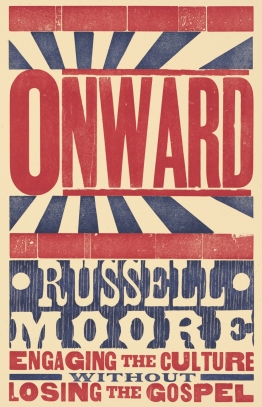
Russell Moore’s Onward: Engaging the Culture Without Losing the Gospel is one of the best books I’ve read all year. He has a way with words that makes reading it a joy, while also giving new insights and perspectives on questions that are highly relevant. In his chapter on religious liberty, he writes about seeing a couple ads in a magazine on a plane. One is a beer ad that said “Silent nights are overrated” and another asked “Who says it is better to give than to receive?” Moore’s comments on the potential offense of these ads are well-worth reading. It’s a longer quote than I normally share, but I think it is worth the time to read:
The… ad agency probably didn’t reflect together… about how the song “Silent Night” is about the holy awe of the dawning Incarnation in Bethlehem. TO them, it probably seemed like just another Christmas song, part of the background music of the culture during this season. Saying it’s “overrated” probably didn’t feel any more insensitive to these copy writers than making a joke about decking the halls or reindeer games. The writers probably never thought… that the statement “It is better to give than to receive” is a quotation from Jesus, via the apostle Paul… It probably just seemed to them like a Benjamin Franklin-type aphorism, along the lines of when someone says… “to be or not to be” while not knowing the difference between Hamlet and Huckleberry Finn…
That ought not make us outraged, but prompt us to see how our neighbors see us–sometimes more in terms of our trivialities than in terms of the depths of meaning of Incarnation, blood atonement, and the kingdom of Christ. This means we need to spend more time engaging our neighbors with the sort of news that shocks angels and redirects stargazers and knocks sheep-herders to the ground. That will seem strange, and that’s all the better, because it is strange. (150, cited below)
Moore also points to Hanukkah and its importance to Judaism as going beyond selling blue stars of David at retail stores. His point is that we need to educate the broader culture about what it means to be Christian, and that means embracing the “weirdness” of our faith rather than working entirely to downplay it. In the context of religious liberty, that means not sacrificing the central claims of the Gospel when trying to make our points about what we believe and why we think it should be protected speech or act.
I recommend Moore’s book, Onward: Engaging the Culture Without Losing the Gospel to you this Christmas season. It’s not a Christmas book of course, but it is worth your time and money to acquire and read it.
Links
Be sure to check out the page for this site on Facebook and Twitter for discussion of posts, links to other pages of interest, random talk about theology/philosophy/apologetics/movies and more!
Sunday Quote– If you want to read more Sunday Quotes and join the discussion, check them out! (Scroll down for more)
Source
Russell Moore, Onward: Engaging the Culture Without Losing the Gospel (Nashville, TN: B&H Publishing, 2015).
SDG.
Really Recommended Posts 12/19/15- Christmas, the Incarnation, science, and more!
 Gotta be brief. Be sure you check out my post on Star Wars: The Force Awakens, too! Enjoy the posts.
3 Ways to Live Out Gender Equality this Christmas– The title explains it, but this is a deep post calling Christians to live out gender equality over the Christmas season. This has some great practical advice.
The Jewish Background of the Incarnation in John 4– Here is a fascinating read on how the Incarnation in John 4 reflects a Jewish background. This is a theologically deep, compelling post that I highly recommend you read.
Are Scientific Explanations the Only Show in Town?– Short answer: no. This post offers 7 quick, accessible points for why this is the case.
Does the New Testament Quote the Old Testament Out of Context– Here’s a thoughtful post by Craig Keener on this extremely complex topic. I recommend reading the post, as well as some books on this interesting topic.
Tales of a Recovering Answer-Addict: From Young Earth Apologist to Evolutionary Creationist– Though we are called to always have a reason, this does not mean we should get addicted to answers–a pitfall I have fallen into myself more than once. Here’s a post about a young earth creationist who fell into that trap, and emerged as a theistic evolutionist/evolutionary creationist.
Star Wars Advent Antiphon- Leader and Lawgiver– Over at “The Sci-Fi Christian,” they are doing a series of Advent Antiphons leading up to Christmas. Each has a look at a Star Wars character, and then relates that character back to Christianity. The’re good reading, so check them out!
Star Wars: The Force Awakens- a Christian perspective
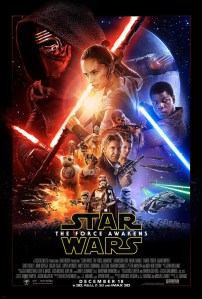 I have read over 100 Star Wars books and watched all the movies dozens of times (probably well over 100 for each of the original trilogy). In other words, I’m a Star Wars fan. I absolutely loved The Force Awakens. It was fantastic. It was wonderful. It was Star Wars. I’m also a devout Christian. Here, I will evaluate the movie from a Christian perspective.
SPOILER WARNING: There will be SPOILERS in what follows. I want to make that as clear as possible. Read no further if you don’t want to read SPOILERS. I’m serious. Big ones. Are we clear? Read on if you have seen the movie, or don’t care about spoilers. I’m sure the comments will also have spoilers.
The Force
One of the most pervasive images of the Star Wars universe is that of the Force. Wait, imagery? Of the Force? Well, you can’t see the Force!
Yep, that’s right. We can see Jedi or Sith using the Force. We can see the effects it has on people, and its power. But we cannot see the Force. One might say it’s just a bunch of hokey religions (thanks, Han). But in The Force Awakens, Han Solo admits what he has known for a while: the Force is real.
What is interesting about this admission is how much people of all varieties have been attracted to the notion of the Force and the Star Wars universe in general. In reality, the Force is a metaphysical concept. It goes beyond the mundane, physical universe and reaches for something more. The drive for that “something more” is pervasive in humanity, I think. Inwardly, we know that the world is not limited to those things we can see through direct observation. Thus, we are drawn to even fictional portrayals of a deeper reality such as the Force. Like Han, we may talk the talk, but when push comes to shove, there is more to our world than meets the eye.
Family, Darkness, and Natural Consequences
Exodus 34:7 reads, in part, “[God] does not leave the guilty unpunished; he punishes the children and their children for the sin of the parents to the third and fourth generation” (NIV).
Many see this as a kind of vindictive verse. In fact, it is an example of human choices bringing about consequences. One of the things I have learned since becoming a parent (and I’m still learning) is that natural consequences are the most effective way to teach my son. If he stands on a chair, he gets removed from the chair until he is willing to sit instead of stand. The verse above shows how our actions and choices have natural consequences.
Anakin Skywalker’s choices have impacted his family in profound, terrible ways. Sure, he saved Luke at the end of Return of the Jedi, and he was reunited with the Force. But think about what his choices visited upon his children: they had to be separated at birth and whisked into hiding. Vader even cut off his son’s hand!
In The Force Awakens, we see those consequences being visited upon the next generation as well. Kylo Ren, Han and Leia’s son, appears to be trying to follow his grandfather’s footsteps. But instead of trying to follow them back towards the Light side of the Force, he is attempting to complete the Dark work of his grandfather’s alter ego, Darth Vader. Can a more poignant reminder of the punishment that can be carried on from generation to generation be given?
In the world we live in, we can see these same systems of injustice bringing punishment on one generation after another. World War II was, in part, brought about by crippling economic hardships imposed after World War I. Systemic racism continues in the United States, demeaning not just those against whom racism is directed, but also bringing darkness onto those who engage in it.
The passage from Exodus above can be read simplistically, but when taken in perspective like this, it is immensely profound. The poignancy of that statement: that the actions we take now can bring about punishment on our children, and their children… should lead us to consider what it is we are doing. Kylo Ren wasn’t created in a vacuum.
Redemption
The Force Awakens also points ahead to a hopeful reality, one which resonates with the Christian worldview. Han and Leia each believe that there remains good in Kylo Ren–Ben–still. Han risks his life on that evaluation and even sacrifices himself for it. Though we don’t see this coming to fruition, the seeds of hope are there. Will Ren follow his grandfather’s Dark choices to a logical end, or will he be brought back to the Light?
The movie ends with Luke Skywalker and Rey on a remote planet. This guru-like setting is also reminiscent of the Desert Fathers of the ancient Christian church (though ironically in a very watery setting!). Will redemption and hope be brought forth once more through Rey? That remains to be seen, but the seeds have been planted. Han’s willingness to believe in goodness in his son is the same kind of willingness we need to have when we confront evil. Yes, we need to be prepared to stand up against evil, but we also need to realize that we were yet sinners when Christ saved us. The “other” is like we were, lost to sin and in need of redemption.
Conclusion
Go see The Force Awakens. Be prepared to celebrate the joys of Star Wars again, but also to think. It’s a fun, delightful movie that is overlaid with much darkness. Yet, in the midst of all that darkness there is hope.
Let me know your own thoughts on the movie in the comments. I’d love to hear what you thought of the film.
Links
Be sure to check out the page for this site on Facebook and Twitter for discussion of posts, links to other pages of interest, random talk about theology/philosophy/apologetics/movies and more!
Read more movie reflections (scroll down for more).
Eclectic Theist– Follow my “other interests” blog for discussion of sci fi, fantasy, movies, sports, food, and much, much more.
SDG.
——
The preceding post is the property of J.W. Wartick (apart from quotations, which are the property of their respective owners, and works of art as credited; images are often freely available to the public and J.W. Wartick makes no claims of owning rights to the images unless he makes that explicit) and should not be reproduced in part or in whole without the expressed consent of the author. All content on this site is the property of J.W. Wartick and is made available for individual and personal usage. If you cite from these documents, whether for personal or professional purposes, please give appropriate citation with both the name of the author (J.W. Wartick) and a link to the original URL. If you’d like to repost a post, you may do so, provided you show less than half of the original post on your own site and link to the original post for the rest. You must also appropriately cite the post as noted above. This blog is protected by Creative Commons licensing. By viewing any part of this site, you are agreeing to this usage policy.

 J.W. Wartick - Reconstructing Faith