christian
Women, Emotions, and Apologetics: A Response to “Apologetically Blonde”
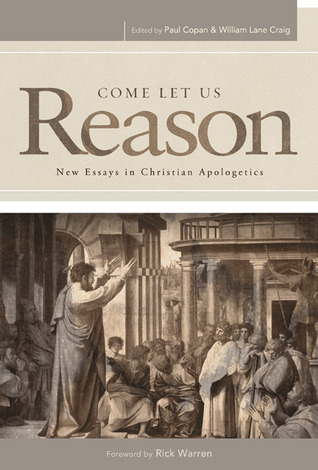 I recently came upon Come Let Us Reason: New Essays in Christian Apologetics, a book I’d been meaning to read for some time. I decided to take a break from the unpacking I was doing to do a little browsing as my son crawled around on my lap. I turned to the index to discover an article entitled: “Apologetically Blonde: The Struggle of Women to Defend Their Faith and What They Should Do about It” by Toni Allen (full citation below- all references to this text). As I browsed the article I knew I needed to write a response, because–with apologies to Toni Allen–I felt much of it was misguided.
Emotional Reasoning
The first critique I have of Allen’s article is the continued references to emotional reasoning and its apparent lack of justification for knowledge. Writes Allen:
…I find that women often depend on their experience and emotional connection with God as the primary justification for the beliefs they hold. In other words, women tend to perceive meaningful experiences and their corresponding emotions to be validation that what they believe is accurate. (40)
She goes on to say:
Yes, the gospel is for the whole person, and this includes existential reasons (including personal experience as well as our deepest emotions and longings)… However, a well-rounded defense of the gospel will include rational reasons and evidences. (40)
Throughout this section, Allen affirms the reality of personal experience and emotions as a basis for believing, but continually asserts that rational reasons are required in the public defense of Christianity. It is difficult to pin down exactly what Allen’s critique is in this section, because the wording is such that it could allow any number of exceptions. Words like “typically,” “often,” “includes,” and the like allow for broad interpretations of her meaning. But it does seem like the whole tone of the article as a whole is that emotions are somehow inadequate as a defense of the faith or that they are opposite or opposed to reason. This latter point is particularly problematic, and it seems like it is closest to the way Allen is leaning throughout the essay.
The reason I say this is because emotions are set up not alongside reasons and rationality, but rather as something separate from them. But this is itself mistaken. As any number of authors have pointed out, emotions themselves are part of the reasoning process and indeed can be integral or even essential to rationality. For example, Daniel Westberg argues in Renewing Moral Theology, a Thomistic approach to ethical theology, that emotions are a central part of the process of reasoning and judgment (see especially 40-43; see also my review of the book here). If Westberg is right, then for Thomists–a formidable bunch of philosophers indeed–emotions are a central aspect of reasoning; not something separate from and possibly antithetical to it. But even if he’s wrong, his case is fairly persuasive that emotions should not be dismissed from the reasoning process, and philosophers of several other flavors have agreed.
Thus, one of the major points of Allen’s assessment is itself mistaken because it operates from a false understanding of the relationship between emotions and reasoning.
As an aside, Allen’s assertion that “we must realize that appeals to religious experience typically do not function as a decisive apologetic” (41) is shifty in its wording (“typically”) while also being mistaken, as philosophers like Richard Swinburne, Caroline Franks Davis, Keith Yandell, and the like have made the argument from religious experience a powerful apologetic tool. Moreover, people like Alvin Plantinga have argued (persuasively, in my opinion), that we can have a rational basis for belief in God through properly basic belief and religious experience.
Can Women Do Apologetics?
Alongside Allen’s constant stream of arguing that women think more emotionally, there is the question of what exactly that is supposed to mean. Again and again we are treated to quotes like the one shared above and those below:
“[W]omen are naturally more cognizant of their emotions… depending on them as the primary validation for our beliefs directly affects our judgment.” (42)
“[I]n mentoring many women over the years, I have found it very common that rather than evaluate an idea on its merits, they are instead more reluctant to adopt an idea if it actuates negative feelings, or more eager to accept it because of positive ones.” (42)
“As women, we should welcome the challenge of defending our faith, even if this pushes us out of our comfort zone.” (45)
Lines like these are found throughout the essay with little supporting evidence other than personal experience–itself a great irony given the previous analysis. But apart from this, it fails to take into account that men and women operate on bell curves in regard to emotional–and other–reasoning skills and so making broad statements like these fails to reflect the reality of the spectrum of capacities for either gender.
Women, according to Allen, also are hamstrung in their attempts to do apologetics through “their natural inclination to avoid conflict” (37). But again, what does this say about men and women essentially (in the philosophical sense)? Do men who have an inclination to avoid conflict somehow become women or more feminine because of this? If so, in what fashion? And what biblical basis do we have for these kinds of assertions?
These and other issues betray a primary underlying presupposition of Allen’s article: gender essentialism. This is a deep topic that I cannot explore thoroughly here, but basically what Allen has–consciously or not–bought into is the notion that men and women operate in largely different spheres with clearly defined cognitive and other barriers between them. That’s why lines like “Women are naturally more cognizant of their emotions…” manage to sneak into the text. But these lines find little argumentative support and again fail to take into account the aforementioned reality that men and women do not operate in entirely different planes of existence–or even emotions. Although Allen generally included lines that allowed for some wiggle room, the overall message was clearly based on this presupposed and unfounded adherence to gender essentialism.
Apologetically Blonde?
A final issue I wanted to mention with the article is the title itself. Although “blonde jokes” have become part of our culture, I think that we as Christians are called to a higher standard. “Blonde” jokes select a specific portion of the population for the sake of ridicule. Though these are often “in good fun” the question is whether such jokes are taken that way and what kind of impact that might have on the people who are, well, blonde. I am not, but it’s easy to see how the use of “blonde” in the title as a synonym for “challenged” could be taken poorly and works against the gentleness and respect we need to display as Christian case-makers.
Links
Be sure to check out the page for this site on Facebook and Twitter for discussion of posts, links to other pages of interest, random talk about theology/philosophy/apologetics/movies and more!
Source
Toni Allen, “Apologetically Blonde: The Struggle of Women to Defend Their Faith and What They Should Do about It” in Come Let Us Reason: New Essays in Christian Apologetics eds. Paul Copan & William Lane Craig (Nashville, TN: B&H Publishing Group, 2012).
SDG.
——
The preceding post is the property of J.W. Wartick (apart from quotations, which are the property of their respective owners, and works of art as credited; images are often freely available to the public and J.W. Wartick makes no claims of owning rights to the images unless he makes that explicit) and should not be reproduced in part or in whole without the expressed consent of the author. All content on this site is the property of J.W. Wartick and is made available for individual and personal usage. If you cite from these documents, whether for personal or professional purposes, please give appropriate citation with both the name of the author (J.W. Wartick) and a link to the original URL. If you’d like to repost a post, you may do so, provided you show less than half of the original post on your own site and link to the original post for the rest. You must also appropriately cite the post as noted above. This blog is protected by Creative Commons licensing. By viewing any part of this site, you are agreeing to this usage policy.
Sunday Quote!- Samson as Israel
 Every Sunday, I will share a quote from something I’ve been reading. The hope is for you, dear reader, to share your thoughts on the quote and related issues and perhaps pick up some reading material along the way!
Samson as Israel
I finished reading the Samson narrative (Judged 13-16) after going through it in detail over the last several months. I found Barry Webb’s summary statement regarding Samson to be profound and deeply moving:
[B]eneath all the surface chaos, and the mad careering here and there of the wild-man hero, there is a steady building toward a predetermined climax of profound theological significance. For Samson is not just Samson; he is also Israel. His is separated from other men, but he longs to be like them, just as Israel is separated from other nations, but is continually drawn to them. He goes after foreign women, as Israel goes after foreign gods. He suffers for his willfulness, as Israel does for its. And in his extremity he cries out to Yahweh, as Israel has repeatedly done. But now it is Samson alone who does so; he is remnant Israel; Israel reduced to a single man. (416-417)
After this summary statement, Webb goes on to place this in canonical perspective and analyze other perspectives of Samson. The commentary is worth the purchase for these sections alone, but the whole thing is phenomenal. I highly recommend that you, dear readers, take the time to read the Bible alongside a solid commentary sometime.
Links
Be sure to check out the page for this site on Facebook and Twitter for discussion of posts, links to other pages of interest, random talk about theology/philosophy/apologetics/movies and more!
Sunday Quote– If you want to read more Sunday Quotes and join the discussion, check them out! (Scroll down for more)
Source
Barry Webb, The Book of Judges (Grand Rapids, MI: Wm B. Eerdmans, 2012).
SDG.
Really Recommended Posts 8/14/15- changing the Bible?, apologetics, carbon dating, and more!
 Another round of Really Recommended Posts for you, dear readers! This week we have textual criticism, an interview with an author, discussion of how stories change the way we think, historical apologetics, and examination of the reliability of carbon dating. Check out the posts and let me know what you think here!
Why Publishers Change the Bible (And That’s OK)! (infographic)- A very helpful, concise, and visual way to see how textual criticism works and why sometimes verses are taken out or added into the Bible.
Interview with God’s Crime Scene Author J. Warner Wallace– J Warner Wallace is a cold-case homicide detective but also a Christian apologist. Here’s a great interview with him about his apologetics ministry and his recently-released book, God’s Crime Scene, which I reviewed here.
The Best Stories– How do fictional stories impact us in “real world” ways? Here’s a post that discusses the impact that stories can have on our lives and the way we think.
A Look at the First Apologists– Here is a great post that shows how the first Christian apologists approached the task of defending the Christian faith. The interesting thing to note is that the first apologists were all Messianic Jews.
Can We Verify Carbon Dating’s Reliability?– Young Earth Creationists often question the reliability of dating methods used to verify an “old earth” perspective. Here’s a post that shows how carbon dating can be independently verified.
10 Questions for Target Critics Regarding “Boys’ Toys” and “Girls’ Toys”– I’ll admit it, I’m not a huge Rachel Held Evans fan. But I do think that the questions she asks here, although somewhat tongue-in-cheek, get at some good points of concern regarding some comments about Target’s “gender neutral toys” policy. Specifically, she references an article by the Council for Biblical Manhood and Womanhood and asks some pointed questions of it. I think it’s worth seeing a different perspective on the issue, and I think that some of the comments by CBMW are clearly ridiculous (see RHE’s question #s 3 and 4).
Book Review: “God’s Crime Scene” by J. Warner Wallace
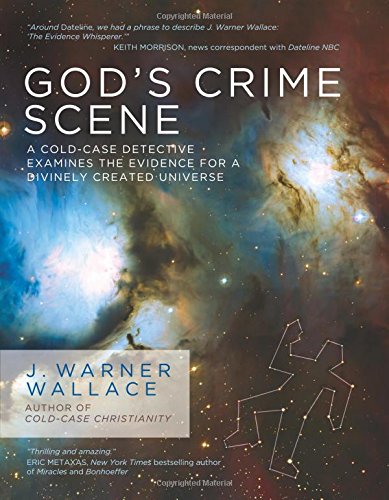 J. Warner Wallace is the a homicide detective and the author of Cold Case Christianity, one of my favorite introductory apologetics books (see my review). He recently came out with his second apologetics book, God’s Crime Scene. The former work focuses on the evidence for the resurrection and the reliability of the New Testament. In God’s Crime Scene, Wallace makes a convincing case presenting evidence for the existence of God.
The first question I think readers will ask is: “What separates this introductory apologetics book from the pack?”
That’s a valid question. There really are a rather large number of intro-to-apologetics books on the market now (thank goodness!). God’s Crime Scene is different from the rest in that it makes real-world examples central to the case that is made therein. That is, Wallace uses examples of crime scenes that he has experienced throughout the book (sans much of the gory details) to set the stage for each exploration of a different argument for the existence of God.
The way this works is simple: each chapter begins with a story that reads much like a mystery novel. Then, Wallace asks a question like “How might we figure out the evidence inside the room with the victim?” After he presents an answer to that question, he shows how similar evidence inside our own “room” (the universe) points to a being outside the room (aka a transcendent being) as the explanation. This makes the book eminently readable while also being almost immediately applicable.
The arguments that Wallace surveys are the cosmological argument, the fine-tuning argument. an argument from the origin of life, a biological design argument, the argument from consciousness, the argument from free will, and the moral argument. Then, he examines the problem of evil before summing up the case. Each chapter presents a look at the evidence, non-theistic explanations (with critiques), and an argument for why a theistic explanation is superior. The chapters then end with what this evidence tells us about God.
Wallace does a great job summing up many of the arguments involved in some of the standard theistic proofs. Each is analyzed briefly, but with a sometimes astonishing amount of information packed into a tight space. Thus, careful reading is required, and the benefit from a careful read is immense.
There are many illustrations and sidebars found throughout the book. These illustrations are always helpful rather than distracting, and highlight key parts of the arguments that Wallace makes. The sidebars are often discussions of how to weigh evidence according to the U.S. Criminal Justice system or Expert Witnesses that are either for or against the presented argument (this latter point is worth highlighting: Wallace does not only appeal to those with whom he agrees–he fairly presents the opposition’s viewpoint and even references their works directly).
There are a few criticisms I would offer. The first is that it seems like some conclusions are reached rather hurriedly, which is addressed in part through the excellent appendices that add more detail to the cases. Even there, however, one gets a sense that the sheer volume of material to cover is at times a stretch, with some objections only given two or so sentences as rebuttals. The other, admittedly nitpicky issue is that it does seem a little bit weird to have the analogue of the criminal being God. That is, the analogy being used is that just like we can detect a criminal through investigation of a murder scene, so to could we detect God through investigation of the universe. It just seems a little weird. It works; but it’s worth mentioning.
God’s Crime Scene is a valuable resource for those interested in apologetics. The way it is written makes it exciting rather than a chore, and the huge amount of information and argumentation contained therein is well worth the price of entry. I highly recommend it.
The Good
+Great use of criminal investigations to highlight points
+Clear exposition of arguments
+Good illustrations that add to what is written
+Real-world situations increase possibility of retaining information
+Includes experts who are not only theists but also anti-theists
The Bad
-Conclusions at times feel rushed
-A bit weird to have analogue of criminal as God
Disclaimer: I received a review copy of this book from the publisher. They did not require any specific kind of feedback whatsoever.
Links
Be sure to check out the page for this site on Facebook and Twitter for discussion of posts, links to other pages of interest, random talk about theology/philosophy/apologetics/movies and more!
Book Reviews– There are plenty more book reviews to read! Read like crazy! (Scroll down for more, and click at bottom for even more!)
Source
J. Warner Wallace, God’s Crime Scene (Colorado Springs, CO: David C. Cook, 2015).
SDG.
——
The preceding post is the property of J.W. Wartick (apart from quotations, which are the property of their respective owners, and works of art as credited; images are often freely available to the public and J.W. Wartick makes no claims of owning rights to the images unless he makes that explicit) and should not be reproduced in part or in whole without the expressed consent of the author. All content on this site is the property of J.W. Wartick and is made available for individual and personal usage. If you cite from these documents, whether for personal or professional purposes, please give appropriate citation with both the name of the author (J.W. Wartick) and a link to the original URL. If you’d like to repost a post, you may do so, provided you show less than half of the original post on your own site and link to the original post for the rest. You must also appropriately cite the post as noted above. This blog is protected by Creative Commons licensing. By viewing any part of this site, you are agreeing to this usage policy.
Book Review: “Renewing Moral Theology” by Daniel Westberg
 How might we integrate the study of ethics and theology? In Renewing Moral Theology
The book is not, like many, a handbook for discussing various moral issues. Some hot-button topics are raised, but they are not the focus. Westberg’s focus is, instead, much broader. He provides here a metaphysical basis for ethical reasoning, while addressing some of the main questions that come up regarding that framework. Thus, this is a book that encourages further reasoning and research rather than trying to answer some laundry list of moral questions (such as questions of sexuality, abortion, capital punishment, and the like). The focus is on giving an overarching metaphysical basis for using one’s reasoning in ethical situations, not handing the answers to such questions to the readers. This alone makes it valuable because many books on ethical reasoning unfortunately do not address the pressing metaphysical or metaethical questions that come up in thinking about morality.
Thomism has much to offer when it comes to moral theology. The system gives a framework for analyzing things like “being,” “right and wrong,” motivations, emotions, and more.
Westberg provides valuable insights into a number of key issues for ethics from a Christian perspective. Incorporating the holistic approach of Thomism into ethics, he notes that emotions do play a vital role in our practical reasoning and the way we approach moral questions. Emotions are often ignored or treated as frivolous in treatments of objective morality, and to have them incorporated into the study was a much-needed corrective.
He also gives excellent illustrations of and counters objections to the “double-effect” principle, which is the notion that moral actions can have two outcomes, one intended and one not, which allows for right action to be taken even if a wrong outcome will occur or is known to occur. Thus, for example, he treats the notion of a surgery which would kill an unborn child but save the mother. The intent of the surgery is to save the mother, not kill the child, but both are “effects” (hence double-effect) of the procedure. There are some key objections to using this principle to allow for certain moral actions, such as the apparent parsing down of moral choices into separate spheres of decision and intent, but Westberg counters them deftly. In doing so, he provides a strong defense of this critical ethical principle.
Examples are abundant throughout the book, and they constantly are used in ways that helpfully illustrate the point at hand. Some of the more obscure-seeming aspects of how an Aristotelian-Thomistic metaphysics might impact ethics are made much more clear by Westberg’s clarifying examples.
This is inherently a work of moral theology and so Westberg spends a good amount of time outlining how theology might impact one’s moral outlook. Aquinas had much to contribute here, and again the Thomistic system is incorporated into the discussion, allowing for a robust metaphysics to back up the ethical reasoning placed herein.
Renewing Moral Theology
The Good
+Strong Thomistic look at ethics
+Good use of examples to illustrate principles
+Excellent analysis of “double-effect” principle
+Rightly emphasizes some key areas of moral decision-making
The Bad
-At times it skips too quickly to conclusions
Disclaimer: I was provided with a review copy of the book from the publisher. I was not asked to give any specific kind of feedback whatsoever.
Links
Be sure to check out the page for this site on Facebook and Twitter for discussion of posts, links to other pages of interest, random talk about theology/philosophy/apologetics/movies and more!
Book Reviews– There are plenty more book reviews to read! Read like crazy! (Scroll down for more, and click at bottom for even more!)
Source
Daniel Westberg, Renewing Moral Theology
SDG.
——
The preceding post is the property of J.W. Wartick (apart from quotations, which are the property of their respective owners, and works of art as credited; images are often freely available to the public and J.W. Wartick makes no claims of owning rights to the images unless he makes that explicit) and should not be reproduced in part or in whole without the expressed consent of the author. All content on this site is the property of J.W. Wartick and is made available for individual and personal usage. If you cite from these documents, whether for personal or professional purposes, please give appropriate citation with both the name of the author (J.W. Wartick) and a link to the original URL. If you’d like to repost a post, you may do so, provided you show less than half of the original post on your own site and link to the original post for the rest. You must also appropriately cite the post as noted above. This blog is protected by Creative Commons licensing. By viewing any part of this site, you are agreeing to this usage policy.
Sunday Quote!- Genre and Genesis 1-11, does it matter?
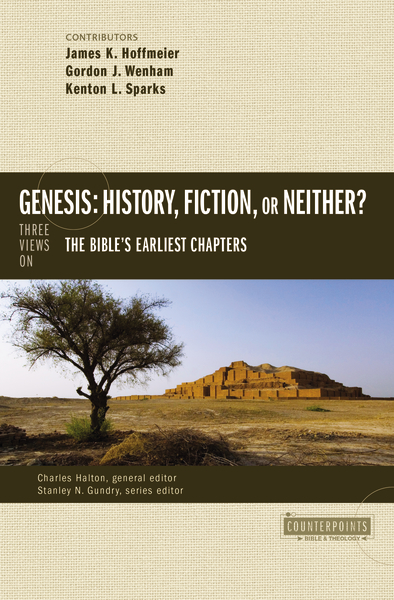
Every Sunday, I will share a quote from something I’ve been reading. The hope is for you, dear reader, to share your thoughts on the quote and related issues and perhaps pick up some reading material along the way!
Genre and Genesis 1-11, does it matter?
The central question of Genesis: History, Fiction, or Neither? is the question of the genre of Genesis 1-11. But does this question really even matter? Gordon Wenham argues that shouldn’t trump interpretation:
[U]ltimately we must recognize that how we define the genre of Gen[esis] 1-11 is a secondary issue: our primary concern must be the interpretation of the stories and their application today. The definition of genre refines and clarifies the message of Genesis, but disagreements about genre should not obscure our substantial agreement about the theological teaching of these stories. Whether one calls Gen[esis] 1-11 doctrine, history, fiction, or myth, it is clear that these chapters are making profound statements about the character of God and his relationship to mankind. Elucidating these truths must be the goal of every interpreter. (74,cited below)
Later in the book, Sparks argues that Wenham is mistaken and genre does determine much more about the text–even what might be considered binding to believe. What are your thoughts? How important is it to determine the genre of Genesis 1-11 in order to properly interpret it? Can we focus instead on the texts themselves?
Links
Be sure to check out the page for this site on Facebook and Twitter for discussion of posts, links to other pages of interest, random talk about theology/philosophy/apologetics/movies and more!
Sunday Quote– If you want to read more Sunday Quotes and join the discussion, check them out! (Scroll down for more)
Source
Gordon Wenham, “Genesis 1-11 as Protohistory” in Genesis: History, Fiction, or Neither? Charles Halton and Stanley Gundry, eds. (Grand Rapids, MI: Zondervan, 2015).
SDG.
A Sacramental/Lutheran Response to Women in Church Leadership
 The debate over women in the church–and particularly in church leadership–often has a different tenor when it is carried out in those church bodies which are sacramental in nature. A recent post over at The Junia Project entitled “Women & Leadership in Sacramental Churches” written by Tim Peck highlighted some of the different issues that come up in these church bodies. Here, I will present a few objections that often come up to women in leadership in sacramental churches, using Peck’s post for some insights. Then, I will note how from a Lutheran perspective, the notion that women cannot perform the sacraments is unfounded.
In the Place of Christ
One common objection to women serving in the office of the pastor has been that the pastor is to serve in the place of Christ when presiding over the sacraments. Thus, it is inferred that because Christ is a man, the pastor must also be a man. A similar objection is that Christ is the bridegroom of the church, and the pastor acts as Christ to the church. Thus, the pastor must be male, it is argued, because of the union of bride (church) and groom (Christ/pastor). As one complementarian I spoke with on this issue asserted, if the pastor were a woman, it would mean the church is in a homosexual relationship with the pastor (the inference being that the bride [church] would then be ‘married’ to the woman pastor).
The first part of the objection is answered fairly easily by pointing out, as Peck does, that:
Jesus was ethnically specific (Jewish), gender specific (male) and class specific (poor). To focus on just one and ignore the other two for the presider to function sacramentally seems arbitrary.
The second, similar objection can be answered by pointing out that the literal interpretation being used to exclude women from the pastoral office should also exclude any number of others from the office as well. After all, to turn the analogy the complementarian used above, if the pastor were married, then the pastor would be in a polygamous relationship with the church! But of course this is absurd. The reason it is absurd is because an analogy–the pastor being as Christ to the church–is being pressed into service literally. But this literalism is selective at best.
The Levitical Priesthood
Another argument I’ve heard a number of times is that pastors are analogous to the Levitical priesthood and, since no women were in the Levitical priesthood, women cannot serve as pastors. Peck again answers this argument:
[T]he New Testament itself insists that any priesthood existing among Christians would differ significantly from the old covenant priesthood. This should be obvious, since the old covenant priesthood was passed on by heredity. Moreover, men who suffered disabilities such as deformities, blindness, or mutilation were forbidden from serving as priests in the old covenant.
He offers other reasons to undermine this argument as well, but I think this one pretty much clinches it already: there is, again, a selectively literal reading happening. When it’s helpful for the complementarian argument, texts are taken literally, but even in the same contexts the literalism is not applied consistently.
A Lutheran Appeal
The Lutheran Confessions and the Administration of the Sacraments
From a confessional Lutheran perspective, the documents contained in the Book of Concord are binding. Yet, the types of arguments already analyzed above are often presented alongside the notion that a woman cannot perform the sacraments by virtue of being a woman. The reason this is true often varies from person to person, but the core of the reasoning is that women are excluded from the pastoral office and so by necessity cannot perform the sacraments. This reasoning reveals a presupposition: the sacraments, if performed by a woman, are made invalid.
The Augsburg Confession in Article VIII, states “Both the sacraments and the Word are efficacious because of the ordinance and command of Christ, even when offered by evil people.” In The Large Catechism, Fifth Part, “The Sacrament of the Altar,” Martin Luther states “Our conclusion is: Even though a scoundrel receives or administers the sacrament, it is the true sacrament… just as truly as when one uses it most worthily. For it is not founded on human holiness but on the Word of God.”
Thus, we find the unified teaching of the Book of Concord is that the efficacy of the sacraments is not based upon the person performing them. Indeed, if they were, then surely our confidence in the sacraments would be destroyed, for what pastor has no sin? The sacraments, then, cannot be made invalid because they are performed by a woman.
Responses to the Argument Above
The most likely response to this kind of reasoning would be to appeal to the biblical text to argue that women shouldn’t be pastors. However, this type of response would be a red herring. A discussion of the biblical texts is both necessary and valuable, but the argument that Lutheran complementarians have presented suggests that somehow the sacrament cannot be performed by a woman. Yet, as was demonstrated above, the Lutheran confessions themselves contradict this. The efficacy of the sacrament is not–thank God–dependent upon the one performing the sacrament. Thus, to argue that women would somehow invalidate the sacrament would be to deny the confessions of faith that we hold most dear and, indeed, undermine the very basis for our confidence in the validity of sacraments to begin with.
No human is without sin; none has no blemish. Our confidence in the sacraments is found not in the person performing them but in the unfailing word of God.
Another possible response is to appeal to, for example, the Apology of the Augsburg Confession, Article XIV, section 1 in which it states that “no one should be allowed to administer the Word and sacraments unless they are duly called…” The appeal would then go on to suggest that no woman, by virtue of being a woman, can be “duly called” into the administration of the Word and Sacrament. This counter-argument begs the question from the beginning. Rather than offering an argument as to why women cannot be duly called, the complementarian has here simply assumed that women cannot be called and then applied this backwards to exclude women from performing sacraments.
If the appeal is then, again, made to the biblical text, then that is where the debate must play out. But notice that if one moves in this direction, they have already conceded the invalidity of the reasoning the argument began with. Instead, they must continually retreat from the reasoning used above and try to argue from proof texts through specific–often unquestioned–exegetical methods.
Conclusion
There are many arguments put forward in sacramental churches against the possibility of women being in the role of the pastor. An analysis of two primary arguments have shown they are faulty in that they are selectively literal. From a Lutheran perspective, we find that the Lutheran Confessions themselves actually work against anyone suggesting that the sacraments are invalid when performed by any variety of people. It is God working, not some magical formula that the human must perform.
We must instead go back to the texts and approach them with a cautious eye towards the fact that we have selectively taken parts literally that cannot, when pressed, hold up. The conversation within Lutheran circles–and indeed, within sacramental circles generally–should continue, but the arguments analyzed herein have been shown to be wanting.
Sources
Tim Peck, “Women & Leadership in Sacramental Churches” 2015, online at http://juniaproject.com/women-leadership-in-sacramental-churches/.
All citations of the Lutheran Confessions are from:
The Book of Concord: The Confessions of the Evangelical Lutheran Church (Minneapolis: Fortress, 2008).
The Image in this post is from Wikimedia Commons and published under Creative Commons licensing. It was created by John Snyder and may be found here. Please appropriate cite if re-used.
SDG.
——
The preceding post is the property of J.W. Wartick (apart from citations, which are the property of their respective owners, and works of art as credited) and should not be reproduced in part or in whole without the expressed consent of the author. All content on this site is the property of J.W. Wartick and is made available for individual and personal usage. If you cite from these documents, whether for personal or professional purposes, please give appropriate citation with both the name of the author (J.W. Wartick) and a link to the original URL. If you’d like to repost a post, you may do so, provided you show less than half of the original post on your own site and link to the original post for the rest. You must also appropriately cite the post as noted above. This blog is protected by Creative Commons licensing. By viewing any part of this site, you are agreeing to this usage policy.
Sunday Quote!- Gender Dysphoria and the Bible?
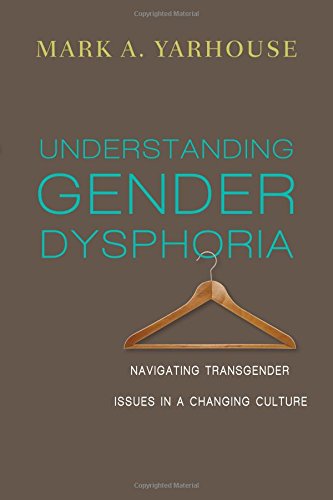 Every Sunday, I will share a quote from something I’ve been reading. The hope is for you, dear reader, to share your thoughts on the quote and related issues and perhaps pick up some reading material along the way!
Gender Dysphoria and the Bible
In Understanding Gender Dysphoria, Mark Yarhouse seeks to provide ways for Christians to think about gender dysphoria and transgender issues. Regarding the use of biblical passages in this discussion, Yarhouse urges caution:
There is a need to balance between two hazards when we turn to the Bible to inform our discussions about gender dysphoria. The one hazard is to look to Scripture for answers it is not prepared to provide. The other hazard is to fail to critically reflect on the sociocultural context in which we live and make decisions about gender identity and dysphoria. (30, cited below)
He goes on to comment on several biblical passages (like 1 Corinthians 6:9-10) which are frequently cited in contexts of discussions about gender dysphoria.
What do you think? Do we need to exercise more caution when we cite “proof texts” related to issues like gender dysphoria? Is 1 Corinthians 6:9-10 best applied to issues of transgender identification? Are these categories valid at all?
Links
Be sure to check out the page for this site on Facebook and Twitter for discussion of posts, links to other pages of interest, random talk about theology/philosophy/apologetics/movies and more!
Sunday Quote– If you want to read more Sunday Quotes and join the discussion, check them out! (Scroll down for more)
Source
Mark Yarhouse, Understanding Gender Dysphoria (Downers Grove, IL: InterVarsity, 2015).
SDG.
Book Review: “Understanding Gender Dysphoria” by Mark Yarhouse
Gender Dysphoria is “The experience of distress associated with the incongruence wherein one’s psychological and emotional gender identity does not match one’s biological sex” (20, cited below). Mark Yarhouse’s latest book, Understanding Gender Dysphoria, seeks to explore this complex topic from a Christian perspective.
Yarhouse does a phenomenal job of introducing readers to just how complex the issue is, while also providing key terms and basic level knowledge for coming to understand gender dysphoria more than they may have before. The book starts with a look at defining terms and looking at ways to offer reasoned response to gender dysphoria. He writes, “Unfortunately, one way people respond to transgender issues is to devalue the person who is gender variant and simultaneously turn to rigid stereotypes of gender” (24). The focus throughout on remembering our calling to spread the Kingdom of God and remain aware of the needs, hopes, and fears of people experiencing gender dysphoria is something of which all readers should take note.
Another very helpful aspect of the book is Yarhouse’s evaluation of responses to various issues through three primary frameworks of understanding. These are the integrity framework, which focuses on staying true to one’s biological gender; the disability framework, which sees transgender issues as a nonmoral reality that is the result of a fallen world; and the diversity framework, which focuses on celebrating and honoring persons with gender dysphoria. Through these three lenses, Yarhouse evaluates various topics like hormone therapy, sex-change operations, and the like. In doing so, he emphasizes the need to balance these three frameworks such that no one is emphasized over the others.
There is quite a bit of data packed into this relatively short book. Many studies are cited, and Yarhouse helps readers navigate through the dizzying array of results in order to try to draw some conclusions, while continuing to note the complexities involved in the topic.
Perhaps the main critique one might offer the book is that Yarhouse does leave much of the “what’s next?” up to readers. That is, although he does offer several insights into how Christians might more effectively respond to gender dysphoria, he largely provides the tools to tackle the tough problems rather than offering the solutions themselves. This is both a weakness and a strength. It’s a weakness in that I’m sure some readers will wish they had an easy solution to some of the difficult problems they may face. It’s always simpler to just use a response someone has given to us rather than coming up with our own responses. It’s a strength in that Yarhouse does provide so many tools to readers that they can go into their faith communities and communicate on the issue in an informed fashion.
Understanding Gender Dysphoria is a valuable work for those wishing to engage with transgender issues. It doesn’t answer every question that might come up, but it does give readers the tools to come up with their own answers while doing so in a loving and Christian way.
The Good
+Solid information and insights into the nature of gender dysphoria
+Excellent tone and focus on message
+Plenty of practical insights and examples
+Focus on facts
+Focus on worldview-level questions
The Bad
-Only a bare sketch of what to do next
Disclaimer: I was provided with a review copy of the book from the publisher. I was not asked to give any specific kind of feedback whatsoever.
Links
Be sure to check out the page for this site on Facebook and Twitter for discussion of posts, links to other pages of interest, random talk about theology/philosophy/apologetics/movies and more!
Book Reviews– There are plenty more book reviews to read! Read like crazy! (Scroll down for more, and click at bottom for even more!)
Source
Mark Yarhouse, Understanding Gender Dysphoria (Downers Grove, IL: InterVarsity, 2015).
SDG.
——
The preceding post is the property of J.W. Wartick (apart from quotations, which are the property of their respective owners, and works of art as credited; images are often freely available to the public and J.W. Wartick makes no claims of owning rights to the images unless he makes that explicit) and should not be reproduced in part or in whole without the expressed consent of the author. All content on this site is the property of J.W. Wartick and is made available for individual and personal usage. If you cite from these documents, whether for personal or professional purposes, please give appropriate citation with both the name of the author (J.W. Wartick) and a link to the original URL. If you’d like to repost a post, you may do so, provided you show less than half of the original post on your own site and link to the original post for the rest. You must also appropriately cite the post as noted above. This blog is protected by Creative Commons licensing. By viewing any part of this site, you are agreeing to this usage policy.
Sunday Quote!- Genesis as Sui Generis (Its Own Genre)?
Every Sunday, I will share a quote from something I’ve been reading. The hope is for you, dear reader, to share your thoughts on the quote and related issues and perhaps pick up some reading material along the way!
Genesis as Sui Generis (Its Own Genre)?
I’ve been reading through Genesis: History, Fiction, or Neither? It is part of the Zondervan Counterpoints series in which authors with different views present essays and (usually) interact with each other’s views. In it, there is much debate over the genre–and thus in part the meaning–of Genesis 1-11 in particular. In his response to Gordon Wenham, Kenton Sparks argued that Genesis could not be its own genre or sui generis because:
…all intelligible discourse must conform to a significant degree with existing modes and patterns of discourse, else readers would not understand it… (102, cited below)
Thus, he asserted, we cannot see these early chapters of Genesis as standing apart or unique as a completely separate genre. To do so would be to make it unintelligible.
It seems to me that this is on-point. We shouldn’t just throw up our hands and separate Genesis from the rest of the Bible as its own genre, distinct from any other human writing. God would not have communicated in a way that we cannot understand.
What do you think? Is Genesis 1-11 completely unique? Should we give up on trying to discern its genre, or is it clearly discernible?
Links
Be sure to check out the page for this site on Facebook and Twitter for discussion of posts, links to other pages of interest, random talk about theology/philosophy/apologetics/movies and more!
Sunday Quote– If you want to read more Sunday Quotes and join the discussion, check them out! (Scroll down for more)
Source
Kenton Sparks, “Response to Gordon J. Wenham” in Genesis: History, Fiction, or Neither? Charles Halton and Stanley Gundry, eds. (Grand Rapids, MI: Zondervan, 2015).
SDG.

 J.W. Wartick - Reconstructing Faith
