christian
Really Recommended Posts 2/27/15- Egalitarian Black Women, Diatoms, and more!
 One day, my child will let me sleep again. It is not this day. 5 months of almost no sleep starts to make you a bit crazy! What year is it? Why do I walk on the ground and not the ceiling? Why did I put a picture of a Snowy Owl on this post? Anyway, I got myself coherent for long enough to assemble this great group of posts for your reading pleasure, dear readers! Read enough about 50 Shades? So did I, until I ran into the post I share below. It sets quotes from the book alongside definitions of abuse and stalking to some dramatic effect. We also have a great look at some egalitarian black women, young earth creationism, apologetics, and women in fiction. Check them out, and let me know what you thought! Be sure to also let the authors know!
5 Black Women Every Egalitarian Should Know– This is just a fantastic post that outlines the lives and impact of 5 black women who are major voices for egalitarianism (and other issues).
Issues of Abuse and Consent in 50 Shades of Grey– Here’s an excellent post that has specific quotes from 50 Shades alongside the definitions of abuse and stalking and the like. It’s quite disturbing to realize what’s in the book, and I wouldn’t have personally thought to write a post like this myself. This is a good resource to have on hand. There is some ADULT CONTENT in this link, which the author does a good job of warning beforehand.
Life in a Glass House: Diatoms Shatter Young Earth Flood Geology– What do diatoms tell us about the plausibility of young earth creationist models? Can Flood Geology really stand up under scrutiny?
The New Frontier in Apologetics: An Open Letter to the Apologetics Community– How do we move towards a broader integration of the Christian worldview into the culture and perhaps move back to the direction that Christianity is where the intelligentsia operate?
Oh No She Didn’t: The Strong Female Character Deconstructed– What does it mean to have a “strong female character”? Do we need to have specific tendencies for such characters? Can women just be women? Check out this interesting post from sci-fi publisher “Tor”‘s blog.
Is Islam Violent? – A response to a meme

I do not condone this image nor do I claim rights to it. See post.
I saw a few friends sharing or commenting on the meme I’ve shared here the other day and thought it was definitely worth a response. Here at the start I want to note that I do not condone the image shared here and think it’s deeply problematic for reasons that will become clear in what follows.
I think that we need to be careful when discussing things like this primarily for two reasons: 1) verses quoted out of context can be used to support anything; for example, I often run into atheists quoting from Joshua and arguing that it means that Christianity is inherently violent or has violent roots; 2) the picture itself doesn’t really do much to make me think any effort was made to understand what is being quoted. See below.
I’m not an expert in Islam, but I have taken a graduate level course on the topic. Moreover, there are some basic problems with this meme. One issue with this picture is that it quotes from “Koran chapter:verse” when the proper term would be “Surah chapter:verse.” Saying “Koran” instead of “Surah” is similar to saying “Bible 12:3:15.” The Qu’ran is one book, so this does not cause distortion of where to find the quotes, but in my reading this method of citation seems not quite proper. [Thanks to several readers for pointing out a need to edit here.]
Another issue is that in the Qu’ran, people aren’t referred to as Muslims but rather believers, etc. Again, this is a fairly basic misunderstanding that would be like putting the word “Christian” into the Bible all over the place when it’s not there.
I took the liberty of looking up a couple of these Surahs. Surah 8:65 is quoted in this picture as “The unbelievers are stupid; urge the Muslims to fight them” in fact says, according to the Sahih international version of the Qu’ran, ” O Prophet, urge the believers to battle. If there are among you twenty [who are] steadfast, they will overcome two hundred. And if there are among you one hundred [who are] steadfast, they will overcome a thousand of those who have disbelieved because they are a people who do not understand.” Not only does this not have the word Muslims, but it is also much longer, and doesn’t call unbelievers stupid. In fact, a comparison of the major English versions show that almost every one says “without understanding” or “do not understand.” The closest it comes to “stupid” is “without intelligence.”
The alleged quotation of 22:19 is particularly problematic, because it completely rips the verse out of context. According to the picture, it says “Punish the unbelievers with garments of fire, hooked iron rods, boiling water, melt their skins and bellies.” Not only is this actually a reference to 22:19-20 but it also is not a command at all. The context of 22:19-20 is the day of judgment and this punishment is that described of for those in hell (see Surah 22:16-17 for more context). Quoting this verse to say Islam is violent would be akin to quoting a passage about weeping and gnashing of teeth from the Bible, turning it into a command to Christians without justification from the text itself and then saying it proves Christianity is violent.
I checked a couple more references and they too not only shortened the alleged “quotes” but also largely took them out of context.
Yet another problem with a picture like this is that it doesn’t account for the fact that in actual practice, the overwhelming majority of Muslims are not violent. I’m not sure of the actual number of Muslims in the U.S. alone, but with over a billion Muslims in the world, if every single one were indeed violent, I would imagine that fighting would be occurring in the streets of Dearborn, MI; New York, Minneapolis, etc. Yet I don’t see this happening. Isolated incidents? Yes. A complete totality of violence everywhere? No. I would argue this is because the vast majority of Muslims have a more nuanced approach to the Qu’ran and its interpretation than simply quoting verses out of context allow; just as Christians would argue for nuanced interpretations in much the same way.
I have not entered into a wider discussion of Islam and religious violence, nor is this the place to do so [see some posts in the links]. I conclude simply by noting that the use of memes like this are, I think, deeply problematic. If we as Christians expect to be treated fairly and have real differences among Christian beliefs and interpretations acknowledged, if we think that people unfairly quote our holy texts out of context and that we deserve to have our nuances of thought also conveyed, then we should do the same for those of other faiths.
Links
Be sure to check out the page for this site on Facebook and Twitter for discussion of posts, links to other pages of interest, random talk about theology/philosophy/apologetics/movies and more!
The Myth of “Religion” – Constructing the Other as Enemy– How has the category of “religion” been used to support the premise of religious violence and making the “other” into an enemy?
Book Review: “The Myth of Religious Violence” by William Cavanaugh– Here is a book which discusses the notion of “religious” violence at length with sometimes startling conclusions.
I am not sure who was the original user that put the image up, so I can’t cite it appropriately. I make no claim to owning the image and use it under fair use.
SDG.
——
The preceding post is the property of J.W. Wartick (apart from quotations, which are the property of their respective owners, and works of art as credited; images are often freely available to the public and J.W. Wartick makes no claims of owning rights to the images unless he makes that explicit) and should not be reproduced in part or in whole without the expressed consent of the author. All content on this site is the property of J.W. Wartick and is made available for individual and personal usage. If you cite from these documents, whether for personal or professional purposes, please give appropriate citation with both the name of the author (J.W. Wartick) and a link to the original URL. If you’d like to repost a post, you may do so, provided you show less than half of the original post on your own site and link to the original post for the rest. You must also appropriately cite the post as noted above. This blog is protected by Creative Commons licensing. By viewing any part of this site, you are agreeing to this usage policy.
Really Recommended Posts 2/20/15- Egalitarian Marriage, Ken Ham, Kids, and more!
Another sleep-deprived Really Recommended Posts here! Also, did you know that you can still have allergies when it is -10 degrees Fahrenheit and snowy? I’ve mastered that. Anyway, this week we have posts about Ken Ham, egalitarian marriage, teaching kids critical thinking,
6 Things Egalitarian Marriage is Not– Too often, people who critique the egalitarian position argue that egalitarian marriage means men and women are assumed to be exactly the same or that it is unbiblical. Here are some answers to some misconceptions about egalitarian marriage.
How I’m Teaching my 6-Year-Olds to be Critical Thinkers– Natasha Crain continually writes awesome posts for teaching apologetics in family settings. Here, she shares some tips for teaching critical thinking to your youngsters.
Ken Ham Ascribes Motive to Your Crime– Psychoanalysis of opponents on hot issues is not something we should engage in. Unfortunately, Ken Ham, a prominent Young Earth Creationist, continually assigns motives to those with whom he disagrees.
If Humans Evolved from Apes, Why Do Apes Exist Today? – Look! I can agree with Answers in Genesis, the prominent young earth creationist group, on something! This is a really bad argument that I have, unfortunately, seen many Christians using. Don’t do it.
Eclectic Theist– Did you know I have another web site? I do! On it, I review books, talk about Star Trek, food, tennis, economics, (and more!), and dive into all kinds of random interests. Check it out!
Microview: “The Dominant Culture: Living in the Promised Land” by Martin Murphy
 Martin Murphy’s The Dominant Culture
Murphy’s book brings much of the book to life as he retells the stories with an eye for application in the present day. How do Israel’s stories point to truths in our own lives? The book proceeds effectively through the major stories of Judges, with a few comments on minor stories as well. The beauty of the way Murphy does this is that he doesn’t try to make a kind of direct correspondence between the nation of Israel as theocracy and our own world in a kind of one-to-one correspondence; rather, he draws from the stories of Judges to show how we live in a world in which each goes his/her own way, sin reigns, and we need repentance. These and other applications are drawn throughout the book with rather remarkable insight.
There are some downsides in the book, particularly with the marked reading of gender hierarchy into the narrative of Deborah. Here, it seems, Murphy goes off track of what is otherwise marvelous exegetical skill, as he must continually appeal to silence (by saying things like the Bible never says God approved of Deborah as a prophetess) rather than allowing the text itself to demonstrate that Deborah simply was a leader and prophet. The very fact that the author of Judges does not condemn a woman as a prophet and judge when they are quick to condemn other wicked practices (such as using the refrain of “everyone did as they pleased”) in fact seems to point in the opposite direction as that which Murphy goes regarding Deborah. This is, thankfully, just one unfortunate aberration of exegesis among what is otherwise a quite solid job navigating between the need to stay true to the text and draw out applications for today.
The Good
+Often shares insights that bring new light to familiar or unfamiliar texts
+Applicable interpretation rather than merely analytic
+Explains key terms in meaningful way
The Bad
-Unfortunate comments about Deborah and women in leadership
Conclusion
The Dominant Culture
I was provided with a copy of the book for review. I was not obligated by the publisher to write any type of review whatsoever.
Links
Be sure to check out the page for this site on Facebook and Twitter for discussion of posts, links to other pages of interest, random talk about theology/philosophy/apologetics/movies and more!
Book Reviews– There are plenty more book reviews to read! Read like crazy! (Scroll down for more, and click at bottom for even more!)
Source
Martin Murphy, The Dominant Culture
Sunday Quote!- Sending the “Other” to Hell
 Every Sunday, I will share a quote from something I’ve been reading. The hope is for you, dear reader, to share your thoughts on the quote and related issues and perhaps pick up some reading material along the way!
Sending the “Other” to Hell
We as Christians often need reminders that we are to share our faith with gentleness and respect. I know I often fail in this regard, and sincerely repent and ask for forgiveness from those whom I have failed. Re-reading James Emery White’s Christ Among the Dragons
Many Christians view those outside of the faith as needing to go to hell. They are the bad guys, the enemy. (95)
We see this often when, for example, someone dies and a comment is shared “he/she is burning in hell.” I have, unfortunately, seen this myself many times. But is that the attitude we should be taking as Christians with regard to those of other faiths or–heaven forbid–those with whom we disagree in our own faith tradition?
Whenever this kind of attitude crops up in our own lives, we should repent and ask for forgiveness. Our job is not to send the “other” to hell. It is to share Christ’s love with them.
Links
Be sure to check out the page for this site on Facebook and Twitter for discussion of posts, links to other pages of interest, random talk about theology/philosophy/apologetics/movies and more!
Sunday Quote– If you want to read more Sunday Quotes and join the discussion, check them out! (Scroll down for more)
Source
James Emery White, Christ Among the Dragons
SDG.
christ among dragons- 95
Does “50 Shades” reveal some unspoken longing for gender hierarchy?
The only thing (probably) I’m going to write on 50 Shades of Grey is this post. I know, there are literally hundreds of Christian responses to the book. This is not another. It is a response to an article from First Things called “Fifty Shades Against Gender Neturality,” which I found to be deeply problematic.
Let’s get the basics out of the way. No, I haven’t read the book. No, I’m not commenting on the content of the book because I haven’t read it. All this post is trying to put forward is the notion that 50 Shades of Grey somehow reveals an unspoken longing for gender hierarchy, as alleged in the aforementioned article, is mistaken.
This article will not be explicit but by nature its content is more “adult” than my site normally is.
Only Women?
The author of the article on First Things writes:
[T]here’s a hunger that’s not being satisfied: Namely, for men who are unabashedly masculine, who aren’t afraid to take control, and to lead. That is, there’s a longing (even a lusting) for men who aren’t afraid of what’s classically been called “headship.”
A major difficulty with the article is the premise that women’s desire to be dominated somehow reveals a more basic gender hierarchy ingrained into human nature. One difficulty with this is that it is not only women who desire such things. There are men also who are “into” things like being dominated. Thus, should we draw the conclusion that there is a basic hierarchy of women over men in human nature? Clearly not. Moreover, what response could the author of the article on First Things say in response to this? That human nature is broken? Obviously! But it is clearly special pleading to say that women’s desires in this realm point to intrinsic human nature while that desire of men is a reflection of the opposite. The standards need to be the same.
But the author never even mentions or acknowledges awareness of men longing for the same type of activity. Why not? Perhaps it is just ignorance, or perhaps it is the desire to push an agenda. But the reality of men who want to play the role of submissive demolishes this absurd premise. Surely the author wouldn’t agree that this reality means:
There’s a hunger that’s not being satisfied: Namely, for women who are unabashedly feminine, who aren’t afraid to take control, and to lead. That is, there’s a longing (even a lusting) for women who aren’t afraid of what’s classically been called “headship.”
But if women lusting after these kinds of relationships entail this for men, why would it not entail the same for women? It seems that the only reason is because this would go against the argument for male headship. That, indeed, is special pleading.
There is a kind of brokenness here, but it is not a hidden desire for men to be in a relationship of headship of women; it is a brokenness of the fallen human nature–lusting after characters or even activities which we don’t have. The women and men reading 50 Shades is indicative of something: broken human nature.
What Are We Attracted To?
The central premise of the author’s argument is that that which we are attracted to must reveal something about human nature. Our desires must somehow show a “hunger” “not being satisfied.” In the case of 50 Shades, the author argues that it is male hierarchy. But how fluid are these hungers? Who decides what the “hunger” ultimately points towards?
As one commentator on the article shared when I posted it to a Facebook group, what do human desires for pornography, materialism, or mind-altering drugs point to? The permutations of what we could arbitrarily assign to these things are nearly infinite. Materialism–the desire for more things–points to our need to dominate the earth; to outdo our neighbor; to love our neighbor by buying them things; to assert our authority over those who can’t buy things; perpetuation of immoral systems of wealth; etc.
The arbitrariness of assigning interest of 50 Shades to an unspoken desire for gender hierarchy is clear and tells us more about the author’s presuppositions than about the reasons behind the book’s success.
Looking for the Brothel
The author writes:
If Fr. Smith, the titular character in the Bruce Marshall novel, is right that “the young man who rings the bell at the brothel is unconsciously looking for God,” what are fans of the Fifty Shades series seeking?
This line reveals how the author’s presuppositions have guided their article.* Think about it:
Men seeking brothel = looking for God
Women seeking pornographic books = looking for men
How does that follow? The article is blatantly male-centric and yet offers no reason for thinking that this strange split should be believed. Why think that men seek after God while women must seek after men? Are women incapable of also seeking God? Could women’s desire for similar sins also be a kind of replacement for God? Perhaps men seeking a brothel are in fact unconsciously looking for women to love and care for them. Perhaps they are looking to perpetuate a sinful cycle of violence against women.
But according to the author, when it comes to men- they seek God. Women? Apparently they have to seek after men.
Conclusion
There is something happening when we go after sinful desires. We are seeking to replace God with an idol. Whether that idol is a brothel, a dirty book, accumulating wealth, or something else, we can unanimously affirm that all of these desires point to a replacement of God with something else. There is a God-shaped hole in our hearts, and we as fallen people will seek to fill it with anything. These desires don’t reveal the way things should be, as though our sinful longings were somehow pointers towards the good. Instead, these desires are themselves evil. They are a replacement of God with something which is not God. The fallen world does not show how things should be; it shows them as fallen. To arbitrarily psychoanalyze desires and assign to them our chosen pet issues is to do injustice to the real impact of sin on human nature and in society. Rather than trying to put forth our agendas of what preferred stance we take on gender issues or something else, we should seek to reconcile with God and point people towards God.
*Another commentator on the article when I shared it helped develop this point.
Links
Be sure to check out the page for this site on Facebook and Twitter for discussion of posts, links to other pages of interest, random talk about theology/philosophy/apologetics/movies and more!
SDG.
——
The preceding post is the property of J.W. Wartick (apart from quotations, which are the property of their respective owners, and works of art as credited; images are often freely available to the public and J.W. Wartick makes no claims of owning rights to the images unless he makes that explicit) and should not be reproduced in part or in whole without the expressed consent of the author. All content on this site is the property of J.W. Wartick and is made available for individual and personal usage. If you cite from these documents, whether for personal or professional purposes, please give appropriate citation with both the name of the author (J.W. Wartick) and a link to the original URL. If you’d like to repost a post, you may do so, provided you show less than half of the original post on your own site and link to the original post for the rest. You must also appropriately cite the post as noted above. This blog is protected by Creative Commons licensing. By viewing any part of this site, you are agreeing to this usage policy.
Really Recommended Posts 2/13/15- Sci-fi, Genesis 1, Professor Snape, and more!
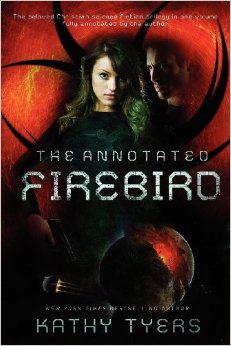 Whew, burning the midnight oil to get this one written by Friday! I ask for your prayers for uninterrupted sleep, dear readers. Still sleep training little man and boy is he stubborn! Anyway, I have here an assortment of great reads for you. We have a biblical look at the length of the days of creation, an interview with the great sci-fi author (and woman of faith!) Kathy Tyers, a response to 50 Shades of Grey, a look at companies who profit off porn, and Harry Potter. Oh yeah, that’s all right here for your perusal! As always, let me know what you think–I love to read your thoughts. Be sure to let the authors know your appreciation as well.
Biblical Reasons to Doubt the Creation Days Were 24-hour Periods– One of the most frequently repeated canards of the Young Earth Creationist side is that anyone who isn’t YEC is somehow undermining the Bible. Here’s a post from the conservative site The Gospel Coalition on some reasons to doubt the notion that strict literalism must be held regarding the length of creation days.
Interview with Kathy Tyers– Kathy Tyers is the author of the exceedingly awesome Firebird Trilogy (link to my post on the books) along with its sequels. She is also the New York Times Bestselling author of two Star Wars novels. Here’s an interesting interview about her body of work, her faith, and more!
50 Shades of Broken– Okay, I know there are a ton of posts out there on 50 Shades of Grey and Christian responses, etc. I still think this one is the one to read. I have a mind to respond to a specific post about the book, but this post itself presents the notion that our sexuality is broken, and the popularity of the book points to that.
Companies Who Profit Off Porn– Time to give these companies some feedback about their profiting off porn.
Someone Put Snape’s Scenes in Chronological Order and it will Make You Feel Things– Harry Potter is a series with some major moral and philosophical points to think about throughout the series. Here is a spoiler-laden set of the scenes of Professor Snape from the movies in chronological order, which reveals (SPOILERS HERE:) how his self-sacrifice ultimately preserved Harry’s life and by extension saved the wizarding world. Yes, there are major themes of redemption and sacrifice in Harry Potter. Check out my posts on the movies and books here.
“Eternity Falls” by Kevin Outerbridge – Faith, Extremism, and Cyberpunk
 Eternity Falls
Faith and Redemption
One of the primary themes running throughout Eternity Falls is that of redemption. Rick Macey was once a Christian, but like many people in the future (and present), he starts off the book thinking that religion has been proven to be irrational–an ancient belief with little to recommend it in the present. However, he also realizes his own imperfections and regrets. When he is confronted by Virgil, a man with whom he had strong disagreements in the past, he is also brought face-to-face with faith that is still genuine.
However, it is not left at this. Virgil’s beliefs have become a bit unhinged (see below), and in a beautiful twist of storytelling, it is Macey who is brought back to faith and confronts Virgil’s own self-righteousness.
Outerbridge’s tale here demonstrates something that we should all take to heart–God can and will use anyone to wake us up to our own failures and call us home.
Religious Extremism- What Rationale?
Perhaps the most poignant aspect of Eternity Falls are the conversations between Macey and Virgil about religious extremism. They both have backgrounds in combating terrorism, but their past experience led them in opposite directions and Virgil has come to conclude that facing death is the only way for humans to possibly turn to God. Virgil seeks to destroy the “Miracle Treatment” and thus make it so that everyone will once again die natural deaths, confronted with that moment when “eternity falls.” Macey, however, points out that God has used the extended lives of many of these people to bring them to the faith through their own realization of the pointlessness of an endless life of leisure.
Their conversations play out in this way through the book, and Macey ultimately makes a compelling case that God may, in sovereignty, use even things which may be apparently sinful to bring about great good. The melding of the concepts of human free will and God’s omnipotent control over events is powerful, and in what is truly a reflection of Outerbridge’s talent, it meshes very well into the plot of the book.
Moreover, the book portrays the impetus behind religious extremism in many philosophically interesting ways. It is not at all promoting extremism, but the fact that motivations beyond the tired “religious = violent” rhetoric that too often plays out in commentary on terrorism are brought up adds even more solid worldview-level bites to chew on. The key issue is that quote-unquote “religious extremists” certainly themselves believe they are acting rationally, and to have the story play this out in a way in which multiple extremists are spoken to on a logical level rather than simply discounted was fantastic.
Conclusion
Eternity Falls
Links
Be sure to check out the page for this site on Facebook and Twitter for discussion of posts, links to other pages of interest, random talk about theology/philosophy/apologetics/movies and more!
Microview: “Eternity Falls” by Kirk Outerbridge– I reviewed the book, including giving some “good” and “bad” points along with a letter grade. Check out the review!
Popular Books– Check out my looks into other popular books (scroll down for more).
Source
Kirk Outerbridge, Eternity Falls
SDG.
——
The preceding post is the property of J.W. Wartick (apart from quotations, which are the property of their respective owners, and works of art as credited; images are often freely available to the public and J.W. Wartick makes no claims of owning rights to the images unless he makes that explicit) and should not be reproduced in part or in whole without the expressed consent of the author. All content on this site is the property of J.W. Wartick and is made available for individual and personal usage. If you cite from these documents, whether for personal or professional purposes, please give appropriate citation with both the name of the author (J.W. Wartick) and a link to the original URL. If you’d like to repost a post, you may do so, provided you show less than half of the original post on your own site and link to the original post for the rest. You must also appropriately cite the post as noted above. This blog is protected by Creative Commons licensing. By viewing any part of this site, you are agreeing to this usage policy.
Sunday Quote!- The Reality of Adam and the Origins Debate
 Every Sunday, I will share a quote from something I’ve been reading. The hope is for you, dear reader, to share your thoughts on the quote and related issues and perhaps pick up some reading material along the way!
The Reality of Adam and the Origins Debate
Adam, the Fall, and Original Sin
The temptation in this debate [about the historicity of Adam] is to think that Adam is simply one piece in a puzzle in which the fall and evolution are separate pieces that we can rearrange and shuffle around the board. But… Adam and the fall do not float free in Scripture like rootless, atomistic, independent ideas. They are central nodes that hold together and are completely enmeshed in a much broader, organic, theological matrix. (ix, cited below)
What makes this quote so interesting is the way it speaks to the notion–a correct one, I think–that these doctrines are of such central concern. Whether or not these are “essential” doctrines to the Christian faith is hotly debated, but it seems clear that one’s view of original sin (and indeed whether it even exists) and Adam will inter-relate with all kinds of other doctrines, including soteriology, justification, sanctification, and beyond.
What do you think? What doctrines inter-relate most closely with these doctrines? Is it correct to think we can’t treat them in “atomized” form? Is it possible to speak of the notion of whether Adam and Eve were historical figures without also speaking of the implications it has for other doctrines?
Links
Be sure to check out the page for this site on Facebook and Twitter for discussion of posts, links to other pages of interest, random talk about theology/philosophy/apologetics/movies and more!
Sunday Quote– If you want to read more Sunday Quotes and join the discussion, check them out! (Scroll down for more)
Source
Michael Reeves and Hans Madueme, “Adam Under Siege” in Adam, the Fall, and Original Sin
SDG.
Adam, Fall, Original Sin ix
Really Recommended Posts 2/6/15- Attack on Titan, Prophets, and More!
 Sleep training a baby? Not the easiest thing in the world, believe it or not. I peel apart my eyelids to present to you, dear readers, this latest round of Really Recommended Posts. Topics include egalitarianism/complementarianism, the Messianic Prophecy in Deuteronomy 18, young earth creationism, and Attack on Titan (with cultural apologetics). I’d say that’s a pretty good set of links, if I do say so myself. Let me know your thoughts in the comments here, and be sure to let the authors know what you thought as well.
Confusing Equality with Sameness: A Complementarian Misconception– Often, those who argue that women should be excluded from leadership roles in the church and home argue against those of the egalitarian position by asserting that egalitarians do not allow for gender differences. Is that true?
Attack on Titan (Empires and Mangers)- Anthony Weber presents a worldview-level analysis of the anime, “Attack on Titan” along with some brief comments and definitions related to anime itself. This is a fantastic post for Christians interested in the show or anime in general, or those who would like to familiarize themselves with those categories in order to interact at a cultural apologetic level. I highly recommend you follow his site as well.
A Look at Messianic Prophecy: Who is the Prophet of Deuteronomy 18:15-18? [Part One] – Hint: it’s Jesus. This three-part series offers a solid look at reasons to believe that Jesus is the fulfillment of this prophecy, not Muhammad (as some Muslims claim) or some other prophet. Here’s another post arguing more specifically against the Muslim claim.
Man’s fallible opinions vs. God’s perfect Word: Who wins?– The notion that the origins debate is set up in this dichotomy is often presented by young earth creationists. Here is an insightful analysis of this argument. I highly recommend you follow “Age of Rocks” as it is an excellent site providing much analysis of the young earth position.
That’s no beaver– Young earth creationists often make claims about species being similar and so showing that they came from the Ark, or that certain fossils in the past somehow throw off the sequence of fossils demonstrating an old earth. Here, an analysis is presented of one young earth claim to this effect.

 J.W. Wartick - Reconstructing Faith