christian
Book Review: “Tell Her Story: How Women Led, Taught, and Ministered in the Early Church” by Nijay K. Gupta
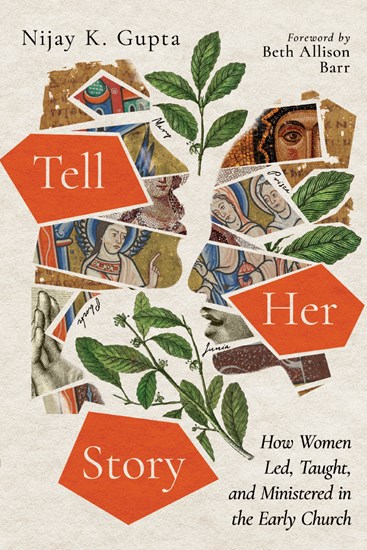
Tell Her Story: How Women Led, Taught, and Ministered in the Early Church by Nijay K. Gupta is a fascinating look at women in leadership throughout the early church.
Gupta first notes his own journey of coming to understand that women have often been “hidden figures” (alluding to the book/movie about black women in NASA who helped launch the space program) when it comes to the history of the church. The rest of the book is divided into the time before the early church and the time of the early church. The chapters in the first part highlight Deborah, the role of women in Genesis 1-3, women in the NT, and women during Jesus’s ministry. The second part focuses on women as leaders in the early church, featuring Junia, Prisca, Phoebe, and others.
Many of these stories will be familiar to those already interested the debate over women in the church. But Gupta does a fantastic job not only providing an introductory look at the women of that early church and how the Bible shows them to be leading and teaching but also of introducing some lesser known topics. For example, there’s an interesting section about women ministering to Jesus as well. He also highlights how women were following Jesus alongside the twelve and helping fund and support that ministry (62ff).
The book will likely not convince those already entrenched on “the other side” but serves as a solid introduction to the challenges that come with denying women positions of teaching and leading in the early church. It becomes more and more clear that complementarians must explain away rather than explain the presence of these women leaders.
Tell Her Story presents an excellent introductory read to help show that women were indeed leaders in the early church. I highly recommend it.
All Links to Amazon are Affiliates links
Links
Be sure to check out the page for this site on Facebook and Twitter for discussion of posts, links to other pages of interest, random talk about theology/philosophy/apologetics/movies and more!
Book Reviews– There are plenty more book reviews to read! Read like crazy! (Scroll down for more, and click at bottom for even more!)
SDG.
——
The preceding post is the property of J.W. Wartick (apart from quotations, which are the property of their respective owners, and works of art as credited; images are often freely available to the public and J.W. Wartick makes no claims of owning rights to the images unless he makes that explicit) and should not be reproduced in part or in whole without the expressed consent of the author. All content on this site is the property of J.W. Wartick and is made available for individual and personal usage. If you cite from these documents, whether for personal or professional purposes, please give appropriate citation with both the name of the author (J.W. Wartick) and a link to the original URL. If you’d like to repost a post, you may do so, provided you show less than half of the original post on your own site and link to the original post for the rest. You must also appropriately cite the post as noted above. This blog is protected by Creative Commons licensing. By viewing any part of this site, you are agreeing to this usage policy.
Book Review: “Wandering Toward God: Finding Faith Amid Doubts and Big Questions” by Travis Dickinson
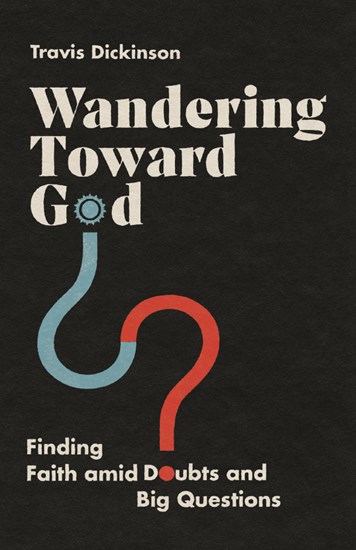
Wandering Toward God: Finding Faith Amid Doubts and Big Questions by Travis Dickinson is a look at how to navigate doubts on one’s journey of faith.
For full disclosure, as a reader I should note that I’ve been going through a journey of doubts myself. I looked forward to seeing how Dickinson might approach this while also being somewhat wary of my own experience with Christian apologetics largely dealing with certainty rather than acknowledging the depths of difficulties with faith. While reading this book, I found my concerns were mostly assuaged. Dickinson does an admirable job offering a sympathetic hand to those who have serious doubts. Chapters are dedicated to both figuring out what kind of doubts one might have (are they severe enough to be a challenge to Christianity in toto or are they more incidental, for example–and how to navigate that as well) and how to pursue resources, answers, or even just some kind of comfortable area where one lives alongside and with doubt.
Dickinson does dive into a couple of apologetic-level questions, exploring some of the common questions that come up in Christians’ journey. I found this part less helpful, because having studied apologetics myself, the answers Dickinson is able to offer in such small sections are very basic. That’s not necessarily a knock on the book as a whole, but for those who have already done some questioning and who find problems with some of the simpler answers, these sections will be a rehash. On the flip side, Dickinson’s own notion of how to deal with doubts as they arise tend to be very useful and less on the trite answer side.
Wandering Toward God was a worthy introductory read for thinking about doubts in one’s faith life. I recommend it, though I also want something deeper myself.
All Links to Amazon are Affiliates links
Links
Be sure to check out the page for this site on Facebook and Twitter for discussion of posts, links to other pages of interest, random talk about theology/philosophy/apologetics/movies and more!
Book Reviews– There are plenty more book reviews to read! Read like crazy! (Scroll down for more, and click at bottom for even more!)
SDG.
——
The preceding post is the property of J.W. Wartick (apart from quotations, which are the property of their respective owners, and works of art as credited; images are often freely available to the public and J.W. Wartick makes no claims of owning rights to the images unless he makes that explicit) and should not be reproduced in part or in whole without the expressed consent of the author. All content on this site is the property of J.W. Wartick and is made available for individual and personal usage. If you cite from these documents, whether for personal or professional purposes, please give appropriate citation with both the name of the author (J.W. Wartick) and a link to the original URL. If you’d like to repost a post, you may do so, provided you show less than half of the original post on your own site and link to the original post for the rest. You must also appropriately cite the post as noted above. This blog is protected by Creative Commons licensing. By viewing any part of this site, you are agreeing to this usage policy.
Book Review: “Honor, Patronage, Kinship, and Purity: Unlocking New Testament Culture” by David A. deSilva

Honor, Patronage, Kinship, and Purity: Unlocking New Testament Culture by David A. deSilva introduces readers to the cultural context of the New Testament.
The book is divided into chapters that tackle each of the major topics. There are two chapters on honor and shame. The first introduces the concepts of honor and shame to understand how such concepts worked in the NT period. The second chapter specifically talks about the concepts of in the NT itself. The next two chapters are about patronage. The first is to show how patronage worked, while the second applies that to the notion of grace in the NT. The next two chapters cover kinship. First, deSilva outlines how families worked in the first century world. Then, he applies that in the next chapter to the concept of a “household of God” in the NT. The next two chapters cover purity in the biblical world.
Example after fascinating example is used by deSilva to demonstrate the cultural differences between the NT setting and our own. These are across the whole array of topics deSilva introduces throughout the book. That makes the book not just a resource for learning about the culture of the NT world, but also something to help actually apply that understanding to the Bible. These applications are direct from the text, such as the understanding from the book of Hebrews (13) in which the author talks about the imprisoned being remembered as though they are “the same thing, though separate individuals” (252). This kind of insight is absolutely dripping from the book.
Readers looking to more fully understand the NT should consider this book a must-read. It illuminates much of the cultural context of the Bible.
Honor, Patronage, Kinship, and Purity is a fascinating book that can help change how readers see the Bible. I recommend it for those looking to more deeply understand both the context and meaning of Scripture.
All Links to Amazon are Affiliates links
Links
Be sure to check out the page for this site on Facebook and Twitter for discussion of posts, links to other pages of interest, random talk about theology/philosophy/apologetics/movies and more!
Book Reviews– There are plenty more book reviews to read! Read like crazy! (Scroll down for more, and click at bottom for even more!)
SDG.
——
The preceding post is the property of J.W. Wartick (apart from quotations, which are the property of their respective owners, and works of art as credited; images are often freely available to the public and J.W. Wartick makes no claims of owning rights to the images unless he makes that explicit) and should not be reproduced in part or in whole without the expressed consent of the author. All content on this site is the property of J.W. Wartick and is made available for individual and personal usage. If you cite from these documents, whether for personal or professional purposes, please give appropriate citation with both the name of the author (J.W. Wartick) and a link to the original URL. If you’d like to repost a post, you may do so, provided you show less than half of the original post on your own site and link to the original post for the rest. You must also appropriately cite the post as noted above. This blog is protected by Creative Commons licensing. By viewing any part of this site, you are agreeing to this usage policy.
“Discipleship in a World Full of Nazis: Recovering the True Legacy of Dietrich Bonhoeffer” by Mark Thiessen Nation
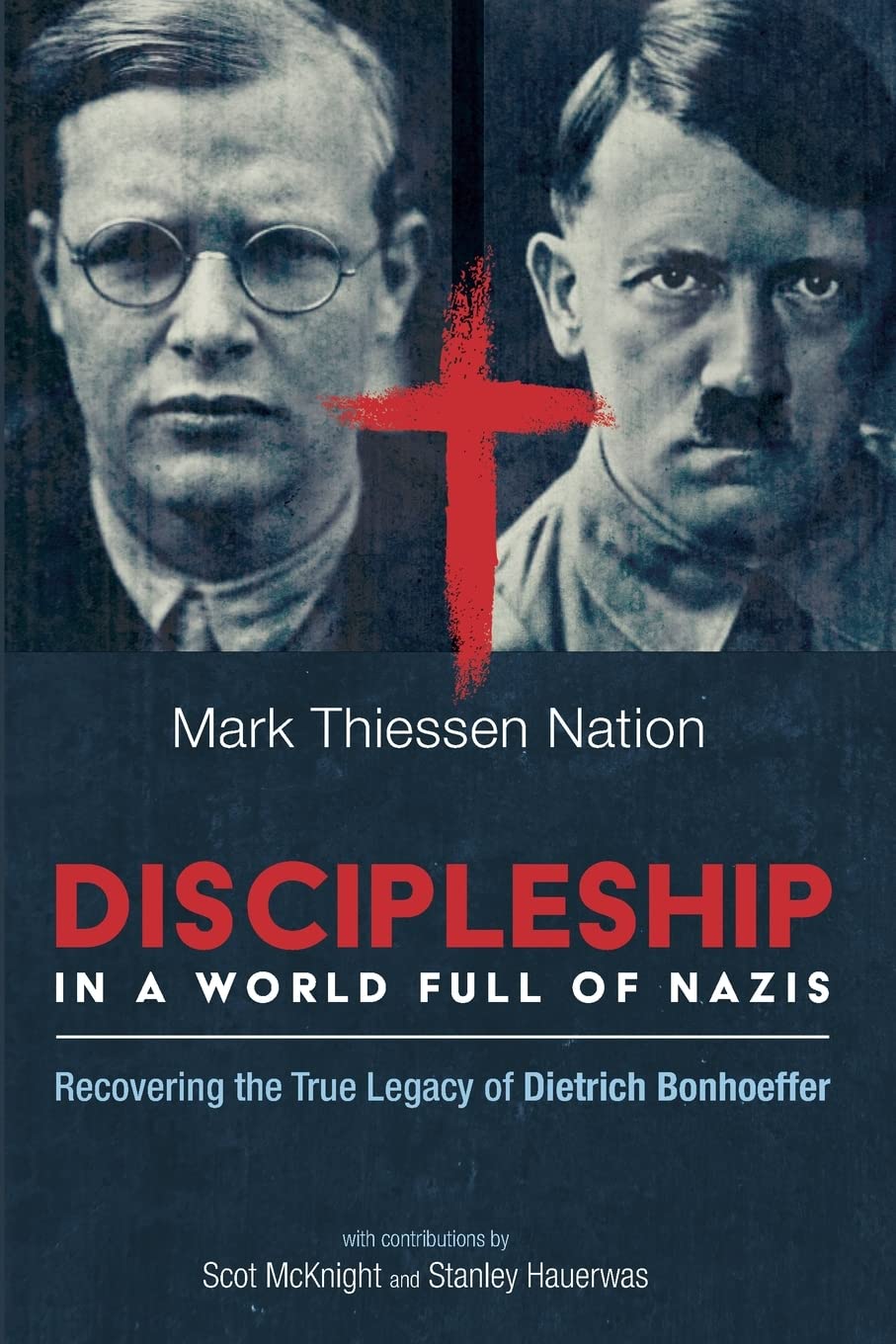
Discipleship in a World Full of Nazis: Recovering the True Legacy of Dietrich Bonhoeffer is an alluring title that promises to push at scholarly boundaries. Any time a book seeks to “recover” a “true legacy,” there are a number of ways it could go on the subject. It could be a sensationalist look at the topic, or a more measured look at something that has, heretofore, been sensationalized. Mark Thiessen Nation seeks here to rethink Bonhoeffer’s alleged participation in the plot to kill Hitler, among other things.
Mark Thiessen Nation’s thesis is fairly straightforward: consensus scholarship regarding Bonhoeffer’s involvement in the plot to assassinate Hitler is grounded upon shaky historical ground and should be rejected in light of his apparent and actual pacifism. In order to argue for this end, he makes three early points in favor of that thesis- Eberhard Bethge leaves the impression that Bonhoeffer was involved in the plot to kill Hitler; the evidence for why Bonhoeffer was arrested point in another direction; and, finally, the starting point for evaluation of Bonhoeffer’s life, legacy, and theology ought to be located in a place other than as a resisting pastor involved in the plot to kill Hitler (3).
What is interesting is that I doubt many Bonhoeffer scholars would dispute almost any of these theses. Eberhard Bethge clearly gives the impression Bonhoeffer was involved. There’s no reasonable way to dispute that. The evidence for Bonhoeffer’s being arrested does not suggest it was due to a plot to kill Hitler. No Bonhoeffer scholar I am aware of actually suggests that Bonhoeffer’s involvement in a plot to kill Hitler is the lens through which his whole life should be read. What this means is that Mark Thiessen nation, in picking these theses early on, essentially gives himself an easy hit, teeing it up so that he can knock it out of the park. By doing so, it gives the arguments that follow a veneer of support. After all, his earliest theses were proven to be at least mostly correct! One could be forgiven for thinking the rest of the argument would flow from these points, but one would be mistaken.
An important aside about these early theses is warranted. The evidence regarding Bonhoeffer’s arrest not being related to a plot to kill Hitler does not help Thiessen Nation’s narrative, because none of those arrested around the same time as Bonhoeffer were arrested for that reason either! If Hitler had known of a plot to assassinate him, does anyone actually think he would have let those would-be assassins sit in prison rather than torturing and murdering them immediately (as he did once he discovered the plot)? The reasons for the arrests of these others is a matter of historical record, but by emphasizing that Bonhoeffer, uniquely, was not arrested due to a plot to assassinate Hitler, Thiessen Nation makes it seem as though this is some major point against historical arguments for his involvement. But that’s an unwarranted leap, again, given that the plot had not yet been discovered. No one could have been arrested for a plot that those doing the arresting didn’t know about yet! Unless Thiessen Nation is aware of some historical data that says they were aware of that plot contemporaneous with Bonhoeffer’s arrest (having read much literature on this, I don’t know of any, but I can hardly claim to have universal knowledge of the topic), this point is superfluous at best, disingenuous at worst, because it sets up readers to doubt Bonhoeffer’s involvement based on this lack of reason for the arrest.
Another salient historical point that Thiessen Nation only raises occasionally is that there is no evidence directly linking Bonhoeffer to the plot to kill Hitler. While this seems possibly correct in regards to a paper trail, it seems incorrect regarding those who knew Bonhoeffer personally. Again, this would include Eberhard Bethge. Time and again, our author here notes that there is little to no evidence for Bonhoeffer’s involvement; yet testimonial evidence is evidence, and we have that. Additionally, nothing is made of the relevant point that those involved in a plot to assassinate a brutal dictator would hardly keep everything on paper for posterity. It shouldn’t be that surprising in this case to hold to the dictum that absence of evidence is not evidence of absence. Still more, Thiessen Nation does not acknowledge that, after World War II in Germany, those who had worked against the Third Reich were still viewed with suspicion for many years. Bonhoeffer was not exempted from this, and it would surely be a point in favor of additional secrecy regarding those involved in any plot to kill Hitler. It’s not a particularly delightful thing to acknowledge, but all of these are facts of history that are borne out in research of the time period.
Thiessen Nation goes on to argue that various points are in favor of reading Bonhoeffer as a committed pacifist. While noting some difficulties with earlier writings, he finds great support in Discipleship and argues for this as a core point of Bonhoeffer’s ethics (see chapter 4). Then, he turns to Ethics and this is where I think the argument starts to come apart. First, he sees Bonhoeffer’s rejection of Kantian absolutism and even applauds it (125-126). This is a point often missed in examination of Bonhoeffer’s–and Lutheran–ethics generally. This ethic rejects a kind of totalitarian deontology in favor of a more situational ethic. This point would actually obviate against a reading of Bonhoeffer as purely pacifistic, as this would require a kind of Kantian commitment to pacifism, but the topic is not explored further.
Thiessen Nation next hones in on the quote from Bonhoeffer that “everyone who acts responsibly becomes guilty.” He suggests that this quote should not be read contextually related to a background of a plot to assassinate Hitler, but rather as a way of understanding the broader context of the war. This certainly resonates with me, and I think that it would make sense. Indeed, I would not personally limit that quote or the general discussion of Bonhoeffer’s thought on responsibility to his involvement (or not) in the plot to kill Hitler. If he was involved, his reasoning on responsibility certainly makes sense of how it would work within his ethical system. Taking away this involvement, Thiessen Nation casts about for another motivation for the reflection on responsibility. He lands on it coming from Bonhoeffer’s reading of letter(s) from his student(s) regarding their own involvement in the Third Reich (129-130). Such is a fascinating thesis, and allows for additional areas of research regarding Bonhoeffer’s life. However, Thiessen Nation pushes it farther, tying Bonhoeffer’s reflection on responsibility to the awful acts of his students, including “cold-blooded murder of civilians and surrendered soldiers” (129, see also 129n21). This is, in my opinion, one of the worst re-readings of Bonhoeffer I’ve read. Bonhoeffer’s entire discussion of responsibility is set against the background of becoming guilty not for oneself but for the sake of the other. To read that as a justification of “cold-blooded murder” simply because Bonhoeffer was somehow struggling to justify his students’ actions makes this a horribly motivated and specious justification for, well, cold-blooded murder! And it doesn’t make any sense of Bonhoeffer’s own words, as he wrote this all in context of taking on guilt for one’s neighbor! How could one do that if one is too busy murdering them?
I would almost second-guess my reading of Thiessen Nation here, because it seems such an off-base reading of Bonhoeffer, but he makes it quite clear that it is his intent to suggest Bonhoeffer was somehow justifying this cold-blooded murder: “Might [Bonhoeffer] have been thinking of [his students’] letters when he wrote that it worse to be evil than to do an act of evil? …in the midst of extremely difficult circumstances, Bonhoeffer is quite sensitive toward his former students who either were not convinced by his teaching on nonviolence or who couldn’t face the consequences of formally claiming to be a conscientious objector, which was a capital offense” (130). He goes on to say that “my hypothesis is more likely than any notion that he is writing reflections to justify his ‘involvement’ in any attempts on Hitler’s life” (ibid). This removes any doubt of this reading: Thiessen Nation is genuinely suggesting that Bonhoeffer wrote this section on responsibility to justify his students’ and friends’ actions of choosing to murder civilians instead of die as a conscientious objector. If he’s right in this reading, he has turned one of my favorite sections of Bonhoeffer’s work into a heinous justification of evil.
Bonhoeffer’s words themselves appear to obviate against this reading, however, because in the section on responsibility in Ethics, he explicitly states that human beings must become guilty not for the sake of themselves or their own attempts to be guiltless, but “entering into community with the guilty of other human beings for their sake. Because of Jesus Christ, the essence of responsible action intrinsically involves the sinless, those who act out of selfless love, becoming guilty” (Ethics, DBWE: 276). Where can one truly justify murder of innocent others for the sake of preserving one’s own life in this text? Where could one read it at as Thiessen Nation does? It is an utterly nonsensical reading of Bonhoeffer to read him as justifying murder to avoid capital offense.
Mark Thiessen Nation himself, according to this profile, was a conscientious objector to Vietnam. I hesitate to speculate, but is it possible that he is looking at his own situation, likely knowing others who committed awful acts in Vietnam, and trying to provide some kind of a posteriori justification for those acts, roping Bonhoeffer into such a defense?* The reading seems radically American and individualistic, putting one’s own well-being as such a high good that becoming guilty of “cold blooded murder” to avoid one’s own capital punishment is seen as good for the sake of the other. Again, none of this makes sense in light of Bonhoeffer’s own work. Thiessen Nation concludes this section acknowledging we can’t know the exact reason for Bonhoeffer’s deliberations on guilt, which would have been a better overall point (though still hotly disputed) (130). Yet this last minute broadening of scope does little to overcome the fact that he asserted earlier that his reading of Bonhoeffer justifying mass murder for the sake of one’s own life is somehow more likely than Bonhoeffer justifying tyrannicide for the sake of the other. Again, it is ludicrous to the point of the absurd to read Bonhoeffer this way in the context in which these words were set.
Belaboring the point even a little more, Chistine Schliesser, in the aptly titled Everyone Who Acts Responsibly Becomes Guilty, argues that one can see this thread of guilt for the sake of the other throughout Bonhoeffer’s entire works. It’s more complicated than that, of course, but that book offers an excellent overview of the concept of guilt in Bonhoeffer.
Another problem with Thiessen Nation’s overall theses related to Bonhoeffer’s pacifism is that he is only capable of reading Bonhoeffer as wholly pacifistic through revisionism (see the discussion above); through arguing against some early biographers and friends of Bonhoeffer (eg. Bethge- who would almost have to be accused of lying if Bonhoeffer were not involved in the plot against Hitler in any way); or through arguing that Bonhoeffer changed his mind not infrequently, only settling on pacifism after a number of other ethical stances were attempted. The former two points have been spoken for already, but I think the latter point is worth a very slight reflection. Thiessen Nation, while critiquing other authors who seek to place Bonhoeffer in his Lutheran perspective (eg. Michael DeJonge), fails to take Bonhoeffer’s Lutheranism seriously. Bonhoeffer quoted Luther more than any other theologian, and it is not difficult to trace many aspects of Bonhoeffer’s theology directly to Luther. This includes his ethics. Thiessen Nation was right earlier to note the rejection of Kantian ethics in Bonhoeffer. Bonhoeffer (and Luther) rejected deontology. This rejection allowed for a more dynamic or situational ethic that could be adjusted to current contexts rather than delivering principles that would last for eternity. It seems to me that a better reading of Bonhoeffer that doesn’t require re-interpreting or rejecting parts of his ethic would simply be to take it as a development of Lutheran ethics, in which sometimes pacifism is the right response and even perhaps a broad ideal, but at others, taking on guilt for the sake of the other is required.
Discipleship in a World Full of Nazis is a provocative look at Bonhoeffer’s alleged pacifism. I believe it largely misses the mark, and misses it badly in some cases. The author’s [with others] earlier Bonhoeffer the Assassin? (my review here) made a more limited argument. It is clear to me, having read this work, that trying to double down on reading Bonhoeffer as a pacifist will only work if one shoehorns his ethics into corners that don’t make sense contextually. Overall, I think this book does not succeed in its argument.
*Rev. Beth Wartick made this point to me in conversation.
All Links to Amazon are Affiliates links
Links
Dietrich Bonhoeffer– read all my posts related to Bonhoeffer and his theology.
Be sure to check out the page for this site on Facebook and Twitter for discussion of posts, links to other pages of interest, random talk about theology/philosophy/apologetics/movies and more!
Book Reviews– There are plenty more book reviews to read! Read like crazy! (Scroll down for more, and click at bottom for even more!)
SDG.
——
The preceding post is the property of J.W. Wartick (apart from quotations, which are the property of their respective owners, and works of art as credited; images are often freely available to the public and J.W. Wartick makes no claims of owning rights to the images unless he makes that explicit) and should not be reproduced in part or in whole without the expressed consent of the author. All content on this site is the property of J.W. Wartick and is made available for individual and personal usage. If you cite from these documents, whether for personal or professional purposes, please give appropriate citation with both the name of the author (J.W. Wartick) and a link to the original URL. If you’d like to repost a post, you may do so, provided you show less than half of the original post on your own site and link to the original post for the rest. You must also appropriately cite the post as noted above. This blog is protected by Creative Commons licensing. By viewing any part of this site, you are agreeing to this usage policy.
Book Review: “Reading the Bible Around the World: A Student’s Guide to Global Hermeneutics”
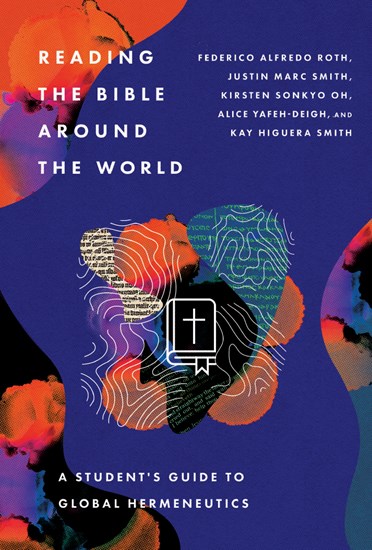
Reading the Bible Around the World introduces readers to seeing global perspectives on the Bible.
The book is clearly meant to be, as the subtitle suggests, “A Student’s Guide to Global Hermeneutics.” It’s a pithy volume, but each chapter packs a punch. The authors go through Latin America, Africa, Europe/Euro-American, Asian, and Diasporic approaches to reading scripture, dedicating one chapter to each topic. Each chapter is about 20 pages, but stuffed with information. Each chapter highlights the main names in hermeneutics in each area, and gives a couple specific looks at how things like the Parable of the Loving Neighbor (Luke 10), the story of Ruth, or other passages. These latter parts of the chapters help readers to understand the context provided in the earlier parts.
Reading the Bible Around the World is a brief, interesting look into global readings of the Bible. Recommended for those looking to expand perspectives beyond American-centric readings of Scripture.
All Links to Amazon are Affiliates links
Links
Be sure to check out the page for this site on Facebook and Twitter for discussion of posts, links to other pages of interest, random talk about theology/philosophy/apologetics/movies and more!
Book Reviews– There are plenty more book reviews to read! Read like crazy! (Scroll down for more, and click at bottom for even more!)
SDG.
——
The preceding post is the property of J.W. Wartick (apart from quotations, which are the property of their respective owners, and works of art as credited; images are often freely available to the public and J.W. Wartick makes no claims of owning rights to the images unless he makes that explicit) and should not be reproduced in part or in whole without the expressed consent of the author. All content on this site is the property of J.W. Wartick and is made available for individual and personal usage. If you cite from these documents, whether for personal or professional purposes, please give appropriate citation with both the name of the author (J.W. Wartick) and a link to the original URL. If you’d like to repost a post, you may do so, provided you show less than half of the original post on your own site and link to the original post for the rest. You must also appropriately cite the post as noted above. This blog is protected by Creative Commons licensing. By viewing any part of this site, you are agreeing to this usage policy.
Book Review: “The Trinity in the Book of Revelation” by Brandon D. Smith
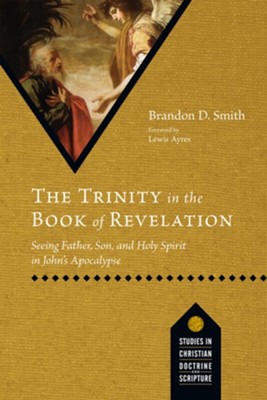
The Trinity in the Book of Revelation: Seeing Father, Son, and Holy Spirit in John’s Apocalypse by Brandon D. Smith starts with the charge from Gregory of Nazianzus to take theology as a serious task. And the book does exactly that, sifting through the book of Revelation to highlight the Trinitarian theology found therein.
Smith repeatedly notes that Revelation is a confusing book and this has lead to a wide and wild assortment of theories about its genre, its meaning, and its conclusions (7-8). Smith approaches the book from a patristic perspective (11ff) and this leads to some of his differentiation from other recent authors. After laying the groundwork for reading the Revelation in light of the Trinity, Smith launches into three chapters, one each on Father, Son, and Holy Spirit.
The latter chapter highlights again Smith’s commitment to patristic theology. He notes that the Church Fathers did not always agree, even in regards to the focus on the Holy Spirit (144). Smith notes that Basil took a hardline response against any who downplayed the Holy Spirit’s work or divinity.
After these three chapters on Persons of the Trinity, Smith wraps up the arguments of his book by noting not only problems with missing the Trinitarian power of the book of Revelation but also some issues with modern readings of the book.
The Trinity in the Book of Revelation not only highlights the Trinity as a major theme in Revelation, but also manages to eliminate some of the perceived need for some wild-eyed theories about the book. I recommend it.
All Links to Amazon are Affiliates links
Links
Be sure to check out the page for this site on Facebook and Twitter for discussion of posts, links to other pages of interest, random talk about theology/philosophy/apologetics/movies and more!
Book Reviews– There are plenty more book reviews to read! Read like crazy! (Scroll down for more, and click at bottom for even more!)
SDG.
——
The preceding post is the property of J.W. Wartick (apart from quotations, which are the property of their respective owners, and works of art as credited; images are often freely available to the public and J.W. Wartick makes no claims of owning rights to the images unless he makes that explicit) and should not be reproduced in part or in whole without the expressed consent of the author. All content on this site is the property of J.W. Wartick and is made available for individual and personal usage. If you cite from these documents, whether for personal or professional purposes, please give appropriate citation with both the name of the author (J.W. Wartick) and a link to the original URL. If you’d like to repost a post, you may do so, provided you show less than half of the original post on your own site and link to the original post for the rest. You must also appropriately cite the post as noted above. This blog is protected by Creative Commons licensing. By viewing any part of this site, you are agreeing to this usage policy.
Book Review: “Renewal Worship: A Theology of Pentecostal Doxology” by Steven Félix-Jäger
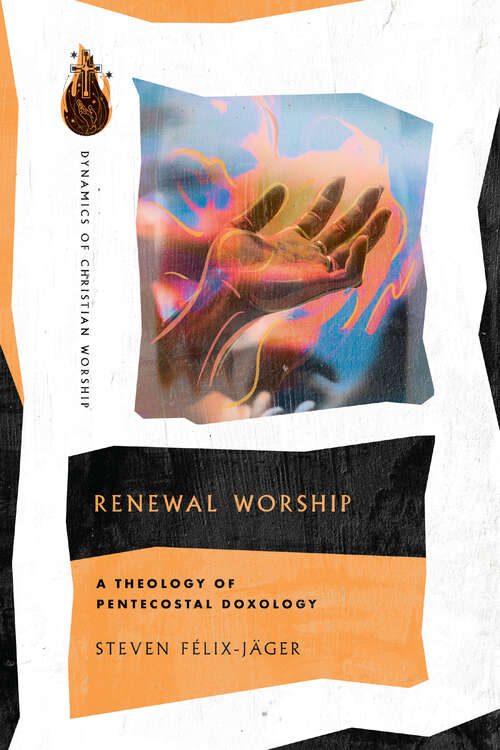
Renewal Worship: A Theology of Pentecostal Doxology provides a broad overview/theology of Pentecostal worship.
The first thing that immediately came to my mind on starting this book is the discussions and debates I’ve engaged in over Pentecostal theology. As a Lutheran, there are some quite large differences in theology and practice. However, Lutheranism also doesn’t have a fully-fledged view of gifts of the spirit, a stance on continuationism vs. not, or really much interest in those debates. Knowing that some of these discussions quickly turn sour (such as having been told I’m unsaved because I held to a different consideration of what it meant to be baptized), I was cautious on cracking the cover here. I’m pleased to report that Félix-Jäger does not engage in such frivolous dismissal of other Christians. Instead, he’s provided here a substantive look at Pentecostal worship that includes enough in it to be useful and informative to Christians of broad backgrounds and interests.
The book is divided into two parts. The first is a profile of renewal worship, and the second places renewal worship in context. Félix-Jäger uses the term “renewal worship” interchangeably with Pentecostal worship. In the introduction, he points out that many books on theology of worship are prescriptive–that is, they tell readers how they’re supposed to be worshiping. He notes that there are severe problems with claiming to have one single unified approach as “the biblical approach to worship” (8). Rather than attempting to provide stout arguments for why one must worship as he suggests, he instead offers the theology of worship in this book as a case study of how a Pentecostal community can worship, why it matters, and how it can be seen as exegetically satisfying.
The first chapter has Félix-Jäger going into what renewal worship is. Here, his concern for not offering prescription is evident, though he provides a contrast between evangelical (largely based upon scripture as the primary driver in worship), sacramental (based upon rituals as means for bringing grace and Christ to believers), and Pentecostal (focused on the Spirit’s involvement in worship). Admittedly, the constant use of “symbol” language for sacramental theology is grating from a Lutheran perspective, but his effort to delineate different styles of worship is of interest.
Renewal worship, he argues, can be integrated into eschatological expectation–worship as a foretaste of the feast to come (39ff). The sacraments themselves are not rejected by Pentecostal theology but integrated into a broad sense of Spirit-filled worship (44ff). Of course, there are controversial aspects in Pentecostal worship, such as the notion of healing or miraculous signs and wonders as integration of worship. Félix-Jäger again puts this into an eschatological framework, seeing healing as a sign of the coming renewal (49). He does not debate whether healings occur or how they do so. Instead, the concept of healings occurring is a given for renewal worship and not part of the scope of this book.
Félix-Jäger acknowledges some of the difficulties that have led to renewal worship getting linked to prosperity gospel (72-81). He uses lyrics from various songs to illustrate aspects of what he means by renewal worship (eg. 27-28; 137). He carefully draws lines about what is meant by speaking in tongues in worship, not falling into the trap of insisting one must do so to demonstrate salvation (as this reviewer has encountered before in argument) (87ff). The arts are integrated into worship in renewal worship, whether its music or other forms of art (106ff). Renewal worship is less structured and often depends upon a sense of flowing with the Spirit (139ff). Renewal worship is a global movement and has advantages when it comes to integration and contextualization, he argues (200ff).
Renewal Worship is of interest to anyone who seeks understanding of worship practice or is exploring more about what it means to be Pentecostal. As someone who’s not Pentecostal, I still found the book quite engaging, sometimes challenging, and certainly enlightening. Recommended.
All Links to Amazon are Affiliates links
Links
Be sure to check out the page for this site on Facebook and Twitter for discussion of posts, links to other pages of interest, random talk about theology/philosophy/apologetics/movies and more!
Book Reviews– There are plenty more book reviews to read! Read like crazy! (Scroll down for more, and click at bottom for even more!)
SDG.
——
The preceding post is the property of J.W. Wartick (apart from quotations, which are the property of their respective owners, and works of art as credited; images are often freely available to the public and J.W. Wartick makes no claims of owning rights to the images unless he makes that explicit) and should not be reproduced in part or in whole without the expressed consent of the author. All content on this site is the property of J.W. Wartick and is made available for individual and personal usage. If you cite from these documents, whether for personal or professional purposes, please give appropriate citation with both the name of the author (J.W. Wartick) and a link to the original URL. If you’d like to repost a post, you may do so, provided you show less than half of the original post on your own site and link to the original post for the rest. You must also appropriately cite the post as noted above. This blog is protected by Creative Commons licensing. By viewing any part of this site, you are agreeing to this usage policy.
Book Review: “The Gospel of Peace in a Violent World” edited by Shawn Graves and Marlena Graves
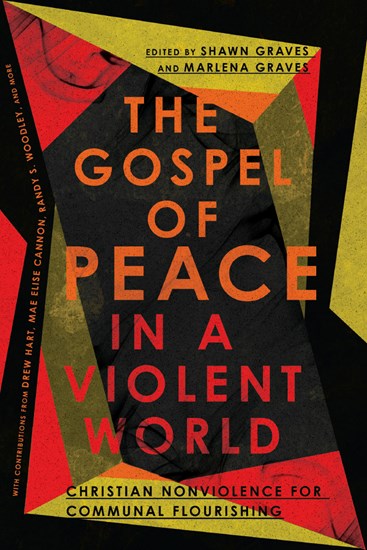
The Gospel of Peace in a Violent World is a collection of essays centered around the defense of Christian pacifism. The essays are broadly arranged around five parts- biblical reflections, learning from others, war and violence, race, gender, and disability, and finally immigration and environment.
Reviewing a large, important collection like this forces a reviewer to skim across or even past many fascinating topics. We must select from among numerous excellent essays and highlight just a few for our readers. And that is the unenviable task to which I now turn. Suffice to say, this collection as a whole is well worth readers’ time.
Part one turns to biblical reflections on pacifism. I was somewhat surprised to see the very first essay by Eric A. Seibert come out and say bluntly that Christians should push back on the notion of God as warrior and indeed reject that portrayal. In response to the question of what to do with passages which simply state God is warrior, Seibert writes, “some Christian pacificstts will find it difficult to state publicly their rejection of the image of God as warrior…” for reasons such as personal cost or simply personal pre-commitment to seeing how the Bible is read. However, Seibert responds, “these assumptions about God’s very active role in determining the content of the Bible do not match the evidence at hand. It appears that ancient Israelites were free to write about God in ways that made sense in their particular historical and cultural context…” (19). This full on confrontation with biblical texts often used to undercut pacifism is a significant difference from even the next essay by T.C. Ham, who instead argues broadly that the Bible’s broad teaching on shalom is the focus. The difference between these two approaches–direct acknowledgement of difficult passages and reading of them as reflections of the culture from which they sprang vs. attempted integration–starts the book with a clear message: Christian pacifism is broader than one may think.
Part two introduces the concept in one essay of a “Pentagon for Peace” in which Randy S. Woodley argues for resources being committed to peaceful undertakings rather than the warfare/mutual destruction that seems to be the national priority today (79ff). Other essays show MLK Jr.’s passionate peace-giving activism, other historical examples of nonviolence, integration of nonviolence into human rights advocacy and more. Part three reflects upon war and violence in a number of essays. Perhaps the most shocking essay here (at least for one not as well versed in pacifism) is Ted Grimsrud’s “Christian Pacifism and the ‘Good War'” in which he notes that World War II is often taken for granted as a paradigm case of just war theory, but that upon examination, much of the justice behind the war can find cracks in the façade. This essay alone was worth reading the book for, and while I’m not totally convinced by it, I found it incredibly deep and challenging. Those who scoff at pacifism and use paradigm cases like this to argue against it should contend with such a well-reasoned argument. Other essays in this section push back on certain kinds of Christian peacemaking through violence and contend that Christianity can be a light in the darkness in the midst of violence.
Part four turns to questions of nonviolence in race, gender, and disability, bringing forward numerous surprising topics and insights to these important topics that go beyond what this reviewer would have typically associated with pacifism. These essays show the breadth of the question of violence and peace in Christian theology and how one’s theology of those questions certainly has an impact beyond the simple question of whether war is just. Part five continues that theme, applying it to questions about immigration and the environment.
My overall impression coming away from the book is that the case for pacifism is much stronger than I’d thought. I still believe that Dietrich Bonhoeffer’s ethic of peace and violence is likely the best approach, however. In that ethic, Christians may engage in violent resistance while also acknowledging the guilt which they are taking in while doing so. As Bonhoeffer wrote- “Everyone who acts responsibly becomes guilty.” Interestingly, Bonhoeffer is cited multiple times in this collection, largely as a voice for pacifism or at least a way to lean towards it. I would agree, as Bonhoeffer has plenty written that could lean that direction. A holistic reading of Bonhoeffer doesn’t portray him as a committed pacifist, however, and I maintain that position myself–peace is preferred, but resistance is allowed, while acknowledging the guilt and sinfulness that involves.
The Gospel of Peace in a Violent World provides one of the most robust defenses of pacifism I’ve read. It’s highly recommended.
All Links to Amazon are Affiliates links
Links
Be sure to check out the page for this site on Facebook and Twitter for discussion of posts, links to other pages of interest, random talk about theology/philosophy/apologetics/movies and more!
Book Reviews– There are plenty more book reviews to read! Read like crazy! (Scroll down for more, and click at bottom for even more!)
SDG.
——
The preceding post is the property of J.W. Wartick (apart from quotations, which are the property of their respective owners, and works of art as credited; images are often freely available to the public and J.W. Wartick makes no claims of owning rights to the images unless he makes that explicit) and should not be reproduced in part or in whole without the expressed consent of the author. All content on this site is the property of J.W. Wartick and is made available for individual and personal usage. If you cite from these documents, whether for personal or professional purposes, please give appropriate citation with both the name of the author (J.W. Wartick) and a link to the original URL. If you’d like to repost a post, you may do so, provided you show less than half of the original post on your own site and link to the original post for the rest. You must also appropriately cite the post as noted above. This blog is protected by Creative Commons licensing. By viewing any part of this site, you are agreeing to this usage policy.
Book Review: “Teach Your Children Well: A Step-by-Step Guide for Family Discipleship” by Sarah Cowan Johnson

Teach Your Children Well seeks to provide a guide for discipling children. It has activities, stats, and ideas for forming faith throughout the lives of kids.
The first few chapters cover some issues the author sees as important for readers. It starts with “bad news” about faith retention rates, but then goes into good news of faith retention being higher when faith is modeled and practiced at home. This all makes sense, but it also was a little off-putting. I am likely from a different theological stream from the author, and that made some of the comments about children’s faith and the extreme fear of some kind of falling away or even certain moral questions difficulties for me in the book.
Sarah Cowan Johnson then breaks out a bunch of practical things to do with kids, even breaking them down into age-appropriate chapters. Some of these activities were really surprising to me. One example was the practice labeled Ignatian Prayer. In this practice, readers settle into a comfortable position and imagine themselves with Jesus and in conversation with Jesus, ultimately writing down things that strike them and “testing” it against Scripture. I thought this was certainly an interesting way to go about the practice and learn more about oneself while praying and imagining with God. Concrete examples like this are abundant in the book, and provide readers with real ways to integrate faith into the lives not just of children but also themselves.
I do have a few concerns with the book. I mentioned already the fear-inducing method of the first chapter. It seemed an odd way to start off a book that also potentially places a lot of the responsibility and implied liability for the faith of children on their parents instead of on God’s grace. I also am concerned about the somewhat rigorous way several ideas are enforced or implied to be necessary. For example, pages 44-45 feature a “family time audit” broken down into 8 segments and all 7 days. Parents are told to fill in the “audit” with initials of kids or F for family time so they can see what and where they could do differently. It’s presented in a non-judgmental tone, but the “feel” of it is off. It reads kind of like “if you don’t have enough family time built in, that’s bad.” And it may be… but I’m not sure this is the way to convey that. Only one page later, on 46, the author writes, “In addition to time, the other thing parents have is spiritual authority. One simple definition of spiritual authority is the right to make use of God’s power on earth.” I am quite leery about this terminology and the drawn conclusions about where that authority goes. It’s not necessarily seen as an authoritarian way to go over your children’s head on spiritual matters, but again, I’m wondering about the direction. The author writes specifically of confronting “shrieking demons” in Uganda, but then doesn’t build upon what that is supposed to mean in day-to-day life for the readers. A final difficulty is things like the Ignatian Prayer above–some of the suggested activities seem to go against the grain that they appear initially to do. Ignatian prayer at first seems to suggest a calm, meditative conversation with an imagined Jesus, building spiritual muscle by doing so. But then this imagined Christ has to be painstakingly evaluated against Jesus in Scripture, which isn’t bad, but does imply that something is wrong with oneself if one imagines, well, wrongly.
Teach Your Children Well has plenty of activities and ideas for building faith alongside kids. Parents from various Christian traditions will likely find at least something to take away and build upon in the book.
All Links to Amazon are Affiliates links
Links
Be sure to check out the page for this site on Facebook and Twitter for discussion of posts, links to other pages of interest, random talk about theology/philosophy/apologetics/movies and more!
Book Reviews– There are plenty more book reviews to read! Read like crazy! (Scroll down for more, and click at bottom for even more!)
SDG.
——
The preceding post is the property of J.W. Wartick (apart from quotations, which are the property of their respective owners, and works of art as credited; images are often freely available to the public and J.W. Wartick makes no claims of owning rights to the images unless he makes that explicit) and should not be reproduced in part or in whole without the expressed consent of the author. All content on this site is the property of J.W. Wartick and is made available for individual and personal usage. If you cite from these documents, whether for personal or professional purposes, please give appropriate citation with both the name of the author (J.W. Wartick) and a link to the original URL. If you’d like to repost a post, you may do so, provided you show less than half of the original post on your own site and link to the original post for the rest. You must also appropriately cite the post as noted above. This blog is protected by Creative Commons licensing. By viewing any part of this site, you are agreeing to this usage policy.
Book Review: “War, Peace, and Violence: Four Christian Views” edited by Paul Copan

The question of what Christians ought to do when it comes to war is one that has a long, deep history of thought in historical theology. It’s one of those questions that can seem incredibly straightforward, depending upon one’s proof texts, only to become increasingly complex as the discussion goes on. War, Peace, and Violence: Four Christian Views attempts to introduce readers to the debates about these questions by providing four major points of view on the topic.
Reviewing a multiview book is always a challenge, as summarizing each point or view is difficult in the limited time of a review. Broad comments are all one can do in this case, and so that’s what I’ll offer. The views presented in the book are a just war view by Eric Patterson, a nonviolence view by Myles Werntz, a Christian realist view by A.J. Nolte, and a church historical view by Meic Pearse. Each author is careful to say their own presentation is not the extent of the type of view they’re presenting. Indeed, each is a typology. This especially seems the case with the nonviolent view, in which Werntz explicitly notes differences from his approach and others related to Christian nonviolence, as well as the vast landscape of possibilities contained within the family of views about nonviolence.
I admit a little bit of confusion over the views of “church historical” and “Christian realist.” The latter seems not much different from a just war theory, basically saying that the realities of the world in which we live mean that we must use violence at times to act justly. The former doesn’t attempt a consensus view of the church on violence, but rather offers a kind of composite of the author’s perspective of at least one strand of historical Christian thought on the topic. Perhaps the sharpest interaction is that of Patterson’s (just war) response to Pearse, in which he asserts that Pearse fails to reference the best historians or theologians on violence and war in Christian history, and then Pearse fires back noting that it’s not his fault Patterson has read different books–continuing on to note that Patterson’s own perspective seems to lean towards only modern American theologizing on the topic (216-217; cf. 197). Because of the limited space in a book like this, though, the point-counterpoint barely had time to get off the ground before it had to be brought to a close. I appreciated later in Pearse’s response his note of the difference between his preferred method–that, he says, of Bonhoeffer as approaching the necessity of violence with repentance and weeping, knowing it is sinful–versus that of Neibuhr, which is a more coldly rational approach. All of that said, there seems to be little at least here to distinguish between those two views, and I suspect it is more my own lack of knowledge on the topic than it is the authors’ fault.
The hardest questions raised are against pacifism, again raised in Pearse’s essay in which he lays out gruesome scenarios that truly did happen and continue to happen. What is one supposed to do when faced with relentless evil and violence with no possible right answer. Pearse notes that the only response is total horror even as one takes action. Yet it seems to simple to face the view of nonviolence with holding up violent questions. Here is where I personally lean into Bonhoeffer myself, seeing that he had a kind of sliding scale of necessity of action, with a strong preference for pacifism that ultimately gave way to violent resistance–despite him still holding it to be sinful (see, for example, this work). While I don’t hold to pacifism, I find it an appealing view, and Werntz did an excellent job noting the different ways it can be presented and thought about.
Just war is one of the simpler to understand positions, but that doesn’t make it the right one or the strongest. However, reading Patterson’s essay may sway some towards his view. He notes that “Christians are called to serve in the time and place where God has put them…” and that could include “fighting on the frontlines to stop genocide” (40-41). But such a view also runs into difficulty, effectively having to go beyond Jesus’s command to turn the other cheek and reason from that to participating in drone strikes on potentially violent targets. I kind of wish some of the others had pressed harder against this position in the responses.
War, Peace, and Violence does a good job introducing readers to the major topics related to Christianity and war. Readers interested in the topic should view it as a good way to pick up discussion and further reading recommendations on the topic.
All Links to Amazon are Affiliates links
Links
Be sure to check out the page for this site on Facebook and Twitter for discussion of posts, links to other pages of interest, random talk about theology/philosophy/apologetics/movies and more!
Book Reviews– There are plenty more book reviews to read! Read like crazy! (Scroll down for more, and click at bottom for even more!)
SDG.
——
The preceding post is the property of J.W. Wartick (apart from quotations, which are the property of their respective owners, and works of art as credited; images are often freely available to the public and J.W. Wartick makes no claims of owning rights to the images unless he makes that explicit) and should not be reproduced in part or in whole without the expressed consent of the author. All content on this site is the property of J.W. Wartick and is made available for individual and personal usage. If you cite from these documents, whether for personal or professional purposes, please give appropriate citation with both the name of the author (J.W. Wartick) and a link to the original URL. If you’d like to repost a post, you may do so, provided you show less than half of the original post on your own site and link to the original post for the rest. You must also appropriately cite the post as noted above. This blog is protected by Creative Commons licensing. By viewing any part of this site, you are agreeing to this usage policy.

 J.W. Wartick - Reconstructing Faith