christian
“An Artful Relic” by Andrew R. Casper- Apologetics of the Shroud
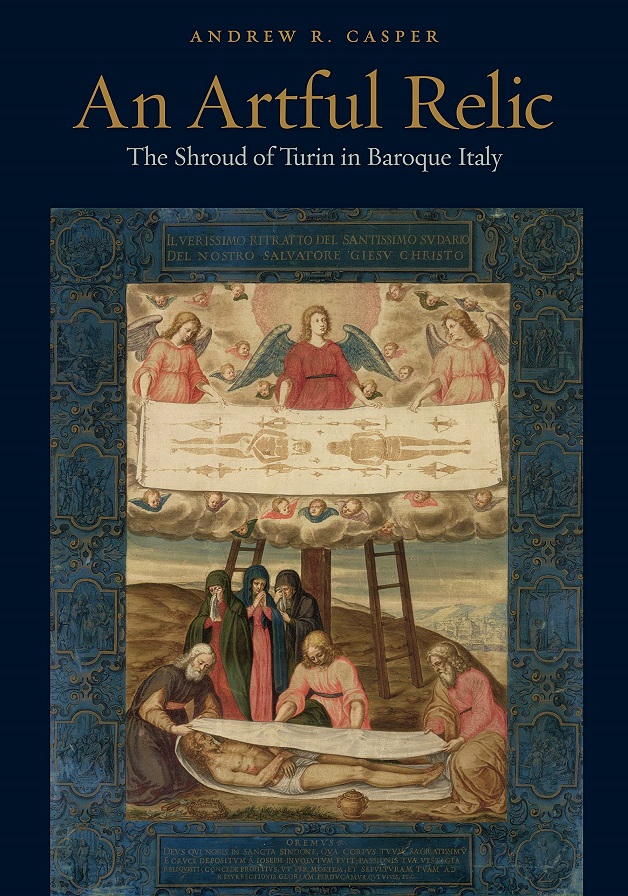
An Artful Relic: The Shroud of Turin in Baroque Italy by Andrew R. Casper is an impressive study of the impact of the Shroud of Turin on art, artists, and society in the 1500s-1600s. Not only is it lavishly illustrated, it also provides excellent historical data for those interested in the Shroud of Turin.
The thesis of the book is simple: the Shroud of Turin was immensely important in shaping art and even culture in Baroque Italy. That said, the work touches upon many important aspects for those interested in Shroud research. One aspect is the debate over its authenticity in history. While the debate over the Shroud’s authenticity continues today, the historical debate should inform those interested in the question. Casper notes that the acceptance of the Shroud’s authenticity in Italy (and elsewhere) was at least partially due to the immense influence of the House of Savoy. Their vested interest in making the Shroud a focal point for veneration and cultic worship greatly raised its esteem in Europe. Additionally, its survival of a fire in 1532 was seen as only explicable by miraculous intervention, thus leading more to accepting the Shroud as authentic (10). Neither of these, of course, will fully tilt opinion in modern minds regarding the Shroud’s authenticity. For people interested in that question, though, they should take into account the fact that the Shroud’s authenticity only became cemented in this time, and that its appearance in history cannot be traced to earlier than the latter half of the 1300s.
Casper draws attention to the way artists and others commented upon the supposed miraculous nature of the Shroud’s image in Baroque Italy. This included much comment on the way blood formed the image. The notion that the Shroud was explicitly a work of art made by God arose in this time period. It was insisted that God’s handiwork was shown with Christ’s blood as the pigmentation (57-58). These contentions had to deal with earlier Christian theology that argued against the possibility of Christ’s blood being left behind in the resurrection. For example, Aquinas had argued that because Christ’s body was true and complete in the Resurrection, the blood all rose with Christ “without any diminution” (73). Of course, not all Christian theology held to this view, and others argued that not all the blood had to be back in Christ’s body at the resurrection (74). The notion that it was the blood that formed the image stands in contrast to some modern arguments that radiation from the energy of resurrection formed the image. While it might be too strong to suggest that these two interpretations are irreconcilable, the inability to agree upon the formation of the Shroud remains an open question in research. Casper notes the blood as central to the veneration and worship of/around the Shroud in Baroque Italy, however. This would suggest that any modern explanation that does not hold to the same view has shown evolution from and important differences with earlier thought on the Shroud.
Casper goes over the influence of the Shroud on art in detail, noting the care with which copies were made, contrasting that with the apparent carelessness (or at least, lack of caring for) selection of artists to copy the Shroud was sometimes conducted. The Shroud and veneration thereof appeared all over in artwork, and influenced how illustrations of Christ were made. Casper forcefully makes the point that the Shroud as an artwork hasn’t been explored enough, and that its influence on contemporary artwork (here going with the assumption that it did not exist earlier than the 14th century) is quite strong.
Indeed, this raises a question for those who argue in favor of the Shroud’s authenticity: why did it not influence art so heavily before? While some arguments insist upon coins or certain icons being based upon the Shroud, no artwork exists depicting the Shroud qua Shroud prior to this time period. If the Shroud existed and was venerated in the 4th century or earlier, as some argue, why did artwork not depict it as such? No argument about the alleged secret history of the Shroud could work here, because if other artworks depicting Christ were widely distributed that depict a Christ allegedly based upon the Shroud of Turin, why could not the Shroud itself exist in such artworks? And why is it that only once an imminently powerful European family, the House of Savoy, threw their weight behind it that the Shroud rose in cultural prominence? One could anticipate various answers to these questions, but for this author, the answers are insufficient to demonstrate the Shroud’s actual existence prior to the 14th century. Indeed, the ubiquity and influence of the Shroud in and upon art in Baroque Italy seems an argument against its earlier existence.
Casper’s work is not, I should clarify, an argument for or against the authenticity of the Shroud. While he touches upon the question, his focus is almost entirely on the way the Shroud was depicted in art. nd this itself is a fascinating question. Casper presents many firsthand accounts of the Shroud, explanations of its depiction, and specific inquiries into artworks based upon it. The book therefore is of great interest to anyone interested in the Shroud of Turin.
An Artful Relic is a highly recommended read. It clearly demonstrates the influence of the Shroud in Baroque Italy and raises many questions and paths of research into religious art and the Shroud specifically. Those interested in the question of its authenticity should also read the book and see what questions and answers may come to mind based upon Casper’s thorough research.
Links
The Shroud of Turin- An Apologetics Sinkhole? – My first post in the series on the Shroud of Turin in which I comment broadly about my interest in it and why I think it demonstrates so many problems.
Be sure to check out the page for this site on Facebook and Twitter for discussion of posts, links to other pages of interest, random talk about theology/philosophy/apologetics/movies and more!
SDG.
——
The preceding post is the property of J.W. Wartick (apart from quotations, which are the property of their respective owners, and works of art as credited; images are often freely available to the public and J.W. Wartick makes no claims of owning rights to the images unless he makes that explicit) and should not be reproduced in part or in whole without the expressed consent of the author. All content on this site is the property of J.W. Wartick and is made available for individual and personal usage. If you cite from these documents, whether for personal or professional purposes, please give appropriate citation with both the name of the author (J.W. Wartick) and a link to the original URL. If you’d like to repost a post, you may do so, provided you show less than half of the original post on your own site and link to the original post for the rest. You must also appropriately cite the post as noted above. This blog is protected by Creative Commons licensing. By viewing any part of this site, you are agreeing to this usage policy.
Book Review: “A Supreme Love: The Music of Jazz and the Hope of the Gospel” by William Edgar

A Supreme Love by William Edgar explores the history of jazz music and sets it alongside questions about the meaning of and hope found in Christianity.
I was surprised to find as much historical background as Edgar provides here, and I must say the surprise was a pleasant one. Indeed, the entire first part (of three) is dedicated to historical context, and shows not only how jazz music arose from spirituals, but also how Christianity was leveraged by the enslaved to find hope and even find acts of resistance against the enslavers, who themselves claimed Christianity as their faith. The juxtaposition of the two Christian-ities is stark at times. The colonialism and evils found therein is starkly displayed, such as the discussion of hope found in music even on board slave ships (23).
Later in the book, Edgar whisks readers past a who’s-who of jazz musicians, showing the evolution of the sound, the use of language, and the way it is intertwined with Christianity. Edgar demonstrates a total knowledge of the topic, effortlessly skimming lyrics from a variety of artists to demonstrate his points and cultural milieus that he is discussing through the book. That knowledge and intimate detail Edgar displays makes the book constantly readable, and, as odd as it sounds, turns it into something of a page-turner. This reader was happy to go along for the ride one afternoon, looking up the references Edgar provides for sampling the music as he goes (youtube links, largely, with wonderful renditions of jazz tunes from various artists and styles) even as I enjoyed the theological tenor of the book.
A Supreme Love is a fantastic read by someone who clearly loves the subject and knows it inside and out. I recommend it highly for basically anyone interested at all in music, justice, or Christianity. It’s a great all-around read.
All Links to Amazon are Affiliates links
Links
Be sure to check out the page for this site on Facebook and Twitter for discussion of posts, links to other pages of interest, random talk about theology/philosophy/apologetics/movies and more!
Book Reviews– There are plenty more book reviews to read! Read like crazy! (Scroll down for more, and click at bottom for even more!)
SDG.
——
The preceding post is the property of J.W. Wartick (apart from quotations, which are the property of their respective owners, and works of art as credited; images are often freely available to the public and J.W. Wartick makes no claims of owning rights to the images unless he makes that explicit) and should not be reproduced in part or in whole without the expressed consent of the author. All content on this site is the property of J.W. Wartick and is made available for individual and personal usage. If you cite from these documents, whether for personal or professional purposes, please give appropriate citation with both the name of the author (J.W. Wartick) and a link to the original URL. If you’d like to repost a post, you may do so, provided you show less than half of the original post on your own site and link to the original post for the rest. You must also appropriately cite the post as noted above. This blog is protected by Creative Commons licensing. By viewing any part of this site, you are agreeing to this usage policy.
Book Review: “Ministers of a New Medium” by Kirk D. Farney
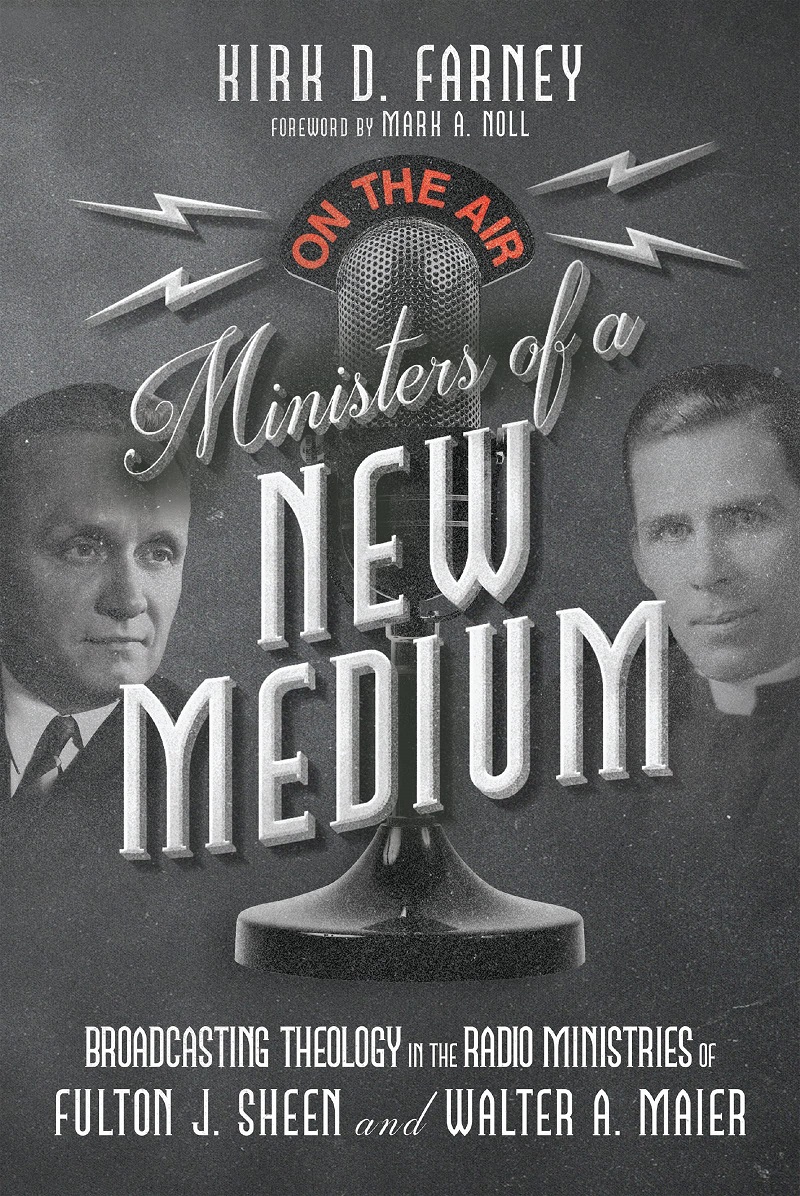
Ministers of a New Medium: Broadcasting Theology in the Radio Ministries of Fulton J. Sheen nd Walter A Maier by Kirk D. Farney reads in part as a biography, in part as a love letter to radio broadcasting, and finally as a deep look at the impact of broadcasted theology in the rising popularity and height of radio.
Before Farney dives into the radio ministers themselves, he briefly draws out the history and surging popularity of radio. He notes the penetration of radio into American homes and the way it was essentially set up to be a purveyor of truths to the masses. Broadcasters were seeking religious programing and as radio continued to soar in popularity, they became more specific about that which they were seeking. Enter Sheen and Maier.
Fulton J. Sheen was a Catholic priest and Walter A. Maier was a pastor of the Lutheran Church – Missouri Synod. Though they came from different theological backgrounds, their focus on bringing Christianity to the masses through radio was shared. Farney first gives deep background for each of the radio ministers. Then, he draws out extensively the content and tone of their messages. For Maier, for example, there’s some discussion of continuity and shifting tone during World War II as he integrated more patriotic themes into his prayers and messaging (237ff). But Maier also did not shield the United States from criticism, drawing parallels between the Nazi treatment of the Jews and the United States’ towards Native and African Americans (239). Sheen bemoaned the state of universities and the alleged elitism of the intelligentsia (158). One could see easily how messages like these could resonate broadly.
I would have liked to have more critical interaction with the material presented. The strength of Farney’s work is in the lengthy, detailed presentation of the beliefs of the radio ministers. There is no shortage of anecdotes, quotes, and specificity related to the messages Sheen and Maier conveyed to the masses. But there is very little by way of analysis. It’s a kind of “just the facts” approach that left me longing for some analysis. That said, it’s clear that analysis is not the focus of the work. Instead, Farney is focused upon cluing readers into the broad messages and background of these two radio giants.
Ministers of a New Medium is a fascinating read, cluing readers into a somewhat forgotten era of broadly popular evangelism. Recommended.
All Links to Amazon are Affiliates links
Links
Be sure to check out the page for this site on Facebook and Twitter for discussion of posts, links to other pages of interest, random talk about theology/philosophy/apologetics/movies and more!
Book Reviews– There are plenty more book reviews to read! Read like crazy! (Scroll down for more, and click at bottom for even more!)
SDG.
——
The preceding post is the property of J.W. Wartick (apart from quotations, which are the property of their respective owners, and works of art as credited; images are often freely available to the public and J.W. Wartick makes no claims of owning rights to the images unless he makes that explicit) and should not be reproduced in part or in whole without the expressed consent of the author. All content on this site is the property of J.W. Wartick and is made available for individual and personal usage. If you cite from these documents, whether for personal or professional purposes, please give appropriate citation with both the name of the author (J.W. Wartick) and a link to the original URL. If you’d like to repost a post, you may do so, provided you show less than half of the original post on your own site and link to the original post for the rest. You must also appropriately cite the post as noted above. This blog is protected by Creative Commons licensing. By viewing any part of this site, you are agreeing to this usage policy.
Book Review: “The Religion of American Greatness” by Paul D. Miller

Paul D. Miller’s The Religion of American Greatness is a conservative pushback against Christian Nationalism. Miller is a professor at Georgetown, was on staff for the National Security Council, served in the Army, and has background in a number of related topics. He’s written for The Gospel Coalition, The Washington Post, and others.
Miller’s perspective is valuable because he’s a sympathetic reader. He clearly understands and has read the material related to Christian nationalism, but as a conservative he doesn’t just remain unconvinced, but rather clearly believes that Christian nationalism is fatally flawed on a number of levels.
Chapters in the book explore cases for and against Christian nationalism, look into the Bible and nationalism, and even explore more current events like the Trump phenomenon. Miller’s views on things like identity politics reflect his more conservative starting point, which may make him more sympathetic to readers already starting on the right end of the political spectrum. Yet even for readers of a more liberal bent, this book serves up a number of excellent analyses and insights into Christian nationalism that will provide them with discussion points that may resonate with those with whom they disagree.
There are numerous excellent insights found throughout the book. For example, Miller notes repeatedly that one issue with nationalism is that it tends to define nation states by shared cultural heritage, but this does not reflect the actual composition of nations that exist. That means that Christian nationalism must either advocate for a kind of voluntary or force dividing of people along preconceived cultural lineages or modify its proposals related to nationalism (see, for example, page 33ff). Some readers may wish Miller would drill down into that argument further–after all, the Christian nationalist definition of nations seems to almost demand a kind of ethnocentric division of humanity and, combining that with its belief that Christian culture would be some kind of inherent feature of some nations, would inevitably yield ethnic hierarchy–but Miller’s argument is more focused than that, and, as noted above, is directed in such a way as to convince some who might not listen to those arguments from implication. Miller does, however, note many of the difficulties inherent in such definitions, such as the existence of people who cannot be placed neatly within any of the broad cultural categories nationalists use. Of course, on this latter point, one again may wish for some kind of note that nationalists then almost have to be forced to a kind of kin-ism, in which only people from certain ethno-cultural groups should interact or, at the least, have children together. But what Miller does is place the arguments of nationalists on the table, where the implications can be drawn out. He nails them down with words from their own writings, and notes the problems even from within their own perspectives. Miller’s analysis thus avoids the head on [and, in my opinion, accurate] accusations of racism and related problems that may drive off some readers while still showing the implications are there.
Another excellent section is Miller’s chapter on the Bible and nationalism. Here, for example, he analyzes the claims of nationalists related to the nation of Israel, often seen as a kind of model for what Christian nationalism ought to be. The Bible itself vitiates against Christian nationalism, for it undercuts the very definitions nationalists attempt to use in order to construct their perspectives. Israel, the Bible teaches us, was a mixed multitude from the time it emerged from Egypt (121). This directly contradicts nationalist tendencies to demand shared cultural background for the formation of nation states and identity. Going on, Israel intermingled languages (Hebrew and Aramaic, among others), mixed familial bonds, and more. The thing that set it apart was merely its relationship to its God; not any kind of shared cultural background (121-122). Insights like this can be found throughout the chapter, and, indeed, the book.
The Religion of American Greatness is a needed response to Nationalism from a background that at least some people within that movement will listen to. It’s the kind of book well-worth reading for people of any background, and certainly could be recommended or bought and given to people who are interested in the topic. I recommend those interested in the topic have a copy on their shelf for reference or lending whenever possible.
All Links to Amazon are Affiliates links
Links
Be sure to check out the page for this site on Facebook and Twitter for discussion of posts, links to other pages of interest, random talk about theology/philosophy/apologetics/movies and more!
Book Reviews– There are plenty more book reviews to read! Read like crazy! (Scroll down for more, and click at bottom for even more!)
SDG.
——
The preceding post is the property of J.W. Wartick (apart from quotations, which are the property of their respective owners, and works of art as credited; images are often freely available to the public and J.W. Wartick makes no claims of owning rights to the images unless he makes that explicit) and should not be reproduced in part or in whole without the expressed consent of the author. All content on this site is the property of J.W. Wartick and is made available for individual and personal usage. If you cite from these documents, whether for personal or professional purposes, please give appropriate citation with both the name of the author (J.W. Wartick) and a link to the original URL. If you’d like to repost a post, you may do so, provided you show less than half of the original post on your own site and link to the original post for the rest. You must also appropriately cite the post as noted above. This blog is protected by Creative Commons licensing. By viewing any part of this site, you are agreeing to this usage policy.
Book Review: “Ancient Christian Texts- Cyril of Alexandria Commentaries on Romans, 1-2 Corinthians, and Hebrews”
Learning from the earliest theologians in the church is something I think every Christian ought to do. InterVarsity Press’s excellent “Ancient Christian Texts” series is one I’ve explored occasionally, and I was excited to see Commentaries on Romans, 1-2 Corinthians, and Hebrews from Cyril of Alexandria pop up for review. Here, fragments of Cyril’s commentaries have been put together sequentially for readers to browse and learn from.
A general introduction and an introduction to this specific work help set the stage. Readers won’t find a simple verse-by-verse commentary here, but rather a pieced together group of comments from various fragments of Cyril of Alexandria. Though this may make it sound like there’s little of value here, the opposite is in fact the case. Reading ancient Christian commentary on scripture is often enlightening for a number of reasons, and Cyril’s comments are no different.
One of the best reasons to read commentaries like this is to find the twofold truth that ancient Christians often were discussing the same questions we have today and also often had their own questions that aren’t as wrapped up in today’s discourse. The latter is especially interesting to me, and examples of this abound throughout this work. One example is found in the discussion of angels and Hebrews 1:4. Here, Cyril only briefly addresses the question of angels before diving in to an argument that the Arians are mistaken about God the Son being “originate” due to their reading of this verse. The latter still has relevance to this day, but Cyril’s brief comment about angels being like servants was striking to me as well. Little insights like this come up throughout the book, even in the scattered fragments of comments that one finds strewn across the books in view.
Longer comments are found as well, with some lengthy discourse occurring–including in Hebrews. Reading what an ancient Christian commentator had to say about this book can also help readers highlight aspects of the text they may not have noticed before. Again, an example may help–in Romans 14:20-22 Cyril is quick to note that we should refrain from some things that are permissible for the sake of others but even more for ourselves, because permissible things could make us fleshly in luxurious passions. A kind of ascetic background looms here, but the broader point of being wary of luxurious excess is a good point to be made. Small comments like this can be found all over the book.
Commentaries on Romans, 1-2 Corinthians, and Hebrews is another excellent entry in the Ancient Christian Texts series. Recommended highly for readers interested in learning about ancient Christian commentary on Scripture.
All Links to Amazon are Affiliates links
Links
Be sure to check out the page for this site on Facebook and Twitter for discussion of posts, links to other pages of interest, random talk about theology/philosophy/apologetics/movies and more!
Book Reviews– There are plenty more book reviews to read! Read like crazy! (Scroll down for more, and click at bottom for even more!)
SDG.
——
The preceding post is the property of J.W. Wartick (apart from quotations, which are the property of their respective owners, and works of art as credited; images are often freely available to the public and J.W. Wartick makes no claims of owning rights to the images unless he makes that explicit) and should not be reproduced in part or in whole without the expressed consent of the author. All content on this site is the property of J.W. Wartick and is made available for individual and personal usage. If you cite from these documents, whether for personal or professional purposes, please give appropriate citation with both the name of the author (J.W. Wartick) and a link to the original URL. If you’d like to repost a post, you may do so, provided you show less than half of the original post on your own site and link to the original post for the rest. You must also appropriately cite the post as noted above. This blog is protected by Creative Commons licensing. By viewing any part of this site, you are agreeing to this usage policy.
The Shroud of Turin: An Apologetics Sinkhole?

I have noticed an increasing amount of interest in some apologetics circles about the Shroud of Turin. When I was in graduate school, there was a group of people studying apologetics I deemed “The Shroud Crowd” due to their especial interest in the topic. Increasingly, I have seen articles getting shared about the supposed authenticity of the Shroud of Turin. For those unfamiliar, the Shroud of Turin [wiki link] is alleged to be the burial shroud in which Jesus was wrapped or covered after the crucifixion. Yes, the actual thing. One could see why this would be of great apologetic interest if it could be shown to be genuine.
I’ve found is that apologetic arguments in favor of the authenticity of the Shroud often fall victim to some of the issues I’ve found in apologetics more broadly. One of these is the tendency to make major claims instead of modest ones. Apologists tend toward maximal conclusions when minimal ones might be easier to establish based upon argument. But because maximal conclusions are more exciting and easily seen as relevant, apologists tend to focus on those rather than more minimalistic arguments. For the specific scenario of the Shroud, I have seen multiple videos of apologists arguing for its authenticity explicitly stating that “It is the true burial Shroud of Christ” without any kind of hedging or contextualizing of that claim. Such a bold claim needs a massive amount of evidential support to carry the day. A more modest claim regarding the Shroud might be more defensible[1]. By claiming not only that this is a burial shroud of someone in the first century, or someone who was crucified, or some other more modest claim, the apologist is taking on the burden of proof a number of degrees of certainty higher. After all, supposing the Shroud is from the first century and is from Palestine and is an actual burial shroud of someone who was crucified. None of that yet makes it the burial shroud or cloth of Jesus Christ!
Now, the apologists arguing in favor of that latter claim would likely counter by saying the miraculous nature of the image itself and how it was formed point to it being the shroud of Christ, but my point is that that claim itself needs a much more significant defense than a mere claim that it is a burial shroud of a crucified person. But of course that more modest claim doesn’t have the theological and apologetic import that making it the shroud of Christ would provide. It would be much less interesting if it were just an anonymous burial covering of a crucified man from the first century[2]. And for the apologist, the apologetic value of the shroud would be greatly undermined if it weren’t directly pointing at Christ.[3]
Another common mistake apologists make is to throw every possible argument at a question instead of focusing on the best arguments. Videos, lectures, and presentations I’ve watched about the Shroud of Turin are generally excellent examples of this very problem. Rather than focusing upon a select few extremely powerful evidences–or at least developing one or two arguments more fully–the apologist throws every possibly related argument in favor of their position out there. The seeming conclusion is then sometimes that this constitutes a great deal of evidence for the apologist’s claim. But simply making arguments is not the same as finding evidence. Conflating argument and evidence is a major problem in apologetics generally. Additionally, a bunch of speculative phrases or hypothetical scenarios thrown out alongside a few pieces of actually compelling arguments doesn’t bolster the strength of the latter, but can rather distract or even undermine them. Examples of this very situation regarding arguments related to the Shroud of Turin will be a primary focus of my future post(s) on this topic.
Apologists arguing for the authenticity of the Shroud also tend to make a number of seemingly outlandish claims related to it. For example, more than once I’ve seen arguments made that the Shroud’s image could only have been made by radiation coming from a body being miraculously resuscitated. While it is perfectly acceptable to hold such a belief, it is to me apparent that we can’t do much to evaluate such a claim. After all, how are we even supposed to begin testing it? We have no way to resuscitate a dead body, and no way to induce a miracle, so a claim that that is exactly the one and only possible explanation is either unable to be grounded in reality or may only be held as a pillar of faith. That’s fine, but claims like this are being presented at times as if they are themselves evidence!
So, where are we going from here? My plan is to look at a few apologetics videos related to the Shroud of Turin and analyze the arguments therein. I’ll be using the video(s) to show how apologists are arguing in favor of its authenticity and then offering my own counters to and problems found with several of these arguments.
I am by no means an expert in several of the related topics. I take some comfort in the fact that, so far as I have been able to determine, those apologists making arguments in favor of the Shroud are also people without expertise in any related field (eg. radiometric dating). That said, I want to make it clear that I’m not claiming any special authority in this area. I’m just an interested observer who believes there are severe problems in many of the most popular arguments in favor of the authenticity of the Shroud of Turin. I also want to be clear that I am a faithful Christian. It would certainly be wonderful if we could have such a wonderful piece of evidence for the resurrection, but I do not want to have people staking their belief in Christianity on what I believe are poorly constructed arguments.
[1] I say “might be more defensible” because while it would be easier to defend a more modest claim, I’m not convinced the endeavor would be worthwhile, nor am I convinced that a more modest claim could be carried on the evidence.
[2] Though, to be fair, any extant burial shroud from the first century of anyone, let alone someone who was crucified, would be of major archaeological interest, I would assume.
[3] And again, in this case, a more modest claim would still have apologetic value. After all, such an extant shroud could tell us a lot about how crucifixion occurred, the way it impacted the body, etc., etc., all of which would have apologetic import to some degree.
Links
What’s Wrong with Apologetics? – I raise a number of pitfalls apologists ought to avoid.
Be sure to check out the page for this site on Facebook and Twitter for discussion of posts, links to other pages of interest, random talk about theology/philosophy/apologetics/movies and more!
SDG.
——
The preceding post is the property of J.W. Wartick (apart from quotations, which are the property of their respective owners, and works of art as credited; images are often freely available to the public and J.W. Wartick makes no claims of owning rights to the images unless he makes that explicit) and should not be reproduced in part or in whole without the expressed consent of the author. All content on this site is the property of J.W. Wartick and is made available for individual and personal usage. If you cite from these documents, whether for personal or professional purposes, please give appropriate citation with both the name of the author (J.W. Wartick) and a link to the original URL. If you’d like to repost a post, you may do so, provided you show less than half of the original post on your own site and link to the original post for the rest. You must also appropriately cite the post as noted above. This blog is protected by Creative Commons licensing. By viewing any part of this site, you are agreeing to this usage policy.
Book Review: “Flame of Love: A Theology of the Holy Spirit” by Clark H. Hinnock (Second Edition)
Flame of Love: A Theology of the Holy Spirit is a deep look at pneumatology- the theology of the Spirit.
Pinnock starts off noting the importance of the Spirit as a Person of the Trinity as well as the oft-neglected study of the same. Then, over the course of seven chapters, he outlines theological questions and answers related to the spirit: the Trinity, Spirit in Creation, Spirit and Christology, Spirit and Church, Spirit and Union, Spirit and Universality, and Spirit and Truth.
These chapters provide broad outlines of the titular topics, while also challenging Christians to think more deeply about them. For example, in the chapter about the Spirit and Universality, Pinnock presses the point that the Spirit is truly work in all things. He draws from C.S. Lewis’s depiction of Aslan in The Last Battle to note that Christian thinkers have not inconsistently pointed out that God can even work through and in other religions. And how else to consider this than to think of the activity of the Spirit in drawing all towards God? Elsewhere, Pinnock considers the question of the filioque clause in the Nicene Creed, arguing that it seems to him to subordinate the Spirit to the Son. He also touches on a number of other potentially controversial topics. At more than one point, Pinnock notes that he considered using feminine pronouns for the Spirit due to the use of feminine imagery as well as feminine words for the Spirit in Scripture, but opted out. His reasoning here seems somewhat confusing, and largely amounts to that he wasn’t sure evangelicals would be ready for that yet (see esp. page 277).
The second edition features a foreword and commentary by Daniel Castelo. I found these additional notes to be helpful, and enjoyed his summaries at the end of each chapter. I was actually a bit disappointed that the frequency of notes went down a bit towards the end of the book. Whenever they appeared, Castelo’s comments were insightful and helped elucidate the text in some way.
Flame of Love is a fascinating read that explores issues in which Christians, unfortunately, are not often well-versed. Pinnock not only brings the focus to the Holy Spirit, but also challenges some potential preconceived notions about the same. Readers, whether they agree or disagree, will be challenged by his work.
All Links to Amazon are Affiliates links
Links
Be sure to check out the page for this site on Facebook and Twitter for discussion of posts, links to other pages of interest, random talk about theology/philosophy/apologetics/movies and more!
Book Reviews– There are plenty more book reviews to read! Read like crazy! (Scroll down for more, and click at bottom for even more!)
SDG.
——
The preceding post is the property of J.W. Wartick (apart from quotations, which are the property of their respective owners, and works of art as credited; images are often freely available to the public and J.W. Wartick makes no claims of owning rights to the images unless he makes that explicit) and should not be reproduced in part or in whole without the expressed consent of the author. All content on this site is the property of J.W. Wartick and is made available for individual and personal usage. If you cite from these documents, whether for personal or professional purposes, please give appropriate citation with both the name of the author (J.W. Wartick) and a link to the original URL. If you’d like to repost a post, you may do so, provided you show less than half of the original post on your own site and link to the original post for the rest. You must also appropriately cite the post as noted above. This blog is protected by Creative Commons licensing. By viewing any part of this site, you are agreeing to this usage policy.
Book Review: “Gender Identity & Faith” by Mark A. Yarhouse and Julia A. Sadusky

Gender Identity & Faith: Clinical Postures, Tools, and Case Studies for Client-Centered Care is one of those books that tells you exactly what it is with the title and subtitle. Or does it? As a non-professional, I didn’t realize exactly how focused on the subtitle the book would be. Nevertheless, I found quite a bit of interest as I read the book.
Mark A. Yarhouse and Juila A. Sadusky explore questions of gender identity in a clinical setting, offering specific, concrete advice and even exact examples for how to go about having these discussions. Thus, there are specific examples of people who came in seeking therapy for a variety of gender identity related issues, and the authors share these examples from a wide array of backgrounds. Some were supported by family, others were not. Some had favored pronouns, others hadn’t contemplated that. The variety of specific examples show just how complex these topics are, going far beyond the yes-or-no that is often offered in faith settings.
The authors also offer concrete advice for therapists and others, along with worksheets that can be used to discuss topics of gender identity. I am not trained in this field, so I can’t comment much on how useful they are, but I did find them of interest as a lay person in the setting.
Some reviews of the book have attacked it for not taking an entirely negative stance towards anyone who questions gender identity. Such attacks are short-sighted and scientifically uninformed. While Yarhouse and Sadusky don’t really dive into any of this, the fact is that strict binaries of gender identity (eg. boys wear blue/girls wear pink) are obviously constructed by humans rather than being objective aspects of reality. Additionally, the existence of intersex persons, whose numbers are far higher than most people know, is a direct challenge for such binaries. So far as this reader could tell (without any relevant degree–only an interest in the topic), the authors take a neutral stance regarding the questions, seeking instead to bring help and healing to people wherever they are on their journey.
Gender Identity and Faith is a useful book for Christians (and non-Christians who want to know more about faith and gender identity) wishing to discuss gender identity in clinical settings. That’s the book’s purpose. Readers who aren’t involved in that field–such as myself–will still find it of interest to see how these topics can be approached.
Disclaimer: I was provided with a copy of the book for review by the publisher. I was not required to give any specific kind of feedback whatsoever.
All Links to Amazon are Affiliates links
Links
Be sure to check out the page for this site on Facebook and Twitter for discussion of posts, links to other pages of interest, random talk about theology/philosophy/apologetics/movies and more!
Book Reviews– There are plenty more book reviews to read! Read like crazy! (Scroll down for more, and click at bottom for even more!)
SDG.
——
The preceding post is the property of J.W. Wartick (apart from quotations, which are the property of their respective owners, and works of art as credited; images are often freely available to the public and J.W. Wartick makes no claims of owning rights to the images unless he makes that explicit) and should not be reproduced in part or in whole without the expressed consent of the author. All content on this site is the property of J.W. Wartick and is made available for individual and personal usage. If you cite from these documents, whether for personal or professional purposes, please give appropriate citation with both the name of the author (J.W. Wartick) and a link to the original URL. If you’d like to repost a post, you may do so, provided you show less than half of the original post on your own site and link to the original post for the rest. You must also appropriately cite the post as noted above. This blog is protected by Creative Commons licensing. By viewing any part of this site, you are agreeing to this usage policy.
Book Review: “The Medieval Mind of C.S. Lewis” by Jason M. Baxter
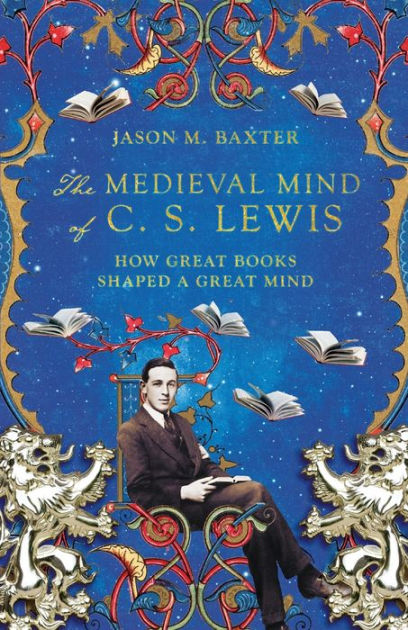
C.S. Lewis was a man deeply influenced by myth. In The Medieval Mind of C.S. Lewis, Jason M. Baxter shows how Medieval thought and “great books” shaped C.S. Lewis’s mind and thought.
The book’s short length (165 pages of text) belies the deep insights found throughout. Baxter is clearly well-versed with medieval thought, and he brings this knowledge to bear on the life, thought, and works of C.S. Lewis. Whence some of Lewis’s insights about mysticism, death, and apologetics? The answer is medieval thought. Baxter traces medieval influence on C.S. Lewis’s life, but also highlights how influential this same thought was on his works, both theological, apologetical, and more. It is beyond clear, having read the book, that Lewis was deeply committed to medieval thinking, and used that thought to critique his modern world.
I especially enjoyed how Baxter made the insights in each chapter feel somewhat applicable to today. Rather than just outlining a one-to-one correspondence of Lewis with Medieval thought, he also highlights how that thought could have impact on our own lives. For example, in the chapter on prayer, much discussion is spent on the numinous experience, ultimately bringing it home with the analogy of Lucy from Narnia as an example of how to pray. Insights like this can be found throughout the book.
The Medieval Mind of C.S. Lewis is useful both to those interested in exploring the background to Lewis’s thought and to those who wish to learn more about Medieval Christianity and thought. It’s an intriguing look at deep topics.
Disclaimer: I was provided with a copy of the book for review by the publisher. I was not required to give any specific kind of feedback whatsoever.
All Links to Amazon are Affiliates links
Links
Be sure to check out the page for this site on Facebook and Twitter for discussion of posts, links to other pages of interest, random talk about theology/philosophy/apologetics/movies and more!
Book Reviews– There are plenty more book reviews to read! Read like crazy! (Scroll down for more, and click at bottom for even more!)
SDG.
——
The preceding post is the property of J.W. Wartick (apart from quotations, which are the property of their respective owners, and works of art as credited; images are often freely available to the public and J.W. Wartick makes no claims of owning rights to the images unless he makes that explicit) and should not be reproduced in part or in whole without the expressed consent of the author. All content on this site is the property of J.W. Wartick and is made available for individual and personal usage. If you cite from these documents, whether for personal or professional purposes, please give appropriate citation with both the name of the author (J.W. Wartick) and a link to the original URL. If you’d like to repost a post, you may do so, provided you show less than half of the original post on your own site and link to the original post for the rest. You must also appropriately cite the post as noted above. This blog is protected by Creative Commons licensing. By viewing any part of this site, you are agreeing to this usage policy.
Book Review: “Faithful Anti-Racism” by Christina Barland Edmondson and Chad Brennan

Anti-Racism is a hot-button topic right now. Too many have a knee-jerk response to it instead of actually learning about it. Christina Barland Edmondson & Chad Brennan’s Faithful Anti-Racism introduces Christians to anti-racism and how to apply it in their lives.
After the introduction, 11 chapters introduce Christians to a number of topics related to anti-racism. These call on faithful Christians to apply the Bible, stand for justice, understand our past, and more. Several chapters directly address topics that frequently yield seemingly fruitless debates on social media. The authors do a great job delving into such divisive topics in a winsome way that focuses on bringing Christian living to the forefront.
The book consistently brings applicable knowledge to the table. There are even chapters looking at how Christians can measure progress and help change society. Regarding the former, for example, the authors argue that we have to move past simplistic numbers and into real change in order to measure progress. They offer a number of ways of doing so that will challenge individuals and organizations.
Every chapter has discussion questions and a prayer.
Faithful Anti-Racism is an excellent read for individuals or groups looking to actively oppose racism in society. Recommended.
Disclaimer: I was provided with a copy of the book for review by the publisher. I was not required to give any specific kind of feedback whatsoever.
All Links to Amazon are Affiliates links
Links
Be sure to check out the page for this site on Facebook and Twitter for discussion of posts, links to other pages of interest, random talk about theology/philosophy/apologetics/movies and more!
Book Reviews– There are plenty more book reviews to read! Read like crazy! (Scroll down for more, and click at bottom for even more!)
SDG.
——
The preceding post is the property of J.W. Wartick (apart from quotations, which are the property of their respective owners, and works of art as credited; images are often freely available to the public and J.W. Wartick makes no claims of owning rights to the images unless he makes that explicit) and should not be reproduced in part or in whole without the expressed consent of the author. All content on this site is the property of J.W. Wartick and is made available for individual and personal usage. If you cite from these documents, whether for personal or professional purposes, please give appropriate citation with both the name of the author (J.W. Wartick) and a link to the original URL. If you’d like to repost a post, you may do so, provided you show less than half of the original post on your own site and link to the original post for the rest. You must also appropriately cite the post as noted above. This blog is protected by Creative Commons licensing. By viewing any part of this site, you are agreeing to this usage policy.

 J.W. Wartick - Reconstructing Faith