christian
Book Review: “Reformation Commentary on Scripture: Matthew” Edited by Jason K. Lee and William M. Marsh

The Reformation Commentary on Scripture series continues to deliver excellent insight into how the Reformers read and talked about Scripture. New Testament Volume I: Matthew is no different in that regard.
The editors have again selected a huge swathe of Reformers from whom to draw commentary. The major names are all there, along with many Reformers ranging from less well-known to those that only dedicated students of the Reformation will know about. The bibliographical sketches of the Reformers included in the series so far alone makes for fascinating reading, as one can browse through hundreds of mini-biographies and learn more about the Reformation and links between Reformers than one can in many other books.
The commentary itself is arranged verse-by-verse, allowing for commentary on Matthew section-by-section. Each pause in the text allows for a number of Reformers to be cited, and the editors do an excellent job balancing selection of hot topics of today with topics the Reformers themselves debated heatedly over. Sometimes these overlap, but some of the questions included may be surprising to modern readers. For example, regarding the slaughter of the innocents (Matthew 2:16-18), commentary includes Joseph Hall providing a kind of poetic condemnation of Herod’s cruelty; John Calvin comparing it to the slaughter of the Benjaminites in Jeremiah, Juan de Maldonado stating that the Babylonian Captivity was a kind of slaughter, and John Lightfoot reflecting more deeply on the Jeremiah quote.
Time and again, on verse after verse, the editors bring many different perspectives–sometimes in conflict–to the fore, giving readers a rich background of Reformation commentary as well as a deeper understanding of the texts themselves. Topics like baptism (ex: Matthew 3) receive notable commentary from major Reformers (Luther, Calvin, etc.) while also bringing in lesser-known voices to weigh in on more specific topics (eg. Phillip Melanchthon).
The book serves equally well if someone is trying to just open up to study a specific passage or if one is interested in reading front-to-back to read alongside the Reformers. It’s a marvelous commentary if people have an even passing interest in knowing about how people during the Reformation period read Scripture.
Matthew is another excellent entry in a fabulous series of commentaries. Those especially interested in Reformation thinking and debates should consider it a must-buy, but the book will serve very well as a standalone commentary as well. The broadness of views presented and enormous number of topics touched upon make the book incredibly valuable. Recommended.
Disclaimer: I was provided with a copy of the book for review by the publisher. I was not required to give any specific kind of feedback whatsoever.
All Links to Amazon are Affiliates links
Links
Be sure to check out the page for this site on Facebook and Twitter for discussion of posts, links to other pages of interest, random talk about theology/philosophy/apologetics/movies and more!
Book Reviews– There are plenty more book reviews to read! Read like crazy! (Scroll down for more, and click at bottom for even more!)
SDG.
——
The preceding post is the property of J.W. Wartick (apart from quotations, which are the property of their respective owners, and works of art as credited; images are often freely available to the public and J.W. Wartick makes no claims of owning rights to the images unless he makes that explicit) and should not be reproduced in part or in whole without the expressed consent of the author. All content on this site is the property of J.W. Wartick and is made available for individual and personal usage. If you cite from these documents, whether for personal or professional purposes, please give appropriate citation with both the name of the author (J.W. Wartick) and a link to the original URL. If you’d like to repost a post, you may do so, provided you show less than half of the original post on your own site and link to the original post for the rest. You must also appropriately cite the post as noted above. This blog is protected by Creative Commons licensing. By viewing any part of this site, you are agreeing to this usage policy.
Book Review: “The Samaritan Woman’s Story: Reconsidering John 4 After #ChurchToo” by Caryn A. Reeder

The Samaritan Woman’s Story by Caryn A. Reeder engages the story of the Samaritan woman in John 4 both in interpretive history and in light of modern questions.
The book is split into two parts. The first part surveys the history of interpretation of this passage, all the way up to the modern day. The second part puts the story in context, looking at the meaning of the text and the people involved in their own day.
The history of interpretation of John 4 is fascinating, and Reeder offers numerous highlights throughout these early chapters. Several of the earliest readers of the Samaritan woman saw it straightforwardly as her being in some kind of sexual sin or as a prostitute, and engaged the story on a level that operated with those assumptions. Often, these interpreters also carried misogynist baggage from their cultural context. Intriguingly, one exception was Origen, whose reading completely avoids casting the Samaritan woman in a poor light not because he was enlightened on women’s issues but because he held to an allegorical reading of the story (34-40). In each chapter, Reeder surveys specific interpreters, and boxes in the text highlight specific contextual or historical points of interest related to the main text. After looking at the early church, Reeder advances through John Calvin, Dwight Moody, and others into the present day. Here, she draws attention to the #ChurchToo movement and its highlighting of the abuses done to women within the church. The interpreters and interpretations she focuses on in this latter section are still diverse, and highlight a number of ways people within the church have re-centered the story to discuss modern problems.
The second part provides readers with a number of tools to look at the text, whether it’s the background of what women’s lives were like in Jesus’s time or how marriage worked in the ancient world. Reeder finishes with a reimagination of the story that puts her forward as a model of Christian discipleship, among other things. The reading she provides is in context and grounded in historical reality and the text.
The book has discussion questions at the end and could be used for a group study.
The Samaritan Woman’s Story is a timely text that will engage readers with John 4 in highly relevant ways. But it’s more than that, it also provides a broad look at a much-interpreted and much-misunderstood text. I highly recommend it.
Disclaimer: I was provided with a copy of the book for review by the publisher. I was not required to give any specific kind of feedback whatsoever.
All Links to Amazon are Affiliates links
Links
Be sure to check out the page for this site on Facebook and Twitter for discussion of posts, links to other pages of interest, random talk about theology/philosophy/apologetics/movies and more!
Book Reviews– There are plenty more book reviews to read! Read like crazy! (Scroll down for more, and click at bottom for even more!)
SDG.
——
The preceding post is the property of J.W. Wartick (apart from quotations, which are the property of their respective owners, and works of art as credited; images are often freely available to the public and J.W. Wartick makes no claims of owning rights to the images unless he makes that explicit) and should not be reproduced in part or in whole without the expressed consent of the author. All content on this site is the property of J.W. Wartick and is made available for individual and personal usage. If you cite from these documents, whether for personal or professional purposes, please give appropriate citation with both the name of the author (J.W. Wartick) and a link to the original URL. If you’d like to repost a post, you may do so, provided you show less than half of the original post on your own site and link to the original post for the rest. You must also appropriately cite the post as noted above. This blog is protected by Creative Commons licensing. By viewing any part of this site, you are agreeing to this usage policy.
“The Shape of the Past” by John Warwick Montgomery- A Christian Historiography?
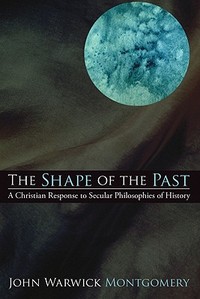
John Warwick Montgomery is a Christian apologist who is perhaps best-known for his defense of the method of evidentialism and attacks on presuppositionalism. The Shape of the Past is a work that outlines a Christian historiography–a Christian way of reporting history. I first read it maybe a decade ago or so and remembered it being fairly impactful to my own development. I read it again recently and was struck by how my perceptions of it changed. While I still believe it to be useful book in some ways, I also found difficulties in others. Montgomery’s central theses developing a supposed Christian philosophy of history are problematic.
The first four chapters of the book focus on definitions of history and historiography, an intriguing look at history as time travel, classical conceptions of historiography, and modern histography [modern at the time- 1975]. These present a survey of some major approaches to history and historiography, while highlighting a few problems Montgomery identifies without what he’s going to build up as a central development of historical writing and research. For example, early on Montgomry notes that historians at some point must make decisions about motivations, acts, etc. such that they are making decisions about what is “humanly possible” or probable. But whither the criteria for “humanly possible”? Ultimately, he argues, “the historian’s conception of human nature stems from his general philosophy of life…” (14). Historians, on this problem, must have a sound philosophy of life in order to make sound judgments about historical events.
Montgomery here is clearly on to something, but he fails to take seriously enough his own noted problem. If, as he says, historians are dependent upon their philosophy and background beliefs in order to make determinations about history, how is objectivity in history possible? While it can largely be agreed that historical events did happen, the exacting details of how they happened are much harder to pin down. And if an historian states that, say, a specific soldier on the battlefield at Gettysburg turned right when he in fact turned left, what does this mean for the “objectivity” of history and the truth thereof? Does this undercut the rest of the historian’s narrative? How much of it is discredited by “minor” details being wrong? And if historical evaluation depends so much upon one’s philosophy of life, how does one even begin to judge said evaluations? Most of these questions don’t get answered (and some aren’t even asked) in the book.
To be fair, Montgomery isn’t trying to answer questions he didn’t ask. I bring them up because they seem a logical extension of the problems he himself points out with history, and it would be interesting to see his answers to them. He does, however, turn to objectivity in history. How are Christians different in this regard?
“The Christian Answer” is the title of Chapter Five, which purports to offer a Christian solution to this difficulty. To get there, Montgomery insists that Christianity can provide the valid interpretation of history because its truth is “‘accessible to science’ and rests upon an objective foundation”; namely, he argues that the Christian worldview rests upon “the objective, historical truth of the resurrection of Jesus from the dead” (138). However, to get to the point that resurrection is an “objective, historical truth,” he uses a very brief evidentialist style argument: that the Gospels “are found to be trustworthy historical documents”; that they report Jesus “exercis[ing] divine prerogatives”; that they describe Christ’s bodily resurrection “in minute detail”*; that the resurrection “cannot be discounted on a priori grounds” [emphasis removed]; that Christ spoke the truth regarding the OT and confirms the NT; and that “It follows from the preceding that all Biblical assertions bearing on philosophy of history are to be regarded as revealed truth” (138-139).
Examining each of these steps in detail is beyond my scope here. Instead, I want to reflect on the reasoning. The problem at hand is: how do we find objectivity in Christianity to give us a valid interpretation of history? The answer is a purported historical fact. But how do we validly interpret that question of the resurrection? So far as I can tell, Montgomery is insisting that it is an historical fact. But the question he’s seeking to answer is whether Christianity can provide an objective basis for historical interpretation, and then he answers that with an historical interpretation: that the resurrection is objective fact. It’s a circle, and I’m not sure how it is supposed to escape that circle. I don’t see a way out of this circle. Even if one introduced some hidden premises about historical reasoning to get to the historicity of the resurrection, that would undercut his argument that Christianity is the objective arbiter of historical interpretation by introducing some external mechanism for that same evaluation. It seems hopeless to me.[1]
Now, it is possible to simply state that Montgomery’s argument here has failed, but that Christianity is valuable in historiography because it can give an objective (or at least “better” by some measure) way of interpreting history. While that would undermine much of his argument, it would leave one free to delve into the questions of what Christianity brings to the table as an evaluative tool. Montgomery does list several “principles of Christian historical interpretation,” and some of these are indeed valuable. For example, under metaphysical principles, he notes that Christianity gives the possibility to historical intepretation that history is inherently meaningful due to “God’s… activity” (145). This would take some effort to hash out, but it seems a potentially fruitful path to pursue.
Other principles he gives seem almost hopelessly naïve, in my opinion. For example, he argues that “human nature is constant” on Christianity, and so “the Christian historian has the assurance that a common ground exists between himself and the [people] of past ages whom he studies…” (148). So, he lists Louis XVI as one possibility for the Christian historian to be able to “confidently interpret motives” due to this constancy of human nature (ibid). Even conceding that human nature is constant, one would wonder how that alone would make it possible to determine the motives of Louis XVI with such confidence, especially if purely based upon that premise. After all, the vast chasm between my own experience and that of Louis XVI makes even the smallest decisions we have to make entirely different. Because I have made so few decisions that even resemble decisions with which Louis XVI was presented, that should give me at least some caution in drawing out his motivations for specific tasks. Other criteria Montgomery presents are helpful, but some need additional caveats.
Ultimately, The Shape of the Past is a frustratingly tantalizing read. Montgomery’s writing style is winsome and matter-of-fact. He writes in an easy manner about all sorts of scholarly topics. The central theses, however, remain unproven and possibly viciously circular. His criteria for Christian historians are a mixed bag. It’s unclear to this reader that Montgomery truly provides a reason to suppose Christianity is superior to other historiographic methods when it comes to objectivity in history. A specifically Christian historiography might be possible and even desirable, but it will need to be heavily supplemented from here.
*Interestingly, Mark does not do this unless one accepts the longer ending as genuine.
[1] Montgomery does note several potential objections to his view, but none of them hint at the circularity inherent in this reasoning: 1. We need an objective standard for historical evaluation; 2. historical evaluation shows that the resurrection is objectively true; 3. therefore, Christianity can be the objective standard for historical evaluation.
All Links to Amazon are Affiliates links
Links
Be sure to check out the page for this site on Facebook and Twitter for discussion of posts, links to other pages of interest, random talk about theology/philosophy/apologetics/movies and more!
Book Reviews– There are plenty more book reviews to read! Read like crazy! (Scroll down for more, and click at bottom for even more!)
SDG.
——
The preceding post is the property of J.W. Wartick (apart from quotations, which are the property of their respective owners, and works of art as credited; images are often freely available to the public and J.W. Wartick makes no claims of owning rights to the images unless he makes that explicit) and should not be reproduced in part or in whole without the expressed consent of the author. All content on this site is the property of J.W. Wartick and is made available for individual and personal usage. If you cite from these documents, whether for personal or professional purposes, please give appropriate citation with both the name of the author (J.W. Wartick) and a link to the original URL. If you’d like to repost a post, you may do so, provided you show less than half of the original post on your own site and link to the original post for the rest. You must also appropriately cite the post as noted above. This blog is protected by Creative Commons licensing. By viewing any part of this site, you are agreeing to this usage policy.
Book Review: “Enjoying the Old Testament” by Eric A. Seibert
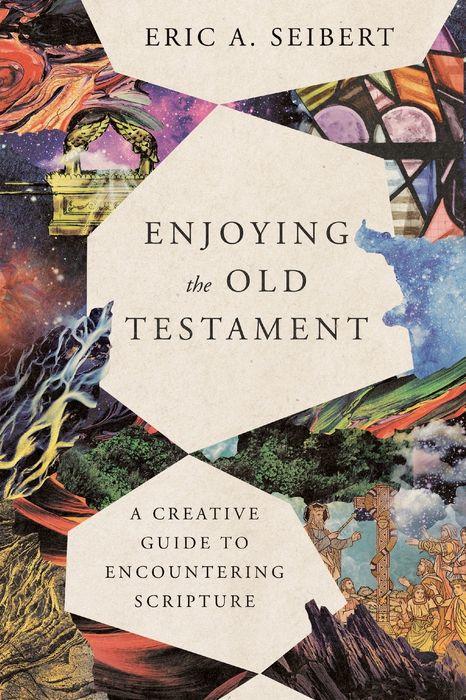
Enjoying the Old Testament by Eric A. Seibert is an invitation to Christians to read and love the Old Testament.
I admit this reader was shocked when I realized the ultimate purpose of the book. When I saw the subtitle: “A Creative Guide to Encountering Scripture,” I assumed the book was some kind of work introducing the OT. It is that… kind of. What the book is really trying to do is encourage Christians who are hesitant about reading the OT to actually do so and even enjoy doing so. I was shocked because I, personally, love the OT and spend as much time as I can therein. However, Seibert’s careful and sometimes cheeky writing drew me in nonetheless as he encouraged fellow Christians to read and understand.
The book is arranged around three parts: Preparing to Read the Neglected Testament; Having Fun with the Old Testament; and Encountering the Old Testament in New Ways. The first part exhorts and even cajoles Christians to read the OT, while helping set expectation and discuss a mindset that might be needed to do so. The second part helps, among other things, highlight how even the “boring” parts can be found meaningful. The third part offers some ways to read the OT that might help readers, both hesitant and not, encounter the OT in new ways.
Enjoying the Old Testament will hopefully accomplish the goal it sets out to do: bring Christians to read and encounter more Scripture. Seibert’s style and chapters will certainly help any reader who is hesitant to understand and draw out the reasons for doing so. The book accomplishes the task set before it.
Disclaimer: I was provided with a copy of the book for review by the publisher. I was not required to give any specific kind of feedback whatsoever.
All Links to Amazon are Affiliates links
Links
Be sure to check out the page for this site on Facebook and Twitter for discussion of posts, links to other pages of interest, random talk about theology/philosophy/apologetics/movies and more!
Book Reviews– There are plenty more book reviews to read! Read like crazy! (Scroll down for more, and click at bottom for even more!)
SDG.
——
The preceding post is the property of J.W. Wartick (apart from quotations, which are the property of their respective owners, and works of art as credited; images are often freely available to the public and J.W. Wartick makes no claims of owning rights to the images unless he makes that explicit) and should not be reproduced in part or in whole without the expressed consent of the author. All content on this site is the property of J.W. Wartick and is made available for individual and personal usage. If you cite from these documents, whether for personal or professional purposes, please give appropriate citation with both the name of the author (J.W. Wartick) and a link to the original URL. If you’d like to repost a post, you may do so, provided you show less than half of the original post on your own site and link to the original post for the rest. You must also appropriately cite the post as noted above. This blog is protected by Creative Commons licensing. By viewing any part of this site, you are agreeing to this usage policy.
Book Review: “Jonathan Edwards and Deification” by James R. Salladin

Jonathan Edwards and Deification deeply dives into Edwards’s theology to discover what he taught about theosis and whether that can be reconciled with the Reformed tradition.
It must be stated from the outset that this is a dense book on a topic that is itself highly complex. Theosis, the doctrine that humans may be undergoing a kind of transformation into the divine, has many streams of thought within Christianity, but is also among the more easily misunderstood and hotly debated (when it comes up) doctrines therein.
Salladin does an admirable job of outlining the way Edwards himself thought and wrote about theosis–sometimes without making it clear he was doing so. A careful analysis of many of Edwards’s works yields a fairly consistent picture that Edwards did hold to a kind of theosis while merging it with Reformed belief. This is a kind of shocking juxtaposition, given the belief of total depravity within Reformed circles. It is difficult to square that with the notion that humans might be becoming divine, in some fashion. Salladin is careful in drawing out the distinctions Edwards himself made, and supplements that with his own analysis of what theosis could mean within that tradition.
I must admit one piece of skepticism about this project, which is my own belief that people like Jonathan Edwards don’t deserve the attention they get. Jonathan Edwards was an enslaver. While no one is perfect, I tend to believe we need to find better heroes and theological interlocutors than people who enslaved others. Unfortunately, due to Edwards’s immense influence on American religion, even outside of Reformed circles, some study of his work at times is, if not necessary, then understandable.
Jonathan Edwards and Deification is a fascinating read on a niche topic. If you are part of a niche that is adjacent to the topic (eg. interested in theosis and Protestantism, for example), it’s a must-read. If not, it may be too esoteric to consider.
Disclaimer: I was provided with a copy of the book for review by the publisher. I was not required to give any specific kind of feedback whatsoever.
All Links to Amazon are Affiliates links
Links
Be sure to check out the page for this site on Facebook and Twitter for discussion of posts, links to other pages of interest, random talk about theology/philosophy/apologetics/movies and more!
Book Reviews– There are plenty more book reviews to read! Read like crazy! (Scroll down for more, and click at bottom for even more!)
SDG.
——
The preceding post is the property of J.W. Wartick (apart from quotations, which are the property of their respective owners, and works of art as credited; images are often freely available to the public and J.W. Wartick makes no claims of owning rights to the images unless he makes that explicit) and should not be reproduced in part or in whole without the expressed consent of the author. All content on this site is the property of J.W. Wartick and is made available for individual and personal usage. If you cite from these documents, whether for personal or professional purposes, please give appropriate citation with both the name of the author (J.W. Wartick) and a link to the original URL. If you’d like to repost a post, you may do so, provided you show less than half of the original post on your own site and link to the original post for the rest. You must also appropriately cite the post as noted above. This blog is protected by Creative Commons licensing. By viewing any part of this site, you are agreeing to this usage policy.
The Christian Apologetics Alliance (CAA) – A Post-Mortem

I want to offer a post-mortem on the Christian Apologetics Alliance (CAA). What I mean isn’t that the CAA has died. The CAA Facebook Group is still alive and kicking. It still has several posts each day, and posts frequently pass the 10 comment threshold, some diving into the 100+. People are still engaged. It doesn’t seem to be driving the traffic it used to, but there’s still plenty of activity. No, what I mean is a post-mortem on the CAA as it could have been. It’s a post-mortem on how the CAA should have been, and as it was, however briefly.*
Imagine a place where Christians around the globe could mingle and discuss the defense of the Christian faith. It’s a place where people share meaningful posts, links, and struggles they’ve had. It’s a group in which people could bring up favorite apologetics arguments and hone their skills. People with a passing interest in the topic could join the group and rub virtual shoulders with published philosophers and skilled Christian debaters. Some time ago (more than a decade, I believe), a group of people got together with the desire to make just such a place. Enthusiastic about apologetics, with bookshelves overflowing with works in the field, these people made a group on Facebook, the “Christian Apologetics Alliance.” It was the first iteration of the group (later, after a catastrophic and, to my knowledge, still unexplained loss of the original group, we all migrated over to the group CAA: Christian Apologetics Alliance) that would unite thousands of members around one topic: Christian apologetics.
The vision I just described is anachronistic, in some ways. Those of us involved didn’t sit down with a specific plan of how we thought CAA would form and grow. But we did share our thoughts, concerns, and interests. From the beginning, we largely agreed (or at least said we agreed) that the Christian Apologetics Alliance would be a place that all Christians could mingle and talk and learn about apologetics.
It was a dream that wouldn’t last. But before the dream was totally shattered, there were a ton of awesome times. We had huge amounts of bloggers sharing blog posts, commenting on those of others’, honing arguments, and more. We inspired each other and new bloggers. Some in the group went on to “go pro,” getting degrees and teaching, earning a career as an apologist. All the while, we had a great community set up. I was hugely involved, especially in the first iteration. I was one of the first 5-10 members of the group and, as I recall, one of the few people involved in bringing the idea to fruition. I became a mod for a while, but stopped when the position became saddled with increasing responsibilities (eg. expectations for how long to be online in the group, etc.).
From almost the beginning, there were pushes in two directions that would lead to the CAA becoming less than it could have been. First, there was a strong push to organize it and enforce more and more strictures on the discussion. This impulse wasn’t entirely misguided: I can’t tell you the number of times debate over the age of the earth popped up. It was a favorite for some members, and the discussions would often devolve into name-calling frustration. The topic was quickly banned, and that and other topics that started to pop up and spark more fire than light on the discussions prompted the impulse to organize. Another part of that impulse, though, was the push to make the group ever more visible and prominent. Visions of conferences, t-shirts, and more abounded. I was excited, but never had the time to fully dive in. CAA chapters formed, and people began meeting in person to talk about apologetics. One epic moment was when I went to a Evangelical Philosophical Society Conference and met, in person, several of the people I’d only known online. It was a hugely awesome time. But the eagerness to expand came with more and more control being given to moderators to monitor and control discussion and that led to the second push that would make CAA less than it could have been.
The second push was for clarifying what it meant to be Christian. At first, this made some sense to me. Loud questions were raised about whether we needed to have membership requirements that would explicitly preclude, say, Mormons from joining the group. Were Mormons really Christian? And, there was one [known] Mormon who was actively involved in the group for some time. I don’t remember his name, but I remember the significant arguments people had with him and his eventually being asked to leave (again, foggy memory, but I believe he was asked and accepted rather than just being banned). The loudest members who wanted the clearest definitions pushed farther and farther on the definitions, though. For many–no, almost all–in the group, it was a given that Mormons or Jehovah’s Witnesses weren’t to be involved. But then came more questions, like how do we make that happen while having the widest tent possible?
For a while–a long while–we got by on a kind of moderator consensus of figuring things out. We tried to use things like the Apostles’ Creed. Apart from the pushback from non-credal traditions, however, we also received pushback from members saying that the Apostles’ Creed did not take things far enough. After all, many whom people wanted to exclude would affirm the Apostles’ Creed, if not in meaning, at least in the rote words that were on the page. This, of course, already shows some of the impetus driving the group’s decline. That is, an ever more exclusionary mindset was developing even at the earliest times. To my shame, I didn’t acknowledge it or really even notice it. Eventually, things like the Nicene Creed were proposed (but what of the filioque? asked some, whilst others still didn’t wish to affirm Creeds). Finally, several leaders got together and decided something had to give, and the lines had to be drawn.
Which lines mattered, though? The pressure from various members in the group was enormous. What would be the stance on marriage? What about salvation? How could they articulate the Trinity? I was involved in some of these discussions early on, but admit I checked out after a while, because they started to deviate to the many, many rabbit holes possible with 2000 years of theology to debate. What emerged was an increasingly complex statement of faith, which made somewhat predictable exclusions while also having some incredibly strange inclusions. The statement of faith may be viewed here. There are many, many things one could pick apart with the statement of faith and most definitely its clarifying notes. One low-hanging fruit is why the statement explicitly excludes universalists, for example? Universalism has a long and storied history within Christianity, and the statement of faith would, somewhat ironically, exclude many church fathers that I personally know several group members hold up as major examples of early apologists and incredibly important to the formation of Christianity.
Beyond that, though, there’s the much bigger issue: what is the purpose of such a statement? It could only be to exclude others. I didn’t think of this as it was being written and doubled-down upon, and by the time I started to really have reservations I was not in the leadership in the CAA anymore and, frankly, pretty checked out of the group more generally. I had been deeply disturbed by the many times my own faith was called into question for being a Lutheran, for example. No, not that anyone (to my knowledge) was in the group saying Lutherans weren’t Christians. Instead, the number of times people questioned things like infant baptism, the real presence in the Lord’s Supper, and more while having even some moderators argue that yes, these were entirely relevant and necessary discussions for broader apologetic import was disturbingly high. In retrospect, such questioning should have been entirely expected. The overwhelming majority of the group was some kind of Evangelical (very few Catholics, Lutherans, or Orthodox, or other believers were in the group even according to polls the occasional times they showed up). Thus, the group gravitated towards that sort of amalgam of Baptist/Reformed (or rabidly anti-Reformed) Puritan-esque theology from which Evangelicalism spawned. Because of that, many members were outright hostile to those outside of those theological circles.
One vivid memory was running into a member of CAA (in person) in an apologetics graduate-level course I was taking. This member not only thought that affirmation of infant baptism was only for “Catholics” rather than being the majority position of the worldwide church for all of history, but also questioned my salvation when I affirmed baptismal regeneration. He was astonished to discover later that I was not wrong when I pointed out that his theological strand related to baptism was in the extreme minority and itself the historical oddity, but never withdrew any of the statements about my need to repent of such beliefs. This discussion was a microcosm of what’s wrong with apologetics today, and also an illustration of the takeover of the CAA by exclusionary rather than inclusive beliefs.
The CAA has only become more hostile to believers outside a narrowly defined (and often implicitly so) group of beliefs. For example, while the statement of faith explicitly states “We are commanded by God to show compassion to suffering people,” many group members and posts repeatedly do not do so. Whether this is a total rejection of any kind of work for social justice [which again, the statement of faith seems to suggest is itself commanded**], or the extreme prejudice with which the group actively alienates progressive members, it is clear that apologetics in practice within the group is almost entirely done apart from and at the expensive of any work for justice and on-the-ground work. I could go on for quite a while on this tangent about how the tenor of the group is that apologetics is some kind of intellectual activity that many either agree to the premises that will inevitably yield to faith or not, instead of being a whole-person approach in which minds and lives are convinced to bend the knee to service to Christ and fellow humans, but I won’t.
The point of all of that is that within the CAA, a narrower and narrower definition of what is Christian (and not) is being utilized, a narrower definition of what is related to apologetics is being developed, and much of this is done at the expense of the original focus and premise of the group itself. Progressive Christians constantly have their faith called into question, whether explicitly through the numerous posts dedicated to the topic or implicitly through the statement of faith narrowing to exclude almost any form of progressivism.
The Christian Apologetics Alliance could have remained great. It really should have. But it didn’t. In part, that was my fault. As a leader for a while, I should have spoken more loudly, advocated more fully, and been more willing to put in time and effort to try to push back against an ever-more-exclusionary vision of apologetics. I didn’t. Some of the fruits of this can be seen across offshoot groups as well. One group is about parenting and apologetics and one of the most frequent topics of discussion is the supposed dangers of progressive Christianity. Once again, the vaguely American Evangelical nature of the group is showing. Rather than aligning with Christ and Christians worldwide across a spectrum of beliefs, the group and those it has influenced continue down a smaller path. It honestly brings me pain to reflect on what could have been.
None of this is to say no good work is done within the CAA. That’s not the case. But it’s also the case that rather than offering a broad spectrum group for engaging with non-Christians from all walks of Christianity, as was the original vision, the group has become yet another mouthpiece for a milquetoast American Religiosity.
So what can I do? I don’t know. Writing about it is just one step. I know of a few other, much smaller apologetics groups that allow for discussion from a much broader range of Christian voices, but even they have inroads happening with the same posts, the same content being shared again and again. Apologetics has almost become a codeword for defense not of Christianity but of a sterilized, antinomian faith much more concerned with dogmatic status quo than with reaching non-Christians.
*Much of this is written from my memory (well, almost all of it, really), not from specific documentation or saved screenshots or anything. I wasn’t there to do that. I might have some of the specific details and order of events slightly wrong. This post is meant to be my personal thoughts and recollections on what went wrong with the CAA.
**But! some may exclaim, But you have not defined what is meant by “compassion,” “suffering,” “show,” “justice,” “social,” or “people”! Yes, I know. That’s kind of the point. Instead of actually doing those things, may apologists in particular and Christians more generally prefer to sit around arguing about who may or may not be suffering, may need compassion and justice, and the like. But God prefers those who actually do justice and show mercy; no qualifications.
Links
Be sure to check out the page for this site on Facebook and Twitter for discussion of posts, links to other pages of interest, random talk about theology/philosophy/apologetics/movies and more!
Much Ado About Nothing: Alisa Childers’ “Another Gospel?”– I review a book that has been bounced around as the source for discussing Progressive Christianity.
Book Reviews– There are plenty more book reviews to read! Read like crazy! (Scroll down for more, and click at bottom for even more!)
SDG.
——
The preceding post is the property of J.W. Wartick (apart from quotations, which are the property of their respective owners, and works of art as credited; images are often freely available to the public and J.W. Wartick makes no claims of owning rights to the images unless he makes that explicit) and should not be reproduced in part or in whole without the expressed consent of the author. All content on this site is the property of J.W. Wartick and is made available for individual and personal usage. If you cite from these documents, whether for personal or professional purposes, please give appropriate citation with both the name of the author (J.W. Wartick) and a link to the original URL. If you’d like to repost a post, you may do so, provided you show less than half of the original post on your own site and link to the original post for the rest. You must also appropriately cite the post as noted above. This blog is protected by Creative Commons licensing. By viewing any part of this site, you are agreeing to this usage policy.
LCMS President Harrison’s Letter to Board of Regents of Concordia University Wisconsin – Ann Arbor

I’ve written before about the storm brewing within the Lutheran Church – Missouri Synod over controversy at Concordia University Wisconsin – Ann Arbor. The controversy, so far as I can tell, is at least in part due to the inclusion in the Presidential Search of having a need for “diversity, equity, and inclusion” on the part of the candidates. One professor wrote about how this showed that CUWAA had gone “woke” and “Marxist.” I wrote that that reaction was unchristian nonsense. However, Rev. Matthew Harrison, the President of the LCMS, apparently decided it was worth a visit to CUWAA, and after that investigation, sent a letter to the Board of Regents. This letter has been published on various sites, though I haven’t been able to find it on an official LCMS front-facing website. If anyone has such an official source or any additional information, please let me know.
I wanted to write a response to this letter. For one, I am intimately connected with CUWAA. For another, the letter is timely in all the wrong ways, and I believe that needs to be addressed.
Harrison’s letter, after saying he and his people were welcomed to the CUWAA and given full access to things they requested, goes over a bunch of supposed bylaw violations that occurred in the presidential search for the new President of CUWAA. Harrison writes about how the “visitation team uncovered the following concerns…” and then lists a number of those alleged violations. Intriguingly, one of the supposed violations includes a lengthy note about how the list of candidates given was 38 names instead of the approved list of 11, which “especially belittled candidates from the CUWAA theology and philosophy departments, and precipitated the Schultz matter.” What Schultz matter? The Schultz matter about the former Professor of Philosophy who wrote the screed I responded to in my link above.
Going on, another concern listed is “changes to the faculty handbook include referring to the president with the pronouns ‘he or she’ and ‘his or her,’ in violation of the teaching of Holy Scripture that spiritual and doctrinal oversight in the church and its universities is given to qualified men. Accordingly, Commission on Constitutional Matter rulings have consistently ruled that presidents of CUS schools must be qualified men. Mr. Polzin’s errant council to the Regents, even after I spoke at length with the Regents in person, about this matter, is unacceptable.” I personally seem to have missed the Bible verses about universities being run by men. Of course, this kind of assumed Scriptural precedent is what qualifies for argument in much of the LCMS discussion related to women in the church and home. When arguments are provided, they’re unconvincing. (See, for example, my series of posts analyzing a Concordia Publishing House book on Women Pastors.)
A primary problem, Harrison notes, is “concern over the introduction of secular diversity, equity, and inclusion language and initiatives into the mission of the university. This philosophy is laden with ideas antagonistic to the sacred Scriptures, including great lies about human sexuality and race.” Once again, Harrison doesn’t delineate any of these alleged antagonistic ideas. And, to be fair, that’s probably outside the scope of a letter like this. But when the question is whether racism needs to be addressed at a university is apparently a live question, and a professor on the philosophy department who Harrison explicitly names as having been “belittled” somehow by being included among others in a list of names for possible President of CUWAA comments about how racism cannot exist on that same campus, red flags should be raised all over.
This letter was dated May 9th, 2022. On May 14th, 2022, a white man entered a grocery store in a zip code he explicitly targeted due to its high population of black people and murdered 10 people, shooting others before his arrest. He specifically cited the “Great Replacement” theory in his manifesto–the notion that white people are being replaced by non-white people through migration, differing birth rates, and more. I can personally attest to encountering the Great Replacement theory in LCMS schools, including at CUWAA when I attended speaking in class about how we needed to have a higher birth rate to keep up with or surpass Muslims. I’ve written about the racism, Islamophobia, and antisemitism I encountered among men training to be pastors and teachers. I’ve also written about the unity of nationalism and Christianity I was taught in LCMS schools. Maybe the allegedly “secular diversity, equity, and inclusion” isn’t the bogeyman we need; maybe we need to refocus and acknowledge that racism is a real, true threat and that explicitly racist theories have been spoken out loud in classes at CUWAA before. I can’t attest whether that’s still happening, but the fact that it did happen and did so without any investigation from the President then suggests that actual, real life racism might be a more urgent issue to address than the latest right wing buzzwords.
Now would be a great time for President Harrison to take a step back and call out racism. Now is the time to acknowledge that it exists in the LCMS, in schools and churches, and to repent of it. Now is the time to strongly condemn the Great Replacement theory, which I personally have heard from LCMS pastors. Now is the time to take real, lasting steps for change that will work to bring God’s Kingdom here on Earth, as we pray daily. I hope and pray that President Harrison will rethink his dismissal of social change and instead work so that one day, we truly can have a church that reflects Galatians 3:28.
Links
Formerly Lutheran Church – Missouri Synod (LCMS) or Wisconsin Synod (WELS)– A Facebook group I’ve created for people who are former members of either of these church bodies to share stories, support each other, and try to bring change. Note: Anything you post on the internet has the potential to be public and shared anywhere, so if you join and post, be aware of that.
Why I left the Lutheran Church – Missouri Synod Links Hub– Want to follow the whole series? Here’s a hub post with links to all the posts as well as related topics.
Be sure to check out the page for this site on Facebook and Twitter for discussion of posts, links to other pages of interest, random talk about theology/philosophy/apologetics/movies and more!
SDG.
——
The preceding post is the property of J.W. Wartick (apart from quotations, which are the property of their respective owners, and works of art as credited; images are often freely available to the public and J.W. Wartick makes no claims of owning rights to the images unless he makes that explicit) and should not be reproduced in part or in whole without the expressed consent of the author. All content on this site is the property of J.W. Wartick and is made available for individual and personal usage. If you cite from these documents, whether for personal or professional purposes, please give appropriate citation with both the name of the author (J.W. Wartick) and a link to the original URL. If you’d like to repost a post, you may do so, provided you show less than half of the original post on your own site and link to the original post for the rest. You must also appropriately cite the post as noted above. This blog is protected by Creative Commons licensing. By viewing any part of this site, you are agreeing to this usage policy.
Book Review: “The Everlasting People: G.K. Chesterton and the First Nations” by Matthew J. Milliner
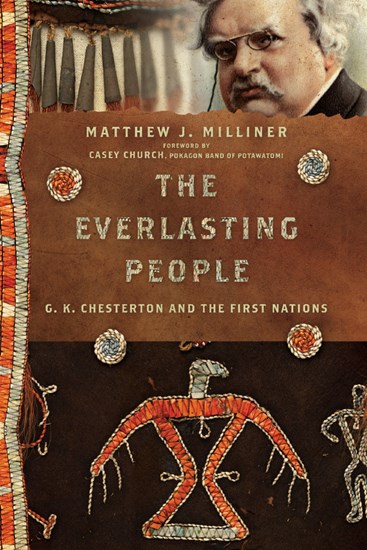
The Everlasting People: G.K. Chesterton and the First Nations is a book I picked to read because the premise seems so utterly strange. I admittedly avoid Chesterton somewhat actively, in part because of his extreme anti-Protestantism, and in part because of his misogynistic comments about women. I’m also wary of colonialism and the title smacked of that as a possibility. But something about the description got to me, and I gave it a try. I’m glad I did, because what I found was Matthew J. Milliner’s fascinating study that looks at individual places, their First Nations heritage, and Christianity.
The book is a series of lectures with responses from different scholars. The first lecture, the Sign of Jonah, discusses cave art, the ways in which myths about “savages” have been perpetuated, Chesterton’s own counter words about how cave art should correct some of the myths, other art, Turtle Island, and more. The second lecture is largely about Chicago and the First Nations heritage that was displaced and destroyed there and elsewhere. In this lecture, he offers alternate meanings for the stars on the Chicago flag. The third lecture turns to Chesterton’s poetry and the Byzantine imagery of “Our Lady of Perpetual Help” while uniting it with discussion of white expansion and warfare against First Nations people.
Throughout, G.K. Chesterton is used as a backdrop; whether quotes that speak to Milliner’s specific focus or with more extended discussion. Milliner doesn’t cover up Chesterton’s ills, but rather seeks to offer correction where needed and elucidation when possible.
Each chapter has a response from a different scholar to Milliner, and though these are short, they often offer their own insights and discussion of First Nations culture and the richness of humanity. In almost every section there is some kind of new delight, fascinating detail, or new avenue to explore that is initially unexpected. Milliner and those responding to him offer a wealth of knowledge. The unexpected way they manage to discuss Christianity, First Nations people, First Nations artists, and more (some of the responses themselves are by people from First Nations groups) make the book a wonderful read from front to back.
I don’t really know what I expected when I started The Everlasting People. I also don’t know how to adequately describe it. It’s a fairly slim volume with a rather massive amount of content and encouragement for further reflection and learning. It’s one of those books that makes you think about it long afterwards, and flip it open to a random page to see what might be found. I highly recommend it.
Disclaimer: I was provided with a copy of the book for review by the publisher. I was not required to give any specific kind of feedback whatsoever.
All Links to Amazon are Affiliates links
Links
Be sure to check out the page for this site on Facebook and Twitter for discussion of posts, links to other pages of interest, random talk about theology/philosophy/apologetics/movies and more!
Book Reviews– There are plenty more book reviews to read! Read like crazy! (Scroll down for more, and click at bottom for even more!)
SDG.
——
The preceding post is the property of J.W. Wartick (apart from quotations, which are the property of their respective owners, and works of art as credited; images are often freely available to the public and J.W. Wartick makes no claims of owning rights to the images unless he makes that explicit) and should not be reproduced in part or in whole without the expressed consent of the author. All content on this site is the property of J.W. Wartick and is made available for individual and personal usage. If you cite from these documents, whether for personal or professional purposes, please give appropriate citation with both the name of the author (J.W. Wartick) and a link to the original URL. If you’d like to repost a post, you may do so, provided you show less than half of the original post on your own site and link to the original post for the rest. You must also appropriately cite the post as noted above. This blog is protected by Creative Commons licensing. By viewing any part of this site, you are agreeing to this usage policy.
Why I Left the Lutheran Church – Missouri Synod: By Their Fruits… (Part 5)
By Their Fruits… (Part 5)
My previous posts in this miniseries focused on specific things: my discovery that Christians could believe one thing and act in ways contrary to it, racism I encountered in the LCMS, misogyny I encountered in the LCMS, and homophobia rampant in the LCMS. This post will summarize several other aspects of practice and belief I found within the LCMS that drove me away. It comes from a wide variety of sources, but again, I focus on behavior from people who either were leaders in the LCMS (pastors, professors, teachers) or were studying to become those leaders. These are not stories of random laity, but trained LCMS people. Other examples are specifics about LCMS teachings, whether official or not. [1]
Growing up in LCMS schools, I learned to say not just the pledge of allegiance, but the pledge to the cross. Yes, the pledge to the cross. “I pledge allegiance to the cross of our Lord Jesus Christ, and to the faith for which it stands, with mercy and grace for all.” We would stand and say the pledge to both flags, which were set up across from each other in classrooms and sanctuaries. It didn’t bother me until I was a young adult that we would say a pledge to both–as if our allegiance to a nation state should be as strong or on the same level as our allegiance to Christ. When I started to raise objections to flags in sanctuaries or unquestioning allegiance to our nation, I was told, basically that that was along the lines of a Jehovah’s Witness and because they were wrong about everything, I shouldn’t agree with them on this topic. That didn’t sit well with me.
It wasn’t until years later, when I read The Myth of Religious Violence by William Cavanaugh (book review here), that I could better articulate my problems with the integration of nationalism and religion that remains entrenched in many LCMS churches. When I started to express those views, the reaction was almost entirely negative. Flags were in sanctuaries in part, I was told, because of a holdover from when the LCMS shed some of its outward associations with Germany, particularly during WWI[2]. But that didn’t explain why they needed to remain there, or why the pledge to the cross was said alongside the pledge of allegiance. The nation state, I kept pointing out, seemed to be elevated to the same place as allegiance to Christ. The flag in the sanctuary was and is very often next to and on the same level as the so-called Christian flag. The pledges were said in tandem. As a kid, the link between the two was impossible to miss. As an adult, no correctives were offered. Nationalism is frequently conflated with patriotism, just as it is in the general populace. However, reconciling my belief that our allegiance should be to Christ alone with the way allegiance to the nation state is assumed and even pushed within the LCMS became impossible.
Pastors in the LCMS are extremely inconsistent when it comes to practice related to the Lord’s Supper. Many speak with pride about the extreme doctrinal purity the LCMS pushes. In practice, however, maintaining that supposed purity gets complicated. As a kid, I remember not taking communion in other churches. It was because they believed differently from us, and so we weren’t supposed to participate in that. I specifically remember one time before I was “confirmed”[3], I was offered communion at a Methodist church. I was super excited to take it, but (as I recall-it was a young memory) my hand was physically moved from taking the bread or grape juice offered. I remember people being denied communion in our church, and some of them being upset by that. Again, I learned it was because of different beliefs about what communion was. When I got older, I learned that the reasoning behind denying others communion was because we didn’t want people to eat and drink destruction on themselves. This belief was backed by a rather idiosyncratic reading of 1 Corinthians 11:27: “So then, whoever eats the bread or drinks the cup of the Lord in an unworthy manner will be guilty of sinning against the body and blood of the Lord.” This verse was used to justify virtually any reason for not allowing a person to have communion.
While the LCMS has produced documents about who should and should not be allowed to receive communion, from firsthand experience I can say that these documents are entirely ignored or applied whenever the pastor desires (or not). Ultimately, the practice of closed (or, a preferred term: “close”) communion, while given lip service as a way to protect people from grave sin, is wielded by many LCMS pastors as a totally arbitrary way to punish those with whom they disagree. Alternatively, refusing communion to people can enforce a pastor’s doctrinal whims. Indeed, the LCMS website itself renders many decisions to the “individual pastor’s judgment,” such as whether someone with Celiac disease can have communion with gluten-free wafers. Thus, it is entirely possible for there to be LCMS churches in which, because the pastor chooses not to use gluten free wafers, people with Celiac disease are effectively excommunicated not because of different belief but because of a chronic immune disorder.
The decision about whether or not to commune someone was totally arbitrary even in churches in which I found inserts about their beliefs about who could or could not commune in bulletins. One church had such an insert, and it said, essentially, that people who differed about the real presence of Christ’s body and blood in the bread and wine could not receive communion. I remain Lutheran, and affirm real presence to this day. When I was denied communion by the pastor of that same church, he justified it by saying that because I disagreed with the LCMS on other things, I couldn’t really share their belief on real presence, as all beliefs are ultimately tied together. Such a reach for what can or cannot qualify someone based on what is already a tenuous reading of Scripture effectively meant this pastor believed he could exclude anyone from communion for any reason. I told the pastor this, and he just smiled and said he wasn’t changing what he said.
In the LCMS, one of the strongest beliefs I was taught was the need to properly divide law and gospel. C.F.W. Walther, perhaps the single most influential LCMS pastor and leader, wrote a book on the topic. There was no question in my mind that the arbitrariness with which this pastor and others applied closed communion was a key example of mixing gospel (the forgiveness found in the Lord’s Supper) with law (attempts to punish people for disagreement or call out sin therein). This was not the first or only time I’d be denied communion for absurd reasons. Another time, while staying at a friend’s house on a trip, I was denied communion because I didn’t affirm young earth creationism. Indeed, that pastor’s interpretation of 1 Corinthians 11:29 meant that I’d be unworthily receiving the body and blood because I disagreed about how old the planet is. At that stage, I was still a member in good standing within the LCMS and regularly attended an LCMS church, at which I was given communion. In spite of that, I was denied communion at this LCMS church based on the age of the Earth. The practice is, again, entirely arbitrary. LCMS documents and leaders give lip service to how it protects people, but show total disregard for the spiritually abusive way many pastors apply the practice to exclude Christians from participating in Christ’s body and blood.
I could illustrate this time and again with many, many firsthand accounts or accounts shared with me by others. Another Lutheran was denied communion when they were traveling as part of an LCMS choir because they weren’t a young earth creationist. At a different time, the same person was denied communion because they believed women could be pastors. In neither case was this policy stated, nor were others on the same trip queried about their beliefs on those same topics. The only reasonable conclusion is that LCMS pastors are totally arbitrary about when they apply the doctrine of closed communion. This should be seen as a damning indictment of the practice. After all, the LCMS teaches that closed communion is intended to protect people’s souls, or at least protect them from unknowingly participating in sin. If that’s the case, then why would something with such huge import be so subject to inconsistency about its application? And how is it possible that people like me could go to four different LCMS churches and experience 4 totally different practices about communion such that I received it without question in one, after a brief discussion with the pastor in another, and was denied it for totally different reasons in two others? Inconsistency is one of the surest signs of a failing belief or system, and it can be found all over regarding this practice in LCMS churches. The leadership of the LCMS has effectively handed individual pastors a carte blanche to use their office to arbitrarily withhold the Sacrament from parishioners for whatever reason they desire. It’s a recipe for abuse of the system.
In LCMS schools, I was taught to read the Bible. It’s a legacy I keep to this day, and one I hugely appreciate. When I got to college, I finally began learning more about how to read the Bible, not just to read it. The consistency with which the method was applied was impressive, as I found multiple different professors in the theology department (all of whom were pastors) emphasizing points that were, if not the same, then essentially interchangeable. The bedrock belief was that scripture interprets scripture. Another hallmark of the system was talking about the historical grammatical method of interpretation. The historical grammatical method includes attempting to find the original meaning of the text. I found this exciting, because it meant that for the first time, I was reading about history and archeology and seeing what they could teach me regarding the Bible. This was alongside my surging interest in Christian apologetics. I was (and am) fascinated by finding out about idioms in the Bible, or euphemistic language that explained why things were written in the way they were. It was truly an exciting time.
Then, it started to become problematic. The simplistic reading of passages that I grew up with started to make less sense. Some of this coincided with my turning away from young earth creationism. There was a distinct incongruity between what I was learning regarding what the original intent might have been for a passage and what I was supposed to accept it to mean. It culminated in one private discussion with a professor (who, again, was an LCMS pastor) in which I pointed out that it seemed like the Flood story had precursors in the ancient world, and that it seemed to be almost polemical in its intent rather than historical. That is, the Flood story to me read as an intentional reframing of existing stories to teach monotheism and about how God overpowered forces of chaos than it did as a sort of rote historical report. This reading, the professor pointed out, contradicted another aspect of the historical grammatical method, which is that the events depicted in the Bible are actually historical essentially all the way through. I would later learn that this was a distortion of what evangelicals broadly held to be the historical grammatical method, and that would be its own kind of revelatory gain. In the moment, however, I was a bit shocked. I was simply trying to apply the hermeneutic I’d been learning to the texts themselves. Instead, I was being told that I was undermining Scripture as history and, possibly, denying the Bible itself.
When I shared my thoughts with another LCMS pastor, I was told straightforwardly that the way to distinguish someone who believed the Bible or not was to ask them about whether certain passages or books were historical. Thus, this pastor said you should ask whether they believe Jonah was a real person who was truly swallowed by a whale (or, he conceded, maybe a giant fish instead). You should ask whether they believe Adam and Eve were real and whether they were the first and only humans. You should ask whether a snake literally did speak to them. Noah’s Flood was another example. This pastor wasn’t just implying that denial of any of these meant one didn’t believe the Bible, he straightforwardly said it. That meant that my reading had to be rejected out of hand. I was devastated, but for the moment I dropped my investigation of Ancient Near Eastern background for the text. It would take me years to get back into it, and to this day I’m still trying to find resources to learn more.
One thing I’d theorized for a while about the LCMS and other groups that push beliefs that are outside of mainstream science was that once someone starts to disbelieve scientists regarding one thing, it becomes much easier to doubt scientists in other things. I wrote about how, as a child, I learned that scientists weren’t just wrong but were actively lying about things like the age of the Earth. Once you’ve accepted that there is some kind of global scientific conspiracy to cover up something like the age of the Earth, it becomes much easier to accept that same kind of thinking in other areas.
I dove into the question of climate change entirely from the view of one who wanted to deny that it was occurring. Again, from hearing things like Rush Limbaugh’s radio show and other sources, I was convinced it was another example of scientists lying. In college, I continued to read on the topic, watched and listened to several debates, and read some books on either side. What I kept finding is that the numbers couldn’t be thrown out. When I explored the age of the Earth, I kept finding young earth creationists saying things like “We look at the same data, we just interpret it differently.” The same thing seemed to be occurring with climate change. I eventually brought this notion to one of my professors as we talked about what I was hoping to study going forward. We were in his office and I distinctly remember him saying “It’s such a shame that global warming [using the parlance more common at the time] has become a politically charged question. The data is there; it is happening! It’s okay to debate what to do about it, but to deny that it exists is like sticking your head in the sand. It shouldn’t be political.” He went on to talk about a number of other issues he saw as unnecessarily political. It was hugely refreshing to hear, and it helped free me to think about all sorts of topics in different ways. But this put me on the outside of many conversations with LCMS leaders or leaders-in-training, who frequently talked about the lie of global warming. It wouldn’t be a major factor in alienating me from the LCMS, but it would serve as another example of how teaching about scientists all lying in one area made it easier to accept the same elsewhere.[4]
None of these served as overwhelming reasons why I left the LCMS, but united with the reasons from the previous posts, they became a massive case for leaving. Next time, we’ll delve into one more major reason I left the LCMS.
Next: Points of Fracture- Women in the Church
[1] I’ve said before there are many things the LCMS has a de facto position in relation to without explicitly drawing out or spelling it out in doctrines. One of these is the de facto young earth creationism within the LCMS. While they have some documents saying there is no official position, the continued adoption of resolutions effectively teaching YEC makes holding other positions problematic at best and grounds for excommunication for some pastors. I say the latter from my own experience of being denied communion for differing beliefs on the age of the Earth.
[2] There is some of the history of the LCMS’s transition from a German-speaking church to an English-speaking church in Authority Vested by Mary Todd, which has a history of the LCMS.
[3] a broadly used practice in the LCMS to teach children what they supposedly need to know before participating in the Lord’s Supper.
[4] I didn’t include a longer aside about anti-vaccination beliefs in the LCMS. It certainly is not an official position within the LCMS, but I’ve found it to be more common there than in the general population, even before Covid-19. Again, I believe this is linked to a general mistrust of scientists and science. If scientists are liars about one thing, why trust them in others? It genuinely makes me concerned about what might happen in the future if more and more people I know start to refuse vaccines, despite demonstrable evidence that they work.
Links
Formerly Lutheran Church – Missouri Synod (LCMS) or Wisconsin Synod (WELS)– A Facebook group I’ve created for people who are former members of either of these church bodies to share stories, support each other, and try to bring change. Note: Anything you post on the internet has the potential to be public and shared anywhere, so if you join and post, be aware of that.
Why I left the Lutheran Church – Missouri Synod Links Hub– Want to follow the whole series? Here’s a hub post with links to all the posts as well as related topics.
Be sure to check out the page for this site on Facebook and Twitter for discussion of posts, links to other pages of interest, random talk about theology/philosophy/apologetics/movies and more!
SDG.
——
The preceding post is the property of J.W. Wartick (apart from quotations, which are the property of their respective owners, and works of art as credited; images are often freely available to the public and J.W. Wartick makes no claims of owning rights to the images unless he makes that explicit) and should not be reproduced in part or in whole without the expressed consent of the author. All content on this site is the property of J.W. Wartick and is made available for individual and personal usage. If you cite from these documents, whether for personal or professional purposes, please give appropriate citation with both the name of the author (J.W. Wartick) and a link to the original URL. If you’d like to repost a post, you may do so, provided you show less than half of the original post on your own site and link to the original post for the rest. You must also appropriately cite the post as noted above. This blog is protected by Creative Commons licensing. By viewing any part of this site, you are agreeing to this usage policy.
Why I left the Lutheran Church – Missouri Synod: By Their Fruits…. (Part 4)
For several posts, I have been writing about specific things that came up while I was within the LCMS–that is, at its schools, churches, and university–that made me start to think that the LCMS way of things didn’t align with some aspect of reality, what I learned in the Bible, or something else. Here, I continue a miniseries within that about the fruits of our actions and how they tell about who we really are.
By Their Fruits… (Part 4)
[Content warning: Homophobia across the spectrum and language related to it described.]
Homophobia was absolutely a given among pre-seminary students at my LCMS school. Denial of homophobia was also a given. The trite “well actually” type of discussion often seen online abounded in person. (Eg. people saying, as I heard, “I’m not homophobic, because that would mean I’m afraid of homosexual people.”) Calling things “gay” as a derogatory term was absolutely normal among pre-seminary students. The utter contempt for gay people was clear on a day-to-day basis. It should be noted that we had more than one out of the closet gay man on campus.
I’d lived in Massachusetts for a few years in high school. Before we moved there, I had a conversation with some adults about what it meant for someone to be gay. I genuinely didn’t really understand that the category even existed. Having grown up in LCMS schools and churches, I had actually never heard the topic discussed–or at least, not in a way that left me with any memory of the event. As an avid reader, I probably encountered the occasional gay character, but without the background knowledge to even understand the category, I can’t remember any specific instances of that happening. In other words, I was remarkably ill-educated regarding how people lived their lives. The discussion about gay marriage in Massachusetts before moving there was something like: some men think they love other men and want to marry them, which is obviously wrong, and Massachusetts is so liberal that they let them get married, which is wrong. I could understand the concepts when put so simply.
When I went to high school in Massachusetts, it was a bit of a culture shock. I learned there was such a thing as a “Gay Straight Alliance,” and I actually had to ask classmates what that even meant. I had no idea before moving there that rainbow flags existed or what they meant. One classmate I was friendly with asked me to hang out. I didn’t realize he meant it as a date, and had to awkwardly explain as we were hanging out that I was straight–a category I’d only recently learned about.
I remember in sitting in a prep period in high school in a circle with other students and one of them told us she was a lesbian. I barely even knew the word’s definition. For her to then share her story and her struggles as a lesbian in high school was eye-opening to the nth degree. I was, in a word, stunned. I know this sounds unbelievable, but before these experiences in Massachusetts, I really didn’t even know this was a thing. But the teachers in that high school, many of whom I respected, took gay students as a given and didn’t treat them any differently. I’m writing this from my position as someone who was totally ignorant. These experiences had a profound impact on me as I basically learned from these teachers how to treat others. The experience changed how I thought and acted about gay people.
That would be challenged when I got to my LCMS college and said that I didn’t really see the problem with gay marriage. People from all over corrected me, including phone calls from pastors to explain to me what the Bible said and meant about gay people and why letting them get married was wrong. In no uncertain terms, it was explained to me that it was better to not let them get married because although this would maybe make them sad in this life, it would potentially help prevent the eternal punishment they’d experience in hell. I remember pushing back a little, saying that didn’t make sense because other sins people committed don’t automatically consign them to hell, but the counter was that gay marriage was willful, unrepentant sin and so would lead to hell. I was never fully comfortable with this explanation, but at the time it made me silent about objections. I did not want to be responsible for someone’s eternal soul, after all.
I knew of at least a couple gay men on campus, and wanted to make sure that even if I didn’t necessarily support them fully, that they weren’t totally ostracized. I spoke to a few other pre-seminary students, telling them I thought the homophobic comments and jokes needed to be toned down. One asked me to explain, and I argued that if we really believed it was sinful and could put someone’s eternal life in jeopardy, that we should not potentially put up another barrier to their repentance by being jerks to them. This kind of convoluted reasoning never sat well with me. For years, I dealt with a kind of double life in which I struggled with what I thought was doctrinally correct–that it was sinful–and my ethical senses that the arguments against gay marriage and other ways to exclude LGBT+ people from various societal places and norms were discriminatory at best.
What I did not feel ambiguous about, though, was that everyone sins. One of the most frequently quoted passages of the Bible in my life was Romans 3:23: “For all have sinned and fall short of the glory of God.” This verse still remains dear to me. No one is righteous, not even one (Romans 3:10). The fact that everyone was a sinner was perfectly clear. Why, then, did we treat some sinners differently from others?
The contempt for gay men especially was strong among not just men studying to be pastors, but among many pastors as well. There were clear exceptions–one pastor with whom I had quite a lot of interactions wasn’t affirming to my knowledge but also never once condemned gay people of any sort. Those exceptions were just that, though, exceptions. Calling gay men derogatory names was extremely common, and, again, using the word “gay” as an insult was engrained into us. Transgender people were seen as especially sinful–not just because of the Bible passages interpreted to be against homosexuality but also because of prohibitions against cross-dressing (at least, as interpreted by many in the LCMS).[1] Lesbians were barely mentioned as a category, but when they were it was either in order to sexualize lesbians (often with a wink and a nudge) or to shoehorn them into already understood gender norms (women need comfort more than men, so lesbianism could be explained as such), or, when fully confronted, it was something like “If only she’d met a real man” (read: like myself) “she wouldn’t be a lesbian.”
The way so many LCMS future and current leaders spoke so strongly against gay men especially was difficult to reconcile with how they behaved around men they knew were gay. While I cannot speak for the lived experience of gay men on campus, when I saw interactions, it seemed these LCMS leaders-in-training would tone down their language and act almost meekly, as though they were afraid being gay might rub off on them. It sounds absurd, but that’s genuinely the impression I had.
One gay man on campus shared stories with me about how other men in his dorm told him they were concerned they might get AIDs if they washed their clothes in the same washer and dryer as him. Another time, a pre-seminary man accidentally took a drink from his cup and was worried out loud he would get AIDs from taking a sip. The pre-seminary men, he told me, were the people who were worst to him of anyone on campus. These overt examples could certainly be multiplied. The way that pre-seminary men and even LCMS pastors treated and talked about gay people was and is abhorrent. There seems to be more focus on maintaining an insular status quo than in reaching out and trying to love one’s neighbor.
Reflecting on all of this now paints an ugly portrait. While I can accurately say that the rampant homophobia within the LCMS was a factor in driving me away, I can also say that at times I stood on the same side. There’s a sense of belonging in thinking that you stand against “the world” when it comes to morality and ethics, standing strong upon a stance that is perceived as unpopular and may lead to your supposed persecution. I wish I had been better and done more to stand up for people who were often silenced and mocked. I pray that I can do more now. The total lack of love of neighbor was reflected in how LCMS leaders treated and spoke about all non-straight persons. By their fruits…
[1] I don’t want to get into disputes over how to translate passages, but many passages taken to be straightforwardly about transgender people seem to have different implications in the Ancient Near Eastern context in which the Bible was written. I’ll talk some about some disharmony between how I was taught to interpret the Bible and how I saw the Bible being interpreted within the LCMS in a later post.
Links
Formerly Lutheran Church – Missouri Synod (LCMS) or Wisconsin Synod (WELS)– A Facebook group I’ve created for people who are former members of either of these church bodies to share stories, support each other, and try to bring change. Note: Anything you post on the internet has the potential to be public and shared anywhere, so if you join and post, be aware of that.
Why I left the Lutheran Church – Missouri Synod Links Hub– Want to follow the whole series? Here’s a hub post with links to all the posts as well as related topics.
Be sure to check out the page for this site on Facebook and Twitter for discussion of posts, links to other pages of interest, random talk about theology/philosophy/apologetics/movies and more!
SDG.
——
The preceding post is the property of J.W. Wartick (apart from quotations, which are the property of their respective owners, and works of art as credited; images are often freely available to the public and J.W. Wartick makes no claims of owning rights to the images unless he makes that explicit) and should not be reproduced in part or in whole without the expressed consent of the author. All content on this site is the property of J.W. Wartick and is made available for individual and personal usage. If you cite from these documents, whether for personal or professional purposes, please give appropriate citation with both the name of the author (J.W. Wartick) and a link to the original URL. If you’d like to repost a post, you may do so, provided you show less than half of the original post on your own site and link to the original post for the rest. You must also appropriately cite the post as noted above. This blog is protected by Creative Commons licensing. By viewing any part of this site, you are agreeing to this usage policy.

 J.W. Wartick - Reconstructing Faith