christian
Quantum Indeterminacy, Materialism, and Free Will: Do our minds shape reality?
The idea is that “freedom” of the will is simply the fact that human behavior is unpredictable, and that this unpredictability is a consequence of the random character of “quantum processes” happening in the brain… To be subject to random mental disturbance is not freedom but a kind of slavery or even madness. (Professor of Theoretical Particle Physics at the University of Delaware, Stephen Barr, 178)

Can there be free will on materialism?
The question has been perpetuated throughout the history of modern science. For quite a while, it was thought that all things were deterministic, given materialism. Thus, the view of life was a bit fatalistic. However, with the advent of Quantum Mechanics, some have argued that quantum indeterminacy allows for freedom of the will. Is that the case?
First, it’s important to outline quantum indeterminacy. On the quantum level, events are probabilistic. What that means is that “given complete information about the state of a physical system at one time, its later behavior [cannot] be predited with certainty… [only] the relative probabilities of various future outcomes [can be predicted]” (Barr, 176, cited below).
It becomes immediately apparent how some might see this as salvation for a physicalist perspective on free will. If events are not determined on a quantum level, perhaps our choices are free in some sense as well. But difficulties with this interpretation arise immediately. First, quantum indeterminacy is not a reflection of our choices, but just that: indeterminacy. As quoted above, our supposed choices would (on physicalism) be merely probabilistic. Our actions would be unpredictable, but that is not freedom. Surely, if the actions we take are merely the reflections of probability curves on a quantum level, that is not the same as freedom. Rather, they would be actions taken due to a basically random process. If I have the “choice” between A and B, and the probability is 50/50 on a quantum level, then my “choice” for B instead of A is just the same as if I flipped a coin. The coin doesn’t choose which side to land on, its just probability.
So it seems that right off the bat, quantum indeterminacy cannot explain free will on materialism or physicalism. Rather than being “free will” it would boil down to random events. As Barr wrote, we would be subject to random mental disturbances, and this would entail slavery at best (178).
But can materialists circumvent this problem? One suggestion is that we have control of quantum events themselves, so we therefore would be in control of our choices. But note that this presupposes a kind of extra-quantum center of control from which we can observe and control quantum events. Let’s put it into a thought experiment. Suppose we granted materialism. In that case, our “selves” are our brains. The brain is a physical object, itself governed by quantum events. Now, the purported way out for materialism is that our brain, a physical thing governed by physical processes, itself monitors and controls physical processes such that they effect the brain in the way the brain has chosen. The difficulties with this position should be immediately apparent. The brain, as a physical object, is itself governed by quantum events. These quantum events are not just logically prior but also temporally prior to the brain. Therefore, those things the brain chooses have been determined by previous physical states of affairs. So ultimately, it’s all material, and it’s all probabilistic. The freedom does not enter into the equation.
The problems don’t end there for those who wish to rescue freedom of the will in materialism. Another issue is that of the observer in a quantum event. In order for quantum indeterminacy to be helpful in regards to free will, the observer of a quantum event would have to be outside of the system. “[T]he observer cannot be considered part of the system that is being physically described and remain the observer of it” (Barr, 238). If all there is were the physical world, then the system would include “me.” I could not be the observer who took action in the quantum events, because I would be part of the description of these events. As Barr puts it:
The mathematical descriptions of the physical world given to us by quantum theory presuppose the existence of observers who lie outside those mathematical descriptions (238).
If materialism were true, then quantum indeterminacy could not rescue free will. The agents who were suppoed to be free would be, themselves, part of the system which they were supposed to observe and determine.
So does quantum indeterminacy factor into free will at all? Here’s where things get really interesting. It seems that those who argue for its importance with free will are correct, in a qualified sense. The indeterminacy provides a necessary, but not sufficient, reason for free will. We’ve already seen that it can’t help out in a purely materialistic world–the brain states which supposedly select from various choices are themselves physically determined by prior choices and/or other physical aspects of reality. But what if there were an immaterial mind in the mix? This immaterial mind would not be determined by prior quantum events, and indeed it could take the place of observer for quantum events. Thus, the immaterial mind could serve as the observer of these quantum events.
Quantum indeterminacy, then, acts as a necessary but not sufficient reason for freedom of the will. While the discovery of quantum indeterminacy ushered in an era in which comprehensive physical determinism was tempered by probability, it allowed an opening for free will which can only be utilized by an extra-physical observer. Because our experience of the world includes an intuitive sense of freedom, the previous arguments therefore provide a strong reason to embrace substance dualism. If we experience the world as one in which we are free, and we cannot be free on materialism, then our experience provides us with evidence against materialism.
The world, it seems, is more than merely the physical.
Source:
Stephen Barr, Modern Physics and Ancient Faith (Notre Dame, Indiana: University of Notre Dame, 2003).
SDG.
——
The preceding post is the property of J.W. Wartick (apart from citations, which are the property of their respective owners) and should not be reproduced in part or in whole without the expressed consent of the author. All content on this site is the property of J.W. Wartick and is made available for individual and personal usage. If you cite from these documents, whether for personal or professional purposes, please give appropriate citation with both the name of the author (J.W. Wartick) and a link to the original URL. This blog is protected by Creative Commons licensing. By viewing any part of this site, you are agreeing to this usage policy.
Really Recommended Posts 11/5/11
 Over at Hope’s Reason, Steve Bedard wrote a succinct post on the “Roots of Religion.”
A debate between Paul Copan and Norman Bacrac on “Is God a Moral Monster?”
Josiah Concept ministries has been featuring a series on “True Christianity.” Great stuff. Check out Part 3.
Philochristos has a great section on Mormon Epistemology that has a number of posts worth checking out.
Why do people hate Tim Tebow so much? Is it a reflection of Christophobia? Check out what First Things has to say on the topic. See also Erik Manning’s discussion.
What do you mean by literal? N.T. Wright makes some great points about interpretation of Scripture.
A serious challenge to Stephen Law’s “evil god” theory is brought up by Edward Feser. For a quick explanation of the challenge, see his posts on the topic.
Many people have been wishing that William Lane Craig had used the ontological argument in the debate with Stephen Law. Why? Well, because it would have really undermined his ‘evil god’ challenge. See Doug Geivett’s thoughts.
Book Review: “Man and Woman: One in Christ” by Philip Payne
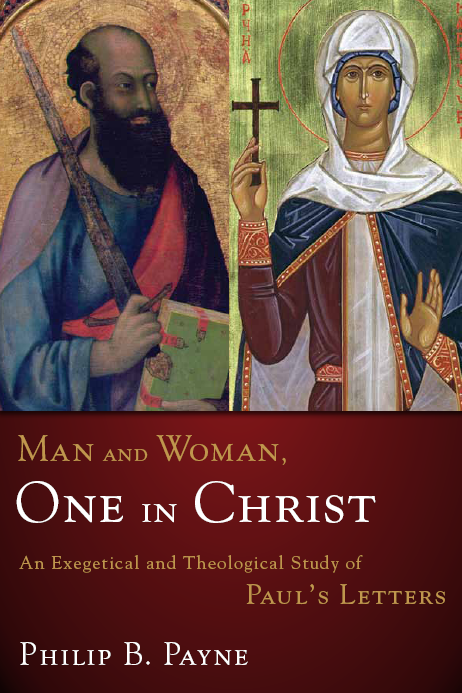 Philip Payne’s book Man and Woman, One in Christ
Summary of Contents
Paul’s Background
Payne notes that Paul was taught by Gamaliel, who was far more egalitarian than his contemporaries. Given this background, it is implausible that Paul had a low view of women (37).
Galatians 3:28
Those opposed to egalitarians (basically, egalitarians are people for women pastors, complementarians are those opposed to women pastors) often portray the position as having its only support in Galatians 3:28. Philip Payne does not base the egalitarian position on this verse alone, but he does argue that the passage provides a strong basis for the egalitarian position. Payne writes, “The natural implication of the equality of male and female in Paul’s teaching is that the gifts of women for ministry in the church should be recognized, welcomed and exercised in all areas of church life, including… church leadership” (104).
1 Corinthians 7- the equal rights of men and women in marriage
In 1 Corinthians 7, Paul explicitly parallels the obligations, rights, and conditions of men and women in marriage. Payne notes a large number of verses in which Paul uses the same language for both men and women (105-106). Not only that, but Paul specifically challenges the concept that men should be the spiritual leaders in the home in 1 Cor. 7:14 (107).
1 Corinthians 11
Payne’s book quickly turns to an extremely in-depth exegesis of the core verses related to the debate over women in church leadership. To put this into concrete terms, Payne’s analysis of 1 Timothy 2:8-15 covers eight chapters and 142 pages; 1 Corinthians 14 has nearly 50 pages dedicated to it, 1 Corinthians 11 is covered by over 100 pages. Payne does not set theology or exegesis to the side in favor of emotional appeals, as some complementarians tend to accuse egalitarians of doing. Rather, he centralizes the Bible as the inerrant Word of God and unswervingly demands that all sides conform to what the Bible teaches, no matter how difficult that teaching may be.
Regarding 1 Corinthians 11, Payne notes that the analogy regarding the “head” of woman does not imply authority, as complementarians must hold. Rather, “source” is a better exegetical and philological fit (113ff, see especially 131, 133). Payne further argues that the proper application of 1 Corinthians 11 would draw out the respect and honor men and women should have for each other as equals (214-215).
1 Corinthians 14:34-35
Rather than mincing words, I’ll jump right to the point: Payne argues that these verses are an interpolation. I’ll cover my own thoughts in the section below “Analysis/Critique,” but for now, I’ll focus on Payne’s argument.
Payne notes that there are a number of ways offered to interpret the passage, but he argues that the only plausible interpretation of the text is that women must be silent, no matter what, in every circumstance. The reasoning is lengthy, but the primary rationale behind this interpretation as most plausible is the it reiterates the prohibition three times, which, in the 1st Century, would have been seen as an absolute prohibition (218-219). Complementarians who allow women to sing in worship, therefore, are inconsistent in their interpretation of this passage, because they add a qualification which is not in the text (221).
Payne, however, argues the text is an interpolation. The evidence is both internal and external. First, the external evidence. The movement of the text itself hints that it was an interpolation which was placed in different parts of 1 Corinthians depending on the textual lineage (227ff). There is also a distigme which is used elsewhere to mark interpolations that is in the last line of 14:33, the correct place to mark 14:34-35 as an interpolation (232ff). Bishop Victor, between AD 541-544, corrected the text to omit 14:34-35 as an interpolation (246ff). Victor’s acumen for detecting interpolations is noteworthy, because he also omits the Trinitarian interpolation in 1 John 5:7-8 (246). MS88 omits the text, likely because it was copied from a manuscript which lacked the interpolation (249). Clement reflects a text without the verses (250-251). He notes other evidence as well (251ff). Payne also notes 9 lines of internal evidence for the text being an interpolation (253ff).
1 Timothy 2:8-15
These verses occupy the largest treatment in MWOC. The key to properly interpreting this passage, argues Payne, is the context and the church situation to which it is addressed. Context is always important in properly interpreting the Bible, but with letters it is even more important. Payne approvingly quotes Raymond Collins on this point, “…it is the epistolary genre that is most conditioned by the coordinates of time and space, historical and relational circumstances… They are ad hoc compositions whose essential import relates immediately and directly only to the situation that dictated their composition” (291).
Payne asserts that scholars know the situation in Ephesus–there was a preponderance of false teaching (296ff). Because of this, it is important to read the letter as a letter designed to put a stop to these teachings. Paul’s prohibition of women’s teachings is tied directly to the fact that false teachers had been praying upon women (299ff). The phrase Paul uses, “I am not permitting” “indicat[es] a new, case-specific injunction in response to a problem in Ephesus that does not carry the weight of church tradition” (321).
Payne also highlights the importance of the Greek word oude as conjoining the prohibitions Paul makes in this passage. The word is used throughout the Pauline corpus to “join together expressions that reinforce or make more specific a single idea” (338). Because of this, it is important to note that the word is used to conjoin the prohibitions in 1 Timothy 2:12. The prohibitions are “to teach” and “to assume authority.” Thus the prohibition is not Paul saying women cannot teach or assume authority over man… rather it is “Women should not teach in conjunction with assumed authority” (348-356).
But does authenteo mean “assume authority”? Complementarians generally must argue that it means simply “have authority.” Payne destroys such arguments, citing etymological (363-365) and document (365-373) evidence to demonstrate the word means “assume authority [to oneself-385ff].” Payne also deconstructs the complementarian argument to the contrary, showing that Paul used other words to refer to authority in a basic sense (373-380).
Importantly, Payne draws out the implications of Paul’s exhortations to women to learn quietly. This was the proper position of students. Paul is not telling women they have no place in the church, he’s calling them to learn in a proper fashion before teaching (see 316-317 for an example of this argument).
Thus, Payne concludes that Paul is not prohibiting women from teaching in the church. In the face of the counter-evidence of Paul’s affirmation of women teachers (61-68), the specific context of 1 Timothy, and the proper translation of the Greek words, the text should be read as a temporal restriction on teaching by women in a church struggling with false teachings being spread by women.
…And More
I have not even begun to draw out all of Payne’s arguments in MWOC. There are many more lines of reasoning including Paul’s affirmation of women in positions of ministry, Paul’s theological axioms which imply equality of man and woman, “salvation through childbirth,” Ephesians 5:21-33 and Colossians 3:18-19 with husband-wife relationships, Titus 1:5-9 and 1 Timothy 3:1-13 and the requirements for deacons and overseers, etc., etc. I cannot emphasize how broad Payne’s line of argument is, and how lucidly he explains his points. The book simply must be read by anyone interested in the topic.
Analysis/Critique
There are so many points Payne makes in MWOC that it would be impossible to cover them all. I found Payne’s arguments largely persuasive. That said, I have a few minor notes.
First, I am not convinced that 1 Corinthians 14:34-35 is an interpolation. I also think Payne dismisses the possible egalitarian readings of the passage too quickly (219ff). That said, Payne’s arguments are extremely powerful. I would have dismissed such arguments before reading this book, but now I’d say I’m very close to agreeing with Payne that these verses are an interpolation.
However, I wish that Payne had did a bit more work on the text to at least investigate the exegetical possibilities. I believe very few complementarians would be willing to accept that these verses are an interpolation, so if Payne had offered other possible interpretations, complementarians might find his case stronger. However, it is the case that complementarians who desire to use this passage to exclude women from the ministry now have the burden of proof upon them to demonstrate that it is not an interpolation, and they must do so with the same careful attention to the internal and external evidence which Payne utilized.
Initially I thought Payne might be overstating the case from Galatians 3:28, but he drew out enough parallel passages that it seems pretty convincing that egalitarians can interpret other passages in light of the Galatians verse (Payne does not use this method–he deals directly with the texts said to undermine egalitarianism… I’m merely suggesting that Payne’s work on Galatians 3:28 would allow egalitarians to be justified in utilizing it as a kind of “proof text” by which others must be judged).
Conclusion
Payne’s sustained positive argument for the equality of man and woman essentially convinced me of the egalitarian position over a year and a half ago. I have only recently finished the book, but when I first got it and skimmed through the arguments, I realized every argument I’d been using as a complementarian had an egalitarian answer. Not only that, but Payne’s critique of the complementarian position undermined the theological position which I’d held my entire life. I think it takes a great deal of intellectual integrity to read books which challenge one’s fundamental beliefs, and I have experienced it firsthand. I challenge readers on both sides of the issue to read this book.
Man and Woman, One in Christ provides an insurmountable challenge to the complementarian position. Any scholar working on the topic in the future must interact with this magnificent work. I simply must recommend it over and over again. I am thoroughly convinced that egalitarianism has a much stronger Scriptural and theological basis than the complementarian position, and MWOC is one of the works which lead me to that position. Payne’s thorough and thought-provoking analysis of the texts themselves demonstrates the Biblical accuracy of the egalitarian position. His work is one with which all must contend. The issue of women in the ministry is one we [the church] cannot get wrong. A thoughtful, open-minded approach to the Biblical issues is necessary. Let us make men and women one again.
Source
Philip B. Payne, Man and Woman, One in Christ
SDG.
——
The preceding post is the property of J.W. Wartick (apart from citations, which are the property of their respective owners) and should not be reproduced in part or in whole without the expressed consent of the author. All content on this site is the property of J.W. Wartick and is made available for individual and personal usage. If you cite from these documents, whether for personal or professional purposes, please give appropriate citation with both the name of the author (J.W. Wartick) and a link to the original URL. This blog is protected by Creative Commons licensing. By viewing any part of this site, you are agreeing to this usage policy.
Genetic Evidence and the Book of Mormon: Did any Native Americans come from the Middle East?
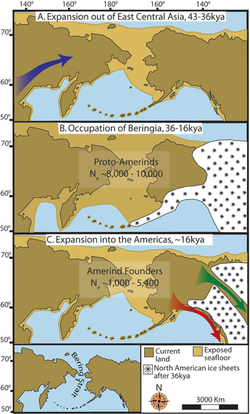 The Book of Mormon’s veracity hinges on the claim that the lost tribes of Israel came to America, settled there, and wrote their history on gold plates which Joseph Smith later translated. Such claims at the time of Joseph Smith seemed irrefutable; they simply couldn’t conceive of technology which could test these propositions. Today, however, such technology is available. Unfortunately for Joseph Smith and the Mormon Church, the evidence runs contrary to what the Book of Mormon claims.
Archaeological evidence has long favored the hypothesis that Native Americans crossed into the Americas during the Ice Age from Siberia across a frozen Bering Strait.[1] The Book of Mormon, by contrast, asserts that “…Israelites accomplished at least two marathon oceanic voyages to the New World in approximately 600 B.C… By about AD 400, the descendants of these lost Israelites had multiplied into million-strong civilizations and spawned other migratory groups that went on to colonize additional territory in the Americas…”[2] The Latter Day Saints’ introduction to the Book of Mormon states that:
[t]he record [in the Book of Mormon] gives an account of two great civilizations. One came from Jerusalem in 600 B.C., and afterward separated into two nations, known as the Nephites and the Lamanites. The other came much earlier when the Lord confounded the tongues at the Tower of Babel. This group is known as the Jaredites. After thousands of years, all were destroyed except the Lamanites, and they are among the ancestors of the American Indians.[3]
These claims can now be analyzed utilizing DNA evidence. Contrary to the claims of the Book of Mormon, this evidence has shown that there are four major genetic lineages for the peoples of the Americas which are of Eastern Asiatic origin, along with a fifth that is possibly Caucasian.[4]
In order to support the claim that Israelites came to America, the DNA evidence would have to reflect their Israeli genetic lineage, which “resemble[s that] of Europeans.”[5] The only European genetic heritage in America, however, came with Columbus and the European settlers who followed him.[6] Furthermore, Mormons frequently assert that it was the Mayans and Olmecs who parallel the civilizations of Nephi and the Jaredites.[7] This evidence simply doesn’t match the genetic history, which demonstrates that traces of European (and therefore possibly Israelite) origins have been found in the North American peoples and not with the Mesoamerican Olmecs and Mayans—as would be necessary to support this Mormon theory.[8] The assertion that Native Americans descended from the lost tribes of Israel is groundless. The Smithsonian Institute wrote that “The physical type of the Native Americans is basically Mongoloid, being most closely related to that of the peoples of eastern, central and northeastern Asia.”[9] This evidence leads Simon Southerton to conclude that “The ancestors of Native Americans were Asians who unknowingly became the first Americans as they walked across Beringia over 14,000 years ago… Regardless of coincidental cultural, linguistic, or morphological parallels with the Old World, the peoples of the Pacific Rim who met Columbus and Cook were not Israelites.”[10] Native Americans descend from Asia, not Israel. Therefore, the Book of Mormon is strongly undercut by prevailing scientific evidence and genetic data.
Mormonism’s response to this DNA evidence has been threefold. The Mormon apologist counters by arguing that Christianity is undercut by scientific evidence,[11] that science can’t disprove the Book of Mormon anyway,[12] or that the conclusions drawn from the DNA evidence are stronger than such studies warrant.[13] There is little need to argue against the first rebuttal, as it amounts to little more than a tu quoque. It serves only to try to push the burden of proof off the Mormon apologist. Furthermore, it seems very strange, considering the lengths to which many have gone to argue that Mormons are Christians.[14] The second response also has little to recommend it. In an article curiously titled “BYU professor refutes Book of Mormon DNA Claims,”[15] Mark Nolte writes “[Michael] Whiting [a BYU scientist] said the Book of Mormon was not written as a scientific book, and therefore cannot be wholly proved or disproved using scientific methods… it is no surprise that DNA analysis could not find a genetic marker that links American Indians to a Middle-Eastern population. [Whiting said,]‘I would be skeptical of someone standing up and saying, ‘I have DNA evidence that the Book of Mormon is true.’”[16] The assertion seems to be that the Book of Mormon is theology, not science, and therefore cannot be evaluated scientifically. Examining such claims fully is beyond the scope of this work, but it seems like this whole response is glaringly dismissive. The Book of Mormon does claim that the Native Americans are descendants of the Israelites, as Whiting acknowledges,[17] so evidence which demonstrates they are not disconfirms the Book of Mormon.
 The third claim warrants further examination. Essentially, Mormon apologists argue that we simply can’t know enough to determine whether or not Israelite DNA is present in Native Americans.[18] The problem with this claim is that the evidence is not at all inconclusive. In fact, the evidence demonstrates that 99.6% of Native Americans are of Asian descent. The .4% of non-Asian Native American lineage is found in those genetic pools which interacted with the early colonizers.[19] Not only that, but even if the .4% of non-Asian genetic lineage could be Israelite (which it is not), the Book of Mormon claims that the Israelites in America were huge civilizations.[20] Why, then, would their genetic footprint be so small? Furthermore, the claims that such methodology is problematic or that we have limited data[21] is also demonstrably false. The genetic data is conclusive, and studies which utilize other methods for determining heritage (such as dental, osteological [study of bones], and molecular studies) confirm that the descent of the Native American is Asian, not Israelite.[22] According to Stephen Whittington, “Archaeologists and physical anthropologists have not found any evidence of Hebrew origins for the people of North, South and Central America.”[23] Genetic evidence therefore provides a strong defeater for the veracity of the Book of Mormon.
We have seen that the Book of Mormon is integral to the faith of Mormonism. If this book is factually incorrect, then there is no reason to suppose its theological message is true. Joseph Smith once said, “One of the grand fundamental principles of ‘Mormonism’ is to receive truth, let it come from whence it may.” I hope that Mormons will indeed receive the truths found in genetic and archaeological evidence.
[1] Simon Southerton, Losing a Lost Tribe: Native Americans, DNA, and the Mormon Church, (Salt Lake City, UT: Signature, 2004), 73.
[2] Southerton, Losing a Lost Tribe, 117-118.
[3] The Mormon Church, “Introduction to the Book of Mormon”, The Church of Jesus Christ of Latter Day Saints. http://lds.org/scriptures/bofm/introduction?lang=eng (accessed February 1, 2011).
[4] Southerton, Losing a Lost Tribe, 89-90.
[5] Ibid, 129.
[6] Ibid, 129.
[7] Ibid, 83.
[8] Ibid, 129.
[9] Quoted in Martin, Kingdom of the Cults, 215 and Jerald and Sandra Tanner, Mormonism: Shadow or Reality? 97.
[10] Southerton, Losing a Lost Tribe, 130.
[11] David Stewart, “DNA and the Book of Mormon.” The Latter-Day Saints Foundation for Apologetics Information and Research. http://www.fairlds.org/Book_of_Mormon/DNA_and_the_Book_of_Mormon_2.html (accessed October 29, 2010.
[12] Mark Nolte, “BYU Professor refutes Book of Mormon DNA claims.” Brigham Young University. http://newsnet.byu.edu/story.cfm/41852/ (accessed October 29, 2010).
[13] Stewart, “DNA and the Book of Mormon”; see also, Southerton, Losing a Lost Tribe, 184f.
[14] A simple search on google for “Are Mormons Christians” turns up 610,000 results (at the time of this writing), many of which argue the affirmative, from a Mormon perspective.
[15] Emphasis mine.
[16] Nolte, “BYU Professor…”
[17] Ibid.
[18] Stewart, “DNA and the Book of Mormon”; see also Southerton, Losing a Lost Tribe, 188.
[19] Southerton, Losing a Lost Tribe, 187, 192.
[20] Ibid, 117-118. For just one example within the Book of Mormon itself, see the Book of Alma [one of the books in the Book of Mormon] 51:27, which states “And thus had the Lamanites obtained, by the cunning of Amalickiah, so many cities, by their numberless hosts, all of which were strongly fortified after the manner of the fortifications of Moroni; all of which afforded strongholds for the Lamanites.” The language suggests huge civilizations: “many cities”; “numberless hosts”.
[21] Stewart, “DNA and the Book of Mormon.”
[22] Southerton, Losing a Lost Tribe, 191.
[23] Quoted in Ibid, 191.
This post was derived from an essay I wrote for my graduate studies at Biola University.
SDG.
——
The preceding post is the property of J.W. Wartick (apart from citations, which are the property of their respective owners) and should not be reproduced in part or in whole without the expressed consent of the author. All content on this site is the property of J.W. Wartick and is made available for individual and personal usage. If you cite from these documents, whether for personal or professional purposes, please give appropriate citation with both the name of the author (J.W. Wartick) and a link to the original URL. This blog is protected by Creative Commons licensing. By viewing any part of this site, you are agreeing to this usage policy.
Really Recommended Posts: Halloween Edition 2011
 Halloween is tomorrow, as you all know. Christians often wonder about this holiday. I’ve collected some links to blogs on the topic. The list will grow through tomorrow.
Sent into the Harvest: Halloween on Mission– Over at Desiring God, check out this post which points out Christians are sent to the world.
The Tricky Topic of Halloween– RTB scholar Ken Samples discusses Halloween. As usual, his insight is both clear and compelling. He shares some history of Halloween as well as suggestions to Christians about the holiday.
Halloween- The Great Omission?– A phenomenal post on a mission-oriented view of Halloween.
Hallelujah, Harvest, and Halloween Alternatives– Discussion about how Christians have utilized Halloween and made an alternate celebration or holiday.
A balanced perspective on the topic found at: As a Christian, Should I celebrate Halloween?
Redeeming Halloween– Discussion of the book, “Redeeming Halloween” by Kim Wier and Pam McCune.
Thank God for Halloween– John Mark Reynolds writes about the topic and points out a key fallacy in the argument that Christians shouldn’t celebrate Halloween.
Halloween: Fascinated by Spirituality?– Interesting discussion on the motivations of Halloween and Christianity.
What is Halloween?– Discusses the background of the holiday and some of the traditions that go with it.
A different perspective (with which I disagree, but respect) is given over at Christian Answers: Should Christians Celebrate Halloween?
A respectful, middle-of-the-road answer to the question “Should Christians Celebrate Halloween?” is given over at Grace Communication International.
Image Credit: http://commons.wikimedia.org/wiki/File:Pumpkin_Patch.jpg
Book Review: “The Cell’s Design” by Fazale Rana
 Arguments for intelligent design often hinge upon what mechanistic, naturalistic means “cannot explain.” The arguments go something like “See feature x, how can naturalistic mechanisms explain x? They cannot. Therefore, ID is true.” There is something to be said for this type of argument. If one simply cannot explain a specific thing by means of the mechanisms suggested, one must look for different means. That said, if the case for intelligent design rested only upon negative arguments, it would not be as robust as if it also had positive evidence.
Fazale Rana’s book, The Cell’s Design
Rana’s argument is an argument from analogy. He draws heavily from William Paley’s “watchmaker” example (If one came across a watch in the sand, they’d know it was designed… Paley argued that one could similarly conclude that life was designed). Rana doesn’t ignore the arguments raised against such analogical reasoning, but confronts them head on. After identifying several criteria which allow proper analogical reasoning (30ff), Rana makes his case for the Creator.
The first line of evidence comes from the machines in the cell. Again, Rana’s approach is analogical, rather than negative. The machine-like nature of the flagellum, along with other motor-like cellular functions presents an argument: “Organisms display design. Therefore, organisms are the product of a creator” (86).
The case doesn’t rest merely upon molecular machines. Rather, that is but one of the many lines of evidence. Rana draws out the implications of several “chicken-and-egg” paradoxes. These include the “mutual interdependence of DNA and proteins” (99), the origin of proteins themselves (100ff), and more (105ff). These systems present a kind of “irreducible complexity in which the system depends on the system to exist” (108).
Other elements of design are present in the cell as well. Aquaporins intricate and detailed workings illustrate the design that is present in the system (111ff). Other detailed, intricate designs (such as collagen, mRNA, and the breakdown of proteins) hint at the need for a designer. But the reasoning is not only supported by the details, it is also bolstered by the structural composition of the cell (126ff). The analogy of cells to machines is strengthened further by the quality control systems within the cell (198ff). Again, the reasoning is analogical–these things are designed, therefore they need a designer.
“Information can’t be separated from the activity of an intelligent agent” (142). The numerous examples of information in the cell lead to the inference of an agent. But it is not only the information’s presence that hints at a designer. Here Rana’s case really builds on and develops the work of other ID theorists. The information alone could be enough to infer an agent, but one must also account for the fact that cellular information follows rules like syntax, semantics, and pragmatics (144ff). It is not merely information, it is the use of that information and the rules governing that use that strengthen the case for an agent behind the information.
One of the most amazing parts of The Cell’s Design is the chapter called “A Style All His Own.” Darwinian evolution, if rewound, would come out different ways every time. Different mutations would occur, which would lead to different organisms. What is not expected, on Darwinism, is a convergence pattern in evolution. When the same templates keep showing up through independent routes of development, it provides strong evidence for a designer. Yet this “molecular convergence” is exactly what scientists have discovered again and again. On pages 207-214 Rana writes, with citations from scientific journals, of no less than 100 examples of molecular convergence. As a reader, one can’t help but be stunned as they go through these pages. Over and over, there is evidence that the same designs show up in different places, independently, throughout nature. As Rana writes, “if life emanates from a Creator, it’s reasonable to expect he would use the same designs repeatedly…” (215). And this repetition of design is found in life’s most basic components: DNA (216ff).
Rana does not ignore detractors arguments against his position. One counter-argument to Rana’s conclusions is the presence of poorly-designed mechanisms in nature. Yet Rana effectively nullifies these examples, citing how many of them have turned out to be optimally tuned for life, and how others may be expected to be equally tuned (258ff).
The Cell’s Design is an extremely difficult read, but it does not leave readers who are not scientists to flounder. Rana’s second and third chapters provide some basic biological understanding which readers must have to understand the argument throughout the rest of the book. There is also a 12-page glossary at the back of the book which will let those unfamiliar with the terminology follow along. That said, this is not an easy book. The argument is heavily scientific and involves an exploration, in extreme detail, of the mechanisms and machines at work in the cell. The book presents a fantastic case for ID, but not at the expense of the details.
Finally, it is important to underscore the reasoning behind Rana’s conclusions. His argument is abductive. He explicitly outlines it:
1) X is observed
2) If Y were true, then X would be expected.
3) There is good reason to believe that Y is true.
In the case of the cell:
1) Design is observed in biochemical systems.
2) If life stemmed from the direct work of a Creator, the elegant design of biochemical systems would be expected.
3) There is good reason to believe that life is the product of a Creator (276, these arguments are an exact quote).
After reading through The Cell’s Design, this reader cannot help but agree with this argument. Over and over again, Rana has drawn out the exquisite design in the cell. The positive evidence is there, life is designed.
The Cell’s Design presents a phenomenal case for a designer of life. Those interested in exploring intelligent design should add this book to their list. It is not an easy read, by any means, but it provides some explicit, positive evidence for the conclusion that a Creator exists. Those wishing to deny this fact will find much with which they must contend in Rana’s work. I recommend it without reservation.
Source:
Fazale Rana, The Cell’s Design
Disclaimer: I was provided with a review copy of this book by Reasons to Believe. You can learn more about this science-faith think tank at reasons.org.
SDG.
——
The preceding post is the property of J.W. Wartick (apart from citations, which are the property of their respective owners) and should not be reproduced in part or in whole without the expressed consent of the author. All content on this site is the property of J.W. Wartick and is made available for individual and personal usage. If you cite from these documents, whether for personal or professional purposes, please give appropriate citation with both the name of the author (J.W. Wartick) and a link to the original URL. This blog is protected by Creative Commons licensing. By viewing any part of this site, you are agreeing to this usage policy.
William Lane Craig vs. Peter Millican- Thoughts and Links
 Theistic philosopher of religion William Lane Craig recently debated Atheistic Philosopher Peter Millican on the topic “Does God exist?” I daresay this was one of the most interesting debates I’ve heard. Millican came in with a clear strategy, and the debate covered an extreme range of topics. The friendly nature of the debate was also quite rewarding to hear. Clearly, we can have such discussions without attacking each other. Anyway, to the outline and analysis.
Craig Opening
Craig began by outlining the topic: Does God exist? The topic can be answered as yes or no. Craig argued for the former, and left the latter to Millican.
First, he argued philosophically against an infinite past. This argument would become quite important throughout the debate so I’ll outline it briefly. If we had an infinite number of coins, each with a number upon them, and took away ten, the number of coins would still be infinite. If we took away all the even coins, we’d have subtracted an infinite number of coins, and still, there would be an infinite number of coins. If, however, we subtracted all the coins above 3, we’d have subtracted infinite from infinite, and be left with 3 coins, not infinite coins. Craig argued that this is obviously a contradiction because despite subtracting the same amount (or different amounts) we can come up with two different answers (or the same answer). Therefore the past cannot be infinite.
Craig also argued scientifically that the universe began by bringing up the Borde, Guth, and Vilenkin theory which shows that irregardless of theories about the multiverse, bubble universes, and the like, the universe had a beginning.
He then presented the Kalam cosmological argument, though with a slight twist. He instead presented it as “The universe began to exist; if the universe began to exist, then it has a transcendent cause; therefore, the universe has a transcendent cause.”
He then argued the fine-tuning argument. There are a number of conditions of the universe which have been fine-tuned within a narrow range for the existence of life. Because of this, argued Craig, we can conclude the universe was designed.
Objective morality also necessitates the existence of God, argued Craig. The argument was based upon two major conditions: that objective morals exist, and that they cannot if there is no God. He quoted atheist philosopher Michael Ruse who said (in part): “morality is just an aid to survival” on naturalism.
Yet our moral experience leads us to believe that morality is indeed objective, and we know that, on naturalism, there is no ontological basis for morals. Thus, God exists.
Three facts must be explained by those who argue Jesus did not rise from the dead, and any theory must answer all of them: 1) the empty tomb; 2) on different occasions and settings to different people, Jesus appeared alive; 3) disciples showed a sudden belief that Jesus had risen, despite every predisposition to the contrary.
Craig noted that these three facts are agreed upon by New Testament scholars–both theists and non.
Finally, Craig argued for the experiential awareness of God.
Millican Opening
Millican used a different strategy here. Rather than immediately rebutting Craig’s arguments, as most have done in debates with Craig (although, notably, Stephen Law did not either in his debate with Craig), Millican argued against the method used first.
Christianity, he stated, is a hypothesis about reality. It makes a claim about what reality is. Therefore, the burden of proof lands squarely upon the theist.
He argued that people are primed for belief in gods. They have a “permiscuous teleology” which seeks for design. Furthermore, the dominant determinant of religious orientation is place of birth.
Before one could accuse Millican of the genetic fallacy (I actually wrote this on the side of my notes), he stated that he was not arguing these disprove God. Rather, he argued that if a method leads to variant beliefs, then it should discredit the method.
He then turned to rebutting Craig’s arguments. He said that quantum mechanics has shown that particles can come into existence out of nothing (note that he did indeed use the word “nothing” here). He furthermore argued that in our experience, we only see physical things being rearranged, not coming into existence ex nihilo. He argued that our experience must establish these truths.
He also cited Vilenkin, in a letter, stating that his theorem did not show the universe had a beginning.
Regarding the moral argument, he asked “what is objective?” He said that based upon how one defines this, one could have different answers about objective morality.
Craig First Rebuttal
Craig noted that Millican’s attempt to put all burden of proof on the theist didn’t work, because they also make a claim about reality: “There is no God.” This claim needs support as well, and Millican did not support it.
Regarding Millican’s claim about method, Craig responded that his method is logic, evidence, and personal experience–the same things which the scientific method relies upon. Thus, if the method yields God’s existence, it is not to be distrusted but embraced by those who value the latter method.
Not only that, but Millican’s argument seemed to suggest that religions all used the same methodology in reaching their truth claims, which is highly contentious and definitely untrue. Religions use a broad array of methods in how they discover truth.
Craig argued that absence of evidence is not evidence of absence. Only if we should expect more proof than there is should we be in doubt of the existence of something due to absence of evidence. Furthermore, argued Craig, he presented a great wealth of evidence already.
Craig then quoted Vilenkin’s letter in context. Vilenkin wrote that the beginning could be avoided only if one allowed for a contracting universe, but that this was highly unlikely and would have prevented the expansion of the universe. Thus, Vilenkin said, if he were to give a short answer to the question “Does your theory imply the beginning of the universe?” the answer would be yes. I should note that Millican dropped Vilenkin faster than Dawkins runs from Craig after this quote was read.
Craig then argued that the unembodied mind is hinted at our own experience. Furthermore, epiphenominalism simply cannot ground reality as we experience it.
Finally, regarding the moral argument, Craig asked why we should value humans and not chimps.
Millican First Rebuttal
Millican responded to the fine-tuning argument by saying that perhaps we may explain these evidences later. Further, we can’t base it all upon current physics, which may change. He also argued that there is difficulty with using the probability argument because our only sample is our current universe. God, argued Millican, would have been greatly inefficient if he made the universe as he did.
He briefly touched on the evil god thesis (as seen in the Law debate) and argued that the evidences could work for an evil deity.
Millican also suggested we should expect more evidence–why can’t there be more evidence for the existence of God?
Regarding the philosophical argument about the beginning of the universe, Millican noted that transfinite math does not allow for subtraction or addition because it yields diverse answers. Thus, he stated, Craig’s argument is confused.
He also conceded that the quantum vaccuum is not nothing, which was interesting considering he had literally used that word for it in his opening statement. He pressed his point, however, by stating that it is the closest we can come to nothing in our experience.
Unfortunately, Millican ran short on time and couldn’t respond to all Craig’s points.
Craig Second Rebuttal
Craig argued there are still no good reasons to support the contention “there is no God.” Furthermore, Millican’s response to the “absence of evidence” argument was just a personal opinion: ‘I think there should be more.’
God’s ‘inefficiency’ presupposes a God-as-engineer, argued Craig. One would have to be limited on time or resources in order to be compelled towards efficiency–limits God obviously does not have. God might be better compared to an artist or chef–enjoying the creation and beauty as he designed the universe.
The philosophical argument about infinites is problematic for Millican, argued Craig. The reason is because while we can slap the hand of a mathematician who tries to do so with abstract math, we can’t do the same thing in real life. If we literally had infinite coins, we couldn’t prevent someone from taking one away, and leading to the absurdities. In fact, Millican essentially demonstrated the point: such things are excluded in transfinite math because they are absurd, and so can’t happen in the real world.
Millican’s argument that the fine-tuning argument depends only on current physics illustrates Craig’s point exactly, countered Craig. Namely, that current physics supports the existence of God.
Millican Second Rebuttal
Millican argued that it doesn’t follow that if epiphenominalism is false, dualism is true. I think it’s really unfortunate the debate was so short–it would be interesting to see their views on this matter face off. He argued statistically that there are many moral realists who are not theists.
Why shouldn’t an atheist believe in objective moral values? asked Millican. There’s no good reason they can’t detect them and experience them. Further, we can value humans because they’re rational, and the same species.
Finally, he argued that scholars like Bart Ehrman had undermined the evidence for the resurrection by showing that the Gospels weren’t independent and unreliable.
Craig Conclusion
Craig noted there still was no good argument for atheism and that he’d presented good arguments for theism.
Bart Ehrman and the others Millican cited actually agree with the three facts Craig used to support the resurrection, so there was still no counter to that argument.
Craig noted that rationality doesn’t serve as an objective cut off point for morals. Sam Harris argued that sentience is. On atheism, argued Craig, there is no non-arbitrary line at which to base morality. Why should we value rationality? Why value humans more than chimps? Again, the line is arbitrary. The fact that many atheistic philosophers believe in realism of morality doesn’t show that it has grounds ontologically in atheism.
Millican Conclusion
Millican said there are many theories of how objective reality can be established on atheism.
He argued that physics may change and so we can’t base the existence of God upon current physics.
Finally, regarding evil, Millican said that our empirical evidence should lead us to doubt whether God exists. What should we see if there is a God? Certainly not this much suffering.
[Millican also argued throughout that there is no experiential evidence for things coming into being out of nothing, so that the causal premise of the Kalam is undermined. I forgot to write down where he started this argument, but wanted to make note of it here.]
Analysis
The debate was great. There were so many topics covered, it was a whirlwind.
Millican’s refutations of the Kalam were dramatically undercut by Craig. His citation of Vilenkin was just utterly demolished when Craig read the rest of the passage. His arguments about how we can’t add or subtract from infinity merely demonstrated Craig’s point: that it is absurd to suppose actual infinites exist. Regarding the causal premise, Craig argued in the debate that Millican would have to hold there was no essential or material cause for the universe, an argument to which Millican never had a response. To be fair, this may have been due to time.
I thought Millican’s response the fine-tuning argument was quite strange. Certainly, physics may change, but that doesn’t mean we can’t trust what we know now. As Craig argued, physicists today are quite convinced of the trustworthiness of physics. Further, Craig responded to the probabilistic argument by showing that we do indeed know the probability–despite the sample size. There is simply a life-permitting range for the values cited, so we can be justified in holding the fine-tuning argument to be true.
The moral argument was another point of contention. I don’t think Millican really undermined it. He merely referenced that atheists think they can have objective moral values, and questioned the meaning of the word “objective.” Interestingly, in the Q&A, Craig responded to Millican’s confusion: “That’s why I defined it.”
The resurrection definitely didn’t get defeated. Millican’s deferment to Ehrman and the like actually justified Craig’s 3 facts approach, because the scholars he cited affirmed the three facts.
Overall, I think Millican did much better than Law and definitely better than Harris or Krauss in those debates which I reviewed. That said, Craig still established the existence of God–at least as best can be done in under an hour to speak. Millican’s objections were interesting, but ultimately defeated by Craig. I think it’s fair to say that this debate showed, once more, that in the forum of rational inquiry, theism has an upper hand.
Links
Check out the audio of the debate at Apologetics 315. Also see their awesome feed which features tons of Craig’s debates.
See Wintery Knight’s summary of the debate.
SDG.
——
The preceding post is the property of J.W. Wartick (apart from citations, which are the property of their respective owners) and should not be reproduced in part or in whole without the expressed consent of the author. All content on this site is the property of J.W. Wartick and is made available for individual and personal usage. If you cite from these documents, whether for personal or professional purposes, please give appropriate citation with both the name of the author (J.W. Wartick) and a link to the original URL. This blog is protected by Creative Commons licensing. By viewing any part of this site, you are agreeing to this usage policy.
Can we evaluate worldviews? How to navigate the sea of ideas.
Think about it this way: worldviews are supposed to be reality. If a worldview does not match reality, how can it be reality?

I recently began a series on the truth claims of Mormonism. In that post, I asserted that there is positive evidence against the truth of the Book of Mormon. However, there is an important step to take before offering arguments against other religions. Namely, one must establish that evidence against the truth claims of a religion should rationally lead one to abandon that religion. (A related but similar point would be the positive evidence for religion leading to rational belief.)
Thus, before I continue to offer critiques of other religions, I offer some epistemic groundwork.
Truth Claims and Worldviews
First, it must be noted that worldviews are not mere matters of feeling, regardless of what the supporters of the varied views claim. For example, if one says “You can’t analyze what I believe, it’s just a matter of faith” they are making a claim about reality–that their faith cannot be analyzed. Similarly, if one claims “Israelites sailed to the Americas from the Middle East,” [Mormonism] or “There is no God” [atheism] they have made a claim about reality.
Such truth claims are capable of analysis, by definition. Statements are true or false. All worldviews make claims about reality, which are therefore true or false. Simply stating that one’s belief is “just faith” or “obvious” does not exclude it from making claims.
 How Do We Evaluate The Claims of Worldviews?
One’s beliefs should conform to reality, if one seeks to be rational. Certainly, one could say “To heck with the evidence, I’m going to believe x, y, and z! I don’t care if I can’t support the belief and that there is strong evidence against x, y, and z.” But if one were to say this, one would abandon their reason. Their heart could believe, but their mind could not. Ultimately, all truth claims can and should be put to the test.
Testing the claims of varied worldviews is no easy task. There must be objective criteria, otherwise one view will be favored over another. One cannot simply make their own view the default and argue that only by filtering truth claims through their position can truth be attained. Atheism, by no means, provides a neutral basis for evaluating religions, as I’ve argued elsewhere. In fact, atheism must past the standards for truth claims, just as any religion must. If one remains an atheist despite positive evidence to the contrary (or despite reasons to disbelieve the claims of varied atheistic worldviews like materialism), one abandons reason just as if one clung to a false faith.
Testing Worldviews as Hypotheses
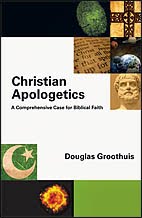
In his monumental work,Christian Apologetics, Douglas Groothuis argues that worldviews can be proposed as hypotheses. Worldviews present themselves as answers to explain the phenomena we experience (Groothuis, Christian Apologetics, 49). Groothuis therefore presents criteria for evaluating worldviews as though they were hypotheses about the world. Kenneth Samples similarly draws out nine tests which can be used to determine whether the claims of a worldview are true in his book A World of Difference (page numbers from that text, citation below). From these proposed methods, we can derive tests to evaluate competing worldviews:
1) Coherence– if a religion is contradictory, it simply cannot be true. For example, if a religion claimed that “Person Z is god, and person Z is not god,” that religion would be incoherent (Samples, 33). Furthermore, “If a worldview’s essential propositions are coherent… it is more likely to be true than if its essential propositions are not related in this way” (Groothuis, 55).
2) Balance– “A valid worldview will be ‘neither too simple nor too complex.’ All things being equal, the simplest worldview that does justice to all aspects of reality deserves preference (Samples, 33-34).
3) Explanatory Power and Scope– Does the worldview explain what we experience in enough detail? If a worldview does not explain our world, or it cannot account for certain phenomena, then it is lacks explanatory power (Samples, 34). Worldviews which make propositions which they cannot account for lose credibility (Groothuis, 53).
 4) Correspondence– Does the worldview match the facts we know about the world to our experience of the world? If we know that the worldview in question promotes claims we know are false, it does not match reality (Samples, 34-35). Think about it this way: worldviews are supposed to be reality. If a worldview does not match reality, how can it be reality? We are able to test factual claims through empirical and scientific methods, so if a worldview continually is able to establish its essential claims by means of these methods, it is more likely to be true (Groothuis, 55).
5) Verification– Can this worldview be falsified? Worldviews which cannot be found to be false cannot be found to be true either.
6) Pragmatic Test– Can we live by this worldview? This test is less important, but still has credibility–we must be able to live out the worldview in question (Samples, 35-36). But worldviews should also be fruitful in the development of greater intellectual and cultural discoveries (Groothuis, 57).
7) Existential Test– Like the pragmatic test, this one is not as important as whether the view is factual, but it is still helpful. If worldviews do not account for inherent human needs, it is possible the view is false (Samples, 36). Again, this is not necessary for a worldview, but it helps measure a view’s completeness.
8 ) Cumulative Test– Does the worldview gain support from all the previous criteria? If a worldview is able to satisfy all the criteria, it gains credibility (Samples, 36-37).
9) Competitive Competence Test– If the worldview satisfies the previous criteria with more evidential power than other worldviews, it gains credibility over and against them (Samples, 37).
10) Radical ad hoc readjustment– Groothuis presents this as a negative test for worldviews. “When a worldview is faced with potentially defeating counterevidence, an adherent may readjust its core claims to accommodate the evidence against it. Various theories and worldviews can legitimately refine their beliefs over time, but radical ad hoc readjustment reveals a deep problem…” (Groothuis, 57). There is, as Groothuis pointed out, a line between refining belief and simply readjusting belief in an ad hoc way. If, for example, it were discovered that Jesus did not rise from the dead, then Christianity would be false (more on that below). If, however, one simply adjusted Christianity to say “Jesus spiritually rose from the dead,” that would constitute a desperate, ad hoc measure to preserve the worldview and count as discrediting Christianity.
These tests present objective criteria for testing worldviews. If, for example, one wished to deny their worldview had to be coherent, they’d have to affirm that which they denied, for in denying that criterion, they were attempting to make their view more coherent. The testing of worldviews is a legitimate task, and indeed one in which people should engage. Some things, if falsely believed, are harmless (for example, if one believed it rained yesterday when it did not). Worldviews, however, if falsely believed, are damaging on any number of levels. If one believed God didn’t exist when, in fact, He did, then one would be doing a great evil by not acting upon the truth of God’s existence (and the contrary). Thus, the testing of worldviews is no task to be skimmed over, but one which should be approached with fear and trembling. The criteria outlined above allow people to engage in this task and evaluate the realm of ideas.
Christianity Encourages Exploration of Reality
What I find extremely interesting is that Christianity, unlike many world religions, doesn’t discourage the discovery of truth, nor does it evade evidence by claiming that it is merely a faith or feeling. Rather, the founders of Christianity explicitly stated that it is based upon certain truth claims, and that if those claims are false, then Christianity is worthless. Paul, for example, wrote “And if Christ has not been raised, your faith is futile; you are still in your sins” (1 Corinthians 15:17). The truth of Christianity rests exactly upon a testable claim: Jesus rose from the dead. If He did not, Christianity is false. Christianity’s scope and explanatory power are superior- it can account for the existence of contingent objects, persons, consciousness, life, and the like. Christianity corresponds to reality, satisfies existential and pragmatic needs, is simpler than many other explanations, its coherent, and it matches all the criteria. Christianity expects its adherents–and outsiders–to test the faith and discover whether it is true. I have found, personally, that it pasts these tests over and over.
Conclusion
Whether one agrees or not, it is simply the case that religions make claims about reality. These claims are, in turn, true or false. Not only that, but they must match with reality in several important ways. Christianity not only adheres to these tests, but it encourages them. It also passes these tests. Does your worldview?
Sources
Douglas Groothuis, Christian Apologetics (Downers Grove, IL: InterVarsity, 2011).
Kenneth Samples, A World of Difference (Grand Rapids, MI: Baker, 2007).
Image Credit
I took this picture at Waldo Canyon near Manitou Springs, Colorado on my honeymoon. Use of this image is subject to the terms stated at the bottom of this post. The other image is the book cover from Samples’ book.
SDG.
——
The preceding post is the property of J.W. Wartick (apart from citations, which are the property of their respective owners) and should not be reproduced in part or in whole without the expressed consent of the author. All content on this site is the property of J.W. Wartick and is made available for individual and personal usage. If you cite from these documents, whether for personal or professional purposes, please give appropriate citation with both the name of the author (J.W. Wartick) and a link to the original URL. This blog is protected by Creative Commons licensing. By viewing any part of this site, you are agreeing to this usage policy.
William Lane Craig vs. Stephen Law- Thoughts and Links
Recently, William Lane Craig debated Stephen Law on the topic “Does God exist?” Remember the topic as I review the debate.
Craig 1
William Lane Craig presented a different set of arguments from his normal 5. This time, he argued the cosmological and moral arguments along with the argument from the resurrection. My guess is that the short time allowed was the reason for this change of strategy. Craig argued that actual infinites cannot exist in reality. He pointed out that transfinite math simply does not allow addition or subtraction of infinity, because it is absurd, but in the real world, if an infinite did exist, nothing could prevent it from having things added or taken away. Thus, Craig concluded, there cannot be an infinite past.
He then briefly outlined the empirical case for a finite past, citing Borde, Guth, and Vilenkin’s paper which shows that every model of the universe’s past must account for entropy, and therefore must be finite. I don’t want to get sidetracked from my review of the debate here, but so many people seem to either ignore or miss the point of this argument. It’s not that entropy only disallows an infinite universe that is one state, rather, entropy disallows an infinite past for oscillating universe models, bubble universes, and any other types of strategies people have tried to raise in order to rebut cosmological arguments. I recently got an e-mail in which someone said I’m being dishonest by only referencing the Big Bang as evidence for a finite universe, when there may have been previous universes. Well that’s simply wrong, even if there were previous universes, they would have to take entropy into account. If the past is infinite, all the energy available for the generation of universes would have been used up.
Anyway, Craig went on to argue the moral argument: If objective moral values exist, then God exists. They do, so God does. A great point Craig made is that any argument against the existence of objective moral values must rely upon premises which aren’t as plausible as the objective morals themselves. That’s an excellent point that many tend to ignore.
As far as the resurrection is concerned, Craig presented the “three facts” argument. He pointed out that three facts are agreed upon throughout scholarship on the topic: that the tomb was found empty, different individuals saw appearances of Jesus alive after his death, the disciples’ belief in Jesus resurrection despite having every predisposition to the contrary. These facts, argued Craig, are best explained by Jesus’ resurrection.
Law 1
Law began by arguing about animal suffering. He said that the extraordinary amount of suffering which is experienced by animals every day is such that it can weigh against the existence of God. He noted that some people dismiss this as “merely animals” but argued, “I wonder if they’d say the same thing if I took a red hot poker to their… cat.” Note how Law distorted his original argument, however. Certainly, I’d be extraordinarily angry with Stephen Law if he took a hot poker to my cat (I don’t have one any more but I used to). But the reason would be because Law is a moral agent. He is capable of knowing what he’s doing, and would clearly have to be sadistic in order to do such an action. If, however, an eagle came and carried my cat away, I would be extremely upset, but I would not accuse the eagle of having done a morally wrong action, because the eagle is not a moral agent. Yet Law used that very emotional image of himself–a moral agent–as an analogy for animal suffering. There’s clearly a major issue with such an argument.
Law went on to argue that there’s no reason to think that the God whose existence Craig is arguing for is not an evil god. Here I think Law had some decent points… for arguing against bare theism, but not against Christianity (see “Analysis” below). He argued that for certain theodicies, there can be parallel arguments constructed for an evil god. He also noted that Craig’s arguments could work just as well for an evil god (a notable exception would be the moral argument, more on that later… and it’s pretty hard to see how the resurrection would fit into his ‘evil god’ scenario). Law also argued that if the good in the world refutes an evil god, the evil in the world should refute a good God. Law didn’t do anything to rebut Craig’s arguments for the existence of God.
Craig 2
Craig quickly attacked Law’s appeal to emotion with animal suffering. He noted that it was very much anthropopathism to assume that animals had the same response to suffering as humans. In fact, he went on to note three hierarchies of suffering, and pointed out that animals do not have the capacity to be aware of the fact that they are suffering. So despite the suffering of animals, they are not even aware of that fact–something which Craig credited to God’s mercy. Animal suffering, he argued, is also necessary for a number of reasons, one of which is the stability of ecosystems. Without predation, all life on earth would be wiped out. Thus, it is fair to say that animal suffering fits into the divine plan.
Craig countered Law’s argument about the ‘evil god’ by noting that the moral argument specifically rebuts Law’s assertions. Not only that, but Law was arguing against a kind of theism which does not exist. Christians don’t survey the world and conclude God is good, rather, they believe God is good because that’s the type of being God is, necessarily.
Craig presented a number of reasons for thinking a good God would allow evil, which would therefore discount the rebutting evidence of evil. He also agreed with Law that looking at the world alone would lead to a draw, but that, as already noted, the moral argument and the type of being God is would defeat an ‘evil god’ scenario.
Law 2
Law argued that Craig had made a straw man of his position by saying that theism is not inductive. Then he went on to argue that the moral argument is the only one Craig can rely on to establish the goodness of God. He cited Swinburne as a Christian who did not believe objective morality relies on God. He ended his second segment by arguing that surely there is enough evil in the world to make the existence of God improbable.
Craig 3
Craig noted that Law has a strange kind of atheism which grants the existence of God but attacks the character. He pointed out that Law had still not rebutted any of his arguments, but focused merely on the character of God. He also pointed out that appealing to Swinburne was a mere appeal to authority and that he could cite a number of atheistic philosophers who agreed with his premises.
Law 3
Law argued that there are no objective moral values (curious, considering the citations Craig read in the debate). He then attempted to rebut the argument from the resurrection by citing an instance where a number of people believed they saw a UFO when it was really the planet Venus.
Craig Conclusion
Craig once more noted that Law had yet to rebut any of his arguments and that Law persisted in maintaining a strange atheism in which God exists, but may or may not be good. He noted that Law’s attempt to rebut the resurrection did not take into account the religio-historical context of that event and that all claims of experience must be measured by objective criteria, which the resurrection passes. He concluded that because his arguments stood undefeated, God exists.
Law Conclusion
Law basically said “why not believe in an evil god?” and argued that Craig still did not justify objective morals.
Analysis
Law came in with a pretty interesting argument which was unfortunately not the topic of the debate. I think it would be really interesting to see Law vs. Craig on a topic like “Is God good?” His arguments had some weight, but I think Craig did an excellent job rebutting them while remaining on track. Law essentially ignored the cosmological argument and put the topic of the debate aside in favor of arguing about whether God is good. As far as the topic of the debate goes, it’s clear that Craig established the existence of God. In fact, Law was essentially granting that point (in the Q&A he argued that it is not the case that because he didn’t rebut the arguments, he agrees God exists… but it is important to note that he did not rebut the arguments so, on the face of it, it seems that the arguments stand unchallenged). As far as Law’s good points go, I think he had the best points I’ve seen an atheist raise in a debate with Craig so far, but Craig was able to adequately rebut them while sustaining his primary argument: that God exists.
Finally, on the “evil god” hypothesis: Law failed to realize that the concept of “greatest possible being” is central to Christian theism and did not take that into account. Craig perfectly illustrated this when he acknowledged that a “creator” on its own cannot be shown to be good or evil, but went on to point out that that doesn’t affect Christian theism, which holds that God is the greatest possible being. Law was, in a sense, arguing against “bare theism,” which is, as he points out, incoherent. Yet Craig was arguing to establish the Christian God–the greatest conceivable being. Law’s arguments therefore seem to only underscore the coherence of Christian theism, by demonstrating that only with a correct concept of God can theism be coherent.
[The following section in brackets added after the post was up and had several comments.]
[I’d like to point out more explicitly why Law’s argument doesn’t work. The reason is because his concept of ‘god’ is incoherent. Theism claims that God is the greatest possible being. But Law is arguing that this being could be evil. Each of his arguments about the evil god were designed to argue that God ‘could be’ evil. But then Law would have to assert that evil is a property such that it makes beings great. I don’t see how he could argue this. He’d have to first argue the ontological reality of evil–which would establish the existence of objective morality and thus back up Craig’s moral argument. Then he’d have to argue that evil is, in fact, a property. Finally, he’d have to establish that evil is a great-making property. I don’t see any way he could possibly do this, and the burden of proof is definitely upon him to show these concepts are coherent. Unless and until he does that, his arguments are simply incoherent.]
Links
Stephen Law, his evil god, and radical skepticism– I analyze Stephen Law’s evil god challenge further and conclude that it entails radical skepticism.
http://www.premier.org.uk/unbelievable– follow the rest of Craig’s tour through England.
Download the debate at Apologetics 315.
Check out more analysis of the debate at Thinking Matters.
Was Stephen Law Guilty of a Bait and Switch?
An analysis of Law’s argument for an “evil god.”
Doug Geivett writes about “The Missing Ontological Argument” and Law’s misunderstanding of theism.
SDG.
——
The preceding post is the property of J.W. Wartick (apart from citations, which are the property of their respective owners) and should not be reproduced in part or in whole without the expressed consent of the author. All content on this site is the property of J.W. Wartick and is made available for individual and personal usage. If you cite from these documents, whether for personal or professional purposes, please give appropriate citation with both the name of the author (J.W. Wartick) and a link to the original URL. This blog is protected by Creative Commons licensing. By viewing any part of this site, you are agreeing to this usage policy.
The Book of Mormon: Introduction and Importance
 Mormonism is growing with great speed. There are few, however, who understand the limits of Mormonism’s truth claims. Mormon apologists have frequently made assertions which are either false or ungrounded. I have therefore decided to write a series of posts on the Book of Mormon, followed by a critique of Mormonism’s philosophical stances. This post will introduce the book of Mormon.
A man was born on December 23, 1805 in Vermont. He was known for digging for imagined buried treasure with his father and others.[1] He was also known for being a mystic,[2] for his conviction for disorderly conduct in a scam in which he tried to convince locals he had found treasure underground,[3] and for being the translator of golden plates: The Book of Mormon.[4] The man was Joseph Smith, Jr., the founder of the Mormon faith, “The Prophet.”[5] The Book of Mormon, according to the Church of Jesus Christ of Latter Day Saints (the official name of the Mormon Church), is “another witness that Jesus Christ… was and is God’s Son… It supports and verifies the Bible.”[6] If this is true, then the Book of Mormon is as much the Word of God as the Bible. However, the Book of Mormon’s validity as the Word of God is strongly undercut by scientific and historical evidence which contradicts its claims.
The Mormon Articles of Faith describe the Book of Mormon as “a volume of sacred scripture which, like the Bible, embodies the word of God.”[7] The Book of Mormon is supposed to record other prophecies about Jesus.[8] Perhaps the most striking enunciation of the contents of the Book of Mormon is found later in the Articles:
The Book of Mormon is a divinely inspired record, made by the prophets of the ancient peoples who inhabited the American continent for centuries before and after the time of Christ, which record has been translated in the present generation through the gift of God and by His special appointment. The authorized and inspired translator of these sacred scriptures… is Joseph Smith.[9]
Furthermore, the arguments for the authenticity of the Book of Mormon often parallel those arguments used to justify the Bible: it is said to be “internally consistent,”[10] prophetically fulfilled,[11] and supported by archaeology.[12] Yet there are also arguments unique to the Book: it was certified as genuine by three men who signed a statement confirming they witnessed the translation of the Book,[13] eight other witnesses claimed to have seen the gold plates from which the Book was purportedly translated,[14] and the ethnic background of Native Americans is said to be Israelite, which would demonstrate the Book’s truth.[15] It is clear that the Book of Mormon is the absolute bedrock of Mormon faith. If the evidences for the Book do not hold the evidential weight required to confirm its truth, then Mormon faith is undone.
The Book of Mormon’s veracity hinges on the claim that the lost tribes of Israel came to America, settled there, and wrote their history on gold plates which Joseph Smith later translated. Such claims at the time of Joseph Smith seemed irrefutable; they simply couldn’t conceive of technology which could test such ideas. Today, however, such technology is available. Unfortunately for Joseph Smith and the Mormon Church, the evidence runs contrary to what the Book of Mormon claims.
Over the coming weeks, I’ll investigate each of these claims in turn, while finding them wanting. The next post will demonstrate that the Book of Mormon cannot be true based upon a genetic analysis of Native Americans. Future posts will argue that the Book of Mormon does not reflect ancient near eastern writing and that the Mormon concept of God is philosophically untenable.
[1] Walter Martin. The Kingdom of the Cults (Bloomington, MN: Bethany, 2003), 197; Jerald and Sandra Tanner, Mormonism: Shadow or Reality? (Salt Lake City, UT: Modern Microfilm Company, 1972), 32.
[2] Martin, Kingdom, 197
[3] Wayne L. Cowdrey, Howard A. Davis, and Arthur Vanick, Who Really Wrote the Book of Mormon: The Spalding Enigma (St. Louis: Concordia, 2005), 395f.
[4] Martin, Kingdom, 201.
[5] Ibid., 197f.
[6] The Mormon Church, “Frequently Asked Questions,” The Church of Jesus Christ of Latter Day Saints, http://www.mormon.org/faq/#Book+of+Mormon|question=/faq/what-is-book-of-mormon/ (accessed October 14, 2010).
[7] James Talmage. A Study of the Articles of Faith (Salt Lake City, UT: The Church of Jesus Christ of Latter-day Saints, 1976), 251.
[8] Talmage, Articles of Faith, 252.
[9] Talmage, Articles of Faith, 255.
[10] Ibid, 278-279.
[11] Ibid, 274-275.
[12] Ibid, 283-293.
[13] Ibid, 270.
[14] Ibid, 271.
[15] Ibid, 283.
Image Credit: http://commons.wikimedia.org/wiki/File:Slc_mormon_tempel.jpg
SDG.
——
The preceding post is the property of J.W. Wartick (apart from citations, which are the property of their respective owners) and should not be reproduced in part or in whole without the expressed consent of the author. All content on this site is the property of J.W. Wartick and is made available for individual and personal usage. If you cite from these documents, whether for personal or professional purposes, please give appropriate citation with both the name of the author (J.W. Wartick) and a link to the original URL. This blog is protected by Creative Commons licensing. By viewing any part of this site, you are agreeing to this usage policy.

 J.W. Wartick - Reconstructing Faith

