christian
New Page: Christian Diversity
I have started another blog, which will not interfere with this one (though there may be some overlap). It is called Christian Diversity. Here’s the mission statement:
Christianity has been separated into divisions over denominational, cultural, and theological lines, yet the message of Christianity remains the same for all generations: Christ crucified for our sins. We at ‘Christian Diversity’ seek to demonstrate that while Christianity may be divided institutionally, we are of one mind spiritually. We affirm ‘Mere Christianity’, which is the belief that Christianity is ultimately this faith in Jesus Christ as Lord and Savior. We affirm the Three Ecumenical Creeds (The Apostles’, Nicene, and Athanasian Creeds).
The goal of ‘Christian Diversity’ is to discuss doctrinal differences on matters not essential to the faith. We understand that the goal of total ecumenism–that is, the unity of all churches–may be out of reach, but we strive to come to the understanding that all Christians are saved, and there are no divisions among us when it comes to Christ. Thus, while we may disagree on many of the issues we discuss, we continue to strive towards a better understanding of our fellow Christians and increase unity with them. This will serve to strengthen us as brothers and sisters in Christ.
Our motto comes from St. Paul, who writes in 1 Corinthians 1:10 I appeal to you, brothers, in the name of our Lord Jesus Christ, that all of you agree with one another so that there may be no divisions among you and that you may be perfectly united in mind and thought.
Check it out! Let me know your thoughts!
Passional Reason and the Heart
 Our heart is involved with our beliefs, from our desire for chocolate ice cream to the truth claims of our religion. I’ve written before about the role our will can play in belief. Now I want to turn to a thesis which is highly contentious, namely, that the evidence for Christianity is conclusive, but that this evidence can only be fully ascertained within the framework of a believing heart.
William Wainwright writes about a similar thesis:
“…the thesis that mature religious belief can, and perhaps should, be based on evidence but that the evidence can be accurately assessed only by men and women who possess the proper moral and spiritual qualifications… reason is capable of knowing God on the basis of evidence–but only when one’s cognitive faculties are rightly disposed… [Christianity] places a high value on proofs, arguments, and inferences yet also believes that a properly disposed heart is needed to see their force” (Wainwright, 3).
If my thesis is accurate, however, then this means that only the believer can fully understand the truths of Scripture, the soundness of the incarnation, and the blessedness of the Trinity. Regarding the truths of Scripture, Wainwright comments that:
“The strongest evidence for scripture’s divine authority is its spiritual beauty–a feature that natural reason cannot detect. Only those with converted hearts can perceive, taste, and relish the stamp of divine splendor on scripture and thus be certain of its teachings” (17).
Why should I claim such things? Why think that only a believer can detect the truths of Christianity, when some of these very truths are made to be detected by “natural reason” (i.e. arguments for the existence of God)?
The answer is fairly simple: such evidence is inherently life-changing. This should not be such a surprise, but it seems as though it is a point too often ignored in philosophy of religion. A little reflection should reveal this to be the truth, however. If one grasps fully the truth of, say, the Kalam Cosmological Argument, then one comes to the conclusion that there is a transcendent cause to the universe. Is it even possible for such a conclusion not to be life-changing? Should not the reaction be an utter commitment to discovering what this cause is? But then, in light of other sound arguments (ontological, moral, etc.) the conclusion is even more startling: theism is true. It is impossible for such a conclusion to be accepted with the sterility of mere philosophical assent. Such a conclusion forces a new worldview, a new moral outlook, and a new heart.
Furthermore, it seems to me obvious that if the God of Classical Theism exists, then such a God would, in sovereignty, demand such life-changes upon the discovery of His existence. As Paul Moser puts it, “…God would offer the kind of evidence and knowledge that represents and advances God’s kind of unselfish love among humans” (Moser, 14).
So what does this mean for the believer, for the unbeliever? For the believer, it means he or she should not abstain from offering evidence. Such evidence, after all, has historically been considered rational basis for Christian belief. But the believer should not expect the nonbeliever to come to faith in Christ based on an argument. Such arguments are barrier-breaking, but not life-saving.
For the nonbeliever, it means that he or she cannot come into faith on his or her own… it is a matter of coming to God with “Fear and Trembling,” knowing that “faith is the highest passion in man” (Kierkegaard, 90). This faith requires the nonbeliever to abandon the self-restraints which he or she has placed on the heart. It requires standing on the precipice of faith and realizing that one cannot come to God on one’s own, but that God brings all to Himself. It requires an abandonment of the radical skepticism, the unrepentant lifestyle, the willful setting aside of the evidence, and a realization that God is in control. It is the existential moment of fear and trembling, of triumph and despair, about which Kierkegaard writes so eloquently. And in this existential moment, it is God Himself who calls, who folds the nonbeliever into unending love.
When it comes to the matter of God’s existence, the problem is not with the evidence, it is with the heart.
Sources:
Moser, Paul. The Evidence for God. Cambridge University Press. 2010.
Kierkegaard, Soren. Fear and Trembling. A & D Publishing. 2008.
Wainwright, William. Reason and the Heart: A Prolegomenon to a Critique of Passional Reason. Cornell University Press. 1995.
——
The preceding post is the property of J.W. Wartick (apart from citations, which are the property of their respective owners) and should not be reproduced in part or in whole without the expressed consent of the author.
Book Review: Horrendous Evils and the Goodness of God
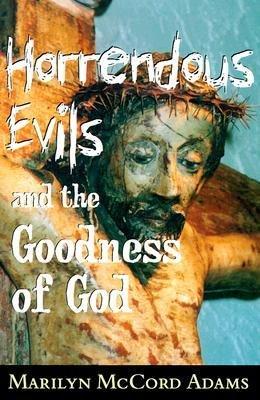 The problem of evil is often seen as the greatest threat to theistic belief. Analytic Philosophers have struggled with the issue on both sides of theism–from Plantinga’s innovative “Free Will Defense” to the claim of the positive irrationality of theism issued by the late J.L. Mackie. This issue doesn’t show signs of slowing down, either. It has dominated philosophy of religion for millenia.
In Horrendous Evils and the Goodness of God
Adams’ account has the kind of honest, penetrating discussion of real evil in our world about which philosophy would do well to take notice. The little child kidnapped and murdered; the innocent family killed by the drunk driver; the millions murdered by Hitler; these examples all demand answers for the individual occurrences of evil, according to Adams (see her discussion on pages 17ff). Specifically, she writes that “At a minimum, God’s goodness to human individuals would require that God guarantee each a life that was a great good to him/her on the whole… God would have to… [give each person’s life value]… by giving it positive meaning through… great enough good within the context of his/her life” (31, emphasis hers). This stunning claim will likely make the theistic philosopher rock back on his/her heels for a moment. Surely, we cannot be called to account for every individual evil!
Adams believes that the Christian theist can indeed do so, not by taking the unconvincing (in my opinion) route of arguing that such persons are having their character built by suffering, but by appealing to God’s goodness to each individual person (55). Specifically, this goodness of God is demonstrated within Christianity by Jesus Christ. After a penetrating discussion of purity and defilement on Christianity and Judaism (see 86ff), Adams argues that in Christ, God “takes the… approach of joining us in our defilement [that is, our suffering of horrendous, individual evils]” (98). This act of Christ means that our defilement from sin, evils, and even horrendous evils has the possibility of becoming holiness (99). Thus, through Christ, and the power of the Holy Spirit’s redefining rebirth of baptism, God offers the greatest good to every individual (102).
Through this self-defilement which leads to holiness, God invests meaning by “…being good to all created persons–that is, in seeing to it that each gets a life that is a great good to him/her on the whole, one in which any participation in horrors is not merely balanced off but defeated” (126, emphasis hers). Adams’ thesis, then, is that in Christ, God provides the defeater for horrendous evils by ensuring that each person’s life is a great good. Here Adams rides a fine line of universalism (it seems as though she may be saying every person is indeed saved through Christ, eventually), but her account can be easily modified by those who reject universalism–for one can argue that God provides the defeater simply by offering the possibility of such goods to each person. And God is good to each person by providing such an opportunity.
Adams uses the rest of her work to argue further how God’s participation in suffering demonstrates that God has been immeasurably good to each individual.
I find Adams’ argument particularly enlightening. Her emphasis on the individual evils of the world is a breath of fresh air as well as a new challenge to Christian philosophers. We do need to address individual atrocities. This doesn’t mean we need to go through, case-by-case, and provide theodicies for each event. Rather, as Adams urges, we can address this by arguing that God is good to every individual through his redemptive act by Jesus Christ.
My main critique of Adams in this work is that while I find her issues with abstracting the problem of evil to hit the mark some of the time, I think she underestimates the value of some of the analytic responses to the problem of evil. Certainly, taking evil as a sum total and arguing that God could have some reason for permitting this much evil to occur downplays the importance pf the evil actions towards individuals , but there is a place for such defenses within philosophy. Rather than jettisoning these types of answers, then, I think we would be best suited adding Adams’ defense to the many-faceted response to the problem of evil from Christian philosophers of religion.
Source:
Adams, Marilyn McCord. Horrendous Evils and the Goodness of God
——
The preceding post is the property of J.W. Wartick (apart from citations, which are the property of their respective owners) and should not be reproduced in part or in whole without the expressed consent of the author.
Problems With Evolutionary Morality
Recently, i discussed the problems atheism has with establishing a base for moral discussions (see here). Now it is time to delve into the problems with one of the most commonly used ethical theories of non-theists–evolutionary morality (or, to use a phrase coined by Koukl, “monkey morality”).
Evolutionary Morality generally argues that our moral beliefs arose by some kind of naturally-selected process. Notably, ethical judgments which benefited the survival of the species tended to be favored (thus, murder was frowned upon), while those judgments which prevented the spread of one’s genes tended to be disfavored (hence the reason rape is not permitted, for now it makes one stigmatized socially, thus leading to difficulties propagating genes).
Without much further ado, I find numerous problems with this ethical theory. Here, I shall present only a few.
1) How can we get an “ought” from matter in motion? Ultimately, evolutionary moralists assert that all there is in the universe is the physical realm. As such, a “person” is reducible to matter in motion. But then how exactly is it that there can be a moral “ought” if everything is matter in motion. Evolutionary morality reduces ethical decisions to the point of being mere wishes at best. There is no “ought” or “should” in evolutionary morality, for there cannot be. Ought’s can only be issued from sources to which one has obligations. It is hard to see how a person owes obligation to one’s species or matter.
2) Evolutionary Morality assumes that what is best for a being is the survival of the species. How is it that we can say what is best for an individual being is to insure survival of the species? What is it that makes it “good” or “right” to propagate genes? Furthermore, what if an individual does not wish to help insure survival of his/her species. Suppose there is a species of sentient beings, the Plargons, who are in all ways horrible. They travel the galaxies, taking over lush worlds, burning them to the ground and using every available resource until it is depleted, and then move to the next planet. Suppose now that Judy, a Plargon woman, decides it would be better for her species to be eradicated from the galaxy, for they are without capacity for reform. She therefore manages to destroy all other Plargons, and then retires to a corner of the galaxy alone until she dies, exterminating the Plargon race. Would this be a good or bad thing? Such a hard question should take much consideration from any thinking person, but evolutionary morality circumvents the hard question and simply delcares that Judy has done the greatest evil imaginable, for she has gone against the survival of her own species.
3) Evolutionary Morality assumes that all beings “should” desire the continuity of the species, yet this assumes a higher morality. Again, what makes it “good” or “right” to do things for the survival of our species. Humanism suffers from this glaring problem. It’s all well and good to say that what is good for humanity is what we should strive for. But whence does this “should” come?
4) Evolutionary Morality destroys altruism. Altruism, on evolutionary morality, is generally stupid. For to sacrifice oneself to save another (or several others) is to destroy one’s own place in the gene pool, thus eradicating one’s very reason for existence. Yet it seems intuitively as though altruism is a great good. Evolutionary morality therefore goes against our common sense notions of morality.
5) Evolutionary Morality is arbitrary. That which is good for the species may change over time. Recall the case of rape. I have heard it said that at one time rape was considered “okay” or “good” because it was one way to ensure the survival of the human race. Now, however, due to societal constraints, rape is “bad” or at least “stigmatized” and therefore is viewed negatively. But it seems intuitively that rape is a great horror, no matter what the circumstances! This is another case of Evolutionary Morality violating our moral senses. Furthermore, suppose the nuclear apocalypse happens, leaving only a few hundred humans alive. Evolutionary Morality could allow for rape to once more be a great good, for after all, we would need to repopulate the earth! Why should the feelings of some women or men get in the way of the survival of the species!? Again, the bankruptcy of Evolutionary Morality shines through.
It seems to me that the problems with moral systems which do not include God are endless. Without a lawgiver, anything can be right. Without a lawgiver, there are no “oughts”. Morality therefore dies.
——
The preceding post is the property of J.W. Wartick (apart from citations, which are the property of their respective owners) and should not be reproduced in part or in whole without the expressed consent of the author.
Religious Diversity: What’s the Problem?
Religious diversity is one of the greatest challenges found by people of any faith in our pluralistic society. There are so many things to consider about this subject that there is no way to adequately cover it in one post.
First we must ask ‘what exactly is the problem of religious diversity?’ Is there really any logical problem to their being more than one religion in existence? I think the answer to this objection, if it is any objection at all, is simply to answer that, as in other areas of life, the fact that there is a broad array of beliefs about a subject does not mean that all are false or that the subject is unknowable.
Is the problem, then, instead specific to religions which claim exclusivism? Is it true that all religions have truth in some way, and that those which claim to have the truth are fundamentally flawed in some way? This, again, doesn’t seem to follow from anything. The fact that there is a plurality of opinions over the Divine (or whether there is a Divine-thing-being) alone does not justify the assertion that all religions are somehow about the same thing or that none are true. Nor does it imply that religions which claim to have the only way are incorrect. Again, there doesn’t seem to be any kind of structured argument here.
Often, this problem is focused around a specific religion; namely, Christianity. The problem is posed in the following way: If [traditional] Christianity is true, then Jesus is the only way of salvation. What then, of those “good people” who are not Christians? What of the faithful Buddhist, Hindu, or Zoroastrian? Would the loving God of Christianity condemn these to hell?
This is the problem posed in its most powerful form, in my opinion. Religious diversity doesn’t itself function as a defeater for theistic belief. Instead, it can pose a problem to exclusivist Christian belief. This is the problem upon which my next posts will focus. Broadly, I will address the other attempted defeaters above throughout my posts on religious diversity, but it is the exclusivist Christian position around which I will focus. This is the position to which the problem of religious diversity poses the greatest problem (note that any religion which features exclusivism will also face this problem).
Let me briefly offer the outline of what will be my expanded response:
1) Jesus is indeed the only way to salvation (John 14:6)
2) Jesus’ death and resurrection provided the possibility of salvation to all people, on the condition of faith (Romasn 3:21ff)
3) People are judged by the knowledge they have (Romans 2:12ff)-This is the key point. The distinction between ontological (availability of) and epistemological (knowledge of the means of) salvation must be drawn.
4) The salvation provided by Christ is ontologically necessary. The key issue is of its epistemic necessity.
Searching for Writers
I’m planning to start a new site (in addition to this one). The point of the site is to have internal Christian dialogue, with an emphasis on the fact that despite our disagreements on matters not related to salvation, we are all Christians and should treat each other with love.
The writers for the site will be required to affirm the three ecumenical creeds (Apostles’, Nicene, and Athanasian). The posts on the site will be intended for the lay reader but will feature doctrinal discussion on a loving, Christian level. Specifically, some topics could include: the origins of life (i.e. creation vs. evolution vs. ID), Christian approaches to religious diversity, original sin, baptism, the role of women in the church, the authority of the Bible, the authority of the Church, etc. The posts would be laid out either as a point-by-point dialogue between the contributers (i.e. a back and forth with short e-mails in published form) or as series of posts with writers talking back and forth.
The purpose will be many-faced: to encourage discussion among Christians about issues which are important, while still maintaining Christian love for each other; striving for church unity by increasing respect among members of the Body of Christ; potentially apologetic/evangelistic purposes; and giving glory to God.
Posts on this new site will be short, so as to make sure the time commitment is not too high. I’m thinking about around 500 words as being the upper limit (though writers could exceed that if they desired–these issues are important and some could require several pages to fully address).
Any interested writers should be prepared to demonstrate writing skill and a knowledge base sufficient for engaging in discussion on the aforementioned topics. Applicants may submit an up to 500 word sample of writing on one of the topics above, along with a short biography and affirmation of Christian belief (this part will not count towards the 500 words) to oontabob@yahoo.com. Applications from Christians of any denomination are accepted, though, once more, adherence to the three ecumenical creeds is a requirement (which includes belief in the Trinity, the divinity of Christ, etc.).
I’m also looking for people talented with graphics/etc. who could potentially help with making pictures/banners/etc. for the site.
The Need for Apologetics
Just thought I’d share this video with my readers. Ultimately, it is Frank Turek offering the services of his ministry, but I think that my readers should note the important points he raises in regards to the need for apologetics in our society.
Molinism and Timelessness–A Match Made in Heaven (No, really!)
It seems to me that there are few matches better made than the doctrine of Divine Timelessness and Molinism (aka Middle Knowledge). I think they truly are a match made in heaven, for God Himself possesses both of these attributes/properties.
First, some definitions. God is timeless, which means that “God exists, but exists at no time” (Leftow, xi). Middle knowledge is God’s knowledge of counterfactuals (simplifying the case to some extent here, see Thomas Flint’s discussion in Divine Providence: The Molinist Account). Jointly these propositions serve as explanations for a number of phenomena of Christianity.
First, human freedom and divine omniscience is a problem curtailed jointly by these doctrines. Timelessness solves any kind of potential incompatibility by simply denying that omniscience is foreknowledge. Instead, it is simply knowledge, known all at once in one “instant” in eternity (Leftow, 246ff). That which is not in time cannot determine things “ahead of time”.
Molinism, on the other hand, can also deny any incompatibility by asserting that the counterfactuals of God’s knowledge are not under the control of God. In other words, God has no control over whether or not Jenny will freely choose to go mountain climbing. God can control the circumstances in which Jenny is placed, and then bring it about that some other counterfactual would be true (i.e. Jenny does not go mountain climbing because she stays home to nurse her ailing goldfish). But this control over circumstances does not entail control over choices. The choices remain free (Flint, 11ff).
Now, one objection to Molinism is that because God decides which circumstances in which to place Jenny before the creation of the world, he still is determining what she will do because he picks from the circumstances. But this is not quite the case. Jenny’s actions are not determined, but some of the circumstances in which she is placed are. This doesn’t preclude her free choice, however, for God only controls the situations Jenny will encounter, while her free choices remain outside of His control.
Timelessness is sometimes denied due to a perception that a timeless God could not have meaningful interactions with His creatures. This does not seem to be the case however, once one analyzes exactly what timelessness entails. Leftow argues convincingly that timelessness can be thought of as, in some sense, a parallel “time” during which all things happen at once, though not simultaneously. The relationship of successive temporal instants can be thought of in some ways as similar to logical priority. If a timeless God has middle knowledge, furthermore, then God can indeed have “real” interactions with creatures, because He, in eternity, all-at-once performs the creative, providential act. This includes the situations in which His creatures will be placed.
Thus, by His creative act, He sets the situations in which He will interact with His creatures, and this action is a true interaction because He factors in their free choices and takes such things into account. Furthermore, the objection that God’s interactions are diminished because they happen “before” the interaction occurs is a specious claim, for if God is timeless, then none of His actions occur “at a time” other than in Eternity.
Therefore, it seems to me that jointly, a molinist account and a timeless God make quite a lot of sense. This is not to say that there are no other accounts of God that make sense, but this is part of the interest of philosophy of religion, after all, particularly among Christians: the dialogue, the interaction with the Biblical texts which perhaps speak to each issue, and the different conclusions which can be drawn. These differing conclusions do not take away from or destroy the validity of our faith, rather, they ensure that we delve ever deeper, striving for an understanding of the divine Godhead.
Sources:
Leftow, Brian. Time and Eternity. Cornell University Press. 2009 (reprint).
Thomas Flint, Divine Providence: A Molinist Account. Cornell University Press. 2006.
——
The preceding post is the property of J.W. Wartick (apart from citations, which are the property of their respective owners) and should not be reproduced in part or in whole without the expressed consent of the author.
Morality and Atheism
I am continually baffled by atheistic accounts of morality.* What, on atheism, gives us the grounds for stating that an action is wrong?
Morals can be either objective or subjective. The thrust of the following argument is intended to show that atheism cannot have objective morals. In other words, an atheist has no way to condemn some action as wrong, other than that it is wrong “in my opinion”.
There are only a few ways I have seen it argued that atheism can have objective moral values. These are:
1) Platonistic Atheism- Morals exist necessarily independently, as abstract objects (such as numbers).
2) Humanism- Humanity first. Humans are to be valued objectively, so morals can be based on what benefits the human race.
3) Science can answer moral questions, somehow.
There are horrendous difficulties with all three of these views.
Platonism about morality could be the best way for atheists to have a “way out”, if you will, for accepting objective morality. The existence of moral values such as “Justice” can be posited as brute facts of our existence. They just exist, and that’s all. The problems with this view are numerous.
First, on this view, the moral values of “Sloth”, “Hedonism,” “Masochism” are also platonic forms existing as brute facts. What reason can be given for choosing to prefer “Justice,” “Uprightness”, etc. over “Masochism,” “Hedonism,” etc.? If all of these things are simply brute facts, then why is it that some should be preferred over others? I see no non-question begging method for determining which values should be favored.
There is no reason, on atheism, to value one over the other. Second, how is it that (granting naturalist evolution) natural selection managed to line us up so wonderfully with what appears to be correct moral cognitions? Again, given that the morals themselves are brute facts of existence, it is utterly remarkable that we evolved in such a way as to line up with what appears to be the “good side” of the moral values (one might object by arguing that we don’t know either way, but then they would have to accept that somehow being a sadomasochist could be a moral good. I doubt very much this is a position worth even considering). Third, there is the thus-far ignored question as to what makes the idea of moral facts existing by brute fact even close to intelligible?
Given the huge problems with 1), and the fact that I consider this the strongest position for the atheist wishing to argue for objective morality, it seems these are dire straits indeed for the atheist ethicist.
2) is equally problematic, however, for a number of reasons. First is that humans often do not agree on what exactly is best for humanity. Which humans are allowed to determine what is right for the whole of society? Furthermore, 2) doesn’t actually provide objective morality at all. It merely sets an arbitrary line for morality–it is moral to act for the good of humanity. What basis is there for taking this assertion as truth? We are humans, but this doesn’t, on atheism, entitle us to any kind of superior ethical or cognitive status. Why is it that humans are objectively valued? It just pushes the problem of objective morality up one level.
FInally, 3) is utterly bankrupt as an explanation for objective morality. I have discussed this position before in more detail (see my discussion of Sam Harris’ attempt at articulating this unintelligible position). 3) basically asserts that somehow, we can empirically detect what is moral by figuring out what makes people happy. Surely, this is no way to detect objective morals, for even if the pool of test subjects is the entire human race, one day the entire human race may determine it makes us happy to kill other humans at will, and then this would be objectively, empirically, moral. It makes us happy, so it is moral! Clearly this is no way to save objective morality, for 1) it makes moral values arbitrary, which is clearly not objective, and 2) it falls victim to the same problems of either position 1) or 2) above, for it must grant one of these positions to pursue some background for determining reality. Sam Harris, in his discussion of this position, simply asserts that “Values are… facts” (see video cited in my link above). Wonderful! I agree that values are facts. But simply saying this doesn’t magically explain their existence.
The massive problems with any atheistic position which attempts to give credence to objective moral values show that the atheist really only has two positions open to him/her: 1) abandon the existence of objective moral values (a route not often taken, but when it is traveled, it leads to subjectivity of morals–which of course means we cannot condemn any action as “wrong” other than as a preference) or 2) abandon atheism and accept a position with better explanatory power for the objective moral facts. I suggest theism as one clear possibility.
*I am not suggesting that atheists cannot be moral people. Indeed, some great examples of moral people are friends of mine who are atheists. The point of this post is, instead, that atheism has no grounds for morality, other than total relativism.
——
The preceding post is the property of J.W. Wartick (apart from citations, which are the property of their respective owners) and should not be reproduced in part or in whole without the expressed consent of the author.
The Life Dialogue: Intelligent Design 3
This is part of a series of posts on the “Life Dialogue” within Christianity. Check out other posts in the series here.
Intelligent Design (hereafter ID) is a theory that suffers a lot of critique from all sides of the life dialogue within Christianity, as well as the secular world. Just a google search can bring up thousands of images ridiculing the theory, both from an evolutionist standpoint (often calling it creationism in disguise) and from a creationist standpoint (calling it evolutionism in disguise). I find that, too often, those criticizing the ID movement present a caricature of its arguments, without ever addressing the relevant issues it raises.
Creationists often attack ID for trying to sneak some kind of atheism into theology. I simply don’t find this to be true. The ID movement would have many theological implications, but atheism is definitely not one of these. Theistic Evolutionists criticize ID for being just creationism in disguise. I simply can’t see this as anything but a non sequitur of the greatest proportions.
Recently, an article in Philosophia Christi (cited below) by Warren Shrader discussed ID’s mechanisms of detecting intelligence. Shrader writes that the Explanatory Filter utilized by Dembski (discussed briefly here) can be strengthened by considering the epistemological tools of cognitive abilities in determining whether there is a specification condition (which would therefore justify a “design inference”).
The way we can utilize epistemology within the ID hypothesis is “…given an event E and a pattern D, we say that D is a specification of E if and only if the following conditions are satisfied.” These conditions are: 1) Tractability (essentially meaning it is possible for a cognitive agent to produce the pattern D), 2) The probability of E given H (“the hypothesis that the event in question was a product of chance” 383) and J (information) = the probability of E given H “for any information J generated by I“, and 3) D delimits E (392-393).
Armed with this capacity for determining design, ID avoids the objection that patterns can be replicated by computers. This is done by criterion 1), which restricts patterns to our finite cognitive abilities. This of course means that it is very possible that many “positive” results will be thrown out, but this only strengthens those positives that do result, because they are irrefutable evidence for ID. In other words, when we tighten the design criteria such that we guarantee the patterns were produced by a cognitive agent, we have guaranteed that intelligence has been detected.
Combine these tools with those mentioned in my previous posts on ID, and there is a functional system for detecting intelligence in biology, cosmology, etc. Reading about ID has me excited to read more. I cannot emphasize enough how much readers who have not explored the issue themselves should try to do so.
Source:
Shrader, Warren, “Dembski’s Specification Condition and the Role of Cognitive Abilities,” Philosophia Christi, volume 11, number 2, 2009, 377-396.

 J.W. Wartick - Reconstructing Faith