Christianity and Science
Sunday Quote!- Is Adam Necessary for Christianity?
 Every Sunday, I will share a quote from something I’ve been reading. The hope is for you, dear reader, to share your thoughts on the quote and related issues and perhaps pick up some reading material along the way!
Is Adam Necessary for Christianity?
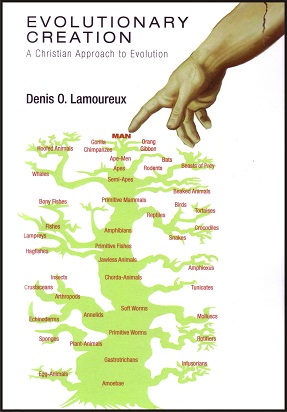
Not long ago, I wrote a post about the historical Adam in which I asked whether it was a “Gospel” issue. Unsurprisingly, there were many different voices raised talking about it, and I quite enjoyed the discussion. I also shared a different Sunday Quote! on how the doctrine of Adam is interwoven with others. I often read books that I know will challenge what I believe, because I think it is important to test your beliefs constantly in order to strengthen them and correct what is wrong. I read through Denis Lamoureux’s book, Evolutionary Creation
His central thesis is particularly striking:
Adam never existed, and this fact has no impact whatsoever on the foundational beliefs of Christianity. (367)
This thesis is very strongly worded, and I think there are a few problems with it. Key, of course, is the question of what is meant by “foundational” beliefs. Lamoureux does dive into that earlier in the book, but I think in some ways he doesn’t hit all the points he needs to. For example, the notion of original sin is one which is “foundational” in some theological traditions. Thus, for them, Adam’s non-existence would be extremely problematic. Lamoureux, however, does try to offer ways to even accommodate these traditions in the book. However, he ultimately has to settle for a “reformulation” of the doctrine in which:
[T]he entrance of sin was not a punctiliar event committed by two individuals. Instead, original sin was manifested mysteriously and gradually over countless many generations… (292).
I think this “reformulation” is unsatisfying. Moreover, as I have argued briefly elsewhere, federal headship seems to be a possible way around this for the evolutionary creation (read: theistic evolution) advocate. So, ultimately, I’m not convinced that Lamoureux’s central thesis can be carried. In fact, I think it is unnecessary for advocates of his position to even put forward.
What are your thoughts? How might we engage Lamoureux in a winsome way? What theological challenges might be offered to his position?
Links
Be sure to check out the page for this site on Facebook and Twitter for discussion of posts, links to other pages of interest, random talk about theology/philosophy/apologetics/movies and more!
Sunday Quote– If you want to read more Sunday Quotes and join the discussion, check them out! (Scroll down for more)
Is the historical Adam a “Gospel” issue? – I discuss what impact it has on Christianity if Adam is not a historical person.
Source
Denis O. Lamoureux, Evolutionary Creation
SDG.
Sunday Quote!- Trading Off the Bible for Science?
 Every Sunday, I will share a quote from something I’ve been reading. The hope is for you, dear reader, to share your thoughts on the quote and related issues and perhaps pick up some reading material along the way!
Trading Off the Bible for Science?
Adam, the Fall, and Original Sin
One area that was fairly interesting was the discussion Hans Madueme offered of an interplay between the Bible and science:
There is a trade-off between what is biblically plausible and what is scientifically plausible. To the degree that the doctrine of the fall reflects the biblical story, to the same degree is it inversely faithful to the evolutionary story. (238, cited below)
I think the language of “trade-off” here might be viewed as a rhetorical flourish. The next phrase is equally weighted to seemingly back-load a specific reading of the story of the fall into what is “plausible” over and against that which is “scientifically plausible.” Although I think there may be something of a trade-off in some sense, in order for this qupte to be true there would have to be an inherent inverse relationship between evolution and the Bible. This may, in fact, be the case, but there are a number of steps that need to be proven before one can get to that point.
More intriguing, perhaps, is the notion that we could recast this “trade-off” between exactly how much science we want to read into the Bible and how biblically plausible we are. I would argue that the more we insist that the Bible is explicitly revealing specifics of exact empirical science, the more we do damage to the text. This is a position that does not see science and the Bible as in complete opposition to each other, nor does it see the Bible as scientifically inaccurate or as “non overlapping magisteria.” Instead, where the Bible speaks to scientific issues–if anywhere–those are affirmed. Where it doesn’t, we should not insist that it does.
What do you think? Is there really a trade-off between science and the Bible? If so, in what way?
Links
Be sure to check out the page for this site on Facebook and Twitter for discussion of posts, links to other pages of interest, random talk about theology/philosophy/apologetics/movies and more!
Sunday Quote– If you want to read more Sunday Quotes and join the discussion, check them out! (Scroll down for more)
Source
Hans Madueme, “The Most Vulnerable Part of the Whole Christian Account: Original Sin and Modern Science” in Adam, the Fall, and Original Sin
SDG.
adam, fall, original sin 238
Really Recommended Posts 2/13/15- Sci-fi, Genesis 1, Professor Snape, and more!
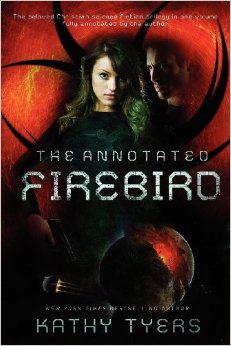 Whew, burning the midnight oil to get this one written by Friday! I ask for your prayers for uninterrupted sleep, dear readers. Still sleep training little man and boy is he stubborn! Anyway, I have here an assortment of great reads for you. We have a biblical look at the length of the days of creation, an interview with the great sci-fi author (and woman of faith!) Kathy Tyers, a response to 50 Shades of Grey, a look at companies who profit off porn, and Harry Potter. Oh yeah, that’s all right here for your perusal! As always, let me know what you think–I love to read your thoughts. Be sure to let the authors know your appreciation as well.
Biblical Reasons to Doubt the Creation Days Were 24-hour Periods– One of the most frequently repeated canards of the Young Earth Creationist side is that anyone who isn’t YEC is somehow undermining the Bible. Here’s a post from the conservative site The Gospel Coalition on some reasons to doubt the notion that strict literalism must be held regarding the length of creation days.
Interview with Kathy Tyers– Kathy Tyers is the author of the exceedingly awesome Firebird Trilogy (link to my post on the books) along with its sequels. She is also the New York Times Bestselling author of two Star Wars novels. Here’s an interesting interview about her body of work, her faith, and more!
50 Shades of Broken– Okay, I know there are a ton of posts out there on 50 Shades of Grey and Christian responses, etc. I still think this one is the one to read. I have a mind to respond to a specific post about the book, but this post itself presents the notion that our sexuality is broken, and the popularity of the book points to that.
Companies Who Profit Off Porn– Time to give these companies some feedback about their profiting off porn.
Someone Put Snape’s Scenes in Chronological Order and it will Make You Feel Things– Harry Potter is a series with some major moral and philosophical points to think about throughout the series. Here is a spoiler-laden set of the scenes of Professor Snape from the movies in chronological order, which reveals (SPOILERS HERE:) how his self-sacrifice ultimately preserved Harry’s life and by extension saved the wizarding world. Yes, there are major themes of redemption and sacrifice in Harry Potter. Check out my posts on the movies and books here.
Really Recommended Posts 2/6/15- Attack on Titan, Prophets, and More!
 Sleep training a baby? Not the easiest thing in the world, believe it or not. I peel apart my eyelids to present to you, dear readers, this latest round of Really Recommended Posts. Topics include egalitarianism/complementarianism, the Messianic Prophecy in Deuteronomy 18, young earth creationism, and Attack on Titan (with cultural apologetics). I’d say that’s a pretty good set of links, if I do say so myself. Let me know your thoughts in the comments here, and be sure to let the authors know what you thought as well.
Confusing Equality with Sameness: A Complementarian Misconception– Often, those who argue that women should be excluded from leadership roles in the church and home argue against those of the egalitarian position by asserting that egalitarians do not allow for gender differences. Is that true?
Attack on Titan (Empires and Mangers)- Anthony Weber presents a worldview-level analysis of the anime, “Attack on Titan” along with some brief comments and definitions related to anime itself. This is a fantastic post for Christians interested in the show or anime in general, or those who would like to familiarize themselves with those categories in order to interact at a cultural apologetic level. I highly recommend you follow his site as well.
A Look at Messianic Prophecy: Who is the Prophet of Deuteronomy 18:15-18? [Part One] – Hint: it’s Jesus. This three-part series offers a solid look at reasons to believe that Jesus is the fulfillment of this prophecy, not Muhammad (as some Muslims claim) or some other prophet. Here’s another post arguing more specifically against the Muslim claim.
Man’s fallible opinions vs. God’s perfect Word: Who wins?– The notion that the origins debate is set up in this dichotomy is often presented by young earth creationists. Here is an insightful analysis of this argument. I highly recommend you follow “Age of Rocks” as it is an excellent site providing much analysis of the young earth position.
That’s no beaver– Young earth creationists often make claims about species being similar and so showing that they came from the Ark, or that certain fossils in the past somehow throw off the sequence of fossils demonstrating an old earth. Here, an analysis is presented of one young earth claim to this effect.
Really Recommended Posts 1/30/15- early Christianity, Neanderthals, and the church!
Another week, another set of great reads for you, dear readers. As always, let me know what you think! Be sure to let the authors of the posts know as well.
They Say the Church is “Too Feminine”– People often complain about the alleged “feminization of the church.” Here is an excellent post looking into the notion that the church is “too feminine.” I have also written on the notion of the “feminization of Christianity.”
James White debates Adnan Rashid on trustworthiness of Bible vs. Qur’an– Very often, Muslim apologists charge that we no longer have the Gospel because it has become corrupted and that the Qur’an is more trustworthy. Check out this post summarizing a debate (with a link to the debate) between two apologists on either side of this debate.
Christian Responses to the Spiritual and Physical Status of Neanderthals– How do Christians analyze the evidence for the existence of Neanderthals and their genetic lineage? Here’s an excellent post on some Christian responses to the evidence with some insightful commentary.
Three Questions to Break the Ice– Here are some excellent ways to break the ice in church (and other) groups! Timothy Siburg is a bit of an expert on church relations and topics related to it, so I recommend you follow his blog if you’re interested in that topic.
One of the Clearest (and Earliest) Summaries of Early Christian Beliefs– Early summaries of Christian beliefs reveal a world in which Christianity developed fairly early on, not with the great difficulties some allege. Check out this post about one of the earliest summaries of Christian belief.
Sunday Quote!- Can Adam be (merely) a federal head?
Every Sunday, I will share a quote from something I’ve been reading. The hope is for you, dear reader, to share your thoughts on the quote and related issues and perhaps pick up some reading material along the way!
Can Adam be (merely) a federal head?
I recently finished reading the thought-provoking book, Adam, the Fall, and Original Sin
Adam’s imputed sin has no ontological basis [on this view]. If only Africans and Asians, let us say, are true physical descendants of Adam, God will still impute Adam’s sin to Britons and Americans since Adam was also the federal head of all his contemporaries (among whom would have been their ancestors). This divine decree seems unfair and arbitrary since it is not grounded in an antecedent natural reality. (217, cited below)
I found this to be an argument that could trouble those who hold to Adam as mere federal head (rather than “natural head”–here being used to mean that Adam and Eve were the first of all humans and all are descended from them), but I think a few responses would be possible from the theistic evolutionist perspective. First, one could argue that there need be no grounding in a natural reality for Adam’s federal headship. After all, divine fiat should settle the question! Second, one might instead argue that God’s decree of Adam as federal headship itself just is the ontological basis. That is, there is an ontological basis for the condemnation: God’s decree. Third, one might argue that the federal headship of Adam went alongside the giving of the human soul to Adam and Eve and that the other humans were also given souls with Adam as their federal head. I think other possibilities are possible as well.
What do you think? Does this argument undermine the possibility of theistic evolutionism? Are the possible responses good rebuttals? Are there other possible responses?
Links
Be sure to check out the page for this site on Facebook and Twitter for discussion of posts, links to other pages of interest, random talk about theology/philosophy/apologetics/movies and more!
Sunday Quote– If you want to read more Sunday Quotes and join the discussion, check them out! (Scroll down for more)
Source
Michael Reeves and Hans Madueme, “Threads in a Seamless Garment: Original Sin in Systematic Theology” in Adam, the Fall, and Original Sin
SDG.
Sunday Quote!- An Eclectic Dialogue Between Christianity and Science
Every Sunday, I will share a quote from something I’ve been reading. The hope is for you, dear reader, to share your thoughts on the quote and related issues and perhaps pick up some reading material along the way!
An Eclectic Dialogue Between Christianity and Science
I recently finished reading Adam, the Fall, and Original Sin, a series of essays from a variety of authors on these highly important subjects. There are a number of excellent articles in this work, and I highly recommend it. One great quote from the book was about Christianity and science and the way to integrate them:
[W]hy should we choose sides [between science and Christianity]? Theology should be eclectic in how it engages with science. Christians should engage scientific theories on a case-by-case basis. Different theories will invite different attitudes and responses (sometimes dialogue, sometimes conflict, sometimes independence, and so on)… This is partly because Scripture does not usually answer our scientific questions and partly because scientific claims are by nature revisable. (243-244, cited below)
I found this an enormously helpful quote and approach because I think too often Christians and non-Christians act as though “science” is this homogeneous whole, and that “Christianity” is itself a single entire unit. But realistically, this is not at all the case. Different theories and different theological points have their own
What are your thoughts? Is this a helpful way to view the religious and scientific dialogue?
Links
Be sure to check out the page for this site on Facebook and Twitter for discussion of posts, links to other pages of interest, random talk about theology/philosophy/apologetics/movies and more!
Sunday Quote– If you want to read more Sunday Quotes and join the discussion, check them out! (Scroll down for more)
Source
Adam, the Fall, and Original Sin
SDG.
Really Recommended Posts 11/21/14- St. Francis, Science, gender, and more!
 I have rustled up another set of links for you, dear readers, to enjoy! Let me know what you thought of them, and be sure to drop a comment or “like” on their posts as well! We have a diverse set today, so everyone will find something to read!
A Pictorial Representation of the Perils of Pornography (Comic)- Pornography is a major struggle in the lives of many. Sometimes, a wake up call is needed. Here’s a poignant image on the perils of pornography.
St. Francis of Assisi was No Lover of “Nature”– A provocative title with an interesting point related to St. Francis of Assisi. What was his view of nature and the natural world? Check it out!
What I would Tell my 12-year-old self about gender roles– How might we think about gender roles? How can we discuss these with children? Here’s an excellent post on this topic.
Mt. Sodom: A Huge Pile of Salt– Who wants to discuss geology and young earth creationism? *Raises hand ecstatically!* Seriously, check out this excellent post on some difficulties the massive Mt. Sodom causes for a young earth perspective.
Science and God: Is there a conflict?– Is it true that there must be conflict between theism and science? Here are a few points related to this alleged conflict.
Really Recommended Posts 9/26/14- Jesus Seminar, atheists and kids, and creationism!
First, I gotta brag: I have a son! He was born 9/17 and he’s just the cutest darling ever. Yay! I’ve been greatly blessed.
Now, I have still put together some awesome posts for your persual, dear readers! Here we have a nice variety of topics from the need to realize the dangers of a hardened heart to the Jesus seminar to talking about atheism with kids (I’m sure this last one won’t be controversial). Check them out and let me know what you thought!
Chemostratigraphy: silent objector to ‘Flood Geology’– Young Earth Creationists often argue that the Noachian Flood is to be seen as the explanation for the layers of sediment we find all over the planet. Can this claim stand up to scrutiny?
Who Were the Jesus Seminar? Should anyone have taken them seriously?– Christians have long faced challenges thrown at the historical faith by historical critics like those in the Jesus Seminar. But should the Jesus Seminar really be (or have been) taken seriously? Check out this post which addresses some issues related to this group.
14 Ways for Christian Parents to Teach Kids about Atheism– How might we as Christians approach the topic of atheism when speaking with children? Natasha Crain provides some much-needed insights into this area. I think this is a must-read even for those who are not parents so that we can think about how to interact in age-appropriate ways.
The Dangers of a Hardened Heart– The heardening of one’s heart presents a number of dangers for both a life of faith and a life without faith. Eric Chabot addresses these dangers in this thought-provoking post.
Is Your View Falsifiable?– Luke Nix points out a number of helpful ideas regarding whether one’s view is falsifiable. Does this matter? Read the post for many insights related to falsifiability and the Christian life.
Sunday Quote!- Is Natural Revelation Infallible?
 Every Sunday, I will share a quote from something I’ve been reading. The hope is for you, dear reader, to share your thoughts on the quote and related issues and perhaps pick up some reading material along the way!
Is Natural Revelation Infallible?
I’ve been reading through the free ebook A Reformed Approach to Science and Scripture by Keith Mathison, and I came upon some interesting passages discussing natural revelation in the Reformed tradition (I’m Lutheran, so this is from an outsider). Mathison is keen to show that natural revelation–that is, that which God demonstrates through the created order–is capable of conveying truth. But his claim goes well beyond that modest level:
God’s revelation in creation is equally as infallible as His revelation in Scripture, because in both cases, it is God who is doing the revealing, and God is always infallible. (Kindle Location 208-212)
Mathison’s point, I think, well-taken. The fact is that natural revelation, if we assume is something God does, would be by definition infallible. After all, God cannot err. Thus, Mathison is correct. What I think is often missed in discussions about this and other topics related to creation is that although it is perhaps easier for humans to make mistakes when it comes to the natural world, it is quite possible (and obvious) that mistakes are made in interpretation of special revelation–Scripture–as well.
What do you think? Is natural revelation infallible? If so, what does this say about how we should interact on science-faith issues? If not, how does error creep in? Let me know your thoughts in the comments below!
Links
Be sure to check out the page for this site on Facebook and Twitter for discussion of posts, links to other pages of interest, random talk about theology/philosophy/apologetics/movies and more!
Sunday Quote– If you want to read more Sunday Quotes and join the discussion, check them out! (Scroll down for more)
Source
Keith Mathison, A Reformed Approach to Science and Scripture (Ligonier Ministries, 2013).
SDG.

 J.W. Wartick - Reconstructing Faith