Christianity
Book Review: “Friend of Science, Friend of Faith” by Gregg Davidson
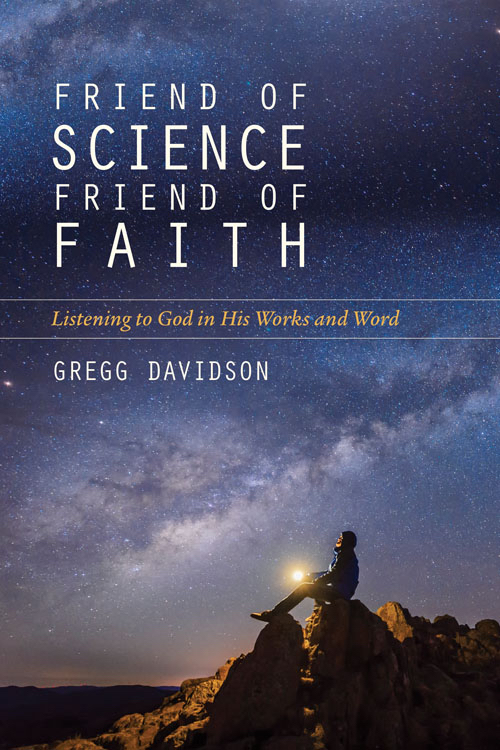
There are times when you read a book and realize it will be foundational going forward for your understanding of a certain topic. Gregg Davidson’s Friend of Science, Friend of Faith: Listening to God in His Works and Word is a book that will surely be formative for this reader on science and faith issues. It is a rigorous, insightful examination of the intersection of Christianity and science that will surprise, delight, and challenge almost any reader.
Science and Christianity is one of those topics that seems so overdone that it may feel as though nothing new can be written on it. But Davidson has written a book that will be refreshing for those who’ve already (as I have) read hundreds of books on the topic. Davidson starts off simply, noting the way that many have created a scenario for a crisis of faith by painting mainstream science as in direct opposition to aspects of Christianity and the Bible. Davidson notes that there are three essential questions when assessing apparent science-Bible tensions (wording and questions on p. 23): 1. Does the infallibility of Scripture rest on a literal interpretation of the verses in question? 2. Does science conflict with the intended message of Scripture? 3. Is the science credible?
These questions form the basis for much of the rest of the book, but Davidson approaches them in ways that are informative and even surprising for those who have trod much of this ground before. One of the many examples of this is right near the beginning, as Davidson goes over the conflict over Heliocentrism vs. Scripture. First, Davidson notes that it was not just Roman Catholics who had problems with Galileo, citing Martin Luther and John Calvin’s own objections to the man’s theory. Second, Davidson notes the real shift in interpretation on Scripture here–something that is integral to the story but often skated over. Christians really were reading passages literally and seeing this as conflict with Scripture. Davidson then filters the Heliocentrism debate through his three questions presented above, noting the way that believers were forced to re-evaluate commonly held notions about Scripture. The conclusion is that science can force us to go back to the text and test our interpretation to see whether it is accurate.
Davidson also argues extensively for accommodation in Scripture. Through his arguments, it becomes clear that Christians must either accept for accommodation of worldviews that had mistaken views of science present in Scripture or deny reality. This is a strong dichotomy, but one example is the question of seeds. Jesus clearly states that the mustard seed is the smallest of seeds (Mark 4:30-32), and it decidedly is not (forget-me-nots, celery, poppies, orchids, and sundews all have smaller seeds). Moreover, Jesus says that grains of wheat die in order to produce more wheat (John 12:24), but seeds do not die in order to grow. Readers who insist on a lack of accommodation in Scripture must therefore live in the uncomfortable realm where Jesus was mistaken on the size of seeds or how plants grow. This is just one of the examples Davidson raises, in addition to answering common objections (like the attempt to argue these are simply phenomenological language) (43ff).
Davidson goes on to note several parts of Scripture that cannot be read literally, problems with insisting on modern science as the real rationale behind several passages dealing with things like the firmament (see 64ff), and how to read Genesis well.
Next, Davidson moves on to the question of whether modern science conflicts with Scripture. This fascinating part of the book sees Davidson showing biblical accounts of things like creation, the origin of life, and more, showing the scientific explanations for these, and then offering a synthesis. This synthesis, it ought to be noted, is not a Concordist view of Scripture that attempts to say modern science is found in Scripture. Instead, Davidson’s syntheses are offered to show that modern science does not conflict with Scripture, a substantive difference that makes a significant change for how Scripture is treated alongside science.
The next part of the book addresses whether modern science is credible. First, Davidson notes the difference between science and philosophy, and how many on almost any side of the science/faith debates conflate the two, insisting that materalism just is science or the like (121ff). Then follows several chapters outlining in clear, distinct ways the science behind things like the age of the universe and Earth, evidence for evolution from many, many different lines of evidence, and problems with various creationist accounts of the same. At no point does Davidson denigrate his opponents, but he instead offers incisive criticisms that demonstrate flaws in their systems.
Several more chapters address problems with creation science, the strange and somewhat surprising shift of so many young earth creationists to effectively endorsing hyper-evolution, and problems with Intelligent Design. Davidson addresses many common creationist arguments and demonstrates their flaws. For example, the argument that millions of years was invented to challenge Christian faith is fatally mistaken due to the fact that many geologists who discovered deep time professed their Christian faith alongside their discoveries. Soft tissue found in dinosaur bones is another argument addressed, showing that the molecular structure of preserved proteins in dinosaur tissue actually show more similarity to birds than reptiles, and that the discovery of rare soft tissue does not, in fact, demonstrate a young earth (219-220). Many more arguments are addressed. Prominent young earth groups like Answers in Genesis have been offering scenarios where rapid speciation occurred post-Flood in order to explain away many difficulties with a certain reading of the Ark narrative. Davidson notes many problems with this scenario, including the lack of time for generational adaptation, the existence of isolated populations, and the misuse of loss of information in genetic coding to explain speciation.
Davidson’s analysis of Intelligent Design points out several flaws with the movement and its arguments. For one, he shows the major difference between William Paley’s original advocacy of design, which was seen as something across all of nature and served as a very broad argument, and modern ID theory which focuses on a few specific instances that are said to point to design. Davidson argues that “if evidence of God is found primarily in places of nature that are beyond our current comprehension, then evidence for God is–almost by definition–continuously shrinking” (261). Moreover, even in the time of people like Leibniz, arguments were already being offered against design of specific features, because they could just as easily be seen as evidence of inefficient design or the need to correct a very good creation. Another problem with ID is that its hypothesis is, ultimately, untestable. Though it is argued that ID can be seen as science, science must be testable, and any number of ways to consider an experiment to try to demonstrate ID fail (264ff). Finally, Davidson closes with a summary of the work and how he’s offered a way forward that won’t lead to the crises of faith noted at the beginning of the book.
It should be noted that the book is richly illustrated in black-and-white with many charts, graphs, and pictures that always add to the text and which often are used to highlight specific ideas or topics.
Friend of Science, Friend of Faith is simply fantastic. It’s the kind of single-volume look at science and faith that could be handed to almost anyone to challenge assumptions and lead to new learning on the topic. I cannot recommend it highly enough; it’s that excellent.
Disclaimer: I was provided with a copy of the book for review by the publisher. I was not required to give any specific kind of feedback whatsoever.
Links
Be sure to check out the page for this site on Facebook and Twitter for discussion of posts, links to other pages of interest, random talk about theology/philosophy/apologetics/movies and more!
Book Reviews– There are plenty more book reviews to read! Read like crazy! (Scroll down for more, and click at bottom for even more!)
SDG.
——
The preceding post is the property of J.W. Wartick (apart from quotations, which are the property of their respective owners, and works of art as credited; images are often freely available to the public and J.W. Wartick makes no claims of owning rights to the images unless he makes that explicit) and should not be reproduced in part or in whole without the expressed consent of the author. All content on this site is the property of J.W. Wartick and is made available for individual and personal usage. If you cite from these documents, whether for personal or professional purposes, please give appropriate citation with both the name of the author (J.W. Wartick) and a link to the original URL. If you’d like to repost a post, you may do so, provided you show less than half of the original post on your own site and link to the original post for the rest. You must also appropriately cite the post as noted above. This blog is protected by Creative Commons licensing. By viewing any part of this site, you are agreeing to this usage policy.
Book Review: “Ministering in Patronage Cultures: Biblical Models and Missional Implications” by Jayson Georges
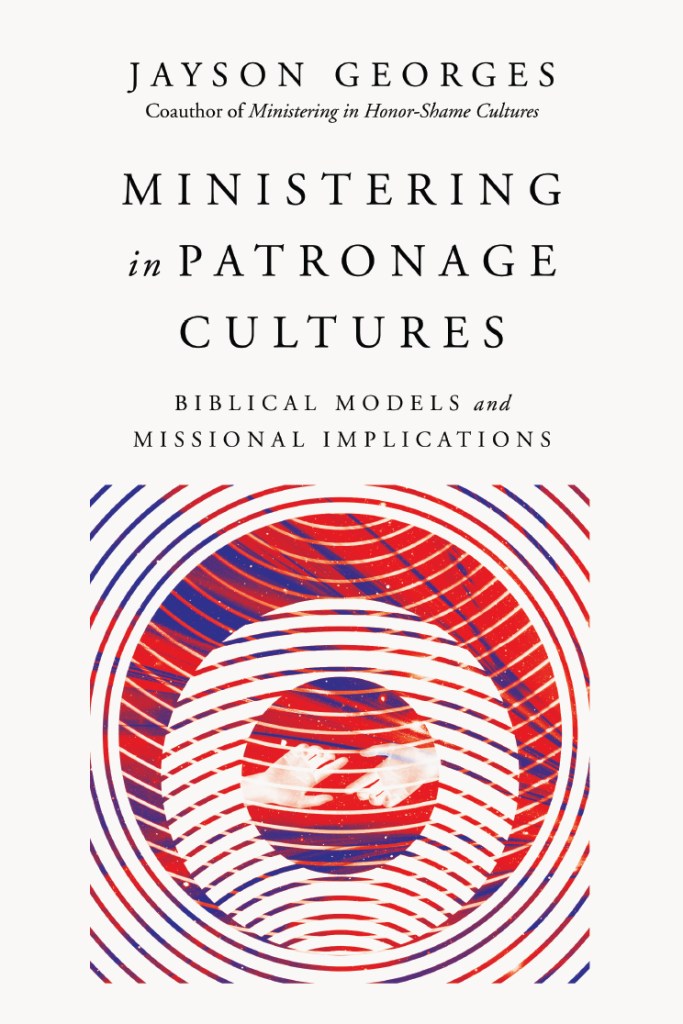
Ministering in Patronage Cultures: Biblical Models and Missional Implications is a book that serves two major needs for interested readers. First, it provides readers with information on how patronage cultures work and where those kind of models can be found in the Bible. Second, it provides insight into how to do missions in patronage cultures. Jayson Georges has firsthand experience of just that kind of missional work, and he draws on his own experience as well as an array of sources to present readers with valuable insights into the topics at hand.
As a reader, the part of the book I was most interested in was in the biblical models for patronage and how they can help us to understand biblical interactions more effectively. However, the parts of the book focused on missional work was also interesting to me.Georges defines patronage as “a reciprocal relationship between a patron and a client” (9). This basic understanding is expanded to show the various expectations of clients and patrons as well as how those interactions re often built or even severed.
In the Bible, YHWH and Israel are perhaps the most obvious example of patron/client, and Georges draws out how this can help to understand the various ways YHWH treats covenant as well as the interactions throughout the Old Testament. Paul is used as an example in the New Testament and it’s worth noting that Georges shows fairly clearly that Paul at times favors Patronage but at other times rejects it. These appear to be different responses to differing circumstances in which Paul found himself. Jesus and the Kingdom is another example Georges cites to show the patronage culture and how that came into play in the Bible.Seeing God as a patron helps readers understand sin as ingratitude for the blessings from God and salvation as patronage. Georges notes many of the ways that this plays out in the Bible as well as with major theologians like Anselm.
From a missional perspective, Georges tries to offer a generalized approach. He does, however, offer this with a caution because it is easy to take a generalization and misapply it. There are many different cultures that take a patronage approach, but that does not mean they all have the same ideas about patronage or how that should play out. It is also important to see how because people are imperfect, they cannot fully apply a concept of God as patron to themselves. It is easy to abuse the power of a patron, and it is also easy to misunderstand exactly what it ought to mean for the believer and the person involved in missions. Using God as a model does, however, allow for correction to what Georges calls “corrupt patronage.” Finally, Georges sees patronage as a lens in which we can see spiritual practice and development.
Ministering in Patronage Cultures is an insightful work that highlights modern problems and solutions while also showing a paradigm that can help shed light on various themes found throughout the Bible. I recommend it to those who wish to undertand more about patronage cultures in context of Christian thought and practice.
Disclaimer: I was provided with a copy of the book for review by the publisher. I was not required to give any specific kind of feedback whatsoever.
Links
Be sure to check out the page for this site on Facebook and Twitter for discussion of posts, links to other pages of interest, random talk about theology/philosophy/apologetics/movies and more!
Book Reviews– There are plenty more book reviews to read! Read like crazy! (Scroll down for more, and click at bottom for even more!)
SDG.
——
The preceding post is the property of J.W. Wartick (apart from quotations, which are the property of their respective owners, and works of art as credited; images are often freely available to the public and J.W. Wartick makes no claims of owning rights to the images unless he makes that explicit) and should not be reproduced in part or in whole without the expressed consent of the author. All content on this site is the property of J.W. Wartick and is made available for individual and personal usage. If you cite from these documents, whether for personal or professional purposes, please give appropriate citation with both the name of the author (J.W. Wartick) and a link to the original URL. If you’d like to repost a post, you may do so, provided you show less than half of the original post on your own site and link to the original post for the rest. You must also appropriately cite the post as noted above. This blog is protected by Creative Commons licensing. By viewing any part of this site, you are agreeing to this usage policy.
“We Believe in Dinosaurs” – The Ark Encounter Examined
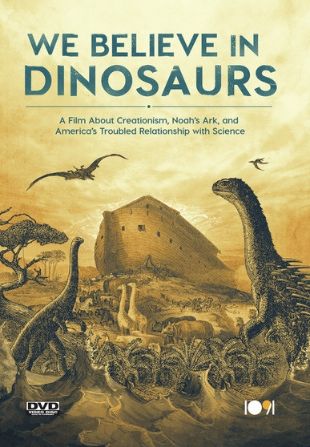
The Ark Encounter is a controversial attempt to create a monument to what one group of people sees as biblical truth. “We Believe in Dinosaurs” documents the making of the Ark, both before and after, through several different lenses–a creationist working on the project, a geologist opposing it, an atheist protesting it, a woman who speaks in defense of creationism, a business owner hoping it will revitalize the town, a pastor who sees it as too closely uniting church and state, and a young Christian man who’s changed his mind. Recently, I had the chance to watch the documentary on PBS. It’s also available on Amazon.
One thing that makes the documentary so fascinating is that range of voices and perspectives it presents. Doug Henderson is the lead project designer at the Creation Museum and in the documentary he helped design the exhibits and leads a team making animals to go on the Ark, among other things. He’s a fully convinced Young Earth Creationist who believes the world is about 6,000 years old and that a global flood can account for the geologic record of our planet. He admits to having some doubts in the past, but that he resolved those doubts through a firm reliance on what he sees as the correct way to interpret the Bible. One of the most poignant moments of the documentary has him appealing to the camera with the notion that “I’m not crazy” and that he’s just as normal as anyone else, he just believes the Earth is young. It’s a rare, emotionally vivid moment in creation-evolution debates where the facade of certainty is stripped away and, as a viewer, one can witness that these are real people with real concerns. It’s powerful.
David Macmillan used to be a young earth creationist, and even donated enough to have his name on the wall at the Creation Museum. His own journey led him to question the truth of young earth creationism and he points out that it was a questioning of the rigidity of interpretation as well as scientific findings that caused him to change his view. As a viewer, he related to me quite a bit because his journey is very similar to my own.
Dan Phelps is a geologist who thinks the Ark Encounter is anti-science and has done the work to demonstrate it. But he rose to prominence in opposition to the project not because of geological disputes but due to his taking issue with tax dollars being used to supplement the building of the Ark. What was most alarming to him was that the Ark Encounter’s job applications at every level, whether project leader or janitor, required strict adherence to the full statement of faith of Answers in Genesis. This meant not only that atheists need not apply, as his op-ed got titled, but also that no Muslims, Hindus, Mormons, and even many, many Christians need apply either. To have this kind of hiring policy while also getting government money was alarming, and the documentary follows the fight against this government funding. Ultimately, this battle was lost and the Ark Encounter received grants and other aid from both state and local governments, despite claims both that the Ark is an evangelistic tool and the strict hiring practices.
One of the most alarming parts of the film is found when Jim Helten, President of the Tri-State Freethinkers (an atheist organization) who raised money to make billboards slamming the Ark Encounter and Creation museum as the “Genocide and Incest” museum is interviewed for the radio. What’s alarming about this is the way the Christian reacts to the atheist in this encounter. Jim alleges that the Ark implies incest and genocide because the flood kills everyone not on the ark, whether innocent or not, and then that the world has to get repopulated through incest because only Noah’s family was on the Ark. One can debate the nuance (or lack thereof) of Jim’s interpretation, but the Christian on the other end of the line turns around and immediately consigns Jim to hell. He says he’ll pray for Jim to not be in hell, but finally becomes unhinged and says “and there’ll be a million serpents biting your legs for eternity” as though that’s a reasonable response to Jim’s charges and his efforts to put up somewhat inflammatory billboards. Jim points out that he’s being threatened with eternal torture for asking for evidence. It’s another one of the moments that the documentary does so well of creating times to think and reflect and wonder. How is it possible that an ostensibly Christian person would think such a response was justified–and where did the line about the serpents come from?
A major aspect of the documentary is showing the Ark Encounter’s impact on the local community. It’s not clear what explicit promises were made, but it is clear that the people of Williamstown, Kentucky were given the impression that the Ark Encounter would bring a business boom to their community and help revitalize a downtown that Jamie Baker, interviewed in the documentary, said was so slow at times you could almost see tumbleweeds. The documentary covers several aspects of this hope, showing one group singing a song about their excitement related to the Ark Encounter. Just a few years later, that same place is a vacant facade, to go along with all the other places for sale or rent in a downtown that hasn’t been helped at all. One person in the documentary said they were promised shuttles would bring people into town to eat and shop, but that they only rarely see even a car driving through.
It is not clear, again, what promises were made to the people of Williamstown, but whatever hopes were raised have since, apparently, been crushed. The Ark Encounter isn’t helping the community in a monetary way so far as one can tell from the documentary. This, despite the city selling 78 acres of land to the Ark Encounter for $1 and giving them $175,000. This may not seem like a big problem–businesses make promises and bully people into helping them turn a profit all the time. But the Ark Encounter is an ostensibly Christian exhibit! Its staff has to subscribe to a strict statement of faith. One would expect integrity and openness from such people, not attacks on people who question their practices and attempts to block or obfuscate information related to their exhibit.
“We Believe in Dinosaurs” is a fascinating, challenging watch. It presents many sides, both sympathetic and not, related to the Ark Encounter. I haven’t even gone over several other people who show up in the documentary, and there’s much more there. I highly recommend it to anyone, given its broad range of interests from religious freedom, church and state issues, questions about science and faith, and more.
Links
What options are there in the origins debate? – A Taxonomy of Christian Origins Positions– I clarify the breadth of options available for Christians who want to interact on various levels with models of origins. I think this post is extremely important because it gives readers a chance to see the various positions explained briefly.
What is the relationship between Christianity and science?- An Overview of 4 Views– How should the Christian faith interact with science? Do they interact at all? I survey 4 major views on these and other questions.
Be sure to check out the page for this site on Facebook and Twitter for discussion of posts, links to other pages of interest, random talk about theology/philosophy/apologetics/movies and more!
Origins Debate– Read a whole bunch more on different views within Christianity of the “origins debate.” Here I have posts on young and old earth creationism, intelligent design, theistic evolutionism, and more!
SDG.
——
The preceding post is the property of J.W. Wartick (apart from quotations, which are the property of their respective owners, and works of art as credited; images are often freely available to the public and J.W. Wartick makes no claims of owning rights to the images unless he makes that explicit) and should not be reproduced in part or in whole without the expressed consent of the author. All content on this site is the property of J.W. Wartick and is made available for individual and personal usage. If you cite from these documents, whether for personal or professional purposes, please give appropriate citation with both the name of the author (J.W. Wartick) and a link to the original URL. If you’d like to repost a post, you may do so, provided you show less than half of the original post on your own site and link to the original post for the rest. You must also appropriately cite the post as noted above. This blog is protected by Creative Commons licensing. By viewing any part of this site, you are agreeing to this usage policy.
Faith is Messy

Longtime readers of this blog will know that I’ve taken a kind of hiatus from some kinds of posts. I’ve mostly been posting a ton of book reviews. Part of that is because I have been reading all the time, trying to expand horizons and learn more. Another aspect of it is that my views have been changing, meshing, melding, and morphing over time, to the point that I kept thinking I should post on things and then being loathe to confidently put forward ideas that I wasn’t convinced were true.
I am hoping that pattern stops now. I have a lot of things going on in my personal life, but I also have a lot I’d like to write on and reflect on with you. If you’re a longtime reader, thanks so much for sticking with me through this, and I hope you’ll continue to read and comment going forward! If you’re new here, welcome! I hope you’ll bear with me on this journey.
First, there are still going to be a lot of book reviews. It’s a thing I like doing and that I like to think I’m fairly good at. Second, I’m still very interested in a lot of the things I wrote on before: apologetics, science and Christianity, and theology (especially Bonhoeffer!). I’ll still be writing on those things.
Faith is messy. That’s maybe the biggest thing I’ve learned on my own walk. It’s easy to have a set list of specific, explicit instructions about how the way things ought to be. It’s easy to stay in the position that you’re right and everyone around you is, at best, mistaken, or at worst actively deceiving others. It’s easy to subscribe to a view and never let it be questioned. Some people can live with that–and I’m not trying to judge them. I can’t live that way, though. I have to question, to poke and prod and find out if the ideas work. I don’t want to spend my life living behind a set of doctrinal statements that I’ve not at least tried to confirm for myself. I’ll be writing a lot more about this going forward.
So what do I mean that faith is messy? I mean that, for me, many of the things I was taught at various levels–all the way through graduate school–turned out to be much more complex than I thought at the time. Questions about what it means to affirm inerrancy, questions about hell–and heaven!, questions about what it means to live as a Christian today. I asked questions about my own Christian identity, and what it means to be orthodox.
I lost a lot of friends. I don’t know if it was because I was asking questions that were too difficult, or if it was that I felt some anger and lashed out when the answers I received seemed too simple to deal with the complexity I saw. Either way, I don’t begrudge them–but it doesn’t make it any easier.
Those are just some of the issues I’ve struggled with, and the struggle has been highly formative. I hope you’ll join with me as I write about some of my faith journey, and maybe even comment, and walk with me. I hope to explore the faith even more fully as I write and reflect on my journey, and I want you to join me.
I’ve decided to rebrand my blog a bit, too. Instead of “Always Have a Reason” – I’m naming the site “Reconstructing Faith.” It is one thing to deconstruct faith–that’s easy to do. But here, I’m going to be doing the hard work, hopefully with your help, of reconstructing faith.
Book Review: “The Liturgy of Creation: Understanding Calendars in Old Testament Context” by Michael LeFebvre
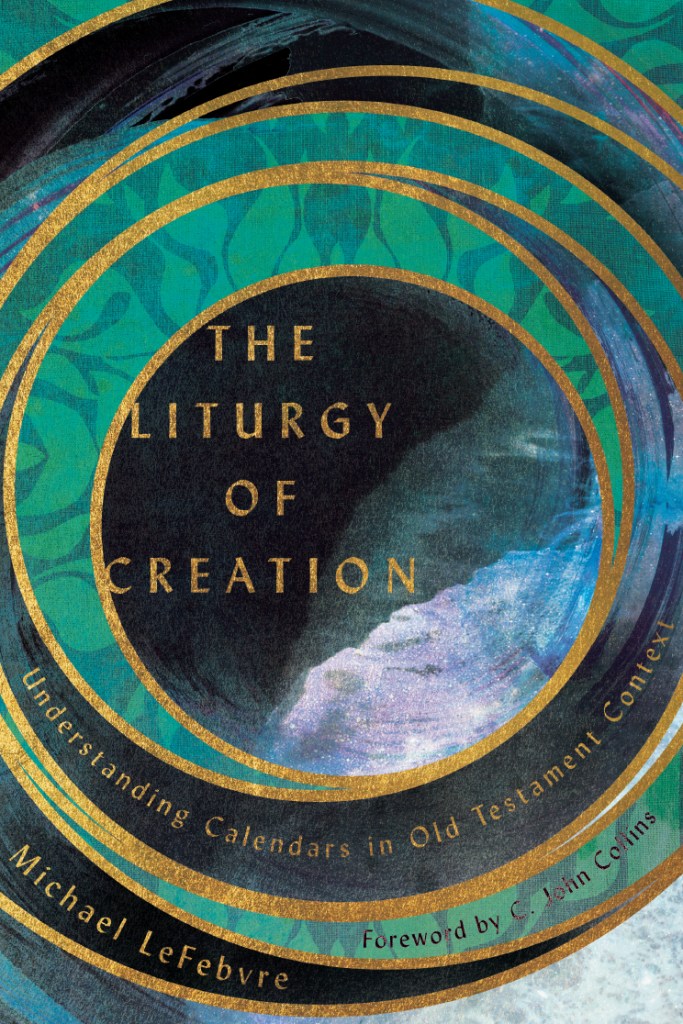
The common saying that “the more you know, the more you know you don’t know” applies perhaps especially well to theology. It shouldn’t be surprising, as it is a topic that attempts to make sense of the infinite. Questions in Christianity about creation abound. Modern debates are often more heat than light, with apparently no way to come to an understanding. Michael LeFebvre’s The Liturgy of Creation: Understanding Calendars in Old Testament Context is a book that can help to break that deadlock and help readers learn about some of the context and meaning of key Old Testament passages.
The core of LeFebvre’s thesis is that the Old Testament narratives center around key aspects of everyday life in their temporal contexts. Specifically, the heavenly lights and the agricultural cycle–which crops could be grown when, harvest time, etc.–helped ground those who spoke and wrote the Old Testament in ways that they would understand. From this, LeFebvre notes that we do the Old Testament damage when we insist upon it providing a kind of modern journalistic approach to dates and dating. The way festivals and days were used in the Old Testament helped provide information to those who heard it about how life ought to be lived and how labor and worship go hand-in-hand.
LeFebvre makes this argument over the course of three major parts. Part I- Israel’s Calendars examines the way calendars were used in the Bible and what reference points they had for understanding time. Part II – Festivals and Their Stories surveys the festivals mentioned throughout the Old Testament and why they were celebrated, grounding them both in the context of the Old Testament text and the time and places in which they occurred. Part III – The Creation Week examines the creation week with the insights gained from Parts I and II in mind.
Part I is a deep exploration of how ancient Israel would have read time, showing not only the use of the stars, the moon, and the sun, but also the way seasons ran throughout the region as ways that people measured their own lives and ways of going about living. LeFebvre is fairly comprehensive in his look at all the stories in the Old Testament that have dates as well as bringing up every festival and examining its importance and usage in the Old Testament. Readers will likely find much to examine and benefit from throughout these first two parts.
It is in part III where the rubber meets the road and LeFebvre applies his insights into timing throughout the Old Testament to the specific questions about the week of creation. The days themselves are laid out in such a way as to correspond to his theses about how Israel ordered itself. LeFebvre makes a strong argument that these creation days are not intended to be read in light of modern science and forced into such a box. Instead, they are intended to give order to creation and one’s own life, providing a reason for Sabbath as well as an understanding of all creation within the context of God’s ordered running of the seasons and universe.
The Liturgy of Creation is an excellent look at what the calendars, seasons, and dates in the Old Testament mean in their own context. LeFebvre brings light to some of the more difficult questions in interpretation, while also challenging readers to examine their own assumptions about the text. Highly recommended.
Disclaimer: I was provided with a copy of the book for review by the publisher. I was not required to give any specific kind of feedback whatsoever.
Links
Be sure to check out the page for this site on Facebook and Twitter for discussion of posts, links to other pages of interest, random talk about theology/philosophy/apologetics/movies and more!
Book Reviews– There are plenty more book reviews to read! Read like crazy! (Scroll down for more, and click at bottom for even more!)
SDG.
——
The preceding post is the property of J.W. Wartick (apart from quotations, which are the property of their respective owners, and works of art as credited; images are often freely available to the public and J.W. Wartick makes no claims of owning rights to the images unless he makes that explicit) and should not be reproduced in part or in whole without the expressed consent of the author. All content on this site is the property of J.W. Wartick and is made available for individual and personal usage. If you cite from these documents, whether for personal or professional purposes, please give appropriate citation with both the name of the author (J.W. Wartick) and a link to the original URL. If you’d like to repost a post, you may do so, provided you show less than half of the original post on your own site and link to the original post for the rest. You must also appropriately cite the post as noted above. This blog is protected by Creative Commons licensing. By viewing any part of this site, you are agreeing to this usage policy.
Book Review: “Myths and Mistakes in New Testament Textual Criticism” edited by Elijah Hixson and Peter J. Gurry
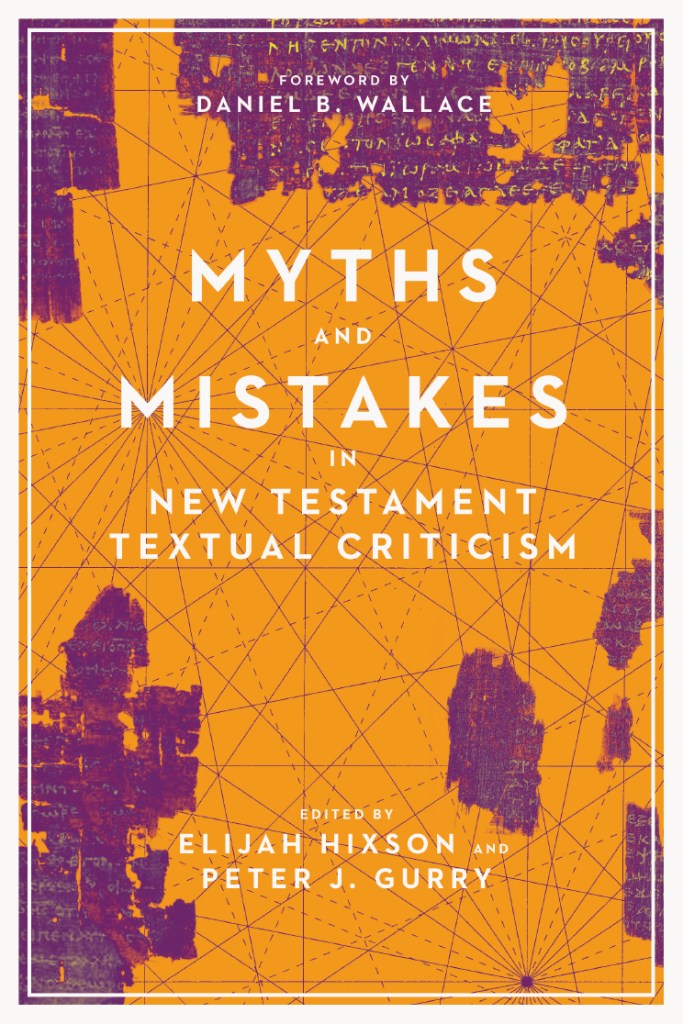
Sometimes a book comes along that makes you as a reader realize that everything you thought you knew about a certain topic was wrong. Myths and Mistakes in New Testament Textual Criticism is sure to be one of those books for many people. The editors, Elijah Hixson and Peter J. Gurry put together a collection of essays that challenge common assumptions and “knowledge” about New Testament textual criticism to the point of overturning expectations and forcing readers to re-think their research. Make no mistake, if you’re not an expert in this specific field–and perhaps even if you are–this book is going to challenge your preconceptions and even what you thought you knew.
After a foreword by renowned textual critic Daniel Wallace and an introduction that opens up the themes of the book, Timothy N. Mitchell’s chapter on autographs (entitled “Myths about Autographs: What they Were and How Long They May Have Survived”) is the first to set a major challenge to assumptions about the New Testament text. The autographic text is considered to be the original text. Thus, an autograph, in the mind of those interested in Christian apologetics or the transmission of the New Testament, is often what is affirmed as being the copy that was inspired or inerrant or the goal of textual criticism to find. Various apologetists have made claims about the autographs surviving long enough to produce many copies over decades (or even centuries) (27). Yet Mitchell points out that some have argue that the concept of a single original itself is mistaken (28). The way documents were disseminated in the ancient world was very different from the way we spread documents, and the same “original” may have been produced several times, with minor edits or even major ones depending on the audience. Specific examples in the ancient world are cited, which challenge the very concept of a single autographic text. Another difficulty would be the concept of multiple autographs. Copying an original for the author to keep was a common practice, but then which would be the autograph–the one sent to one or another person, or the one kept by the author (39-41)? The claims about longevity of the authographs also meet serious challenges, due to climate, persecution, and many other possible problems with thinking that any supposed original text could have survived centuries.
Note that all of these challenges–which are detailed, of course in the book–are all from the first non-introductory chapter alone. There are more than 10 additional chapters outlining many, many assumptions about NT textual criticism and the errors they make. Chapter three outlines questions about the number of NT manuscripts as well as why having more manuscripts might not be better. If all we had was a multiplicity of error-ridden manuscripts, that would hardly be better than just a few very precise ones. Chapter four notes the common errors in citation of numbers of other ancient literature’s manuscript evidence vs. that of the NT (this will have those involved in apologetics–like me–checking their numbers). The next two chapters deal with dating manuscripts and the immense difficulties with getting at which MSS are earlier than other ones at times. Additionally, earlier manuscripts aren’t always better than later manuscripts, in part because later manuscripts might be based on manuscripts that are even earlier than the earliest extant manuscripts!
Questions about who made copies of the NT are another common myth-making scenario. As is often the case in the book, the issue is much more complex. Many claim that the copies were made by untrained hands just scrawling what they could from the NT on whatever they had at hand, while others claim the opposite is true–trained hands copied them and ensured few errors. The truth is somewhere in between. Myths about how scribes made errors are abundant, and attempts to discern scribal intent are shown to be often impossible, but at other times somewhat easier to demonstrate. The number of variants is wildly huge in the claims about how many there are, and the way they are counted is often misstated. Too often, apologists and others claim that variant counts include misspellings, but this is not the case–the huge number of variants would only increase astronomically were misspellings included in the count! Questions about how much of the NT really could be constructed from the patristics are also addressed, and the answer is a somewhat interesting middle ground once again, in which the question of tradition looms large. Canonicity, translations modern and ancient, and more are addressed as well.
All of this is to say the book is an absolute treasure trove of information for those interested in any way in the textual reliability of the New Testament. It is tempting in any day and age to seek certainty, but Christians–and hopefully others–ought to really be seeking after truth. This book helps get at that, providing ways forward for additional research while also blowing open the doors of understanding both hyper-critical and overly optimistic myths about the possibility of getting at the “original” New Testament.
Myths and Mistakes in New Testament Textual Criticism is an invaluable resource for those interested in textual criticism. It points out many major errors that persist in common knowledge while also opening many avenues for new research. There are few times I think a book comes along that everyone should read, but this is one that anyone with even the slightest interest in the reliability of the New Testament ought to read, mark, and inwardly digest.
Disclaimer: I was provided with a copy of the book for review by the publisher. I was not required to give any specific kind of feedback whatsoever.
Links
Be sure to check out the page for this site on Facebook and Twitter for discussion of posts, links to other pages of interest, random talk about theology/philosophy/apologetics/movies and more!
Book Reviews– There are plenty more book reviews to read! Read like crazy! (Scroll down for more, and click at bottom for even more!)
SDG.
——
The preceding post is the property of J.W. Wartick (apart from quotations, which are the property of their respective owners, and works of art as credited; images are often freely available to the public and J.W. Wartick makes no claims of owning rights to the images unless he makes that explicit) and should not be reproduced in part or in whole without the expressed consent of the author. All content on this site is the property of J.W. Wartick and is made available for individual and personal usage. If you cite from these documents, whether for personal or professional purposes, please give appropriate citation with both the name of the author (J.W. Wartick) and a link to the original URL. If you’d like to repost a post, you may do so, provided you show less than half of the original post on your own site and link to the original post for the rest. You must also appropriately cite the post as noted above. This blog is protected by Creative Commons licensing. By viewing any part of this site, you are agreeing to this usage policy.
Book Review: “The Victory of the Cross: Salvation in Eastern Orthodoxy” by James R. Payton, Jr.
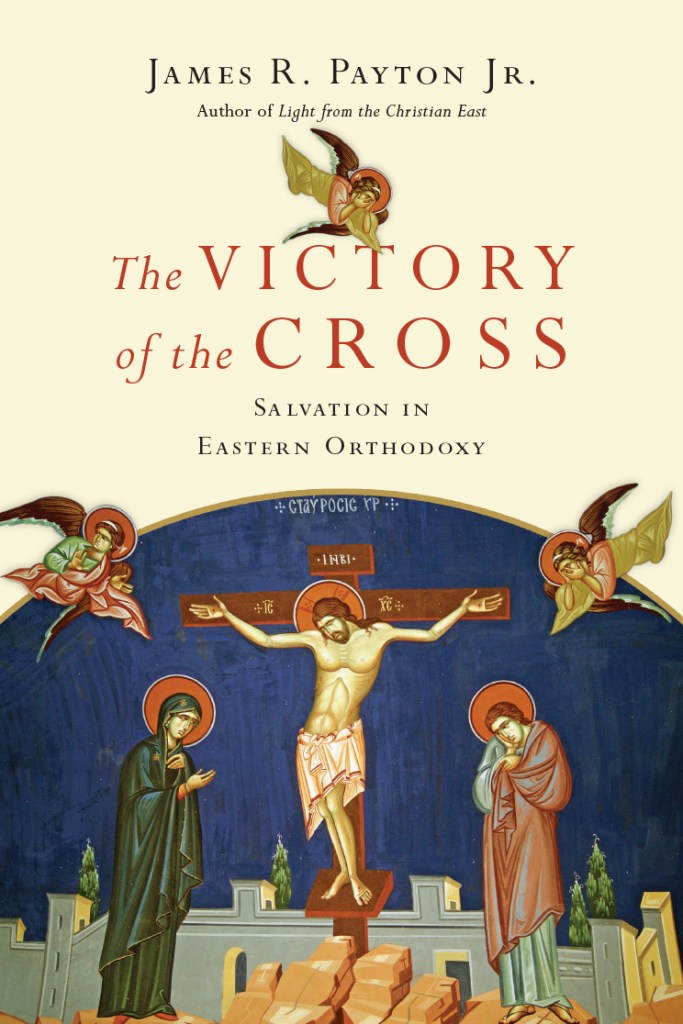
Eastern Othodoxy is often an almost impenetrable system of thought for Christians of different theological persuasions. James R. Payton, Jr.’s The Victory of the Cross: Salvation in Eastern Orthodoxy seeks to dispel some of that confusion by focusing closely on a specific theological question–salvation–and explaining it from an Eastern Orthodox perspective.
James R. Payton, Jr. comes at these controversial questions from the perspective of an evangelical with a deep understanding of the Orthodox faith. He explores some of the major themes in Eastern Orthodoxy related to salvation and brings light to them for those who might not have any real understanding of how Orthodoxy views certain topics. After a brief introduction, Payton sets the stage with a discussion of the cross, then walks readers through what might be a somewhat familiar path of going from a chapter on the need for salvation (also viewed in Orthodoxy as universal, though their view of original sin is less a culpable sin than a tendency towards sin) and moving into the focus on the savior, Christ. The way God saved humanity is one that is debated in non-Eastern circles as well, and here Payton focuses largely on the awe that the salvation brought with Christ inspires. One of the most controversial–perhaps only for its strangeness to non-Orthodox ears–aspects of Orthodox theology related to salvation is deification. An entire chapter is dedicated to that concept, along with a following chapter on “becoming like God” on the path to salvation.
Payton does an excellent job of grounding Eastern Orthodox beliefs in its practice and highlighting how much Orthodoxy draws from Church Fathers as well as orthopraxy. What is so often lost in many forms of Christianity today is the practice of lived faith. There’s a sense of “Yeah, I’m saved, and I read my Bible and go to church, and that’s it.” But Eastern Orthodoxy’s view of salvation does not allow such a surface level faith, at least not when done rightly. Instead, it demands a whole life committed to Christ and infused with the divine in contemplation and, indeed, in one’s own life. Payton’s work helps explain those aspects of Eastern Orthodoxy which may be strange to those who haven’t encountered it before while also ably highlighting the depth of the practice of faith and a life focused on the sign of the Cross.
The Victory of the Cross is a fascinating, adept introduction to the nature of salvation in Eastern Orthodoxy. It will serve readers not only as a way to springboard discussions into Eastern Orthodoxy, but also as a path to coming to a better understanding of the richness of the Christian tradition worldwide.
Disclaimer: I was provided with a copy of the book for review by the publisher. I was not required to give any specific kind of feedback whatsoever.
Links
Be sure to check out the page for this site on Facebook and Twitter for discussion of posts, links to other pages of interest, random talk about theology/philosophy/apologetics/movies and more!
Book Reviews– There are plenty more book reviews to read! Read like crazy! (Scroll down for more, and click at bottom for even more!)
SDG.
——
The preceding post is the property of J.W. Wartick (apart from quotations, which are the property of their respective owners, and works of art as credited; images are often freely available to the public and J.W. Wartick makes no claims of owning rights to the images unless he makes that explicit) and should not be reproduced in part or in whole without the expressed consent of the author. All content on this site is the property of J.W. Wartick and is made available for individual and personal usage. If you cite from these documents, whether for personal or professional purposes, please give appropriate citation with both the name of the author (J.W. Wartick) and a link to the original URL. If you’d like to repost a post, you may do so, provided you show less than half of the original post on your own site and link to the original post for the rest. You must also appropriately cite the post as noted above. This blog is protected by Creative Commons licensing. By viewing any part of this site, you are agreeing to this usage policy.
Sunday Quote!- Answering Questions about Faith from Biblical Language Alone?
Occasionally, on Sunday, I will share a quote from something I’ve been reading. The hope is for you, dear reader, to share your thoughts on the quote and related issues and perhaps pick up some reading material along the way!
Answering Questions about Christian Doctrine from Biblical Language Alone?
I’ve started to read a massive work on the development of the doctrine of the Trinity during what is called the Arian Controversy: The Search for the Christian Doctrine of God : The Arian Controversy 318-381 by R.P.C. Hanson. It’s already been eye-opening in a number of ways, and I thought a quote to help illustrate one of those points would be helpful. As the early church began to dispute the doctrine of the Trinity in earnest, it became clear that simply appealing to biblical language was not enough:
The theologians of the Christian Church were slowly driven to a realization that the deepest questions which face Christianity cannot be answered in purely biblical language, because the questions are about the meaning of biblical language itself. (xxi)
Hanson’s point here is that each side of this controversy appealed to biblical language and even tradition to support their claim to be orthodoxy. When faced with such discord, the Christian church was forced to come to a decision point, and Hanson notes that this decision was “to form dogma” (ibid). The Christian Church had to come to realize the necessity of coming to agreed upon interpretations of the biblical language, because the questions that were being raised were about that language itself.
This raises, of course, many additional questions, some of which are uncomfortable. For example: If such hugely important doctrinal questions could not be resolved simply by appeal to the biblical language, what does this mean for some forms of sola scriptura? It seems that some formulations of that doctrine clearly allow for tradition and even dogma to decide questions of interpretation, but more extreme forms surely cannot adequately defend orthodox Christian doctrine. Another question that it raises is: What kind of controversies does the church have now that each side appeals to biblical language on but can find no ultimate resolution there?
The Search for the Christian Doctrine of God has already been challenging and enlightening. It’s a behemoth at 900+ pages, but it seems well worth the time investment.
Links
Be sure to check out the page for this site on Facebook and Twitter for discussion of posts, links to other pages of interest, random talk about theology/philosophy/apologetics/movies and more!
On Christian Music– I wrote a post about the label “Christian music” and how that can lead to a number of difficulties with discernment.
Christian Discernment Regarding Music: A Reflection and Response– I reflect in depth on how we can use our discernment properly when it comes to music.
Sunday Quote– If you want to read more Sunday Quotes and join the discussion, check them out! (Scroll down for more)
Eclectic Theist– Check out my other blog for my writings on science fiction, history, fantasy movies, and more!
SDG.
Ancient Apologetics: Apologetics in the Roman Empire
The book “Apologetics in the Roman Empire” is a fascinating study of apologetics not just from Christians, but also from Jews and various other faiths in the Roman Empire (the period covered in the book is from 31 BC to 337 AD). It is an important read because it helps place Christian apologetics in its context at the time, which helps readers understand some of the specific issues and topics covered, as well as why they were addressed in the ways they were addressed.
In the introduction, the editors note that, though “we might have expected [Christians] to have presented themselves simply as carriers of a novel faith, in fact [they] articulated a complex relationship to earlier traditions” (4). The authors claim that the New Testament books were not written “specifically to convinced outsiders of the veracity of the Christian religion…” but rather were almost entirely for convincing “small groups committed to Christ of the plausibility of the step they had taken” in already committing to Christianity (ibid).
Because of this, the earliest Christian apologists had two major boundaries with which to wrestle: they had to interact with Jewish traditions, hashing out the “continuity between the Jewish Scriptures and the beliefs and practices of Christianity” while also navigating the other religious traditions of the environment from which Christianity sprung, largely religions of the Greeks (5-6).
Loveday Alexander’s chapter is entitled “The Acts of the Apostles as an Apologetic Text,” and in it, she argues that Acts may be the book most particularly aimed at any kind of apologetic for Christianity. She notes that there are several ways that apologetic can be taken, especially in the context in which Acts was written: was it an internal apologetic that defended Paul against other theological interests (16)? Was it a self-defense against Judaism? Was it addressed to the Greeks in order to evangelize? Perhaps it was self-defense of Christianity against political charges from Rome, or as a way to legitimize or self-define Christianity.
Alexander notes that while Acts is not an apologetic discourse, specifically, it can be seen as part of the literary apologetic tradition, in which the stories therein function as legitimization and self-definition for the group, while also offering defenses aimed at some of the goals noted above (21-24). Ultimately, then, Alexander sees strands of all of these forms of apologetic in Luke. It functions to try to bring unity to Christianity, legitimizes Paul against those who would downplay or undermine his importance and theology, and offers a way to see Christianity as a legitimate religion in the Roman context.
Our next look at Ancient Apologetics will examine several early Christian apologists and their interactions with the world around them.
Questions:
- Are there any books of the New Testament that you see as oriented towards apologetics? If so, in what ways are they related to apologetics? To whom are they directed?
- How might acknowledging the context in which the early Christians lived help us to understand their apologetic?
Links
Be sure to check out the page for this site on Facebook and Twitter for discussion of posts, links to other pages of interest, random talk about theology/philosophy/apologetics/movies and more!
Apologetics Read-Through: Historical Apologetics Read-Along– Here are links for the collected posts in this series and other read-throughs of apologetics books (forthcoming).
Dead Apologists Society– A page for Christians interested in the works of historical apologetics. There is also a Facebook group for it.
SDG.
——
The preceding post is the property of J.W. Wartick (apart from quotations, which are the property of their respective owners, and works of art as credited; images are often freely available to the public and J.W. Wartick makes no claims of owning rights to the images unless he makes that explicit) and should not be reproduced in part or in whole without the expressed consent of the author. All content on this site is the property of J.W. Wartick and is made available for individual and personal usage. If you cite from these documents, whether for personal or professional purposes, please give appropriate citation with both the name of the author (J.W. Wartick) and a link to the original URL. If you’d like to repost a post, you may do so, provided you show less than half of the original post on your own site and link to the original post for the rest. You must also appropriately cite the post as noted above. This blog is protected by Creative Commons licensing. By viewing any part of this site, you are agreeing to this usage policy.
Book Review: “The New Testament in Seven Sentences” by Gary M. Burge
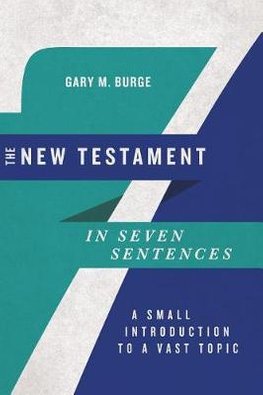
Gary M. Burge’s The New Testament in 7 Sentences is a brief introduction to several major themes of the New Testament.
The seven sentences that Burge focuses on are all key parts of the NT and he uses these to build broader theological topics. The topics covered are fulfillment, kingdom, cross, grace, covenant, spirit, and completion. Generally, Burge tries to stay fairly neutral on some of the biggest theological debates among Christians. That’s not to say that none of the book would be controversial on that regard–the notion of ‘covenant’ and its meaning is probably the one most likely to generate conflict of these. That said, this would be a good work to introduce someone to the overall concepts in the New Testament.
The book is designed to be used to jump start study of the Bible, whether alone or in small group settings. The last few pages are dedicated to a number of study questions that facilitate that study.
The New Testament in 7 Sentences serves as a brief introduction to major theological issues in the New Testmaent. It would serve well as a study group book that could lead to wider discussion and honing in on specific topics.
Disclaimer: I was provided with a copy of the book for review by the publisher. I was not required to give any specific kind of feedback whatsoever.
Links
Be sure to check out the page for this site on Facebook and Twitter for discussion of posts, links to other pages of interest, random talk about theology/philosophy/apologetics/movies and more!
Book Reviews– There are plenty more book reviews to read! Read like crazy! (Scroll down for more, and click at bottom for even more!)
SDG.
——
The preceding post is the property of J.W. Wartick (apart from quotations, which are the property of their respective owners, and works of art as credited; images are often freely available to the public and J.W. Wartick makes no claims of owning rights to the images unless he makes that explicit) and should not be reproduced in part or in whole without the expressed consent of the author. All content on this site is the property of J.W. Wartick and is made available for individual and personal usage. If you cite from these documents, whether for personal or professional purposes, please give appropriate citation with both the name of the author (J.W. Wartick) and a link to the original URL. If you’d like to repost a post, you may do so, provided you show less than half of the original post on your own site and link to the original post for the rest. You must also appropriately cite the post as noted above. This blog is protected by Creative Commons licensing. By viewing any part of this site, you are agreeing to this usage policy.

 J.W. Wartick - Reconstructing Faith