Christianity
Biographies of Dietrich Bonhoeffer: An Ongoing Review and Guide
There is an ever-growing collection of biographies of Dietrich Bonhoeffer, the German pastor who was executed by the Nazis in 1945. This means that when people are looking to learn about Bonhoeffer, it can be difficult to know where to dive in. While I believe there’s no single strong answer to that question, I do think different biographies do different things well. This post will be a catch-all specifically for biographies about Bonhoeffer. I’ll highlight strengths and weaknesses of each one, in the hopes that this will let readers best choose from among the growing field of Bonhoeffer studies. This post will continue to be updated as I encounter additional biographies, and may be expanded to include related works.
Why am I qualified to do this post? I am not a Bonhoeffer scholar by any traditional means, and I think it is incredibly important to read those scholars. That said, I have read over 100 books by or about Bonhoeffer, his life, and his theology. By no means does this make me an expert, but I think I could at least offer some insights into questions about what biography to read.

Strange Glory: A Life of Dietrich Bonhoeffer by Charles Marsh
Marsh’s biography, published in 2014, presents Bonhoeffer’s life in a compelling fashion backed by scholarship. It is highly readable but doesn’t skip over details and controversies about Bonhoeffer’s life.
Advantages
-Written to effectively introduce readers to scholarship about Bonhoeffer while also telling his life’s story.
-Turns into a page-turner at times with Marsh’s effective writing style.
-Introduces readers to many topics related to Bonhoeffer’s life and theology in ways that can guide further reflection and study.
Disadvantage(s)
-Somewhat long for a reader attempting to get the basics of Bonhoeffer’s life, at more than 400 pages of text.
It’s For You If…
You want a one stop shop for Bonhoeffer’s biography. This is probably the single best biography in terms of combining scholarly insight, readability, and accuracy about Bonhoeffer’s life without being too dry.

The Faithful Spy: Dietrich Bonhoeffer and the Plot to Kill Hitler by John Hendrix
A graphic novel as a Bonhoeffer biography that caught me unawares in 2020. The art style is engaging, and the panels manage to tell the story without being too cluttered with text.
Advantages
-Extremely readable, with language that is easy to understand, even in sections on theology.
-It’s a graphic novel, I mean… come on. But really, this will appeal to adults who like graphic novels and can also be good reading for teens or tweens who want to engage with deeper topics.
-Probably the most unique biography in presentation.
Disadvantage(s)
-Doesn’t have a complete picture of Bonhoeffer’s life due to the focus on Bonhoeffer’s struggle with Nazism. While this is definitely a large part of his life, it doesn’t fully explain his theology or ethics. It’s a graphic novel, so expecting it to do so might be absurd, but it is worth noting that there is some hot debate in Bonhoeffer scholarship about just how involved he was in the plot to kill Hitler, or even whether he was involved at all. All nuance on this and related topics is basically lost with the format here.
-Relies a bit on Metaxas’s apocryphal work (see below).
It’s for you if…
You want a quick, easy read on Bonhoeffer that gives you at least a surface familiarity with his life and work. Or, you want something you could hand to someone who’s not interested in large tomes.

Bonhoeffer: Pastor, Martyr, Prophet, Spy by Eric Metaxas
This is by far the most popular biography of Bonhoeffer. There’s no doubt that Metaxas’s biography helped the burgeoning interest in Bonhoeffer along. That said, there are serious defects in this biography which lead me to strongly not recommend it as a work for anyone looking into Bonhoeffer’s life.
Advantages
-Popularity- popularity is not a bad thing. It’s great that Metaxas manage to shine a light on Bonhoeffer and encourage so many to read more about him.
-Great subtitle- Bonhoeffer’s life begs to be a major Hollywood blockbuster according to this subtitle.
Disadvantages
-Inaccuracy- I won’t nitpick various tiny facts that Metaxas got wrong. Any biographer can mess up geography or days. It happens. What is at issue is that Metaxas actually undermines much of Bonhoeffer’s own positions by substituting Bonhoeffer’s theology–that of a Lutheran theologian from Germany–with Metaxas’s preferred theology–that of right-leaning American Evangelicalism. For example, Metaxas doesn’t write anything about Bonhoeffer’s views on baptism or the Lord’s Supper, despite Bonhoeffer himself saying the Sacraments are necessary for the church. Why does Metaxas avoid it? Either he’s unaware of Bonhoeffer’s theology here–a major blunder given that Bonhoeffer is a Lutheran pastor–or he’s explicitly leaving it out to avoid offending the Evangelical-Baptist tendencies of his targeted audience, who would strongly disagree with Bonhoeffer’s sacramental theology. Bonhoeffer’s work in the resistance is not given the nuance the evidence requires. Bonhoeffer’s theology is devoid of challenging the reader in Metaxas’s reading. Bonhoeffer is made to be a biblical inerrantist, with Metaxas emphasizing his care for studying the Bible, despite Bonhoeffer’s own words noting that “the theory of verbal inspiration will not do” (DBWE 3:51). In short, Bonhoeffer’s life, theological views, and motivations are all slanted in Metaxas’s representation. Indeed, it shouldn’t escape most readers that Bonhoeffer’s viewpoints begin to seem eerily similar to those of Metaxas’s.
-Distorts the view of Bonhoeffer for many- due to the book’s popularity and its major inaccuracies, it has led to a distorted view of Bonhoeffer’s legacy. One example is the “silence” quote attributed to Bonhoeffer on the inside flap of the book. “Silence in the face of evil is itself evil. God will not hold us guiltless. Not to act is to act.” It’s a great quote, and sounds possibly like something Bonhoeffer would say. The problem is that he didn’t say it. The quote simply is not from Bonhoeffer. And yet it’s in the congressional record as something he said because of the popularity of this book. Now quote misattribution isn’t the end of the world, especially when the quote itself doesn’t necessarily run contrary to the person it’s attributed to. The problem is that Metaxas does things like this constantly. He presents Bonhoeffer as wholly alien to the context in which he operated.
-Somehow still too long for an introductory biography, weighing in at over 600 pages.
It’s for you if…
You’ve gotten a grounding in Bonhoeffer’s life and theology and want to see what the fuss is about. Or, you love writing critical reviews.
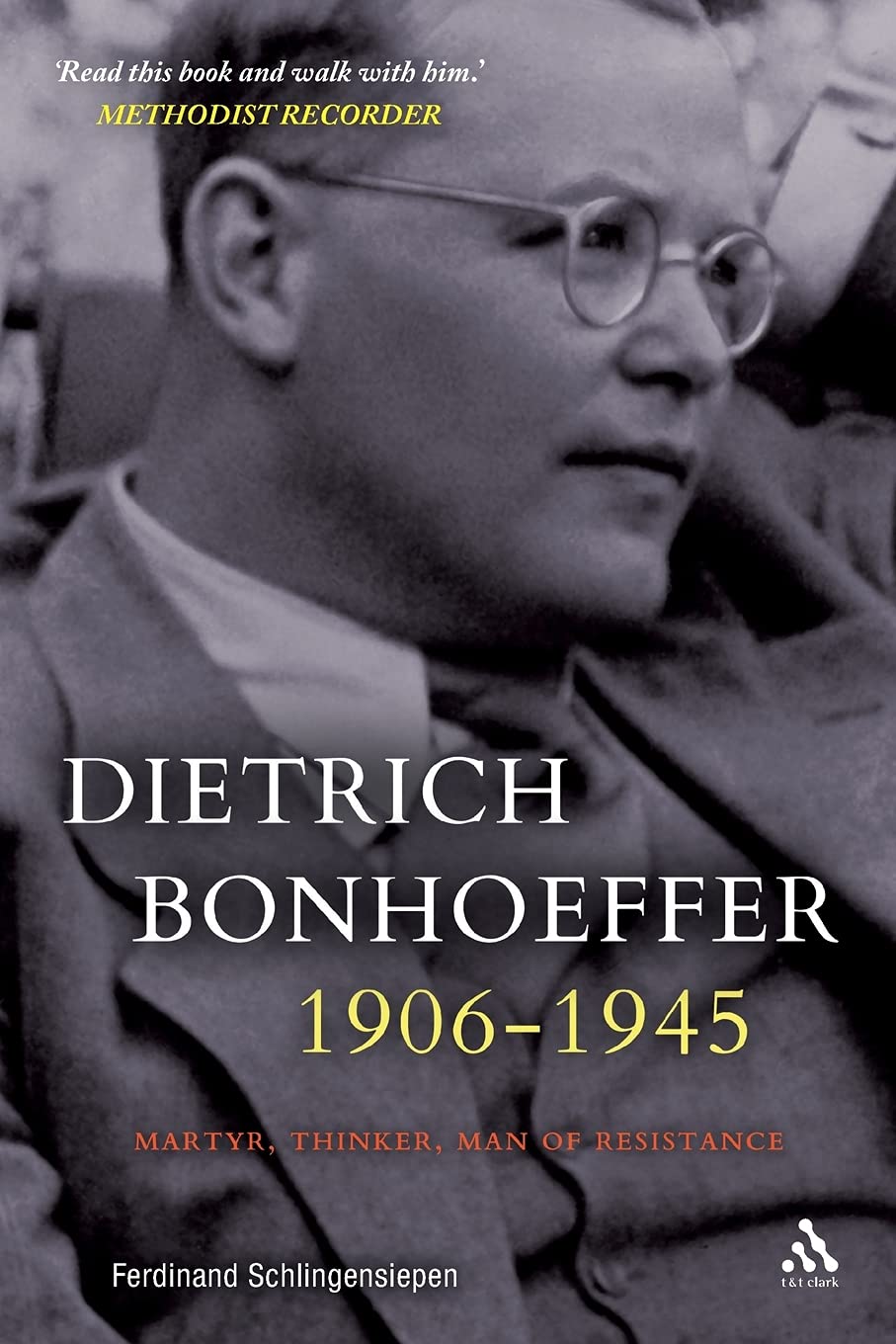
Dietrich Bonhoeffer 1906-1945: Martyr, Thinker, Man of Resistance by Ferdinand Schlingensiepen
Schlingensiepen’s biography is broad and intently focused upon Bonhoeffer’s intellectual development and production. It is an excellent work of Bonhoeffer scholarship but perhaps a bit less accessible for the lay reader.
Advantages
-Schlingensiepen’s academic experience and interpersonal connections make him imminently positioned to present an accurate accounting of Bonhoeffer’s life.
-The biography is not American-centric, as even the Marsh biography is in some ways. This biography is more historically based than it is theologically driven.
Disadvantage(s)
-The writing was originally German and the translation, while excellent, retains the dry tone and feel of the work.
-Schlingensiepen seems almost allergic to confronting modern concerns about theological questions that might arise from Bonhoeffer’s thought, making the biography more of a “just the facts, ma’am” approach than an attempt at relevance. This could also be seen as an advantage, depending on the reader.
It’s for you if…
You prefer a factual account of one’s biography to speculation about lesser grounded facts. Or, you would like to see a more modern German take on Bonhoeffer’s life. Or, you prefer to read one of the best scholarly treatments of Bonhoeffer’s life to anything more generalized.

The Doubled Life of Dietrich Bonhoeffer: Women, Sexuality, and Nazi Germany by Diane Reynolds
Bonhoeffer scholarship continues to broaden, and one great advantage of that is that scholars are driven to exploring corners of his life that would not otherwise have been explored. Reynolds here focuses specifically on Bonhoeffer’s life regarding the three subjects noted in the subtitle: women, sexuality, and Nazi Germany. (Full Review Here)
Advantages
-Insightful Commentary- Whether you agree or disagree with Reynolds’s conclusions, she makes a strong case in defense of her points. Truly, I think this biography deserves to be read by anyone who’s serious about engaging with Bonhoeffer’s life.
-Highlights lesser-discussed points- Women are constantly removed from history, but Reynolds puts women back into the narrative of Bonhoeffer’s life. She manages to show how influential many women were on Bonhoeffer’s life, leading to additional questions and avenues for exploration about Bonhoeffer. Additionally, the questions raised about Bonhoeffer’s sexuality elsewhere are highlighted here, with Reynolds deeply analyzing Bonhoeffer’s letters and life to make compelling, challenging arguments.
Disadvantages
-Primary focus is on the topics in the subtitle. Readers will get a fascinating look at Bonhoeffer’s interactions with women, interplay with Nazi Germany, and one of the deepest arguments about his sexuality found anywhere, but won’t have a full picture of his life.
-Highly controversial view of Bonhoeffer’s sexuality, which can be an advantage as it introduces readers to some of the best scholarly arguments on the topic.
It’s For You If…
You’ve read some about Bonhoeffer’s life and are interested in delving deeper into the background of some of his beliefs. You are curious about some of the hubbub surrounding Bonhoeffer’s sexuality in scholarly circles.
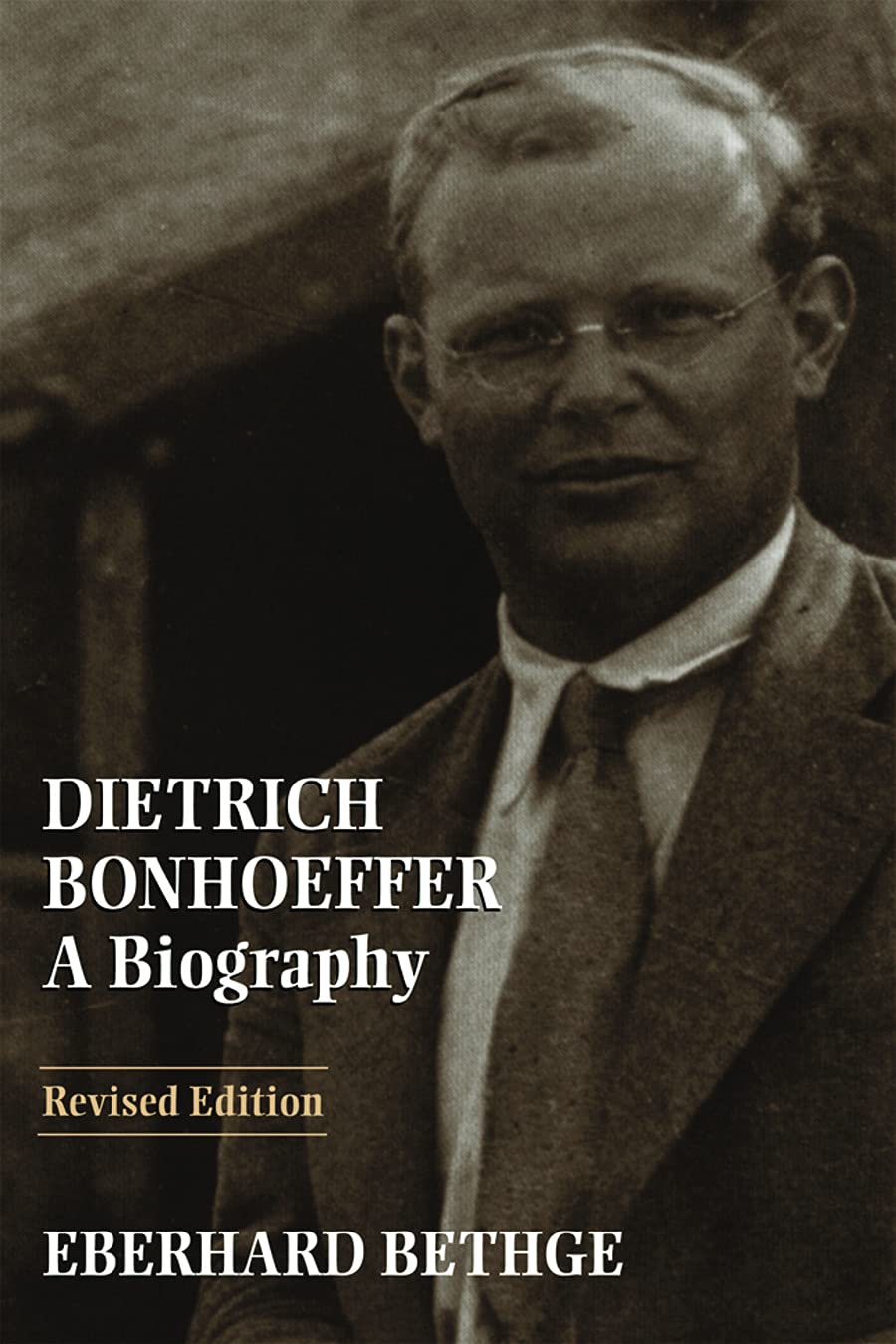
Dietrich Bonhoeffer: A Biography by Eberhard Bethge
Long seen as the definitive biography of Dietrich Bonhoeffer, this one is written by Bethge, Bonhoeffer’s great friend and confidant. It is voluminous in both content and commentary, providing key insights into Bonhoeffer’s thought from someone who knew him intimately.
Advantages
-The book feels absolutely comprehensive in its look at Bonhoeffer’s life.
-Bethge knew the subject well, personally, and this shows on basically every page.
-Bethge gives many insights into the “why” behind what Bonhoeffer was thinking, leading readers to deeper exploration and understanding of Bonhoeffer’s thought.
Disadvantage(s)
-It’s absolutely massive, weighting in at over 1000 pages (including notes/indices).
-There is some necessary bias from a friend of Bonhoeffer (Bethge) writing in a time in which Bonhoeffer wasn’t nearly as popular as he’s become now.
It’s for you if…
Want to feel like you know Bonhoeffer like a friend. Or, you’d like to see what serves as perhaps the baseline study for any student of Bonhoeffer’s life.
All Links to Amazon are Affiliates links
Links
Dietrich Bonhoeffer– read all my posts related to Bonhoeffer and his theology.
Be sure to check out the page for this site on Facebook and Twitter for discussion of posts, links to other pages of interest, random talk about theology/philosophy/apologetics/movies and more!
SDG.
——
The preceding post is the property of J.W. Wartick (apart from quotations, which are the property of their respective owners, and works of art as credited; images are often freely available to the public and J.W. Wartick makes no claims of owning rights to the images unless he makes that explicit) and should not be reproduced in part or in whole without the expressed consent of the author. All content on this site is the property of J.W. Wartick and is made available for individual and personal usage. If you cite from these documents, whether for personal or professional purposes, please give appropriate citation with both the name of the author (J.W. Wartick) and a link to the original URL. If you’d like to repost a post, you may do so, provided you show less than half of the original post on your own site and link to the original post for the rest. You must also appropriately cite the post as noted above. This blog is protected by Creative Commons licensing. By viewing any part of this site, you are agreeing to this usage policy.
Book Review: “A Non-Anxious Life: Experiencing the Peace of God’s Presence” by Alan Fadling

A Non-Anxious Life: Experiencing the Peace of God’s Presence by Alan Fadling seeks to provide readers with ways to manage anxiety through a Christian lens. There are some good points to be had throughout the book, but I also had significant difficulties with it.
Perhaps the biggest strength of the work is that it emphasizes how we can find comfort in God.
Perhaps my greatest reservation about the book is that it doesn’t have clear messaging. I didn’t see any clarity on the fact that anxiety is often a brain problem–a neurological issue–and this leads to some messaging that seems to make anxiety blameworthy on the individual. For example, early on in a chapter entitled “Anxiety isn’t for the birds,” Fadling writes, “Worry doesn’t help. It doesn’t improve anything. My worry is rooted in an unfortunate experiential blindness to the reality of God’s presence and God’s care in my present situation” (23). This is almost the exact opposite of what I’ve read with successful treatment or care for anxiety. Instead of noting how worry and anxiety are often rooted in patterns of brain activity which we’ve been taught, in trauma, and/or internalized from very young ages (at times), Fadling says that anxiety is “rooted in,” basically, not trusting God enough. This is sets readers up for a cycle of self-blame throughout the book. If, for example, some of the later practices for anxiety management don’t succeed, maybe that’s just the reader suffering “blindness to the reality of God’s presence.” We’re not trying hard enough, and if we just believed enough, we’d be okay. I think it is deeply problematic to set the stage in this fashion for the rest of the book.
Some of the practices Fadling includes do seem helpful, while others are too vague to be practically applied. A small section about “Transferring Our Cares to God” suggests that readers should seek humility or to be humble in times in which they are “try[ing] to take responsibility for what is God’s to care for” (37). Fadling says that one can instead “humbly trust God’s powerful care” in these moments, thus following a “way of humility” that leads us to recall that “God is not overwhelmed by the bad things to happen to us” and leave God to care for things we cannot manage (ibid). While I think this is a potentially useful practice, I was left wondering how to integrate it into any routine, especially given the stage-setting mentioned above. It seems to, again, punt the issue to just being something like trust God harder when you’re anxious, but how does that work?
The chapter on “Practicing Presence” is especially helpful as it focuses on spiritual practices such as focusing on the sense of presence with God–a nearly meditative concept. Fadling also notes how for Christians, peace can be envisioned as a person–Christ–and some ways this could be beneficial on reflection. As someone who has had therapy for anxiety, I found this to be perhaps the most helpful chapter.
One worrying thing throughout the book in addition to the problems noted above is how little emphasis (read: none) there is on things like therapy or research based perspectives on anxiety. This is evident time and again. Fadling notes at one point that “I probably won’t ever reach a point when anxious feelings do not arise in me” (76) but then the only resolution that’s offered to this is “trust Jesus harder” or “be more patient.” Fadling’s degree is an Master of Divinity–a degree many pastors achieve–but it’s not one that provides much training or certification in therapy. It makes me nervous how little any reference points are made to practical insights from trained professionals in that field, especially when paired with some of the problematic messaging I mentioned above.
A Non-Anxious Life has some practical use and tools, but I’m not sure I could endorse it given some of the issues I outlined above. It’s an intriguing attempt to integrate some useful tools for anxiety management from a Christian perspective, but I would recommend potential readers also seek research based therapy and answers.
All Links to Amazon are Affiliates links
Links
Be sure to check out the page for this site on Facebook and Twitter for discussion of posts, links to other pages of interest, random talk about theology/philosophy/apologetics/movies and more!
Book Reviews– There are plenty more book reviews to read! Read like crazy! (Scroll down for more, and click at bottom for even more!)
SDG.
——
The preceding post is the property of J.W. Wartick (apart from quotations, which are the property of their respective owners, and works of art as credited; images are often freely available to the public and J.W. Wartick makes no claims of owning rights to the images unless he makes that explicit) and should not be reproduced in part or in whole without the expressed consent of the author. All content on this site is the property of J.W. Wartick and is made available for individual and personal usage. If you cite from these documents, whether for personal or professional purposes, please give appropriate citation with both the name of the author (J.W. Wartick) and a link to the original URL. If you’d like to repost a post, you may do so, provided you show less than half of the original post on your own site and link to the original post for the rest. You must also appropriately cite the post as noted above. This blog is protected by Creative Commons licensing. By viewing any part of this site, you are agreeing to this usage policy.
Book Review: “The Practice of Remembering” by Casey Tygrett
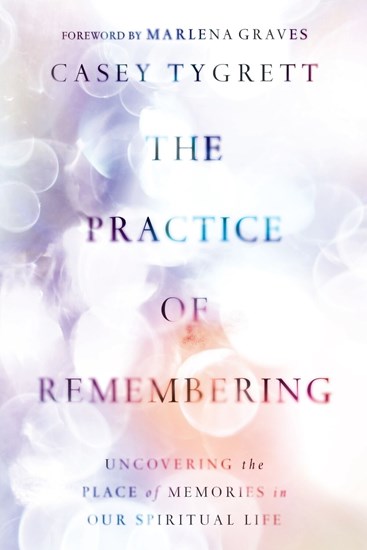
The Practice of Remembering by Casey Tygrett explores the concept of memory and how memories can form us spiritually.
It seems obvious that memory forms us as who we are today, but how does it do so, and do we have any control over it? Do we have any ways to interact with our memories–whether good or bad–to bring additional growth? Tygrett addresses these topics in an easy-to-comprehend manner, often utilizing analogies or highlighting actual brain science research (such as information about neuroplasticity). Each chapter has either a “Practice” or a “Pause” to close it out, encouraging active interaction with the content of the book.
The book is, I think, most useful to use either alone or in a group as a kind of short study/daily devotion. We don’t really spend a lot of time thinking about our memories, despite often experiencing our memories. That is, we usually passively allow memories to float to the surface or actively cycle through them without thinking about that process itself. How is it that we selected these memories at this time? What might it mean for us as people to have memories? What does it mean to experience them?
Okay, now I realize that a lot of this review has just been me asking questions. Tygrett doesn’t just ask questions, but presents a number of ways to answer these questions and reflect on them from a Christian spiritual perspective.
The Practice of Remembering invites readers into a personal, spiritual reflection on their own life experience. I found it opened up new avenues of thought. I think it certainly warrants a reread, as well. Recommended.
All Links to Amazon are Affiliates links
Links
Be sure to check out the page for this site on Facebook and Twitter for discussion of posts, links to other pages of interest, random talk about theology/philosophy/apologetics/movies and more!
Book Reviews– There are plenty more book reviews to read! Read like crazy! (Scroll down for more, and click at bottom for even more!)
SDG.
——
The preceding post is the property of J.W. Wartick (apart from quotations, which are the property of their respective owners, and works of art as credited; images are often freely available to the public and J.W. Wartick makes no claims of owning rights to the images unless he makes that explicit) and should not be reproduced in part or in whole without the expressed consent of the author. All content on this site is the property of J.W. Wartick and is made available for individual and personal usage. If you cite from these documents, whether for personal or professional purposes, please give appropriate citation with both the name of the author (J.W. Wartick) and a link to the original URL. If you’d like to repost a post, you may do so, provided you show less than half of the original post on your own site and link to the original post for the rest. You must also appropriately cite the post as noted above. This blog is protected by Creative Commons licensing. By viewing any part of this site, you are agreeing to this usage policy.
Book Review: “What Hath Darwin to do with Scripture?” by Dru Johnson- A breath of fresh air in the science-Christianity discussion
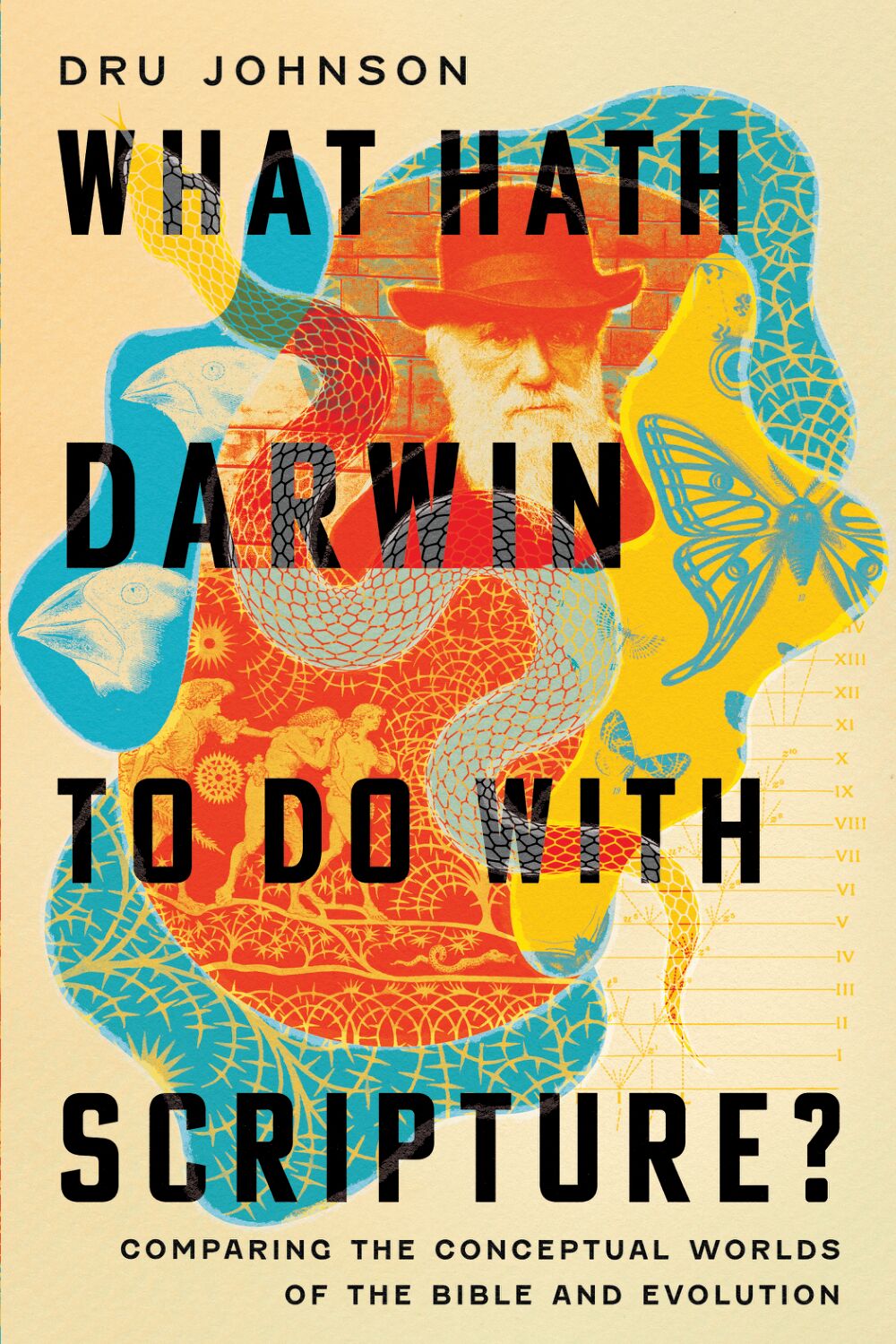
What Hath Darwin to do with Scripture? is a rarity in an overflowing market of books on Christianity and science. It brings something that feels fresh and new to the table. Having read it, I find myself sitting back and reflecting on the book, and wanting to discuss and share it with others. The first chapter puts the book’s thesis in perspective: “This is not the Creation-Evolution Debate You’re Looking For” (3). Indeed, it goes far beyond other works I’ve seen focused on interpretation of Scripture and evolution.
Dru Johnson’s work here presents a look not at debates about individualized texts and whether they can be reconciled with evolution. Instead, Johnson focuses on the conceptual worlds of evolution and the Bible to see if there is any overlap or conflict. Thus, instead of offering a text-by-text approach and asking whether this text over here precludes evolution or this one here hints at natural selection, he looks at overarching themes and stories in Scripture and how those might resonate (or not) with evolution. More specifically, Johnson argues the question shouldn’t be on pitting origin stories right next to each other in a verse-by-verse or thesis-by-thesis throwdown; instead, looking at how origin stories conceive of the world presents a more “apples to apples” approach (18-20).
There are three main themes Johnson focuses on in order to make comparisons between conceptual worlds. These themes are “scarcity,” “fit,” and “generation.”
“Scarcity” is clearly part of the Darwinian thesis and later evolutionary theory (25ff), and is often linked to violence. Johnson explores how the Bible also approaches language about scarcity and how it is also approached through violence at times (54ff). One aspect of his exploration is to point out that we have a skewed view of agrarian society and this entails a misunderstanding of the earliest parts of Genesis with its focus upon a life free of scarcity and threats emerging from the same (51ff, 56-57). The theme of scarcity doesn’t stay in Genesis, but can be found throughout the OT narratives and extends into the NT visions of a New Kingdom (83-84). The God-creation relation and covenants involved therein found in the Bible present, for Johnson, some of the places that it may be most at odds with evolutionary thinking (90). While this is the case, Johnson argues that biblical concepts related to scarcity have some resonance with evolutionary conceptualization of the world.
One of the most fascinating sections in the book is less about evolution than it is about the development of languages. In a lengthy section on the “fit” of people and creatures to their habitats, Johnson delves into the way that experts in linguistics have shown that the very geography of peoples’ regions shapes their language–complicated, high pitched noises being shouted through a rainforest, for example, doesn’t work as well as simple “e” or “a” sound. Differences between sounds used in languages can be identified and linked to geographic features (115ff). What has any of this got to do with the Bible? Johnson then turns around and examines concepts behind the story of Babel and the story of Pentecost, showing how each also shows the way geography and regional dialects could emerge (118-120).
“Generation” is the final aspect Johnson interrelates between Scripture and evolution. Sex and procreation are obvious hallmarks of both conceptual worlds, guiding the drive for selection and survival in one and becoming deeply important to the continuity of God’s promises in the other. Lengthy discussions of the seeming strangeness of monogamy from an evolutionary and even biblical perspective, discussion of norms related to sex, the natural bent towards violent sexual encounters, and more are discussed and related between the two conceptual worlds Johnson is exploring. Highlighting any number of fascinating points would be possible here. For example, discussing the prohibitions in Leviticus, Johnson points out that the focus seems to be upon aspects of generation, not on the inherent evil of whatever acts are being ruled out (162-165). Whether this could foster some additional discussion of morality and ethics is beyond Johnson’s point here, but certainly could be worth exploring.
Johnson is even in his messaging throughout the book, rarely claiming to have some grandiose answer to questions about science and Christianity. Instead, his modest conclusion is that he “retain[s] a healthy and hopeful agnostic curiosity about the integration of these two conceptual worlds–evolutionary and Hebraic–whether they can be reconciled and how so” (201). He goes on to express hope that the discussion here will lead to colleagues correcting, agreeing, discussing, opening dialogue, etc. on these topics. I wholeheartedly agree.
What Hath Darwin to do with Scripture? breathes new life into the interplay between Christianity and science. It’s a book that demands careful reading and reflection and, I hope, will spur discussion of the dialogue into new, unexplored directions. Highly recommended.
All Links to Amazon are Affiliates links
Links
Be sure to check out the page for this site on Facebook and Twitter for discussion of posts, links to other pages of interest, random talk about theology/philosophy/apologetics/movies and more!
Book Reviews– There are plenty more book reviews to read! Read like crazy! (Scroll down for more, and click at bottom for even more!)
SDG.
——
The preceding post is the property of J.W. Wartick (apart from quotations, which are the property of their respective owners, and works of art as credited; images are often freely available to the public and J.W. Wartick makes no claims of owning rights to the images unless he makes that explicit) and should not be reproduced in part or in whole without the expressed consent of the author. All content on this site is the property of J.W. Wartick and is made available for individual and personal usage. If you cite from these documents, whether for personal or professional purposes, please give appropriate citation with both the name of the author (J.W. Wartick) and a link to the original URL. If you’d like to repost a post, you may do so, provided you show less than half of the original post on your own site and link to the original post for the rest. You must also appropriately cite the post as noted above. This blog is protected by Creative Commons licensing. By viewing any part of this site, you are agreeing to this usage policy.
Bonhoeffer on the “Social Gospel” and Reconstructing Faith
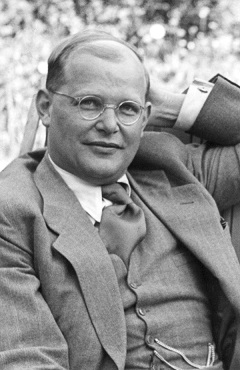
I have been labeled by some as a Progressive Christian, and even sometimes think of myself that way. That said, my primary identity remains Lutheran, and one of the reasons for that is that I believe that while the work for social justice is profoundly important, it cannot supplant the primary focus of my faith, which is Christ. It’s hard to put my finger on the what difference that makes, but I think a concrete example from the past can help shine some light on the topic.
Dietrich Bonhoeffer, a German Lutheran who was murdered by the Nazis in 1945, visited the United States and encountered what was then a growing movement towards the Social Gospel. Now, Bonhoeffer cannot be seen as some kind of pro-capitalist, anti-Communist, fundamentalist [1]. Bonhoeffer’s visit to the United States enlightened him on a number of things, and as he traveled the States, he condemned their treatment of minorities (especially African Americans). Bonhoeffer’s own writings repeatedly emphasize the need to feed the hungry and care for the poor and oppressed. But Bonhoeffer never allowed those concerns about social justice to supplant the Gospel. In one enlightening writing, “Memorandum: The ‘Social Gospel,'” Bonhoeffer writes a balanced perspective on the notion of social justice and the Gospel.
The work appears in the Dietrich Bonhoeffer Works in English: Volume 12. He writes, first that the social gospel adherents are the people who are “most interested and participate most in international Christian work,” which gives the impression that it is the majority Christianity of the United States. This, he states, is “mistaken.” But the opposition and majority church of the time, one Bonhoeffer describes as fundamentalist, is highly problematic: “strong financial support from capitalist circles… and adherents of individualistic revival Christianity” (236). Anyone familiar with Bonhoeffer would know each of these was seen by him as deep condemnation. The church situation generally in the United States was seen by Bonhoeffer as having some problems rooted in its organization. While not having state support of the schools was likely seen by him as a major boon given what was happening to the German Christian movement back home, he rightly points out that “Because the church depends completely on the activity of the congregation, there is strong general interest in the church and a close fusion of public with church interests, with all the consequences for the dominance of the pew over the pulpit” (237).
Moving on to the social gospel’s teachings, Bonhoeffer notes that it makes the “gospel entirely relate[d] to the human being in his current situation…” It sees the problem for humans as the “materialistic, atomistic, individualistic, capitalistic” tenor of the age and proscribes the church as the solution; an ethical solution that reduces and conceals the “real Christ” to instead be the “religion of Christ” and makes the teachings of the church merely about “Christ’s teaching,” thus converting Christianity into “an ethical religion (or even only an ethic)” in which “the Decalogue and the Sermon on the Mount form its center.” The kingdom of God is seen as an ushering in of an age in which there is true brotherhood among human beings, and this makes God immanent in the world rather than transcendent. The resurrection is seen as a sign and total affirmation of Christ’s teaching of love of neighbor. Social gospel is a religion of action, seeking to bring that version of the Kingdom of God into the world now as the highest goal. Theology is reduced to being a concern only to those who are fundamentalist in their outlook (239-240).
These outlines of the social gospel ring surprisingly true for much modern Progressive theology. I say this as someone who is typically categorized as a Progressive Christian. Bonhoeffer’s words about the social gospel above are so close to so much Progressive theology I have seen. And there’s nothing wrong with seeking to bring the Kingdom of God now, or to usher in an era of inclusion, equality, and love for all people.
Bonhoeffer’s section following this outline of the social gospel is “Appreciation and critique,” and is worth noting at length. First, he states “The unrelenting seriousness with which the practical social problems are shown here, and with which Christians are called to serve, is the decisive contribution of American Christians [involved in the social gospel movement] to the understanding of the Christian message in the entire world… Taking seriously the kingdom of God as a kingdom on earth is biblically sound and is justified…” Clearly, Bonhoeffer resonates with the message of the social gospel over and against the “individualistic” and “capitalistic” concerns of fundamentalist Christianity.
However, the social gospel also caused problems by supplanting theology with Christ-as-ethic. Bonhoeffer writes, “The eschatological understanding of the kingdom, as one that God can create and brings in contrast to the world, has disappeared… Sin is not an unpleasant side effect of human existence; rather it corrupts the innermost core of human beings… Christ is the mediator who reconciles the human being with God and forgives his sins. Cross and resurrection as acts of God are therefore the center of history… God is not the immanent progressive ethical principle of history; God is the Lord who judges the human being and his work, he is the absolute sovereign… The optimism, the ideology of progress does not take God’s commandment seriously (Luke 17:10 [2]). It is modern enthusiasm. It fails to recognize human limits; it ignores the fundamental difference between a kingdom of the world and God’s Kingdom” (241).
Finally, he critiques the social gospel for being an Enlightenment philosophy containing a self-contradictory desire for international and collectivist/individualistic harmony. While such harmony is itself a better ideology than most, it misses the strength of the gospel message when it centers Christ’s resurrection and the coming kingdom of God.
Bonhoeffer’s critique of the social gospel, then, is important to me to understand because it shows how we can resonate and even encourage the goals of the social gospel, or in our own time, social justice while still arguing that to reduce Christianity to the message of human unity actually destroys the very message of the Gospel itself. Yes, we want unity of humanity. Yes, we want peace. Yes, we want to resist the “materialistic, atomistic, individualistic, capitalistic” trend we see in our own times. But no, we must not reduce the message of Christianity to the Sermon on the Mount or see Christ merely as another ethicist.
So much Lutheran theology walks the middle line between views seen to be an opposition. It is neither Arminian nor Calvinist; neither transubstantiation nor merely symbolic in the Eucharist; neither double predestination nor individualized choice of salvation. For our time, perhaps another middle line Lutherans walk is that line affirming both the necessity of theology and yes, even orthodoxy, while also working to bring justice to the world. It’s a line walking the acknowledgement that humanity is sinful and even corrupted by sin–something easier to do outside of our positions of privilege in suburban or urban homes in the United States; when children are made into soldiers, or violence is a day-to-day experience, it is easier to see the corruption of human nature–while also hoping that the God who entered the world in Christ can enter once more and bring healing and holism to humanity. I think it’s worth walking those lines.
Notes
[1]Ironically, his views on Scripture were seen as fairly conservative in his own setting but would be seen by American Evangelicals as wildly liberal today.
[2] “So you also, when you have done everything you were told to do, should say, ‘We are unworthy servants; we have only done our duty.’’]'” NIV
All Links to Amazon are Affiliates links
Links
Dietrich Bonhoeffer– read all my posts related to Bonhoeffer and his theology.
Be sure to check out the page for this site on Facebook and Twitter for discussion of posts, links to other pages of interest, random talk about theology/philosophy/apologetics/movies and more!
SDG.
——
The preceding post is the property of J.W. Wartick (apart from quotations, which are the property of their respective owners, and works of art as credited; images are often freely available to the public and J.W. Wartick makes no claims of owning rights to the images unless he makes that explicit) and should not be reproduced in part or in whole without the expressed consent of the author. All content on this site is the property of J.W. Wartick and is made available for individual and personal usage. If you cite from these documents, whether for personal or professional purposes, please give appropriate citation with both the name of the author (J.W. Wartick) and a link to the original URL. If you’d like to repost a post, you may do so, provided you show less than half of the original post on your own site and link to the original post for the rest. You must also appropriately cite the post as noted above. This blog is protected by Creative Commons licensing. By viewing any part of this site, you are agreeing to this usage policy.
Book Review: “Kierkegaard and the Changelessness of God” by Craig A. Hefner
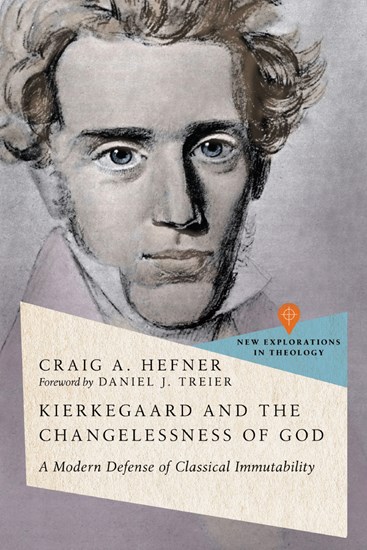
Kierkegaard and the Changelessness of God by Craig A. Hefner presents an unusual dynamic: Kierkegaard being used in defense of a core tenet of classical theology: divine immutability.
Hefner begins with a brief introduction to Kierkegaard and correction of misconceptions, including the notion that Kierkegaard was somehow out of tune with classical Christian theology. What Kierkegaard was reacting against was not Christian doctrine but rather than sleepy, comfortable way in which people were living in light of it. Kierkegaard united, rather than divided, traditional Christianity and existentialism.
Next, Hefner moves into four chapters that cover Kierkegaard and the doctrine of divine immutability or changelessness. What makes this defense of immutability unique is in part its focus on Kierkegaard’s existentialism as a defense of that changelessness. The two topics appear to be divergent, but Hefner argues the are in fact unified in Kierkegaard’s milieu. Kierkegaard’s existentialism provides a way to contrast God and humanity. The changing, “all flesh is grass” nature of humanity is contrasted with the immutable God.
Rather than simply relying on this contrast, however, Hefner with Kierkegaard argues that the Self can be reintegrated across change due to its relationship only with an immutable God. God, in other words, is the ground for the Self in a very real way. A whole chapter focuses on James 1:17 and Kierkegaard’s interpretation thereof. James 1:17 is often used as the core text for divine immutability, and Hefner draws on various interpreters to bring its insights to life.
Finally, Hefner argues that Kierkegaard’s conception of immutability doesn’t rely upon metaphysics but rather upon the concept of the self. I admit some of this section was a bit beyond me, because it seems to me that ultimately anything relies upon some kind of metaphysics. However, grounding the concept of immutability on the divine self was an interesting endeavor.
Kierkegaard and the Changelessness of God is an unexpected read. I found it refreshing despite being extremely dense. Recommended for readers looking for deep discussion of existential theology and its application to classical theism.
All Links to Amazon are Affiliates links
Links
Be sure to check out the page for this site on Facebook and Twitter for discussion of posts, links to other pages of interest, random talk about theology/philosophy/apologetics/movies and more!
Book Reviews– There are plenty more book reviews to read! Read like crazy! (Scroll down for more, and click at bottom for even more!)
SDG.
——
The preceding post is the property of J.W. Wartick (apart from quotations, which are the property of their respective owners, and works of art as credited; images are often freely available to the public and J.W. Wartick makes no claims of owning rights to the images unless he makes that explicit) and should not be reproduced in part or in whole without the expressed consent of the author. All content on this site is the property of J.W. Wartick and is made available for individual and personal usage. If you cite from these documents, whether for personal or professional purposes, please give appropriate citation with both the name of the author (J.W. Wartick) and a link to the original URL. If you’d like to repost a post, you may do so, provided you show less than half of the original post on your own site and link to the original post for the rest. You must also appropriately cite the post as noted above. This blog is protected by Creative Commons licensing. By viewing any part of this site, you are agreeing to this usage policy.
Because of Concordia and Seminex

The news broke about a week ago (writing in February 2024). The Ann Arbor campus of Concordia University, also known as Concordia University – Ann Arbor (hereafter CUAA) is in dire financial straits. The University has been special through my life, as multiple family members including myself eventually attended and graduated from CUAA. However, I have mixed feelings about the place itself, especially some specific parts of the theology taught and interactions with people there. I’ve written some about this in posts elsewhere.
At the same time as I was thinking about CUAA and the complex feelings I have about it, Seminex hit its 50th anniversary. Seminex was shorthand for Seminary in Exile, a schism in the LCMS specifically centered at Concordia Seminary in St. Louis that led to several professors and hundreds of students leaving the Seminary. A complete history of Seminex is beyond the scope of that post. Briefly, the rise of a militantly conservative wing in the LCMS led to calls of heresy against multiple professors at Concordia Seminary in St. Louis due to their teaching mainstream tools for biblical interpretation. Rather than filing formal charges, these accusations essentially acted as a kind of blackballing and besmirching of the names of those professors deemed unorthodox by this radical wing. It ultimately led to the majority of professors and students walking out to form their own seminary, which ultimately merged with other Lutheran groups, including what would be come the ELCA.
As I prepared to write this article, I sifted through hundreds of photographs I took from my time on campus. It was like revisiting an old friend, in some ways literally. But it was also painful. A lot of those old friends aren’t friends anymore. Some of them have messaged me to tell me I’m going to hell. Others set people I didn’t even know to do the same. Still others disappeared without a trace, turning into nothing but ghosts from the past, living their lives as if I don’t exist.

I also revisited some of the works I’ve read about Seminex. Power, Politics, and the Missouri Synod by James C. Burkee tells the story of the conservative takeover of the LCMS. Like other denominations (eg. the Southern Baptist Convention), this takeover, when examined in the light of history, was less about the theological positions held by those involved than it was about power politics. Burkee himself taught at Concordia University Wisconsin, and tells the story from the perspective of a concerned insider, not an anti-LCMS outsider. It’s incredibly detailed, well-documented, and frankly alarming on almost every level.
But the book that has resonated most right now is No Room in the Brotherhood by Frederick W. Danker. Danker was one of the professors who left to be part of Seminex, and his telling of the way Seminex played out is both insightful and cutting in its analysis. His conclusion states explicitly that the various major names on either side of the conflict were not heroes or villains. Instead, the culprit was the “deep-seated conviction of the Missouri Synod that it was completely right. Any actions undertaken in concert with that conviction were therefore also right and it [the LCMS] was willing to perpetuate its institutional identity at any cost” (352).
The reason this resonated, and the reason my mind connected these two events–the possible closure of CUAA and Seminex’s 50th–is because the reaction and impetus seem so intertwined. I can’t tell you how many posts I’ve seen in the last week about how CUAA is the “city on a hill.” The language Jesus uses surrounding the city on a hill is that of letting Christians’ light so shine so that the good deeds of those will lead others to God. As Danker wrote, there’s this deep-seated conviction that the Missouri Synod (in this case, CUAA) is “completely right.” But it wasn’t completely right for so many.
It wasn’t completely right for gay people on campus who were mocked for who they were. It wasn’t a city on a hill for a woman who wanted to follow God’s call to be a pastor but was told she was disobeying God for wanting to serve. It wasn’t completely right for a Baptist friend who was told their view of baptism meant they were facing hellfire. It wasn’t a city on a hill when I witnessed pre-seminary men make fun of women, Jews, and Muslims. It wasn’t completely right for anyone perceived as “liberal.”
And here’s the hell of it: CUAA felt completely right so long as you were “in.” So long as you were LCMS, thought men should be in charge, and toed the party line, it felt like a city on a hill. I know, because I absolutely felt that way while I was there for a lot of the time I was there. Being an insider wasn’t just great, it was also, often, blissful ignorance that anyone was outside. After all, if we were experiencing this lovely joyful celebration of God, if we could really feel God’s working and presence in a chapel service or a late night call to prayer around a bonfire, how could it be anything but perfection? And how could anyone not want the same thing? And, importantly, how could they not want it in the same way?
That’s what makes this all feel so complex and, to use a sort of silly term, “yucky” about the whole thing. Because the second I was on the outside, I saw the willingness of people on the inside to perpetuate that identity “at any cost” as Danker wrote. A friend sicced an unknown seminarian on me to tell me that both I and my wife would be going to hell for thinking women could preach. Other friends disappeared, whether from the age-old Facebook friends list or entirely out of our lives. People I thought would be by my side throughout my life are no more than fragments of memory now. There was “no room in the brotherhood” for a man like me. And, like those attacked during the purge of the LCMS 50 years ago, I felt firsthand the equivocation between the perfection of the LCMS and the inerrancy they ascribe to Scripture. Questioning the LCMS view on anything wasn’t just questioning the LCMS, it was questioning Scripture and, by proxy, God!
So now, we’re here, and CUAA feels like this kind of epic thing in my life; a crucible through which I passed. Yes, there were good times–great times. That’s what makes it all so very hard. Because what was there could have been amazing. But if you stepped a toe out of line, God help you. The hashtag #becauseofconcordia is being used by people working to save CUAA. But I know that a few dollars–even the several million dollars that the campus needs to be in the black–aren’t enough to save CUAA. Only God can save CUAA and the LCMS. From itself.
Maranatha.
Links
Formerly Lutheran Church – Missouri Synod (LCMS) or Wisconsin Synod (WELS)– A Facebook group I’ve created for people who are former members of either of these church bodies to share stories, support each other, and try to bring change. Note: Anything you post on the internet has the potential to be public and shared anywhere, so if you join and post, be aware of that.
Leaving the LCMS/WELS– Not sure about whether to leave or thinking about leaving? Do you want to others who are thinking along the same lines? I created a group for those who are contemplating leaving these denominations, as well.
Why I left the Lutheran Church – Missouri Synod Links Hub– Want to follow the whole series? Here’s a hub post with links to all the posts as well as related topics.
Be sure to check out the page for this site on Facebook and Twitter for discussion of posts, links to other pages of interest, random talk about theology/philosophy/apologetics/movies and more!
SDG.
——
The preceding post is the property of J.W. Wartick (apart from quotations, which are the property of their respective owners, and works of art as credited; images are often freely available to the public and J.W. Wartick makes no claims of owning rights to the images unless he makes that explicit) and should not be reproduced in part or in whole without the expressed consent of the author. All content on this site is the property of J.W. Wartick and is made available for individual and personal usage. If you cite from these documents, whether for personal or professional purposes, please give appropriate citation with both the name of the author (J.W. Wartick) and a link to the original URL. If you’d like to repost a post, you may do so, provided you show less than half of the original post on your own site and link to the original post for the rest. You must also appropriately cite the post as noted above. This blog is protected by Creative Commons licensing. By viewing any part of this site, you are agreeing to this usage policy.
Book Review: “Reformation Commentary on Scripture: Old Testament IX- Proverbs, Ecclesiastes, Song of Songs”

The Reformation Commentary on Scripture series from InterVarsity Press is an impressive collection of commentaries that feature a wide range of voices from the Reformation period giving insight into biblical texts. The latest volume I got was Old Testament IX: Proverbs, Ecclesiastes, Song of Songs. I was particularly excited for this volume both because I quite enjoy the books of the Bible it is discussing and because commentary on these books often varies wildly depending upon one’s background beliefs and theological stances.
Proverbs- a book that is confusing for many commentators through history, especially given its sometimes contradictory advice (eg. whether to debate the fool in Proverbs 26:4-5). What are we supposed to do with the book? Reformation commentators varied in their thoughts on the book, too. For example, Peter Moffett, an English clergyman, states that the book is simply a collection of “certain general, short, and pithy sayings, used…. in every person’s mouth” (7). By contrast, Michael Cop, a Swiss Protestant pastor, argued that the book is indeed wisdom that teaches Christ (ibid). The “Proverbs 31 woman” is a popular trope taken by many Christians today to present the model woman. Reformation commentators varied on the meaning of Proverbs 31’s teachings about a woman, including praising women for being strong not just physically but also mentally (John Trapp, an Anglican exegete, 201), considering the passage as showing how rare it is to find a woman with such insight or properties as a kind of backhanded tribute (Michel Cop, 198-199) and, intriguingly, an admonishment against useless and foolish husbands (Cop again, 201). Still more insights include seeing the passage not as an ideal woman but an abstract praising of “womanly arts” that makes it more of an empowering passage than an ideal women must live up to (Lucrezia Marinella, a Venetian poet and writer). Indeed the whole section on this Proverbs 31 passage is worth close reading and consideration.
Ecclesiastes- I’ll not spend as much time reviewing this, but it is interesting to see what the various commentators say about individual passages. I don’t like rushing past this book, which is a favorite of mine, but with limited time for review, suffice to say that the insights are just as fascinating as those in Proverbs.
Song of Songs- one of the more uniquely interpreted books of the Bible both then and now. Reformation theologians saw the book in varied lights. Martin Luther, for example, saw the book as a celebration of the ideal political order (305-306). Others saw it as allegory for love of the Holy Spirit for the church (Francois Lambert, a French Reformed theologian, 304). Others saw it as even more figurative, such as Calvin’s reading of the book as “a figural representation of Christ’s reign” (207). Desiderius Erasmus, famous opponent of Luther and Catholic theologian, was keen to defend the Bible from any kind of sexual impropriety while also arguing the book is not an allegory of the Virgin Mary (304-305, 307). While the allegorical readings were very popular, some theologians still saw it simply as showing the “veiled intimacies of marriage” (eg. Hugo Grotius, a Dutch lawyer and humanist, 313-314). The rest of the discussion of the book is just as interesting, showing an intriguing line that the interpreters walked between attempting to find comfort from the blatant sexual language in allegory while also acknowledging it in their use of allegory. One interesting example is Henry Ainsworth (an English Puritan Hebraist) whose interpretation of Song of Songs 4:4-5 which explicitly praises the breasts of the woman writes that breasts are for “ornament and use” while immediately turning it to being about God and the Church–“So here the ‘breasts’ of Christ’s spouse are compared to ‘roes’ for pleasantness, to ‘fawns’… This signifies how the church is fruitful in good works and words of comfort…” (377). This kind of blunt speaking of the sexual language of the text and immediately re-interpreting it as allegory is common throughout the Reformation period, though there are a few exceptions.
Old Testament IX: Proverbs, Ecclesiastes, Song of Songs is an insightful, fascinating look at some of the books of the Bible with the most varied histories of interpretation. I recommend it for readers interested in Reformation theology but also for those who just want some insight into these fascinating, oft-contentious books of the Bible.
All Links to Amazon are Affiliates links
Links
Be sure to check out the page for this site on Facebook and Twitter for discussion of posts, links to other pages of interest, random talk about theology/philosophy/apologetics/movies and more!
Book Reviews– There are plenty more book reviews to read! Read like crazy! (Scroll down for more, and click at bottom for even more!)
SDG.
——
The preceding post is the property of J.W. Wartick (apart from quotations, which are the property of their respective owners, and works of art as credited; images are often freely available to the public and J.W. Wartick makes no claims of owning rights to the images unless he makes that explicit) and should not be reproduced in part or in whole without the expressed consent of the author. All content on this site is the property of J.W. Wartick and is made available for individual and personal usage. If you cite from these documents, whether for personal or professional purposes, please give appropriate citation with both the name of the author (J.W. Wartick) and a link to the original URL. If you’d like to repost a post, you may do so, provided you show less than half of the original post on your own site and link to the original post for the rest. You must also appropriately cite the post as noted above. This blog is protected by Creative Commons licensing. By viewing any part of this site, you are agreeing to this usage policy.
Book Review: “Nobody’s Mother: Artermis of the Ephesians in Antiquity and the New Testament” by Sandra L. Glahn
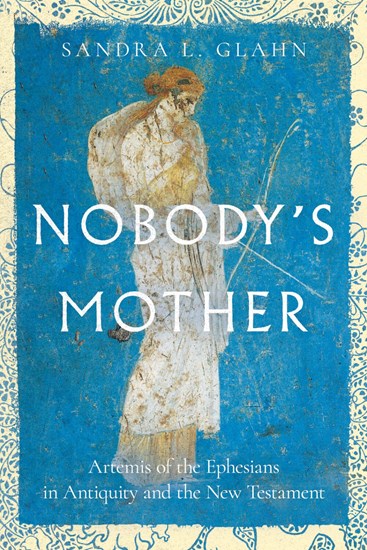
Nobody’s Mother by Sandra L. Glahn is a detailed look at questions about Artemis’s influence in Ephesians and the NT as well as specifically at 1 Timothy 2:11-15.
Glahn, after some discussion of why it’s worth taking a fresh look at Artemis in the NT, dives into Ephesus and Artemis across several chapters. For example, a common argument I’ve seen is that Artemis in Ephesus was associated with prostitution and that this should provide a background for how texts related to Artemis might play out. Glahn, however, argues that this is not the case and that the evidence for prostitution as a connection with Artemis is missing either Empire-wide or in the city of Ephesus specifically. Indeed, the opposite seems to be the case as Artermis is consistently associated with chastity and virginity. Artemis, one might say, is “Nobody’s Mother.”
Artemis was also associated with childbirth and midwifing, to the extent that she was seen as taking the pain of childbirth away. This, Glahn argues later, explains some of the complexities behind the 1 Timothy passage. One example of this is that the argument of being saved through or persevering through childbearing appears to be a reference to Artemis and has the author of 1 Timothy essentially giving readers the advice to set aside an idol–the Greek god Artemis–for Christ as Lord.
Glahn also applies some of these findings to how to read the rest of the text, noting that having Artemis in Ephesus and the related background provided in the foregoing chapters explains some of how Paul might have been arguing against false teaching and confronting the Artemis cult more directly.
Nobody’s Mother is a deep book that makes several well-informed arguments about topics related to NT interpretation. It is recommended highly.
All Links to Amazon are Affiliates links
Links
Be sure to check out the page for this site on Facebook and Twitter for discussion of posts, links to other pages of interest, random talk about theology/philosophy/apologetics/movies and more!
Book Reviews– There are plenty more book reviews to read! Read like crazy! (Scroll down for more, and click at bottom for even more!)
SDG.
——
The preceding post is the property of J.W. Wartick (apart from quotations, which are the property of their respective owners, and works of art as credited; images are often freely available to the public and J.W. Wartick makes no claims of owning rights to the images unless he makes that explicit) and should not be reproduced in part or in whole without the expressed consent of the author. All content on this site is the property of J.W. Wartick and is made available for individual and personal usage. If you cite from these documents, whether for personal or professional purposes, please give appropriate citation with both the name of the author (J.W. Wartick) and a link to the original URL. If you’d like to repost a post, you may do so, provided you show less than half of the original post on your own site and link to the original post for the rest. You must also appropriately cite the post as noted above. This blog is protected by Creative Commons licensing. By viewing any part of this site, you are agreeing to this usage policy.
Book Review: “C.S. Lewis in America” by Mark A. Noll
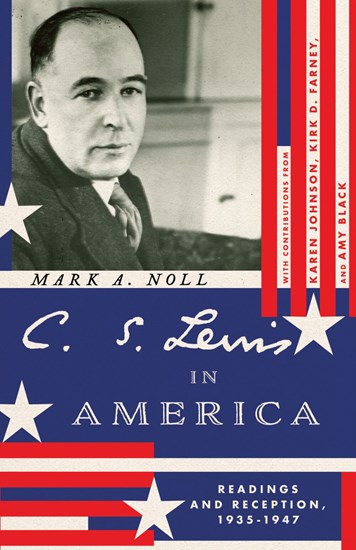
C.S. Lewis in America: Readings and Reception, 1935-1947 is a fascinating look at how C.S. Lewis was received in the United States as he published theological and other works. Mark Noll is one of the most prodigious and intriguing historians of the church in America writing today. The book is mostly focused on the question of how Lewis was received in America, but other contributors introduce a number of other topics that broadens the appeal even more.
Noll’s comments are centered around the initial, largely positive American Catholic response to Lewis, then on his reception among secular writers, and finally on Lewis’s reception among American evangelicals. Responses to these chapters focus on race and religion in America at the time of Lewis, the interplay of The Catholic Hour and The Lutheran Hour on American audiences, and the way Lewis helped foster ways of communication with Christian themes. These responses introduce a number of additional topics that are sometimes only tangentially related to C.S. Lewis, but are all well worth the time to read.
C.S. Lewis in America is a fascinating read, especially for those wanting to know more about C.S. Lewis’s reception. Noll and the other contributors introduce a number of topics that make the book quite readable and with broader appeal.
All Links to Amazon are Affiliates links
Links
Be sure to check out the page for this site on Facebook and Twitter for discussion of posts, links to other pages of interest, random talk about theology/philosophy/apologetics/movies and more!
Book Reviews– There are plenty more book reviews to read! Read like crazy! (Scroll down for more, and click at bottom for even more!)
SDG.
——
The preceding post is the property of J.W. Wartick (apart from quotations, which are the property of their respective owners, and works of art as credited; images are often freely available to the public and J.W. Wartick makes no claims of owning rights to the images unless he makes that explicit) and should not be reproduced in part or in whole without the expressed consent of the author. All content on this site is the property of J.W. Wartick and is made available for individual and personal usage. If you cite from these documents, whether for personal or professional purposes, please give appropriate citation with both the name of the author (J.W. Wartick) and a link to the original URL. If you’d like to repost a post, you may do so, provided you show less than half of the original post on your own site and link to the original post for the rest. You must also appropriately cite the post as noted above. This blog is protected by Creative Commons licensing. By viewing any part of this site, you are agreeing to this usage policy.

 J.W. Wartick - Reconstructing Faith