Christianity
Book Review: “Renewing Moral Theology” by Daniel Westberg
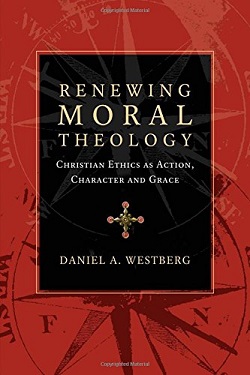 How might we integrate the study of ethics and theology? In Renewing Moral Theology
The book is not, like many, a handbook for discussing various moral issues. Some hot-button topics are raised, but they are not the focus. Westberg’s focus is, instead, much broader. He provides here a metaphysical basis for ethical reasoning, while addressing some of the main questions that come up regarding that framework. Thus, this is a book that encourages further reasoning and research rather than trying to answer some laundry list of moral questions (such as questions of sexuality, abortion, capital punishment, and the like). The focus is on giving an overarching metaphysical basis for using one’s reasoning in ethical situations, not handing the answers to such questions to the readers. This alone makes it valuable because many books on ethical reasoning unfortunately do not address the pressing metaphysical or metaethical questions that come up in thinking about morality.
Thomism has much to offer when it comes to moral theology. The system gives a framework for analyzing things like “being,” “right and wrong,” motivations, emotions, and more.
Westberg provides valuable insights into a number of key issues for ethics from a Christian perspective. Incorporating the holistic approach of Thomism into ethics, he notes that emotions do play a vital role in our practical reasoning and the way we approach moral questions. Emotions are often ignored or treated as frivolous in treatments of objective morality, and to have them incorporated into the study was a much-needed corrective.
He also gives excellent illustrations of and counters objections to the “double-effect” principle, which is the notion that moral actions can have two outcomes, one intended and one not, which allows for right action to be taken even if a wrong outcome will occur or is known to occur. Thus, for example, he treats the notion of a surgery which would kill an unborn child but save the mother. The intent of the surgery is to save the mother, not kill the child, but both are “effects” (hence double-effect) of the procedure. There are some key objections to using this principle to allow for certain moral actions, such as the apparent parsing down of moral choices into separate spheres of decision and intent, but Westberg counters them deftly. In doing so, he provides a strong defense of this critical ethical principle.
Examples are abundant throughout the book, and they constantly are used in ways that helpfully illustrate the point at hand. Some of the more obscure-seeming aspects of how an Aristotelian-Thomistic metaphysics might impact ethics are made much more clear by Westberg’s clarifying examples.
This is inherently a work of moral theology and so Westberg spends a good amount of time outlining how theology might impact one’s moral outlook. Aquinas had much to contribute here, and again the Thomistic system is incorporated into the discussion, allowing for a robust metaphysics to back up the ethical reasoning placed herein.
Renewing Moral Theology
The Good
+Strong Thomistic look at ethics
+Good use of examples to illustrate principles
+Excellent analysis of “double-effect” principle
+Rightly emphasizes some key areas of moral decision-making
The Bad
-At times it skips too quickly to conclusions
Disclaimer: I was provided with a review copy of the book from the publisher. I was not asked to give any specific kind of feedback whatsoever.
Links
Be sure to check out the page for this site on Facebook and Twitter for discussion of posts, links to other pages of interest, random talk about theology/philosophy/apologetics/movies and more!
Book Reviews– There are plenty more book reviews to read! Read like crazy! (Scroll down for more, and click at bottom for even more!)
Source
Daniel Westberg, Renewing Moral Theology
SDG.
——
The preceding post is the property of J.W. Wartick (apart from quotations, which are the property of their respective owners, and works of art as credited; images are often freely available to the public and J.W. Wartick makes no claims of owning rights to the images unless he makes that explicit) and should not be reproduced in part or in whole without the expressed consent of the author. All content on this site is the property of J.W. Wartick and is made available for individual and personal usage. If you cite from these documents, whether for personal or professional purposes, please give appropriate citation with both the name of the author (J.W. Wartick) and a link to the original URL. If you’d like to repost a post, you may do so, provided you show less than half of the original post on your own site and link to the original post for the rest. You must also appropriately cite the post as noted above. This blog is protected by Creative Commons licensing. By viewing any part of this site, you are agreeing to this usage policy.
Sunday Quote!- Genre and Genesis 1-11, does it matter?
Every Sunday, I will share a quote from something I’ve been reading. The hope is for you, dear reader, to share your thoughts on the quote and related issues and perhaps pick up some reading material along the way!
Genre and Genesis 1-11, does it matter?
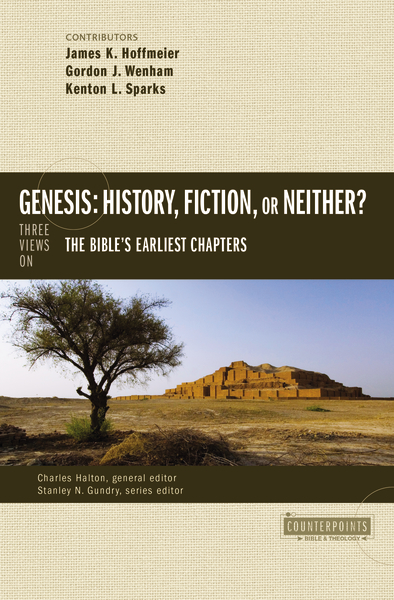
The central question of Genesis: History, Fiction, or Neither? is the question of the genre of Genesis 1-11. But does this question really even matter? Gordon Wenham argues that shouldn’t trump interpretation:
[U]ltimately we must recognize that how we define the genre of Gen[esis] 1-11 is a secondary issue: our primary concern must be the interpretation of the stories and their application today. The definition of genre refines and clarifies the message of Genesis, but disagreements about genre should not obscure our substantial agreement about the theological teaching of these stories. Whether one calls Gen[esis] 1-11 doctrine, history, fiction, or myth, it is clear that these chapters are making profound statements about the character of God and his relationship to mankind. Elucidating these truths must be the goal of every interpreter. (74,cited below)
Later in the book, Sparks argues that Wenham is mistaken and genre does determine much more about the text–even what might be considered binding to believe. What are your thoughts? How important is it to determine the genre of Genesis 1-11 in order to properly interpret it? Can we focus instead on the texts themselves?
Links
Be sure to check out the page for this site on Facebook and Twitter for discussion of posts, links to other pages of interest, random talk about theology/philosophy/apologetics/movies and more!
Sunday Quote– If you want to read more Sunday Quotes and join the discussion, check them out! (Scroll down for more)
Source
Gordon Wenham, “Genesis 1-11 as Protohistory” in Genesis: History, Fiction, or Neither? Charles Halton and Stanley Gundry, eds. (Grand Rapids, MI: Zondervan, 2015).
SDG.
A Sacramental/Lutheran Response to Women in Church Leadership
 The debate over women in the church–and particularly in church leadership–often has a different tenor when it is carried out in those church bodies which are sacramental in nature. A recent post over at The Junia Project entitled “Women & Leadership in Sacramental Churches” written by Tim Peck highlighted some of the different issues that come up in these church bodies. Here, I will present a few objections that often come up to women in leadership in sacramental churches, using Peck’s post for some insights. Then, I will note how from a Lutheran perspective, the notion that women cannot perform the sacraments is unfounded.
In the Place of Christ
One common objection to women serving in the office of the pastor has been that the pastor is to serve in the place of Christ when presiding over the sacraments. Thus, it is inferred that because Christ is a man, the pastor must also be a man. A similar objection is that Christ is the bridegroom of the church, and the pastor acts as Christ to the church. Thus, the pastor must be male, it is argued, because of the union of bride (church) and groom (Christ/pastor). As one complementarian I spoke with on this issue asserted, if the pastor were a woman, it would mean the church is in a homosexual relationship with the pastor (the inference being that the bride [church] would then be ‘married’ to the woman pastor).
The first part of the objection is answered fairly easily by pointing out, as Peck does, that:
Jesus was ethnically specific (Jewish), gender specific (male) and class specific (poor). To focus on just one and ignore the other two for the presider to function sacramentally seems arbitrary.
The second, similar objection can be answered by pointing out that the literal interpretation being used to exclude women from the pastoral office should also exclude any number of others from the office as well. After all, to turn the analogy the complementarian used above, if the pastor were married, then the pastor would be in a polygamous relationship with the church! But of course this is absurd. The reason it is absurd is because an analogy–the pastor being as Christ to the church–is being pressed into service literally. But this literalism is selective at best.
The Levitical Priesthood
Another argument I’ve heard a number of times is that pastors are analogous to the Levitical priesthood and, since no women were in the Levitical priesthood, women cannot serve as pastors. Peck again answers this argument:
[T]he New Testament itself insists that any priesthood existing among Christians would differ significantly from the old covenant priesthood. This should be obvious, since the old covenant priesthood was passed on by heredity. Moreover, men who suffered disabilities such as deformities, blindness, or mutilation were forbidden from serving as priests in the old covenant.
He offers other reasons to undermine this argument as well, but I think this one pretty much clinches it already: there is, again, a selectively literal reading happening. When it’s helpful for the complementarian argument, texts are taken literally, but even in the same contexts the literalism is not applied consistently.
A Lutheran Appeal
The Lutheran Confessions and the Administration of the Sacraments
From a confessional Lutheran perspective, the documents contained in the Book of Concord are binding. Yet, the types of arguments already analyzed above are often presented alongside the notion that a woman cannot perform the sacraments by virtue of being a woman. The reason this is true often varies from person to person, but the core of the reasoning is that women are excluded from the pastoral office and so by necessity cannot perform the sacraments. This reasoning reveals a presupposition: the sacraments, if performed by a woman, are made invalid.
The Augsburg Confession in Article VIII, states “Both the sacraments and the Word are efficacious because of the ordinance and command of Christ, even when offered by evil people.” In The Large Catechism, Fifth Part, “The Sacrament of the Altar,” Martin Luther states “Our conclusion is: Even though a scoundrel receives or administers the sacrament, it is the true sacrament… just as truly as when one uses it most worthily. For it is not founded on human holiness but on the Word of God.”
Thus, we find the unified teaching of the Book of Concord is that the efficacy of the sacraments is not based upon the person performing them. Indeed, if they were, then surely our confidence in the sacraments would be destroyed, for what pastor has no sin? The sacraments, then, cannot be made invalid because they are performed by a woman.
Responses to the Argument Above
The most likely response to this kind of reasoning would be to appeal to the biblical text to argue that women shouldn’t be pastors. However, this type of response would be a red herring. A discussion of the biblical texts is both necessary and valuable, but the argument that Lutheran complementarians have presented suggests that somehow the sacrament cannot be performed by a woman. Yet, as was demonstrated above, the Lutheran confessions themselves contradict this. The efficacy of the sacrament is not–thank God–dependent upon the one performing the sacrament. Thus, to argue that women would somehow invalidate the sacrament would be to deny the confessions of faith that we hold most dear and, indeed, undermine the very basis for our confidence in the validity of sacraments to begin with.
No human is without sin; none has no blemish. Our confidence in the sacraments is found not in the person performing them but in the unfailing word of God.
Another possible response is to appeal to, for example, the Apology of the Augsburg Confession, Article XIV, section 1 in which it states that “no one should be allowed to administer the Word and sacraments unless they are duly called…” The appeal would then go on to suggest that no woman, by virtue of being a woman, can be “duly called” into the administration of the Word and Sacrament. This counter-argument begs the question from the beginning. Rather than offering an argument as to why women cannot be duly called, the complementarian has here simply assumed that women cannot be called and then applied this backwards to exclude women from performing sacraments.
If the appeal is then, again, made to the biblical text, then that is where the debate must play out. But notice that if one moves in this direction, they have already conceded the invalidity of the reasoning the argument began with. Instead, they must continually retreat from the reasoning used above and try to argue from proof texts through specific–often unquestioned–exegetical methods.
Conclusion
There are many arguments put forward in sacramental churches against the possibility of women being in the role of the pastor. An analysis of two primary arguments have shown they are faulty in that they are selectively literal. From a Lutheran perspective, we find that the Lutheran Confessions themselves actually work against anyone suggesting that the sacraments are invalid when performed by any variety of people. It is God working, not some magical formula that the human must perform.
We must instead go back to the texts and approach them with a cautious eye towards the fact that we have selectively taken parts literally that cannot, when pressed, hold up. The conversation within Lutheran circles–and indeed, within sacramental circles generally–should continue, but the arguments analyzed herein have been shown to be wanting.
Sources
Tim Peck, “Women & Leadership in Sacramental Churches” 2015, online at http://juniaproject.com/women-leadership-in-sacramental-churches/.
All citations of the Lutheran Confessions are from:
The Book of Concord: The Confessions of the Evangelical Lutheran Church (Minneapolis: Fortress, 2008).
The Image in this post is from Wikimedia Commons and published under Creative Commons licensing. It was created by John Snyder and may be found here. Please appropriate cite if re-used.
SDG.
——
The preceding post is the property of J.W. Wartick (apart from citations, which are the property of their respective owners, and works of art as credited) and should not be reproduced in part or in whole without the expressed consent of the author. All content on this site is the property of J.W. Wartick and is made available for individual and personal usage. If you cite from these documents, whether for personal or professional purposes, please give appropriate citation with both the name of the author (J.W. Wartick) and a link to the original URL. If you’d like to repost a post, you may do so, provided you show less than half of the original post on your own site and link to the original post for the rest. You must also appropriately cite the post as noted above. This blog is protected by Creative Commons licensing. By viewing any part of this site, you are agreeing to this usage policy.
Sunday Quote!- Gender Dysphoria and the Bible?
 Every Sunday, I will share a quote from something I’ve been reading. The hope is for you, dear reader, to share your thoughts on the quote and related issues and perhaps pick up some reading material along the way!
Gender Dysphoria and the Bible
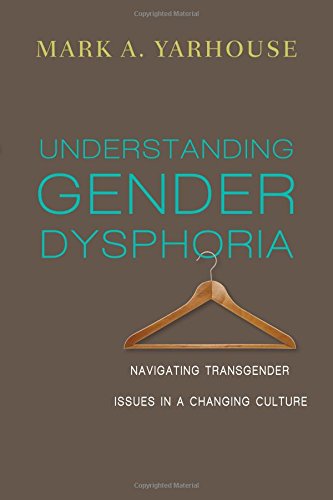
In Understanding Gender Dysphoria, Mark Yarhouse seeks to provide ways for Christians to think about gender dysphoria and transgender issues. Regarding the use of biblical passages in this discussion, Yarhouse urges caution:
There is a need to balance between two hazards when we turn to the Bible to inform our discussions about gender dysphoria. The one hazard is to look to Scripture for answers it is not prepared to provide. The other hazard is to fail to critically reflect on the sociocultural context in which we live and make decisions about gender identity and dysphoria. (30, cited below)
He goes on to comment on several biblical passages (like 1 Corinthians 6:9-10) which are frequently cited in contexts of discussions about gender dysphoria.
What do you think? Do we need to exercise more caution when we cite “proof texts” related to issues like gender dysphoria? Is 1 Corinthians 6:9-10 best applied to issues of transgender identification? Are these categories valid at all?
Links
Be sure to check out the page for this site on Facebook and Twitter for discussion of posts, links to other pages of interest, random talk about theology/philosophy/apologetics/movies and more!
Sunday Quote– If you want to read more Sunday Quotes and join the discussion, check them out! (Scroll down for more)
Source
Mark Yarhouse, Understanding Gender Dysphoria (Downers Grove, IL: InterVarsity, 2015).
SDG.
“Inside Out” – Feelings, Family, and Fun: A Christian Perspective
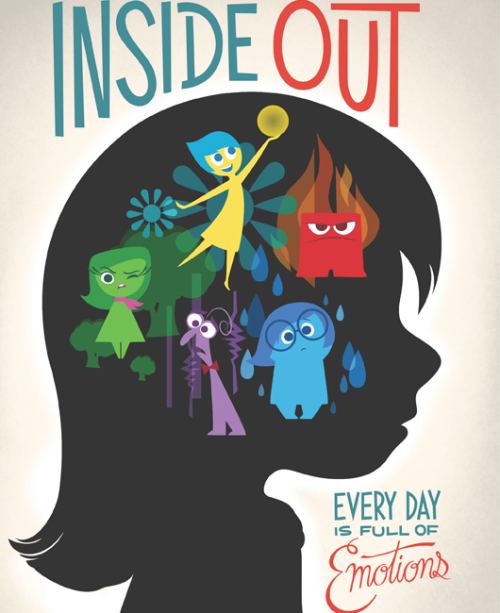 I recently got to see “Inside Out” in theaters and it was a huge treat. The plot was fairly predictable, but it was delightfully done and thought-provoking. Here, we will explore the film from a Christian worldview perspective. There will be SPOILERS in the following review.
Talking about Emotions
It is often quite difficult to talk about our feelings. “Inside Out” provides a springboard for having these discussions, whether with children or, frankly, with adults. Christianity is a faith of not just the mind but also the heart, and we need to be able to talk about how we feel and engage with our emotions in the context of faith.
As a parent, I was pleased to see how little there was objectionable in this movie, as it is one I could see using with my son (who is now 10 1/2 months old) in the future to talk about emotions.
Gender and Family
There are some issues with gender in the film as Riley’s parents were fairly stereotyped in some ways. However, this stereotyping was offset in many ways by Riley herself, who was a highly complex character with different interests and motivations that went beyond such gender stereotypes. As Christians we can have conversations about how our culture so often shoehorns people into strict gender categories without acknowledging its own cultural biases.
Another edifying aspect of the film is its focus on the importance of family. It does not undermine the value or struggles of those families that are non-“nuclear,” but it does affirm the ways that family can shape the lives of children. The formative impact of the parents in this film cannot be understated, and it showed not just in the “core memories” that Riley cherished, but also in her interests and concerns.
As Christians, there are a number of takeaways from this, but perhaps the most important one would be the way that our faith lives can shape our children. I sure hope that Luke has a formative experience that lets his “core memories” include faith at the center of his emotional and rational life. Like Riley’s parents, I am not going to just stand back and watch but rather be sure to expose him to the faith and prayer and allow him to ask questions and learn from an early age.
Emotions Rule?
One possible concern with the film could be the notion that it seems like the emotions are that which rule Riley’s life and actions. Indeed, the emotions cause specific acts in her day, and as different events occur, the different emotions take the controls to drive Riley entirely.
From a Christian perspective, we should interpret things generously (see Martin Luther on the 8th commandment), so the first aspect of a response to this would be to allow that the film had to make things fairly simplistic because, well, it is actually a kids movie, isn’t it? It would be tough to multiply complexity and discuss the importance of reason, logic, and abstract thought for action in a way children could easily understand.
Second, too often in Christian circles I have seen the downplaying of the importance of emotions for our reasoning process. The importance of passional reasoning (having emotions as part of the overall logical process) should not be forgotten. For older children, this film could be a great jumping off point to have a conversation about the interplay between such abstract thought and the emotions, and how they might interlink to form a life of faith and reason.
Third, related to the previous point, we sometimes need a corrective–particularly those of us who lean towards critical thinking–to remind ourselves of the importance of emotions. In a thoughtful, humorous way, Inside Out opens us to such conversations.
Conclusion
Inside Out is a delightful film with comedy, fun, and family all interwoven in a thought-provoking mix. I think it provides several ways for Christians to start conversations about a number of important topics, including reasoning, emotions, gender, and family. I recommend it.
Let me know your thoughts in the comments.
Links
Be sure to check out the page for this site on Facebook and Twitter for discussion of posts, links to other pages of interest, random talk about theology/philosophy/apologetics/movies and more!
Inside Out– One of my favorite websites, Empires and Mangers, shares some thoughts from a Christian perspective on the film. Anthony Weber approaches it from a slightly different angle, and his post is well worth the time spent reading it. Be sure to follow his excellent blog as well.
Movies– Read other posts on this site about movies written from a worldview perspective. (Scroll down for more.)
SDG.
——
The preceding post is the property of J.W. Wartick (apart from quotations, which are the property of their respective owners, and works of art as credited; images are often freely available to the public and J.W. Wartick makes no claims of owning rights to the images unless he makes that explicit) and should not be reproduced in part or in whole without the expressed consent of the author. All content on this site is the property of J.W. Wartick and is made available for individual and personal usage. If you cite from these documents, whether for personal or professional purposes, please give appropriate citation with both the name of the author (J.W. Wartick) and a link to the original URL. If you’d like to repost a post, you may do so, provided you show less than half of the original post on your own site and link to the original post for the rest. You must also appropriately cite the post as noted above. This blog is protected by Creative Commons licensing. By viewing any part of this site, you are agreeing to this usage policy.
Really Recommended Posts 7/31/15- Planned Parenthood, the next Earth, the Quran, and more!
 I’m pleased to present to you, dear readers, another round of “Really Recommended Posts.” This round includes posts on science, the Quran, Planned Parenthood, and a four-legged snake.
Response to Planned Parenthood President Cecile Richards’ Washington Post Opinion Piece– A point-by-point rebuttal of Planned Parenthood’s response to the recent revelations regarding the possibility of their selling of body parts. Richards’ response leaves something to be desired.
Earth 2.0? Not Quite. – The recent revealing of an “earth-like” planet has sent some into spirals of hyperbole and extrapolation. What might we say about this “Earth 2.0”? Check out this post to find out more.
Why the Discovery of the Oldest Quran Fragments is No Big Deal– Recently, fragments of the Quran thought to be the oldest ever have been discovered. Does this demonstrate the truth of Islam? I think this is a good post on the apologetic significance of this find, though I do think that the increased ability to do textual criticism of the Quran is a pretty important aspect of the find.
How Atheists Try to Incorporate the Big Bang into their Worldview– Although not exhaustive, this post on some of the ways that some prominent atheist have tried to explain (or explain away) the Big Bang and its significance for the origin of the cosmos is worth reading and taking note of.
A Four-Legged Snake! Has the Edenic Serpent Been Found?– Does the discovery of a four-legged snake demonstrate the truth of young earth creationism?
Book Review: “Understanding Gender Dysphoria” by Mark Yarhouse
Gender Dysphoria is “The experience of distress associated with the incongruence wherein one’s psychological and emotional gender identity does not match one’s biological sex” (20, cited below). Mark Yarhouse’s latest book, Understanding Gender Dysphoria, seeks to explore this complex topic from a Christian perspective.
Yarhouse does a phenomenal job of introducing readers to just how complex the issue is, while also providing key terms and basic level knowledge for coming to understand gender dysphoria more than they may have before. The book starts with a look at defining terms and looking at ways to offer reasoned response to gender dysphoria. He writes, “Unfortunately, one way people respond to transgender issues is to devalue the person who is gender variant and simultaneously turn to rigid stereotypes of gender” (24). The focus throughout on remembering our calling to spread the Kingdom of God and remain aware of the needs, hopes, and fears of people experiencing gender dysphoria is something of which all readers should take note.
Another very helpful aspect of the book is Yarhouse’s evaluation of responses to various issues through three primary frameworks of understanding. These are the integrity framework, which focuses on staying true to one’s biological gender; the disability framework, which sees transgender issues as a nonmoral reality that is the result of a fallen world; and the diversity framework, which focuses on celebrating and honoring persons with gender dysphoria. Through these three lenses, Yarhouse evaluates various topics like hormone therapy, sex-change operations, and the like. In doing so, he emphasizes the need to balance these three frameworks such that no one is emphasized over the others.
There is quite a bit of data packed into this relatively short book. Many studies are cited, and Yarhouse helps readers navigate through the dizzying array of results in order to try to draw some conclusions, while continuing to note the complexities involved in the topic.
Perhaps the main critique one might offer the book is that Yarhouse does leave much of the “what’s next?” up to readers. That is, although he does offer several insights into how Christians might more effectively respond to gender dysphoria, he largely provides the tools to tackle the tough problems rather than offering the solutions themselves. This is both a weakness and a strength. It’s a weakness in that I’m sure some readers will wish they had an easy solution to some of the difficult problems they may face. It’s always simpler to just use a response someone has given to us rather than coming up with our own responses. It’s a strength in that Yarhouse does provide so many tools to readers that they can go into their faith communities and communicate on the issue in an informed fashion.
Understanding Gender Dysphoria is a valuable work for those wishing to engage with transgender issues. It doesn’t answer every question that might come up, but it does give readers the tools to come up with their own answers while doing so in a loving and Christian way.
The Good
+Solid information and insights into the nature of gender dysphoria
+Excellent tone and focus on message
+Plenty of practical insights and examples
+Focus on facts
+Focus on worldview-level questions
The Bad
-Only a bare sketch of what to do next
Disclaimer: I was provided with a review copy of the book from the publisher. I was not asked to give any specific kind of feedback whatsoever.
Links
Be sure to check out the page for this site on Facebook and Twitter for discussion of posts, links to other pages of interest, random talk about theology/philosophy/apologetics/movies and more!
Book Reviews– There are plenty more book reviews to read! Read like crazy! (Scroll down for more, and click at bottom for even more!)
Source
Mark Yarhouse, Understanding Gender Dysphoria (Downers Grove, IL: InterVarsity, 2015).
SDG.
——
The preceding post is the property of J.W. Wartick (apart from quotations, which are the property of their respective owners, and works of art as credited; images are often freely available to the public and J.W. Wartick makes no claims of owning rights to the images unless he makes that explicit) and should not be reproduced in part or in whole without the expressed consent of the author. All content on this site is the property of J.W. Wartick and is made available for individual and personal usage. If you cite from these documents, whether for personal or professional purposes, please give appropriate citation with both the name of the author (J.W. Wartick) and a link to the original URL. If you’d like to repost a post, you may do so, provided you show less than half of the original post on your own site and link to the original post for the rest. You must also appropriately cite the post as noted above. This blog is protected by Creative Commons licensing. By viewing any part of this site, you are agreeing to this usage policy.
Response to an Article on Welfare Recipients in Seattle
 The purpose of this blog is to discuss things related to the Christian worldview. I tend to try to avoid political issues, but I recently saw a number of friends sharing an article entitled “Workers in Seattle Have Their Precious $15 Minimum Wage. But Now They Want Fewer Hours” and I wanted to respond. I will be analyzing the article from the Christian worldview perspective.
Summary of Article
The article in question points out that Seattle’s minimum wage was raised, but some who are working minimum wage have asked to work fewer hours so they do not lose their government benefits. The author writes:
[E]mployees of a non-profit group in Seattle who’ve achieved their glorious goal of the $15 minimum wage are actually asking their employers for FEWER hours. The reason? Now that they make more money, they no longer qualify for subsidized housing. So they figure if they work fewer hours, they’ll make less money and they can stay in their government-provided cheap apartments –
After sharing a few quotes, the author comments:
HOLY SOCIALISM, BATMAN!
Basically, they want a “living wage” (whatever the heck THAT means) AND they still want all the freebies the government gives them. Because that’s TOTALLY the point of working hard and being independent.
A Response
First, I ran the numbers given in the article regarding minimum wage and cost of living in Seattle. It’s fairly straightforward, as the author shared a quote (without disputing it) of the prices involved. According to the article, the cost of a one-bedroom apartment is 1200$ a month. The cost of child care was about 900$ a month. That adds up to 2100$. Now we do the math on the wages. $15 an hour, 40 hours a week, about 4.5 weeks per month = 2700$. Now this is basically granting the most possible money because some months do only get 4 pay checks, but we’ll go with it.
The math therefore shows that, ignoring any taxes whatsoever, there would be 600$ left over a month for utilities, food, auto/renters/life/health insurance, transportation and related costs, and the like.
Whatever else might be in question here–whatever economic theories one favors–these are the numbers the article itself acknowledges. For Christians, this is the kind of data that we should seek out and try to form our opinions around. Of course we need to have economic practices which are sustainable, but as Christians we must also keep in mind the demands on our conscience towards the “other” in need. We should seek more information and be cautious about making broad statements on either side; whether we agree or disagree. Misrepresenting liberals is just as bad as misrepresenting conservatives.
A Christian Moral Response
The bottom line is that there is absolutely no way around the biblical teaching about caring for the poor and needy–even if we don’t like their “life choices.” Thus, the tone of this article is highly inappropriate as it mocked those who were in need throughout with phrases like “I’m not addicted to government welfare…” thrown in as snide remarks towards those who are on some kind of welfare.
A Christian response to this should be to immediately shut down any kind of mockery of other persons, period. There is no space in the Christian moral system for carelessly decrying those who are in need. Regarding the exact phrase in question, suppose we take it literally–what is the Christian response to addiction? Should it be to point out how we ourselves are not addicted and move on from the one who is? I don’t think so. I believe that we must continue to help those in need–even if addicted. That said, the dubiousness of taking the meaning literally is of course clear. It, like the rest of the article, was directed as mockery of those in need and those who have rival economic theories trying to help them.
I’m not trying to favor one theory over another–whether pure capitalism or pure socialism or some mix is best is a topic for a completely different day and post–the issue involved is rather the tone we should carry even in disagreement. Rather than mock, should we not aid and instruct as needed?
A Rejoinder
The most frequent response I received when I shared concerns related to the article was that I needed to be instructed on economic theory.
Note that I have not commented on whether we need to raise minimum wage or whether we need to make it a “living wage.” I don’t particularly want to enter that debate and the quagmire that follows it. My comments have been on the ethical concerns with the article and its tone. We have looked at the numbers involved, and I suggested those should be a consideration regarding a Christian response to such issues. Other than that I think that we must at all costs avoid the kind of tone present in the article. We ought to treat others as we would be treated.
Conclusion
Finally, as a practical concern, would not a reasoned response sharing one’s own disputes about the economic theory(ies) involved in the article be more convincing than poking fun at the specifics of another’s situation? I believe so. I certainly don’t respond well when the beliefs I hold are mocked. That is a surefire way to shut down conversation rather than spur it forward. If the intent is to convince, would not a winsome approach work better?
Links
Be sure to check out the page for this site on Facebook and Twitter for discussion of posts, links to other pages of interest, random talk about theology/philosophy/apologetics/movies and more!
SDG.
——
The preceding post is the property of J.W. Wartick (apart from quotations, which are the property of their respective owners, and works of art as credited; images are often freely available to the public and J.W. Wartick makes no claims of owning rights to the images unless he makes that explicit) and should not be reproduced in part or in whole without the expressed consent of the author. All content on this site is the property of J.W. Wartick and is made available for individual and personal usage. If you cite from these documents, whether for personal or professional purposes, please give appropriate citation with both the name of the author (J.W. Wartick) and a link to the original URL. If you’d like to repost a post, you may do so, provided you show less than half of the original post on your own site and link to the original post for the rest. You must also appropriately cite the post as noted above. This blog is protected by Creative Commons licensing. By viewing any part of this site, you are agreeing to this usage policy.
Sunday Quote!- Genesis as Sui Generis (Its Own Genre)?
Every Sunday, I will share a quote from something I’ve been reading. The hope is for you, dear reader, to share your thoughts on the quote and related issues and perhaps pick up some reading material along the way!
Genesis as Sui Generis (Its Own Genre)?
I’ve been reading through Genesis: History, Fiction, or Neither? It is part of the Zondervan Counterpoints series in which authors with different views present essays and (usually) interact with each other’s views. In it, there is much debate over the genre–and thus in part the meaning–of Genesis 1-11 in particular. In his response to Gordon Wenham, Kenton Sparks argued that Genesis could not be its own genre or sui generis because:
…all intelligible discourse must conform to a significant degree with existing modes and patterns of discourse, else readers would not understand it… (102, cited below)
Thus, he asserted, we cannot see these early chapters of Genesis as standing apart or unique as a completely separate genre. To do so would be to make it unintelligible.
It seems to me that this is on-point. We shouldn’t just throw up our hands and separate Genesis from the rest of the Bible as its own genre, distinct from any other human writing. God would not have communicated in a way that we cannot understand.
What do you think? Is Genesis 1-11 completely unique? Should we give up on trying to discern its genre, or is it clearly discernible?
Links
Be sure to check out the page for this site on Facebook and Twitter for discussion of posts, links to other pages of interest, random talk about theology/philosophy/apologetics/movies and more!
Sunday Quote– If you want to read more Sunday Quotes and join the discussion, check them out! (Scroll down for more)
Source
Kenton Sparks, “Response to Gordon J. Wenham” in Genesis: History, Fiction, or Neither? Charles Halton and Stanley Gundry, eds. (Grand Rapids, MI: Zondervan, 2015).
SDG.
“Debating Darwin’s Doubt” – A Response to the Doubters?
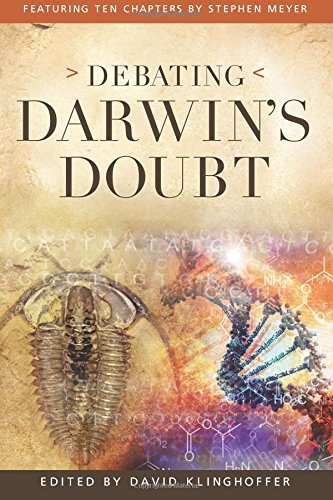 A new book is coming out from the Discovery Institute, a think-tank that explores issues of Intelligent Design. It is entitled Debating Darwin’s Doubt and basically offers a set of essays on Stephen Meyer’s work, Darwin’s Doubt, itself a pretty massive treatise arguing for the viability of Intelligent Design.
The book has 44 essays in it, some of which are only 3-4 pages long. Others are lengthier, the longest being 18 pages (based on my quick glance at the table of contents).
Concerns
I’m concerned that so many of the essays are so short. I know from experience that packing a bunch of detailed argument into that small a space can be extremely challenging, and it would be a shame if we don’t get substantive responses to the criticisms offered by so many varied sources to Meyer’s argument.
I’m concerned that there are already reviews on Amazon from people who haven’t even read the book complaining about the selection of authors or calling it pseudo-science. Regardless of one’s view on this debate, should not a “review” be a legitimate interaction with the text rather than just offering an opinion on the topic?
Hopes
I hope that the book spurs discussion rather than shutting it down. Too often, debates over intelligent design turn into name-calling fests on both sides. I sincerely doubt that’s at all what this book will do. Instead, I’m hoping that the book’s publication will lead to more fruitful discussions about the possibility (or not) of biological intelligent design.
I hope that the book will garner wide readership and so provide means for intelligent discussions on the topic to continue, and new research opportunities to be explored.
What’s Next
Well, I’m hoping to read the book when it comes out! I’ll certainly post on it when I get to it. I would love, in the meantime, to read your own thoughts as it comes out, or on what your own hopes and concerns are.
SDG.

 J.W. Wartick - Reconstructing Faith
