Christianity
On the “Fuzzification” of Inerrancy
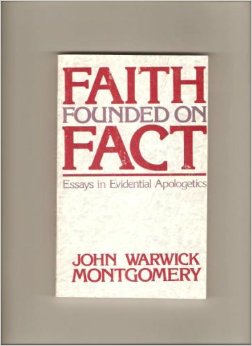 [Theological a]djustment is achieved through “interpretation”–in theological parlance, hermeneutics… [I]f the loss of the term “inerrancy”… is fraught with sufficiently dire consequences, there will be the strongest temptation to retain these expressions while giving the Bible such “adjustive interpretation” that negatively critical approaches to it can be employed anyway. (Montgomery, 217, cited below)
The definition of inerrancy has been hotly disputed as of late. The infamous Geisler-Licona controversy, which continues to boil over at points, serves as a poignant example of this (see here for a Christianity Today article on the controversy; see also links below for a few discussions of the same). What is meant by inerrancy? Are we in a new era of Bible wars? These are the questions being asked right now.
I remember reading an essay from a book–Faith Founded on Fact–by noted Christian apologist John Warwick Montgomery entitled “The Fuzzification of Inerrancy.” The quote above comes from the essay, and it has gotten me thinking. Have lines been crossed? Where do we draw the lines anyway?
Montgomery defined “fuzzification” following James Boren. It is the “presentation of a matter in terms that permit adjustive interpretation” (217, cited below). Turning back to the quote above, the term speaks of the need to retain a specific idea essentially at all costs. Thus, when a challenge is raised to that idea, the idea is broadened or changed to incorporate the data raised by the challenge. Montgomery, originally writing in 1978, seems at times prophetic. He spoke of a time when one might see a contradiction, source theory, or even possibly an error in the Bible and simply define it as “a question of hermeneutics, not of inspiration at all!” (218); he worried about a time when “the ‘inerrancy’ with which one is left is an inerrancy devoid of meaningful content”; and he warned of the dangers of “adjustive interpretation” (227).
I wonder, at times, whether his statements have come to fruition. When I survey various works from evangelicals on interpretation or hermeneutics I find a baffling array of ways we are to understand individual passages or how we are to interpret various passages. Turning to Church Fathers, I find a number of passages in which their readings would be unrecognizable today due to the heavy use of allegory in passages we take to be literal or explicitly historical in genre. Moreover, the question of the Chicago Statement on Biblical Inerrancy looms large. As with any document, questions are raised about what exactly is meant in each clause or in what way individual denials or affirmations might be meant.
It’s enough to make one wonder whether it is time to go back to a baseline understanding. “I believe the Bible is true in whatever it teaches.”*
The question that will be immediately raised, of course, is “What does the Bible teach?” The overriding desire to restrict exactly what it is the Bible teaches and prevent so-called “liberal” scholarship from finding ground to stand on in evangelicalism has led to an incessant narrowing of the definition of inerrancy, such that clause after clause is piled one atop the other to the point that it is hard to operate within such limits. Moreover, it seems some of these definitions actually prevent development within theology and squelch the impulse to question received traditions in light of new evidence.
The danger that some may think is posed by whittling the definition of inerrancy down to something like “The Bible is true in all that it teaches” may perhaps have some of the concern negated by the fact that it gets the dialogue going. If people return to this question: if someone genuinely, with open heart and mind, asks me “What does the Bible teach?” then I think that’s a glorious thing. Moreover, one may wonder at the purpose of inerrancy: is it a way to declare that the Bible is without error (as it seems to be based on the word itself); or is it a way to define how we go about reading the Bible? After all, if it is simply a declaration that the Bible is without error, should not simply declaring it as such be sufficient?
Perhaps it’s time to de-“fuzzify” inerrancy and get back to the basics. We may ask “What is the thrust of the doctrine of inerrancy?” instead of “What rival theological views may I exclude with the definition of inerrancy?”
Perhaps the danger of “fuzzification” from dehistoricizing texts, critical scholarship, and the like has in fact led to a fuzzification of the definition of inerrancy by making it over-determine the limits within which one may operate. I’m not claiming to offer all the answers, nor should it be thought that I am rejecting inerrancy. Far from it.** What I am instead rejecting is a “fuzzification” of the doctrine: when did declaring the Bible to be God’s Word and Truth become so complex that volumes of books were necessary simply to define what that means?
Let me know what you think in the comments below.
*This definition has suggested itself to me from a number of sources, including Nick Peters of Deeper Waters.
**I’m sure some people will take any questioning of current discussion about inerrancy to be denying the doctrine. However, this post is clearly written in order to defend the doctrine. What does inerrancy mean? That’s the thrust of this post, not “Inerrancy is false.” I believe the Bible is true in all it teaches.
Links
Be sure to check out the page for this site on Facebook and Twitter for discussion of posts, links to other pages of interest, random talk about theology/philosophy/apologetics/movies and more!
Book Review: “Faith Founded on Fact” by John Warwick Montgomery– I review Montgomery’s well-known book on apologetic methodology.
Inerrancy– Check out my other posts on this topic. (Scroll down for more posts.)
The Geisler/Licona Debate– Nick Peters has a number of posts on this controversy if you want to read up on the topic. This post summarizes the debate and offers a thoughtful critique, in my opinion.
The Geisler/Licona Controversy– A quick, easy read on the reasoning behind the controversy.
SDG.
——
The preceding post is the property of J.W. Wartick (apart from quotations, which are the property of their respective owners, and works of art as credited; images are often freely available to the public and J.W. Wartick makes no claims of owning rights to the images unless he makes that explicit) and should not be reproduced in part or in whole without the expressed consent of the author. All content on this site is the property of J.W. Wartick and is made available for individual and personal usage. If you cite from these documents, whether for personal or professional purposes, please give appropriate citation with both the name of the author (J.W. Wartick) and a link to the original URL. If you’d like to repost a post, you may do so, provided you show less than half of the original post on your own site and link to the original post for the rest. You must also appropriately cite the post as noted above. This blog is protected by Creative Commons licensing. By viewing any part of this site, you are agreeing to this usage policy.
Sunday Quote!- Creationism and Foundationalism
 Every Sunday, I will share a quote from something I’ve been reading. The hope is for you, dear reader, to share your thoughts on the quote and related issues and perhaps pick up some reading material along the way!
Creationism and Foundationalism
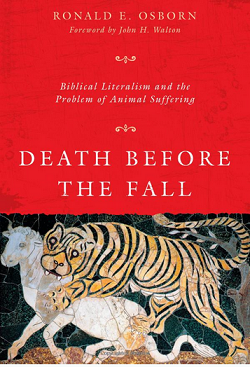
Creationism (particularly the young earth variety) is a topic I’m very interested in, so I read Osborn’s book Death Before the Fall: Biblical Literalism and the Problem of Animal Suffering with great eagerness. I recently reviewed the book, so you can check that out for my thought on the work as a whole. Here, Osborn is arguing that creationism relies upon modernist notions of epistemic foundationalism (essentially, a view that our knowledge must be based upon some irrefutable or simply necessarily assumed bedrock belief)*:
Creationists have posited a… source of absolute certainty… the firm foundation or base of universal and infallible knowledge on which all truth is said to rest is a “plain” reading of Scripture alone, with particular emphasis on the first verses of the book of Genesis…
Creationism is… not merely indubitable. It is incorrigible–it canot be undermined or altered by any new information… It is impervious to the weight of empirical and historical evidence. (44, 46, cited below)
Here is one of the great insights of Osborn’s book: that Creationism is an epistemology. That is, it is a way of knowing as opposed to simply a position on what is to be known. I have found this to be the case in many discussions with young earth creationists. There simply is no such thing as evidence which can challenge the position. Rather, all things which purport to be said challenges are often seen as either deceptions of secular scientists or results of anti-Bible presuppositions. I think this is a very problematic position.
What are your thoughts? Is YEC falsifiable–is it possible for it to be false? Does YEC turn into a way of knowing?
Links
Be sure to check out the page for this site on Facebook and Twitter for discussion of posts, links to other pages of interest, random talk about theology/philosophy/apologetics/movies and more!
Sunday Quote– If you want to read more Sunday Quotes and join the discussion, check them out! (Scroll down for more)
Book Review: “Death Before the Fall” by Ronald Osborn– I review Osborn’s book, outlining its contents while also providing some comments on its value.
Source
Ronald Osborn, Death Before the Fall: Biblical Literalism and the Problem of Animal Suffering (Downers Grove, IL: InterVarsit, 2014).
*Yes, this is simplified. Want to dig in? Check out this article on the topic.
SDG.
Question of the Week- The Focus of Apologetics
 Each Week on Saturday, I’ll be asking a “Question of the Week.” I’d love your input and discussion! Ask a good question in the comments and it may show up as the next week’s question! I may answer the questions in the comments myself.
The Focus of Apologetics
I am obviously very interested in apologetics, and one thing I often wonder is where energy dedicated to apologetics research might be most beneficial. In light of that, here’s the Question of the Week:
What would you say is the single most important issue which apologists should work to understand more fully?
Could it be the problem of evil? Natural evil? Textual criticism? Defining inerrancy? Outlining the science/religion perspectives? Something else entirely? Let me know what you think the most important issue is in the comments.
Links
Be sure to check out the page for this site on Facebook and Twitter for discussion of posts, links to other pages of interest, random talk about theology/philosophy/apologetics/movies and more.
Question of the Week– Check out other questions and give me some answers!
SDG.
Really Recommended Posts 7/18/14- the Jesus Myth, Apologetics, Avatar, and more!
 I have here, on offer, some of the best from around the web. The topics included are the “Jesus Myth” theory, women in the church, apologetics, Avatar, and faith in Christian music. If you liked the posts, be sure to drop those authors a comment, as we love them! Let me know your own thoughts in the comments here!
Four Tactics of Jesus Mythers– Those who claim that Jesus never existed have a few tactics in common. Here, Eric Chabot draws out a few of these and shows how these tactics are faulty for the study of history.
Towards a Deeper Theology of Women– “Our theology of women and how the dynamics between men and women are played out in the life of the church deeply impacts Christian community, the effectiveness of ministry, and our witness of Christ to the world-at-large.” This post calls us to develop a theology of women which goes beyond the constraints normally placed upon such development.
The End of Apologetics (Part One)– William Lane Craig comments upon the recent book, The End of Apologetics. The book is a writing against
Ryan Clark Interview (Video)– Here, the lead singer of the heavy metal band “Demon Hunter” discusses how a song from their latest album reflects the life they live of faith and the challenges brought forward in their context. I have written on “Christian Music” elsewhere, and have also reflected upon how Demon Hunter’s latest album may serve as a cultural apologetic.
Escaping to Pandora– Here, J. Warner Wallace reflects on how the film “Avatar” shows our deeper longings. It’s a great post interacting with the culture in an apologetic fashion. Be sure to follow his very excellent blog.
Book Review: “Death Before the Fall” by Ronald Osborn
I eagerly anticipated the release of Ronald Osborn’s book, Death Before the Fall: Biblical Literalism and the Problem of Animal Suffering
The first part occupies the bulk of the book (100/179 pages of text). In it, Osborn first offers his interpretation of the creation account in Genesis 1. His take on it is that is fairly open to being taken in a number of ways. For example, having creatures come forth “from the earth” may be direct special creation, or a linguistic device aimed at describing the “open” status of creation–its ability to change and self-correct (see esp. 27-28).
After laying out the interpretation, Osborn sets out to show how “literalism” is a mistaken hermeneutic. He argues that literalism has been brought to the forefront due to Enlightenment ways of thinking. That is, biblical literalists are influenced by modernism and their readings tend to be highly reliant on that kind of rationalist epistemology (42ff). A major difficulty with literalism, he notes, is that it seems to ultimately lead to fideism: one’s view of what the “plain sense” reading of the Bible is must be taken as normative for all areas of inquiry (44; 45-46). Another difficulty is that literalism tends to actually go far beyond what the text says in order to defend a preferred interpretation of the text (56-57).
Scientific creationism, Osborn argues, is flawed because it isn’t a “progressive research program” but rather a “degenerative” one. That is, scientific creationism is simply adjusted in an ad hoc way to meet new challenges rather than predicting them (63ff). He rounds out this first part with a discussion of how literalism ultimately leads to circling the wagons and an “enclave mentality,” alongside various representatives of historical interpretation of Genesis–Barth, Calvin, Augustine, and Maimonides.
The second part focuses on animal suffering and approaches it from a number of angles. He begins the section with three difficulties with a “literalist” view of animal suffering and the Fall. Briefly, these are the notion that a flawless creation as put forward by some seems to simply be the winding up of a watch; that God is made to be a deceiver; and difficulties with how the curse is to be applied to animals (126ff). These are presented briefly but cogently and each offers a unique challenge to typical creationist readings of the text. Next, Osborn turns to explanations other than the Fall as reasons animals suffer. He turns to the book of Job and argues both that God may have created nature with predation and death and also that God’s answer to Job out of the whirlwind may be applied to animal suffering (154-155). Moreover, God’s choosing to participate in the world in the Incarnation helps to consummate all creation and bring it to completion (165).
A difficulty with the book is the sustained polemic against literalism/YEC. At times, Osborn shares great insights in the movement. Moreover, pointed criticism is surely needed in some form. Unfortunately, after some helpful introductory comments, he seems to degenerate into posturing against those with whom he disagrees. For example, after admitting that Gnosticism is rather ill-defined, he nevertheless goes on to compare literalism to Gnosticism and simply state that they each share certain features in common (86ff). I like to call this the “Gnostic fallacy” in which someone declares the ‘other’ to be a Gnostic in order to refute them. As Osborn himself notes, Gnosticism is hard to pin down, which also means it is very easy to twist various teachings into lining up with Gnosticism. I think this is honestly one example. [See comments for Osborn’s clarifying comments on this section.]
This section is understandable, and it is easy for someone like Osborn–a former YEC (like myself)–to want to lash out against these formerly held, and sometimes damaging, beliefs, but it is not a very helpful. I suspect it will alienate any readers he would perhaps hope to engage in dialogue, which leaves one wondering about the audience for the book.
Another difficulty with Osborn’s sustained critique of “literalism” is that he never provides much insight into how and/or when texts are to be read literally. That is, would the Gospels need to be read literally when they speak of Jesus dying on the cross and rising again? Osborn clearly affirms this, but doesn’t provide mechanisms which distinguish between “literalism” and simply proper exegesis which would allow for and engage with literal readings of the texts.
One further problem is that the book, despite purporting to be about Death Before the Fall, only briefly addresses this issue. The book really doesn’t provide anything more than most basic non-young earth literature does when it comes to the issue. As such, it is difficult to determine exactly how useful the book is when compared to other works.
Ultimately, Death Before the Fall: Biblical Literalism and the Problem of Animal Suffering
Readers who are interested in the topic of animal suffering and death before the fall are better served to pick up Michael Murray’s excellent and enthralling book, Nature Red in Tooth and Claw: Theism and the Problem of Animal Suffering
Links
Be sure to check out the page for this site on Facebook and Twitter for discussion of posts, links to other pages of interest, random talk about theology/philosophy/apologetics/movies and more!
Sunday Quote!- Do Trilobites Yield a Greater Good?– I discuss a very minor point in Murray’s work which shows how diverse its threads are for thinking on this topic.
Source
Ronald Osborn, Death Before the Fall: Biblical Literalism and the Problem of Animal Suffering (Downers Grove, IL: InterVarsit, 2014).
SDG.
——
The preceding post is the property of J.W. Wartick (apart from quotations, which are the property of their respective owners, and works of art as credited; images are often freely available to the public and J.W. Wartick makes no claims of owning rights to the images unless he makes that explicit) and should not be reproduced in part or in whole without the expressed consent of the author. All content on this site is the property of J.W. Wartick and is made available for individual and personal usage. If you cite from these documents, whether for personal or professional purposes, please give appropriate citation with both the name of the author (J.W. Wartick) and a link to the original URL. If you’d like to repost a post, you may do so, provided you show less than half of the original post on your own site and link to the original post for the rest. You must also appropriately cite the post as noted above. This blog is protected by Creative Commons licensing. By viewing any part of this site, you are agreeing to this usage policy.
“How to Train Your Dragon” + “2” – A Christian reflection
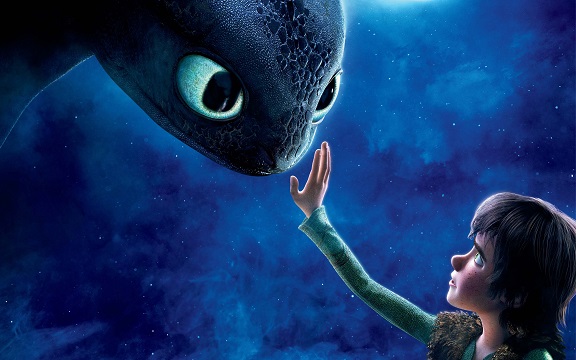 “How to Train Your Dragon” was a surprise box office success. It was enough of a surprise to get a second movie to come several years later. Both were received with critical acclaim. Here, we’ll take a look at various themes which resonate with the Christian worldview found in each flick. There will be SPOILERS for both films in what follows. I will refer to the second movie as “2” in what follows.
Family
“2” confronts the notion of familial reconciliation. Hiccup’s mom, Valka, is found–after being captured by a dragon, she abandoned her family in order to try to save other dragons who were being hunted or pressed into forced military service. When she runs into Hiccup once more, she realizes that things have changed and people can too. She ends up deciding to come back to the family, though the joy of the reunification of their family is very short-lived. The theme, however, is strong and it leads one to think on how much familial reconciliation is needed in the here-and-now, whether from fighting, divorce, loss, or whatever–it is a truly good task to work towards bringing families back together.
Disabilities and Lost Limbs
In the first “Dragon,” we encounter Gobber, a man who has lost a leg and a hand to dragons. He is boisterous, a little crazy, and he uses his arm as an attachment point for all sorts of tools and weapons. In the climactic battle against the huge evil dragon at the end of the movie, Hiccup also loses part of a leg. By “2,” Hiccup has outfitted himself with a spinning peg leg which may perform several different functions. We also encounter Drago Bludvist, who has also lost an arm to a dragon. Gobber is kind of a crazy man but overall a good guy, Hiccup is a peacemaker (see below), and Drago is clearly a villain–these characters are on a spectrum.
In the “How to Train Your Dragon” universe, then, people with lost limbs are not treated as universally bad or to be pitied. Rather, they are treated as…. well, people. It’s fantastic. Too often, movies use disabilities or loss of a limb as an excuse to become a villain (see another movie review for this theme) or simply as an object of pity. Here, in both films, people are people, and they continue to act in ways which fit their characters despite loss of limb or disabilities. It’s a refreshing to see, and a theme which should feature more prominently in other films.
Peacemaking and Evil
Perhaps the strongest theme throughout both films is the notion of “peacemaking.” Hiccup is a young man who favors making peace over war. He realizes that love and understanding may be more powerful weapons than the sword and spear. The theme is shown to be true in both movies, as it is ultimately this impetus for peace which overcomes the evils of the world. Yet the films do not portray a kind of naive view of the world. In each film, the ultimate villain does not miraculously change his heart, but rather persists in evil and reaps the rewards.
However, this should not overcome the strength of the notion of making peace. Hiccup relentlessly sought to make peace between dragon and humanity, and then between Drago and the people of his homeland. Christians are also called to be peacemakers–to seek justice for all people on Earth.
Conclusion
Both “How to Train Your Dragon” movies are well-worth seeing. They are visual delights with very solid stories and fun moments spread throughout. Not only that, but they each have several themes which resonate with the Christian worldview. Whether it is the notion that all people are valuable, even if they have disabilities, or the themes of family and peacemaking, the movies put forth a reality grounded in notions of right and wrong alongside justice. In short, they’re fantastic.
Let me know what you thought of the movies in the comments.
Links
Be sure to check out the page for this site on Facebook and Twitter for discussion of posts, links to other pages of interest, random talk about theology/philosophy/apologetics/movies and more!
Movies– Read other posts I have written on the movies. Scroll down to see more!
The image is a movie poster for the film and I use it under fair use.
SDG.
——
The preceding post is the property of J.W. Wartick (apart from quotations, which are the property of their respective owners, and works of art as credited; images are often freely available to the public and J.W. Wartick makes no claims of owning rights to the images unless he makes that explicit) and should not be reproduced in part or in whole without the expressed consent of the author. All content on this site is the property of J.W. Wartick and is made available for individual and personal usage. If you cite from these documents, whether for personal or professional purposes, please give appropriate citation with both the name of the author (J.W. Wartick) and a link to the original URL. If you’d like to repost a post, you may do so, provided you show less than half of the original post on your own site and link to the original post for the rest. You must also appropriately cite the post as noted above. This blog is protected by Creative Commons licensing. By viewing any part of this site, you are agreeing to this usage policy.
Sunday Quote!- The Measure of Art
Every Sunday, I will share a quote from something I’ve been reading. The hope is for you, dear reader, to share your thoughts on the quote and related issues and perhaps pick up some reading material along the way!
The Measure of Art
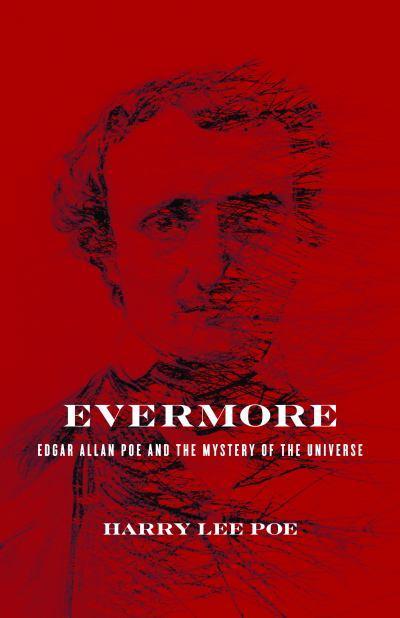
I’m a fan of Edgar Allan Poe, but I can fairly say I never understood him until I read Evermore: Edgar Allan Poe and the Mystery of the Universe by Harry Lee Poe (yes, a cousin of Edgar’s). I was rereading this delightful book when I came upon an interesting quote about Edgar Allan Poe’s view of what makes art worthwhile:
[Poe] insisted on measuring a work of art, not by its size or by the effort it took to produce it, but “by the object it fulfills, by the impression it makes”… [not] “by the time it took to fulfill the object, or by the extent of ‘sustained effort’ which becomes necessary to produce the impression.” Poe believed that every story succeeded as a story to the extent that it created an effect upon the reader. (62)
For Poe, the measure of art was the impression it left upon the viewer (or reader, or hearer, or…). What do you think of this notion? What do you think qualifies as “the measure of art”? Have you read Poe? If so, how does his work “measure” for you?
Be sure to check out the review of this book.
Links
Be sure to check out the page for this site on Facebook and Twitter for discussion of posts, links to other pages of interest, random talk about theology/philosophy/apologetics/movies and more!
Evermore: Edgar Allan Poe and the Mystery of the Universe by Harry Lee Poe– I reviewed this fascinating book at this link. Check it out to see what other insights you can get from this work.
Sunday Quote– If you want to read more Sunday Quotes and join the discussion, check them out! (Scroll down for more)
Source
Harry Lee Poe, Evermore: Edgar Allan Poe and the Mystery of the Universe
SDG.
Question of the Week: Obscure Theological Topics
Each Week on Saturday, I’ll be asking a “Question of the Week.” I’d love your input and discussion! Ask a good question in the comments and it may show up as the next week’s question! I may answer the questions in the comments myself.
Obscure Theological Topics
The picture on the left (which I took and then added a question mark with my mad paint skills) is perhaps more appropriate this week than most, because some people may be scratching their heads:
What’s your favorite obscure theological topic? Why? What relevance does it have in the broader scheme of things?
Theology is an area of thought that has existed since the beginning of humanity. As such, there are a lot of topics to focus on (understatement). Think about some that interest you. I think a lot of my readers are probably interested in some cool stuff, and I want to know about it! Here are some examples of “obscure” theological topics: aliens and Christian theology or King James Onlyism. What are some you’re interested in? How do you apply what you’ve looked into in that area to a broader schematic of Christian theology?
Links
Be sure to check out the page for this site on Facebook and Twitter for discussion of posts, links to other pages of interest, random talk about theology/philosophy/apologetics/movies and more.
Question of the Week– Check out other questions and give me some answers!
SDG.
Really Recommended Posts 7/11/14- Inerrancy, Men, a young earth?, and more!
I’m pretty excited about this latest round-up of posts which I have gathered for your reading pleasure. Let me know what you think in the comments. If you liked someone else’s article, be sure to drop a comment, because those keep we bloggers going! Thanks for reading.
The Bad Boys, The Secret, and Apologetics Teams in Churches– A post that combines NBA with apologetics? One which encourages specialization of apologetics-oriented sites? Sign me up! This is a fantastic post and well worth your time to read. Check it out.
“What Your Husband Isn’t Telling You”: Is this book telling the truth about men?-A review and critique of a book which alleges some pretty heinous things about men and women.
Was the crucifixion a matter of child abuse?– It has been alleged more than once that the crucifixion was a kind of divine child abuse. Was it? Check out this brief post showing that this allegation is a farce.
“Best Evidences for a Young Earth” – Andrew Snelling and the Salty Seas– Does the amount of salt in the oceans provide evidence for a young earth? Check out this analysis of Andrew Snelling’s–of Answers in Genesis–argument that it is.
A Response to James White on “Defining Inerrancy”– An interesting post showing that maybe we, as Christians, should desire a place at the table such that we can offer an internal critique of non-Christian thought. Check out this thought-provoking read!
“All You Need Is Kill” by Hiroshi Sakurazaka – Truth, Human Nature, and Sacrifice
 Once in a while, you read a book and you set it down on your chest after finishing it, just contemplating what happened. You are forced to think in new categories, to explore new dimensions. All You Need Is Kill
Truth and Taste
Right at halfway through the book, Sakurazaka shifts the focus from the main character, Keiji Kiriya, to Rita Vrataski, the American special forces operative who is known as the “Valkyrie” or “Full Metal *****.” There’s a photographer attached to her unit, who realizes the importance of taste and imagery in the matter of truth:
“Great lighting. Days like today can make even a steel-and-rivets airplane look like a da Vinci…”
“I take great pride in the role I play conveying the truths of this war to the public. Of course, 90 percent of the truth is lighting.” (100, cited below)
The somewhat cynical comments echo with our society which is obsessed with appearances. Models are photoshopped, a good logo keeps products in our memories, and a photo is able to shift entire perceptions of a conflict or event. The notion that 90% of truth may be determined by lighting certainly cannot refer to objective truth, but as far as perceived truth goes, it may be on-target in its emphasis on the way imagery can be manipulated to change our perceptions of truth. It is something to guard against.
Later, the same cameraman notes that a picture of a corpse may inspire revulsion or lawsuits, but “on the homepage of the New York Times, it could win you a Pulitzer Prize” (102). Again, these lines speak to the need to be wary of how our perceptions can shape reality as we see it. A self-critical attitude may help prevent some of the pull that someone may exert over us simply by shifting the perspective or lighting just a bit. I’m not calling for a shunning of imagery or anything of the sort–instead, I’m merely pointing out we need to be aware of how the way we view things visually may impact our beliefs, and be aware of the way that visuals may be manipulated.
The Shifting Sand of Human Experience
Keiji, as he experiences the looping of time, begins to contemplate the notion that humanity really is fleeting:
“Our lives should be written in stone. Paper is too temporary–too easy to rewrite.” (85)
The human condition is at the forefront in All You Need Is Kill because there is an urgency throughout the entire novel–how does Keiji end the loops, how might he escape the cycle, how could he end the threat to humanity? Put against the stark backdrop of extinction, Keiji’s reflection on human nature is poignant: humanity fades away. Our stories may be rewritten. If the alien race wins, there could be nothing left. Keiji longs for an experience of transcendence, a way to continue beyond the day-to-day activity of existing. He looks to be written in stone, but even that is not enough.
All You Need Is… Sacrifice
Ultimately, the only way to end the cycle is through sacrifice. Here is where the novel differs most radically from the film it inspired. Keiji is forced to kill Rita in order to break the loop. He must destroy that which he loves in order to save all of humanity. In a moving scene, Rita forces Keiji into battle with her in order to make him destroy her. As she dies from a mortal blow, she speaks to Keiji’s sacrifice:
“The Keiji Kiriya I know wouldn’t sacrifice the human race for himself.”
Keiji is forced to watch her die, realizing that it was the only way to save the human race. It is a sacrifice of the one for the many: a prioritization of the group over the individual. Though it is not explicitly a matter of self-sacrifice, in a way Keiji did just that: he gave up that which he loved most in order to save all of humankind. It is a theme which echoes powerfully with the Christian tradition.
Conclusion
All You Need Is Kill
Links
Be sure to check out the page for this site on Facebook and Twitter for discussion of posts, links to other pages of interest, random talk about theology/philosophy/apologetics/movies and more!
“Edge of Tomorrow” – Sacrifice, Brutality, and Choice– I explore a number of themes found in the film based on this book. The two are very different, but reflect much of the same imagery.
All You Need Is Kill/Edge of Tomorrow– Anthony Weber looks over a number of themes in the book from a Christian perspective. If you read the book (or are planning to), check out this look in addition to the one you just read by me! Follow his site, because it is fantastic.
Source
Hiroshi Sakurazaka, All You Need Is Kill
SDG.
——
The preceding post is the property of J.W. Wartick (apart from quotations, which are the property of their respective owners, and works of art as credited; images are often freely available to the public and J.W. Wartick makes no claims of owning rights to the images unless he makes that explicit) and should not be reproduced in part or in whole without the expressed consent of the author. All content on this site is the property of J.W. Wartick and is made available for individual and personal usage. If you cite from these documents, whether for personal or professional purposes, please give appropriate citation with both the name of the author (J.W. Wartick) and a link to the original URL. If you’d like to repost a post, you may do so, provided you show less than half of the original post on your own site and link to the original post for the rest. You must also appropriately cite the post as noted above. This blog is protected by Creative Commons licensing. By viewing any part of this site, you are agreeing to this usage policy.

 J.W. Wartick - Reconstructing Faith