commentary
Book Review: “The New Testament in Color: A Multiethnic Bible Commentary”
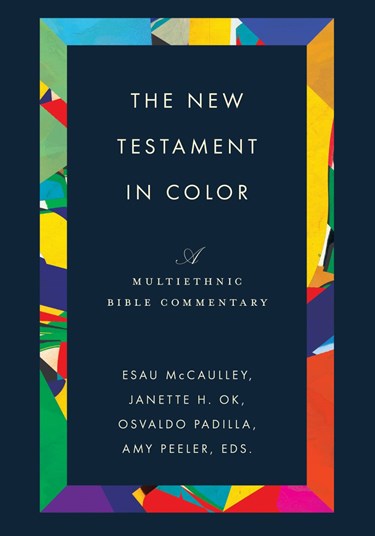
The New Testament in Color: A Multiethnic Bible Commentary is an attempt to bring together people from many different backgrounds to offer commentary on the New Testament.
After an introduction, readers get essays on African American, Asian American, Hispanic, Turtle Island, and Majority-Culture biblical interpretation. Then, the book launches into individual authors offering commentaries on each book of the New Testament. Interspersed are a few selected essays on gender in the New Testament, resources for the mental health of the oppressed in the NT, multilingualism, and immigrants in the Kingdom of God.
The commentaries on individual books of the Bible are usually close to chapter-by-chapter, with authors seemingly getting a good amount of leeway with how focused they ought to be verse-by-verse. The format lends itself to deeper discussion of individual topics each author wants to write about, but makes it a bit less useful if one is looking specifically for a verse-by-verse commentary.
The commentary itself is consistently excellent and thought-provoking. I recall especially one moment while reading the commentary on Luke in which the author, Diane G. Chen, whose parents are Chinese, reflected on the passage about treasures in heaven (Luke 12:13-34). Chen wrote about her parents teaching her to save, live within her means, and how to balance that with the concern of a safety net turning into worldliness and power. Time and again insights are offered into the Bible that spring from the cultural traditions of the authors included. The contributors hail from all over the world, with many different background represented.
There are a number of ways a commentary like this could have been formatted. I think about the series of Reformation Commentaries in which individual verses or sections are given comments from multiple different Reformers. I’m glad the editors chose a mode which allowed the authors to give running commentary on entire books of the Bible as it allows readers more insight into the thoughts and breadth of ideas of each individual author.
The New Testament in Color serves as a fantastic resource and, frankly, a fascinating read. I highly recommend it for those interested in diving deeply into what the Bible is telling us today.
All Links to Amazon are Affiliates
Links
Be sure to check out the page for this site on Facebook!
Book Reviews– There are plenty more book reviews to read! Read like crazy! (Scroll down for more, and click at bottom for even more!)
SDG.
——
The preceding post is the property of J.W. Wartick (apart from quotations, which are the property of their respective owners, and works of art as credited; images are often freely available to the public and J.W. Wartick makes no claims of owning rights to the images unless he makes that explicit) and should not be reproduced in part or in whole without the expressed consent of the author. All content on this site is the property of J.W. Wartick and is made available for individual and personal usage. If you cite from these documents, whether for personal or professional purposes, please give appropriate citation with both the name of the author (J.W. Wartick) and a link to the original URL. If you’d like to repost a post, you may do so, provided you show less than half of the original post on your own site and link to the original post for the rest. You must also appropriately cite the post as noted above. This blog is protected by Creative Commons licensing. By viewing any part of this site, you are agreeing to this usage policy.
Sunday Quote!- Samson as Israel
 Every Sunday, I will share a quote from something I’ve been reading. The hope is for you, dear reader, to share your thoughts on the quote and related issues and perhaps pick up some reading material along the way!
Samson as Israel
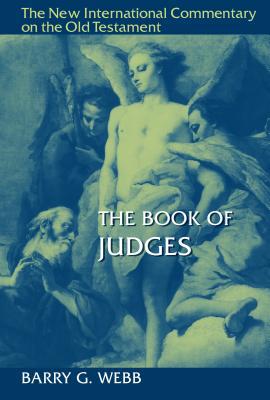
I finished reading the Samson narrative (Judged 13-16) after going through it in detail over the last several months. I found Barry Webb’s summary statement regarding Samson to be profound and deeply moving:
[B]eneath all the surface chaos, and the mad careering here and there of the wild-man hero, there is a steady building toward a predetermined climax of profound theological significance. For Samson is not just Samson; he is also Israel. His is separated from other men, but he longs to be like them, just as Israel is separated from other nations, but is continually drawn to them. He goes after foreign women, as Israel goes after foreign gods. He suffers for his willfulness, as Israel does for its. And in his extremity he cries out to Yahweh, as Israel has repeatedly done. But now it is Samson alone who does so; he is remnant Israel; Israel reduced to a single man. (416-417)
After this summary statement, Webb goes on to place this in canonical perspective and analyze other perspectives of Samson. The commentary is worth the purchase for these sections alone, but the whole thing is phenomenal. I highly recommend that you, dear readers, take the time to read the Bible alongside a solid commentary sometime.
Links
Be sure to check out the page for this site on Facebook and Twitter for discussion of posts, links to other pages of interest, random talk about theology/philosophy/apologetics/movies and more!
Sunday Quote– If you want to read more Sunday Quotes and join the discussion, check them out! (Scroll down for more)
Source
Barry Webb, The Book of Judges (Grand Rapids, MI: Wm B. Eerdmans, 2012).
SDG.
Bible Difficulties 2: Adopting the Attitude of the Ethiopian
This post is the second in a series I’ve been working on which discusses Bible Difficulties–hard passages in Scripture. Other posts in the series can be accessed here.
How should Christians react when met with Bible difficulties? What about when encountering others interacting with Scripture?
Commentary
When asked why God didn’t make the Bible easier to read… we should remember the example of the Ethiopian whom Philip met on the road (Acts 8:27-36). Philip asked the Ethiopian,” Do you understand what you are reading?” This is the question all Christians should seek to ask when they encounter someone reading Scripture–do you understand? We must inform ourselves such that we can answer the hard questions. The Ethiopian’s answer is equally enlightening: “‘How can I,’ he said, ‘unless someone explains it to me?’ So he invited Philip to come up and sit with him.”
How can others understand the Scripture unless someone explains it to them? We should rust to sit with our fellow man or woman when they read Scripture. We should rush to explain it to them in light of Christ. Not only that, but we can apply this very message to our own lives. What about those times we run into a passage of Scripture we find difficult? Should we give up? No, we have many options. We can turn to a fellow Christian and ask for discernment. More importantly, however, we should remember that, as I’ve said before (a quote from a source I cannot remember), “The Bible is the only book whose Author is always present.” The Holy Spirit not only inspired Scripture, but is also omnipresent and ready to fill us with His Word whenever we approach it. We therefore have access to the Author of Scripture whenever we open the Bible.
Geisler once said that the Bible should be given the benefit of the doubt, in cases where potential difficulties arise. This is because of how often it has been right and vindicated in light of extreme criticism (cited in Lee Stroble, The Case for Faith). Archaeological evidence has vindicated various claims of Scripture. Biblical criticism has failed to provide a serious challenge to the message of Jesus (see N.T. Wright’s monumental study, Christian Origins and the Question of God). Thus, as Christians, when we run into a difficulty, rather than assuming the Bible false, we should seek out the answers.
We should adopt the attitude of the Ethiopian in all things. When we encounter others struggling with Scripture, we should help them through this struggle. When we struggle ourselves, we should give the benefit of the doubt to its Author and seek out the answer in the many resources available, including other Christians, prayer, utilizing Scripture to interpret Scripture, etc. Daily, we should explore the Word with the attitude of the Ethiopian–seeking understanding.
——
The preceding post is the property of J.W. Wartick (apart from citations, which are the property of their respective owners) and should not be reproduced in part or in whole without the expressed consent of the author.

 J.W. Wartick - Reconstructing Faith