complementarianism
Really Recommended Posts 5/6/16- creationism and the Grand Canyon, Deborah, and more!
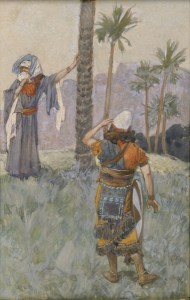
Deborah judging in Israel
It’s another week and I’m here to bring you some more great reading for your weekend. Be sure to let the authors know what you think, and let me know here as well. Topics for this week include the Grand Canyon and the biblical Flood, Deborah as leader, Jehovah’s Witnesses, and more!
Deborah and the “no available men” argument– A refutation of the notion that Deborah was only chosen to lead Israel because there were “no available men” who could or would do so. Unfortunately, this argument is fairly common among those who do not wish to affirm the Bible’s teaching on women’s equal leadership.
The Grand Canyon’s Magnificent Witness to Earth’s History– Often, young earth creationists argue that the Grand Canyon can only be explained (or at least is better explained) by the biblical Flood as a global flood. A new book is challenging that perception. Check out this post to learn more.
7 Things to Know about Jehovah’s Witnesses– It is important to understand others’ beliefs. Here is a post outlining 7 points of belief for Jehovah’s Witnesses.
Calamity (The Reckoners)– Superheroes and villains face off with those who seek vengeance against those villains who destroyed their world. Check out this look at worldview issues in Brandon Sanderson’s latest Young Adult novel, Calamity. Also check out my own reflection on the book.
Really Recommended Posts 4/8/16- Lewis, Van Til, headship, and more!
 Just got back from vacation in Washington state. Wow, it is beautiful there! Anyway, I have another round of links for you, dear readers. We have free writings from Cornelius Van Til, a problem for post-Flood models of diversification, C.S. Lewis, and discussion of “male headship.” Check them out and let me know what you think!
Cornelius Van Til free downloads– Cornelius Van Til was an advocate of presuppositional apologetics. I have written extensively on presuppositionalism myself. Van Til is probably the best-known advocate of the method. Here are free readings from him.
The Great Genetic Bottleneck that Contradicts Ken Ham’s Radical Accelerated Diversification– Ken Ham advocates a kind of hyper-diversification after the Flood which allows for the number of species we see today. What
Christian Thinkers 101: A Crash Course on C.S. Lewis– C.S. Lewis is one of the greatest Christian thinkers of the 20th century. Here’s a great post (with infographic!) that gives tons of information on his life and thought.
5 Myths of Male Headship– The concept of “headship” is often a product more of our own assumptions than of the biblical text. Here is a post that shows 5 myths about male headship that are often assumed.
Really Recommended Posts 3/25/16- conditional hell, creationism, parenting, and more!
 I have more reading for you, dear readers, gathered from around the internet. This week’s topics are the doctrine of annihilationism (conditional immortality), Christian parenting, creationism, complementarian women, and the question of rape and abortion. Let me know what you think of the posts, and be sure to let the authors know as well. This is a snowy owl edition because it snowed here yesterday.
Death After Death– The concept of annihilationism, or, as its proponents prefer to call it: conditional immortality, is gaining more traction. It ought not be dismissed simply because it feels new or different. Here is a thoughtful post engaging with conditional immortality from a perspective of disagreement. What do you think about this issue?
Can We Tolerate Creationists?– Is it permissible to give a creationist a job anywhere? This might sound hyperbolic, but this post investigates a controversy that has surrounded the hiring of a young earth creationist for a BBC television spot. It ends with an insightful comment from the National Secular Society.
10 Ways to Get Your Kids More Interested in Their Faith– Developing faith is an important aspect of Christian parenting. Here’s a post that discusses how we might get kids interested in their faith.
Remember the Complementarian Woman– A call to egalitarians to not portray complementarian women in a way that isn’t true to their experiences and beliefs.
Responding to the Question of Rape with Wisdom and Compassion– “we should clearly express the genuine compassion we have for survivors of rape” [emphasis in the article]. These are words that pro-life people need to read and understand. Turning to an argument immediately is not always the best choice. If we don’t genuinely show compassion and care for those involved in making these horrific choices, then how can we truly call ourselves “pro-life”?
Women in Combat? “Sending” women, women pastors, and feminism- a response to Issues Etc. on Women in Combat and Selective Service

Image is public domain and accessible here: https://commons.wikimedia.org/wiki/File:Women_in_Combat_130125-F-DM566-016.jpg
As a Lutheran, a podcast I frequently enjoy is “Issues, Etc.” It continually offers a Lutheran perspective on current events, theological issues, and more. However, there are times where its approach to theology or current events reflects less a Lutheran understanding than a specific brand of theological conservatism. The recent podcast (2/11/16) featured Pastor Hans Fiene discussing “Women in Combat and Selective Service.” I found it to be deeply mistaken on a number of issues, and would like to address just a few of those here.
“Sending” your daughter or wife?
One comment made in the episode labeled any man who would “send” his wife or daughter to investigate a noise downstairs to see if it might be a burglar as a “coward.” There are a number of problems with this statement. First, anyone who “sends” anyone else into a potentially dangerous situation because they don’t want to go themselves might be labeled as cowardly. The way the phrase was said already begs the question. If the situation were reversed, would Fiene say that the wife is “sending” her husband to investigate, or is the husband simply investigating?
Second, suppose that a man is married to a woman who has extensive martial arts training, is a weapons specialist, sleeps with a pistol under her pillow, and immediately leaps into action to investigate such a noise, while the man works a desk job, is of average build and has never used a weapon before. Is it really reasonable to think that the man is cowardly if he allows his wife to investigate the noise? Well, absurdly, others who share Fiene’s view argue that yes, that man has shirked his duty, is cowardly, and probably a wimp. In other words, men are to be shamed and emasculated if a woman is stronger or better at fighting than they are.
The absurdity of such a position knows no bounds. Men are stripped of their manhood if women are perceived as better at things we arbitrarily label “manly.” It gets curiouser and curiouser, as assertions are made that a man ought to intentionally die even if a woman could save him. A reductio ad absurdum is not even required for this kind of position: it demonstrates for itself that it flies in the face of reason.
Women Pastors?
Fiene could not resist the urge to take a jab at those who are for women in the ministry in this discussion, either. He drew a comparison between woeful ignorance of the horrors of war and ignorance of the spiritual warfare that pastors must engage in. In a stunning non sequitor, he stated that “If we lived in a world where pastors were routinely murdered by Pagans who were storming into churches and putting them to death or… where pastors were having to stay behind while everyone was getting the Plague and dying while everyone who was healthy fled… I don’t really think we’d be having an argument over whether or not women should be pastors.”
It is hard to take this kind of statement seriously, and the statement itself is clearly condescension. Fiene assumes that he knows more about his opponents’ sincerity of believe than they do. After all, if only those silly egalitarians really knew what war was like or really believed in spiritual warfare, then they’d clearly change their minds. This leaves no room for sincerity of belief on the part of the egalitarian, and that is extremely problematic. Frankly, I don’t know of anyone who calls themselves an egalitarian who would recant their stance if women pastors were being killed by Pagans or had to deal with Plague. No one wants women to have those things happen to them; indeed, I hope no one wants men to have them happen to them either! The same applies to combat–no one wants soldiers to have to go kill people, I hope. But if difficult spiritual warfare, even death, is what pastors are to endure, and someone genuinely believes women ought to be allowed to be in the ministry, then those are the types of risks that must be taken. And to assume that egalitarians didn’t even think about that possibility or are too timid to even consider it is offensive, to say the least. The only way Fiene can make such a statement is by assuming without any argument that his opponents are insincere.
As an aside, does Fiene completely discount the work of women like Mother Theresa, or Mother Maria Skobtsova (who was murdered by the Nazis), or the countless other women who have done exactly what he thinks egalitarians are silly to think women can do? A lack of integrating church history into an overall worldview might be shown here.
Feminism?
Complementarian (and other conservative) commentators continue to equivocate on the term “feminism.” Instead of acknowledging that there can be any diversity within the group who self identify as feminists, the label is assumed to mean any number of things that many feminists do not put forward. For example, it was not just implied but implicitly stated that “feminism” demanded equality for women by arguing for abortion rights in order to free women from having to deal with childcare. This, of course, ignores the fact that the feminist movement started as strongly pro-life, not to mention the continued existence of groups like Feminists for Life who are out there making a real difference for the pro-life movement.
The use of the term “feminist” as a clobber-word to induce fear is a straw man of the worst kind. It demonstrates either ignorance–a complete lack of knowledge about the breadth of views held by those who call themselves “feminist”–or intentional deceit. Moreover, to lump egalitarianism–the Christian movement for equality of women in the church and home–with this blanket statement of “feminist” as pro-choice, etc. is to obfuscate the issue even further.
Natural Law
I wanted to add a brief note about natural law as well. Fiene and others continue to just throw out “natural law” in an undefined way as though it unequivocally supports their position. Yet one could just as easily appeal to “natural law” to support women in combat roles, for a natural law might just be a threshold of strength and mental endurance that could be seen as suitable for combat roles, and then anyone who meets that threshold is permitted to do so. I don’t want to delve into the deep waters surrounding natural law theory, but the point is that a bald appeal to “natural law” doesn’t do much to support Fiene’s position.
Conclusion
I believe the discussion here has broader application to the discussion over so-called gender roles as well as the debate between egalitarians and complementarians. Fiene’s arguments are the same kind of arguments that are continually trumpeted by opponents of egalitarianism. But, as we have seen here, those arguments are fallacious, they fail to take the opposition seriously, and they rely on ill-defined terms and obfuscation. There is are no reasons provided by Fiene to support his position. Bare assertions, jabs at opponents, and absurdly irrational statements are put in the place of argument.
Source
Hans Fiene, “Women in Combat and Selective Service,” 2/11/16 available at http://issuesetc.org/2016/02/11/1-women-in-combat-and-selective-service-pr-hans-fiene-21116/ accessed 2/13/16.
Links
Be sure to check out the page for this site on Facebook and Twitter for discussion of posts, links to other pages of interest, random talk about theology/philosophy/apologetics/movies and more!
Eclectic Theist– Check out my other blog for posts on Star Trek, science fiction, fantasy, books, sports, food, and more!
SDG.
——
The preceding post is the property of J.W. Wartick (apart from quotations, which are the property of their respective owners, and works of art as credited; images are often freely available to the public and J.W. Wartick makes no claims of owning rights to the images unless he makes that explicit) and should not be reproduced in part or in whole without the expressed consent of the author. All content on this site is the property of J.W. Wartick and is made available for individual and personal usage. If you cite from these documents, whether for personal or professional purposes, please give appropriate citation with both the name of the author (J.W. Wartick) and a link to the original URL. If you’d like to repost a post, you may do so, provided you show less than half of the original post on your own site and link to the original post for the rest. You must also appropriately cite the post as noted above. This blog is protected by Creative Commons licensing. By viewing any part of this site, you are agreeing to this usage policy.
Sunday Quote!- Show Subordination is Better
 Every Sunday, I will share a quote from something I’ve been reading. The hope is for you, dear reader, to share your thoughts on the quote and related issues and perhaps pick up some reading material along the way!
Sunday Quote!- Show Subordination is Better
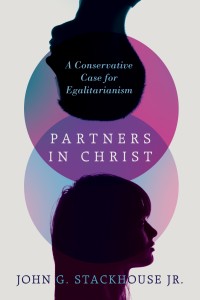
John G. Stackhouse, Jr.’s Partners in Christ presents a balanced perspective on the debate over women in the church. When discussing the issue of the burden of proof over this issue, he argues that:
[I]t seems to me that the burden of proof falls on the complementarian. They are obliged to show how it is really better for subordination to continue to characterize the relationship of Christian men and women, rather than just banging on about “the Bible says…”—again, not to subordinate the Bible to human reason (let alone human preference!), but as a check on their interpretation of God’s authoritative word – (22, emphasis his, cited below)
Stackhouse Jr.’s challenge should not be taken lightly. His point is that each side of the debate cites passages and then could talk past each other by continually saying “the Bible says…” The issue we need to get past that non-starter and demonstrate the position. Moreover, his challenge is powerful because it notes that complementarians must show their position can work in reality rather than as a theological abstraction. They must demonstrate that subordination is better, rather than simply asserting it.
Links
Be sure to check out the page for this site on Facebook and Twitter for discussion of posts, links to other pages of interest, random talk about theology/philosophy/apologetics/movies and more!
Sunday Quote– If you want to read more Sunday Quotes and join the discussion, check them out! (Scroll down for more)
Eclectic Theist– Check out my other blog for my writings on science fiction, history, fantasy movies, and more!
Source
John G. Stackhouse, Jr. Partners in Christ (Downers Grove, IL: InterVarsity, 2015).
SDG.
Book Review: “Partners in Christ: A Conservative Case for Egalitarianism” by John G. Stackhouse, Jr.
Partners in Christ: A Conservative Case for Egalitarianism is a challenging, extraordinary work. The first thought many readers might have when they see the title of this book is “A conservative case for egalitarianism? What!?” Yet that is exactly what this is. John G. Stackhouse, Jr. presents a case for egalitarianism that will challenge those on either side of the issue to rethink various aspects of their view.
The book is organized around a number of chapters, each of which is quite short. Each chapter’s title basically states what the goal of that chapter is. For example, a chapter entitled “Counterarguments from Church History” presents counterarguments to Stackhouse’s position from, well, church history. The organization is helpful, though it should not be mistaken for a license to jump around within the book. The case made herein is progressive and builds up over the course of the whole book.
Central to Stackhouse’s model is the notion that complementarians and egalitarians often talk past each other or fail to recognize the genuine concerns and possible insights from the “other side.” Thus, he challenges egalitarians to take more seriously the arguments for maintaining complementarity in gender, while he pushes complementarians to realize how often their case is based on presupposition rather than the biblical texts themselves. In other words, Stackhouse is going to make you uncomfortable, no matter what your position is. And, frankly, that’s a good thing. I’m a staunch egalitarian who used to be just as entrenched a complementarian, and it was good for me to have a book that challenged the assumptions I’m working under now. I think that effectively any reader could benefit from Stackhouse’s approach, even in disagreement.
The breadth of topics the book addresses makes it an excellent resource. Church history, theology, exegesis, modern social science, and more are each pieces of evidence that is brought forward to shed light on the issue. Particularly interesting was the chapter “Why, then, Do Women Not Lead?” which answered the question with a number of arguments from social science to theology. This kind of integrated approach is used beneficially throughout the book.
A disadvantage of the way the book is organized is that there is little space to dedicate to individual exegesis. Make no mistake, this is not the strongest egalitarian case from the Bible that can be made. It is an introduction to the full scope and depth of egalitarian arguments, yes, but it should not be mistaken for the most powerful argument possible.
Stackhouse’s ultimate conclusion is that women should be allowed the same roles in leadership in the church and home as men are allowed to fulfill. Again, this is not to say he will not challenge those who agree with this conclusion. I was taken aback by how fair and balanced this case was, and I know of no other book that presents as broad an introduction to such a complex topic as this one. I highly recommend Partners in Christ to you.
The Good
+Will challenge virtually every reader
+Excellent case, in brief, for egalitarianism
+Addresses wide variety of topics, arguments, and counter-arguments
+Balanced approach
The Bad
-Quite brief on several key points
-Concedes the notion of the “feminization of worship”
Disclaimer: I was provided with a copy of this book for review by the publisher. I was not required to write any specific kind of feedback whatsoever.
Source
John G. Stackhouse, Jr. Partners in Christ (Downers Grove, IL: InterVarsity, 2015).
Links
Be sure to check out the page for this site on Facebook and Twitter for discussion of posts, links to other pages of interest, random talk about theology/philosophy/apologetics/movies and more!
Book Reviews– There are plenty more book reviews to read! Read like crazy! (Scroll down for more, and click at bottom for even more!)
Eclectic Theist– Check out my other blog for my writings on science fiction, history, fantasy movies, and more!
SDG.
——
The preceding post is the property of J.W. Wartick (apart from quotations, which are the property of their respective owners, and works of art as credited; images are often freely available to the public and J.W. Wartick makes no claims of owning rights to the images unless he makes that explicit) and should not be reproduced in part or in whole without the expressed consent of the author. All content on this site is the property of J.W. Wartick and is made available for individual and personal usage. If you cite from these documents, whether for personal or professional purposes, please give appropriate citation with both the name of the author (J.W. Wartick) and a link to the original URL. If you’d like to repost a post, you may do so, provided you show less than half of the original post on your own site and link to the original post for the rest. You must also appropriately cite the post as noted above. This blog is protected by Creative Commons licensing. By viewing any part of this site, you are agreeing to this usage policy.
Book Review: “Judges and Ruth: God in Chaos” by Barry Webb

Barry Webb’s commentary, Judges and Ruth: God in Chaos is part of the “preaching the word” series and presents the books in a pastoral, conversational fashion.
Webb continually brings up details of the text that are overlooked, bringing to light wonderful insights where people may tend to skip over. Minor judges (like Shamgar) are at times given as much detailed discussion as those we might consider more important. There is a clear method to this, as Webb seems uninterested in sharing those things readers learned and re-learned since Sunday School. This is a book that feels fresh and exciting–and I’ve read one of Webb’s other commentaries on Judges!
These insights are not limited to the minor judges, however. The sections on Gideon, Ehud, and Samson (one of my favorite Bible personages) are particularly excellent. Each will make readers look with more depth even at stories they think they knew. For example, regarding Eglon, the king Ehud kills, Webb points out that readers of the story should reflect on the interplay between Ehud’s bringing a harvest tribute and the corpulence of Eglon. The fatness of Eglon is, ironically, in part due to his gleaning food from Israel! It is just this kind of deep look at the text that can be found throughout the book, time and again, regarding the judges and Ruth.
The tone of the book is quite pastoral. There are no sections of Hebrew painstakingly pored over word-by-word. Admittedly, I love that kind of commentary. That’s not the kind of commentary this is. Instead, it is presented in a kind of conversational style that takes you directly to the story. A good word to describe the style is “immersive”: reading the commentary makes one feel as though they are inside the Bible story themselves, experiencing it, and seeing the world anew as the contemporaries might have. It is a pretty thrilling experience.
The section on Deborah as a “maverick” is unfortunate, because it undercuts the importance of the woman Deborah (though calling her a “maverick” seems on-point). Webb has written elsewhere (his commentary in the New International Commentary on the Old Testament Series on Judges) about how “there is no hint in the narrative or elsewhere in Scripture that her [Deborah’s] exercise of such a role [as leader/judge/prophetess] was contrary to God’s purposes, or a breach of his declared will in the way that the irregular worship practices of the period were” (Webb, The Book of Judges, (Eerdman’s, 2012) 188). Here, however, Webb qualifies this endorsement, carefully pointing to a pattern of male leadership throughout the Old Testament and arguing that Deborah is exceptional in her role here as prophetess/Judge. Yet in the same chapter, he also notes how the Old Testament is a patriarchal culture, which makes Deborah’s function as judge/prophetess even more exceptional! The exceptional nature, however, is not that it is improper–as Webb himself admits–but rather that her acting in this function, a prophetess called by God, challenges the very patriarchy that Webb has noted (and, at times, challenged himself) as the background for Old Testament practices. That is, Deborah functions as an attack on that paradigm, not a confirmation of it.
Though Webb notes that Deborah was praised in her function, he nowhere points out how this very act of praising Deborah for her role as leader and prophetess of Israel entails a theological truth of the gifting of God for women in such positions. I was disappointed to see this subtle shift in Webb’s affirmations about Deborah from his other commentary. This makes the section on Deborah less insightful than it could have been, however, particularly given her importance in the book of Judges.
Judges and Ruth: God in Chaos is a beautiful, pastoral book full of insights that will have you scrambling to grab your Bible and make notes. Although it isn’t perfect, it is a worthwhile read that will open the pages of the books covered in new ways. It is recommended.
The Good
+Full of intriguing details
+Immersive, engaging writing style
+Continually takes readers back to the text
+Plenty of background information
The Bad
-Inserts complementarian language into discussion of Deborah
Disclaimer: I received a copy of the book for review from the publisher. I was not required to provide any specific kind of feedback whatsoever.
Source
Barry Webb, Judges and Ruth: God in Chaos (Wheaton, IL: Crossway, 2015).
Links
Be sure to check out the page for this site on Facebook and Twitter for discussion of posts, links to other pages of interest, random talk about theology/philosophy/apologetics/movies and more!
Book Reviews– There are plenty more book reviews to read! Read like crazy! (Scroll down for more, and click at bottom for even more!)
Eclectic Theist– Check out my other blog for my writings on science fiction, history, fantasy movies, and more!
SDG.
——
The preceding post is the property of J.W. Wartick (apart from quotations, which are the property of their respective owners, and works of art as credited; images are often freely available to the public and J.W. Wartick makes no claims of owning rights to the images unless he makes that explicit) and should not be reproduced in part or in whole without the expressed consent of the author. All content on this site is the property of J.W. Wartick and is made available for individual and personal usage. If you cite from these documents, whether for personal or professional purposes, please give appropriate citation with both the name of the author (J.W. Wartick) and a link to the original URL. If you’d like to repost a post, you may do so, provided you show less than half of the original post on your own site and link to the original post for the rest. You must also appropriately cite the post as noted above. This blog is protected by Creative Commons licensing. By viewing any part of this site, you are agreeing to this usage policy.
Really Recommended Posts 10/9/15- Gospels, Domestic Abuse, Dinosaurs, and more!
 I am pleased to present this wide range of topics to you, dear readers! I hope you enjoy the reads as much as I did. We have posts on the origins of the Gospels from an atheistic perspective, domestic abuse, the ontological argument, soft tissue in dinosaurs, and Bill Nye on abortion. Let me know what you think, and be sure to thank the authors as well!
Where the Gospels Came From– This is a satirical post that highlights how broad swaths of internet atheism tend to view the origin of the Gospels. It’s well worth reading as it highlights some of the major errors.
When Staying in an Abusive Relationship is Part of Your Theology– It is Domestic Violence Awareness Month, and this post from Christians for Biblical Equality highlights one major difficulty with some theologies- they argue that one should stay in an abusive relationship from theological reasons.
The Probability of God’s Existence is Either 0% or 100% (video)– Kenneth Keathley offers this analysis and presentation of Alvin Plantinga’s ontological argument. He defines terms and answers some major objections, with the objections offered by atheists themselves.
“Soft Tissue” Found in Dinosaur Bones– Creationists sometimes claim that the finds of “soft tissue” undermine the possibility for an old earth perspective. Is that the case? Here is some analysis of this claim and some more recent findings regarding allegations of blood and other soft tissue found in ancient fossils.
Responding to Bill Nye’s Abortion Video– Bill Nye “The Science Guy” made a lot of claims about science and abortion in a video recently. Here’s a thorough analysis and refutation of his claims.
Egalitarian Music?
 I often find myself cringing at the lyrics that pass for contemporary Christian music as I listen to the radio (which, admittedly, I rarely do). From songs like “Courageous,” which makes it sound like only men can have courage… or at least that only they were “made to be” that way; to those like “Lead Me,” which encourages co-dependence in relationships, I find myself wondering if there are any egalitarian Christian musicians out there making music that shares that message. I know of none.
Anyone know of any?
The question, of course, is whether the concept of gender “roles” even needs to be an issue for egalitarian musicians. Moreover, how might an egalitarian theme be put forward meaningfully through music? I’m interested to know if anyone has thoughts on this.
Of course, all of this may just be another displayed symptom of the problem I’ve mentioned before with having a distinct genre of “Christian” music over and against other types of music.
Links
Be sure to check out the page for this site on Facebook and Twitter for discussion of posts, links to other pages of interest, random talk about theology/philosophy/apologetics/movies and more!
Christian Discernment Regarding Music: A reflection and response– Here I react to a post encouraging discernment when thinking about the category of Christian music.
On Christian Music– I reflect on the category of “Christian Music” and whether it is even a functionally helpful tool.
Engaging Culture: Demon Hunter’s “Extremist” and the Apologetic Task– I discuss the latest album from Demon Hunter and how music may act as an apologetic endeavor.
SDG.
Really Recommended Posts 7/10/15- Kangaroos, Cosmology, Fidelity, and more!
My apologies for missing the “Really Recommended Posts” last week, we just moved to Iowa and it was a very hectic week. We’re back in action now with a list of great reads for you. Be sure to let me know what you think, and let the authors know as well!
Dear Ken Ham: About Those Kangaroo Fossils…- Ken Ham’s response to why we don’t find kangaroo fossils from Ararat to Australia is another example of poor reasoning. Here, a response is offered to his argument.
So you think you understand the cosmological argument?– A lot of mistakes are made when evaluating the cosmological argument. Here’s a post by Edward Feser that explains several of these mistakes and answers some criticisms of the argument.
Think the “Billy Graham Rule” would have saved Tullian? Think again– There has been much commentary on the sexual infidelity of a fairly prominent church leader, Tullian Tchividjian. A lot of it has focused on how he should have stayed separate from women in general and avoided being along with women, as the “Billy Graham Rule” argues. But what does this say about women and men? Read on. My thanks to a friend on Facebook for sharing this.
Sci fi, free will, and the problem of evil– what might the resonating themes about free will in science fiction have to say about reality? Here, Clay Jones analyzes several aspects of science fiction with an eye for a greater metanarrative. My thanks to a friend on Facebook for sharing this.
Review: Unchristian: What a New Generation Really Thinks About Christianity… and Why it Mattes by David Kinnaman– This is a book I really enjoyed, though I share some of the concerns raised in this review. It’s worth reading the review to get an overview of the book’s content and some of the issues it raises. If I may be permitted a somewhat brief story here:
This was actually a pretty formative book for me when I read it some time ago (6+ years?). I remember finishing the book and feling supercharged to try to spread the truth of Christianity in a winsome manner. And quite seriously minutes after I finished and felt this supercharge of missional energy, a man showed up at the door of the house I was staying at at the time (a pastor’s house) and said he needed spiritual help. He entered the house right when I cracked open the door and kept saying he needed prayers.
I prayed with him and then thought he was going to leave, but he would not. He kept looking at the cat and saying he wouldn’t hurt a cat, and that he’d tried to kill himself a couple times that night by speeding and going through stop signs. I kept a short distance between he and I because he seemed clearly disturbed in some way.
Finally he did leave, answering the prayer I was saying over and over in my mind to God to protect me. I called the police but nothing ever came of it that I know of.
I’m still not sure how or why that happened, and I’m hoping I made an impact, but I don’t think I’ll know until the hereafter.
But I can’t help but think on it once in a while and wonder if what I did made a difference; if somehow that was God leading someone who needed help to where they needed to be.

 J.W. Wartick - Reconstructing Faith
