creationism
Really Recommended Posts 7/10/15- Kangaroos, Cosmology, Fidelity, and more!
 My apologies for missing the “Really Recommended Posts” last week, we just moved to Iowa and it was a very hectic week. We’re back in action now with a list of great reads for you. Be sure to let me know what you think, and let the authors know as well!
Dear Ken Ham: About Those Kangaroo Fossils…- Ken Ham’s response to why we don’t find kangaroo fossils from Ararat to Australia is another example of poor reasoning. Here, a response is offered to his argument.
So you think you understand the cosmological argument?– A lot of mistakes are made when evaluating the cosmological argument. Here’s a post by Edward Feser that explains several of these mistakes and answers some criticisms of the argument.
Think the “Billy Graham Rule” would have saved Tullian? Think again– There has been much commentary on the sexual infidelity of a fairly prominent church leader, Tullian Tchividjian. A lot of it has focused on how he should have stayed separate from women in general and avoided being along with women, as the “Billy Graham Rule” argues. But what does this say about women and men? Read on. My thanks to a friend on Facebook for sharing this.
Sci fi, free will, and the problem of evil– what might the resonating themes about free will in science fiction have to say about reality? Here, Clay Jones analyzes several aspects of science fiction with an eye for a greater metanarrative. My thanks to a friend on Facebook for sharing this.
Review: Unchristian: What a New Generation Really Thinks About Christianity… and Why it Mattes by David Kinnaman– This is a book I really enjoyed, though I share some of the concerns raised in this review. It’s worth reading the review to get an overview of the book’s content and some of the issues it raises. If I may be permitted a somewhat brief story here:
This was actually a pretty formative book for me when I read it some time ago (6+ years?). I remember finishing the book and feling supercharged to try to spread the truth of Christianity in a winsome manner. And quite seriously minutes after I finished and felt this supercharge of missional energy, a man showed up at the door of the house I was staying at at the time (a pastor’s house) and said he needed spiritual help. He entered the house right when I cracked open the door and kept saying he needed prayers.
I prayed with him and then thought he was going to leave, but he would not. He kept looking at the cat and saying he wouldn’t hurt a cat, and that he’d tried to kill himself a couple times that night by speeding and going through stop signs. I kept a short distance between he and I because he seemed clearly disturbed in some way.
Finally he did leave, answering the prayer I was saying over and over in my mind to God to protect me. I called the police but nothing ever came of it that I know of.
I’m still not sure how or why that happened, and I’m hoping I made an impact, but I don’t think I’ll know until the hereafter.
But I can’t help but think on it once in a while and wonder if what I did made a difference; if somehow that was God leading someone who needed help to where they needed to be.
Really Recommended Posts 6/26/15- Genetic engineering, parenting, evolution, and more!
I hope you will enjoy the latest round of the Really Recommended Posts, dear readers! I have taken some time out of a super busy schedule this week–preparing to move to a different state!–to scour the net for great reads to pass on to you. The topics we have include evolution, genetic engineering, parenting, historical apologetics, and racism. Let me know what you think, and, as always, be sure to let the authors know you enjoyed their posts as well!
Learning to Co-Parent– What does it mean to believe in the equality of the genders when it comes to parenting? How do we submit to each other out of love for the Lord through parenting? Here’s a great post on the topic with some practical insights.
Tears, Change, and Trust– A sermon on the Charleston shootings from a friend, Timothy Siburg. There are some good challenges against racism brought up in this post, and I urge you to check it out.
4 Key Points Christian Kids Need to Understand About Evolution– How should we be critical thinkers when it comes to evolution? Here’s a pretty even-keeled post on teaching kids about evolution. The post doesn’t fall into the pitfalls of assuming the absolute validity of any specific viewpoint or oversimplifying the topic. I enjoyed it.
Why You Should Genetically Engineer Your Children– Here’s an interesting argument from a Christian perspective for genetic engineering. I have reflected on the topic in the past and come down on a somewhat more negative perspective, though this post has challenged some of my positions. Check out my own post on genetic therapy and engineering, which I recently revised and updated.
Conrad Emil Lindberg on God and Revelation– Doug Geivett shares some insights on apologetics from the Lutheran theologian Conrad Emil Lindberg in his continuing series on historical apologetics. Be sure to read teh whole series, because it is excellent.
Really Recommended Posts 6/19/15- Creationism, memes, masculinity, and more!
Another week, another round of excellent reading from around the web for you, dear readers. We have analysis of creationist scholarship, a look at an exciting new book, historical apologetics, pro-life method, and analysis of a meme that attacks Christianity. As always let me know what you think, and let the authors know you enjoyed their posts as well!
The Dangers of Poor Scholarship: A Creationist’s Take on Feathered Dinosaurs– How do Young Earth Creationists often interact with science stories? Is there method consistent? Here, there is an analysis of creationist methodology when it comes not only to feathered dinosaurs but also to how the evaluate faulty arguments and lack consistency.
Malestrom: Swept up in the Currents of a Changing World (Review)– Color me delighted to see a book like this coming out. Our perceptions of what it means to be masculine are deeply embedded in our cultural norms. I have often engaged with complementarians who inform me of exactly what they think men ought to do or what men are “at their core.” But this they do without even acknowledging that even today there are cultures with differing understandings of what is masculine. How might we separate the good from the bad when it comes to talking about masculinity? This book seems to offer a way forward.
William Warburton’s 18th Century Defense of Christianity– It’s amazing how many historical defenses of Christianity are effectively lost in our time. The study of historical apologists is a continually fruitful one that yields great rewards for those who pursue it. Here, Doug Geivett highlights how even arguments that seem tied to their own time periods may provide us with new insights into controversies of our day.
John Reasnor Fails to Show that Incrementalism is Unbiblical– Clinton Wilcox engages in a debate over method when it comes to pro-life reasoning. Some have been arguing that we must do pro-life activism in such a way that only those laws or methods that ban all abortion may be supported. Is this reasonable? Wilcox analyzes the argument. I have provided a lengthy overview of and review of a debate on the same topic.
Will Your Murderer Be In Heaven?– Nick Peters offers an analysis of a meme floating around recently that attacks the goodness of Christianity because one’s own murderer might be in heaven. How does this attack hold up under scrutiny?
Sunday Quote!- Hidden Science in the Bible?
 Every Sunday, I will share a quote from something I’ve been reading. The hope is for you, dear reader, to share your thoughts on the quote and related issues and perhaps pick up some reading material along the way!
Hidden Science in the Bible?
Some see the Bible as a source of all knowledge. When we come to the very beginning of the Bible, what is it trying to teach us? Might it tell us what to believe about evolution? Could it reveal truths about science that no one knew until they were discovered later? These types of questions come to us very frequently in this age of science in which we invest so much into questions of a material nature.
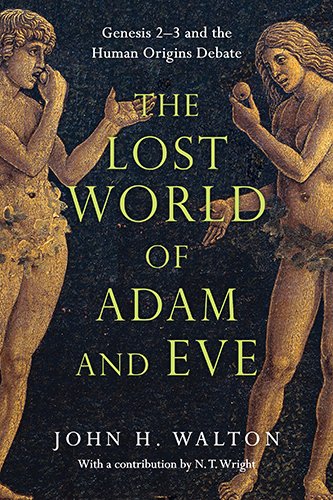
John Walton, in his latest book, The Lost World of Adam and Eve, argues that these questions are largely misguided:
[God] did not hide information of that sort [scientific] in the text for later readers to be discovered. An assumption on our part that he did would have no reliable controls. For example, in the days when people believed in a steady-state universe, people could easily have gone to the Bible to find confirmation of that science. But today we do not believe the steady-state theory to be true… Such approaches cannot be adopted within an authority framework. (18, cited below)
Walton’s argument is compelling. The notion that the Bible necessarily has hidden throughout scientific insight just waiting to be found can never be arbitrated. Thus, it makes the Bible the tool of one generation and the laughing stock of the next. As we attempt to use the Bible to support various scientific notions, we may do much damage to the text.
How might we best approach the text in a way that does not leave us open to this uncontrollable theorizing? Is it possible to maintain the notion that the Bible does teach us about science? If not, why not? If so, to what extent?
Links
Be sure to check out the page for this site on Facebook and Twitter for discussion of posts, links to other pages of interest, random talk about theology/philosophy/apologetics/movies and more!
Sunday Quote– If you want to read more Sunday Quotes and join the discussion, check them out! (Scroll down for more)
Source
John Walton, The Lost World of Adam and Eve
SDG.
Really Recommended Posts 4/10/15- raising a son, tropical islands, self-harm, and more!
Another round of awesome posts for you, dear readers. Please keep me in your prayers as I have a kidney stone. Sad me. But happy you, because you have some great reading ahead! Self-harm, Easter, raising a son, tropical islands and creationism are all featured topics this week. Let me know your thoughts in the comments here, and be sure to let the authors of the posts know as well.
My Depression and Self Harm vs. Jesus Passion and Sacrifice– Christianity can speak to people in all walks of life and circumstances. Here is a beautiful post that compares the struggles of someone dealing with self-harm to the hope found in the sufferings and death of Christ.
Thoughts on Raising a Son– What is it like to raise a son in our day and world? My wife shares some thoughts on raising a son and the difficulties we face as parents. How can we teach him to not give in to a culture of inequalities?
My Favorite Atheist Easter Memes of 2015– Here, Jason Wisdom shares and analyzes a number of Easter memes atheists put out to “celebrate” this most holy day–the resurrection of God Incarnate. He provides some thoughtful insights into the mindset behind them.
Origins of a Tropical Island – The long road from lava to colonization– Do the formation of islands and their ecology fit into a young earth paradigm? Short answer: no. Check out this post for some reasons why.
The Greatest Risk of All– It is often noted that women were the first evangelists. Does this have any implications for our faith?
Book Review: “The Lost World of Adam and Eve” by John Walton
John Walton’s latest book, The Lost World of Adam and Eve
Walton argues that the Genesis creation account does not specifically tell us how Adam and Eve materially came to be but rather is an account of God giving them their functions as the image of God, ushering in order against the chaos. His view is one which sees Adam as archetypical head of humanity rather than necessarily being the first ever human. Adam and Eve were chosen by God to become God’s representatives in the world.
Many intriguing arguments are put forward by Walton once he has established what is the central thesis–that the text is concerned with functional, not material origins. These include reading Genesis 2 as a sequel to rather than recapitulation of Genesis 1, the use of the term “very good” and “good” in the text, the meaning of “formed from dust” and from the rib, the archetypal meaning of Adam and Eve, the real existence of this couple, the priesthood of the couple in sacred space, our role as bringing order from disorder, the “serpent” in the Garden, and more. Each chapter is filled with compelling arguments and sometimes surprising conclusions.
Because the worldview of the ANE was not concerned with material origins, the questions we often ask of the text like “Were Adam and Eve the first humans?”; “Are we all descended from Adam?” and the like are questions which the text is not intended to answer. These are questions from our background, not from the background of the text. Thus, Walton argues that there can be much openness to the answers to these questions. When we come to the New Testament discussions of Adam and Eve, Walton (and the contribution from NT Wright) argue that this is why the notion of federal headship (though not necessarily material/genetic headship) is probably in mind.
Readers who are unconvinced by the notion that we should apply ANE insights to our reading of the text will be challenged to support that claim. Walton cogently argues that although there is not a 1-to-1 correspondence between the worldview of the ANE and the Bible, it is highly questionable to assume that the writers and audience of the Bible would not have been influenced by their background and cultural understanding.
Regarding the science, Walton readily points out that he is not an expert in the area but defers largely to the experts. He applies the exegetical arguments to questions of original sin, federal headship, and the like in the context of modern scientific findings, though he does so in such a way that he retains his commitment to teach what the text does rather than trying to force it to speak of our concerns.
Many (most?) readers will find this book challenging on a number of levels because Walton so readily exposes our presuppositions about what the text should say. Very often Walton simply points readers back to the text to reveal how often we have our expectations bring meaning to the text rather than allowing it to speak for itself.
The Good
+Excellent insight into the ANE background of the Old Testament
+Strong exegetical argument with a commitment to understanding the text
+Coherent with the rest of Walton’s thought
+Challenges our presuppositions about the text
The Bad
-A bit difficult to pin down exactly what his view is of original sin
Conclusion
The Lost World of Adam and Eve
Disclaimer: I was provided with a review copy of the book courtesy of InterVarsity Press. I was not obligated to write any sort of review whatsoever. My thanks to the publisher for the copy.
Links
Be sure to check out the page for this site on Facebook and Twitter for discussion of posts, links to other pages of interest, random talk about theology/philosophy/apologetics/movies and more!
Origins Debate– Read a whole bunch more on different views within Christianity of the “origins debate.” Here I have posts on young and old earth creationism, intelligent design, theistic evolutionism, and more!
Source
John Walton, The Lost World of Adam and Eve
SDG.
——
The preceding post is the property of J.W. Wartick (apart from quotations, which are the property of their respective owners, and works of art as credited; images are often freely available to the public and J.W. Wartick makes no claims of owning rights to the images unless he makes that explicit) and should not be reproduced in part or in whole without the expressed consent of the author. All content on this site is the property of J.W. Wartick and is made available for individual and personal usage. If you cite from these documents, whether for personal or professional purposes, please give appropriate citation with both the name of the author (J.W. Wartick) and a link to the original URL. If you’d like to repost a post, you may do so, provided you show less than half of the original post on your own site and link to the original post for the rest. You must also appropriately cite the post as noted above. This blog is protected by Creative Commons licensing. By viewing any part of this site, you are agreeing to this usage policy.
Really Recommended Posts 3/20/15- Blood Moons, Jupiter Ascending, and more!
What’s this!? Weather that is above freezing? I cracked my windows last week when it hit 33 degrees Fahrenheit because I was warm. Then it hit 65! SCORCHING! I think maybe I’ve adapted to life in Minnesota. Anyway, I also took the time out of this beautiful week to provide you, my dear readers, with what I hope will be some most edifying material. Here we have posts on Blood Moons, women’s church history, creationism, Jupiter Ascending, and (!) a great apologetics resource.
Jupiter Ascending– A worldview-minded look at the flick “Jupiter Ascending.” Largely blasted by critics, the film is an attempt at a science fiction fairy tale. What does this “fairy tale” about the future teach us?
Trillions of Stone Artifacts: A Young Earth Anthropology Paradox– Are there more human artifacts than there should be, if we grant young earth creationist assumptions about the age of the Earth? Check out this post for an interesting challenge to this paradigm from the perspective of anthropology.
Blood Moons: An End-Times Sign?– Should we view the fact that there are Four Blood Moons happening as a sign of the end-times? Here’s an examination of the claim that we should.
Women’s History Month: The Early Church– Here are some women in the early church who had profound impacts on the faith.
Apologetics 315– Here’s a site to follow if you don’t already. It features interviews with top apologists, book reviews, resource links, and more! It is one of the first sites I ever followed and it still pays dividends.
Book Review: “A Matter of Days” by Hugh Ross, Second Expanded Edition
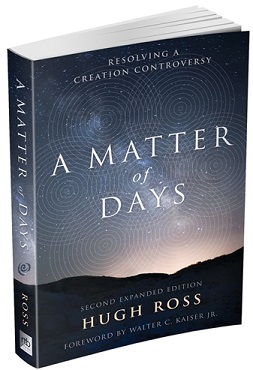
Hugh Ross is one of the most influential Old Earth Creationists alive. The founder of Reasons to Believe, he has had a profound influence on putting forth Old Earth Creationism from a concordist–that is, the notion that the Bible and science will agree where they overlap [often including the notion that the Bible explicitly speaks on scientific issues]–perspective. A Matter of Days
The book provides a huge amount of material for those wanting to interact with topics of creationism. Ross begins by surveying the contentious way the issue is often argued and noting that we as Christians ought to strive for more tolerant attitudes towards each other. Alongside this, he notes various statements by evangelicals allowing for some openness on the topic.
The book covers a massive range of arguments for and against young earth creationism, but the real meat of the text is dealing with various scientific arguments on either side. These are surveyed in a kind of question and answer or objection and rejoinder format in which Ross clearly explains a huge amount of scientific data for an ancient universe and deals with the major objections to such a position from the young earth creationist perspective.
Ross also confronts textual issues in a number of places, including much discussion on the concept of “day” and its meaning in Genesis 1. This, he covers from different perspectives including historic theology, exegesis, and science. He also puts forward a canonical view of how to see Creation in the Bible rather than limiting it simply to Genesis 1-2. There are a number of other texts that he argues also teach on creation.
Although he is an “Old Earth” believer, Ross is also clearly a creationist and puts forward several brief arguments about the faultiness of evolution. This is not a focus of the work, but through such arguments he establishes a clearer picture of his own position related to origins of both life and speciation.
One issue that might be raised with the book is whether the seemingly strict concordism Ross advocates is necessary. For example, rather than arguing that entropy and decay are spoken about in the Bible (100-102), could one not simply note that the human biblical author almost certainly had no concept of entropy and therefore was not addressing it? That is to say, a concept of divine condescension might be easier to hold to than one of future scientific knowledge revealed in the Bible.
The new edition is expanded and has noticeably featured references to some recent works as well as more arguments. It is a rather large re-write with much new information. Readers considering purchase should get this edition.
The Good
+Major point-by-point explorations of evidence for and against an old earth
+Strong defense of the Old Earth Creationist/Concordist position
+Many technical issues explained in understandable ways
+Charitable tone
+Excellent index
+Expanded arguments and new information for the new edition
+Really cool cover
The Bad
-Some questions about concordism remain
-Perhaps too brief on some objections
Conclusion
A Matter of Days
Disclaimer: I was provided with a review copy by the publisher. I was not required to write any sort of review whatsoever thereby.
Links
Be sure to check out the page for this site on Facebook and Twitter for discussion of posts, links to other pages of interest, random talk about theology/philosophy/apologetics/movies and more!
Origins Debate– Read a whole bunch more on different views within Christianity of the “origins debate.” Here I have posts on young and old earth creationism, intelligent design, theistic evolutionism, and more!
Source
Hugh Ross, A Matter of Days
SDG.
——
The preceding post is the property of J.W. Wartick (apart from quotations, which are the property of their respective owners, and works of art as credited; images are often freely available to the public and J.W. Wartick makes no claims of owning rights to the images unless he makes that explicit) and should not be reproduced in part or in whole without the expressed consent of the author. All content on this site is the property of J.W. Wartick and is made available for individual and personal usage. If you cite from these documents, whether for personal or professional purposes, please give appropriate citation with both the name of the author (J.W. Wartick) and a link to the original URL. If you’d like to repost a post, you may do so, provided you show less than half of the original post on your own site and link to the original post for the rest. You must also appropriately cite the post as noted above. This blog is protected by Creative Commons licensing. By viewing any part of this site, you are agreeing to this usage policy.
Really Recommended Posts 3/13/15- Fantasy, Feminism, and Formations, OH MY!
It feels like summer! It’s in the 60s here in Minnesota and it’s gorgeous. I’ve been taking Luke on walks all over. But fear not, dear readers! That does not mean I’ve neglected my sworn duty to you to provide the best reading on the web. Here’s a great and diverse list for your reading pleasure!
On Being a Jesus Feminist– My wonderful wife has been published over at the Junia Project with her thoughts on being a “Jesus Feminist.” A what? Read on and find out.
A Ranking of 1980s Fantasy that would please Crom himself!– I love fantasy books and movies but was distressed to see this list and realize I’ve only seen two movies on it! WHAT? Thus, I have embarked on a quest to watch the rest of them. Check out my quest, and check the list yourself to see your 80s fantasy knowledge.
Creationism and the Grand Conjectural Canyon– Were you there? Can we know the history of the Grand Canyon? Was it formed at some point in the last 6-10 thousand years because of Noah’s Flood?
Modern Idolatry (Comic)- What is it that we are dedicating our lives to? It’s too easy to get caught up in the multi-tasking of the “everyday” and neglect the God who made us. Check out this poignant reminder.
The Last Man on Earth: Becoming the Person We Hope to Be– A look at the new TV series “The Last Man on Earth” as it stands so far, written from a worldview perspective. I very much recommend you follow Empires and Mangers–the site this link is on! It’s fantastic.
Really Recommended Posts 3/6/15- Graphic Novels, going to church, and more!
 Hello, dear readers! I hope you’ll enjoy the lineup I have for you from the frozen North. I realized the other day I must truly have acclimated because I walked outside in 5 degree (Fahrenheit, AKA -15 Celsius) weather and had to remove my hat because I was warm. Wow. Anyway, some diverse reading for you, which includes posts on a graphic novel reviewed from a Christian perspective, some analysis of Flood Geology, reasons to go to church, an upcoming book I’m super excited for, and how to be a Christian on Facebook.
A Sneak Peek at What’s Inside My New Book– Natasha Crain at “Christian Mom Thoughts” is one of my favorite bloggers. She constantly has great advice for Christian parents and how to integrate apologetics into young lives. This is something extremely valuable. She’s also writing a book! I cannot wait for it. Check out this sneak peek at the book and be sure to follow her site.
Review: Boxers and Saints by Gene Luen Yang– I love graphic novels but it is hard to find those which I’m willing to invest time into. After reading this review and commentary on worldview, I think I may have to pick these two up from Gene Luen Yang.
To Church (COMIC)- Why even bother going to church? Here’s a pretty interesting look at some reasons why it is a good thing for Christians to go!To Church (COMIC)- Why even bother going to church? Here’s a pretty interesting look at some reasons why it is a good thing for Christians to go!
Jesus Christ and Mr. Spock– Was Jesus a myth, like Spock? Some mythicists have been running with this absurdity since the death of Leonard Nimoy. Check out this post which acts as a piece of tribute to Spock while also refuting the ludicrous claims of Jesus mythers.
How to be a Christian Presence on Facebook– Some good advice on interacting on Facebook.
Forams and Diatoms: Testing Young Earth Flood Geology Hypotheses– Does Flood Geology–the Young Earth Creationist’s scientific answer to most questions–succeed when tested? Check out this post for just one test it fails.

 J.W. Wartick - Reconstructing Faith