Dietrich Bonhoeffer
The Suffering God and Impassibility in Bonhoeffer
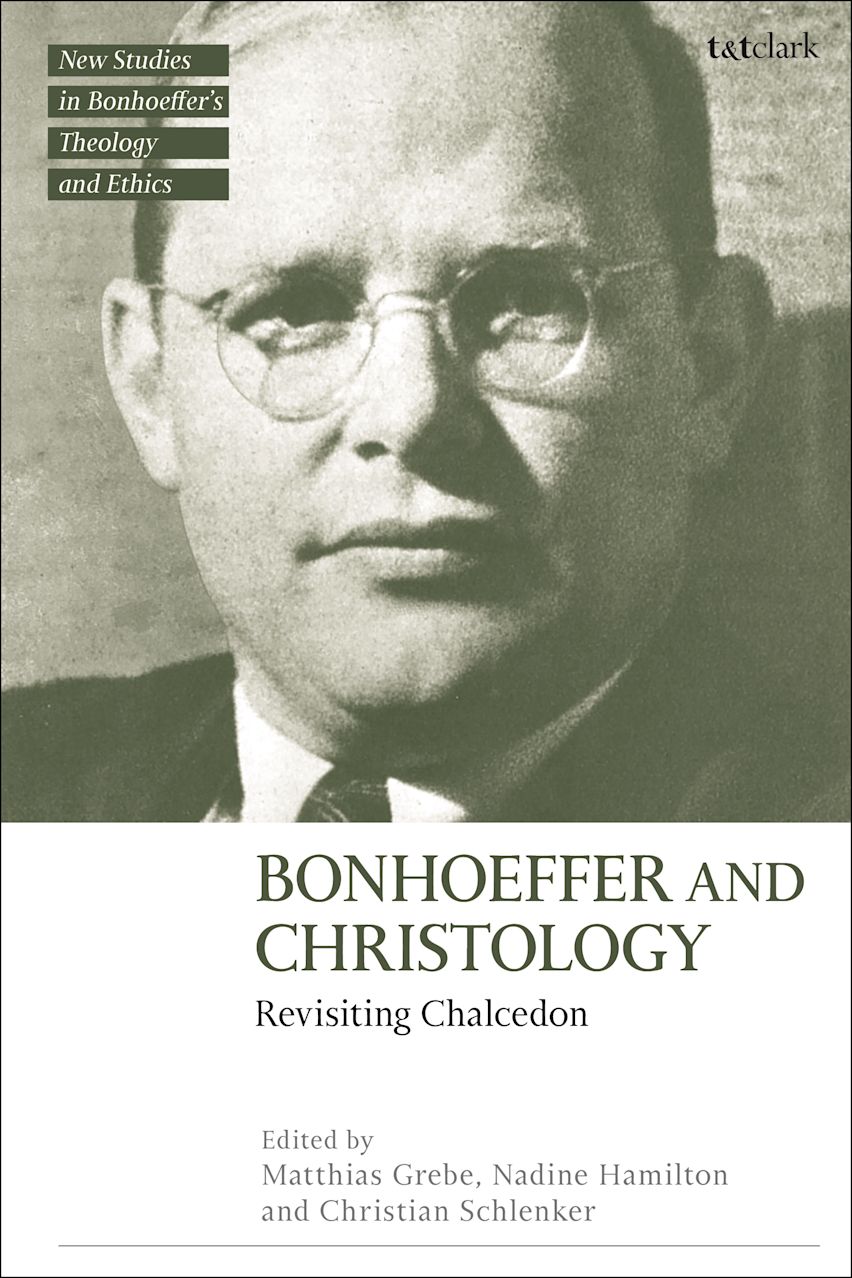
“Only the suffering God can help”- Dietrich Bonhoeffer
The quote from Bonhoeffer is one of the most beloved and cited quotes of Bonhoeffer’s works. Bonhoeffer’s conceptualizing of God as a God who suffers is central to his Christology. But what does that mean related to the concept in classical theism of divine impassibility? Matthew Grebe’s essay, “The Suffering God: Bonhoeffer and Chalcedonian Christology” seeks to provide at least some way forward in this discussion.
Grebe’s essay centralizes the question: Is it theologically or biblically “correct to speak of the suffering God”? (138). Before diving into it, he outlines the notion of divine impassibility, with a look at church fathers and the Greek language behind impassibility. Classically, for example, Cyril of Alexandria notes that the suffering of Christ was only in regards to the human body, not to God, because God does not have a physical body. There is a kind of paradoxical theology present here, as the divine impassible is passible in the incarnate Word (141). Divine impassibility held that “God is not (negatively) affected by anything which transpires in God’s creation” (142).
Martin Luther’s concept of the communicatio idiomatum (the communication of attributes) contained in it a “protest” against divine impassibility (143). Thus, the attributes of the human are impacted by the divine and vice versa. However, Luther’s theology might be seen, in the abstract, to agree with patristic theology on the question of passibility (144)*. Bonhoeffer follows Luther in developing his concept of the humiliation of Christ and the suffering God (147). The Lutheran concept of condescension–God choosing to take on suffering and human attributes–is adopted by Bonhoeffer to discuss the notion of the suffering God. God’s suffering recontextualizes human suffering by having a “God who in Christ enters into suffering… [God] has changed sides to be in the place of those who are suffering, alongside those show suffer” (150). Because of this, human concepts of religiosity are challenged–“the religious person seeks an all-powerful God to help in [their] need… the cross shows that it is not possible to ‘appeal to an almighty God to intervene in our circumstances like a deus ex machina from the outside'” (151).
Thus, for Bonhoeffer, a truly “impassible god cannot really help humanity, as this god would be conceived of as distant and as a counter model to the world” (151). Therefore, God’s suffering “helps humanity” by forcing “human beings to take initiative, and stand autonomously and self reliantly. In a ‘world come of age’ Bonhoeffer suggests that we have to live… ‘as if there were not God.’ This means that instead of fleeing from the world, the individual is called to independent, responsible living before God, and with God, and yet simultaneously also without God. This independence brings about growth and development as she must live as one who manages her life without God… we need to learn to lie without the god of metaphysics, without the ‘working hypothesis of God’ who is omnipotent and always intervenes, knowing that the God of the Bible is with us… and guides us by his divine love.”
I especially found this last passage deeply edifying, as it presents the idea of religionless Christianity with much greater accuracy than I have often seen it. It’s not a rejection of God, but rather an invitation into responsibility before God, a God who suffers.
*Grebe notes that Luther himself would have objected to the focus on the concept of the abstract.
Bonhoeffer and Universalism?

Dietrich Bonhoeffer’s theology is hotly debated to this day, from his views on pacifism to his stance on various ethical issues that face us now. One area that I haven’t seen discussed as much in Bonhoeffer scholarship is his view of universalism. Tim Judson’s recent work, The White Bonhoeffer: A Postcolonial Pilgrimage addresses Bonhoeffer’s stance on this doctrine in a short section. Judson’s insights are illuminating, showing that this is a topic fruitful for further discussion.
Judson notes, first, that the topic is grounded in Bonhoeffer’s theology of the cross and its universality. Second, Bonhoeffer’s thinking seems to be tied up in the ultimate stance of creation rather than individual salvation. Indeed he saw the hyper-focus on individual salvation as entirely the wrong starting point. Individual salvation isn’t the starting point, but rather something caught up in God’s working both through sacrament and the Cross. Third, this focus on the eschaton–the final end of creation–lead Bonhoeffer to brief defenses of the view of apokatastasis: the notion that all creation will have ultimate restoration. He defends this in Sanctorum Communio, for example, noting that “The strongest reason for accepting the idea of apocatastasis [alternate spelling of the Greek word] would seem to me that all Christians must be aware of having brought sin into the world, and thus aware of being bound together with the whole of humanity in sin, aware of having the sins of humanity on their conscience…” (DBWE 1, 286-287, cited in The White Bonhoeffer, 56). The universality of the sinfulness of humanity is, paradoxically, linked therefore to the hope for all humanity’s salvation in Christ. Bonhoeffer concedes this can only be a hope, not a certainty (ibid), but it seems his stance is in favor of the concept.
There are many things of interest in this brief analysis of Bonhoeffer’s universalism. The first is that there seems to be a connection between Lutheran soteriology and universalism, though that is not what Luther himself held. Lutherans explicitly hold to the cross as universally applicable. On the cross, God reconciled the whole world to Godself. If that’s true, then sin as the barrier between humans and God has been removed. As such, what can there be a reason for not having such reconciliation? A second point of interest is that Bonhoeffer sees soteriology as much more corporate- than individual-focused. This is something that is often difficult for theologians who come from backgrounds focused on individual salvation to understand, but it is a stance that I think is correct. The focus on individual soteriology has displaced the focus in Scripture which is on God’s work in Christ, not on an individual. None of this is to say that the individual is unimportant or not discussed in Scripture, but rather that the focus is mistaken when it is on the individual rather than the whole. Finally, Bonhoeffer’s view that we can have hope for final reconciliation, despite his own questions and affirmation of reprobation, lends itself to a very Lutheran stance of merely affirming what one finds in Scripture without trying to always reconcile potential paradoxes. (I have argued that a Lutheran non-rational stance can be taken for universalism in a post here.)
The White Bonhoeffer is a thought-provoking work overall. I am thankful to Judson for shedding light on so many intriguing topics. The book is recommended.
Links
Dietrich Bonhoeffer– read all my posts related to Bonhoeffer and his theology.
SDG.
——
The preceding post is the property of J.W. Wartick (apart from quotations, which are the property of their respective owners, and works of art as credited; images are often freely available to the public and J.W. Wartick makes no claims of owning rights to the images unless he makes that explicit) and should not be reproduced in part or in whole without the expressed consent of the author. All content on this site is the property of J.W. Wartick and is made available for individual and personal usage. If you cite from these documents, whether for personal or professional purposes, please give appropriate citation with both the name of the author (J.W. Wartick) and a link to the original URL. If you’d like to repost a post, you may do so, provided you show less than half of the original post on your own site and link to the original post for the rest. You must also appropriately cite the post as noted above. This blog is protected by Creative Commons licensing. By viewing any part of this site, you are agreeing to this usage policy.
Was Bonhoeffer “Lutheran or Lutherish” – a look at Michael Mawson’s essay
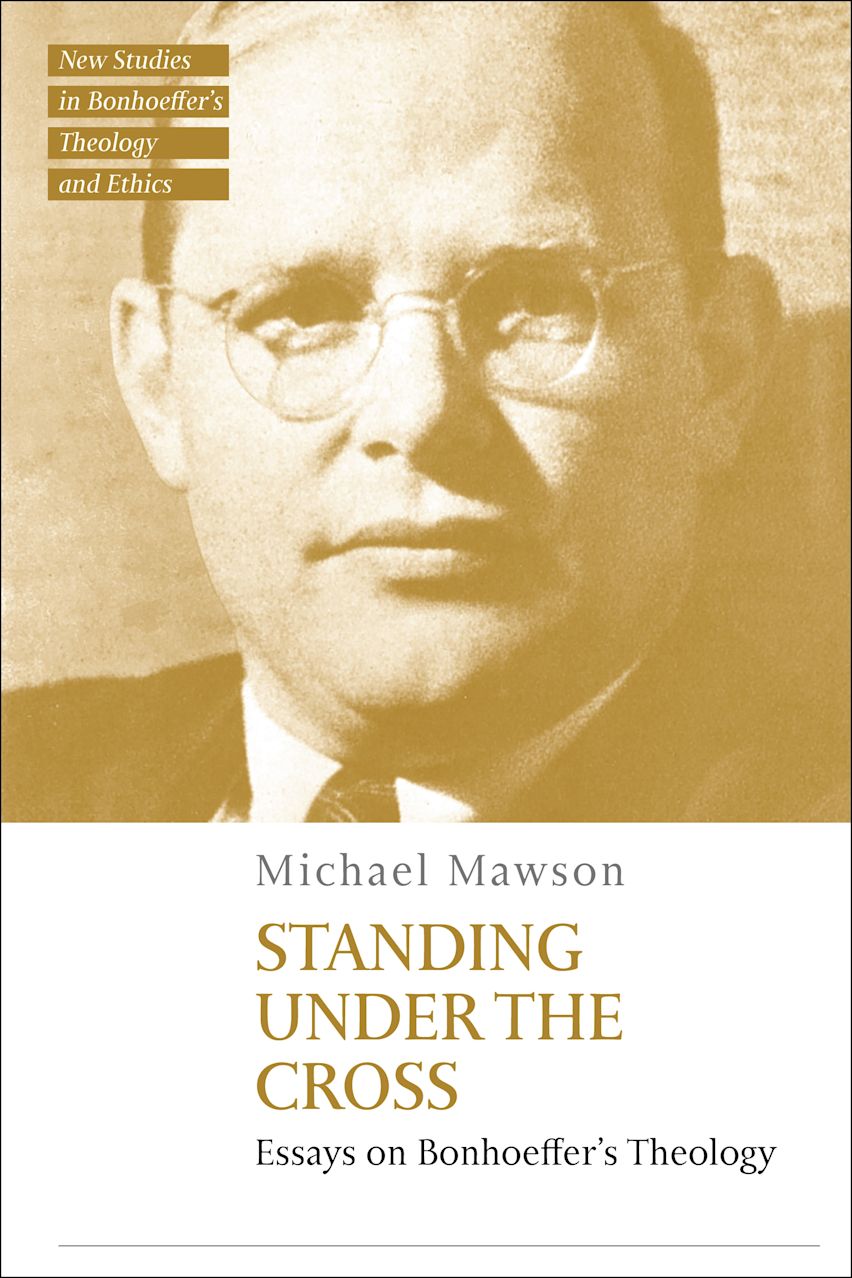
Michael Mawson’s Standing Under the Cross features several essays about Dietrich Bonhoeffer’s theology. It’s been a fascinating read. I was struck, however, by one essay that reads like an outlier. “Lutheran or Lutherish: Engaging Michael DeJonge on Bonhoeffer’s Reception of Luther” seeks to engage with Michael DeJonge’s Bonhoeffer’s Reception of Luther (reviewed by me here) and argue, at least in part, that there needs to be more complexity regarding Bonhoeffer’s relationship with Lutheranism than DeJonge presents. I found this essay an outlier–and perplexing–because Mawson himself cites Luther in conjunction with Bonhoeffer more than 20 times outside of this essay, which certainly lends itself to the interpretation of seeing Bonhoeffer as consciously Lutheran.
At the outset, I must note it is possible there is some subtlety to Mawson’s argument I’m missing. Following DeJonge, Mawson engages with Alasdair MacIntyre’s definitions of tradition, and draws from that a different conclusion–that Bonhoeffer should be approached to see “whether there are other, less determinate and more fluid ways of attending to this presence, of framing Bonhoeffer’s complex reception of Luther” (70). Interpreting this conclusion is difficult. Is Mawson saying that we need to view Bonhoeffer more along “Lutherish” lines than “Lutheran” ones–the latter being DeJonge’s claim? Or is he merely saying we ought to allow for broader influence on Bonhoeffer than Lutheranism?
If the latter, the point doesn’t actually seem to be outside of DeJonge’s purview either. While DeJonge certainly argues that Bonhoeffer is “consciously” Lutheran, that doesn’t preclude other influences. One can be Lutheran and still be influenced by and interacting with other authors of your own time. Mawson notes Hegel and Nietzsche as others with whom Bonhoeffer interacts (68). But again, this is hardly precluded by saying Bonhoeffer was Lutheran.
Mawson also makes some slight points about how Bonhoeffer refers to himself as Evangelical first, rather than Lutheran (67)–but the German Lutheran church referred to itself as Evangelical, anyway. Additionally, Mawson criticizes DeJonge for framing the debate as between Lutheran and Reformed positions. DeJonge’s complaint about scholars not paying enough attention to Bonhoeffer as Lutheran leading to misinterpretations of Bonhoeffer is counted by Mawson’s question: “does… the very existence of such diverse readings (and misreadings) itself complicate attempts to organize and stabilize Bonhoeffer theology as straightforwardly inside of ‘the Lutheran tradition’?” (69). I would argue that such diverse readings and misreadings does not do that at all. The fact that death of God theologians glommed onto Bonhoeffer’s works to extract “religionless Christianity” as meaning the same as “God is dead” hardly means we have to take as seriously the idea that Bonhoeffer might have believed God is dead as we do his stance on the theologia crucis (theology of the cross) which he consistently taught through his life. Diversity of opinion or interpretation does not entail diversity of the thing itself.
I already noted some confusion as well about Mawson’s own writings related to Bonhoeffer and Luther. Right before this essay, Mawson offered up two essays on Bonhoeffer’s view of Scripture and Bonhoeffer on discipleship, respectively, which heavily cite Luther in context of Bonhoeffer’s own view. Indeed, in the latter essay Mawson himself concludes by linking the theologia crucis with Bonhoeffer and Lutheranism specifically, not even bothering to distinguish between the Lutheran view and Bonhoeffer’s (see 58). Apart from all of this, though, looking at Bonhoeffer’s own works it becomes incredibly difficult to take seriously the notion that Bonhoeffer was anything but Lutheran. That doesn’t preclude him having other influences, advancing ideas that critiqued some parts of Lutheranism, or anything of the sort. But it does mean that reading Bonhoeffer correctly means reading him as a Lutheran pastor, which he was.
Just a few examples can serve to demonstrate Bonhoeffer’s deep commitment to Lutheranism. Bonhoeffer actively sought to catechize students within Lutheran traditions, including writing a catechism for students which closely followed Luther’s own catechism. Bonhoeffer’s discussion of the extra Calvinisticum includes a critique of Lutheran attempts to ground the counter to Calvinistic/Reformed doctrine in the concept of ubiquity precisely because Bonhoeffer argues that attempting to answer the Calvinist critique abandons the Lutheran answer which can simply be that Christ promised His presence and to leave it at that. Bonhoeffer defends infant baptism in more than one place in his works (for example in DBWE 14:829-830). He grounds the church on word and sacrament–the very way that Luther speaks of the church (again DBWE 14:829). He cites Luther more than any other theologian or scholar, and does so many, many times simply to settle the answer to a question such as saying [I paraphrase here] “Luther wrote [x]” and letting that settle the matter. He rarely critiques anything of Luther, rather citing Luther almost always in supporting a point or merely to cite something only to elucidate it afterwards. Mawson himself notes Bonhoeffer’s incredibly close interpretations of the theologia crucis–the very concept Luther wielded to differentiate himself from other theologians. Again, this isn’t a broader Christian concept but one that was explicitly and repeatedly taught and used by Martin Luther himself and one that Bonhoeffer cites again and again throughout his work such that it became the grounding for his notion that “only the suffering God can help.” Bonhoeffer doesn’t cite the Lutheran confessions as often as Luther, but when he does it is always done positively. For example, Bonhoeffer, after quoting the Formula of Concord, wrote: “The ‘expediency’ of any given church regulation is thus to be gauged solely by its accordance with the confessions. Only such accordance with the confessions is expedient for the church-community” (DBWE 14:704). How can one possibly read this passage, in which Bonhoeffer explicitly states that the way to judge a church regulation must be only in accordance to the Lutheran confessions–and he must mean Lutheran specifically because he just cited the Formula of Concord!
Examples could be multiplied ad nauseum, and DeJonge has done good work doing so, along with a handful of other authors who have put in the legwork to show that reading Bonhoeffer correctly means reading him as a Lutheran. I add my voice to this chorus, and as much as I enjoy Mawson’s work, I have to strongly question this specific essay. It is impossible to rightly interpret Bonhoeffer apart from realizing that he is Lutheran. And doing so does damage to his theology. None of this is to say other influences are impossible; it simply means that Bonhoeffer himself followed the Lutheran Confessions and Luther, even while engaging with them in a constructive way.
Standing Under the Cross continues to be a thought-provoking work that has led me to much reflection on Bonhoeffer’s theology–and my own. I recommend it.
Links
Dietrich Bonhoeffer– read all my posts related to Bonhoeffer and his theology.
SDG.
——
The preceding post is the property of J.W. Wartick (apart from quotations, which are the property of their respective owners, and works of art as credited; images are often freely available to the public and J.W. Wartick makes no claims of owning rights to the images unless he makes that explicit) and should not be reproduced in part or in whole without the expressed consent of the author. All content on this site is the property of J.W. Wartick and is made available for individual and personal usage. If you cite from these documents, whether for personal or professional purposes, please give appropriate citation with both the name of the author (J.W. Wartick) and a link to the original URL. If you’d like to repost a post, you may do so, provided you show less than half of the original post on your own site and link to the original post for the rest. You must also appropriately cite the post as noted above. This blog is protected by Creative Commons licensing. By viewing any part of this site, you are agreeing to this usage policy.
The Bible as Human word and God’s word in Bonhoeffer- God’s Word as “other than” and historically bound
I have said many times that the Lutheran view of the Bible is actually antithetical to doctrines like inerrancy. I say that for a number of reasons. The first is that reading Luther commentating on things like the book of James makes it very difficult to think that he would have held to inerrancy. But more concretely, I make this claim because Lutheran theology affirms that the Bible is both human word and God’s word. And as human word, it can indeed have error, even as this doesn’t undermine our ability to use the Scripture as normative for our faith.
Such a claim seems odd to outsiders and even insiders like me who grew up believing that one had to affirm inerrancy of Scripture or just throw the whole thing out. How could one affirm both that the Bible could have error and still take it as authoritative? Analogies could be made here (such as knowing a rulebook for a game has a misprint or an error in it and still using it for the rules of a game–and one could make this even more complex, imagining a massive, rules-heavy game like a tabletop role-playing game and how often those do have some foibles with the rules, yet players manage to make entire masterpieces of storytelling and gaming despite those), but I also think it is good to look at what people write about Lutheran theology related to this issue.
Michael Mawson’s book, Standing Under the Cross: Essays on Bonhoeffer’s Theology is a thought-provoking collection of looks at Bonhoeffer’s views. In one essay, “Living in the forms of the word: Bonhoeffer and Franz Rosenzweig on the Apocalyptic Materiality of Scripture,” Mawson makes a series of points about Bonhoeffer’s view of scripture that hammers home what I was claiming above:
“…Bonhoeffer consistently understands the Bible as God’s word and witness to Christ… from our side we are to attend to these texts as the place where God claims us and directs us towards Christ.
“On the one hand, this suggests that attending to the Bible as God’s word requires affirming the alterity of the biblical texts. In these texts, God comes to us and encounters us from without… there is always a sense in which the texts themselves stand over against us. As God’s word and witness, they continually exceed and disrupt our best attempts to interpret and make sense of them…
“On the other hand, Bonhoeffer is clear that reading the Bible as God’s word and witness – in its alterity – in no way undermines its status as a set of fully human and historical texts… God’s word remains bound to human history and language. As Bonhoeffer continues, ‘the human word does not cease being temporeally bound and transient by becoming God’s word.’ The Bible, as God’s word and witness to Christ, is bound to all the ambiguities and contingencies of history. We encounter God only in the unstable and fragile histories and lanugage of the Bible’s authors, not otherwise or more directly….” (41)
Mawson here notes what Bonhoeffer holds, apparently without internal tension: that the Bible can both be seen as “other than” us, as coming to us from without, while also being bound within human history, understanding, and language. And as such, the Bible cannot be embraced as some kind of systematically affirmed inerrant text. Indeed, that would be to effectively di-divinize Scripture, making it something that could be wholly analyzed and understood by human endeavor. And this point absolutely must be emphasized, for Bonhoeffer’s–and Luther’s–theology, God is found in weakness. This is, again, the theologica crucis – the theology of the Cross. God is experienced as the God who suffers, who comes to us in weakness, not in dominance and conquest. And this is indeed reflected in God’s word being delivered to us as well, even in the form of human fragility and language.
Mawson makes this point again in a later chapter, entitled, “The Weakness of the Word and the Reality of God: Bonhoeffer’s Grammar of Worldly Living.” In this chapter, Mawson’s focus is more upon Christian discipleship, but here he again affirms Bonhoeffer’s Lutheran perspective as seeing God in weakness, specifically in the Scriptures themselves: “As [for Bonhoeffer, so] with Luther… God’s presence in revelation – in Christ and through Scripture – remains a hidden presence. In both cases, GOd’s revelation remains concealed under the form of fragility and weakness… God’s word is ineluctably tied to human suffering and weakness” (56).
Therefore, for both Bonhoeffer and Luther (certainly excellent representatives of the Lutheran perspective on Scripture), Scripture as God’s word does not and indeed cannot entail that is perfection in whatever human terms we come up with–inerrant, for example. Instead, God is found exactly in human weakness and fragility. Scripture itself, due to it being written by humans, must remain bound historically, linguistically, and otherwise to humanity, despite still being God’s word.
Again, this may seem paradoxical to people from traditions that firmly affirm inerrancy. But Luther and Bonhoeffer would, as can be seen from their writings on human weakness in Scripture, see inerrancy as a human effort to make comprehensible Scripture and therefore put God in a box, rather than to elevate Scripture. Ironically, by clinging desperately to a human-made definition of what the word of God must be in order to remain the word of God, they have put that very word under human authority.
Links
Dietrich Bonhoeffer– read all my posts related to Bonhoeffer and his theology.
SDG.
——
The preceding post is the property of J.W. Wartick (apart from quotations, which are the property of their respective owners, and works of art as credited; images are often freely available to the public and J.W. Wartick makes no claims of owning rights to the images unless he makes that explicit) and should not be reproduced in part or in whole without the expressed consent of the author. All content on this site is the property of J.W. Wartick and is made available for individual and personal usage. If you cite from these documents, whether for personal or professional purposes, please give appropriate citation with both the name of the author (J.W. Wartick) and a link to the original URL. If you’d like to repost a post, you may do so, provided you show less than half of the original post on your own site and link to the original post for the rest. You must also appropriately cite the post as noted above. This blog is protected by Creative Commons licensing. By viewing any part of this site, you are agreeing to this usage policy.
“Only a Suffering God can help” – Dietrich Bonhoeffer’s Theologia Crucis
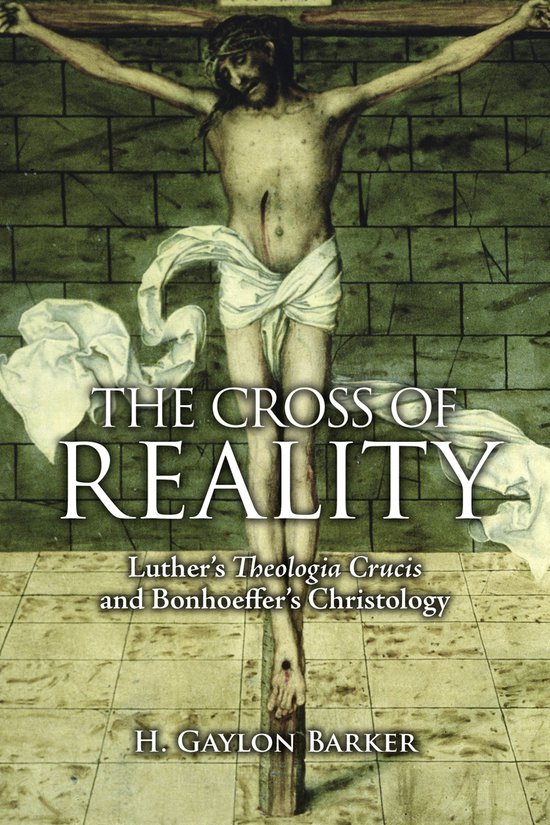
Dietrich Bonhoeffer’s theology is heavily based upon the Theologia Crucis or the Theology of the Cross which he inherited from Martin Luther. H. Gaylon Barker’s The Cross of Reality is a book-length exposition of this important aspect of Bonhoeffer’s theology that brings an enormous amount of material and analysis to bear.
Barker’s analysis of Bonhoeffer’s theology of the cross is worth quoting at length:
“One problem… religion produces , from Bonhoeffer’s perspective, is that it plays on human weakness. In the world in which people live out their lives… this means a disjuncture or contradiction. Daily people rely on their strengths, in which they don’t need God. In practical terms, therefore, God is pushed to the margins, turned to only as a ‘stop-gap’ when other sources have given out. Then God, perceived as a deus ex machina, is brought in to rescue people. This, in turn, leads to the religious conception of God and religion in general as being only partially necessary; they are not essential, but peripheral. All of this leads to intellectual dishonesty, which is not so unlike luther’s description of the theology of glory. The strength of the theology of the cross, on the other hand, is that it calls a thing what it is. It is honest about both God and the world, thereby enabling one to live in the world without seeking recourse in heavenly or escapist realigous practices. Additionally, such religious thinking leads to the creation of a God to suit human needs… For Bonhoeffer and Luther, however, the real God is one who doesn’t appear only in the form we might expect, one whom we can incorporate into our worldview or lifestyle. God is one who is always beyond our grasp, but at the same time is a hidden presence in the world” (394).
Barker highlights Bonhoeffer’s own words to make this point extremely clear:
“[W]e have to live in the world… [O]ur coming of age leads us to a truer recognition of our situation before God. God would have us know that we must live as those who manage their lives without God. The same God who is with us is the God who forsakes us (Mark 15:34! [“And at three in the afternoon Jesus cried out in a loud voice, ‘Eloi, Eloi, lema sabachthani?‘ (which means ‘My God, my God, why have you forsaken me?’)”]). The same God who makes us to live in the world without the working hypothesis of God is the God before whom we stand continually. Before God, and with God, we live without God. God consents to be pushed out of the world and onto the cross; God is weak and powerless in the world and in precisely this way, and only so, is at our side and helps us. Matt. 8:17 [“This was to fulfill what was spoken through the prophet Isaiah: ‘He took up our infirmities and bore our diseases.’] makes it quite clear that Christ helps us not by virtue of his omnipotence but rather by virtue of his weakness and suffering!” [388, quoted from DBWE 8:478-479]
Thus, for Bonhoeffer, God is not there as the divine vending machine, there to send out blessings when needed or called upon due to human inability. Instead, God enters into the world and by suffering, alongside us, helps us.
Bonhoeffer put it thus: “Only a suffering God can help.” Bonhoeffer, seeing the world as it was in his time, during the reign of terror of the Nazis, imprisoned, knew and saw the evils of humanity. And he knew that in seeing this, theodicy would fail. A God who worked only through omnipotence and only where human capacities failed was a God that did not exist. Instead, the God who took on our suffering and came into the world, who “by viture of his weakness and suffering” came to save us, is the only one who acts in the world–in reality.
Only a suffering God can help.
Links
Dietrich Bonhoeffer– read all my posts related to Bonhoeffer and his theology.
SDG.
——
The preceding post is the property of J.W. Wartick (apart from quotations, which are the property of their respective owners, and works of art as credited; images are often freely available to the public and J.W. Wartick makes no claims of owning rights to the images unless he makes that explicit) and should not be reproduced in part or in whole without the expressed consent of the author. All content on this site is the property of J.W. Wartick and is made available for individual and personal usage. If you cite from these documents, whether for personal or professional purposes, please give appropriate citation with both the name of the author (J.W. Wartick) and a link to the original URL. If you’d like to repost a post, you may do so, provided you show less than half of the original post on your own site and link to the original post for the rest. You must also appropriately cite the post as noted above. This blog is protected by Creative Commons licensing. By viewing any part of this site, you are agreeing to this usage policy.
“Bonhoeffer and the Biosciences: An Initial Exploration” edited by Wüstenberg et al.

One of the wonderful things about burgeoning interest in Dietrich Bonhoeffer’s ethics, life, and theology is the way insights from him are being applied to an increasing number of fields and topics. Bonhoeffer and the Biosciences: An Initial Exploration edited by Wüstenberg, Heuser, and Hornung seeks to explore aspects of Bonhoeffer’s thought and life seeking insight from him in the realm of biosciences. What are the biosciences explored here? Topics like posthumanism, in vitro fertilization, abortion, ability and disability, and more are touched upon through the book.
The subtitle of “an initial exploration” is quite apt. The essays included here rarely provide what even feels like a rudimentary conclusion related to Bonhoeffer and biosciences. Instead, the essays are more akin to prompts for further exploration. And what prompts they are! Nearly every chapter brought numerous intriguing insights to bear and great scope for future research.
One example is in the discussion of genetic enhancement–what would this do to distributions of power and equality; what would enhancements mean about our desires; and how do we even make moral judgments about these (questions adapted from p.86)? Then there’s a chapter which ultimately calls for seeing caregivers and medical providers as being part of the “freedom for” the sake of the other (106-107). How could this help get applied to the Lutheran doctrine of vocation, which Bonhoeffer surely agreed with. “Caring for human life at its most vulnerable is… a practice that bears a unique promise: the promise to reconnect us with the truth and depths of our creaturely existence…” (106). Such insights are fascinating, and found throughout the book.
Bonhoeffer and the Biosciences: An Initial Exploration is a fantastic read, though it is one that leaves readers wanting more. Students of Bonhoeffer would do well to use it as a springboard for more discussion and exploration.
Links
Dietrich Bonhoeffer– read all my posts related to Bonhoeffer and his theology.
Be sure to check out the page for this site on Facebook and Twitter for discussion of posts, links to other pages of interest, random talk about theology/philosophy/apologetics/movies and more!
SDG.
——
The preceding post is the property of J.W. Wartick (apart from quotations, which are the property of their respective owners, and works of art as credited; images are often freely available to the public and J.W. Wartick makes no claims of owning rights to the images unless he makes that explicit) and should not be reproduced in part or in whole without the expressed consent of the author. All content on this site is the property of J.W. Wartick and is made available for individual and personal usage. If you cite from these documents, whether for personal or professional purposes, please give appropriate citation with both the name of the author (J.W. Wartick) and a link to the original URL. If you’d like to repost a post, you may do so, provided you show less than half of the original post on your own site and link to the original post for the rest. You must also appropriately cite the post as noted above. This blog is protected by Creative Commons licensing. By viewing any part of this site, you are agreeing to this usage policy.
Bonhoeffer’s Catechesis: Foundations for his Lutheranism and Religionlessness

Dietrich Bonhoeffer was deeply involved in educating youths. He saw the need for it and was apparently quite skilled, building a reputation in Barcelona for caring for a rambunctious group of students. When teaching at the illegal seminary at Finkenwalde, one of the many subjects he touched upon was catechesis–basic Christian education. Bonhoeffer’s teaching on catechesis revealed that his thoughts on religionless Christianity were already quite embedded at this middle stage of his theology, and that his staunch Lutheranism held throughout his life.
When starting his lectures on catechesis, he began with some commentary on Christian instruction. However, this commentary was fronted with the notion that Christian instruction is embedded in proclamation. Conceptually, this is because those involved in catechesis have been baptized, and, due to their baptism, they are already Christian. Thus, Bonhoeffer declares that, related to the education of young people: “the struggle, the victory belongs to the church because God has long since brought the children into the church through baptism. Whereas the state must first make itself master [Herr], the church proclaims the one who is Lord [Herr].” Bonhoeffer goes on to clarify, “Christian education begins where all other education ceases: What is essential has already happened. You have already been taken care of. You are the baptized church-community claimed by God” (DBWE 14:538).
Because of the status of those learning from the church as the already baptized, Bonhoeffer argues, the church can proclaim from the start the reality that they are already in the church community. Baptism has made this happen, by the power of the Spirit. It would be hard to imagine a more Lutheran understanding of the starting point of Christian instruction than this. For Bonhoeffer, baptism was not an abstraction or a symbol: it was a very real status change of the person being baptized as becoming part of the church-community.
The same lecture series shows Bonhoeffer’s thoughts on religionless Christianity were not merely a late development while in prison. While commenting on “What makes Christian education and instruction possible…” Bonhoeffer notes that it is “baptism and justification” (DBWE 14:539). This obviously hearkens back to the discussion above; baptism as a reality-changing sacrament. But he goes on: “People may well argue about whether religion can be taught. Religion is that which comes from the inside; Christ is that which comes from the outside, can be taught, and must be taught. Christianity is doctrine related to a certain form of existence (speech and life!)” (ibid, 539-540).
Bonhoeffer here links religion with that that comes from within–something he not-infrequently links to idol-building. Religion in his own time is what allowed the German Christian movement to join and overwhelmingly support the Reich Church of the Nazis. By contrast, Christ comes from the outside, through baptism, and can and must be taught. Our religious ways are attitudes we shape and create, but Christ, the God-reality, comes from outside of us and must be proclaimed. And, ironically, this leads to true foundations of doctrine that entail a “certain form of existence” which Bonhoeffer clearly links to the reality of everyday life but also to resistance and calls to repentance for the church itself.
In this way, we can see the foundations, at the least, are here in Bonhoeffer’s thought for religionless Christianity. The fact that there is a contrast between religion and Christ is quite evident. The link between Christ, word, and sacrament is fully there. So while some may claim Bonoheffer’s religionless Christianity is anti-ritual, this cannot be further from the truth. Here, Bonhoeffer very clearly links religionlessness to sacrament and true faith. For Bonhoeffer, what signifies religion is not traditions or sacrament, but rather that which comes from within us and causes us to create our idols.
Links
Dietrich Bonhoeffer– read all my posts related to Bonhoeffer and his theology.
Be sure to check out the page for this site on Facebook and Twitter for discussion of posts, links to other pages of interest, random talk about theology/philosophy/apologetics/movies and more!
SDG.
——
The preceding post is the property of J.W. Wartick (apart from quotations, which are the property of their respective owners, and works of art as credited; images are often freely available to the public and J.W. Wartick makes no claims of owning rights to the images unless he makes that explicit) and should not be reproduced in part or in whole without the expressed consent of the author. All content on this site is the property of J.W. Wartick and is made available for individual and personal usage. If you cite from these documents, whether for personal or professional purposes, please give appropriate citation with both the name of the author (J.W. Wartick) and a link to the original URL. If you’d like to repost a post, you may do so, provided you show less than half of the original post on your own site and link to the original post for the rest. You must also appropriately cite the post as noted above. This blog is protected by Creative Commons licensing. By viewing any part of this site, you are agreeing to this usage policy.
Now Reading: “Twisted Cross: The German Christian Movement inthe Third Reich” by Doris L. Bergen
“To me, the German Christian movement embodies a moral and spiritual dilemma I associate with my own religious questions: What is the value of religion, and in particular of Christianity, if it provides no defense against brutality and even can become a willing participant in genocide.”
Doris L. Bergen, Twisted Cross, Prologue
The German churches capitulated to Nazism. This is an historical fact. While there were notable exceptions–Dietrich Bonhoeffer is of special interest to me–the fact remains that a majority of Christians in Germany not only gave in but also willingly supported the Reich Church. In our own times in the United States, increasing calls for nationalism–not just patriotism–being united with Christianity provide eerie and alarming echoes of the same arguments used by the Reich-supporting German Christian movement.
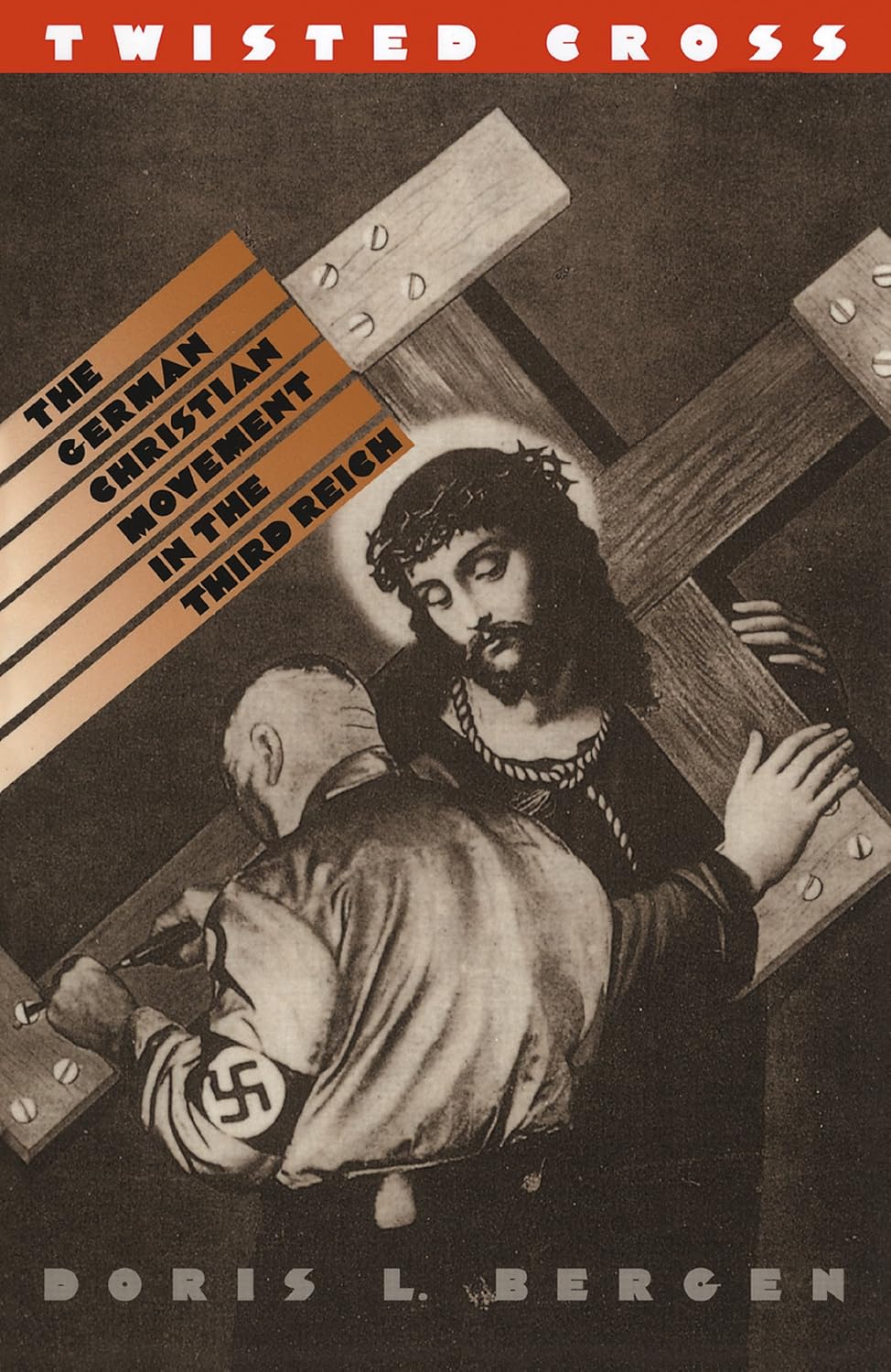
Part of my studies with Dietrich Bonhoeffer include reading works about the times and places related to his work, and Twisted Cross: The German Christian Movement in the Third Reich by Doris L. Bergen is a work I am re-reading as part of that.
The cover image is an illustration by a German communist in 1933 who was opposing the unity of Nazism and Christianity. He, John Heartfield, wrote a few captions, including “The Cross Was Not Yet Heavy Enough.”
There’s a great quote from Bonhoeffer to lead it off: “Those who claim to be building up the church are, without a doubt, already at work on its destruction; unintentionally and unknowingly, they will construct a temple to idols.”
These questions resonate so much with me. Why has the church today seemingly chased after idols of power and prestige in the political environment? What does that say about the power (or powerlessness?) of Christianity and religion? I look forward to re-reading this book and seeking more answers.
SDG.
Bonhoeffer and the Challenge of Ecumenism
Ecumenism–the work of bringing unity to worldwide Christianity–is a constantly challenging work throughout the history of the church. Dietrich Bonhoeffer was deeply involved in ecumenical movements in his own time. One fascinating aspect of this is that while Bonhoeffer worked for ecumenism, he also was quite clear that the German Christian Church, which had been taken over by the Nazis, was no longer a Christian church and could not be designated as such. In calling out the German Christians, Bonhoeffer presented one of the great challenges of ecumenism: how to define “in” or “out” when it comes to Christianity.
The obvious and immediate objection here, of course, is that the German Christian church was actually being run by Nazis. Historical retrospect with 20/20 vision allows us to say that clearly, such a church had indeed lost the Gospel of our Lord Jesus Christ. However, at the time, such historical vision did not exist. Instead, we can see some of the challenges inherent in ecumenical work in a fascinating exchange Bonhoeffer had with Canon Leonard Hodgson[1]. The exchange can be found in Dietrich Bonhoeffer’s Works in English, Volume 14: Theological Education at Finkenwalede: 1935-1937. Bonhoeffer was invited by Hodgson in 1935 to come to the World Council of Churches as a visitor to the meeting of the Continuation Committee. Bonhoeffer declined, writing, “I should very much like to attend the meeting. But there is first of all the question if representativies of the Reichskirchenregierung [Reich Church Government (of the Nazi-sanctioned German Christian Church)] will be present, which would make it impossible for me to come” (DBWE 14, 68). Hodgson wrote back, imploring Bonhoeffer to attend. After noting that representatives of the German Christian church would be attending, Hodgson wrote, “I think you will understand our position when I say that we cannot, as a Movement [the World Council of Churches and the ecumenical movement], exclude the representatives of any Church which ‘accepts our Lord Jesus Christ as God and Saviour.’ Right from the start, there has been a general invitation to all such churches, and we cannot arrogate to ourselves the right to discriminate between them…” (Ibid, 69).
Defining a Christian church as one which “accepts our Lord Jesus Christ as God and Savior” seems like a reasonable step, especially within an ecumenical movement. But is it enough? That must always be the lingering question, and I’m not sure it is one I can answer. Bonhoeffer, however, answered Hodgson directly. After thanking Hodgson for the repeated invitation to attend, he wrote, “Can there be anything finer and more promising to a Christian pastor and teacher than to co-operate in the preparation for a great oecumenical[2] synod…?” But, then he went on to note that the Confessional Church in Germany did not believe the German Christian church did in fact believe that Jesus Christ is God and Savior. Wrote Bonhoeffer, “There may be single representatives…. who propound a theology which is to be called a Christian theology… But the teaching as well as the action of the responsible leaders of the Reich Church has clearly proved that this church does no longer serve Christ but that it serves the Antichrist… The Reich Church…. continues to betray the one Lord Jesus Christ, for no man can serve two masters…” (DBWE 14, 71-72).
It is hardly possible to issue a more direct and explicit statement than Bonhoeffer did regarding the status of the German Christian Church. He simply asserted: it serves the Antichrist. He went on to note the Confessional Church’s condemnation of the German Christian Church and some specific points thereof.
Hodgson, however, persisted. And his letter is one that highlights so many difficulties with ecumenism. Before diving in further, it is worth noting I am in favor of ecumenism, generally. Just as Bonhoeffer quoted Jesus’s words in John 17:21 to note that Christ wishes all of His followers to be one; so we should also wish for that and work towards it. However, where do lines get drawn, if at all? And surely, a church being taken over by a Nazi state is enough to draw the line? But even so, the historical difficulty of doing so, reflected in the words of Hodgson, should give us some fuel for thought in our own time.
Hodgson countered first by noting the 400+ years of the Ecumenical Movement, always seeking to unite the churches that had been separated. The Movement itself, Hodgson argued, must never act in behalf of individual church bodies; instead it worked as a kind of outside guiding body to bring those individual churches together. Hodgson highlighted that acceptance of Jesus Christ as God and Savior is the “one and only qualification” for a Christian church and that “the Movement has never taken upon itself to decide which churches conform to this definition and which do not” (DBWE 14, 78). He raised a neutral example of a Czechoslovakian National Church and internal debates with others over whether that church was Trinitarian or Unitarian. Turning to the Confessional and Reich church in Germany, Hodgson noted that the former appeared to have stated that the latter no longer accepted the sole criterion required by ecumenism. However, he also argued that the Reich church did not seem to see itself as outside the bounds of that confession; and who is the Ecumenical Movement to arbitrate such disagreements (Ibid)? After all, if they took up the question of the Confessional vs. Reich Church, where does it end? Could not various American churches raise charges against each other that, even while denying such a denial existed, one church does not really believe in Jesus Christ as God and Savior? Wrote Hodgson, “If we once begin doing this kind of thing, would there be any end to it?” (Ibid, 79). Finally, Hodgson wrote that the Movement doesn’t necessitate setting aside all differences. Instead, it allowed for people from different churches to stand side-by-side and even highlight differences; not with the goal of eliminating or washing them over, but with the goal of understanding and to “speak the truth in love” (Ibid, 80).
Bonhoeffer wouldn’t attend the conference, and while he would reach out to Hodgson four years later in 1939, Bonhoeffer would again be met with the kind of “open to interpretation” answer Hodgson gave in the letters of 1935.
This fascinating historical insight into arguing over the inclusion (or not) of a church literally overtaken by Nazis should serve as at least a partial warning to those interested in ecumenism. And, again, I am largely favorable to the idea. But is it possible that the definition defended by Hodgson is too broad? Or, is it possible that Bonhoeffer’s own certainty was too strong? I don’t think the latter is true. It should be possible for someone to look at a church body and say “the teaching as well as the action” of some church body, Christian leader, or whatever can be defined as no longer reflecting Christ as God and Savior. But how does one go about doing that? And how much should a body like the World Council of Churches stand back from seemingly intramural conflict?
Surely in today’s era, there are American churches that would label others as outside the bounds of Christianity or serving the Antichrist. Anti-LGBTQ+ church bodies might say that affirming church bodies are un- or anti-Christian and vice versa. The rise of Christian Nationalism begs the question of how one can serve two masters–the Nation State and Christ. The prominent sacrifices of orthopraxy for the sake of purported orthodoxy could yield countless other difficulties even as those who claim orthodoxy for themselves argue the contrary.
All of this is to highlight what is a very frustrating situation in which we find ourselves. It is one in which we cannot easily navigate our Lord’s wishes that we might truly be one. One temptation is to give it all up and say we may just have to wait for the eschatological future in which Christ will be all in all before any of this happens. But is it worth just giving up? I don’t think that’s the case, either. Instead, I think it is worth seeing this back-and-forth between Bonhoeffer and Hodgson about a church literally overrun by Nazis as a warning. What is confessed with lips must also be done in deed. What that means for ecumenism is something we must work out with fear and trembling.
[1] Fun fact- Hodgson unsuccessfully proposed to Dorothy L. Sayers. I couldn’t see that on Wikipedia and not share it.
[2] Simply an alternate spelling of ecumenical.
All Links to Amazon are Affiliates links
Links
Dietrich Bonhoeffer– read all my posts related to Bonhoeffer and his theology.
Be sure to check out the page for this site on Facebook and Twitter for discussion of posts, links to other pages of interest, random talk about theology/philosophy/apologetics/movies and more!
SDG.
——
The preceding post is the property of J.W. Wartick (apart from quotations, which are the property of their respective owners, and works of art as credited; images are often freely available to the public and J.W. Wartick makes no claims of owning rights to the images unless he makes that explicit) and should not be reproduced in part or in whole without the expressed consent of the author. All content on this site is the property of J.W. Wartick and is made available for individual and personal usage. If you cite from these documents, whether for personal or professional purposes, please give appropriate citation with both the name of the author (J.W. Wartick) and a link to the original URL. If you’d like to repost a post, you may do so, provided you show less than half of the original post on your own site and link to the original post for the rest. You must also appropriately cite the post as noted above. This blog is protected by Creative Commons licensing. By viewing any part of this site, you are agreeing to this usage policy.
“Bearing Sin as Church Community: Bonhoeffer’s Harmartiology” by Hyun Joo Kim- A fascinating look at the doctrine of sin through Bonhoeffer’s theology
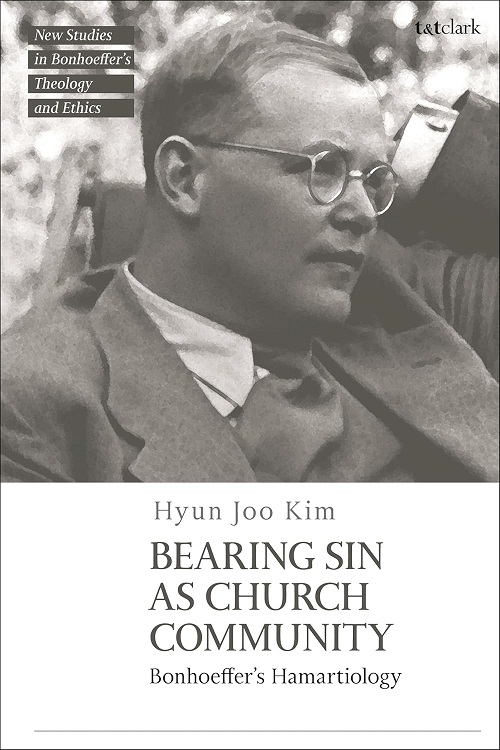
Dietrich Bonhoeffer’s theology continues to contribute enormously to discussions of theology today. What is especially rewarding about the work being done on Bonhoeffer’s corpus is finding topics that haven’t been explored as deeply as others. Hyun Joo Kim’s Bearing Sin as Church Community: Bonhoeffer’s Harmartiology specifically explores Bonhoeffer’s theology for the doctrine of sin, and the book richly rewards careful reading.
One of the central beliefs of Lutheranism, Catholicism, Calvinism, and several other branches of Christianity is that of original sin. For my own part, I find it an incredibly fruitful doctrine when contemplating the state of the world. Humans are incredible adept and finding imaginative ways to bring harm to each other. The horrors of the world are immense, and for me, one way to explain humanity’s awfulness to itself is to hold to a notion of original sin. Bonhoeffer’s views, by Kim, also make the position of original sin less incredible to believe, particularly in regards to explaining how it works. Instead of being linked to a (likely non-extant) original human couple, or being passed along through intercourse, Bonhoeffer’s view makes original sin and the Fall linked to human community and brings it into his ecclesiology. It all helps lend itself to his broader ethical stance, while still preserving the Lutheran view of original sin and guilt.
Before diving into Bonhoeffer’s doctrine of sin (harmartiology), Kim dives into the Augustinian doctrine of original sin. Augustine’s doctrine of original sin is closely linked with the notion of concupiscence–original sin as being transferred through the act of intercourse. Obviously, there is much more to it, but for Augustine, explaining original sin eventually boiled down to a kind of generational passing down through the act of intercourse itself. This saddled the doctrine of original sin with quite a bit of theological and other baggage. Kim then outlines Luther’s move from Augustinian original sin to a shift of seeing original sin integrated within Luther’s Christocentric theology. In essence, Luther’s focus on Christocentrism leads to a holistic theology that, while maintaining several aspects of Augustine’s view of original sin, centers Christ even in the doctrine of original sin. Luther’s view already started driving a wedge between concupiscence and original sin because while he apparently viewed the former as an essential aspect of transmitting the latter, he also held that original sin is forgiven in Baptism but that concupiscence remains a powerful influence on humankind (43).
Next, Kim turns to Bonhoeffer’s view of original sin. This includes a rejection of concupiscence as the basis for original sin. Rather than framing original sin in the “the biological and involuntary transmission of culpability…” Bonhoeffer frames original sin in “the relational and ethical bearing of the sin of others” (71). One of the main aspects of Bonhoeffer’s ethic is that the Christian has freedom for the other, and in this case, his doctrine of sin echoes that but in the bearing of sin for the other; it remains an alien guilt imputed, but a guilt nonetheless. Bonhoeffer’s reflection on original sin moves the alien culpability of Augustine’s doctrine of original sin from the sovereignty of God and to the church community. For Bonhoeffer, “the culpability of Adam is not biologically inherited; however, it is inseprably related to all human beings individually and corporately by the universal sinfulness after the fall” (72). This has some relation to Orthodox understandings of the fall [so far as I know from thinkers like Richard Swinburne–I admit very little direct knowledge of Orthodox teaching on the topic]. Bonhoeffer’s move, however, neither requires an original couple from whom all humanity is descended, such that the culpability can be passed down from one to another like a genetic lineage; nor does it need a specific means by which the original sin can be passed along. By sidestepping these two issues, essentially assigning guilt not to the individual through inheritance but rather through the very nature of humanity as sinful beings, he avoids many of the modern challenges to original sin, such as the question of human evolution–despite this clearly not being in Bonhoeffer’s mind as he wrote about the doctrine.[1]
Kim does draw some distinctions between Bonhoeffer’s earlier thinking on the doctrine of sin and his later theology, but to me these largely seem to be things that could be reconciled together as a continuum of the same theology. And of course the whole story is not told simply through Bonhoeffer’s views on original sin. Quite a bit more is featured on Bonhoeffer’s thoughts on sin and Christian life and ethics. Kim pays careful attention to Bonhoeffer’s book Creation and Fall and his exegesis of the Genesis narratives here. Kim’s argument is that Creation and Fall exists in the same sphere as his other works, Sanctorum Communio and Act and Being, and as such, it focuses on communal personalism and still integrates aspects of Lutheran and Augustinian notions into the reading.
Bearing Sin as Church Community is an absolutely essential read for those wishing to dive deeply into Bonhoeffer’s theology. It also is an exceptionally powerful theological work that demands close and careful reading. It provides new ways forward in understanding some of the core doctrines of some branches of Christianity, and new challenges to those that do not hold those doctrines. Highly recommended.
Notes
[1] It seems fairly clear in reading Bonhoeffer’s corpus both that he was largely aware of scientific consensus on his day on various topics, which would have included the evolutionary lineage of humankind, and also that he was supremely unconcerned with scientific truths related to theology. For him, it seems, there was no conflict between Christianity and science unless Christians themselves decided to make such a conflict by purposely moving theology into the sphere of science (or vice versa) when that is an utterly inappropriate move. See, for example, his brief comments about science near the beginning of Creation and Fall.
All Links to Amazon are Affiliates links
Links
Dietrich Bonhoeffer– read all my posts related to Bonhoeffer and his theology.
Be sure to check out the page for this site on Facebook and Twitter for discussion of posts, links to other pages of interest, random talk about theology/philosophy/apologetics/movies and more!
SDG.
——
The preceding post is the property of J.W. Wartick (apart from quotations, which are the property of their respective owners, and works of art as credited; images are often freely available to the public and J.W. Wartick makes no claims of owning rights to the images unless he makes that explicit) and should not be reproduced in part or in whole without the expressed consent of the author. All content on this site is the property of J.W. Wartick and is made available for individual and personal usage. If you cite from these documents, whether for personal or professional purposes, please give appropriate citation with both the name of the author (J.W. Wartick) and a link to the original URL. If you’d like to repost a post, you may do so, provided you show less than half of the original post on your own site and link to the original post for the rest. You must also appropriately cite the post as noted above. This blog is protected by Creative Commons licensing. By viewing any part of this site, you are agreeing to this usage policy.

 J.W. Wartick - Reconstructing Faith