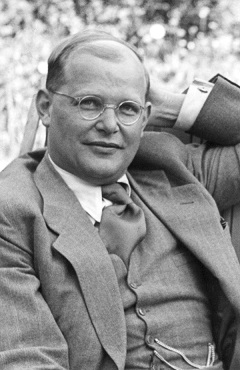
Dietrich Bonhoeffer
Really Recommended Posts 9/9/16- Zionism, Lewis on Medieval Literature, and more!
 Hello friends! I have gathered some links from around the web to share with you! Be sure to let the authors know if you find them interesting, and let me know what you think in the comments.
Notes on “Studies in Medieval and Renaissance Literature” by C.S. Lewis– Some interesting insights gleaned from Lewis’ work on writings of the period noted. Lewis was a fascinating literary critic, and these insights are worth reading through.
The Popular Bonhoeffer Quote that Isn’t in Bonhoeffer’s Works– One of the most popular quotes I’ve seen circulating from Dietrich Bonhoeffer may not actually be from Bonhoeffer. Check out this thorough investigation into finding the source for the quote. Be sure to let me know if you know of some actual citation from Bonhoeffer for the quote.
The New Christian Zionism- Introduction- Review- The beginning of a thorough look at a book I’ve also been in the process of reviewing, The New Christian Zionism.
Celebrating 50 Years of Star Trek– Check out the series of posts in which I collaborated with The Sci-Fi Christian to celebrate 50 years of Star Trek.
Book Review: “Bonhoeffer Speaks Today” by Mark Devine
 Mark Devine’s Bonhoeffer Speaks Today is a pithy summary of the doctrines of Dietrich Bonhoeffer and how they might be applicable now.
The book is organized around chapters that each focus on how Bonhoeffer’s thought might be applied to today. Within each chapter are sub-headings, sometimes as short as one paragraph, that look at specific aspects of his works or life to apply them now. The brevity of the book is one of its strengths. Often, stirring insights can be found in a section no longer than a few sentences. I think this shows both the depth and intricacy of Bonhoeffer’s own thought as well as the way Devine has arranged the book to highlight them.
There are two areas I’d like to critique in regards to the book. The first is that Bonhoeffer’s clear Lutheranism is ignored. Dietrich Bonhoeffer is clearly a Lutheran through-and-through with a commitment to orthodox Lutheran understanding of Baptism and the Lord’s Supper. To write of Bonhoeffer speaking today without incorporating his sacramental understanding which is so integral to his theology is to take away from Bonhoeffer much of his voice. The second criticism is that the language used throughout the book continues to use the archaic “man” to refer to “men and women” as well as other gendered language when it would be just as simple to make the language inclusive.
Bonhoeffer Speaks Today is full of practical theology from the writings of one of the most engaging theologians of the 19th Century. If you’re looking for an introduction to his thought, this is a good place to start. However, be aware that a central aspect of Bonhoeffer–his Lutheranism–is notably absent.
The Good
+Excellent brief introduction to Bonhoeffer’s life and context
+Filled with juicy quotations
+Many, many digestable insights
The Bad
-Does not use gender inclusive language
-No mention of Bonhoeffer’s Lutheranism
Links
Be sure to check out the page for this site on Facebook and Twitter for discussion of posts, links to other pages of interest, random talk about theology/philosophy/apologetics/movies and more!
Bonhoeffer’s Troubling Theology?- A response to an article on Dietrich Bonhoeffer’s theological perspectives– I look at an argument that Bonhoeffer’s theology is “troubling” to evangelicals and point out how much of it is merely a product of his Lutheran background.
Book Reviews– There are plenty more book reviews to read! Read like crazy! (Scroll down for more, and click at bottom for even more!)
Eclectic Theist– Check out my other blog for my writings on science fiction, history, fantasy movies, and more!
SDG.
——
The preceding post is the property of J.W. Wartick (apart from quotations, which are the property of their respective owners, and works of art as credited; images are often freely available to the public and J.W. Wartick makes no claims of owning rights to the images unless he makes that explicit) and should not be reproduced in part or in whole without the expressed consent of the author. All content on this site is the property of J.W. Wartick and is made available for individual and personal usage. If you cite from these documents, whether for personal or professional purposes, please give appropriate citation with both the name of the author (J.W. Wartick) and a link to the original URL. If you’d like to repost a post, you may do so, provided you show less than half of the original post on your own site and link to the original post for the rest. You must also appropriately cite the post as noted above. This blog is protected by Creative Commons licensing. By viewing any part of this site, you are agreeing to this usage policy.
Really Recommended Posts 4/22/16

A picture of a goldfinch I took. All rights reserved.
Hello dear readers! My apologies for missing this last week. It was a chaotic week and I was tired so I didn’t get around to the Really Recommended Posts. To make up for it, I brought together an awesome selection for you to read, dear friends. I also used a new picture for post this week. It’s spring, and I’ve been watching the goldfinches in my yard. It’s wonderful seeing them all over, and I got this okay shot of one sitting amongst dandelions. As always, be sure to let me know what you think of the posts, and let the authors know themselves.
A Look at the Apologetics of Paul– How did Paul defend the Christian faith? Here is an extensive look at the way Paul does apologetics. I think a careful reading of and interaction with this post would do anyone interested in apologetics good.
Was Bonhoeffer a Liberal?– Some evangelicals have recently taken aim at Dietrich Bonhoeffer to undermine his increasing influence. Here, the question is asked: was Bonhoeffer a liberal? (It could also be asked: why is “liberal” a dirty word among evangelicals?) See also my Bonhoeffer’s Troubling Theology? – A response to an article on Dietrich Bonhoeffer’s theological perspectives.
“Risen” and what makes a good Christian film– “Risen” is coming to blu-ray/DVD in less than a month. It’s the story of Jesus’ Resurrection, told from a perspective that hasn’t been considered that much before–that of a skeptical Roman. Does it make a good Christian film?
Avoiding Extremes Amidst Canada’s Euthanasia Debate– It’s all too easy to get caught up in the most extreme positions when debating a topic. Here’s a good post urging caution with regards to the debate over euthanasia in Canada.
Meme Crush Part 1– A good post taking down the silly absurdity of an anti-Christian meme tweeted by “God.” Check out part 2 as well.
Book Review: “Bonhoeffer on the Christian Life” by Stephen J. Nichols
 Bonhoeffer on the Christian Life by Stephen J. Nichols is part of the “Theologians on the Christian Life” series from Crossway. This volume focuses on Dietrich Bonhoeffer, a German Lutheran theologian who was murdered by the Nazis. What is remarkable about this book is the way it successfully shows the interplay between Bonhoeffer’s theology and his life lived, and then demonstrates this is something we, too, can comprehend.
Nichols balances discussion about Bonhoeffer’s theology with discussion of his life. This is more than simply combining biography with theology. Instead, Nichols demonstrates that Bonhoeffer’s theology of Christian life is acted out by Bonhoeffer. Thus, readers are able to read about Bonhoeffer while learning what it means to lead a Christian life. This is fitting, because Bonhoeffer did act out the core of his theology, which, as the subtitle of the book (“From the Cross, For the World”) suggests, is cruciform. For Bonhoeffer, Christian living is living as Christ to the world, and this includes living and dying with Christ.
The book has chapters on ecclesiology, prayer, confession, and more. The chapters noted are particularly insightful. Nichols draws much from Bonhoeffer’s Life Together to show his doctrine of the church, which itself is deeply connected to a life of spiritual discipline, confession to one another, and willingness to suffer for Christ. Nichols notes well, however, that we in the West are not likely to be asked to pay the same cost of discipleship that Bonhoeffer did: execution for his lived faith. But that, Nichols argues, does not mean that we cannot live Christ-like lives. Rather than making Bonhoeffer a hero–and Nichols notes that Bonhoeffer would have rejected that categorization–we ought see him as a Christian living out the life God called him to.
Nichols balances the excitement of learning about Bonhoeffer’s life with the unveiling of deeper thoughts on the way Bonhoeffer points to a Christian life lived. It makes the book quite readable, despite its often complex subject matter.
There is, however, one glaring hole in the treatment of Bonhoeffer’s theology of the Christian life. That is, Bonhoeffer’s Lutheranism, and specifically his view of the proper theology as one of Word and Sacrament. A search of the book reveals but one reference to baptism, and only two references to the Lord’s Supper. However, Bonhoeffer continually held to the importance of these sacraments throughout his theology. For example, in The Cost of Discipleship, he wrote:
How then do we come to participate in the Body of Christ, who did all this for us? …The answer is, through the two sacraments of his Body, baptism and the Lord’s Supper. (239, edition linked above)
From this and many other references, it is clear that sacraments are central to Bonhoeffer’s understanding of ecclesiology. Yet Nichols doesn’t even mention them in the section on ecclesiology, an otherwise richly rewarding section of the book. Only a passing reference is made to the sacraments, despite their centrality to Bonhoeffer’s Lutheran understanding of grace and Christian living. This is a significant difficulty, for it effectively removes Bonhoeffer’s theology from its context.
Bonhoeffer on the Christian Life is an excellent, practical read. It shows how integrated Bonhoeffer’s theology is with his life, and gives many practical examples for readers to apply to their own lives. The book does, however, de-contextualize his theology by ignoring key aspects of his Lutheranism and their impact on Christian living. Readers will get much good from the book, but perhaps not as much good as they could have had it allowed Bonhoeffer’s Lutheranism to shine through.
The Good
+Focused on Bonhoeffer’s practical theology
+Gives insight into Bonhoeffer’s life with applications
+Excellent annotations for further reading
The Bad
-Little attention paid to Bonhoeffer on the sacraments
Disclaimer: I received a copy of the book for review from the publisher. I was not obligated to write any specific kind of feedback whatsoever.
Source
Stephen Nichols, Bonhoeffer on the Christian Life (Wheaton, IL: Crossway, 2014).
Links
Be sure to check out the page for this site on Facebook and Twitter for discussion of posts, links to other pages of interest, random talk about theology/philosophy/apologetics/movies and more!
Bonhoeffer’s Troubling Theology?- A response to an article on Dietrich Bonhoeffer’s theological perspectives– I look at an argument that Bonhoeffer’s theology is “troubling” to evangelicals and point out how much of it is merely a product of his Lutheran background.
Book Reviews– There are plenty more book reviews to read! Read like crazy! (Scroll down for more, and click at bottom for even more!)
Eclectic Theist– Check out my other blog for my writings on science fiction, history, fantasy movies, and more!
SDG.
——
The preceding post is the property of J.W. Wartick (apart from quotations, which are the property of their respective owners, and works of art as credited; images are often freely available to the public and J.W. Wartick makes no claims of owning rights to the images unless he makes that explicit) and should not be reproduced in part or in whole without the expressed consent of the author. All content on this site is the property of J.W. Wartick and is made available for individual and personal usage. If you cite from these documents, whether for personal or professional purposes, please give appropriate citation with both the name of the author (J.W. Wartick) and a link to the original URL. If you’d like to repost a post, you may do so, provided you show less than half of the original post on your own site and link to the original post for the rest. You must also appropriately cite the post as noted above. This blog is protected by Creative Commons licensing. By viewing any part of this site, you are agreeing to this usage policy.
Sunday Quote: Dietrich Bonhoeffer as Lutheran
 Every Sunday, I will share a quote from something I’ve been reading. The hope is for you, dear reader, to share your thoughts on the quote and related issues and perhaps pick up some reading material along the way!
Dietrich Bonhoeffer as Lutheran
Dietrich Bonhoeffer is one of the most engaging characters of the 20th century as well as an immensely important and popular theologian. As time goes on, more and more people know who he is and acknowledge his influence on their work and lives. I have noticed, however, a strange lack of awareness or acknowledgement of Bonhoeffer’s Lutheranism. That is, many take what he says about discipleship, ecclesiology, prayer, and the like to heart, but divorce those ideas from their Lutheran context in his thought. Yet, for Bonhoeffer, his Lutheran theology was central to his understanding of Christianity. He wrote in The Cost of Discipleship:
How then do we come to participate in the Body of Christ, who did all this for us? It is certain that there can be no fellowship or communion with him except through his Body, baptism and the Lord’s Supper… The sacraments begin and end in the Body of Christ, and it is only the presence of that Body which makes them what they are. The word of preaching is insufficient to make us members of Christ’s body; the sacraments also have to be added. Baptism incorporates us into the unity of the Body of Christ, and the Lord’s Supper fosters and sustains our fellowship and communion… in that Body. (239, cited below)
These words can be found echoed in Bonhoeffer’s writings. His understanding of the universe was a Lutheran understanding, one which teaches Word and Sacrament. To do justice to his legacy, we need to acknowledge the fact that he isn’t just some theologian we can pull individual ideas from; instead, we must see him as Lutheran.
Links
Be sure to check out the page for this site on Facebook and Twitter for discussion of posts, links to other pages of interest, random talk about theology/philosophy/apologetics/movies and more!
Bonhoeffer’s Troubling Theology?- A response to an article on Dietrich Bonhoeffer’s theological perspectives– I have argued elsewhere that the broad evangelical understanding of Bonhoeffer may, indeed, be a misunderstanding of the fact that he is Lutheran.
Sunday Quote– If you want to read more Sunday Quotes and join the discussion, check them out! (Scroll down for more)
Eclectic Theist– Check out my other blog for my writings on science fiction, history, fantasy movies, and more!
Source
Dietrich Bonhoeffer, The Cost of Discipleship (New York: Touchstone, 1995).
SDG.
Sunday Quote: Dietrich Bonhoeffer on Anthropomorphism and God
Every Sunday, I will share a quote from something I’ve been reading. The hope is for you, dear reader, to share your thoughts on the quote and related issues and perhaps pick up some reading material along the way!
Dietrich Bonhoeffer on Anthropomorphism and God
Dietrich Bonhoeffer was a Lutheran theologian who was murdered by the Nazis. Many people don’t delve too deeply into his theology, but I have found reading his broader works to be quite rewarding. Here’s a passage from his Creation and Fall:
God… receives a very specific proper name, Yahweh… One could suppose that such a proper name is evidence of a very primitive idea of God… yet just at this point one must reply that anthropomorphism in thinking of God… is no more irrelevant… than is the abstract use of the generic term ‘deity.’ On the contrary, clear anthropomorphism much more plainly expresses the fact that we cannot think of ‘God as such’ whether in one way or another. The abstract concept of God, precisely because it seeks not to be anthropomorphic, is in actual fact much more so than is childlike anthropomorphism. (74-75, sections 69-70, cited below)
Here, then, Bonhoeffer’s point is that merely abstracting the concept of God and speaking of God “as such” actually does just as much damage to our understanding of God as does “clear anthropomorphism.” That is, when we make God into a kind of philosophical construct, we are just as far away from the relational, radically personal God of the Bible as if we were to be anthropomorphic in a childlike way. For, as he points out in the last sentence above, we put God into our categories rather than the categories of Scripture.
I think Bonhoeffer has a good point here, one that warns people like me who are philosophically minded to remember that our God is an active God. Although it seems clear Bonhoeffer would not deny something like saying God is omnipotent, what he is denying is that we can use those categories to reach “God as such” and fit God into them alone. God–Yahweh–is much more than that, and we need to remember that.
What do you think? Can anthropomorphism be a helpful way to understand God? What dangers, if any, might come from making an abstract concept of deity?
Links
Be sure to check out the page for this site on Facebook and Twitter for discussion of posts, links to other pages of interest, random talk about theology/philosophy/apologetics/movies and more!
Sunday Quote– If you want to read more Sunday Quotes and join the discussion, check them out! (Scroll down for more)
Eclectic Theist– Check out my other blog for my writings on science fiction, history, fantasy movies, and more!
Source
Dietrich Bonhoeffer, Creation and Fall Douglas Stephen Bax, Translator (Minneapolis, MN: Fortress, 2004).
SDG.
Bonhoeffer’s Troubling Theology? – A response to an article on Dietrich Bonhoeffer’s theological perspectives
Recently, Richard Weikart wrote an article entitled “The Troubling Truth About Bonhoeffer’s Theology.” Not surprisingly, this article called attention to some aspects of Dietrich Bonhoeffer’s theology which would be considered, well, troubling to evangelicals.
The article has much to commend it: it shows that we ought not to make any theologian into an idol or endorse everything anyone writes. Indeed, the conclusion of the article has little to question in it: “What then should we make of Bonhoeffer? While recognizing his many admirable traits—compassion, courage, commitment, and integrity—we should be wary of many elements of his theology.” I think this kind of critical perspective is something evangelicals–and Christians generally–ought to take to heart. We should always test theologians by what Scripture teaches us.
All of that said, there are some aspects I wanted to respond to in the article, particularly to give some more context for Bonhoeffer as well as his Lutheran theology. I’m sure Weikart is more studied on Bonhoeffer than I am, and I don’t claim to be an expert on Bonhoeffer’s thought. What I do know, however, is a good amount about Lutheran theology, and what I have read of and about Bonhoeffer. And all of that, I think, is enough to allow me to offer some areas of criticism regarding the article.
The Bible and Apologetics
There is no question that Bonhoeffer’s view of the Bible was heavily influenced by Karl Barth. Weikart is correct to note that this means that, for Bonhoeffer, Scripture is not inerrant. Indeed, he believes the Bible scientifically silly at points (see his Creation and Fall, for example). Scripture was, for both Barth and Bonhoeffer, important more for conveying truths about Christ than it is for being verbally inspired. Scripture conveys the revelation of Christ, rather than itself being revelation, according to both. This is, indeed, a weakness in their theology.
Later, Weikart critiques Bonhoeffer for his view of apologetics: “[Bonhoeffer] thought that the historical accuracy of Scripture was irrelevant. Barth (and Bonhoeffer) considered apologetics misguided, because it transgressed the boundaries separating the empirical and religious realms.”
I’m not sure about the first part of this claim. If, by “historical accuracy,” Weikart means the individual details of how events happened, or specific views of creationism and the like, then the statement is true. But the brush seems to be a bit too broad here; given Bonhoeffer’s view of the importance of Christ, the cross, and the Resurrection, to broadly say that none of these were seen as historical or were in fact irrelevant is to speak too strongly. Did Bonhoeffer think things like the length of creation days, the exact words spoken by the serpent at the Fall, and the like were historically irrelevant? Yes, pretty much. But that doesn’t mean he thought there was nothing of historical value therein, nor does it mean he rejected the usefulness of Scripture. This is a common error evangelicals make regarding the views of Christians who do not affirm inerrancy. Admittedly, it’s one I have made at times. Just because someone doesn’t affirm a form of verbal inspiration does not entail they think everything in the Bible is false or questionable.
Regarding the second part of the claim, it is easy to assume someone like Barth or Bonhoeffer completely rejected apologetics, and indeed each makes statements to that effect; but what they mean by apologetics largely means a kind of apologetics that puts humanity in judgment of God. Barth and Bonhoeffer would not completely reject any form of defense of the faith, but they would reject those that rely on natural theology and the like. Bowman and Boa’s book, Faith Has Its Reasons categorizes Barth as a “fideist” apologist. Delving into those issues would take too long, but it is safe to say that Bonhoeffer would not have been completely against any form of apologetics whatsoever. His own apologetic would have been personal and existential, and apologists ought not to dismiss this aspect of a holistic view of Christianity.
“Conversion Experience”?
Weikart writes, “Though he experienced some kind of conversion around 1931, he hardly ever mentioned it. Later he expressed distaste for Christians talking or writing about their conversions.” Later, he makes his aversion to Bonhoeffer’s Lutheranism plain: “Aside from his faulty view of Scripture, Bonhoeffer’s doctrine of salvation was also problematic. As a Lutheran he embraced baptismal regeneration.”
The multiple mentions about Bonhoeffer’s “conversion” reveal more about the author of the article than about Dietrich Bonhoeffer. Bonhoeffer was, like myself, a Lutheran and ought to be evaluated as such. Unless Weikart wants to dismiss all Lutherans as unsaved heretics–or at least as affirming “troubling” theology–he cannot simply dismiss Bonhoeffer’s view because he didn’t talk about his “conversion experience.”
The fact that Weikart continues to emphasize this makes me wonder just how inclusive his definition of “evangelical” is supposed to be. Lutherans do not have an emphasis on finding some specific event, date, or time that signify we converted to Christianity. Because of the emphasis in Lutheran theology on predestination and baptism, such language seems to us to imply a kind of work of conversion being done by the individual rather than by God. Indeed, for many Lutherans, if pressed to pick a moment of conversion, that would be whatever time they were baptized as an infant. This is not the place to delve into the debate over baptism, infant baptism, and the like. Instead, I’m giving context to Bonhoeffer’s theology and experience. Martin Luther himself affirmed vehemently that infants can have faith, and however absurd this might seem to many non-Lutherans, the reason is because faith is the act of the Holy Spirit–it is pure grace, not tied to some specific synergistic act or affirmation by a human. To critique Bonhoeffer because he wasn’t speaking to the expectations of whatever brand of evangelicalism Weikart subscribes to is to decontextualize his theology and, indeed, to effectively dismiss Lutheran confessions of faith.
Weikart most likely does disagree with much of the Lutheran Confessions, but this does not mean it is acceptable to critique someone like Bonhoeffer as though he is some kind of mainstream evangelical instead of being a Lutheran.
“Religionless Christianity”
Weikart quotes the somewhat infamous passage Bonhoeffer wrote of his resistance to “everything ‘religious.'” Such words tend to rile those who adhere to a narrative of a “culture war” between Christianity and… everything else. But, like Kierkegaard, who gets lumped in by Weikart along with other apparently “troubling” theologians, Bonhoeffer’s comments on religion must be read contextually. Eric Metaxas writes about this very same quote in his lengthy biography (and sometimes controversial) on Bonhoeffer, Bonhoeffer: Pastor, Martyr, Prophet, Spy:
The most tortured interpretations [of Bonhoeffer] have fixed on his reference to “religionless Christianity”… [Bonhoeffer] saw a situation so bleak… that he was rethinking some basic things and wondered whether modern man had moved beyond religion. What Bonhoeffer meant by “religion” was not true Christianity, but the ersatz and abbreviated Christianity that he spent his life working against. This “religious” Christianity had failed Germany and the West during this great time of crisis…. and he wondered whether it wasn’t finally time for the lordship of Jesus Christ to move past Sunday mornings and churches and into the whole world. (466-467, cited below)
The crisis, of course, was Germany in World War II–the same Nazi Germany which executed Bonhoeffer shortly before the end of the war. Weikart’s warnings about Bonhoeffer’s comments on “religion,” it seems, fall into the same trap that many fall into when discussing Kierkegaard–failing to take the historical context and particular usage of the term seriously. Though some have objected to Metaxas’ portrayal of Bonhoeffer, the historical context provided here can hardly be questioned, because it is exactly what Bonhoeffer was rejecting against.
Evangelical Lutheran Hero?
Did Bonhoeffer have some aspects of his theology that evangelicals will find troubling? Absolutely, and Weikart does a good job highlighting some of these. But the point I’m trying to make is that none of this means that Bonhoeffer needs to be rejected or thrown out as an evangelical (and/or Lutheran) hero. Indeed, for the Lutheran in particular, Bonhoeffer’s theology shows us how true it is that we are all but sinner-saints. Though chosen by God and saved by grace alone, that does not mean we will be perfect now, and it means that we may have ideas that will be mistaken throughout our lives.
Many of the greatest theologians of all time have aspects of their theology that evangelicals will find troubling. Obvious examples would include Calvin (who would be troubling to Arminians) and Arminius (whose theology is troubling to Calvinists). But, alas, no human is perfect, and even greats like Augustine, Aquinas, Mother Theresa, and the like will not withstand scrutiny to determine whether they were perfect or affirmed a perfect theology.
Conclusion
Go ahead, enjoy Bonhoeffer’s works, note how he was a hero, and talk about his legacy. But read his works as you would any others: with a critical eye. As far as this article is concerned, as a Lutheran I found it somewhat troubling myself. Does Weikart genuinely mean to imply that all Lutherans must be excluded from the fold of evangelicalism? I’m not sure, but at least some of his criticism leveled at Bonhoeffer would just as easily be applied to Lutheran theology, generally speaking. And that, as I said above, seems to reveal more about the author than about Bonhoeffer.
Sources
Richard Weikart, The Troubling Truth about Bonhoeffer’s Theology (http://www.equip.org/article/troubling-truth-bonhoeffers-theology/) accessed 1/24/16.
Eric Metaxas, Bonhoeffer: Pastor, Martyrd, Prophet, Spy (Nashville: Thomas Nelson, 2010).
Links
Be sure to check out the page for this site on Facebook and Twitter for discussion of posts, links to other pages of interest, random talk about theology/philosophy/apologetics/movies and more!
Eclectic Theist– Check out my other blog for my writings on science fiction, history, fantasy movies, and more!
SDG.
——
The preceding post is the property of J.W. Wartick (apart from quotations, which are the property of their respective owners, and works of art as credited; images are often freely available to the public and J.W. Wartick makes no claims of owning rights to the images unless he makes that explicit) and should not be reproduced in part or in whole without the expressed consent of the author. All content on this site is the property of J.W. Wartick and is made available for individual and personal usage. If you cite from these documents, whether for personal or professional purposes, please give appropriate citation with both the name of the author (J.W. Wartick) and a link to the original URL. If you’d like to repost a post, you may do so, provided you show less than half of the original post on your own site and link to the original post for the rest. You must also appropriately cite the post as noted above. This blog is protected by Creative Commons licensing. By viewing any part of this site, you are agreeing to this usage policy.
Sunday Quote!- Bonhoeffer on the Abuse of Grace
 Every Sunday, I will share a quote from something I’ve been reading. The hope is for you, dear reader, to share your thoughts on the quote and related issues and perhaps pick up some reading material along the way!
The Abuse of Grace
The life of a Christian is not easy, and many pitfalls remain in our path as we walk along the narrow way. One difficulty that is particularly acute is the problem of falling into taking grace for granted. Dietrich Bonhoeffer, a Lutheran minister martyred by the Nazis in World War II, has powerful words about this:
Is there a more diabolical abuse of grace than to sin and rely on the grace which God has given? (52, cited below)
As Christians, we need always be aware of the danger of thinking we can sin freely because of God’s grace. Bonhoeffer was of course aware of Luther’s oft-abused and taken out of context phrase, “Sin Boldly.” He commented:
For Luther, “sin boldly” could only be his very last refuge, the consolation for one whose attempts to follow Christ had taught him that he can never become sinless, who in his fear of sin despairs of the grace of God. (ibid)
Knowing that God is graceful, we can be confident that our stumbles will not condemn us; however, we must always be wary lest we begin to blaspheme against God’s grace by taking it for granted. Bonhoeffer’s work, The Cost of Discipleship, is as powerful as ever. I suggest you read it.
Links
Be sure to check out the page for this site on Facebook and Twitter for discussion of posts, links to other pages of interest, random talk about theology/philosophy/apologetics/movies and more!
Sunday Quote– If you want to read more Sunday Quotes and join the discussion, check them out! (Scroll down for more)
Source
Dietrich Bonhoeffer, The Cost of Discipleship (New York: Simon & Schuster, 1995). First edition 1959 published by SCM Press, Ltd.
SDG.
Really Recommended Posts 9/12/14- science and faith, questioning leaders, and more!
 I have sought out another round of really recommended posts for you, dear readers. I hope these posts bring you edification, as they did for me. Let me know what you thought in the comments here, and be sure to drop a comment on those you appreciated!
Is Christian Belief A Science-Stopper: 7 Quick Points– It is often alleged that Christianity becomes a science-stopper. People who are Christians, it is said, are somehow defective intellectually in ways which stall science; or perhaps it is instead that Christian belief leads to a kind of gullibility regarding scientific explanation. Here are seven points which argue that Christianity does not stop science.
The forgotten lesson of Bonhoeffer and the American Church– What might the story of Bonhoeffer have to tell us for today? Has his life as a Christian been misunderstood? Check out this interesting article on the man, Dietrich Bonhoeffer.
Beelzebul: Poop god– Who said the Bible has no comedy in it? Check out this post which talks about Beelzebul, the poop god, among others.
Two Paths Affirming Women’s Ordination– How might one go about arguing for women’s ordination? Check out this post, which traces two ways that women’s ordination has been achieved historically and in modernity.
Christology: Deity and Eternality– An excellent resource for those of us wanting to look into how to show the deity and eternality of Christ. I highly recommend keeping a copy of this somewhere close at hand.
When Questionable Leaders Make Us Doubt– There have too often been Christian leaders in the news for poor decisions, making mistakes, or even being abusive. What do we do when these failures in Christian leadership make us doubt? My own thought is that we need to recognize that being Christian doesn’t automatically make us cease sinning, but here are some deeper insights I thought were helpful.
Abortion Clinics, Pro-Life Activism, and “Abolish Human Abortion”
 Recently, the Facebook group for the activist group known as “Abolish Human Abortion” shared a note to fellow pro-life activists providing critique and advice. Here, we’ll analyze that post to see how accurately it represents their opponents and what we can take away from how to argue the abortion issue.
I’ll link to the entire post (see above; see it also reproduced in the comments below) so that you can read it for yourself and see if I unfairly represented anything. I’ve also kept a copy of it on file to reproduce it in the comments. I welcome comments so long as they follow my comment policy.
Tone
First, I want to say that I do appreciate some of what AHA has done and continued to do. Many of their posters are helpful (such as the one featured in this post or in my post on Bonhoeffer’s view of abortion), and they provide some solid analysis of the abortion issue from a worldview perspective. No one reading this post should think that everything I think about AHA is negative. I have had positive interactions with AHA in the past and hope, as they do, that one day we can end abortion. I also favor the immediate end of abortion to gradually ending it. My contention is that gradual legislation is actually effective (this claim will be borne out below).
Second, note that any response to me should operate under a fairly similar tone. I have actively worked to end abortion through protest, prayer, writing, and other avenues. I hope that one day we can end abortion. Attacks on me as a person because I disagree with the method of another pro-life group should be seen for what they are: obfuscation.
Third, I will not respond to anything not in the comments here. I simply don’t have time to go actively seeking responses to my posts, so if you have something to say, write it here and please be brief.
Analysis
The author of the note, T. Russell Hunter, begins with a claim: “When hospitals all across America start paying doctors to perform abortions within their walls, it will be the triumphs of pro-life legislation which drove them there.” This claim is that which Hunter contends to support. Let us analyze the rest of the note to see if this claim is borne out therein.
The first piece of allegedly supporting evidence is this: “Passing laws that temporarily shut down abortion clinics because they are not close enough to hospitals only strengthens the abortion industry…”
Think about that claim for a second. First, does it support the claim that hospitals “all across America” will start performing abortions? Second, does it provide any evidence whatsoever? Finally, let’s put this claim in perspective with some facts. Planned Parenthood has said, of the closure of several clinics in Texas [paraphrasing], “…the requirement could leave the state of 26 million people with as few as six abortion centers.” That same article notes how many abortion providers have failed to meet the new requirements put in place by laws in Texas. Think about that: if there are only 6 abortion centers in a state the size of Texas, do you think that the number of abortions will increase or decrease?
Another claim made by Hunter: “Abortion is not health care and we should not be fighting it by passing health-code rules and regulations.”
Given how much AHA likes to parallel ending abortion with the abolition movement, I think it is fitting to point to the way William Wilberforce–who effectively ended slavery in Great Britain–worked against slavery. For some time he tried to get votes passed to outright abolish slavery. Ultimately, however, abolition was assured when a bill was passed forbidding military aid to be provided to slave ships due to the war with France. The move was effectively a sleight of hand because several British ships operated under neutral flags, so the slave trade was crippled and slavery was abolished not long after that. You can see this story beautifully dramatized in the film Amazing Grace.
What does this bit of history tell us? It tells us that such means actually are effective. Thus, when a state like Texas passes new legislation to ensure the heath and safety of women who are at abortion clinics, and those new regulations cause a state with 26 million people to shut down abortion clinics, the pro-life cause does benefit.
Two claims of supporting evidence provided are: “4. Some ‘clinics’ will close, but those remaining will pick up the slack; 5. Shutting down clinics doesn’t halt abortion, it just makes people who choose to sacrifice their children drive further.”
I’d like to ask AHA to provide statistics to back up these claims. Rather than just throwing out speculation that women who choose abortion will just “drive further” (remember, Planned Parenthood is concerned a state like Texas [look at its size on the map!] will go down to just six clinics), back it up. Yet AHA expects us to believe through mere speculation that these women will “drive further.” I wonder what evidence they have to support that. Moreover, the evidence actually counters this claim. (From the article:) “Kansas is one state that is an example of how closing abortion clinics saves lives. Since 2001, every time an abortion clinic closed in Kansas, the number of abortions significantly dropped the following year.” That’s a fact. What has AHA provided to support their claim that closing clinics is not effective?
Unfortunately, the rest of the note essentially follows this same theme. There are a number of claims thrown out there with no evidence. Consider this tidbit: “Do you not see that the abortion industry only gets stronger as they build bigger and better clinics to meet your pro life standards. Do you not see that they (like you) just raise money from their so-called defeats? Have you not come to realized that no matter how many clinics you shut down, millions of babies are still being aborted every year. Do you not see that the devil himself would allow you to take a few pieces off the board so long as he constantly has you in check mate?”
Again, facts speak louder than empty leading questions. The number of clinics closed has not been offset by the number opened. The number is, in fact, down 74% since 1991. And, when clinics close, the number of abortions decreases.
Consequentialism or Pragmatism- Getting it Done?
The main problem with AHA’s reasoning is that they take an all-or-nothing mentality. You can observe that in the leading questions noted above. In particular, “Have you not come to realized [sic] that no matter how many clinics you shut down, millions of babies are still being aborted every year[?]” Yes, it is true that millions are being aborted. However, when pro-life legislation continues to reduce the number of those being aborted, that is cause to say that pro-life views are being furthered. I don’t know of any pro-life organization that’s saying “Hey, we got some clinics to close! Let’s stop working to end abortion!” That’s not how pro-life groups are approaching the issue. However, many of these groups are happy that when clinics close–as they are–the number of abortions decreases.
The fact that AHA is not happy about this says something, I think, about their own mentality when it comes to the issue. AHA demands only legislation which will immediately end abortion. They are seemingly unaware of how historically (as noted above with Wilberforce) working through other means can actually be more effective.
It is this seeming historical illiteracy (see also here) of AHA which worries me enough to make me want to respond to a note like the one I wrote on here. By failing to acknowledge the success of gradualism and, in fact, working against gradualist approaches, AHA is working against facts. Lives are being saved when abortion clinics closed. That’s something anyone who labels themselves “pro life” should celebrate.
Conclusion
AHA has not provided evidence to support the claims made in the note I analyzed. Moreover, several of the assertions made therein are actually contrary to observed facts. AHA seems to be either historically ignorant or willfully obfuscating the way in which abolition was brought about. Although I would also far prefer the immediate end of abortion, I think any who are pro-life should agree that when legislation closes abortion clinics–which lowers the number of abortions and therefore saves lives–it is cause for celebration rather than chastising those who worked to pass the legislation.
I reiterate that I know of no pro-life organization which is saying that the work is done once legislation which may close abortion clinics passes. The work will continue until we have brought an end to abortion. Groups like AHA should stop trying to muzzle those who have actively worked to save lives.
Finally, I admit I wrote this post with a heavy heart and only because I’m deeply concerned with the way that AHA has continued to aim criticism at pro-life individuals or groups which are actively saving lives. I was very excited when I learned about AHA over a year ago but have, unfortunately, felt burdened to caution others away from the group because of the way it continually fails to provide facts to support their attacks on other pro-life persons. We must learn from history and we should celebrate when lives are saved. I long to return to a point where I and AHA could stand together as we work side-by-side to end abortion. Unfortunately, as long as AHA fails to recognize that gradual steps actually do save lives, that day will not come.
Links
Be sure to check out the page for this site on Facebook and Twitter for discussion of posts, links to other pages of interest, random talk about theology/philosophy/apologetics/movies and more!
How Abolish Human Abortion Gets History Wrong– Here, a pro-life individual notes some of the historical errors in evaluating abolition and abortion AHA has put forth. It is worth seeing the response to some counter arguments made by AHA as well.
Abolish Human Abortion’s Revisionist History– Clinton Wilcox provides a more thorough analysis of the use of the term “abolition” and how abolitionists themselves actually worked incrementally to bring about the abolition of slavery.
SDG.
——
The preceding post is the property of J.W. Wartick (apart from quotations, which are the property of their respective owners, and works of art as credited; images are often freely available to the public and J.W. Wartick makes no claims of owning rights to the images unless he makes that explicit) and should not be reproduced in part or in whole without the expressed consent of the author. All content on this site is the property of J.W. Wartick and is made available for individual and personal usage. If you cite from these documents, whether for personal or professional purposes, please give appropriate citation with both the name of the author (J.W. Wartick) and a link to the original URL. If you’d like to repost a post, you may do so, provided you show less than half of the original post on your own site and link to the original post for the rest. You must also appropriately cite the post as noted above. This blog is protected by Creative Commons licensing. By viewing any part of this site, you are agreeing to this usage policy.

 J.W. Wartick - Reconstructing Faith