disciples died
Dying for Belief: An analysis of a confused objection to one of the evidences for the resurrection
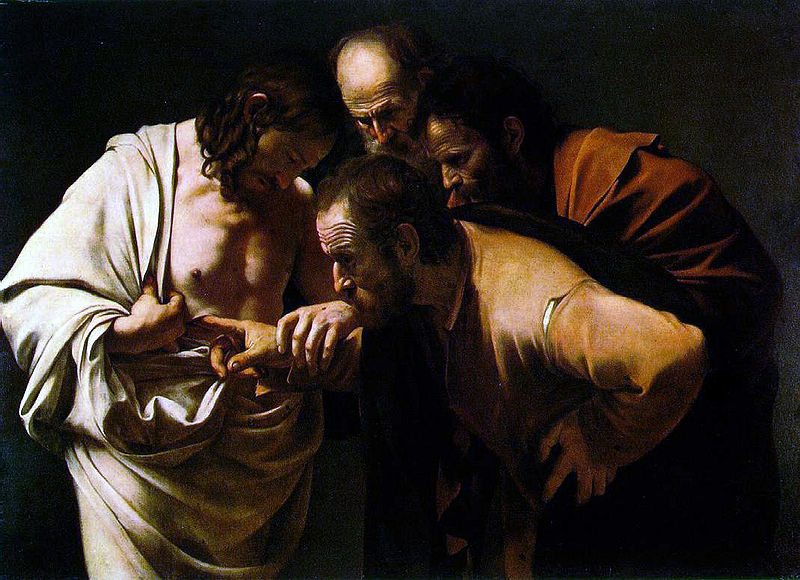 There is an objection to one of the evidences for the resurrection which is, frankly, terribly confused. I most recently ran into it on the discussion page for the radio show Unbelievable? Essentially, the objection goes like this: Christians say the fact that the disciples died for what they believe is evidence for its truth, but all kinds of religious people die for what they believe; are they all true?
The objector then often proceeds to note that some Muslims will die in suicide bombings due to their beliefs; they will note events like Thich Quang Duc burning himself to protest persecution; they will note other events in which religious people die for their beliefs. The implication, it is alleged, is that this cannot count for evidence for the truth of what they belief. People die for false things all the time; it doesn’t make what they believe true.
The objection seems compelling at first because it is, in fact, largely correct. The simple fact that people are willing to die for something does not make whatever they are wiling to die for true. However, this objection shows that the objector is badly misrepresenting the Christian apologetic argument.
The apologetic argument is intended to be used against those who would allege that the disciples made up or plotted for the notion of the resurrection for some reason. It therefore presents a major disanalogy with people of other faiths (or even later Christians) dying for what they believe. The major difference is that the Christian is claiming the disciples who went willingly to their deaths would have known what they were dying for is false, if it were.
Suppose you and a group of friends decided to make up a story to get some money. You decided that you were going to pretend that a buddy had died and risen again. You managed to set up circumstances in which your buddy appeared to die; then smuggled him off to Argentina–because that’s where everyone likes to hide, apparently. Later, you ran about the streets proclaiming that you’d seen your buddy walking around. He had been risen from the dead. And, you’d tell the story for the right price. To your delight, the story spreads like wildfire. But eventually it attracts attention of the wrong kind, and people are coming to kill you. Now, suppose that you could easily get out of it alive by simply confessing you’d made up the whole story. What would you do?
Alleged explanations for the evidence for the resurrection which appeal to purported conspiracies are much like this. The disciples would have known they were lying. Thus, the fact that they willingly went to their deaths does indeed count as evidence for the truth of what they were claiming. Otherwise, one would have to claim that these people quite seriously and willingly went to their deaths for something they knew was a lie they themselves had invented.
Thus, it is not enough for the objector to simply point out that other people die for faith not infrequently. That is not the core of the apologetic argument. Instead, they must argue for the implausible notion that the disciples willingly died for what they knew was a lie. It was not something they simply thought might be a lie; it would have been something that they were certain was false.
I do not think it is too far afield to suggest that the objection fails. It seems far more likely that they certainly believed what they professed were true, and they were in the unique position of knowing whether or not they were lying. Thus, the explanation of the resurrection is more credible than the explanation of a conspiracy. There are, of course, other attempts to explain away the historical argument for the resurrection, but those are arguments for a different time.
Links
Be sure to check out the page for this site on Facebook and Twitter for discussion of posts, links to other pages of interest, random talk about theology/philosophy/apologetics/movies and more!
SDG.
——
The preceding post is the property of J.W. Wartick (apart from quotations, which are the property of their respective owners, and works of art as credited; images are often freely available to the public and J.W. Wartick makes no claims of owning rights to the images unless he makes that explicit) and should not be reproduced in part or in whole without the expressed consent of the author. All content on this site is the property of J.W. Wartick and is made available for individual and personal usage. If you cite from these documents, whether for personal or professional purposes, please give appropriate citation with both the name of the author (J.W. Wartick) and a link to the original URL. If you’d like to repost a post, you may do so, provided you show less than half of the original post on your own site and link to the original post for the rest. You must also appropriately cite the post as noted above. This blog is protected by Creative Commons licensing. By viewing any part of this site, you are agreeing to this usage policy.

 J.W. Wartick - Reconstructing Faith