ecumenical
Bonhoeffer and the Challenge of Ecumenism
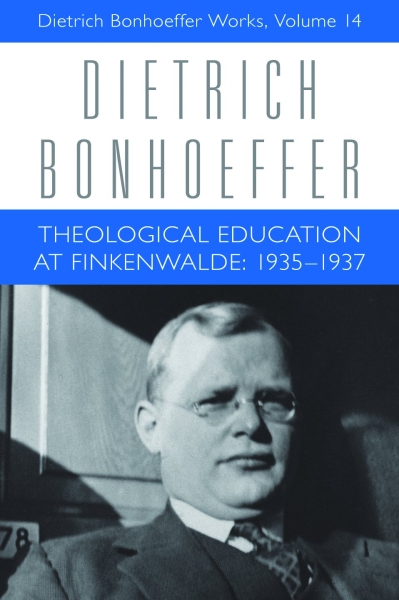
Ecumenism–the work of bringing unity to worldwide Christianity–is a constantly challenging work throughout the history of the church. Dietrich Bonhoeffer was deeply involved in ecumenical movements in his own time. One fascinating aspect of this is that while Bonhoeffer worked for ecumenism, he also was quite clear that the German Christian Church, which had been taken over by the Nazis, was no longer a Christian church and could not be designated as such. In calling out the German Christians, Bonhoeffer presented one of the great challenges of ecumenism: how to define “in” or “out” when it comes to Christianity.
The obvious and immediate objection here, of course, is that the German Christian church was actually being run by Nazis. Historical retrospect with 20/20 vision allows us to say that clearly, such a church had indeed lost the Gospel of our Lord Jesus Christ. However, at the time, such historical vision did not exist. Instead, we can see some of the challenges inherent in ecumenical work in a fascinating exchange Bonhoeffer had with Canon Leonard Hodgson[1]. The exchange can be found in Dietrich Bonhoeffer’s Works in English, Volume 14: Theological Education at Finkenwalede: 1935-1937. Bonhoeffer was invited by Hodgson in 1935 to come to the World Council of Churches as a visitor to the meeting of the Continuation Committee. Bonhoeffer declined, writing, “I should very much like to attend the meeting. But there is first of all the question if representativies of the Reichskirchenregierung [Reich Church Government (of the Nazi-sanctioned German Christian Church)] will be present, which would make it impossible for me to come” (DBWE 14, 68). Hodgson wrote back, imploring Bonhoeffer to attend. After noting that representatives of the German Christian church would be attending, Hodgson wrote, “I think you will understand our position when I say that we cannot, as a Movement [the World Council of Churches and the ecumenical movement], exclude the representatives of any Church which ‘accepts our Lord Jesus Christ as God and Saviour.’ Right from the start, there has been a general invitation to all such churches, and we cannot arrogate to ourselves the right to discriminate between them…” (Ibid, 69).
Defining a Christian church as one which “accepts our Lord Jesus Christ as God and Savior” seems like a reasonable step, especially within an ecumenical movement. But is it enough? That must always be the lingering question, and I’m not sure it is one I can answer. Bonhoeffer, however, answered Hodgson directly. After thanking Hodgson for the repeated invitation to attend, he wrote, “Can there be anything finer and more promising to a Christian pastor and teacher than to co-operate in the preparation for a great oecumenical[2] synod…?” But, then he went on to note that the Confessional Church in Germany did not believe the German Christian church did in fact believe that Jesus Christ is God and Savior. Wrote Bonhoeffer, “There may be single representatives…. who propound a theology which is to be called a Christian theology… But the teaching as well as the action of the responsible leaders of the Reich Church has clearly proved that this church does no longer serve Christ but that it serves the Antichrist… The Reich Church…. continues to betray the one Lord Jesus Christ, for no man can serve two masters…” (DBWE 14, 71-72).
It is hardly possible to issue a more direct and explicit statement than Bonhoeffer did regarding the status of the German Christian Church. He simply asserted: it serves the Antichrist. He went on to note the Confessional Church’s condemnation of the German Christian Church and some specific points thereof.
Hodgson, however, persisted. And his letter is one that highlights so many difficulties with ecumenism. Before diving in further, it is worth noting I am in favor of ecumenism, generally. Just as Bonhoeffer quoted Jesus’s words in John 17:21 to note that Christ wishes all of His followers to be one; so we should also wish for that and work towards it. However, where do lines get drawn, if at all? And surely, a church being taken over by a Nazi state is enough to draw the line? But even so, the historical difficulty of doing so, reflected in the words of Hodgson, should give us some fuel for thought in our own time.
Hodgson countered first by noting the 400+ years of the Ecumenical Movement, always seeking to unite the churches that had been separated. The Movement itself, Hodgson argued, must never act in behalf of individual church bodies; instead it worked as a kind of outside guiding body to bring those individual churches together. Hodgson highlighted that acceptance of Jesus Christ as God and Savior is the “one and only qualification” for a Christian church and that “the Movement has never taken upon itself to decide which churches conform to this definition and which do not” (DBWE 14, 78). He raised a neutral example of a Czechoslovakian National Church and internal debates with others over whether that church was Trinitarian or Unitarian. Turning to the Confessional and Reich church in Germany, Hodgson noted that the former appeared to have stated that the latter no longer accepted the sole criterion required by ecumenism. However, he also argued that the Reich church did not seem to see itself as outside the bounds of that confession; and who is the Ecumenical Movement to arbitrate such disagreements (Ibid)? After all, if they took up the question of the Confessional vs. Reich Church, where does it end? Could not various American churches raise charges against each other that, even while denying such a denial existed, one church does not really believe in Jesus Christ as God and Savior? Wrote Hodgson, “If we once begin doing this kind of thing, would there be any end to it?” (Ibid, 79). Finally, Hodgson wrote that the Movement doesn’t necessitate setting aside all differences. Instead, it allowed for people from different churches to stand side-by-side and even highlight differences; not with the goal of eliminating or washing them over, but with the goal of understanding and to “speak the truth in love” (Ibid, 80).
Bonhoeffer wouldn’t attend the conference, and while he would reach out to Hodgson four years later in 1939, Bonhoeffer would again be met with the kind of “open to interpretation” answer Hodgson gave in the letters of 1935.
This fascinating historical insight into arguing over the inclusion (or not) of a church literally overtaken by Nazis should serve as at least a partial warning to those interested in ecumenism. And, again, I am largely favorable to the idea. But is it possible that the definition defended by Hodgson is too broad? Or, is it possible that Bonhoeffer’s own certainty was too strong? I don’t think the latter is true. It should be possible for someone to look at a church body and say “the teaching as well as the action” of some church body, Christian leader, or whatever can be defined as no longer reflecting Christ as God and Savior. But how does one go about doing that? And how much should a body like the World Council of Churches stand back from seemingly intramural conflict?
Surely in today’s era, there are American churches that would label others as outside the bounds of Christianity or serving the Antichrist. Anti-LGBTQ+ church bodies might say that affirming church bodies are un- or anti-Christian and vice versa. The rise of Christian Nationalism begs the question of how one can serve two masters–the Nation State and Christ. The prominent sacrifices of orthopraxy for the sake of purported orthodoxy could yield countless other difficulties even as those who claim orthodoxy for themselves argue the contrary.
All of this is to highlight what is a very frustrating situation in which we find ourselves. It is one in which we cannot easily navigate our Lord’s wishes that we might truly be one. One temptation is to give it all up and say we may just have to wait for the eschatological future in which Christ will be all in all before any of this happens. But is it worth just giving up? I don’t think that’s the case, either. Instead, I think it is worth seeing this back-and-forth between Bonhoeffer and Hodgson about a church literally overrun by Nazis as a warning. What is confessed with lips must also be done in deed. What that means for ecumenism is something we must work out with fear and trembling.
[1] Fun fact- Hodgson unsuccessfully proposed to Dorothy L. Sayers. I couldn’t see that on Wikipedia and not share it.
[2] Simply an alternate spelling of ecumenical.
All Links to Amazon are Affiliates links
Links
Dietrich Bonhoeffer– read all my posts related to Bonhoeffer and his theology.
Be sure to check out the page for this site on Facebook and Twitter for discussion of posts, links to other pages of interest, random talk about theology/philosophy/apologetics/movies and more!
SDG.
——
The preceding post is the property of J.W. Wartick (apart from quotations, which are the property of their respective owners, and works of art as credited; images are often freely available to the public and J.W. Wartick makes no claims of owning rights to the images unless he makes that explicit) and should not be reproduced in part or in whole without the expressed consent of the author. All content on this site is the property of J.W. Wartick and is made available for individual and personal usage. If you cite from these documents, whether for personal or professional purposes, please give appropriate citation with both the name of the author (J.W. Wartick) and a link to the original URL. If you’d like to repost a post, you may do so, provided you show less than half of the original post on your own site and link to the original post for the rest. You must also appropriately cite the post as noted above. This blog is protected by Creative Commons licensing. By viewing any part of this site, you are agreeing to this usage policy.
True Christianity: A Brief Discussion
People today are often confused about what it means to be Christian. Often, when one tries to claim that someone who calls oneself a Christian and does not believe in things that are Christian, they are confronted with people saying this is some kind of fallacy (specifically the “No True Scotsman” fallacy, as I was accused of in a previous debate).
The question then stands, is there a definition of what it means to be Christian? Are there people that claim to be Christian and are not, or can anyone claim to be a Christian regardless of their beliefs about, say, the Trinity or the divinity of Christ?
Yes, there is a clear definition of what it means to be Christian, and, apart from these beliefs there is no salvation. The early church defined Christian belief through three “Ecumenical Creeds.” These creeds explicitly state what the Christian belief is, and that apart from this faith there is no salvation. These creeds outline the one Holy Catholic faith (note that Catholic doesn’t only refer to Roman Catholics, but rather to the Catholic Church, the eternal “City of God”), and apart from this faith there is no salvation and no Christianity.
I’ve been listening to a number of debates that I downloaded and a few of them featured John Dominic Crossan (the founder of the misnamed “Jesus Seminar”) verses various conservative Christians. Crossan denies the bodily resurrection of Jesus, he seems to deny in some ways Christ’s deity, he rejects Christianity as the only way, etc. He claims to be Christian. Can we say that he is not Christian? Absolutely. In denying the bodily resurrection, he denies the One True Faith found in the Creeds of the Catholic Faith. There is no fallacy in rejecting that people like this are not Christians, for there is a clear definition of what it means to be a Christian. If one does not believe in the One Triune God, the Father, Son, and Holy Spirit coequal and coeternal, one is not a Christian. This applies for every statement of belief within the creeds. If one rejects any part of these creeds, they are not Catholic in belief. The Athanasian Creed concludes: “This is the true Christian Faith. Whoever does not faithfully and firmly believe this cannot be saved.”
This is the teaching of the One True Church, this is the teaching of Scripture (which does not contain the Creeds, but from which the Creeds were directly derived), this is the truth.
The creeds are found below:
The Apostle’s Creed
I believe in God, the Father Almighty, Creator of heaven and earth,
And in Jesus Christ, his only Son, our Lord, who was conceived by the Holy Spirit, born of the Virgin Mary, suffered under Pontius Pilate, was crucified, dead and buried; He descended into hell. The third day he rose again from the dead; He ascended into heaven, and sits at the right hand of God the Father Almighty. From there he shall come to judge the quick and the dead.
I believe in the Holy Spirit, I believe in the holy catholic church, the communion of saints, the forgiveness of sins, the resurrection of the body, and the life everlasting. Amen.
The Nicene Creed
We believe in one God the Father, the Almighty, creator of heaven and earth, and of all things, seen and unseen.
We believe in one Lord, Jesus Christ, the only Son of God, eternally begotten of the Father, God from God, Light from Light, true God from true God, begotten, not made, of one substance with the Father. Through him all things were made. For us and for our salvation he came down from heaven; by the power of the Holy Spirit he became incarnate from the Virgin Mary, and was made truly human. For our sake he was crucified under Pontius Pilate; he suffered death and was buried. On the third day he rose again in accordance with the Scriptures; he ascended into heaven and is seated at the right hand of the Father. He will come again in glory to judge the living and the dead, and his kingdom will have no end.
We believe in the Holy Spirit, the Lord and giver of life, who proceeds from the Father and the Son, who with the Father and the Son he is worshiped and glorified. He has spoken through the Prophets.
We believe in one, holy, catholic, and apostolic Church. We acknowledge one baptism for the forgiveness of sins. We look for the resurrection of the dead, and the life of the world to come. Amen
The Athanasian Creed
Whoever wishes to be saved must, above all else, hold to the true Christian Faith. Whoever does not keep this faith pure in all points will certainly perish forever.
Now this is the true Christian faith: We worship one God in three persons and three persons in one God, without mixing the persons or dividing the divine being. For each person — the Father, the Son, and the Holy Spirit — is distinct, but the deity of Father, Son, and Holy Spirit is one, equal in glory and coeternal in majesty. What the Father is, so is the Son, and so is the Holy Spirit.
The Father is uncreated, the Son uncreated, and the Holy Spirit uncreated; The Father is eternal, the Son eternal, and the Holy Spirit eternal. And yet they are not three who are eternal, but there is one who is eternal, just as they are not three who are uncreated, nor three who are infinite, but there is one who is uncreated and one who is infinite.
In the same way the Father is almighty, the Son is almighty, and the Holy Spirit is almighty. And yet they are not three who are almighty, but there is one who is almighty. So the Father is God, the Son is God, the Holy Spirit is God. And yet they are not three Gods, but one God. So the Father is Lord, the Son is Lord, the Holy Spirit is Lord; yet they are not three Lords, but one Lord.
For just as Christian truth compels us to confess each person individually to be God and Lord, so the true Christian faith forbids us to speak of three Gods or three Lords. The Father is neither made not created, nor begotten of anyone. The Son is neither made nor created, but is begotten of the Father alone. The Holy Spirit is neither made nor created nor begotten, but proceeds from the Father and the Son. So there is one Father, not three Fathers; one Son, not three Sons; one Holy Spirit, not three Holy Spirits.
And within this Trinity none comes before or after; none is greater or inferior, but all three persons are coequal and coeternal, so that in every way, as stated before, all three persons are to be worshiped as one God and one God worshiped as three persons. Whoever wishes to be saved must have this conviction of the Trinity.
It is furthermore necessary for eternal salvation truly to believe that our Lord Jesus Christ also took on human flesh. Now this is the true Christian faith: We believe and confess, that our Lord Jesus Christ, God’s Son, is both God and Man. He is God, eternally begotten from the nature of the Father, and he is man, born in time from the nature of his mother, fully God, fully man, with rational soul and human flesh, equal to the Father, as to his deity, less than the Father, as to his humanity; and though he is both God and Man, Christ is not two persons but one, one, not by changing the deity into flesh, but by taking the humanity into God; one, indeed, not by mixture of the natures, but by unity in one person.
For just as the reasonable soul and flesh are one human being, so God and man are one Christ, who suffered for our salvation, descended into hell, rose the third day from the dead. He ascended into heaven, is seated at the right hand of God the Father almighty, and from there he will come to judge the living and the dead. At his coming all people will rise again with their own bodies to answer for their personal deeds. Those who have done good will enter eternal life, but those who have done evil will go into everlasting fire.
This is the true Christian Faith. Whoever does not faithfully and firmly believe this cannot be saved.

 J.W. Wartick - Reconstructing Faith