feminism
Honoring Giftedness- Women in David Weber’s science fiction
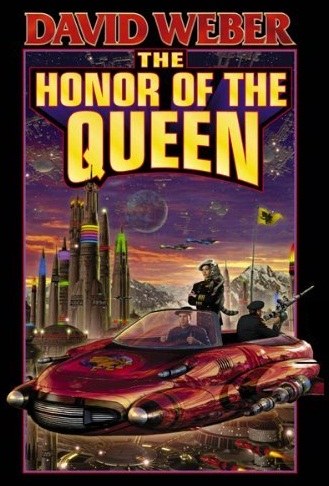 David Weber is the author of a few New York Times Bestselling science fiction series. One, the Honor Harrington series, follows a woman who starts off as a captain of a starship sent on routine (and initially boring) missions. The second book in the series, The Honor of the Queen
The two nations are complementarian in nature. Complementarianism is the theological belief that men and women are “complementary” in roles, which means that men should be in charge in the church and home. I have discussed it and the rival view that women should be ordained/treated as equals (egalitarianism) at length elsewhere [scroll down to see other posts].
What really struck me is that David Weber fairly presented firm theistic believers as a spectrum. In the future, the Christian Church has continued to reform and have splinter groups form because of this. Weber’s presentation of the issue showed that believers–even some who might be considered extreme–can be reasoned with and even persuaded to believe differently based upon evidence. Furthermore, he showed that even those who may line up on the side with which he disagrees are not all (or even mostly) blinded by faith or foolishness. Rather, although there are some truly evil and disillusioned people, Weber shows that many are capable of changing their position or at least acknowledging that rival views are worth consideration.
The most vivid portrayal of this theme is found in a conversation between Admiral Courvosier and Admiral Yakanov. Courvosier is from the same nation as Honor Harrington and wholly endorses his female officer in a position of command. They discuss Captain Honor Harrington:
[Yanakov responds to Courvosier’s question about his society’s reaction to Honor]: “If Captain Harrington is as outstanding an officer as you believe–as I believe–she invalidates all our concepts of womanhood. She means we’re wrong, that our religion is wrong. She means we’ve spent nine centuries being wrong… I think we can admit our error, in time. Not easily… but I believe we can do it.”
“Yet if we do[” Yanakov continues, “]what happens to Grayson [Yanakov’s world]? You’ve met two of my wives. I love all three of them dearly… but your Captain Harrington, just by existing, tells me I’ve made them less than they could have been… Less capable of her independence, her ability to accept responsibility and risk… How do I know where my doubts over their capability stop being genuine love and concern?” (96, cited below)
The exchange is characteristic of the way Grayson’s people are treated throughout the book. They are real people, capable of interacting with other views in honest ways. They feel challenged by a view contrary to their own. Some react poorly, and there are extremists who are blinded by hatred and anger. Yet all of them are treated as people with real concerns shaped by their upbringing and backgrounds.
Honor Harrington ends up saving Grayson, and at the end of the book, she is commended by the rulers of that planet. She talks to the “Protector” [read: king/president] of Grayson:
“You see,” [said the Protector] “we need you.”
“Need me, Sir?” [Responded Honor]
“Yes, Grayson faces tremendous changes… You’ll be the first woman in our history to hold land… and we need you as a model–and a challenge–as we bring our women fully into our society.” (419)
Weber thus allows for even ardent supporters of specific religious backgrounds to respond to reasoned argument and to change. They are capable of interacting on a human level and deserve every bit of respect as those who disagree with them. Again, there are those who are radicals and will not be reasoned with, but they are the minority and they do not win out.
The dialogue presented in this book provides some interesting insight into facets of the present dialogue between complementarians and egalitarians. David Weber’s fictional character presented a challenge to the Grayson’s notions of what it meant to be a woman by being an excellent officer and professional. There are, it seems, real “Honor Harringtons” out there, challenging preconceived notions of what it is to be a woman. When, for example, a woman takes on the role of leadership in the church and succeeds, that should not be dismissed as a fluke, but rather a challenge to a paradigm which may itself be undercutting women’s ability to succeed.
On a personal note, I have been challenged in exactly this way. When I was younger, I was a complementarian and was confronted by a woman who destroyed my presuppositions about what a woman “could do” spiritually. She showed that she could be a leader and present Christ to all without having to fit into role I defined for her. This real challenge caused me to realize that my notions of what a woman “should be” were themselves social constructs, not anything derived from the Bible. Like Yanakov, I had to rethink what my words and actions had done to perhaps limit the women around me. By God’s grace, this woman’s very existence forced me to rethink what I had assumed as truth and go back to God’s word to see where I had gone wrong.
David Weber’s own presentation of Honor Harrington as a paradigm-shattering woman is something that hits close to home for me. For you, dear reader, I think it is worth considering the same: who has challenged your view of what they are “supposed to be”? Is your view of someone’s giftedness directly drawn from the Bible or is it something that you’ve just always assumed? As for me, I think we need more Honor Harringtons in our lives.
Links
Be sure to check out the page for this site on Facebook and Twitter for discussion of posts, links to other pages of interest, random talk about theology/philosophy/apologetics/movies and more!
Check out my posts on egalitarianism (scroll down for more).
Source
David Weber, The Honor of the Queen
SDG.
——
The preceding post is the property of J.W. Wartick (apart from quotations, which are the property of their respective owners, and works of art as credited; images are often freely available to the public and J.W. Wartick makes no claims of owning rights to the images unless he makes that explicit) and should not be reproduced in part or in whole without the expressed consent of the author. All content on this site is the property of J.W. Wartick and is made available for individual and personal usage. If you cite from these documents, whether for personal or professional purposes, please give appropriate citation with both the name of the author (J.W. Wartick) and a link to the original URL. If you’d like to repost a post, you may do so, provided you show less than half of the original post on your own site and link to the original post for the rest. You must also appropriately cite the post as noted above. This blog is protected by Creative Commons licensing. By viewing any part of this site, you are agreeing to this usage policy.
Really Recommended Posts 8/15/14- Christians and Romans, Bible Measurements, Robin Williams, and more!
 Here I have another go-round the web as we survey a posts on creationism, early Christianity, measurement in the Bible, interactions between men and women, and Robin Williams. Let me know what you thought of the posts in the comments, and be sure to leave a comment on those whose posts you enjoyed!
Book Plunge: “The Christians as the Romans Saw Them”– Nick Peters reviews a book which seems to be really interesting, because it is about how the Romans viewed the Christians in the early periods of Christian development. The topic should be of interest for those interested in apologetics, church history, history, and sociology.
All the biblical units of measurement– the “Overview Bible” has become one of my favorite sites. It’s value lies in both clear examples and posts but also in its generally denominationally neutral approach to the Bible. In other words, it’s a great site for general Bible knowledge. Here, there is a chart with every single biblical unit of measurement and a modern equivalent. It’s enormously helpful!
5 Ways Married Men Can Act Like Adults Around Women, Single or Not– This post has some satire in it as the author is responding to the notion that men are somehow incapable of controlling themselves around women.
NH Notes- Bent Rock on Display: The Sidelong Hill road cut– how might rocks bend? Must we attribute such bent rocks to the biblical Flood? Check out this post which has some great pictures and discussion of these topics. See my debate review between a young earth and old earth Christian in which this very topic came up.
Robin Williams, Matt Walsh, and Choice– Stephen Bedard offers some very good insight into Christianity and mental illness, along with a response to Matt Walsh’s comments about how Robin Williams’ suicide may be reduced to a choice.
On the Death of Robin Williams-A great reflection on Christianity, mental illness, and hope in the midst of suffering. Check out this thoughtful post.
Proverbs 31 destroys preconceived “Biblical Womanhood”
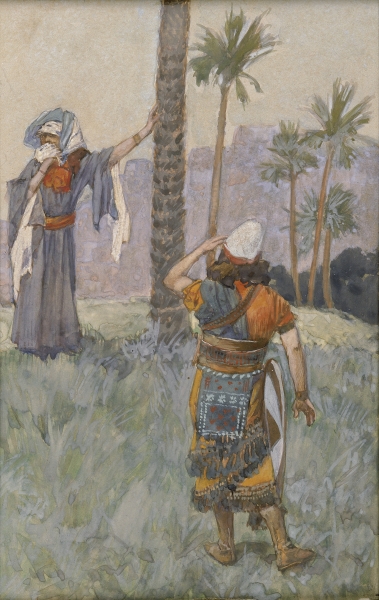
Deborah, leading the people of Israel
There are some who advocate a notion of “Biblical Manhood and Womanhood” with strict definitions of what roles men and women should occupy. Representative is John Piper, a leading voice in the movement named “Recovering Biblical Manhood and Womanhood.” In his essay “A Vision of Biblical Complementarity: Manhood and Womanhood Defined According to the Bible,” Piper writes about “biblical” manhood:
When my father came home he was clearly the head of the house… (32, cited below)
[W]hen there is no bread on the table, it is the man who should feel the main pressure to do something to get it there… a man will feel his personhood compromised if he… becomes dependent over the long haul… on his wife’s income. (42)
Shockingly, Piper even goes so far as to say that:
“[E]ven where a Christian wife may have to stand with Christ against the sinful will of her husband, she can still have a spirit of submission–a disposition to yield” (47).
Piper alleges that biblical womanhood follows this pattern:
A mature woman is glad when a respectful, caring, upright man… provides a pattern of appropriate initiatives in their relationship. (48)
[She is to follow] Biblical submission[, which] for the wife is the divine calling to honor and affirm her husband’s leadership and help carry it through… (53)
From Piper, we learn that “biblical” womanhood is to yield, to be led, not to be the head of the home, be provided for, indeed even to avoid situations in which a woman is closely leading a man in the office (52).
Proverbs 31 destroys this concept of what a “biblical” woman should be. In this astonishing passage, we read that the ideal woman:
1. Takes care when selecting products to purchase (31:13)
2. Brings food to her family (31:14)
3. Provides for her family (31:15)
4. Appraises and purchases land (31:16)
5. Brings profitable gain (31:18)
6. Works with tools of various trades (31:18)
7. Helps the poor and needy (31:20)
8. Crafts goods to be used by the family (31:22)
9. Crafts goods to sell and is shrewd in selling them (31:24; 18)
10. Speaks and instructs with wisdom (31:26)
11. Watches over the ways of the household (31:27)
12. Above all, she fears the Lord (31:30)
Now remember, this is an “ideal” and of course no woman could be or do all of these things. This passage illustrates aspects of what a biblical woman would be.
Recall, though, the roles that have been defined for women by some complementarians–people who hold a view in which man and woman occupy different roles in the home and church, with men as leaders. Which of these are found in the description of woman in Proverbs 31? Let’s just do a quick comparison of a few (Piper citations from above):
Piper: [I]t is the man who should feel the main pressure to do something to get [bread on the table]
Bible: “[The ideal wife/woman] gets up while it is still night; she provides food for her family...” (31:15a)
Do women not share the pressure in putting bread on the table when the Bible describes ideal womanhood as a provider of food for her family without excluding the husband?
Piper: When my father came home he was clearly the head of the house…
Bible: “She watches over the affairs of her household…”(31:27a)
Does watching over the affairs of the household have an unwritten, unspoken clause that excludes men?
Piper: [A] man will feel his personhood compromised if he… becomes dependent over the long haul… on his wife’s income.
Bible: “She considers a field and buys it; out of her earnings she plants a vineyard… She sees that her trading is profitable, and her lamp does not go out at night.” (31:16; 18)
Does the wife/woman’s managing money, earning it, buying fields, ensuring profit, and staying up late into the night focusing on this profitable gain compromise her husband’s personhood?
Also interesting are the things that are not said. It doesn’t say the ideal woman yields to her husband when he does wrong, she rather brings him good, not harm (31:12). Sin is a harmful cycle, and to say women are to rebuke it, but yield because a man is the leader is perpetuating that cycle.
The question, then, becomes this: where are those like Piper, who make the statements quoted above getting their ideas from? Is Proverbs 31 biblical womanhood when it contradicts these notions, or are the Scriptural quotes above instead to be defined as the properly biblical womanhood?
The question is ‘how do we define Biblical Womanhood’? The answer: A buyer, seller, purveyor, manufacturer, innovator, leader, provider, entrepreneur, and above all, one of God.
You ask “What is Biblical womanhood?” I’ll tell you: Proverbs 31.
Links
Be sure to check out the page for this site on Facebook and Twitter for discussion of posts, links to other pages of interest, random talk about theology/philosophy/apologetics/movies and more!
Check out my posts on egalitarianism – the belief that men and women are equally qualified and called in the church and home (scroll down for more).
On the Femnization of the Church– It is frequently alleged that the church is being “feminized” and that this is a bad thing. Check out this post, wherein I analyze this notion from a few different angles.
Source
John Piper, “A Vision of Biblical Complementarity: Manhood and Womanhood Defined According to the Bible” in Recovering Biblical Manhood and Womanhood edited by Piper and Grudem (Wheaton, IL: Crossway, 2006).
SDG.
——
The preceding post is the property of J.W. Wartick (apart from quotations, which are the property of their respective owners, and works of art as credited; images are often freely available to the public and J.W. Wartick makes no claims of owning rights to the images unless he makes that explicit) and should not be reproduced in part or in whole without the expressed consent of the author. All content on this site is the property of J.W. Wartick and is made available for individual and personal usage. If you cite from these documents, whether for personal or professional purposes, please give appropriate citation with both the name of the author (J.W. Wartick) and a link to the original URL. If you’d like to repost a post, you may do so, provided you show less than half of the original post on your own site and link to the original post for the rest. You must also appropriately cite the post as noted above. This blog is protected by Creative Commons licensing. By viewing any part of this site, you are agreeing to this usage policy.
Really Recommended Posts 6/20/14- textual criticism, Krauss, and more!
 I’ve put together what I think is a pretty diverse array of topics for you, dear reader, to peruse. Check them out, and let me know what you thought of them! If you liked their post, let them know, too! Comments keep we bloggers going!
Gospel Truth? 10 Quick Questions– Here’s an interesting way to approach evaluation of rival Scriptural traditions–how might we determine whether one is true? What do you think of this list of questions about revealed truth? While you’re at it, Saints and Sceptics (they’re British!) is a great site that is well worth your time to follow and read on a regular basis.
Lawrence Krauss debates “A Universe From Nothing” with an Astrophysicist– Check out this review and commentary on a debate in which Lawrence Krauss continues to press his redefined version of “nothing” to try to explain the existence of the universe. This time, he debates an astrophysicist. Hint: it doesn’t go well.
Towards a Deeper Theology of Women: 4 Contributions of Women Scholars– Both men and women were created in the image of God. As such, they are each capable of contributing to theology and teaching. Check out this list of four contributions of women scholars, complete with some reading to pick up along the way!
Free Bible Icons– The title isn’t the catchiest, but these digital icons for every book of the Bible (and groupings therein) are fun, free, and a great thing to just print off and use as book markers in your Bible. Moreover, they’re just fun to look at.
Evangelical Textual Criticism– How might evangelicals engage in textual criticism? Here’s a site that explores that while also providing a number of resources like bibliographies for study, conference reminders, and the like. For an example of how this plays out, check out this post on Codex Bezae.
On the Feminization of Christianity
Christianity is being feminized–men just don’t go to church anymore!
Worship is so feminine now, with all of its appeals to emotions.
Christianity has a “masculine” feel to it.

I had a conversation recently in which several men were bemoaning the “feminization of Christianity,” particularly worship. I asked them what they meant by this and one man illustrated it with a story: he was at a church one time and this guy was up front singing this lovey-dovey song he had written about how Jesus loved him and wanted to hold him or something and he–the one telling the story–thought it was ridiculous. This, he said, was an example of the feminization of worship. It makes men leave the church.
I pointed out that his example was about a man singing a song written by a man–himself–leading worship in a church in which (the man had told me) the only leaders were men. He nodded and reiterated his point. …This, it seems, is the result of feminizing the church.
I thought that was rather odd, to be frank, but the conversation has stuck with me for its message. I’ve had many like it over the past year or two. I’ve seen fellow bloggers post on this apparently insidious trend of the “feminization of Christianity.” A prominent apologist recently issued a similar complaint, noting that worship has gotten more “emotional” and therefore more “feminine.” Some theologians and books I’ve read have had similar concerns about this “feminine” aspect being brought into churches. Apparently, from my reading of these sources and the conversations I’ve had, the message is that this is A Bad Thing.
Do you really think that Christianity is masculine? What does that even mean?
What does it mean to say worship is “feminine” or “masculine”? Does that mean that if I, a man, worship, then my praise is somehow “manly,” while my wife’s praise is “womanly”?
I want to focus on this notion that “feminization of Christianity” is A Bad Thing. What does this say about men and women?
It seems to me that if feminizing Christianity inherently makes it somehow deficient, then that means females are also deficient. If “feminized” worship is bad, or at least not as good as “masculine” worship–whatever either one of those things means–then that means that what are identified as male patterns of worship have higher value. But can such patterns really even be identified? If “feminization of the Church” is to be avoided, while making it more “masculine” is to be lauded, then what does that say about our position, male and female, as the image of God? On the one hand, humanity, male and female, were each created in God’s likeness, in the image of God. On the other, we are told that “feminine” themes within Christianity are to be avoided and downplayed, while “masculine” themes are to be pursued and emphasized.
The most common answer I’ve gotten to questions about the nature of masculine or feminine worship is that that which is feminine is emotional or passive, while masculine is rational or active. I would like to ask: how is this reflected in God’s Word? Recall that God gets angry (Psalm 7:11) or grieved by sin (Genesis 6:6), takes pleasure in obedience (Psalm 147:111), delights (Zephaniah 3:17), etc. God is a God with emotions and whether we set this aside as anthropomorphism or not, it seems clear that Scripture understands God not rejecting emotions but rather, in some sense, taking part in them. But if God’s Word does not denigrate emotions and even attributes them to God, why should we not worship in emotional ways? And why are emotions treated as something to be avoided, as necessarily feminine and somehow not good, or at least not as good as that which is identified as masculine?
I’m not trying to advocate for one side or the other in the so-called “worship wars.” Instead, my point is that the narrative of complaints about the “feminization of Christianity” is misguided and far from the truth. Being female is not bad, nor is it somehow less perfect than being male. Similarly, having a “feminine” Christianity is not an imperfection. To be honest, I’d like to call my Christian brothers and sisters to a more complete understanding of God and God’s word.
There is hope for us that applies to us all as people:
There is neither Jew nor Gentile, neither slave nor free, nor is there male and female, for you are all one in Christ Jesus. – Galatians 3:28
These are words of hope, words of reconciliation. But they are also words which cut against the notion that in our church there is masculine worship vs. feminine worship; masculine music vs. feminine music; masculine sermons vs. feminine ones. “Nor is there male and female… you are all one in Christ Jesus.” My heart leaps at these words. These words tell me I need have no fear, for our God–a great God–has reconciled us in our Lord Jesus Christ.
Links
Be sure to check out the page for this site on Facebook and Twitter for discussion of posts, links to other pages of interest, random talk about theology/philosophy/apologetics/movies and more!
Check out my posts on egalitarianism – the belief that men and women are equally qualified and called in the church and home (scroll down for more).
I found the image on Bing searching for images of worshipers in church and I claim no rights to it and saw no claims to rights upon it.
SDG.
——
The preceding post is the property of J.W. Wartick (apart from quotations, which are the property of their respective owners, and works of art as credited; images are often freely available to the public and J.W. Wartick makes no claims of owning rights to the images unless he makes that explicit) and should not be reproduced in part or in whole without the expressed consent of the author. All content on this site is the property of J.W. Wartick and is made available for individual and personal usage. If you cite from these documents, whether for personal or professional purposes, please give appropriate citation with both the name of the author (J.W. Wartick) and a link to the original URL. If you’d like to repost a post, you may do so, provided you show less than half of the original post on your own site and link to the original post for the rest. You must also appropriately cite the post as noted above. This blog is protected by Creative Commons licensing. By viewing any part of this site, you are agreeing to this usage policy.
Sunday Quote!- What does “head” mean?
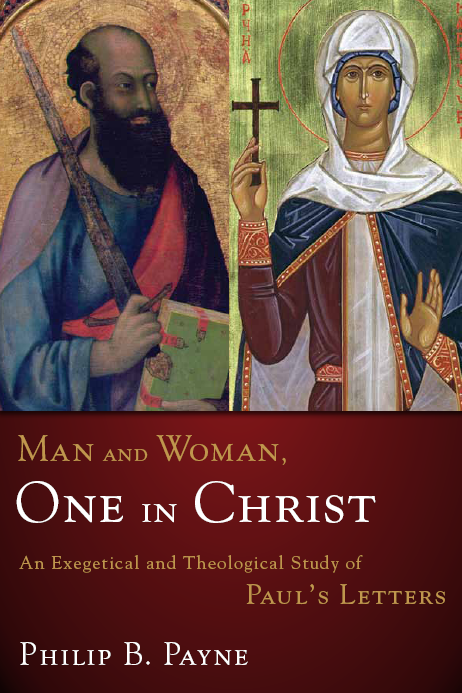 Every Sunday, I will share a quote from something I’ve been reading. The hope is for you, dear reader, to share your thoughts on the quote and related issues and perhaps pick up some reading material along the way!
What does “head” mean?
I’ve been rereading Philip Payne’s monumental study of Paul’s letters in relation to the roles of men and women in the church and home, Man and Woman, One in Christ. There is so much in this book to discuss I feel as though every single page deserves its own post. For now, I wanted to highlight his discussion of the meaning of “head” in the much-discussed 1 Corinthians 11:2-16. Payne writes:
The majority view in recent scholarship has shifted to understand “head”… in this passage to mean “source” rather than “authority”… One reason for the popularity of [interpreting it as “authority”] is that in English, German, and Hebrew… the most common metaphorical meaning of “head” is “leader”… Interpreters who in their native tongue associate metaphorical uses of “head” with “leader” naturally make this association when reading this passage. (117-118, cited below)
In the book, Payne goes on to demonstrate why it is that the majority view has turned to viewing “head” as “source.” He provides 15 reasons to think this is the case. A few highlights include contemporary 1st-3rd century usage of the term, lexical support for “source” and lack thereof for “authority,” other usage within the Pauline epistles, difficulties raised by reading it as “authority,” and support for the meaning as “source” from a number of contemporary authors and Church Fathers. In the passage above, I think it’s interesting to see that one’s native language often imports meaning into the text. I’m sure this happens in many places, and I’ve caught myself on some.
If you have any interest at all in the debate over women’s roles in the church and home and do not have this book, you must amend the situation immediately. It doesn’t matter if you are egalitarian or complementarin; you must deal with the arguments raised by Payne, who interacts with top scholars from both sides of the debate (including Piper, Grudem, Wright, and more).
What are your thoughts? How do you read this difficult passage? Does your native tongue perhaps change your perception of the meaning of some parts of the Bible?
Links
Be sure to check out the page for this site on Facebook and Twitter for discussion of posts, links to other pages of interest, random talk about theology/philosophy/apologetics/movies and more!
Sunday Quote– If you want to read more Sunday Quotes and join the discussion, check them out! (Scroll down for more)
Check out my posts on egalitarianism (scroll down for more).
Source
Philip B. Payne, Man and Woman, One in Christ
SDG.
Really Recommended Posts 5/16/14- Edge of Tomorrow, Femininity, the Apocrypha, and more!
I am very pleased to serve these links up to you, dear readers. I found a very diverse array this week and I think you’ll really enjoy them. One post analyzes the story behind Tom Cruise’s latest movie from a Christian perspective. Another talks about Bart Ehrman’s worldview problem. Yet another analyzes the concept of femininity. Oh yeah, and there are more! Tell me your own thoughts in the comments here, and be sure to tell me which you liked! If you liked their post, be sure to let the author of that post know too! There’s nothing like having a new comment on your site. Thanks, readers!
All You Need Is Kill/Edge of Tomorrow– Tom Cruise’s latest flick, “Edge of Tomorrow” is based upon this graphic novel. Check out Anthony Weber’s excellent review and critique of the graphic novel from a Christian perspective. I really recommend you follow his blog as well. It’s in my top five must-read blogs.
Femininity– A short title for an extremely important post. What does it mean to be feminine/female? What do we say to women when we say they need to be more feminine? Most importantly, where is that found in the Bible?
Bart Ehrman’s Worldview Problem– Frequent critic of Christianity, Bart Ehrman, has a problem. It’s a problem of worldview. Check out this post from noted theologian Michael Kruger analyzing Ehrman’s work in light of this problem.
Kirkdale Cave Hyena Den: A Young Earth Challenge Since 1821– What can a cave teach us about the age of the Earth and the extent of Noah’s Flood? Quite a bit, it turns out. Check out this excellent post.
Does 2 Maccabees “Expressly Disclaim Inspiration”?– Although I do not accept the Apocrypha as authoritative Scripture, I think it is important we are accurate when we discuss the canon and the extent of Apocryphal authority. This post analyzes a claim made that 2 Maccabees disclaims inspiration. Check it out.
Really Recommended Posts 1/25/14- YA Entertainment, Inerrancy, “Lone Survivor,” Feminism, and Jehovah’s Witnesses
Another week, another list of the internet’s finest brought to you, dear reader. These are some extremely diverse topics, and I’m excited to read your own reactions to the posts. I’ve lined up cultural apologetics, inerrancy, feminism, the “Lone Survivor” flick, and Jehovah’s Witnesses.
Trending Young Adult Entertainment in 2013– Anthony Weber wrote an excellent summary tracing the trends we may see in YA entertainment from 2013. I highly recommend engaging with this post as well as keeping on top of things with YA entertainment, because it shows where our culture is shifting.
What Kind of Evidence Could Nullify Inerrancy?– What does it mean to make the claim that the Bible is inerrant? Does it commit one to an a priori rejection of evidence? It seems to me that this post brings up some of the tension with inerrancy and hermeneutics. I, of course, affirm inerrancy, but I think it is important to distinguish between inerrant text and interpretation. This post brings up some interesting points for discussion with inerrancy.
Lone Survivor and Insufferable Anti-American Self-Righteousness– The film “Lone Survivor” has caused quite a bit of critical discussion. Here, a soldier reflects on the reaction to the film. I share this post with the caveat that I have not seen the film and so I’m sharing it because I thought it was an interesting viewpoint.
Sarah Bessey’s Jesus Feminist– What does it mean to be a feminist for Jesus? Does it actually mean anything? Are the terms contradictory? Check out this look into the book Jesus Feminist.
What Do Jehovah’s Witnesses Believe?– The title seems self-explanatory, but there is more to this post than a simple exposition of Jehovah’s Witness beliefs. Instead, it engages with the beliefs of Jehovah’s witnesses and provides some ways to engage with others.
Really Recommended Posts 12/13/13- Bonhoeffer, Creationism, Feminism, and more!
The Really Recommended Posts this week are really wide-ranging. I hope you’ll enjoy this smorgasbord as much as I did. We feature Dietrich Bonhoeffer’s theology, creationism, feminism, intelligent design, the conquest narratives in the Bible, and more! Check them out, and, as always, let me know what you think!
Dietrich Bonhoeffer, a New Testament Pastoral Theologian– Bonhoeffer is, I admit, one of my favorite theologians. I only wish he had had more time upon the earth to develop more systematic works than he did write. I’m Lutheran too, which makes me gleeful at the broad appeal Bonhoeffer has demonstrated. In this post, Joel Willitts explores the way in which Bonhoeffer did theology. It’s a fascinating look at the development of his theology.
Multiple Lines of Evidence Support an Ancient Earth– The charge is often made from young earth creationists that dating methods don’t work. What about when those dating methods correspond across independent and multiple lines of evidence? It seems this presents a major challenge to the young-earth paradigm. Check out this post for a summary of several related points.
Was There an Exodus & Conquest– Two of the biggest challenges to the OT narrative are directly related to the historical accounts of the Exodus and the Conquest narratives. That is, did these even happen? Here, there is a post which briefly summarizes the issues and evidences related to these events.
“Darwin’s Doubt” with Stephen Meyer (and Eric Metaxas) [VIDEO]– A fairly lengthy video in which Eric Metaxas discusses intelligent design with Stephen Meyer. I found this video to be highly informative and also really entertaining. Metaxas is clearly a great speaker, and he keeps the discussion going and interesting throughout. Meyer, of course, is also a great speaker and it is worth hearing his discussion of these ideas.
thoughts on being a “Jesus Feminist”– What does it mean to be a Jesus Feminist? Can Christians be feminists and follow Christ? Check out this reflective post on what it means to be a Jesus Feminist.
Rescuing Songs of Christ’s Birth from Christmas– Should songs of Jesus’ birth be sung only during the Christmas season? Here, compelling reasons are offered as to why these songs are appropriate year-round.
The Advent Project– A pretty sweet deal: Biola University, one of the best schools out there (not biased at all ;)), has a series of Advent devotions going up daily available on their site. Each has a work of art, a music selection(s), and a brief reflection upon the coming of Christ, the incarnate God, into our lives. I’ve been following them as they go up and have enjoyed them all. Check them out for an excellent way to meditate on the meaning of Christmas.
Women and the Reformation: Hope, Silence, and Circumstance
 It is Reformation Day and this year we are going to reflect upon a topic that is all-too-often overlooked: women in the Reformation. We shall consider the impact of women on the Reformation and the impact of the Reformation upon women from a theological perspective. I admit that covering such a broad topic within a blog post means I am very short on detail. I encourage readers to check out the sources at the end of this post in order to explore further avenues.
The Impact of the Reformation Upon Women
The Reformation brought about some changes for women both theologically and socially. Theologically, the issue of inequality between men and women socially and spiritually was more widely discussed. Although the concept had existed before, the Reformers largely held to the notion that men and women were spiritually equal. Spiritual equality led some to wonder whether women could perhaps be social equals, or–if that was to far afield–perhaps they could at least be less inequal (Spierling, 181-183, cited below). Seeds for social and spiritual change were sown during this period, but it must be admitted that there was not as much development as some may allege.
For example, Martin Luther’s notion of the “priesthood of all believers” is sometimes taken to mean that women and men could stand alongside each other as spiritual equals in teaching, preaching, etc. However, when Luther himself was challenged on this issue by the Roman Catholics, he answered by making it very explicit that although women could teach in extraordinary circumstances, he believed the Bible mandated that men were in charge in both church and home (Spierling, 186; see Luther’s Works 36: 151-152). Spiritual equality was seen as equality in the eyes of God, not in the roles that men and women actually took on earth. However, Luther also fought against some of the double standards regarding men and women and was outspoken against brothels and other abuses of women (Lindberg, 360-361, cited below).
The Reformers remained influenced by early Christian views of men and women, which were, in turn, influenced by earlier non-Christian scholars whose pre-scientific views of biology and psychology were adopted. Diarmaid MacCulloch traced the impact of Aristotle and the ancient medical expert Galen upon figures like Augustine and Clement. He described the Reformers’ view of manhood and womanhood as viewed through this lens thus:
What Christian theologians asserted about men, women, and sexuality was nonsense, but it was ancient nonsense, and humanity has always been inclined to respect the assertion of ancient wisdom. The… package of ideas also had a lunatic coherence: it seemed to make sense, explained a baffling aspect of human experience, and contained a good deal of room for flexibility of interpretation. No doubt our own medical theories will seem equally lunatic to generations to come. (MacCulloch,611, cited below)
Carter Lindberg’s own discussion of the impact of the Reformation upon women is bracketed by the question: “Was the Reformation a help or a hindrance to women?” He answers, a bit tongue-in-cheek, “It depends.” The Reformers denied that marriage was a sacrament, which allowed, later, for the dissolution of abusive or even loveless marriage. Women also began to become more actively involved in theology, though their voices were often silenced or ignored. The encouragement to leave convents may have reduced the possibilities for single women to have careers in the church or any sort of involvement (Lindberg, 358-361).
The social expectations for men and women during the Reformation period were shaped by the cultural expectations of “gender” which were themselves handed down to today through the theological writings of the Reformers (Ibid, 360). The concept may be termed “patriarchy” and was theologically adapted to continue to make it appropriate for the culture through the 1800s and into today (MacCulloch, 611).
Women’s Impact on the Reformation
Women had little voice within the Reformation, largely due to some of the issues mentioned above. However, that is not to say that women had no voice whatsoever within the theological developments of the Reformation. There were several women who wrote theological treatises alongside their male counterparts, though their efforts were often ignored (Spierling, 187, 180-181).
Among these was Marie Dentière, who defended her own authority to teach in Galatians 3:28. Dentière was a noblewoman who defended the Reformers through the use of the Bible and who vehemently encouraged women to leave the Catholic faith. She wrote to defend Calvin during his exile. Women were called to teach and take up their Bibles to defend the Christian faith. Dentière’s defense of women’s capacity to teach was grounded in the biblical examples of godly women, among them the first herald of Jesus’ Resurrection, Mary Magdalene (Lindberg, 360; see also McKinley, 155-159, cited below).
Interestingly, Dentière’s writings spurred other women, Catholics, to speak against her in defense of convents. Jeanne de Jussie was directly called upon by Dentière to close her convent, but responded with a theological defense of convents and an attack on Calvinism (Lindberg, 359).
Other women acknowledged the subordination of women in the church and home, but nevertheless argued that the situation of the Reformation had brought about exactly the types of emergency situations Luther had granted women may teach in. Argula von Grumbach wrote defending Arsacius Seehofer, who had been arrested and prosecuted for “holding Lutheran ideas.” She felt the need to defend Seehofer because no one else had done so. Thus, her authority was granted due to the priesthood of all believers.The emergency situation was brought about by Seehofer’s continued imprisonment and the fact that no men had stood up to defend him.
Thus, Reformation theology was seen as the grounds for some women to speak; even those who acknowledged the categories of subordination found within the theology of the Reformers. Others spoke up due to the wielding of Reformation theology against Roman Catholicism. Still others felt that sola scriptura had led them to discover real, biblical grounds for women to teach.
Conclusion
I’m a huge fan of Reformation theology, but it must be admitted that the Reformers’ views on women were essentially a product of their societal background. They embraced, rightfully, sola scriptura, but as I have noted elsewhere (Who Interprets Scripture?), this itself raised a number of issues regarding the interpretation and meaning of a text. Moreover, sola scriptura does not entail that one is able to interpret the Bible in a socio-cultural vaccuum. It seems to me the Reformers view of women as essentially child-bearers and home-makers was more a product of their cultural background than something the text of the Bible specifically taught. Of course, that is a debate for a different time.
To end on a positive note, it is worth noting that the Reformers’ teaching sowed the seeds for greater gender equality. The notion of the “priesthood of all believers” should not be abused in order to be taken as an endorsement of women teaching; but it nevertheless did have within it a concept of spiritual equality which provided a basis, however small, for believing that men and women could be spiritual and social equals. Moreover, women began to take up the torch and teach in “emergency” situations and thus provided a basis for others to do the same. Finally, still other women turned to the Bible itself as a justification for their voice alongside that of men. Their authority to teach was, they argued, itself biblical.
Let us continue that Reformation.
Sources
Carter Lindberg, The European Reformations
Diarmaid MacCulloch The Reformation
Mary McKinley, “Dentiere, Marie” in Handbook of Women Biblical Interpreters
Karen Spierling, “Women, Marriage, and Family” in T&T Clark Companion to Reformation Theology
The Image is of Marie Dentiere and is public domain.
SDG.
——
The preceding post is the property of J.W. Wartick (apart from quotations, which are the property of their respective owners, and works of art as credited; images are often freely available to the public and J.W. Wartick makes no claims of owning rights to the images unless he makes that explicit) and should not be reproduced in part or in whole without the expressed consent of the author. All content on this site is the property of J.W. Wartick and is made available for individual and personal usage. If you cite from these documents, whether for personal or professional purposes, please give appropriate citation with both the name of the author (J.W. Wartick) and a link to the original URL. If you’d like to repost a post, you may do so, provided you show less than half of the original post on your own site and link to the original post for the rest. You must also appropriately cite the post as noted above. This blog is protected by Creative Commons licensing. By viewing any part of this site, you are agreeing to this usage policy.

 J.W. Wartick - Reconstructing Faith