Genesis
Genesis as History- Some difficulties
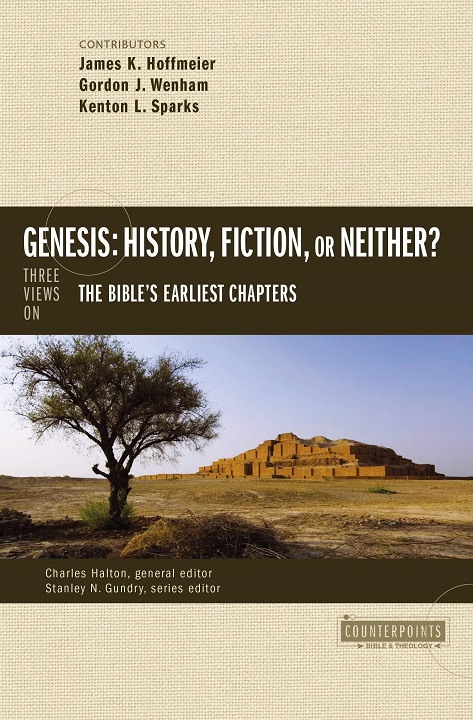
Zondervan’s Counterpoints Series brings together different views on various theological subjects to compare and contrast them. The series has varying success, often not representing even the full gamut of even Evangelical views on a topic or even misrepresenting orthodox views from other traditions[1]. Here, in Genesis: History, Fiction, or Neither? Three views on the Bible’s Earliest Chapters, we see another example of failing to include a whole range of views on a topic. Obviously this has to be at least partially an editorial choice, as representing thousands of years and hundreds of views on the earliest chapters of Genesis would be impossible in any single book. On the surface it seems to provide all the options, but even within the text of the book, the struggle over labeling something as “myth” and what that means for history persists. Outlining all of the problems in attempting to classify Genesis as straightforward history would be a monumental task, but here I want to use James K. Hoffmeier’s chapter as a case study in some of the difficulties with taking Genesis as “history.”
Hoffmeier has the unenviable task of attempting to turn Genesis 1-11 into “history.” One obvious question, then, is “What is history?” As someone who has a major interest in history and historiography, defining history is… quite difficult. Even basic assumptions about what is meant by history are questioned in the academic literature on the topic. This isn’t because academics are trying to be difficult, but rather because human endeavors are rarely simple, and an attempt to write about or describe those endeavors in the past just adds layers upon layers to that complexity. For example, is it the case that someone writing a text of history is trying to tell the reader what “really happened”? On its face, the answer seems to be yes, but that is often not the case. In ancient times, acts of writing about the past often had meaning behind them. A simple act of creating a genealogy might have the intent of linking one ruler to another who had previously had no connection. We in fact see this in Ancient Near Eastern genealogies, when we find that they often move kings in and out of lists and find new fathers for legitimizing current or past rulers. In our own time, we can see the bias inherent in writing on certain topics. The simple description of history as the attempt to write down what “really happened” is just that- simple to the point of being overly simplistic. History is rarely just an attempt to write what actually occurred, and the connection between our time and the past is often less straightforward than one might think.
All of this is to say that it is somewhat astonishing to me to see that there is almost no attempt to define history either by the editor of this volume or by Hoffmeier. Reading an intent onto such an act is folly, but the lack of attempting the definition certainly makes the whole endeavor squishier. Namely, it allows one defending the concept of Genesis as “history” to simply hand wave at a generalized idea of what history is when they are challenged on specific points (more on this later).
Hoffmeier’s defense of Genesis as history is necessarily short based on the nature of the work, but it gives us some interesting avenues to pursue. He specifically cites some case studies to show that Genesis is intended as history. First, he looks at the Garden of Eden. After simply stating that the talking snake, the forming of Eve from Adam’s rib (a likely mistranslation anyway with some, erm, lively interpretive attempts), etc. are tied to “myth,” he quickly states that “the author of the narrative goes to great lengths to place Eden within the known geography of the ancient Near East…” (32). Hoffmeier’s argument moves on to show that there are four rivers that are named and that other geographic details are presented in order to help the reader geographically locate the Garden. Remarkably, simply because of these geographic details, Hoffmeier concludes, “though the garden pericope may contain mythic elements, it is set in ‘our historical and geographical world,’ which is hard to reconcile with pure mythology” (35).
I find this an entirely inadequate defense of this story as history. Ben Hur by Lew Wallace takes place in our historical and geographical world and contains mythical elements, but can hardly be construed as history. Similar things could be said for any number of alternative histories. Indeed, one could make the same vague conclusion about the Harry Potter series! It has identifiable places and often goes to great lengths to tell readers where they are in the world. As a parallel to Hoffmeier’s difficulty in locating some of the rivers mentioned around Eden, perhaps the location of Privet Drive, Harry Potter’s boyhood home, could serve–something intended as sounding like a place, but impossible to locate on a map. The stories contain mythical elements, but we can hardly dismiss them as “pure mythology,” right? After all, they’ve got place names! Similar things could be said for Percy Jackson or even the Chronicles of Narnia! It is astonishing that simply having some geographical details is seen as evidence to suggest the contents of a story is intended to be accurately describing things that actually happened.
Hoffmeier’s defense of the historical nature of Genesis 6:1-4–a story rife with literary, theological, and textual questions–is even more vague. Here, he notes several of the problems with figuring out who the Nephilim are, argues for some parallels with Babel, and then when it comes time to show that it is history simply appeals to a theological point, not an historical one! He writes, “I contend that despite our inability to completely understand this short episode, it must recall a genuine memory from early human history; after all, it is held up as the ‘final straw’ that caused God to determine to judge creation [and send a Flood]… For God to resolve to wipe out humans on the earth would surely not be the result of some made up story!” (41).
There’s a lot we could unpack here, from the assumption that the Flood narrative is global and actually wiped out all humans on Earth to the fact that Hoffmeier essentially concedes that this allegedly historical narrative is confusing enough that we can’t really understand what’s happening. But instead of unpacking all of that, I want to focus simply on his defense. His entire defense of this as historical is wrapped up not in features of the text itself, not in any archaeological or paleontological finds to back it up; no, it is based upon a theological argument from incredulity! If we assume that God wiped out all humanity because of this story, then wouldn’t it be really silly if this story wasn’t actually historically true? Well yes, it would be, but those are the very questions at issue! Isn’t it possible that there might be some other theological purpose for the story to be there, one that is mythical or perhaps even lost to time because we are living thousands of years after it was first composed and written down? No, for Hoffmeier, we must simply assume that it is historical because if it is not, then… what? It’s not even clear, because his point is entirely rhetorical rather than based in reality.
Fascinatingly, Hoffmeier’s extensive analysis of the Flood narrative seems to undercut his rhetorical point above. After noting the presence of Flood narratives elsewhere, he takes the similarities in the Genesis Flood account to the Babylonian one to somehow mean it is historical, despite his own admission that it seems to have been “consciously aimed at refuting the Babylonian worldview” (54). One would think that after this admission, Hoffmeier and other defenders of the Flood as history might see an incongruity in their clinging to it as a story that really happened as written and their conceding that the story is deliberately intended as a refutation of a differing worldview. But no, that’s not what happens. Instead, Hoffmeier simply argues that it is part of the shared memory of Israel and Babylon, contradicting his own earlier conclusion that it was intended to refute the Babylonian worldview.
I mentioned above that the term history is “squishy” and by not defining it, Hoffmeier essentially gives himself room for hand waving about what issues might come up with claiming Genesis as such. I appreciated Kenton L. Sparks’s response to Hoffmeier in this volume when he essentially pinned him to the wall on this exact difficulty. After Hoffmeier vaguely suggests the Garden of Eden is a historical story, Sparks challenges him to explain what exactly is meant by that- “If the author of Genesis used mythical imagery, as Hoffmeier has suggested, then which images are mythic symbol and which are closer to historical representation? Does Hoffmeier believe that the cosmos was created in six literal days? Does he believe that the first woman was made from Adam’s rib? Does he believe that a serpent spoke in the garden? Does he believe that our broken human condition can be traced back to eating pieces of fruit? Does he believe in giants who roamed the pre-flood earth?” (64). Sparks doesn’t, in fact, stop there and asks even more questions, ultimately finishing: “One wonders why Hoffmeier does not answer these questions when the historicity of Gen 1-11 is the main theme of our discussion” (ibid). Yes, one wonders that indeed. When someone claims Genesis is history and doesn’t clarify what is meant by that, these are the exact kinds of questions that should be asked. And, to be clear, any attempt to answer them affirmatively while claiming that that can be backed up by modern analysis of the genre of these early chapters or by modern methods of historical analysis is an exercise in futility.
I think I have written enough here to show that a defense of Genesis as history is filled with extreme difficulties. There are many, many more I could go into, but I’d like to wrap this up for now. If a defender wishes to defend Genesis as history they must not only define history and show that it meats that definition, but they must also show that each individual detail can meet their standard of history or at least not contradict it. Hoffmeier has failed to do any of those things. Genesis is not a historical account. This conclusion should not bother those who wish to still find theological and spiritual meaning in the text. Indeed, it should be somewhat freeing, because instead of having to defend individual details of the text in such a roundabout way, they can set aside the questions of “did this really happen” and ask the far more interesting questions like “What is this text supposed to be telling us?” Hoffmeier almost made it to that point with his look at the Flood when he admitted it appears to have been written to refute the Babylonian worldview. Religious readers of the text can see that as a magnificent detail and one that might shine light on a text that is otherwise quite alarming.
Note and Citation
[1] One example is the abysmal “modified Lutheran” view of Law and Gospel in the 5 views on the same–yes, I have a bone to pick here as a Lutheran. Douglas Moo wrote that chapter. He’s not a Lutheran and it’s clear he doesn’t even have a mild grasp on the Lutheran position on Law and Gospel. He erroneously outlines the Lutheran position as a temporal split between Law and Gospel, paralleling it with the Old and New Testaments. This is completely mistaken from a Lutheran view. Then he chastises Lutherans for taking this position and says it has to be modified into whatever he makes up on the fly and calls it a modification of a view he didn’t even present to begin with. It’s truly an abysmal job and I wonder why the editor didn’t call upon some Lutherans to weigh in (because I sincerely doubt they did so) or, if one wants to write a Lutheran chapter, why they didn’t choose a Lutheran to do so.
Genesis: History, Fiction, or Neither? Three views on the Bible’s Earliest Chapters edited by Charles Halton, Grand Rapids: MI, Zondervan 2015.
All Links to Amazon are Affiliates
Links
Be sure to check out the page for this site on Facebook and Twitter for discussion of posts, links to other pages of interest, random talk about theology/philosophy/apologetics/movies and more!
Gregg Davidson vs. Andrew Snelling on the Age of the Earth– I attended a debate between an old earth and young earth creationist (the latter from Answers in Genesis like Ken Ham). Check out my overview of the debate as well as my analysis.
Ken Ham vs. Bill Nye- An analysis of a lose-lose debate– In-depth coverage and analysis of the famous debate between young earth creationist Ken Ham and Bill Nye the science guy.
SDG.
——
The preceding post is the property of J.W. Wartick (apart from quotations, which are the property of their respective owners, and works of art as credited; images are often freely available to the public and J.W. Wartick makes no claims of owning rights to the images unless he makes that explicit) and should not be reproduced in part or in whole without the expressed consent of the author. All content on this site is the property of J.W. Wartick and is made available for individual and personal usage. If you cite from these documents, whether for personal or professional purposes, please give appropriate citation with both the name of the author (J.W. Wartick) and a link to the original URL. If you’d like to repost a post, you may do so, provided you show less than half of the original post on your own site and link to the original post for the rest. You must also appropriately cite the post as noted above. This blog is protected by Creative Commons licensing. By viewing any part of this site, you are agreeing to this usage policy.
Book Review: “Interpreting Eden” by Vern Poythress
 Vern Poythress offers a contribution to the interpretation of Genesis with his book Interpreting Eden. His arguments are primarily centered around targeting rival readings of Genesis.
One of the more controversial claims in a book full of such claims is Poythress leveling his sites on interpreting the language in the Bible about the state of the universe. Poythress is keen to demonstrate that the author of Genesis and authors of Scripture did not believe, as many have argued, that the earth had a solid dome over its sky. He draws several lines of evidence in support of his theory that, basically, these authors had an accurate view of the Earth. First, he argues throughout the work that the biblical authors write with a perspectival view in mind. That is, they are writing from the perspective of how things appear. So, for example, saying that the sun rises in the east is not a claim about objective reality but rather accurately reflects how one observing the sun from the Earth might see it.
Interestingly, Poythress couches his discussion of the “dome of the sky” language in the Bible not in interactions with experts in the Ancient Near East who make this argument and seemingly make it clear that this is exactly what the ancient Israelites believed, but rather he makes his interlocutor a “modern student” who somewhat naively reads the Bible literally (see, for example, Kindle locations 1196-1210). So, rather than critically interacting with the many scholarly accounts by experts on the Ancient Near East, Poythress presents the readings of cosmology as a cacophony of voices, strangely concluding that “My point is not to decide between various interpretations [of ANE evidence or cosmology], but to point out that the existence of variant interpretations constitutes a difficulty” (location 1228). But Poythress would hardly allow this same level of critical uncertainty when it comes to, say, biblical texts that are favored by Reformed theologians to make their point. Yet it is unclear that the many, many variant interpretations of virtually any text in the Bible present such a similar difficulty which, for Poythress, ultimately leads him to conclude that readings which allow for ANE background to be carried along with the biblical text “border… on incoherence” (1255). Would he make this same conclusion in regard to the dissonant voices of his own preferred texts to back his theological conclusions elsewhere? Doubtful.
Moreover, Poythress’s use of analogies obfuscates issues rather than clarifying him. His notion of the vehicle-cargo approach virtually insists upon a lieralistic interpretation of the analogy while he uses it to make vague and metaphorical points. Here again, he fails to interact with experts in the ANE and instead attacks what he sees as a “physicalist” reading of the Old Testament, without allowing these rival interpreters to even make their arguments. He then simply concludes that “Modern physicalist readings run the danger of not recognizing analogy and metaphor in ancient texts” (1280) despite himself acknowledging that these same modern readers make analogies between other ANE texts and Genesis!
Poythress also tries to show that a comprehensive picture of providence is required and then contradicted by some views within Christianity. He writes:
Among people who claim to be Christian, something akin to deism still exists in our time. It consists in the idea that… created things are sufficient in themselves to develop under their own power. In other words, God is basically uninvolved in detailed development. (Kindle location 424)
This appears to be a somewhat veiled jab at theistic evolutionists (or evolutionary creationists, depending upon one’s preferred parlance), who would see evolution as proceeding generally under its own power. It is here worth noting that Poythress does not acknowledge the vast diversity within those who affirm evolution and Christianity. For example, many evolutionary creationists affirm that while evolution may appear random, that does not preclude it from being directed by God or ordained and ordered by God. Indeed, Poythress himself has argued at length that we humans may perceive something as chance when it is in fact ordered by God. To then turn around and claim that this means people are only “claiming” to be Christian when they would affirm this same approach to evolution seems disingenuous at best. Moreover, Poythress goes on to say that “The deistic view affirms that God sustains the existence of the wind and the water” (Kindle loc. 431). This left me wondering what definition of deism Poythress is operating under, as deism is explicitly the view that God creates the universe but then does not interact with it. The act of sustaining existence is itself a miraculous act of God, and so would contradict a deistic perspective, which instead is explicitly mechanistic in its understanding of creation after the deistic god has created it (see, for example, the Stanford Encyclopedia of Philosophy’s discussion of Deism alongside the Enlightenment). So Poythress’s charge is off base and, again, seems disingenuous, particularly for him to say these people “claim to be Christian…”
Time and again, Poythress makes it clear that there is an agenda in this book. He isn’t going to the text as often as one might think, given the subtitle of the book as a “Guide to faithfully reading and understanding Genesis 1-3.” Instead, he continually uses his presupposed interpretive lens to bash his theological opponents, who are referred to as deists, who “claim to be Christian,” who are “old fashioned liberals,” who are naive, etc. This judgment-laden language ought to show readers exactly what is happening in the book. It isn’t an attempt to objectively approach the text; it is a practice in using one’s own presupposed lenses to then conclude all other positions are in the wrong. Oddly, for example, after spending quite a large portion of the early part of the book in critiquing the notion that the biblical text is a vehicle for some ANE views that may be wrong or scientifically misinformed, Poythress himself acknowledges that “distinct cultures and subcultures may have shared some stock images” (2797). Does this mean the text of Scripture is a vehicle carrying the cargo of ANE allusions to “stock images” like the “contrast between chaos and order”? It certainly seems that is what Poythress is saying, yet he already claimed that such a view is “incoherent” earlier in the book. Yet it becomes clear that Poythress himself cannot help but acknowledge the ANE influence on the biblical text. Thus, despite his aversion to seeing parts of the biblical text as ANE background, which he argues allows readers to “simply excise anything they want by labeling it in their minds as merely a vehicle” (1454) he allows himself the leeway to claim that this “stock imagery” is present. Is it impossible for Poythress, then, to decide parts of the text are “stock images” when he finds them too difficult to assimilate into his own perspective? He doesn’t seem to think so, but his own position is effectively the same, here, as those he claims to oppose. He just arbitrarily assigns his position the label of “conservative” and “inerrancy” while excluding others from the Kingdom for their “claims to be Christian.”
Ultimately, Interpreting Eden is a book that will benefit most those who already agree with Poythress’s theological presuppositions. His arguments against “physicalist” interpretations and his unsubtle attempts to paint those with whom he disagrees as “deists” make it clear there is a theological agenda at play here rather than an attempt to grapple with the very real problem many of these texts present to the modern reader (who is, ironically, his main interlocutor).
Disclaimer: I was provided with a copy of the book for review by the publisher. I was not required to give any specific kind of feedback whatsoever.
Links
Be sure to check out the page for this site on Facebook and Twitter for discussion of posts, links to other pages of interest, random talk about theology/philosophy/apologetics/movies and more!
Book Reviews– There are plenty more book reviews to read! Read like crazy! (Scroll down for more, and click at bottom for even more!)
SDG.
——
The preceding post is the property of J.W. Wartick (apart from quotations, which are the property of their respective owners, and works of art as credited; images are often freely available to the public and J.W. Wartick makes no claims of owning rights to the images unless he makes that explicit) and should not be reproduced in part or in whole without the expressed consent of the author. All content on this site is the property of J.W. Wartick and is made available for individual and personal usage. If you cite from these documents, whether for personal or professional purposes, please give appropriate citation with both the name of the author (J.W. Wartick) and a link to the original URL. If you’d like to repost a post, you may do so, provided you show less than half of the original post on your own site and link to the original post for the rest. You must also appropriately cite the post as noted above. This blog is protected by Creative Commons licensing. By viewing any part of this site, you are agreeing to this usage policy.
Book Review: “Since the Beginning: Interpreting Genesis 1 and 2 through the Ages” edited by Kyle R. Greenwood
 Since the Beginning: Interpreting Genesis 1 and 2 through the Ages is an invaluable resource to understanding the book of Genesis and creation. The book’s scope is impressive, encompassing not only Christian interpretations but also early Rabbinic interpretations, Second Temple Judaism, and the rediscovery of the Ancient Near East with its implications for understanding Genesis. The book is a wealth of information for anyone interested in learning about Genesis.
Each chapter in the book is full of valuable insights. Greenwood himself starts it off by tracing the impact of these creation accounts across the Old Testament. Michael Matlock’s chapter on Second Temple Jewish literature and Genesis 1 and 2 is fascinating, both for its providing a brief introduction to that body of literature and for insights into how later traditions would shape one’s reading of the text. Some Jewish interpreters (eg. Josephus) seemed comfortable expanding on the story themselves, adding whatever details they believed might add interest or even theological emphasis to the text. Of course that doesn’t undermine much careful attention to details of the texts that modern interpreters sometimes miss. Ira Brent Driggers’ chapter uses the intriguing word “appropriations” to describe the New Testament’s use of the Genesis account. Among other things of interest, this chapter leads readers to wonder exactly how NT authors used the Old Testament and what that may mean for our own interpretations. Early Rabbinic interpretation is the subject of Joel S. Allen’s chapter, in which he shows some of the ways post-destruction of the temple Judaism saw figures like Adam and Eve.
Stephen O. Presley’s chapter on the Ante-Nicene Fathers touches on a number of major early Christian thinkers and shows how the interpretation of Genesis continued to develop in sometimes divergent ways. C. Rebecca Rine’s entry on the Nicene and Post-Nicene interpretations shows how Scripture was seen as a pathway to transformation (121) and so a focus on application of the text led to some unique readings (such as creating a baseline for spiritual writings based on the 6-day pattern). Questions raised by these Nicene/Post-Nicene thinkers included wondering why days were in the narrative at all–something that some modern interpreters would be baffled by for all their own emphasis on the importance of the days. Medieval Jewish theology is the center of Jason Kalman’s chapter, which demonstrates the sometimes radical divergence Christian vs. Jewish readings of the same verses could have. Some of these readings included seeing that Genesis didn’t actually entail an order of creation whatsoever (157). Timothy Bellamah’s chapter provides the Christian Medieval contrast to the previous chapter, showing how much fruitful theology continued in this period, often dismissed. Aquinas, of course, is the giant of this era, and he gets some due attention here. The Protestant Reformers were interested in Genesis 1 and 2 in part for their own polemical purposes and in part as their project to go back to the source continued. Jennifer Powell McNutt draws from this rich Christian tradition to highlight various points of emphases by the Reformers.
Another important aspect of the book is the chapter on the Ancient Near East by David T. Tsumura. Because much of this knowledge was lost for a lengthy period of time, many interpretations of Genesis through the ages did not take into account the actual cultural milieu from which it sprang. The Protestant Reformers, for example, had no access to these materials, so their call to go ad fontes–to the source–could not actually complete the task. The interpretation of Genesis ought not to be considered a settled matter from the Reformation to today, and even allegedly literal readings of Genesis owe as much to modern discoveries as to the texts themselves. Aaron T. Smith’s chapter on Post-Darwinian interpretations shows both how yes, in some ways evolution impacted readings of Genesis, but in others it caused a true pursuit of going back to the beginning. Cosmology is central to debates over how Genesis is to be read.
If it hasn’t already become clear, it should be stated plainly that this book is an absolute treasure trove of information, with many, many strands of further research to be pursued upon its completion. Each chapter is worthy of inclusion, and each is well-written and as intriguing as the next. That in itself is an achievement because the book is consistently engrossing.
I very highly recommend Since the Beginning to you, readers. It’s a book that will have you thinking about your own reading of the text, and may even give you insight into where that reading may have its origins.
Disclaimer: I was provided with a copy of the book for review by the publisher. I was not required to give any specific kind of feedback whatsoever.
Links
Be sure to check out the page for this site on Facebook and Twitter for discussion of posts, links to other pages of interest, random talk about theology/philosophy/apologetics/movies and more!
Book Reviews– There are plenty more book reviews to read! Read like crazy! (Scroll down for more, and click at bottom for even more!)
SDG.
——
The preceding post is the property of J.W. Wartick (apart from quotations, which are the property of their respective owners, and works of art as credited; images are often freely available to the public and J.W. Wartick makes no claims of owning rights to the images unless he makes that explicit) and should not be reproduced in part or in whole without the expressed consent of the author. All content on this site is the property of J.W. Wartick and is made available for individual and personal usage. If you cite from these documents, whether for personal or professional purposes, please give appropriate citation with both the name of the author (J.W. Wartick) and a link to the original URL. If you’d like to repost a post, you may do so, provided you show less than half of the original post on your own site and link to the original post for the rest. You must also appropriately cite the post as noted above. This blog is protected by Creative Commons licensing. By viewing any part of this site, you are agreeing to this usage policy.
Sunday Quote!- Sarah the Matriarch as Equal to Abraham
Every Sunday, I will share a quote from something I’ve been reading. The hope is for you, dear reader, to share your thoughts on the quote and related issues and perhaps pick up some reading material along the way!
Sarah the Matriarch as Equal to Abraham
I’ve been reading through Richard Davidson’s tome, Flame of Yahweh: Sexuality in the Old Testament, a huge study of, well, sexuality in the Old Testament. One portion focuses on the narratives in the Pentateuch and the women discussed therein. Sarah, Abraham’s wife, is shown to be the equal of Abraham, argues Davidson:
Details of Sarah’s life in the Genesis narratives reveal the high valuation of this matriarch, as she and her husband are portrayed as equal partners… given their social context, Sarah and Abraham are amazingly equal… (226, 227)
Davidson’s argument lists a number of reasons to believe this is the case. Here I will quote just a couple:
Sarah is regarded as just as critical to the divine covenant as Abraham himself… ([Genesis] 17:18-19; 21:12)… Sarah’s name is changed from Sarai, just as Abraham’s is from Abram… (17:16)… (227)
These are among the total of 10 main reasons Davidson cites to demonstrate that Sarah was “no wallflower.” The high valuation of women in the Old Testament is something Davidson demonstrates, in my opinion.
Links
Be sure to check out the page for this site on Facebook and Twitter for discussion of posts, links to other pages of interest, random talk about theology/philosophy/apologetics/movies and more!
Sunday Quote– If you want to read more Sunday Quotes and join the discussion, check them out! (Scroll down for more)
Source
Richard M. Davidson, Flame of Yahweh (Peabody, MA: Hendrickson Publishers, 2007).
SDG.
Sunday Quote!- Genesis 1-11 is Fiction?
 Every Sunday, I will share a quote from something I’ve been reading. The hope is for you, dear reader, to share your thoughts on the quote and related issues and perhaps pick up some reading material along the way!
Genesis 1-11 is Fiction?
Kenton Sparks argues in his chapter of Genesis: History, Fiction, or Neither? that Genesis 1-11 is “ancient historiography,” which is to say, largely mythic fiction. Why does he argue this, and what are the implications? He sums up his position nicely:
[I]t is no longer possible for informed readers to interpret the book of Genesis as straightforward history. There was no Edenic garden, nor trees of life and knowledge, nor a serpent that spoke, nor a worldwide flood in which all living things, save those on a giant boat, were killed by God. Whatever the first chapters of Genesis offer, there is one thing that they certainly do not offer, namely, a literal account of events that actually happened prior to and during the early history of humanity. If Genesis is the word of God, as I and other Christians believe, then we must try to understand how God speaks through a narrative that is no longer the literal history that our Christian forebears often assumed it to be… (111, cited below)
I’m sure some of this statement was for rhetorical flourish, but it is clear that Sparks has chosen to contrast his position with the staunchest literalist position. He references the Flood as global; despite many conservative scholars arguing that it is local; in the same essay he sets his position against 6-day creationism, but does nothing to hint at how his position might contrast with those who do not adhere to that perspective. As I said, I’m sure a lot of this is rhetorical flourish rather than ignorance, but his essay could have been stronger if he’d interacted with more nuanced positions.
That said, it is difficult to reconcile his statement that effectively nothing in Genesis 1-11 refers to a “literal account of events that actually happened…” with his statement that Genesis is the “word of God.” However, he does try to demonstrate this throughout his essay. I remain unconvinced that Genesis 1-11 is largely fiction, though I would find myself in agreement with Sparks at a few points in his exegesis.
What do you think? Would arguing that Genesis 1-11 is effectively fiction–theological fiction, but fiction nonetheless–undermine its viability as the word of God? What might this mean for interpretation of these early chapters?
Links
Be sure to check out the page for this site on Facebook and Twitter for discussion of posts, links to other pages of interest, random talk about theology/philosophy/apologetics/movies and more!
Sunday Quote– If you want to read more Sunday Quotes and join the discussion, check them out! (Scroll down for more)
Source
Kenton Sparks, “Genesis 1-11 as Ancient Historiography” in Genesis: History, Fiction, or Neither? Charles Halton and Stanley Gundry, eds. (Grand Rapids, MI: Zondervan, 2015).
SDG.
Sunday Quote!- Genre and Genesis 1-11, does it matter?
Every Sunday, I will share a quote from something I’ve been reading. The hope is for you, dear reader, to share your thoughts on the quote and related issues and perhaps pick up some reading material along the way!
Genre and Genesis 1-11, does it matter?
The central question of Genesis: History, Fiction, or Neither? is the question of the genre of Genesis 1-11. But does this question really even matter? Gordon Wenham argues that shouldn’t trump interpretation:
[U]ltimately we must recognize that how we define the genre of Gen[esis] 1-11 is a secondary issue: our primary concern must be the interpretation of the stories and their application today. The definition of genre refines and clarifies the message of Genesis, but disagreements about genre should not obscure our substantial agreement about the theological teaching of these stories. Whether one calls Gen[esis] 1-11 doctrine, history, fiction, or myth, it is clear that these chapters are making profound statements about the character of God and his relationship to mankind. Elucidating these truths must be the goal of every interpreter. (74,cited below)
Later in the book, Sparks argues that Wenham is mistaken and genre does determine much more about the text–even what might be considered binding to believe. What are your thoughts? How important is it to determine the genre of Genesis 1-11 in order to properly interpret it? Can we focus instead on the texts themselves?
Links
Be sure to check out the page for this site on Facebook and Twitter for discussion of posts, links to other pages of interest, random talk about theology/philosophy/apologetics/movies and more!
Sunday Quote– If you want to read more Sunday Quotes and join the discussion, check them out! (Scroll down for more)
Source
Gordon Wenham, “Genesis 1-11 as Protohistory” in Genesis: History, Fiction, or Neither? Charles Halton and Stanley Gundry, eds. (Grand Rapids, MI: Zondervan, 2015).
SDG.
Sunday Quote!- Genesis as Sui Generis (Its Own Genre)?
Every Sunday, I will share a quote from something I’ve been reading. The hope is for you, dear reader, to share your thoughts on the quote and related issues and perhaps pick up some reading material along the way!
Genesis as Sui Generis (Its Own Genre)?
I’ve been reading through Genesis: History, Fiction, or Neither? It is part of the Zondervan Counterpoints series in which authors with different views present essays and (usually) interact with each other’s views. In it, there is much debate over the genre–and thus in part the meaning–of Genesis 1-11 in particular. In his response to Gordon Wenham, Kenton Sparks argued that Genesis could not be its own genre or sui generis because:
…all intelligible discourse must conform to a significant degree with existing modes and patterns of discourse, else readers would not understand it… (102, cited below)
Thus, he asserted, we cannot see these early chapters of Genesis as standing apart or unique as a completely separate genre. To do so would be to make it unintelligible.
It seems to me that this is on-point. We shouldn’t just throw up our hands and separate Genesis from the rest of the Bible as its own genre, distinct from any other human writing. God would not have communicated in a way that we cannot understand.
What do you think? Is Genesis 1-11 completely unique? Should we give up on trying to discern its genre, or is it clearly discernible?
Links
Be sure to check out the page for this site on Facebook and Twitter for discussion of posts, links to other pages of interest, random talk about theology/philosophy/apologetics/movies and more!
Sunday Quote– If you want to read more Sunday Quotes and join the discussion, check them out! (Scroll down for more)
Source
Kenton Sparks, “Response to Gordon J. Wenham” in Genesis: History, Fiction, or Neither? Charles Halton and Stanley Gundry, eds. (Grand Rapids, MI: Zondervan, 2015).
SDG.
“Leave it to the Early Church”- A Young Earth challenge
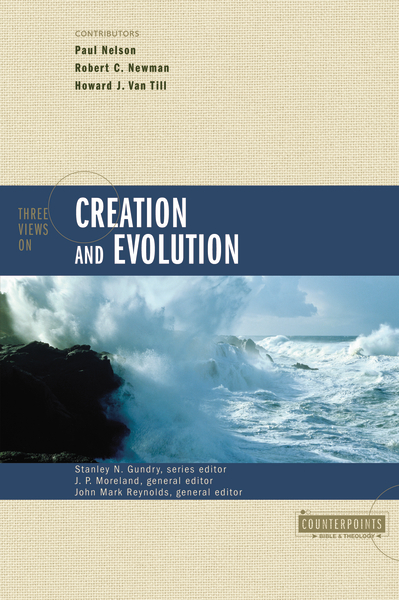 It’s no secret: I consume just about any book I can get my hands on related to the debate over the duration and means of creation within Christianity. Recently, I read through Three Views on Creation and Evolution, part of the Zondervan Counterpoints series. The young earth creationists (John Mark Reynolds and Paul Nelson) in this volume were more even than many I have read, and I appreciated their contribution in many ways and even found myself agreeing with portions of it. However, they did make a few remarkable claims, one of which will be my focus here. Namely, they suggested we leave interpretation of Genesis behind us and just assume the early church got it right.
Here is the quote:
Our advice, therefore, is to leave the issues of biblical chronology and history to a saner period. (100)
Why should we do that, you ask? Well, before offering this advice, Reynolds and Nelson argue:
Whatever the truth of the matter may be in regard to biblical history, we are… least likely to find it. Nothing about the education of most moderns leaves them disposed to be sympathetic to traditional readings of the biblical text… The almost overwhelming temptation is to “trim” [the portions of text which may be hard to swallow]. Suddenly, new ways of reading the text of Scripture are discovered, which to no one’s surprise allow for accommodation between at least some of the reigning paradigms and traditional religion. (99-100)
I find this simply astonishing! There are a number of reasons to reject this entire line of reasoning immediately. First, it is, in effect, poisoning the well. Second, it abandons any notion that new evidence can challenge established traditions. Third, it begs the question. Fourth, it undermines the need for the church to be semper reformanda – always reforming. We’ll examine these briefly in order.
Poisoned Well
The way Nelson and Reynolds present their argument poisons the well against any who would disagree with them. The insinuation is that the only reason anyone would come to a different conclusion is either because they don’t have an “educational” background which allows them to consider traditional readings or because they are in such a hurry to compromise the text to align with science. Although it is certainly possible that many readings come from these motivations, to suggest that we must put a ban on any future looks at the interpretation of Genesis shows the authors seem to think these motivations apply to all novel interpretations.
New Evidence
To put an interpretation of Genesis on an indisputable pedestal and say “that came from a ‘saner’ time and so we must follow it” undermines any possibility for new evidence to challenge established readings. Yet the fruit of research in many areas of biblical interpretation continues to yield great insight into the biblical text. Moreover, to make an interpretation like that indisputable is to perhaps set up stumbling blocks for future generations, who may in good faith find more evidence which challenges that interpretation.
Question Begged
By saying we need to leave the interpretation of Genesis to the past, Reynolds and Nelson have begged the question by assuming this interpretation is correct. In fact, they seem to assume it is so obviously correct that they don’t even bother to defend it. But of course this is not how theology ought to be done. We should not just relegate interpretations to the ecclesial past because we don’t want to face the challenges of today. Rather, we should explore the new evidence and new interpretations to see if they might in fact better match God’s revealed truths. By simply assuming we can leave an interpretation of Genesis as is, Reynolds and Nelson just assert their view is obviously correct without argument.
Semper Reformanda
The notion that the church needs to continually be reforming seems to be correct. When we find truths revealed in God’s natural revelation, we should be prepared to realize this may not align with our established paradigms. We need not reject these discoveries merely because the historical church didn’t know about them. Instead, we should realize that as an imperfect church waiting for our Lord’s return, we may get things wrong. We are always going to need to reform.
Conclusion
Thus, I think that any young earth creationist who simply asserts we must hold to the historic understanding of the text of Genesis is mistaken. Of course, I would also point out that the “historic” understanding is hardly what the modern young earth creationist would believe (such as the duration of the entire universe only lasting 6000 years in order to align with the creation days, etc.), but that is a matter for a different post. For now, it should be acknowledged that we should not just abandon attempts to understand God’s revelation in Genesis.
Links
Be sure to check out the page for this site on Facebook and Twitter for discussion of posts, links to other pages of interest, random talk about theology/philosophy/apologetics/movies and more!
Origins Debate– Check out all my posts on the discussion within Christianity over the duration and means of creation.
Source
Paul Nelson and John Mark Reynolds, “Conclusion” in Three Views on Creation and Evolution
SDG.
——
The preceding post is the property of J.W. Wartick (apart from quotations, which are the property of their respective owners, and works of art as credited; images are often freely available to the public and J.W. Wartick makes no claims of owning rights to the images unless he makes that explicit) and should not be reproduced in part or in whole without the expressed consent of the author. All content on this site is the property of J.W. Wartick and is made available for individual and personal usage. If you cite from these documents, whether for personal or professional purposes, please give appropriate citation with both the name of the author (J.W. Wartick) and a link to the original URL. If you’d like to repost a post, you may do so, provided you show less than half of the original post on your own site and link to the original post for the rest. You must also appropriately cite the post as noted above. This blog is protected by Creative Commons licensing. By viewing any part of this site, you are agreeing to this usage policy.
Responding to “Nine Questions for the Old Earth Creationist”
 One of the podcasts I enjoy listening to is “Issues, Etc.,” a conservative Lutheran radio program that addresses a number of different views. As is the case with anything, however, once you talk to someone or listen to something long enough, you find things with which you disagree. Recently, I heard a podcast which was discussing Christianity and Science. During this podcast, the guest alleged that the Bible contradicts things like the Big Bang theory or any interpretation of millions or billions of years. As that is an area of great interest for me, I did a little more digging and found that Pastor Todd Wilken, one of the primary speakers on the radio program, had written a series of questions for Old Earth Creationists in an article titled “Nine Questions for Old Earth ‘Creationists.‘” [Note that he uses scare quotes around the word “Creationists.”]
Here, I shall respond to the Nine Questions asked of Old Earth Creationists. Before I dive in, I want to offer one major disclaimer: these topics are far more complex than one blog post can cover. I fully realize I am leaving objections unanswered and some questions unasked. Feel free to comment to clarify. Second major disclaimer: I realize that there is diversity within old earth creationism. However, I have striven to answer the questions in as broad a manner as possible.
I will be leaving the questions from Todd Wilken in bold and italic font and my answers in this standard font. The questions are direct quotes from his article, and I take no credit for their wording.
1. What in the text of Genesis 1 requires or suggests an old Earth?
I admit that I know of no Old Earth Creationist (hereafter OEC/OECs) who holds that Genesis 1 requires an old earth. I think the question is mistaken to even use that word, but I would be happy to be corrected should someone find an OEC who does allege that the text requires an old earth. Thus, the question must be what is it that suggests an old earth? Well, as readers of this blog may know already, I think this question itself is mistaken. The text is not referring to the age of the universe at all, anywhere. On this view, although an old earth may be permissible according to the text, it is not suggested; nor is a young earth suggested. The text just isn’t talking about the age of the universe.
Now, many OECs do hold that the text suggests an old earth. Hints of this, they argue, can be found in the fact that evening and morning occurs before there is a sun. Moreover, it is not until the fourth day that days may even be measured. Others hold that the terminology in Genesis 1:1, “In the beginning God created the heavens and the earth” suggests that the creation occurred in that verse, and that the rest of the chapter (and chapter 2) narrow the focus to earth or even the Garden of Eden.
2. What are the referents of the words “morning” and “evening” in Genesis 1?
I find it extremely telling that Wilken decided to switch the order of these words around. It absolutely must be noted that the text says “evening” and morning.” Why is this? Well, if the first day is really the first 24 hour period in the history of all that exists apart from God, how is it possible for evening to come before morning? [One insightful reader noted that the Hebrews saw evening as the beginning of the day anyway… but my point is that the fact there is an evening implies there is a sun to set… which isn’t created until later.] That is a question with which the literalistic young earth creationists must contend. If they choose to read the Bible literal[istical]ly, they must be consistent. The fact that they cannot when it comes to things such as evening coming first shows that their reading is self-referentially inconsistent.
Now, to answer the actual question, that really depends on which OEC you are referring to. I would tentatively suggest that most OECs hold that the referents are simply ways to mark the beginning and ends of creation periods.
3. What in the text of Genesis 1:26-27 requires or suggests the creation of man over millions of years?
I admit that this was where I really started to wonder whether Wilken understands the distinctions between OECs and other views of creation. In asking this question of OECs, Wilken betrays an apparent ignorance of the views of major proponents of OEC.
Representative is Hugh Ross, the founder of Reasons to Believe, which is itself the largest Old Earth Creationist organization. In his work, More Than a Theory, he writes regarding human origins: “God created humans in a deliberate, miraculous act” (182, cited below). In other words, Ross (and this is the position of the entire organization, along with every other OEC I know of) holds that humankind was specially created by God in a single miraculous act. “Ah, but wait!” one might cry. “That doesn’t deny millions of years for the creation of humanity.”
Very well, a very small amount of digging shows Hugh Ross again writing, this time with Fazale Rana (also of Reasons to Believe and another Old Earth Creationist) in their work Who Was Adam? “God created the first humans… both physically and spiritually through direct intervention… All humanity came from Adam and Eve… God created Adam and Eve relatively recently, between 10,000 and 100,000 years ago” (44-45, cited below).
Therefore, it seems this question is nonsensical. OECs hold that humankind was created specially by God and not over the course of millions of years. I admit that I think just about any OEC would be scratching their head trying to figure out why this question is even being asked because it is so far off the mark of the actual views of OECs. It is particularly remarkable because this feature is one of the very things which distinguishes Old Earth Creationism from other, non-creationist models. Gerald Rau notes this distinction: “Although differing in the timing, both [Young- and Old- Earth creationists] believe God created two humans… without progenitor. This, of course, is a radically different perspective from the evolutionary models” (147, cited below). Note his wording: “of course”; “radically different.” Frankly, anyone who has done even a cursory study of varying Christian views about the timing and means of creation would know this.
4. Where in the text of the Genesis 2 and following is the transition from epoch-long days to 24-hour days?
This question seems to be a bit strange. The word “day” is only used in Genesis 2:2, 3, 4, and 17. In verse 4 even Young Earth Creationists (YEC) have to admit that the word is being used as more than one day (the text says “These are the generations of the heavens and the earth when they were created, in the day that the LORD God made the earth and the heavens” (ESV).
Verse 17 is also of great interest because it says, “…’but of the tree of the knowledge of good and evil you shall not eat, for in the day that you eat of it you shall surely die'” (ESV).
Did Adam die on the 24-hour day he ate of that tree? No. In fact, he and Eve went on to have children and raise them to some point. So again, we find that “day” is not referring to a 24 hour period.
But where is the transition? I don’t know. I think the question itself is confused because the word is used four times in the chapter, two of which cannot be 24-hour days.
5. What creative actions described in Genesis 1 require more than six 24-hour days to accomplish for a God Who creates ex nihilo?
The use of the word “require” is again extremely problematic. Of course any OEC would agree that God could create in any time period God wanted. God certainly could have created anything God wanted in any amount of time in which God wanted to. So no OEC that I know of would say that God required more time.
However, some OECs do argue that Adam may have needed more time to accomplish everything it is said he accomplished in the allotted times. Naming all the animals, given the untold thousands of species which exist, would have taken quite a bit of time. (Genesis 2:19 is still part of the sixth day because God is still creating and has not yet made woman.)
But, again, I do not think any OEC would say that the text “requires” God to use more than 24 hours.
 6. Where else in Scripture is the word “day” used to designate billions of years?
Here we find yet another question that is just so incredibly off base that it is remarkable. Of course, the Bible does use the word “day” to denote that such a period, for the LORD, is like a thousand years. And the meaning of “like a thousand years” is debatable, but surely it is a long period of time [and much longer than 24 hours]. But the question of “billions of years” is just the wrong question. Again, the text is not trying to tell us how old the earth is.
If Wilken desires to dispute this, I would gladly ask him to present me with a verse in the Bible which sets the date of creation.
7. How are we to understand the connection between the six epoch-days of creation and the sanctification of a literal seventh day in Genesis 2:1-3 and Exodus 20:11?
I am often confused when YECs bring up this argument. Yes, Exodus 20:11 parallels Genesis 1-2 by having 7 days and denoting the seventh as a day of rest. Now, what about that somehow entails that they are exactly the same? I mean think about the Biblical categories of typology. Very often things correspond to each other but are not exactly the same. One might think of the use of Hosea 11:1 to Matthew 2:15. The passage in Hosea is clearly discussing the nation of Israel. In Matthew 2:15 it is applied to an individual, the Son of God. Does this automatically mean that in Hosea we must assume that “son” is being used in the same sense as “Son of God”? Obviously not. Then why ignore typological categories in other texts?
Okay, but how would an OEC answer this objection? By pointing out that the words “day” and “Sabbath” are used variably in the Pentateuch, so a direct 1 to 1 correlation is off-base. Sabbath, for example, may refer to the span of an entire year as opposed to just one day (Leviticus 25:4). Day may refer to a thousand years (Psalm 90:4).
8. Are there considerations outside the text of Genesis that require an old Earth?
I’m not sure if Wilken means to express the question of other texts, or whether he wishes to address the issue of extra-Biblical evidence.
Regarding the first possible meaning, again the answer would be “No.” I will continue to maintain that I know of no OEC who holds the Bible requires an old earth. Many would follow my own reasoning and note that the Bible isn’t trying to discuss time periods. That just isn’t a concern of the text.
9. According to the Old-Earth theory, what is the relationship between death and human sin? When did death enter the world?
Frankly, at this point it should be abundantly clear that Wilken has not interacted very much with the works of Old Earth Creationists. As was noted in the answer to question 3, many OECs hold to the special creation of Adam and Eve. Therefore, this question is similarly extremely easy to answer: human death entered the world because of sin.
A Major Issue
I think one of the main problems with Wilken’s comments are that he doesn’t seem to distinguish between Old Earth Creationists, Theistic Evolutionists, and the various varieties of design theorists. This leads him to a few confused questions which he directs towards OECs that make no sense when directed towards them. I admit that the series of questions here leads me to wonder whether Wilken is simply unaware of the distinctions between these groups or just over-simplifying and obfuscating. I suspect the former.*
Conclusion
I have endeavored to provide brief answers for the Nine Questions Wilken asks of Old Earth Creationists. I believe that some of the questions he asks demonstrate confusion about the actual category of Old Earth Creationism. Moreover, the questions that are on target have been answered repeatedly by various OECs. Whether these answers are taken as convincing is another story.
*It should be noted that Wilken’s article was published in 2002, which is prior to the works cited here. Therefore, Wilken could not have known about the works I have cited to show some of the difficulties with his paper. However, I cited these works specifically to show how mistaken these questions are. If one is going to attempt to educate concerned Christians about a topic like this, it is vastly important to be aware of the distinctions to be found within each group, and Wilken fails to show awareness of these distinctions. Moreover, we will explore Wilken’s very recent article next week, in which he continues to make these errors.
Sources
Hugh Ross, More Than a Theory (Grand Rapids, MI: Baker Books, 2009).
Hugh Ross and Fazale Rana, Who Was Adam? (Grand Rapids, MI: Baker, 2005).
Gerald Rau, Mapping the Origins Debate (Downers Grove, IL: InterVarsity Press, 2012).
Todd Wilken, “Nine Questions for the Old Earth ‘Creationist,'” 2002.
SDG.
——
The preceding post is the property of J.W. Wartick (apart from citations, which are the property of their respective owners, and works of art as credited) and should not be reproduced in part or in whole without the expressed consent of the author. All content on this site is the property of J.W. Wartick and is made available for individual and personal usage. If you cite from these documents, whether for personal or professional purposes, please give appropriate citation with both the name of the author (J.W. Wartick) and a link to the original URL. If you’d like to repost a post, you may do so, provided you show less than half of the original post on your own site and link to the original post for the rest. You must also appropriately cite the post as noted above. This blog is protected by Creative Commons licensing. By viewing any part of this site, you are agreeing to this usage policy.
Really Recommended Posts 5/24/13
 Once more I have gone to the ends of the internet to find some posts to recommend for you, dear readers. This week, the topics are, as ever, diverse. We have bioethics, parameters for debates, creationism, the Quran, and Nietzsche. As always, check them out. Let me know your thoughts.
Bioethics and Worldview– A fascinating post which shows how one’s worldview can guide one’s positions in bioethics. What do we value? That will come out in practice. Our society does not value life. I think that is obvious in our practices.
Convenient Explanations– Luke Nix offers some advice to Christians and non-Christians about respectful debate.
Biblical case for Long Days (VIDEO)– I found this short video informative. It gives some reasons that Bible-believing Christians hold to views other than young earth creationism.
The Bible or the Quran– A fascinating, worldview-level comparison of the Bible and the Quran. Which makes more sense of reality? Mike Robinson argues persuasively that it is the Bible.
Doug Groothuis – Nietzsche’s Evaluation of Christian Ethics– I found this very thought-provoking and insightful. Nietzsche is often seen as one of the more talented atheistic philosophers. How does his evaluation of Christian ethics play out? Is it sound? Doug Groothuis puts forth cogent arguments which must be considered.

 J.W. Wartick - Reconstructing Faith