Ian Harper
Book Review: “Walking Through Deconstruction: How to Be a Companion in a Crisis of Faith” by Ian Harper
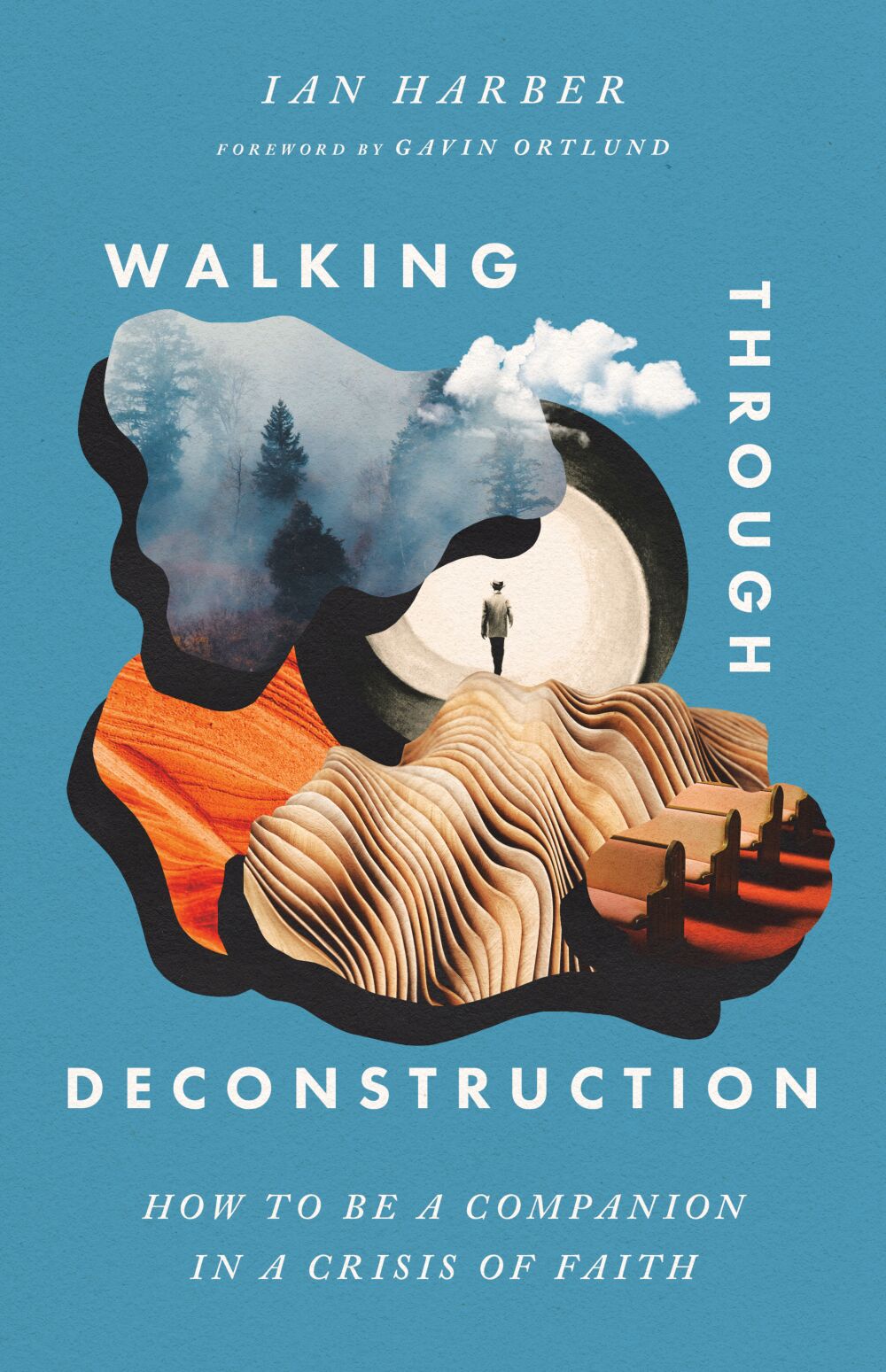
Walking Through Deconstrution: How to Be a Companion in a Crisis of Faith by Ian Harper is a book not so much for people who are deconstructing but for Christians who know someone who is deconstructing and are struggling to know how to be a friend along the way. I read it as a Christian who has deconstructed (and, in case you have seen the tagline of this site, reconstructed) his faith. I think I can give at least some perspective to the contents from an insider and interested party.
I have to admit I had some healthy skepticism going into this book. The author has written for The Gospel Coalition, an evangelical reformed ministry that leans conservative [1]. There’s a Foreword from Gavin Ortlund, who is largely seen as an apologist who engages with and against… other Christians. I won’t apologize for that skepticism, but I am happy to report it was mostly misplaced.
Harper clearly acknowledges the many reasons why people deconstruct, while also making note of the trite, oft-wrong reasons that people offer to explain why other people deconstruct. Too often, Christians say things that suggest people only question Christianity because they want to lead a sinful lifestyle, or they downplay the real problems within Christianity by saying that the sins of individual people don’t make the central message untrue. You won’t find that in this book. Instead, Harper carefully notes that labels such as “good” or “bad” deconstruction–implying that a journey of faith can be categorized as such–are unhelpful. Additionally, he notes the many, many reasons people deconstruct and does so with an eye towards understanding rather than judging.
None of this is to say that Harper doesn’t still approach the problem from within a Reformed evangelical background. He clearly states that he believes human hearts are inherently sinful, and that deconstruction can be one thing that stems from that–despite having often good or at least understandable motivations (78-79). Another problem he cites is the need for individualism in our society (80ff). He notes that therapy “can” be a good thing, but that total reliance on therapeutic speech and activity can misplace true healing (83ff). This latter point is one that demonstrates Harper is attempting to walk along a very fine line. He doesn’t seem to want to say therapy is bad–and indeed says the opposite at times–but he also seems to want to say that we over-rely upon therapy and self-help and sees that therapy can become a replacement for religion (the latter point he makes explicit on p84). Intriguingly, he also notes that reliance on therapy alone can highlight class divisions as seeing a therapist is often a position of privilege (85). The over-reliance on devices that make promises about how we can now live is another factor Harper sees as contributing to deconstruction (88-89). In all of this, though, Harper seems to be seeking to make a point, which he ultimately brings home at the end of the chapter–that we humans have needs that we will meet in whatever way is available to us, and he sees the church as one way to meet some of those needs that should not be ignored (91).
The second part of the book focuses on Harper’s look at what it might mean to reconstruct faith and to assist in doing so as one of those “companion(s) in a crisis of faith” noted in the subtitle. Mileage on this section will vary wildly depending upon what readers themselves are looking to do and what their background beliefs are. Harper is again coming from a Reformed background, so his advice makes the most sense within that context. Even here, however, he makes several points that could carry beyond that specific set of beliefs. For example, he frames questioning of beliefs of Christianity as “what it feels like” vs. “what it is.” The former, he notes, people often see people’s questioning of faith as dipping into heresy when they are deconstructing and a goal of reconstructing towards orthodoxy. However, reality as he sees it is more aligned with deconstruction moving through beliefs that are unimportant to those that are important, urgent, or core, and then building back up from there (138-140). People move too quickly, sometimes, to judge others for heresy when it might be something else like ignorance or an attempt to reframe and discover core truths (ibid, cf also 141).
Walking Through Deconstruction isn’t perfect. No book is. But for a book for Christians to give other Christians about deconstruction, it is a solid choice. Unlike many books in this field that try to immediately say deconstructing Christians are trying to lead sinful lives or don’t want to conform to rules, Harper acknowledges the many reasons that people deconstruct and offers a way forward that isn’t entirely focused on trying to reconvert someone. Saying “you can do worse” is, at this point, honestly a good endorsement. There aren’t enough books that follow this path–trying to navigate both the realities of reasons why people deconstruct and still offer a way forward for staying faithful and being a faithful friend in that space. If nothing else, it is a very interesting and sometimes challenging read. Recommended reading.
Notes
[1] It’s worth noting that The Gospel Coalition has, at least, gone on record to push back against some far-right leaning Christians who have claimed, for example, that empathy is sinful. See, for example, the article “The Godliness of Empathy.” I would still take issues with some of the points made here, but this is a far cry from those claiming that empathy is somehow the path to sinful acceptance of anything.
All Links to Amazon are Affiliates
Links
Be sure to check out the page for this site on Facebook!
Book Reviews– There are plenty more book reviews to read! Read like crazy! (Scroll down for more, and click at bottom for even more!)
SDG.
——
The preceding post is the property of J.W. Wartick (apart from quotations, which are the property of their respective owners, and works of art as credited; images are often freely available to the public and J.W. Wartick makes no claims of owning rights to the images unless he makes that explicit) and should not be reproduced in part or in whole without the expressed consent of the author. All content on this site is the property of J.W. Wartick and is made available for individual and personal usage. If you cite from these documents, whether for personal or professional purposes, please give appropriate citation with both the name of the author (J.W. Wartick) and a link to the original URL. If you’d like to repost a post, you may do so, provided you show less than half of the original post on your own site and link to the original post for the rest. You must also appropriately cite the post as noted above. This blog is protected by Creative Commons licensing. By viewing any part of this site, you are agreeing to this usage policy.

 J.W. Wartick - Reconstructing Faith