inerrancy
Inerrancy Undermines Interpretive Method?

James Barr’s work, Fundamentalism (1977) remains incredibly relevant to this day. I have been reading through it and offering up thoughts as I go. I’m reading the chapter about the Bible and Barr has enormous insight into the Fundamentalist (and here it is okay to substitute in “Evangelical”) reading of the Bible.
I’ve already written about how Barr notes that fundamentalists do not have a consistent hermeneutic of the Bible because their adherence to inerrancy forces them to read passages in light of their own understanding of truth. Barr isn’t done firing his salvoes at this issue, though he also notes that many people misread fundamentalists on their use of literalism:
“It is thus certainly wrong to say… that for fundamentalists the literal is the only sense of truth. Conservative apologists are right in repudiating this allegation. Unfortunately, the truth is much worse than the allegation that they rightly reject. Literality, though it might well be deserving of criticism, would at least be a somewhat consistent interpretative principle, and the carrying out of it would deserve some attention as a significant achievement. What fundamentalists do pursue is a completely unprincipled – in the strict sense unprincipled, because guided by no principle of interpretation – approach, in which the only guiding criterion is that the Bible should, by the sorts of truth that fundamentalists respect and follow, be true and not in any sort of error” (49).
Here Barr notes first that fundamentalists/evangelicals are right to push back against the accusation that they simply see literalism as the only way to read the Bible. However, he goes on to point out that their approach is significantly more problematic, because they eschew all principles of interpretation other than the one that the Bible should not be found to be in error on any point.
Who determines how to interpret any given passage, then, and how? Pontius Pilate asked “what is truth?” and has been lampooned time and again–but the question could be posed to conservative readers of Scripture, who, in their attempts to define truth, go to extraordinary lengths to massage the word into what they need it to mean to preserve the Bible (the Chicago Statement on Biblical Inerrancy is full of this). Who determines what is an error?
In my own life, I experienced this unprincipled–again, using the word technically as meaning literally without principle–approach to reading the Bible. At a Lutheran Church – Missouri Synod college, I was taught that we needed to use certain principles of interpretation, specifically those following a supposed “historical grammatical” method of interpretation. This method, among other things, aims at attempting to find the authors’ original intent in meaning in the Biblical text. Yet, when I pointed out that our knowledge of the thinking of the Ancient Near Eastern world meant that interpreting the passages which depict a flat earth with four corners seem to be the right interpretation, I was told that we suddenly didn’t follow a method that went to the authors’ original meaning. Another pastor told me very specifically that we couldn’t know the authors’ original intent in writing the words of Scripture, but the same pastor later countered my doubting of young earth creationism by claiming that the author of Genesis knew the Earth was young–and so intended us to believe so as well.
The shifting sand of interpretation would seem entirely odd if it wasn’t placed in the context of inerrancy, which is the tail that wags the dog. All conservative interpretation now centers itself around this new doctrine. Reading books about the Canaanite conquest from conservative scholars is telling in this regard, as are questions about exactly what happened with certain miraculous events in the Bible. The debates often center around just how far one can push inerrancy without it breaking. Can one say that the walls of Jericho didn’t literally fall to pieces after being marched around and shouted at a certain number of times and still hold to inerrancy? It seems silly, but this is a real debate that is happening in literature right now. The same question is asked, time and again, for any number of things–whether Jonah was really swallowed by a fish (or a whale?)–whether one has to affirm Job was a real person to affirm inerrancy. The questions in evangelical and conservative scholarship related to the Bible are so often not about what the text is actually teaching us but rather on what exactly is allowed to be said in the context of inerrancy. And when someone does do some serious hermeneutical work that pushes at a supposed boundary of inerrancy, they are inevitably called to account in conservative academic journals.
Inerrancy controls the narrative, it controls the hermeneutic, and it strangles the interpretation of the Bible. It ought to be abandoned.
Fundamentalism continues to provide fruit for thought, almost 50 years after its initial publication. I highly recommend it to readers.
SDG.
How Inerrancy Displaces God
James Barr (1924-2006) was a renowned biblical scholar who, in part, made some of his life’s work pushing back against fundamentalist readings of Scripture and Christianity. I have found his work to be deeply insightful, even reading it 40 or more years after the original publications. His most controversial and perhaps best-known work was Fundamentalism (1977), in which he offered a survey and critique of fundamentalism, which applies incredibly strongly to Evangelicalism and conservative Christianity to this day.
One of the many incredible insights Barr provides is how the doctrine of inerrancy actually displaces God by making the Bible a or the primary focus of Christianity. We’re going to take an extended look at what he writes about the Bible under fundamentalism, along with some commentary, below [all these quotes are from pages 36-38 in the edition I have):
“For fundamentalists the Bible is more than the source of verity for their religion… It is part of the religion itself, indeed it is practically the centre of the religion, the essential nuclear point from which lines of light radiate into every particular aspect. In the fundamentalist mind the Bible functions as a sort of correlate of Christ. Christ is the personal Lord… the Bible is a verbalized, ‘inscripturated’ entity, the given form of words in which God has made himself known, and thus the Bible equally enters into all relations, its words cannot be quoted too often, its terms, cadences and lineaments are all to be held dear.”
Barr here starts his fusillade by noting that for the fundamentalist, the BIble is nearly on par with Christ. Why? Because like Christ, the Bible is in every relationship, and because it is visualized as verbally inspired–the very individual words God intended–it becomes in a way like the deity Christ-self.
“While Christ is the divine Lord and Saviour, the Bible is the supreme religious symbol that is tnagible, articulate, possessable, accessible…”
Christ is far off, almost mythical compared to the reality of the Bible one can just hold in one’s hand. Barr does moderate this a bit:
“From this point of view it is wrong to say, as is sometimes said, that they put the Bible in the place of Christ. But from another point of view the Bible is really more important: it is the Bible, because it is the accessible and articulate reality, available empirically for checking and verification, that provides the lines that run through the religion and determine its shape and character.”
So while it may be wrong to say the Bible is put in place of Christ, in reality the inerrantist almost makes the Bible even more important than Christ. Again, Christ is not immediately available, in their minds, to pick up and interact with. But the Bible is. So one can open the Bible and verify what is supposed to be reality.
“The Bible is thus the supreme tangible sacred reality.”
I think here of my own (Lutheran) tradition in which we believe we can experience sacred reality through Christ’s promises and literally being present in, say, the Lord’s Supper.
“…once the symbolic elevation of the Bible goes beyond a certain point it begins to alter the shape and character of evangelical religion altogether. Certain kinds of biblical criticism and theology are felt to threaten the status of the Bible as absolute and perfect symbol of the religion; and in order to protect that symbolic status of the Bible the religion itself has to be adjusted or distorted.”
I think here of the many, many times I heard inerrancy as the central part of Christianity. Not Christ; inerrancy. Because–it was reasoned–after all, if the Bible has an error, why trust it about Christ? And so you lose everything if even one error exists. And here we see how the Bible is absolutely the central religious symbol.
“The fundamentalist position about the infallibility and inerrancy of the Bible is an attempt to prevent this tradition from being damaged through modes of interpretation that make the Bible mean something else… Especially in its intellectual and apologetic work… [fundamentalism] finds that it gradually has to alter and even abandon essential elements in the very religious tradition form which it started out. When this happens it is valid to say that the Bible as symbol, rather than the Christ who speaks through the Bible, has become the supreme controlling factor.”
I think here of my background as a young earth creationist, in which certain elements of geology were seen as specifically threatening to my faith in a way that no Christians prior to the 1900s would have been able to even comprehend.
“This symbolic function of the Bible has a deep effect on personal behaviour… [such as] the incantational use of Scripture.”
This hits hard–the idea that merely repeating utterances of the exact wording of Scripture has some kind of power or reality-bringing for it.
“In a religion lacking in ritual, the citation of Scripture has often functioned as a practically ritualistc procedure. The Bible… undergirds and harmonizes with the fundamentalist tradition of religion. It is a matter of course that preaching will use biblical texts, celebrate the centrality and infallibility of the Bible, and quote it frequently. It is by no means, however, a matter of course that it will make a careful exegetical examination of the meaning of the passages. Most fundamentalist preaching merely reiterates the traditional evangelical point of view, quoting the accepted proof texts but not really asking openly after the meaning.”
Yes! I have found it deeply ironic that in the conservative Lutheran circles I grew up in, the attempt to actually find what the Bible means was avoided. While saying they wanted to use the “historical grammatical” method of interpretation rather than the “historical critical” method, I’d encounter pastors and theologians who would explicitly tell me I “shouldn’t” be using actual historical facts about the Bible or its setting in the interpretation thereof. It was far more important to affirm the tenets of conservative Lutheranism rather than ask questions about what the text might “really” mean. Indeed, asking what a text might “really” mean was compared to the snake in the Garden asking if God “really” said something.
I haven’t even gotten to Barr’s chapter in this book on the Bible itself, but it has already provided immense food for thought. Insisting on Biblical inerrancy not only undermines how Scripture works, but it also displaces God, making the Bible the ultimate symbol of faith.
SDG.
John Warwick Montgomery (1931-2024)
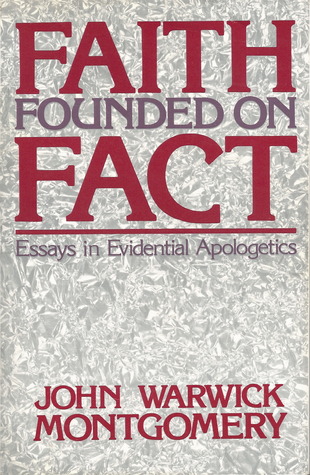
John Warwick Montgomery died on September 25, 2024. John Warwick Montgomery is the most well known apologist from Lutheran circles in decades. From within the Lutheran Church-Missouri Synod, he fought not just external threats to apologetics, but also internal ones. As a Lutheran, he was forced by turns to defend even the prospect of apologetics from those who would lean towards fideism or some form of Lutheran irrationalism.
Montgomery was highly prominent in discussions about apologetic method. When the presuppositional method arose within Reformed circles, Montgomery was perhaps its most vocal and engaging critic. His famous (or infamous, depending on one’s stance) essay “Once Upon an A Priori” used fables to engage with presuppositional method and showed that the method would likely collapse under its own arguments when faced with an equally staunch presuppositionalist from another faith tradition. He wrote quite a bit in defense of evidentialist apologetics, and generally believed and argued that the Resurrection was historical fact and can and should be investigated as such.
Inerrancy was another of Montgomery’s pillars of argument. He argued against positions which would qualify inerrancy more, and attempted to defend it within the Lutheran tradition. He argued against other Lutherans who left his own denomination, asserting that their changed stance on inerrancy was the “fuzzification” of inerrancy to the point at which it would become unrecognizable as such. Indeed, I find his arguments to that effect fairly convincing, and that is part of the reason I don’t hold to inerrancy; it simply does not work with how the Bible was written. Montgomery would vociferously disagree, but I’m thankful to him for clarifying quite adroitly how qualifying a position like inerrancy begins to make it difficult to pin down.
Montgomery was a lawyer as well. He wrote on a vast range of topics, from law to demonology, from apologetics to historiography. His texts show a man whose mind was capable of absorbing and expanding on countless theologically-inclined topics in ways that, if they didn’t reflect particular expertise, still would show a general grasp of the topic and drive engagement with it. I have read and re-read some of his books to the point where covers are beginning to fall off. It’s often popular to read only those with whom one agrees, or to read one with whom one disagrees only to challenge and condemn. Montgomery, for me, is a constant challenging duelist. Where I disagree, I continue to find reading his works fruitful and challenging. Where I agree, I find pleasure in seeing his defense ably lay out points of impact.

I had the pleasure of meeting him at a conference in 2012. He was friendly and vivacious. The lecture he gave on religious conversion was fascinating to me at the time. I wrote up the lecture notes for a blog post here, and he sent me an email about my post, apparently thinking I had simply re-posted his lecture. He wrote, “Can you inform me as to where you obtained it and whose permission you obtained for doing so? I am willing to have you retain it on your website–but I need to know your source for posting it.” I wrote him back, explaining I had based my post upon my own notes based upon his lecture. His response was gracious, and to the point, thanking me for my detailed response and exposition of his lecture. It was my last interaction with him–I wish I’d had the courage to e-mail him again later.
Montgomery’s voice will be missed. He was an able defender of his positions and his mind wriggled into the logical holes in others’ positions in ways that made it uncomfortable to disagree with him. I admire the man, and I hope to see him in the hereafter.
SDG.
Links
John Warwick Montgomery– See all my posts tagged about John Warwick Montgomery (scroll down for more).
——
The preceding post is the property of J.W. Wartick (apart from quotations, which are the property of their respective owners, and works of art as credited; images are often freely available to the public and J.W. Wartick makes no claims of owning rights to the images unless he makes that explicit) and should not be reproduced in part or in whole without the expressed consent of the author. All content on this site is the property of J.W. Wartick and is made available for individual and personal usage. If you cite from these documents, whether for personal or professional purposes, please give appropriate citation with both the name of the author (J.W. Wartick) and a link to the original URL. If you’d like to repost a post, you may do so, provided you show less than half of the original post on your own site and link to the original post for the rest. You must also appropriately cite the post as noted above. This blog is protected by Creative Commons licensing. By viewing any part of this site, you are agreeing to this usage policy.
Bonhoeffer on an infallible (or inerrant) church, book, or doctrine

Dietrich Bonhoeffer, a German Lutheran pastor who was executed by the Nazis, continues to rise in fame and prominence in American theology. Many conservatives have been working to co-opt his theology for Evangelicalism, but Bonhoeffer remained thoroughly Lutheran throughout his life. What is especially interesting is that, while Bonhoeffer was seen as fairly conservative in his own setting, his views on Scripture would be seen as wildly liberal by most American Evangelicals.
For example, from student notes on a lecture Bonhoeffer gave on Karl Barth’s theology: “Be it an infallible church, Book or Doctrine, all these assume that there is a spot in the world which is not fallen and thus exempt from sinfulness. But the only part of the world free from Sin and its positive correlative is Christ Jesus… and He alone is the ultimate authority…” (DBWE 13:315 [Dietrich Bonhoeffer: London, 1933-1935]).
While brief, Bonhoeffer’s point could not be more anathema to those who claim that inerrancy is a necessary doctrine for Christianity. Bonhoeffer notes that any claims to infallibility (which is often seen as even less powerful a word than inerrancy, though Bonhoeffer could not have referred to inerrancy as the doctrine had not even been developed yet) of church, book (including the Bible!), or doctrine (including inerrancy!) is necessarily part of the fallen world and so not exempt from sinfulness. In other words, no book–even the Bible–can be seen as free from the corrupting influence of sin. Bonhoeffer instead sees Christ alone as the ultimate authority on God.
While inerrantists might attempt to counter this argument by saying things like “but how do we know about Christ?”–the implication being that we can only know about Christ through the Bible–this not only discounts the power of the Holy Spirit, but it also merely reaffirms the point that we do not need an inerrant Scripture to know about God. God instead enters into our world as the ultimate authority in Christ, coming as a human being in a way that is seen as foolishness to the world–including the inerrantists who try to raise Scripture to the level of Christ.
Bonhoeffer’s last words recorded in the lecture notes reflect this: “…God’s will crosses out all human will and effort. Hence the cross is a judgement. Thus the word of the cross which is foolishness and a stumbling block is the ultimate authority” (ibid).
Bonhoeffer’s argument thus directly answers and even chastises the inerrantist rejoinder, noting that they have raised that which is human will and effort–whether church, Book, or Doctrine–to the level of God and that the cross pronounces judgement upon that idea through Christ as ultimate authority.
Now, these words come from student notes on his lectures, but they by no means go against what Bonhoeffer says elsewhere about the doctrine of Scripture and Christology. For Bonhoeffer, and indeed for traditional Lutheranism that has not been co-opted by Evangelical thinking points, inerrancy was a moot point because God alone is without error and has already revealed Godself to us in Christ.
What so many American Evangelical fans of Bonhoeffer continue to misunderstand–and even, sadly, distort–is that Bonhoeffer was through and through a German Lutheran, not an American Evangelical. I am hopeful that as more continue to explore Bonhoeffer’s life and works, they find in Bonhoeffer not an enemy, but perhaps a challenge or correction to their theology and ethics as well.
All Links to Amazon are Affiliates links
Links
Dietrich Bonhoeffer– read all my posts related to Bonhoeffer and his theology.
Be sure to check out the page for this site on Facebook and Twitter for discussion of posts, links to other pages of interest, random talk about theology/philosophy/apologetics/movies and more!
SDG.
——
The preceding post is the property of J.W. Wartick (apart from quotations, which are the property of their respective owners, and works of art as credited; images are often freely available to the public and J.W. Wartick makes no claims of owning rights to the images unless he makes that explicit) and should not be reproduced in part or in whole without the expressed consent of the author. All content on this site is the property of J.W. Wartick and is made available for individual and personal usage. If you cite from these documents, whether for personal or professional purposes, please give appropriate citation with both the name of the author (J.W. Wartick) and a link to the original URL. If you’d like to repost a post, you may do so, provided you show less than half of the original post on your own site and link to the original post for the rest. You must also appropriately cite the post as noted above. This blog is protected by Creative Commons licensing. By viewing any part of this site, you are agreeing to this usage policy.
Inerrancy With No Autographic Text?
The Chicago Statement on Biblical Inerrancy, perhaps the most well-known and oft-cited affirmation of biblical inerrancy, declares that inerrancy as a doctrine applies explicitly to the autographic text of Scripture- “Article X. WE AFFIRM that inspiration, strictly speaking, applies only to the autographic text of Scripture, which in the providence of God can be ascertained from available manuscripts with great accuracy.” The reality is that inerrancy as defined by the majority of inerrantists, including the Chicago statement, simply cannot stand up to the reality of how the Bible was formed. What makes this point most starkly, in my opinion, is that conservatives who affirm inerrancy are now finding themselves in the unenviable position of learning and having to acknowledge that for some of the Bible, the very concept of an autographic text is an impossibility.
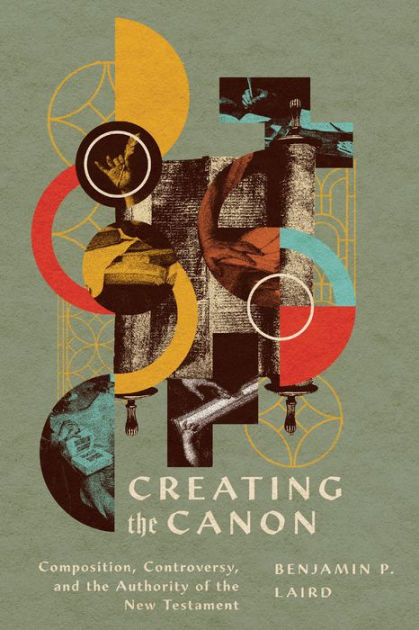
One example of this is Benjamin P. Laird. Laird is associate professor of biblical studies at the John W. Rawlings School of Divinity of Liberty University. Liberty University’s statement of faith includes a clause about the Bible which states, in part, “We affirm that the Bible, both Old and New Testaments, though written by men, was supernaturally inspired by God so that all its words are the written true revelation of God; it is therefore inerrant in the originals and authoritative in all matters.” Once again, at question is the “original” text of Scripture. But what if there is no original? I want to be clear, I’m not asking the question, which is oft-discussed in inerrantist writings, of what happens if we don’t have the original. Textual preservation has made that almost impossible for any ancient text, and inerrantists have long argued that this is no problem because while inerrancy only applies to the original or autographic text, the Holy Spirit has worked to preserve the text faithfully to the extent that we can be assured that we know enough to have proper faith and practice.[1] No, the claim I’m discussing isn’t whether we have the original text, but whether we can definitively point to any (imagined) autographic text as the original or the autograph at all.
Laird’s discussion of autographs in his book, Creating the Canon, is informative. The book focuses on the formation of the canon of the New Testament. Laird notes that the longtime assumption of [some] scholars was that the original text was the inerrant one. However, he goes on to look at how letters and other works were produced in antiquity, including a number of difficult questions this raises: “When we refer to an original autograph, are we referring to the initial draft of a work, a later revision or expansion, the edition that first began to circulate, or to the state of the writing at some later stage in the compositional process?” (48). Additionally, after noting that “it would seem most appropriate to identify the original autograph of a work not as the initial draft but as the final state of the writing that the author had reviewed and approved for public circulation” (49), he notes that letter writing in the ancient world often included the writer using a scribe and having that scribe produce “one or more duplicate copies” for themselves, including copies that may have differed depending upon the audience to whom they were sent (49, 54ff).
A concrete example is the ending of Romans, which Laird notes has some problematic textual history (56-57). After noting the difficulty of determining just how long the “original” letter to the Romans was, Laird notes various scholarly responses, including the possibility that there were two different “original” editions of Romans, one with a longer doxology that would have been intended for local audiences and one which omitted it, which were eventually combined (60-61). This leads to the remarkable conclusion that “it is a strong possibility that at least three copies of the text of Romans were produced at the end of the compositional process: one for the Romans, one for those in Corinth, and one for Paul and/or his associates” (61-62). In the conclusion of this fascinating section, Laird states, “Rather than assume that the compositional process of the canonical writings culminated with the production of a single ‘original autograph,’ it is therefore best to think of something that might be described as an original edition” (64).
I admire Laird’s dedication to highlighting the problematic nature of the concept of “autograph” when it comes to the biblical text, but have to wonder what kind of cognitive dissonance that might create for someone who teaches at a place where the statement of faith explicitly refers to inerrancy in the “originals.” Sure, Laird could punt the issue to whatever he means by “original edition” as opposed to “original autograph,” but at that point, what does inerrancy even mean?
I affirmed and defended inerrancy for many years. I finally let go of it for a number of reasons which are largely beyond the scope of this post. But I understand inerrancy, and understand how to defend it. I have even done so on this very blog. What I know included things like we defended the doctrine as applying to the autographic text. But if, as Laird and many, many others are pointing out, it’s true that there is no autographic text for at least some of the Bible, how can a defense of inerrancy even make sense? It’s like a constantly retreating battle for inerrantists: declare the Bible inerrant; but which Bible?; declare it only applies to the autographs; but we don’t have the autographs; so say that the autographic text is preserved at least to the extent that it doesn’t impact essentials of the faith; but autographs don’t exist to begin with. What’s supposed to follow that? For Laird the answer seems to be “say the original edition is inerrant.” But what is an original edition? And Laird’s questions, which are quite helpful, would absolutely apply to any such discussion- is it the drafts made along the way to the “final product,” and which final product- the one(s) Paul kept for himself or the one(s) to the local church or the one(s) to the church(es) at large?
The massive import of these questions for any doctrine of inerrancy must be made explicit. The Chicago Statement makes its stand upon the autographic text. If there is no autograph to which we can point, that statement falls. Almost every definition of inerrancy in modern times does the same. They are written as if we could travel back and time and point to a text, fresh off the pen of a scribe or writer, and say “this text is inerrant.” The reality is that not only do we not have such a manuscript today, but it is becoming increasingly clear that such a scenario needs to be rewritten, with a number of different texts directed towards different audiences, with different inclusions and exclusions in the text. Would the time traveler have pointed to a text of Romans with a doxology or without it? Would they point to a work in progress or a final draft? Would certain stories that seem to have been edited into the text be part of the inerrant text or not? The time traveler scenario is now complicated beyond imagining. We don’t have a single text of Romans we could point to definitively and say “there it is.” This is admitted even by those who wish to affirm inerrancy. And so again, what does it even mean to affirm that doctrine?
It’s worth at this point stopping the discussion to ask a simple question: is inerrancy worth it? Is there something about inerrancy that makes it an unassailable doctrine that all Christians must affirm such that we must continue to circle the wagons in ever smaller circles in order to try to be able to point at something that is inerrant in Scripture? Or–hear me out–or is it possible that evangelicals have made the wrong thing inerrant? Instead of making a text inerrant and essentially equivalent to God, what if we allowed that place to stay with Christ, the God-Man Himself, and the person whom the Bible attests as the divine Word of God? This has been, historically, the position of the church[2], and is a position which requires far less retreating whenever a new discovery is made that seems to call into question some potential error in the Bible or some problem with how modern statements on how the Bible must work are read. Rather than trying to constantly revise and salvage a doctrine that appears to need a revisiting every few years, Christians should focus instead upon God, whose steadfast love never changes.
Notes
[1] See, for example, the Chicago Statement, again Article X- “WE DENY that any essential element of the Christian faith is affected by the absence of the autographs. We further deny that this absence renders the assertion of Biblical inerrancy invalid or irrelevant.”
[2] A history of the doctrine of inerrancy is very revealing and shows it to be a largely American invention in the late 19th to early 20th centuries. The statements on this doctrine were not found in ecumenical councils, nor creeds, nor really anywhere until the 20th century. Efforts to read the doctrine back onto history are just that- reading into history rather than reading history. For example, there is not discussion of the “autographic text” in early Christian writings on the canon. They didn’t even have a concept of why that would be important. The doctrine is totally dependent upon post-Enlightenment and modernist categories. Ironically, it is parasitic upon textual criticism, developing essentially in opposition to that which those who affirm the doctrine wished to deny. When textual criticism pointed out difficulties in the text as it stood, inerrantists punted the doctrine to the autographs. This is just one example of how inerrancy is entirely dependent on categories foreign to historical Christian doctrine or to the Bible itself.
As a Lutheran, an additional note- I mention here the Lutheran church explicitly because even in the earliest times for Lutherans, some Lutherans–including Luther–had questions about the canonicity of some accepted books of the Bible, along with some other issues that were raised. Lutherans have held almost from the beginning that, as Luther said, the Bible is the cradle of Christ; the Bible is not God. Some Lutheran denominations today hold explicitly to inerrancy (eg the LCMS and WELS), but this does not seem continuous with global Lutheranism or Lutheran doctrine specifically.
All Links to Amazon are Affiliates links
Links
Be sure to check out the page for this site on Facebook and Twitter for discussion of posts, links to other pages of interest, random talk about theology/philosophy/apologetics/movies and more!
SDG.
——
The preceding post is the property of J.W. Wartick (apart from quotations, which are the property of their respective owners, and works of art as credited; images are often freely available to the public and J.W. Wartick makes no claims of owning rights to the images unless he makes that explicit) and should not be reproduced in part or in whole without the expressed consent of the author. All content on this site is the property of J.W. Wartick and is made available for individual and personal usage. If you cite from these documents, whether for personal or professional purposes, please give appropriate citation with both the name of the author (J.W. Wartick) and a link to the original URL. If you’d like to repost a post, you may do so, provided you show less than half of the original post on your own site and link to the original post for the rest. You must also appropriately cite the post as noted above. This blog is protected by Creative Commons licensing. By viewing any part of this site, you are agreeing to this usage policy.
Faith is Messy

Longtime readers of this blog will know that I’ve taken a kind of hiatus from some kinds of posts. I’ve mostly been posting a ton of book reviews. Part of that is because I have been reading all the time, trying to expand horizons and learn more. Another aspect of it is that my views have been changing, meshing, melding, and morphing over time, to the point that I kept thinking I should post on things and then being loathe to confidently put forward ideas that I wasn’t convinced were true.
I am hoping that pattern stops now. I have a lot of things going on in my personal life, but I also have a lot I’d like to write on and reflect on with you. If you’re a longtime reader, thanks so much for sticking with me through this, and I hope you’ll continue to read and comment going forward! If you’re new here, welcome! I hope you’ll bear with me on this journey.
First, there are still going to be a lot of book reviews. It’s a thing I like doing and that I like to think I’m fairly good at. Second, I’m still very interested in a lot of the things I wrote on before: apologetics, science and Christianity, and theology (especially Bonhoeffer!). I’ll still be writing on those things.
Faith is messy. That’s maybe the biggest thing I’ve learned on my own walk. It’s easy to have a set list of specific, explicit instructions about how the way things ought to be. It’s easy to stay in the position that you’re right and everyone around you is, at best, mistaken, or at worst actively deceiving others. It’s easy to subscribe to a view and never let it be questioned. Some people can live with that–and I’m not trying to judge them. I can’t live that way, though. I have to question, to poke and prod and find out if the ideas work. I don’t want to spend my life living behind a set of doctrinal statements that I’ve not at least tried to confirm for myself. I’ll be writing a lot more about this going forward.
So what do I mean that faith is messy? I mean that, for me, many of the things I was taught at various levels–all the way through graduate school–turned out to be much more complex than I thought at the time. Questions about what it means to affirm inerrancy, questions about hell–and heaven!, questions about what it means to live as a Christian today. I asked questions about my own Christian identity, and what it means to be orthodox.
I lost a lot of friends. I don’t know if it was because I was asking questions that were too difficult, or if it was that I felt some anger and lashed out when the answers I received seemed too simple to deal with the complexity I saw. Either way, I don’t begrudge them–but it doesn’t make it any easier.
Those are just some of the issues I’ve struggled with, and the struggle has been highly formative. I hope you’ll join with me as I write about some of my faith journey, and maybe even comment, and walk with me. I hope to explore the faith even more fully as I write and reflect on my journey, and I want you to join me.
I’ve decided to rebrand my blog a bit, too. Instead of “Always Have a Reason” – I’m naming the site “Reconstructing Faith.” It is one thing to deconstruct faith–that’s easy to do. But here, I’m going to be doing the hard work, hopefully with your help, of reconstructing faith.
Book Review: “Reformation Commentary on Scripture: New Testament XIII- Hebrews, James” edited by Ronald K. Rittgers
 The Reformation Commentary on Scripture series focuses on sharing insights from Reformation theologians on the Bible. Here, we’ll take a look at the Hebrews, James volume of this extensive series.
I was particularly excited to read and review this volume of the series, because Hebrews and James were especially controversial in the Reformation period. The editor of this volume, Ronald K. Rittgers, does an excellent job of both showing that controversy over these books while also bringing forward some unified themes of the Reformers in regards to them. As a Lutheran, I found the various quotes and notes from Luther and other early Lutherans (particularly Veit Dietrich) to be of great interest. Luther infamously called James an epistle of straw, and here we have his quote in its context. It seems clear that the notions of inerrancy of modern evangelicalism cannot easily be read back onto many of these Reformers. When you have one explicitly stating that James is “worthy of censure in some places” (Veit Dietrich), it is hard to say that the Reformers unanimously would have affirmed modern notions of biblical inerrancy. Reading what these reformers actually said about specific Christian doctrines may serve as a corrective to some clearly false statements.
Of course, reading these Reformers also means we get insight into the controversies of their time, and we see, for example, John Calvin hitting back at those “who do not think [James is] entitled to authority” because he sees “no just cause for rejecting it” (quoted p. 202). Other major controversies dealt with Christology, human and divine responsibility for evil, and works righteousness. These issues are presented with multiple Reformation perspectives given, making the volume an essential resource for those wishing to look more deeply into some major modern controversies as well. Other areas are less controversial, such as the teaching of the eternally begotten Son–an orthodox position unfortunately rejected by some today.
Both the general introduction and the Editor’s introduction to this volume were informative and well worth reading on their own. They each provided much-needed background for understanding some of the controversies, as well as the names, involved in the text.
Volume XIII of the New Testament series of Reformation Commentary on Scripture is a simply excellent resources for those interested in reading and understanding Scripture. Reformation thinkers share much wisdom and insight. The conflicts that happened then, in some ways, still impact us today. By reading these voices from the past we can begin to understand our present more fully. I highly recommend this volume.
Disclaimer: I was provided with a copy of the book for review by the publisher. I was not required to give any specific kind of feedback whatsoever.
Links
Be sure to check out the page for this site on Facebook and Twitter for discussion of posts, links to other pages of interest, random talk about theology/philosophy/apologetics/movies and more!
Book Reviews– There are plenty more book reviews to read! Read like crazy! (Scroll down for more, and click at bottom for even more!)
SDG.
——
The preceding post is the property of J.W. Wartick (apart from quotations, which are the property of their respective owners, and works of art as credited; images are often freely available to the public and J.W. Wartick makes no claims of owning rights to the images unless he makes that explicit) and should not be reproduced in part or in whole without the expressed consent of the author. All content on this site is the property of J.W. Wartick and is made available for individual and personal usage. If you cite from these documents, whether for personal or professional purposes, please give appropriate citation with both the name of the author (J.W. Wartick) and a link to the original URL. If you’d like to repost a post, you may do so, provided you show less than half of the original post on your own site and link to the original post for the rest. You must also appropriately cite the post as noted above. This blog is protected by Creative Commons licensing. By viewing any part of this site, you are agreeing to this usage policy.
Really Recommended Posts 2/26/16- Jesus the blasphemer?; inerrancy, and more!
 I have pulled together posts from across the web for your pleasure, dear readers. This week, the topics include Jesus being accused of blasphemy, inerrancy, Christian feminism, Proverbs, and the history of feminism.
Why is Jesus Accused of Blasphemy in Mark 14?– Jesus is accused of blasphemy in Mark 14, but why? Does this point to claims of deity by Christ at a very early point?
Bad Reasoning: The word inerrancy does not appear in the Bible, so therefore the Bible is errant?– A point-by-point refutation of the kind of reasoning strangely used by many: that word isn’t in the Bible, so it must not be true/biblical/etc.
6 Signs You Might Be a Christian Feminist: A Response to Courtney Reissig– A recent article on a complementarian site had a bit of guilt by association in regards to Christian feminists. Here is a response to that article highlighting what Christian feminists are working towards.
Herstory– Early feminism was pro-life, and here is a resource to help you explore the history of feminism and the pro-life origins of feminism.
Proverbs– Here’s a wonderful site that has an ongoing series of posts on each book of the Bible. This one is on Proverbs, and I think it does an excellent job bringing some quick order to what can seem like a strange book of the Bible.
Bonhoeffer’s Troubling Theology? – A response to an article on Dietrich Bonhoeffer’s theological perspectives
Recently, Richard Weikart wrote an article entitled “The Troubling Truth About Bonhoeffer’s Theology.” Not surprisingly, this article called attention to some aspects of Dietrich Bonhoeffer’s theology which would be considered, well, troubling to evangelicals.
The article has much to commend it: it shows that we ought not to make any theologian into an idol or endorse everything anyone writes. Indeed, the conclusion of the article has little to question in it: “What then should we make of Bonhoeffer? While recognizing his many admirable traits—compassion, courage, commitment, and integrity—we should be wary of many elements of his theology.” I think this kind of critical perspective is something evangelicals–and Christians generally–ought to take to heart. We should always test theologians by what Scripture teaches us.
All of that said, there are some aspects I wanted to respond to in the article, particularly to give some more context for Bonhoeffer as well as his Lutheran theology. I’m sure Weikart is more studied on Bonhoeffer than I am, and I don’t claim to be an expert on Bonhoeffer’s thought. What I do know, however, is a good amount about Lutheran theology, and what I have read of and about Bonhoeffer. And all of that, I think, is enough to allow me to offer some areas of criticism regarding the article.
The Bible and Apologetics
There is no question that Bonhoeffer’s view of the Bible was heavily influenced by Karl Barth. Weikart is correct to note that this means that, for Bonhoeffer, Scripture is not inerrant. Indeed, he believes the Bible scientifically silly at points (see his Creation and Fall, for example). Scripture was, for both Barth and Bonhoeffer, important more for conveying truths about Christ than it is for being verbally inspired. Scripture conveys the revelation of Christ, rather than itself being revelation, according to both. This is, indeed, a weakness in their theology.
Later, Weikart critiques Bonhoeffer for his view of apologetics: “[Bonhoeffer] thought that the historical accuracy of Scripture was irrelevant. Barth (and Bonhoeffer) considered apologetics misguided, because it transgressed the boundaries separating the empirical and religious realms.”
I’m not sure about the first part of this claim. If, by “historical accuracy,” Weikart means the individual details of how events happened, or specific views of creationism and the like, then the statement is true. But the brush seems to be a bit too broad here; given Bonhoeffer’s view of the importance of Christ, the cross, and the Resurrection, to broadly say that none of these were seen as historical or were in fact irrelevant is to speak too strongly. Did Bonhoeffer think things like the length of creation days, the exact words spoken by the serpent at the Fall, and the like were historically irrelevant? Yes, pretty much. But that doesn’t mean he thought there was nothing of historical value therein, nor does it mean he rejected the usefulness of Scripture. This is a common error evangelicals make regarding the views of Christians who do not affirm inerrancy. Admittedly, it’s one I have made at times. Just because someone doesn’t affirm a form of verbal inspiration does not entail they think everything in the Bible is false or questionable.
Regarding the second part of the claim, it is easy to assume someone like Barth or Bonhoeffer completely rejected apologetics, and indeed each makes statements to that effect; but what they mean by apologetics largely means a kind of apologetics that puts humanity in judgment of God. Barth and Bonhoeffer would not completely reject any form of defense of the faith, but they would reject those that rely on natural theology and the like. Bowman and Boa’s book, Faith Has Its Reasons categorizes Barth as a “fideist” apologist. Delving into those issues would take too long, but it is safe to say that Bonhoeffer would not have been completely against any form of apologetics whatsoever. His own apologetic would have been personal and existential, and apologists ought not to dismiss this aspect of a holistic view of Christianity.
“Conversion Experience”?
Weikart writes, “Though he experienced some kind of conversion around 1931, he hardly ever mentioned it. Later he expressed distaste for Christians talking or writing about their conversions.” Later, he makes his aversion to Bonhoeffer’s Lutheranism plain: “Aside from his faulty view of Scripture, Bonhoeffer’s doctrine of salvation was also problematic. As a Lutheran he embraced baptismal regeneration.”
The multiple mentions about Bonhoeffer’s “conversion” reveal more about the author of the article than about Dietrich Bonhoeffer. Bonhoeffer was, like myself, a Lutheran and ought to be evaluated as such. Unless Weikart wants to dismiss all Lutherans as unsaved heretics–or at least as affirming “troubling” theology–he cannot simply dismiss Bonhoeffer’s view because he didn’t talk about his “conversion experience.”
The fact that Weikart continues to emphasize this makes me wonder just how inclusive his definition of “evangelical” is supposed to be. Lutherans do not have an emphasis on finding some specific event, date, or time that signify we converted to Christianity. Because of the emphasis in Lutheran theology on predestination and baptism, such language seems to us to imply a kind of work of conversion being done by the individual rather than by God. Indeed, for many Lutherans, if pressed to pick a moment of conversion, that would be whatever time they were baptized as an infant. This is not the place to delve into the debate over baptism, infant baptism, and the like. Instead, I’m giving context to Bonhoeffer’s theology and experience. Martin Luther himself affirmed vehemently that infants can have faith, and however absurd this might seem to many non-Lutherans, the reason is because faith is the act of the Holy Spirit–it is pure grace, not tied to some specific synergistic act or affirmation by a human. To critique Bonhoeffer because he wasn’t speaking to the expectations of whatever brand of evangelicalism Weikart subscribes to is to decontextualize his theology and, indeed, to effectively dismiss Lutheran confessions of faith.
Weikart most likely does disagree with much of the Lutheran Confessions, but this does not mean it is acceptable to critique someone like Bonhoeffer as though he is some kind of mainstream evangelical instead of being a Lutheran.
“Religionless Christianity”
Weikart quotes the somewhat infamous passage Bonhoeffer wrote of his resistance to “everything ‘religious.'” Such words tend to rile those who adhere to a narrative of a “culture war” between Christianity and… everything else. But, like Kierkegaard, who gets lumped in by Weikart along with other apparently “troubling” theologians, Bonhoeffer’s comments on religion must be read contextually. Eric Metaxas writes about this very same quote in his lengthy biography (and sometimes controversial) on Bonhoeffer, Bonhoeffer: Pastor, Martyr, Prophet, Spy:
The most tortured interpretations [of Bonhoeffer] have fixed on his reference to “religionless Christianity”… [Bonhoeffer] saw a situation so bleak… that he was rethinking some basic things and wondered whether modern man had moved beyond religion. What Bonhoeffer meant by “religion” was not true Christianity, but the ersatz and abbreviated Christianity that he spent his life working against. This “religious” Christianity had failed Germany and the West during this great time of crisis…. and he wondered whether it wasn’t finally time for the lordship of Jesus Christ to move past Sunday mornings and churches and into the whole world. (466-467, cited below)
The crisis, of course, was Germany in World War II–the same Nazi Germany which executed Bonhoeffer shortly before the end of the war. Weikart’s warnings about Bonhoeffer’s comments on “religion,” it seems, fall into the same trap that many fall into when discussing Kierkegaard–failing to take the historical context and particular usage of the term seriously. Though some have objected to Metaxas’ portrayal of Bonhoeffer, the historical context provided here can hardly be questioned, because it is exactly what Bonhoeffer was rejecting against.
Evangelical Lutheran Hero?
Did Bonhoeffer have some aspects of his theology that evangelicals will find troubling? Absolutely, and Weikart does a good job highlighting some of these. But the point I’m trying to make is that none of this means that Bonhoeffer needs to be rejected or thrown out as an evangelical (and/or Lutheran) hero. Indeed, for the Lutheran in particular, Bonhoeffer’s theology shows us how true it is that we are all but sinner-saints. Though chosen by God and saved by grace alone, that does not mean we will be perfect now, and it means that we may have ideas that will be mistaken throughout our lives.
Many of the greatest theologians of all time have aspects of their theology that evangelicals will find troubling. Obvious examples would include Calvin (who would be troubling to Arminians) and Arminius (whose theology is troubling to Calvinists). But, alas, no human is perfect, and even greats like Augustine, Aquinas, Mother Theresa, and the like will not withstand scrutiny to determine whether they were perfect or affirmed a perfect theology.
Conclusion
Go ahead, enjoy Bonhoeffer’s works, note how he was a hero, and talk about his legacy. But read his works as you would any others: with a critical eye. As far as this article is concerned, as a Lutheran I found it somewhat troubling myself. Does Weikart genuinely mean to imply that all Lutherans must be excluded from the fold of evangelicalism? I’m not sure, but at least some of his criticism leveled at Bonhoeffer would just as easily be applied to Lutheran theology, generally speaking. And that, as I said above, seems to reveal more about the author than about Bonhoeffer.
Sources
Richard Weikart, The Troubling Truth about Bonhoeffer’s Theology (http://www.equip.org/article/troubling-truth-bonhoeffers-theology/) accessed 1/24/16.
Eric Metaxas, Bonhoeffer: Pastor, Martyrd, Prophet, Spy (Nashville: Thomas Nelson, 2010).
Links
Be sure to check out the page for this site on Facebook and Twitter for discussion of posts, links to other pages of interest, random talk about theology/philosophy/apologetics/movies and more!
Eclectic Theist– Check out my other blog for my writings on science fiction, history, fantasy movies, and more!
SDG.
——
The preceding post is the property of J.W. Wartick (apart from quotations, which are the property of their respective owners, and works of art as credited; images are often freely available to the public and J.W. Wartick makes no claims of owning rights to the images unless he makes that explicit) and should not be reproduced in part or in whole without the expressed consent of the author. All content on this site is the property of J.W. Wartick and is made available for individual and personal usage. If you cite from these documents, whether for personal or professional purposes, please give appropriate citation with both the name of the author (J.W. Wartick) and a link to the original URL. If you’d like to repost a post, you may do so, provided you show less than half of the original post on your own site and link to the original post for the rest. You must also appropriately cite the post as noted above. This blog is protected by Creative Commons licensing. By viewing any part of this site, you are agreeing to this usage policy.
Problems with the “Slippery Slope” argument for Inerrancy
 I believe the Bible is true in all that it teaches, and that this is what is meant by inerrancy. The Bible teaches no error. There is much debate over the meaning of inerrancy, and I’m not going to enter into that debate now (though I have written on it, if you’d like to see my opinion). What is important is that I want to start by saying that I affirm inerrancy, but I think one common argument in favor of the doctrine is mistaken.
The Slippery Slope Argument for Inerrancy
The argument I’m referring to is what I shall dub the “Slippery Slope” argument. Basically, it asserts that if someone doubts that one part of the Bible is true, doubt about the rest of the Bible unerringly follows [see what I did there?]. One example of this can be found in a recent webcomic from Adam Ford. We might write out the argument in syllogistic form as something like:
1. If one part of the Bible is in thought to be an error, other parts are thrown into doubt
2. Person A believes the Bible has an error.
3. Therefore, person A has reason to believe other parts are thrown into doubt.
The syllogism as I have written it is surely not the only way to put this argument. I am providing it largely as an illustration of how the argument might be stated. The core of the argument, however, is that if one thinks part of the Bible is an error, the rest of it is made at least possibly dubious.
Analyzing the Argument
There are several difficulties that immediately come up, ranging from concrete to obscure. On the obscure end, we might question what is meant by “an error” and whether that error is said to be theological, scientific, medical, or something else. We could then debate whether an alleged scientific error in the Bible is grounds for stating that there is “an error” in the Bible to begin with, by debating different views Christians hold about the Bible’s relationship with science (or medicine, or whatever). I’m not going to delve into obscurities here, however interesting they may be (and, in my opinion, they are very interesting).
Instead, I want to focus on some major difficulties with the argument. For one, it assumes that the interlocutor, person A, views the entirety of the Bible as on the same evidential plain. That is, for the argument to hold any weight, person A would have to believe that the Bible is linked together so intricately that a belief that Genesis 34:17 [I arbitrarily chose this verse] is an error (however defined) would entail that John 3:16 is possibly an error as well. Clearly, for the argument to be sound, Premise 1 must be correct, and it seems to be obviously false.
The reason I say this is because the possible errancy of John 3:16 does not follow from belief that there is an error in Genesis 34:17. Suppose you are reading a history textbook and you see that it states the date of General Lee’s surrender at Appomattox to be April 9, 1864. You, being a proud history buff, know that the date was actually April 9, 1865. However, the year is only off by one. You may proceed more carefully through the rest of the book, but you would not have any reason to think that the book was mistaken when it said that General Patton was a United States general in World War II.
The argument therefore assumes a unity of the text such that the entire Bible stands or falls together. Now, that might be a perfectly correct position to hold–and I do hold to the unity of Scripture myself–but that is not an obligatory or necessary view. That is, someone might deny that the Bible is a unified text and therefore need not ascribe to the view that if one part is in error, another must be.
But this is not the only difficulty with the argument. Another problem is that it assumes person A has no more reason to believe the portions of the Bible they believe are true than they do for the portions they believe might be errors. Yet this is mistaken, and demonstrably so. Person A may believe there is overwhelming evidence for the truth of the resurrection of Jesus Christ, such that they affirm that without question, while also thinking that the evidence against Israel having been in Egypt is quite weighty as well. Thus, they believe the Bible is perhaps mistaken on the status of Israel in relation to Egypt in Exodus, but they also affirm that it is clearly correct on Jesus’ resurrection. But the slippery slope argument presumes that they cannot hold these beliefs together without at least significant tension. But why? Again, the reason appears to be because the slippery slope argument relies on the assumption that the evidence for one part of the Bible must be exactly on par with the evidence for another. However, that in itself is clearly wrong.
Conclusion
Again, I affirm the doctrine of inerrancy. I just think we should not rely on this as one of our arguments. I have used the slippery slope argument myself in the past, but I believe the above analysis shows I was mistaken to do so. I think that others should avoid the argument as well so that we can present the best possible arguments for the truth of the Bible without error.
I suspect many will take issue with the analysis above. I’m not saying that I believe any portion of the Bible is an error. Nor am I denying the unity of Scripture. What I am saying is that it is not logically fallacious to deny that unity. I’m saying that I believe it is logically consistent to believe that the Bible may have an error while still affirming, for example, the death and resurrection of Jesus Christ. Is that something I would recommend? No, but neither is it something I would say is necessarily contradictory. Those who do want to take issue with my analysis must demonstrate how it is mistaken, and thus provide reason to think that the assumptions the slippery slope argument is based upon are sound.
Again, a final note is that I have taken the place of the interlocutor in several instances in this post. My point is simply that someone who did deny these things could come up with effective counters to the slippery-slope argument for inerrancy. Therefore, it seems to me that the argument is ineffective at best and faulty or fallacious at worst. It relies on presupposing that the opponent operates in the same sphere of presuppositions as the one offering the argument, but they need not do so.
Links
Be sure to check out the page for this site on Facebook and Twitter for discussion of posts, links to other pages of interest, random talk about theology/philosophy/apologetics/movies and more!
On the “Fuzzification” of Inerrancy– I argue that we have qualified the term “inerrancy” unnecessarily and to the extent that it has become difficult to pin down its actual meaning. I advocate a return to a simple definition of the term.
SDG.
——
The preceding post is the property of J.W. Wartick (apart from citations, which are the property of their respective owners, and works of art as credited) and should not be reproduced in part or in whole without the expressed consent of the author. All content on this site is the property of J.W. Wartick and is made available for individual and personal usage. If you cite from these documents, whether for personal or professional purposes, please give appropriate citation with both the name of the author (J.W. Wartick) and a link to the original URL. If you’d like to repost a post, you may do so, provided you show less than half of the original post on your own site and link to the original post for the rest. You must also appropriately cite the post as noted above. This blog is protected by Creative Commons licensing. By viewing any part of this site, you are agreeing to this usage policy.

 J.W. Wartick - Reconstructing Faith