inerrancy
Really Recommended Posts 10/9/15- Inerrancy, Immigration, apologetics, and more!
 I’m pleased to offer this go-round of the Really Recommended Posts to you, dear readers. I think they are about as diverse as you can get. We have Stephen Colbert on his faith, illegal immigration and Christianity, apologetics, Jesus’ view of Scripture, and Planned Parenthood on the docket today. Check them out and let me know what you thought!
Watch Stephen Colbert, a Lifelong Catholic, on Hearing a Female Priest Celebrate the Eucharist– I don’t put a lot of stock in celebrity comments about faith or politics or really anything. After all, they don’t automatically become authorities simply because they are famous. However, Colbert’s faith is quite sincere, and this whole interview is worth watching. Here’s a clip in which he talks about a female priest celebrating the Eucharist.
American Christianity and Illegal Immigration– Here’s a fairly lengthy look at the historic interaction with illegal immigration that American Christianity has had. It helps provide a historical perspective on some of the current debates regarding illegal immigration.
Apologetics Strategies: The Myth of a Bulletproof Argument– It is easy to think that, regarding Christian apologetics, we can come up with an argument that will convince everyone. Is that the case? Here’s a post on apologetic method that is well worth your time.
Jesus Viewed Scripture as Inerrant: A Reply to Kyle Roberts– A few weeks ago I featured an article arguing all Christians should view the Bible as inerrant. Here is a follow-up post in which Rob Bowman takes an extended look at Jesus’ view of Scripture.
3 Pinnochios to Planned Parenthood Supporters for Slippery Mammogram Language– The Washington Post calls out Planned Parenthood supporters for their claims about mammograms. Look, Planned Parenthood doesn’t provide any mammograms at all. Not a single one. It should not be used as a scare tactic against those arguing to defund the abortion provider.
Really Recommended Posts 9/4/15- Shark Attacks, Sexism, and Planned Parenthood editing? Oh my!
I have to say I’m very excited about this Really Recommended Posts round-up. The diversity of the set speaks for itself. I hope you’ll enjoy reading the varied posts. The topics we have this week are sexism, Shark attacks (but there’s more to it!), biblical inerrancy, the Gospel of Jesus’ wife, and the Planned Parenthood videos. Let me know your thoughts, and be sure to let the authors know as well!
10 Ways Men Can Fight Sexism– Here is an excellent resource that recommends ways that men can be engaged in fighting sexism. Yep, the description is straightforward, but the advice is invaluable.
Thoughts on Shark Attacks– My wife, Beth, wrote this post about a recent discussion we had with some kids and adults about her arm. Here are some reflections on grace, Lutheranism, and more.
7 Problems With Christian Opposition to Inerrancy– Here is a post which outlines some difficulties with Christians denying the doctrine of biblical inerrancy. I’m not sure I’m completely sold on all of these (for example, the argument that Jesus held to biblical inerrancy seems possibly a little weak), but it remains a good discussion to read nonetheless. What are your thoughts?
The Gospel of Jesus’ Wife: Patchwork Forgery in Coptic… and English– An in-depth look at portions of this alleged “gospel” and the ways in which it exhibits signs of being a forgery.
Planned Parenthood, Fusion GPS, and the Smokeless Gun– “To the surprise of no one, the group Planned Parenthood hired to exonerate them exonerated them.” Planned Parenthood hired a company to try to clear their name, and–shockingly–they allegedly did so. But did they really? Here is an analysis of the findings of the study. See also: Center for Medical Progress Refutes Planned Parenthood’s Claims About the Videos Point-by-Point– the director of the group who recorded the undercover videos directly addresses the concerns raised about them being edited (or not).
Sunday Quote!- Adam and Eve and Inerrancy
 Every Sunday, I will share a quote from something I’ve been reading. The hope is for you, dear reader, to share your thoughts on the quote and related issues and perhaps pick up some reading material along the way!
Adam and Eve and Inerrancy
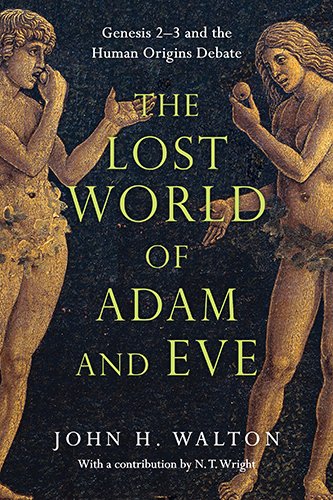
Is it possible to deny the historicity of Adam and Eve and affirm biblical inerrancy? I’ve explored the issue of whether the historical Adam is a “gospel issue” before and concluded that it depends what is meant by the term. I was reading through John Walton’s The Lost World of Adam and Eve
…make the case that historical Adam is part of the authoritative message that the text provides… If someone were to contend that belief in a historical Adam was cultural… part of the framework of communication, then inerrancy would not apply… (201-202)
It is worth noting that Walton believes that Adam and Eve are indeed historical persons, though he believes they were archetypes rather than the only humans alive at the time or the first humans ever.
What do you think? Need we affirm a historical Adam in order to affirm inerrancy? Is there a burden of proof upon those who claim the two are necessarily linked? What is your view of the historical Adam?
Whatever your thoughts, The Lost World of Adam and Eve
Links
Be sure to check out the page for this site on Facebook and Twitter for discussion of posts, links to other pages of interest, random talk about theology/philosophy/apologetics/movies and more!
Sunday Quote– If you want to read more Sunday Quotes and join the discussion, check them out! (Scroll down for more)
Is the historical Adam a Gospel Issue?– What happens to the Christian faith should it turn out to be the case that there is no historic Adam? Can one remain Christian and not believe in an historic Adam?
Source
John Walton, The Lost World of Adam and Eve
SDG.
On the “Fuzzification” of Inerrancy
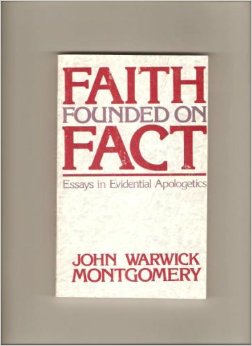 [Theological a]djustment is achieved through “interpretation”–in theological parlance, hermeneutics… [I]f the loss of the term “inerrancy”… is fraught with sufficiently dire consequences, there will be the strongest temptation to retain these expressions while giving the Bible such “adjustive interpretation” that negatively critical approaches to it can be employed anyway. (Montgomery, 217, cited below)
The definition of inerrancy has been hotly disputed as of late. The infamous Geisler-Licona controversy, which continues to boil over at points, serves as a poignant example of this (see here for a Christianity Today article on the controversy; see also links below for a few discussions of the same). What is meant by inerrancy? Are we in a new era of Bible wars? These are the questions being asked right now.
I remember reading an essay from a book–Faith Founded on Fact–by noted Christian apologist John Warwick Montgomery entitled “The Fuzzification of Inerrancy.” The quote above comes from the essay, and it has gotten me thinking. Have lines been crossed? Where do we draw the lines anyway?
Montgomery defined “fuzzification” following James Boren. It is the “presentation of a matter in terms that permit adjustive interpretation” (217, cited below). Turning back to the quote above, the term speaks of the need to retain a specific idea essentially at all costs. Thus, when a challenge is raised to that idea, the idea is broadened or changed to incorporate the data raised by the challenge. Montgomery, originally writing in 1978, seems at times prophetic. He spoke of a time when one might see a contradiction, source theory, or even possibly an error in the Bible and simply define it as “a question of hermeneutics, not of inspiration at all!” (218); he worried about a time when “the ‘inerrancy’ with which one is left is an inerrancy devoid of meaningful content”; and he warned of the dangers of “adjustive interpretation” (227).
I wonder, at times, whether his statements have come to fruition. When I survey various works from evangelicals on interpretation or hermeneutics I find a baffling array of ways we are to understand individual passages or how we are to interpret various passages. Turning to Church Fathers, I find a number of passages in which their readings would be unrecognizable today due to the heavy use of allegory in passages we take to be literal or explicitly historical in genre. Moreover, the question of the Chicago Statement on Biblical Inerrancy looms large. As with any document, questions are raised about what exactly is meant in each clause or in what way individual denials or affirmations might be meant.
It’s enough to make one wonder whether it is time to go back to a baseline understanding. “I believe the Bible is true in whatever it teaches.”*
The question that will be immediately raised, of course, is “What does the Bible teach?” The overriding desire to restrict exactly what it is the Bible teaches and prevent so-called “liberal” scholarship from finding ground to stand on in evangelicalism has led to an incessant narrowing of the definition of inerrancy, such that clause after clause is piled one atop the other to the point that it is hard to operate within such limits. Moreover, it seems some of these definitions actually prevent development within theology and squelch the impulse to question received traditions in light of new evidence.
The danger that some may think is posed by whittling the definition of inerrancy down to something like “The Bible is true in all that it teaches” may perhaps have some of the concern negated by the fact that it gets the dialogue going. If people return to this question: if someone genuinely, with open heart and mind, asks me “What does the Bible teach?” then I think that’s a glorious thing. Moreover, one may wonder at the purpose of inerrancy: is it a way to declare that the Bible is without error (as it seems to be based on the word itself); or is it a way to define how we go about reading the Bible? After all, if it is simply a declaration that the Bible is without error, should not simply declaring it as such be sufficient?
Perhaps it’s time to de-“fuzzify” inerrancy and get back to the basics. We may ask “What is the thrust of the doctrine of inerrancy?” instead of “What rival theological views may I exclude with the definition of inerrancy?”
Perhaps the danger of “fuzzification” from dehistoricizing texts, critical scholarship, and the like has in fact led to a fuzzification of the definition of inerrancy by making it over-determine the limits within which one may operate. I’m not claiming to offer all the answers, nor should it be thought that I am rejecting inerrancy. Far from it.** What I am instead rejecting is a “fuzzification” of the doctrine: when did declaring the Bible to be God’s Word and Truth become so complex that volumes of books were necessary simply to define what that means?
Let me know what you think in the comments below.
*This definition has suggested itself to me from a number of sources, including Nick Peters of Deeper Waters.
**I’m sure some people will take any questioning of current discussion about inerrancy to be denying the doctrine. However, this post is clearly written in order to defend the doctrine. What does inerrancy mean? That’s the thrust of this post, not “Inerrancy is false.” I believe the Bible is true in all it teaches.
Links
Be sure to check out the page for this site on Facebook and Twitter for discussion of posts, links to other pages of interest, random talk about theology/philosophy/apologetics/movies and more!
Book Review: “Faith Founded on Fact” by John Warwick Montgomery– I review Montgomery’s well-known book on apologetic methodology.
Inerrancy– Check out my other posts on this topic. (Scroll down for more posts.)
The Geisler/Licona Debate– Nick Peters has a number of posts on this controversy if you want to read up on the topic. This post summarizes the debate and offers a thoughtful critique, in my opinion.
The Geisler/Licona Controversy– A quick, easy read on the reasoning behind the controversy.
SDG.
——
The preceding post is the property of J.W. Wartick (apart from quotations, which are the property of their respective owners, and works of art as credited; images are often freely available to the public and J.W. Wartick makes no claims of owning rights to the images unless he makes that explicit) and should not be reproduced in part or in whole without the expressed consent of the author. All content on this site is the property of J.W. Wartick and is made available for individual and personal usage. If you cite from these documents, whether for personal or professional purposes, please give appropriate citation with both the name of the author (J.W. Wartick) and a link to the original URL. If you’d like to repost a post, you may do so, provided you show less than half of the original post on your own site and link to the original post for the rest. You must also appropriately cite the post as noted above. This blog is protected by Creative Commons licensing. By viewing any part of this site, you are agreeing to this usage policy.
Really Recommended Posts 7/11/14- Inerrancy, Men, a young earth?, and more!
I’m pretty excited about this latest round-up of posts which I have gathered for your reading pleasure. Let me know what you think in the comments. If you liked someone else’s article, be sure to drop a comment, because those keep we bloggers going! Thanks for reading.
The Bad Boys, The Secret, and Apologetics Teams in Churches– A post that combines NBA with apologetics? One which encourages specialization of apologetics-oriented sites? Sign me up! This is a fantastic post and well worth your time to read. Check it out.
“What Your Husband Isn’t Telling You”: Is this book telling the truth about men?-A review and critique of a book which alleges some pretty heinous things about men and women.
Was the crucifixion a matter of child abuse?– It has been alleged more than once that the crucifixion was a kind of divine child abuse. Was it? Check out this brief post showing that this allegation is a farce.
“Best Evidences for a Young Earth” – Andrew Snelling and the Salty Seas– Does the amount of salt in the oceans provide evidence for a young earth? Check out this analysis of Andrew Snelling’s–of Answers in Genesis–argument that it is.
A Response to James White on “Defining Inerrancy”– An interesting post showing that maybe we, as Christians, should desire a place at the table such that we can offer an internal critique of non-Christian thought. Check out this thought-provoking read!
Perspicuity and Inerrancy- a dialogue response
 Recently, a fellow blogger responded to my post on arguments for young earth creationism. This blogger insinuated that I deny inerrancy because I do not hold to young earth creationism. I’ve run into this frequently and apart from the fact I frequently defend inerrancy (simply scroll down to read several posts to this end), I think that Christians should not falsely represent others. For the record, I affirm inerrancy. If you say I do not, you are giving false testimony against a neighbor.
Anyway, once more, this is the link for the post that I’m responding to. Here’s the post he responded to.
The issue this fellow blogger brought up is the issue of perspicuity. At some point I’ll try to dedicate a post specifically to perspicuity and inerrancy, but for now I want to focus on how it is used to try to say every single point in Scripture is just utterly clear. I often run into this in discussions over theological issues. One person claims perspicuity for their reading, and thus says that anyone who disagrees denies the clear meaning of the text. Of course, it is appropriate to point out such clear meaning and offer correction, but one has to argue for that clear meaning rather than simply accuse the other of denying inerrancy. Also, apart from the fact that perspicuity has historically changed in meaning due to controversies during the Reformation, there is also the simple fact that defining perspicuity as the clarity of Scripture in everything simply doesn’t work. We’ll see why I say this below.
I’d like to make public record of my response and get readers’ thoughts as well. Here’s what I commented on his blog, in its entirety. I address “you” to the author of the blog response:
Thanks for taking the time to respond. I have a few thoughts, and I’ll try to be brief.
First, the doctrine of perspicuity changed during the Reformation period. As I [very] briefly point out in my post on sola scriptura in the Reformation (https://jwwartick.com/2012/10/15/who-interprets-sola/), this was because the Reformers realized there was genuine disagreement over certain passages of Scripture.
Second, there are some issues within Scripture which are genuinely unclear. If you want to deny that, I would suggest you basically have to ignore the text of Scripture. There are a number of issues: for example, underdeterminiation. One looks in vain to find the amount of detail we often wish we had on people that are listed in the genealogies, for example. More concrete examples would be the question of the meaning of certain words, lining up some apparent differences in the Gospels, etc. For example, would you say that Matthew 28:1-7 is unclear? Ah, but it says there is one angel there who speaks to the women. But then is Luke 24:1-8 unclear? But it says there are two angels!
I bring up this example not to say there is an actual contradiction (after all, it seems that Matthew just reports the one who talks), but rather to show the appeal to clear verses does not always solve the apparent difficulties. Unless you want to say that either Matthew or Luke are unclear, you have an apparent contradiction which is not solved by a “clearer” text. It is solved by thoughtful reflection and looking more deeply into the backgrounds, the way oral tradition was passed along, and the like. But your post suggests we can simply cast about for a “clearer” text to figure out the unclear. Tell me, which is unclear, Matthew or Luke?
Third, your view of perspicuity seems to mean that we only learn from being spoon fed easy truths, the exact opposite of the difference between milk and meat that Paul suggests. For example, you wrote:
“Probably the clearest example of the perspicuity of Scripture is found in Paul’s words to Timothy in 2 Timothy 3:16, 17 which says, ‘All Scripture (not just the Gospel message) is given by inspiration of God, and is profitable for doctrine, for reproof, for correction, for instruction in righteousness, that the man of God may be complete, thoroughly equipped for every good work.’ How can a person profit from Scripture so as to be reproved by it, corrected by it, and instructed in righteousness by it, if it was so unclear he had difficulty understanding it?”
Have you never learned anything by being confronted with a difficult problem and striving to understand it? I suspect that you have. I suspect you’ve struggled with specific portions of the text and come out better for it when you came to reconcile the text through other observations, insights, and reflection. If you haven’t I certainly have, and I know many others who have as well.
Regarding this text, I’d also simply point out that the interpretation of it is quite forced. Is the intent of the text teaching us that all of Scripture is inspired and profitable, or is it teaching us we can just expect to understand everything?
Finally, I firmly affirm and defend inerrancy and any suggestion to the otherwise should be withdrawn. Difference of opinion over interpretation should not be taken as denying inerrancy. Rather than misrepresent your Christian brother, you should stand beside me in a defense of inerrancy. We differ on interpretation of certain texts. Unless you take your interpretation to be itself inerrant and the word of God, I ask you to stop slandering me by implying I deny the doctrine.
Peter Enns on Definitions and Inerrancy
 Not long ago, I finished reading Five Views on Biblical Inerrancy, a book in the Zondervan Counterpoints series which focused on the plausibility and meaning of inerrancy. Peter Enns was by far the most critical of the doctrine of inerrancy, and his essay largely put forward the position that we should not merely modify but simply get rid of the notion of biblical inerrancy. Here, I want to focus upon Enns’ methodology throughout the work.
We’ll look at Enns’ contributions to Five Views… a bit backwards, by focusing first upon his responses to the other authors. What I found was that time and time again, Enns demanded definitions for individual words from the authors he was responding to. Sometimes, these demands were warranted, but overall it seemed Enns would just call on the others to define their terms and say he didn’t know what they meant otherwise. Moreover, even where he did not demand definitions, he often put scare quotes around seemingly random words in his responses. This latter point is more a complaint about writing style than substance, but it was extremely distracting! On p. 61, for example, Enns put quotes around three words–“many,” “history,” and “accurate”–the latter two for seemingly no reason whatsoever.
However, what I want to focus on is Enns emphasis on the importance of definitions. Here are just some examples of Enns’ method in application:
“…’true,’ ‘error,’ ‘erroneously,’ and ‘falsehood’ are all left floating. I am not sure what Bird means by them–at least at this point” (Enns’ response to Bird, p. 182).
“For one thing, we have the perennial problem of what ‘affirm’ actually means, and Vanhoozer’s subsequent thoughts did not clear this up for me. Further, ‘eventually’ raises flags…” (Enns’ response to Vanhoozer, p. 245).
Now, as I noted, surely some of this is fair. It is true that it is important to wonder at the meaning of “truth,” as we know from the oft-quoted words of Pontius Pilate “What is truth?” (John 18:38). Thus, I am not saying that Enns has no point when he called for definitions throughout his critical engagement with his co-authors. Surely, definitions are extremely important. And it is because of the importance of definitions that I wonder why on earth Enns failed to even allow for different definitions of inerrancy in his own contribution to the book.
Think about this for a second: despite spending significant [what is meant by significant?] portions of his responses calling upon definitions from his co-authors, Enns himself titled his contribution: “Inerrancy, However Defined, Does Not Describe What the Bible Does.”
Yes, that’s right, the man who called for definitions of individual words like truth, falsehood, error, affirm, and more himself eschews the hassle of defining inerrancy, the central topic of not just his chapter but the subject of the book! I’m astonished by this. How can someone who has demonstrated such concern for details himself just lump all inerrantists together and say that “well, however they define it, it doesn’t work”? Well, what does Enns mean by “inerrancy”? Enns does interact with the Chicago Statement on Biblical Inerrancy (hereafter CSBI) and apparently takes this for his norm regarding the meaning of inerrancy, but without any explicit definition of inerrancy, readers are left wondering whether Enns really is so concerned with definitions after all.
Enns, of course, brings up a number of interesting points and several challenges to inerrancy with which those who hold to the doctrine must interact. However, without any distinction between inerrantists, Enns is left doing that which he accuses others of: making statements which are hard to understand because he hasn’t defined terms. One obvious difficulty with Enns’ approach comes to the forefront when he assumes that inerrancy is necessarily committed to a literalistic hermeneutic: “The implication [of the CSBI on historical matters] is self-evident: inerrancy means, first of all, that literalism is the default hermeneutic of the CSBI… Taken at face value, this means that any comparison of Genesis with other ancient Near Eastern origins stories… is ruled out of bounds” (88). Enns qualified the last statement by noting that only those comparisons outside of CSBI conclusions are ruled out.
But of course the CSBI itself does allow for the comparison of genre, cultural contexts, and more in regards to interpretation of the text. Moreover, the CSBI allows for not just young earth creationism, but for other approaches to the text as well.
Thus, it seems to me that Enns’ lack of concern for possible nuance to definitions of inerrancy–his rejection of defining terms despite his insistence that others must do so–leads to great difficulties with his own critique. I have not here engaged in the core of Enns’ argument. As I said, many of his points are thoughtful and engaging. However, I think that his method seems a bit disingenuous: he demands that others define terms, but when it comes to the central topic of the entire book, refuses to acknowledge that any distinctions within the doctrine of inerrancy can combat his conclusion that the Bible is not inerrant.
Links
Be sure to check out the page for this site on Facebook and Twitter for discussion of posts, links to other pages of interest, random talk about theology/philosophy/apologetics/movies and more!
“Theological Colonialism”? On theological issues which are ‘only popular in America’– Here, I evaluate the claims made by Michael Bird in his essay in Five Views on Biblical Inerrancy. More particularly, I consider the notion that doctrines which are allegedly only popular in one place of the world are somehow restricted in importance.
Source
Peter Enns, Responses and “Inerrancy, However Defined, Does not Describe What the Bible Does” in Five Views on Biblical Inerrancy (Grand Rapids, MI: Zondervan, 2013).
SDG.
——
The preceding post is the property of J.W. Wartick (apart from quotations, which are the property of their respective owners, and works of art as credited; images are often freely available to the public and J.W. Wartick makes no claims of owning rights to the images unless he makes that explicit) and should not be reproduced in part or in whole without the expressed consent of the author. All content on this site is the property of J.W. Wartick and is made available for individual and personal usage. If you cite from these documents, whether for personal or professional purposes, please give appropriate citation with both the name of the author (J.W. Wartick) and a link to the original URL. If you’d like to repost a post, you may do so, provided you show less than half of the original post on your own site and link to the original post for the rest. You must also appropriately cite the post as noted above. This blog is protected by Creative Commons licensing. By viewing any part of this site, you are agreeing to this usage policy.
Really Recommended Posts 3/21/14- egalitarian marriage, the Bible and murdering children, inerrancy, and more!
 Well we got snow again here (about 3 inches). If it’s anything like last year, we’ll be seeing snow in May. Alas. Given that we’re stuck inside, I am pleased to present a number of excellent posts here for your perusal. The posts address the notion that egalitarian marriage is less satisfactory, apologetic interaction in social media, a recent meme about murdering children in the Bible, and more!
Gender Roles in Marriage (Part 1): Couples in Traditional Roles Have More Sex, Study Finds– I have seen several people sharing the results of a study in which it was found that couples in traditional roles have more sex. Some have trumpeted this as proof that traditional marriage is actually superior to egalitarian marriage. (Here, realize that “traditional marriage” is referring to a complementarian relationship wherein the man is in charge of the household.) However, apart from the problem that the number of instances of sex in a month is perhaps not the best indicator of marital stability and happiness, it seems there are other difficulties with this study and those drawing conclusions about the superiority of complementarianism. Check out this article on the topic.
How to Murder Children: Bible Style – Debunked– There’s a meme rolling around the internet about how the Bible has murdering children in it. It’s constructed without commentary and seems to be slanted towards the view that the Bible is evil. Check out this debunking of the meme (it includes the original). Very good work here, and I really think you should check it out!
What Christians can learn from skeptics– Certainly not an exhaustive list, this is actually more specifically looking at how skeptics are using Wikipedia to slant opinion on religious issues. How might Christians use this as a way to increase confidence in the faith?
Errors of Inerrancy– An interesting post on how to avoid some pitfalls when thinking of the doctrine of inerrancy. The list of errors includes both mistakes made by both critical scholarship and evangelicals regarding the text of Scripture.
One Christian Apologist’s Advice on Using (Anti-)Social Media– Some good advice here on how to become more effective via social media. Though I personally think Facebook is actually a better way to do apologetics than described in this post.
Really Recommended Posts 1/25/14- YA Entertainment, Inerrancy, “Lone Survivor,” Feminism, and Jehovah’s Witnesses
Another week, another list of the internet’s finest brought to you, dear reader. These are some extremely diverse topics, and I’m excited to read your own reactions to the posts. I’ve lined up cultural apologetics, inerrancy, feminism, the “Lone Survivor” flick, and Jehovah’s Witnesses.
Trending Young Adult Entertainment in 2013– Anthony Weber wrote an excellent summary tracing the trends we may see in YA entertainment from 2013. I highly recommend engaging with this post as well as keeping on top of things with YA entertainment, because it shows where our culture is shifting.
What Kind of Evidence Could Nullify Inerrancy?– What does it mean to make the claim that the Bible is inerrant? Does it commit one to an a priori rejection of evidence? It seems to me that this post brings up some of the tension with inerrancy and hermeneutics. I, of course, affirm inerrancy, but I think it is important to distinguish between inerrant text and interpretation. This post brings up some interesting points for discussion with inerrancy.
Lone Survivor and Insufferable Anti-American Self-Righteousness– The film “Lone Survivor” has caused quite a bit of critical discussion. Here, a soldier reflects on the reaction to the film. I share this post with the caveat that I have not seen the film and so I’m sharing it because I thought it was an interesting viewpoint.
Sarah Bessey’s Jesus Feminist– What does it mean to be a feminist for Jesus? Does it actually mean anything? Are the terms contradictory? Check out this look into the book Jesus Feminist.
What Do Jehovah’s Witnesses Believe?– The title seems self-explanatory, but there is more to this post than a simple exposition of Jehovah’s Witness beliefs. Instead, it engages with the beliefs of Jehovah’s witnesses and provides some ways to engage with others.
Really Recommended Posts 1/17/14- Gospels, Abolish Human Abortion, the Kalam, and more!
Here we have another round of really recommended posts. This one features a couple posts directed inwards at fellow Christians or people with whom we agree alongside a range of interesting topics. It is important to maintain a high standard, so sometimes it is necessary to give criticism where it is due. Drop a comment, let me know what you thought.
A Fundamental Flaw Behind Abolish Human Abortion– A group which I came out strongly in support of some time ago has really started to take a few turns with which I cannot agree. The group is known as Abolish Human Abortion. I think a lot of what they were doing is quite excellent, but I cannot abide by a few of their primary beliefs. Check out this great analysis of one of the major issues with the group.
The kalam cosmological argument defended in a peer-reviewed science journal– The title says it all, though the post does have some nice quotes and bits of information. The kalam cosmological argument is an extremely powerful argument for the existence of God. I have a few posts on it myself.
Dear Parents with Young Children– The importance of bringing your children to church is inestimable. Moreover, choosing a church where Law and Gospel are clearly proclaimed, and a basis for belief is preached is essential. Thank you to those parents who bring their children to church! Check out this great post about the topic.
The Case for the Eyewitness Status of the Gospel Authors– Are there any reasons to think those who wrote the Gospels knew what they were talking about? Here, J. Warner Wallace–who, as a homicide detective, has some experience with eyewitness accounts–argues that the Gospels show good evidence for thinking they are eyewitness accounts.
A Review of 5 Views of Biblical Inerrancy– I do not agree with everything Norman Geisler has to say, but I think portions of this review are of critical importance. I haven’t quite finished the whole article, and I’ve only just started reading the book, but I thought this post was worth passing along for others who find the topic of interest.

 J.W. Wartick - Reconstructing Faith