Jesus
Book Review: “7 Truths that Changed the World” by Kenneth Samples
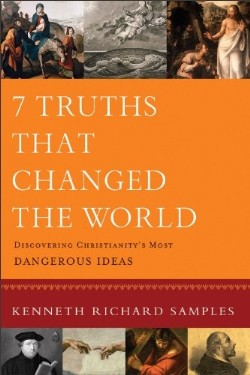 Kenneth Samples’ latest book, 7 Truths That Changed the World
Samples presents 7TC as a kind of investigation into the “dangerous ideas” that are central to Christianity. These dangerous ideas are:
- Not all men stay dead. In this section, Samples defends the historicity of Jesus’ resurrection. Christians who are actively involved in reading apologetics will find that the argument is the fairly well-known “minimal facts” style, but Samples does manage to give some uniqueness to the argument in the next chapter, wherein he examines various objections to the argument for the resurrection. Particularly unique was the fact that Samples takes the time to offer critiques of some of the more outlandish objections, like the twin brother theory (38).
- God walked the earth- Here, Samples puts the “dangerous idea” squarely in the context of religious pluralism. Not all religions can be true (48ff) and if Jesus was God on earth, then Christianity is true. Interestingly, rather than simply presenting arguments for Jesus’ Godhood, Samples offers a few theories of the incarnation and only then moves towards Biblical evidence for Jesus’ deity (50-53; 53ff). Again, Samples engages with some little-known but often abused objections, including the notion that Jesus was a guru (69-70) or even an alien (70-71).
- A fine-tuned cosmos with a beginning- Samples then engages in an argument from cosmic fine-tuning. Again, Samples puts the argument into a context rather than simply throwing it out to be fielded. Throughout the book, Samples grounds the arguments he makes within the broad theological history that surrounds the ideas. For this argument, he points out the historical doctrine of creation out of nothing through the Bible and church history (78-80). He also points out the “weighty theological implications” of the fine-tuning argument (82-83). He then argues that Christian theology helped ground the emergence of science (91ff).
- Clear pointers to God- Explanatory power is one way to evaluate worldviews, and Samples weighs atheistic naturalism against Christian theism. Samples offers a method by which people can evaluate worldviews. Essentially, this is a summary of his excellent work, A World of Difference, which I comment on in my post “Can We Evaluate Worldviews? How to navigate the sea of ideas.” Throughout this section, Samples offers a number of arguments in favor of the notion that God exists and can best explain the universe we observe.
- Not by Works- One of the core tenets of Protestantism, and indeed of evangelicalism (and in many ways, more modern Roman Catholicism) is salvation by grace. The fact that Christianity offers salvation as a gift provides another way to analyze it in light of other worldviews (134ff). All humans feel an urge to try to work for salvation, but this is mistaken. Ultimately, we cannot do it by ourselves (136ff). Sin is a predicament in which we find ourselves, it is a condition (137-138). Thus, Christianity offers a “way out” by salvation through grace in Christ.
- Humanity’s Value and Dignity- Humans have value. Most humans realize that it is wrong to cause harm or suffering and that certain virtues are good. However, without theism, there is no basis for human values (167ff). Some atheists have realized this and rejected meaning (163-166), but their worldviews dim in comparison to the light Christianity brings.
- The Good in Suffering- The problem of evil is the most oft-trumpeted argument for atheism, and Samples responds to it mostly by utilizing the “greater good” theodicy (theodicy means, basically, a defense from the problem of evil). First, he points out that it is not logically incoherent to suppose God is all powerful and all good while still believing evil exists (196-200). Then, he argues that God can have good purposes for evil and suffering (205ff). While we may not come up with a specific reason for every single evil that occurs, God’s sovereignty ensures that good will triumph and that all things work for His purposes (209ff). I don’t tend to favor the “greater good” theodicy because I’m not sure I can swallow the notion that every evil has a greater good–but I think that when applied to evil generally it may be more powerful. Samples does a good job introducing the reader to the basics on the problem of evil and a theodicy here.
While much of the material in 7TC goes over things the avid reader of apologetics will have encountered, the novelty of some of the arguments as well as the answers to some infrequently-considered objections makes the book worthwhile even to “veterans.” It is also very helpful to have some of the background in historical theology that Samples gives to contextualize many of his points. These kinds of extra details with the overall argument give readers a level of background knowledge that not all introductory apologetics books can provide.
Moreover, the format makes it work well as the kind of book to hand to a skeptic or a believer with doubts. It presents the core doctrines of the Christian faith in their broad contexts and defends them admirably. While hardened skeptics may laugh a book like this off, for those with open minds the arguments will be compelling enough to start conversations. Due to the effort to make the book readable for a general audience, it is clear that Samples can’t touch on every objection, but it will get readers thinking.
Overall, 7 Truths That Changed the World
Disclosure: I received a copy of the book for review from the publisher. I was not asked to endorse it, nor was I in any way influenced in my opinion by the publisher. My thanks to the publisher for the book.
SDG.
——
The preceding post is the property of J.W. Wartick (apart from citations, which are the property of their respective owners) and should not be reproduced in part or in whole without the expressed consent of the author. All content on this site is the property of J.W. Wartick and is made available for individual and personal usage. If you cite from these documents, whether for personal or professional purposes, please give appropriate citation with both the name of the author (J.W. Wartick) and a link to the original URL. This blog is protected by Creative Commons licensing. By viewing any part of this site, you are agreeing to this usage policy.
Really Recommended Posts 4/26/2012
 There are a ton of great Christian blogs out there. Here I’ve highlighted only a few great posts. Check out my blogroll for more excellent blogs! This week I’ve featured posts discussing Christian Memes (one extremely important post!), how some secondary issues can be extremely important in apologetics, a beautiful sculpture and a discussion about it, an apologetic comic, Richard Carrier, and more.
By the way, as you read these posts I’d like to know what you think of them, so feel free to drop a comment here or at the posts themselves and let bloggers know you’re reading. Our best encouragement is you!
What Memes Mean: Avoiding Scumbag Apologetics– I have seen this same problem occurring in many places. I really appreciated this relevant post about the use of memes (often pictures with captions) and Christianity.
Debate in Apologetics: Secondary Issues of Primary Importance– This thoughtful post notes how some issues, like Young Earth Creationism, can potentially be harmful to the faith and the defense of the faith.
‘Heart-rending’: Young Slovakian sculptor captures post-abortion pain, mercy, and forgiveness– Beautiful artwork and pro-life discussion as we remember that it is not just one innocent life harmed by abortion.
Web Traffic for Reformed and Creationist Sites– A post which provides some insights into how people on the internet are consuming theology.
Constitution of the Divine Foot-in-the-Door Resistance Army– No Apologies Allowed constantly puts out great comics which allow for Christian engagement. This one is no different. Thought-provoking and insightful.
Compassion Wins: A Longtime Atheist Becomes Christian– Demonstrating a life like Jesus’ can be the best witness.
Richard Carrier on the Resurrection: Part 2– A lengthy and engaging post which shows some of the problems with Richard Carrier’s attacks on Christianity and miracles.
Is Christ Risen?
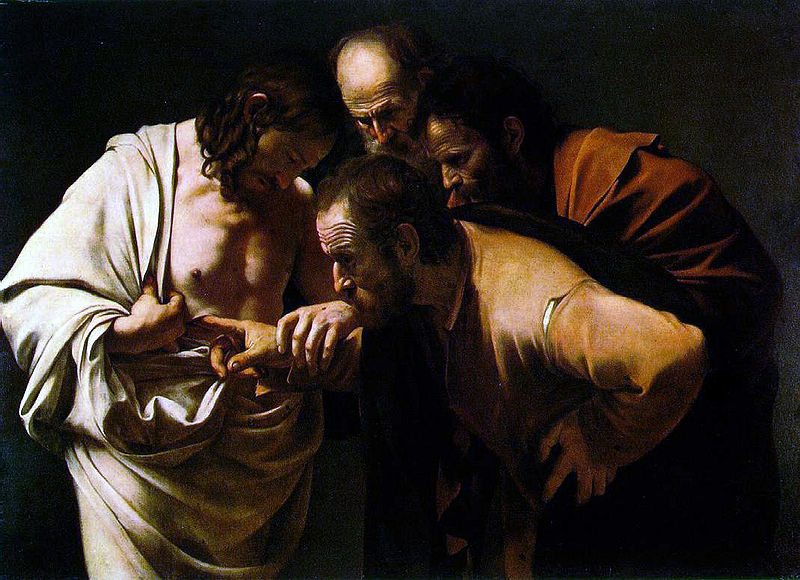 Did Jesus rise from the dead?
Now I want you to step back for a moment and think of your immediate response to that question.
Was it “Yes!” Well, why do you think so?
Was it “No!” Again, why?
I mean this very seriously. Read the question again, and now reflect on your answer. Does it come from a well-informed position or does it flow from your presuppositions or worldview? Why do you think Jesus rose or did not rise from the dead? Does your belief come from a careful study of the texts and the critical debate on the topic? Have you read sources from both sides of the debate, have you listened to top scholars in dialog about the topic?
Is it even important?
This one is for the atheists and skeptics out there: look at the picture I have posted on the top left. What feelings does it provoke within you? Disgust? Skepticism? Laughter? Joy?
Why do you think that is?
Christians, I ask you the same question.
What is the point of me taking this space to write all of this? I want everyone to be aware of the fact that when they consider the question I asked to start this post–“Did Jesus rise from the dead?”–they are influenced profoundly by their worldview and their starting point.
No, I want you to consider the evidence–both atheists and Christians. Christians, because it is your solemn duty to discern the truth of the resurrection (1 Corinthians 15:14-19); atheists, because you owe it to yourself to follow the evidence where it leads.
I’m not going to make a sustained argument here. Rather, I encourage you to investigate the topic yourself. A good starting point is this podcast, which argues from the “minimal facts” approach. A summary of the usage of this method can be found here.
Is Christ risen? That’s a question we all must answer, but let us not answer it based on dogma, on presuppositions, or on a dismissal of the evidence. Let us engage with the facts and formulate a hypothesis. Let us investigate the historicity of the event and follow the evidence where it leads.
I know that my redeemer lives,
and that in the end he will stand on the earth.
And after my skin has been destroyed,
yet in my flesh I will see God;
I myself will see him
with my own eyes—I, and not another.
How my heart yearns within me! (Job 19:25-27)
The Argument from Religious Experience: Some thoughts on method and usefulness
 The argument from religious experience (hereafter referred to as “argument from RE”) has seen a resurgence in scholarly work. Keith Yandell, Richard Swinburne, Jerome Gellman, Kai-man Kwan, Caroline Franks-Davis, Paul Moser, and others have contributed to the current discussion about the topic.
One thing which has disappointed me on more than one occasion is the dismissive attitude that some Christian apologists show towards the argument from religious experience.
What reasons are there for apologists to adopt such a stance? Well it seems possible that some of them simply haven’t studied the argument enough to consider its plausibility. I admit that before interacting with the argument, I was skeptical of the possibility for its having any value. But I want to suggest another possibility: apologists tend to favor arguments which can be presented and defended in a debate format or which are useful in short conversations with others. I’m not suggesting this as an attack on my fellow Christians, merely as an observation. And this is not a bad thing; it is indeed greatly useful to have arguments which can be presented quickly and defended easily when one is trying to present a case for Christianity to others.
The problem is the argument from RE requires a great deal of epistemological background in order to get to the meat of it. The authors listed above each develop a robust epistemology to go with their argument. This seems to put a limit on the usefulness of the argument; if it must be conjoined with a broad discussion of epistemology, then how can one present it in such a way that those who aren’t professional philosophers (or at least interested in the topic) can understand? It is to this question I hope to present an answer.
Background Information
Formulations of the Argument
There are two primary ways the argument from RE can be formulated (Caroline Franks Davis suggests a number of ways the argument can presented in The Evidential Force of Religious Experience, 67-92). The first is the personal argument; the second is the public argument. Now I have seen very few versions of the former in the literature. The personal argument is essentially an argument from RE which centers not on trying to demonstrate the existence of God to others, but rather upon justifying one’s own belief that such an experience is genuine. In other words, the personal argument from RE focuses upon defending one’s own conviction that a religious experience is veridical.
Paul Moser, in his work The Evidence for God, suggests one possible way to formulate this argument [he does not refer to it in the same terminology as I use here]:
1. Necessarily, if a human person is offered and receives the transformative gift, then this is the result of the authoritative power of… God
2. I have been offered, and have willingly received, the transformative gift.
3. Therefore, God exists (200, cited below).
This argument is one example of what I would call the personal argument from RE. It focuses on one’s own experience and uses that to justify one’s belief in God. [It seems Moser could be arguing for this as a public argument as well, but a discussion of this would take us too far afield.]
A public argument from RE is generally formulated to establish the belief in God (or at least a transcendent reality), just as other theistic arguments are intended. It will best function as part of a “cumulative case” for the existence of God. One example of an argument of this sort can be found in Jerome Gellman, Experience of God and the Rationality of Theistic Belief:
If a person, S, has an experience, E, in which it seems (phenomenally) to be of a particular object, O… then everything else being equal, the best explanation of S’s having E is that S has experienced O… rather than something else or nothing at all (46, cited below).
Readers familiar with the literature on RE will note the similarities between this and Richard Swinburne’s principle of credulity. The basic idea is that if someone has an experience, then they are justified in believing they had that experience, provided they have no (epistemic) defeaters for that experience.
Brief Epistemological Inquiry
I’ve already noted the intricate ties the argument from RE has with epistemology, and a quick introduction to the argument would be remiss without at least noting this in more explicit detail. The core of establishing the argument from RE is to undermine methodological/metaphysical naturalism. Thus, a robust defense of the argument from RE will feature building up a case for an epistemological stance in which theistic explanations are not ruled out a priori.
A second step in this epistemological background is to establish a set of criteria with which one can judge and evaluate individual religious experiences. Caroline Franks Davis’ study (cited below) is a particularly amazing look into this tactic; she explores a number of possible defeaters and criteria for investigating REs. These range any where from hallucinogenic drugs to the multiplicity of religious experience.
The Force of the Evidence
One concern I had when I was exploring the argument from RE is that it would not have very much force. Upon investigating the topic, however, I can’t help but think the force of the argument is quite strong. Swinburne seems correct when he writes, “[T]he overwhelming testimony of so many millions of people to occasional experience of God must… be taken as tipping the balance of evidence decisively in favour of the existence of God” (Swinburne, Is There a God?, 120, cited below). The important thing to remember is that an overwhelming number of people from all stations of life and cultures have had experiences that they deem to be “spiritual” or hinting at “transcendence.” Denying universally all of these experiences as genuine would seem to require an enormous amount of counter-evidence.
A Suggested Version for Quick Discussion
So what to do with this background knowledge? It seems to me it is possible to at least sketch out a version of the argument from RE for a brief discussion, with a defense. Further reading is provided below.
The Argument Stated
1. Generally, when someone has an experience of something, they are within their rational limits to believe the experience is genuine.
2. Across all socio-historical contexts, people have had experiences of a transcendent realm.
3. Therefore, it is rational to believe there is a transcendent realm.
The argument made more explicit
The reason I suggest this as the way to use the argument from RE in a brief discussion is because it can more easily form part of a cumulative case and requires less epistemological work to justify it. The first premise is, in general, a principle of rationality. While there are many who have attacked Swinburne’s principle of credulity, it does seem that we generally affirm it. If I experience x, then, provided I have no reasons to think otherwise, I should believe that x exists/was real/etc.
The second premise is the result of numerous studies, some of which are cited in the works cited below. To deny this nearly universal experience is simply to deny empirical evidence. People like William James have observed this transcultural experience of the transcendent for hundreds of years.
Thus, it seems that we are justified in being open to the existence of things beyond the mundane, everyday objects we observe in the physical reality. If people from all times and places have had experiences of things beyond this everyday existence, then it does not seem irrational to remain at least open to the possibility of such things existing.
The conclusion may come as something of a letdown for some theists. But I would like to reiterate that this is a version of the argument intended for use in a brief conversation. There are versions of the argument in the cited literature below which defend theism specifically and engage in synthesis of these experiences into the theistic fold. What I’m trying to do here is make the argument part of the apologist’s arsenal. If we can use the argument merely to open one up to the reality of the transcendent, then perhaps they will be more open other theistic arguments. As part of a cumulative case, one can’t help but shudder under the overwhelming weight of millions of experiences.
Conclusion
The argument from religious experience has enjoyed a resurgence in scholarly popularity. A number of books from publishers like Oxford University Press, Cornell, and Continuum have reopened the argument to the scholarly world. It is high time that Christian apologists put in the work needed to utilize these arguments in everyday, accessible apologetics. The argument formulated above is just one way to do this, and Christians would do well to explore the argument further. The experience of God is something not to be taken lightly; Christians throughout our history have had such experiences and been moved into intimate relationships with God. We should celebrate these experiences, while also realizing their evidential value.
Further Reading and Works Cited
The following books are all ones I have read on the topic but do not present a comprehensive look at literature on the subject.
Caroline Franks Davis, The Evidential Force of Religious Experience
Jerome Gellman, Experience of God and the Rationality of Theistic Belief
Paul Moser, The Evidence for God
Richard Swinburne, Is There a God?
There are a number of other fantastic books on the topic as well. Swinburne’s The Existence of God
William Alston’s Perceiving God
Keith Yandell’s The Epistemology of Religious Experience
Kai-man Kwan’s Rainbow of Experiences, Critical Trust, and God
Nelson Pike provides a unique look at the phenomenology of RE and a synthesis of theistic and monistic experiences in his work Mystic Union
SDG.
——
The preceding post is the property of J.W. Wartick (apart from citations, which are the property of their respective owners) and should not be reproduced in part or in whole without the expressed consent of the author. All content on this site is the property of J.W. Wartick and is made available for individual and personal usage. If you cite from these documents, whether for personal or professional purposes, please give appropriate citation with both the name of the author (J.W. Wartick) and a link to the original URL. If you’d like to repost a post, you may do so, provided you show less than half of the original post on your own site and link to the original post for the rest. You must also appropriately cite the post as noted above. This blog is protected by Creative Commons licensing. By viewing any part of this site, you are agreeing to this usage policy.
“A New Vision for Natural Theology” A Book Review of “The Open Secret” by Alister McGrath
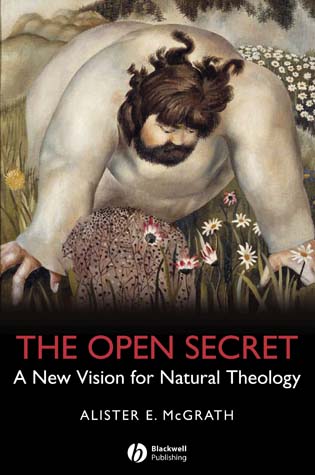 Alister McGrath is a well-known name in Christian philosophy, science, and apologetics. His book, The Open Secret
Natural theology, according to McGrath, is not just a way to argue for the existence of God. Rather, “The enterprise of natural theology… is one of discernment, of seeing nature in a certain way…” (3). He argues that natural theology in fact should not be viewed as a system to prove the existence of God. Rather, it “addresses fundamental questions about divine disclosure and human cognition and perception. In what way can human beings, reflecting on nature by means of natural processes, discern the transcendent?” (5, emphasis his). Natural theology can be seen as an entire worldview, put forth to view the world in a certain way (17).
McGrath, after outlining his vision thus, turns to the human experience of the transcendent. He focuses on three thinkers- Iris Murdoch, Roy Bhaskar, and John Dewey (41ff). He then turns to various ways humans have accessed the transcendent (59ff) and includes an evaluation of the psychology of perception (80ff).
He once more emphasizes the need to see natural theology as a type of “seeing” (115) and turns to Jesus to demonstrate the approach McGrath favors. Jesus’ parables are a model for natural theology, argues McGrath. They are “open… the interpretation is generally left indefinite and imprecise… the imagery of the parables is readily grasped [but] their meaning is often veiled…” (120-121). Similarly, nature itself is easy to grasp, but it has hidden meanings which can only be perceived by viewing the world in a certain way (126ff).
The Enlightenment approaches to natural theology have been largely unsuccessful historically and are in need of modification (140ff).
A Christian approach to natural theology should focus on “seeing” God in the natural. God has chosen to “self-disclose in history and nature” (178) and natural theology can reveal God in nature (178ff). Christian natural theology is “eschatological… The fading beauty and goodness of the world are to be interpreted in the light of the hope of their restoration and renewal” (206).
Natural theology must also break out of its boundaries. It is not just the realm of philosophical reflection, but also opens many points of contacts with the world. It is “about perceiving nature in a certain way” (221). Beauty, goodness, and truth are all aspects of reality which can be drawn out through a Christian Natural Theology (222ff). Again,
“natural theology… cannot be regarded as ‘proving’ God’s existence. Rather, it insists that the existence of a God such as that proposed by the Christian tradition makes sense of what may be observed of the world. Such an approach holds that there is an accumulation of considerations which, though not constituting logical proof (how could experience prove anything in such a way?), is at the very least consistent with the existence of a creator God (233).
The goal is not proof but a demonstration of consistency, which will “reinforce the plausibility” of Christianity (234).
Beauty and goodness draw out the reality of the Christian vision of the world. Beauty must not be neglected in natural theology (262ff). Beauty “can… call us, seeking a response” (283). Goodness underlies the resonance with natural law and the moral truths that can be seen as built in to “the fabric of the universe” (293ff).
McGrath concludes by urging readers to see natural theology as a key to open the “mysteries” and “hidden meaning” of nature’s “open secret” (314-315). Natural theology is primarily a vision–a way of viewing the world. The goal of the natural theologian, therefore, is to show how the reality of the world resonates best with a Christian worldview.
There is little to find at fault in McGrath’s powerful work. The Open Secret has enormous depth and breadth. Few areas of development are left unexplored. As one who has great interest in natural theology and who frequently discusses it, this reader must agree with McGrath that the arguments of natural theology often don’t work as proofs so much as pointers. Few are willing to embrace Christianity due only to an argument from natural theology, but the arguments themselves can be used to show how Christianity touches and explains many aspects of reality. McGrath’s vision is really an expanded “cumulative case”; one which focuses not just on many arguments, but brings the beauty of the world and its inherent goodness (while acknowledging ugliness and evils) into the folds of natural theology.
Alister McGrath’s The Open Secret provides a vision for the development and integration of natural theology into the arts, the sciences; indeed, into every aspect of life. It is a vision that will resonate with readers and drive them to see Christianity as an integrated whole. The book is, without a doubt, a must read.
Source
Alister McGrath, The Open Secret
SDG.
——
The preceding post is the property of J.W. Wartick (apart from citations, which are the property of their respective owners) and should not be reproduced in part or in whole without the expressed consent of the author. All content on this site is the property of J.W. Wartick and is made available for individual and personal usage. If you cite from these documents, whether for personal or professional purposes, please give appropriate citation with both the name of the author (J.W. Wartick) and a link to the original URL. This blog is protected by Creative Commons licensing. By viewing any part of this site, you are agreeing to this usage policy.
Really Recommended Posts 3/3/12
 The really recommended posts this go-round feature Richard Dawkins, bioethics, philosopher’s opinions, women in the ministry, and more!
Arguments about Jesus’ resurrection are fascinating, and can be extremely useful in the question of theism. See this great article which features rigorous application of probability theory to the arguments from the resurrection.
Richard Dawkins’ book, The Greatest Show On Earth claims to show the undeniable evidence for evolution. Does it succeed? Jonathan Mclatchie does not think so and has written an excellent, lengthy review to show how Dawkins fails.
Philip Payne, the author of “Man and Woman, One in Christ” (which I reviewed here) has an excellent web site which responds to many criticisms of his positions. Those interested in the issue of women in the ministry should look into it.
No peer reviewed papers advocating intelligent design? False! Check out this list.
After birth abortions? Basically the logical conclusions of the general pro-choice position. Read more.
Prosblogion conducted a survey about philosopher’s opinions on theistic arguments. The results are mostly unsurprising, but interesting nevertheless. Check it out.
Mormonism and God: A Philosophical Challenge to Mormonism
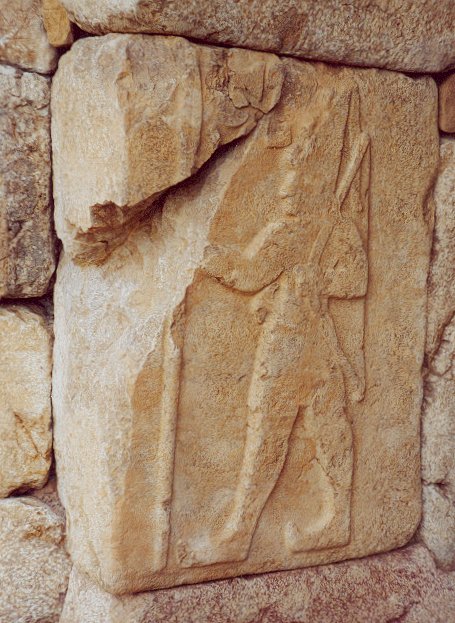 Central to discussions about God is the very concept of God itself. What does one mean when they refer to “God”? Suppose one is debating about the existence of God and in the course of that debate, one finds out that the other, when using the term “God” is thinking of a contingent, powerful but limited, and embodied deity; yet the other person has been trying to argue for the God of classical theism–infinite in power, wisdom, love, etc., omnibenevolent, omniscient, and omnipotent, transcendent, and the like. Clearly, there is a difference over who “God” is. Now talk about God can be meaningful between these two because they can choose to use “God” as a title, similar to that of “King” (this is suggested by Paul Moser in The Evidence for God, 22ff).
That said, for this post I will not assume that “God” refers exclusively to the God of classical theism. Rather, I’m going to turn to the Mormon concept of God and examine its coherence. If Mormonism’s concept of God is incoherent, then Mormonism faces a serious philosophical challenge. (As has been argued elsewhere, coherence is a central test of a religion’s truth claims.)
It is important to note that there is no single “Mormon concept of God.” As with Christianity, there is an array of beliefs about specific attributes of God. Thus, for this post, I’ll focus on just two concepts of deity within Mormonism.
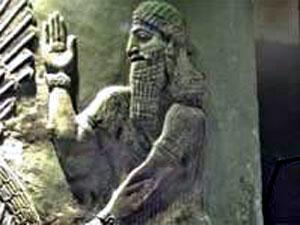 Monarchotheism (Also Known as Henotheism)
Explication
Stephen Parrish and Carl Mosser take Mormon teaching to expound the concept of God known as Monarchotheism, “the theory that there is more than one God, but one God is clearly preeminent among the gods; in effect, he is the monarch or ruler of all the gods” (Parrish and Mosser, 195, cited below). This concept of God is embodied (see Teachings of the Prophet Joseph Smith cited in P+M, 201). Furthermore, this God is contingent, the organizer of a world that was originally chaos, and one of many gods (Ibid, 201). Furthermore, Joseph Smith himself taught that this “God himself was once as we are now, and is an exalted man…” (TPJS 345, cited in P+M, 202).
Critique
There are many difficulties with this Mormon concept of God. Perhaps most crucial is the inclusion of contingency in the concept of God. If God is contingent, then it does indeed beg the question “Who Made God?” Consider this against classical theism, which holds that God exists necessarily. Classical theists can respond to this question by simply saying, “No one made God, because God, as necessarily existent, never came into being.” Yet Mormons who hold God is contingent must answer this question.
That’s not the only difficulty with God as contingent either, for holding that God is contingent removes several of the reasons to believe that such a deity exists. Consider one of the classical arguments for the existence of God: that contingent things have all come into being, so there must be something which has always existed in order to terminate the infinite regress. Of course, if this deity which terminates the regress is, itself, contingent, then one must continue the regress to the next step. Thus, this Mormon concept of God provides no grounding for the universe itself.
Further, this Mormon concept of deity has no way to ground objective morals. While Mormons tend to hold that God is all good/omnibenevolent, they have no way to ground this goodness in God Himself. Rather, because God is contingent, there must exist some measure by which God is judged, and so one is left with all the difficulties of grounding morality without God. If, instead, morality is still to be based upon God, then it could only really be some form of extreme occamism/voluntarism–whereby things are moral just because God says so. The difficulties with such a view are extreme.
Of course, once more classical theism can explicate objective morality by grounding them in the nature of God. Because God is necessarily the greatest possible being, God is necessarily the source of all goodness, and therefore the grounds of morality are found in God.
 Finally, there is the question of the problem of evil. Classical theism has a number of answers to this problem, but none of them are effective upon a monarchotheistic view of God. First, because there can be no grounding for objective morality on Mormonism, there remains the difficulty of explaining how actions could truly be evil to begin with (Parrish and Mosser, 215, see similar difficulties with naturalism here). Second, because evil is part of the universe and God himself is part of the eternal universe, evil can be seen as a natural part of the order of the cosmos (ibid, 215). Third, and most poignantly, because God is contingent and part of the universe, it seems that there is great difficulty with the notion that God would one day overcome evil. Because evil is part of the universe, and has therefore existed eternally rather than as a corruption of the goodness of nature, it seems that there is no way to finally overcome evil. Thus, the problem of evil is exacerbated exponentially on Mormonism (ibid, 216).
So, to sum up, monarchotheism appears to be one plausible interpretation of the Mormon concept of God. This concept is expounded by Joseph Smith in his Teachings and is also found in various theological works of Mormons (cf. McMurrin, Theological Foundations; Ostler, “Mormon Concept of God”; Paulsen, “Comparative Coherency”–these are noted in P+M, 457). However, this concept has been shown to be riddled with difficulties. It cannot explain many of the central features of our world, such as the existence of objective morality. Furthermore, it undermines reasons to believe in the existence of a God. Finally, this Mormon concept of God fails to even explain the existence of the universe itself. Thus, it seems to me this concept of deity is incoherence.
 Polytheism
So much for Monarchotheism. But what about other Mormon concepts of God? There is one other concept which is attested in Brigham Young’s writings along with other Mormon writers. This view can fairly be referred to as polytheism.
Explication
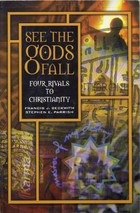
Once more we find that the eternal existence of the universe is central to this view of Mormonism. Matter is eternal. God the Father organized the universe, but at least some laws of nature are outside of god’s control (see the discussion in Francis Beckwith and Stephen Parrish, See the Gods Fall, 99ff, cited fully below).
Furthermore, the notion that there are innumerable contingent “primal intelligences” is central to this Mormon concept of god (P+M, 201; Beckwith and Parrish, 101). That there is more than one god is attested in the Pearl of Great Price, particularly Abraham 4-5. This Mormon concept has the gods positioned to move “primal intelligences along the path to godhood” (Beckwith and Parrish, 114). Among these gods are other gods which were once humans, including God the Father. Brigham Young wrote, “our Father in Heaven was begotten on a previous heavenly world by His Father, and again, He was begotten by a still more ancient Father, and so on…” (Brigham Young, The Seer, 132, quoted in Beckwith and Parrish, 106).
The rest of this concept is similar to the Monarchotheistic view, although rather than God the Father being a “monarch” over the others, he is more like one of many. As already stated, he is just one of a string of “Fathers.”
Critique
The logic of the Mormon polytheistic concept of God entails that there is an infinite number of gods. To see this, it must be noted that each god him/herself was helped on the path to godhood by another god. There is, therefore, an infinite regress of gods, each aided on his/her path to godhood by a previous god. There is no termination in this series. Now because this entails an actually infinite collection of gods, the Mormon polytheistic concept of deity must deal with all the paradoxes which come with actually existing infinities (for some problems with the actual infinite search “infinite” and check out the problems Craig points out in his Q+A’s section).
Now, polytheistic Mormonism would also seem to have to deal with all the difficulties of Monarchotheism, for this concept also carries with it the contingency of deity and eternity of the world.
Finally, it seems polytheistic Mormonism has a difficulty at its heart–namely the infinite regress of deity. While on Monarchotheism, the infinite regress was merely hinted at (and still extremely problematic), polytheistic Mormonism has infinite regress at its heart and soul. Each god relies upon a former god, which itself relies upon a former god, forever. Certainly, this is an incoherence at the core of this concept of deity, for it provides no explanation for the existence of the gods, nor does it explain the existence of the universe. Polytheistic Mormonism, it seems, fares even worse than its Monarchotheistic counterpart.
Addendum: The “Standard Works” and Classical Theism
It is worth noting that those who wish to adhere to a strict “Standard Works only” approach to Mormonism may object to the critiques I’ve given above. The reason being that in the Standard Works, it seems like a view much closer to classical theism is expounded. For example, God is referred to as “Lord God Omnipotent” (Mosiah 3:5 [and “Lord Omnipotent” in 3:17-18]; Mosiah 5:2). Further, God’s infinite goodness and mercy are affirmed (Mosiah 28:4, Moroni 8:3, 2 Nephi 1:10).
It is indeed the case that were one to only operate from this explication, one might come to believe in a God very similar to classical theism. There are three responses I would offer: first, I’d be very happy to welcome any others who do affirm mere classical theism. In that case, I’d like to discuss the finer points of differences between Christianity and Mormonism.
However, I think it is the case that many who object by showing a Standard Works reading of Mormonism do not themselves hold to a “Standard Works only” belief. Any who holds that, for example, humans can be exalted to godhood must accept the implication that God the Father would therefore be contingent, and would then most likely fall into one of the categories listed above. Second, I already noted how in Abraham 4 and 5 it seems quite apparent there are many “Gods” (any who disagree, feel free to simply read the Pearl of Great Price, Abraham 4… literally any verse between 5-31; it explicitly states “the ‘Gods'”). Because classical theism holds that there is only one who can occupy the title “God,” this places even the Standard Works alone reading outside the realm of orthodoxy regarding classical theism.
Finally, I’ve already quoted Brigham Young and Joseph Smith in other writings outside the “Standard Works” both affirming that God the Father is an exalted man and that God the Father was preceded by another Father. If Mormonism is to be conceived in a form akin to classical theism, Mormons must reject these writings, and with it discredit their prophets.
Conclusions
Central to the Mormon faith is God, just as God is central to any theistic religion. Yet, as has been seen, two of the major explications of the Mormon concept of deity fall victim to insurmountable philosophical problems. The third, closer to classical theism, must contend with the fact that other Mormon writings (and indeed, even the Pearl of Great Price) are contrary to their position. The fact that Momonism’s concept of God is incoherent strikes a major blow to the truth claims of the Mormon faith. Without coherence in that which is central to the religion: God, the entire theological system falls apart.
Links/Sources
Check out other posts in my series on Mormonism:
The Book of Mormon: Introduction and Importance– This post is pretty self descriptive.
Genetic Evidence and the Book of Mormon: Did any Native Americans come from the Middle East?– Argues that the Native Americans are not Middle Eastern in ancestry. Because the Book of Mormon claims they are, the Book of Mormon is false.
Sources
Stephen Parrish with Carl Mosser, “A Tale of Two Theisms” in The New Mormon Challenge: Responding to the Latest Defenses of a Fast-Growing Movement ed. Beckwith et. al, 193-218 (Grand Rapids, MI: Zondervan, 2002).
Francis Beckwith and Stephen Parrish, See the Gods Fall: Four Rivals to Christianity (Joplin, MO: College Press, 1997).
[I have edited this post to put back in several references to Mormon scriptures that I initially omitted for length. Further, I modified it to make more clear the difference between “finite” in mathematical terms and “contingent” in philosophical meaning.]
SDG.
——
The preceding post is the property of J.W. Wartick (apart from citations, which are the property of their respective owners) and should not be reproduced in part or in whole without the expressed consent of the author. All content on this site is the property of J.W. Wartick and is made available for individual and personal usage. If you cite from these documents, whether for personal or professional purposes, please give appropriate citation with both the name of the author (J.W. Wartick) and a link to the original URL. If you’d like to repost a post, you may do so, provided you show less than half of the original post on your own site and link to the original post for the rest. You must also appropriately cite the post as noted above. This blog is protected by Creative Commons licensing. By viewing any part of this site, you are agreeing to this usage policy.
Really Recommended Posts: 11/26/11
 The Problem of Pain Sonnet Sequence 3– Holly Ordway, author of “Not God’s Type,” has an awesome blog going. This post is a sonnet which focuses on the problem of pain/evil. Be sure to check her site out in-depth, it has some amazing and unique content.
Over at Geocreationism, there is a new blog discussing death and original sin. It’s extremely interesting. Be sure to read his links on the various passages, which each lead to another in-depth and thoughtful discussion of creationism.
Book Review: “Good God: The Theistic Foundations of Morality” by David Baggett and Jerry Walls. The best book reviews don’t just review the content of a book, but present its central arguments. This is one such review. Check it out.
David and Tiffany O’Day have a great series of posts about “Authentic Community & Friendship.” Check out Part 1. Be sure to visit their homepage to check out the rest in the series.
The problem of anti-intellectualism in the church and some solutions.
Check out Apologetics 315’s list of 10 Apologetics books for giving. I will surely copy this feature with one of my own. His top book is Edgar Andrews’ “Who Made God,” with which I heartily agree. Check out the review.
10 Surprisingly Simple Tips for Talking to Cult Members, Part 3– this is part of a series on, well, look at the title! Find Part 1 and Part 2 as well.
Apologetics and the Search for Truth
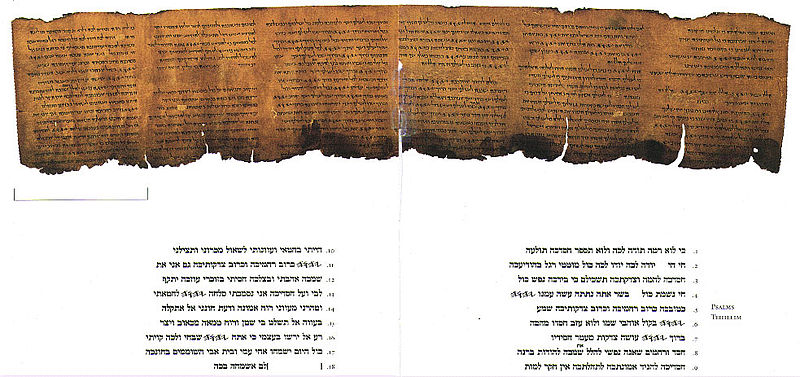 Apologetics must be not only a defense of but also a search for the truth. A parallel I would draw is one I heard in the movie, “The Bible vs. The Book of Mormon.” In that movie, they discuss the role which Mormon apologists have taken on: that of defending a falsehood, and essentially just telling believers they must keep the faith and ignore/lie about the evidence. Christian apologists must never allow themselves to value fideism over reasoned faith. If conclusive evidence undermines an article of faith, it must be abandoned.
What am I suggesting? Apologetics is not just a static defense of each point of Christianity, rather, it is a defense seeking truth. Some will immediately bristle upon reading this and argue there are some beliefs Christians cannot compromise. I agree. There are truths, which, if shown to be false, would lead to the falsehood of Christianity. But if evidence existed which conclusively proved God did not exist, then Christianity would be false, no matter what we would desire. That said, it seems to me that there is an overwhelming weight of evidence showing that God does indeed exist. Not only that, but there is a huge amount of evidence for the resurrection of Jesus. So again, we return to the position of the apologist: defending truths.
Perhaps an example might help draw out the implications of my points. Take Young Earth Creationism. Many apologists continue to defend this position, yet there is conclusive evidence both in the cosmic background radiation from the Big Bang and in the dating of rocks on earth and from space that the world is much older than a Young Earth position would have us believe. Not only that, but throughout the history of Christianity, a Young Earth position has not been a serious article of faith. The conclusive evidence against the Young Earth position should lead Christian apologists to continue to seek to understand the world God created–along different lines as necessary.
It is telling that Paul himself wrote in 1 Corinthians 15:14 that “…if Christ has not been raised, our preaching is useless and so is your faith.” He goes on to clearly explicate the implications of this historical fact for Christianity. Christianity is based upon seeking truth. If it were the case that central truth claims of Christianity were factually incorrect, than “our preaching is usless” and “so is [our] faith.” Christian apologists should therefore continue to seek truth, and defend it. The order of operation is not: pick a belief, decide it is true, and defend it. Rather, the apologist must operate in a completely opposite fashion: seek to discover truth, believe in that truth, and defend it.
So, fellow apologists, I issue you a challenge: let nothing be unexplored. When you get the questions you cannot answer, do not fall on fideism, but investigate the truth. All truths are God’s truths, and we should not fear them.
To those who detract apologetics as a defense of falsehoods, I also issue a challenge: Have you actually explored the truth claims of Christianity? Have you engaged the arguments for theism? Have you investigated the evidence for the Resurrection of Christ? If not, you also need be consistent–leave no stone unturned in your search for truth.
While there almost certainly are apologists who defend their specific theological point against any and all scientific and philosophical evidence, what I am suggesting is a methodological apology: one which actively defends truth, but without putting all the weight upon one position; one which continues to seek truth, wherever it is found; a methodology which not only defends the truth, but finds it. What is truth? That which God has wrought.
SDG.
——
The preceding post is the property of J.W. Wartick (apart from citations, which are the property of their respective owners) and should not be reproduced in part or in whole without the expressed consent of the author. All content on this site is the property of J.W. Wartick and is made available for individual and personal usage. If you cite from these documents, whether for personal or professional purposes, please give appropriate citation with both the name of the author (J.W. Wartick) and a link to the original URL. If you’d like to repost a post, you may do so, provided you show less than half of the original post on your own site and link to the original post for the rest. You must also appropriately cite the post as noted above. This blog is protected by Creative Commons licensing. By viewing any part of this site, you are agreeing to this usage policy.
Book Review: “My Christian Apology” by Martin Murphy
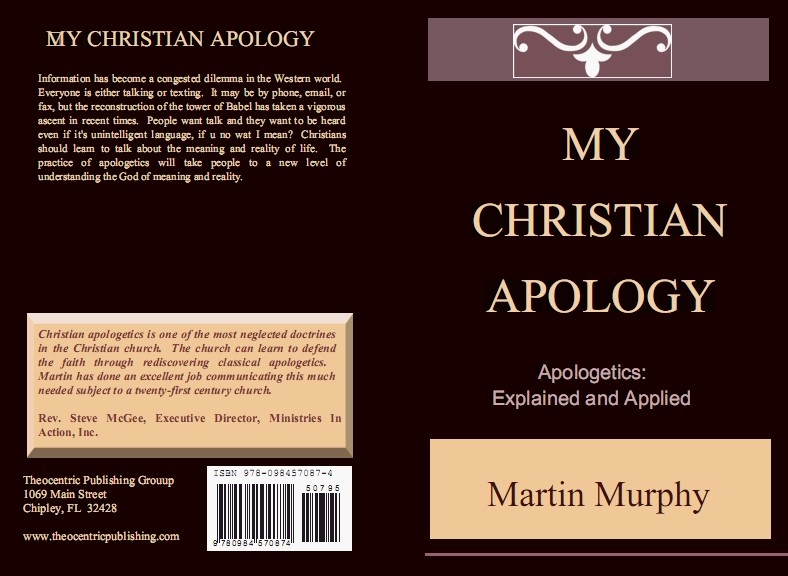 My Christian Apology by Martin Murphy provides some unique insight into apologetics. Rather than focusing upon arguments for the existence of God or methodology at the expense of historical understanding, Murphy grounds both arguments and method in history.
The book starts off with some introductory notes. What is apologetics? How do we communicate apologetics? These sections provide the groundwork of many apologetics texts. But Murphy quickly differentiates his work from most standard introductions to apologetics. His book focuses largely on epistemology and its relation to apologetics.
Murphy does a great job of making these concepts accessible to general readers. He defines epistemology (19) and then gradually eases the reader into its various applications to apologetics (19ff). A central theme throughout is that unbelievers and Christians have common grounds from which they can start discussions. One of these common grounds is Natural Law, which Murphy goes into at length (65ff). Natural Law has been repudiated by many modern thinkers, but it is grounded in Scripture and has a great theological base. I’ve reviewed a Lutheran book on the topic which I think helps show how useful Natural Law is. Murphy points out that Natural Law can provide a basis for knowledge of God. “If we know we are transgressors then we know we have violated the law of God” (73). This knowledge is not saving knowledge, but it provides a basis for judgment (84) and, I think, a possible common ground for apologetics.
Another strength of Murphy’s work is the focus upon historical apologetics. He cites Jonathan Edwards at length and in numerous places while exploring Edwards’ applications to apologetics (see 20-21, 29, 36, etc.). He also emphasizes the works of Southern Presbyterians in the area of apologetics. The historical background is a great quality of the work and one that I think Christian Apologists often fail to emphasize or utilize.
There is some emphasis on theology in My Christian Apology as well. Murphy’s discussion of natural law leads to a drawing out of the “noetic effects of sin.” Again, the points Murphy raises are clear and concise. Some readers will disagree, but all will be challenged. I find this account eminently plausible and I think that even those who disagree need to at least account for the Biblical case for original sin.
Martin Murphy’s My Christian Apology is a brief work that has a ton of great information packed into it. Questions that other basic apologetics books tend to avoid are treated with precision and lucidity. The emphasis on historical apologetics leads to many insights readers won’t find in other introductory works. I recommend that readers use this book along with other basic apologetics books in order to develop a more well-rounded apologetic method.
Source:
Martin Murphy, My Christian Apology (2010).
SDG.
——
The preceding post is the property of J.W. Wartick (apart from citations, which are the property of their respective owners) and should not be reproduced in part or in whole without the expressed consent of the author. All content on this site is the property of J.W. Wartick and is made available for individual and personal usage. If you cite from these documents, whether for personal or professional purposes, please give appropriate citation with both the name of the author (J.W. Wartick) and a link to the original URL. This blog is protected by Creative Commons licensing. By viewing any part of this site, you are agreeing to this usage policy.

 J.W. Wartick - Reconstructing Faith