Jesus
Movie Review: Courageous

I have a new post coming up on this movie in which I reflect on the movie again and point out many of the flaws I missed in writing this review. For now, I hope readers will be satisfied with this link (PDF) that shows some of the issues I have with the movie.
I loved this movie. That said, Courageous is a movie that many people will dislike. First of all, it has a strong Christian message. That alone will alienate many viewers. It also tugs at the heartstrings in very intentional ways. It’s a thriller with a heart. Again, some people will groan about this. There are no big name stars, no extensive CG, no 3D effects.
So why do I say I love this movie? Mostly because of those very things. The movie pulls no punches. People struggle with various sins, they struggle with reconciling their faith and lack of success. They struggle with sorrow. These are people in real lives, living real experiences, real trauma.
The film starts off with a bang, a man fills up his pickup’s tank at a gas station. He steps away for a moment and another man jumps in his truck and drives off. The man chases, leaps into the driver side window, and holds onto the wheel. They fly down the road, the owner of the vehicle clinging on for his life. Finally, he’s thrown from the side, they crash, and the thief runs away, leaving the man and his car. Why did he give chase, risking his life to save a car? Turns out his baby is in the back seat. After the police get the story–and it turns out the man is, himself, a police officer–they drive off. One officer, Adam Mitchell, asks the other, Shane Fuller, whether he would have held onto the wheel. Their answers set the stage for the rest of the movie.
What does it take to be a man? What makes a good father? Is being “good enough” good enough? These are the questions Courageous deals with, among others. The film has several different story paths. There are essentially 5 main characters, and each has a story to tell. None of their stories feel rushed or incomplete.
The acting is also phenomenal. The characters feel very believable, and there are several scenes which highlight each actors’ abilities. The movie is very, very serious. The themes explored are uncomfortable in many ways, and challenging. But the film does a great job breaking up the tension with humor. Several scenes are scattered throughout that ease off the gas pedal enough to let viewers relax and just enjoy the film. It’s action packed, but it won’t keep you from getting the message of the movie.
And ultimately, that is what Courageous is about: a message. Whether viewers respond to the message or not will largely impact their enjoyment of the film. But one thing that all viewers will be able to take a way is that it does take real courage to step up and be a man. Rather than hiding from challenges, we–and here I mean men and women–need to face them. And again, the film doesn’t leave us with just that plea. Rather, it frankly says there is no way to do this without God. Viewers are therefore challenged in numerous ways after viewing Courageous. They’re challenged to be better fathers, to be better Christians, to seek out those in need, to admit their faults, confess them, and turn to God.
I encourage anyone to see this movie, whether fathers, mothers, sons or daughters. It’s not only a movie with a message, it’s just plain good film. The action is fast, the characters are enjoyable, and viewers can’t helped but get sucked in. See this movie!
“…choose for yourselves this day whom you will serve… But as for me and my household, we will serve the LORD.” – Joshua 24:15a, c.
SDG.
——
The preceding post is the property of J.W. Wartick (apart from citations, which are the property of their respective owners) and should not be reproduced in part or in whole without the expressed consent of the author. All content on this site is the property of J.W. Wartick and is made available for individual and personal usage. If you cite from these documents, whether for personal or professional purposes, please give appropriate citation with both the name of the author (J.W. Wartick) and a link to the original URL. This blog is protected by Creative Commons licensing. By viewing any part of this site, you are agreeing to this usage policy.
Ehud the Judge/Assassin
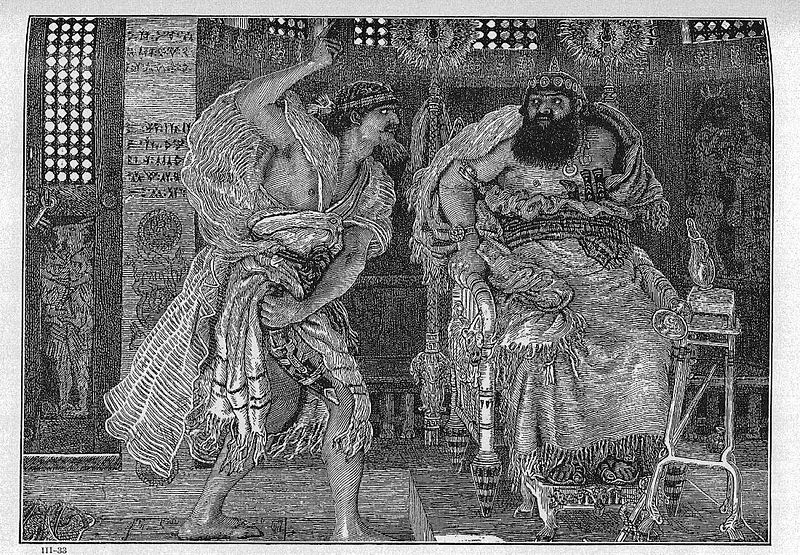 Ever notice that the Bible is like an action movie? There are some seriously amazing stories in the Bible. Judges is full of them. Some of these stories can really make people think, whether they believe the Bible is the Word of God or not.
Take Ehud. His story would make a really awesome action movie. It’s recounted in Judges 3:12ff. Here are the highlights:
The Israelites sin. The LORD punishes them by sending Eglon, King of Moab. Eglon gets some allies of his to come with him and they beat up Israel. The Israelites cry out for help, and the LORD sends help for them. Enter Ehud, the assassin. Ehud is left-handed, and the king’s body guards don’t discover his weapon (probably because they didn’t bother to search his right side–his sword would be on opposite hand to make it easier to draw). Ehud asks for a private audience and Eglon grants it. Ehud stabs Eglon so hard that it sinks all the way into the portly man’s flesh. Leaving his blade behind, Ehud escapes and rallies the troops, who unite around their new leader. He then strikes ten thousand Moabites down with his army, and none escape.
Yeah, it could make a pretty epic action movie. But what about a Bible story? How are we supposed to take this story in the context of Scripture? Note once more the beginning of the story: the Israelites did evil (Judges 3:12). Throughout Judges, we see the same pattern: the Israelites do evil, and God punishes them by oppressing them with one of the nations in the area. Then, the Israelites realize their evil, and they cry to God, repentant, and ask Him for help. He delivers them from their enemies, and there is peace in the land.
What can we take away from this story? Does it show another instance of evil in the Bible which Christians must hide? No, rather it shows the story that we can see woven throughout the Scriptures: a story of redemption and peace with God. Because of Jesus, we now live in an era in which we no longer have to wait for a deliverer, as Israel did. We’re told that all people have sinned and fall short (Romans 3:23), just as the Israelites did. And we all deserve punishment. But when we cry out to God, we know there is a redeemer close at hand. God forgives our sins because of Christ, and we can live in peace.
The cycle in Judges is repeated over and over. It reflects a time in which everyone did what they willed (Judges 21:25). God came to His people with the understanding they had. But in our time, we have Jesus who died once for all. The cycle is broken, and we may enjoy eternal peace.
See Judges 3 for more on Ehud.
This is part of a continuing series on “Awesome Person(s) of the Bible.” Other posts can be found here.
SDG.
——
The preceding post is the property of J.W. Wartick (apart from citations, which are the property of their respective owners) and should not be reproduced in part or in whole without the expressed consent of the author. All content on this site is the property of J.W. Wartick and is made available for individual and personal usage. If you cite from these documents, whether for personal or professional purposes, please give appropriate citation with both the name of the author (J.W. Wartick) and a link to the original URL. This blog is protected by Creative Commons licensing. By viewing any part of this site, you are agreeing to this usage policy.
Book Review: “Divine Motivation Theory” by Linda Zagzebski
 Linda Zagzebski is rightfully becoming a well-known figure in philosophy of religion. Her book, Divine Motivation Theory
The thrust of Zagzebski’s work is focused around two ideas: 1) exemplarism; 2) motivation. Together, these formulate the foundation for the rest of her discussion. The book is divided into three parts. The first explores “Motivation Theory” from a perspective which could be held even by those who are not theists. The second part explores “Motivation Theory” from within a theistic perspective. The third part deals with ethical pluralism.
One of the most important concepts in DMT is that of an exemplar. An exemplar is exactly what one would expect: a figure who demonstrates a “good life” by living it. Zagzebski writes of exemplars: “The particular judgments to which a moral theory must conform include judgments about the identity of paradigmatically good persons [exemplars]” (41). The thrust of Motivation Theory is a refocusing of metaethics. Rather than examining what is good and then evaluating judgments in light of that (as in Platonism, including theistic Platonism in many ways), and rather than focusing upon virtue (as in virtue theory), motivation theory focuses upon persons who are good. These persons formulate the basis for judging what is good, based upon motivation and emotion (40-50). A good action, motivation, or emotion, argues Zagzebski, is one which an exemplar would perform, have, or entertain.
Initially I admit I was a bit put off by this because it seemed quite arbitrary. Could we not define as exemplars people who are vicious and evil. Could not an exemplarist focus on ethics lead to Stalin, Hitler, and Pol Pot as exemplars?
Zagzebski counters this within DMT by focusing in part 2 upon the “divine.” Rather than arbitrarily choosing whomever one wishes as the exemplar, Zagzebski endorses God as the primary exemplar. This provides an alternative to Christian Platonism and Divine Command Theory by arguing instead that “God is essential to morality, not because it comes from either his intellect or his will, but because it comes from his motives. God’s motive dispositions, like ours, are components of his virtues, and all moral value derives from God’s motives” (185). The upshot of this is that God, being a perfect being (granting traditional theism), would have perfect motivations. Whatever God does, must be perfectly motivated.
The theistic focus on motivation within DMT provides several advantages. One among them is the fact that it solves many of the “problems” related to perfect goodness. For example, regarding what makes something God does good, DMT offers the solution that “God is good in the same way that the standard meter stick is one meter long. God is the standard of goodness” (185). Regarding the problem of evil, Zagzebski points out that her theory successfully solves the issue if it is metaphysically possible (313). The reason is that DMT’s focus upon motivation can be used analogically with human parents. “If we can understand,” she writes, “how the motivation of love of a human parent for her child might not involve any considerations of good and evil and yet still be a good motive, we must conclude that promoting good and preventing (or eliminating or not permitting) evil is not necessarily part of the motivational structure of a good being… even a perfect being might love in such [a] way that he would be willing to permit any amount of evil, not for the sake of some good, but out of love for persons” (317). These are oversimplifications of what Zagzebski writes on these problems, but I encourage the interested reader to read her work for a fuller explication.
There are so many things to discuss about DMT that remain, but I feel a full explanation would drag this review on unnecessarily. I would like to note a couple other very interesting arguments Zagzebski makes. She argues that there can be truth values with emotions (75ff). She points out that motivation is extremely important in moral judgments–if someone is doing something just to be hailed as a hero, they are much less praiseworthy than if they are doing it merely out of goodness (see 100ff). Elsewhere, Zagzebski and discusses several principles for dealing with pluralism (369ff). There are important points like these throughout the book. DMT challenges readers to rethink aspects of metaethical theory which they have unreflectively ignored. Yet in doing so, Zagzebski articulates a metaethic for theists which seems to have just as much (or more) plausibility as the alternatives.
Divine Motivation Theory deserves a reading by anyone interested in theistic metaethics. Linda Zagzebski offers a theory that has advantages over both Christian Platonism and Divine Command Theory. I highly recommend this work to any philosopher of religion. I cannot emphasize how much I think readers should get their hands on this work.
Source (and link to Amazon):
Linda Zagzebski Divine Motivation Theory
SDG.
——
The preceding post is the property of J.W. Wartick (apart from citations, which are the property of their respective owners) and should not be reproduced in part or in whole without the expressed consent of the author. All content on this site is the property of J.W. Wartick and is made available for individual and personal usage. If you cite from these documents, whether for personal or professional purposes, please give appropriate citation with both the name of the author (J.W. Wartick) and a link to the original URL. This blog is protected by Creative Commons licensing. By viewing any part of this site, you are agreeing to this usage policy.
Really Recommended Posts 7/25
My Really Recommended Posts for the day are below:
What is a Free Thinker? over at “Cold and Lonely Truth.” This post discusses the term “free thinker” and its implications. Arthur comes to the conclusion that a “free thinker” isn’t so much free as they are dogmatic. I had some similar ideas I expressed in my “Letter to a Free Thinker.”
Science Sez So: Man Made God over at “The Gospel of Erik.” Erik discusses the recent argument by some atheistic neuroscientists that mankind made God.
Another Reason I Won’t Debate the Historicity of Jesus Christ over at “Josiah Concept Ministries.” Cory links to a video of skeptic Bart Ehrmann demolishing an atheist in a discussion over whether Jesus existed or not.
Is the Bible from God? 3 Signs of the Supernatural at “Apologetics Guy.” A great introductory apologetics read for those looking to defend the Bible as God’s Word.
Erasing Hell at “In Christ Jesus.” A brief look at Francis Chan and Preston Sprinkle’s book, Erasing Hell. I recently got the book and will be reading it shortly.
Harry Potter and the Deathly Hallows: Part 2, A Christian’s thoughts
 I’ve made no secret of the fact that I’m a huge Harry Potter fan. I think the books are phenomenal, and the movies have often been just as great. What interests me, as usual, is how the Christian can relate to this extraordinarily popular series.
Harry Potter and the Deathly Hallows, Part 2 released over the weekend. I was at the midnight showing with my fiancee. The best description I can give of our feelings when it ended is this: bittersweet. The series is over. The books and movies are no longer coming. This is the end! Or is it?
THERE ARE MAJOR PLOT SPOILERS BELOW
And that is the feeling I got throughout the movie. Is death the end? The movie takes little time to get going. Soon, viewers are thrust into the epic final conflict in which Harry Potter rushes to destroy all the horcruxes (pieces of the evil Lord Voldemort’s soul) in order to finally defeat his enemy. Things get going fairly well. Harry shows up at Hogwarts again with resounding support. He quickly uses his allies to take back the school and set it up for a final showdown with evil. As his friends battle the forces of darkness closing in around them, Harry searches frantically for another horcrux while Hermione and Ron locate a basilisk fang–one of the only things capable of destroying these pieces of soul.
But once both Harry and Hermione/Ron have achieved their missions, the goal is still only close at hand. They must destroy Nagini, Voldemort’s snake (and another horcrux). They immediately set off to find the snake and witness the murder of Professor Snape–who turns out to be a double-agent after all. The fact that he killed Dumbledore turns out to not show his final betrayal, but the depth of his loyalty. But from Snape’s dying memories, Harry gleans the truth: Harry himself is an unintentional horcrux. When Voldemort killed Harry’s parents, he sealed part of his soul inside Harry. So Harry must die if evil is to be defeated.
Harry goes willingly to his death. He meets Voldemort among his followers, and allows himself to be killed. But it turns out that this is not the end. Dumbledore had sealed the Resurrection Stone inside a gift to Harry. This stone allows Harry to speak with his dead friends and family. Harry, once dead, is made alive once more after a discussion with Dumbledore [thanks to an astute reader for making this point more clear]. Harry awakens in a pivotal scene in which Voldemort is announcing his victory over all wizards, and he and Voldemort battle in a final, epic showdown in which Harry overcomes evil once and for all.
Christians reading this should be sensing some interesting underlying themes here. Harry Potter is innocent–he’s thrust into the events upon him. He willingly goes to his death, knowing it is literally the only way to defeat evil. And, once he’s died, he is resurrected, back to finally bring about his victory over Voldemort. Yeah, it seems Rowling might have borrowed a bit from the story of Jesus.
What explains the astounding popularity of the Harry Potter series? J.K. Rowling has weaved a series of books which tie together in sometimes amazing ways. What seem like random details and “fluff” in one book turn out to be of immense importance later in the series. Each book, mostly self-contained, features a different thrust. Yet they are all tied through broad overarching themes. But could it be that there is another theme, oft-ignored in discussions of Harry Potter? It seems so. The climax of the series occurs in the death and resurrection of Potter. The Christian story culminates in the same. Potter is fiction, but his tale, so wonderfully complex, leads us to the story of Christ. He had to die for the sake of all–Voldemort would have overcome. Jesus, similarly, had to die for the sake of all–lest sin and the devil overcome.
This parallelism with Christianity was not revealed until the final book, yet perhaps it can explain how Rowling was able to make the conclusion to her epic so satisfying. She was telling a story we all knew. She was telling us, in a very different way, what must happen for evil to be overcome. Her story is fiction, Christianity’s story is real. What we want to believe in (Harry Potter) is what many of us do believe (Christianity). Whether intentional or not (and I think it was intentional), Rowling wrote a story which resonates deeply with Christianity’s own. And her fiction points us towards the greater reality.
Christians, I encourage you to read and watch Harry Potter. The books and movies are just phenomenal pieces of literature and filmography. Think of the themes that are woven throughout the books. Think of the final showdown between good and evil. And think of Jesus while you do so. You’ll find that within Potter, we discover hidden truths of our own faith.
But hey, you don’t really have to think of all these themes. And it’s highly questionable whether these parallels are intentional or not. It’s okay to just enjoy the movies anyway. My point is that, as a Christian, I saw these themes. And I found it thrilling.
SDG.
——
The preceding post is the property of J.W. Wartick (apart from citations, which are the property of their respective owners) and should not be reproduced in part or in whole without the expressed consent of the author. All content on this site is the property of J.W. Wartick and is made available for individual and personal usage. If you cite from these documents, whether for personal or professional purposes, please give appropriate citation with both the name of the author (J.W. Wartick) and a link to the original URL. This blog is protected by Creative Commons licensing. By viewing any part of this site, you are agreeing to this usage policy.
Really Recommended Posts 7/11
Readers, as part of my mission with this blog, I’d like to try to raise awareness of how many awesome sites about Christianity and apologetics there are out there. As such, rather than just leaving it to a blogroll, I’m going to start featuring certain blogs and posts here on a semi-regular basis. I encourage you to check them out!
- “The Christian and the Euthyphro Dilemma” by Erik over at The Gospel of Erik. This post is simply phenomenal. Erik shows how the Euthyphro Dilemma fails to challenge the Christian concept of God because it makes assumption about God which are false. Erik uses Scripture to point out these areas of divergence.
- “Should Governments Decide Human Worth?” by Arthur at Cold and Lonely Truth. I can’t describe how much I like this post. Arthur points out some of the difficulties with allowing the government to determine human values. It also has a really sweet clip from The Twilight Zone which lead me to watching the whole episode. Check it out. Now!
- “Barbie Girl” by Dan and Tiffany O’Day at the aptly named Dan and Tiffany O’Day. Body image is an issue which Christians should address more. There’s a really awesome video here of how much work goes into a shot of a model. I really recommend this post.
- Book Review of “The Christian Delusion” edited by John Loftus by Matthew/Madeleine Flannagan at MandM. A review from Philosophia Christi of a book arguing against Christianity. Great comments.
Flannagan
Refutation of Zeitgeist the Movie/farce.
One popular atheistic movie is “Zeitgeist,” a movie which purports (basically) to show that Christianity is made up , among other things.
As Peter Van Inwagen once said, it’s better to be right than original (irony? he wrote this in An Essay on Free Will), so I suggest anyone interested in refuting this farce of a “documentary” should go listen to Glenn Peoples’ podcast on the topic, found: HERE. Also, check out this great article which breaks Zeitgeist down point-by-point: HERE.
Those interested enough to check it out, I recommend watching the documentary, then listening to the podcast. Peoples really does an excellent job taking it down.
Book Review: “God Behaving Badly” by David Lamb
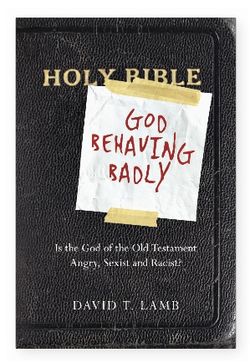 David Lamb’s God Behaving Badly
Throughout the book, Lamb follows a similar outline through each chapter: introduce tough texts, provide answers, synthesize general remarks. Lamb is unafraid to take on the toughest Scripture passages (1 Sam 4-5; Gen 3; Josh 10, 11, etc.). He points out rightly that people who line up on either side of these issues tend to ignore the texts on the other side. Those who call God angry, racist, sexist, and the like tend to ignore those passages which portray God as loving, welcoming, and empowering. Similarly, too many Christians ignore the ‘tough’ passages.
Lamb’s book excels in many specific areas. When discussing issues related to women, Lamb follows William Webb’s “redemptive/progressive” hermeneutic and points out that God is not sexist, but affirming. His treatment of the oft-misunderstood Genesis account is superb. Most interestingly in relation to women in the Bible, he writes, “If it is okay for women to compose sections of the Bible, perhaps we should let them teach it?”(64). Lamb’s scholarship in the Old Testament shines through on numerous occasions throughout the work. He points out the Ancient Near Eastern tendency to utilize hyperbole in descriptions of conquests (77).
There is one major point of divergence I feel with Lamb, however, and that is in the area of mutability/immutability. Without getting too far afield, it is worth noting that Lamb’s treatment of God’s interaction with people is a bit off, in my opinion. While noting texts which say God does not change, Lamb also notes those in which God appears to change his mind. He goes on to say,
Is it good that God changes his mind? …If you are a child who deserves to be punished, it is good when a parent changes his mind about your punishment. If you are a car buyer, it is bad when a used-car dealer changes his mind about the low price he had promised (151).
The words I wrote in my notes were “gross anthropomorphism.” The reason is because while it may be written that God “changes his mind” it would be very strange to say that He could be compared to the cases Lamb points out. God, knowing the future, would know what was going to happen, and so to say that God is like a parent changing their mind seems a bit out of place. I’ll not delve into a major argument with this, but Lamb brings up the case of Jonah as an example for this. Yet it seems from the book of Jonah that God knew Nineveh would repent–the very reason he sent Jonah in the first place (and the reason Jonah did not initially want to go). For it would not make sense for Jonah to be so upset about being sent to Nineveh to tell them to repent if he felt God would punish them regardless. In any case, this does little to undermine Lamb’s overall argument, but it is worth noting as a flaw. A final note I’d like to make is that Lamb frequently uses God’s divine name. This may be off-putting to some readers who feel it should only be presented as the Tetragrammaton, YHWH.
The conclusion of GBB is simply fantastic. Lamb sums up his points in each chapter (a feature I think every conclusion should have).
God Behaving Badly is a great introductory look at a well-known challenge to Christianity. Lamb doesn’t ignore the hard issues in the Bible and tackles them with sincerity and intelligence. I recommend the book to those looking to start exploring issues related to God’s moral nature.
SDG.
——
The preceding post is the property of J.W. Wartick (apart from citations, which are the property of their respective owners) and should not be reproduced in part or in whole without the expressed consent of the author. All content on this site is the property of J.W. Wartick and is made available for individual and personal usage. If you cite from these documents, whether for personal or professional purposes, please give appropriate citation with both the name of the author (J.W. Wartick) and a link to the original URL. This blog is protected by Creative Commons licensing. By viewing any part of this site, you are agreeing to this usage policy.
The end of it all…
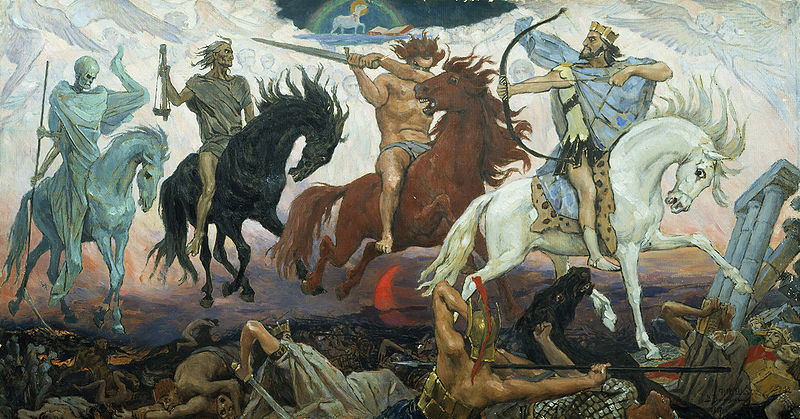 There’s a lot of confusion about endtimes in our world. It isn’t helped by the fact that there are false prophets springing up all around us, trying to tell us that which is to come. The recent controversy over Harold Camping’s prediction that the world would end on May 21st has me thinking about the study of end times (eschatology).
It’s an area I admit I haven’t studied much. The subject is confusing. There is a staggering array of views about what will happen in the end. The book of Revelation, from which we draw much of our knowledge over what will happen in the end times, can be greatly confusing to both the uninitiated and the scholar.
There are two major themes upon which I’d like to focus: knowledge of the end and our behavior at the end.
1) Knowledge of the end
Thinking about the apocalypse–the end of the world–is a tough issue. Like I said, there is a lot of diversity on the subject. As such, it is important for Christians to look to the Bible to see what we can know about the end. The key is to remember that must always go back to the Bible to see what it says about a subject before we believe what someone tells us it may say.
We are warned by Jesus in Matthew that there will arise false prophets (Matthew 24:24). Harold Camping is one such false prophet. He has distorted the truth of Scripture to gain followers.
Perhaps the most telling verse in the Bible which speaks against us being able to know when the end will come is Matthew 24:36, in which Jesus Himself says “But about that day or hour no one knows, not even the angels in heaven, nor the Son, but only the Father.” If that’s true, then how would any other human know? Not even Christ, in his state of humiliation, could tell us when the last day would come!
The bottom line is that we can’t know and we won’t know when the last days have arrived–not until Jesus Himself is here.
2) Behavior at the end
Suppose for a moment we are at the last days; what should our attitude be? The resounding chorus in Scripture is that we should be diligent and ready, but we should continue to spread God’s Kingdom. Looking back at the Matthew 24 passage, Jesus tells us, ““Therefore keep watch, because you do not know on what day your Lord will come… Who then is the faithful and wise servant, whom the master has put in charge of the servants in his household to give them their food at the proper time? It will be good for that servant whose master finds him doing so when he returns” (24:42, 45-46).
So our attitude should be one of the watchful servant: ready for Christ to come, but not letting that distract us from the work He has given us. Rather than put up billboards and go around telling everyone the end is nigh, our task is to continue what should be our “business as usual”–spreading the Word, taking care of the needy, and living our lives as Christians.
Conclusion
It is easy to get caught up in the “end times” controversies. I admit that often when I hear of such predictions, I am more diligent than usual in remembering to repent of my sins. But what does that tell me? It tells me that I need to be more diligent about that at all times. For we need to be ready when Christ does come. A life of readiness for Christ means a life of spreading the Good News about Him to all people. It means living a life of repentance and reconciliation to God. We may not know when the end will come, but it is coming–and we will experience it either in this life or the next.
SDG.
Links
Check out this blog post by Austin which discusses the Camping controversy: here.
News article discussing Camping’s befuddlement about his failure: here.
Image: “Four Horsemen of the Apocalypse” by Viktor Vasnetsov, 1887.
——
The preceding post is the property of J.W. Wartick (apart from citations, which are the property of their respective owners) and should not be reproduced in part or in whole without the expressed consent of the author. All content on this site is the property of J.W. Wartick and is made available for individual and personal usage. If you cite from these documents, whether for personal or professional purposes, please give appropriate citation with both the name of the author (J.W. Wartick) and a link to the original URL. This blog is protected by Creative Commons licensing. By viewing any part of this site, you are agreeing to this usage policy.
Sam Harris on Christian Sacraments–Lunacy?
 Sam Harris recently debated William Lane Craig on the topic “Is Good from God?” See my comments on the debate here. During the debate, Harris argued that the rituals of Christianity can be seen as a kind of lunacy. Harris said, “[Religion] allows perfectly decent and sane people to believe by the billions what only lunatics could believe on their own. If you wake up tomorrow morning thinking that saying a few Latin words over your pancakes is going to turn them into the body of Elvis Presley, you have lost your mind. But if you think more or less the same thing about a cracker and the body of Jesus, you’re just a Catholic.”
Consider what Harris is claiming here. Basically, he’s saying that to believe a cracker becomes the body of Jesus is a kind of lunacy. Interestingly, throughout the debate he issued these veiled (or not so veiled) insults to Christians at large, and quickly retreated from them when he was called out. But that’s neither here nor there.
My contention is that Harris’ implicit argument against the rationality of the Sacraments (and Christian rituals at large) contains an implicit assumption. Once that assumption is exposed, his argument fails. The implicit assumption is this:
1) Christianity is false
Yeah, I’m serious. The reason is because the only way Harris’ argument makes sense is if one assumes a priori that Christianity is false. For consider his objection if Christianity is true. If Christianity is true, then God exists, Jesus was God, Jesus told us what would happen in Communion/the Eucharist, etc., etc. But then if Christianity is true, it is perfectly rational to hold that the uttering of certain words as part of a ritual would be causative in the sense that God said it would be. So Harris’ argument turns on the assumption that Christianity is false.
But perhaps I’m missing Harris’ point. Perhaps he is instead trying to say “Look at what you guys do! It’s crazy if it’s something else!” But again the only way this would make sense is by assuming Christianity is false. If I believe Christianity is true, then I have no reason to think the rituals involved therein are lunacy or anything other than perfectly rational worship of our God.
But it could be pressed that it does seem as though Harris’ assertion that Holy Communion would be viewed as lunacy in other contexts is in some sense correct. For were I to do the same with pancakes and Elvis, I would be seen as a lunatic. Why not the Christian too? Well, then the question would have to be what kind of evidence do we have for thinking Christianity is true as opposed to other beliefs? In short, if the Christian is epistemically justified in believing Christianity to be true, then Harris’ argument is exposed for what it is: a facile argument which shows how deeply Harris and the other “New Atheists” fail to understand the position they attack.
SDG.
Image: Priest distributing Holy Communion at Holy Protection Church, Düsseldorf.
——
The preceding post is the property of J.W. Wartick (apart from citations, which are the property of their respective owners) and should not be reproduced in part or in whole without the expressed consent of the author. All content on this site is the property of J.W. Wartick and is made available for individual and personal usage. If you cite from these documents, whether for personal or professional purposes, please give appropriate citation with both the name of the author (J.W. Wartick) and a link to the original URL. This blog is protected by Creative Commons licensing. By viewing any part of this site, you are agreeing to this usage policy.

 J.W. Wartick - Reconstructing Faith
