Jesus
Original Sin and the Metaphysics of the Soul
Original Sin Defined
The writers of the Augsburg Confession (found in the Book of Concord) defined Original Sin as the belief that “…since the fall of Adam all human beings who are propagated according to nature are born with sin, that is, without fear of God… [we] teach that this disease or original fault is truly sin, which even now damns and brings eternal death to those who are not born again through baptism and the Holy Spirit” (BOC, 39).
One Objection
Ezekiel 18:20a states, “The soul who sins is the one who will die. The son will not share the guilt of the father, nor will the father share the guilt of the son.”
The word used for “soul” in this passage is the Hebrew word, nephesh. This passage leads to the objection that original sin cannot be true as I have outlined it, because it involves the son inheriting the guilt of the father.
The Question of the Soul: A Metaphysic of Original Sin
Three views of the soul are prevalent in Christianity. All of them presuppose metaphysical dualism. They are:
1) Our soul is constructed just as our physical body: Our soul is a half-and-half combination of the souls of our mother and father.
2) God specially creates each soul for each person when he/she is conceived/born/etc. Alternatively, God has already created every soul for everyone who will ever live, and puts them in a body when one is needed. The main problem with this view is that it would seem that if original sin is true (in the sense I have outlined it above), then God creates sinful souls for us.
3) Our soul is from Adam. There are no new souls for mankind, rather, we all share, in some sense, Adam’s soul.
I tend to favor 1) (now, anyway). But I favor a version of 1) which is not so much a half-and-half combination of souls, but a union of the totality of the souls we inherit. I originally wrote this post for my new site, but an insightful commentator lead me to heavily edit my views here. Just as we become one in the union of sex, so do our souls become one when we conceive a child.
What this means, then, is that the soul we inherit from our ancestors includes the inheritance of the guilt of sin. I must note the distinction here between sins which require action and those that do not. I have been pondering this idea for some time–is it possible to have sins for which we are guilty that we don’t commit? The answer I lean toward is “No”, but that doesn’t preclude original sin. The reason is that through the soul, we have literally participated in the original sin of Adam. When we are told that we have the “Old Adam” in us, this should be taken in a more literal sense than it often is.
We are told by Paul that there is a natural and spiritual body (1 Corinthians 15:44). These are both the inheritance of our ancestors. In a literal sense, then, there is the “old self” (Romans 6:6) and the Old Adam (1 Corinthians 15:45) which, from birth, enslave us to sin (Romans 6:6). Metaphysically I think this means that our soul has literally participated in, and is therefore held accountable for, the original sin. Original sin is a substantive entity–it corrupts our very nature. This is no mere inclination to sin, but a bondage to sin and a separation from God. It only makes sense to me on a metaphysical level to argue that this sin is inherited through our soul, which, like our body, maintains the union with Adam himself.
So how does this answer the objection from Ezekiel 18:20? Initially, one may argue it seems to purge the passage of all meaning. This is not the case, however. What Ezekiel is referring to is the sin of commission. That is, it refers to a sin which requires an action. Ezekiel is telling us that the actions of the father do not condemn the actions of the son. This does not, however, preclude the original sin in the metaphysical sense in which I have outlined it, because we have each participated in the action which causes original sin.
One final note is required, however. This is again a modification of my original thoughts due to enlightening discussion with my good friend’s comments. We must remember that this stain of sin, this original sin, has passed away for those who have faith in Christ. For, though the passages I quoted above discuss the nature of our original guilt, they immediately turn to salvation which is through Christ. Our New Adam replaces the Old (1 Corinthians 14:42-57), and our enslavement to sin is no more (Romans 6:6-14). Our original guilt, received through our sharing in the action of Adam, and our shared spirit with him, is no more.
Source:
The Book of Concord. Augsburg Fortress. 2000.
——
The preceding post is the property of J.W. Wartick (apart from citations, which are the property of their respective owners) and should not be reproduced in part or in whole without the expressed consent of the author.
New Page: Christian Diversity
I have started another blog, which will not interfere with this one (though there may be some overlap). It is called Christian Diversity. Here’s the mission statement:
Christianity has been separated into divisions over denominational, cultural, and theological lines, yet the message of Christianity remains the same for all generations: Christ crucified for our sins. We at ‘Christian Diversity’ seek to demonstrate that while Christianity may be divided institutionally, we are of one mind spiritually. We affirm ‘Mere Christianity’, which is the belief that Christianity is ultimately this faith in Jesus Christ as Lord and Savior. We affirm the Three Ecumenical Creeds (The Apostles’, Nicene, and Athanasian Creeds).
The goal of ‘Christian Diversity’ is to discuss doctrinal differences on matters not essential to the faith. We understand that the goal of total ecumenism–that is, the unity of all churches–may be out of reach, but we strive to come to the understanding that all Christians are saved, and there are no divisions among us when it comes to Christ. Thus, while we may disagree on many of the issues we discuss, we continue to strive towards a better understanding of our fellow Christians and increase unity with them. This will serve to strengthen us as brothers and sisters in Christ.
Our motto comes from St. Paul, who writes in 1 Corinthians 1:10 I appeal to you, brothers, in the name of our Lord Jesus Christ, that all of you agree with one another so that there may be no divisions among you and that you may be perfectly united in mind and thought.
Check it out! Let me know your thoughts!
Book Review: Horrendous Evils and the Goodness of God
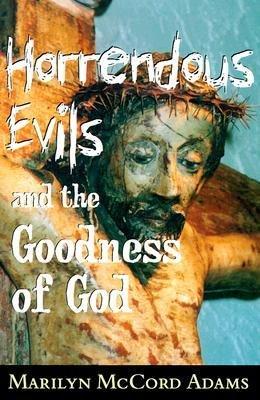 The problem of evil is often seen as the greatest threat to theistic belief. Analytic Philosophers have struggled with the issue on both sides of theism–from Plantinga’s innovative “Free Will Defense” to the claim of the positive irrationality of theism issued by the late J.L. Mackie. This issue doesn’t show signs of slowing down, either. It has dominated philosophy of religion for millenia.
In Horrendous Evils and the Goodness of God
Adams’ account has the kind of honest, penetrating discussion of real evil in our world about which philosophy would do well to take notice. The little child kidnapped and murdered; the innocent family killed by the drunk driver; the millions murdered by Hitler; these examples all demand answers for the individual occurrences of evil, according to Adams (see her discussion on pages 17ff). Specifically, she writes that “At a minimum, God’s goodness to human individuals would require that God guarantee each a life that was a great good to him/her on the whole… God would have to… [give each person’s life value]… by giving it positive meaning through… great enough good within the context of his/her life” (31, emphasis hers). This stunning claim will likely make the theistic philosopher rock back on his/her heels for a moment. Surely, we cannot be called to account for every individual evil!
Adams believes that the Christian theist can indeed do so, not by taking the unconvincing (in my opinion) route of arguing that such persons are having their character built by suffering, but by appealing to God’s goodness to each individual person (55). Specifically, this goodness of God is demonstrated within Christianity by Jesus Christ. After a penetrating discussion of purity and defilement on Christianity and Judaism (see 86ff), Adams argues that in Christ, God “takes the… approach of joining us in our defilement [that is, our suffering of horrendous, individual evils]” (98). This act of Christ means that our defilement from sin, evils, and even horrendous evils has the possibility of becoming holiness (99). Thus, through Christ, and the power of the Holy Spirit’s redefining rebirth of baptism, God offers the greatest good to every individual (102).
Through this self-defilement which leads to holiness, God invests meaning by “…being good to all created persons–that is, in seeing to it that each gets a life that is a great good to him/her on the whole, one in which any participation in horrors is not merely balanced off but defeated” (126, emphasis hers). Adams’ thesis, then, is that in Christ, God provides the defeater for horrendous evils by ensuring that each person’s life is a great good. Here Adams rides a fine line of universalism (it seems as though she may be saying every person is indeed saved through Christ, eventually), but her account can be easily modified by those who reject universalism–for one can argue that God provides the defeater simply by offering the possibility of such goods to each person. And God is good to each person by providing such an opportunity.
Adams uses the rest of her work to argue further how God’s participation in suffering demonstrates that God has been immeasurably good to each individual.
I find Adams’ argument particularly enlightening. Her emphasis on the individual evils of the world is a breath of fresh air as well as a new challenge to Christian philosophers. We do need to address individual atrocities. This doesn’t mean we need to go through, case-by-case, and provide theodicies for each event. Rather, as Adams urges, we can address this by arguing that God is good to every individual through his redemptive act by Jesus Christ.
My main critique of Adams in this work is that while I find her issues with abstracting the problem of evil to hit the mark some of the time, I think she underestimates the value of some of the analytic responses to the problem of evil. Certainly, taking evil as a sum total and arguing that God could have some reason for permitting this much evil to occur downplays the importance pf the evil actions towards individuals , but there is a place for such defenses within philosophy. Rather than jettisoning these types of answers, then, I think we would be best suited adding Adams’ defense to the many-faceted response to the problem of evil from Christian philosophers of religion.
Source:
Adams, Marilyn McCord. Horrendous Evils and the Goodness of God
——
The preceding post is the property of J.W. Wartick (apart from citations, which are the property of their respective owners) and should not be reproduced in part or in whole without the expressed consent of the author.
Jesus: A Fact of History
This post is part of a series, “Jesus: The Living God.” See other posts in the series here.
The belief that Jesus existed is, quite simply, historical fact. The historical figure of Jesus is beyond denial. Jesus walked on this planet. There are those who actually deny this fact. They say things about our knowledge of Jesus being derived only from “hearsay” accounts, or that the other historical sources outside the Gospels aren’t reliable because they were written after Jesus died.
What people who try to deny Jesus as a historical fact don’t realize is that we have more evidence for the historicity of Jesus than we do for historical figures such as Alexander the Great. Our sources on Alexander the Great date from sources written utilizing biographical accounts about him. This is hearsay, if that is how those who want to attack the historicity of Jesus want to define such historical accounts. The sources we do have date at least 200 years after Alexander’s death (derived from Green, Alexander the Great and the Hellenistic Age, pp. xxii–xxviii). But according to the “historical standards” set by those who wish to deny that Jesus ever existed, we absolutely must accept that Alexander the Great existed either!
We know of Alexander the Great only through accounts written hundreds of years after his death (scholars date the Gospels to about 70AD–40 years after the death of Jesus [see Blomberg, Craig, The Historical Reliability of the Gospels)! Sure, there are many reasons to think Alexander existed, such as the shape of western civilization, various corroborating evidence, etc… but we have reasons like that to believe Jesus existed too!
The reality is that no serious scholar denies the historicity of Jesus, due not only to the Gospel accounts, but also Josephus, Tacitus, etc. Those who wish to discredit the accounts of the Gospel, Josephus, etc. should realize they should be consistent in their “historiography” and discredit the accounts written about Alexander the Great, not to mention other figures like Attila the Hun, Confucius, etc.! If this is the kind of historical relativism and denial we are forced to embrace due to the denial of the historical Jesus, then almost all ancient history is thrown into question.
The fact of the matter is that the reason people try to deny the historicity of Jesus isn’t due to historical reasons, it’s either due to ignorance about how historiography operates or simply willingness to blatantly deny historical fact.
Recommended reading
Wright, N.T. The Challenge of Jesus, The New Testament and the People of God, Jesus and the Victory of God, and The Resurrection of the Son of God
Blomberg, Craig The Historical Reliability of the Gospels
Strobel, Lee The Case for the Real Jesus and The Case for Christ
Komoszewski, Sawyer, and Wallace Reinventing Jesus
Note that even accounts critical of Jesus do not deny his historicity, cf Crossan, John Historical Jesus or Borg, Marcus Jesus
——
The preceding post is the property of J.W. Wartick (apart from citations, which are the property of their respective owners) and should not be reproduced in part or in whole without the expressed consent of the author.
Jesus: The Living God
The life of Jesus is the single most important event in human history. If Christianity is true, then salvation is available to all who believe in Him. If not, then billions of people have been deceived for millennia. This is part of a series of posts on Jesus, the Living God. I’ll be exploring apologetic, theological, and Biblical works that discuss Jesus.
This post serves as a place to collect links to this series.
The Morality of God: Christ at the Center.
Jesus and the Stable: A Theory.
The Historicity of Jesus: The Tools for the Task
This is part of a series I’ve entitled “Jesus: the Living God,” which explores Jesus from Biblical, theological, and apologetic levels. View other posts in the series here.
For now, let us focus on the “tools for the task” (Wright, 29 and following). What kind of historical, textual means are used to talk about Jesus? I’ll be outlining views made by N.T. Wright in his The New Testament and the People of God, (hereafter NTPG) and Blomberg in The Historical Reliability of the Gospels. First, I should outline my presuppositions. I believe that Jesus Christ is Lord and Savior, whose salvation is freely available to all who believe by grace through faith (Ephesians 2:8-9). There is no other name by which we are saved (Acts 4:12). I believe that the Bible is the Holy, Inerrant Word of God. It is infallible in its teachings.
Wright argues for a “critical realist” view of history. This view describes a “process of ‘knowing’ that acknowledges the reality of the thing known, as something other than the knower… while also fully acknowledging that the only access we have to this reality lies along the spiralling path of appropriate dialogue or conversation between the knower and the thing known” (Wright, 35 emphasis his). This acknowledges that observers have their own point of views, that they have their own interpretations, and that metaphysical beliefs will influence interpretation of data (36). This is vitally important throughout not just Wright’s body of works, but any historical (or other field) study–one’s presuppositions will influence how one interprets the same data.
Wright argues that one primary function of worldviews is to tell “stories” (38). This doesn’t mean these stories are fiction, rather, Wright is arguing that these stories form the basis of a worldview as well as the ways the worldview will interact with other views (38-40). In the context of the New Testament, “They [first-century Jews] never expressed a worldview in which the god in question was uninterested in, or uninvolved with, the created world in general, or the historical fortunes of his people in particular” (41). It is this worldview that, upon reading more of Wright, I think Wright not only acknowledges but agrees with. God is not uninterested or uninvolved, rather, the opposite is true–God is intimately involved and interested in His creation and creatures.
Wright emphasizes the “impossibility of ‘Mere History'” that is wholly divorced from any worldview (82). This doesn’t mean there are no facts… rather, it means there is no such thing as an uninterpreted fact (88). These interpretations are generally used in conjunction with historical hypotheses. Thus, it is important to note what composes a good historical hypothesis:
1) The historical hypothesis must include the data. One cannot, for example, simply drop the eschatology which was clearly part of Jesus’ teachings as well as the rest of the New Testament, in order to make one’s hypothesis easier to produce. The data must all be included (99).
2) “It must construct a basically simple and coherent overall picture” (100).
3) The hypothesis must show that it is useful in related areas, it must explain other problems (100).
It is important to realize that a simply enormous amount of material has been produced on Jesus and the Gospels, not to mention the rest of the New Testament. Thus, I will turn to Craig Blomberg’s work, The Historical Reliability of the Gospels (hereafter HRG) to analyze some of the ways this study has been done. The tools for our task (to borrow Wright’s terminology) should utilize the best available evidence from New Testament scholarship, while discerning everything in light of the truth of Scripture.
Craig Blomberg wonderfully summarizes the various methods of historical criticism and analyzes them for usefulness in HRG. Note that I’m not endorsing historical criticism, rather, I’m endorsing taking what is useful from historical criticism and use it as part of the toolbox. In my summing up, I’m leaving out much of Blomberg’s task of pointing out flaws in these criticisms (which is not only in-depth, but also illuminating), but rather emphasizing his ways to use them in the presuppositions that I’ve outlined above.
1) Form Criticism- Form criticism emphasizes the genre of the work being viewed (Blomberg, 50). It also discusses how a text was transmitted or brought into being. Christians can find this useful as it can be readily implemented in the “historical grammatical” type of reading of Scriptures. The background of the text is indeed important, as well as realizing the genre involved (i.e. the historical telling of what Jesus did, as opposed to His parables, which are not literal history).
2) Redaction Criticism- Redaction criticism views the writers of the Gospels as “editors” of the New Testament, “selecting, arranging, and rewording their sources to highlight particular theological and stylistic emphases” (Blomberg, 67). Christians can utilize this not to break down the reality of the Gospels, but rather they can use it as they realize there are indeed differences in the portrayal of Jesus in the Gospels (i.e. Mark’s suffering servant and Matthew’s son of David), not as contradictions, but as parts to a whole picture of Christ as suffering servant, son of David, compassionate teacher, and Word Incarnate (74).
3) Midrash- Midrash criticism of the Gospels focus on the “relationship of the Gospels to various [Hebrew Scripture] passages to which they may refer” (75). Clearly, this has uses for the Christian. How did the writers of the Gospels utilize Hebrew Scriptures to make their arguments or draw their conclusions about who Jesus was and what He did? This is vitally important to Christological study–who did Jesus say He was, based on the passages He cites, and who did others say He was?
4) Literary Criticism- this discipline is broken down into three types, though the most useful type for the Christian is the “narrative criticism” which analyzes characters, symbolism, figures of speech, etc. within the Gospels (87).
I’ve left out much of Blomberg’s analysis in order to simply sift off what we can use from these various methods, in light of the presuppositions I’ve outlined above. There is much more that could be said about either of these fantastic works (NTPG or HRG), and there is much more that could be said about the “tools for the task”, but for now, these are our tools, and I shall soon move into some of the historicity of Jesus.
Sources:
Blomberg, Craig L. The Historical Reliability of the Gospels. InterVarsity Press. 2007.
Wright, N.T. The New Testament and the People of God. Fortress. 1992.
——
The preceding post is the property of J.W. Wartick (apart from citations, which are the property of their respective owners) and should not be reproduced in part or in whole without the expressed consent of the author.
The Covenant and Christ
This post is part of a series on Jesus: The Living God. View other posts here.
Recently I wrote a guest post for a fellow Christian blogger (an excellent site, check it out), Chris Reese, on N.T. Wright’s Climax of the Covenant. I wanted to re-blog it for my site and add a bit to it.
A subject that is often ignored within discussions of who Christ is involves Covenant theology, specifically, the theology of the Torah. How exactly does Christ relate to the Covenant that God made with the people of Israel? N.T. Wright discusses this very issue in his book, The Climax of the Covenant.
First, what is the Torah? The Torah, in Wright’s usage, is not just the Mosaic books of the Bible or the Law, but the promise of God to His people, Israel. He states that “…the law… was regarded not merely as a general code of ethics, but as the charter of Israel’s national life” (24). The problem was, of course, that God demanded perfect obedience to the Torah, to the Law. As His covenant people, Israel was to keep the Torah and to cherish it. But Israel constantly strayed. Thus, the power of the Torah became death, the consequence of sin (209).
So how could Israel fulfill the Torah? The short answer is that Israel simply could not. It demanded perfection, and the people of Israel could not be perfect. God had to intervene directly in history in order to accomplish His covenant with His people, and to open this covenant up to all people.
And how did this happen? First, note the relationship between Christ, Adam, and humanity. Wright notes that “Adam has [for the rabbis of Israel] become embodied already in Israel, the people of the Torah, and in her future hope” (25). This, in turn, must be viewed in light that “Israel, the family of Abraham, is God’s true humanity. Her land is God’s land. Her enemies are God’s enemies” (23). This reflects back on the Torah, as discussed above. It is the “charter of Israel’s national life” (24). So there is a relationship between Adam and Israel–Adam, Wright argues, is to be understood as Israel. Jesus Christ, then, became a New Adam for a New Israel. By acting as the New Adam and redeeming Israel, He fulfilled the Torah and seal the charter of Israel. Not only that, but He opened this charter, this Covenant, to all people.
“Jesus, as last Adam, had revealed what God’s saving plan for the world had really been… by enacting it, becoming obedient to death, even the death of the cross” (40). The resurrection confirmed Jesus as Christ–Messiah.
Finally, how could God keep this promise in light of the failure of Israel (and mankind at large) to keep the Torah? Christ, argues Wright, is the “Climax” of the covenant. “The Messiah is the fulfillment of the long purposes of Israel’s God” (241). How does this happen? Wright argues that the “…answer must be that sin, by causing death, stood in the way of the divine intention of giving life; when, on the cross, God condemns sin… then sin is powerless to prevent the gift of life” (209). God’s plan of salvation “always involved a dramatic break, a cross and a resurrection written into the very fabric of history” (241, emphasis his). Thus, Torah and Covenant Theology can be summed up by saying that “Christ on the cross is thus the goal of the Torah” (243, emphasis his). It is in Christ that we become the people of God.
Source:
Wright, N.T. The Climax of the Covenant. Fortress Press. 1991.
——
The preceding post is the property of J.W. Wartick (apart from cited material which is the property of its respective owner[s]) and should not be reproduced in part or in whole without the expressed consent of the author.
The Morality of God: Christ at the Center
Here we have a perfect example of the truth of God’s Word: “The mind of sinful man is death, but the mind controlled by the Spirit is life and peace; the sinful mind is hostile to God. It does not submit to God’s law, nor can it do so. Those controlled by the sinful nature cannot please God.” Romans 8:6-8. Indeed, when man is in sin, he is hostile to God. He doesn’t simply misunderstand or misinterpret God, but he is hostile to God.
This can be seen in the writings of the so-called New Atheists (who bring nothing new to the table). They accuse the God of the Old Testament (Hebrew Scriptures) of being an evil, sadistic being (to put it nicely). They defame God’s name and delight in calling Him unjust.
In all of this, however, they betray their complete lack of knowledge about Scripture, God, and the universe.
I believe that there are (among many others) two primary ways that the New Atheists are in error when they attack God in such a way. These two ways are:
1) They forget that if God does indeed exist, then they are in no position to judge God
2) They ignore Christology, which is of utmost importance in any discussion of God
But there is a third point that I have left unmentioned, as I’m still mulling over it. I learned of it upon reading God is Great, God is Good edited by William Lane Craig. I’ll likely write about it in the future.
In the first place, those who attack God’s morality seem to be forgetting a rather obvious point: if God exists, then we are certainly in no position whatsoever to judge whether God is moral or not.
Let us assume for a moment that the God of classical theism exists (i.e. omnipotent/omniscient/omnibenevolent/necessary/sovereign/etc.). If this God exists, then it seems blatantly obvious that it is God who judges what is right and wrong, not us. It’s honestly baffling that anyone could miss this point, but I’ll try to make it more clear.
1. If the God of classical theism exists, then He is sovereign (i.e. the ultimate authority in the universe)
2. Assume, for the sake of argument, that the God of classical theism exists
3. Therefore, God is the ultimate authority in the universe.
Now those who raise this objection somehow think that they are capable of judging the actions of the ultimate authority in the universe. This is not only irrational, but it is an ultimate show of egoism and haughtiness. There is no such thing as a good argument for humans being able to judge the Supreme Being, if such a Being exists.
The second explanation is even more readily ignored by the New Atheists. It’s easy to quote mine Scripture to pull things out of context in order to try to prove a point, but one must understand that Scripture stands or falls as a whole. As such, Christ is to be understood as the interpretive principle for all of Scripture. Every verse should be understood in light of Christ, who is to be at the center of all theology.
So what does Christ have to do with an argument about whether God’s Law as presented in the Hebrew Scriptures is evil? Everything. Christ is the accomplishment of the Torah (the Law). N.T. Wright argues in his work The Climax of the Covenant that the Law “is given for a specific period of time, and is then set aside–not because it was a bad thing now happily abolished, but because it was a good thing whose purpose had now been accomplished.” While some may object to Wright’s interpretation (as they may argue that this view of Torah is anti-nomian in nature, though I think anyone who reads Wright in context will realize this is not the point he makes at all), I believe he makes a wonderful point here. Christ came to save all people (the doctrine of objective justification). Thus, the question should not be whether or not the OT Laws are evil, but the question should rather be “What does this [the Law] mean?”
The answer can be seen in Christ. Romans 10:4- “Christ is the end of the law so that there may be righteousness for everyone who believes.” The Greek word for “end” in this passage is tellos, which means “end, goal, to set out for an ultimate goal” (Strong’s Bible Dictionary). Christ has now come. The Law is accomplished. It is to Him that we should turn when we are condemned by the Law. Further, Galatians 2:15-16 “We who are Jews by birth and not ‘Gentile sinners’ know that a man is not justified by observing the law, but by faith in Jesus Christ. So we, too, have put our faith in Christ Jesus that we may be justified by faith in Christ and not by observing the law, because by observing the law no one will be justified.”
Thus we know that it is through Christ that the Law must be interpreted, as the perfect atoning sacrifice for our sins. The Law can make no one righteous, it can only condemn (and that is evident in those who react with hatred to it [see C.F.W. Walther’s “Proper Distinction between Law and Gospel” to examine this point exhaustively). Those condemned by the law react with hatred, as can be seen by the works of Dawkins, Hitchens, Harris, et al. But what the New Atheists (and others) need most severely is most certainly the Gospel and the understanding thereof. All Scripture must be interpreted through the Cross of Christ.
This post is part of a series on Jesus: the Living God. View other posts in the series here.
——
The preceding post is the property of J.W. Wartick and should not be reproduced in part or in whole without the expressed consent of the author.
The Suffering God: Christianity, Evil, and God
Christianity is confronted with many questions in this era.
What is it that makes Christianity different?
Aren’t all religions the same?
Are not all the gods people worship really just the same god?
I (and many before me) suggest, however, that there is an answer to all of these questions. One of my professors, the Reverend Dr. Richard J. Shuta, told a story in our class. He was on the way back home, waiting for a cab. A man was waiting with him. Rev. Dr. Shuta is a theologian, and the man, who would be travelling in the cab with him, was a professor of philosophy. The man cut to the chaise and said, “I have just one question. If I stand on a street corner and I see a church, a mosque, a hindu temple, a buddhist temple, etc… why should I enter the church instead of any other?”
Dr. Shuta’s answer was simple, but profound. “Suffering.”
It is remarkable, in my opinion, that suffering, which is often used as a weapon against theism (see my post on this topic), can be such a remarkable explanatory tool for Christianity. For it is suffering itself which sets Christianity apart.
If a list of all the things that united all humanity were compiled, I am sure that suffering would be near the top of the list. Suffering is something each and every individual experiences on some level. It is how we make sense of this suffering that is different.
The God of Christianity understands this universal concept. The God Christianity worships is symbolized by a Cross, the image of suffering. Other religions demand that humanity approaches god. They demand that humanity make oneself better, purify oneself, become nothing, etc. Christianity has God do it for us. God came to us, God suffered, God took the burden on Himself so we may live in eternity.
The Suffering God is the God of Christianity. The Loving God is the God of Christianity. What is it that makes Christianity different? The God of Christianity knows pain, and understands it, and experienced it.
Again, it is the Cross that defines Christianity. What do Christians believe? Christ crucified for all.
Ravi Zacharias states, in Can Man Live Without God? “It is the cross that invites us to die to self that the life of Christ may live in us fully. Without the cross there is no glory in man. The difference between man-made utopias and a God-made heaven is the cross (178).” [Emphasis his]. It is the cross. It is this symbol of suffering Christ. The symbol of our Suffering God. Suffering unites humanity, and God knows this suffering intimately.
Modern theism, according to N.T. Wright, seems to tend towards Enlightenment Deism. I’d tend to agree. Even Christians tend to think of God as some far away being that “loves us” but doesn’t really interact with us. It’s a concept that must be abolished from Christianity, for our God is the God who is Here. Our God is Immanuel, literally “God with us.” This God of Christianity is the one which we have too often abandoned and modified with our philosophical meanderings, allowing worldly concepts to permeate a personal, truly loving God.
The Cross is suffering. The symbol with which we refer to Christ is a symbol of suffering. It is this idea that is vastly important when thinking of Christianity. Christianity acknowledges suffering. Its symbol is one of suffering. Christianity explains suffering in human terms, rather than reducing it to naturalistic accounts, trying to explain it away, and the like. Christianity realizes there is real suffering in the world, and worships the God who suffered Himself that we be reconciled to Him.
Dietrich Bonhoeffer, that great German pastor, martyred for his faith by Hitler, wrote in Ethics, “It is with the Christ who is persecuted and who suffers in His Church that justice, truth, humanity, and freedom now seek refuge; it is with the Christ who found no shelter in the world, the Christ who was cast out from the world, the Christ of the crib and of the cross, under whose protection they now seek sanctuary… (61).”
Christ’s suffering is our shelter.
I’d like to conclude that there is therefore a kind of argument because of evil, not a problem or argument of evil that can be presented in defense for Christianity, rather than as an offense against it. I haven’t fully developed this argument, so I don’t have a formal layout yet. Instead, I’ll present it in informal fashion:
There is a universal suffering which leads to a universal need for comfort. This universal need seems to imply that there is comfort to be had. There is, in fact, some comfort to be had. If there is comfort to be had, it further seems that this comfort must be, possibly, universal. Comfort can only be transferred on a personal, rather than an impersonal level. Thus, the universal comfort must interact on a personal level. A universal comforter that is personal tends to point towards theism rather than any other worldview.
This is only the bare-bones of an argument I’ve only recently started to develop, and I’d be happy to receive feedback, positive or negative.
Walking in Faith as a Christian Philosopher
Okay, we all knew that there’s no way I could keep this blog limited entirely to apologetics.
Thus, here is the first non-apologetic post (other than the obviously satirical Evolution of the Rock)!
It is easy as someone who focuses so much on the philosophical proofs of God and the constant defense of Biblical inerrancy, the resurrection and Godhood of Christ, etc. to get completely overtaken in faith life by the scholarly side of faith. It’s so easy to stray from the narrow door that Christ opens. That verse, Luke 13:24 “[Jesus said]’Make every effort to enter through the narrow door, because many, I tell you, will try to enter and will not be able to,'” is one of my favorite things Jesus says in the Bible.It’s a reminder during those times that I tend to lose focus. The way is narrow. The door is narrow. And the only way to stay on that path or enter through that door is Jesus Himself.
It’s sometimes interesting to be aware of the spiritual warfare that is occurring, especially around one’s own life. It’s scary sometimes to realize that the minions of Satan will use anything, even one’s undying interest in Christian philosophy, to pull them away from Christ. I have plainly seen sometimes how I’ve been tempted away from diligent reading of Scripture or seduced into reducing faith utterly into philosophical arguments. It is in those times that I realize how real the battle is. It is in those times that God the Father never ceases to call me to return, and the Spirit never ceases to fill me. The life of a Christian Philosopher is one of continual effort. One must constantly fight the urge to reduce that most important thing–salvation through faith by grace–to philosophy.
There is nothing more wonderful than being called by God. Nothing can match the glory of the Holy Spirit’s presence. Those nights in which Christ calls me home to Him are the best nights of my life. Each day there are so many blocks placed in my path, but it is always the Lord’s call, His hand bearing me across the hard times, that upholds and uplifts me. There is nothing to do at times like this than rejoice and sing His Name. Jesus Christ is Lord over all!
[P.S.: The verse discussed in context, for the more insistent exegetes among us:
Then Jesus went through the towns and villages, teaching as he made his way to Jerusalem. Someone asked him, “Lord, are only a few people going to be saved?”
He said to them, “Make every effort to enter through the narrow door, because many, I tell you, will try to enter and will not be able to. Once the owner of the house gets up and closes the door, you will stand outside knocking and pleading, ‘Sir, open the door for us.’
“But he will answer, ‘I don’t know you or where you come from.’
“Then you will say, ‘We ate and drank with you, and you taught in our streets.’
“But he will reply, ‘I don’t know you or where you come from. Away from me, all you evildoers!’
“There will be weeping there, and gnashing of teeth, when you see Abraham, Isaac and Jacob and all the prophets in the kingdom of God, but you yourselves thrown out. People will come from east and west and north and south, and will take their places at the feast in the kingdom of God. Indeed there are those who are last who will be first, and first who will be last.”‘]

 J.W. Wartick - Reconstructing Faith