Jesus
“The Wheel of Time”: A Christian reflection on Books 1-5 of Robert Jordan’s epic saga
Note: I have many updated posts for all the books of The Wheel of Time, as well as looks at worldview questions in the TV series, here.
The Wheel of Time turns and Ages come and pass. What was, what will be, and what is, may yet fall under the Shadow… Let the Dragon ride again on the winds of time.

The Wheel of Time is nothing short of mammoth in size. The series spans 14 books, the shortest of which is about 680 pages. It is a fantasy series encompassing the fulfillment of a number of prophecies which foretold of an Age to come that would once more “break” the world: a man called the Dragon would simultaneously bring salvation and destruction. Here, we’ll explore many of the themes found in the first five books of the series–The Eye of the World, The Great Hunt, The Dragon Reborn, The Shadow Rising, and The Fires of Heaven. We’ll explore the series from a worldview perspective by seeking out the overarching themes found in the books related to the real world.
There will, of course be SPOILERS in what follows. If you’re leaving a comment, do try to limit your discussion to books 1-5. I will be posting on the following books in the series in the upcoming months, so if you want to comment on later parts of the series, please wait for the appropriate post.
Prophecy
It is clear that prophecy is a central theme throughout the books. Everyone, from beggar on the street to king or queen, is aware of the prophecies concerning the Dragon. Bards and entertainers recite the prophecies, using language to tell the stories in different forms. The fulfillment of prophecy is taken to be essentially guaranteed by everyone encountered.
Prophecy is not, however, always fulfilled in the ways expected by the main characters. Rand, for example, is often surprised by how the prophecies about the Dragon are fulfilled in him. Frankly, this makes me think about the way some prophecies of Christ were fulfilled. For example, the statement “Out of Egypt I called my son” is clearly a statement about the nation of Israel, but it is later applied to Christ. Moreover, many expected the Messiah to be a conqueror, but Jesus came to save through his own sacrifice.
The fact that the expectation existed, but the interpretation of the prophecies was diverse, is itself an interesting parallel to Christ as the fulfillment of prophecy. It will be interesting to see how the theme of fulfilled prophecy continues going forward.
Messiah and The Pattern
Interestingly, Rand may be understood as a kind of Messiah figure, but a bit of the inversion of Jesus Christ. Jesus came not to build an earthly kingdom; Rand’s kingdom must be ushered in through war and conquest. However, the destruction Rand is supposed to usher in in some ways seem to mirror prophecies about the end times in the book of Revelation. Moreover, one might wonder at this stage in the series where Rand is headed. Perhaps he will end up giving himself to save the world. But Rand is not himself incarnate Lord ushering in salvation through sacrifice; instead, he is driven by the Pattern–the force of the Wheel of Time which “weaves” strands–people’s lives, the activities of nations, and all things.
The Pattern is said to be woven around certain people who are part of its plan for continuing the revolution of ages. The system seems to imply an eternal universe with a repetition of time and places and reincarnation, but in these books, it seems that Rand may be breaking that pattern. It is unclear as to whether the series is developing in a direction which implies the repetition will continue, but it will be interesting to see where it leads.
Reincarnation is fairly explicit in the book, as Rand, the Dragon, is a reborn Lews Therin–one who was prophesied to return as the Dragon. He has to fight with the thoughts that are in his head from Lews Therin in order to control his own destiny. Again, it will be interesting to see how this plays out. Will Jordan continue to affirm reincarnation as an aspect of reality with a continually repeating “Wheel of Time” or will Rand manage to break the Pattern and turn time into a line rather than a Wheel?
It seems clear that the notions of reincarnation or a continually repeating pattern of time are no part of the Christian worldview. As interesting as these themes are in the books, it is clear they are fiction. The notion that time is constantly repeating is, in fact, false. The universe has a beginning and it is heading towards an end. As fiction, it is entertaining, but it should remain clear that it is fiction.
Rand as Messiah is an interesting way to view the series. The connections to the notion of prophesied salvation are interesting. But in Jordan’s world, the savior comes not only to save, but to ruin. It will be interesting to see where he takes it.
Men and Women
The characters each have their own ideas of how men and women should operate. Jordan seems to satirize the expectations as much as he flaunts them. Women are just as capable as men in the series, though of interest is the different cultural expectations and how men and women are expected to fulfill them in the different nations throughout the books. The Aiel, for example, a people group who live in a desert reason, have extremely different views of men and women than one encounters in other nations. They have societies of warriors, including ones for women, and both men and women are expected to comply with the unwritten laws of honor. Other nations operate with fairly patriarchal views which are reflective of the medieval setting of the work. The complexity of male-female interaction is continually interesting.
In the last of the books we’re exploring, The Fires of Heaven, some characters begin to interact sexually. As with the general views of the roles of men and women, the cultural expectations regarding marriage and sexual union are shown to be diverse across the differing cultures. The acts themselves are not explicit, but nudity is at times referenced and it is clear what has happened.
These sections demonstrate that the characters are not perfect but rather succumb to their various desires, not unlike real people. However, the fact that they are often interwoven with the different cultural expectations regarding marriage may spur discussion among Christians, who are often challenged to defend traditional views of marriage. It seems clear to me that the mere existence of culturally diverse ways of defining marriage does not undermine the notion that there is an ideal form of marriage which was established “in the beginning.”
Conclusion
“The Wheel of Time” starts off strong. It’s a powerful fantasy saga with quite a few themes which resonate with the Christian worldview. There are other themes which are contrary to truth as well. The series may spur discussion about various aspects of reality, from prophecy to views of men and women. So far, I have greatly enjoyed it. I look forward to reading the rest of the series and seeing how I might use it to interact with others regarding the Christian worldview.
Links
Be sure to check out the page for this site on Facebook and Twitter for discussion of posts, links to other pages of interest, random talk about theology/philosophy/apologetics/movies and more!
The art is the official galley art for the cover of The Fires of Heaven. I make no claims to ownership and give all credit to the artist, Darrell Sweet, and copyright holders.
SDG.
——
The preceding post is the property of J.W. Wartick (apart from quotations, which are the property of their respective owners, and works of art as credited; images are often freely available to the public and J.W. Wartick makes no claims of owning rights to the images unless he makes that explicit) and should not be reproduced in part or in whole without the expressed consent of the author. All content on this site is the property of J.W. Wartick and is made available for individual and personal usage. If you cite from these documents, whether for personal or professional purposes, please give appropriate citation with both the name of the author (J.W. Wartick) and a link to the original URL. If you’d like to repost a post, you may do so, provided you show less than half of the original post on your own site and link to the original post for the rest. You must also appropriately cite the post as noted above. This blog is protected by Creative Commons licensing. By viewing any part of this site, you are agreeing to this usage policy.
Question of the Week: Favorite Non-Bible Book on Jesus
 Each Week on Saturday, I’ll be asking a “Question of the Week.” I’d love your input and discussion! Ask a good question in the comments and it may show up as the next week’s question! I may answer the questions in the comments myself.
Jesus the Christ
I try to make sure I’m reading one book on Jesus in my rotation of books all the time. That said, I’m starting to run low on books on Jesus. Thus, why not ask you, dear readers, for some more reading materials?
What’s your favorite non-biblical book on Jesus?
Is it an apologetics book? A work on Christology? What topic is your favorite? Let me know in the comments.
Links
Be sure to check out the page for this site on Facebook and Twitter for discussion of posts, links to other pages of interest, random talk about theology/philosophy/apologetics/movies and more.
Question of the Week– Check out other questions and give me some answers!
SDG.
Really Recommended Posts 9/26/14- Jesus Seminar, atheists and kids, and creationism!
 First, I gotta brag: I have a son! He was born 9/17 and he’s just the cutest darling ever. Yay! I’ve been greatly blessed.
Now, I have still put together some awesome posts for your persual, dear readers! Here we have a nice variety of topics from the need to realize the dangers of a hardened heart to the Jesus seminar to talking about atheism with kids (I’m sure this last one won’t be controversial). Check them out and let me know what you thought!
Chemostratigraphy: silent objector to ‘Flood Geology’– Young Earth Creationists often argue that the Noachian Flood is to be seen as the explanation for the layers of sediment we find all over the planet. Can this claim stand up to scrutiny?
Who Were the Jesus Seminar? Should anyone have taken them seriously?– Christians have long faced challenges thrown at the historical faith by historical critics like those in the Jesus Seminar. But should the Jesus Seminar really be (or have been) taken seriously? Check out this post which addresses some issues related to this group.
14 Ways for Christian Parents to Teach Kids about Atheism– How might we as Christians approach the topic of atheism when speaking with children? Natasha Crain provides some much-needed insights into this area. I think this is a must-read even for those who are not parents so that we can think about how to interact in age-appropriate ways.
The Dangers of a Hardened Heart– The heardening of one’s heart presents a number of dangers for both a life of faith and a life without faith. Eric Chabot addresses these dangers in this thought-provoking post.
Is Your View Falsifiable?– Luke Nix points out a number of helpful ideas regarding whether one’s view is falsifiable. Does this matter? Read the post for many insights related to falsifiability and the Christian life.
Sunday Quote!- The Heartbeat and Delight of Christianity
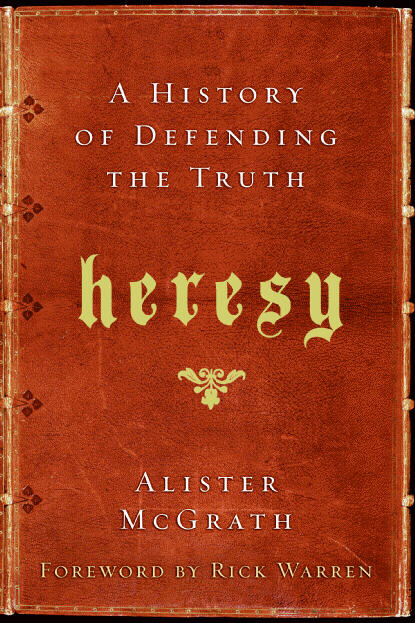 Every Sunday, I will share a quote from something I’ve been reading. The hope is for you, dear reader, to share your thoughts on the quote and related issues and perhaps pick up some reading material along the way!
The Heartbeat and Delight of Christianity
I re-read Alister McGrath’s Heresy: A History of Defending the Truth
If there is a heartbeat of the Christian faith, it lies in the sheer intellectual delight and excitement caused by the person of Jesus of Nazareth. Here is the one whom the church finds to be intellectually luminous, spiritually persuasive, and infinitely satisfying, both communally and individually. (17, cited below)
I found this passage quite powerful. Jesus is the heartbeat of Christianity, and our delight. Without Christ, there is no faith. Without our Lord, there is no salvation. But McGrath goes beyond that: Jesus of Nazareth is an intellectually compelling person, which drives us to seek out formulations to explain who He is; Christ is satisfaction and communal unity.
Have you thought about Jesus in these ways? How has Jesus spurred your intellect? In what ways have you recently delighted in the person of Jesus Christ?
Links
Be sure to check out the page for this site on Facebook and Twitter for discussion of posts, links to other pages of interest, random talk about theology/philosophy/apologetics/movies and more!
Sunday Quote– If you want to read more Sunday Quotes and join the discussion, check them out! (Scroll down for more)
Book Review: “Heresy: A History of Defending the Truth” by Alister McGrath– Check out my review of McGrath’s book.
Source
Alister McGrath, Heresy: A History of Defending the Truth
SDG.
Really Recommended Posts 9/5/14- Jesus’ resurrection, logical fallacies, and more!
Well depending on if my child comes on time, I may currently be in the hospital with my wife and a baby being born today, as it is our due date! Thus, I may not respond right away to any comments. On the other hand, I may just be hanging out waiting for the baby (or he or she may come early!). So long story short keep my family in your prayers, if you please. This week’s posts include Jesus’ resurrection, logical fallacies, “The Unbelievers” movie, Michael Behe’s design argument, and Rob Bell and Oprah Winfrey.
Prior Probability of the Resurrection– David Marshall presents a lengthy argument related to the prior probability of the resurrection of Jesus. This argument is very important, and Marshall’s approach is one of many leading ways to argue for the truth of Jesus’ resurrection. This article has much depth and is worth the read.
How Not to Argue: The Problem of “Folk Fallacies”– It is easy to fall into the trap of Googling random fallacies and charging others with committing these errors. Here, some difficulties with pointing out an alleged stream of fallacies are pointed out. It’s a good post for apologists to consider.
Are “The Unbelievers” Unbelievable?– Here, Saints and Skeptics addresses several issues of “The Unbelievers” film, including its method, arguments, and conclusions.
A Pretty Sharp Edge: Reflecting on Michael Behe’s Vindication– Michael Behe’s argument for intelligent designed is based upon the concept of irreducible complexity. Check out this post which argues that his argument has been vindicated.
Rob Bell, Oprah Winfrey, and the missing Jesus– What happens when Rob Bell meets Oprah Winfrey? Check out this post for some interesting thoughts on the missing Christ in the conversation. See my own series of posts on Rob Bell’s Love Wins for some more reading.
Is the historical Adam a “Gospel” issue?
 [Adam] must be a real individual who rebels against a clear divine directive at a specific moment in real time in a real place. (Barrick, 221, cited below)
One of the many issues which comes up related to the debate over the historical existence of Adam and Eve is the relation of Adam to Christ. Specifically: does undermining of the reality of Adam’s historical person undermine the work of Christ? Here, we’ll explore that question.
To be clear: we are not here exploring whether or not Adam really existed or whether there really was a real pair, Adam and Eve, from whom all humanity sprang. Rather, the question is this: if one denies the historical Adam and Eve, does one undermine the Gospel of Christ? Whatever one thinks of the answer to the question of the historical persons, one should consider the answer to this question as well. There are many issues to be addressed, so this post will only touch on a few. Write a comment to let me know your own thoughts or other issues you think of.
“Gospel” Issue?
In order to ask whether the history of Adam is a “Gospel” issue, we must first consider exactly what is meant by a “Gospel” issue. Definitions are important, and my own search for the meaning of this term yielded a whole range of definitions. Thus, I’m going to focus on a kind of working definition: to say something is a “Gospel” issue is to say that a specific doctrine, if untrue, undermines the Gospel [here meaning the glorious truth of salvation through Jesus Christ] and possibly one’s salvation itself. In the definitions I’ve found, and the use I’ve seen of this term, I believe this is an accurate understanding.
The Historical Adam as a Gospel Issue- Two Perspectives
The book, Four Views on The Historical Adam
the biblical description of sin depends entirely on the historicity of Adam. He must be a real individual… in real time in a real place… [denial of the historical Adam] has serious implications for the doctrine of Scripture and the doctrine of Christ… [quoting John Mahoney]: “If the first man is not historical and the fall into sin is not historical, then one begins to wonder why there is a need for our Lord to come and undo the work of the first man.” That makes the historicity of Adam a gospel issue. (Barrick, 221-222)
Barrick’s argument seems pretty clear: if no historical Adam lived and acted in the Fall, then what reason is there for Christ to come as the second Adam and restore humanity to God? If Barrick’s argument is successful, it does seem to establish that the historical Adam is indeed vital to an understanding of the truths of salvation.
Denis Lamoureux takes up the challenge of restoring confidence in the possibility of the Gospel without an historical Adam. His argument is instead that when “behaviorally modern humans” showed up (about 50,000 years ago), they broke their relationship with God (he does not make explicit how this may have occurred). Moreover, he argues that Barrick’s argument is unsuccessful because it is a non sequitor–the conclusion simply doesn’t follow. Is it really the case, Lamoureux asks, that the reality of sin “depend[s] entirely” upon a historic Adam (Lamoureux, 229)? Barrick’s argument was simply to appeal to the requirement for sin to be an action against God (itself a disputable claim–does sin really require action or is it possible to have [actually] sinful inclination?–but we’ll set that aside). Lamoureux notes that saying there was no historical Adam does not undermine or remove the reality of sinful activity.
Moreover, Lamoureux argues that Barrick’s argument conflates the historicity of Adam with the historicity of the resurrection (ibid). Not only that, but:
The gospel is about Jesus Christ, not Adam. The gospel is about the reality of sin, not how sin entered the world. The gospel is about Jesus dying on the cross for our sins, not specifically Adam’s sin. (ibid, 229)
Adam and the Gospel
So is the historical Adam a “Gospel” issue? Returning to our definition, it seems to me fairly clear that one’s salvation is not determined by whether one believes in a historical Adam. The foundation of faith is Christ raised from the dead (1 Corinthians 15). Lamoureux is right to point out that the Gospel is ultimately the message of our salvation through Jesus Christ. The first part of our definition, however, asks whether the grounding for this salvation might be undermined. Romans 5:12-21 seems to demonstrate that Christ came to save humanity as the second Adam, and that a real person, Adam, really did sin and created the need for salvation.
Lamoureux’s counter to this is to argue that such statements are divine accommodation–that is, Paul did believe in a single, historical Adam, but that doesn’t mean there was one. The debate over this must wait for a different post, but for now I’ll just say that although I think there is divine accommodation in God’s revelation, I’m not convinced it involves allowing for very clearly false statements (such as the claim that Adam existed if Adam did not exist).
So if there is no historical Adam, it seems to me that this entails at least a denial of the specificity of the text in Romans 5. Thus, one could say that this undermines the basis for salvation. However, if one is willing to strip down to the bare bones of “Mere Christianity,” might one still preserve the Gospel? At this point I say yes. The basis for our salvation is belief in Jesus Christ, not belief in Adam. This does not mean that I think the historical Adam is unimportant or non-existent. Rather, I would say that anyone who does wish to say the historical Adam is necessary for salvation has yet to demonstrate that claim.
Links
Be sure to check out the page for this site on Facebook and Twitter for discussion of posts, links to other pages of interest, random talk about theology/philosophy/apologetics/movies and more!
What options are there in the origins debate? – A Taxonomy of Christian Origins Positions– I clarify the breadth of options available for Christians who want to interact on various levels with models of origins. I think this post is extremely important because it gives readers a chance to see the various positions explained briefly.
Check out other posts on the origins debate within Christianity.
Sources
William Barrick, “A Historical Adam: Young-Earth Creation View” in Four Views on The Historical Adam
Denis Lamoureux, “Response from the Evolutionary View” in Four Views on The Historical Adam
SDG.
——
The preceding post is the property of J.W. Wartick (apart from quotations, which are the property of their respective owners, and works of art as credited; images are often freely available to the public and J.W. Wartick makes no claims of owning rights to the images unless he makes that explicit) and should not be reproduced in part or in whole without the expressed consent of the author. All content on this site is the property of J.W. Wartick and is made available for individual and personal usage. If you cite from these documents, whether for personal or professional purposes, please give appropriate citation with both the name of the author (J.W. Wartick) and a link to the original URL. If you’d like to repost a post, you may do so, provided you show less than half of the original post on your own site and link to the original post for the rest. You must also appropriately cite the post as noted above. This blog is protected by Creative Commons licensing. By viewing any part of this site, you are agreeing to this usage policy.
Really Recommended Posts 8/15/14- Christians and Romans, Bible Measurements, Robin Williams, and more!
Here I have another go-round the web as we survey a posts on creationism, early Christianity, measurement in the Bible, interactions between men and women, and Robin Williams. Let me know what you thought of the posts in the comments, and be sure to leave a comment on those whose posts you enjoyed!
Book Plunge: “The Christians as the Romans Saw Them”– Nick Peters reviews a book which seems to be really interesting, because it is about how the Romans viewed the Christians in the early periods of Christian development. The topic should be of interest for those interested in apologetics, church history, history, and sociology.
All the biblical units of measurement– the “Overview Bible” has become one of my favorite sites. It’s value lies in both clear examples and posts but also in its generally denominationally neutral approach to the Bible. In other words, it’s a great site for general Bible knowledge. Here, there is a chart with every single biblical unit of measurement and a modern equivalent. It’s enormously helpful!
5 Ways Married Men Can Act Like Adults Around Women, Single or Not– This post has some satire in it as the author is responding to the notion that men are somehow incapable of controlling themselves around women.
NH Notes- Bent Rock on Display: The Sidelong Hill road cut– how might rocks bend? Must we attribute such bent rocks to the biblical Flood? Check out this post which has some great pictures and discussion of these topics. See my debate review between a young earth and old earth Christian in which this very topic came up.
Robin Williams, Matt Walsh, and Choice– Stephen Bedard offers some very good insight into Christianity and mental illness, along with a response to Matt Walsh’s comments about how Robin Williams’ suicide may be reduced to a choice.
On the Death of Robin Williams-A great reflection on Christianity, mental illness, and hope in the midst of suffering. Check out this thoughtful post.
Really Recommended Posts 7/11/14- Inerrancy, Men, a young earth?, and more!
I’m pretty excited about this latest round-up of posts which I have gathered for your reading pleasure. Let me know what you think in the comments. If you liked someone else’s article, be sure to drop a comment, because those keep we bloggers going! Thanks for reading.
The Bad Boys, The Secret, and Apologetics Teams in Churches– A post that combines NBA with apologetics? One which encourages specialization of apologetics-oriented sites? Sign me up! This is a fantastic post and well worth your time to read. Check it out.
“What Your Husband Isn’t Telling You”: Is this book telling the truth about men?-A review and critique of a book which alleges some pretty heinous things about men and women.
Was the crucifixion a matter of child abuse?– It has been alleged more than once that the crucifixion was a kind of divine child abuse. Was it? Check out this brief post showing that this allegation is a farce.
“Best Evidences for a Young Earth” – Andrew Snelling and the Salty Seas– Does the amount of salt in the oceans provide evidence for a young earth? Check out this analysis of Andrew Snelling’s–of Answers in Genesis–argument that it is.
A Response to James White on “Defining Inerrancy”– An interesting post showing that maybe we, as Christians, should desire a place at the table such that we can offer an internal critique of non-Christian thought. Check out this thought-provoking read!
“Edge of Tomorrow” – Sacrifice, Brutality, and Choice
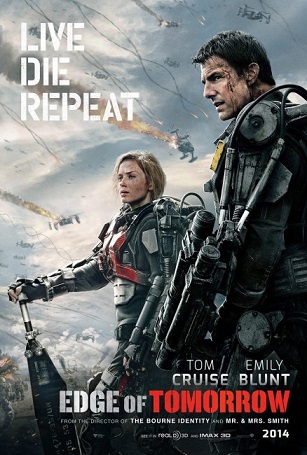 Live. Die. Repeat.
I had the chance to watch “Edge of Tomorrow” this past weekend and I was surprised by how much I enjoyed the film. It was fantastic. Here, I’ll discuss several themes found in the movie from a worldview perspective. There will be SPOILERS in what follows. I will not summarize the plot, but a summary may be found here.
Choice
Major William Cage (Tom Cruise was brilliantly cast for this role) is presented with a number of choices throughout the film, and it becomes clear that he is not a typical save-the-world type of hero. He is flawed, he has passions, he loses hope. But throughout these aspects of the film, we find the notion of choice. Will Cage has been given an extraordinary opportunity to impact the entire human race. When his blood is mingled with that of an Alpha, his death sets off the “Omega” which resets the day. Over and over again, Cage is faced with a choice: what do I do with this day?
He finds Sergeant Rita Vrataski, who is one of the only people who also realizes what’s happening, though she herself doesn’t remember the days. The question, again, is what do I do with this day? Cage’s character is forced to consider that he has the ability to possibly save all of humanity. In such a situation, what choice does he have? But he does make some choices: he chooses to try to save Rita, to save others. But at other times, he gives in to frustration, allowing members of his squad to die despite being able to prevent it. Cage is not a knight in shining armor, but he confronts us with a human thrown into an impossible situation with the highest possible stakes.
Placing the concept of choice against such a backdrop makes for good drama, but it also begs the question: what are you doing with your day? From a Christian perspective, the choices we make are extremely important–we are called to be witnesses, lights to the world–but do our choices each day reflect that? Do we, like Cage, sometimes allow injustices despite having to put forth just a little extra effort? How do our choices impact our life in Christ? The movie demands that we answer questions like these.
Sacrifice
Cage is also confronted with a kind of self-sacrifice. By admitting he is what he is, he must go through a cycle in which he dies continually, in often brutal ways, in order to try to improve, to save humanity. It is sacrifice, but a sacrifice knowing that he will be back the next day. One must ask, I think, whether that actually diminishes the sacrifice. I don’t think it does. Cage must steel himself each day knowing that death will come again, and again, and again. The only way to prevent it is to save all of humanity by destroying the Omega. Though, in the end, Cage ultimately does give up his life for humanity, only to be brought back by having his blood mingled with that of the Omega. One is left wondering whether he will retain the power or not.
The self-sacrifice of Cage (and Rita) for the sake of humanity is clearly a theme which resonates with the central Christian teaching of Jesus Christ as crucified and resurrected Lord. However, beyond the obvious parallels of giving up life for the sake of all (and subsequent resurrection/awakening), the sacrifice of going in knowing one is to die is something that resonates with the story of Christ. I have sometimes seen a challenge issued theologically to the Christian teaching saying Jesus didn’t really sacrifice himself if he knew he was going to be risen by God. But of course that hardly destroys the notion of self-sacrifice and the real price paid of death. Being risen does not destroy the sacrifice of death.
Brutality
Live. Die. Repeat.
The theme is echoed throughout the film. It may cause one to wonder about the brutality of such a story and its appropriateness, but I think that from a Christian perspective one has to incorporate the rest of the themes found in the movie. The brutality of the cross is itself something from which people shy away, but set against the backdrop of salvation, brutality can become sanctified.
Community/Individual
I have not read the manga that “Edge of Tomorrow” was based on, “All You Need is Kill,” but I have heard that there is some juxtaposition over the primacy of the community vs. individual in either. “Edge of Tomorrow” shows this kind of valuation in many ways throughout the film. First, there is Cage’s continued efforts to save Rita, despite what it might cost–including going on one part of the mission alone in order to prevent her death. Second, there is the concept of both Cage and Rita valuing the community of humanity over the self by willingly spending all the time they have left trying to defend humanity rather than find a way to survive themselves. Finally, both Cage and Rita choose to place the community over the self when rather than trying to save one or the other, they both do what needs to be done and give themselves to save humanity.
For Christians, themes of community and individual are extremely important. It is easy in the Western mindset to become obsessed with the self, but a true community of individuals exists in the body of Christ–each as important as the next. How do we go about living our lives in light of this truth?
Conclusion
There are many other themes to be explored from “Edge of Tomorrow”- what of the Alpha/Omega? What happens to Cage and Rita after the end of the film? Were there any efforts to try to make peace or reach out to the “Mimics”–the aliens that they fight against throughout the movie? These are important themes, and I’d love to get discussion of those started in the comments. For now, it should be clear that the film has many themes to reflect upon and it is well-worth seeing. What did you think of the movie? What other themes have you thought of in relation to it? Let’s get your thoughts in the comments below!
Links
Be sure to check out the page for this site on Facebook and Twitter for discussion of posts, links to other pages of interest, random talk about theology/philosophy/apologetics/movies and more!
All You Need Is Kill/Edge of Tomorrow– “Edge of Tomorrow” is based upon this graphic novel. Check out Anthony Weber’s excellent review and critique of the graphic novel from a Christian perspective. I really recommend you follow his blog as well. It’s in my top five must-read blogs, and it is worth your time to browse at length.
Movies– Read other posts I have written on the movies. Scroll down to see more!
The image is a movie poster for the film and I use it under fair use.
SDG.
——
The preceding post is the property of J.W. Wartick (apart from quotations, which are the property of their respective owners, and works of art as credited; images are often freely available to the public and J.W. Wartick makes no claims of owning rights to the images unless he makes that explicit) and should not be reproduced in part or in whole without the expressed consent of the author. All content on this site is the property of J.W. Wartick and is made available for individual and personal usage. If you cite from these documents, whether for personal or professional purposes, please give appropriate citation with both the name of the author (J.W. Wartick) and a link to the original URL. If you’d like to repost a post, you may do so, provided you show less than half of the original post on your own site and link to the original post for the rest. You must also appropriately cite the post as noted above. This blog is protected by Creative Commons licensing. By viewing any part of this site, you are agreeing to this usage policy.
Really Recommended Posts 6/13/14- Defining Faith, Bible Popularity, Aquinas, and more!
Check out these posts from all over the web, collected for your own viewing pleasure by yours truly. If you enjoyed the posts, drop them a comment! Let me know what you think here. Thanks for stopping by, now go read!
The Least Popular Book in the Bible– I found this to be one of the most fun posts I have read in a long time. I really encourage you to check it out. But Don’t Cheat! Leave a guess as to which Bible book is least popular before you head over and find out! The post also gives reasons to read the book, so you may get some good reading in.
Is the Bible’s Definition of Faith Opposed to Logic and Evidence?– In light of the recent debate between Boghossian and McGrew on “Is Faith a False Epistemology?” (see my summary and analysis here), I found this post extremely insightful. What does the Bible say about faith? What kind of definitions does it give? Check out this great post on these questions.
Aquinas’ First Way (image)– Be sure to zoom in on this one! It’s a pictorial way to look at the “First Way” of Aquinas to reason to the existence of God. I think there are a couple problems with the exposition, particularly in speaking of water as only potentially cooling, but it is a good, basic introduction. Check it out.
Did Jesus Ride Two Animals Into Jerusalem?– How might we reconcile apparent differences in reports over how Jesus rode into Jerusalem? Check out this post to read up on a few ways, alongside some analysis. It’s well worth the time spent!
Book Review: The New Perspective on Mary and Martha– Drawing from Luke 10:38-42, Mary and Martha are often seen as quintessential examples of how to focus on Christ. But what message do we often get about/from them? Is there a corrective for some of the wrong pictures we may have? This review gives some insight into these and other questions.

 J.W. Wartick - Reconstructing Faith
