John Warwick Montgomery
Harmonization of Scripture, Inerrancy, and History- Can inerrantists harmonize like historians?
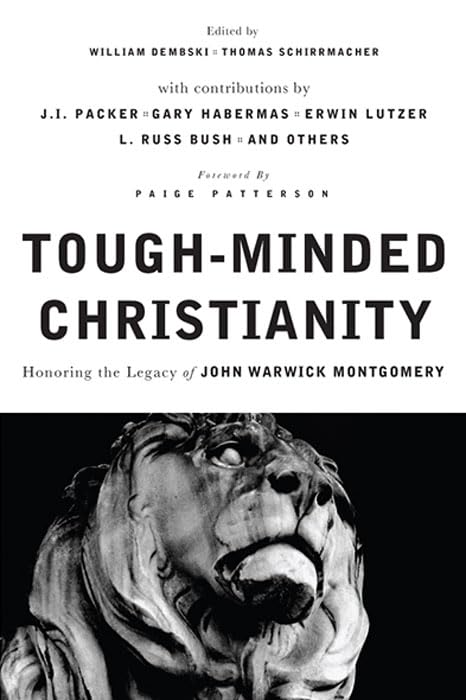
John Warwick Montgomery has been hugely influential on my own faith life, including in my development of theology while disagreeing with some of what he says. When he passed last year, I wrote a brief in memoriam. Since then, I’ve been rereading works by him and about him. One such work is Tough-Minded Christianity, a collection of essays in honor of Montgomery that was published in 2009 [1].
One essay in the collection takes on James Barr’s work, Fundamentalism. Barr was an extremely well-respected Old Testament Scholar who launched many a fusillade against fundamentalism and, in particular, against fundamentalist readings of Scripture. In particular, Barr wrote about how inerrancy would not work as a way of reading the Bible, and he especially attacked such a reading as impossible given the Bible we already have. Irving Hexham’s essay, “Trashing Evangelical Christians: The Legacy of James’ Barr’s Fundamentalism” clearly takes issue with Barr’s approach. Hexham frequently writes about Barr’s work in derogatory terms, such as calling it a “propaganda tract,” among other things. But Barr was a deep enough scholar to prompt Hexham to try to refute some of his arguments, and in doing so, I think he actually shows where Barr is right and evangelical defenders of inerrancy are wrong.
Hexham seeks to defend fundamentalist attempts to harmonize apparent contradictions in the Biblical text. One such example that he cites is the attempt to harmonize the cleansing of the Temple in John 2 with the same account in Luke 19, Mark 11, and Matthew 21). Barr writes about how some have argued that the best way to harmonize these passages is to assert that Jesus cleansed the temple twice, once at the beginning of his ministry and again near the end of his ministry. Barr writes that this harmonization is “simple but ludicrous.”
Hexham, by contrast, takes extreme issue with the use of the term “ludicrous,” and argues instead that it’s not unreasonable to make such an attempt at harmonization because, after all, we don’t have complete historical records. Hexham skirts around Barr’s incisive critique of the same evangelicals also attempting to harmonize two ascension accounts by arguing one is literal and the other is telescoping by asserting that Barr is just wrong to think fundamentalists can’t use both literal and non-literal techniques to read the Bible. At issue, however, is not whether one can defend inerrancy of Scripture by mixing ways of reading it; the issue is instead whether such readings are plausible or even necessary to begin with.
A more powerful critique from Hexham is the note that historians do this kind of harmonization all the time. And this is an extremely vital point. Hexham writes, “Harmonization, far from being an unhistorical attempt to explain discrepancies, is precisely what most traditional historians do every time they discover conflicting accounts in the archival record.” He goes on to cite others who note that historians often have “no external evidence as to whether the event recorded happened once, twice, or even three times…” and that in almost any historical writing, a selection effect is occurring which means the authors are intentionally highlighting aspects of the narrative at hand.
It is true indeed that no author can comprehensively write every detail of anyone’s life, nor do the Gospels claim to be doing so for Jesus. I think it’s also largely true that historians are quite comfortable harmonizing different stories to make them make sense. Indeed, it would quickly become impossible to write or engage with history if, every time there was a discrepancy between accounts, one simply said the account was unreal or did not happen. But there’s a huge gap between conceding that point and conceding that therefore the historical documents can be considered inerrant. Indeed, the opposite seems to be true.
When historians are harmonizing differing texts about an event, they aren’t doing so with the assumption that either text is completely without error. This is a far cry from what evangelical/fundamentalist readers of Scripture have to do in order to harmonize texts. Once one holds a doctrine like inerrancy, in which the entire Bible is supposed to be completely free from error, the process of harmonization takes on entirely new difficulties. One cannot, as historians do, harmonize two passages by simply stating one is mistaken. If one document says an event occurred at 14:00 and the other says it occurred at 04:00, the historian can do many things, such as find another source that might confirm one and deny the other. But the inerrantist cannot do that. They must come up with a harmonization that not only brings two passages together, but also makes them both somehow emerge from the harmonizing completely unscathed. And that is where things start to become absurd. Because for the inerrantist, the only way to harmonize the two times for the same event above is to multiply the event. After all, the times cannot be wrong; admitting one of the times is wrong is to admit an error into the text. Therefore, the event itself must have occurred at both times. And that is what Barr is getting at with his critique of fundamentalists readings as being ludicrous.
Certainly one may punt to the broad possibility that we don’t have the Bible telling us that a cleansing of the temple only occurred one time, but every indication seems to be that such an event was unique and powerful, not something that Jesus decided to do, say, every Tuesday or so. The ascension is even more absurd to multiply, which is what leads the inerrantist to suddenly abandon their attempt to read the historical narrative as historical reportage and instead read it as a telescoping timeline. That’s the only way to salvage the text–by turning it into something that is intentionally not reporting things in the exact timeline in which they occurred.
Hexham’s attempt to salvage inerrantist harmonization methods, then, fails. While it is still remotely possible that some events happened twice, allowing there to be a direct, historical reporting happening in both instances of an event; such a broad possibility is not all that matters. Not every harmonization can be achieved by simply multiplying instances of the event occurring. And no historian is attempting to harmonize other historic texts by assuming they are entirely without error. The parallel Hexham attempts to draw upon is undermined by his own prior commitments. Inerrantists aren’t mashing two texts together by using other sources to determine their accuracy or looking at the plausible explanations. No, they are absolutely committed to the assumption that any two (or more) Scriptural passages they are trying to harmonize are entirely without error, and therefore any harmonization must preserve that central assumption. There’s a vast chasm between those two methodologies, and one that makes the inerrantist reading seem, at times, ludicrous.
Notes
[1]It’s remarkable looking at the book now, with its foreword by Paige Patterson, who has since been implicated in covering up sexual abuse (see here), an essay by Ravi Zacharias (multiple allegations of sexual abuse here), and thinking about how highly touted this book was at the time. In apologetics circles, I remember seeing a lot of discussion, though I’ve rarely seen it mentioned since about 2014. This might be, in part, due to JWM not being as well-loved in those circles as some other apologists. In any case, this collection purports to carry on JWM’s “tough minded” approach to Christianity, one built upon strength of evidence and an apologetic approach of the same.
All Links to Amazon are Affiliates
Links
Be sure to check out the page for this site on Facebook!
Book Reviews– There are plenty more book reviews to read! Read like crazy! (Scroll down for more, and click at bottom for even more!)
SDG.
——
The preceding post is the property of J.W. Wartick (apart from quotations, which are the property of their respective owners, and works of art as credited; images are often freely available to the public and J.W. Wartick makes no claims of owning rights to the images unless he makes that explicit) and should not be reproduced in part or in whole without the expressed consent of the author. All content on this site is the property of J.W. Wartick and is made available for individual and personal usage. If you cite from these documents, whether for personal or professional purposes, please give appropriate citation with both the name of the author (J.W. Wartick) and a link to the original URL. If you’d like to repost a post, you may do so, provided you show less than half of the original post on your own site and link to the original post for the rest. You must also appropriately cite the post as noted above. This blog is protected by Creative Commons licensing. By viewing any part of this site, you are agreeing to this usage policy.
John Warwick Montgomery (1931-2024)
John Warwick Montgomery died on September 25, 2024. John Warwick Montgomery is the most well known apologist from Lutheran circles in decades. From within the Lutheran Church-Missouri Synod, he fought not just external threats to apologetics, but also internal ones. As a Lutheran, he was forced by turns to defend even the prospect of apologetics from those who would lean towards fideism or some form of Lutheran irrationalism.
Montgomery was highly prominent in discussions about apologetic method. When the presuppositional method arose within Reformed circles, Montgomery was perhaps its most vocal and engaging critic. His famous (or infamous, depending on one’s stance) essay “Once Upon an A Priori” used fables to engage with presuppositional method and showed that the method would likely collapse under its own arguments when faced with an equally staunch presuppositionalist from another faith tradition. He wrote quite a bit in defense of evidentialist apologetics, and generally believed and argued that the Resurrection was historical fact and can and should be investigated as such.
Inerrancy was another of Montgomery’s pillars of argument. He argued against positions which would qualify inerrancy more, and attempted to defend it within the Lutheran tradition. He argued against other Lutherans who left his own denomination, asserting that their changed stance on inerrancy was the “fuzzification” of inerrancy to the point at which it would become unrecognizable as such. Indeed, I find his arguments to that effect fairly convincing, and that is part of the reason I don’t hold to inerrancy; it simply does not work with how the Bible was written. Montgomery would vociferously disagree, but I’m thankful to him for clarifying quite adroitly how qualifying a position like inerrancy begins to make it difficult to pin down.
Montgomery was a lawyer as well. He wrote on a vast range of topics, from law to demonology, from apologetics to historiography. His texts show a man whose mind was capable of absorbing and expanding on countless theologically-inclined topics in ways that, if they didn’t reflect particular expertise, still would show a general grasp of the topic and drive engagement with it. I have read and re-read some of his books to the point where covers are beginning to fall off. It’s often popular to read only those with whom one agrees, or to read one with whom one disagrees only to challenge and condemn. Montgomery, for me, is a constant challenging duelist. Where I disagree, I continue to find reading his works fruitful and challenging. Where I agree, I find pleasure in seeing his defense ably lay out points of impact.

I had the pleasure of meeting him at a conference in 2012. He was friendly and vivacious. The lecture he gave on religious conversion was fascinating to me at the time. I wrote up the lecture notes for a blog post here, and he sent me an email about my post, apparently thinking I had simply re-posted his lecture. He wrote, “Can you inform me as to where you obtained it and whose permission you obtained for doing so? I am willing to have you retain it on your website–but I need to know your source for posting it.” I wrote him back, explaining I had based my post upon my own notes based upon his lecture. His response was gracious, and to the point, thanking me for my detailed response and exposition of his lecture. It was my last interaction with him–I wish I’d had the courage to e-mail him again later.
Montgomery’s voice will be missed. He was an able defender of his positions and his mind wriggled into the logical holes in others’ positions in ways that made it uncomfortable to disagree with him. I admire the man, and I hope to see him in the hereafter.
SDG.
Links
John Warwick Montgomery– See all my posts tagged about John Warwick Montgomery (scroll down for more).
——
The preceding post is the property of J.W. Wartick (apart from quotations, which are the property of their respective owners, and works of art as credited; images are often freely available to the public and J.W. Wartick makes no claims of owning rights to the images unless he makes that explicit) and should not be reproduced in part or in whole without the expressed consent of the author. All content on this site is the property of J.W. Wartick and is made available for individual and personal usage. If you cite from these documents, whether for personal or professional purposes, please give appropriate citation with both the name of the author (J.W. Wartick) and a link to the original URL. If you’d like to repost a post, you may do so, provided you show less than half of the original post on your own site and link to the original post for the rest. You must also appropriately cite the post as noted above. This blog is protected by Creative Commons licensing. By viewing any part of this site, you are agreeing to this usage policy.
“The Shape of the Past” by John Warwick Montgomery- A Christian Historiography?
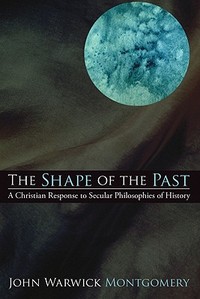
John Warwick Montgomery is a Christian apologist who is perhaps best-known for his defense of the method of evidentialism and attacks on presuppositionalism. The Shape of the Past is a work that outlines a Christian historiography–a Christian way of reporting history. I first read it maybe a decade ago or so and remembered it being fairly impactful to my own development. I read it again recently and was struck by how my perceptions of it changed. While I still believe it to be useful book in some ways, I also found difficulties in others. Montgomery’s central theses developing a supposed Christian philosophy of history are problematic.
The first four chapters of the book focus on definitions of history and historiography, an intriguing look at history as time travel, classical conceptions of historiography, and modern histography [modern at the time- 1975]. These present a survey of some major approaches to history and historiography, while highlighting a few problems Montgomery identifies without what he’s going to build up as a central development of historical writing and research. For example, early on Montgomry notes that historians at some point must make decisions about motivations, acts, etc. such that they are making decisions about what is “humanly possible” or probable. But whither the criteria for “humanly possible”? Ultimately, he argues, “the historian’s conception of human nature stems from his general philosophy of life…” (14). Historians, on this problem, must have a sound philosophy of life in order to make sound judgments about historical events.
Montgomery here is clearly on to something, but he fails to take seriously enough his own noted problem. If, as he says, historians are dependent upon their philosophy and background beliefs in order to make determinations about history, how is objectivity in history possible? While it can largely be agreed that historical events did happen, the exacting details of how they happened are much harder to pin down. And if an historian states that, say, a specific soldier on the battlefield at Gettysburg turned right when he in fact turned left, what does this mean for the “objectivity” of history and the truth thereof? Does this undercut the rest of the historian’s narrative? How much of it is discredited by “minor” details being wrong? And if historical evaluation depends so much upon one’s philosophy of life, how does one even begin to judge said evaluations? Most of these questions don’t get answered (and some aren’t even asked) in the book.
To be fair, Montgomery isn’t trying to answer questions he didn’t ask. I bring them up because they seem a logical extension of the problems he himself points out with history, and it would be interesting to see his answers to them. He does, however, turn to objectivity in history. How are Christians different in this regard?
“The Christian Answer” is the title of Chapter Five, which purports to offer a Christian solution to this difficulty. To get there, Montgomery insists that Christianity can provide the valid interpretation of history because its truth is “‘accessible to science’ and rests upon an objective foundation”; namely, he argues that the Christian worldview rests upon “the objective, historical truth of the resurrection of Jesus from the dead” (138). However, to get to the point that resurrection is an “objective, historical truth,” he uses a very brief evidentialist style argument: that the Gospels “are found to be trustworthy historical documents”; that they report Jesus “exercis[ing] divine prerogatives”; that they describe Christ’s bodily resurrection “in minute detail”*; that the resurrection “cannot be discounted on a priori grounds” [emphasis removed]; that Christ spoke the truth regarding the OT and confirms the NT; and that “It follows from the preceding that all Biblical assertions bearing on philosophy of history are to be regarded as revealed truth” (138-139).
Examining each of these steps in detail is beyond my scope here. Instead, I want to reflect on the reasoning. The problem at hand is: how do we find objectivity in Christianity to give us a valid interpretation of history? The answer is a purported historical fact. But how do we validly interpret that question of the resurrection? So far as I can tell, Montgomery is insisting that it is an historical fact. But the question he’s seeking to answer is whether Christianity can provide an objective basis for historical interpretation, and then he answers that with an historical interpretation: that the resurrection is objective fact. It’s a circle, and I’m not sure how it is supposed to escape that circle. I don’t see a way out of this circle. Even if one introduced some hidden premises about historical reasoning to get to the historicity of the resurrection, that would undercut his argument that Christianity is the objective arbiter of historical interpretation by introducing some external mechanism for that same evaluation. It seems hopeless to me.[1]
Now, it is possible to simply state that Montgomery’s argument here has failed, but that Christianity is valuable in historiography because it can give an objective (or at least “better” by some measure) way of interpreting history. While that would undermine much of his argument, it would leave one free to delve into the questions of what Christianity brings to the table as an evaluative tool. Montgomery does list several “principles of Christian historical interpretation,” and some of these are indeed valuable. For example, under metaphysical principles, he notes that Christianity gives the possibility to historical intepretation that history is inherently meaningful due to “God’s… activity” (145). This would take some effort to hash out, but it seems a potentially fruitful path to pursue.
Other principles he gives seem almost hopelessly naïve, in my opinion. For example, he argues that “human nature is constant” on Christianity, and so “the Christian historian has the assurance that a common ground exists between himself and the [people] of past ages whom he studies…” (148). So, he lists Louis XVI as one possibility for the Christian historian to be able to “confidently interpret motives” due to this constancy of human nature (ibid). Even conceding that human nature is constant, one would wonder how that alone would make it possible to determine the motives of Louis XVI with such confidence, especially if purely based upon that premise. After all, the vast chasm between my own experience and that of Louis XVI makes even the smallest decisions we have to make entirely different. Because I have made so few decisions that even resemble decisions with which Louis XVI was presented, that should give me at least some caution in drawing out his motivations for specific tasks. Other criteria Montgomery presents are helpful, but some need additional caveats.
Ultimately, The Shape of the Past is a frustratingly tantalizing read. Montgomery’s writing style is winsome and matter-of-fact. He writes in an easy manner about all sorts of scholarly topics. The central theses, however, remain unproven and possibly viciously circular. His criteria for Christian historians are a mixed bag. It’s unclear to this reader that Montgomery truly provides a reason to suppose Christianity is superior to other historiographic methods when it comes to objectivity in history. A specifically Christian historiography might be possible and even desirable, but it will need to be heavily supplemented from here.
*Interestingly, Mark does not do this unless one accepts the longer ending as genuine.
[1] Montgomery does note several potential objections to his view, but none of them hint at the circularity inherent in this reasoning: 1. We need an objective standard for historical evaluation; 2. historical evaluation shows that the resurrection is objectively true; 3. therefore, Christianity can be the objective standard for historical evaluation.
All Links to Amazon are Affiliates links
Links
Be sure to check out the page for this site on Facebook and Twitter for discussion of posts, links to other pages of interest, random talk about theology/philosophy/apologetics/movies and more!
Book Reviews– There are plenty more book reviews to read! Read like crazy! (Scroll down for more, and click at bottom for even more!)
SDG.
——
The preceding post is the property of J.W. Wartick (apart from quotations, which are the property of their respective owners, and works of art as credited; images are often freely available to the public and J.W. Wartick makes no claims of owning rights to the images unless he makes that explicit) and should not be reproduced in part or in whole without the expressed consent of the author. All content on this site is the property of J.W. Wartick and is made available for individual and personal usage. If you cite from these documents, whether for personal or professional purposes, please give appropriate citation with both the name of the author (J.W. Wartick) and a link to the original URL. If you’d like to repost a post, you may do so, provided you show less than half of the original post on your own site and link to the original post for the rest. You must also appropriately cite the post as noted above. This blog is protected by Creative Commons licensing. By viewing any part of this site, you are agreeing to this usage policy.
Presuppositionalism vs. Evidentialism – A case study on apologetic method featuring Cornelius Van Til and John Warwick Montgomery

Cornelius Van Til
Cornelius Van Til and John Warwick Montgomery are two of the most prominent defenders of opposing views of apologetics. Van Til defends presuppositionalism, an apologetic method that is founded on the notion that God’s existence must be presupposed–it is the beginning of the reasoning process rather than the end. Evidentialism is a school of apologetics that seeks to show that evidences–often historical evidence for the Resurrection–yield the conclusion that God exists and that Christianity is true. One of these views (presuppositionalism), in other words, argues top down by assuming God exists and showing how the world cannot be understood without that posited fact; the other (evidentialism) goes bottom up, showing how beliefs that are, purportedly [1], shared by Christians and non-Christians may demonstrate the truth of Christianity.
What makes these two particularly interesting is that they each offer a kind of parable for their position. These parables each, individually, reveal much about how the apologist thinks apologetics ought–and ought not–to be done. Though their parables are too long to post in their entirety, we will here examine some key aspects of both Van Til’s and Montgomery’s picture imagery about how apologetics should work.
Cornelius Van Til’s Misters White, Grey, and Black
Cornelius Van Til’s apologetic approach is illustrated in an extended section of his work The Defense of the Faith. Here, he utilizes three men: Mr. White (standing in for the presuppositional apologist), Mr. Grey (standing in for the evidential–he calls “Romanist-evangelical”–apologist), and Mr. Black (standing in for the non-Christian) in dialogue with each other to illustrate how he believes apologetics should work, as well as what he sees as fatal objections to his opposition.
The section in question is found in p. 312-340 of the aforementioned work. Van Til argues that Mr. Black will be more comfortable with Mr. Grey because Mr. Grey concedes some ground to him: “Mr. Grey uses the Bible, experience, reason, or logic as equally independent sources of information about his own and therefore about Mr. Black’s predicament” (313). Though he concedes that Mr. Grey may see the Bible as “by far the most important” of these sources, the problem is that he sees these sources of knowledge independently. A problem that develops over this dialogue as Van Til develops it is that Mr. Black refuses to see himself as a lost person in need of repentance, and so Mr. Grey’s position cannot challenge the foundation of his view: a rejection of the authority of the Bible.
Mr. Grey can stand on “common ground” with Mr. Black (320) and this allows for a quicker response from Mr. Black to Mr. Grey than to Mr. White. Here, of course, we begin to see Van Til’s explicitly Calvinist/Reformed position come through. It is simply the case that Van Til believed that his position was such that it would offer an absolute refutation of all but the Calvinist/Reformed position, in addition to being used with non-Christians. This limits the applicability of his argument a bit for those who do not accept that position, but we’ll press on.
The crux of the argument comes when the question of proofs of the existence of God and Christianity come up. Here, Van Til notes that “If one reasons for the existence of God and for the truth of Christianity on the assumption that Mr. Black’s principles of explanation are valid, then one must witness on the same assumption” (339). Thus, in the dialogue, we see Mr. Grey attempting to witness to Mr. Black, having come to an agreement that Mr. White is wrong on a number of levels. But Mr. Grey is taken aback when Mr. Black fails to concede the argument. Here, we see Mr. Black speaking to Mr. Grey:
“[Y]ou are now witnessing to Christ as well as to God, to Christianity as well as to theism. I suppose your argument… would be similar in nature… You would argue that the Jesus of the New Testament is probably the Son of God and that he quite probably died for the sins of men…. by witnessing instead of reasoning you seem to admit that there is no objective claim for the truth of what you hold with respect to Christ. Am I right in all this?” (337-338)
This, for Van Til, is where the evidentialist argument completely collapses. Because they fail to have an objective basis for believing in God/Christ, they ultimately concede the position to the non-Christian, allowing only for subjective witness to the truth of Christianity. Because Mr. Grey concedes that Mr. Black can reason independently of the truth of the Bible, he allows Mr. Black to use his independent reason to utterly reject the same. This concession is seen when Mr. Grey “nods approval” to Mr. Black’s argument that “unconditional surrender to the authority of Scripture is irrational” (332). He does the same when Mr. Black objects that it is rationalistic (ibid). Further, because Mr. Grey admits of “possibility” rather than certainty when it comes to arguments about the existence of God, he allows the non-Christian Mr. Black to reject God based on “possibility” as well. Probability does not yield certainty, so certainty is what is required. Only Mr. White’s position which argues from absolute certainty by presupposing the truth of the Bible is capable of granting an objective basis for affirming God’s existence and Jesus Christ as God, in addition to many other Christian doctrines.
Thus, for Van Til, the necessity of his position is proved by the argument that, without such a presupposition, the non-Christian may be perfectly comfortable rejecting Christianity through means of “probability” already present in his or her view of the world.
 John Warwick Montgomery’s “Once Upon an A Priori“
John Warwick Montgomery, a prominent evidential apologist, felt the weight of Van Til’s argument and offered his own parable in response. Montgomery’s parable may be found in his work Faith Founded on Fact: Essays in Evidential Apologetics. There, he writes of the people of Shadok and Gibi, who each refuse to concede any “brute” or “neutral” ground regarding facts. For each, it is his or her own God who is the one, single, true God that must be presupposed (God-Sh for Shadok and God-G for Gibi). A brief excerpt gets at the heart of John Warwick Montgomery’s argument:
Shadok: You will never discover the truth, for instead of subordinating yourself to revelation truth (Bible-SH), you sinfully insist on maintaining the autonomy of your fallen intellect.
Gibi: Quite the contrary! [He repeats exactly the same asseriton, substituting (Bible-G) for (Bible-Sh)]… (114)
The conversation goes on, referencing Van Til’s insistence on the notion that the non-Christian wears colored glasses that make it impossible for them to see anything outside of their single-hued world. Montgomery concludes “The hopelessness of this encounter should be painfully evident. Neither viewpoint can prevail, since by definition all appeal to neutral evidence is eliminated” (115, emphasis his). Thus, John Warwick Montgomery’s own parable is a counter to Van Til’s, one which argues instead that neutral evidence–evidence that Mr. Grey, Mr. White, and Mr. Black all have access to–must exist, for otherwise they would have nothing to which they could appeal to determine who is right.
A Critical Comparison
The conversation between these competing parables does not, of course, stop with the original authors. The late Greg Bahnsen, a defender of Van Til’s apologetic, wrote an article responding to John Warwick Montgomery’s critique. There, Bahnsen argues that Montgomery misunderstands presuppositionalism on a number of accounts, but primarily because “Montgomery fails to see that Van Til’s apologetic claims that use of facts and logic is not simply directed in a different direction on non-Christian presuppositions, but is in principle impossible” (see link, emphasis his). In contrast, Greg Habermas, another evidentialist, argued that it was Bahnsen who failed to get at the critique Montgomery offered. In his own article, he replies to Bahnsen by arguing that:
the often contradictory interpretations of facts must be taken, in the sense of the
creative intermix between induction and deduction that Piercean abduction or “inference
to the best explanation” typifies, to the facts themselves. (see link)
These hint at a much broader debate, largely centered around the nature of facts. The presuppositionalist argues there is no neutral ground (a position that appealed to me enough at one point [almost 10 years ago! ah!] to write a post on it). The evidentialist argues that, quite contrary, there must be neutral facts because otherwise no one could determine whether their own view is correct. The presuppositionalist responds by arguing that it is only by presupposing the one true worldview (eg. Christianity) that one may correctly analyze facts. Indeed, it is perfectly possible to appeal to facts, not because they are “brute” or “neutral,” but because worldviews other than Christianity are necessarily inconsistent. That is, it is certainly possible for any non-Christian to know truth, but only because they have inconsistently turned from their worldview to adopt presuppositions of Christianity on certain points. The extent to which the non-Christian has true knowledge, then, is the extent to which their own worldview is inconsistent.
Conclusions
At this point, readers may wonder how these two contrary positions could ever meet. I honestly begin to despair myself, trying to draw this to a close. Rather than attempting to offer decisive conclusions in this debate that has gone on for years and thousands upon thousands of words, I want to offer a few of my own observations.
First, it seems to me that, supposing presuppostionalists are correct and there is no neutral ground, it is impossible to engage with other worldviews without making a practical, working assumption that there is such neutral ground. Though the presuppositionalist may be correct in that the non-Christian is inconsistent at every point they can agree on facts, they must come to some facts that they do agree on. At that point, the presuppositionalist may point out the non-Christian is inconsistent, and thus build their case from there, but it is only at that point that the methods truly diverge. Indeed, when one observes someone like Greg Bahnsen in debate (a review that is probably more favorable than I would be now), one sees the vast difference in method from someone who uses a more evidential or classical approach. But my point is that, on a practical level, there isn’t actually a huge difference between the evidentialist and the presuppositionalist when it comes to utilizing facts. They may both object to this, but the presuppositionalist would point to a fact (which they would, yes, hold may only be properly understood or believed from a Christian perspective) that Jesus was in fact crucified and died in order to show the truth of the Resurrection, and the evidentialist would point to that same fact, though their overall cases may differ. It is only when the presuppositionalist moves to the overarching, so-named transcendetal argument that the methods would radically differ. Now, plenty of presuppositionalists would use the TAG (transcendental argument for God) immediately, so their method will be quite different.
It does seem to me that the above comments yield the notion that presuppositionalism may be a bit too strong in its utter denial of any possibility of contact with the unbeliever. On an objective, totally abstract level one may concede that. But given that human language works for communication, there must be points of contact. Sure, that may mean the non-Christian is inconsistent on that high, abstract level, but it also means that the presuppositionalist can operate around the same when it comes to offering evidence–which itself falsifies the accusation that presuppositionalists don’t utilize evidence.
Another possible negative of the presuppositional view is that it is unfalsifiable, because at every point on which there is disagreement, the presuppositionalist may simply appeal to a misunderstanding. Like John Warwick Montgomery’s parable, they may simply assert the non-Christian is not understanding or suppressing the truth, and that’s why they don’t acknowledge it. Of course, some presuppositionalists may see this unfalsifiability as a strength of their position, which, they might argue, yields certainty of belief. But then, we come full circle into the notion that any other unfalsifiable view could appeal to the same reasoning.
I hardly think I’ve solved these problems, but it is a worthy exercise for those interested in apologetics to engage with these two divergent methods and try to learn from them. For myself, I think an integration of various methods works best.
All quotations used are from the works cited and used under fair use for purposes such as criticism.
Works Cited
Cornelius Van Til, The Defense of the Faith (Phillipsburg, NJ: P&R Publishing, 2008).
Gary Habermas, “Greg Bahnsen, John Warwick Montgomery, and Evidential Apologetics.” https://digitalcommons.liberty.edu/cgi/viewcontent.cgi?referer=https://www.bing.com/&httpsredir=1&article=1108&context=lts_fac_pubs. Accessed January 2019.
Greg Bahnsen, “A Critique of the Evidentialist Apologetical Method of John Warwick Montgomery.” http://www.cmfnow.com/articles/pa016.htm. Accessed January 2019.
John Warwick Montgomery, Faith Founded on Fact (Edmonton, AB Canada: Canadian Institute for Law, Theology, and Public Policy, Inc., 2001).
Links
Be sure to check out the page for this site on Facebook and Twitter for discussion of posts, links to other pages of interest, random talk about theology/philosophy/apologetics/movies and more!
SDG.
——
The preceding post is the property of J.W. Wartick (apart from quotations, which are the property of their respective owners, and works of art as credited; images are often freely available to the public and J.W. Wartick makes no claims of owning rights to the images unless he makes that explicit) and should not be reproduced in part or in whole without the expressed consent of the author. All content on this site is the property of J.W. Wartick and is made available for individual and personal usage. If you cite from these documents, whether for personal or professional purposes, please give appropriate citation with both the name of the author (J.W. Wartick) and a link to the original URL. If you’d like to repost a post, you may do so, provided you show less than half of the original post on your own site and link to the original post for the rest. You must also appropriately cite the post as noted above. This blog is protected by Creative Commons licensing. By viewing any part of this site, you are agreeing to this usage policy.
[1] I say “purportedly” because presuppositionalists would deny that non-Christians may share any beliefs with Christians. By not having the same starting point–God–all other facts come into question.
Sunday Quote!- Evolution: A Materialist and an Idealist Weigh In
Every Sunday, I will share a quote from something I’ve been reading. The hope is for you, dear reader, to share your thoughts on the quote and related issues and perhaps pick up some reading material along the way!
Evolution: A Materialist and Idealist Weigh In
John Warwick Montgomery is one of those rare thinkers who seems equally at home in just about any subject with which they engage. I’ve been reading through his phenomenal book, The Shape of the Past and been blown away by the breadth of topics covered. What is more amazing is how he relates them back to the central topic: historiography. The second part of the book is a series of essays on various subjects. In one of these, on Marxism and Materialism, he writes:
Evolution means natural development to the materialist; it means teleology in the universe to the idealist. (234, cited below)
The quote is particularly poignant because it shows how even having what many consider raw data requires interpretation. One person can interpret evolution as confirmation of naturalism, while another might interpret it as teleology–goal orientation–found within the universe.
Be sure to check out The Shape of the Past. It is a fascinating work.
Source
John Warwick Montgomery, The Shape of the Past (Eugene, OR: Wipf and Stock Publishers, 2008 edition [originally published 1975 by Bethany Fellowship]).
Links
Be sure to check out the page for this site on Facebook and Twitter for discussion of posts, links to other pages of interest, random talk about theology/philosophy/apologetics/movies and more!
Sunday Quote– If you want to read more Sunday Quotes and join the discussion, check them out! (Scroll down for more)
Eclectic Theist– Check out my other blog for discussions about all kinds of topics including science fiction, history, fantasy movies, and more!
SDG.
2015: The Year’s Best Books, My Reading, Blogs, and More!
Another year has passed more quickly than I could have ever imagined. I’d like to share with you my reading for the year, as well as my awards for books, movies, and blogs. Please let me know about your own reading, movie-watching, and the like this year. I’d love to read about what you were up to last year and what books moved you or taught you much.
Books
The books of the year are based off my reading this year; not on whether they were actually released this year. The categories for InterVarsity Press (IVP) and Crossway, however, are from this year.
Theology book of the year
Flame of Yahweh by Richard Davidson- This book is a massive wealth of information about sexuality in the Old Testament. Davidson analyzes an enormous number of texts to draw out the teaching on sexuality found therein. Davidson approaches the texts from what I would call a moderate egalitarian viewpoint, but he justifies this view directly from the text, with a particular emphasis on the creation account. Moreover, Davidson’s exposition of Song of Songs in particular is just phenomenal. I cannot recommend this book highly enough.
Philosophy book of the year
The Shape of the Past by John Warwick Montgomery- this book is a historiography book–it is a study of how we write and study history, and it is phenomenal. John Warwick Montgomery is one of those rare people who can touch on seemingly endless topics from a clearly informed perspective, and draw them together with breathless beauty. The first half of the book offers a major look at various historiographic perspectives of the past. The second half is a collection of essays, each of which as informative and wonderful as the next. The book was published originally in 1975, but it remains as brilliant as it ever was. John Warwick Montgomery is just phenomenal, and this book was heavy, but breathtaking. Here’s a quote from the book.
IVP Book of the Year
Rescuing the Gospel from the Cowboys by Richard Twiss- A convicting read, Richard Twiss argues that we have failed Native Americans when it comes to spreading the Gospel. The book is full of moving stories and deep insights. It is beautiful and haunting. If you want to know more, read my review.
Crossway Book of the Year
Newton on the Christian Life by Tony Reinke- John Newton is probably best known as the author of the hymn “Amazing Grace,” but Reinke highlights so much more about this amazing pastor in this interesting work. Read my review for more.
Fiction book of the Year
The Once and Future King by T.H. White – I’m embarassed to say this, but I actually owned this book once and got rid of it because I figured I wouldn’t actually enjoy it. Was I ever wrong. I picked it up at the library and was absolutely blown away. This classic novel about King Arthur was everything I expected it to be and so much more. I was particularly impressed by the amount of genuinely hilarious humor found throughout. I did not expect the depth it had, either. It was fantastic. Okay, I did read Ben Hur by means of audiobook this year, but I read that book annually because it is probably my favorite work of fiction ever, so it’s not really fair to put it in competition.
Best non-fiction, non-theology/philosophy
The New Jim Crow by Michelle Alexander- think racism is no longer a problem in America? Think again. This book has an enormous amount of research showing how our allegedly colorblind criminal justice system has perpetuated a system of injustice.
Young Adult Novel of the Year
Ghost Hawk by Susan Cooper- A haunting novel about the colonial period in the United States. It is rare that I am as emotionally moved by a novel as I was in this one.
Most Anticipated Book of Next Year
Brandon Sanderson seems to me a well that I will not stop returning to. Ever. I’ve not worked through his whole body of work yet, but everything I’ve read from him is amazing. He consistently nails stunning plot twists in believable ways. Thus, Calamity, the third book of “The Reckoners” is my most anticipated book for next year. I can’t wait to get my hands on it and find out what happens next.
Movie
Best worldview movie of the year
Star Wars: The Force Awakens- No, I’m not just saying this because it is Star Wars (though part of me is saying precisely that). I selected this one because it has so much in it to discuss. I’m not going to spoil anything here, so be sure to head on over to my post on the movie to read more.
Blog
Blog of the Year
Christians for Biblical Equality– CBE continues to put out excellent articles week in and week out. Every new post is worth the time to read, and they have covered an enormous amount of ground with articles on neuroscience to articles on exegesis. This is a fantastic blog and well worth your time to read and subscribe to.
Reading List for 2015
The list starts at where I left off in 2014, when I first started keeping track.
- Star Wars: Heir to the Empire by Timothy Zahn – Finished 1/2/15
- 4 Views on Divine Providence edited by Dennis Jowers and Gundry – Finished 1/4/15
- Wind and Shadow by Kathy Tyers – Finished 1/6/15
- Kingdom Come: The Amillennial Alternative – Finished 1/8/15
- Allegiant by Veronica Roth – Finished 1/10/15
- The Civil War as a Theological Crisis by Mark Noll – Finished 1/12/15
- Salvation Applied by the Spirit by Robert Peterson – Finished 1/13/15
- Star Wars: Dark Force Rising by Timothy Zahn – Finished 1/13/15
- God’s Battalions by Rodney Stark – Finished 1/13/15
- Gender, Religion, and Diversity edited by Ursula King and Tina Beattie – Finished 1/15/15
- Off Armageddon Reef by David Weber – Finished 1/19/15
- Beyond the Control of God? Edited by Paul Gould – Finished 1/22/15
- By Schism Rent Asunder by David Weber – Finished 1/24/15
- Religions of Mesoamerica by David Carrasco – Finished 1/25/15
- By Heresies Distressed by David Weber – Finished 1/28/15
- Eternity Falls by Kirk Outerbridge – Finished 2/1/15
- Evolutionary Creation by Denis Lamoureux – Finished 2/1/15
- A Mighty Fortress by David Weber – Finished 2/6/15
- The New Evangelical Subordinationism edited Jowers and House – Finished 2/7/15
- Red Rising by Pierce Brown – Finished 2/9/15
- Creative Church Handbook by J. Scott McElroy – Finished 2/10/15
- Never to Live by Just B. Johnson – Finished 2/14/15
- Sanctification: Explorations in Theology and Practice edited Kelly Kapic- Finished 2/16/15
- Star Wars: The Last Command by Timothy Zahn – Finished 2/17/15
- The Dominant Culture by Martin Murphy – Finished 2/17/15
- Daystar by Kathy Tyers – Finished 2/23/15
- Give Them Grace by Jessica Thompson and Elyse Fitzpatrick – Finished 2/23/15
- Reinventing Jesus by Komoszewski, Sawyer, and Wallace – Finished 2/25/15
- How Firm a Foundation by David Weber – Finished 3/2/15
- Tamar’s Tears edited by Andrew Sloane – Finished 3/2/15
- Heretics of Dune by Frank Herbert – Finished 3/4/15
- For the Beauty of the Earth by Steven Bouma-Prediger – Finished 3/6/15
- Star Trek: New Frontier- The Quiet Place by Peter David – Finished 3/6/15
- The Warlord of Mars by Edgar Rice Burroughs – Finished 3/7/15
- Three Views on the NT Use of the OT edited Berding and Lunde – Finished 3/10/15
- Chapterhouse: Dune by Frank Herbert – Finished 3/11/15
- A Matter of Days by Hugh Ross – Finished 3/12/15
- Midst Toil and Tribulation by David Weber – Finished 3/16/15
- The Lost World of Adam and Eve by John Walton – Finished 3/17/15
- Hunters of Dune by Brian Herbert and Kevin J. Anderson – Finished 3/19/15
- Martin Luther on the Christian Life by Carl Trueman – Finished 3/21/15
- Golden Sun by Pierce Brown – Finished 3/22/15
- 4 Views on Church Government edited Cowan and Engle – Finished 3/23/15
- Sandworms of Dune by Brian Herbert and Kevin J. Anderson – Finished 3/25/15
- Faith, Freedom, and the Spirit by Paul D. Molnar – Finished 3/29/15
- Weaveworld by Clive Barker – Finished 4/1/5
- Presence and Thought by Hans Urs von Balthasar – Finished 4/1/5
- The Soul Hypothesis edited Mark Baker and Stewart Goetz – Finished 4/1/15
- The Book of Three by Lloyd Alexander – Finished 4/3/15
- Science and Christianity: Four Views edited by Richard Carlson – Finished 4/7/15
- Like a Mighty Army by David Weber – Finished 4/9/15
- No Other Name by John Sanders – Finished 4/10/15
- The Lord of the Rings: Return of the King by J.R.R. Tolkien – Finished 4/11/15
- Dune: House Atreides by Brian Herbert and Kevin J. Anderson – Finished 4/14/15
- The Black Cauldron by Lloyd Alexander – Finished 4/14/15
- Two Views of Hell by Edward Fudge and Robert Peterson – Finished 4/15/15
- Total Church by Tim Chester and Steve Timmis – Finished 4/17/15
- Oxygen by John Olson and Randy Ingermanson – Finished 4/18/15
- Bulls, Bears, and Golden Calves by John Stapleford – Finished 4/19/15
- Odd Thomas by Dean Koontz – Finished 4/20/15
- Divine Foreknowledge and Human Freedom by William Lane Craig – Finished 4/21/15
- Dune: House Harkonnen by Brian Herbert and Kevin J. Anderson – Finished 4/23/15
- Hominids by Robert J. Sawyer – Finished 4/26/15
- Mapping Apologetics by Brian Morley – Finished 4/28/15
- The Legend of Drizzt: Homeland by R.A. Salvatore – Finished 4/28/15
- The Legend of Drizzt: Exile by R.A. Salvatore – Finished 4/30/15
- The Legend of Drizzt: Sojourn by R.A. Salvatore – Finished 5/2/15
- Interpreting the Prophets by Aaron Chalmers – Finished 5/2/15
- Titan by Ben Bova – Finished 5/5/15
- Forever Odd by Dean Koontz – Finished 5/6/15
- God and Design edited by Neil Manson – Finished 5/11/15
- Dune: House Corrin by Brian Herbert and Kevin J. Anderson – Finished 5/12/15
- Bound for the Promised Land by Oren Martin – Finished 5/13/15
- Anne of Green Gables by L.M. Montgomery – Finished 5/15/15
- Humans by Robert J. Sawyer – Finished 5/19/15
- Hybrids by Robert J. Sawyer – Finished 5/21/15
- Brother Odd by Dean Koontz – Finished 5/28/15
- Venus by Ben Bova – Finished 5/30/15
- The Bible Story Handbook by John Walton and Kim Walton – Finished 5/31/15
- Cauldron of Ghosts by David Weber and Eric Flint – Finished 6/2/15
- Bismarck by Michael Tamelander and Niklas Zetterling – Finished 6/3/15
- Dune: The Butlerian Jihad by Brian Herbert and Kevin J. Anderson – Finished 6/5/15
- Star Wars: The Paradise Snare by A.C. Crispin – Finished 6/6/15
- The Legend of Drizzt: The Crystal Shard by R.A. Salvatore – Finished 6/11/15
- Renewing Moral Theology by Daniel Westberg – Finished 6/12/15
- The Legend of Drizzt: Streams of Silver by R.A. Salvatore – Finished 6/14/15
- The Legend of Drizzt: The Halfling’s Gem by R.A. Salvatore – Finished 6/17/15
- The Legend of Drizzt: The Legacy by R.A. Salvatore – Finished 6/21/15
- Fool’s Talk by Os Guinness – Finished 6/21/15
- The Legend of Drizzt: Starless Night by R.A. Salvatore – Finished 6/25/15
- The Legend of Drizzt: Siege of Darkness by R.A. Salvatore – Finished 6/25/15
- The Legend of Drizzt: Passage to Dawn by R.A. Salvatore – Finished 6/28/15
- Understanding Gender Dysphoria by Mark Yarhouse – Finished 7/9/15
- War God’s Oath by David Weber – Finished 7/9/15
- No More Dead Dogs by Gordon Korman – Finished 7/11/15
- Genesis: History, Fiction, or Neither edited Halton and Gundry – Finished 7/13/15
- Double Eagle by Dan Abnett – Finished 7/14/15
- [John] Newton on the Christian Life by Tony Reinke – Finished 7/18/15
- 4 Views on the Nature of the Atonement edited Beilby and Eddy – Finished 7/21/15
- We the Underpeople by Cordwainer Smith – Finished 7/22/15
- Norstrilia by Cordwainer Smith – Finished 7/22/15
- Odd Hours by Dean Koontz – Finished 7/24/15
- Theology as Retrieval by W. David Buschart and Kent D. Eilers – Finished 7/25/15
- The Austere Academy by Lemony Snicket – Finished 7/25/15
- The Ersatz Elevator by Lemony Snicket – Finished 7/27/15
- The Just City by Jo Walton – Finished 8/4/15
- The Vile Village by Lemony Snicket – Finished 8/5/15
- Rescuing the Gospel from the Cowboys by Richard Twiss – Finished 8/6/15
- Packer on the Christian Life by Sam Storms – Finished 8/9/15
- The War God’s Own by David Weber – Finished 8/10/15
- Talking Doctrine: [LDS] & Evngls in Conversation ed. Mouw & Millet- Finished 8/10/15
- Star Trek: New Frontier- Dark Allies by Peter David – Finished 8/11/15
- God’s Crime Scene by J. Warner Wallace – Finished 8/11/15
- Joy in the Journey by Steve & Sharol Hayner – Finished 8/14/15
- Fall of Giants by Ken Follett – Finished 8/17/15
- The Hostile Hotel by Lemony Snicket – Finished 8/18/15
- Hell Under Fire edited Christopher Morgan and Robert Peterson – Finished 8/19/15
- How Jesus Passes the Outsider Test by David Marshall – Finished 8/20/15
- Odd Apocalypse by Dean Koontz – Finished 8/21/15
- Kris Longknife: Mutineer by Mike Shepherd – Finished 8/27/15
- Kris Longknife: Deserter by Mike Shepherd – Finished 8/25/15
- The Carnivorous Carnival by Lemony Snicket – Finished 8/27/15
- Star Wars: The Hutt Gambit by A.C. Crispin – Finished 8/28/15
- Winter of the World by Ken Follett- Finshed 9/4/15
- The Malestrom by Carolyn Custis Davis – Finished 9/4/15
- The Slippery Slope by Lemony Snicket – Finished 9/5/15
- Rediscovering Jesus by Capes, Reeves, and Richards – Finished 9/7/15
- Wind Rider’s Oath by David Weber – Finished 9/9/15
- The Philosopher Kings by Jo Walton – Finished 9/11/15
- Deeply Odd by Dean Koontz – Finished 9/13/15
- Bavinck on the Christian Life by John Bolt – Finished 9/14/15
- The Martian by Andy Weir – Finished 9/15/15
- The Grim Grotto by Lemony Snicket – Finished 9/16/15
- Ship of Magic by Robin Hobb – Finished 9/20/15
- The Love of God by John C. Peckham – Finished 9/22/15
- Saint Odd by Dean Koontz – Finished 9/26/15
- Owen on the Christian Life by Matthew Barrett and Michael Haykin – finished 10/2/15
- Edge of Eternity by Ken Follett – Finished 10/6/15
- Debating Darwin’s Doubt edited by David Klinghoffer – Finished 10/8/15
- Star Wars: Rebel Dawn by A.C. Crispin – Finished 10/9/15
- Aborting Aristotle by Dave Sterrett – Finished 10/9/15
- Who Was Adam? By Fazale Rana with Hugh Ross – Finished 10/12/15
- The Godfather by Mario Puzo – Finished 10/13/15
- Reformation Christianity edited by Peter Matheson – Finished 10/15/15
- War Maid’s Choice by David Weber – Finished 10/19/15
- Scripture and Cosmology by Kyle Greenwood – Finished 10/20/15
- To Kill a Mockingbird by Harper Lee – Finished 10/21/15
- Innocence by Dean Koontz – Finished 10/24/15
- Onward by Russell Moore – Finished 10/25/15
- Reformation Readings of Paul edited Allen and Linebaugh – Finished 10/26/15
- The God Abduction by Ron Londen – Finished 10/26/15
- Hell’s Foundations Quiver by David Weber – Finished 11/1/15
- The Paradoxical Rationality of Soren Kierkegaard by McComb – Finished 11/1/15
- Star Wars: Aftermath by Chuck Wendig – Finished 11/2/15
- Ghost Hawk by Susan Cooper – Finished 11/4/15
- Ben Hur by Lew Wallace (audiobook) – Finished 11/4/15
- The Penultimate Peril by Lemony Snicket – Finished 11/5/15
- Augustine on the Christian Life by Gerald Bray – Finished 11/6/15
- The End by Lemony Snicket – Finished 11/7/15
- The Analogy of Faith by Archie J. Spencer – Finished 11/8/15
- Eve by William Paul Young – Finished 11/9/15
- The Spirit of Hinduism by David Burnett – Finished 11/9/15
- Flame of Yahweh by Richard M. Davidson – Finished 11/11/15
- Life Together by Dietrich Bonhoeffer – Finished 11/12/15
- The Once and Future King by T.H. White – Finished 11/13/15
- WH40K: Nightbringer by Graham McNeil – Finished 11/14/15
- American Exceptionalism and Civil Religion by John Wilsey – Finished 11/16/15
- A Beautiful Friendship by David Weber – Finished 11/17/15
- History, Law, and Christianity by John Warwick Montgomery – Finished 11/18/15
- The Battle of the Tanks by Lloyd Clark – Finished 11/18/15
- The Husband by Dean Koontz – Finished 11/19/15
- The Myth of Religious Neutrality by Roy Clouser – Finished 11/22/15
- Leviathan by Scott Westerfeld- Finished 11/22/14
- The Olmecs: America’s First Civilization by Richard Diehl – Finished 11/23/15
- A Wrinkle in Time by Madeleine L’Engle – Finished 11/23/15
- Behemoth by Scott Westerfeld – Finished 11/26/15
- The New Jim Crow by Michelle Alexander – Finished 11/28/15
- Goliath by Scott Westerfeld – Finished 11/30/15
- Steelheart by Brandon Sanderson – Finished 12/3/15
- The Incas by Terence D’Altroy – Finished 12/4/15
- Partners in Christ by John G. Stackhouse, Jr. – Finished 12/4/15
- The Aztecs by Richard F. Townsend – Finished 12/6/15
- Firefight by Brandon Sanderson – Finished 12/7/15
- The Great Christ Comet by Colin Nicholl – Finished 12/8/15
- Starship Troopers by Robert Heinlein – Finished 12/9/15
- Foxcraft: The Taken by Inbali Iserles – Finished 12/9/15
- Shadow and Bone by Leigh Bardugo – Finished 12/12/15
- Karen Memory by Elizabeth Bear – Finished 12/14/15
- Expository Apologetics by Voddie Baucham, Jr. – Finished 12/14/15
- Aquinas: A Beginner’s Guide by Edward Feser – Finished 12/15/15
- Of Bone and Thunder by Chris Evans – Finished 12/17/15
- 2001: A Space Odyssey by Arthur C. Clarke – Finished 12/19/15
- The Shape of the Past by John Warwick Montgomery – Finished 12/22/15
- The 5th Wave by Rick Yancey – Finished 12/22/15
- 40 Questions about Creation and Evolution by Keathley and Rooker – Finished 12/22/15
- How Much Does God Foreknow? by Steven C. Roy – Finished 12/23/15
- The Art of War by Sun Tzu – Finished 12/25/15
- The First World War by Martin Gilbert – Finished 12/27/15
- Knowledge and Christian Belief by Alvin Plantinga – Finished 12/28/15
- Death Wave by Ben Bova – Finished 12/28/15
Sunday Quote!- History Has a History
Every Sunday, I will share a quote from something I’ve been reading. The hope is for you, dear reader, to share your thoughts on the quote and related issues and perhaps pick up some reading material along the way!
History Has a History
Historiography–the study of historical writing–is a fascinating topic, no matter how esoteric it sounds. There is so much more to history than a simple verbatim report of exactly what happened. The past is experienced by subjects and so has a kind of existential aspect of reality to it. John Warwick Montgomery’s work, The Shape of the Past: A Christian Response to Secular Philosophies of History is an attempt to view historiography through a Christian lens. One of Montgomery’s theses is a point fairly basic to historiography:
History itself has a history. [People] through the ages have written history in different ways as a consequence of the different philosophies of life that they have held. (34, cited below)
History is never fully objective. There can be objective facts of history, but our philosophies of life color how we organize those facts. Montgomery is careful to note that the process of writing history is selective in itself, and the way we organize it is another layer of interpretation.
The Shape of the Past is a fascinating work that I am enjoying immensely. I recommend those interested in the important topic of historiography check it out for a look at how Christianity can make a contribution to the topic.
Source
John Warwick Montgomery, The Shape of the Past (Eugene, OR: Wipf and Stock Publishers, 2008 edition [originally published 1975 by Bethany Fellowship]).
Links
Be sure to check out the page for this site on Facebook and Twitter for discussion of posts, links to other pages of interest, random talk about theology/philosophy/apologetics/movies and more!
Sunday Quote– If you want to read more Sunday Quotes and join the discussion, check them out! (Scroll down for more)
Eclectic Theist– Check out my other blog for discussions about all kinds of topics including science fiction, history, fantasy movies, and more!
SDG.
On the “Fuzzification” of Inerrancy
 [Theological a]djustment is achieved through “interpretation”–in theological parlance, hermeneutics… [I]f the loss of the term “inerrancy”… is fraught with sufficiently dire consequences, there will be the strongest temptation to retain these expressions while giving the Bible such “adjustive interpretation” that negatively critical approaches to it can be employed anyway. (Montgomery, 217, cited below)
The definition of inerrancy has been hotly disputed as of late. The infamous Geisler-Licona controversy, which continues to boil over at points, serves as a poignant example of this (see here for a Christianity Today article on the controversy; see also links below for a few discussions of the same). What is meant by inerrancy? Are we in a new era of Bible wars? These are the questions being asked right now.
I remember reading an essay from a book–Faith Founded on Fact–by noted Christian apologist John Warwick Montgomery entitled “The Fuzzification of Inerrancy.” The quote above comes from the essay, and it has gotten me thinking. Have lines been crossed? Where do we draw the lines anyway?
Montgomery defined “fuzzification” following James Boren. It is the “presentation of a matter in terms that permit adjustive interpretation” (217, cited below). Turning back to the quote above, the term speaks of the need to retain a specific idea essentially at all costs. Thus, when a challenge is raised to that idea, the idea is broadened or changed to incorporate the data raised by the challenge. Montgomery, originally writing in 1978, seems at times prophetic. He spoke of a time when one might see a contradiction, source theory, or even possibly an error in the Bible and simply define it as “a question of hermeneutics, not of inspiration at all!” (218); he worried about a time when “the ‘inerrancy’ with which one is left is an inerrancy devoid of meaningful content”; and he warned of the dangers of “adjustive interpretation” (227).
I wonder, at times, whether his statements have come to fruition. When I survey various works from evangelicals on interpretation or hermeneutics I find a baffling array of ways we are to understand individual passages or how we are to interpret various passages. Turning to Church Fathers, I find a number of passages in which their readings would be unrecognizable today due to the heavy use of allegory in passages we take to be literal or explicitly historical in genre. Moreover, the question of the Chicago Statement on Biblical Inerrancy looms large. As with any document, questions are raised about what exactly is meant in each clause or in what way individual denials or affirmations might be meant.
It’s enough to make one wonder whether it is time to go back to a baseline understanding. “I believe the Bible is true in whatever it teaches.”*
The question that will be immediately raised, of course, is “What does the Bible teach?” The overriding desire to restrict exactly what it is the Bible teaches and prevent so-called “liberal” scholarship from finding ground to stand on in evangelicalism has led to an incessant narrowing of the definition of inerrancy, such that clause after clause is piled one atop the other to the point that it is hard to operate within such limits. Moreover, it seems some of these definitions actually prevent development within theology and squelch the impulse to question received traditions in light of new evidence.
The danger that some may think is posed by whittling the definition of inerrancy down to something like “The Bible is true in all that it teaches” may perhaps have some of the concern negated by the fact that it gets the dialogue going. If people return to this question: if someone genuinely, with open heart and mind, asks me “What does the Bible teach?” then I think that’s a glorious thing. Moreover, one may wonder at the purpose of inerrancy: is it a way to declare that the Bible is without error (as it seems to be based on the word itself); or is it a way to define how we go about reading the Bible? After all, if it is simply a declaration that the Bible is without error, should not simply declaring it as such be sufficient?
Perhaps it’s time to de-“fuzzify” inerrancy and get back to the basics. We may ask “What is the thrust of the doctrine of inerrancy?” instead of “What rival theological views may I exclude with the definition of inerrancy?”
Perhaps the danger of “fuzzification” from dehistoricizing texts, critical scholarship, and the like has in fact led to a fuzzification of the definition of inerrancy by making it over-determine the limits within which one may operate. I’m not claiming to offer all the answers, nor should it be thought that I am rejecting inerrancy. Far from it.** What I am instead rejecting is a “fuzzification” of the doctrine: when did declaring the Bible to be God’s Word and Truth become so complex that volumes of books were necessary simply to define what that means?
Let me know what you think in the comments below.
*This definition has suggested itself to me from a number of sources, including Nick Peters of Deeper Waters.
**I’m sure some people will take any questioning of current discussion about inerrancy to be denying the doctrine. However, this post is clearly written in order to defend the doctrine. What does inerrancy mean? That’s the thrust of this post, not “Inerrancy is false.” I believe the Bible is true in all it teaches.
Links
Be sure to check out the page for this site on Facebook and Twitter for discussion of posts, links to other pages of interest, random talk about theology/philosophy/apologetics/movies and more!
Book Review: “Faith Founded on Fact” by John Warwick Montgomery– I review Montgomery’s well-known book on apologetic methodology.
Inerrancy– Check out my other posts on this topic. (Scroll down for more posts.)
The Geisler/Licona Debate– Nick Peters has a number of posts on this controversy if you want to read up on the topic. This post summarizes the debate and offers a thoughtful critique, in my opinion.
The Geisler/Licona Controversy– A quick, easy read on the reasoning behind the controversy.
SDG.
——
The preceding post is the property of J.W. Wartick (apart from quotations, which are the property of their respective owners, and works of art as credited; images are often freely available to the public and J.W. Wartick makes no claims of owning rights to the images unless he makes that explicit) and should not be reproduced in part or in whole without the expressed consent of the author. All content on this site is the property of J.W. Wartick and is made available for individual and personal usage. If you cite from these documents, whether for personal or professional purposes, please give appropriate citation with both the name of the author (J.W. Wartick) and a link to the original URL. If you’d like to repost a post, you may do so, provided you show less than half of the original post on your own site and link to the original post for the rest. You must also appropriately cite the post as noted above. This blog is protected by Creative Commons licensing. By viewing any part of this site, you are agreeing to this usage policy.
Book Review: “Faith Founded on Fact” by John Warwick Montgomery
John Warwick Montgomery (hereafter JWM) is about as evidentialist as they come, and Faith Founded on Fact: Essays in Evidential Apologetics
Central to JWM’s apologetic methodology is the notion that one need not presuppose the truth of the Bible in order to defend it. For him, one may make the appeal to the skeptic by going to the skeptic and battling their reasoning on their own grounds. He states his thesis succinctly:
Few non-Christians will be impressed by arguments… in which the Christian stacks the deck by first defining ‘rationality’ and ‘internal consistency’ in terms of the content of his own revelational position and then judges all other positions by that self-serving criterion. (xix, cited below)
JWM surveys various attacks on the practice of evidential apologetics and argues that they fail (28ff). Although he deals with various liberal objections to apologetics, the core of his concern is for the objections raised by those who feel as though the evidentialist approach does injustice to faith. In response, he notes that any approach which removes Jesus from historical investigation–from hard evidence capable of being explored by all–reduces Him to a “historical phantasm” and does injustice to the reality of the incarnation (34-35).
The possibility of miracles and the argument of Hume engages in “circular reasoning” for Hume’s argument relies upon “unalterable experience” which is, of course his own experience and that of those who agree with him. Moreover, the definition of miracle has been slanted in such a way as to make it either irrelevant or beyond the realm of evidence by various parties (46ff). A case study of the miracle of the resurrection provides proof that miracles may be examined with an evidentialist mentality, for any who wish to deny the notion must relegate history to a place which may never be accessed through evidence (56ff).
JWM analyzes Muslim apologetics and concludes that it provides a number of lessons for Christian apologetists. Among these is the notion that merely showing the falsity of other religions is not enough for an evidential defense (93-94), the notion that “no religion is deducible from self-evident a prioris…” (97), and mere appeal to “try out” a religion is not enough to establish its credibility (98).
One of JWM’s most famous (or infamous, depending upon your view) essays is “Once Upon an A Priori,” in which he launched a broad-spectrum attack on presuppositional apologetics as a methodology. In this essay, JWM argues that when one suggests there is no neutral epistemic ground between two positions whatsoever–as presuppositional apologists do–“Neither viewpoint can prevail, since by definition all appeal to neutral evidencve is eliminated” (115). Because there are no neutral facts, there can be no appeal to facts to make one’s case; instead, all one is able to do is argue in circles against each other… “appeal to common facts is the only preservative against philosophical solipsism and religious anarchy…” (119). Instead, Christians must, like Paul, “become all things to all” people (122) in order to make the case for Christianity.
The practice of apologetics, for JWM, is intended to break down the barriers to belief. But the evidences are so strong that they obligate belief in Christian theism. However, the work of the Spirit is the work of conversion. The “evidential facts are God’s work, and the sinner’s personal acceptance of them… is entirely the product of the Holy Spirit” (150).
After an essay appealing to Christians to continue to use mass communication to spread the Word, JWM turns to “The Fuzzification of Biblical Inerrancy.” By “fuzzification,” he means (following James Boren), “the presentation of a matter in terms that permit adjustive interpretation” (217). In its application to inerrancy, it means the constant adjustment of inerrancy to make it invulnerable to attack in often ad hoc ways. What one is left with is “inerrancy devoid of meaningful content…” (223). In order to combat this, JWM suggests explicit definitions of terms such that one has a firm grasp upon what is meant by inerrancy, rather than a constant modification of the term and meaning.
There are a few areas of disagreement I would express with JWM’s theses. First, his apparent dismissal of the practice of taking the “falsity of one religion” as proof of another (93-94). He is correct in that the falsity of any given religion does not entail the truth of any other one. However, it seems to be the case that the falsity of any one religion does entail that any which have not been proven false are inherently more probable. Second, I think his reaction against presuppositionalism has led him to reject all of its tenets a bit too vehemently. For example, it seems to me that in his rejection of the notion there can be “no neutral ground” he also seems to jettison the notion that facts are interpreted no matter what the facts are. However, at times it is difficult to distinguish whether he is making a statement in a vaccuum or against a context. In relation to “facts,” he clearly holds the facts are determinative enough to demonstrate Christianity; but he also holds that people will not accept said facts other than through God’s action. Thus, perhaps the gulf between his position and that which he rejects is not so wide.
These disagreements aside, I also have enormous respect for and agreement with much of the content of Faith Founded on Fact. JWM effectively disposed of any apologetic method which inherently ignores the value of evidentialist reasoning, and he did so through not only apologetic but also theological reasons (i.e. it turns Christ into an “historical phantasm”). Moreover, his critique of presuppositional methodology–though at times off base (as noted above), does not entirely miss the mark. In particular, his critique that presuppositionalism voids any kind of objective method for determining facts is troubling for those who have presuppositional tendencies (readers should note that I myself think presuppositionalism has some merit–see my posts on the topic).
Faith Founded on Fact, put simply, is fantastic. In this review, I have only surveyed a small number of the areas I found to be of note throughout the work. JWM is witty and clever as usual, but he also raises an enormous number of points to reflect upon whether one agrees with his views or not. He offers a number of ways to approach apologetics from an evidentialist perspective, while also offering some devastating critiques of those who would allege that evidentialism fails. The book is a must read for anyone interested in apologetics.
Links
“How Much Evidence to Justify Religious Conversion?” – John Warwick Montgomery on Conversion– I summarize and analyze an incredible lecture given by John Warwick Montgomery which I had the pleasure of attending at 2012’s Evangelical Theological Society Conference. JWM argues for an evidential view of religious conversion.
Be sure to check out the page for this site on Facebook and Twitter for discussion of posts, links to other pages of interest, random talk about theology/philosophy/apologetics/movies and more!
Source
John Warwick Montgomery, Faith Founded on Fact: Essays in Evidential Apologetics
SDG.
——
The preceding post is the property of J.W. Wartick (apart from quotations, which are the property of their respective owners, and works of art as credited; images are often freely available to the public and J.W. Wartick makes no claims of owning rights to the images unless he makes that explicit) and should not be reproduced in part or in whole without the expressed consent of the author. All content on this site is the property of J.W. Wartick and is made available for individual and personal usage. If you cite from these documents, whether for personal or professional purposes, please give appropriate citation with both the name of the author (J.W. Wartick) and a link to the original URL. If you’d like to repost a post, you may do so, provided you show less than half of the original post on your own site and link to the original post for the rest. You must also appropriately cite the post as noted above. This blog is protected by Creative Commons licensing. By viewing any part of this site, you are agreeing to this usage policy.
“How Much Evidence to Justify Religious Conversion?” – John Warwick Montgomery on Conversion
 I had the opportunity to hear John Warwick Montgomery speak at the Evangelical Theological/Philosophical Conference in 2012. He was one of the most engaging speakers I have ever had the pleasure of listening to. Here, we’ll look at his presentation alongside the journal article that he discussed. The topic was “How Much Evidence to Justify Religious Conversion?”*
Conversion and Evidence
Montgomery began by discussing the possibility of a position which had so much evidence that it becomes difficult to not believe it. Despite this, people do not hold that position. The reason, he argued, is because reasons other than evidence play into one’s conversion. Moreover, we live in a pluralistic age, which means that there are a vast array of options available to people looking for a worldview. This pluralism necessitates a drop in conversion rates because there are more worldviews presenting their evidence to each individual. Thus, it is important to look into the issue of the burden of proof alongside the issue of the standard of proof.
Burden and Standard of Proof
Here, Montgomery turned to his experience in law to explore the notion. Simply put, the burden of proof can also be seen as the burden of persuasion . Montgomery noted that the prosecutor does not always carry the burden of proof because the defendant often provides a positive defense, and so has their own burden of proof. For example, if someone says “I could not have done x because I was doing y at the same time at location z” then they have made a positive claim which itself requires a burden of proof. Or, as Montgomery put it, “The person who wants to make a case has the burden of proof.”
But it is important to note that the burden of proof is not the same thing as a standard of proof. When people object to Christianity based upon a supposed lack of proof, they are not addressing the burden of proof but rather the standard. Montgomery acknowledged that Christianity must assume the burden of proof but makes several points related to the standard of proof.
First, proof “depends on probability–not on absolute certainty or on mere possibility” (Montgomery, 452, cited below). He appealed to the “Federal Rules of Evidence” to make this clear. The key is to note that probability ,not absolute certainty, is at stake. Why? Epistemologically speaking, absolute certainty can only be set out in formal logic or mathematics. It is unjustifiable to require absolute certainty for every fact. “Where matters of fact are concerned–as in legal disputes, but also in the religious assertions of historic Christianity–claims can be vindicated only by way of evidential probability” (Ibid).
Second, and more importantly for the current discussion, there are differing standards of proof. The legal system is again a model for this notion. In criminal trials, there is a higher standard of proof than for civil matters. The criminal standard is beyond reasonable doubt, while the civil standard is “preponderence of evidence.” Montgomery argued that religious conversion should be seen as bearing a standard of proof “beyond a reasonable doubt” (453).
Third, competing religious claims must each assume their own burden of proof. They cannot simply say “prove my religious claim false.” One must meet the standard of proof in order to have legitimate entry into the competition between worldviews.
Extraordinary Claims Need Extraordinary Evidence?
Often, the claim is made that religious claims, because they are extraordinary, need extraordinary evidence. I have written on this exact topic at length elsewhere, but here will focus on Montgomery’s argument. He argued “The notion that the ‘subject matter’ should be allowed to cause a relaxation or an augmentation of the standard of proof is a very dangerous idea…. No one would rationally agree to a sliding evidence scale dependent on the monetary sum involved [in a crime]–nor should such a scale be created… The application to religious arguments based on the factuality of historical events should be obvious. Of course, the resurrection of Christ is of immensely more significance than Caesar’s crossing of the Rubicon, but the standards required to show that the one occurred are no different from those employed in establishing the other” (Ibid, 455-456).
The notion that the import of a claim makes a sliding scale of evidence is made to be absurd because historical events have more importance across cultures and so would, on such a view, be radically different in their acceptable standards of proof.
The Existential Factor
Finally, Montgomery focused on the existential side of conversion. Here, he offered what he admitted as a somewhat crude argument which was derived from Pascal’s wager. Assuming that the standard of proof is met for a religious system, one still must deal with the existential factors of conversion. Thus, Montgomery argued, one’s commitment to a truth claim should be weighed by the benefits divided by the entrance requirements: C=B/E.
Because the entrance requirements for Christianity are extremely low, and its benefits infinite, one should, assuming the standard of proof has been met, be highly committed to Christianity. Montgomery noted that some may argue the entrance requirements are very high (i.e. setting aside adulterous relationships). Against this, Montgomery argued that the benefits vastly outweigh the finite bliss one feels by such sinful actions.
Applications
The subtlety of Montgomery’s argument should not be missed. It has application in a number of areas. First, Montgomery is as thoroughgoing an evidentialist as they come. His argument about the standard of proof being probabilistic is unlikely to gain much credence among those who favor a presuppositional approach to apologetics.
Yet it seems to me that Montgomery’s argument in this regard is correct. We must take into account the evidence when we are looking at various religious claims, and also acknowledge the existential factors which play into conversion.
Montgomery’s argument does much to clarify the issue for apologists in general. Our task is to clear barriers and present convincing evidence to those who argue that Christianity has not met the standard of proof. But our task does not end with that; we must also present the existential challenge of Christianity to those who believe the standard of proof has been met. This includes the preaching of the Gospel.
Montgomery was also careful not to discount the Holy Spirit in religious conversion. He made it clear that he was speaking to the notion of conversion in the abstract. People must be renewed by the Holy Spirit; yet that renewal may come through evidence and standard of proof.
It seems to me that Montgomery’s arguments were insightful and sound. He presented an excellent way to look at religious claims and evaluate them in light of evidence, while also taking existential factors into account.
Links
Like this page on Facebook: J.W. Wartick – “Always Have a Reason”
Montgomery’s use of evidence in law to look at religious truth claims reminds me very much of J. Warner Wallace’s Cold Case Christianity. Check out my review of that fantastic book.
Extraordinary Claims need… what, exactly?– I argue that the claim that religious claims need extraordinary evidence is mistaken.
I have written about numerous other talks at the EPS Conference on an array of topics. Check them out:
Gregg Davidson vs. Andrew Snelling on the Age of the Earth– I write about a debate I attended on the age of the earth.
Caring for Creation: A dialogue among evangelicals– I discuss a lecture and panel discussion on caring for the environment.
Genetics and Bioethics: Enhancement or Therapy?– Here, I outline a fascinating talk I attended about gene enhancement and gene therapy.
You can read my overview of every single talk I attended: My Trip to the Evangelical Philosophical/Theological Society Conference 2012.
Sources
*Unless otherwise noted, the information herein was discussed in John Warwick Montgomery’s EPS 2012 Conference talk entitled “How Much Evidence to Justify Religious Conversion? Some Thoughts on Burden and Standard of Proof vis-a-vis Christian Commitment”
John Warwick Montgomery, “How Much Evidence to Justify Religious Conversion?” in Philosophia Christi 13, #1 2011, 449-460.
SDG.
——
The preceding post is the property of J.W. Wartick (apart from citations, which are the property of their respective owners, and works of art as credited) and should not be reproduced in part or in whole without the expressed consent of the author. All content on this site is the property of J.W. Wartick and is made available for individual and personal usage. If you cite from these documents, whether for personal or professional purposes, please give appropriate citation with both the name of the author (J.W. Wartick) and a link to the original URL. If you’d like to repost a post, you may do so, provided you show less than half of the original post on your own site and link to the original post for the rest. You must also appropriately cite the post as noted above. This blog is protected by Creative Commons licensing. By viewing any part of this site, you are agreeing to this usage policy.

 J.W. Wartick - Reconstructing Faith