Joshua
Joshua and Judges as contrasting accounts- Archaeological evidence and apologetic import
Joshua and the Conquest Narratives- Archaeology says otherwise
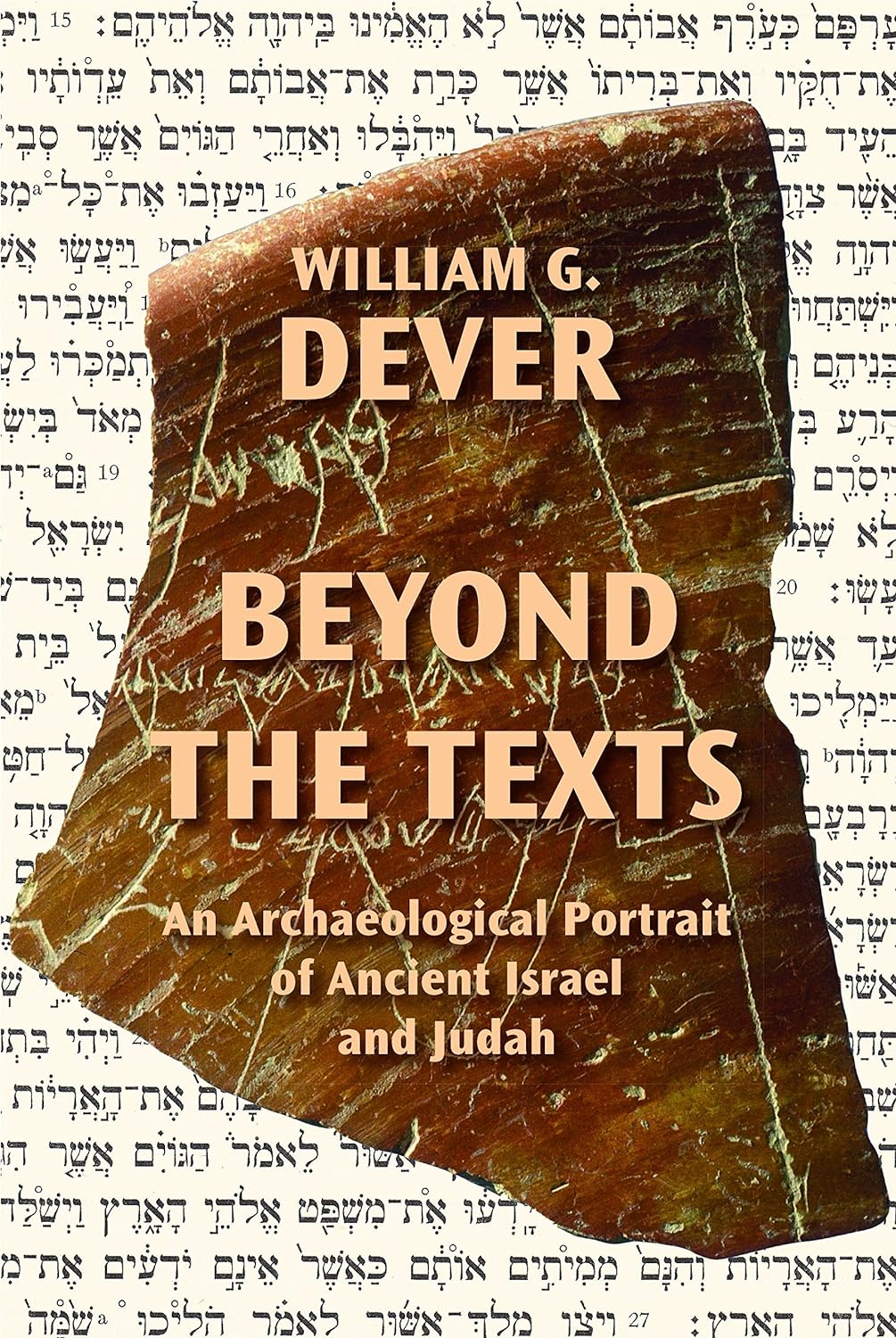
Dever’s work, Beyond the Texts: An Archaeological Portrait of Ancient Israel and Judah is hyper-focused on the archaeological evidence related to Ancient Israel and Judah. There’s a lengthy section at the beginning about the differences between looking at archaeological evidence and its (largely) “given” nature (eg. a soup bowl is a soup bowl-that’s its use, and arguing otherwise doesn’t change it) as opposed to texts like the Bible or other writings which have interpretation, memory, hyperbole, fictionalization, etc. built in.
The book is full of major insights, and Dever continues to rely almost exclusively upon archaeological evidence to make his points. Eventually, he gets to the conquest narratives of Joshua-Judges. Of the 30+ sites mentioned as being conquered in those books of the Bible, only 3-4 have any signs of destruction in the right time period. Writes Dever:
“[I]n the light of the overwhelming archaeological evidence, there was no large scale warfare on the thirteenth- and twelfth-century horizon, except that initiated by the Philistines along the coast… The inevitable conclusion is that the book of Joshua is nearly all fictitious, of little or no value to the historian. It is largely a legend celebrating the supposed exploits of a local folk hero.” (186)
I kind of knew this already–a major impact point for myself as someone who literally got a degree in apologetics was looking at the evidence in ANE history and trying to reconcile that with the Bible. And broadly speaking, evangelicalism has a severe problem when it comes to the archaeological evidence here.
Dever, however, doesn’t simply unload on the Joshua account and move on. He shows the marked contrast between how Judges shows the inhabitation of the land and how Joshua does so, noting the difference in themes between the two books. Dever concludes regarding the two books:
“The conclusion in light of archaeology is inevitable. The book of Joshua looks like a late, Deuteronomistic construct preoccupied with theological concerns, such as the Sinai covenant, centralization, and the temple, that were paramount particularly in the exilic and postexilic era. Its authors were scarcely familiar or concerned with life in the early Iron Age settlements. The book of Judges, by contrast, has the ring of truth about it. The core of the narrative consists of stories about everyday life in the formative, prestate era, when ‘there was no king in Israel [and] all the people did what was right in their own eyes’ (Judges 21:25). The portrait of as much as two hundred years of struggles under charismatic leaders with other peoples of the land–of a long drawn-out process of socioeconomic, political, and cultural change–is more realistic than that of the book of Joshua, which is really the celebration of a legendary hero” (187-188).
These conclusions are supported broadly by Dever’s own look at the way people of that time period were living, with fascinating insights into the lack of states and lack of even defensive positions throughout the region at the time (see 133ff). Additionally, the conclusions are supported by Dever’s noting of the contrast between how Joshua does not accurately represent that region at the time while Judges even has details of how the people lived at the time portrayed in accurate ways (188). A careful reading of the two books reveals these contrasts, to go along with the list complied by Dever which includes things like Israel being a huge territory immediately conquered in Joshua compared to a small, decentralized entity in Judges. Again, the latter, a group of settlements with little to unify them and no central state, reflects the time period and the archaeological data far more than the concept of a vastly populated land ripe for dramatic, swift conquest. This is all buttressed even more by the fact that many of the sites mentioned in Joshua have been excavated and shown to either be unoccupied or unconquered with no layers of destruction in the time period it supposedly would have taken place.
These aspects present a series of problems for the conservative apologist as one who wants a unified, inerrant text with total historical accuracy. We’ll look at one attempt to do just that below, but for now I want to note the import of moving beyond such a view. Dever’s point of Joshua being theologically oriented to questions of the time in which it was written is vastly important. To say that Joshua doesn’t present an accurate view of what actually happened in the land does nothing to undermine its intent. It is not intended to be historically accurate as an account of Iron Age settlement in the region. Instead, it is focused upon questions of the land, the temple, and the strict monotheism, sprinkled with a heaping helping of hero worship of Joshua and classic Ancient Near Eastern hyperbole. It is only when the book is forced into modern boxes that it becomes problematic. The genocidal violence it portrays did not happen, and therefore does not present a problem for God’s character. While some may press that even this portrayal calls into question the character of God, I’m much less interested in that argument, because once we acknowledge that it is a work of humans attempting to understand God, it becomes, for me, much more understandable that sometimes they get it wrong.
A Contrasting, Evangelical View and Some Problems
Evangelical apologists, a group which once would have included me, have had a confrontation with this evidence in sight for a long time. In Do Historical Matters Matter to Faith?, a group of evangelical authors published with a conservative press (Crossway, 2012) a collection of essays attempting to confront some of the “modern and postmodern” challenges to Scripture. John M. Monson’s chapter is entitled “Enter Joshua: The ‘Mother of Current Debates’ in Biblical Archaeology.” Monson notes that apart from the most conservative scholars, the Joshua conquest account has been taken to be historically unreliable (431).
Monson confronts this presumed unreliability by calling into question a few things related to consensus views of archaeology. First, he plants the seeds of doubt by complaining that archaeology has been “given a privileged role of proving or–through assumed lack of evidence–disproving the biblical record” (431). Note the wording of this first contention. The use of the word “assumed” here carries a lot of weight in the sentence. Monson is implying that people are simply assuming the biblical text is mistaken on the conquest (and other) accounts. But that implies that there simply hasn’t been anything found, and so people are assuming with “lack of evidence” that there is no evidence. That is not the case, however, as Dever and others have demonstrated. Dever’s book outlines a list of 35+ sites mentioned in the Biblical conquest accounts. Of those sites, only 3-4 have any evidence of even possibly being threatened by Israelite incursions, and the majority of those which have been excavated do not show a layer of destruction in the right timeline for the conquest narratives. Thus, it is hardly fair to say people are assuming the biblical account is unreliable based on a “lack of evidence.” Instead, there is positive evidence to suggest that the Joshua conquest accounts are indeed inventions.
Monson, however, goes on in his defense. He argues that archaeology is a younger discipline and that combining its findings with other disciplines remains “fraught with challenges” (435, 439), he suggests that archaeology is simply assumed to be the discipline to confirm ancient writings but implies that such a use is perhaps mistaken (438-439), and he maintains that archaeology, due to its “scattered, random, and incomplete nature” struggles to find the right place alongside the Bible’s account which “is selective, ancient, and theologically oriented” (439). Many of these points are points that resonate with me, particularly the latter. Archaeology, like paleontology, relies quite a bit on luck. Now, both disciplines can rely increasingly on technology to help guide their finds, so “random” isn’t necessarily correct, but there is no corrective for discovering things which simply no longer exist. Like ancient creatures whose entire fossil record may have been destroyed by vulcanism, excavation, construction, or simply lack of preservation, with archaeology there are any number of figments of the past which no longer exist for any number of reasons. To rely too heavily upon archaeology for the construction of the ancient past seems to be the wrong approach. However, Monson’s own words about the Bible being “selective, ancient, and theologically oriented” should suggest to him and other apologetically oriented and/or evangelical readers that perhaps it is their own view of Scripture which is at fault here. If they are going in assuming that a text written with a theological (or other) purpose is supposed to yield faultless history, then perhaps that assumption itself is worth questioning as well. Indeed, why not simply acknowledge that Joshua is attempting to make theological and selective points rather than convey a 100% accurate historical picture of what happened in Israel?
Monson, for himself, goes on to make an argument that Joshua records geographically accurate accounts of coming into the land. When I originally read the book about 10 years ago, I found this utterly convincing. However, reflection now suggests that Monson’s argument is too neat. For one, while it is elegant in attempting to show that Israel’s conquest as recorded in Joshua would make sense along geographic lines, that doesn’t account for the fact that whatever ancient writers/editors of the book would also be well-familiar with the geography of the region and so would be unlikely to invent or embellish an account which did not correspond to the geography of the area. Second, Monson claims that his argument from geography shifts the burden of proof such that it “lies with those who would deconstruct these stories” (452). That may be, but having two alleged campaigns correspond geographically with the reason does not somehow undermine or disprove the archaeological evidence directly showing that multiple sites allegedly conquered during this time period either show no signs of occupation or no signs of conquest. This, notwithstanding Monson’s claims that some of these sites were uninhabited and so wouldn’t have had such signs (I believe I’m understanding his argument correctly on p. 436-438).
Monson’s argument appears to be revisionist and reactionary. While he provides one positive evidence in support of his claim, his entire argument for these two supposed campaigns relies not upon the actual evidence of destroyed sites but rather on the lay of the land. Fascinatingly, Monson is forced into analogical language even in this geographic argument, such as spending extensive time arguing that the Hebrew word for “gate” can refer to geographical features (448-449). That may well be the case, but it is hard to credit Monson for making an argument that supposedly buttresses the Joshua conquest narratives against archaeological evidence when he is to be found arguing not just that “gate” means a geographical feature, but also that Ai, the region being considered, can be referred to as “The Ruin” due to another lengthy argument relying upon the definite article being used with “ruins” (443-444) and that Ai, apparently problematic for a number of archaeological regions, could have, “For all we know,” been “nothing more than a small squatter’s settlement in the vicinity of the imposing ruins of the mighty Early Bronze Age City of the third millennium BC” (437-438). Well sure, but for all we know, that “squatter’s settlement” would then not make a lot of sense as the sight for two massive military campaigns that crisscrossed a whole region!
Finally, the real motivation between Monson becomes clear at the very end of his chapter. After pointing out the text of Joshua shows him remaining faithful to God, Monson writes: “Over a millennium later, another Joshua walked through this same region. He too remained faithful. If we dismiss the real Joshua ben-Nun and his times, what is to stop us from dismissing the later Joshua, Jesus of Nazareth?” (457). This remarkable final sentence of Monson’s chapter is a case study in a loaded question. First, it implies that only by agreeing with the conquest narratives in toto can one agree there was a “real Joshua ben-Nun.” Second, it implies that there is an evidential link between Jesus and Joshua’s conquest narratives. That may be true, but it is unargued for here. Third, it uses scare tactics. Only those who agree with a slippery slope type argument will acquiesce to it, but for those people–presumably inerrantists–it’s a powerful way to thwart disagreement. After all, if the Bible isn’t historically accurate on Joshua, then that somehow means we have to question Jesus! This, of course, is ridiculous, but it’s exactly what Monson is implying. And frankly, this scare tactic shows where Monson is coming from in the earlier parts of his chapter. There’s not a genuine engagement with the evidence happening. Rather, the evidence needs to be massaged, evaded, or simply denied in order to maintain the story of Joshua at all costs; because for Monson, Jesus and the literal, genocidal conquest of Canaan stand or fall together.
Conclusion
It is probably clear to the reader at this point that I think Dever’s account is much more convincing than Monson’s. Yet, I say this as one who remains a Christian. Reading Dever actually gave me a sigh of relief. For so long, I had a bunch of issues with these accounts. Initially it was the ethical problem–why would God destroy these peoples? Later, I had the archaeological problem–now that I’d sacrificed my ethical impulse to condemn the slaughter, what if it hadn’t actually happened? To have someone who studies the archaeology simply lay out the evidence and say “This did not happen, and it was likely a fictitious invention to celebrate a folk hero” is, in a way, a relief. For one, his following that up with arguing that Judges is likely a much more accurate account makes me convinced yet again of something I’ve thought for a while–that once one leaves aside inerrancy, the biblical text becomes not just more readable but less scary in some ways–it doesn’t require you as a reader to constantly defend the indefensible. For another, setting aside the conquest narratives means that it is what I had long leaned towards–that these parts of the Bible are really just people trying to hyperbolically make “their guy” sound better than “the other guy”–seems backed by archaeological evidence. And Christians, we should truly be concerned with truth rather than attempting to support a pet doctrine, inerrancy, that doesn’t work on its own terms anyway.
All Links to Amazon are Affiliates links
Links
Be sure to check out the page for this site on Facebook and Twitter for discussion of posts, links to other pages of interest, random talk about theology/philosophy/apologetics/movies and more!
Reconstructing Faith– Links for posts related to my own faith journey and how I have been reconstructing faith (scroll down for more).
Inerrancy With No Autographic Text?– Even those looking to defend inerrancy are having difficulty with the concept of the autographic text. But what if it is not just that we can never find such a text, but rather that no such text existed to begin with? I argue that such is the case at least for some works and that inerrancy therefore does not work.
SDG.
——
The preceding post is the property of J.W. Wartick (apart from quotations, which are the property of their respective owners, and works of art as credited; images are often freely available to the public and J.W. Wartick makes no claims of owning rights to the images unless he makes that explicit) and should not be reproduced in part or in whole without the expressed consent of the author. All content on this site is the property of J.W. Wartick and is made available for individual and personal usage. If you cite from these documents, whether for personal or professional purposes, please give appropriate citation with both the name of the author (J.W. Wartick) and a link to the original URL. If you’d like to repost a post, you may do so, provided you show less than half of the original post on your own site and link to the original post for the rest. You must also appropriately cite the post as noted above. This blog is protected by Creative Commons licensing. By viewing any part of this site, you are agreeing to this usage policy.
Book Review: “Reformation Commentary on Scripture, Old Testament, Volume IV: Joshua, Judges, Ruth” edited by N. Scott Amos
 The Reformation Commentary on Scripture series focuses on sharing insights from Reformation theologians on the Bible. Here, we’ll take a brief look at the commentary on Joshua, Judges, and Ruth.
Joshua, Judges, and Ruth have an enormous number of issues that need to be addressed for any reader no matter when they lived. The introduction to this volume shows that several of the topics Reformation-era theologians were interested carry into today- the place of women, creation and providence, sacraments, and more. Reformation theologians also were more focused on some of these than modern theologians are, giving insight in ways that are often unexpected.
The book of Joshua has many theological issues that continue to be debated to this day. The promise of the land to the people of Israel is seen by some of these Reformers as a conditional promise (eg. the English Annotations which note that the promise is given “if they would wholly follow the Lord their God….” (7)). The Reformers often provided highly figurative interpretations of passages throughout the Bible. John Mayer’s linking of Joshua to Jesus sees the crossing of the Jordan as a kind of baptism (20-21). Rahab was particularly controversial among the Reformers–should she have deceive to assist the Israelites? Is she an acceptable role model? Was she a woman of faith? Theologians from Philipp Melanchthon (Lutheran) to Cardinal Cajetan (a counter-Reformer) weigh in on these topics. And again, this is one of the great strengths of this series and of each commentary in it. Readers will get numerous opinions from a range of theological perspectives, giving insight into the debates of the Reformation and the range of theological visions presented during that period.
Judges presents its own series of difficult questions. Jephthah’s apparent sacrifice of his daughter is approached from many directions, whether chastising him for making a foolish vow (Calvin) or noting that Rabbinic interpretation differs from most Christian interpretation of the passage (Johannes Brenz, 363). Other theologians try to make what Jephtah vowed non-literal (eg. Konrad Pellikan, 363-364). Once again this passage remains debated to this day and the multiplicity of voices from the Reformation can help guide that interpretation. Deborah is another hotly debated topic, as Reformers note her leadership or try to avoid the implications of the same.
Ruth’s primary division of opinion–though there are many–is around Naomi’s plan for Boaz. Did Naomi plan for Ruth to seduce Boaz, or was something else going on? Most of the Reformers either play with euphemism here or are either unaware of or ignore the potential implications of Ruth 3. This section of the commentary is especially interesting, as the Reformers try to reconcile the passage with their expectations of the biblical text.
The commentary has moments like this throughout the text, set alongside passages that clearly draw out the theological positions of individual Reformers. It, like the other works in this series, is an excellent read. It will lead you to delving back into the Scriptures yourself as you read the Bible alongside some of the major (and minor!) theologians of the Reformation Period. Reformation Commentary on Scripture: Joshua, Judges, Ruth is a must-read for anyone interested in this field.
Disclaimer: I was provided with a copy of the book for review by the publisher. I was not required to give any specific kind of feedback whatsoever.
Links
Be sure to check out the page for this site on Facebook and Twitter for discussion of posts, links to other pages of interest, random talk about theology/philosophy/apologetics/movies and more!
Book Reviews– There are plenty more book reviews to read! Read like crazy! (Scroll down for more, and click at bottom for even more!)
SDG.
——
The preceding post is the property of J.W. Wartick (apart from quotations, which are the property of their respective owners, and works of art as credited; images are often freely available to the public and J.W. Wartick makes no claims of owning rights to the images unless he makes that explicit) and should not be reproduced in part or in whole without the expressed consent of the author. All content on this site is the property of J.W. Wartick and is made available for individual and personal usage. If you cite from these documents, whether for personal or professional purposes, please give appropriate citation with both the name of the author (J.W. Wartick) and a link to the original URL. If you’d like to repost a post, you may do so, provided you show less than half of the original post on your own site and link to the original post for the rest. You must also appropriately cite the post as noted above. This blog is protected by Creative Commons licensing. By viewing any part of this site, you are agreeing to this usage policy.
Sunday Quote!- Reading the Old Testament as Christian Scripture
 Every Sunday, I will share a quote from something I’ve been reading. The hope is for you, dear reader, to share your thoughts on the quote and related issues and perhaps pick up some reading material along the way!
Reading the Old Testament as Christian Scripture
Douglas S. Earl’s The Joshua Delusion is an attempt to approach the Old Testament in such a way as to understand it as Christian Scripture. For Earl, what this means is reading Scripture in a way that reflects Christian teaching in the New Testament. Moreover, it may mean that we need not read the Bible the same way contemporaries read it. One of the criteria Earl suggests is the notion of “fittingness” in our reading of Scripture:
[F]or a Christian reader of a biblical text ‘fittingness’ is a criterion for interpretation that relates both to what the text was originally trying to achieve, and to how it is received and used in the canon of Scripture, and subsequently in the Christian tradition. (103, cited below)
Thus, the original intent is set alongside a canonical perspective of reading the Bible, and ultimately set against Christian reading of the Bible. This has wide-ranging implications for how Earl suggests we read the Old Testament, including, often, undermining the historicity of the text in favor of a more allegorical reading.
The Joshua Delusion is a challenging read in many ways. Ultimately, I think Earl takes his position too far–to the point that it becomes difficult to see exactly how interpretation ought to be done. Moreover, his thesis allows Christians to effectively dismiss the original intent and meaning of the text. Is that a truly plausible way to read the Bible? It seems to me that if a view entails the rejection of how a text may have originally been intended, that means that we have lost a deeply important aspect of interpretation. Of course, Earl anticipates this objection and responds to it, thus leading to an engaging book. Interested readers ought to check the book out.
Links
Be sure to check out the page for this site on Facebook and Twitter for discussion of posts, links to other pages of interest, random talk about theology/philosophy/apologetics/movies and more!
Sunday Quote– If you want to read more Sunday Quotes and join the discussion, check them out! (Scroll down for more)
Eclectic Theist– Check out my other blog for my writings on science fiction, history, fantasy movies, and more!
Source
Douglas S. Earl, The Joshua Delusion (Eugene, OR: Cascade Books, 2010).
SDG.
Sunday Quote!- Mythical Wars in the Bible?
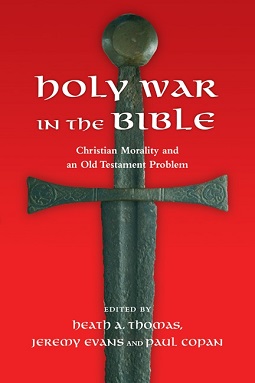 Every Sunday, I will share a quote from something I’ve been reading. The hope is for you, dear reader, to share your thoughts on the quote and related issues and perhaps pick up some reading material along the way!
Mythical Wars in the Bible?
I was reading through Holy War in the Bible: Christian Morality and an Old Testament Problem and was surprised to come upon an essay which essentially argues that the narratives in Joshua were mythical retellings of the entry into Israel:
…Deuteronomy 7:1-5 is incoherent if read literally, for the command to kill all the inhabitants of the land is followed by an exhortation against intermarriage with them. In other words, in a “mythological” sense, Deuteronomy 7 itself encourages not so much annihilation of Canaanites as radical separation from them and their idolatrous practices–exactly as Joshua 23-24 exhorts. (163, cited below)
The essay was by Douglas Edwards, whose argument is essentially that Joshua does not recount actual events but rather a mythology with a specific purpose to show that God’s goal of placing Israel in the promised land was fulfilled. It’s an interesting perspective which helps make sense of some pointers in the narratives (and the fact that Judges follows Joshua with discussion of people who were allegedly exterminated in the prior canonical book).
However, I’m not convinced we may categorize the narrative as being a mythology, for it seems to have some clear historical claims about how, when, and where Israel entered into Canaan. Indeed, there are other essays in the same book which do not dehistoricize the text while also not putting forward genocide in the Bible.
What do you think? How do you interpret the texts which some take to mean genocide occurred in the Bible? How might one maintain Earl’s view and inerrancy, or can one not do so?
Links
Be sure to check out the page for this site on Facebook and Twitter for discussion of posts, links to other pages of interest, random talk about theology/philosophy/apologetics/movies and more!
Sunday Quote– If you want to read more Sunday Quotes and join the discussion, check them out! (Scroll down for more)
Book Review: “The Myth of Religious Violence” by William T. Cavanaugh– I review the book which has led me to discuss the ways the category of religion is used to stigmatize the other and also forced me to rethink a number of issues. I highly recommend this book.
Source
Douglas Earl, “Holy War and Hesed” in Holy War in the Bible: Christian Morality and an Old Testament Problem
SDG.
Really Recommended Posts 12/13/13- Bonhoeffer, Creationism, Feminism, and more!
 The Really Recommended Posts this week are really wide-ranging. I hope you’ll enjoy this smorgasbord as much as I did. We feature Dietrich Bonhoeffer’s theology, creationism, feminism, intelligent design, the conquest narratives in the Bible, and more! Check them out, and, as always, let me know what you think!
Dietrich Bonhoeffer, a New Testament Pastoral Theologian– Bonhoeffer is, I admit, one of my favorite theologians. I only wish he had had more time upon the earth to develop more systematic works than he did write. I’m Lutheran too, which makes me gleeful at the broad appeal Bonhoeffer has demonstrated. In this post, Joel Willitts explores the way in which Bonhoeffer did theology. It’s a fascinating look at the development of his theology.
Multiple Lines of Evidence Support an Ancient Earth– The charge is often made from young earth creationists that dating methods don’t work. What about when those dating methods correspond across independent and multiple lines of evidence? It seems this presents a major challenge to the young-earth paradigm. Check out this post for a summary of several related points.
Was There an Exodus & Conquest– Two of the biggest challenges to the OT narrative are directly related to the historical accounts of the Exodus and the Conquest narratives. That is, did these even happen? Here, there is a post which briefly summarizes the issues and evidences related to these events.
“Darwin’s Doubt” with Stephen Meyer (and Eric Metaxas) [VIDEO]– A fairly lengthy video in which Eric Metaxas discusses intelligent design with Stephen Meyer. I found this video to be highly informative and also really entertaining. Metaxas is clearly a great speaker, and he keeps the discussion going and interesting throughout. Meyer, of course, is also a great speaker and it is worth hearing his discussion of these ideas.
thoughts on being a “Jesus Feminist”– What does it mean to be a Jesus Feminist? Can Christians be feminists and follow Christ? Check out this reflective post on what it means to be a Jesus Feminist.
Rescuing Songs of Christ’s Birth from Christmas– Should songs of Jesus’ birth be sung only during the Christmas season? Here, compelling reasons are offered as to why these songs are appropriate year-round.
The Advent Project– A pretty sweet deal: Biola University, one of the best schools out there (not biased at all ;)), has a series of Advent devotions going up daily available on their site. Each has a work of art, a music selection(s), and a brief reflection upon the coming of Christ, the incarnate God, into our lives. I’ve been following them as they go up and have enjoyed them all. Check them out for an excellent way to meditate on the meaning of Christmas.
Bible Difficulties 3: Joshua 6:21-24
The Bible has been compared to an anvil–no matter how hard people beat on it, it remains firm, it stands strong. I love this comparison, and I have my own to offer. The Word of God is like a sword being forged. It is under attack by others, who beat on it with hammers, trying to destroy it, yet in all their attacks, the Word only gets sharper, and its blade more keen. The Word stands.
This post is the third in a series I’ve been working on which discusses Bible Difficulties–hard passages in Scripture. Other posts in the series can be accessed here.
Summary
One of the most commonly-cited difficulty with Scripture is the charge that God commands wicked actions. I’ve offered other defenses of such charges before (see here and here), but here I’d like to examine one specific case (and I will likely do so in the future as well). Today I’ll discuss the case of Jericho found in Joshua 6:21-24 (found in context here).
These verses say: “They devoted the city to the LORD and destroyed with the sword every living thing in it—men and women, young and old, cattle, sheep and donkeys… Then they burned the whole city and everything in it, but they put the silver and gold and the articles of bronze and iron into the treasury of the LORD’s house.” (Joshua 6:21, 24).
Why is this passage difficult?
Surely this is a hard truth! Men, women, children, and animals are destroyed due to God’s command.
Commentary
There are a number of ways commentators address these verses and others like them. I’m going to outline my own view, which is a synthesis of many others.
Most importantly is the idea that the entirety of Scripture witnesses of God’s relationship to man. This is made specific in the revealed incarnation of God into the person of Jesus. Thus, verses like these should be seen in light of the whole of Scripture. More on this in a bit.
The second most important point is that God is, necessarily, sovereign. Sovereignty implies that God is in absolute control of the universe. This point is so important because it is the case that God has created all living things and has sustained them by His grace. Thus, all things owe each second of their lives to Him. We don’t deserve anything, only God deserves anything–which is our adoration, thanksgiving, and praise.
Now, before getting into a Scripture-in-context argument, we can examine this individual case. The charge is (essentially) that God is unjust for allowing and endorsing the total destruction of Jericho, including women, children, and animals. Geisler and Howe make the fivefold argument, found in The Big Book of Bible Difficulties, that
1) The Canaanites were far from innocent. The Canaanites abhorrent immorality is described in Leviticus 18, which includes descriptions of such Canaanite practices as child sacrifice (see Leviticus 18:21, 24, 25, and 26). These people were not walking around minding their own business. They were a dangerous, defiled nation (Geisler, 137).
2) God had given Palestine more than 400 years to repent, starting with the promise to Abraham in Genesis 15:16. The people of the land, however, had not repented (137).
3) In regards to killing everyone, including women and children, the fact of the matter is that they were part of a people whose depravity was such that anyone who came in contact with it was polluted (see Leviticus 18 once more). Geisler and Howe further put forward the controversial view that children who die before the age of accountability go to heaven (they cite 2 Samuel 12:23 for this) and so God was being merciful by bringing them to Him rather than having them condemned for eternity (138–I am not endorsing the latter part of this argument, but I think it was worth repeating here).
4) God’s sovereignty means that He who has created life may also take it (138).
5) The threat of such a vile, violent, and corrupt people meant they must be eradicated so as not to lead astray God’s chosen people, who had already shown themselves susceptible to such apostasy (138).
I think that Geisler and Howe make a fairly credible defense here, though I think a high understanding of Christology can enhance the defense further. The Lutheran Study Bible commentary about “Divine Warfare” states that “Satan and man’s sin started warfare… Christ’s divine warfare [his death and resurrection] achieves victory and salvation… divine warfare [is] God’s just punishment [for] human sin… the Church’s warfare is spiritual… a Christian view of warfare must distinguish Law from Gospel” (376). These points combine to show a Christian understanding of such passages:
As I mentioned above, Christ can be seen as the key to understanding even these passages. Paul, in the book of Romans, writes that “all have sinned and fall short of the glory of God” (3:23). There is no one righteous, not even one (3:10). Thus, all deserve death and punishment similar to that of Jericho. However, God, in His mercy, sent His Son to die once for all sinners, thus opening salvation to all who believe. This is by faith, not by works (Ephesians 2:8-9). Therefore, when viewing a difficult passage such as this, as Christians, we can see a distinction between Law and Gospel. God’s Law is evident in His Just dealings with sinners–the wages of sin is death (Romans 6:23a)–while also remembering that God’s mercy is in all things, for “the gift of God is eternal life through Jesus Christ our Lord (Romans 6:23b).
Further, one very important point to make in all matters like this is that the Christian understanding includes the belief that all things have eternal relevance. Things that happen in this life have repercussions for the next. As such, any understanding of temporal suffering should take into account God’s plan of eternal salvation for all who believe.
Sources:
Geisler, Norman and Thomas Howe. The Big Book of Bible Difficulties. Baker Books. 1992.
The Lutheran Study Bible. Concordia Publishing House. 2009.
——
The preceding post is the property of J.W. Wartick (apart from citations, which are the property of their respective owners) and should not be reproduced in part or in whole without the expressed consent of the author.

 J.W. Wartick - Reconstructing Faith