Just War
“For Greater Glory” – A look at a movie about Christianity in the face of violence
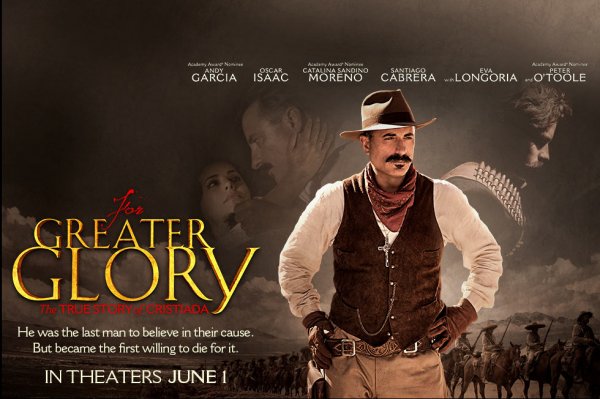 “For Greater Glory“
The Good, the Bad, and the Ugly
The Good
The general Enrique Gorostieta Velarde is clearly a “good guy.” He was, himself, no Christian and certainly not a Roman Catholic, but he stood up against those who would persecute people simply for their beliefs. He also did not stand for compromise: he wanted toleration to be granted to Roman Catholics. He fought for an ideal. Even if that ideal was not one of the faith he was fighting to defend, he felt that there was injustice, and fought against it.
It is unclear whether the historical Enrique Gorostieta Velarde ever became a Christian. In the film, it certainly make it seem as though in making his arguments, he came into a kind of faith in God. It also seems to be the case that the historical general had some political ambitions in that he desired to bring about a change in the Constitution to provide for more toleration.
Father Christopher is an example for Christians everywhere. He does not back down in the face of violence. He became a martyr by standing in front of men who were doing him violence and proclaiming Christ to them. His martyrdom served as inspiration for a number of people in the film.
The Bad
The anti-catholics in the film are clearly the “bad guys.” It is hard to argue with this. Anyone who chooses to attack and kill people simply because of their beliefs certainly qualifies for the catchall “bad guy” terminology.
Plutarco Elías Calles, the Mexican President, an atheist, decides that he must use a violent crackdown to keep the Roman Catholic Church from becoming involved in Mexico. He couches his oppression of the Roman Catholics in language of secularism. Instead of focusing upon their religion, he makes his argument based upon the rule of government: the Roman Catholics serve a ruler (the Pope) who is outside of this country, and so they are a danger to the stability of this country. Despite this “secular” language, the fact of the matter is that throughout the film, the government is viscous not just towards the Roman Catholics as people who serve a different master, but also simply as religious persons. Crosses are burned and churches are destroyed. People are slaughtered during worship. It is a wholesale war against Christianity.
The Ugly
The film does not draw a hard and fast line between “good” and “bad,” however. There are also the ugly: those who, with good intentions, also commit atrocities. The Cristeros (those who fought for religious tolerance of Roman Catholicism) who commit atrocities were the “ugly.” Some felt they had to fight evil with evil, and committed horrible acts in the name of their cause. This is exactly what Christians are called to avoid.
Just War and Pacifism
The movie brought up the constant debate within Christianity between just war theorists and pacifists. It was surprising how lucidly it presented the issues. There were those in the film who refuse to use violence to fight against the government, citing Christ’s example of turning the other cheek. Yet even they become involved in getting supplies such as bullets to the Cristeros. On the other hand, there are those who argue for a just war tradition: when injustice is running rampant, should not Christians be among those who stand up against it, even if that calls for using force? The film never answers one way or another; instead, it leaves it to those watching to weigh the merits of just war and pacifism.
I tend to favor the just war theory myself. It seems to me that if a government like the Nazi Regime exists, then it is perfectly justifiable to use force to prevent them from perpetuating their evils.
Historically, according to more than one source I looked up, it is argued that the Cristeros actually had little impact on the overall outcome of the changes and toleration which came to Mexico. Instead, it was a deal negotiated by the Vatican with the Mexican government. Yet it seems for me historically perplexing as to why, exactly, the Mexican government would have desired a compromise if the Cristeros were not in operation. I speak here as no expert on the topic by any means. I’d be interested in reading your own thoughts.
The Elephant in the Room
It is hard to see this movie without thinking about the elephant in the room: atheists are in power, and religious people are killed. It’s a theme in the movie, but it also plays out time and again throughout human history: the French Revolution, the Soviet Union, the massacres of Armenians in Turkey, the Spanish Civil War, and more. Why is it that it seems, historically, every time a secularist government has taken power, the religious persons are the ones who suffer violence?
The answer to this vexing question seems to me to be quite clear: the notion that religion is violent and secularism stops violence is just false. Not only that, but the distinction between secular and religious is, itself, a mere construct with no ontological reality. I have argued this before when I discuss the Myth of Religion.
Conclusion
“For Greater Glory” is a movie that should be a must-see for those interested in worldview discussions. I could see it being used at an interfaith group, church youth group, or seeker group to generate discussion. The movie is definitely violent, and it shows the good, the bad, and the ugly unapologetically. It is for that reason that it must be seen.
What is perhaps the most shocking part of this movie is the fact that, prior to watching it, I had never heard or even imagined that Mexico had persecuted Christians. The violence committed against Christians by others in authority continues into the modern era, and it is truly depressing to know how little we hear about it. I can’t help sometimes but join with David and say “How long, Oh LORD?” (Psalm 13).
Links
I discuss the way that construct of “religion” has been used to denigrate an alleged “religious other” in my post: The Myth of Religion.
I have looked at a number of other popular movies. Check them out (scroll down to see more posts) in my movies category.
An interesting discussion of Christian pacifism can be found over at Glenn Andrew Peoples’ blog: Pacifism, Matthew 5, and ‘Turning the other cheek’.
SDG.
——
The preceding post is the property of J.W. Wartick (apart from citations, which are the property of their respective owners, and works of art as credited) and should not be reproduced in part or in whole without the expressed consent of the author. All content on this site is the property of J.W. Wartick and is made available for individual and personal usage. If you cite from these documents, whether for personal or professional purposes, please give appropriate citation with both the name of the author (J.W. Wartick) and a link to the original URL. If you’d like to repost a post, you may do so, provided you show less than half of the original post on your own site and link to the original post for the rest. You must also appropriately cite the post as noted above. This blog is protected by Creative Commons licensing. By viewing any part of this site, you are agreeing to this usage policy.
“Fitzpatrick’s War”- Religion, truth, and forgiveness in Theodore Judson’s epic steampunk tale
The roar of our guns was more than my ears could hear. The slaughter in the two rivers was more than one man’s mind could absorb… A sort of madness over came us; we had an infinity of bullets and an infinity of Chinese before us. Every one of our men felt he was killing thousands… Death ran wild. How terrible it is, I thought, that the Yukons should be so good at this. (Judson, 319-320)
Fitzpatrick’s War
Brief Overview of the Plot
Fitzpatrick’s War is written as an autobiographic tell-all from the perspective of Sir Robert Mayfair Bruce. He is writing about Lord Isaac Prophet Fitzpatrick, a man who, like Alexander the Great, had conquered the world at a young age and also died young. Bruce was a close friend of Fitzpatrick (whom he calls Fitz) and so reveals a number of less-than-flattering aspects of his personality in his account of the life of the former ruler. It describes Fitzpatrick’s rise to power, his preparations for war during behind his father’s back, and his post-war rule.
Fitzpatrick is revealed as a man who lusted for power and ruled ruthlessly. He participated in assassinations, set up deaths, and mercilessly slaughtered his enemies. He used biological and chemical weapons and burned his enemies to the ground, all simply because of a desire to conquer the world. He had delusions of grandeur, envisioning himself as a kind of modern Alexander who would outdo the other man in every way.
The Timermen are another major player throughout the book. They are mysterious in their motivations and have supreme power over all space travel and most communications. Bruce reveals a number of unflattering details about these people as well.
The book has been edited by Doctor Professor Roland Modesty Van Buren, who is hostile to Bruce’s recounting of the events. Van Buren does not believe that Bruce is telling the truth about the great Fitzpatrick and believes he is instead attempting to make his own name live on through his lies. Thus, the book is footnoted throughout with Van Buren’s corrections to Bruce’s “lies.”
Religion
Religion is pervasive throughout Judson’s work. The characters constantly quote from the Bible to justify their positions which frequently seem unbiblical and evil. Although the society at large seems to think highly of the Bible, the United Yukon Church itself seeks to take over all religion and has repressed other expressions of religion for quite some time.
Yet Bruce is fully aware of how the Christian faith is being abused throughout the work for evil ends. In one scene, he is speaking privately with Fitzpatrick, who asks Bruce whether God can love someone who will wreak such evil on the world. Specifically, he asks about King David in the Bible. Fitzpatrick wants to know whether he himself is like King David and why God would love someone who so frequently strayed from righteousness. Bruce realizes that it is here that he could have influenced Fitzpatrick to turn from the great evils he would perpetuate. Yet, coveting power, Bruce makes the decision he would regret for the rest of his life and backs Fitzpatrick’s notions of glory and God. He writes:
I would today give up my soul if I could go back to that moment and tell Fitz he could still turn back from his awful destiny. I grant that he had at this date already committed murder. It was equally true that he had not yet made his oceans of blood… The world could have still been saved from his wrath… (204)
Instead, Bruce caves into his own lust for power and desire to please Fitzpatrick. He tells Fitzpatrick:
God loves you… There are a few special men… who, like David, walk through History as Angels walk through thunderstorms. Those about them become wet with sin, while they remain untouched. They may seem to be bad men, these special ones. If we judge them by the standards we hold ordinary men to, they are the worst of men. Ordinary standards do not apply to them. They are doing God’s work here on earth, and as we do not know God’s motives or His ends we cannot judge His servants… You [Fitzpatrick] will be said to be God’s beloved. (204-205)
Bruce regrets this discussion with Fitzpatrick for the rest of his life and struggles with the notion that he can be redeemed.
Fitzpatrick himself seeks a kind of syncretism of all religions, but realizes that it will not ultimately work. He keeps his old tutor, Dr. Flag, around mostly to feel superior about himself. But he had initially attempted Dr. Flag’s project of making all faiths equally valid. One discussion in the book is particularly revealing. Dr. Flag is expounding upon the notion that all religions are essentially the same, but Marshal Jeremiah Truth Hood challenges him on this notion:
“Sir, am I to understand you believe all major religions profess the same core beliefs?” [Hood Asked]
“Yes…” [replied Flag]
“Then that would mean, let us say, that the Chinese and the Arabs share the same beliefs on marriage and family?” asked Hood… “Can we say,” asked Hood, “that Arabs and the Chinese value life to the same degree? Or is human life another secondary question?”
“I mean specific, general matters. You see, such as treating others well.” [Responded Flag]
“You say cultures are essentially the same,” continued Hood. “How would you explain, sir, the different Histories of North and South America? Both continents are inhabited by Christians. The majority in both continents are of European descent…” (364-366)
Hood’s point is well taken. The fact of the matter is that all religions are not the same and to say otherwise devalues the religious persons themselves. The way that Judson presents this dialogue allows for some real insight into the issue: how is it possible to say that, at their core, all cultures or religions are the same when they are so radically different?
Evil, Repentance, and forgiveness
There is great evil in the world, and Bruce’s world is no different. Much of the evil is caused by Fitzpatrick and the war which he created in his lust for power.
Ultimately, Fitzpatrick is reduced to a broken, suspicious man who becomes incapable of even doing the simplest tasks on his own. Marshal Hood is greatly distressed over his own incapacity to make amends for the evils he had done during the War. Hood is sitting with Fitzpatrick and several other Lords when they watch a video from an aerial shot of China and see the destruction their war had done to the country. The bodies were strewn about and death was everywhere. Bruce, too, feels the need for repentance: “There were no words in my vocabulary I could utter that could justify this abomination, no act of contrition that could ever take away what I had done” (410). Hood himself begins quoting from the Bible, Joel chapter 1. He relates the evils they have done to the crimes that Joel cries out against. Later, Hood is found among the Chinese, trying to help them by growing food and feeding them. It was his way of making amends.
Bruce himself finds forgiveness only through his wife, who speaks with clarity on God’s will and his grace. It seems to me that this theme of forgiveness is grounded thoroughly in the Christian notion wherein people are to forgive each other. We act as God’s agents here on earth, and so we are called to repentance and forgiveness.
Charlotte
Bruce’s wife, Charlotte, is a paradigm example of a powerful, spiritual, loving woman. Van Buren, the hostile editor of the book, has several choice words to describe Charlotte, whom he believes is overstepping her bounds by attempting to be equal to Bruce. She often seems overbearing, but ultimately she strives to be equal to Bruce, and to temper the poor qualities of Bruce’s character. Charlotte is Roman Catholic, a religion which is violently oppressed in Yukon, until Fitzpatrick allows for religious freedom to endorse his own pluralism. Charlotte’s character is important throughout the work as one who provides the positive example of womanhood and the equality of men and women.
History and Doing History
History (always with a capital “H”) is an area of extreme interest in the world of Fitzpatrick’s War. Fitzpatrick himself continues to utter a recurring theme: History is written by the winners. Above, there was a discussion of King David. Fitzpatrick in that same conversation presses the notion that King David rewrote the history books in order to paint him in the most positive light. Later, in his own life, Fitzpatrick would do the same thing. He had the greatest poets and historians of his age come and write histories about him which were highly favorable in their portrayals of himself.
There is active repression of historical knowledge due to the fact that the culture at the time the book is set in believes that the “Electronic Age” (20th and 21st centuries) was a blight upon all History. During one scene, Bruce is being questioned about the Electronic Age and readers discover that only one history exists from that period. The reason is because “[A]ll other Histories of that era were perverted by the strange ideologies of the day…” (35).
As one who has studied historiography (and written on the method regarding Jesus), I can’t help but think of all the issues these discussions raise throughout the book. Interested readers should check out the post linked in the parentheses for one brief account of historiographic method.
Conclusion
I have read few books which have had such a great depth of knowledge about so many subjects as is demonstrated in Fitzpatrick’s War. The book is just phenomenal, and it touches upon so many areas of great importance for Christians and non-Christians alike. As with all great fiction, it does this without becoming overbearing, but instead focuses upon the story. Judson develops wonderful characters whom the reader can relate to, love, or loathe. He explores heady themes with wit and precision. I highly recommend this book to my readers.
Links
Religious Dialogue: A case study in science fiction with Bova and Weber– I explore two excellent science fiction books alongside each other to see how they speak to religious dialogue.
The Presumption of Pluralism: How religious pluralism devalues all religious persons– I discuss religious pluralism, a topic which is brought up throughout Fitzpatrick’s War and show how it fails.
Check out more of my looks at popular level books. (Just scroll down to see more!)
Hieropraxis is an excellent site which focuses upon a number of cultural issues and how they relate to Christianity. I really cannot recommend this site highly enough.
Empires and Mangers– Another phenomenal site which looks at many popular level works from a Christian perspective. The posts are consistently fantastic. I encourage you to follow this site closely.
SDG.
——
The preceding post is the property of J.W. Wartick (apart from citations, which are the property of their respective owners, and works of art as credited) and should not be reproduced in part or in whole without the expressed consent of the author. All content on this site is the property of J.W. Wartick and is made available for individual and personal usage. If you cite from these documents, whether for personal or professional purposes, please give appropriate citation with both the name of the author (J.W. Wartick) and a link to the original URL. If you’d like to repost a post, you may do so, provided you show less than half of the original post on your own site and link to the original post for the rest. You must also appropriately cite the post as noted above. This blog is protected by Creative Commons licensing. By viewing any part of this site, you are agreeing to this usage policy.
A Christian look at “John Carter”
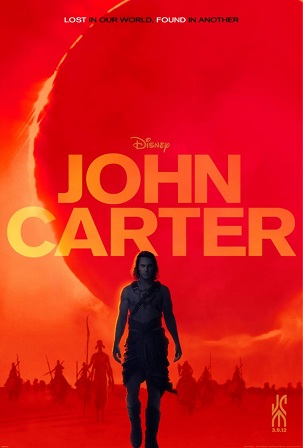
Disney’s “John Carter
Heroism and Just War
John Carter is a hero with a haunted past. The movie, unfortunately, never really explores his history much. From what I could tell, he went to war and came back to find his family had all been killed and his house burned as part of the conflict. He thus swore off fighting for a cause and instead decided to seek his fortune.
Once Carter reaches Mars (Barsoom), however, he is thrown into a conflict in which he realizes that the fate of an entire planet rests upon the victory of the city of Helium. Once he realizes the implications of this battle (and conveniently, finds the princess of Helium particularly attractive) Carter aligns himself with the Tharks, a race of aliens largely viewed as savages by the humanoid aliens on the planet. He is able to seal victory for Helium by making the Tharks realize that they, too, have a place on Barsoom which is influenced heavily by the conflict between Helium and Zodanga.
The movie touches, then, on the notion of a just war. Helium is trying to save the planet, while Zodanga does little but consume and subjugate. The Tharks view both sides as neutral and prefer them to continue fighting, as long as the war stays away from them. Yet it becomes clear that due to the influence of the Thern–an extremely advanced (technologically speaking) race which seeks to orchestrate the destruction of planets–that the conflict has implications for everyone on Barsoom, and indeed, on Earth.
Sin
The Tharks have a tradition in which they brand their people as punishment for their sins. The brands are placed so that they continue to cover one’s skin throughout their lives. If one has committed enough offenses that there is no longer any place for a branding, then one is either killed or thrown into the arena to fight against impossible odds. One’s sins literally cover their flesh. One cannot escape from one’s offenses. There is no redemption.
Christianity affirms that sin is something for which one can make no redemption for themselves. One’s sins are, in a sense, branded onto one’s past. Only by repentance and grace through faith can one be saved. There is no escape from one’s offenses except through the full and free forgiveness through Jesus Christ our Lord. There imagery in the movie of one’s sins being displayed on one’s flesh is powerful, and it resonates with the Christian view that our sins condemn us forever. Only by grace can we be saved. There is no removing the sins–branded onto us–by our own power.
Religion
The Therns are supposedly oracles of the goddess. However, it turns out that they are actually dedicated to manipulating civilizations across the galaxy. It is never discussed whether the goddess and the Therns were ever actually genuine, but it seems fairly clear that those calling themselves Therns are just using the title in order to gain power.
Religion is therefore seen as a kind of way to manipulate and enthrall the masses. All of the sides of the conflict are shown to be dedicated to the goddess, but none seems to have the full truth. However, it does seem that the dedication of the Tharks, in particular, shows a resonance with truth and a genuineness that reaches beyond the mere use of religion as subjugation. The movie, I would say, gives an overall neutral view of religion. In some ways it can be used for ill, but it nonetheless is not inherently evil.
Yet another aspect of religion in the movie, however, is that one can observe the difference between genuine faith and exploitative faith. It is clear that many of the Therns genuinely believed in the goddess and there are scenes which convey a sense of awe over the faith on Barsoom. Religious practice is seen as taking place on a genuine level and being an important part of the lives of the practitioners. These religious persons are seen as genuine and largely trustworthy. On the other hand, those who seek to exploit the faith are seen as inherently evil. Such a view should resonate with Christians, who are instructed to be aware of those within the church who would seek to lead us astray (antichrists).
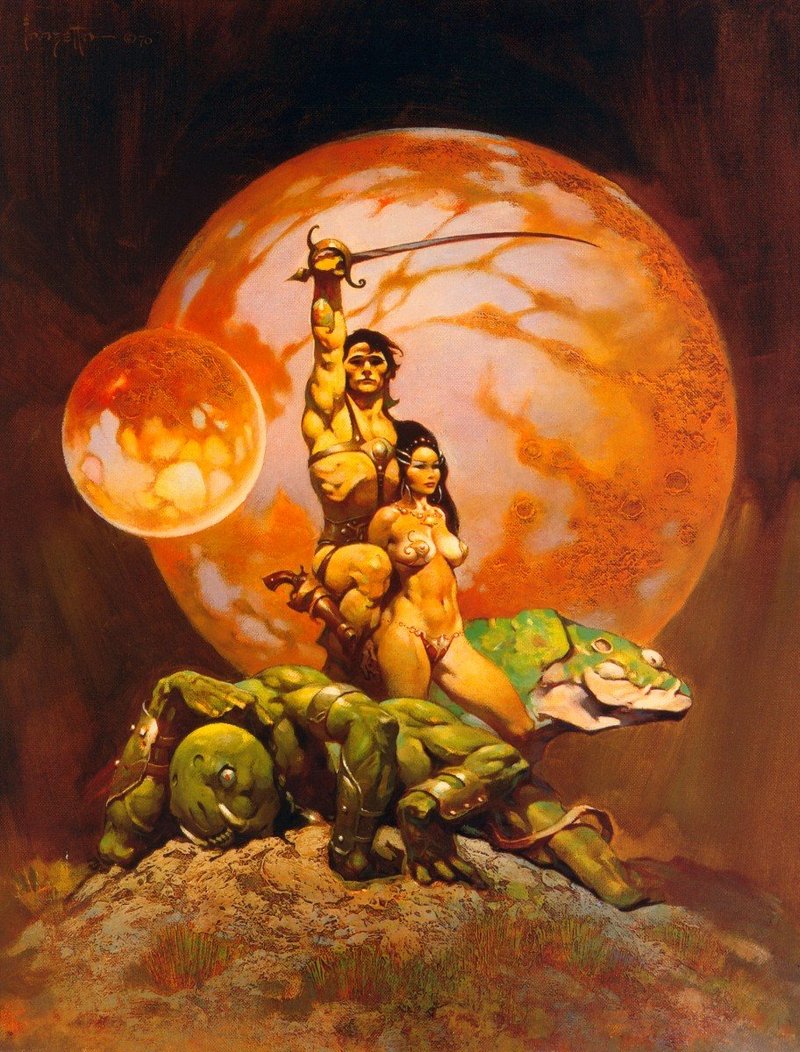 Alien Life and social (in)justice
Social justice is an underlying theme in the movie. By portraying the alien Tharks as the outsiders, the movie is able to focus on the notion that the downtrodden and overlooked can rise above the limitations of their position. Although viewed as unequals, they are equals.
One poignant scene early in the film showed a hatchery for the Tharks. They came to collect the hatchlings and it turned out that some eggs hadn’t yet hatched. The Tharks then fired on all the eggs with their gun and destroyed the “weak” young. I couldn’t help but think that this is largely what is happening in the real world with abortion [a topic I have written on extensively].
Here again, worldviews rear their ugly heads. The faith of Barsoom is a bit enigmatic. The goddess seems largely uninterested in the goings-on of everyday life. Furthermore, those who follow her are fully willing to kill their own young in order to ensure the survival of the strongest. One can’t help but think of the prioritization of desires over objective morality in our own world.
Conclusions
The film was a lot of fun. One can easily see how the source material influenced science fiction in a number of ways. As a huge fan of science fiction, I can’t help but love the movie. It is so awesome to see the origins of sci-fi play out on screen. Christians watching the film will find areas to discuss social justice, just war, and heroism. Furthermore, there are some poignant scenes which can bring up issues related to abortion and racism. A final talking point would be to discuss religion as a transcultural entity and see how it has been used in both good and bad ways. I go into this issue in my own post on the “Myth of ‘Religion.'”
“John Carter
Links
Check out another review of the movie over at Sci-Fi Christian, which looks into the background of the movie more, as well as exploring some Bible texts in relation to the movie: Barsoom or Bust!
Engaging Culture: A brief guide for movies– I discuss how Christians can view movies with an eye towards worldview.
Religious Dialogue: A case study in science fiction with Bova and Weber– I look at how science fiction is frequently used to discuss worldviews and analyze two major authors in the field along with their view of religious dialogue.
Alien Life: Theological reflections on life on other planets– What would it mean for Christianity if we discovered life on other planets?
Check out my other looks at movies, including the Hunger Games and the Dark Knight Rises here (scroll down for more).
SDG.
——
The preceding post is the property of J.W. Wartick (apart from citations, which are the property of their respective owners, and works of art as credited) and should not be reproduced in part or in whole without the expressed consent of the author. All content on this site is the property of J.W. Wartick and is made available for individual and personal usage. If you cite from these documents, whether for personal or professional purposes, please give appropriate citation with both the name of the author (J.W. Wartick) and a link to the original URL. If you’d like to repost a post, you may do so, provided you show less than half of the original post on your own site and link to the original post for the rest. You must also appropriately cite the post as noted above. This blog is protected by Creative Commons licensing. By viewing any part of this site, you are agreeing to this usage policy.
Pro-Life, Pro-War, Pro-Death Penalty? Hypocrite! -Consistently valuing human life
 The image to the right has been making its rounds on the internet, and it reflects an argument with which many who are pro-life and pro-death penalty will have to contend. The picture sums the argument up pretty well, but I will draw it out:
1) You are pro-life
2) You are pro-war [it is not stated what is meant by pro-war, exactly]
3) You are pro-death penalty
4) 1-3 conjoined are inconsistent
The simplest way to show this argument fails is to show that 1-3 are not inconsistent, which I shall now endeavor to do. What I mean to sketch here is a consistent ethic for valuing human life.
Pro-Life
Clearly, this piece of the argument is meant to be the one that is inconsistent. The proponent of the argument could say, “If you are really pro-life, then you should value life in every other sphere.” I agree, but the person who argues in this way is often pro-choice, and so it is relevant to at least link to my other arguments for the pro-life position. Interested readers should view my pro-life page for a number of my articles on the topic.
Pro-War
This is perhaps the most confusing of the labels. I think very few people are pro-war in an undefined sense. I think that perhaps those spreading this image mean the Iraq war, but that is a political issue rather than an issue about the value of life. Why is it a political issue? Because almost everyone (except staunch pacifists) would agree with the notion of a Just War. What is meant by that term is that there are some sets of circumstances which justify using military force in order to prevent their continuance.
For example, what I consider one of the most infamous cases is the Rwandan Genocide in 1994. During that genocide, an estimated 800,000 people were slaughtered, yet the UN pulled out their presence. The U.S. did not intervene, and Europe did very little. In my opinion, this was a truly deplorable example of international complacency, which allowed hundreds of thousands of people to be murdered wholesale. Should we have intervened with military force in that genocide? I say absolutely. When there are circumstances wherein human beings are being systematically destroyed by a national power, it seems like Just War against that national power is justified.
If someone wants to disagree with me on that, that is fine, but I don’t see how this notion that we should intervene to prevent genocide and other atrocities somehow means that I am not valuing human life. I would challenge someone to show how this is inconsistent with the pro-life stance.
Of course, the point that some have made is that the image is somehow linked to the Iraq War. But then the issue is whether the Iraq war is a Just War or not. I’m not going to start that debate, so I’ll just point out what I said above: if one is pro-life and for waging war in a just fashion, there is no inconsistency.
Pro-Death Penalty
In my opinion, this is actually more difficult to defend from a pro-life position than ‘pro-[Just]-war.’ Why? Well, we’ll get to that. First, let me make the positive case for the death penalty. As a Christian, I could just reference the Bible and point out that the government doesn’t carry the sword for nothing and that the notion of the death penalty for murder is pretty consistent throughout. But! I think it is important to show a more integral part of the case: being for the death penalty is part of valuing human persons.
How is that possible? Well, consider this: one reason the death penalty seems to me to be justified is that what is being said by it is that the human life is so valuable that if you willingly destroy someone else’s life, then your own life is forfeit.
I find this reasoning to be fairly solid and certainly consistent with a pro-life stance. On this view, life is so extremely valuable that the murder of a fellow human being means your own life must be forfeit.
Several objections could be lodged here.
1) One could object that this seems like a wholly retributive system. In response, I would say that may indeed be the case, but the current debate is not over what kind of penal system should be in place but rather on the consistency of a pro-life stance with other positions.
2) One could argue that the justice system is imperfect and therefore someone who is innocent may be executed. This is a much more powerful argument, in my opinion, and must be taken into consideration. Of course, any system of justice is going to be imperfect, and that imperfection alone does not justify jettisoning everything. Furthermore, one could argue that the extreme burden of proof in order to convict someone of murder when the penalty is death almost ensures that the innocent will not be proven guilty. More on (2) later.
3) One could argue that the death penalty does nothing to decrease violent crime. Again, this is a side issue and actually isn’t the justification for the death penalty I offered above.
It therefore seems to me that (2) is a powerful response to the death penalty argument from a pro-life perspective. If we should err on the side of caution whenever it comes to human life, then perhaps it is more consistent to be against the death penalty. However, it seems that the argument to justify the death penalty above does give a powerful reason to maintain the death penalty in light of the vanishingly improbable likelihood of someone innocent being killed. I rate this as about a 50/50, and think that one can be consistently pro-death penalty and pro-life. I leave it to the opposition to show me otherwise.
Conclusion
I have shown that one can be pro-life and pro-[just]-war. I have furthermore shown that one can be pro-life and pro-death penalty, with one minor caveat. Regardless of where one stands on the second argument against the death penalty offered above, it seems that one can remain consistent as pro-life and pro-death penalty if they hold that the value of human life trumps the argument.
I have therefore shown that 1-3 are indeed consistent and therefore 4 is false.
I think the biggest problem I have is that images like this do not do anything to contribute to the conversation. They are merely jabs at the other side. I think that the only way to have serious discussion is to avoid these types of “meme” images altogether. If your goal is to convince the other side, then engage in honest dialog. Do not post pictures to mock them. I say this to everyone.
SDG.
——
The preceding post is the property of J.W. Wartick (apart from citations, which are the property of their respective owners, and works of art as credited) and should not be reproduced in part or in whole without the expressed consent of the author. All content on this site is the property of J.W. Wartick and is made available for individual and personal usage. If you cite from these documents, whether for personal or professional purposes, please give appropriate citation with both the name of the author (J.W. Wartick) and a link to the original URL. If you’d like to repost a post, you may do so, provided you show less than half of the original post on your own site and link to the original post for the rest. You must also appropriately cite the post as noted above. This blog is protected by Creative Commons licensing. By viewing any part of this site, you are agreeing to this usage policy.
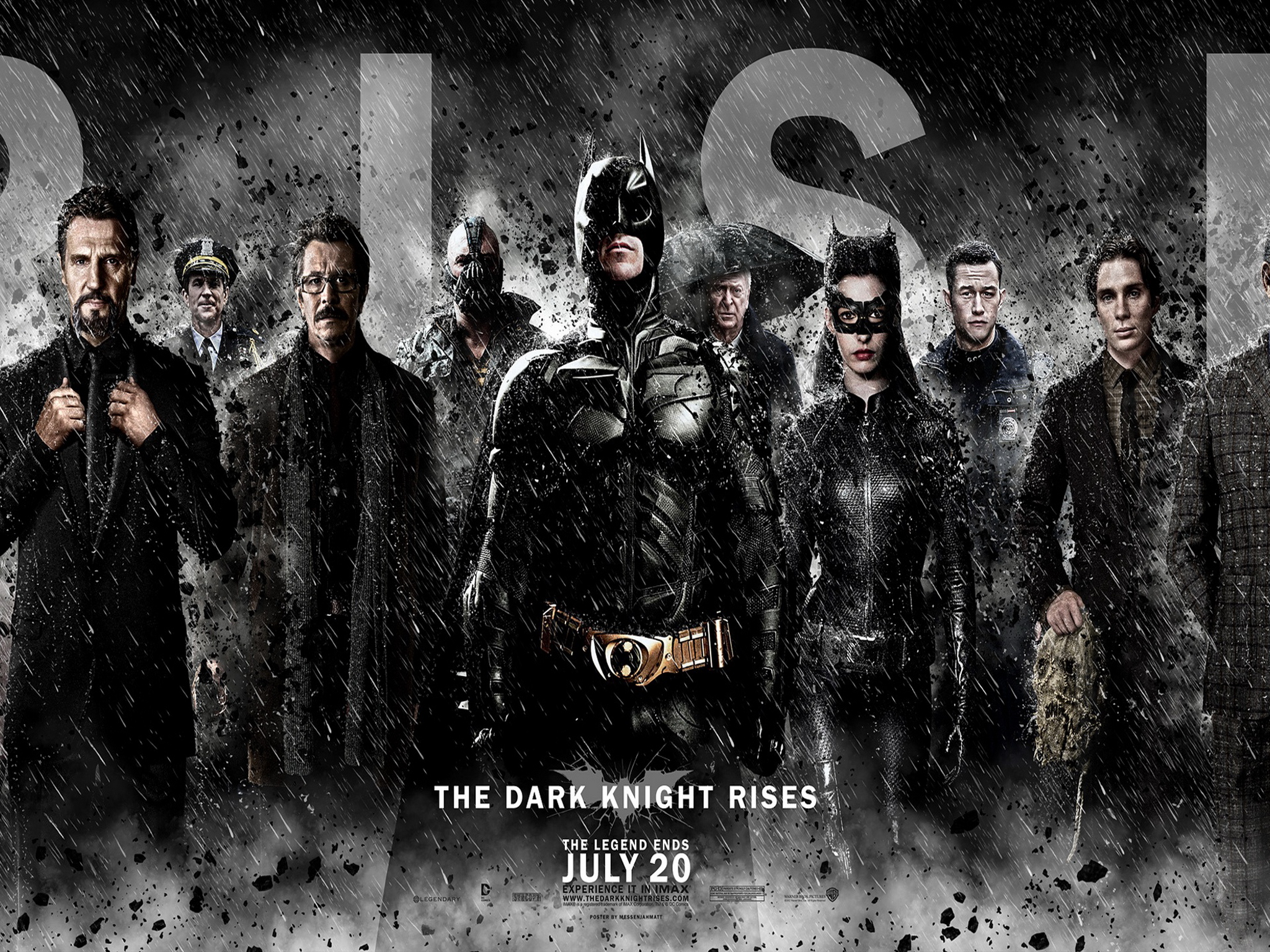
“The Dark Knight Rises”- A Christian Reflection
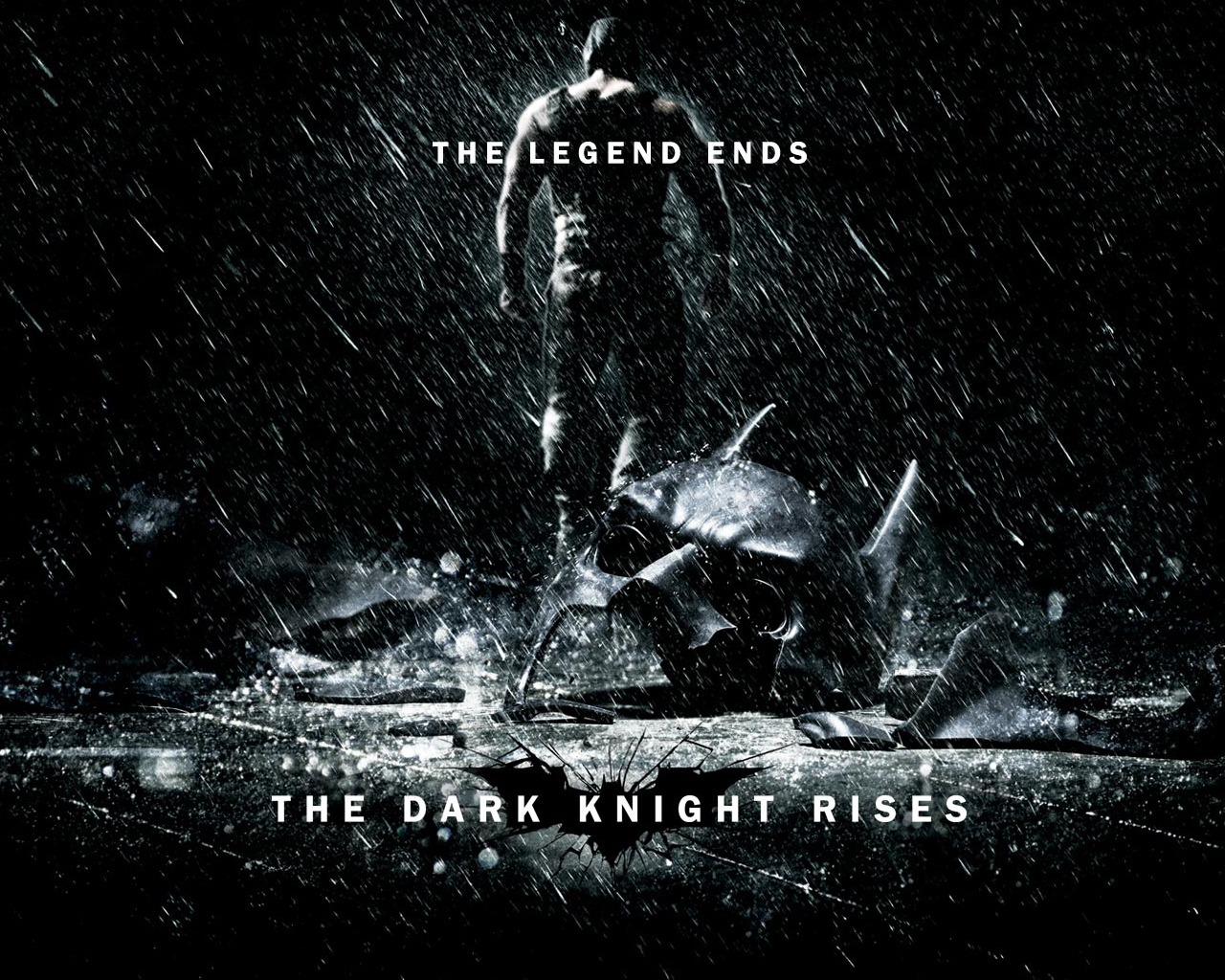 The epic tale begun with Batman Begins


Here’s the last warning: THERE ARE SPOILERS HERE. BIG ONES.
I’m going to eschew giving a plot summary because what I want to contribute to the conversation is a discussion on the themes. If you don’t feel like bothering with the movie, it would be good to at least know about the plot before reading this post. Check here for a brief summary.
Faith
Throughout the movie I kept noticing faith as a major theme. There were those who had maintained faith in a lie: Harvey Dent. Batman had taken the fall for him in The Dark Knight in order to provide Gotham with a needed hero. This faith was misplaced, and Jim Gordon, the police commissioner of Gotham City, almost destroyed himself keeping it inside himself. He said, at one point, “I knew Harvey Dent. I was his friend. And it will be a very long time before someone… Inspires us the way he did. I believed in Harvey Dent.” Yet the whole time Gordon knew he was speaking a lie. He believed in Dent, but he no longer believes in him.
Batman placed his faith in Catwoman/Selina Kyle. He firmly believed that there was more to her than the anger she continually expressed. This interplay was made more interesting by the interaction between Batman’s and Catwoman’s alter egos, Bruce Wayne and Selina Kyle. Selina Kyle, who seemed generally upset with all the rich and famous in Gotham and the decadence found therein–told the rich billionaire Bruce Wayne, “You think this can last? There’s a storm coming, Mr. Wayne. You and your friends better batten down the hatches, because when it hits, you’re all gonna wonder how you ever thought you could live so large and leave so little for the rest of us.” More on the interaction between the two later.
Alfred put his trust in Bruce Wayne. He strongly wanted Wayne to have a satisfying, fulfilling life, and throughout the film he worried that Batman would destroy Wayne. When push came to shove, Alfred was willing to leave Wayne in order to try to save him. Again, more on this later.
Finally, there were those who had faith in Batman. Batman, to them, was more than just a hero, he was a symbol of hope and justice.
One thing viewers should note is that the use of “faith” in The Dark Knight Rises is not some kind of hack definition. It doesn’t mean “belief in the face of insurmountable evidence to the contrary” or “belief in something you know ain’t true.” Instead, faith in the movie is faith in–a trusting faith based on evidence. Those who believed in Harvey Dent were mistaken, but that wasn’t due to evidence, it was active deception. Batman’s faith in Selina Kyle was firmly based on his ability to read her character. Others’ faith in Batman was based upon either a personal knowledge of the secret (Gordon) or knowledge of his actions as Batman (John Blake, others). It is very similar to the faith of the Christian, which is based upon knowledge.
 Rise
Rise
The most obvious theme in the movie was that of “arising.” Bruce Wayne had to overcome his doubts, fears, and become something greater. Yet he had to rely on others to build this journey. The knowledge of his fellow prisoners in ‘the pit’–a prison into which people were thrown, but could climb out. Only one had ever managed it, however, and that was Ra’s Al Ghul’s daughter, who had subsequently saved Bane. Ironically, then, the rise of his enemies forced the Dark Knight to meet their challenge. He had to transcend his limits and become that which Gotham needed in order to save it.
Yet Batman/Wayne wasn’t the only one who rose in the movie. Selina Kyle also experienced a major transition. As a character, she was initially powerfully motivated by anger and a desire to escape. She was portrayed as being very frustrated and angry with the social imbalance of the world and determined to not only try to balance it–in her favor, of course–but also to punish those who made it so imbalanced. When Batman returns to Gotham after his exile by Bane, he confronts Selina. He points out that the storm she predicted earlier has hit, and it doesn’t seem like it was what she wanted. Still, however, she seems determined to be in it all for herself. Yet ultimately she comes back to fight with the Dark Knight against the evil powers that are trying to destroy Gotham. In the end, she does manage to rise, with the guidance and help of Bruce Wayne/Batman.
John Blake–the incorruptible cop–also rose. It is revealed shortly before the film’s end that he is Robin–and that he is about to take up the cowl of Batman, to become the symbol for Gotham. Here, I sensed a feeling of fulfillment. We encourage others to walk in our shoes and left them up when they are down. Without Batman, Blake would not have survived. Yet he goes on to [presumably] become the next Batman, to save others.
Corruption
The world is not all sunshine and daisies. The world is full of corruption and sin. Interestingly, The Dark Knight Rises has much less corruption on the part of the police force than the previous movies. The turn was a noticeable, perceptible shift. As far as the plot goes, I wonder if any of that was due to the “Dent Act” which effectively ended organized crime in Gotham. Despite the relative “cleanness” of the police force, however, there was plenty of corruption to go around. Once Bane overthrows the city, there are “people’s courts” where “justice” is dole out on those already deemed guilty. The prisons are ripped open due to the lie [Harvey Dent] that many were imprisoned by. One wonders, how much of this is justice? Is any of what Bane says true?
Furthermore, it is a powerful reminder of the human condition. Given the chance to rule themselves, Gotham erupted into violence and brutality. It is little wonder that this should happen, given a Christian worldview, because all are sinful and need grace. All deserve justice.
Justice and Freedom
Is there justice? Was Batman just in continuing his adventures as the Caped Crusader? Is violence ever a justifiable means to an end?
Within Christianity there is a long history–traceable to Augustine, at least–of the concept of a “Just War.” There will be much debate over whether the actions of someone like Batman could be justified. Is it ever permissible to take justice into one’s own hands? I leave the question open.
Yet more important questions loom. What is justice? Who is to determine it?
One wonders what worldview could plug these holes that continue to open as human nature is probed by director Christopher Nolan throughout the Batman Trilogy. From the irrational desire to cause fear and anarchy of Scarecrow to the anarchist nihilism of the Joker to the over-reactive retribution of Bane, Nolan has exposed viewers to the depths of human freedom. What price, freedom? Bane tells Gotham he has set them free, yet he has truly imprisoned them by their own nature. What occurs is a vivid portrayal of human nature and destruction.
 Christian Threads- Redemption and Cleansing
I can’t help but think of Bruce Wayne’s ascension from the pit to the chants of “rise” without thinking of the Christian faith. We sinners are in our own pits of sin. Yet just as Wayne we have a very real lifeline. Yes, Bruce Wayne shunned the physical lifeline, but he clung to an idea: he clung to faith. Similarly, the Christian shuns the physical realm and is saved by faith. Rise.
There is the notion of a “clean slate.” Selina Kyle is primarily motivated by her desire to have such a clean slate. She wants to start over. Batman offers it as a tantalizing price to pay for her help in the final battle. Yet in the end, Selina comes back and redeems herself more than was required by the Bat. At the end of the movie, however, it is revealed that both Bruce Wayne and Selina Kyle have managed to use the “clean slate.” They have started afresh. Again, a Christian allegory or overlay could be applied here. We are all sinners in search of a clean slate, yet we cannot provide it for ourselves. While have no nearly-magical technology to give us a clean slate, we do have salvation by grace through faith. And that, my friends, is something worth considering.
Finally, Wayne’s “rise” coincides with the need I described earlier. The fact that enemies had arisen meant that Batman had to also rise to the challenge. Christians know that once sin came into the world, the only way to cure it would be for God to come into the flesh to save us. Such is poignantly portrayed when Jim Gordon talked to John Blake. Gordon talks about the evils of Gotham and describes how Batman transcends the filth, but he “puts his hands into the filth [with us]” [I believe he says filth, but I have a suspicion it may have been muck–correct me if I’m wrong here]. Wayne, though having no obligation to these people, still loves Gotham, and he is willing to condescend to get his hands dirty–to put his hands into the filthy muck and dirty them in order to save it. Is it an allegory? It certainly works as one. Jesus is God incarnate. A God who loved His creatures so much that He was willing to become one of them–to put his hands into the filth and reach down to save us. Just as Batman did what was necessary to save while also dealing justice, Christ did what was necessary in order to save humanity from its own sin. The Son Rises.
Links
Check out more of my reflections on movies. If you liked The Dark Knight Rises, check out my look at The Avengers.
SDG.
——
The preceding post is the property of J.W. Wartick (apart from citations, which are the property of their respective owners) and should not be reproduced in part or in whole without the expressed consent of the author. All content on this site is the property of J.W. Wartick and is made available for individual and personal usage. If you cite from these documents, whether for personal or professional purposes, please give appropriate citation with both the name of the author (J.W. Wartick) and a link to the original URL. If you’d like to repost a post, you may do so, provided you show less than half of the original post on your own site and link to the original post for the rest. You must also appropriately cite the post as noted above. This blog is protected by Creative Commons licensing. By viewing any part of this site, you are agreeing to this usage policy.

 J.W. Wartick - Reconstructing Faith