Karl Barth
Is Natural Theology Excluded for Apologetics? – Sunday Quote!+
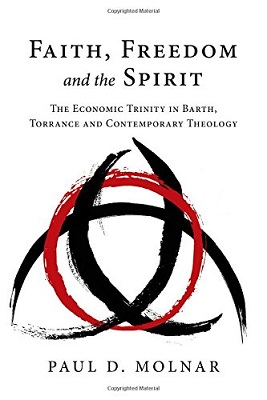 Here’s a special edition Sunday Quote which features a more extended discussion. Let me know what you think in the comments.
Is Natural Theology Excluded for Apologetics?
Paul Molnar’s Faith, Freedom and the Spirit 
If contemporary theologians were to make explicit the role of the Holy Spirit in enabling our knowledge of the triune God, then there could be wide agreement that natural theology of whatever stripe is not only unhelpful but is directly excluded from any serious understanding of theological epistemology. (82)
Now, “natural theology” is, according to Justo Gonzalez’s Essential Theological Terms, “A theology that claims to be based on the natural gifts of the human mind, and on the ‘general revelation’ granted to all… rather than on a ‘special revelation’ in Scripture or Jesus Christ” (118). Natural theology, that is, is the attempt to show that God exists and certain other truths through looking at the world. From this quote, it seems that Molnar is arguing that if we had a better notion of the role of the Holy Spirit, we would basically think that natural theology is worthless related to knowledge of God.
Molnar develops this notion further throughout the next 50 pages or so. His argument basically is that if we acknowledge that it is the Holy Spirit who enables faith and knowledge of God, then any “knowledge” of God which is not directly through faith (i.e. through something like a cosmological argument) is not objective knowledge of God.
Although some of what Molnar argues resonates with me–particularly the notion that the Holy Spirit is the one who imparts faith rather than it being some kind of choice we make–I think that his dismissal of natural theology is unnecessary and mistaken. First, the most obvious question to be asked is whether the Spirit can use natural theology to create faith. If it is the case that the Holy Spirit can work through natural theology–something which seems to be clearly correct to me–then the objection that natural theology ignores the role of the Spirit is mistaken.
Second, Molnar’s argument seems to rely on a concept of natural theology which is entirely about trying to impart knowledge of God to those who do not have faith. This, however, ignores the use of apologetics in strengthening the faith of believers. Natural theology can be a valuable tool for those who have faith to pursue the call of 1 Peter 3:15 and have a reason for the hope within them. Whatever one’s view of whether natural theology can bring people to the true God, it seems that it can and should be used for believers to explore the natural world and bolster their faith.
Third and finally, it seems to me that Romans 1 in particular demonstrates that natural theology is not a worthless project. If God’s invisible attributes are capable of being discovered in the things God has made, then surely natural theology has some value in tracing God’s handiwork.
Should we think that natural theology is a failed project? Can it have other uses like those I listed? Is it possible to go from God to Christ? What of the role of the Spirit in apologetics?
Faith, Freedom and the Spirit
Links
Be sure to check out the page for this site on Facebook and Twitter for discussion of posts, links to other pages of interest, random talk about theology/philosophy/apologetics/movies and more!
Sunday Quote– If you want to read more Sunday Quotes and join the discussion, check them out! (Scroll down for more)
Source
Paul D. Molnar, Faith, Freedom and the Spirit (Downers Grove, IL: InterVarsity, 2015).
SDG.
——
The preceding post is the property of J.W. Wartick (apart from quotations, which are the property of their respective owners, and works of art as credited; images are often freely available to the public and J.W. Wartick makes no claims of owning rights to the images unless he makes that explicit) and should not be reproduced in part or in whole without the expressed consent of the author. All content on this site is the property of J.W. Wartick and is made available for individual and personal usage. If you cite from these documents, whether for personal or professional purposes, please give appropriate citation with both the name of the author (J.W. Wartick) and a link to the original URL. If you’d like to repost a post, you may do so, provided you show less than half of the original post on your own site and link to the original post for the rest. You must also appropriately cite the post as noted above. This blog is protected by Creative Commons licensing. By viewing any part of this site, you are agreeing to this usage policy.
Book Review: “Theology’s Epistemological Dilemma: How Karl Barth and Alvin Plantinga Provide a Unified Response” by Kevin Diller
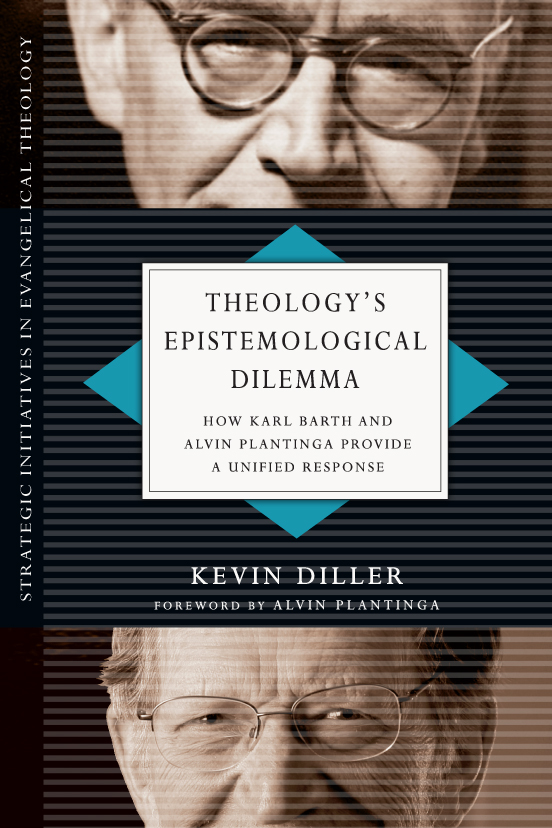 Kevin Diller’s Theology’s Epistemological Dilemma: How Karl Barth and Alvin Plantinga Provide a Unified Response
Diller first goes deeper into the epistemological problem, then analyzes Barth’s view of revelation and his theological epistemology, and wraps up the first part of the book with a deep look at Plantinga’s concept of warrant and how it may impact the question of theological epistemology. He puts forward a consistent interpretation that allows for a unified perspective of Barth’s and Plantinga’s thought. The second part focuses on this unified perspective and puts it forward in analysis of natural theology, human knowledge of God, and Scripture.
Such a brief summary of contents does not do justice to the broad scale of the book, which touches upon many different topics of importance, while always remaining centered on the question of knowledge in theology. Diller has thoughtfully brought forth key aspects of the thoughts of both Barth and Plantinga in such a way as to demand reflection from both philosophers and theologians.
Some of the most interesting insights come from Diller’s integration of Barth’s concept of revelation with Plantinga’s concept of warrant. By focusing on God as self-revealing and self-attesting (Barth), believers are able to maintain warrant in their knowledge of theology (Plantinga).
Another area of profound interest is the way that both Barth and Plantinga approach natural theology–they largely argue that it cannot succeed in its end goal–to demonstrate the existence of God. Barth’s thought reflects this because God will necessarily be hidden from unaided human reason, while Plantinga argues that the arguments of natural theology are part of but do not ground warrant for belief in God. This latter section has much to reflect upon for one who, like me, thinks natural theology can be largely successful.
Theology’s Epistemological Dilemma is a superb, worthwhile read for anyone with interest in the questions of how we may have knowledge within the worldview of Christianity. I highly commend it to my readers.
Disclaimer: I received a review copy of the book through InterVarsity Press. I was not obligated by the publisher to give any specific type of feedback whatsoever.
Source
Kevin Diller, Theology’s Epistemological Dilemma: How Karl Barth and Alvin Plantinga Provide a Unified Response
Links
Be sure to check out the page for this site on Facebook and Twitter for discussion of posts, links to other pages of interest, random talk about theology/philosophy/apologetics/movies and more.
SDG.
——
The preceding post is the property of J.W. Wartick (apart from quotations, which are the property of their respective owners, and works of art as credited; images are often freely available to the public and J.W. Wartick makes no claims of owning rights to the images unless he makes that explicit) and should not be reproduced in part or in whole without the expressed consent of the author. All content on this site is the property of J.W. Wartick and is made available for individual and personal usage. If you cite from these documents, whether for personal or professional purposes, please give appropriate citation with both the name of the author (J.W. Wartick) and a link to the original URL. If you’d like to repost a post, you may do so, provided you show less than half of the original post on your own site and link to the original post for the rest. You must also appropriately cite the post as noted above. This blog is protected by Creative Commons licensing. By viewing any part of this site, you are agreeing to this usage policy.

 J.W. Wartick - Reconstructing Faith