life on other planets
Alien Life: Theological reflections on life on other planets
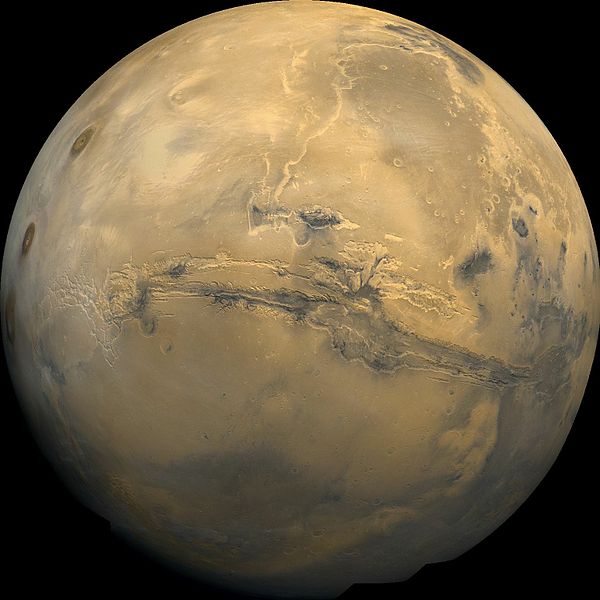 I have two general beliefs/feelings when it comes to life on other planets which are in conflict. Part of me is extremely skeptical. The probability of their being life on other planets given the extremely precise conditions needed to sustain life is exceedingly, vanishingly, absurdly low. Sure, there are unimaginably numerous planets in our universe, any number of which may be earthlike, but I just do not see why we should think that life is inevitable or even likely. On the other hand another part of me thinks that God could just as easily have brought life forth in various places throughout the universe, utilizing it much like an artist uses a tapestry. Our universe could be teeming with life, just waiting to be discovered.
Reading a couple books recently, along with the recent exploration of Mars, have turned me to reflect on the implications of life on other planets for Christian theology. One book, Vast Universe [link at bottom of post], was on Christian theology of life on other planets. Here, I shall be setting aside my extreme skepticism about life “out there.” Instead, I shall consider the following statement: “If there is other life in the universe, what does that mean for Christian theology?”
Science and Christianity
The topic is so oft-discussed that I will not dedicate too much time to it. What would the discovery of life ‘out there’ do for science and Christianity?
I think that Christian theology already has the resources built in it to adapt itself to life on other planets. Although some would be disturbed by such a possibility or reality, I do not see how such a discovery would be damaging to Christianity as a whole. The real problem would lie with those willing to abuse the text of the Bible in order to try to make it say there is no possibility of life outside of Earth or that our planet is the focal point of all creation. Theologies which take such a path those would indeed suffer greatly.
Humanity’s Place in the Universe
The discovery of life on other planets would almost certainly remove the notion that humanity is some kind of privileged being in this universe. It was not all created by God for us. What would that mean for Christian theology?
Again, I do not think this would be very damaging. Although the notion that humanity has a special place in the universe has a traceable line throughout the history of Christian theology, it is hardly a necessary component. In fact, life on other planets would be a great illustration of another thread of Christian theology: the notion of God as a cosmic artist who delights in creation. On this view, God takes such pleasure in the creation of and interaction with various living species that He caused them to arise across the universe. Furthermore, our discovery of these other living creatures could be a reflection of His providence, having set up the world in such a way that we could discover other life and marvel at His creation.
Salvation
What about salvation on other planets? Did Jesus go to other planets in His incarnate form and save them as a human? Was there more than one crucifixion? Thomas O’Meara, in the book I mentioned above, reflects upon questions just like these. He argues that “All three persons can become incarnate because incarnation is one aspect of boundless divine power… The divine motive for fashioning a universe of galaxies is God’s goodness; the same motive brings incarnation” (47, cited below). He establishes the notion of more than one incarnation as a live option throughout Christian history (63ff).
It therefore seems as though other life in the universe would not destroy God’s salvation plan. The Bible tells us about God’s salvation history for humanity. We know God is good, and we therefore know that God would providentially interact with other beings at their own levels and needs.
Finally, one thoughtful reader pointed out to me one area I had forgotten to add in here. There is the possibility that if there are aliens, then they have not fallen. Perhaps they have lived in communion with God instead of in rebellion against God. The possibility is very real, and must be considered in this kind of speculative theology. Such aliens would possibly be corrupted by meeting humanity; but they may also have much to teach us. As O’Meara notes, they may be some kind of “Star Mentors” with spiritual insights we may miss in our fallen state.
 The Sentient Alien and other faiths
What kind of challenge would a sentient alien present to Christianity? What of their faith, their religion?
As far as other sentient species’ religions, I think that Christianity could interact with them in the same way that Christian theology has considered other human faiths. Seek truth where truth exists, and critique where it is untrue. (For my fuller vision of world religions, check out my post on A Vision for Christian Apologetics to World Religions.)
Some could even argue that a Christian interaction with other sentient races should be open to their own incarnations and truth in their religion as revealed by God. What of an alien Bible? Again, it seems that a good God, as we know God is, would interact with all life in a way that reflects His omnibenevolent nature. God’s providence would extend to life across the whole universe.
Alleged Disproofs
Would life on other planets somehow discredit Christianity? What of panspermia? How should we treat the discovery of life in the universe, were it to happen?
The Bible does not seem to make any kind of statement about life outside of our planet. However, it does make it clear that there is a spiritual realm of angels and demons. Thus, there is at least life outside of our easily accessible realm. No verse in the Bible states that there is no life elsewhere in the universe. It seems that the possibility is certainly open.
Furthermore, I don’t see any reason to think that life on other planets would somehow justify belief in panspermia or some other pseudo-scientific explanation of the spread and origins of life. We would have to deal with the same questions about life on other planets that we must deal with on our own.
Created life and the universe
Overall, I think that as a purely rational standpoint there is reason for immense skepticism about life on other planets. Although many express optimism and point to the sheer volume of planets in our universe as somehow necessitating life elsewhere, I am not convinced that sheer numbers somehow increase the likelihood of life on other planets. To put it plainly, it is my opinion that the only rational way to hope for life elsewhere in our universe is to conjoin that hope with belief in a God who loves creating and interacting with created life.
A final disclaimer
I realize that many of the points I wrote about in this post are likely to be extremely contentious. What I want to say is that this has been an exercise in speculative theology. I have been writing about something which is a mere possibility and offering possible answers to a number of questions from a perspective which takes this possibility seriously. I am quite possibly wrong on any of these. What I have tried to do here is offer a number of things for Christians to think about when they consider life on other planets. For a great post on the possibility of life on other planets, check out this guest post by Greg Reeves on that very topic.
Source
Thomas O’Meara, Vast Universe
SDG.
——
The preceding post is the property of J.W. Wartick (apart from citations, which are the property of their respective owners, and works of art as credited) and should not be reproduced in part or in whole without the expressed consent of the author. All content on this site is the property of J.W. Wartick and is made available for individual and personal usage. If you cite from these documents, whether for personal or professional purposes, please give appropriate citation with both the name of the author (J.W. Wartick) and a link to the original URL. If you’d like to repost a post, you may do so, provided you show less than half of the original post on your own site and link to the original post for the rest. You must also appropriately cite the post as noted above. This blog is protected by Creative Commons licensing. By viewing any part of this site, you are agreeing to this usage policy.
Guest Post: “Is There Life on Other Planets?” by Greg Reeves
 If you’ve been reading the science news lately, you’ll find there has been a lot of buzz about “extrasolar planets”, or “exoplanets” (i.e., planets that orbit other stars). For an example, see here. The reason why is in the last several years, the number of exoplanets that we’ve discovered has increased dramatically, mostly due to the Kepler mission. But regardless of the reason why, one interesting question this brings up is, “Are there other planets that host life?”
This is an incredibly profound question for both the religious and non-religious alike. For the Christian, the knee-jerk reaction might be “no, of course not, God specially created the life on earth and did not do so elsewhere.” (By the way, I do not necessarily espouse this view.) For the secularist, the presence of life on other planets only adds weight to the idea that life arose here on earth by strictly naturalistic processes. So what does science have to say about this subject? Given the sensationalistic popular news articles, one might think the universe is teeming with alien life. However, the data actually say otherwise.
First, answering the origin of life question, from a scientific standpoint, is incredibly hard. In fact, after investigating the state of affairs on this problem in order to write a book, it has driven agnostic physicist Paul Davies to proclaim1:
When I set out to write this book, I was convinced that science was close to wrapping up the mystery of life’s origin…Having spend a year or two researching the field, I am now of the opinion that there remains a huge gulf in our understanding…This gulf’s not merely ignorance about certain technical details, it is a major conceptual lacuna.
He goes on to say:
Many investigators feel uneasy about stating in public that the origin of life is a mystery, even though behind closed doors they freely admit that they are baffled. There are two reasons for their unease. First they feel it opens the door to religious fundamentalists…Second, they worry that a frank admission of ignorance will undermine funding…
Second, even though it is a conceptually difficult phenomenon to study, scientists are incredibly confident that it will be resolved one day. The main reason why is that the alternative to having a naturalistic origin of life would be a supernaturalistic origin of life, something that most secular scientists not only do not believe in but also that they rule out completely according to their philosophical worldview.
Third, we now know that life on our planet originated in a geological instant. As soon as this planet became even remotely suitable for life, roughly 3.9-3.8 billion years ago, life began (our earliest evidence for life is between 3.86 and 3.80 billion years ago). To the secular scientist, this implies that even though we have no idea how, the origin of life must be a very simple, fast process.
Fourth, because the origin of life is simple and fast, it probably is not a finely-tuned process, according to the reasoning of secularism. In other words, all you need are some minimal requirements (liquid water, a rocky planet, some carbon-containing compounds, and a short window of time) and life will surely appear. This principle led astronomer Steve Vogt, upon discovery of a rocky exoplanet in the “Goldilocks zone” (the distance from their star that would allow a planet to potentially harbor liquid water), to state, “The chances for life on this planet are 100 percent.” (As an interesting sidenote, the particular planet he was referring to may not even be a planet. Of course, we are still discovering exo-planets, and I have been confident for some time that we would find a near-earth-sized rocky planet in the Goldilocks zone. And lo and behold, we have. For examples, see here and here.)
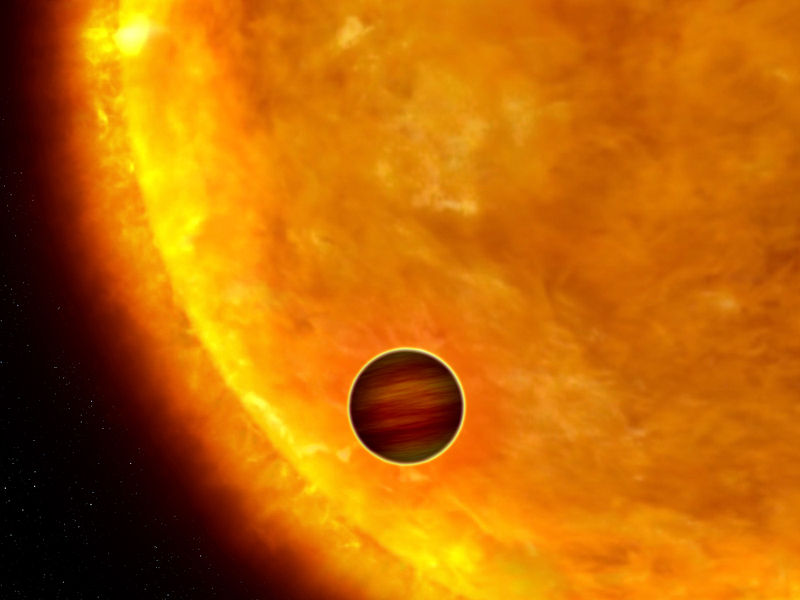 So, given this background, is it likely that such “Goldilocks planets”, which are likely to be all over the place in the universe, harbor life? Well, there are two sides to this story. As I laid out above, the popular secular point of view (and the point of view portrayed by the media) is that life is inevitable whenever loose conditions are met (background point four). So of course, whenever you have a planet in the Goldilocks zone, life is inevitable. This view springs solely from the assumption of naturalism (background point 2) and the fact that life arose on earth quickly (background point 3). You can easily see this point of view when reading the popular news articles, which are overflowing with unbridled optimism.
The other view is that life is rare in the universe, because all of the prowess of the origin-of-life scientific community has returned a comparatively small amount of promising data (background point 1). In fact, not only has little actual progress been made towards discovering naturalistic pathways towards origin of life, but instead the more we know the more we discover how far away we are. Problems such as the lack of a prebiotic soup, the irreducible complexity of life, the homochirality problem (all bio-molecules must be either 100% right-handed or 100% left-handed), the difficulty in producing a cell membrane, and the finely-tuned conditions needed to carry out the chemical reactions that produce biological precursors all reveal a much less optimistic story from the point of view of hard science.
The problems for the hypothesis of the naturalistic origin of life don’t stop there, however. The more we study our planet, the more we realize that an exoplanet needs a lot more going its way than just to be in the Goldilocks zone. There are a whole host of astronomical and geological parameters that must be exquisitely finely-tuned for life to (1) exist and (2) persist on a planet. The timing of the formation of the exosolar system, the location of the exosolar system within the galaxy, the type of galaxy the exosolar system is in, the elemental composition of the star and planet, and the existence of stable, long-lasting plate tectonics are just a few of the finely-tuned parameters that must be met for life to exist and thrive.
None of this is to say that we should not be investigating how life could have originated, or whether exoplanets may harbor other life forms. Indeed, if God did create the universe and life, I am convinced that these scientific disciplines will serve only to glorify Him further.
But these observations do beg the question: which is it? Is life abundant in the universe, a premise based on one data point and questionable assumptions, or is life rare, a premise based upon the empirical findings of the fields of biochemistry, organic chemistry, astronomy, and geology? It seems to me that hope springs eternal for the secular exoplanet researcher, but the hard scientific data tells another story.
1. Davies, Paul. “The Fifth Miracle: The Search for the Origin and Meaning of Life.” Simon & Schuster; 1 edition (March 16, 2000)
Dr Greg Reeves holds a PhD in Chemical Engineering from Princeton University, and is currently an assistant professor of chemical and biomolecular engineering at North Carolina State University. He is the co-director of the NC State chapter of Ratio Christi. His blog can be found at twobooksapproach.blogspot.com.

 J.W. Wartick - Reconstructing Faith