literary apologetics
Kathy Tyers’ “Firebird Trilogy” – Faith, Humanity, and Conflict in the Far Future
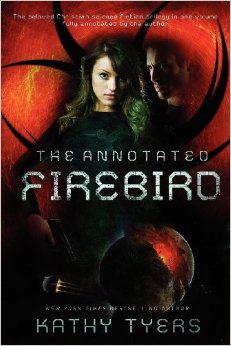
Kathy Tyers’ The Annotated Firebird
Faith in the Future
Throughout the trilogy, faith is front-and-center. The characters come from different faith backgrounds–Firebird is from a culture that worships the Nine “Powers”- essentially deified character traits; Brennan is from a people of exiles who have psychic powers and look to a coming Messiah from his line; others have no religious affiliation. This sets up a way to generate conflict among the characters but also have development.
Firebird is confronted by the notion that the “Powers” she worships are ultimately impersonal and thus seemingly without any power. Moreover, she is intrigued by a system which is not based upon what she does but rather on the grace of a Holy God. It is a struggle throughout her conversion to accept this notion–that she herself does not need to do anything to earn her salvation. Her path of faith is one that is extremely interesting because it shows how the Christian worldview can come into dialogue with other religious traditions on a number of levels–on the level of salvation/soteriology; on the level of deity; and on many other levels.
Brennan’s walk of faith is quite different as he was raised a believer. His character’s viewpoint is filled with brief prayers to the “Singer”–a primary name for deity in the book. These asides never throw off the pace of the book but rather offer ways for the readers to engage in the genuine faith of the characters therein. It’s also a call to believers to take their own faith lives more seriously. How often do we offer a brief prayer over some issue or of thanks throughout the day? How might we integrate our faith better in our daily walk?
Overall, the picture of faith in the Firebird trilogy is one that expects truth in religious belief as well as evidence, confronts rival views in a compassionate way, and is lived out.
Humans who are “Waste”?
Another major theme in the trilogy is that of human lives and the way they are often deemed waste. Firebird’s society is run by a monarchy and nobility which dominates all life and expects to be viewed as ruling with divine right. This is used as an excuse for devaluing the lower classes. Moreover, Firebird herself is considered a “Wastling”- one who is far enough back in succession that they are dedicated to serve until they die in combat or commit an ordered suicide because they are no longer deemed useful.
This is, of course, an unjust state of affairs. It is one that must be confronted on a systemic level, and this is only beginning when the trilogy wraps up. However, I think the reader cannot help but reflect upon the notion that in our own society, we treat some people like “wastlings” to be discarded as unneeded and unwanted. We do not value human life as we should–as created in the image of God.
Another aspect of this devaluing of life is found in the society of the Shuhr–a people who are the radical offshoot from Brennan’s own society. They practice genetic cloning and seek to make themselves immortal. The way they pursue this is through the creation and mutilation of embryos. Frankly, this disrespect of human life is little different from our own society’s, which allows for the murder of the unborn on demand. By putting this theme into science fiction, Tyers confronts our own worldview in a dramatic fashion.
Brief Autobiographical Note
Permit me a brief autobiographical aside:
I remember when I was younger–probably about 12 years old–shopping a table at a book sale that was going on in the parish hall at my church. I saw the cover of this book that looked like science fiction and reminded me of Star Wars. I had to have it! There were three of them, a trilogy! I begged my parents and with some extra chores loaded on I received the books.
I devoured them almost instantly, used Legos to try to build spaceships from them. I went to a Christian bookstore and demanded more science fiction from the author. The bewildered staff searched in vain to find anything else from Kathy Tyers. Without any more to read, I forgot the author but the trilogy entered that hallowed place of unassailable nostalgic bliss that we create in our childhood.
Then, when I saw a newly released edition with notes from the author pop up in my recommendations on Amazon, I was instantly intrigued. Lo and behold, sequels were on the way! I purchased the trilogy again, but didn’t read it, fearful I would penetrate that nostalgic bubble and perhaps discover the series wasn’t as amazing as I’d hoped. Finally, after over a year of owning the book, I opened it up, read it, and now offered this look at the series. Check out my review of the book on my other interests site.
Conclusion
The Annotated Firebird is an excellent edition to pick up in order to experience the whole Firebird trilogy. It is a series which resonates strongly with the Christian worldview, but more importantly it does so without ever compromising on the story, world-building, or characters. Tyers has created a masterpiece.
Links
Be sure to check out the page for this site on Facebook and Twitter for discussion of posts, links to other pages of interest, random talk about theology/philosophy/apologetics/movies and more!
Microview: “The Annotated Firebird Trilogy” by Kathy Tyers– I review the trilogy with a brief look at the plot and some positives and negatives in the book.
Popular Books– Check out my looks into other popular books (scroll down for more).
Source
Kathy Tyers, The Annotated Firebird
SDG.
——
The preceding post is the property of J.W. Wartick (apart from quotations, which are the property of their respective owners, and works of art as credited; images are often freely available to the public and J.W. Wartick makes no claims of owning rights to the images unless he makes that explicit) and should not be reproduced in part or in whole without the expressed consent of the author. All content on this site is the property of J.W. Wartick and is made available for individual and personal usage. If you cite from these documents, whether for personal or professional purposes, please give appropriate citation with both the name of the author (J.W. Wartick) and a link to the original URL. If you’d like to repost a post, you may do so, provided you show less than half of the original post on your own site and link to the original post for the rest. You must also appropriately cite the post as noted above. This blog is protected by Creative Commons licensing. By viewing any part of this site, you are agreeing to this usage policy.
“A Crown of Swords” and “The Path of Daggers”- A Christian Reflection on the Wheel of Time
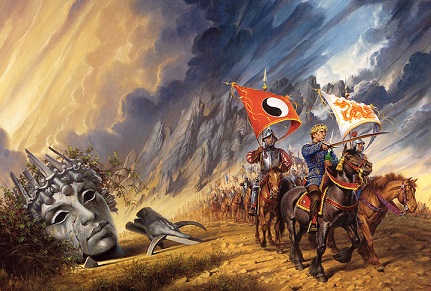 Robert Jordan’s epic fantasy series, “The Wheel of Time,” has much to reflect upon from a Christian perspective. Here, I’ll be examining books seven and eight, “A Crown of Swords” and “The Path of Daggers.” There are minor SPOILERS from both books here. Please do not share spoilers from later books for the sake of readers.
Men and Women
Throughout both books–and indeed the entire series–there is an undercurrent from many characters that “men always ____” or “women always ____.” What is interesting is that Jordan frequently flips these phrases around so that men are saying women are impossible to understand, but women then turn around and say the same about men. There is parallelism here which I believe was intentional.
The notion that there is a kind of “gender essentialism” is one which, unfortunately, is frequently pushed in Christian communities. I’m not saying at all there is no such thing as distinct genders; rather, my point is that what we conceive of as being gendered is often not the case at all. I actually found myself jarred at times when the women in the Wheel of Time novels would complain about the men being “impossible” or “gossipy”–after all, is that not what women are generally conceived as? But of course these patterns of behavior are not essential to male or female but rather aspects of personalities. Thus, it seems Jordan has a streak of feminist thought running through his works, though it is at times very subtle and even concealed. His writing speaks to the absurdity of labeling all people of one gender or the other as acting in specific, deterministic ways.
In the Service of…
Another concept which frequently occurs throughout these books is that there is complexity to relationships and loyalties particularly concerning evil or “The Dark One.” Many of the Forsaken follow after their own ends, to the point in which they frequently oppose each other, which itself seems to work against the will and ends of “The Dark One.”
Thus, it seems that for “The Wheel of Time” the service of evil is ultimately an irrational end which leads to chaos and disorder. It moves against the Pattern–the idea that there is a unity of time which continues to be woven together to make reality–and it also ultimately seeks to defeat itself just as much as it fights against the forces of the Light.
Belief, Evil, and Pragmatism
At one point in The Path of Daggers, Rand is surveying his arrayed forces and he considers their loyalty (and lack thereof). But in this considering, he notes:
they feared him [Rand] far more than they did the Aiel. Maybe more than they did the Dark One, in whom some did not really believe… (327-328)
The people, it seems, were more concerned with firmly holding their own wealth or gaining positions of authority and power than they were with the true evil which threatened the world. Unconvinced by the coming tribulation, they instead sought favor from the most powerful man in the world. The condition, it seems, is one which mirrors our own at points. Rather than being concerned with evil facing our world, or rather than fighting injustice, people are obsessed with gain that cannot be carried over across death and the grave. The true powers which threaten the world are left to expand and strengthen,while people seek their own gain.
It is a kind of pragmatism which infects us: injustice is “over there” and we are “right here,” so why be concerned with it? The notion that there is a spiritual realm with any sort of power is shrugged off, ignored, or even scorned as ancient superstition, unworthy of concern. Like the people who surround Rand in the book, we convince ourselves that evil has no power in the world and “[the Dark One”] could [not] and would [not] touch the world harder than he had already (328).
Conclusion
There is much to consider throughout the “Wheel of Time” series. Fantasy resonates with reality in sometimes tangible ways, as anyone who reads fiction frequently knows. How do you approach books from a worldview perspective? What do you think of the themes above, and what others have I not discussed from these two books?
I will be writing on later books in the series when able. Until then, I covet your thoughts!
Links
Be sure to check out the page for this site on Facebook and Twitter for discussion of posts, links to other pages of interest, random talk about theology/philosophy/apologetics/movies and more!
SDG.
——
The preceding post is the property of J.W. Wartick (apart from quotations, which are the property of their respective owners, and works of art as credited; images are often freely available to the public and J.W. Wartick makes no claims of owning rights to the images unless he makes that explicit) and should not be reproduced in part or in whole without the expressed consent of the author. All content on this site is the property of J.W. Wartick and is made available for individual and personal usage. If you cite from these documents, whether for personal or professional purposes, please give appropriate citation with both the name of the author (J.W. Wartick) and a link to the original URL. If you’d like to repost a post, you may do so, provided you show less than half of the original post on your own site and link to the original post for the rest. You must also appropriately cite the post as noted above. This blog is protected by Creative Commons licensing. By viewing any part of this site, you are agreeing to this usage policy.
“Lord of Chaos” – Robert Jordan’s “The Wheel of Time,” Book 6 and Christianity
“Humanity retreated, and the Shadow advanced.” – Robert Jordan, “Lord of Chaos,” p. 450.
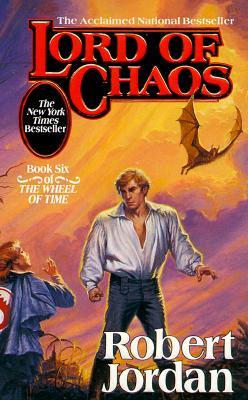
Poignant words. Robert Jordan’s epic series, The Wheel of Time, continued with book 6: Lord of Chaos. In this post, we’ll explore a couple major themes that came through in this exciting fantasy adventure. There will be SPOILERS for book 6 (and possibly those before) in this post. Please DO NOT SPOIL later books for other readers.
The Shadow
One of the strongest themes throughout the book is the pending doom of the rise of evil. Evil advanced throughout the land, and had been making advances historically throughout the region with little opposition. In our world, it seems often that evil continues to exist unchecked. The parallels are palpable as one reads the book. One scene paints this reality starkly. Rand al’Thor is looking over a number of maps:
Borders and names were enough to rank the maps by age. On the oldest [nations were butted up against each other. Then…] Maredo was gone… Caralain vanished…. other nations… eventually [became] unclaimed land and wilderness. Those maps told a story of fading since Hawkwing’s empire crumbled, of humanity in slow retreat. A second Borderland map showed… the Blightborder fifty miles further north too. Humanity retreated , and the Shadow advanced. (440-450)
These names would be unfamiliar to those who haven’t read the series, but the implication should be clear: the maps showed the steady retreat of humanity in the face of the evil forces of the “Shadow.” The picture is breathtaking: one can easily imagine a series of maps showing encroaching darkness. But beyond the mere imaginary, it seems to be a fact that humanity–true humanity–is constantly retreating from evil. The evils of human trafficking, hunger, dishonesty, abortion, and the like continue to be perpetuated, and yet humanity is more interested–much like the people of The Wheel of Time–in the everyday mundane occurrences. Those things which “don’t harm me” are ignored. If we could see a map, we could see the Shadow encroaching as well.
It’s important not to completely focus on doom and gloom, however. In Lord of Chaos, the Dragon is Reborn, and the opportunity to defeat the Shadow is approaching. But those who know of prophecies know that this Dragon may also bring much destruction to the world. The Christian narrative presents a picture less bleak: evil is already defeated through our Lord. Final victory is inevitable.
Destruction of Life and other Injustice
The wanton destruction of life is found through much of Lord of Chaos. The forces of evil are not the only ones who are killing the innocent, however. Even those who call themselves the “Children of Light” bring about much evil through their actions. One scene which illustrates this is found in the way that a “Child of the Light” decided to deal with those who had sworn to the Dragon–the coming defender of the world:
He had managed to kill some of [the Dragonsworn], at least, though it was hard fighting foes who melted away more often than they stood, who could blend into the accursed streams of refugees… He had found a solution, however… The roads behind his legion were littered now, and the ravens fed to bursting. If it was not possible to tell the Prophet’s trash from refugee trash, well then, kill whoever clogged the way. The innocent should have remained in their homes where they belonged; the Creator would shelter them anyway. (611)
There is much injustice in this passage. First, the victims are blamed for their destruction: the reasoning is that they brought it upon themselves. Unfortunately, reasoning like this is frequently found today when people comment on various tragedies. We should not blame the victims, but rather go to their aid. Second, there is a kind of notion that “the Creator” (God?) would be pleased with this destruction, or at least could not be bothered to intervene. Again, this kind of reasoning is sometimes mentioned: God will sort them out, why bother with the possible consequences of bombing targets in civilian zones? Why deal with the plight of the refugee? Third, this plight of the refugee is found throughout the book. What of those who have been displaced by violence and war? In the book, it is actually Rand al’Thor who is the one who cares most about them. In our world, it should be the Christian who rushes to aid the defenseless.
Prophecy
The world of “The Wheel of Time” continues to be deeply steeped in fulfilled prophecy–whether coming fulfillment or already culminated. The emphasis on prophecy plays into the notion in Jordan’s world that there is a “Wheel of Time” which leads to a kind of cyclical universe model.
For our purposes, it is worth simply considering the notion that prophecies may have unexpected fulfillment. Rand does not always meet the prophecies of the Dragon in expected ways. Similarly, the way that some prophecies about the Messiah were fulfilled is not the way that many at the time (or now) expected.
Onward!
We have seen that Lord of Chaos brings up a number of interesting themes. From here, we shall move onward into more books in the series. What are your thoughts on these themes? Do you have any other major themes you can think of as being found within the series? Remember- no spoilers for later books!
Links
Be sure to check out the page for this site on Facebook and Twitter for discussion of posts, links to other pages of interest, random talk about theology/philosophy/apologetics/movies and more!
SDG.
——
The preceding post is the property of J.W. Wartick (apart from quotations, which are the property of their respective owners, and works of art as credited; images are often freely available to the public and J.W. Wartick makes no claims of owning rights to the images unless he makes that explicit) and should not be reproduced in part or in whole without the expressed consent of the author. All content on this site is the property of J.W. Wartick and is made available for individual and personal usage. If you cite from these documents, whether for personal or professional purposes, please give appropriate citation with both the name of the author (J.W. Wartick) and a link to the original URL. If you’d like to repost a post, you may do so, provided you show less than half of the original post on your own site and link to the original post for the rest. You must also appropriately cite the post as noted above. This blog is protected by Creative Commons licensing. By viewing any part of this site, you are agreeing to this usage policy.
Honoring Giftedness- Women in David Weber’s science fiction
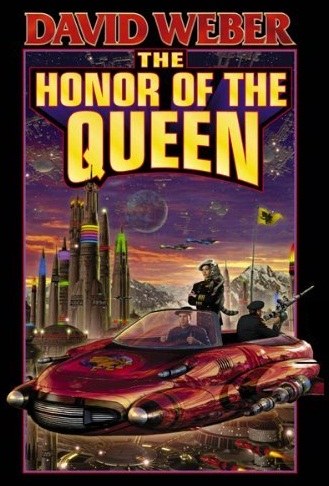 David Weber is the author of a few New York Times Bestselling science fiction series. One, the Honor Harrington series, follows a woman who starts off as a captain of a starship sent on routine (and initially boring) missions. The second book in the series, The Honor of the Queen
The two nations are complementarian in nature. Complementarianism is the theological belief that men and women are “complementary” in roles, which means that men should be in charge in the church and home. I have discussed it and the rival view that women should be ordained/treated as equals (egalitarianism) at length elsewhere [scroll down to see other posts].
What really struck me is that David Weber fairly presented firm theistic believers as a spectrum. In the future, the Christian Church has continued to reform and have splinter groups form because of this. Weber’s presentation of the issue showed that believers–even some who might be considered extreme–can be reasoned with and even persuaded to believe differently based upon evidence. Furthermore, he showed that even those who may line up on the side with which he disagrees are not all (or even mostly) blinded by faith or foolishness. Rather, although there are some truly evil and disillusioned people, Weber shows that many are capable of changing their position or at least acknowledging that rival views are worth consideration.
The most vivid portrayal of this theme is found in a conversation between Admiral Courvosier and Admiral Yakanov. Courvosier is from the same nation as Honor Harrington and wholly endorses his female officer in a position of command. They discuss Captain Honor Harrington:
[Yanakov responds to Courvosier’s question about his society’s reaction to Honor]: “If Captain Harrington is as outstanding an officer as you believe–as I believe–she invalidates all our concepts of womanhood. She means we’re wrong, that our religion is wrong. She means we’ve spent nine centuries being wrong… I think we can admit our error, in time. Not easily… but I believe we can do it.”
“Yet if we do[” Yanakov continues, “]what happens to Grayson [Yanakov’s world]? You’ve met two of my wives. I love all three of them dearly… but your Captain Harrington, just by existing, tells me I’ve made them less than they could have been… Less capable of her independence, her ability to accept responsibility and risk… How do I know where my doubts over their capability stop being genuine love and concern?” (96, cited below)
The exchange is characteristic of the way Grayson’s people are treated throughout the book. They are real people, capable of interacting with other views in honest ways. They feel challenged by a view contrary to their own. Some react poorly, and there are extremists who are blinded by hatred and anger. Yet all of them are treated as people with real concerns shaped by their upbringing and backgrounds.
Honor Harrington ends up saving Grayson, and at the end of the book, she is commended by the rulers of that planet. She talks to the “Protector” [read: king/president] of Grayson:
“You see,” [said the Protector] “we need you.”
“Need me, Sir?” [Responded Honor]
“Yes, Grayson faces tremendous changes… You’ll be the first woman in our history to hold land… and we need you as a model–and a challenge–as we bring our women fully into our society.” (419)
Weber thus allows for even ardent supporters of specific religious backgrounds to respond to reasoned argument and to change. They are capable of interacting on a human level and deserve every bit of respect as those who disagree with them. Again, there are those who are radicals and will not be reasoned with, but they are the minority and they do not win out.
The dialogue presented in this book provides some interesting insight into facets of the present dialogue between complementarians and egalitarians. David Weber’s fictional character presented a challenge to the Grayson’s notions of what it meant to be a woman by being an excellent officer and professional. There are, it seems, real “Honor Harringtons” out there, challenging preconceived notions of what it is to be a woman. When, for example, a woman takes on the role of leadership in the church and succeeds, that should not be dismissed as a fluke, but rather a challenge to a paradigm which may itself be undercutting women’s ability to succeed.
On a personal note, I have been challenged in exactly this way. When I was younger, I was a complementarian and was confronted by a woman who destroyed my presuppositions about what a woman “could do” spiritually. She showed that she could be a leader and present Christ to all without having to fit into role I defined for her. This real challenge caused me to realize that my notions of what a woman “should be” were themselves social constructs, not anything derived from the Bible. Like Yanakov, I had to rethink what my words and actions had done to perhaps limit the women around me. By God’s grace, this woman’s very existence forced me to rethink what I had assumed as truth and go back to God’s word to see where I had gone wrong.
David Weber’s own presentation of Honor Harrington as a paradigm-shattering woman is something that hits close to home for me. For you, dear reader, I think it is worth considering the same: who has challenged your view of what they are “supposed to be”? Is your view of someone’s giftedness directly drawn from the Bible or is it something that you’ve just always assumed? As for me, I think we need more Honor Harringtons in our lives.
Links
Be sure to check out the page for this site on Facebook and Twitter for discussion of posts, links to other pages of interest, random talk about theology/philosophy/apologetics/movies and more!
Check out my posts on egalitarianism (scroll down for more).
Source
David Weber, The Honor of the Queen
SDG.
——
The preceding post is the property of J.W. Wartick (apart from quotations, which are the property of their respective owners, and works of art as credited; images are often freely available to the public and J.W. Wartick makes no claims of owning rights to the images unless he makes that explicit) and should not be reproduced in part or in whole without the expressed consent of the author. All content on this site is the property of J.W. Wartick and is made available for individual and personal usage. If you cite from these documents, whether for personal or professional purposes, please give appropriate citation with both the name of the author (J.W. Wartick) and a link to the original URL. If you’d like to repost a post, you may do so, provided you show less than half of the original post on your own site and link to the original post for the rest. You must also appropriately cite the post as noted above. This blog is protected by Creative Commons licensing. By viewing any part of this site, you are agreeing to this usage policy.
Book Review: “The New Atheist Novel” by Arthur Bradley and Andrew Tate
 There are moments in which you pick up a book and are delivered into a completely unexpected and fresh-feeling experience. The New Atheist Novel: Fiction, Philosophy and Polemic after 9/11 was one such experience for me. Arthur Bradley and Andrew Tate take readers on a journey through the literature of four modern authors who, they argue, are representative of a new form of novel: the “New Atheist Novel.” This novel is a kind of counter-mythology which invents the transcendent within an atheistic universe. Bradley and Tate analyze the work of Ian McEwan, Martin Amis, Philip Pullman, and Salman Rushdie. The authors show how some have shifted their polemic after 9/11 to viewing religion as a kind of one-size-fits all mentality that has no distinction between liberalism and fundamentalism.
Bradley and Tate apply critical theory to the works of fiction presented in this book in incisive fashion. They draw out themes of the authors analyzed in order to show how often they are just as guilty of irrationality as those against whom they pontificate through the voices in their novels.
Ian McEwan’s fiction, they argue, shows a distinctly New Atheist bent. He sees religious persons as ultimately violent and anti-intellectual. Interstingly, McEewan’s vision of transcendence develops through music and the written word. His post 9/11 writings show a more distinctly anti-Islamist bent, which sees religion as a failure of the imagination. However, Tate and Bradley argue that McEwan’s imagination is itself failing in its capacity to see the radical Muslim act of terror as inherently symbolic and transcendent itself.
This kind of analysis proceeds across the authors analyzed, from Martin Amis’ cliché-filled war against cliché to Salmun Rushdie’s more even-handed but nevertheless anti-theistic vision of the “Quarrels over God.” The analysis of Philip Pullman’s work is perhaps the highest point of the work, as it shows how even in disagreement, one might learn from the “New Atheist Novel.” Pullman’s work shows the myth of the death of God as a kind of human transcendence and freedom from restraint. This vision may be seen as a sometimes on target critique of religion which sometimes becomes authoritarian and too bent towards heresy-hunting. Tate and Bradley ultimately see Pullman’s fiction as a kind of neo-heresy which is attempting to purify religion of its alleged bent towards fundamentalism and too-small vision of deity.
The book’s usefulness goes beyond simple critique. Instead, it gives readers a chance to interact with all literature in a critical fashion. Moreover, Bradley and Tate are not entirely unsympathetic to the “New Atheist Novel” and show how it may help to inform future discussions. The critical interaction is not merely critical but also constructive.
Perhaps the biggest weakness in the book is that its thesis doesn’t seem to carry throughout. The “New Atheist Novel” makes its debut with McEwan, but by the time the author’s reach Rushdie’s slightly more amiable vision of religions in conflict, it seems to lack cohesion as a concept. Perhaps it would be more accurate to say that the “New Atheist Novel” is more of an “Anti- (or Alter-) Theistic Novel” which encompasses not mere anger against religion but rather a critical and sometimes polemical and mistaken vision of the “religious other.” Thus, it seems in the end the “New Atheist Novel” namenclature might not be inaccurate after all, but I tend to think–and the authors reinforce this–of the “New Atheism” along specifically Dawkinsian lines of thought, and Rushdie and Pullman’s works did not seem to fit this usage of the term. A minor gripe, but one worth noting.
This is a book well worth reading and referencing. Don’t be deceived by its length (111 pages of text); it truly has an enormous amount of useful information and discussion. I took a monstrous amount of notes on this book given its length. It will get you thinking, whatever your own view. I recommend it without reservation.
Links
Be sure to check out the page for this site on Facebook and Twitter for discussion of posts, links to other pages of interest, random talk about theology/philosophy/apologetics/movies and more!
Sunday Quote!- The New Atheist Mythology– I share a quote from The New Atheist Novel which discusses the notion that there is a mythology growing up around atheism.
Source
Arthur Bradley and Andrew Tate, The New Atheist Novel: Fiction, Philosophy and Polemic after 9/11 
SDG.
——
The preceding post is the property of J.W. Wartick (apart from quotations, which are the property of their respective owners, and works of art as credited; images are often freely available to the public and J.W. Wartick makes no claims of owning rights to the images unless he makes that explicit) and should not be reproduced in part or in whole without the expressed consent of the author. All content on this site is the property of J.W. Wartick and is made available for individual and personal usage. If you cite from these documents, whether for personal or professional purposes, please give appropriate citation with both the name of the author (J.W. Wartick) and a link to the original URL. If you’d like to repost a post, you may do so, provided you show less than half of the original post on your own site and link to the original post for the rest. You must also appropriately cite the post as noted above. This blog is protected by Creative Commons licensing. By viewing any part of this site, you are agreeing to this usage policy.
“All You Need Is Kill” by Hiroshi Sakurazaka – Truth, Human Nature, and Sacrifice
 Once in a while, you read a book and you set it down on your chest after finishing it, just contemplating what happened. You are forced to think in new categories, to explore new dimensions. All You Need Is Kill
Truth and Taste
Right at halfway through the book, Sakurazaka shifts the focus from the main character, Keiji Kiriya, to Rita Vrataski, the American special forces operative who is known as the “Valkyrie” or “Full Metal *****.” There’s a photographer attached to her unit, who realizes the importance of taste and imagery in the matter of truth:
“Great lighting. Days like today can make even a steel-and-rivets airplane look like a da Vinci…”
“I take great pride in the role I play conveying the truths of this war to the public. Of course, 90 percent of the truth is lighting.” (100, cited below)
The somewhat cynical comments echo with our society which is obsessed with appearances. Models are photoshopped, a good logo keeps products in our memories, and a photo is able to shift entire perceptions of a conflict or event. The notion that 90% of truth may be determined by lighting certainly cannot refer to objective truth, but as far as perceived truth goes, it may be on-target in its emphasis on the way imagery can be manipulated to change our perceptions of truth. It is something to guard against.
Later, the same cameraman notes that a picture of a corpse may inspire revulsion or lawsuits, but “on the homepage of the New York Times, it could win you a Pulitzer Prize” (102). Again, these lines speak to the need to be wary of how our perceptions can shape reality as we see it. A self-critical attitude may help prevent some of the pull that someone may exert over us simply by shifting the perspective or lighting just a bit. I’m not calling for a shunning of imagery or anything of the sort–instead, I’m merely pointing out we need to be aware of how the way we view things visually may impact our beliefs, and be aware of the way that visuals may be manipulated.
The Shifting Sand of Human Experience
Keiji, as he experiences the looping of time, begins to contemplate the notion that humanity really is fleeting:
“Our lives should be written in stone. Paper is too temporary–too easy to rewrite.” (85)
The human condition is at the forefront in All You Need Is Kill because there is an urgency throughout the entire novel–how does Keiji end the loops, how might he escape the cycle, how could he end the threat to humanity? Put against the stark backdrop of extinction, Keiji’s reflection on human nature is poignant: humanity fades away. Our stories may be rewritten. If the alien race wins, there could be nothing left. Keiji longs for an experience of transcendence, a way to continue beyond the day-to-day activity of existing. He looks to be written in stone, but even that is not enough.
All You Need Is… Sacrifice
Ultimately, the only way to end the cycle is through sacrifice. Here is where the novel differs most radically from the film it inspired. Keiji is forced to kill Rita in order to break the loop. He must destroy that which he loves in order to save all of humanity. In a moving scene, Rita forces Keiji into battle with her in order to make him destroy her. As she dies from a mortal blow, she speaks to Keiji’s sacrifice:
“The Keiji Kiriya I know wouldn’t sacrifice the human race for himself.”
Keiji is forced to watch her die, realizing that it was the only way to save the human race. It is a sacrifice of the one for the many: a prioritization of the group over the individual. Though it is not explicitly a matter of self-sacrifice, in a way Keiji did just that: he gave up that which he loved most in order to save all of humankind. It is a theme which echoes powerfully with the Christian tradition.
Conclusion
All You Need Is Kill
Links
Be sure to check out the page for this site on Facebook and Twitter for discussion of posts, links to other pages of interest, random talk about theology/philosophy/apologetics/movies and more!
“Edge of Tomorrow” – Sacrifice, Brutality, and Choice– I explore a number of themes found in the film based on this book. The two are very different, but reflect much of the same imagery.
All You Need Is Kill/Edge of Tomorrow– Anthony Weber looks over a number of themes in the book from a Christian perspective. If you read the book (or are planning to), check out this look in addition to the one you just read by me! Follow his site, because it is fantastic.
Source
Hiroshi Sakurazaka, All You Need Is Kill
SDG.
——
The preceding post is the property of J.W. Wartick (apart from quotations, which are the property of their respective owners, and works of art as credited; images are often freely available to the public and J.W. Wartick makes no claims of owning rights to the images unless he makes that explicit) and should not be reproduced in part or in whole without the expressed consent of the author. All content on this site is the property of J.W. Wartick and is made available for individual and personal usage. If you cite from these documents, whether for personal or professional purposes, please give appropriate citation with both the name of the author (J.W. Wartick) and a link to the original URL. If you’d like to repost a post, you may do so, provided you show less than half of the original post on your own site and link to the original post for the rest. You must also appropriately cite the post as noted above. This blog is protected by Creative Commons licensing. By viewing any part of this site, you are agreeing to this usage policy.
Really Recommended Posts 5/23/14- Handel, Asteroids, Alcohol, and more!
 I read all kinds of awesome posts this week and have gathered them here for your reading pleasure. Let me know what you think in the comments, and be sure to tell them too! This week we have alcohol, Handel, asteroids, embryology, and young adult fiction. How’s that for an assortment of topics!?
How Evangelicals Lost Their Way on Alcohol– How should Christians think about alcohol? Here, Thomas S. Kidd argues that some have lost their way in the debate over Christianity and alcohol. What are your thoughts on this topic?
George Frideric Handel- Things you may not know– Handel is one of the most amazing composers of all time. I know I have benefited greatly from his “Messiah.” But there are some things you may not know about the man himself. Read this post to test your knowledge, and maybe learn something new.
Rewinding the Clock: An Asteroid Family History– Interestingly, asteroids give us a lot more information than one might think. Some of this information is a challenge to a young-earth paradigm. Check out this post to see how the development of asteroids shows that our universe is very old.
Did Washington Post Check the Science?– Clinton Wilcox comments on a recent opp ed over at the Washington Post which claimed to check the science to see if life begins at conception. Wilcox’s commentary is enlightening. Check it out.
The Knife of Never Letting Go (Chaos Walking)– Anthony Weber’s site, Empires and Mangers, provides readers with numerous reviews of YA literature and movies from a genuinely insightful Christian perspective. Check out this post to see his look at a recent (and popular) piece of YA lit, and follow his site to see much more where this one came from.
Intelligent Design in Fiction – Ben Bova’s “New Earth” and Intelligent Design
 Ben Bova is a six time winner of the Hugo Award. His books hit best seller lists, and he is acknowledged as one of the all-time masters of science fiction. I’ve already explored several themes found in one of his latest books, New Earth. Here, we will look at how one might view the book as a fictionalization of the way to discover intelligent design in unexpected places. I should note that I am highly doubtful that Bova intended the book to be viewed through this lens, which makes the discovery of such a possible theme more surprising. There will be SPOILERS in what follows.
Expectations
When a team from Earth discovered the planet they dubbed “New Earth,” it defied explanation. Between a pair of stars, one of which went nova in the relatively recent past, the timing was off for such a planet to exist. The strangeness of the planet only increased when life was discovered on its surface. Finally, when intelligent life in fairly similar form to humans greet the human visitors in English, the astonishment of the explorers is complete.
But of course that’s not all that is strange about the planet. Under the surface it is actually hollow, with metal mantle that contains a gravity generator. Each of these aspects ultimately leads to the inescapable conclusion: the planet was designed for life, specifically life like that of Earth. The revelation comes from a Precursor–an ancient, sentient machine–the planet was designed to lure humans into first contact so a message of coming destruction could be delivered. The planet and the life on it were indeed designed with purpose. The eeriness of the situation is, in fact, telling.
Finding Design
In New Earth, when things show up with unexpected parameters or where they “should not be,” it is reason for further scientific exploration. Ultimately, this exploration yields the conclusion of design. I must emphasis this aspect of the book: design is not a hypothesis excluded at the outset. Instead, it is the logical outcome of putting the disparate pieces of evidence–unexpected location, age, life, types and forms of life, breathable atmosphere, hollow planet, etc.–together.
Put this in perspective: today one of the major critiques against the notion of “intelligent design” in the origins of life, its diversity, or our universe is that, essentially, one must have an a priori commitment to reject such intelligent causes as some kind of primitive magical reality in which people believe anything. However, in New Earth, epistemic openness to the possibility of design leads to real scientific discovery… of design.
I can’t help but think there is something informative here. The notion that scientific hypotheses must, by definition, exclude design not only would–if consistently practiced–remove any notion of agent causation from any situation (such as a human doing something), but could also hamper actual discovery. Methodological naturalism–the notion that science must operate in such a way as to exclude the possibility of agency–could actually be limiting the scientific enterprise. This is not to say that any unexpected observation should immediately be credited to design. Rather, my point is that if design is the most plausible of competing hypotheses, there is no reason to exclude it from the realm of possibility.
New Earth provides just such an example of how, ultimately, design was a better operating hypothesis than rival theories. When the explorers initially discussed the strange circumstances in the planet (specifically its seeming impossible location), one character remarked that [paraphrased] “It’s here! The models must be wrong!” Ultimately, this exclamation was shown to be incorrect: the models remained correct but did not account for the possibility of design.
Conclusion
One might note that Bova’s work perhaps shows the disjunct between design and naturalistic process. The juxtaposition of New Earth and its unexpected location, age, flora, and fauna against Earth’s more “typical” age and location provides readers with a reduced sense of the wonders of Earth. Moreover, in Bova’s broader canon, even Mars at one point had intelligent life upon its surface.
However, one must look to Earth and consider what we actually do observe rather than simply declaring that Earth “is here” so it must have gotten here through naturalistic means. Does Earth (or our universe) provide evidence for the hypothesis of design? That is, is design a more plausible explanation than naturalistic explanations which are offered? That’s a question which will take much exploration.
Links
Be sure to check out the page for this site on Facebook and Twitter for discussion of posts, links to other pages of interest, random talk about theology/philosophy/apologetics/movies and more!
A Solar System and Cosmos Filled with Life?- A reflection on Ben Bova’s “Farside” and “New Earth”– I explore the notion that life should be expected all over the place in a post that looks at some of Bova’s most recent works.
Our Spooky Universe: Fine-Tuning and God– Here, I present evidence that our universe indeed has been designed.
“Fitzpatrick’s War”- Religion, truth, and forgiveness in Theodore Judson’s epic steampunk tale– I take a look at the book Fitzpatrick’s War, a novel of alternative history with steampunk. What could be better? Check out some of the worldview issues brought up in the book.
I have discussed the use of science fiction in showing how religious persons act. Check out Religious Dialogue: A case study in science fiction with Bova and Weber.
Source
Ben Bova, New Earth (New York: Tor, 2013).
SDG.
——
The preceding post is the property of J.W. Wartick (apart from quotations, which are the property of their respective owners, and works of art as credited; images are often freely available to the public and J.W. Wartick makes no claims of owning rights to the images unless he makes that explicit) and should not be reproduced in part or in whole without the expressed consent of the author. All content on this site is the property of J.W. Wartick and is made available for individual and personal usage. If you cite from these documents, whether for personal or professional purposes, please give appropriate citation with both the name of the author (J.W. Wartick) and a link to the original URL. If you’d like to repost a post, you may do so, provided you show less than half of the original post on your own site and link to the original post for the rest. You must also appropriately cite the post as noted above. This blog is protected by Creative Commons licensing. By viewing any part of this site, you are agreeing to this usage policy.
Comic Review: “Samson the Nazirite: Volume 1”
 Samson the Nazirite is the latest installment from Rooted Chronicles, a publisher describing itself as follows: “Our stories, or chronicles if you will, are a visual retelling of the Bible. We have passion, love, and reverence for the Scriptures, and so we strive to stay true, grounded, and rooted to the Biblical account we are retelling.” Samson is one of my favorite biblical characters, so I was excited to see his story depicted in comic book form. Here, we’ll take a look at it from an apologetic perspective.
Bible to Comic
One difficulty with putting stories from the Bible (particularly the Old Testament) into other forms of narration is that the biblical account is often undetermined. That is, there are rarely many details that we are used to in our novels. Samson’s story is one which has more detail in the narration than many, and the comic plays off of that by enhancing the narrative elements. It is very true that the comic stays close to the biblical account, while also introducing names and characters not mentioned therein.
The art in Samson the Nazirite is breathtaking. Seriously, this has some simply fantastic artwork. The details, shading, and depth in each panel are astounding. When the spirit of the LORD comes upon Samson, it comes in visual ways (creative license) by shining of Samson’s flesh at times.
The story is as compelling as it has always been to me. An imperfect man is chosen by God to carry out God’s will on Earth. Samson is depicted as I would imagine him: a oft-violent, impetuous, obsessive man. But he also realizes that he is part of God’s plan and his personality is at times tempered by that. I can’t wait to see the conclusion in volume 2.
Apologetic
The visual arts offer compelling ways to relate to the Bible in unforeseen ways. By seeing the story on paper, we are able to conceptualize it in ways not always immediate in the text. in Samson, for example, the angel of the LORD appears brightly as a shining angel. The strangeness of the situation and the fear such an appearance could bring about are made plain on the pages of a comic. By advancing the narrative through this visual medium, the author and artists create an apologetic narrative for the biblical text. The pictures draw us, like the story, to consider meaning beyond the text and images.
The practice of creating art like this comic is itself an apologetic practice. By thinking of imagery which will capture the imagination, the creators of a comic are engaging in a discourse with the text, drawing out its meaning in imaginative ways. The imagination is deeply connected to the intellect (consider the Narnia series, for example). Thus, by engaging the imagination, the creators of Samson also engage the mind in unique ways.
Comics?
I have talked to others about comic books as means to communicate Scripture before, and have been met with some resistance. One major critique is the notion that comics cannot adequately convey the meaning of the text. However, extensive portions of Scripture are grounded in narrative through visual imagery which lends itself to the visual arts. Anyone who has seen paintings of various biblical scenes knows that a single painting can capture the imagination and thus capture the intellect in unforeseen ways. Seeing something depicted through the arts allows one to engage on different levels. Thus, I would argue that comics are an appropriate way to transmit biblical narratives.
Conclusion
Samson the Nazirite offers a compelling way to consider the biblical truths in new ways. Through its engaging art and story, readers are drawn to consider the truths beyond the imagery and called to the text of Scripture. By engaging with the mind, the comic compels deeper understanding and immersion in the story of God’s action in human history. I encourage readers to pick up the comic either at the website Samson the Nazirite in a hard copy or on kindle
Links
Be sure to check out the page for this site on Facebook and Twitter for discussion of posts, links to other pages of interest, random talk about theology/philosophy/apologetics/movies and more!
SDG.
——
The preceding post is the property of J.W. Wartick (apart from quotations, which are the property of their respective owners, and works of art as credited; images are often freely available to the public and J.W. Wartick makes no claims of owning rights to the images unless he makes that explicit) and should not be reproduced in part or in whole without the expressed consent of the author. All content on this site is the property of J.W. Wartick and is made available for individual and personal usage. If you cite from these documents, whether for personal or professional purposes, please give appropriate citation with both the name of the author (J.W. Wartick) and a link to the original URL. If you’d like to repost a post, you may do so, provided you show less than half of the original post on your own site and link to the original post for the rest. You must also appropriately cite the post as noted above. This blog is protected by Creative Commons licensing. By viewing any part of this site, you are agreeing to this usage policy
Really Recommended Posts 3/14/14- “Cosmos,” The Monuments Men, C.S. Lewis, and more!
Here, I have compiled a kind of special edition of the “Really Recommended Posts.” We first focus on a number of critical responses to the first episode of “Cosmos: A Spacetime Odyssey.” It seems to me the episode did some pretty shoddy history and also made any number of metaphysical claims. After that, we look at some more extremely interesting posts which focus on educating children in the faith, literature as a way to discover meaning, and the film “The Monuments Men.” As always, I’d love to read your thoughts on these posts.
Cosmos: A Spacetime Odyssey
Cosmos, Giordano Bruno, and Getting it Right– A brief but incisive critique of a number of major historical errors made throughout the first episode.
Cosmos with Neil deGrasse Tyson: Same Old Product, Bright New Packaging- In this post, Casey Luskin takes on the notion that science and religion are at war alongside some other errors in the episode.
Is there any science in the new “Cosmos” series, or is it all naturalistic religion?– Wintery Knight takes on the episode for making a bunch of claims without evidence.
Cosmos Revives the Scientific Martyr Myth of Giordano Bruno– “[T]he materialist bias of the producers, editors, and writers of Cosmos is so complete that they couldn’t be bothered even to check Wikipedia.” Yep. Check out this incisive critique of the way Bruno was presented in the episode.
Cosmos: Episode I Recap and Review– I give an overview of the episode and critique it for making rather poor metaphysical and historical assertions instead of presenting more observational evidence.
More Great Reads
The Number One Sign Your Kids Are Just Borrowing Your Faith– Natasha Crain shares some interesting thoughts on how to better develop the faith of your children. Here, she looks into the possibility that your kids may just be borrowing your faith.
Be Careful What You Read… C.S. Lewis’ literary encounter with George MacDonald– The ways in which literature can shape one’s thoughts are astounding. Here, the impact of literature on C.S. Lewis’ conversion is explored.
The Monuments Men: A dialectic not to be ignored– The film “The Monuments Men” has rather mediocre reviews overall. However, Max Andrews over at Sententias points out that the film’s emphasis on the importance of identifying and preserving art and beauty may hint at greater things. Check out his interesting thoughts on the topic.

 J.W. Wartick - Reconstructing Faith