Lutheranism
How much doctrine is enough?
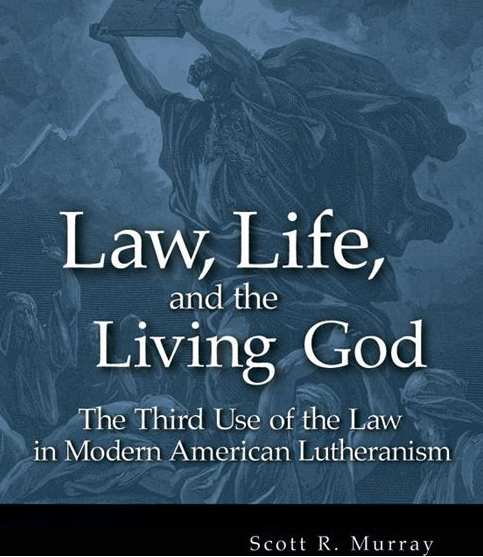 I have been reading through a book on the “Third Use of the Law”–a doctrine with its origin in Lutheranism (for explanation see the * below)–Law, Life, and the Living God by Scott Murray. One of the theologians examined in the work, William Hordern, was critical of this doctrine largely because he held to an existentialist view of theology. For the purpose of this post, there is little of import other than part of Murray’s summary of Hordern’s position:
Hordern held an existentialistic view of faith and the Christian life. He made a sharp distinction between faith as trust and faith as belief in correct doctrine. He criticized the Protestant penchant for reducing salvation to ‘correct belief.’ (Murray, 119, cited below).
The criticism is one I have seen echoed in various places: the notion that evangelicals in particular care more about doctrinal purity than in actual evangelization. The accusation is actually on point in some cases, so far as I am concerned. Endless division over non-essential doctrines causes needless strife in the church. However, Murray’s critique of Hordern’s position also raises a valid point:
The question might legitimately be asked, ‘Trust in what?’ While it is true that faith is not merely assent to true propositions, faith as trust must repose in the promises of God. There is a specific doctrinal content to the preaching of the Gospel, which engenders and calls forth trust in the heart… (Murray, 122).
It seems to me that Murray’s response is compelling. If one wishes to reduce the Christian faith merely to trust in God; one may fairly ask which God one is trusting in. It seems that at least some doctrinal content is necessary for saving faith. The question may then be asked: how much doctrine is enough?
My own answer to such difficult questions would be to fall back upon the grace of God. We do not know for certainty who shall be saved. But what we do know is that God is a just and loving God and will act according to God’s nature. It seems to me, moreover, that there is great importance also in what one hears and rejects.
What are your thoughts on these tough questions? Let me know in the comments, below!
*The third use of the Law may be defined as: that which “gives direction for the impulses of the Christian to do good works” (Murray, 14, cited below).
Links
Be sure to check out the page for this site on Facebook and Twitter for discussion of posts, links to other pages of interest, random talk about theology/philosophy/apologetics/movies and more!
Source
Scott Murray, Law, Life, and the Living God: The Third Use of Law in Modern American Lutheranism
SDG.
——
The preceding post is the property of J.W. Wartick (apart from quotations, which are the property of their respective owners, and works of art as credited; images are often freely available to the public and J.W. Wartick makes no claims of owning rights to the images unless he makes that explicit) and should not be reproduced in part or in whole without the expressed consent of the author. All content on this site is the property of J.W. Wartick and is made available for individual and personal usage. If you cite from these documents, whether for personal or professional purposes, please give appropriate citation with both the name of the author (J.W. Wartick) and a link to the original URL. If you’d like to repost a post, you may do so, provided you show less than half of the original post on your own site and link to the original post for the rest. You must also appropriately cite the post as noted above. This blog is protected by Creative Commons licensing. By viewing any part of this site, you are agreeing to this usage policy.
The Law Always Condemns, The Gospel Always Saves. Or, why I’m a Lutheran.
Comparing Holy Scripture with other writings, we observe that no book is apparently so full of contradictions as the Bible, and that, not only in minor points, but in the principal matter, in the doctrine how we may come to God and be saved… This riddle is solved when we reflect that there are in Scriptures two entirely different doctrines, the doctrine of the Law and the doctrine of the Gospel. C.F.W. Walther, The Proper Distinction Between Law and Gospel
, 6 (cited fully below)

How are Christians to view the relationship between Law and Gospel? The issue has generated countless views and debates. One recent work which illustrates the breadth of views on this topic is Five Views on Law and Gospel
C.F.W. Walther’s work, The Proper Distinction Between Law and Gospel
Law and Gospel
The most central point of all–that is, the point that I hope readers remember if nothing else–is this: The Law always condemns, the Gospel always saves. This point is emphasized throughout Lutheran theology. What does it mean? Simply put: it means that these two doctrines, found throughout Scripture, have entirely distinct meanings and usages. One cannot intermingle law and gospel while remaining true to either doctrine. Wherever the Gospel is presented as if it had requirements attached to it, there the Gospel is not rightly preached. Whenever the Law is preached as if it offered some kind of free gift, it is not rightly preached.
Law only has power to condemn. It cannot save. That is because none can keep God’s Law. All sin, and all fall short of the glory of God (Romans 3:23). The Law shows what God requires of us. It “issues only commands and demands” (Walther, Proper Distinction…, 9).
In contrast, the Gospel only gives offers without requirements attached (ibid). The Gospel shows us God’s promises and offer of grace.
At first face, one examines the whole of the Bible and finds these teachings throughout. The teachings seem so at odds with one another that one might suspect a contradiction throughout the Biblical teaching. However, the fact is that both doctrines are “equally necessary. Without the Law the Gospel is not understood; without the Gospel the Law benefits us nothing” (Ibid, 8). The reason this is so important is because Law and Gospel are not opposites working against each other. Instead, both “have their final aim [human] salvation” (Ibid, 7). They work together to present a full picture of how salvation comes unto men.
The Law, as we have noted, cannot bring salvation because none but God can fulfill it. That is, it gives the requirements for salvation but no one can meet these requirements! We would all be lost if this were the whole of Biblical teaching. Yet there is more to the story, for the Gospel offers only its promises. God has promised to save. He is mighty to save. God has accomplished our salvation. And this salvation does not come with requirements attached. Such is our hope.
Most simply put then, the purpose of the Law is to show our need for the Gospel because we cannot meet the requirements of the Law. The purpose of the Gospel is to show that God has already met these requirements for us in Jesus Christ and to offer us that fulfillment through Christ’s atoning work. So the Gospel, without the Law, would be empty promises. What need have we for Gospel if we are not sinners? Yet without the Gospel, the Law is only a terror which tells us that all are condemned.
 Some Distortions
A number of objections have been raised against this understanding of Law and Gospel. For example: “[The notion t]hat the law must be viewed as a single entity is one of the most common of all objections made against the Christian use of the Law” (Walter Kaiser, Jr., “The Law as God’s Guidance for the Promotion of Holiness,” 188, cited below). Kaiser then argues against viewing the Law as a single entity. He makes distinctions between Civil, Ceremonial, and Moral laws. I agree that we can make these distinctions, but they do not somehow mean it is impossible to refer to the “Law” as a whole entity with all of the commands God has issued.
Another common objection is that of dispensational thought. It is often charged that because we live in a new dispensation, the teachings of the Mosaic Law, for example, no longer apply to us. Without commenting on the plausibility of dispensationalism, I would simply answer that it seems extremely hard to reconcile the notion that the Mosaic Law has no applicability in our own context with Jesus’ words about the Law: “For truly I tell you, until heaven and earth disappear, not the smallest letter, not the least stroke of a pen, will by any means disappear from the Law until everything is accomplished” (Matthew 5:18). Note that this verse also shows Christ using the “Law” as a single, coherent entity.
Yet does this mean that everything recorded in the Mosaic Law has applicability exactly as written? No. A further discussion along this line of thought would take me too far afield, but I think that the Bible does clearly teach there is some discontinuity between the application of Mosaic Law to the Jew and the New Covenant with Christians (for example, the dietary laws do not apply to Christians). This hints back at the divisions Kaiser was keen to make within the Law, and I think the application to the Christian life can be viewed within the categories he discusses.
Conclusion
There is so much more worth saying about Law and Gospel, but in the interest of keeping this post at a readable length, I have had to set some aside. Interested readers should see the annotated sources below.
We have seen that the Law and Gospel must be properly divided in order to properly understand the whole of the Bible’s teaching. Why do I say that this is why I’m a Lutheran? I hope, at least, that other branches of Christianity teach these distinctions between Law and Gospel. But I have to admit that I have not seen it so consistently done as it is within the Lutheran perspective. Martin Luther was right to focus directly upon this teaching, and I believe it is central to the Reformation[s]. It touches upon soteriology, sanctification, the atonement, and more. Thus, I think it is vitally important to get this doctrine correct. In my studies, I have found no teaching so close to the Biblical truth as the Lutheran teaching on Law and Gospel. I’m not saying that everyone should go and become Lutherans. Instead, I think that everyone should benefit from learning the proper distinction between Law and Gospel and apply it to their lives.
The Law always condemns, the Gospel always saves.
Appendix: The Modified Lutheran View?
I think it is important to note that the view put forth as “The Modified Lutheran View” in Five Views on Law and Gospel
Those who have stuck with me this long should be able to immediately see how this is utterly different from the Lutheran view I proposed above. The distinction between law and gospel is not a temporal distinction whatsoever. The Law is still with us. Walther himself makes this explicit: “[W]e find both teachings in the Old as well as in the New Testament” (Proper Distinction… 62). There is no temporal dividing line between Old and New such that some new reality has dawned on Law and Gospel. Instead, the Law continues to condemn, while the Gospel continues to save.
Yet Moo goes so far as to say this is a point which needs to be “corrected” within the Lutheran view (ibid). He seems to think that Lutherans would deny that Jesus was able to speak law, while also mistakenly painting the Sermon on the Mount as being a preaching entirely of the Law. Indeed, Moo’s view seems to affirm many of the basic tenants the Lutheran view explicitly denies, such as mixing the uses of Law and Gospel.
I thus would say that Moo’s position is not at all the Lutheran view. It is not a modified Lutheran view at all. Instead, it seems to violate a number of the primary distortions noted above. That said, Moo does admirably to defend the notion of the Law as a coherent, cohesive whole. There is much to commend Moo’s essay, but it ultimately fails, I think, to provide a properly Lutheran view of Law and Gospel.
Links
Like this page on Facebook: J.W. Wartick – “Always Have a Reason.” I often ask questions for readers and give links related to interests on this site.
Annotated Sources
C.F.W. Walther, The Proper Distinction Between Law and Gospel
For a more succinct summary of what Walther argues in the above, see God’s No and God’s Yes: The Proper Distinction Between Law and Gospel
Five Views on Law and Gospel, ed. Stanley Gundry (Grand Rapids: MI: Zondervan 1999) – I specifically used the following essays: Walter Kaiser, Jr., “The Law as God’s Guidance for the Promotion of Holiness” in Five Views on Law and Gospel, ed. Stanley Gundry, 177-199, (Grand Rapids, MI: Zondervan, 1999); Douglas Moo, “The Law of Christ as the Fulfillment of the Law of Moses” in Five Views on Law and Gospel, ed. Stanley Gundry, 319-376, (Grand Rapids, MI: Zondervan, 1999). I found this book to be very helpful in outlining various views, but was disappointed with the “modified Lutheran view” (see my appendix here).
SDG.
——
The preceding post is the property of J.W. Wartick (apart from citations, which are the property of their respective owners, and works of art as credited) and should not be reproduced in part or in whole without the expressed consent of the author. All content on this site is the property of J.W. Wartick and is made available for individual and personal usage. If you cite from these documents, whether for personal or professional purposes, please give appropriate citation with both the name of the author (J.W. Wartick) and a link to the original URL. If you’d like to repost a post, you may do so, provided you show less than half of the original post on your own site and link to the original post for the rest. You must also appropriately cite the post as noted above. This blog is protected by Creative Commons licensing. By viewing any part of this site, you are agreeing to this usage policy.
Who Interprets Scripture? Sola Scriptura, the Reformation, and the modern era: Reformation Review
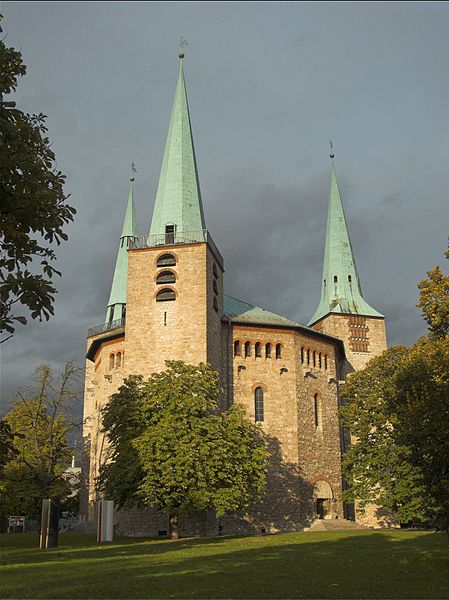 Theological debates raged throughout the period of the Reformation. These debates were about who had the right to interpret Scripture, what was the nature of salvation, who had authority in the church, and the like. Sound familiar? It should. Many of the debates that were central to the reformers are still in our purview today. Central to several of these debates focused upon the interpretation of Scripture.
Sola Scriptura: Two difficulties
The Reformers operated under the ideal of sola scriptura. The term literally means “scripture alone.” The notion seems simple enough: when it comes to doctrine, practice, and belief, the church universal is to be guided by Scripture alone. Yet it quickly became apparent during the Reformation era that things were not quite so simple.
First, sola scriptura was largely founded upon the notion that any Christian could read and understand Scripture. Yet, as became clear due to the fierce debates of the meaning of the Sacraments (i.e. the debate between Luther and Zwingli on the “real presence” in the Lord’s Supper), it seemed that on some things, Scripture wasn’t so simple (McGrath a, Reformation Thought: An Introduction
Second, Anabaptists and others argued that sola scriptura meant that every single individual Christian could read and understand the Bible for themselves. How was this problematic? Well, if every Christian could understand every part of the Bible, then there was no way to arbitrate between differing interpretations of soteriology (doctrine of salvation), eschatology (doctrine of the end times), and the like. Of course, not all of these interpretations could be correct, and if those who had argued for the individualism of Scriptural interpretation were correct, then they could all be right, in some sense. Furthermore, the issue was exacerbated in that because no one had the authority to proclaim what doctrines were correct, the church began to increasingly split to the point that “the radical Reformation was not a unified movement, but rather a chorus of protest against the clergy, secular authorities, and Reformers such as Luther and Zwingli. It was a reservoir for uncompromising protest that could well up in the most varied social circles… ‘Within the turmoiled flood of radical reform or restitution the fresh vitalities of the Reformation… were borne along swiftly to radical extremes'” (Carter Lindberg, The European Reformations
Limiting Perspicuity
The solution to the first problem was simply to concede that, on at least some issues, Scripture was not crystal clear. On at least certain points, the magisterial reformers “had conceded that Scripture is obscure” (McGrath a, 108). There was genuine disagreement over some issues. However, not all agreed with this conclusion, and some still pressed that all of Scripture was indeed clear. Such an argument tied into the second problem the Reformers had to confront in relation to sola scriptura: who has the right interpretation?
 Which Interpretation? Tradition’s Importance
Tradition played an important role in determining how the interpretation of Scripture was to be undertaken. During the Medieval period, a number of developments in hermeneutics laid the groundwork for the various interpretive methods utilized in the Reformation (McGrath b, 148ff). There were three primary views which emerged during the Reformation.
First, there was the position that “there is no place for tradition in the interpretation of the Bible. Every individual or community is free to interpret the Bible without reference to the Christian past” (McGrath a, 100). Such a position was part of the Radical Reformation and led to innumerable differing interpretations of Scripture. Of course, this was the group of reformers which applied sola scriptura most consistently. They took the principle literally and only allowed the Bible to be authoritative. However, with no way to arbitrate between differing doctrines, it seemed that such a position was incapable of standing up to scrutiny. All it could allow for was rampant individualism.
Second, there was the position that tradition was “an additional mode of divine revelation, in which information that was not committed to writing in the Bible was passed down…” (McGrath a, 100). The Roman Catholic church endorsed this position. However, it did not become popular with the reformers at all.
Instead, the Reformers developed a third position, one which stood as a middle way between the extremes of enshrining tradition and rejecting it outright. On this position, “Tradition designates a traditional way of interpreting a biblical text, which does not displace the text” (McGrath a, 100). Tradition therefore does not become an independent source of authority, but rather a way of interpreting the authority–Scripture–in an authoritative manner. By using tradition in this manner, the Reformers avoided the individualism of rejecting tradition, while also avoiding the error of raising tradition to the same level of importance as Scripture.
The third way was developed largely in the Reformed and Lutheran traditions, but it had its core in the historic Christian Creeds. Within the Lutheran tradition, the Apostles’; Nicene; and Athanasian Creeds were taken as theological foundations, and the Augsburg Confession and the later Book of Concord (which drew together several other confessions of the Lutheran faith) became the interpretive lens through which the Lutheran church would view Scripture and right doctrine.
Modern Theology, Reformation Problems
The discussions which occurred in the Reformation on the nature of sola scriptura, tradition, and the interpretation of Scripture had their origins in the past, and they continue into today. Some continue to insist that anyone can read the Bible and understand it in its entirety.
Against those who argue against their position, they insist that they themselves are just reading what the Bible says. This can be seen in a number of debates in Christian theology. It seems the best response to those who wield the ‘perspicuity of Scripture’ as a weapon against alternatives to their own doctrine have no alternative against those who disagree other than going back and forth claiming their own interpretation is correct and/or more clear.
The example I most often like to use is the book of Revelation and eschatology. Someone who claims the perspicuity of Scripture applies to the whole of Scriptural teaching must claim, in order to be consistent, that these doctrines are clear. Thus, such a person must maintain that every single verse in Revelation can simply be read by anyone and understood.
To be frank, I find this absurd. The extreme diversity of people’s interpretations of Revelation seem to undermine the notion that every passage in Scripture is clear. Furthermore–as has already been noted–those who hold to this radically individualistic position of Scripture have no way to decide between differing interpretations of Scripture. They are thus left with no way to determine any doctrine, whether it is radically opposed to Christianity or not, is heretical. Thus, one who holds this position cannot condemn modalism, as long as the person arguing for it is only using the Bible. After all, Scripture is clear! Everyone can read it. Therefore, it seems that this debate which continues to rage on from the Reformation must end. In order to avoid the mire of wanton individualism, we must have some principles for interpretation.
Another major issue of contemporary debate is that of Creeds and “paper popes.” Often, for example, the Lutheran Church is accused of utilizing the Book of Concord as a “paper pope”–a book which acts as an infallible interpreter of Scripture. Similarly, some argue that the historical Christian creeds are not Scripture and therefore must not be affirmed: again, sola scriptura.
It may be helpful to see this as a case study: in Lutheran circles, there is a debate over whether one must agree with the Book of Concord (the Lutheran Confessions) because it agrees with Scripture or insofar as it agrees with Scripture. Note the very important difference. If one says it is “because,” one is affirming that the Book of Concord is the correct intepretation of every relevant passage of Scripture. If one affirms that it is “insofar as,” one is admitting that there may be error in that interpretation. From a Lutheran perspective, this debate is hard to resolve. I tend to line up on the latter (insofar as) view.
However, it is clear that once one takes that position, one must lean more towards individualism. Again: how does one arbitrate doctrine if one does not adhere to any kind of authoritative statement on doctrine? It seems to me that one must at least hold that God has the power to transmit His teaching truthfully, and that’s why the historical Christian Creeds are vastly important. There must be a line drawn somewhere, but people may ever debate where to draw that line.
The key is perhaps found in Scripture itself, in which Christians are instructed not to continue arguments needlessly nor to focus upon topics which will create division (1 Corinthians 1:10ff; Ephesians 4:1ff). These teachings do not, however, preclude division nor do they allow for rampant individualism. It seems to me, therefore, that by adhering to the ecumenical council’s teaching–specifically, the creeds–as drawing out the right teachings of the church, we can avoid some of the great difficulties illustrated above. That’s why I would focus upon the Creeds which were drawn from those councils (like the Apostles’, and Nicene Creeds) as the sources of authoritatively governing Christian interpretations on those topics.
Conclusion
Many theological questions that are in play today have their origins in various aspects of Reformation thought, which themselves have their origins in earlier Christian thought. The issue of the perspicuity of Scripture, it seems to me, must be limited to that of soteriology and perhaps a few other core issues. On who has the authority to interpret Scripture, it seems that the Reformers offered a way forward: by agreeing to submit to the authority of ecumenical Creeds not as sources of their own authority but rather as authoritative interpretations of the Bible, Christians can proceed in their reading of Scripture and interpretations thereof through those lenses. Thus, the danger of individualism and endless division can be avoided.
Link(s)
I survey the origins of the Reformation.
Sources
Alister E. McGrath a, Reformation Thought: An Introduction
Alister E. McGrath b, The Intellectual Origins of the European Reformation
Carter Lindberg, The European Reformations
Thanks
Alister McGrath’s Reformation Thought: An Introduction was a gift from an anonymous donor. I was blown away when I saw it show up at my door and I have to say Thank you so much for being such a blessing! Whoever you are, you made my day. Well, more than just one day actually. This series of posts is a direct result of your donation. Thank you!
SDG.
——
The preceding post is the property of J.W. Wartick (apart from citations, which are the property of their respective owners, and works of art as credited) and should not be reproduced in part or in whole without the expressed consent of the author. All content on this site is the property of J.W. Wartick and is made available for individual and personal usage. If you cite from these documents, whether for personal or professional purposes, please give appropriate citation with both the name of the author (J.W. Wartick) and a link to the original URL. If you’d like to repost a post, you may do so, provided you show less than half of the original post on your own site and link to the original post for the rest. You must also appropriately cite the post as noted above. This blog is protected by Creative Commons licensing. By viewing any part of this site, you are agreeing to this usage policy.

 J.W. Wartick - Reconstructing Faith