Martin Luther
Really Recommended Posts 6/12/15- Luther, Treecats [what!?], and more!
 Sorry I’m a bit late today folks. I was on vacation and still catching up to some stuff after a beautiful cruise in Alaska! Anyway, this week I still got some diverse reads for you, dear friends! We have reads ranging from Luther on the Lord’s Supper to science fiction creatures, from Paley to Thomism, and even a comic! Check them out and let me know what you think!
The Lord’s Supper – Martin Luther’s Journey to the Bible– Martin Luther’s theology of the sacraments is central to his view of Christianity and the Christian life. Here’s an extended blog post looking at how he developed his doctrine of the Lord’s Supper.
I’m a Theology Nerd (Comic)- Yep, pretty much this. I am a huge theology nerd, in case anyone didn’t notice. This comic captures some of the reasoning behind that pretty well: if you really think there is a transcendent, loving, creator of the universe, how could we not love to learn more and more about that being?
Crossing the Heath with William Paley (1743-1805)– Doug Geivett continues his fascinating series on historical Christian apologists with one of the most famous to have ever lived: William Paley. He especially emphasizes Paley’s design argument, with a nod towards his historical arguments as well. I have written on Paley myself, and interested readers should check out my posts in the linked text.
Neo-Scholastic Essays– Edward Feser has a new book out that collects many of his essays together for your reading pleasure. Why care about Edward Feser? He is, in my opinion, the clearest thinker on Thomistic philosophy writing today. And he writes a lot. Check out his blog and be sure to look into his books as well. I’ve written on some things from Feser before.
Treecats Climb Into Children’s Hearts– David Weber is my favorite science fiction author. He’s got all kinds of awesome military sci-fi out there that you should read! Here’s a post that should warm your hearts too about his going to classrooms to share the love of literature with kids! I had the chance to meet Weber not too long ago, and I’ve written on his portrayal of women and religion in science fiction as well.
Book Review: “Luther on the Christian Life” by Carl Trueman
 Carl Trueman’s Luther on the Christian Life
Understanding Luther, argues Trueman, means at least in part to understand his own life and the pressures that exerted on his thought. Thus, in the first chapter (and throughout), readers get a picture of what Luther’s own Christian life was like and how that impacted his thought. Then, Trueman traces Luther’s theology of Christian life through various themes including theology of the Word, Sacraments, righteousness, government, family, and more.
The insights into Luther’s life and theology abound throughout the book, and the way that Trueman skillfully weave the two together is impressive. This is a highly readable and, yes, entertaining book. There is much to learn, but it is a joy to read. Luther’s doctrine of the Christian life is intertwined not only with his own life, but also with his sacramental theology. Trueman draws this out in extended fashion, showing how these ideas are related to readers who may not be familiar with such a way of thinking about the world.
Trueman puts forward a tremendous effort to be sympathetic in his reading of Luther. The sacramental theology of Luther is put forward as part of his understanding of the Christian life without any efforts to undermine or thwart the power of that same message. Trueman is Presbyterian (or so I gather from his Introduction), and admits to serious disagreements with Luther on sacraments and other areas. But he presents in this book Luther’s view, not his own critique, and he does so generously with a spirit of trying to understand and convey Luther’s meaning. This is exactly the kind of Christ-like attitude towards those with whom we disagree that we should all have as Christians, and as a Lutheran I was taken aback by how well Trueman accomplished it.
Luther on the Christian Life
The Good
+Surprisingly sympathetic reading of Luther from a non-Lutheran
+Many insights into Luther’s broader patterns of thought
+Focus on Christian life in Luther’s work is highly interesting
+Constantly brings up strong insights
The Bad
-Not really anything to put in this category
Conclusion
Luther on the Christian Life
I received a review copy of the book from Crossway. I was not required to give any kind of review whatsoever. My thanks to the publisher for the book.
Links
Be sure to check out the page for this site on Facebook and Twitter for discussion of posts, links to other pages of interest, random talk about theology/philosophy/apologetics/movies and more!
Book Reviews– There are plenty more book reviews to read! Read like crazy! (Scroll down for more, and click at bottom for even more!)
Source
Carl Trueman, Luther on the Christian Life
SDG.
——
The preceding post is the property of J.W. Wartick (apart from quotations, which are the property of their respective owners, and works of art as credited; images are often freely available to the public and J.W. Wartick makes no claims of owning rights to the images unless he makes that explicit) and should not be reproduced in part or in whole without the expressed consent of the author. All content on this site is the property of J.W. Wartick and is made available for individual and personal usage. If you cite from these documents, whether for personal or professional purposes, please give appropriate citation with both the name of the author (J.W. Wartick) and a link to the original URL. If you’d like to repost a post, you may do so, provided you show less than half of the original post on your own site and link to the original post for the rest. You must also appropriately cite the post as noted above. This blog is protected by Creative Commons licensing. By viewing any part of this site, you are agreeing to this usage policy.
Women and the Reformation: Hope, Silence, and Circumstance
 It is Reformation Day and this year we are going to reflect upon a topic that is all-too-often overlooked: women in the Reformation. We shall consider the impact of women on the Reformation and the impact of the Reformation upon women from a theological perspective. I admit that covering such a broad topic within a blog post means I am very short on detail. I encourage readers to check out the sources at the end of this post in order to explore further avenues.
The Impact of the Reformation Upon Women
The Reformation brought about some changes for women both theologically and socially. Theologically, the issue of inequality between men and women socially and spiritually was more widely discussed. Although the concept had existed before, the Reformers largely held to the notion that men and women were spiritually equal. Spiritual equality led some to wonder whether women could perhaps be social equals, or–if that was to far afield–perhaps they could at least be less inequal (Spierling, 181-183, cited below). Seeds for social and spiritual change were sown during this period, but it must be admitted that there was not as much development as some may allege.
For example, Martin Luther’s notion of the “priesthood of all believers” is sometimes taken to mean that women and men could stand alongside each other as spiritual equals in teaching, preaching, etc. However, when Luther himself was challenged on this issue by the Roman Catholics, he answered by making it very explicit that although women could teach in extraordinary circumstances, he believed the Bible mandated that men were in charge in both church and home (Spierling, 186; see Luther’s Works 36: 151-152). Spiritual equality was seen as equality in the eyes of God, not in the roles that men and women actually took on earth. However, Luther also fought against some of the double standards regarding men and women and was outspoken against brothels and other abuses of women (Lindberg, 360-361, cited below).
The Reformers remained influenced by early Christian views of men and women, which were, in turn, influenced by earlier non-Christian scholars whose pre-scientific views of biology and psychology were adopted. Diarmaid MacCulloch traced the impact of Aristotle and the ancient medical expert Galen upon figures like Augustine and Clement. He described the Reformers’ view of manhood and womanhood as viewed through this lens thus:
What Christian theologians asserted about men, women, and sexuality was nonsense, but it was ancient nonsense, and humanity has always been inclined to respect the assertion of ancient wisdom. The… package of ideas also had a lunatic coherence: it seemed to make sense, explained a baffling aspect of human experience, and contained a good deal of room for flexibility of interpretation. No doubt our own medical theories will seem equally lunatic to generations to come. (MacCulloch,611, cited below)
Carter Lindberg’s own discussion of the impact of the Reformation upon women is bracketed by the question: “Was the Reformation a help or a hindrance to women?” He answers, a bit tongue-in-cheek, “It depends.” The Reformers denied that marriage was a sacrament, which allowed, later, for the dissolution of abusive or even loveless marriage. Women also began to become more actively involved in theology, though their voices were often silenced or ignored. The encouragement to leave convents may have reduced the possibilities for single women to have careers in the church or any sort of involvement (Lindberg, 358-361).
The social expectations for men and women during the Reformation period were shaped by the cultural expectations of “gender” which were themselves handed down to today through the theological writings of the Reformers (Ibid, 360). The concept may be termed “patriarchy” and was theologically adapted to continue to make it appropriate for the culture through the 1800s and into today (MacCulloch, 611).
Women’s Impact on the Reformation
Women had little voice within the Reformation, largely due to some of the issues mentioned above. However, that is not to say that women had no voice whatsoever within the theological developments of the Reformation. There were several women who wrote theological treatises alongside their male counterparts, though their efforts were often ignored (Spierling, 187, 180-181).
Among these was Marie Dentière, who defended her own authority to teach in Galatians 3:28. Dentière was a noblewoman who defended the Reformers through the use of the Bible and who vehemently encouraged women to leave the Catholic faith. She wrote to defend Calvin during his exile. Women were called to teach and take up their Bibles to defend the Christian faith. Dentière’s defense of women’s capacity to teach was grounded in the biblical examples of godly women, among them the first herald of Jesus’ Resurrection, Mary Magdalene (Lindberg, 360; see also McKinley, 155-159, cited below).
Interestingly, Dentière’s writings spurred other women, Catholics, to speak against her in defense of convents. Jeanne de Jussie was directly called upon by Dentière to close her convent, but responded with a theological defense of convents and an attack on Calvinism (Lindberg, 359).
Other women acknowledged the subordination of women in the church and home, but nevertheless argued that the situation of the Reformation had brought about exactly the types of emergency situations Luther had granted women may teach in. Argula von Grumbach wrote defending Arsacius Seehofer, who had been arrested and prosecuted for “holding Lutheran ideas.” She felt the need to defend Seehofer because no one else had done so. Thus, her authority was granted due to the priesthood of all believers.The emergency situation was brought about by Seehofer’s continued imprisonment and the fact that no men had stood up to defend him.
Thus, Reformation theology was seen as the grounds for some women to speak; even those who acknowledged the categories of subordination found within the theology of the Reformers. Others spoke up due to the wielding of Reformation theology against Roman Catholicism. Still others felt that sola scriptura had led them to discover real, biblical grounds for women to teach.
Conclusion
I’m a huge fan of Reformation theology, but it must be admitted that the Reformers’ views on women were essentially a product of their societal background. They embraced, rightfully, sola scriptura, but as I have noted elsewhere (Who Interprets Scripture?), this itself raised a number of issues regarding the interpretation and meaning of a text. Moreover, sola scriptura does not entail that one is able to interpret the Bible in a socio-cultural vaccuum. It seems to me the Reformers view of women as essentially child-bearers and home-makers was more a product of their cultural background than something the text of the Bible specifically taught. Of course, that is a debate for a different time.
To end on a positive note, it is worth noting that the Reformers’ teaching sowed the seeds for greater gender equality. The notion of the “priesthood of all believers” should not be abused in order to be taken as an endorsement of women teaching; but it nevertheless did have within it a concept of spiritual equality which provided a basis, however small, for believing that men and women could be spiritual and social equals. Moreover, women began to take up the torch and teach in “emergency” situations and thus provided a basis for others to do the same. Finally, still other women turned to the Bible itself as a justification for their voice alongside that of men. Their authority to teach was, they argued, itself biblical.
Let us continue that Reformation.
Sources
Carter Lindberg, The European Reformations
Diarmaid MacCulloch The Reformation
Mary McKinley, “Dentiere, Marie” in Handbook of Women Biblical Interpreters
Karen Spierling, “Women, Marriage, and Family” in T&T Clark Companion to Reformation Theology
The Image is of Marie Dentiere and is public domain.
SDG.
——
The preceding post is the property of J.W. Wartick (apart from quotations, which are the property of their respective owners, and works of art as credited; images are often freely available to the public and J.W. Wartick makes no claims of owning rights to the images unless he makes that explicit) and should not be reproduced in part or in whole without the expressed consent of the author. All content on this site is the property of J.W. Wartick and is made available for individual and personal usage. If you cite from these documents, whether for personal or professional purposes, please give appropriate citation with both the name of the author (J.W. Wartick) and a link to the original URL. If you’d like to repost a post, you may do so, provided you show less than half of the original post on your own site and link to the original post for the rest. You must also appropriately cite the post as noted above. This blog is protected by Creative Commons licensing. By viewing any part of this site, you are agreeing to this usage policy.
The Law Always Condemns, The Gospel Always Saves. Or, why I’m a Lutheran.
Comparing Holy Scripture with other writings, we observe that no book is apparently so full of contradictions as the Bible, and that, not only in minor points, but in the principal matter, in the doctrine how we may come to God and be saved… This riddle is solved when we reflect that there are in Scriptures two entirely different doctrines, the doctrine of the Law and the doctrine of the Gospel. C.F.W. Walther, The Proper Distinction Between Law and Gospel
, 6 (cited fully below)
How are Christians to view the relationship between Law and Gospel? The issue has generated countless views and debates. One recent work which illustrates the breadth of views on this topic is Five Views on Law and Gospel
C.F.W. Walther’s work, The Proper Distinction Between Law and Gospel
Law and Gospel
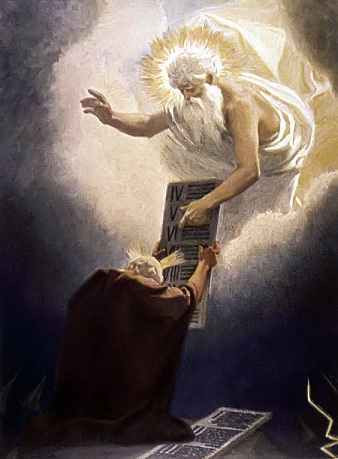
The most central point of all–that is, the point that I hope readers remember if nothing else–is this: The Law always condemns, the Gospel always saves. This point is emphasized throughout Lutheran theology. What does it mean? Simply put: it means that these two doctrines, found throughout Scripture, have entirely distinct meanings and usages. One cannot intermingle law and gospel while remaining true to either doctrine. Wherever the Gospel is presented as if it had requirements attached to it, there the Gospel is not rightly preached. Whenever the Law is preached as if it offered some kind of free gift, it is not rightly preached.
Law only has power to condemn. It cannot save. That is because none can keep God’s Law. All sin, and all fall short of the glory of God (Romans 3:23). The Law shows what God requires of us. It “issues only commands and demands” (Walther, Proper Distinction…, 9).
In contrast, the Gospel only gives offers without requirements attached (ibid). The Gospel shows us God’s promises and offer of grace.
At first face, one examines the whole of the Bible and finds these teachings throughout. The teachings seem so at odds with one another that one might suspect a contradiction throughout the Biblical teaching. However, the fact is that both doctrines are “equally necessary. Without the Law the Gospel is not understood; without the Gospel the Law benefits us nothing” (Ibid, 8). The reason this is so important is because Law and Gospel are not opposites working against each other. Instead, both “have their final aim [human] salvation” (Ibid, 7). They work together to present a full picture of how salvation comes unto men.
The Law, as we have noted, cannot bring salvation because none but God can fulfill it. That is, it gives the requirements for salvation but no one can meet these requirements! We would all be lost if this were the whole of Biblical teaching. Yet there is more to the story, for the Gospel offers only its promises. God has promised to save. He is mighty to save. God has accomplished our salvation. And this salvation does not come with requirements attached. Such is our hope.
Most simply put then, the purpose of the Law is to show our need for the Gospel because we cannot meet the requirements of the Law. The purpose of the Gospel is to show that God has already met these requirements for us in Jesus Christ and to offer us that fulfillment through Christ’s atoning work. So the Gospel, without the Law, would be empty promises. What need have we for Gospel if we are not sinners? Yet without the Gospel, the Law is only a terror which tells us that all are condemned.
 Some Distortions
A number of objections have been raised against this understanding of Law and Gospel. For example: “[The notion t]hat the law must be viewed as a single entity is one of the most common of all objections made against the Christian use of the Law” (Walter Kaiser, Jr., “The Law as God’s Guidance for the Promotion of Holiness,” 188, cited below). Kaiser then argues against viewing the Law as a single entity. He makes distinctions between Civil, Ceremonial, and Moral laws. I agree that we can make these distinctions, but they do not somehow mean it is impossible to refer to the “Law” as a whole entity with all of the commands God has issued.
Another common objection is that of dispensational thought. It is often charged that because we live in a new dispensation, the teachings of the Mosaic Law, for example, no longer apply to us. Without commenting on the plausibility of dispensationalism, I would simply answer that it seems extremely hard to reconcile the notion that the Mosaic Law has no applicability in our own context with Jesus’ words about the Law: “For truly I tell you, until heaven and earth disappear, not the smallest letter, not the least stroke of a pen, will by any means disappear from the Law until everything is accomplished” (Matthew 5:18). Note that this verse also shows Christ using the “Law” as a single, coherent entity.
Yet does this mean that everything recorded in the Mosaic Law has applicability exactly as written? No. A further discussion along this line of thought would take me too far afield, but I think that the Bible does clearly teach there is some discontinuity between the application of Mosaic Law to the Jew and the New Covenant with Christians (for example, the dietary laws do not apply to Christians). This hints back at the divisions Kaiser was keen to make within the Law, and I think the application to the Christian life can be viewed within the categories he discusses.
Conclusion
There is so much more worth saying about Law and Gospel, but in the interest of keeping this post at a readable length, I have had to set some aside. Interested readers should see the annotated sources below.
We have seen that the Law and Gospel must be properly divided in order to properly understand the whole of the Bible’s teaching. Why do I say that this is why I’m a Lutheran? I hope, at least, that other branches of Christianity teach these distinctions between Law and Gospel. But I have to admit that I have not seen it so consistently done as it is within the Lutheran perspective. Martin Luther was right to focus directly upon this teaching, and I believe it is central to the Reformation[s]. It touches upon soteriology, sanctification, the atonement, and more. Thus, I think it is vitally important to get this doctrine correct. In my studies, I have found no teaching so close to the Biblical truth as the Lutheran teaching on Law and Gospel. I’m not saying that everyone should go and become Lutherans. Instead, I think that everyone should benefit from learning the proper distinction between Law and Gospel and apply it to their lives.
The Law always condemns, the Gospel always saves.
Appendix: The Modified Lutheran View?
I think it is important to note that the view put forth as “The Modified Lutheran View” in Five Views on Law and Gospel
Those who have stuck with me this long should be able to immediately see how this is utterly different from the Lutheran view I proposed above. The distinction between law and gospel is not a temporal distinction whatsoever. The Law is still with us. Walther himself makes this explicit: “[W]e find both teachings in the Old as well as in the New Testament” (Proper Distinction… 62). There is no temporal dividing line between Old and New such that some new reality has dawned on Law and Gospel. Instead, the Law continues to condemn, while the Gospel continues to save.
Yet Moo goes so far as to say this is a point which needs to be “corrected” within the Lutheran view (ibid). He seems to think that Lutherans would deny that Jesus was able to speak law, while also mistakenly painting the Sermon on the Mount as being a preaching entirely of the Law. Indeed, Moo’s view seems to affirm many of the basic tenants the Lutheran view explicitly denies, such as mixing the uses of Law and Gospel.
I thus would say that Moo’s position is not at all the Lutheran view. It is not a modified Lutheran view at all. Instead, it seems to violate a number of the primary distortions noted above. That said, Moo does admirably to defend the notion of the Law as a coherent, cohesive whole. There is much to commend Moo’s essay, but it ultimately fails, I think, to provide a properly Lutheran view of Law and Gospel.
Links
Like this page on Facebook: J.W. Wartick – “Always Have a Reason.” I often ask questions for readers and give links related to interests on this site.
Annotated Sources
C.F.W. Walther, The Proper Distinction Between Law and Gospel
For a more succinct summary of what Walther argues in the above, see God’s No and God’s Yes: The Proper Distinction Between Law and Gospel
Five Views on Law and Gospel, ed. Stanley Gundry (Grand Rapids: MI: Zondervan 1999) – I specifically used the following essays: Walter Kaiser, Jr., “The Law as God’s Guidance for the Promotion of Holiness” in Five Views on Law and Gospel, ed. Stanley Gundry, 177-199, (Grand Rapids, MI: Zondervan, 1999); Douglas Moo, “The Law of Christ as the Fulfillment of the Law of Moses” in Five Views on Law and Gospel, ed. Stanley Gundry, 319-376, (Grand Rapids, MI: Zondervan, 1999). I found this book to be very helpful in outlining various views, but was disappointed with the “modified Lutheran view” (see my appendix here).
SDG.
——
The preceding post is the property of J.W. Wartick (apart from citations, which are the property of their respective owners, and works of art as credited) and should not be reproduced in part or in whole without the expressed consent of the author. All content on this site is the property of J.W. Wartick and is made available for individual and personal usage. If you cite from these documents, whether for personal or professional purposes, please give appropriate citation with both the name of the author (J.W. Wartick) and a link to the original URL. If you’d like to repost a post, you may do so, provided you show less than half of the original post on your own site and link to the original post for the rest. You must also appropriately cite the post as noted above. This blog is protected by Creative Commons licensing. By viewing any part of this site, you are agreeing to this usage policy.
The Prayer of Judith: A Devotion from the Apocrypha
 The Apocrypha is a wealth of devotional reading that remains largely untouched by Protestants. No longer, I say! Martin Luther said of the Book of Judith (in the Apocrypha): “[T]his is a fine, good, holy, useful book, well worth reading by us Christians. For the words spoken by the persons in it should be understood as though they were uttered in the Holy Spirit by a spiritual, holy poet or prophet who, in presenting such persons in his play, preaches to us through them” (cited in The Apocrypha: The Lutheran Edition With Notes, 5-6). It should be noted that Luther is not suggesting that the Apocrypha is on par with the sacred canon. Instead, his view of the office of the ministry is that those ministering are speaking through the spirit. He and others view the book of Judith as a piece of historical fiction, made clear to its readers that it was fictional by its commingling of names from different cultural backgrounds and its generally ahistorical nature. Although it is fiction, that does not undermine the possibility of spiritual truths.
Here, we’ll explore the Prayer of Judith in Judith 9:1ff and see how it points to God as transcendent Lord of all creation.
[Y]ou have designed the things that are now and those that are to come. Yea, the things you intended came to pass, and the things you decided presented themselves and said, ‘Lo, we are here’; for all your ways are prepared in advance, and your judgment is with foreknowledge. (Judith 9:5ff, ESV translation of the Apocrypha)
Judith here acknowledges that all which God plans comes to be. Note that here, Judith does not affirm that God specifically intends for each and every thing that occurs. Rather, this passage reveals that God is in control over all things, accomplishing His plan in such a way that the things He intends will come to pass. Yet the author does not imply that God intends for all things which do happen. Judith does not pray thanking God for causing evil–such would be wildly inappropriate. Instead, Judith focuses upon God’s comprehensive plan which takes into account all things. God has “prepared in advance” all His ways. His judgment and execution of plans is “with foreknowledge.” God’s plans are with absolute foreknowledge of what occurs, and we can trust in God to execute rightly.
[T]hey [the Assyrians] trust in shield and spear, in bow and sling, and know not that you are the Lord who crushes wars; the Lord [YHWH] is your name. (9:7b)
One of my favorite lines in the entire book of Judith: “the Lord who crushes wars.” Think about the implications there: it is God who is control of the destinies of nations. Although the weapons of humanity may be raised against each other, the Lord crushes the war itself. We are reminded in Revelation that there will be a day with no more tears (Revelation 21:4). One day, God will crush the very possibility of war.
 Furthermore, it should be noted that in context, Judith is not suggesting that God is against any type of war per se; after all, Judith goes on to behead the leader of the Assyrians and the Israelites pursue the Assyrians from their land. Instead, it is the trust in human invention that is under assault here. The Assyrians put their trust into their own weapons instead of God. Rather, it is God who should be trusted, for it is God who has the power not only to wage war but to destroy war itself.
[C]rush their arrogance by the hand of a woman. (9:10b)
God uses the unexpected for His ends. Women were not the expected leaders; deliverance was more likely to have come from a great general–a man. Yet God uses the weak to bring down the strong.
[C]ause your whole nation and every tribe to know and understand that you are God, the God of all power and might and that there is no other who protects the people of Israel but you alone! (9:14)
Judith continues her prayer, exhorting God to bring His message to all peoples across the whole earth. Such is our own call as Christians. We are to carry out God’s plan in this mortal realm and bring God’s message to the whole earth. Yet we cannot forget that it is God alone who is our unfailing protector. We can trust only in God, not our weapons, not our might: we must trust in God who is far beyond such earthly powers.
Amen.
Source:
The Apocrypha: The Lutheran Edition With Notes
SDG.
——
The preceding post is the property of J.W. Wartick (apart from citations, which are the property of their respective owners, and works of art as credited) and should not be reproduced in part or in whole without the expressed consent of the author. All content on this site is the property of J.W. Wartick and is made available for individual and personal usage. If you cite from these documents, whether for personal or professional purposes, please give appropriate citation with both the name of the author (J.W. Wartick) and a link to the original URL. If you’d like to repost a post, you may do so, provided you show less than half of the original post on your own site and link to the original post for the rest. You must also appropriately cite the post as noted above. This blog is protected by Creative Commons licensing. By viewing any part of this site, you are agreeing to this usage policy.
The Continuing Influence of the Reformation: Our lives, our thoughts, our theology- Reformation Review
 The Reformation has had a lasting impact upon our lives. You may not realize it, but from the economy to politics, from theology to family life, the debates of the Reformation resonate through to today. Here, we will investigate in very broad strokes the influence the Reformation continues to have on our daily lives.
Family
The Reformation period led to a development of thought about the family. Praise of the family over and against celibacy was ubiquitous throughout the Reformation thinkers (Diamard MacCulloch, The Reformation
The Reformation’s thought on marriage was largely patriarchal. Men were the heads of the family both spiritually and in society. This was less a development of the Reformation as it was a continuation of the view of marriage in contemporary cultural thought. Interestingly, Protestantism led to a relaxation of two aspects of marriage. First, the clergy was allowed to marry; second, divorce was legally established in many Reformation contexts (MacCulloch, 660). By allowing for divorce, the Reformers undercut the notion of marriage as a sacrament (as above), but they also helped draw a distinction between the moral law of the Bible and the law of the land. Whether this was for better or worse, one may debate.
Economy
Capitalism had already begun before the European Reformations, having its renewal start in Italian city states in the 12th Century (for a detailed and extremely interesting discussion of this, see Rodney Stark, The Victory of Reason

The Reformation also paved the way for a “Protestant Work Ethic.” Martin Luther’s notion of the “priesthood of all believers” demolished the hard distinction between the “temporal” and “spiritual” realm which dominated the thought of the church at the time. By breaking down this barrier, hard labor was elevated. It was no longer seen as an inferior life to that of monastic withdrawal; rather, any type of work could be pleasing to God (McGrath, 256-258). In contemporary churches, one can often hear about how the engineer, the retail worker, the auto worker, and the like should all utilize their skills to the glory of God. Such thinking came directly from the Reformation.
 Theology
Clearly, the most pervasive influence of the Reformation has been upon theology. I have already written on a number of these aspects. The Reformation thought necessarily reflected upon the church. How do we define the church, and who belongs in the church? These questions drove the Reformers to a number of views on the role of the church universal. I discuss these at length in my post on the Church Universal. Central to the Reformation was the notion of sola scriptura. However, it quickly became apparent that without any specific way to interpret Scripture, radical individualism would follow. I’ve written on the Reformers views on these topics and the continuing debate today in my post on Sola Scriptura. To try to list all the areas of theology that the Reformation touched upon would be impossible for a post of this size, so suffice to say I will be discussing these more in the future.
Other Aspects
Diarmard MacCulloch, in his magisterial study of the Reformation, aptly named The Reformation
Counter Reformation
It would be remiss of me to write this without noting that one of the huge continuing influences of the Reformation was the Roman Catholic counter-reformation. The Reformation did not go by unnoticed by Roman Catholics, by any stretch of the imagination. Instead, the Catholic Church reacted against the Reformation and, in part, did so by incorporating many aspects of the Reformation.
Interestingly, some of the debates that played out within Protestantism were mirrored within the Roman Catholic Church. For example, a debate similar to the Calvinist-Arminian arguments became pervasive in Banezian and Molinist schools of thought. It is intriguing to note, however, that the Catholics largely allowed these debates to remain internal without dividing. The Catholic Church, it seems favored doctrinal humility over unity on a number of levels (for a discussion of doctrinal humility/unity, check out my post on the Church).
That is not to say, however, that the Roman Catholics were eager to affirm every aspect of the Reformer’s theology. Part of the counter-reformation included the Inquisition and the formation of the Society of Jesus (Jesuits). Ignatius of Loyola founded the Society of Jesus to counter what he saw not as doctrinal aberration but lives that were not conformed to the moral standards of the church (Carter Lindberg, The European Reformations, 333ff).
Finally, it could easily be argued that the modern innovation of Vatican II has its roots within the Reformation and Counter-Reformation. The changes brought about by Vatican II reflect a development of thought that has occurred since the Reformation on many of the issues brought up by the Reformers.
Conclusion
The Reformation’s influence on today’s society is pervasive. Our thinking on family, economy, working, theology, sex and sexuality, and more are all reflections of the influence of Reformation thought. In many ways, these aspects of our lives are just further reforms on the thoughts of the Reformers. The aspects in which we have changed dramatically since the Reformation, it could be argued, are areas in which the Reformation laid the groundwork for exploration. Our thoughts are Reformation thoughts. Our debates are Reformation debates. Our God is the Reformation’s God.
Regardless of your own feelings on the Reformation, these comments are undeniable. The way you think is largely formed by the debates that happened during the Reformation. Your freedom of expression was opened by Reformation developments on the value of every human being. Investigating the Reformation is a worthy endeavor because it opens up new avenues for exploration of our own era.
Links
Please check out my other posts on the Reformation:
I discuss the origins of the European Reformations and how many of its debates carry on into our own day.
The notion of “sola scriptura” is of central importance to understanding the Reformation, but it is also hotly debated to day and can be traced to many theological controversies of our time. Who interprets Scripture?
The Church Universal: Reformation Review– What makes a church part of the Church Universal? What makes a church part of the true church? I write on these topics (and more!) and their origins in the Reformation.
Sources
Alister E. McGrath, Reformation Thought: An Introduction
Carter Lindberg, The European Reformations
Diarmaid MacCulloch The Reformation
Rodney Stark, The Victory of Reason
Thanks
Alister McGrath’s Reformation Thought: An Introduction was a gift from an anonymous donor. I was blown away when I saw it show up at my door and I have to say Thank you so much for being such a blessing! Whoever you are, you made my day. Well, more than just one day actually. This series of posts is a direct result of your donation. Thank you!
SDG.
——
The preceding post is the property of J.W. Wartick (apart from citations, which are the property of their respective owners, and works of art as credited) and should not be reproduced in part or in whole without the expressed consent of the author. All content on this site is the property of J.W. Wartick and is made available for individual and personal usage. If you cite from these documents, whether for personal or professional purposes, please give appropriate citation with both the name of the author (J.W. Wartick) and a link to the original URL. If you’d like to repost a post, you may do so, provided you show less than half of the original post on your own site and link to the original post for the rest. You must also appropriately cite the post as noted above. This blog is protected by Creative Commons licensing. By viewing any part of this site, you are agreeing to this usage policy.
The Church Universal: Reformation Review
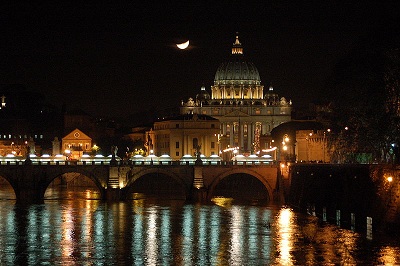 Perhaps the most crucial debate of the Reformation Era was over the nature of the universal church. During the Reformation, the church had split into numerous separate bodies. But were each of these bodies truly “the church”? Was salvation only found through membership in the Catholic Church? Finally, how did one determine what church bodies were part of “the church” if there were some new criterion for establishing what counted as “the church”? Having found their origins prior to the Reformation and a spectrum of answers during the Reformation, these questions continue to be debated into our own time.
The Church Universal
The key to understanding the emerging doctrine of the church within the Reformation is to note a distinction in meanings for “apostolic continuity.” On the one hand, one could note a literal apostolic continuity in which the authority of the Apostles themselves was passed from one person to another. On the other hand, some argued that the authority of the church was found in continuity with apostolic doctrine, not with a literal continuity of passed-on authority (McGrath, Reformation Thought: An Introduction
The Protestants began to view church authority as a consequence of right doctrine. This view allowed them to divorce themselves from the Roman Catholic church (and thus potentially lose the literal passing down of authority from one to another from the apostles) while still maintaining that their own churches remained part of the church universal.
Yet this was not the only question facing those trying to distinguish which churches were “true” as opposed to “false” churches. Surely there ought to be some signs of a “true church” to distinguish it from those that had fallen away. Martin Bucer and Martin Luther offered ways forward on this: the marks of the church. Luther insisted that what made a true church was “right administration of the sacraments and true preaching of the Gospel” while Bucer held that there was a third mark: discipline (Diarmaid MacCulloch The Reformation
The Background to the Reformation Debate
Alister McGrath notes how important it is to note the origins of the reformation debate regarding the church here. Specifically, the debate can be traced back to the Donatist controversy in the earlier church (third century). Essentially, this controversy centered around the very nature of the true church. The Christian church had been persecuted, and many had renounced their faith in order to avoid persecution. The question was asked: should these persons be allowed back into the true church? Could they still administer the sacraments and interact with the true body of Christ?
The Donatists said that those who had lapsed had become apostate and could not be allowed back into the church. However this belief was eventually considered to be incorrect and detrimental to the unity of the Church. Augustine argued against the Donatists and pointed out how the church is a “mixed body” of sinners and saints (McGrath, 144ff).
The concept of a sinner-saint was utilized by Martin Luther and other Reformers to note that the church was a body in which the Holy Spirit was actively working sanctification. That is, God was working to make the Church holy, but that did not mean that each individual in the church was absolutely devoid of sin.
How did all of this fit into the Reformation discussions on the true church? Simply put, the Donatists were radically schismatic. They sought to divorce themselves from “sinners” within the church. The Donatists were condemned for their schismatism, and so the Reformers had to deal with the fact that they themselves had either been forcibly removed from or split from the Roman Catholic Church. Thus, the importance of apostolic authority through theological unity became central in understanding the continuity of the Church.
The Modern Debates
The notion that right doctrine delineates the true church as opposed to literal apostolic continuity has a number of interesting outcomes which are very relevant for today’s church bodies.
First, it introduces a great difficulty for many church bodies in determining with whom one can fellowship. If the authority of the church universal is based upon true teachings rather than a passing down of authority from one person to another, then where is the line for how much teaching must be correct in order to remain as the true church?
Different church bodies offer different answers. Some church bodies err on the side of openness and humility and allow many into their fold who hold radically differing views. People in these organizations may hold to different views on things like the ordination of women, the age of the earth, and the like. Other church bodies err on the side of unity in doctrine and restrict membership to those that affirm sound doctrine as taught by their own body. For these church groups, a certain creed or body of work is referenced as the authoritative teaching of the church. If one differs from these teachings, then one is not part of their church body. (For more on the notion of using creeds or bodies of teachings as authoritative interpretations, see my post on “Who Interprets Scripture? Sola Scriptura, the Reformation, and the modern era.”)
To be frank, some Christians fail to recognize the diversity of these answers and simply assume that anyone who has a differing organizational structure is “liberal” or “conservative”–using the words in a derogatory manner. Such an attitude does not contribute to discussions on church organization. By failing to recognize the commendable attitude of humility in the churches that emphasize the unity of faith as opposed to the unity of individual doctrines, some unfairly label other church bodies as unbiblical or apostate. Similarly, by failing to recognize the commendable need for unity of belief in church bodies that emphasize right belief, some unfairly label these church bodies as schismatic or unchristian.
It also seems to me that both of these groups should learn from each other. Too many church groups vary too far one way or the other on these issues. Church bodies that emphasize humility in doctrine can often undermine their own church’s teachings. Similarly, church bodies that emphasize unity in doctrine can undermine their capacity for outreach and cooperation with other church bodies.
The Roman Catholic Church, following Vatican II, officially viewed non-Catholic churches as separated brethren–other bodies of true believers who were practicing independently. Such an affirmation ultimately undermines part of the debate that has raged since the Reformation: are Protestants saved, according to Roman Catholic teaching? This debate was hot during the Reformation and beyond, as the Roman Catholic church continued to deny salvation outside of the Catholic Church. Now, however, it is acknowledged that salvation can be found within Protestant circles as well.
Finally, the options Luther and Bucer offered to describe the “marks of the church” continue to be extremely important. Bucer’s emphasis on independent church discipline has–insofar as I can tell–largely fallen by the wayside, though it remains a point of interest in Anabaptist and other traditions. Although I would be hesitant to make a structured church discipline one of the marks of the true church, it would appear to be greatly important to have a system for disciplining those within the church who do not adhere to basic moral and/or doctrinal norms. However, this must be consistent with the notion that all believers are sinners being formed into saints through the process of sanctification. The modern church in the West perhaps does not have enough emphasis on the importance of church discipline, but caution should be taken so that a reform in this area does not lead the church back to a Donatist-like position.
Conclusion
So what makes a church a true church? The Reformers do still speak to us on this issue. Continuity with apostolic teaching is that which designates a true church. It is not easy to know where to draw the line between unity and humility, but over-emphasizing either leads to great difficulties for a church body. Of utmost importance, however, is the acknowledgement that though not all church bodies agree on every topic (there’s an understatement!), these church bodies are part of the saving body of Christ and therefore part of the salvific work of the Holy Spirit. Remembering this simple fact might help to spur on a bit of humility and unity among the Church Universal.
Links
Please check out my other posts on the Reformation:
I discuss the origins of the European Reformations and how many of its debates carry on into our own day.
The notion of “sola scriptura” is of central importance to understanding the Reformation, but it is also hotly debated to day and can be traced to many theological controversies of our time. Who interprets Scripture?
Sources
Alister E. McGrath a, Reformation Thought: An Introduction
Diarmaid MacCulloch The Reformation
Image: credit to Beatrice- http://commons.wikimedia.org/wiki/File:San_Pietro_e_Ponte_SAngelo_(notte).jpg
Thanks
Alister McGrath’s Reformation Thought: An Introduction was a gift from an anonymous donor. I was blown away when I saw it show up at my door and I have to say Thank you so much for being such a blessing! Whoever you are, you made my day. Well, more than just one day actually. This series of posts is a direct result of your donation. Thank you!
SDG.
——
The preceding post is the property of J.W. Wartick (apart from citations, which are the property of their respective owners, and works of art as credited) and should not be reproduced in part or in whole without the expressed consent of the author. All content on this site is the property of J.W. Wartick and is made available for individual and personal usage. If you cite from these documents, whether for personal or professional purposes, please give appropriate citation with both the name of the author (J.W. Wartick) and a link to the original URL. If you’d like to repost a post, you may do so, provided you show less than half of the original post on your own site and link to the original post for the rest. You must also appropriately cite the post as noted above. This blog is protected by Creative Commons licensing. By viewing any part of this site, you are agreeing to this usage policy.
Reformation Review: A look at the origins of the European Reformations
The Reformation [I am going to use the term “Reformation” to refer to the European Reformations and the Roman Catholic counter-Reformation] is a period of extreme importance for those who seek to understand Christian theology. Many of the debates that are happening now can trace their roots to this period of history.
One of the most important aspects to understanding the Reformation–and, by extension, much of the development of theology after the Reformation–involves looking into the origins of the movements. How is it that the Reformation started? What brought about the notion that it was necessary to reform the Church?
In his Reformation Thought: An Introduction
Social Factors in the Reformation
The organization of cities was one factor that led to the success of the reformation. McGrath notes that individual cities during this period had come to regard itself as a kind of individual state. However, due to the failures of many of these cities to provide for their citizens and their growth over time, there were calls for a broader and representative government (McGrath, 16, cited below).
Cities had become centers of power and experienced “remarkable growth” due to the various agrarian crises and plagues that had taken place in earlier years (Carter Lindberg, The European Reformations
Furthermore, the control of the city council over the general practices and laws of the cities often led to a “symbiotic relationship” between a reformer and the city council. “The reformer, by presenting a coherent vision of the Christian gospel and its implications for the religious, social, and political structures and practices of a city, was able to prevent a potentially revolutionary situation from degenerating into chaos” (McGrath, 19).
Some reformers were very tied to the social aspects of the reformation. For these reformers, “the Reformation involved the identification of ‘citizen’ with ‘Christian’… Thus Zwingli laid great emphasis upon the need to reform and redeem a community, whereas Luther tended to concentrate upon the need to reform and redeem the individual” (McGrath, 20).
Doctrinal and Moral Concerns and the Reformation
One of the primary concerns of the reformers was that the Church could “best be reformed and renewed by returning to the beliefs and practices of the early church” (McGrath, 20). The reformers observed many problems with the Church of their time and felt that it was important to return to the “golden age” of Christianity, which they interpreted largely as the patristic period.
There had been a growth in popular religion which was largely disconnected from that of the Church. “Folk religion” focused upon the “needs of rural communities–such as haymaking and harvesting” (McGrath, 24). A lack of confidence in the pope and the clerical system contributed to the need for reform. Furthermore, the laity was becoming more educated, which led to a problem for the Church. Due to the Roman Catholic church’s system at the time in which positions of authority would be given often to the highest bidder, there were many in the Church who never visited their parishes or had little interest in or understanding of that which they were supposed to preach. The educated laity became increasingly aware of the many errors even parish preachers would make in their renditions of the Latin in the Mass (some of these priests had merely memorized the service without understanding it themselves!) (24ff).
Furthermore, throughout the Scholastic era, the Church had tolerated a kind of doctrinal pluralism. The Church recognized the need for allowing the academics to debate various issues, but this led to a serious question: “[W]hich of these schools of thought [theological schools of thought like Thomism or Scotists] was right?” (McGrath, 28). Yet the Church had suffered from a kind of schizophrenia about centralized authority. Was the authority in the Church found in Councils or in the Pope (Lindberg, 44ff)? Questions like these led to the need for reform. The reformers focused on who had the right to decide doctrine and the need for God’s word in the vernacular of the populace.
Two Primary Movers
There were two primary focuses for the individual reformers: the moral sphere and the doctrinal sphere. While it is necessary to avoid drawing a false either-or dichotomy between these, it is equally important to note that the various reformers focused largely one way or the other. Broadly speaking, several reformers in the Wittenburg/Swiss tradition focused upon the need to reform the very teachings and doctrines of the church, while those in the humanist (not to be confused with modern notions of humanism as atheism, but rather as a system of thought and practice) tradition focused upon the need to reform the moral practice of the church.
Again, neither of these should be seen as exclusive of the other. Moral reform often involved doctrinal reform and vice versa. What must be emphasized, however, is that the reformers differed at points on whether it was more important to have right belief or right practice. Surely both thought both were necessary, but the question was how to integrate these into the Church and furthermore which should come first as important. Such differing emphases can be observed, for example, in the doctrine of Scripture. The humanistic reformers tended to see the Bible as a guide for morals, while the Wittenberg and Swiss reformers tended to see it as a “record of God’s gracious promises of salvation to those who believed” (see discussion in McGrath, 55-57).
More to Come!
Thus, the stage was set for reform of the church. Societal and doctrinal pressures were in place that would lead to the need for reflection on the spheres of belief and practice. The debates that raged through the reformation continue to rage today.
Throughout October and into the next few months (and perhaps beyond, depending on the feedback/readership I get here), I will be exploring various aspects of the Reformation. I will look at some important thinkers of the Reformation period and will also focus on some modern theology which can trace its roots back to the reformation. Why October [and beyond]? Well, Reformation Day is October 31st! Be ready to learn with me, and please ask questions and leave some comments!
Alister McGrath’s book was a gift from an anonymous donor. I was blown away when I saw it show up at my door and I have to say Thank you so much for being such a blessing! Whoever you are, you made my day. Well, more than just one day actually. This series of posts is a direct result of your donation. Thank you!
Links
The Church Universal: Reformation Review– What makes a church part of the Church Universal? What makes a church part of the true church? I write on these topics (and more!) and their origins in the Reformation.
Who Interprets Scripture? Sola Scriptura, the Reformation, and the modern era: Reformation Review– I investigate the notion of “sola scriptura” and its different applications in interpreting Scripture. I particularly emphasize the problem of doctrinal unity and the various ways church bodies have dealt with these difficulties from the Reformation into today.
Sources
Alister McGrath, Reformation Thought: An Introduction
Carter Lindberg, The European Reformations
SDG.
——
The preceding post is the property of J.W. Wartick (apart from citations, which are the property of their respective owners, and works of art as credited) and should not be reproduced in part or in whole without the expressed consent of the author. All content on this site is the property of J.W. Wartick and is made available for individual and personal usage. If you cite from these documents, whether for personal or professional purposes, please give appropriate citation with both the name of the author (J.W. Wartick) and a link to the original URL. If you’d like to repost a post, you may do so, provided you show less than half of the original post on your own site and link to the original post for the rest. You must also appropriately cite the post as noted above. This blog is protected by Creative Commons licensing. By viewing any part of this site, you are agreeing to this usage policy.

 J.W. Wartick - Reconstructing Faith
.jpg)