morals
Atheism’s Universe is Meaningless and Valueless
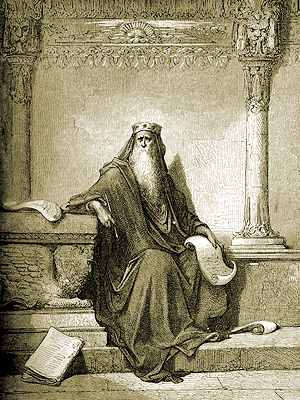 “‘Meaningless! Meaningless!’
says the Teacher.
‘Utterly meaningless!
Everything is meaningless.'” – Ecclesiastes 1:2
My most recent post on the problem of evil granting empirical atheism generated some thoughtful discussion. Most importantly, it lead me to the following argument:
1) On materialistic [I use materialism and physicalism interchangeably, as is common in philosophy today] atheism, all we are is matter in motion.
2) There is no objective reason to value matter moving in way A over matter moving in way B
3) Therefore, on materialistic atheism, there is no value or meaning
Premise 1 seems self-evident. Materialistic atheism, by definition, says that “everything is physical, or as contemporary philosophers sometimes put it, that everything supervenes on, or is necessitated by, the physical” (Stanford Encyclopedia of Philosophy). The physical world is matter.
Premise 2 also seems like it should need little defense, yet atheists continually come up with ideas to try to get around it. For example, one may argue that the subjective suffering of persons should matter. Yet I fail to see how this argument succeeds. Pain and suffering, on materialism, at most supervenes upon neurons firing in the brain (along with chemical reactions and other physical phenomenon). My question for the materialist is: What reason can be provided for favoring matter moving in way A (call it, the way neurons fire when someone is in a state of bliss) over matter moving in way B (neurons firing in the way which causes pain)?
One answer which may be forthcoming is that creatures and persons tend to try to get away from things which cause B. This argument fails to provide an answer to the question, because all it does is push the question back to a higher level. It would change to: Why should we favor physical observable phenomenon which don’t cause avoidance over those that do? Again, the avoidance of B would simply be matter moving in a different way. In order to make a judgment between them, one would have to reach beyond the material world and into the world of objective meaning and value; this is, necessarily, a world which is nonexistent on materialism. Even if one could provide an answer to this second question, say “We tend to not like B. Things we don’t like are bad”, then we would have a purely subjective reality. What of the serial killer who delights in torturing himself, causing things to B? What reason do we have for saying what he is doing is wrong, because, after all, he likes B?
Ultimately, on materialism, everything boils down to matter in motion. Making value judgments about matter in motion is meaningless.
But if everything is matter in motion, then there doesn’t seem to be any way to make value judgments. How does one value a rock over a stick? They’re both just stuff. But then, on materialism, people are just stuff too; albeit more complex. However, if you were to break us down into our ultimately realities, we are no different than the rock. We are matter organized in a different way. Why value us?
There is no objective reason to do so. Therefore, there is no objective meaning or value. Life is purposeless, meaningless, valueless. Atheistic materialism demands this bleak view of the universe. I’m not saying it’s a good reason to abandon that [un]belief. I’m merely saying that those who hold such a view must be consistent.
“Now all has been heard;
here is the conclusion of the matter:
Fear God and keep his commandments,
for this is the duty of all mankind.
For God will bring every deed into judgment,
including every hidden thing,
whether it is good or evil.” -Ecclesiastes 12:13-14
[In the comments, I have suggested that on materialism, there is no such thing as a subject. The claim has proven highly contentious, so I have created a post to clarify my position: https://jwwartick.com/2011/12/05/subjects-materialism/.]
Check out my post on the Ontology of Morality: Some Problems for Humanists and their friends
SDG
——
The preceding post is the property of J.W. Wartick (apart from citations, which are the property of their respective owners) and should not be reproduced in part or in whole without the expressed consent of the author. All content on this site is the property of J.W. Wartick and is made available for individual and personal usage. If you cite from these documents, whether for personal or professional purposes, please give appropriate citation and provide a link to the original URL. By viewing any part of this site, you are agreeing to this usage policy.
Problems With Evolutionary Morality
Recently, i discussed the problems atheism has with establishing a base for moral discussions (see here). Now it is time to delve into the problems with one of the most commonly used ethical theories of non-theists–evolutionary morality (or, to use a phrase coined by Koukl, “monkey morality”).
Evolutionary Morality generally argues that our moral beliefs arose by some kind of naturally-selected process. Notably, ethical judgments which benefited the survival of the species tended to be favored (thus, murder was frowned upon), while those judgments which prevented the spread of one’s genes tended to be disfavored (hence the reason rape is not permitted, for now it makes one stigmatized socially, thus leading to difficulties propagating genes).
Without much further ado, I find numerous problems with this ethical theory. Here, I shall present only a few.
1) How can we get an “ought” from matter in motion? Ultimately, evolutionary moralists assert that all there is in the universe is the physical realm. As such, a “person” is reducible to matter in motion. But then how exactly is it that there can be a moral “ought” if everything is matter in motion. Evolutionary morality reduces ethical decisions to the point of being mere wishes at best. There is no “ought” or “should” in evolutionary morality, for there cannot be. Ought’s can only be issued from sources to which one has obligations. It is hard to see how a person owes obligation to one’s species or matter.
2) Evolutionary Morality assumes that what is best for a being is the survival of the species. How is it that we can say what is best for an individual being is to insure survival of the species? What is it that makes it “good” or “right” to propagate genes? Furthermore, what if an individual does not wish to help insure survival of his/her species. Suppose there is a species of sentient beings, the Plargons, who are in all ways horrible. They travel the galaxies, taking over lush worlds, burning them to the ground and using every available resource until it is depleted, and then move to the next planet. Suppose now that Judy, a Plargon woman, decides it would be better for her species to be eradicated from the galaxy, for they are without capacity for reform. She therefore manages to destroy all other Plargons, and then retires to a corner of the galaxy alone until she dies, exterminating the Plargon race. Would this be a good or bad thing? Such a hard question should take much consideration from any thinking person, but evolutionary morality circumvents the hard question and simply delcares that Judy has done the greatest evil imaginable, for she has gone against the survival of her own species.
3) Evolutionary Morality assumes that all beings “should” desire the continuity of the species, yet this assumes a higher morality. Again, what makes it “good” or “right” to do things for the survival of our species. Humanism suffers from this glaring problem. It’s all well and good to say that what is good for humanity is what we should strive for. But whence does this “should” come?
4) Evolutionary Morality destroys altruism. Altruism, on evolutionary morality, is generally stupid. For to sacrifice oneself to save another (or several others) is to destroy one’s own place in the gene pool, thus eradicating one’s very reason for existence. Yet it seems intuitively as though altruism is a great good. Evolutionary morality therefore goes against our common sense notions of morality.
5) Evolutionary Morality is arbitrary. That which is good for the species may change over time. Recall the case of rape. I have heard it said that at one time rape was considered “okay” or “good” because it was one way to ensure the survival of the human race. Now, however, due to societal constraints, rape is “bad” or at least “stigmatized” and therefore is viewed negatively. But it seems intuitively that rape is a great horror, no matter what the circumstances! This is another case of Evolutionary Morality violating our moral senses. Furthermore, suppose the nuclear apocalypse happens, leaving only a few hundred humans alive. Evolutionary Morality could allow for rape to once more be a great good, for after all, we would need to repopulate the earth! Why should the feelings of some women or men get in the way of the survival of the species!? Again, the bankruptcy of Evolutionary Morality shines through.
It seems to me that the problems with moral systems which do not include God are endless. Without a lawgiver, anything can be right. Without a lawgiver, there are no “oughts”. Morality therefore dies.
——
The preceding post is the property of J.W. Wartick (apart from citations, which are the property of their respective owners) and should not be reproduced in part or in whole without the expressed consent of the author.
Morality and Atheism
I am continually baffled by atheistic accounts of morality.* What, on atheism, gives us the grounds for stating that an action is wrong?
Morals can be either objective or subjective. The thrust of the following argument is intended to show that atheism cannot have objective morals. In other words, an atheist has no way to condemn some action as wrong, other than that it is wrong “in my opinion”.
There are only a few ways I have seen it argued that atheism can have objective moral values. These are:
1) Platonistic Atheism- Morals exist necessarily independently, as abstract objects (such as numbers).
2) Humanism- Humanity first. Humans are to be valued objectively, so morals can be based on what benefits the human race.
3) Science can answer moral questions, somehow.
There are horrendous difficulties with all three of these views.
Platonism about morality could be the best way for atheists to have a “way out”, if you will, for accepting objective morality. The existence of moral values such as “Justice” can be posited as brute facts of our existence. They just exist, and that’s all. The problems with this view are numerous.
First, on this view, the moral values of “Sloth”, “Hedonism,” “Masochism” are also platonic forms existing as brute facts. What reason can be given for choosing to prefer “Justice,” “Uprightness”, etc. over “Masochism,” “Hedonism,” etc.? If all of these things are simply brute facts, then why is it that some should be preferred over others? I see no non-question begging method for determining which values should be favored.
There is no reason, on atheism, to value one over the other. Second, how is it that (granting naturalist evolution) natural selection managed to line us up so wonderfully with what appears to be correct moral cognitions? Again, given that the morals themselves are brute facts of existence, it is utterly remarkable that we evolved in such a way as to line up with what appears to be the “good side” of the moral values (one might object by arguing that we don’t know either way, but then they would have to accept that somehow being a sadomasochist could be a moral good. I doubt very much this is a position worth even considering). Third, there is the thus-far ignored question as to what makes the idea of moral facts existing by brute fact even close to intelligible?
Given the huge problems with 1), and the fact that I consider this the strongest position for the atheist wishing to argue for objective morality, it seems these are dire straits indeed for the atheist ethicist.
2) is equally problematic, however, for a number of reasons. First is that humans often do not agree on what exactly is best for humanity. Which humans are allowed to determine what is right for the whole of society? Furthermore, 2) doesn’t actually provide objective morality at all. It merely sets an arbitrary line for morality–it is moral to act for the good of humanity. What basis is there for taking this assertion as truth? We are humans, but this doesn’t, on atheism, entitle us to any kind of superior ethical or cognitive status. Why is it that humans are objectively valued? It just pushes the problem of objective morality up one level.
FInally, 3) is utterly bankrupt as an explanation for objective morality. I have discussed this position before in more detail (see my discussion of Sam Harris’ attempt at articulating this unintelligible position). 3) basically asserts that somehow, we can empirically detect what is moral by figuring out what makes people happy. Surely, this is no way to detect objective morals, for even if the pool of test subjects is the entire human race, one day the entire human race may determine it makes us happy to kill other humans at will, and then this would be objectively, empirically, moral. It makes us happy, so it is moral! Clearly this is no way to save objective morality, for 1) it makes moral values arbitrary, which is clearly not objective, and 2) it falls victim to the same problems of either position 1) or 2) above, for it must grant one of these positions to pursue some background for determining reality. Sam Harris, in his discussion of this position, simply asserts that “Values are… facts” (see video cited in my link above). Wonderful! I agree that values are facts. But simply saying this doesn’t magically explain their existence.
The massive problems with any atheistic position which attempts to give credence to objective moral values show that the atheist really only has two positions open to him/her: 1) abandon the existence of objective moral values (a route not often taken, but when it is traveled, it leads to subjectivity of morals–which of course means we cannot condemn any action as “wrong” other than as a preference) or 2) abandon atheism and accept a position with better explanatory power for the objective moral facts. I suggest theism as one clear possibility.
*I am not suggesting that atheists cannot be moral people. Indeed, some great examples of moral people are friends of mine who are atheists. The point of this post is, instead, that atheism has no grounds for morality, other than total relativism.
——
The preceding post is the property of J.W. Wartick (apart from citations, which are the property of their respective owners) and should not be reproduced in part or in whole without the expressed consent of the author.

 J.W. Wartick - Reconstructing Faith