Pacific Rim
Pacific Rim: The Black – Hope for the hopeless- a Christian perspective
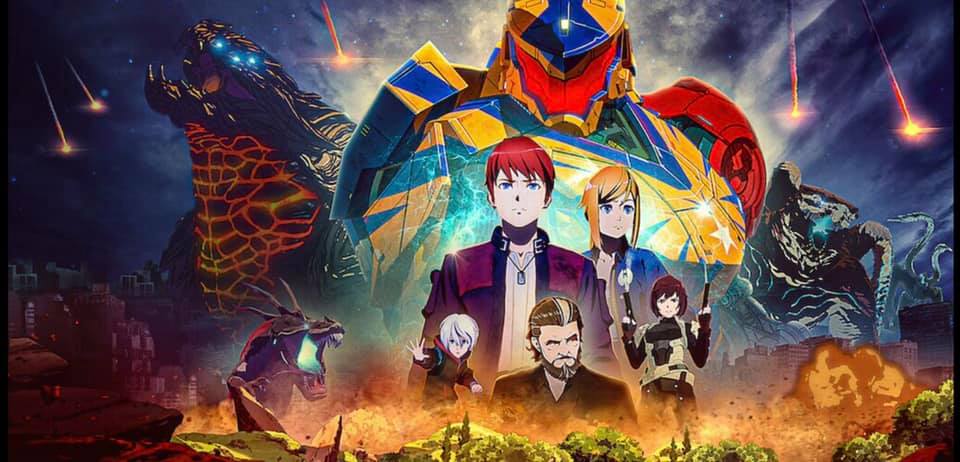
“Pacific Rim” was a delightfully campy, action-packed sci-fi movie that has since spawned a sequel, some comics and novels, and now an anime from Netflix, “Pacific Rim: The Black.” The series has a tone that’s far more bleak than the movies, embracing the human cost of an invasion and long war against kaiju (giant monsters). Its story follows two teenagers, Taylor and Hayley Travis, as they make their way across a largely abandoned Australia. I’ll draw out some of the themes I found in the show from a Christian perspective. There will be some major SPOILERS in this post.
Hope
Taylor and Hayley have little reason to hope. Their parents left to fight the kaiju, leaving the kids behind in a secure, hidden community. They’ve not returned. Kaiju have effectively taken over Australia, the greater world seems to have abandoned Australia for lost, and they’re stuck somewhere in the middle of it with few resources.
Then, Hayley falls through into a jaeger storage facility–the jaegers are the giant mechs humans built to fight the kaiju–and the story starts rolling. The accidental revealing of a jaeger attracts a kaiju, and the monster destroys their home, along with everyone they’ve been living with. It’s a huge loss. They’re forced to move on due to the urgency of the kaiju attack, and continue to find hope in unlikely places… and people.
The siblings ought to be hopeless. They’ve lost everything. They even lose their jaeger. But they cling to each other, hoping for a future in which they escape to fight the kaiju, find their parents, and move on. Their tenuous lives continue in such hope, and it brings a refreshing feel to the show. It could have been all darkness and edginess, but it shows people persisting even in the darkest of circumstances.
Human Sinfulness
People will continue to sin, choosing themselves, their ambition, and power even when apocalyptic monsters roam the very land in which they live. This theme shows up abundantly in Shane, whose broken life leads to him seeking self-interest above all else. He’s a fascinating character. He’s evil, and though we see hints of what drives him, we never get it fully explained. Leaving him behind feels like a major moment in the show, setting up a later, final confrontation that can be anticipated in a later season. His character also shows how sinfulness can permeate whatever it touches, corrupting organizations, bringing others into its snare. It’s a nefarious thing, and at times makes you wonder whether the humans or kaiju are a greater threat to the survival of humanity.
Messiah… or not.
The very end of the series finally gives us a look at the “Sisters” who were barely alluded to earlier in the series. One of them sees the Boy/kaiju and says “The Kaiju Messiah…” It’s a striking plot point, certainly a twist in a final episode that was chock-full of them. Certainly the word “Messiah” is immediately something that gets theological antennae raised. What do they mean by “messiah” and why would that be in any way associated with the kaiju?
I wonder, though, if there may be a somewhat nefarious turn here. Given the implications of the term messiah and the questions of theological propriety of that title here, one can wonder about hope again–hope placed in the wrong things. Are the sisters putting their hope in the kaiju and mistaking muscles and mass for what constitutes true power and glory? Misplaced hope in the power of our world–or that of the world of giant monsters (!!!) is a theme in our history, surely. Perhaps the Sisters are another iteration of this same misplaced hope.
I’m probably going a bit deeper than may be warranted here, but “The Black” invites such speculation in a way I didn’t anticipate.
Links
“Pacific Rim”- A Brief Christian Reflection– I draw out a few themes from the original film, focusing on a Christian perspective.
Be sure to check out the page for this site on Facebook and Twitter for discussion of posts, links to other pages of interest, random talk about theology/philosophy/apologetics/movies and more!
Also see my other looks into television (scroll down for more).
SDG.
——
The preceding post is the property of J.W. Wartick (apart from quotations, which are the property of their respective owners, and works of art as credited; images are often freely available to the public and J.W. Wartick makes no claims of owning rights to the images unless he makes that explicit) and should not be reproduced in part or in whole without the expressed consent of the author. All content on this site is the property of J.W. Wartick and is made available for individual and personal usage. If you cite from these documents, whether for personal or professional purposes, please give appropriate citation with both the name of the author (J.W. Wartick) and a link to the original URL. If you’d like to repost a post, you may do so, provided you show less than half of the original post on your own site and link to the original post for the rest. You must also appropriately cite the post as noted above. This blog is protected by Creative Commons licensing. By viewing any part of this site, you are agreeing to this usage policy.
“Pacific Rim” – A Brief Christian Reflection
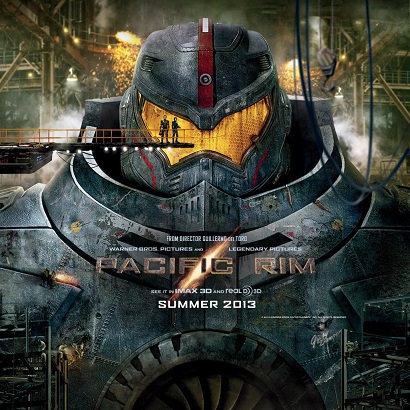 Thankfully, a slew of science fiction films are being released this year. “Pacific Rim” has generated quite a bit of buzz. I recently had the chance to view the film and will here offer some reflections from a Christian perspective. I feel obligated to put a disclaimer here: I realize this film is 99.9999% about blowing things up. I still think that a saying I often use is correct- there is no such thing as a film without a worldview. There will be SPOILERS in what follows. I do not offer a plot summary, as one can be found easily.
Master of the Storms?
Early in the film there is a scene in which Raleigh Becket, a Jaeger (think giant mech-tank) pilot, is marching out into a storm to fight a Kaiju (think Godzilla). As one watches this epic man-made titan march out to fight a monster, one is struck by the hugeness of it, the power of it. If humans can make this, what next? Raleigh discusses how once, humans were afraid of storms like hurricanes. Now, given the might of their creations, they need not fear a hurricane.
The quote seems impressive. After all, many today hope that humanity will reach heights like this. One day, we may be able to face down a hurricane and laugh. The powers of wind and rain may be overcome. But what then?
Interestingly, in the film the very next scene is that of a Kaiju absolutely beating down Raleigh’s Jaeger.
What? That’s not how the story is supposed to go. The story is supposed to show how we have finally transcended ourselves. But that is not the reality. The reality is that a giant Godzilla beast can still destroy even these hurricane-defying machines.
It is ironic, really. In the context of humanity’s defiance against the storms given their machines, another, greater challenge is thrown out there. One can almost imagine people railing against God once more. Why have we been left to fight this world on our own? But then one must remember what God has said:
[The LORD says:] “Can you pull in Leviathan with a fishhook
or tie down its tongue with a rope?…Will it keep begging you for mercy?
Will it speak to you with gentle words?
Will it make an agreement with you
for you to take it as your slave for life?Who has a claim against me that I must pay?
Everything under heaven belongs to me.” (Job 41:1, 3-4, 11)
Ultimately, God is in charge. Our attempts to control the seas, the storms, or the leviathan do not match up to God’s sovereign control over all creation.
The film does nothing to explore this avenue, but one can wonder: what of humankind’s efforts to try to best God? It seems that the answer is: it’s not going to happen. There is always a bigger Kaiju. There are always larger storms. Our fascination with these powerful aspects of creation may itself be a reflection of the Creator.
In the film, of course, humanity triumphs. As in all good action movies, the good guys win (no, I do not like sad endings for movies). But one can only wonder: if the Kaiju could come; what next? The God who rules the storms is the same God who can draw the leviathan with a hook.
Mind and Evolution
How much can our minds handle? In the film, the mental strain of piloting a Jaeger is too much for one person to handle. How do minds work in this context? Somehow they manage to create some linkage between two humans’ minds and create some kind of mental pathway such that the people are able to integrate and work together. What does that mean? I don’t know. It is techno-babble for an action flick. But suppose we were able to do this. What would it imply about minds? Well, no more than what we already know, it seems: our minds are connected to a physical reality. We as humans are grounded in embodiment.
The Kaiju turn out to be clones. I found that pretty surprising given the immense diversity of the creatures. Some had wings; others spit acid; still others had huge hammerheads to use as weapons. What kind of genetic diversity would have to be included in their DNA in order to allow for such radical diversity. I am absolutely not a geneticist–and this movie is absolutely not an attempt to portray anything scientifically accurate–but I wondered about this as I watched the movie.
Conclusion
Let’s be blunt. “Pacific Rim” is a movie for those who want to watch giant walking tanks fighting Godzilla clones. There is a plot to be found, and there are some themes involved–as in any movie–but at its heart, this movie is a pure action flick. That said, there were a few things to reflect upon, such as the notion of humanity trying to overpower God or the forces around us.
Links
Like this page on Facebook: J.W. Wartick – “Always Have a Reason.”
Did you like Pacific Rim? Check out John Carter.
Be sure to check out my other looks at movies here (scroll down for more).
SDG.
——
The preceding post is the property of J.W. Wartick (apart from citations, which are the property of their respective owners, and works of art as credited) and should not be reproduced in part or in whole without the expressed consent of the author. All content on this site is the property of J.W. Wartick and is made available for individual and personal usage. If you cite from these documents, whether for personal or professional purposes, please give appropriate citation with both the name of the author (J.W. Wartick) and a link to the original URL. If you’d like to repost a post, you may do so, provided you show less than half of the original post on your own site and link to the original post for the rest. You must also appropriately cite the post as noted above. This blog is protected by Creative Commons licensing. By viewing any part of this site, you are agreeing to this usage policy.

 J.W. Wartick - Reconstructing Faith