philosophy
“How Much Evidence to Justify Religious Conversion?” – John Warwick Montgomery on Conversion
 I had the opportunity to hear John Warwick Montgomery speak at the Evangelical Theological/Philosophical Conference in 2012. He was one of the most engaging speakers I have ever had the pleasure of listening to. Here, we’ll look at his presentation alongside the journal article that he discussed. The topic was “How Much Evidence to Justify Religious Conversion?”*
Conversion and Evidence
Montgomery began by discussing the possibility of a position which had so much evidence that it becomes difficult to not believe it. Despite this, people do not hold that position. The reason, he argued, is because reasons other than evidence play into one’s conversion. Moreover, we live in a pluralistic age, which means that there are a vast array of options available to people looking for a worldview. This pluralism necessitates a drop in conversion rates because there are more worldviews presenting their evidence to each individual. Thus, it is important to look into the issue of the burden of proof alongside the issue of the standard of proof.
Burden and Standard of Proof
Here, Montgomery turned to his experience in law to explore the notion. Simply put, the burden of proof can also be seen as the burden of persuasion . Montgomery noted that the prosecutor does not always carry the burden of proof because the defendant often provides a positive defense, and so has their own burden of proof. For example, if someone says “I could not have done x because I was doing y at the same time at location z” then they have made a positive claim which itself requires a burden of proof. Or, as Montgomery put it, “The person who wants to make a case has the burden of proof.”
But it is important to note that the burden of proof is not the same thing as a standard of proof. When people object to Christianity based upon a supposed lack of proof, they are not addressing the burden of proof but rather the standard. Montgomery acknowledged that Christianity must assume the burden of proof but makes several points related to the standard of proof.
First, proof “depends on probability–not on absolute certainty or on mere possibility” (Montgomery, 452, cited below). He appealed to the “Federal Rules of Evidence” to make this clear. The key is to note that probability ,not absolute certainty, is at stake. Why? Epistemologically speaking, absolute certainty can only be set out in formal logic or mathematics. It is unjustifiable to require absolute certainty for every fact. “Where matters of fact are concerned–as in legal disputes, but also in the religious assertions of historic Christianity–claims can be vindicated only by way of evidential probability” (Ibid).
Second, and more importantly for the current discussion, there are differing standards of proof. The legal system is again a model for this notion. In criminal trials, there is a higher standard of proof than for civil matters. The criminal standard is beyond reasonable doubt, while the civil standard is “preponderence of evidence.” Montgomery argued that religious conversion should be seen as bearing a standard of proof “beyond a reasonable doubt” (453).
Third, competing religious claims must each assume their own burden of proof. They cannot simply say “prove my religious claim false.” One must meet the standard of proof in order to have legitimate entry into the competition between worldviews.
Extraordinary Claims Need Extraordinary Evidence?
Often, the claim is made that religious claims, because they are extraordinary, need extraordinary evidence. I have written on this exact topic at length elsewhere, but here will focus on Montgomery’s argument. He argued “The notion that the ‘subject matter’ should be allowed to cause a relaxation or an augmentation of the standard of proof is a very dangerous idea…. No one would rationally agree to a sliding evidence scale dependent on the monetary sum involved [in a crime]–nor should such a scale be created… The application to religious arguments based on the factuality of historical events should be obvious. Of course, the resurrection of Christ is of immensely more significance than Caesar’s crossing of the Rubicon, but the standards required to show that the one occurred are no different from those employed in establishing the other” (Ibid, 455-456).
The notion that the import of a claim makes a sliding scale of evidence is made to be absurd because historical events have more importance across cultures and so would, on such a view, be radically different in their acceptable standards of proof.
The Existential Factor
Finally, Montgomery focused on the existential side of conversion. Here, he offered what he admitted as a somewhat crude argument which was derived from Pascal’s wager. Assuming that the standard of proof is met for a religious system, one still must deal with the existential factors of conversion. Thus, Montgomery argued, one’s commitment to a truth claim should be weighed by the benefits divided by the entrance requirements: C=B/E.
Because the entrance requirements for Christianity are extremely low, and its benefits infinite, one should, assuming the standard of proof has been met, be highly committed to Christianity. Montgomery noted that some may argue the entrance requirements are very high (i.e. setting aside adulterous relationships). Against this, Montgomery argued that the benefits vastly outweigh the finite bliss one feels by such sinful actions.

Applications
The subtlety of Montgomery’s argument should not be missed. It has application in a number of areas. First, Montgomery is as thoroughgoing an evidentialist as they come. His argument about the standard of proof being probabilistic is unlikely to gain much credence among those who favor a presuppositional approach to apologetics.
Yet it seems to me that Montgomery’s argument in this regard is correct. We must take into account the evidence when we are looking at various religious claims, and also acknowledge the existential factors which play into conversion.
Montgomery’s argument does much to clarify the issue for apologists in general. Our task is to clear barriers and present convincing evidence to those who argue that Christianity has not met the standard of proof. But our task does not end with that; we must also present the existential challenge of Christianity to those who believe the standard of proof has been met. This includes the preaching of the Gospel.
Montgomery was also careful not to discount the Holy Spirit in religious conversion. He made it clear that he was speaking to the notion of conversion in the abstract. People must be renewed by the Holy Spirit; yet that renewal may come through evidence and standard of proof.
It seems to me that Montgomery’s arguments were insightful and sound. He presented an excellent way to look at religious claims and evaluate them in light of evidence, while also taking existential factors into account.
Links
Like this page on Facebook: J.W. Wartick – “Always Have a Reason”
Montgomery’s use of evidence in law to look at religious truth claims reminds me very much of J. Warner Wallace’s Cold Case Christianity. Check out my review of that fantastic book.
Extraordinary Claims need… what, exactly?– I argue that the claim that religious claims need extraordinary evidence is mistaken.
I have written about numerous other talks at the EPS Conference on an array of topics. Check them out:
Gregg Davidson vs. Andrew Snelling on the Age of the Earth– I write about a debate I attended on the age of the earth.
Caring for Creation: A dialogue among evangelicals– I discuss a lecture and panel discussion on caring for the environment.
Genetics and Bioethics: Enhancement or Therapy?– Here, I outline a fascinating talk I attended about gene enhancement and gene therapy.
You can read my overview of every single talk I attended: My Trip to the Evangelical Philosophical/Theological Society Conference 2012.
Sources
*Unless otherwise noted, the information herein was discussed in John Warwick Montgomery’s EPS 2012 Conference talk entitled “How Much Evidence to Justify Religious Conversion? Some Thoughts on Burden and Standard of Proof vis-a-vis Christian Commitment”
John Warwick Montgomery, “How Much Evidence to Justify Religious Conversion?” in Philosophia Christi 13, #1 2011, 449-460.
SDG.
——
The preceding post is the property of J.W. Wartick (apart from citations, which are the property of their respective owners, and works of art as credited) and should not be reproduced in part or in whole without the expressed consent of the author. All content on this site is the property of J.W. Wartick and is made available for individual and personal usage. If you cite from these documents, whether for personal or professional purposes, please give appropriate citation with both the name of the author (J.W. Wartick) and a link to the original URL. If you’d like to repost a post, you may do so, provided you show less than half of the original post on your own site and link to the original post for the rest. You must also appropriately cite the post as noted above. This blog is protected by Creative Commons licensing. By viewing any part of this site, you are agreeing to this usage policy.
The Unbeliever Knows God: Presuppositional Apologetics and Atheism
[A]ll men already know God–long before the apologist engages them in conversation–and cannot avoid having such knowledge… People lack neither information nor evidence… [A]ll men know that God exists… In a crucial sense, all men already are “believers”–even “unbelievers” who will not respond properly by openly professing and living obediently in accordance with the knowledge they have of God. (Greg Bahnsen, Van Til’s Apologetic
, 179-180, emphasis his, cited below).

One crucial point of presuppositional apologetics is that even the unbelieving atheist really does know God. All people have knowledge of God. None can turn from it, none can escape it: everyone knows God. This knowledge is not saving knowledge. Instead, it is knowledge which is suppressed. The knowledge is ignored or even reviled. The quote above from the famed presuppositionalist Greg Bahnsen is just one example. C.L. Bolt, a popularizer of presuppositional apologetics, says similarly:
It is in the things that have been created that God is clearly perceived. This perception is, again, so clear, that people have no excuse. Not only do all of us believe in God, but we know God. (C.L. Bolt, cited below)
What are we to make of this claim? What is the point from the presuppositionalist perspective? The claim is firmly rooted in Paul’s discussion of God’s wrath against evil in Romans 1-2 (see the text at the end of this post). Therefore, it behooves all Christians to reflect upon the notion that God is known to all people. Presuppositional Apologists have done much reflecting on these subjects, and here we shall reflect upon their insights.
 What is meant by ‘knowledge of God’?
It is important to outline what exactly it is that this knowledge is supposed to be. Greg Bahnsen notes in Van Til’s Apologetic
Note that there is an important distinction within presuppositional thought about what this knowledge of God means. John Frame makes it clear that there is a sense in which the unbeliever knows God and yet another sense in which the unbeliever does not know God (Frame, The Doctrine of the Knowledge of God
Frame also makes clear the reasons why all people know God in at least the limited sense: “God’s covenental presence is with all His works, and therefore it is inescapable… all things are under God’s control, and all knowledge… is a recognition of divine norms for truth. Therefore, in knowing anything, we know God” (18). Frame elaborates: “[B]ecause God is the supremely present one, He is inescapable. God is not shut out by the world… all reality reveals God” (20).
Therefore, this knowledge should be understood as the blatant, obvious awareness of God found in the created order. It is not saving faith or saving knowledge; instead, it is knowledge which holds people culpable for its rejection. All are accountable before God.
 The Implications of the Knowledge of God
The Practical Implications of the Knowledge of God
Of primary importance is the notion that there is no true atheism. Instead, atheism can only be a kind of pragmatic or living atheism: a life lived as though there were no God. All people know that God exists. The eminent Calvinist theologian, William Greenough Thayer Shedd writes, “The only form of atheism in the Bible is practical atheism” (Shedd, Dogmatic Theology
Van Til notes, “It is… imperative that the Christian apologist be alert to the fact that the average person to whom he must present the Christian religion for acceptance is a quite different sort of being than he himself thinks he is” (The Defense of the Faith
Furthermore, this knowledge of God is of utmost importance. Bahnsen writes, “Our knowledge of God is not just like the rest of our knowledge… The knowledge that all men have of God… provides the framework or foundation for any other knowledge they are able to attain. The knowledge of God is the necessary context for learning anything else” (181). As was hinted at above, without God, there is no knowledge. Even the unbeliever relies upon God for any true beliefs he has. Van Til notes, “our meaning… depends upon God” (63).
Apologetics in Practice
For presuppositionalists, this means that apologetics is reasoning with people who already know and use their knowledge of God to ground whatever knowledge they do have and bringing them to an awareness of their double-standards. They reject God in practice, but accept God in their epistemology. Thus, presuppositional apologists use the transcendental argument: an argument which seeks to show that without God, the things which we take for granted (knowledge, logic, creation, etc.) would not exist.
Can evidentialists use the insights of presuppositionalists here as well? It seems they must; for the Bible does clearly state that everyone knows God. However, the way evidentialists may incorporate this insight is by using an evidential approach to bring the unbeliever into an awareness of the knowledge they are rejecting in practice. Thus, a cosmological argument might be offered in order to bring the unbeliever into an awareness that their assumptions about the universe can only be grounded in a creator.
Conclusion
We have seen that presuppositional apologetists makes use of the knowledge of God attested in all people by Romans 1 in order to draw out a broadly presuppositional approach to apologetics. I have also given some insight into how evidentialists might use this approach in their own apologetic. We have seen that the core of this argument is that all people know God. Therefore, there are no true atheists; only practical atheists. All true knowledge must be grounded on the fact of God. There are none with an excuse to offer before God at judgment. God’s existence is clear. The unebeliever knows God.
I end with the Biblical statement on the state of the knowledge of the unbeliever, as written by Paul in Romans 1:
The wrath of God is being revealed from heaven against all the godlessness and wickedness of people, who suppress the truth by their wickedness, since what may be known about God is plain to them, because God has made it plain to them. For since the creation of the world God’s invisible qualities—his eternal power and divine nature—have been clearly seen, being understood from what has been made, so that people are without excuse.
For although they knew God, they neither glorified him as God nor gave thanks to him, but their thinking became futile and their foolish hearts were darkened. Although they claimed to be wise, they became fools…
Links
Like this page on Facebook: J.W. Wartick – “Always Have a Reason”
Unbeliever’s suppression of the truth-A brief overview of the notion that unbelievers are suppressing the truth from a presuppositional perspective.
The Presuppositional Apologetic of Cornelius Van Til– I analyze the apologetic approach of Cornelius Van Til, largely recognized as the founder of the presuppositional school of apologetics.
Choosing Hats– A fantastic resource for learning about presuppostional apologetics.
Sources
C.L. Bolt, “An Informal Introduction to Covenant Apologetics: Part 10 – Unbeliever’s knowledge of God.”
Greg Bahnsen, Van Til’s Apologetic
John Frame, The Doctrine of the Knowledge of God
Cornelius Van Til, The Defense of the Faith
Shedd Dogmatic Theology
SDG.
——
The preceding post is the property of J.W. Wartick (apart from citations, which are the property of their respective owners, and works of art as credited) and should not be reproduced in part or in whole without the expressed consent of the author. All content on this site is the property of J.W. Wartick and is made available for individual and personal usage. If you cite from these documents, whether for personal or professional purposes, please give appropriate citation with both the name of the author (J.W. Wartick) and a link to the original URL. If you’d like to repost a post, you may do so, provided you show less than half of the original post on your own site and link to the original post for the rest. You must also appropriately cite the post as noted above. This blog is protected by Creative Commons licensing. By viewing any part of this site, you are agreeing to this usage policy.
Really Recommended Posts 3/1/13

Having scoured the internet for great posts to commend to my readers, I have turned up this smorgasbord for your reading pleasure.
My Father’s “Eviscerated” Work – Son of Hobbit Scribe J.R.R. Tolkien Finally Speaks out– Christopher Tolkien gives some fascinating insight to the world of the Lord of the Rings as well as Tolkien’s writing process in this interview/overview. I find it unfortunate that he feels his father’s work has been distorted by all the commercializing, and in particular I am saddened by his analysis of the movies. I have enjoyed them greatly and found The Hobbit in particular to be edifying (see my analysis of the first Hobbit movie). Nonetheless, this was a fascinating read.
William Lane Craig: [Young Earth] Creationism is an embarrassment– A Youtube video that is really a picture with an audio file in which Craig discusses the scientific impossibility of the young earth position which is held by the majority of evangelical pastors. The problem is that some have taught that the only Biblical position is that of the young earth interpretation and when youths realize that the earth is not 10,000 (or so) years old, they will fall away.
Much Undead Ado About Nothing– Our recent obsession with zombies and the undead has lead to some interesting philosophical and scientific reflection. Check out Anthony Weber’s excellent post, which relates back to The Walking Dead, among other references.
Bait and Switch– Eminent philosopher Alvin Plantinga evaluates Sam Harris’ book on free will. Spoilers: Plantinga is unimpressed. Read on for his systematic refutation of Harris’ work.
The New Apologetics– Check out this fantastic post on literary apologetics and using imagination in the defense of the faith.
‘Going Clear,’ Lawrence Wright’s Book on Scientology– Scientology is fascinating in its ability to continue. Founded by a science fiction author who describes the real world in terms that reflect those writings, Hubbard founded a religion that continues to fascinate. Check out this look at a recent book outlining the beliefs of Scientology.
Time to Tour the Camp– I found this post on the Holocaust and abortion fascinating and convicting. Please, check it out.
Our Spooky Universe: Fine-Tuning and God
 The Fine-Tuning Argument for the existence of God has been acknowledged as one of the most powerful arguments for theism. Proponents of this argument, also known as the teleological argument note that our universe is “spooky.” So many facets of our universe appear designed. It is startling to me to read about many of these in literature and realize that the very fingers of God seem apparent in these qualities of our universe. The way that these pieces fit together should not be viewed as independent variables. Any theory which seeks to explain the features of our universe must take into account the full range of factors.
The Argument Stated
The fine-tuning argument for the existence of God can be stated fairly simply:
1) The fine-tuning of the universe is due to either physical necessity, chance, or design
2) It is not due to physical necessity or chance
3) Therefore, it is due to design (Craig 1, 161 cited below)
The first premise turns on the notion of “fine-tuning”–something which is widely acknowledged to exist. It is the explanation of this fine-tuning that becomes controversial. Before trying to offer a way forward in this controversy, it will be prudent to list some of these evidences for fine tuning. Finally, before diving it it should be noticed that this argument can be seen probabilistically: that is, one should view it in light of which is more probable- are the properties we observe more probable in a universe that came about by chance, design, or necessity?
Various Evidences for Fine-Tuning
There are any number of independent, fine-tuned factors which make our universe capable of sustaining life. Without these factors in place, our universe would be uninhabited, and we would not exist.
Low Entropy
If the entropy in our universe were high, then the energy required for life to function would be distributed in such a way as to make the complexity required for life impossible. In order to determine the likelihood of a life-permitting range for a universe, Roger Penrose calculated the total entropy in our universe as “equal to the total number of baryons (protons and neutrons) in the universe… times the entropy per baryon… which yields a total entropy of 10^123.” This means that our universe falls within a range of accuracy regarding entropy of one part in 10 to the 10th to the 123rd power, 10^10^123. As Penrose put it, “the Creator’s aim must have been… to an accuracy of one part in 10^10^123” (quoted in Spitzer, 58).
The Existence of Matter
The very existence of matter is something which cries out for explanation. Why? Well, to put it as simply as possible, the basic particles of matter, quarks and anti-quarks form via pair production. They annihilate each other.
However, during the Big Bang, a slight asymmetry in this pair production resulted in approximately 1 extra particle of matter for every 10 billion produced.
It turns out that this 1 in 10 billion ratio of “leftover particles” happens to be the exact amount of mass necessary for the formation of stars, galaxies, and planets. As much as 2 in 10 billion, and the universe would have just been filled with black holes. As little as 0.5 in 10 billion, and there would not have been enough density for galaxies to form. (Bloom, cited in Rodgers).
The Nuclear Binding Force
If the nuclear binding force were much about 2% stronger, then the universe would form mega-elements which would make life impossible. Our universe would be filled with black holes and neutron stars. Furthermore, if it were weaker by about 5%, we would eliminate a large portion of the periodic table…. in fact, it would reduce it so much as to make the universe composed entirely of hydrogen (Bloom, cited in Rodgers).
 The Properties of Water
Water is required for life. Don’t take my word for it: just look into the works of those who are working on investigating the origins of life, people like Iris Fry

Water also has high adhesion which is critical for plants to grow. They rely upon capillary action with cohesion to grow upwards. This would be impossible if water were less cohesive. Water is a universal solvent, which is important for life because life relies upon a medium for chemistry to occur. If the medium were gas, the interactions would be too far apart, while if it were solid the interactions would occur to slowly or there wouldn’t be enough movement within the substance for chemical interactions needed for life to occur. Perhaps most “spooky” of all, a more recent discovery hints that water has quantum effects which cancel each other out, reducing the effects of quantum indeterminacy on the covalent bonds in water. This allows for water to have many of the properties outlined above.
There is no set number to assign to this chemicals of water, but it should be seen that property after property regarding water lines up exactly with the needs for life.
For a more in-depth discussion of the “spooky” properties of water, see the RTB Podcast on the topic.
Gravity
If gravity were increased by a significant margin, complex life could not exist due to their own weight. Even if life only came to be in water, the density of such life would have to be high simply to resist gravitation, which would again make complex life impossible. The lifespan of stars would also be reduced if gravity were increased by about a factor of 3,000 (or more). Robin Collins, in noting gravity as fine-tuned, argues:
Of course, an increase in the strength of gravity by a factor of 3,000 is significant, but compared to the total range of strengths of the forces in nature… this still amounts to a… fine-tuning of approximately one part in 10^36 (Collins, 190, cited below).
More
There are more of these requirements for fine tuning found in a number of the sources I cite below. But even looking at those I have outlined here, the possibility for our universe to exist as a life-permitting universe is absurdly low. It is so small that it baffles the imagination.
 The Fine-Tuning is Neither Chance nor Necessity
Robert Spitzer outlines the argument which leads from these constants to design:
1) The values of universal constants… must fall within a very narrow, closed range in order to allow any life form to develop
2) …the possible values that these universal constants could have had that would have disallowed any life form from developing are astronomically higher (falling within a virtually open range)
3) Therefore, the odds against an anthropic condition occurring are astronomically high, making any life form… exceedingly improbable. This makes it highly, highly unlikely that the conditions for life in the universe occurred by pure chance, which begs for an explanation (Spitzer, 50, cited below)
Thus, the argument turns on this contention: is it reasonable to think that the fine-tuning we observe in our universe is based merely upon chance? Now it is important here to realize that any of the three proposed explanations for the fine-tuning of our universe must carry the burden of proof for their position. That is, if someone puts “chance” out there as the explanation for the fine-tuning in the universe, they must defend their position as being more probable than the hypotheses of necessity and design.
Therefore, it is not enough to simply say that “anything is possible.” The key point is that any theory must take into account the full range of intersecting evidences for fine tuning. To make the inference for design, furthermore, is not a failure to attempt explanation. Instead, it is itself an explanation. The argument is that design is the best way to explain the evidence for fine-tuning in the universe.
William Lane Craig notes that it is important to take into account that the probability in play in the teleological argument is epistemic probability. That is, is it reasonable to believe that our life-permitting universe occurred merely by chance (Craig 2, 169)? Again, turning to Spitzer’s contention above and taking into account the enormously huge range of possibilities that turn against a life-permitting universe, one has to take into account the fact that it is almost infinitely more probable that a universe would be lifeless than to be one that has life. Yet Spitzer’s point is also that there is a “closed range” for values which are life-permitting. That is, there is only a limited set of values which will allow for their to be life. Yet the range of values which are life prohibiting is essentially open–that is, it is infinite. Therefore, the fact that our universe exists and is life permitting makes it reasonable to believe that it was designed. Design is the only explanation which can account for the full range of the evidence, for it explains why our universe would fall within a specific set of parameters which all must be aligned in order to meet the end of life. In the set of possible worlds, purposeless chance would give us an extraordinarily higher probability of having a lifeless universe, while necessity fails to provide any explanation at all. Only design provides a reason to believe that a life permitting universe would be the one to be brought into existence.
One may object by saying “well of course, but our universe is life permitting, so it appears that we hit the jackpot.” It should be seen now that that just begs the question. The person who makes this argument is in fact assuming that chance is the explanation without providing any evidence to think this is the case. Again, when one considers how vastly improbable our universe is, the most reasonable conclusion is that it is not, in fact, a random occurrence. As John Bloom put it, it would be like throwing a dart from outer space and hitting a bullseye on the surface of the earth that is smaller than a single atom. In other words, it is statistically impossible.
One may also object by noting that all universes are equally improbable, so our universe had to have some values. But again this misses the point. The argument is not that our universe is improbable, but rather that our universe, as life-permitting, is part of a limited set of possibilities against the much larger realm of possible worlds. In other words, the fact that our universe is life-permitting rather than life-prohibiting is what is surprising–not the brute fact of its existence. Although the fact of the universe’s existence is itself something in need of explanation.
Yet what about necessity? Is it possible that our universe simply has the constants that it has due to some kind of necessity? Here, mere physical necessity will not do as an explanation. For something which is physically necessary is not metaphysically necessary. That is, something can happen due to laws of nature and the like, while not being something required by logical necessity. Thus, it seems the burden of proof in this case is upon the one claiming that the universe is metaphysically necessary to show their case to be more reasonable than the chance and design hypotheses. Frankly, I think that the prospect is quite bleak.
Conclusion
We have noted a number of scientific evidences for the fine-tuning of the universe. These form our data set that any theory needs to explain. Chance has been found epistemologically wanting. It is simply not reasonable to say that chance is the explanation. Necessity seems to fare no better. There is no way to account for the necessity of the universe, and in fact our universe seems to be apparently contingent. Therefore, the most reasonable explanation for the apparent design in our universe is to infer that there is, in fact, a designer. Our universe is not so much spooky as it is spectacular.
Links
Evidence for God: A Fine-Tuned Universe– Matt Rodgers gives a great summary of a talk by John Bloom I attended as well. This post gives a really concise summary of a number of the evidences for fine-tuning.
The Teleological Argument– I present Robin Collins’ version of the fine-tuning argument and briefly defend it against a few objections. The Past, Probability, and Teleology– I answer a few objections to the teleological argument.
What about the multiverse? I have answered a number of issues related to the multiverse in my previous posts on the topic.
Max Andrews offers a discussion of the multiverse and the fine-tuning argument, wherein he notes that the existence of a multiverse does not undermine the argument.
Sources and Further Reading
John Bloom, “A Fine-Tuned Universe.” Lecture given at the EPS Apologetics Conference, 2012.
Robin Collins, “Evidence for Fine Tuning” in God and Design
William Lane Craig 1, Reasonable Faith
William Lane Craig 2, “Design and the Anthropic Fine-Tuning of the Universe” in God and Design
Fazale Rana, “Science News Flash: ‘Water Fine-Tuned for Life'” (October 27, 2011). Reasons to Believe.
Matt Rodgers, “Evidence for God: A Fine-Tuned Universe.”
Robert Spitzer, New Proofs for the Existence of God
SDG.
——
The preceding post is the property of J.W. Wartick (apart from citations, which are the property of their respective owners, and works of art as credited) and should not be reproduced in part or in whole without the expressed consent of the author. All content on this site is the property of J.W. Wartick and is made available for individual and personal usage. If you cite from these documents, whether for personal or professional purposes, please give appropriate citation with both the name of the author (J.W. Wartick) and a link to the original URL. If you’d like to repost a post, you may do so, provided you show less than half of the original post on your own site and link to the original post for the rest. You must also appropriately cite the post as noted above. This blog is protected by Creative Commons licensing. By viewing any part of this site, you are agreeing to this usage policy.
“Fitzpatrick’s War”- Religion, truth, and forgiveness in Theodore Judson’s epic steampunk tale
The roar of our guns was more than my ears could hear. The slaughter in the two rivers was more than one man’s mind could absorb… A sort of madness over came us; we had an infinity of bullets and an infinity of Chinese before us. Every one of our men felt he was killing thousands… Death ran wild. How terrible it is, I thought, that the Yukons should be so good at this. (Judson, 319-320)
Fitzpatrick’s War
Brief Overview of the Plot
Fitzpatrick’s War is written as an autobiographic tell-all from the perspective of Sir Robert Mayfair Bruce. He is writing about Lord Isaac Prophet Fitzpatrick, a man who, like Alexander the Great, had conquered the world at a young age and also died young. Bruce was a close friend of Fitzpatrick (whom he calls Fitz) and so reveals a number of less-than-flattering aspects of his personality in his account of the life of the former ruler. It describes Fitzpatrick’s rise to power, his preparations for war during behind his father’s back, and his post-war rule.
Fitzpatrick is revealed as a man who lusted for power and ruled ruthlessly. He participated in assassinations, set up deaths, and mercilessly slaughtered his enemies. He used biological and chemical weapons and burned his enemies to the ground, all simply because of a desire to conquer the world. He had delusions of grandeur, envisioning himself as a kind of modern Alexander who would outdo the other man in every way.
The Timermen are another major player throughout the book. They are mysterious in their motivations and have supreme power over all space travel and most communications. Bruce reveals a number of unflattering details about these people as well.
The book has been edited by Doctor Professor Roland Modesty Van Buren, who is hostile to Bruce’s recounting of the events. Van Buren does not believe that Bruce is telling the truth about the great Fitzpatrick and believes he is instead attempting to make his own name live on through his lies. Thus, the book is footnoted throughout with Van Buren’s corrections to Bruce’s “lies.”
Religion
Religion is pervasive throughout Judson’s work. The characters constantly quote from the Bible to justify their positions which frequently seem unbiblical and evil. Although the society at large seems to think highly of the Bible, the United Yukon Church itself seeks to take over all religion and has repressed other expressions of religion for quite some time.
Yet Bruce is fully aware of how the Christian faith is being abused throughout the work for evil ends. In one scene, he is speaking privately with Fitzpatrick, who asks Bruce whether God can love someone who will wreak such evil on the world. Specifically, he asks about King David in the Bible. Fitzpatrick wants to know whether he himself is like King David and why God would love someone who so frequently strayed from righteousness. Bruce realizes that it is here that he could have influenced Fitzpatrick to turn from the great evils he would perpetuate. Yet, coveting power, Bruce makes the decision he would regret for the rest of his life and backs Fitzpatrick’s notions of glory and God. He writes:
I would today give up my soul if I could go back to that moment and tell Fitz he could still turn back from his awful destiny. I grant that he had at this date already committed murder. It was equally true that he had not yet made his oceans of blood… The world could have still been saved from his wrath… (204)
Instead, Bruce caves into his own lust for power and desire to please Fitzpatrick. He tells Fitzpatrick:
God loves you… There are a few special men… who, like David, walk through History as Angels walk through thunderstorms. Those about them become wet with sin, while they remain untouched. They may seem to be bad men, these special ones. If we judge them by the standards we hold ordinary men to, they are the worst of men. Ordinary standards do not apply to them. They are doing God’s work here on earth, and as we do not know God’s motives or His ends we cannot judge His servants… You [Fitzpatrick] will be said to be God’s beloved. (204-205)
Bruce regrets this discussion with Fitzpatrick for the rest of his life and struggles with the notion that he can be redeemed.
Fitzpatrick himself seeks a kind of syncretism of all religions, but realizes that it will not ultimately work. He keeps his old tutor, Dr. Flag, around mostly to feel superior about himself. But he had initially attempted Dr. Flag’s project of making all faiths equally valid. One discussion in the book is particularly revealing. Dr. Flag is expounding upon the notion that all religions are essentially the same, but Marshal Jeremiah Truth Hood challenges him on this notion:
“Sir, am I to understand you believe all major religions profess the same core beliefs?” [Hood Asked]
“Yes…” [replied Flag]
“Then that would mean, let us say, that the Chinese and the Arabs share the same beliefs on marriage and family?” asked Hood… “Can we say,” asked Hood, “that Arabs and the Chinese value life to the same degree? Or is human life another secondary question?”
“I mean specific, general matters. You see, such as treating others well.” [Responded Flag]
“You say cultures are essentially the same,” continued Hood. “How would you explain, sir, the different Histories of North and South America? Both continents are inhabited by Christians. The majority in both continents are of European descent…” (364-366)
Hood’s point is well taken. The fact of the matter is that all religions are not the same and to say otherwise devalues the religious persons themselves. The way that Judson presents this dialogue allows for some real insight into the issue: how is it possible to say that, at their core, all cultures or religions are the same when they are so radically different?
Evil, Repentance, and forgiveness
There is great evil in the world, and Bruce’s world is no different. Much of the evil is caused by Fitzpatrick and the war which he created in his lust for power.
Ultimately, Fitzpatrick is reduced to a broken, suspicious man who becomes incapable of even doing the simplest tasks on his own. Marshal Hood is greatly distressed over his own incapacity to make amends for the evils he had done during the War. Hood is sitting with Fitzpatrick and several other Lords when they watch a video from an aerial shot of China and see the destruction their war had done to the country. The bodies were strewn about and death was everywhere. Bruce, too, feels the need for repentance: “There were no words in my vocabulary I could utter that could justify this abomination, no act of contrition that could ever take away what I had done” (410). Hood himself begins quoting from the Bible, Joel chapter 1. He relates the evils they have done to the crimes that Joel cries out against. Later, Hood is found among the Chinese, trying to help them by growing food and feeding them. It was his way of making amends.
Bruce himself finds forgiveness only through his wife, who speaks with clarity on God’s will and his grace. It seems to me that this theme of forgiveness is grounded thoroughly in the Christian notion wherein people are to forgive each other. We act as God’s agents here on earth, and so we are called to repentance and forgiveness.
Charlotte
Bruce’s wife, Charlotte, is a paradigm example of a powerful, spiritual, loving woman. Van Buren, the hostile editor of the book, has several choice words to describe Charlotte, whom he believes is overstepping her bounds by attempting to be equal to Bruce. She often seems overbearing, but ultimately she strives to be equal to Bruce, and to temper the poor qualities of Bruce’s character. Charlotte is Roman Catholic, a religion which is violently oppressed in Yukon, until Fitzpatrick allows for religious freedom to endorse his own pluralism. Charlotte’s character is important throughout the work as one who provides the positive example of womanhood and the equality of men and women.
History and Doing History
History (always with a capital “H”) is an area of extreme interest in the world of Fitzpatrick’s War. Fitzpatrick himself continues to utter a recurring theme: History is written by the winners. Above, there was a discussion of King David. Fitzpatrick in that same conversation presses the notion that King David rewrote the history books in order to paint him in the most positive light. Later, in his own life, Fitzpatrick would do the same thing. He had the greatest poets and historians of his age come and write histories about him which were highly favorable in their portrayals of himself.
There is active repression of historical knowledge due to the fact that the culture at the time the book is set in believes that the “Electronic Age” (20th and 21st centuries) was a blight upon all History. During one scene, Bruce is being questioned about the Electronic Age and readers discover that only one history exists from that period. The reason is because “[A]ll other Histories of that era were perverted by the strange ideologies of the day…” (35).
As one who has studied historiography (and written on the method regarding Jesus), I can’t help but think of all the issues these discussions raise throughout the book. Interested readers should check out the post linked in the parentheses for one brief account of historiographic method.
Conclusion
I have read few books which have had such a great depth of knowledge about so many subjects as is demonstrated in Fitzpatrick’s War. The book is just phenomenal, and it touches upon so many areas of great importance for Christians and non-Christians alike. As with all great fiction, it does this without becoming overbearing, but instead focuses upon the story. Judson develops wonderful characters whom the reader can relate to, love, or loathe. He explores heady themes with wit and precision. I highly recommend this book to my readers.
Links
Religious Dialogue: A case study in science fiction with Bova and Weber– I explore two excellent science fiction books alongside each other to see how they speak to religious dialogue.
The Presumption of Pluralism: How religious pluralism devalues all religious persons– I discuss religious pluralism, a topic which is brought up throughout Fitzpatrick’s War and show how it fails.
Check out more of my looks at popular level books. (Just scroll down to see more!)
Hieropraxis is an excellent site which focuses upon a number of cultural issues and how they relate to Christianity. I really cannot recommend this site highly enough.
Empires and Mangers– Another phenomenal site which looks at many popular level works from a Christian perspective. The posts are consistently fantastic. I encourage you to follow this site closely.
SDG.
——
The preceding post is the property of J.W. Wartick (apart from citations, which are the property of their respective owners, and works of art as credited) and should not be reproduced in part or in whole without the expressed consent of the author. All content on this site is the property of J.W. Wartick and is made available for individual and personal usage. If you cite from these documents, whether for personal or professional purposes, please give appropriate citation with both the name of the author (J.W. Wartick) and a link to the original URL. If you’d like to repost a post, you may do so, provided you show less than half of the original post on your own site and link to the original post for the rest. You must also appropriately cite the post as noted above. This blog is protected by Creative Commons licensing. By viewing any part of this site, you are agreeing to this usage policy.
Forgotten Arguments for Christianity: Undesigned Coincidences- The argument stated
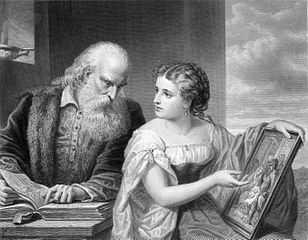 The argument from undesigned coincidences is one of the forgotten arguments for Christianity. It has seen a very recent resurgence through the work of some Christian apologists, such as the philosopher Timothy McGrew. The core of the argument is an investigation of the Bible. When one examines the Scriptures, one finds a number of historical, factual claims which either overlap and confirm others made independently or fill in gaps that authors familiar with current events at the time of the writings would have assumed their readers knew about. These coincidences are therefore undesigned–they are unintentional–but they show that the authors who wrote the books which contain them were telling historical truths.
The Argument Outlined
The argument from undesigned coincinces is not an argument which can be contemplated and accepted or dismissed within minutes or even a few hours of study. The argument must be analyzed by investigating individual instances of the undesigned coincidences for oneself and feeling the weight of the evidence begin to burden the mind.
The argument is an inductive argument. Basically, it argues for the conclusion that the Bible is historically accurate. However, it can be used to argue more specifically towards the conclusion that the miraculous accounts in the Bible did in fact happen.
John James Blunt, an early (1794-1855) proponent of the argument from undesigned coincidences, uses the argument as a challenge:
In our argument we defy people to sit down together, or transmit their writings one to another, and produce the like [undesigned coincidences]. Truths known independently to each of them, must at the bottom of documents having such discrepancies and such agreements as these in question. (J.J. Blunt, kindle location 89, cited below)
It would be hard to make the argument more succinct than this. The argument is built from an ever-growing number of independently observed statements throughout the Bible which coincidentally prove, confirm, or fill in historical gaps of other passages. Therefore, it can feature a huge number of steps, each one an additional piece of evidence. Because of this, it is most easily stated as a challenge. Once you have considered the massive weight of the evidence from untold numbers of undesigned coincidences, can you really maintain your skepticism of the historicity of the Bible?
The argument is used not just to establish the credibility of the Gospels but can be used for a number of other claims about the historicity of Christianity: “The argument deduced from coincidence without design has further claims, because… it establishes the authors of several books of Scripture as independent witnesses to the facts they relate; and this, whether they consulted each other’s writings or not; for the coincidences, if good for anything, are such as could not result from combination, mutual understanding, or arrangement” (Blunt, Kindle Location 78).
Undesigned Coincidences- What are they?
Tim McGrew explains the notion of an undesigned coincidence:
How can we say, no, really there are marks of authenticity [in the Bible]… We should look not for parallel passages in the same words but for what are called undesigned coincidences… Sometimes two works written by different authors incidentally touch on the same point in a manner that cannot be written off as copying or having a copy made from some third source… The two records interlock like the pieces of a jigsaw puzzle. [McGrew, cited below]
Undesigned coincidences overlap and interlock with each other. It is perhaps easiest to explain the concept through an example [I owe this example to Jonathan McLatchie in his post “Undesigned Coincidences: The Ring of Truth”:
Luke 23:1-4:
Then their whole assembly rose up and brought Him before Pilate. They began to accuse Him, saying, “We found this man subverting our nation, opposing payment of taxes to Caesar, and saying that He Himself is the Messiah, a King.”
So Pilate asked Him, “Are You the King of the Jews?”
He answered him, “You have said it.”
Pilate then told the chief priests and the crowds, “I find no grounds for charging this man.”
Wait, what? Isn’t it Pilate’s job to make sure the Jews do not revolt against Caesar? This guy just basically said he was king!
But then compare that to John 18:33-38:
Then Pilate went back into the headquarters, summoned Jesus, and said to Him, “Are You the King of the Jews?”
Jesus answered, “Are you asking this on your own, or have others told you about Me?”
“I’m not a Jew, am I?” Pilate replied. “Your own nation and the chief priests handed You over to me. What have You done?”
“My kingdom is not of this world,” said Jesus. “If My kingdom were of this world, My servants would fight, so that I wouldn’t be handed over to the Jews. As it is, My kingdom does not have its origin here.”
“You are a king then?” Pilate asked.
“You say that I’m a king,” Jesus replied. “I was born for this, and I have come into the world for this: to testify to the truth. Everyone who is of the truth listens to My voice.”
“What is truth?” said Pilate.
After he had said this, he went out to the Jews again and told them, “I find no grounds for charging Him.
John’s telling of the story therefore fills in the gap in Luke’s story. In Luke, there is no reason Pilate would not find grounds for charging Jesus. Only by reading the story in John does one discover that Pilate wanted to let Jesus go because Jesus had explained that his Kingdom was not an earthly kingdom.
If one looks again at these texts in context, one will find that in John, there is no explanation for why Pilate would think Jesus claimed to be a king anyway–it is just out of left field. But turning back to Luke, there is a scene in which the Jews accuse Jesus of claiming to be a king to Pilate. So there is, in these passages, a back-and-forth confirmation. You have to read them both to get the whole picture, and these kinds of details are not the types of things people could plan for.
This is just one example, but they can be multiplied almost beyond comprehension. The way they work is, as McGrew said, like interlocking pieces of a puzzle.
What about Miracles?
The argument can even be used to make a stronger claim. Again, see Blunt, “[I]n several instances the probable truth of a miracle is involved in the coincidences… [W]hen we see the writers of Scriptures clearly telling the truth in those cases where we have the means of checking their accounts… it is reasonable to believe that they are telling the truth in those cases where we have not the means of checking them…” (Kindle Location 89).
Thus, the argument from undesigned coincidences is not a religiously neutral argument. It can also be used to support the truths of miracles. The way this argument works is very subtle. It is not reducible to only the claim that because the Scriptures seem reliable on historical matters due to the undesigned coincidences, we should trust them on the miraculous. Rather, the fact is that the “probable truth of the miracle is involved in the coincidences” (Blunt, 89). “[W]here the natural and supernatural are in close combination, the truth of the former must at least be thought to add to the credibility of the latter” (ibid, 531). The miraculous is sometimes so intertwined with the historical that the confirmation of the historical cannot help but be evidence for the miraculous. Thus, the argument from undesigned coincidences provides a direct argument for the truth of the miraculous.
Conclusion: There’s more where that came from
I have written this post with the intended purpose only to show what the argument from undesigned coincidences looks like. We have seen that it is an inductive argument that is based upon a vast number of examples of varying weight. Furthermore, unlike many historical arguments for Christianity, the argument from undesigned coincidences offers a direct argument for the truth of miracles. I have not addressed possible objections to these arguments. Instead, I leave those for a later post. The next post in this series will outline a few principles of undesigned coincidences.
In closing, it is perhaps best to close with the words of another pre-1900 proponent of the argument:
[S]ince we decide many important worldly matters upon the mere preponderance of evidence and arguments, why should we not adopt the same principles here? It is not necessary in order to recommend the Gospel story for our adoption to insist that it be proved to a mathematical demonstration, and beyond the cavils of every doubter, or of every unreasonable skeptic. Why not adopt that conclusion which has the higher degree of probability rather than the opposite? [Bennett, Kindle Location 59, cited below]
Links
If you want to learn more about forgotten arguments for Christianity, check out my post “On the Shoulders of Giants: Rediscovering the lost defenses of Christianity.”
Tim McGrew has offered a number of other talks on the topic. Please check them out for more discussion of this argument. McGrew on Evidence4Faith. Another lecture by McGrew on undesigned coincidences. Check out McGrew’s interview with Apologetics 315.
Another great post on “undesigned coincidences” can be found at the Christian Apologetics Alliance blog: “The Ring of Truth.”
Cross Examined has a number of coincidences to examine in their post on undesigned coincidences.
Sources
The image is public domain. {{PD-1923}}
John James Blunt, Undesigned Coincidences in the Writings of both the Old and New Testament, New York, 1847.
Edmund Bennett, The Four Gospels from a Lawyer’s Standpoint, New York, 1893.
Timothy McGrew, “Undesigned Coincidences”- this talk can be accessed free of charge here.
William Paley, Evidences of Christianity, New York, 1794; 1865.
SDG.
——
The preceding post is the property of J.W. Wartick (apart from citations, which are the property of their respective owners, and works of art as credited) and should not be reproduced in part or in whole without the expressed consent of the author. All content on this site is the property of J.W. Wartick and is made available for individual and personal usage. If you cite from these documents, whether for personal or professional purposes, please give appropriate citation with both the name of the author (J.W. Wartick) and a link to the original URL. If you’d like to repost a post, you may do so, provided you show less than half of the original post on your own site and link to the original post for the rest. You must also appropriately cite the post as noted above. This blog is protected by Creative Commons licensing. By viewing any part of this site, you are agreeing to this usage policy.
The Myth of “Religion”: Constructing the Other as an enemy
The myth of religious violence should finally be seen for what it is: an important part of the folklore of Western societies. It does not identify any facts about the world, but rather authorizes certain arrangements of power in the modern West… The myth also helps identify Others and enemies, both internal and external, who threaten the social order and who provide the requisite villains against which the nation-state is said to protect us. (William Cavanaugh, 226, cited below)

I recently discussed a phenomenal work by William Cavanaugh, The Myth of Religious Violence
The Myth Played Out
The religious other is said to be violent. Religions cause violence due to their scary propensity to link with irrationality, absolutism, and divisive. Religion caused wars and chaos. Religious persons engaged in wars for God over nothing but minute doctrinal differences raged across the time of the reformation and at other times as well. The rise of the secular nation-state and the squelching of religion in the public square allowed for the cessation of violence and for man to live in peace. Such goes the myth of religious violence. Cavanaugh refers to this myth as a “creation myth” of the nation-state (123).
Notice the themes that run through any discussion of religion and violence. The general theme is that religion causes division through doctrinal matters. Because person A believes x and person B believes y, they argue, Furthermore, because neither x nor y has sufficient rational grounds for A and B to resolve the issue, they must fight in order to determine is right. After all, religion deals with absolutes. A and B square off about salvation–their eternal souls are at stake!
Often, religious persons are tempted to come back and counter that those who are non-religious are often violent too. However, this is itself a reaction to the same factors that drive the notion of religious violence. Namely, the myth of religious violence is used to stigmatize the Other. It constructs temporary categories of “religious” and “secular,” groups people based upon that, and then delegates the worst types of violence to that which is called religious. The myth is part of the justification for the nation-state and nationalism. The Nation is that which protects us from the Others in our own society. Without the protection of the State, we would turn to violence to try to subjugate others for our own purposes. Therefore, the State becomes a sacred object. Its symbols become cultic objects, and we ritualize specific aspects of the State. After all, the Nation is our savior from violence of religion. People will willingly lay their lives down in the name of their country, but for their religion? Certainly not! The State is worth dying for because it defends all people, but a religion is an internalized, personal object.
Thus, those things deemed religious are stigmatized and forced into the personal sphere, while those deemed secular are allowed for public debate. As such, specific aspects of a person’s worldview are forcibly separated and parsed. The religious person is expected to act “secular” when it comes to the public sphere, but is allowed to do whatever he wishes in the private realm. The problems quickly become clear.
Religion as a Myth
Religion itself is a social construct. I have seen this personally in a number of works dealing with “religion.” Rarely do authors attempt anything more than a working definition, and even then the definitions do little to outline real differences between that which is “secular” and that which is “religion.” The definitions are either extremely vague or too specific.
A survey of literature on religion shows that this problem is pervasive. The problem is with the notion of religion itself as a category that can somehow cordon off that which is secular. It may be much more useful to speak simply of ideologies or worldviews. Thus, a side-by-side comparison of differing worldviews can indeed be made. There is no fast and hard distinction between secular and religious, for such a distinction is nothing but arbitrary.
How does one define religion in such a way that Taoism, Confucianism, Christianity, Buddhism, Hinduism, and Islam all somehow fit while Marxism, Communism, Nationalism, and the like do not? It seems an impossible task. Some who read my site may notice that I frequently file things under “philosophy of religion” [including this post!]. I’m not suggesting that “religion” is an entirely useless word. What I’m suggesting here is that we must admit that the category is a construction, pure and simple. When I use “religion,” I use it pragmatically to review to an arbitrarily dilineated set of worldviews. Ultimately, “philosophy of religion” is a philosophy of worldviews: putting them side by side for comparison.
By challenging the reigning paradigm of religion as a real, transcultural, category we may thus turn to the question of violence, rationality, and the like as an empirical, philosophical, and existential study. By stripping away the prejudices that come up when someone uses the word “religious” or “secular,” we may focus upon the actual data at hand. Regarding the question of violence, we can ask questions like: “In what circumstances will worldview U turn to violence?” or “Is worldview U more prone to violence than others?” As such, extremism like that of Marxism which has killed untold millions with an atheistic paradigm can be set up alongside extremism like that of Islamicism. Thus, categories outside of “religion” can be used to analyze these cases. Surely divisiveness, absolutism, and irrationality are involved in both cases? What causes them to arise? How do we slow that tide? How do we reason with the Other?
The category “religion” is a construct of the person utilizing it. As such, it can be wielded as a weapon. And, I charge, that is exactly what the category “religion” has been used for.
Controlling the Other
Those who argue that religion causes violence are, in particular, wielding the phrase as a weapon. The religious Other is irrational, violent, and to be feared. It is “us” or “them.” One can observe this in the literature. Some endorse violence against specific religions just because they assume that the myth of religious violence will apply to the view at large.
It is this kind of mentality that the construct of religion perpetuates. It is the Other which we must fear. We, who are rational, need to fear the irrational Other. The Other causes violence, they cannot be reasoned with, and they want absolutist control over society.
The key to this discussion is that the notion of a hard line between “secular” and “religious” is a social construct. The notion of religion is indeed a construction.
The myth of religion is therefore one step towards the myth of religious violence. The key is to construct a “religious other” who is irrational, divisive, and dangerous. Thus, we can feel free to stigmatize and fear this Other. We need to make sure that the Other does not threaten us, and indeed part of this may be to use violence against the Other. After all, they are incapable of reasoning and will not listen to our sound arguments. The only thing they are capable of understanding is violence, which they have used to try to subjugate us to their views.
It is in this way that the myth is used most dangerously. The religious other is a fearsome enemy, one who must be avoided and perhaps even destroyed in order to prevent one’s own destruction. By perpetuating the notion of religion as a transcultural, transhistorical, real entity distinct from that which is secular, the possibility is made to make the religious other the enemy, while glorifying those categories which one decides are not religious. It undermines the empirical study of the way violence comes about on particular worldviews.
An Alternative Way Forward
Rather than using the category of “religion” in order to stigmatize, I suggest that we instead discuss “worldviews.” In this way, all worldviews are on the same plain. Violence may arise in certain worldviews more easily than others, whether it is nationalism or a particular worldview which is deemed “religious.” It may be extremely difficult to avoid using the term “religion” so I will not even attempt to do so. The category is a construction, so it can be used as a useful fiction. Because it is indeed a temporal, cultural distinction, I can use “religion” in a meaningful sense so far as when I say it people will tend to think of Islam, Christianity, Hinduism, and the like.
However, it is just as important to focus upon all worldviews, not those which are somewhat arbitrarily deemed “religious,” when discussing truth claims. As such, it is important to avoid the secular/religious distinction and instead focus upon factual debate and discussion over the coherence of particular views. By doing so, we can advance the discussion about worldviews while avoiding the use of the myth of “religion” to stigmatize the other.
Links
Book Review: “The Myth of Religious Violence” by William T. Cavanaugh– I review the book which has led me to discuss the ways the category of religion is used to stigmatize the other and also forced me to rethink a number of issues. I highly recommend this book.
Source
William T. Cavanaugh, The Myth of Religious Violence
SDG.
——
The preceding post is the property of J.W. Wartick (apart from citations, which are the property of their respective owners, and works of art as credited) and should not be reproduced in part or in whole without the expressed consent of the author. All content on this site is the property of J.W. Wartick and is made available for individual and personal usage. If you cite from these documents, whether for personal or professional purposes, please give appropriate citation with both the name of the author (J.W. Wartick) and a link to the original URL. If you’d like to repost a post, you may do so, provided you show less than half of the original post on your own site and link to the original post for the rest. You must also appropriately cite the post as noted above. This blog is protected by Creative Commons licensing. By viewing any part of this site, you are agreeing to this usage policy.
Book Review: “The Myth of Religious Violence” by William Cavanaugh
 William T. Cavanaugh’s The Myth of Religious Violence
Violence in the name of…
Cavanaugh first turns to the analysis of violence. He argues that rather than just declaring “religion” violent, people should engage in an empirical study. In analyzing various “ideologies, practices, and institutions” like “Islam, Marxism, capitalism, Christianity, nationalism, Confucianism, secularism, Hinduism…” “A careful examination of the varieties of each [worldview] and the empirical conditions under which each does in fact support violence is helpful and necessary. What is not helpful is to divide the above list into religious and secular phenomena and then claim that the former are more prone to violence… such a division is arbitrary and unsustainable on either theoretical or empirical grounds” (16).
Next, Cavanaugh analyzes three ways that religion is supposed to be tied intrinsically to violence. These are that “religion causes violence because it is (1) absolutist, (2) divisive, and (3) insufficiently rational” (17-18). MRV follows several important thinkers who argue from each camp. Cavanaugh concludes that:
[T]here is no doubt that, under certain circumstances, particular construals of Islam or Christianity contribute to violence… Where the above arguments [about the intrinsic ties of religion to violence]–and others like them–fail is in trying to separate a category called religion with a peculiar tendency toward violence from a putatively secular reality that is less prone to violence. There is no reason to suppose that so-called secular ideologies such as nationalism, patriotism, capitalism, Marxism, and liberalism are any less prone to be absolutist, divisive, and irrational than belief in, for example, the biblical God (54-55).
The Myth of Religion
In a very real sense, MRV could just as easily be titled The Myth of Religion. Cavanaugh argues extensively for the conclusion that “Within the west, religion was invented as a transhistorical and transcultural impulse embedded in the human heart, essentially distinct from the public business of government and economic life” (120).
The attempt to define “religion” has “nothing close to agreement among scholars…” (57). In fact, “[t]here is a significant and growing body of scholars… who have been exploring the ways that the very category religion has been constructed in different times and different places… Religion is a constructed category, not a neutral descriptor of a reality that is simply out there in the world” (58). Following Jonathan Z. Smith, Cavanaugh states, “religion is not simply found, but invented. The term religion has been used in different times and places by different people according to different interests” (58).
Cavanaugh argues towards these conclusion through multiple lines of evidence. First, the concept of religion itself is different across different times and places. The Western notion of religion is not mirrored in other cultures (61). Yet even in the west, the concept of what denoted “religion” evolved. The concept was used simply to mean “worship” in the past (63). Through the medieval period, religion basically just meant “rites” or “piety”: religion was “not a universal genus of which Christianity is a particular species” (64-65).
Thus, religion was “invented in the West.” Now it has come to mean a “universal genus of which the various religions are species” (69). Part of this development was due to a need in the Reformation to demarcate differences between the varying schools of thought (72ff). When moderns use the concept religion in a universal fashion, such as Edward, Lord Herbert of Cherbury (1583-1648) did, the problem “is that it is unfalsifiable. In constructing an a priori religion in the minds of all people, Herbert [and those like him] has made his theory impervious to empirical evidence. All evidence is seen and interpreted through the lens of his religious view a priori” (77). “There was a time when religion, as modern people use the term, was not, and then it was invented” (81).
MRV then outlines two ways to define religion, either through a substantavist–one which focuses on the content of religion–or functionalist–which focuses on how a practice functions–approach. The problem with a substantivist definition is that “even if one were able to come up with a coherent, transhistorical, and transcultural definition of religion which would include things like Christianity and Confucianism and Buddhism and exclude things like Marxism and nationalism and capitalism, it would not tell us anything worthwhile about the cuases of violence. Indeed, to exclude [the latter three] a priori from an investigation of violence in the service of ideology in fact distorts the results of any such study” (105). Functionalist definitions fare slightly better because they define religion in such a way that “‘if it looks like a religion and acts like a religion, then it is a religion'” (109). This approach is capable of including things like the American Civil Religion.
Thus, Cavanaugh states that “there is no transhistorical or transcultural concept of religion. Religion has a history, and what counts as religion and what does not in any given context depends on different configurations of power and authority… the attempt to say that there is a transhistorical and transcultural concept of religion that is separable from secular phenomena is itself part of a particular configuration of power, that of the modern, liberal nation-state as it developed in the West (59).
What does this mean for violence and religion? Cavanaugh proposes a test:
The crucial test, however, is what people do with their bodies. It is clear that, among those who identify themselves as Christians in the United States, there are very few who would be willing to kill in the name of the Christian God, whereas the willingness, under certain circumstances, to kill and die for the nation in war is generally taken for granted (122).
The Creation Myth of the Wars of Religion
The story goes that, after the Protestant Reformation divided Christendom along religious lines, Catholics and Protestants began killing each other for holding to different doctrines. The wars of religion… demonstrated to the West the inherent danger of public religion. The solution to the problem lay in the rise of the modern state, in which religious loyalties were marginalized and the state secured a monopoly on the means of violence…
This story is more than just a prominent example of the myth of religious violence. It has a foundational importance for the secular West, because it explains the origin of its way of life and its system of governance. It is a creation myth for modernity (123).
Following the lines of thinking of Voltaire, John Locke, and others, Cavanaugh argues that the myth of religious violence is perpetuated in order to marginalize that which is considered religious and give rise to the nation-state. According to this myth, “All theological religions are to be tolerated, provided they do not interfere with the obligations of citizens to the state…” (129). The myth is that religion is divisive and that they “fight over doctrines or ‘religious creeds'” so that “the state steps in to make peace” (130).
Cavanaugh shows that this myth is indeed false. The “wars of religion” had any number of motivating factors. The use of this story is not so much to tell a truth as it is a means by which to legitimize the nation-state. He argues towards these conclusions by showing that many “wars of religion” were in fact wars of economy, wars of power structures, and the like. He notes four primary factors for this myth to work: that combatants were motivated by religious difference, that the primary cause of war was religion, that religious causes are analytically separable from political, economic, and social causes at the time of the wars, and that the rise of the modern state was not a cause of the wars (141-142). He then analyzes each of these in turn based upon the historical record and shows that these all fail to account for the actual history of the “wars of religion.” In fact, the opposite is true in each case (142-177).
“We must conclude that the myth of the wars of religion is finally incredible, which is to say, false” (177).
The Uses of the Myth
Perhaps the most challenging and paradigm-shifting portion of the book is that which focuses upon the uses of the myth of religious violence. Cavanaugh argues that the myth is so perpetuated because of its usefulness.
First, he analyzes the use of the myth in building the “wall of separation” between church and state. He examines a number of supreme courses and how the myth of religious violence was used to favor the constructed notion of “secular” over that of “religious” (183ff).
The myth of religious violence is used to create a religious “other” which can then be exploited, coerced, and denigrated. “[R]eligion–or more precisely, religion in public–is what the liberal nation-state saves us from” (192). History is revised in order to show how religion is that which causes violence, while the secular nation-state is that toward which we should turn for salvation.
Oddly, it is permitted, encouraged, and sometimes even required to give devotion to the nation state, while this is not religious. “We are all Americans, and devotional exercises [the pledge of allegiance, venerating of the flag, etc.] meant to instill love of our country are unitive, not divisive. Such exercises, however, are not religion. Patriotism, in this world view, is defined over against public religion. To allow that patriotism might be a type of religion and might carry its own dangers of violence would threaten the very basis of our social order” (192).
On a functionalist definition of religion, however, nationalism counts as religion. “American religion” has “saints (the founding fathers)… shrines (Independence Hall)… relics (the Liberty Bell)… holy scriptures (the Declaration of Independence, the Constitution)… martyrs (Lincoln)… inquisition (school boards that enforce patriotism)…” and various religious festivals (Flag Day, the Fourth of July) (117). Nationalism is prevalent in many countries. Religion is privatized, secular nationalism is standardized and enforced. Not only that, but “Only the nation-state may kill” (118).
Again, Cavanaugh’s point ties into his earlier discussion: the ties to violence must be an empirical study based upon ideologies, not one based upon constructed categories of religious and secular. These categories are faulty in-and-of themselves. Furthermore, they undermine the possibility of the empirical study of violence. Nationalism and secularism–ideologies in other words–can be every bit as violent as some ideologies called “religion.”
The myth is also used to hide possible “secular” causes for war. Al Qaeda is specifically religious, and the West is all too happy to use this to ignore the fact that its own mistakes in installing regimes in the Middle East has caused the rise of absolutist, controlling states (202ff).
Worst of all, the myth of religious violence has been used to carry out violence against the religious other. Those who perpetuate this myth often use it in order to legitimize violence against the religious person, who, after all, is irrational and incapable of reason due to their religious beliefs. Sam Harris is a prime example of this notion. He argues that “There are other ideologies with which to expunge the last vapors of reasonableness from a society’s discourse, but Islam is undoubtedly one of the best we’ve got” (HarrisThe End of Faith, 136, quoted in Cavanaugh, 214). Furthermore, “Some propositions are so dangerous that it may even be ethical to kill people for believing them… Certain beliefs place their adherents beyond the reach of peaceful means of persuasion while inspiring them to commit acts of extraordinary violence against others” (Ibid, 52-53, quoted in MRV 213). Notice how this works: the religious other is that which is unreasonable and violent; in order to stop their violence, it may be ethical to kill them for their beliefs. Harris is not the only one who perpetuates this ideology. Cavanaugh cites a number of other thinkers who have utilized the myth of religious violence in this fashion.
Killing for religion is bad, killing for the state is often good (219). As Cavanaugh states, “The myth of religious violence thus becomes a justification for the use of violence. We will have peace once we have bombed the Muslims into being reasonable” (215). This analysis of violence again plays off the myth of religious violence: “Violence labeled religious is always irrational, particularly virulent, and reprehensible. Violence labeled secular, on the other hand, no matter how regrettable, is often necessary and sometimes even praiseworthy for the job it does defending us from religious violence” (216).
Violence feeds on the need for enemies, the need to separate us from them. Such binary ways of dividing the world make the world understandable for us, but they also make the world unlivable for many. Doing away with the myth of religious violence is one way of resisting such binaries, and, perhaps, turning some enemies into friends (230).
Conclusion
It is rare that one comes across a book that forces them to rethink just about everything they have thought about a specific issue. William Cavanaugh’s The Myth of Religious Violence is one of those books which will challenge readers on every level of the discussion. It has an extremely broad scope, but argues convincingly and with a depth that seems almost indefeasible.
The myth of religious suffers a number of serious defects. It assumes an unwarranted division between the constructed categories of “religious” and “secular,” it oversimplifies the justification for violence, it is a clear example of a creation myth used for the founding of the nation state, and most alarmingly it is used to justify violence against the religious other.
The myth of religious violence may live on on the popular level, but Cavanaugh has dealt its death blow. Whether it takes 50 years or never happens, the myth has been destroyed.
The review has been lengthy, but that is due to the importance of this topic. I will be expanding on and elaborating Cavanaugh’s ideas over the course of the next 1-2 months. Check back here, where I will post links to future posts, or be sure to follow the blog to catch the posts over the coming weeks.
Finally, I want to say that this book was a gift from an anonymous donor from this site and I must say Thank you, you have been a huge blessing! It was so delightful to receive a book out of the blue, and to have it be so fantastic was another reward.
Source
William T. Cavanaugh, The Myth of Religious Violence
SDG.
——
The preceding post is the property of J.W. Wartick (apart from citations, which are the property of their respective owners, and works of art as credited) and should not be reproduced in part or in whole without the expressed consent of the author. All content on this site is the property of J.W. Wartick and is made available for individual and personal usage. If you cite from these documents, whether for personal or professional purposes, please give appropriate citation with both the name of the author (J.W. Wartick) and a link to the original URL. If you’d like to repost a post, you may do so, provided you show less than half of the original post on your own site and link to the original post for the rest. You must also appropriately cite the post as noted above. This blog is protected by Creative Commons licensing. By viewing any part of this site, you are agreeing to this usage policy.
The Consolation of Counterfactuals: The Molinism of Boethius
Whence comes this powerful understanding
That all things sees and all discerns?
…This is a cause more powerful
More forceful and effectual
Than that which passively awaits… (Boethius, The Consolation of Philosophy, Book V, section IV)
Molinism is holds that God has counterfactual knowledge of every situation. What this boils down to is that God knows conditional statements for every possible situation, such that God knows statements like “If J.W. has free time, then he will read.”
One prominent challenge to molinism is the notion that such counterfactuals about future choices cannot exist or that God simply couldn’t know them. I was startled as I read Boethius’ (480-525 AD) work, The Consolation of Philosophy, to see that he had anticipated this objection and provided the outline of an answer to it about 1500 years ago.
Boethius wrote the work as a dialog between himself and Philosophy, a woman who represented, well, philosophy. The last book focuses upon God’s foreknowledge and human freedom.
Writing as philosophy, Boethius states
All those things which happen without happening of necessity are, before they happen, future events about to happen, but not about to happen of necessity… But this, you will say, is the very point in question–whether there can be any foreknowledge of things whose occurrence is not inevitable. (Book V, section IV)
Again, it was amazing to see that Boethius had anticipated an objection to molinism–a system of theological thought which hadn’t been conceived fully yet (and wouldn’t be for about 1100 years!)–and provided an answer. The objection was seen above: many modern philosophers and theologians contend that God could not know that which is not necessitated to happen.
Yet Boethius answers the problem in a unique way:
The cause of this mistake [believing that God couldn’t know things that will not happen by necessity] is that people think that the totality of their knowledge depends on the nature and capacity to be known of the objects of knowledge. But this is all wrong. Everything that is known is comprehended not according to its own nature, but according to the ability to know of those who do the knowing. (Book V, section IV)
Before developing this argument, it is important to note that it rests squarely within Boethius’ later reflection upon the eternity of God–a being who has “the complete, simultaneous, and perfect possession of everlasting life” (Book V, section VI). Because Boethius holds that God is eternal in this sense–timeless–he can reasonably hold that God’s capacity to know is not limited by temporal constrictions.
Thus, we get back to the nature of his response to the counterfactual objection to molinism. Boethius, holding that God is eternal and therefore not limited by time, grounds the knowledge of counterfactuals not in their own inherent ability to be known or not known, but rather in the ability of the knower to know them.
It is worth emphasizing how radical and powerful this response is to the modern argument against molinism. If God is indeed timeless in the sense Boethius presses, then God would have access to the entirety of time as far as knowledge and action are concerned. Thus, by grounding knowledge not in the objects of knowledge themselves but in the capacity of the knower, Boethius grounded counterfactual knowledge.
Objection
Now, modern opponents of molinism would take this in stride and argue either against the contention that God is timeless or against the contention that knowledge is based in the capacity of the knower rather than the known. Exploring either of these objections is beyond the scope of this post, but it is worth noting that Boethius’ rebuttal to the problem of counterfactual knowledge works if both of his contentions are true. The question is, of course, whether they are.
A Final Objection and Response
Another way to attack Boethius’ defense of God’s knowledge of counterfactuals is to argue that even if it is the case that God is eternal and that His knowledge is grounded in the knower rather than the known, then it still would only mean that God knows what will happen, not what would happen if something were to happen. In other words, one could hold that Boethius’ answer doesn’t actually apply to counterfactual knowledge.
It seems possible, however, to modify Boethius’ defense to counter this argument as well. One could note that because God is eternal, any event that would happen, God would know about it. In other words, if x were z instead, then God’s knowledge would simply be z instead of x. This response turns the counterfactual into a counterfactual about God’s knowledge rather than about freedom. The response offered turns the question from whether God could know that “If x, then y” about John Smith into a question of “If z instead of x, then God knows z.”
Conclusion
It seems clear to me that there is much to develop yet in the objections and responses offered above. The last critique offered and my response certainly opens a number of areas of inquiry. However, for now it seems clear that Boethius has offered a unique way to look at the problem of counterfactual knowledge. Whether his perspective is correct remains a matter for further inquiry.
Boethius offered a unique and stirring defense of molinism over a thousand years before it was fully articulated by Luis de Molina. It is worth looking into his answer, even if it fails, simply for the foresight it provided. But Boethius’ work is known as an astounding discussion of divine eternity as well, among other things. Thus, I encourage readers to look into his short work, The Consolation of Philosophy. Who knows, you may even find the consolation of counterfactuals therein.
Edition Used: For this post I used the Penguin Classics edition of The Consolation of Philosophy (New York: Penguin, 1999).
SDG.
——
The preceding post is the property of J.W. Wartick (apart from citations, which are the property of their respective owners) and should not be reproduced in part or in whole without the expressed consent of the author. All content on this site is the property of J.W. Wartick and is made available for individual and personal usage. If you cite from these documents, whether for personal or professional purposes, please give appropriate citation with both the name of the author (J.W. Wartick) and a link to the original URL. If you’d like to repost a post, you may do so, provided you show less than half of the original post on your own site and link to the original post for the rest. You must also appropriately cite the post as noted above. This blog is protected by Creative Commons licensing. By viewing any part of this site, you are agreeing to this usage policy.
Really Recommended Posts 8/3/12
Wow, there are some really excellent posts out there. I am constantly blessed by reading or viewing great material from others. This week, the topics covered are all over the board: abortion, Leviticus, 50 Shades of Grey, apologetics methodology, and more! Check out these really recommended posts.
Grey Areas: How explicit literature went mainstream– You’ve heard of 50 Shades of Grey. What’s all the fuss about? And what kind of junk are we putting on the bookshelves?
The Mistake of Leviticus– Leviticus is one of those books in the Bible many balk at reading. Check out the insight provided here by Credo House. I really, really recommend this post.
Some Standard Definitions From the Doublespeak Dictionary– Bigot, Christian, and Intolerant tie together so well! Check out this great apologetic cartoon.
The Bibliographical Test Updated– Clay Jones, a professor over at Biola University, offers an update to the number of ancient manuscripts available for the various “bibliographic tests” for the accuracy of the New Testament. A brief, readable, and important post.
Is Abortion Really Wrong?– A great introduction to the debate over abortion.
Why I don’t reply to everyone (and neither should you)– It’s easy to get caught up in online debates or try to respond to everyone who comments on a blog or forum. Glenn Andrew Peoples offers an excellent post on why he doesn’t respond to everyone. He also gives some good guidelines for deciding whether you’re going to respond to someone.
The Atheist War Against Logic and Philosophy– I’m not sure this video is fairly named, because it seems like it is more the extreme views on philosophy of a number of people dismissed by the vast majority of others. Good watch if you want to pull your hair out at people rejecting logic while using it.
Apologetic Taxonomy: Methodological Approaches– Readers of my blog know I’ve been exploring a few other apologetic approaches. Here’s an excellent post which outlines the various methodological approaches to apologetics in a brief, readable format.

 J.W. Wartick - Reconstructing Faith
