Reformation Review
Who Interprets Scripture? Sola Scriptura, the Reformation, and the modern era: Reformation Review
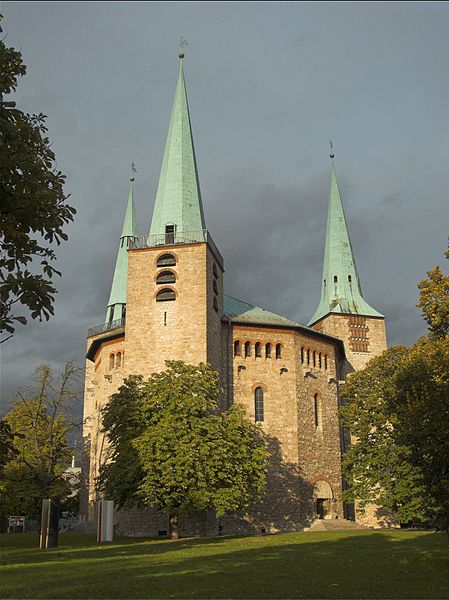 Theological debates raged throughout the period of the Reformation. These debates were about who had the right to interpret Scripture, what was the nature of salvation, who had authority in the church, and the like. Sound familiar? It should. Many of the debates that were central to the reformers are still in our purview today. Central to several of these debates focused upon the interpretation of Scripture.
Sola Scriptura: Two difficulties
The Reformers operated under the ideal of sola scriptura. The term literally means “scripture alone.” The notion seems simple enough: when it comes to doctrine, practice, and belief, the church universal is to be guided by Scripture alone. Yet it quickly became apparent during the Reformation era that things were not quite so simple.
First, sola scriptura was largely founded upon the notion that any Christian could read and understand Scripture. Yet, as became clear due to the fierce debates of the meaning of the Sacraments (i.e. the debate between Luther and Zwingli on the “real presence” in the Lord’s Supper), it seemed that on some things, Scripture wasn’t so simple (McGrath a, Reformation Thought: An Introduction
Second, Anabaptists and others argued that sola scriptura meant that every single individual Christian could read and understand the Bible for themselves. How was this problematic? Well, if every Christian could understand every part of the Bible, then there was no way to arbitrate between differing interpretations of soteriology (doctrine of salvation), eschatology (doctrine of the end times), and the like. Of course, not all of these interpretations could be correct, and if those who had argued for the individualism of Scriptural interpretation were correct, then they could all be right, in some sense. Furthermore, the issue was exacerbated in that because no one had the authority to proclaim what doctrines were correct, the church began to increasingly split to the point that “the radical Reformation was not a unified movement, but rather a chorus of protest against the clergy, secular authorities, and Reformers such as Luther and Zwingli. It was a reservoir for uncompromising protest that could well up in the most varied social circles… ‘Within the turmoiled flood of radical reform or restitution the fresh vitalities of the Reformation… were borne along swiftly to radical extremes'” (Carter Lindberg, The European Reformations
Limiting Perspicuity
The solution to the first problem was simply to concede that, on at least some issues, Scripture was not crystal clear. On at least certain points, the magisterial reformers “had conceded that Scripture is obscure” (McGrath a, 108). There was genuine disagreement over some issues. However, not all agreed with this conclusion, and some still pressed that all of Scripture was indeed clear. Such an argument tied into the second problem the Reformers had to confront in relation to sola scriptura: who has the right interpretation?
 Which Interpretation? Tradition’s Importance
Tradition played an important role in determining how the interpretation of Scripture was to be undertaken. During the Medieval period, a number of developments in hermeneutics laid the groundwork for the various interpretive methods utilized in the Reformation (McGrath b, 148ff). There were three primary views which emerged during the Reformation.
First, there was the position that “there is no place for tradition in the interpretation of the Bible. Every individual or community is free to interpret the Bible without reference to the Christian past” (McGrath a, 100). Such a position was part of the Radical Reformation and led to innumerable differing interpretations of Scripture. Of course, this was the group of reformers which applied sola scriptura most consistently. They took the principle literally and only allowed the Bible to be authoritative. However, with no way to arbitrate between differing doctrines, it seemed that such a position was incapable of standing up to scrutiny. All it could allow for was rampant individualism.
Second, there was the position that tradition was “an additional mode of divine revelation, in which information that was not committed to writing in the Bible was passed down…” (McGrath a, 100). The Roman Catholic church endorsed this position. However, it did not become popular with the reformers at all.
Instead, the Reformers developed a third position, one which stood as a middle way between the extremes of enshrining tradition and rejecting it outright. On this position, “Tradition designates a traditional way of interpreting a biblical text, which does not displace the text” (McGrath a, 100). Tradition therefore does not become an independent source of authority, but rather a way of interpreting the authority–Scripture–in an authoritative manner. By using tradition in this manner, the Reformers avoided the individualism of rejecting tradition, while also avoiding the error of raising tradition to the same level of importance as Scripture.
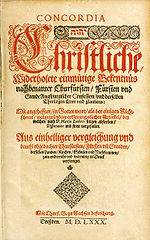
The third way was developed largely in the Reformed and Lutheran traditions, but it had its core in the historic Christian Creeds. Within the Lutheran tradition, the Apostles’; Nicene; and Athanasian Creeds were taken as theological foundations, and the Augsburg Confession and the later Book of Concord (which drew together several other confessions of the Lutheran faith) became the interpretive lens through which the Lutheran church would view Scripture and right doctrine.
Modern Theology, Reformation Problems
The discussions which occurred in the Reformation on the nature of sola scriptura, tradition, and the interpretation of Scripture had their origins in the past, and they continue into today. Some continue to insist that anyone can read the Bible and understand it in its entirety.
Against those who argue against their position, they insist that they themselves are just reading what the Bible says. This can be seen in a number of debates in Christian theology. It seems the best response to those who wield the ‘perspicuity of Scripture’ as a weapon against alternatives to their own doctrine have no alternative against those who disagree other than going back and forth claiming their own interpretation is correct and/or more clear.
The example I most often like to use is the book of Revelation and eschatology. Someone who claims the perspicuity of Scripture applies to the whole of Scriptural teaching must claim, in order to be consistent, that these doctrines are clear. Thus, such a person must maintain that every single verse in Revelation can simply be read by anyone and understood.
To be frank, I find this absurd. The extreme diversity of people’s interpretations of Revelation seem to undermine the notion that every passage in Scripture is clear. Furthermore–as has already been noted–those who hold to this radically individualistic position of Scripture have no way to decide between differing interpretations of Scripture. They are thus left with no way to determine any doctrine, whether it is radically opposed to Christianity or not, is heretical. Thus, one who holds this position cannot condemn modalism, as long as the person arguing for it is only using the Bible. After all, Scripture is clear! Everyone can read it. Therefore, it seems that this debate which continues to rage on from the Reformation must end. In order to avoid the mire of wanton individualism, we must have some principles for interpretation.
Another major issue of contemporary debate is that of Creeds and “paper popes.” Often, for example, the Lutheran Church is accused of utilizing the Book of Concord as a “paper pope”–a book which acts as an infallible interpreter of Scripture. Similarly, some argue that the historical Christian creeds are not Scripture and therefore must not be affirmed: again, sola scriptura.
It may be helpful to see this as a case study: in Lutheran circles, there is a debate over whether one must agree with the Book of Concord (the Lutheran Confessions) because it agrees with Scripture or insofar as it agrees with Scripture. Note the very important difference. If one says it is “because,” one is affirming that the Book of Concord is the correct intepretation of every relevant passage of Scripture. If one affirms that it is “insofar as,” one is admitting that there may be error in that interpretation. From a Lutheran perspective, this debate is hard to resolve. I tend to line up on the latter (insofar as) view.
However, it is clear that once one takes that position, one must lean more towards individualism. Again: how does one arbitrate doctrine if one does not adhere to any kind of authoritative statement on doctrine? It seems to me that one must at least hold that God has the power to transmit His teaching truthfully, and that’s why the historical Christian Creeds are vastly important. There must be a line drawn somewhere, but people may ever debate where to draw that line.
The key is perhaps found in Scripture itself, in which Christians are instructed not to continue arguments needlessly nor to focus upon topics which will create division (1 Corinthians 1:10ff; Ephesians 4:1ff). These teachings do not, however, preclude division nor do they allow for rampant individualism. It seems to me, therefore, that by adhering to the ecumenical council’s teaching–specifically, the creeds–as drawing out the right teachings of the church, we can avoid some of the great difficulties illustrated above. That’s why I would focus upon the Creeds which were drawn from those councils (like the Apostles’, and Nicene Creeds) as the sources of authoritatively governing Christian interpretations on those topics.
Conclusion
Many theological questions that are in play today have their origins in various aspects of Reformation thought, which themselves have their origins in earlier Christian thought. The issue of the perspicuity of Scripture, it seems to me, must be limited to that of soteriology and perhaps a few other core issues. On who has the authority to interpret Scripture, it seems that the Reformers offered a way forward: by agreeing to submit to the authority of ecumenical Creeds not as sources of their own authority but rather as authoritative interpretations of the Bible, Christians can proceed in their reading of Scripture and interpretations thereof through those lenses. Thus, the danger of individualism and endless division can be avoided.
Link(s)
I survey the origins of the Reformation.
Sources
Alister E. McGrath a, Reformation Thought: An Introduction
Alister E. McGrath b, The Intellectual Origins of the European Reformation
Carter Lindberg, The European Reformations
Thanks
Alister McGrath’s Reformation Thought: An Introduction was a gift from an anonymous donor. I was blown away when I saw it show up at my door and I have to say Thank you so much for being such a blessing! Whoever you are, you made my day. Well, more than just one day actually. This series of posts is a direct result of your donation. Thank you!
SDG.
——
The preceding post is the property of J.W. Wartick (apart from citations, which are the property of their respective owners, and works of art as credited) and should not be reproduced in part or in whole without the expressed consent of the author. All content on this site is the property of J.W. Wartick and is made available for individual and personal usage. If you cite from these documents, whether for personal or professional purposes, please give appropriate citation with both the name of the author (J.W. Wartick) and a link to the original URL. If you’d like to repost a post, you may do so, provided you show less than half of the original post on your own site and link to the original post for the rest. You must also appropriately cite the post as noted above. This blog is protected by Creative Commons licensing. By viewing any part of this site, you are agreeing to this usage policy.
Reformation Review: A look at the origins of the European Reformations
 The Reformation [I am going to use the term “Reformation” to refer to the European Reformations and the Roman Catholic counter-Reformation] is a period of extreme importance for those who seek to understand Christian theology. Many of the debates that are happening now can trace their roots to this period of history.
One of the most important aspects to understanding the Reformation–and, by extension, much of the development of theology after the Reformation–involves looking into the origins of the movements. How is it that the Reformation started? What brought about the notion that it was necessary to reform the Church?
In his Reformation Thought: An Introduction
Social Factors in the Reformation
The organization of cities was one factor that led to the success of the reformation. McGrath notes that individual cities during this period had come to regard itself as a kind of individual state. However, due to the failures of many of these cities to provide for their citizens and their growth over time, there were calls for a broader and representative government (McGrath, 16, cited below).
Cities had become centers of power and experienced “remarkable growth” due to the various agrarian crises and plagues that had taken place in earlier years (Carter Lindberg, The European Reformations
Furthermore, the control of the city council over the general practices and laws of the cities often led to a “symbiotic relationship” between a reformer and the city council. “The reformer, by presenting a coherent vision of the Christian gospel and its implications for the religious, social, and political structures and practices of a city, was able to prevent a potentially revolutionary situation from degenerating into chaos” (McGrath, 19).
Some reformers were very tied to the social aspects of the reformation. For these reformers, “the Reformation involved the identification of ‘citizen’ with ‘Christian’… Thus Zwingli laid great emphasis upon the need to reform and redeem a community, whereas Luther tended to concentrate upon the need to reform and redeem the individual” (McGrath, 20).
Doctrinal and Moral Concerns and the Reformation
One of the primary concerns of the reformers was that the Church could “best be reformed and renewed by returning to the beliefs and practices of the early church” (McGrath, 20). The reformers observed many problems with the Church of their time and felt that it was important to return to the “golden age” of Christianity, which they interpreted largely as the patristic period.
There had been a growth in popular religion which was largely disconnected from that of the Church. “Folk religion” focused upon the “needs of rural communities–such as haymaking and harvesting” (McGrath, 24). A lack of confidence in the pope and the clerical system contributed to the need for reform. Furthermore, the laity was becoming more educated, which led to a problem for the Church. Due to the Roman Catholic church’s system at the time in which positions of authority would be given often to the highest bidder, there were many in the Church who never visited their parishes or had little interest in or understanding of that which they were supposed to preach. The educated laity became increasingly aware of the many errors even parish preachers would make in their renditions of the Latin in the Mass (some of these priests had merely memorized the service without understanding it themselves!) (24ff).
Furthermore, throughout the Scholastic era, the Church had tolerated a kind of doctrinal pluralism. The Church recognized the need for allowing the academics to debate various issues, but this led to a serious question: “[W]hich of these schools of thought [theological schools of thought like Thomism or Scotists] was right?” (McGrath, 28). Yet the Church had suffered from a kind of schizophrenia about centralized authority. Was the authority in the Church found in Councils or in the Pope (Lindberg, 44ff)? Questions like these led to the need for reform. The reformers focused on who had the right to decide doctrine and the need for God’s word in the vernacular of the populace.
Two Primary Movers
There were two primary focuses for the individual reformers: the moral sphere and the doctrinal sphere. While it is necessary to avoid drawing a false either-or dichotomy between these, it is equally important to note that the various reformers focused largely one way or the other. Broadly speaking, several reformers in the Wittenburg/Swiss tradition focused upon the need to reform the very teachings and doctrines of the church, while those in the humanist (not to be confused with modern notions of humanism as atheism, but rather as a system of thought and practice) tradition focused upon the need to reform the moral practice of the church.
Again, neither of these should be seen as exclusive of the other. Moral reform often involved doctrinal reform and vice versa. What must be emphasized, however, is that the reformers differed at points on whether it was more important to have right belief or right practice. Surely both thought both were necessary, but the question was how to integrate these into the Church and furthermore which should come first as important. Such differing emphases can be observed, for example, in the doctrine of Scripture. The humanistic reformers tended to see the Bible as a guide for morals, while the Wittenberg and Swiss reformers tended to see it as a “record of God’s gracious promises of salvation to those who believed” (see discussion in McGrath, 55-57).
More to Come!
Thus, the stage was set for reform of the church. Societal and doctrinal pressures were in place that would lead to the need for reflection on the spheres of belief and practice. The debates that raged through the reformation continue to rage today.
Throughout October and into the next few months (and perhaps beyond, depending on the feedback/readership I get here), I will be exploring various aspects of the Reformation. I will look at some important thinkers of the Reformation period and will also focus on some modern theology which can trace its roots back to the reformation. Why October [and beyond]? Well, Reformation Day is October 31st! Be ready to learn with me, and please ask questions and leave some comments!
Alister McGrath’s book was a gift from an anonymous donor. I was blown away when I saw it show up at my door and I have to say Thank you so much for being such a blessing! Whoever you are, you made my day. Well, more than just one day actually. This series of posts is a direct result of your donation. Thank you!
Links
The Church Universal: Reformation Review– What makes a church part of the Church Universal? What makes a church part of the true church? I write on these topics (and more!) and their origins in the Reformation.
Who Interprets Scripture? Sola Scriptura, the Reformation, and the modern era: Reformation Review– I investigate the notion of “sola scriptura” and its different applications in interpreting Scripture. I particularly emphasize the problem of doctrinal unity and the various ways church bodies have dealt with these difficulties from the Reformation into today.
Sources
Alister McGrath, Reformation Thought: An Introduction
Carter Lindberg, The European Reformations
SDG.
——
The preceding post is the property of J.W. Wartick (apart from citations, which are the property of their respective owners, and works of art as credited) and should not be reproduced in part or in whole without the expressed consent of the author. All content on this site is the property of J.W. Wartick and is made available for individual and personal usage. If you cite from these documents, whether for personal or professional purposes, please give appropriate citation with both the name of the author (J.W. Wartick) and a link to the original URL. If you’d like to repost a post, you may do so, provided you show less than half of the original post on your own site and link to the original post for the rest. You must also appropriately cite the post as noted above. This blog is protected by Creative Commons licensing. By viewing any part of this site, you are agreeing to this usage policy.

 J.W. Wartick - Reconstructing Faith