Sam Harris
Sam Harris on Christian Sacraments–Lunacy?
 Sam Harris recently debated William Lane Craig on the topic “Is Good from God?” See my comments on the debate here. During the debate, Harris argued that the rituals of Christianity can be seen as a kind of lunacy. Harris said, “[Religion] allows perfectly decent and sane people to believe by the billions what only lunatics could believe on their own. If you wake up tomorrow morning thinking that saying a few Latin words over your pancakes is going to turn them into the body of Elvis Presley, you have lost your mind. But if you think more or less the same thing about a cracker and the body of Jesus, you’re just a Catholic.”
Consider what Harris is claiming here. Basically, he’s saying that to believe a cracker becomes the body of Jesus is a kind of lunacy. Interestingly, throughout the debate he issued these veiled (or not so veiled) insults to Christians at large, and quickly retreated from them when he was called out. But that’s neither here nor there.
My contention is that Harris’ implicit argument against the rationality of the Sacraments (and Christian rituals at large) contains an implicit assumption. Once that assumption is exposed, his argument fails. The implicit assumption is this:
1) Christianity is false
Yeah, I’m serious. The reason is because the only way Harris’ argument makes sense is if one assumes a priori that Christianity is false. For consider his objection if Christianity is true. If Christianity is true, then God exists, Jesus was God, Jesus told us what would happen in Communion/the Eucharist, etc., etc. But then if Christianity is true, it is perfectly rational to hold that the uttering of certain words as part of a ritual would be causative in the sense that God said it would be. So Harris’ argument turns on the assumption that Christianity is false.
But perhaps I’m missing Harris’ point. Perhaps he is instead trying to say “Look at what you guys do! It’s crazy if it’s something else!” But again the only way this would make sense is by assuming Christianity is false. If I believe Christianity is true, then I have no reason to think the rituals involved therein are lunacy or anything other than perfectly rational worship of our God.
But it could be pressed that it does seem as though Harris’ assertion that Holy Communion would be viewed as lunacy in other contexts is in some sense correct. For were I to do the same with pancakes and Elvis, I would be seen as a lunatic. Why not the Christian too? Well, then the question would have to be what kind of evidence do we have for thinking Christianity is true as opposed to other beliefs? In short, if the Christian is epistemically justified in believing Christianity to be true, then Harris’ argument is exposed for what it is: a facile argument which shows how deeply Harris and the other “New Atheists” fail to understand the position they attack.
SDG.
Image: Priest distributing Holy Communion at Holy Protection Church, Düsseldorf.
——
The preceding post is the property of J.W. Wartick (apart from citations, which are the property of their respective owners) and should not be reproduced in part or in whole without the expressed consent of the author. All content on this site is the property of J.W. Wartick and is made available for individual and personal usage. If you cite from these documents, whether for personal or professional purposes, please give appropriate citation with both the name of the author (J.W. Wartick) and a link to the original URL. This blog is protected by Creative Commons licensing. By viewing any part of this site, you are agreeing to this usage policy.
Sam Harris vs. William Lane Craig: Thoughts and Links
 The debate I’ve been hyping to friends and family happened tonight: Sam Harris, one of the “New Atheists” and author of the books The Moral Landscape, Letter to a Christian Nation, and The End of Faith went up against William Lane Craig, one of my favorite living philosophers. Craig has a PhD in philosophy, as well as a ThD. He’s written extensively on philosophy of religion, apologetics, and time. He’s the author and editor of too many books to list, but they include The Blackwell Companion to Natural Theology, Reasonable Faith, and Time and Eternity. The topic of the debate was “Is Good from God?”
I wanted to share some links for all of you, along with my thoughts about the debate.
Links
Audio of debate here.
Video of the debate here.
Craig rebuts Harris’ allegation of misquotations here.
Craig’s brief post-debate impressions here.
Craig’s thoughts on his strategy in the debate here.
Another analysis of the debate here.
See Wintery Knight’s summary of the debate here.
More links will be posted as I find them.
Analysis of Debate
It is important to note that the topic of the debate is “Is Good from God?” The topic is not “Does God exist?” Nor is it “Is the God of the Old Testament Evil?” Remember this. Also, my apologies in advance for my tense shift throughout. It’s almost 2AM and I’m tired.
Craig Opening
Craig’s opening statement started with him asserting he’d maintain two propositions
I. If God exists, then we have a solid foundation for objective moral values.
He backed this contention up by saying that it is true even if God does not exist, because it is a conditional statement (“If God exists…”). Further, he argued that God’s nature provides the standard against which all moral vales are measured. Important: Note that here Craig is not arguing that objective moral values are grounded in arbitrary commands from God, rather, Craig argues that God is the standard against which morals are judged. It would be true to say God is good simpliciter.
As far as moral duties are concerned, it is these which are constituted by God’s commands, however that does not mean the commands are arbitrary, but rather grounded in the essential nature of God.
Craig’s second contention was:
II. If God does not exist, then there is no strong foundation for objective moral values.
He argued:
1) Why think that human beings have objective moral worth? On atheism, humans are merely “accidental byproducts” of naturalistic evolution. What therefore would mean that humans are more valuable than hyenas, other primates, rocks, etc.?
2) He quotes Michael Ruse, an atheistic philosopher, who points out that morality is, on atheism, illusory. It is a mere socio-biological convention. And to think that morality is objective is simply false. He also quotes Dawkins as saying that we are just machines for propagating DNA. On such a view, how can we be objectively valuable?
3) Craig argues that Harris simply redefines good in nonmoral terms. He argues by stipulation that “well-being” = good, which is to beg the question. Craig argues that Harris has provided no reason to equate the two, and in fact has no grounds from which to do so.
4) Natural science only shows what “is” not what “ought” to be. It can only describe actions, not prescribe them.
5) Harris explicitly denies free will within his writing and so it seems impossible for there to be any culpability for actions. How can someone have “ought” applied to them if they are not free to make choices about their actions?
Harris Opening
Harris begins by noting, as did Craig, the areas of agreement. He agrees that to deny objective morality can lead to some horrific views, and he uses anecdotes to support this claim. Craig and Harris seem to agree that objective morality is something necessary for meaning in the universe. I find no contention with this part of Harris’ discussion.
He goes on to argue that there are “facts” and there are “values.” He argues that science can move from the subjective facts to objective values, although I found his argument here unclear.
Finally, he gets to the point where he specifically outlines his view, which is based upon the well-being of conscious creatures.
Harris argues that “If the word ‘bad’ applies, it is ‘wrong.'” Further, “The minimum standard of moral goodness is to avoid the most possible misery for everyone.” Harris asks us to envision a world in which every conscious being was suffering to the maximum possible extent. He says that this is obviously bad (= wrong) and so we can scientifically determine what is good by working towards the well-being of conscious creatures.
At this point in my notes I wrote “Why?” next to the quotes from Harris. And I think that is exactly the problem. Thus far, Harris has done a good job outlining what he thinks is wrong, but he hasn’t done anything to say why it is wrong, other than by stipulating that it is wrong.
Harris goes on to argue that
1) Questions of right and wrong depend upon minds
2) Minds are natural phenomena
3) Therefore, morality can be understood by science because we can study minds
Against Harris, I would note that each of these premises are contentious, and he doesn’t argue within the debate to support any of them. First, premise 1) is questionable because it actually goes against the nature of objective morality. If something is objectively wrong, even were there no minds in the universe, the action would still be wrong. Here Harris makes the mistake of thinking that because minds make moral judgments, moral judgments are dependent upon minds. I think that is false, and it needs argumentation to support.
Second, premise 2) assumes physicalism, which is the position that our minds are wholly composed of matter, and there is no non-physical property of mind. I’ve argued against this position elsewhere (see for example, my posts here and here). But the thing is that Harris simply takes 2) as given. To be fair to Harris, this is a debate so he hardly has the time to make a substantive case for physicalism. My point here is that Harris’ argument hardly establishes his conclusion–there is a lot of footwork to be done to establish 1) or 2). I think that both have serious difficulties and are generally non-starters.
Finally, Harris briefly asserts that the God of the Old Testament is evil.
Craig First Rebuttal
Craig’s first rebuttal began with him summing up his contentions I and II above. He points out that Harris didn’t attack either contention directly.
Craig points out that the debate is not about Old Testament ethics, but cites Paul Copan’s Is God a Moral Monster? for those interested in the topic.
Harris in particular did not argue against contention I at all, so Craig turns his guns against Harris’ assertions about objective morality on atheism.
First, Craig asks “If atheism is true, what makes flourishing of conscious creatures objectively good?” He goes on to say “They might like to flourish” but that does not provide an objective reason to ground morality in their well-being.
Second, Harris admits that it is possible for rapists/murderers to be happy (in a state of well-being) to the point of being a “peak” in his “moral landscape.” But if that is the case, then an objectively evil entity, on Harris’ account, could occupy the peak of the moral landscape, which would entail a contradiction, because an objectively bad person was viewed as an objectively good thing/state of affairs. I found this particularly powerful to refute Harris, and I liked how the camera shifted to him almost immediately after this statement by Craig. Harris did not look happy.
Finally, Craig argued that because Harris denies freedom of the will, he can’t actually hold that humans have any obligations whatsoever.
Harris Rebuttal 1
Harris started off by saying “that was very interesting.” Fair enough.
Then he says, “Ask yourselves what is wrong with spending eternity in hell”. As he continued along this line of reasoning, I wrote “Harris is curiously arguing against hell…?”
Basically, rather than trying to defend his view whatsoever from Craig’s lucid attacks, Harris turned to the problem of evil. It was here that any doubt in my mind about this debate faded away. Harris made no attempt to defend his position, but rather argued that we have no way to know that Islam is not the true religion, on Craig’s argument, and that the God of the Old Testament is evil. In other words, he abandoned the attempt to defend his position immediately upon the gaping holes Craig’s rebuttal blew through it.
He also seems to have missed Craig’s point that God is essentially good and instead argues against a straw man by asserting that God is not bound by duties, which Craig had already explicitly denied. Then Harris made some offhand remark about psycopathy and religion. He says that he can’t think of a less moral framework than that of the God of the Old Testament.
Craig Rebuttal 2
Craig starts his response by saying, “The less moral framework is atheism!” because it is “not a framework!” Craig seems as baffled as I am that Harris didn’t actually respond to any argument he had leveled against Harris’ “landscape.” Further, he points out that Harris is resorting to red herrings–Sam is trying to derail the debate into a discussion of the problem of evil and Old Testament ethics rather than a debate about whether atheism or theism can better ground objective morality.
Further, Craig notes Harris is totally wrong when he argues the goal of theism is to avoid hell. Rather, theism worships God because He, as the greatest possible being and source of our existence, etc., etc. is worthy of worship, not because of the desire to avoid hell. That is a simple misrepresentation of theism!
Interestingly, Craig also notes that all theists can utilize his contention I, whether they be Hindu, Muslim, Jew, or Christian (etc.). Remember this.
Harris Rebuttal 2
Harris finally attempts to defend his position by saying his position is defended because we “need only assume that the worst possible suffering” for every conscious being would be an objectively bad state of affairs. He says “My argument entails that we can speak objectively about a certain class of subjective facts” namely, moral values. So basically, his argument boils down to “Just believe that x is objectively bad, and my view works!”
Unfortunately, Harris once more gets sidetracked in trying to argue against the existence of God by asserting that the pluralistic nature of religions experience disproves religions. As I’ve noted elsewhere, a mere plurality of opinions does not entail the falsity of all.
Craig Closing Statement
Craig notes that God is the greatest conceivable being, so to ask “Why should we think God is good?” is like asking “Why are bachelors unmarried?”
Further, he points out that Harris has yet to answer the schoolyard question, “Why?” Why, on atheism, should we think that the worst possible state of affairs is objectively bad? We might not like it, but that doesn’t ground it objectively.He closes by saying “All together now, ‘says who?'”
Harris Closing
Again, Harris leads with an argument from religious diversity. He also complains that Craig’s argument for a theistic ground of morality could equally be used by the Muslim, which is exactly correct. Craig said earlier that any theist could ground their morality on God.
Finally, Harris notes that just as we aren’t losing any sleep over the fact that Muslims think we (Christians) are going to hell, he isn’t losing any sleep over Christians thinking he is going to hell. But what kind of argument is this? Someone is unconcerned about a rival hypothesis, so we should think the rival is false? I mean, I’m not losing any sleep over the fact that Harris thinks the basis of my religion is psychosis, because I think it is ridiculous!
Q and A
I simply can’t ignore the Q and A from this one. Some of the questions were just silly, but the two that struck me were both asked of Harris. The first question was from someone who basically asked “If a God were proposed that would meet your [Harris’] definitions of objective morality, would you grant that he could ground morality?” Harris answered very well by saying yes, but then there would be no reason to propose God as the grounds for the morality, for one would have to grant Harris’ account worked.
The second question was the kicker. The person asked, basically “You base objective morality on the an assumption that the worse possible world is bad, why think that is not subjective [based upon an arbitrary assumption]?” Harris answered the only way he could. He said we have to take it as axiomatic that it is objectively bad.
So basically, Harris admits that on his view, we must simply have faith that some things are objectively bad and that the well-being of conscious creatures is objectively good. We must simply assume that something is true, and that is to be our grounds for belief. As Harris put it, it is axiomatic, so it doesn’t have to be justified. On such an account, then, belief in objective morals is, on atheism, a leap of faith–an ungrounded, unjustified (epistemically) leap. I’ll have to be forgiven for thinking Harris failed to adequately defend his position.
Overall, I’d say Harris seemed to fare better than Lawrence Krauss in his debate with Craig (my analysis here), but upon thinking about it, I think Harris may have done far worse. The bottom line is Harris lined up atheism’s best attempt to ground objective morality like a house made of building blocks. Craig came along and knocked them over. Then he laughed.
SDG.
——
The preceding post is the property of J.W. Wartick (apart from citations, which are the property of their respective owners) and should not be reproduced in part or in whole without the expressed consent of the author. All content on this site is the property of J.W. Wartick and is made available for individual and personal usage. If you cite from these documents, whether for personal or professional purposes, please give appropriate citation with both the name of the author (J.W. Wartick) and a link to the original URL. This blog is protected by Creative Commons licensing. By viewing any part of this site, you are agreeing to this usage policy.
What Evil? (The Problem of Evil on Empiricism)
 The problem of evil is often seen to be the greatest philosophical challenge to theistic belief. The problem of evil is also most frequently raised by people who are ardent empiricists (which undergirds their atheism). There are many versions of empiricism, but the one we will investigate at the moment is naturalistic, atheistic empiricism, which holds both that there is nothing but the natural world in the sense of the world which can be directly accessed via the senses and only sensory, empirical evidence is sufficient evidence for holding a proposition to be true.
On this view, it seems extremely difficult to figure out what exactly evil is. Sam Harris is well known for trying to show that science is capable of dealing with moral issues (discussed here). The method basically involves finding out what makes people happy (which is “good”) and what makes them unhappy (which makes it “bad”) (see here). It remains totally unclear to me, however, how Harris makes the jump from “happy” to “objective good.” Measuring people’s happiness doesn’t mean measuring goodness. There are serial killers who are very happy to go about secretly killing as many people as possible. That doesn’t make their action “good”, unless you boil “good” down to a purely subjective basis, on which nothing can be decried as “evil” unless 100% of people agree it is indeed evil.
Returning to the problem of evil, then, it seems like theists can simply ask the atheists a question: “What evil?” Judging something as “evil” is necessarily a valuation of an action. How does one make an experiment which can make a value judgment? Certainly, one can try to argue, as does Harris, that values are just [scientific] facts (note that the theist agrees that moral values are facts… but facts centered on the nature of God, not on empirical grounds). But simply asserting something doesn’t make it so. I often say “God exists.” People don’t tend to take this as profound evidence that the statement is true. (Though, perhaps if I said “God exists is a fact.” I might win some over… at least those who take Harris seriously when he makes a similar claim about values in the video linked above.)
So the question remains: What evil? On an atheistic empirical standpoint, there doesn’t seem to be any way to judge actions or events as “evil” other than by saying “I don’t like that.” But perhaps I do like that same event/action. Who’s to judge between us? Bringing numbers into the mix won’t help either. Imagine a scenario in which 1,000,000 people thought some action (rape) was evil. On the other side there were 10,000 who thought the same action was perfectly reasonable, because, after all, that’s how our ancestors behaved. Who is right? Well, on empiricism, perhaps one could argue that the 1,000,000 are right, but then we’re making a judgment on values simply because of a majority vote. Science doesn’t work that way. We don’t just vote on what is empirically correct.
The only way to solve this problem would be to argue that in moral questions, the majority is correct. Yet I don’t see any way to argue in this matter other than metaphysically, which is exactly what the empiricist is trying to avoid. Therefore, on empiricism, there is no such thing as evil. Just good and bad feelings. And that’s not enough.
And so we get to my main argument.
1) One cannot rationally hold both to a proposition’s truth and falsehood.
2) On atheistic empiricism, there is no evil.
3) Atheistic empiricists argue that evil disproves (or challenges) the existence of God [implicit premise: evil exists].
4) Therefore, atheistic empiricists hold that both evil does not exist, and that it does exist (2, 3).
5) Therefore, atheistic empiricism is irrational (1, 4).
In order to avoid the argument, the atheistic empiricist can simply deny 3). However, this would disarm the strongest anti-theistic argument. I see no reason to feel threatened by the problem of evil when it is leveled by an empirical/naturalistic anti-theist. In fact, some have argued that:
1) If evil has meaning, then God exists.
2) Evil has meaning.
3) God exists (1, 2, modus ponens).
This argument is a kind of reverse moral argument, and I think it works, though I doubt one will find many anti-theists who will accept premise 1). As is the case with the moral argument [1) If objective morals exist, then God exists; 2) Objective morals exist; 3) therefore God exists], I believe atheists will vary between denying 1) and 2) as they find convenient.
I leave it to the naturalistic/empirical atheist to show that science can, in fact, test for objective morality, rather than just measuring feelings.
SDG.
——
The preceding post is the property of J.W. Wartick (apart from citations, which are the property of their respective owners) and should not be reproduced in part or in whole without the expressed consent of the author. All content on this site is the property of J.W. Wartick and is made available for individual and personal usage. If you cite from these documents, whether for personal or professional purposes, please give appropriate citation and provide a link to the original URL. By viewing any part of this site, you are agreeing to this usage policy.
Sam Harris on Morality, Again. Ugh.
I noticed Sam Harris had a new book out. He’s still trying to make that argument that science can somehow determine objective morality. Ugh. I’ve already talked about his ideas here. I found this site (and some of its own links to other pages) fairly interesting. It seems as though we can decide what objective morality is, according to Sam Harris.
Maryann Spikes, of the San Francisco Apologetics Examiner, wrote, “In answer to the question, ‘Who decides what is a successful life?’ Harris proclaims, ‘The answer is: ‘we do.” In other words, Harris says we determine objective morality, but this is a contradiction, because objective morality, if it exists, is discovered–not created.”
Unfortunately, it seems he has no idea what “objective” means in that case. Anyway, check out the comments here.
Morality and Atheism
I am continually baffled by atheistic accounts of morality.* What, on atheism, gives us the grounds for stating that an action is wrong?
Morals can be either objective or subjective. The thrust of the following argument is intended to show that atheism cannot have objective morals. In other words, an atheist has no way to condemn some action as wrong, other than that it is wrong “in my opinion”.
There are only a few ways I have seen it argued that atheism can have objective moral values. These are:
1) Platonistic Atheism- Morals exist necessarily independently, as abstract objects (such as numbers).
2) Humanism- Humanity first. Humans are to be valued objectively, so morals can be based on what benefits the human race.
3) Science can answer moral questions, somehow.
There are horrendous difficulties with all three of these views.
Platonism about morality could be the best way for atheists to have a “way out”, if you will, for accepting objective morality. The existence of moral values such as “Justice” can be posited as brute facts of our existence. They just exist, and that’s all. The problems with this view are numerous.
First, on this view, the moral values of “Sloth”, “Hedonism,” “Masochism” are also platonic forms existing as brute facts. What reason can be given for choosing to prefer “Justice,” “Uprightness”, etc. over “Masochism,” “Hedonism,” etc.? If all of these things are simply brute facts, then why is it that some should be preferred over others? I see no non-question begging method for determining which values should be favored.
There is no reason, on atheism, to value one over the other. Second, how is it that (granting naturalist evolution) natural selection managed to line us up so wonderfully with what appears to be correct moral cognitions? Again, given that the morals themselves are brute facts of existence, it is utterly remarkable that we evolved in such a way as to line up with what appears to be the “good side” of the moral values (one might object by arguing that we don’t know either way, but then they would have to accept that somehow being a sadomasochist could be a moral good. I doubt very much this is a position worth even considering). Third, there is the thus-far ignored question as to what makes the idea of moral facts existing by brute fact even close to intelligible?
Given the huge problems with 1), and the fact that I consider this the strongest position for the atheist wishing to argue for objective morality, it seems these are dire straits indeed for the atheist ethicist.
2) is equally problematic, however, for a number of reasons. First is that humans often do not agree on what exactly is best for humanity. Which humans are allowed to determine what is right for the whole of society? Furthermore, 2) doesn’t actually provide objective morality at all. It merely sets an arbitrary line for morality–it is moral to act for the good of humanity. What basis is there for taking this assertion as truth? We are humans, but this doesn’t, on atheism, entitle us to any kind of superior ethical or cognitive status. Why is it that humans are objectively valued? It just pushes the problem of objective morality up one level.
FInally, 3) is utterly bankrupt as an explanation for objective morality. I have discussed this position before in more detail (see my discussion of Sam Harris’ attempt at articulating this unintelligible position). 3) basically asserts that somehow, we can empirically detect what is moral by figuring out what makes people happy. Surely, this is no way to detect objective morals, for even if the pool of test subjects is the entire human race, one day the entire human race may determine it makes us happy to kill other humans at will, and then this would be objectively, empirically, moral. It makes us happy, so it is moral! Clearly this is no way to save objective morality, for 1) it makes moral values arbitrary, which is clearly not objective, and 2) it falls victim to the same problems of either position 1) or 2) above, for it must grant one of these positions to pursue some background for determining reality. Sam Harris, in his discussion of this position, simply asserts that “Values are… facts” (see video cited in my link above). Wonderful! I agree that values are facts. But simply saying this doesn’t magically explain their existence.
The massive problems with any atheistic position which attempts to give credence to objective moral values show that the atheist really only has two positions open to him/her: 1) abandon the existence of objective moral values (a route not often taken, but when it is traveled, it leads to subjectivity of morals–which of course means we cannot condemn any action as “wrong” other than as a preference) or 2) abandon atheism and accept a position with better explanatory power for the objective moral facts. I suggest theism as one clear possibility.
*I am not suggesting that atheists cannot be moral people. Indeed, some great examples of moral people are friends of mine who are atheists. The point of this post is, instead, that atheism has no grounds for morality, other than total relativism.
——
The preceding post is the property of J.W. Wartick (apart from citations, which are the property of their respective owners) and should not be reproduced in part or in whole without the expressed consent of the author.
Sam Harris on Morality: A Critique
I watched a video of Sam Harris talking about morality in February this year (here) and was quite interested in what he had to say on morality.
I was excited to see what Sam Harris had to say. He is one of the so-called “New Atheists”, and thus I expect him to be on the absolute cutting edge of the philosophical debate between theism and atheism. My excitement built because the video was called “Science Can Answer Moral Questions.” I think there are insurmountable problems with such a claim, but this video claims Sam Harris answers this very question.
After some initial comments in which Harris remarked that people often think science doesn’t have much to say about values, Harris did not wait very long to show how it is that science can indeed interact with values and morality. He states, “Values are a certain kind of fact [sic]; they are facts about the well-being of conscious creatures.”
This is literally his argument. I’ve watched the video twice, trying to see if I missed anything, but I haven’t. This is what he says “Values are… fact[s]…”
I read the comments underneath and I noted that one commenter said “I do not see how the speaker used science to understand morality.” The next commenter replied, “I agree that his current argument is unscientific, and that his examples were somewhat extreme and not well presented.” Okay, so I don’t think I missed anything.
One commenter did say that Harris made (sort of) the following argument:
“-science can tell us what makes people happy
“-a moral decision will increase happiness
“-therefore, we can use science to determine if a decision is good or not”
Now obviously these comments are not authoritative on what Harris was saying, but from this video I see no actual argument. Harris managed to prove nothing. What does it mean to say a moral value is a fact? This is something that most (I’d say all, but there are always exceptions) theists would absolutely agree with. Moral values are facts. So what?
How is it that suddenly declaring moral values facts means that science can now discover moral values? It seems to me as though this is impossible. Construct an empirical test that demonstrates “Rape is wrong” or “Murdering people for one’s own pleasure is wrong.” It seems to me as though this cannot be done. Perhaps the one comment did make some headway, however. On atheistic naturalistic science, consciousness is reducible to brain states. These can be detected by science. Throw in the assumption that what makes people feel good is right and what makes them feel bad is wrong, and we now have a way to determine objective morality!
Well, not so much. One immediate objection is that murder or rape, it could be argued, make the perpetrators quite happy. Who decides which happiness trumps which happiness? Is it a group effort? Gather enough test subjects around when a murder happens, measure their brain waves to determine how many people are happy or sad, check off a box “right” or “wrong” depending on the happiness levels. Repeat as many times as needed for empirical validation, and now we have an objective moral values? I think this view is utterly bankrupt. How can we determine morality by mob?
Not only that, but isn’t it possible that at different time periods in history (or the future) such measurements would come up differently? Suppose that in the future the majority of people believe murder is a happy thing, or at least it is acceptable. Well, on this same test, there would be completely different results. Suddenly, objective morality has changed its mind!
There are other problems, however. How exactly can a moral value even be testable. We can do as above and simply measure happiness in various moral situations, but that doesn’t do anything to test the moral value itself. Instead, it tests how people feel about the moral value. How do we test the value with science? I don’t see any possible way to do so.
One final problem is that Harris, on this argument, seems to take what is “right” to be what people like. This is a huge assumption. How fortuitous it would be that naturalistic evolution managed to line us up exactly with the self-existent moral values such that we would like what is “right”! No, the problem with this is that equating “right” with “pleasure” allows for things like the Nazis. Get enough people who take pleasure in exterminating a populace that is a huge minority, and you have suddenly changed “objective” “right” to be exterminating that populace. Say there are 1,000,000,000 people who each get +1 happiness to exterminate a population of 10 people, who would each get -100 happiness (the maximum!) for being exterminated. Clearly, +1,000,000,000 is better than -100. But is it objectively right to say that exterminating people for +1 happiness is right?
Speaking of the well being of children, Harris says: “Is there any doubt that this question has an answer and that it matters?” Indeed not. I am absolutely astounded that someone like Sam Harris seems to be arguing that there are objective moral values. He has nothing on which he can base them. Dawkins states that “there is at bottom no… evil and no good, nothing but blind pitiless indifference.” In contrast, Harris states that moral values are fact! But he has no grounds to do so. Science cannot show objective morality. It can show the feelings of individuals. These feelings are not objective.
At best, all the atheist can do is distill the feelings of the mob into a general recommendation for morality one way or another. I’m not saying atheists cannot be moral people (indeed, I think often many atheists are extremely moral individuals, with much to commend them in this regard), rather, I would argue that atheists have no basis for their morality. Such morality can be based on the feelings of the majority, but it can never be stated that these are objectively right or wrong.
It is telling, further, that someone like Harris admits that there are indeed objective values such as right and wrong. It is quite unfortunate, however, to have to watch him fumbling to try to explain them. The atheistic universe is exactly as Dawkins portrays it, “there is at bottom, no design, no purpose, no evil and no good, nothing but blind pitiless indifference.” Thankfully, theists have something on which to base objective morality: God. The universe, on theism, has such things as objective moral values, it has design, it has purpose, it has good and evil, and instead of blind, pitiless indifference, it has a God who cares specifically about each creature in this universe.
——
The preceding post is the property of J.W. Wartick (apart from cited material which is the property of its respective owner[s]) and should not be reproduced in part or in whole without the expressed consent of the author.
Outside response to the Debate
A friend who read through the debate responded:
“I would suggest a simpler test; read the text of their holy scripture, and see if it advocates and/or sanctions said violence. If it does, the religion is violent. If its holy scriptures are replete with violent act after violent act, the religion is violent.”
–This is an Appeal to Authority Fallacy where he claims himself as the authority, how pretentious. A non-Christian, even one who once was a Christian, is not an authority on reading the Scriptures on behalf of the Church. A non-Christian CANNOT tell the Church what its Scriptures say and mean. If one would cite a systematics text then perhaps he would be claiming a good authority. Good luck finding one church body whose catechisms endorse or encourage such violence.
–The mere fact that both Christians and Jews claim the Hebrew Testament is proof that one outside of the religion cannot claim authority on the document. Christians look at the Hebrew Testament and see Jesus of Nazareth as the fulfillment. Jews do not. Someone from outside the Church or outside Judaism is incapable of looking at the book and telling us what it says when there are two paramount religions that fastidiously disagree on what it says. This may be accused of the Inflation of Conflict Fallacy, but let it be seen that I am not arguing that because Christians and Jews differ on the Hebrew Testament that the truth of it cannot be known (that would be Inflation of Conflict), I am merely illustrating that someone from outside the religion is an inadequate authority in claiming what the Scriptural doctrine is.
“…which is more moral: helping people purely out of concern for their suffering, or helping them because you think the creator of the universe will reward you for it?”
– or in my own words, ‘because he commands you to do so?’
–The two are not mutually exclusive, plain and simple. Not to mention he forgot the option: helping people in their sufferings and trials because Jesus Christ has helped you in your sufferings and trials… that’s not because God commands us to, it’s showing the same love to others that we have been shown.
“Again, I refer you to the above statements. Christians can use the very scripture their religion is based on to justify the evils they do.”
–I can justify that the Sun revolves around the Earth by standing outside & saying “See! The Sun is moving & I am not.” That doesn’t make it true or valid. This is the case with the Crusades, the Inquisition, the KKK & others who may claim Scriptural support for their prejudice, violence, & hatred. Justifying claims does not necessitate their truth or validity.
–Eisegesis is not Exegesis. & interestingly enough if one would actually read through some of the historical mandates for these violent acts, he would find a surprising LACK of Scriptural references at all!
–Crusades- Perhaps your adversary has not read the five versions of Pope Urban II’s sermon calling for the 1095 Crusade. http://www.fordham.edu/halsall/source/urban2-5vers.html Let him who is open to truth and capable of thinking and discerning read for himself the words that initiated the Crusades. Fulcher of Charters and Robert the Monk record only Scripture references superfluous to the actual command to march on Jerusalem (in defense of sacred sites). The Gesta Version indicates that there may have been a severe misunderstanding of what it means to take up one’s cross and follow Christ. NONE, Not ONE of the violent sections of Scripture is used to support the 1095 Crusade. Nor are any of the Scriptural references cited used in their proper context and meaning.
–Inquisition- Likewise, perhaps your adversary should read the Ad extirpanda from Pope Innocent IV which instituted the Medieval Inquistion (http://userwww.sfsu.edu/~draker/history/Ad_Extirpanda.html). The Spanish Inquisition was driven by the king and queen with the approval of Pope Sixtus IV, but let there be no mistaking it, it operated under royal authority! Similarly the Portuguese Inquisition came at the request of the King.
KKK- Clearly they did not understand the grace of God was first for the Jew then for the Gentile (and all the World) as it says in the Gospels, Acts, and Paul’s epistles.
I hesitate to call your opponent’s claims Straw Man since they are quite clearly spoken from nothing other than ignorance. How disappointing and frustrating.
Debate on Sam Harris’ “Letter to a Christian Nation”
I have received permission to repost this. Some things are quotes from my blog, specifically “But Christians are Bad People” and others are quotes from Sam Harris’ “Letter…” (abbreviated due to laziness, not lack of respect). Some editing was done (i.e. removing names and extra info at the beginning, also added “if you’d like” to my bracketed side note on Matthew 22, and a few spelling errors were corrected).
This is a debate between an atheist and myself on Christianity in general. We decided to use my most recent blog and Sam Harris’ “Letter…” as the starting point. This will likely be only the first of many such posts.
His text is in normal print. My responses are in bold.
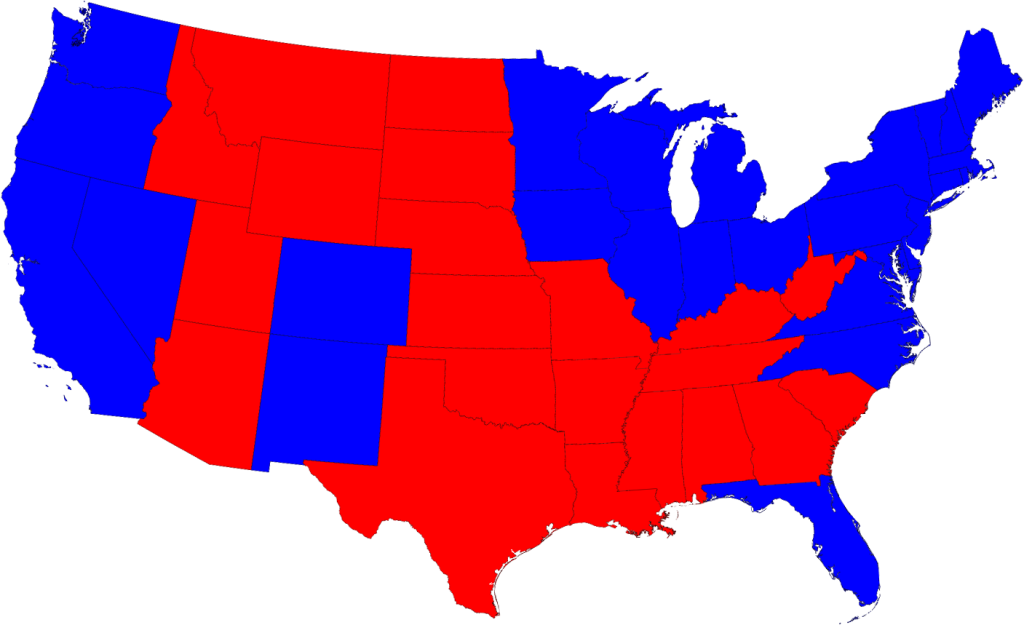
“Christians do bad things, so Christianity must be bad.” I would argue that opponents of Christianity such as Sam Harris, would likely say that “Christians do bad things – and as the Bible specifically instructs in and sanctions such things – Christianity must be bad.” I realize Sam Harris attempts to outline a case that the Bible commands evil in the beginnings of his book–citing Deuteronomy 13:6, 8-15. He then argues that Jesus does not remove responsibility from the law by quoting Matthew 5:18ff (page 5-6 in PDF form, 8-10 in the book). The problem is that Harris takes the Matthew verse out of context by either unintentionally or otherwise leaving out 5:18 “Do not think that I have come to abolish the Law or the Prophets; I have not come to abolish them, but to fulfill them.” One of the core teachings of Christianity is justification. Jesus paid the price. The Law that is written in the Hebrew Scriptures (aka Old Testament) is indeed not abolished, but fulfilled in the person of Christ. Jesus’ statement that He came to earth to fulfill them (the Law He states will not be overthrown) outlines this idea. Paul makes this point clearer throughout his letters to the churches. Galatians 5:4-6, 14 (the rest of the passage can certainly be read, but I don’t think its wholly necessary to get the meaning)- “You who are trying to be justified by law have been alienated from Christ; you have fallen away from grace. But by faith we eagerly await through the Spirit the righteousness for which we hope. For in Christ Jesus neither circumcision [a requirement of the Law] nor uncircumcision has any value. The only thing that counts is faith expressing itself through love… The entire law is summed up in a single command: ‘Love your neighbor as yourself.'” This is ultimately a doctrinal and theological issue. It seems it is one that Harris does not understand. His argument stems from taking Bible passages out of context and arguing against one of the core teachings of not only the church fathers, but also of Paul and Jesus himself–that Christ came as the sacrificial lamb to fulfill the Law, which no man can ever do. As far as whether Christianity sanctions bad things, I think that is nothing but an unfair charge. Christianity’s command can be summed up by what Paul stated before and by what Jesus Himself said of the law (Matthew 22:37ff [read before it for context if you like]): ” ‘Love the Lord your God with all your heart and with all your soul and with all your mind.’ This is the first and greatest commandment. And the second is like it: ‘Love your neighbor as yourself.’ All the Law and the Prophets hang on these two commandments.” It seems clear that the Christianity Christ preaches is not one that condones violence. Whether one wants to twist it to do so is another matter entirely. “Christians are bad, so Christianity is false.” In the second paragraph, you have changed the premise of your argument from “This is blantantly false, and I’m honestly shocked that someone like Sam Harris…” Again, your first premise is closer to what Harris has stated – the second I find questionable. The second is what you refer to here, and attribute it to Harris. I find no reference in his book that suggests he takes this position – correct me if I’m mistaken. That is, have you a reference that indicates that Harris thinks that because Christians do bad things, Christianity is false? I should have stated that more clearly. It’s a problem I’ll hope to rectify a bit by taking —‘s advice to lessen my amount of posts and increase the editing and thought on each. Harris doesn’t specifically argue that Christianity is false. He does seemingly believe it should be rejected because of the initial premise, however. Though, to be fair, if Christianity is true (i.e. exclusive claim to eternal life in heaven), then it should be embraced by all means. The only logical reason to abandon it would be if Christianity were false. Arguing against Christianity by saying it’s bad does nothing to its claims of truth, making the argument an ad hominem attack on the character of Christians rather than an attack on Christianity. Harris, it could be said, argues that Christianity specifically teaches bad things, but I’ve already demonstrated his lack of theological knowledge on the first point, and his other points (i.e. condom use, etc.) could be valid against Catholicism, which is not the Christianity I (and about 50% of Christians) ascribe to. It seems dishonest of Harris to assert that atheists are completely different while shoehorning the Christian right into a Catholic view. There were several times, whilst reading his book, that I found myself saying to his “You believe…” statements “No I don’t.” Those times are straw men arguments to me, though I would say that Christians who believe, say, in not having birth control, should try to defend their position (one I disagree with). I would suggest a simpler test; read the text of their holy scripture, and see if it advocates and/or sanctions said violence. If it does, the religion is violent. If it’s holy scriptures are replete with violent act after violent act, the religion is violent. Admittedly, I do find (at least) the international data concerning religious vs. non religious nations rather interesting. Though, Harris himself states; “Of course, correlational data of this sort do not resolve questions of causality…these statistics prove that atheism is compatible with the basic aspirations of a civil society; (and) …that widespread belief in God does not ensure a society’s health.” “A very good breaking down of Harris can be found in The Irrational Atheist by Vox Day…” Day states, “By applying his metric to the state-wide voting instead of the more Let’s do justice to what Day is pointing out, however. He’s taking the same sample size (i.e. the U.S.) and simply giving a more in depth analysis of what the statistics show. He’s being more specific with the data. Rather than showing that red areas have higher violence than blue areas, they show that blue counties have higher violence on average than red ones. Examples Day gives: Florida–11 blue counties account for 44% of the state’s population, but more than 50% of its murders and 60% of the robberies. Maryland–5 blue counties with a murder rate of 13.22/100,000 verses 0.89/100,000 in the red counties. Washington, D.C.–voted 91% blue but has the highest murder rate in the nation, almost 7 times the average national rate. Harris’ examples of cities are also taken by state, but not by county. When one goes by county, 13/25 of the safest cities are in red counties (verses the by state of 8/25), while 21/25 of the most dangerous cities are in blue counties (verses by state 12/25). In other words, when one gets specific with the data, it can be shown that red areas are potentially safer than blue areas. To say that it is a “smaller” sampling is inaccurate. Rather, it is looking more specifically at the same sampling. An analogy could be the body. Sam Harris points to one’s midsection and says there is something wrong with it. We can use that same data and zero in on, say, the kidney and point to that as the problem area. The same amount of data is there (we have examined the midsection), but the more specific information leads to a more correct conclusion. “…how is it that showing violence by political beliefs automatically shows a correlation to religious beliefs?” Because it can be shown that there is a strong correlation between the population’s political and religious beliefs. Therefore, show a correlation between violence and one’s political affiliation, and one can extrapolate from this. It is fair to say that certain geographical locations in the U.S. are in fact predominately one party or another (thus the whole red state – blue state dichotomy), and that those parties do in fact represent certain religious affiliations more than others – the stats bare this out quite well, and candidates stake their chances of winning an election on it. e.g. – The ‘deep south’ is predominately quite religious – compared to say, the much more liberal coastal areas, and to some extent, the mid west. The break down is shown here; http://www.valpo.edu/geomet/pics/geo200/religion/adherents.gif The blue and red correlates very closely to this reality; http://www-personal.umich.edu/~mejn/election/2008/statemapredbluer1024.png Certainly it isn’t perfect, but it is quite illuminating, and certainly enough to gain some reasonable insight as to the connections present between political and religious beliefs in the U.S.. Okay, let’s examine this in detail as well. Day points to a 2001 ARIS study that shows that 14.1% of Americans are atheists. About 1/2 of eligible Americans vote. So assuming that every eligible atheist voted, that means that 28.2% of the vote was potentially atheist. The problem is that exit polls show that atheists were less likely to vote than religious people, accounting for about 10% of voters in CNN exit polls. They went about 2/3 blue. But the problem is that Harris seems to want to use this to show that non-religious people are less violent. This discounts all those who didn’t vote, and it also means that only 16% of blue voters were actually non-religious. It seems kind of ridiculous to attribute all that nonviolent behavior to a lack of religion when it is only 16% of the voting total. So I stand by my idea that using votes to determine religious belief seems pretty silly. Not only that, but if we do use it as a determining factor, it would show the opposite of what Harris wants to argue. “…religion does do a lot of good, whether people like Harris want to admit it or not.” “It is undeniable that many people of faith make heroic sacrifices to relieve the suffering of other human beings.” – Sam Harris He has no trouble admitting that at all. (straw man) I’ll concede again that I should have been more clear here. Harris does admit that religious people do good things, but it seems to me that his argument centers around the idea that no religion = better people. Note especially pages 12-13 in the PDF version of “Letter…” He seems to argue that if religion were removed, more good would be done. I could stand to reword that part of my blog entry, but again I don’t think I’m attacking a straw man when Harris specifically tries to detract from the good that religious people do (i.e. his Mother Theresa example in which he says she was “…deranged by religious faith.”) If she were not so deranged, she would have been better. That seems to be a valid way to argue from what he is saying. But one major thing could be said here theologically as well. Christianity isn’t about achieving goodness. It isn’t about being good. It’s the fact that we are not good that means we need Christ. Whether or not one wants to say Christians are worse than non-Christians doesn’t do anything to hurt the message of Christ–because it’s not based on being good people, it’s based on being saved people. “But those who are, say, Christian, are commanded to be good,…” This is in fact a strike against Christianity in many an atheist’s mind; that the idea of Christian morality is ‘commanded’ of its adherents. Here Harris completely misunderstands large amounts of Christian belief. Again the assumption is that being Christian = better morals. But that’s not what Christianity is about. Also, this explanation of goodness begs the question entirely against the Christian. It assumes that a religious person only does good things out of belief of reward (or perhaps fear of punishment). The conclusion has snuck [edit: sic, blast!] into the premise. It is wholly possible that Christians do good things out of the kindness of their hearts. The Christianity I believe means that I am saved. Any good that I do is for other reasons, not for the hope of reward. The premise in the argument begs the question because it implies that the only reason a Christian does good is for reward, so the good acts they do aren’t as good as one who doesn’t do it for a reward. “…whilst atheism can at best offer an evolutionary view of morality that is not obligatory” Perhaps you can explain to me what the negative is here, assuming that the result – a person acting with moral responsibility – is the same? I meant to say “objective” not “obligatory.” This was wholly a mistake I can ascribe to lack of sleep. The point you make about the result being the same is interesting, given that you just argued above that it is somehow better to do good things without a responsibility to do so. But again, the use of obligatory was a complete mistake. Read it as “objective” and that is my meaning. I had a ridiculously long list here, and have decided it would be of no avail, at least not in this discussion. The violent history of religion would require its own debate. It does after all entail a couple thousand years of history. One could make the same argument for the history of irreligion. Harris concedes as much when he points out that Christians bring up people like Pol Pot, Stalin, and the like. Interestingly, I think simply looking at an overall # of death rate, it is possible that irreligion has lead to more violence than religion. It is also worthy of note that Harris specifically tries to get around these people by calling them irrational and makes some attempt to try to put them outside of atheism. Page 14 on the PDF version of his book (40ff in the book) demonstrates Harris in a very uncomfortable position. “The problem with such tyrants is not that they reject the dogma of religion, but that they embrace other life-destroying myths. Most become the center of a quasi-religious personality cult, requiring the continual use of propaganda for its maintenance. There is a difference between propaganda and the honest dissemination of information that we (generally) expect from a liberal democracy. Tyrants who orchestrate genocides, or who happily preside over the starvation of their own people, also tend to be profoundly idiosyncratic men, not champions of reason. Kim Il Sung, for instance, demanded that his beds at his various dwellings be situated precisely five hundred meters above sea level. His duvets had to be filled with the softest down imaginable. What is the softest down imaginable? It apparently comes from the chin of a sparrow. Seven hundred thousand sparrows were required to fill a single duvet. Given the profundity of his esoteric concerns, we might wonder how reasonable a man Kim Il Sung actually was.” His argument here seems to be that these people are irrational, so they can be dismissed. Yet I’d make the argument that Christians in particular who try to use that belief system for violence are irrational. Either both can be discounted, or neither can. “Further, is it not obvious that much religion embraces peace?” No, it isn’t. (begging the question) The Christian Bible is simply one of the most violence-ridden pieces of literature I’ve encountered. Page after blood soaked page espouses more brutal rape, slavery, torture, genocide, sacrifice – and often to the elation of, or under the direct command of, the Creator – than you can shake a stick at. The Bible does indeed have much violence in it. I’ve argued that things such as killing that is endorsed by God can be logically defensible here. I can sum up: “In this case, the one presenting the argument is suggesting that:
1. God is morally perfect
and
2. God commands killing
are incompatible. Thus, in order to counter this argument, all that needs to be done philosophically is show there is no inconsistancy. In other words, all that needs to be done is show another alternative. That alternative readily makes itself available:
3. There are some whose moral depravity is such that God will not suffer them to live
This third explanation gives a logical “way out” of the supposed dilemma presented by the first two statements. While this explanation may not seem satisfactory to some who would wish to debate the finer points of individual verses, cherry-picking out-of-context Scripture does nothing in light of the fact that option 3. is logically valid. The defender of the faith need not even demonstrate that this statement is true, only that it is possible.
Thus, I conclude that to have 1. God is morally perfect and 2. God commands killing is not a contradiction in light of 3. There are some whose moral depravitiy is such that God will not suffer them to live.
The case for God’s love could fill numerous volumes, but it is clear from Scripture that God is intentionally portrayed as the definition of Judge, morally perfect, and righteous. The writers of the inspired Word are clearly not recording stories of massed killings in the name of the Lord for the sake of showing God’s moral imperfections (which, I would argue, points even more towards the innerrancy of Scripture, but that’s a whole other issue), but they are rather recording these stories to show that God is indeed God and He is in control. In His moral perfection, there are things He cannot tolerate. Those things are punished in righteousness. Those who argue that the God of the Bible is evil are merely skimming scripture for verses they believe will back them up in out-of-context situations. Further, they are rejecting the Holy Spirit’s role in directing true and upright teaching of the word. Finally, even if one does not accept Scripture as innerrant, the Word of God, or as being passed on by the Holy Spirit, the philosophical problem of evil in the Bible is solved quite simply, contrary to general belief, by the assertion that God’s role as Judge could mean He cannot allow certain evils to pass unpunished.” Arguing that God portrayed in the Bible is evil is to not only do so by specifically searching for verses to support the case in light of much evidence to suggest otherwise (just see God’s interactions with the nation of Israel in light of their constant apostasy, the example of Jesus, the Psalms, and all kinds of other verses that deal with the mercy and goodness of God), but it is also to argue without a knowledge of the culture that such a text originated from. In other words, to argue that God is evil in light of the Bible is to look on such acts with modern eyes and completely discount the fact that the Biblical world was a completely different place than the world we have. There’s a couple of things wrong with this statement – almost to the point that I would respectfully ask that you amend your blog, and make the correction. But that feels beyond the scope of what we’re doing here. I’ll abstain from that request – but do consider what it is you’ve actually said; First, he does not endorse this religion. He highlights it as an exception to the rule. That is, he notes that it “preaches a doctrine of utter non-violence”, and he does so in order to contrast it with Christianity, which is replete with violence. Second, you then choose to use the unfortunate phrase ‘adhere to’ when describing Harris’ statements about Jainism – stating he in fact adheres to Jainism. Certainly you know he does not adhere to this or any religion? This is an issue of semantics and I’m willing to concede the point that Harris does not adhere to Jainism. Though it is clear that he has some interesting views on spirituality (I grant that Wikipedia is not the best source for this type of thing, but the quote from End of Faith, combined to his specific exclusion of Eastern religions from his general attack on religion show at least a predisposition). “…it is telling that Harris feels the need to include a chapter about Are atheists evil?” Do tell? I’m not at all clear what you think this exposes about Harris? I can explain for you why this inclusion was quite necessary in a book of this sort. Day in and day out, the American atheist is absolutely inundated with accusations from his Christian neighbor, that he is without morals, “spiritually” bankrupt, brimming with sin, in a word, evil. The need for a look into the morality of the atheist was an important component of the discussion – esp. in a book addressing a ‘Christian Nation’. Or more accurately, to show that no such connection can be made. A simple question; Do you honestly think that any of the evil that Stalin, Pol Pot or Mao perpetrated, could be said to have been done in the name of ‘rationality’? I’d be quite curious to hear you justify that if it is your belief. I consider what these men did to be the very height of irrationality. Yet Harris, and it seems you, continue to argue using points from people who are Christian and irrational. This doesn’t really seem fair. Also, I doubt that someone like, say, Stalin, would say they were being irrational. My main point is that either both types of irrational extremities (violent Christians and violent atheists) don’t need to be addressed, or they both do. Regarding the inclusion of atheism in that quote, simply, nothing can be done in the name of atheism. It’s a statement without meaning. As I’m sure you’ve heard many times, atheism is simply the lack of a belief in a god. Nothing more. How you one do something ‘in the name of’ a lack of a belief? Fair enough, then I’ll say that these men were atheists. The people who did violence and were Christian can still be compared to as a legitimate analogy. Atheists who do violence. Christians who do violence. I’d argue both are bad. If you wish to tack on some other world view or belief system (secularism, humanism, etc.), they actually begin to carry some baggage, and one might say they did something in the name of some ideal that that particular world view or ideology holds. But then you are no longer talking exclusively about atheism. Belief in a God can, however, give an objective standard by which all actions must be judged. Thus there is a better basis by which to reject certain actions than if there is no objective standard. “Sam Harris accuses Christianity in particular…He goes on to attempt to disassociate atheism with these obvious atheists” by saying “While it is true that such men are sometimes enemies of organized religion…” [Here I’d like to note that this is completely deceptive.” I will agree, within this section anyway, that he did seem to directly avoid saying that the men were atheists. It felt disingenuos to me. He does elsewhere, but that isn’t relevant. I have to concede that he might have been more direct here. I don’t appreciate the dodge either. That said… “These men absolutely were enemies of organized religion and wholly atheist. Harris is attempting to downplay the evil of these men.] “ It’s entirely honest on his part to say ‘sometimes’ in this case, as Hitler was in the list. Hitler’s atheism, as you know, is quite debatable, and he was a staunch bedfellow with the Church as well (however opportunist that relationship may have been). It would have been inaccurate to claim that ‘all’ of his list were enemies of religion and that they were all atheists. I can’t say for sure that this is why he stated it this way, but it would have been inaccurate to do other wise. “Isn’t it obvious that those who champion murder in the name of God are just as irrational as these atheists that Harris, Dawkins, and the like are quick to condemn as irrational?” Arguing this is false in light of the points I’ve already made, but it seems to be the central issue, so I’ll address it again. To argue that Christianity is violent is to go against the core teachings of Christianity from its founding (and indeed the person of Christ) to the present day. Not only are the two core law statements to love God and neighbor, but Christ specifically condemns violence in all forms. To argue otherwise is to beg the question. Again, it would be easy to pick out violent examples from Scripture and debate them on a verse-by-verse basis, but that is not the core issue. Christianity teaches the entire Bible points to Christ at the center. What does Christ teach? Nonviolence. This may sound like a variation of the “No True Scotsman” argument, but it isn’t, as we do have a strict definition of what it means to be Christian in the Bible. One need only look at what Christ Himself says and one can find what is indeed a “true Christian.” Not only that, but Paul, Peter, etc. are further examples of what Christianity means. Again, I refer you to the above statements. Christians can use the very scripture their religion is based on to justify the evils they do. Atheists have no such justification. An atheist committing an act of violence must assume the responsibility solely on their own. There is no dogma to point to and say “See, that’s what happens when you are an atheist.”. No ancient scripture or holy text, no authorities from whom rules and such are handed down, only an individual making a choice. Christians who use the Scripture to justify violence have missed what Christ himself says about violence. There can be nothing more clear than this when one simply reads what Jesus says. “I’d argue that atheists like Stalin could defend their killing from an atheologically defensible position as well: personhood doesn’t matter, so we can kill as we please.” There is no such position in existence. Not having a belief in a god says nothing of one’s beliefs about the worth of a human life. It does not put special value on it, nor does it devalue it – it says nothing at all about it – or anything else for that matter. It only denotes that one has no belief in a god. Conceded. Though the atheism you are describing is a “soft atheism” that goes against the definition of atheism as seen in both the Encyclopedia of Philosophy and the Cambridge Dictionary of Philosophy. See further points about that here. “I do, however agree that either side can use those beliefs (or lack thereof) to condone violent actions.” How is it you arrive at some belief system (that would ‘condone’ an action), from the statement that one dose not have a belief in a god? “His examples include preaching abstinence over use of condoms,…All of these are ad hominem attacks (or ad Deum)” How is mentioning that the church preaches abstinence an ad hominem attack? I submit that it most certainly is not. This seems ad hominem to me. Rather than attacking any specific argument, he is attacking, say, Catholics, for preaching abstinence. I’m almost willing to concede your point here except for the virulent nature of his attack in this section. I may be reading too much into it, but this passage seems full of emotional appeal and very much like an attack on people who would dare believe such things and less like a legitimate complaint. I won’t comment on your subsequent three fold explanation – mostly in the interest of length (this is already ridiculously long!). I’m quite interested in discussing morality as it pertains to religion and atheism in the future though. Let’s hope we can return to this. Well. That’s quite a lot. More than enough for now, I’m sure. Hopefully it wasn’t too terribly dull, and I’ve left you with something worthy of response. Hope to hear from you soon, |
Another thing I’d love to point out is that Harris is a wonderful example of the argument from atheism (page 5 in PDF) which I address https://jwwartick.com/2009/07/24/the-argument-from-atheism/.This argument is demonstrably false because by definition a theist is not an atheist, check out the blog for a longer rebuttal.

 J.W. Wartick - Reconstructing Faith