Song of Songs
Book Review: “Reformation Commentary on Scripture: Old Testament IX- Proverbs, Ecclesiastes, Song of Songs”

The Reformation Commentary on Scripture series from InterVarsity Press is an impressive collection of commentaries that feature a wide range of voices from the Reformation period giving insight into biblical texts. The latest volume I got was Old Testament IX: Proverbs, Ecclesiastes, Song of Songs. I was particularly excited for this volume both because I quite enjoy the books of the Bible it is discussing and because commentary on these books often varies wildly depending upon one’s background beliefs and theological stances.
Proverbs- a book that is confusing for many commentators through history, especially given its sometimes contradictory advice (eg. whether to debate the fool in Proverbs 26:4-5). What are we supposed to do with the book? Reformation commentators varied in their thoughts on the book, too. For example, Peter Moffett, an English clergyman, states that the book is simply a collection of “certain general, short, and pithy sayings, used…. in every person’s mouth” (7). By contrast, Michael Cop, a Swiss Protestant pastor, argued that the book is indeed wisdom that teaches Christ (ibid). The “Proverbs 31 woman” is a popular trope taken by many Christians today to present the model woman. Reformation commentators varied on the meaning of Proverbs 31’s teachings about a woman, including praising women for being strong not just physically but also mentally (John Trapp, an Anglican exegete, 201), considering the passage as showing how rare it is to find a woman with such insight or properties as a kind of backhanded tribute (Michel Cop, 198-199) and, intriguingly, an admonishment against useless and foolish husbands (Cop again, 201). Still more insights include seeing the passage not as an ideal woman but an abstract praising of “womanly arts” that makes it more of an empowering passage than an ideal women must live up to (Lucrezia Marinella, a Venetian poet and writer). Indeed the whole section on this Proverbs 31 passage is worth close reading and consideration.
Ecclesiastes- I’ll not spend as much time reviewing this, but it is interesting to see what the various commentators say about individual passages. I don’t like rushing past this book, which is a favorite of mine, but with limited time for review, suffice to say that the insights are just as fascinating as those in Proverbs.
Song of Songs- one of the more uniquely interpreted books of the Bible both then and now. Reformation theologians saw the book in varied lights. Martin Luther, for example, saw the book as a celebration of the ideal political order (305-306). Others saw it as allegory for love of the Holy Spirit for the church (Francois Lambert, a French Reformed theologian, 304). Others saw it as even more figurative, such as Calvin’s reading of the book as “a figural representation of Christ’s reign” (207). Desiderius Erasmus, famous opponent of Luther and Catholic theologian, was keen to defend the Bible from any kind of sexual impropriety while also arguing the book is not an allegory of the Virgin Mary (304-305, 307). While the allegorical readings were very popular, some theologians still saw it simply as showing the “veiled intimacies of marriage” (eg. Hugo Grotius, a Dutch lawyer and humanist, 313-314). The rest of the discussion of the book is just as interesting, showing an intriguing line that the interpreters walked between attempting to find comfort from the blatant sexual language in allegory while also acknowledging it in their use of allegory. One interesting example is Henry Ainsworth (an English Puritan Hebraist) whose interpretation of Song of Songs 4:4-5 which explicitly praises the breasts of the woman writes that breasts are for “ornament and use” while immediately turning it to being about God and the Church–“So here the ‘breasts’ of Christ’s spouse are compared to ‘roes’ for pleasantness, to ‘fawns’… This signifies how the church is fruitful in good works and words of comfort…” (377). This kind of blunt speaking of the sexual language of the text and immediately re-interpreting it as allegory is common throughout the Reformation period, though there are a few exceptions.
Old Testament IX: Proverbs, Ecclesiastes, Song of Songs is an insightful, fascinating look at some of the books of the Bible with the most varied histories of interpretation. I recommend it for readers interested in Reformation theology but also for those who just want some insight into these fascinating, oft-contentious books of the Bible.
All Links to Amazon are Affiliates links
Links
Be sure to check out the page for this site on Facebook and Twitter for discussion of posts, links to other pages of interest, random talk about theology/philosophy/apologetics/movies and more!
Book Reviews– There are plenty more book reviews to read! Read like crazy! (Scroll down for more, and click at bottom for even more!)
SDG.
——
The preceding post is the property of J.W. Wartick (apart from quotations, which are the property of their respective owners, and works of art as credited; images are often freely available to the public and J.W. Wartick makes no claims of owning rights to the images unless he makes that explicit) and should not be reproduced in part or in whole without the expressed consent of the author. All content on this site is the property of J.W. Wartick and is made available for individual and personal usage. If you cite from these documents, whether for personal or professional purposes, please give appropriate citation with both the name of the author (J.W. Wartick) and a link to the original URL. If you’d like to repost a post, you may do so, provided you show less than half of the original post on your own site and link to the original post for the rest. You must also appropriately cite the post as noted above. This blog is protected by Creative Commons licensing. By viewing any part of this site, you are agreeing to this usage policy.
Really Recommended Posts 11/20/15- Anti-Trinitarian theology, the Bible without God, and more!
 I’ve got another round up of reads for you, dear readers! This week, there are some posts I’m pretty excited about. Thinking about attacking the doctrine of the Trinity? Our first post tells you how not to defend one prominent anti-Trinitarian theology. Why are there books in my Bible that don’t mention God? Found a post for ya! Other posts include Star Trek and theology, the death of the apostles, and standing up for women at a men’s retreat. Let me know what you think, and be sure to let the authors know as well!
How Not to Defend Jehovah’s Witness Theology– An excellent post analyzing the way that non-Trinitarians attempt to attack the doctrine of the Trinity. It’s not enough to poke holes in another theory. This is a piece well worth your time!
The 2 Books of the Bible that Don’t Mention God– Here’s an interesting post looking at the book of Esther and the Song of Songs, 2 books which don’t mention God. Why are they in the Bible. Disclaimer: I have been convinced that YHWH–the divine name–is mentioned in Song of Songs, but I think this post is still excellent.
5 Reasons to Reunite with Reunion- Star Trek: The Next Generation Retrospective– I love Star Trek. I love when I get to think about theology and Star Trek. If you have those loves, you’ll enjoy this post.
What Makes the Death of the Apostles Unique?– All kinds of people are willing to die for their faith. Here is a post showing why the Disciples’ willingness to die sets them apart. I have written on this topic myself: “Dying for Belief: Analysis of a Confused Objection to one of the evidences for the Resurrection“, so check out my post on it as well!
Standing up for our Sisters at a Men’s Retreat– Men have privilege. It’s true. Here is a post about how we should stand up for those who do not have the same advantages, even in man-to-man talks.
Our Longing For God
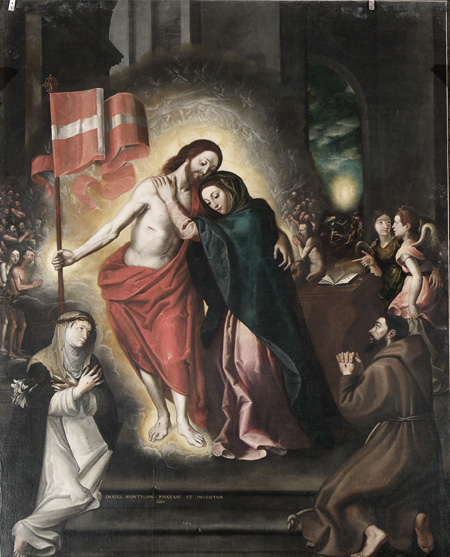 Recently, I had a discussion with my fiancée about the idea of Song of Songs being utilized as an analogy for Christ and the Church. Song of Songs is clearly a book about love, even erotic (eros) love. There are verses like 1:4 “Draw me after you; let us run. The king has brought me into his chambers” or 6:3a “I am my beloved’s and my beloved is mine.” If we are to apply such verses to the life of a Christian and his or her relation to God, we can see it sometimes as an almost uncomfortably close relationship. We aren’t comfortable thinking of our love of God as this kind of intimate desire; a desire for union, to be brought into the chambers of our God.
Yet it is exactly this kind of intimacy–this kind of eros love–which God has planned for us. Song of Songs is such a beautiful book because of this exact thing. It teaches us that we need not be ashamed of the kind of union we desire with God. We are sheep lead astray, and our one desire should be to return to our Lord, in whose arms we find peace and love.
There are other verses in Scripture wherein we can see this idea. Psalm 84:2 states “My soul yearns, even faints for the courts of the Lord; my heart and my flesh cry out for the living God.” Psalm 63:1 puts it eloquently, “Oh God, you are my God, earnestly I seek you; my soul thirsts for you, my body longs for you.”
My favorite exposition of these ideas is found in Alvin Plantinga’s Warranted Christian Belief, of all places. In this monumental work, Plantinga discusses the very idea of God’s love as eros. I feel compelled to quote him at length:
This love for God isn’t like, say an inclination to spend the afternoon organizing your stamp collection. It is longing, filled with desire and yearning; and it is physical as well as spiritual… It is erotic; and one of the closest analogues would be with sexual eros. There is a powerful desire for union with God… What is to be made of this phenomenon? Most psychiatric literature has tended to follow Freud in understanding religion as a kind of neurosis, the ‘universal obsessional neurosis of humanity.’ From this point of view, the religious eros is to be understood as a kind of analogue, displacement, or sublimation of (broadly) sexual energy…
From a Christian perspective… here (as often) Freud has things just backwards. It isn’t that religious eros, love for God, is really sexual eros gone astray or rechanneled… It is sexual desire and longing that is a sign of something deeper: it is a sign of this longing, yearning for God that we human beings achieve when we are graciousliy enabled to reach a certain level of the Christian life. It is love for God that is fundamental or basic, and sexual eros that is the sign or symbol or pointer to something else and something deeper.
[S]exual eros points to two deeper realities… human love for God… [and] a sign, symbol, or type of God’s love. (Plantinga, 311-318)
Those who have had religious experiences in which they felt a kind of union with God can attest to what Plantinga is describing. The kind of mystical union we experience when we are granted the chance to commune with God in a relation of creature-creator is beautiful, to the point of being even sensual. It is something which we long for; something we look forward to in the hereafter.
This also serves to help describe the kind of feelings involved in religious experience. It is a kind of fulfillment of a yearning and a quenching of thirst. Our longing for God is part of humanity. Plantinga argues it is part of our sensus divinitatis–our inborn sense of divine reality. Only when we submit to God and experience relation with him can our deepest desires be realized.
Source:
Alvin Plantinga. Warrented Christian Belief (New York, NY: 2000, Oxford).
——
The preceding post is the property of J.W. Wartick (apart from citations, which are the property of their respective owners) and should not be reproduced in part or in whole without the expressed consent of the author. All content on this site is the property of J.W. Wartick and is made available for individual and personal usage. If you cite from these documents, whether for personal or professional purposes, please give appropriate citation and provide a link to the original URL. By viewing any part of this site, you are agreeing to this usage policy.

 J.W. Wartick - Reconstructing Faith