Sunday Quote
Sunday Quote!- Does Science Limit Exegesis?
 Every Sunday, I will share a quote from something I’ve been reading. The hope is for you, dear reader, to share your thoughts on the quote and related issues and perhaps pick up some reading material along the way!
Does Science Limit Exegesis?
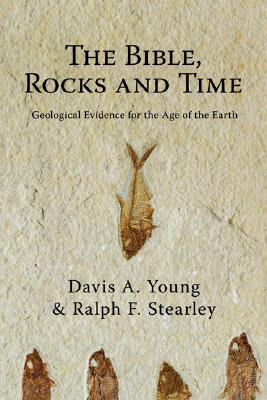
I’ve been rereading The Bible, Rocks and Time: Geological Evidence for the Age of the Earth
[T]he claims advanced in favor of a young Earth or Flood geology remain unacceptable to the scientific community. Thus their claims should also be unacceptable within the church, which… ought to be committed to truth and reality–for the simple reason that the young-Earth creationist claims lack scientific credibility. (161)
Now I think this is a pretty obviously controversial claim for a few reasons. First, the immediate question is how broad Davis and Stearley are intending this to be. After all, one might say that God creating the universe is “unacceptable” depending how one defines the scientific community. Of course, they do qualify the statement by noting that what they mean is that the evidence young earth creationists put forward can often, in principle, be tested for; and when tested, it fails muster. In this sense, I think that one might say the statement is acceptable.
Second, one may object to this noting that science often changes consensus, so what is “unacceptable” today becomes in vogue tomorrow. A problem with this claim is that it flies in the face of the real, overwhelming evidence for an ancient Earth. I’ve examined this and many other arguments YECs put forth in my post on YEC arguments.
Third, one might wonder exactly how Davis and Stearley think science and exegesis are supposed to interact. Though this is a far cry from the purpose of their book, statements like these beg the question of whether science really does limit exegesis.
What are your thoughts?
Links
Be sure to check out the page for this site on Facebook and Twitter for discussion of posts, links to other pages of interest, random talk about theology/philosophy/apologetics/movies and more!
Answering Common Young Earth Creationist Arguments– I evaluate a number of arguments for young earth creationism. There are a large number of biblical, philosophical, and scientific arguments briefly answered here.
What options are there in the origins debate? – A Taxonomy of Christian Origins Positions– I clarify the breadth of options available for Christians who want to interact on various levels with models of origins. I think this post is extremely important because it gives readers a chance to see the various positions explained briefly.
Source
Davis A. Young and Ralph F. Stearley, The Bible, Rocks and Time: Geological Evidence for the Age of the Earth
Sunday Quote!- The Invention of Religion
 Every Sunday, I will share a quote from something I’ve been reading. The hope is for you, dear reader, to share your thoughts on the quote and related issues and perhaps pick up some reading material along the way!
The Invention of Religion
One book which has influenced my thought quite a bit was The Myth of Religious Violence. I recently reread the book and thought I’d share a rather poignant quote:
There was a time when religion, as modern people use the term, was not, and then it was invented. (81)
The notion that religion is a socially constructed concept is essential to Cavanaugh’s work, and he argues meticulously towards this end. His point is not that all so-called “religions” are false. Rather, his point is that the notion that there is such a thing as a secular/religious dichotomy is itself a construct with a historical development. Moreover, this construct, he argues, has been useful for creating an “Other” who is then deemed “religious” in order to separate this Other from spheres of influence. It’s a highly interesting book, and one I recommend strongly. I have reviewed it here.
What do you think? How might you define “religion”? If Cavanaugh is right, how might this notion influence your thought?
Links
The Myth of “Religion”: Constructing the Other as an enemy– Here, I draw out more of Cavanaugh’s claims regarding the usage of the term “religious” and how it is used at times to create an “Other” to repudiate.
Book Review: “The Myth of Religious Violence” by William T. Cavanaugh– I review the book which has led me to discuss the ways the category of religion is used to stigmatize the other and also forced me to rethink a number of issues. I highly recommend this book.
Source
William T. Cavanaugh, The Myth of Religious Violence
SDG.
Sunday Quote!- Every Story has a Worldview
 Every Sunday, I will share a quote from something I’ve been reading. The hope is for you, dear reader, to share your thoughts on the quote and related issues and perhaps pick up some reading material along the way!
Every Story Has a Worldview
I finished reading Hollywood Worldviews: Watching Films with Wisdom & Discernment
Every story is informed by a worldview. And so every movie, being a dramatic story, is also informed by a worldview. There is no such thing as a neutral story in which events and characters are presented objectively apart from interpretation. Every choice an author makes… is determined by the author’s worldview. (60)
Godawa’s point is similar to what I say quite often, with almost the exact words: every movie has a worldview. The same, as Godawa states, is true for any story. Every time someone tells a story, whether it is one they made up or one they picked up somewhere, it is slanted with worldview. We should be aware of this fact and be ready to critically engage with any story–fictional or non–so that we can bring into light the truths and falsehoods each story may contain.
What’s your best technique for critically engaging worldview in film? What other arts have you critically interacted with? How have you approached these?
Links
Be sure to check out the page for this site on Facebook and Twitter for discussion of posts, links to other pages of interest, random talk about theology/philosophy/apologetics/movies and more!
Engaging Culture: A brief guide for movies– I outline my approach to evaluating movies from a worldview perspective.
Source
Brian Godawa, Hollywood Worldviews: Watching Films with Wisdom & Discernment
Sunday Quote!- The War Between Science and Religion
 Every Sunday, I will share a quote from something I’ve been reading. The hope is for you, dear reader, to share your thoughts on the quote and related issues and perhaps pick up some reading material along the way!
The War Between Science and Religion
I recently finished reading Imaginative Apologetics: Theology, Philosophy, and the Catholic Tradition. I have a review of the book coming in some time, but for now I’ll say it was an uneven experience. Lots of high points; many low points. One high point was Alister McGrath’s discussion of science and religion and the alleged war between the two:
This conflict is often expressed more generally in terms of the phrase ‘science and religion’, which unhelpfully reifies both notions, attributing concrete identity to abstractions. Science and religion are not well-delimited entities, whose essence can be defined; they are shaped by the interaction of social, cultural and intellectual factors, so that both notions are shaped by factors that vary from one cultural location to another… the historical evidence suggests that it was actually [two 19th century works not by Darwin] which crystallized a growing public perception of tension and hostility between science and religion. (144, 145)
I think this quote is particularly thought-provoking due to its two pronged approach to the “science vs. religion” mentality. First, I think McGrath is certainly correct to note that the reification of the terms is unhelpful, to say the least. People often say things like “science says ___” or “religion says ___.” Such statements turn either science or religion into separately existing, distinct entities which somehow make proclamations. In other words, they remove either concept from the people putting for the concepts under the umbrella terms “science” or “religion.” I find this unhelpful, and as McGrath later notes, only use the terms out of convention.
Second, exploring the historical origins of an idea like the “war” thesis between science and religion often has astonishing results. One finds, often, that one’s assumptions are challenged and even overthrown by the evidence.
What do you think? What other concepts might we unintentionally reify through our use of terms? How might we seek to avoid doing this?
Links
Be sure to check out the page for this site on Facebook and Twitter for discussion of posts, links to other pages of interest, random talk about theology/philosophy/apologetics/movies and more!
Source
Alister McGrath, “The Natural Sciences and Apologetics” in Imaginative Apologetics: Theology, Philosophy, and the Catholic Tradition
Sunday Quote! – Does location determine personhood?
 Every Sunday, I will share a quote from something I’ve been reading. The hope is for you, dear reader, to share your thoughts on the quote and related issues and perhaps pick up some reading material along the way!
Does location determine personhood?
I have been reading through The Ethics of Abortion: Women’s Rights, Human Life, and the Question of Justice by Christopher Kaczor. It is a philosophical defense of the pro-life position and the notion that the unborn is a human person. In his discussion of partial-birth abortion, Kaczor makes the following point:
In Sternberg v. Carhart, later reversed in Gonzalez v. Carhart, the United States Supreme Court affirmed a constitutional right to… partial-birth abortion, and with it affirmed the legality of the conventional pro-choice view that abortion ought to be legally permissible through all nine months of pregnancy, until the human being has been entirely removed from the mother’s body. The court gave no justification why moving the head of the child just a few inches marks the crucial distinction between non-personhood and personhood… (52, cited below)
Frankly, I think this is something that any pro-choice individual must deal with: what is it about the location of the unborn which conveys personhood or prevents the unborn from being a person? What is it, that is, which transforms the unborn from non-person to person as the unborn is birthed?
Links
Be sure to check out the page for this site on Facebook and Twitter for discussion of posts, links to other pages of interest, random talk about theology/philosophy/apologetics/movies and more!
Check out my other posts on the debate over abortion.
Source
Christopher Kaczor, The Ethics of Abortion: Women’s Rights, Human Life, and the Question of Justice (New York: Routledge, 2011).
Sunday Quote! – Do Trilobites Yield a Greater Good?
 Every Sunday, I will share a quote from something I’ve been reading. The hope is for you, dear reader, to share your thoughts on the quote and related issues and perhaps pick up some reading material along the way!
Trilobites Yield a Greater Good
Recently, I finished reading Nature Red in Tooth and Claw
The purpose of that low organism [the trilobite] is by no means exhaustively explained when we have taken a measure of the sensational happiness he derived from his monotonous existence… But a far higher purpose is served in the adaptation of his complicated organism and of the position of his tomb in a sedimentary deposit to arrest the attention and direct the reasoning of a scientific observer. The pleasure of one lofty thought is worth more… than a whole heard of sensational pleasures. (142, cited below)
There is much to unpack in this quote, but for simplicity’s sake we’ll just examine one facet. Wright asserted that the final cause–the ultimate purpose–of a trilobite is not merely found in its own existence, but also in its existing to “arrest the attention and direct the reasoning” of a more highly developed organism. Indeed, Wright argued that the learning the life (and death) of the trilobite brought to the scientific observer was a far greater good than the life the trilobite lived of sensational pleasures.
A number of issues would need to be addressed before a fuller theodicy could be developed from this point. First, not every trilobite was able to convey its life to the good of a scientific observer. Second, is the good of scientific observation really better than sensational life of the trilobite?
Of course, I personally think the point by Wright is interesting and compelling to a point–but to develop that argument would take as much space as Murray dedicates to it. My final observation would be that Wright’s argument was not intended as the final word on the subject. It is but one among many facets of a greater good theodicy or a conjoined theodicy with other varieties of approaches to the problem of evil. Nature Red in Tooth and Claw
Links
Be sure to check out the page for this site on Facebook and Twitter for discussion of posts, links to other pages of interest, random talk about theology/philosophy/apologetics/movies and more!
Animal Pain Re-Visited– Over at Reasonable Faith, Michael Murray defends some theses of his book that I discussed above.
Source
Michael J. Murray, Nature Red in Tooth and Claw: Theism and the Problem of Animal Suffering
Sunday Quote!- A Disconnect Between Parchment and Pew?
 Every Sunday, I will share a quote from something I’ve been reading. The hope is for you, dear reader, to share your thoughts on the quote and related issues and perhaps pick up some reading material along the way!
A Disconnect Between Parchment and Pew?
I just started reading Jeff Jordan’s Pascal’s Wager: Pragmatic Arguments and Belief in God, which I admit I have high hopes for. Right at the beginning I came upon a brief tidbit I thought was interesting to consider:
A disconnect exists between the arguments that philosophers find interesting and the arguments actually employed by Christians and other theists as reasons in support of their religious commitments. (vii, cited below)
I wonder sometimes about this very disconnect. The average person in the pew is unfamiliar with and unaffected by things like the Kalam Cosmological Argument or the subtle distinctions required to discuss the problem of evil. Rather, they are more concerned with the practical aspects of faith and the amount of work needed to explain these arguments is neither required nor desired. There does exist this disconnect between parchment–the philosophical theories–and the pew–the average Christian. What can we do to bridge this gap? What does this say about the epistemic validity of faith generally? Is this even an area for concern at all? I don’t think there are easy answers to these questions.
Interestingly, Jordan went on to suggest that one way to bridge the disconnect was with pragmatic arguments, such as Pascal’s Wager. It will be interesting to see how he develops that thesis, and how he defends such arguments. I eagerly look forward to continuing my read of the book.
Links
Be sure to check out the page for this site on Facebook and Twitter for discussion of posts, links to other pages of interest, random talk about theology/philosophy/apologetics/movies and more!
Jeff Jordan, Pascal’s Wager: Pragmatic Arguments and Belief in God
Sunday Quote! – Infant Baptism and the Imagination?
Every Sunday, I will share a quote from something I’ve been reading. The hope is for you, dear reader, to share your thoughts on the quote and related issues and perhaps pick up some reading material along the way!
Infant Baptism and the Imagination?
I was reading through Imaginative Apologetics: Theology, Philosophy, and the Catholic Tradition
A child baptism… is a wonderful argument in itself for the religious dimension. Even apart from the putting on of Christ, dying to sin[,] and regeneration at its heart, the simple fact that a family brings a baby to church is a religious act. They are seeing their child apart from themselves… she is truly real to them. To offer a baby for baptism is to affirm that she is more than a bundle of rosy flesh and a needy mouth. She means more than she seems. In a young infant we encounter reality and it leads us upwards. (42, cited below)
The “imagination” involved in this is not so much a imagination in the sense of “making up” but rather in the sense of experiencing and accessing a different reality. The parents bring their child in to be baptized, thus affirming that this is one who needs God as much as any other; one whom God has called. Infant baptism is an “encounter” with reality which “leads us upwards.” It goes beyond the water and the words and becomes Word and Sacrament. I thought this was a beautiful quote to illustrate the nature of an infant baptism.
Links
Be sure to check out the page for this site on Facebook and Twitter for discussion of posts, links to other pages of interest, random talk about theology/philosophy/apologetics/movies and more!
Source
Alison Milbank, “Apologetics and the Imagination: Making Strange” in Imaginative Apologetics: Theology, Philosophy, and the Catholic Tradition
Sunday Quote!- The Desperate Lights of Genesis?
 Every Sunday, I will share a quote from something I’ve been reading. The hope is for you, dear reader, to share your thoughts on the quote and related issues and perhaps pick up some reading material along the way!
The Source of Light: A Desperate Bid?
One of the heated questions about the age of the Earth of course concerns the meaning and length of the days of creation. Of the questions related to that, one which persists is where from and why, on a literal reading, is there light before the bodies which produce light (stars, sun, etc.) are apparently created (though this is also debated) on day four? In Reading Genesis 1-2: An Evangelical Conversation, Tremper Longman III offers the following comment on one path that some creationists take to explain the light prior to the sun:
The counterargument [to the fact that the solar bodies were not created until day 4] that God could provide an alternative light source is an act of desperation. Of course, God could provide light and darkness in some other fashion in a twenty-four-hour period, but that would still not constitute a literal evening and morning that is defined by the setting and rising of the sun and the movement of the other celestial bodies. (105, cited below)
Although I’m not sure I would qualify this move as “desperate,” I do still wonder how, exactly, one is to define the days of creation and a “literal” evening and morning without the actual solar bodies. I mean, realistically, what does it mean to say there is “evening” without such a reference point? Interestingly, some concordist positions (concordist meaning views which seek to explain the Bible in light of science or vice versa–and would encompass both young and old earth creationists of various types [see my taxonomy of positions]) actually take this to show that the days are not indeed 24 hour periods.
What are your thoughts on this issue? Do you see this move as desperate or do you think its perfectly reasonable? Somewhere in between? Why?
Source
Tremper Longman III, “What Genesis 1-2 Teaches (and What It Doesn’t)” in Reading Genesis 1-2: An Evangelical Conversation

 J.W. Wartick - Reconstructing Faith